













Sizing for the Room
Leave at least 18 inches of space between the rug and the walls to keep the room feeling open and well-balanced.

Just like color and pattern, the size of your rug can completely change how a room feels. A rug that’s too small can make a space look disconnected, while the right size brings everything together effortlessly. Choosing the perfect rug size can feel confusing at first — but don’t worry. This simple guide will help you understand exactly what works best for your space, so you can make the right choice with confidence.

Before choosing a rug, take a moment to measure your space — this step alone can save you from costly mistakes.
Start by measuring the area where you plan to place the rug. If possible, use painter’s tape to outline the rug’s position on your floor. This simple trick helps you visualize how different sizes will look in your room without even having the rug yet.
You’d be surprised how much this changes your decision — what looks right in your mind may feel completely different once you see it on the floor. Have you ever thought a rug would fit perfectly, but it ended up looking too small?
Tip: Keeping 18–24 inches of exposed floor around your rug helps the room feel more spacious and well-proportioned.

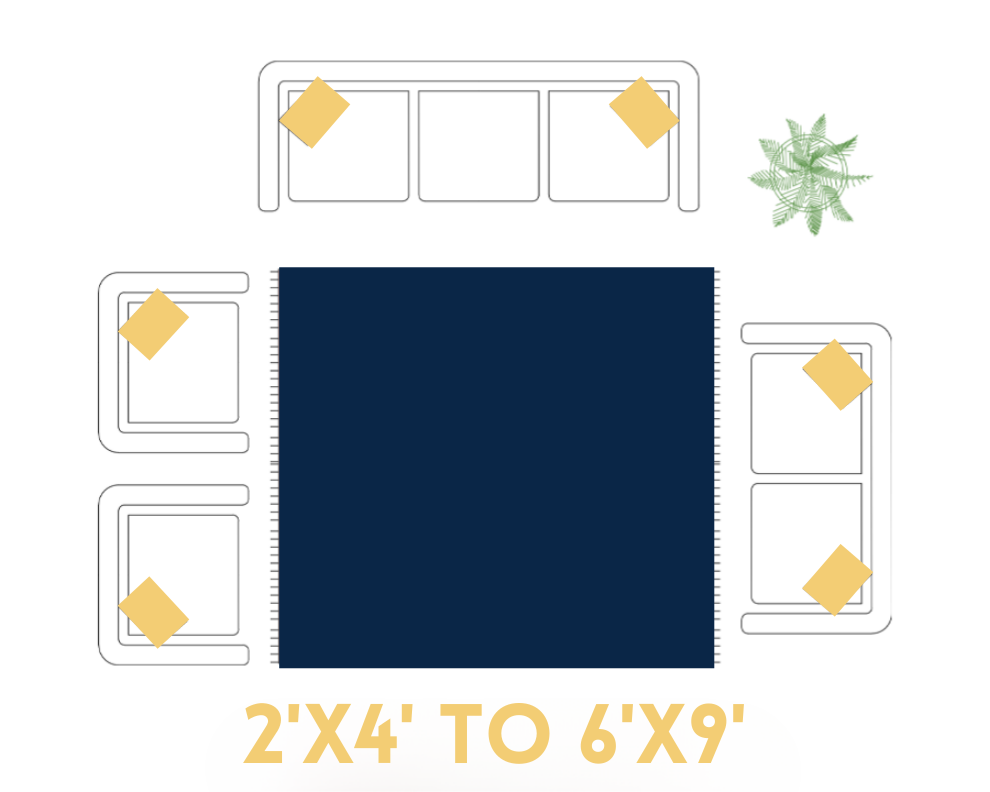
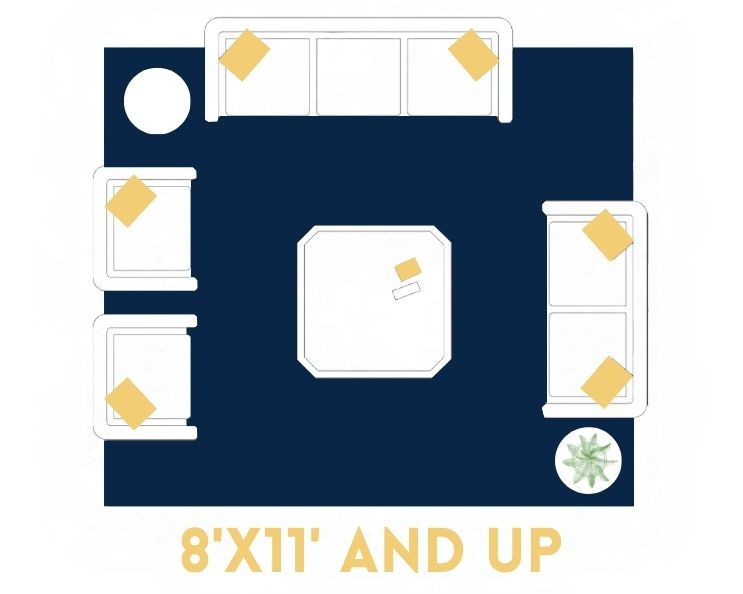
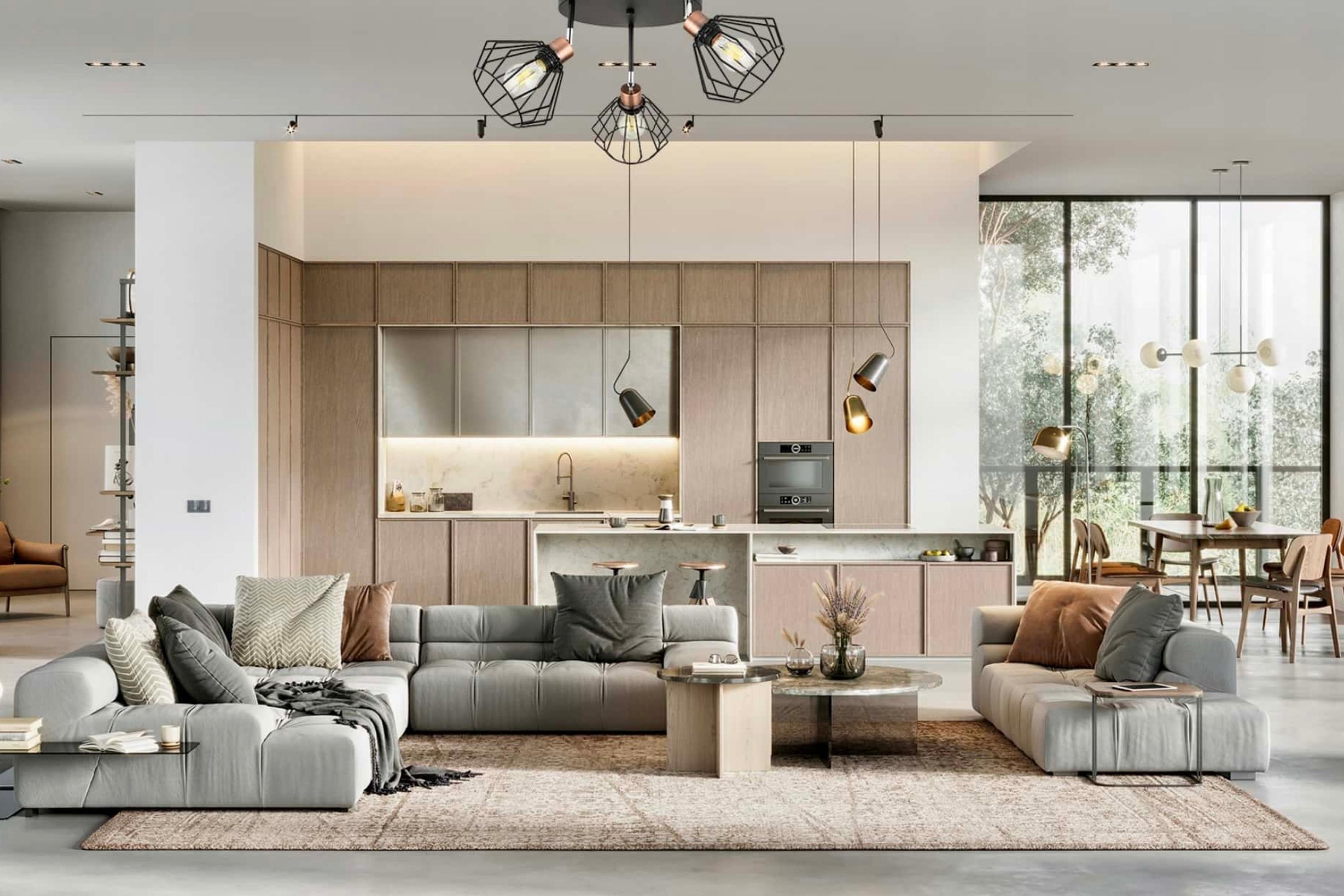
The main focus of any living room is the seating area — and that’s exactly where your rug should work best.Choosing the wrong size can easily throw off the entire space. A rug that’s too small can make the room feel disconnected and unfinished, while the right size instantly brings balance and comfort. You’ve probably seen it before — a beautiful room that just feels “off” because the rug is too small.As a general rule, try to leave 18–24 inches of visible floor around the edges to keep the space feeling open and well-proportioned.
If you prefer to keep all furniture legs off the rug, a 5x7 size can work well in smaller layouts. For a more balanced and connected look, an 8x10 rug allows the front legs of your furniture to sit comfortably on the rug. And if you want a full, cohesive feel, a 9x13 rug can anchor the entire seating area with all furniture placed on top.
Leave at least 18 inches of space between the rug and the walls to keep the room feeling open and well-balanced.

Choose a rug that is at least as wide as your sofa to maintain visual balance and avoid a disconnected look.

Go for a larger rug that can fit all your furniture to create a cohesive and well-defined living area.

If you prefer to keep furniture off the rug, a 5x7 size works well for a clean and spacious feel in smaller layouts.

An 8x10 rug helps anchor the space, with the front legs of your furniture resting comfortably on the rug.

A 9x12 rug brings everything together, allowing all furniture to sit on the rug for a complete and cozy look.

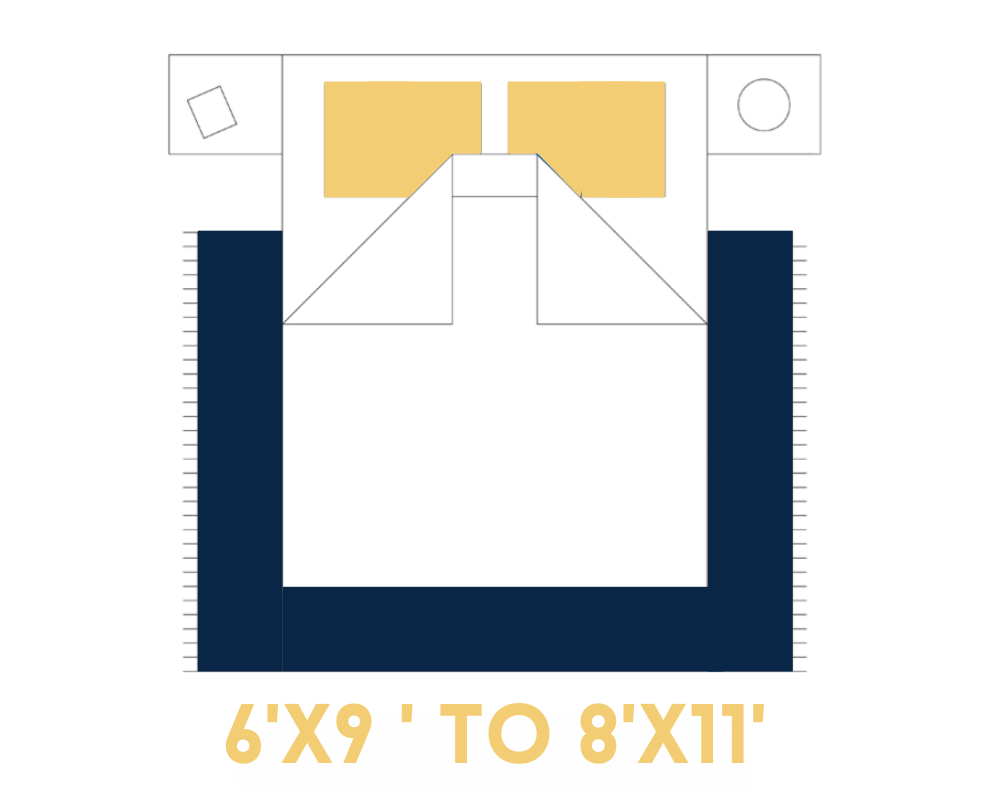
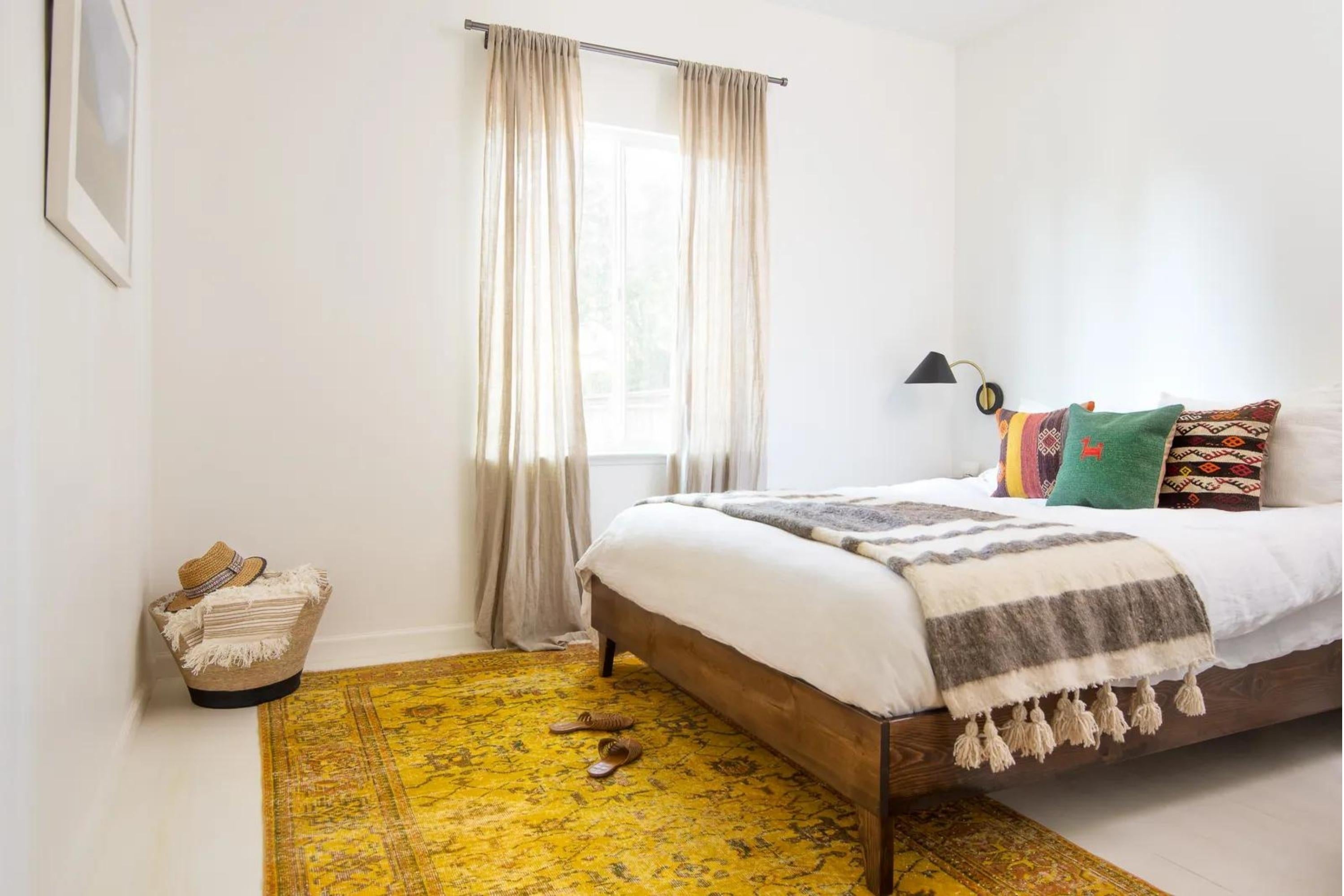
In the bedroom, your bed size plays the biggest role in choosing the right rug. A common and visually pleasing placement is to position the rug under the lower part of the bed, leaving enough space on the sides to step onto something soft when you wake up. Typically, the bed sits about halfway onto the rug, creating a balanced and comfortable layout. For smaller beds, a 5x7 rug can work nicely. A queen-sized bed pairs well with 8x10 or 9x12 rugs, while king-sized beds usually need a larger rug to keep the room feeling proportional and complete. No matter which size you choose, try to leave around 18–24 inches of visible floor around the rug to maintain an open and airy feel.
There’s no single “perfect” layout — different placements can work depending on your space. The key is finding what feels right when you step into the room.

Leave 18–24 inches of visible floor around the rug to keep the bedroom feeling open and well-proportioned.

Place the rug under the lower part of the bed so there’s enough space on all sides for a balanced and comfortable look.

For a lighter alternative, place runners along the sides and foot of the bed to achieve a similar look with less coverage.

For twin beds, a 5x7 or 6x9 rug fits well and provides enough coverage without overwhelming the space.

An 7x10 or 8x11 rug fits best for full or queen beds, providing space on each side.

King beds need larger rugs to feel proportional — go for 9x12 or bigger to fully anchor the space.

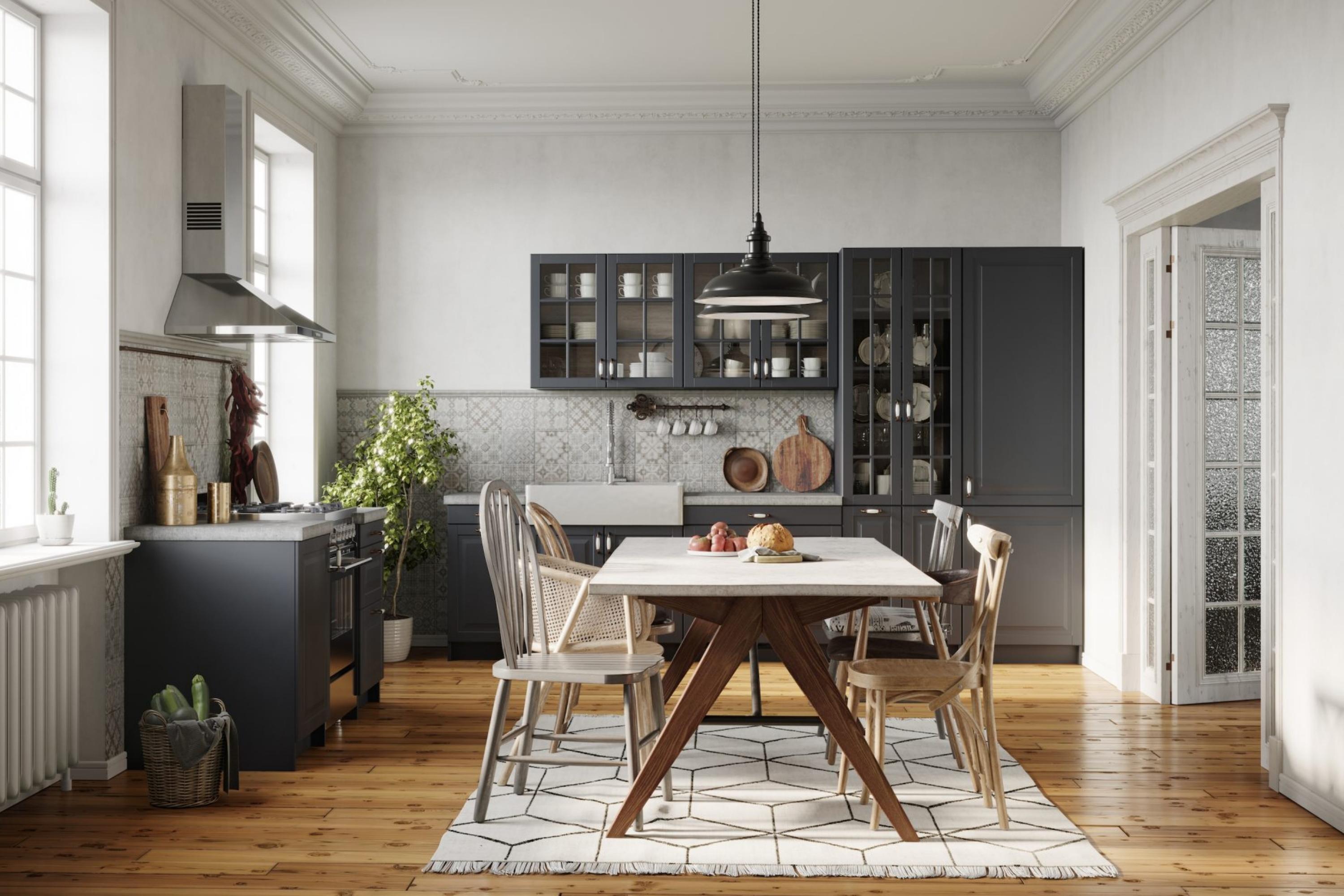
When choosing a dining room rug, start with your table size and how many people you want to seat comfortably.
A key rule: chairs should stay on the rug at all times — even when pulled out. This keeps the space looking clean and prevents that awkward “half on, half off” feeling. To achieve this, the rug should extend about 18–36 inches beyond each side of the table. Also, leave at least 18 inches of space between the rug and the walls to maintain a balanced look. For smaller dining setups seating 2–4 people, a 5x7 rug works well. For 6–8 seats, an 8x10 or 9x12 rug creates a more comfortable and proportioned layout. Round or square tables for 4–6 people pair best with a 7 or 9-foot round rug.
Have you ever pulled out a chair and felt it catch on the rug edge? That’s exactly what the right size helps you avoid.

Leave at least 18 inches of space between the rug and the walls to keep the dining area feeling open and balanced.

Extend the rug 18–36 inches beyond the table so chairs stay on the rug and the layout feels complete.

Make sure chairs remain fully on the rug, whether pushed in or pulled out, for a smooth and stable setup.

A 5x7 rug works well for smaller dining setups, creating a cozy and well-proportioned space.

To seat 6-8, an 8x10 or 9x13 size is recommended for the best pattern visibility and seating area.

Round and square tables pair best with 7 or 9-foot round rugs, keeping the layout soft and symmetrical.

In the kitchen, comfort and practicality matter just as much as style.
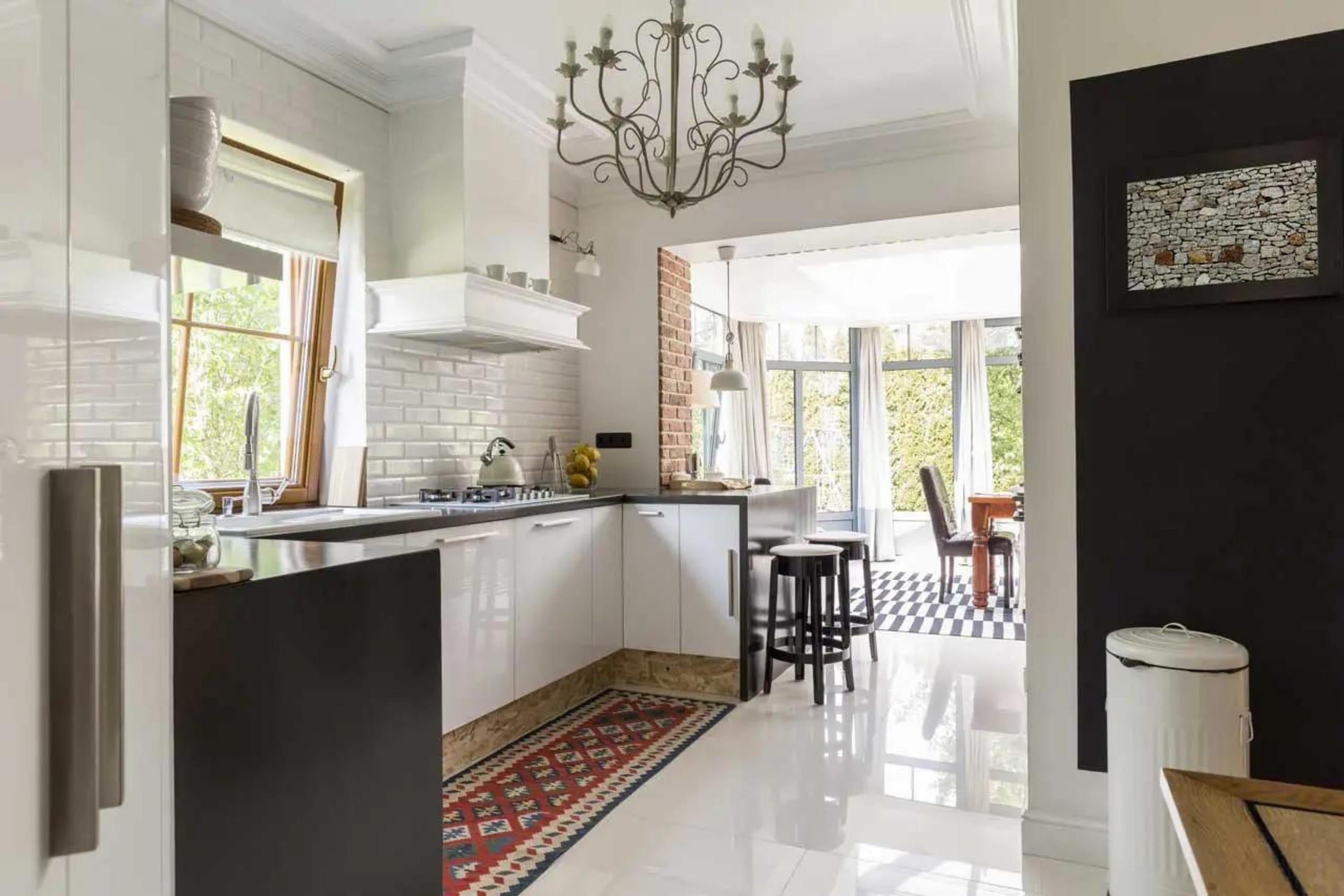
Unlike other rooms, kitchen rugs are often placed in high-traffic areas like in front of the sink, stove, or along walkways. A well-chosen runner or small rug can reduce fatigue while standing and add a warm, inviting touch to the space. For narrow areas, runners (such as 2x6 or 2x8) work best, creating a clean and continuous look. In wider kitchens, you can use a slightly larger rug to define the space while still allowing easy movement.
Make sure to leave a bit of space around the edges so the rug doesn’t feel crowded, and always choose a size that fits naturally within your layout.

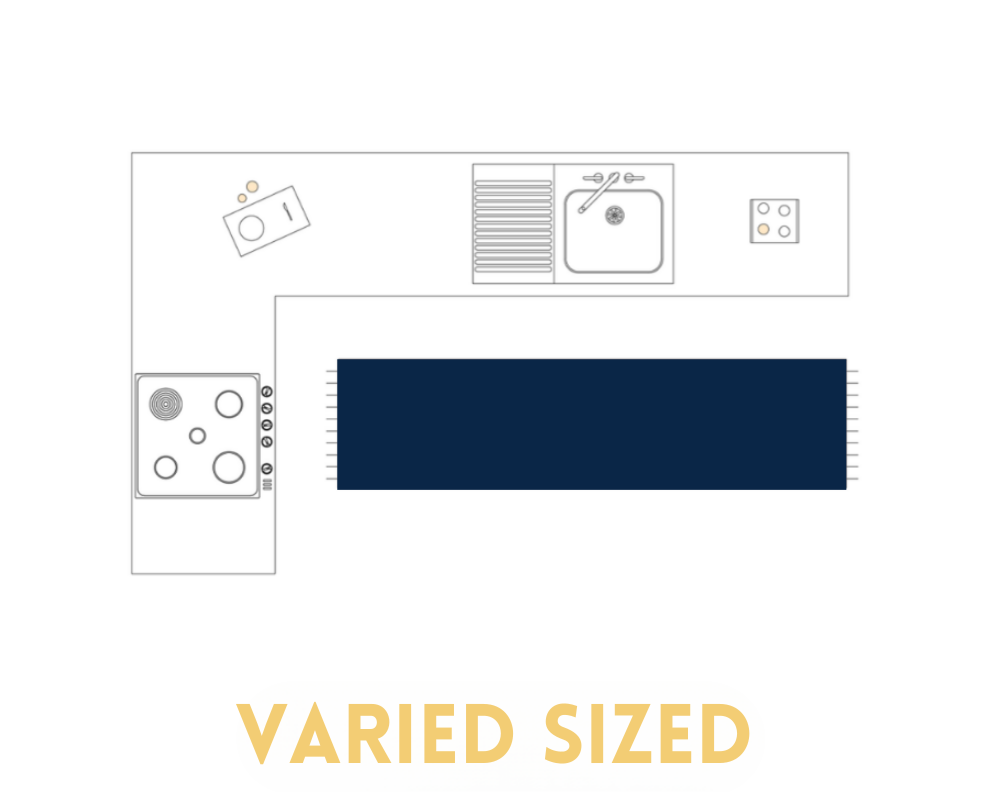
Measure your kitchen walkway to find the right runner length. A well-fitted runner should follow the flow of your space without feeling too short or too long.

In wider kitchens, a 4x6 or 5x7 rug works well to define the space while keeping the layout practical and balanced.

Use two 2x6 runners in L-shaped kitchens to add comfort and coverage in high-traffic areas.

A good runner should be long enough to follow the full length of the hallway, while still leaving visible floor space on both sides. This helps the space feel clean and not overcrowded.
Try to leave around 12–24 inches of space between the rug and the walls. This creates a balanced frame and keeps the runner visually centered. Also, consider door clearance — your rug should never block door movement. If your hallway has multiple doorways, make sure the runner fits naturally between them without cutting off the flow.
Using a non-slip pad is highly recommended to keep the rug secure in high-traffic areas. Have you ever noticed how a long, well-placed runner makes a hallway feel instantly more complete?

In kids’ rooms, comfort and safety come first.
Just like adult bedrooms, rug size depends on the layout — but here, it’s also about creating a soft and inviting space where children can play freely. A rug that extends beyond the bed or play area helps define the space and makes the room feel warmer and more complete.
For smaller setups or nurseries, a 4x6 or 5x7 rug works well to create a cozy play zone. For larger rooms, a 6x9 or 8x10 rug can cover more of the floor, giving kids plenty of space to move, sit, and play comfortably.
Choosing a slightly larger rug also means it can adapt as your child grows, making it a more practical long-term choice. Have you ever noticed how kids naturally move toward soft surfaces when they play?
A PRIVATE OFFER FROM KIRMEN
Enter your email, spin once, and reveal your code instantly. Plus, get first access to one-of-a-kind vintage rug arrivals.
One email. One spin. Instant reward.
