













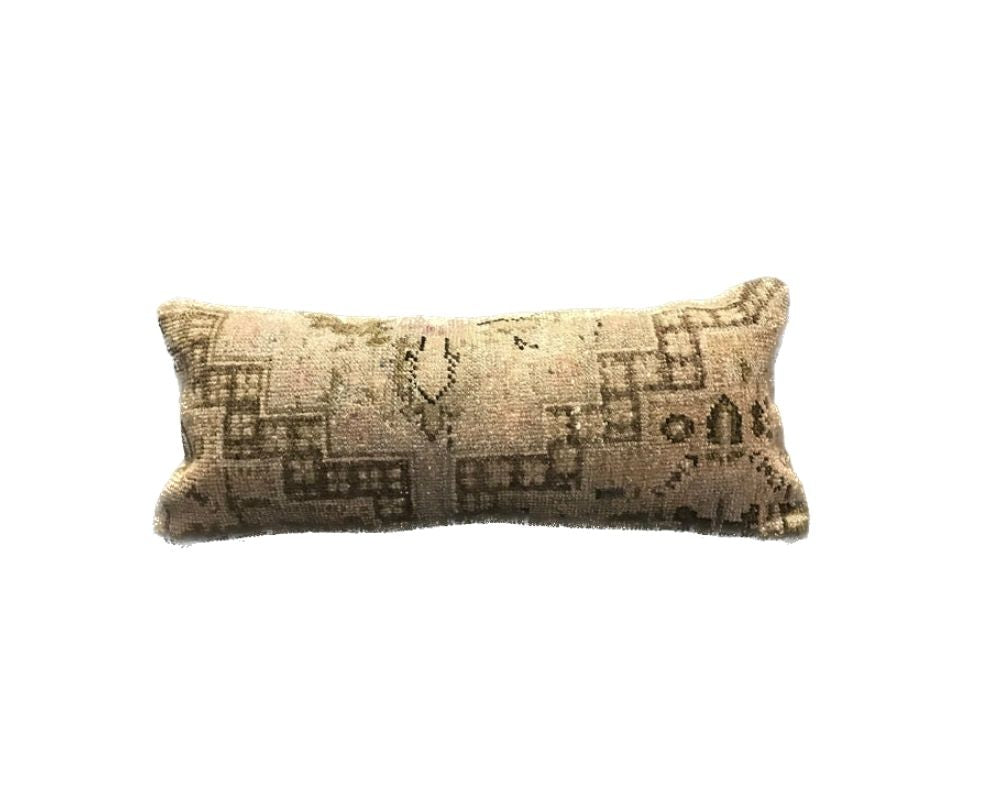
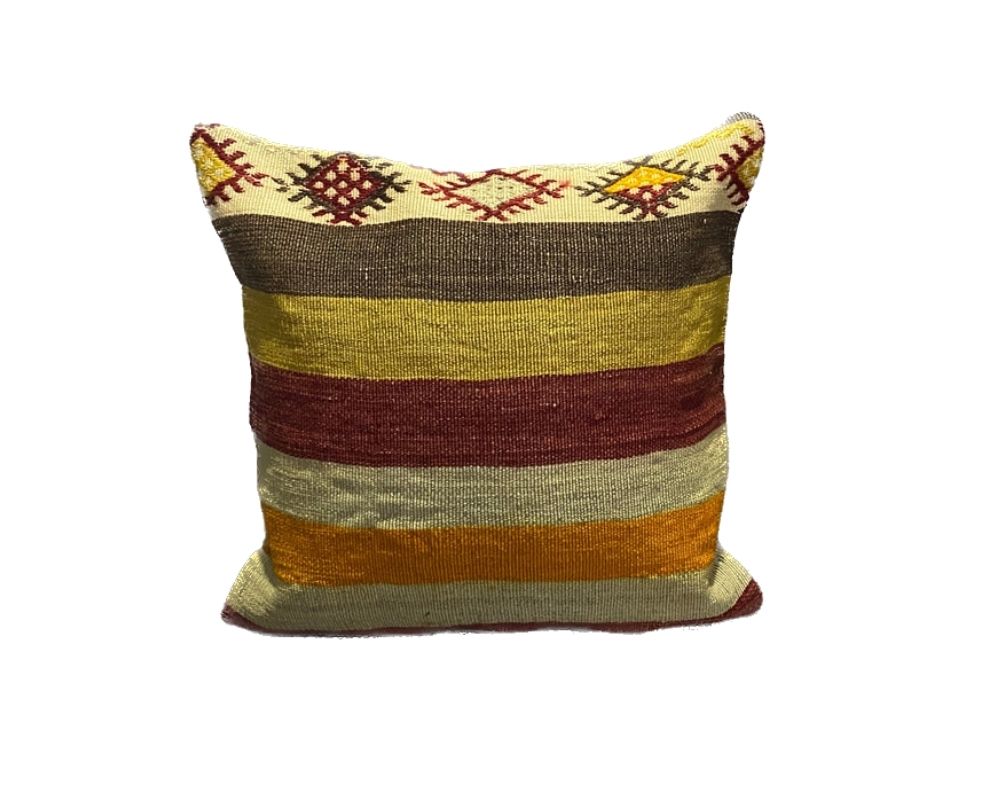
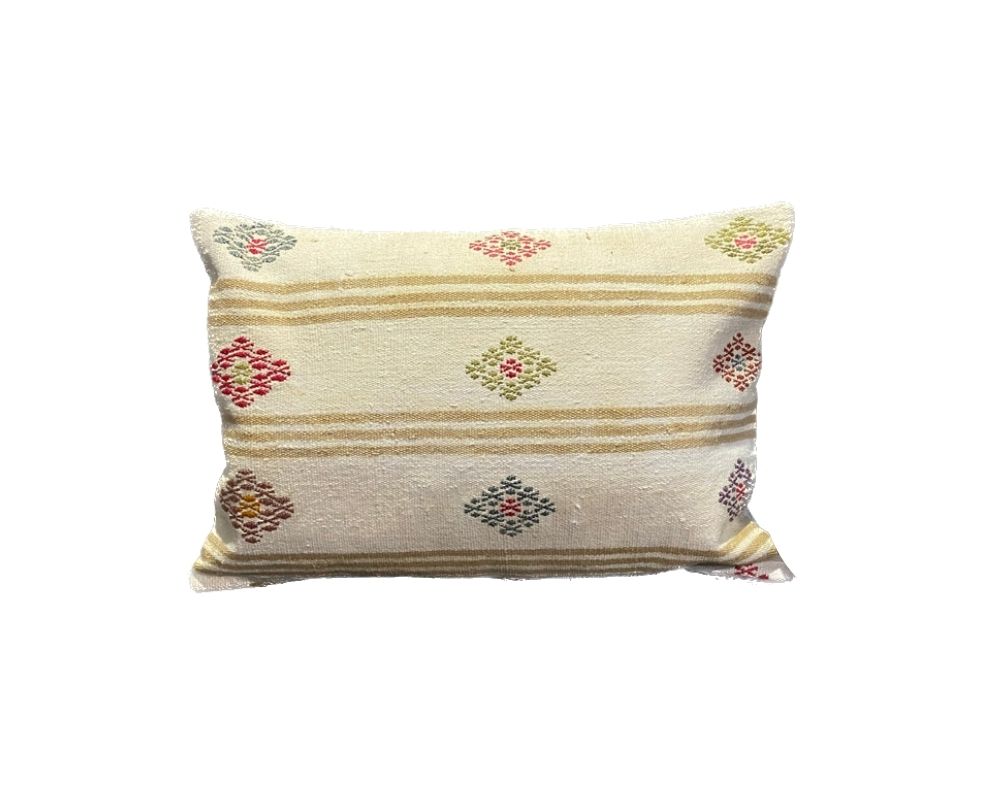
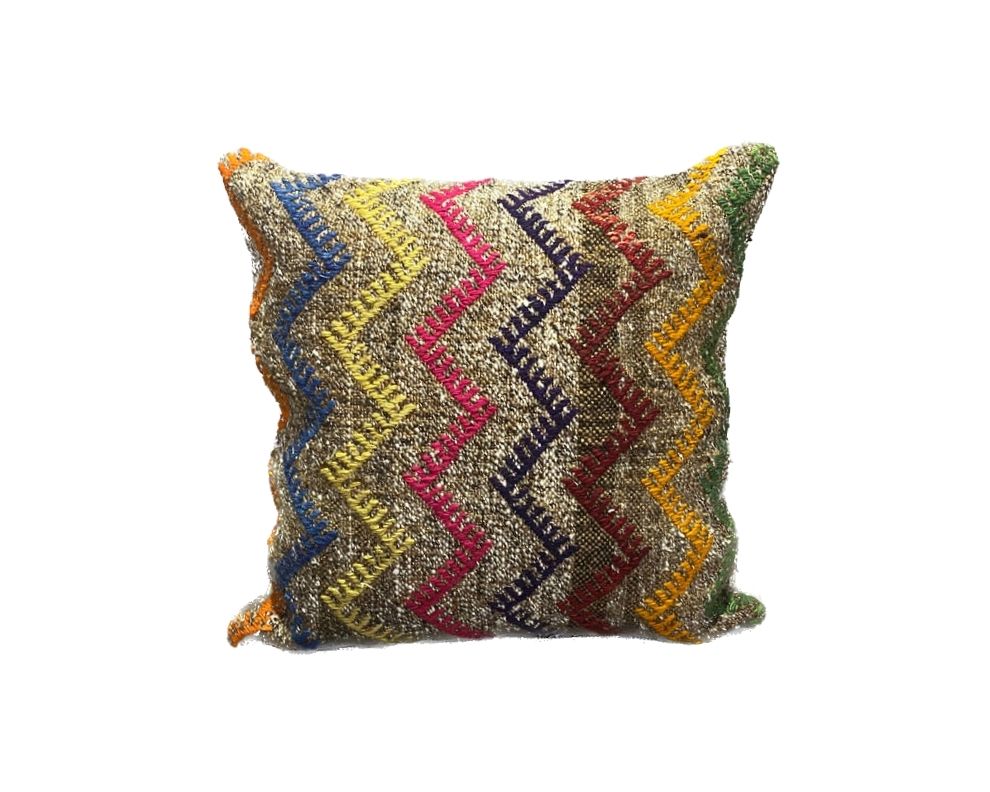

An overdyed rug starts as someone else's rug entirely. Before the saturated color, it was a faded, hand-knotted piece from a table in a small Anatolian market. Overdyeing softens or strips what's left of that color and adds a new dominant tone, while the ghost of the old pattern stays visible underneath. On paper, that's a straightforward swap. Inside a dye workshop, it's more finicky than it sounds. If you're wondering whether an overdyed rug is a real design choice or a trend dressed up in good lighting, the answer sits in details most articles skip.

What Is an Overdyed Rug?
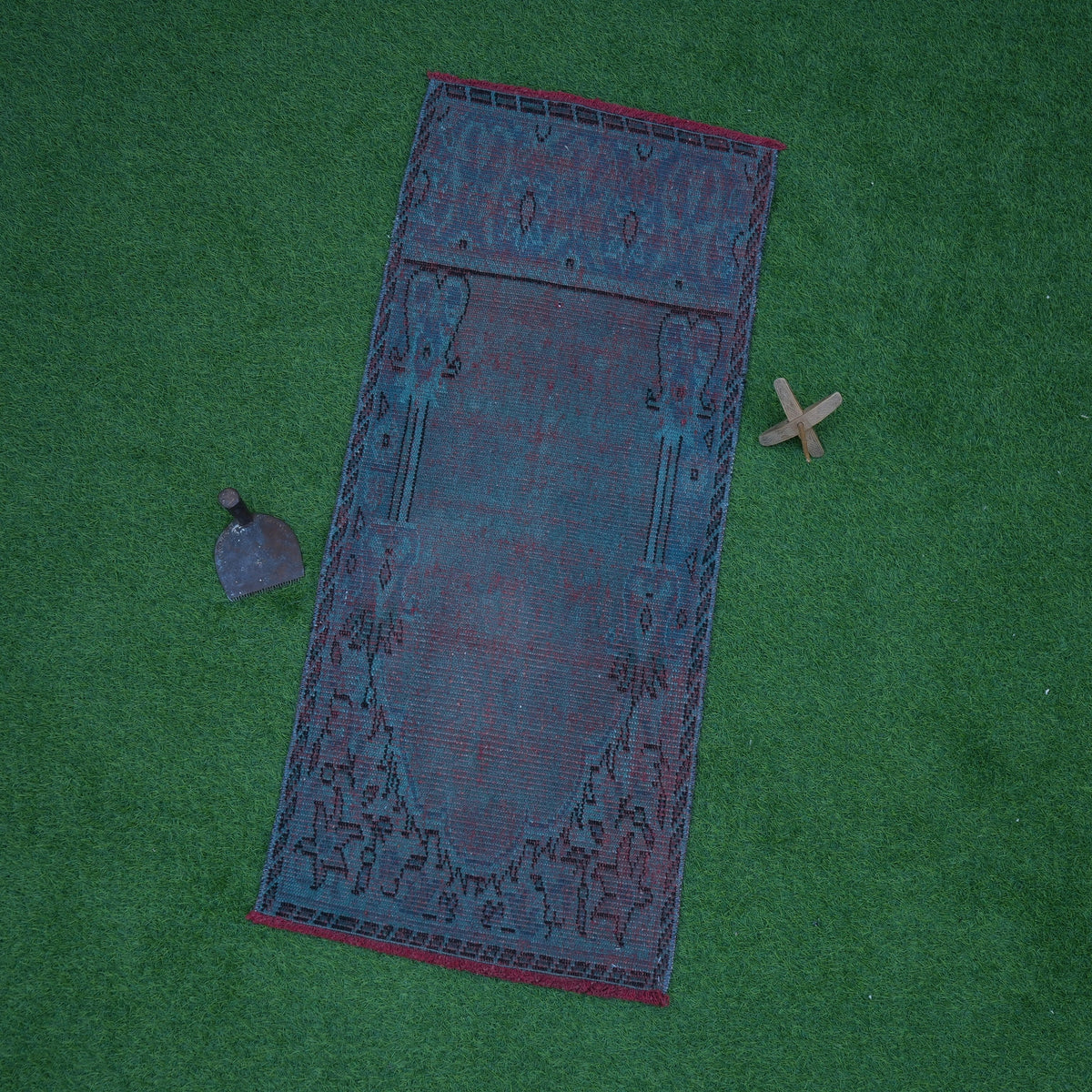
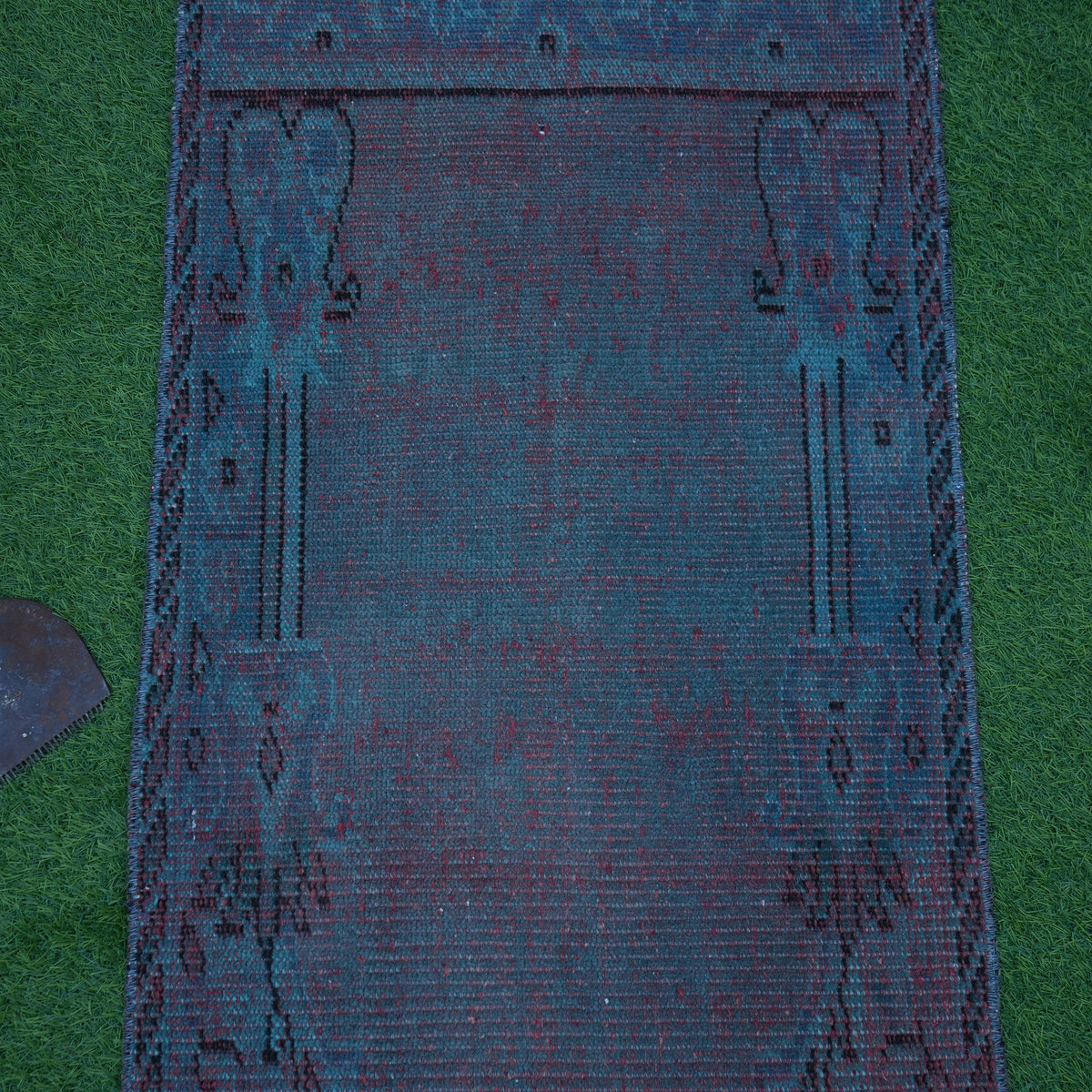
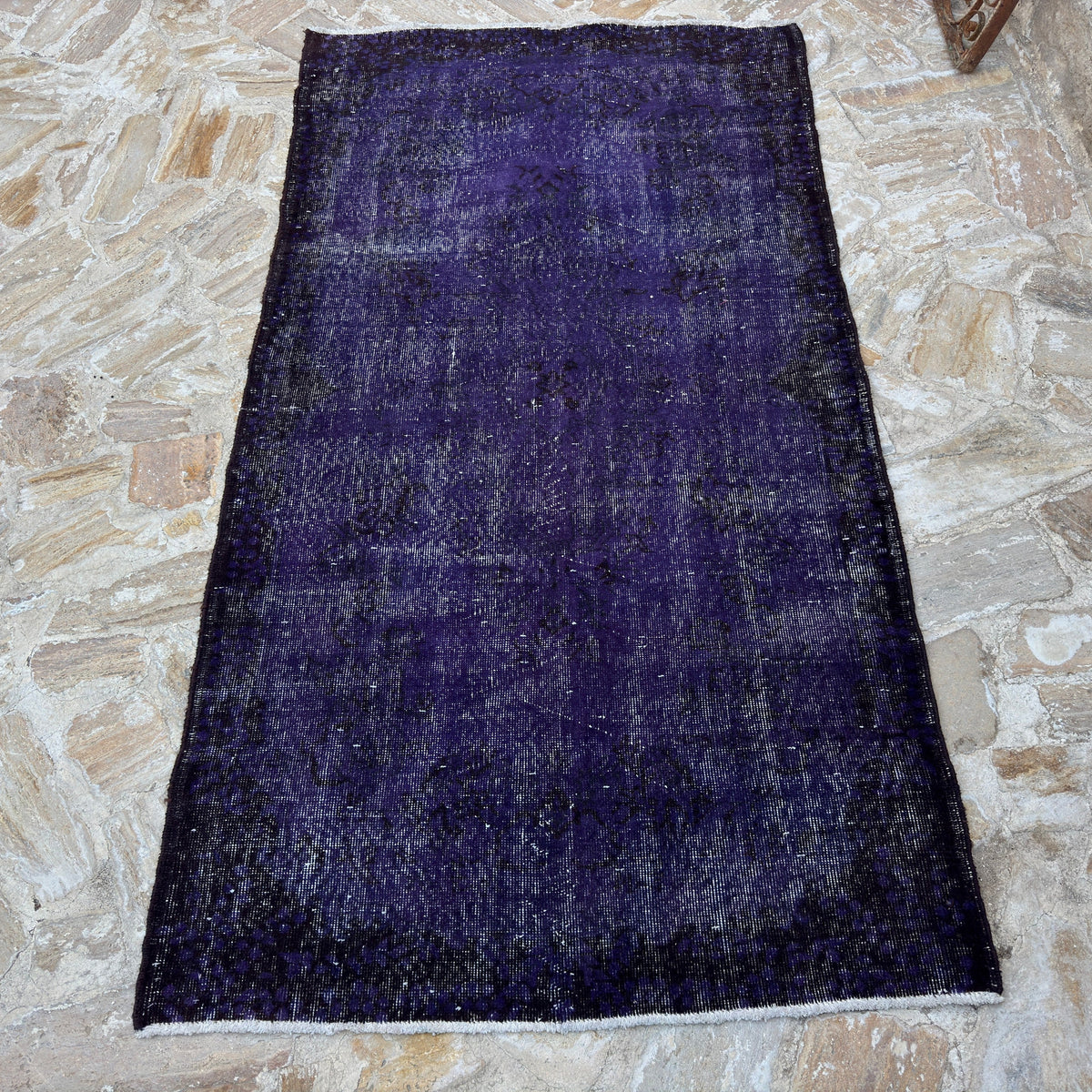
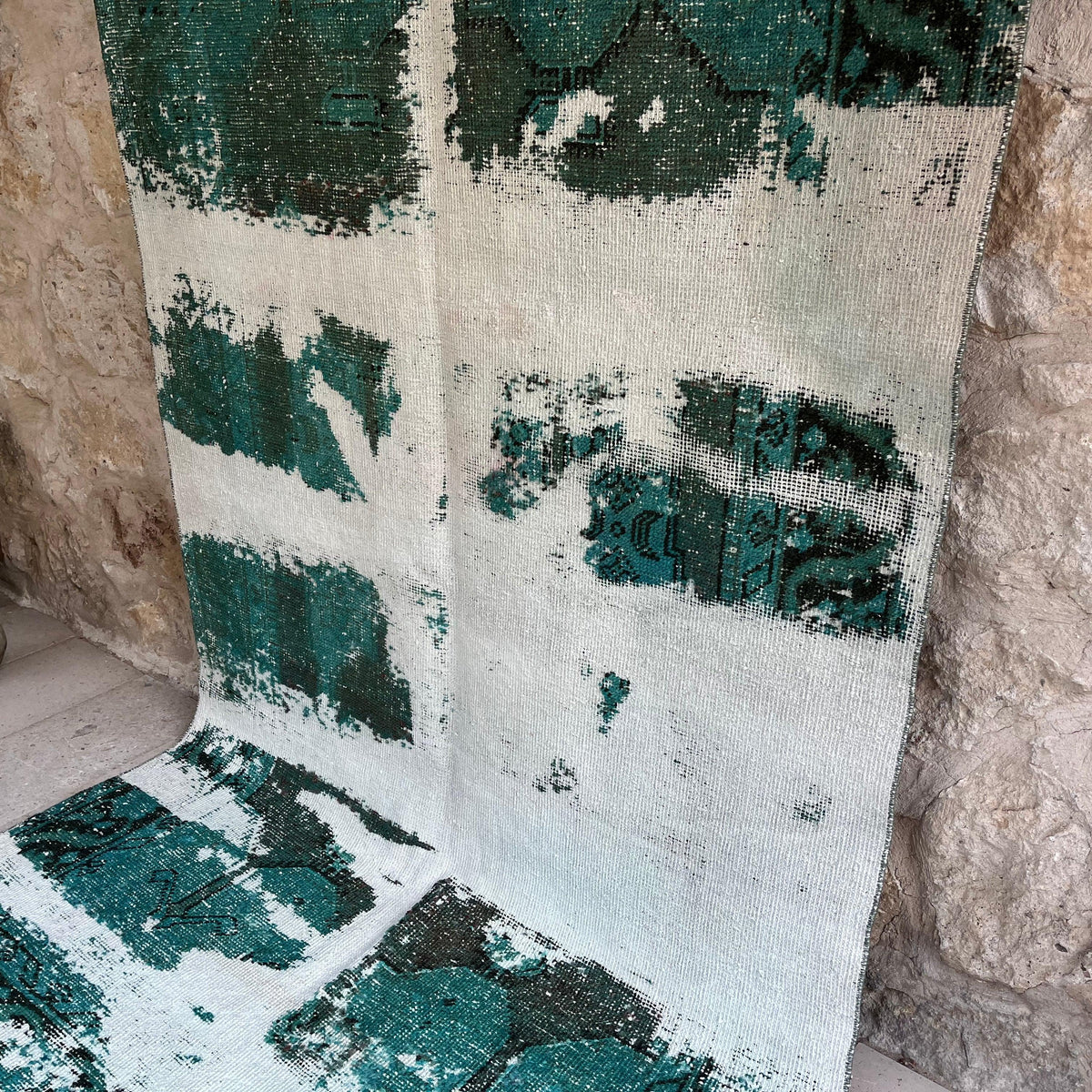
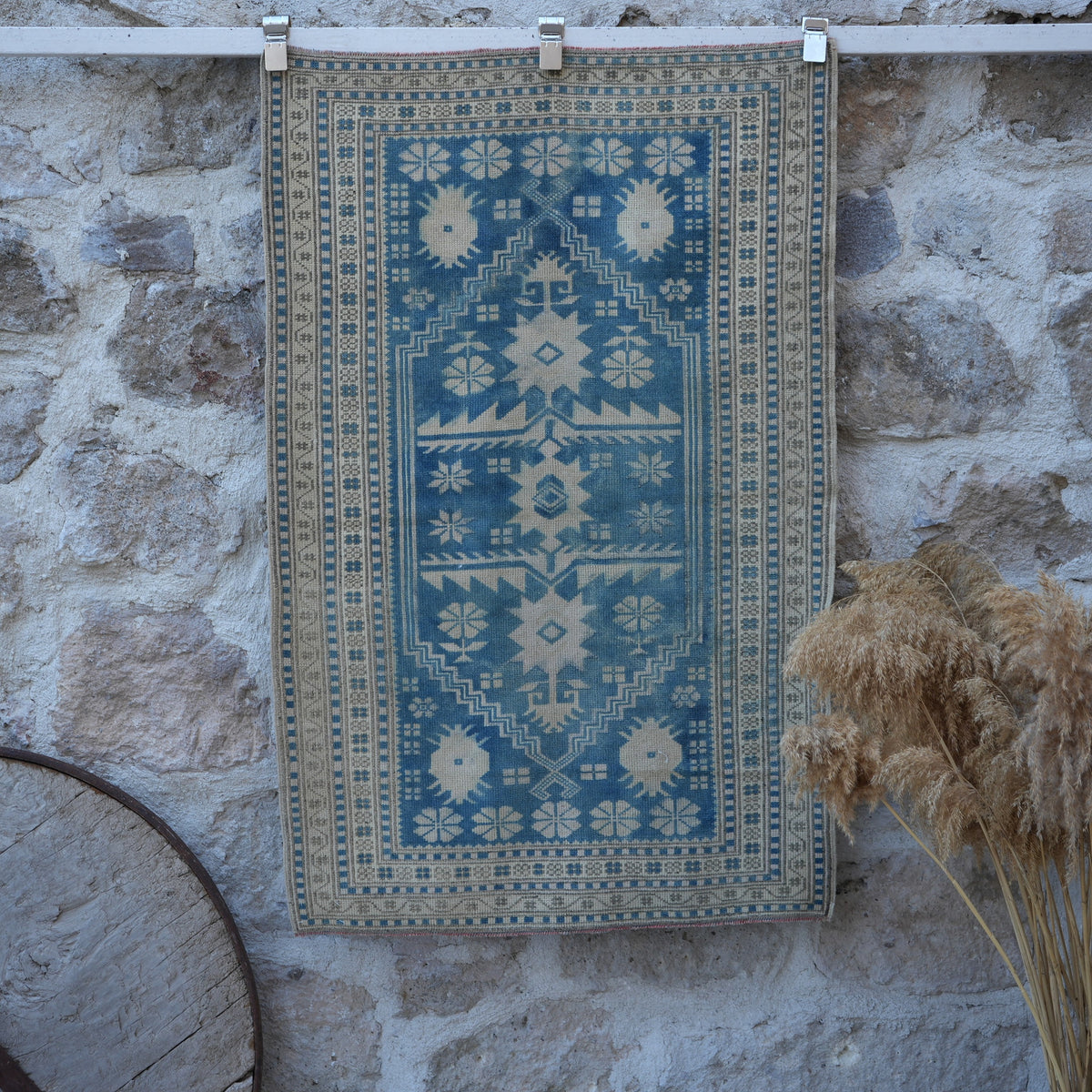
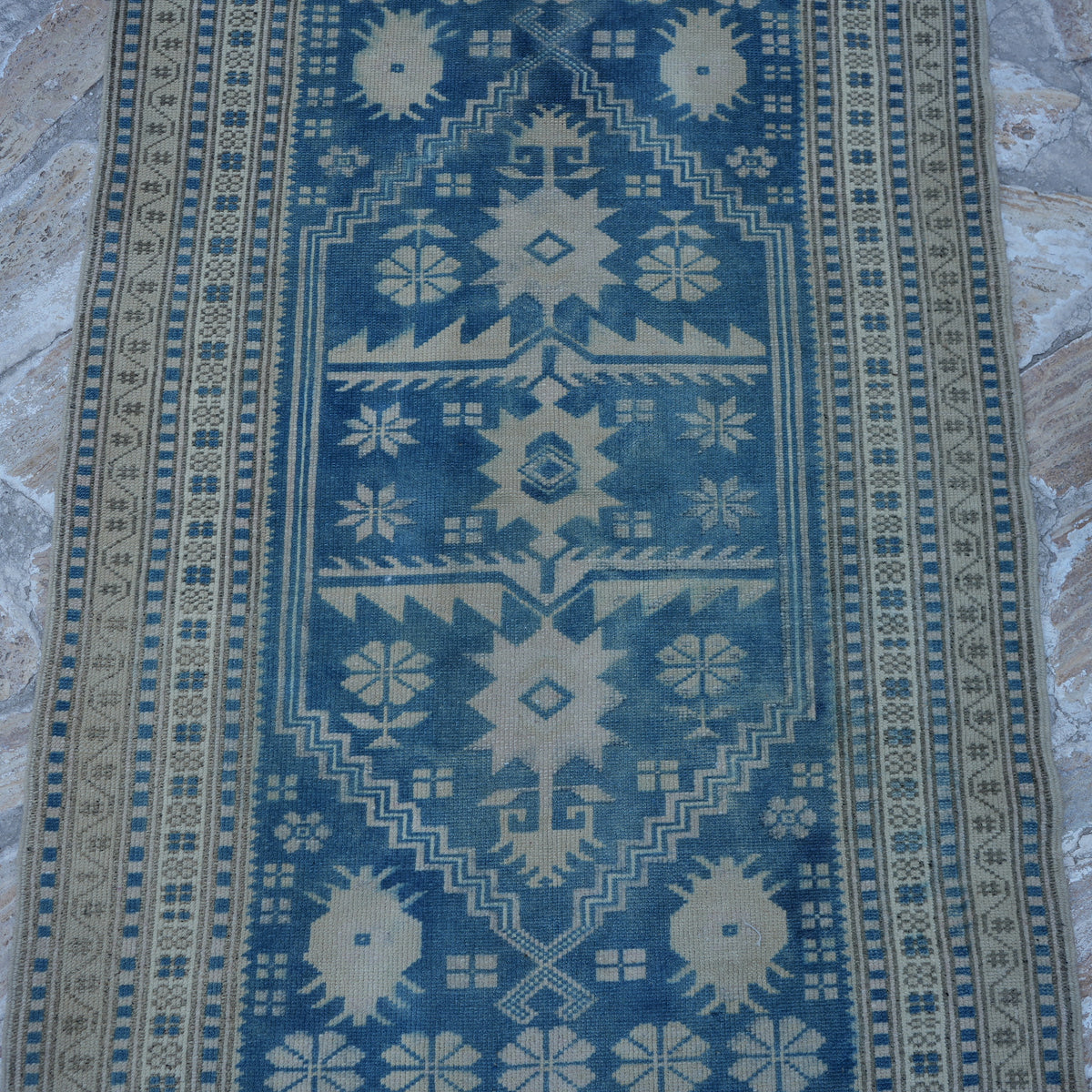
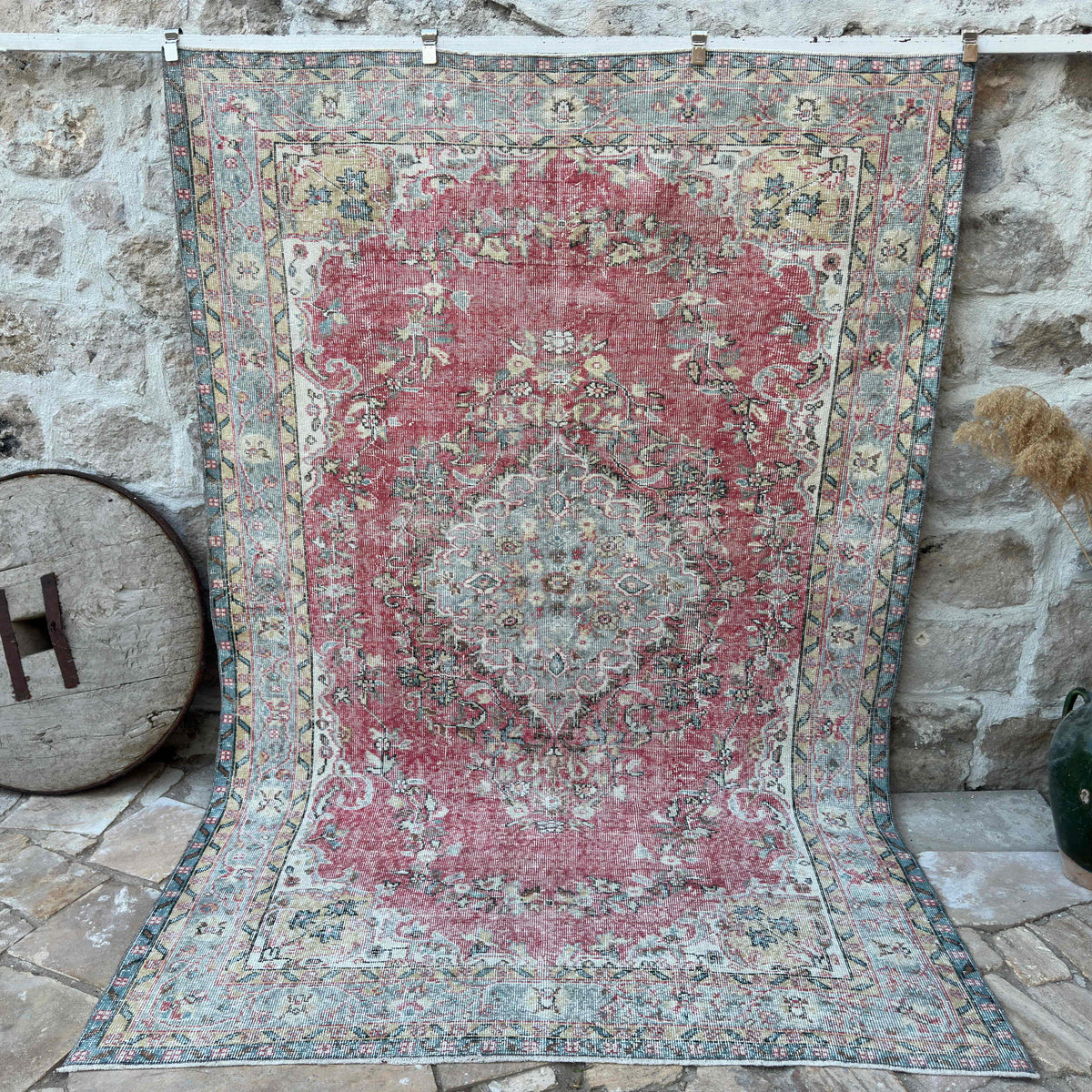
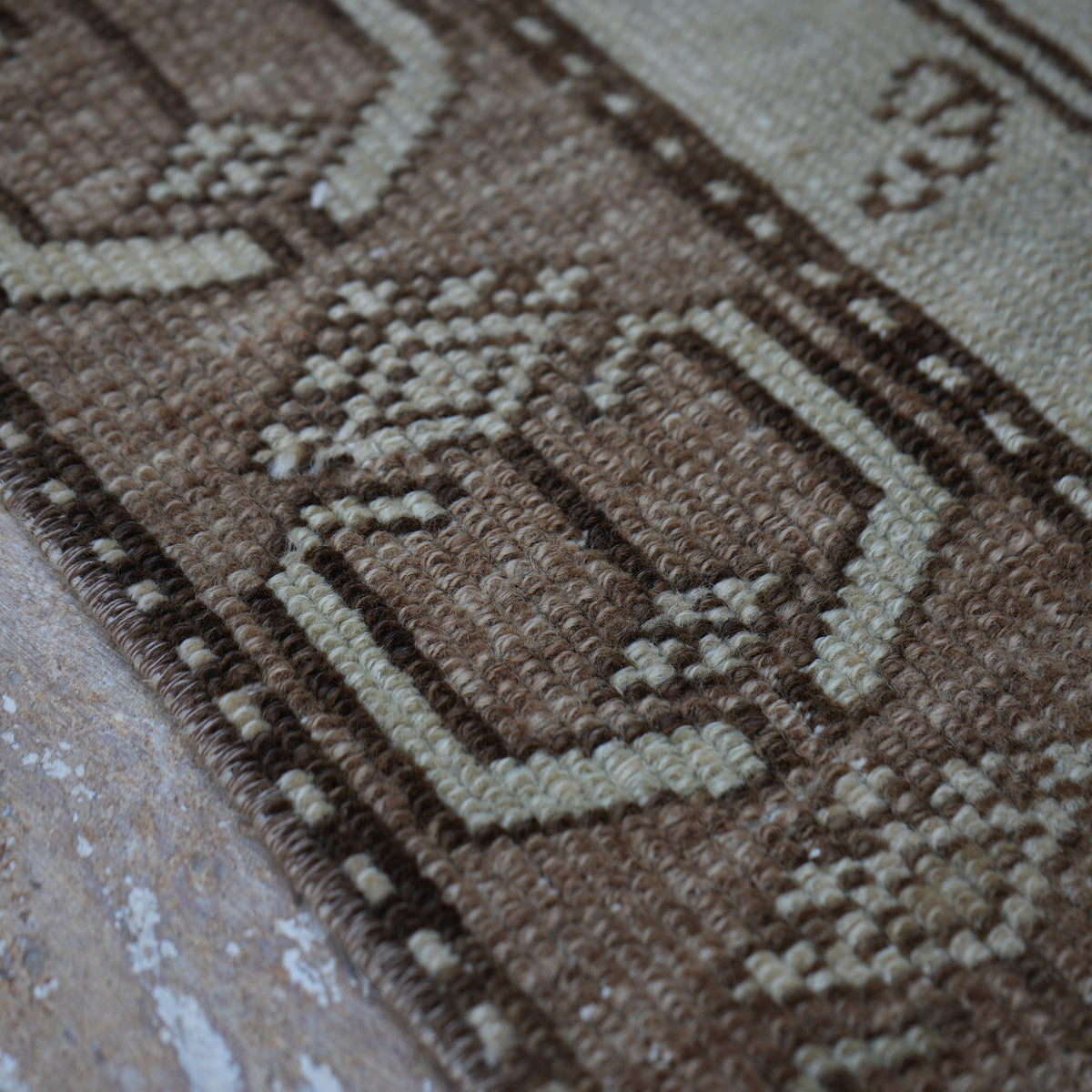
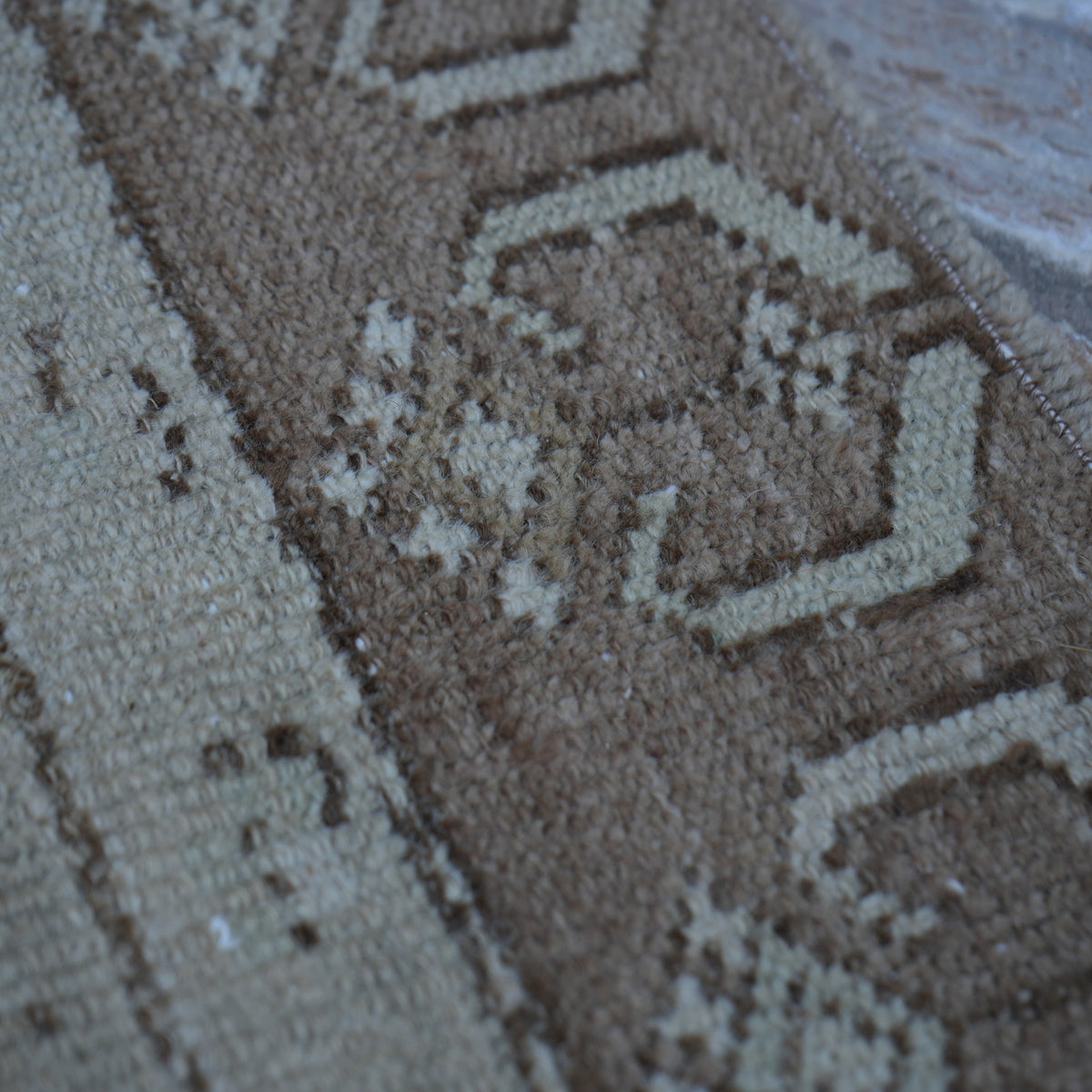
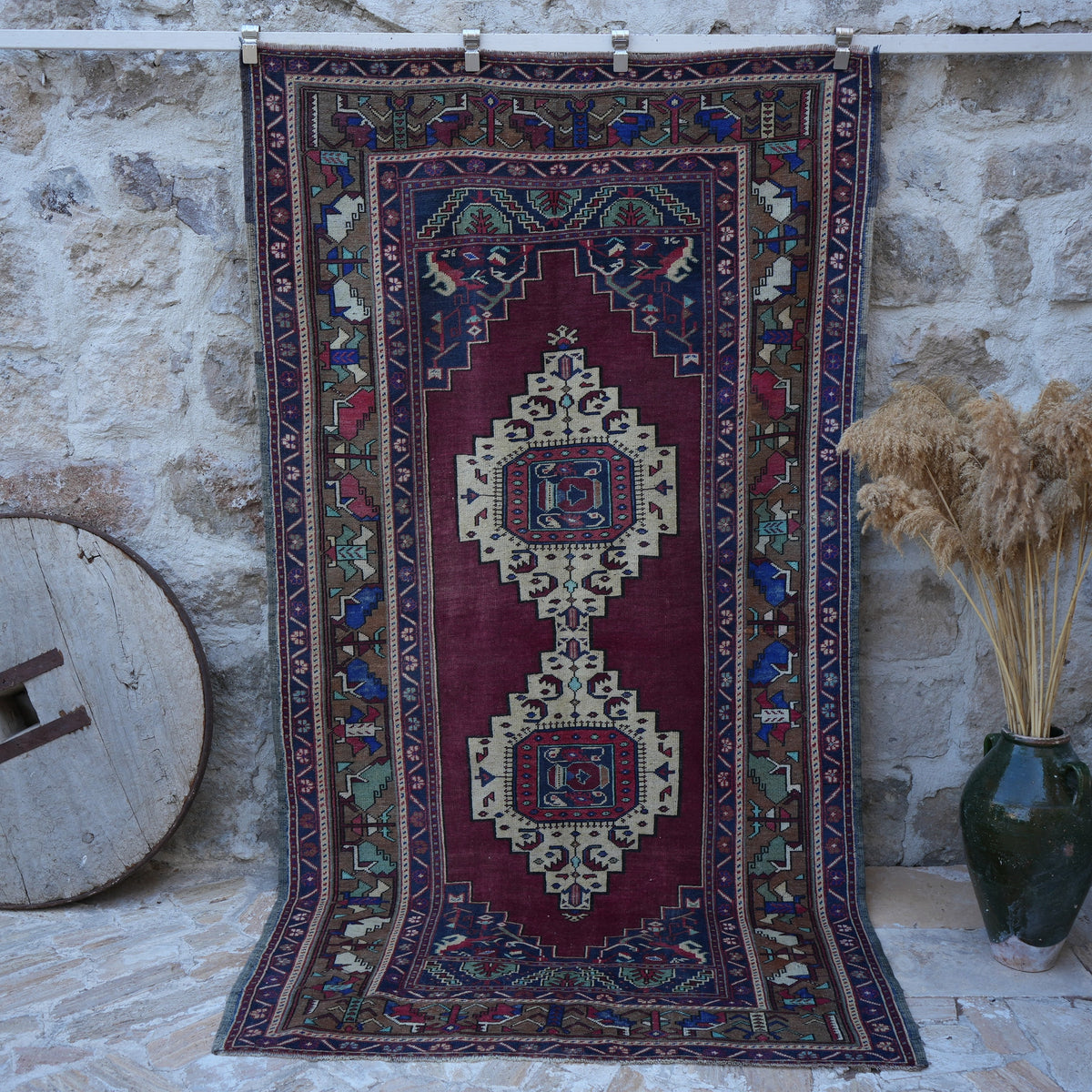
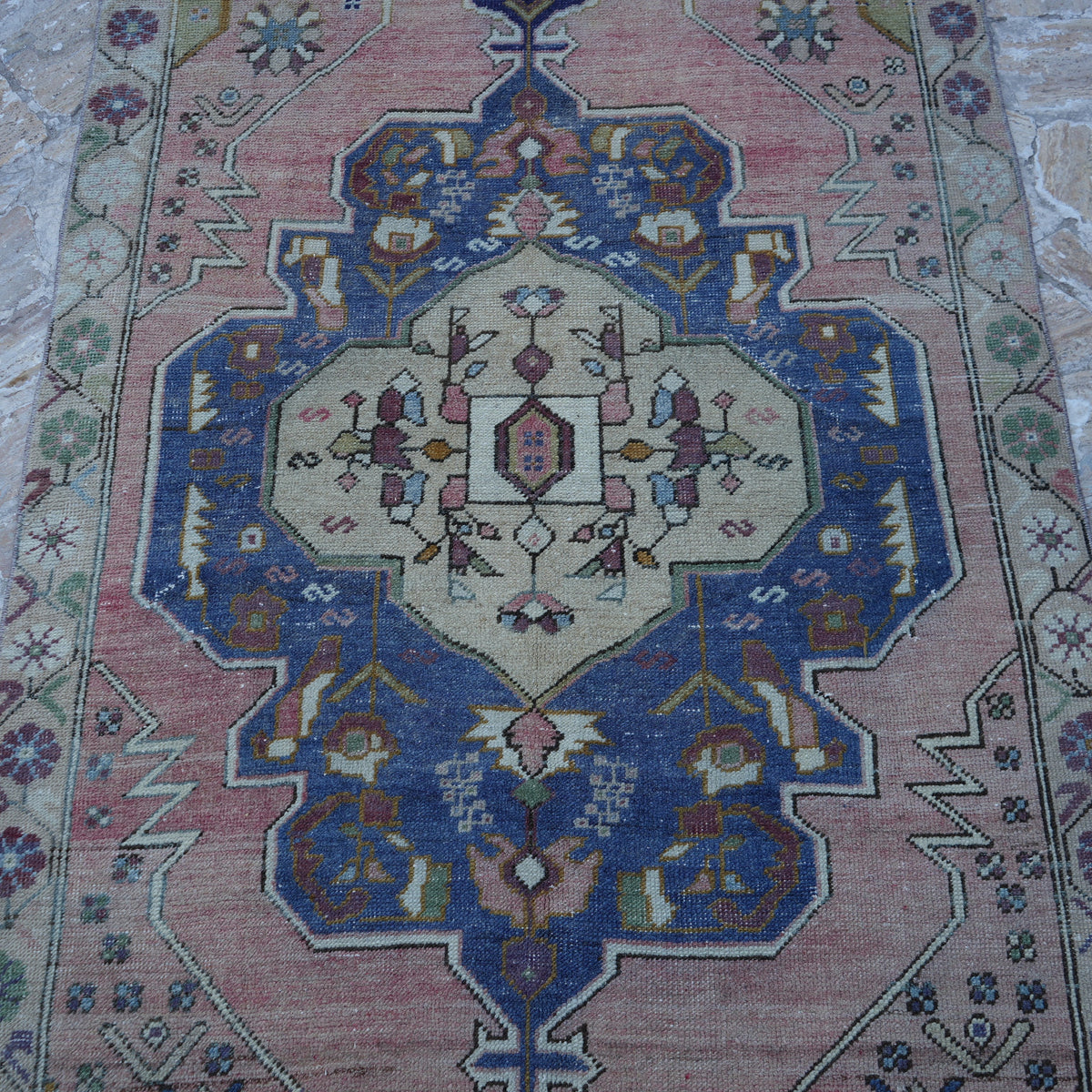
An overdyed rug is usually a structurally sound vintage rug whose original colors have been softened, partially stripped, or neutralized before it's dyed again in a new dominant color. Most start as Persian rugs, Turkish rugs, or other hand-knotted pieces — an overdyed Persian rug or Turkish rug goes through the same treatment. The new dye penetrates the wool fibers, while remnants of the original color let the old motif show through.
That's the common misunderstanding: picturing a new rug painted to look aged, rather than an old rug given new color. See the range in our overdyed rugs collection.

How Are Overdyed Rugs Made? Inside the Hand-Dyeing Process
I remember the first time I saw this process as raw material. At a market near Aksaray, buying a different piece, I noticed a separate pile off to the side — rugs bleached almost bone white, no color left. The seller said they were waiting to be dyed. That was the moment it stopped being an abstraction for me.
I select vintage overdyed rug candidates — occasionally a genuine antique overdyed rug — from villages around Aksaray and Cappadocia: not the prettiest pieces, but ones with faded color and strong wool. Weak fiber, I won't touch it.
From Faded Vintage Rug to Saturated Color
After cleaning and, where needed, sun bleaching, the rug is soaked in a dye bath, sometimes more than once, then washed again to set the color. Even rugs entering the same bath can finish in different tones — bath time matters, but so do the wool's condition, remaining original dyes, and prior wear. I used to think that variation meant something had gone wrong. Now I see it as a reminder that aged wool doesn't absorb color with machine-like uniformity.
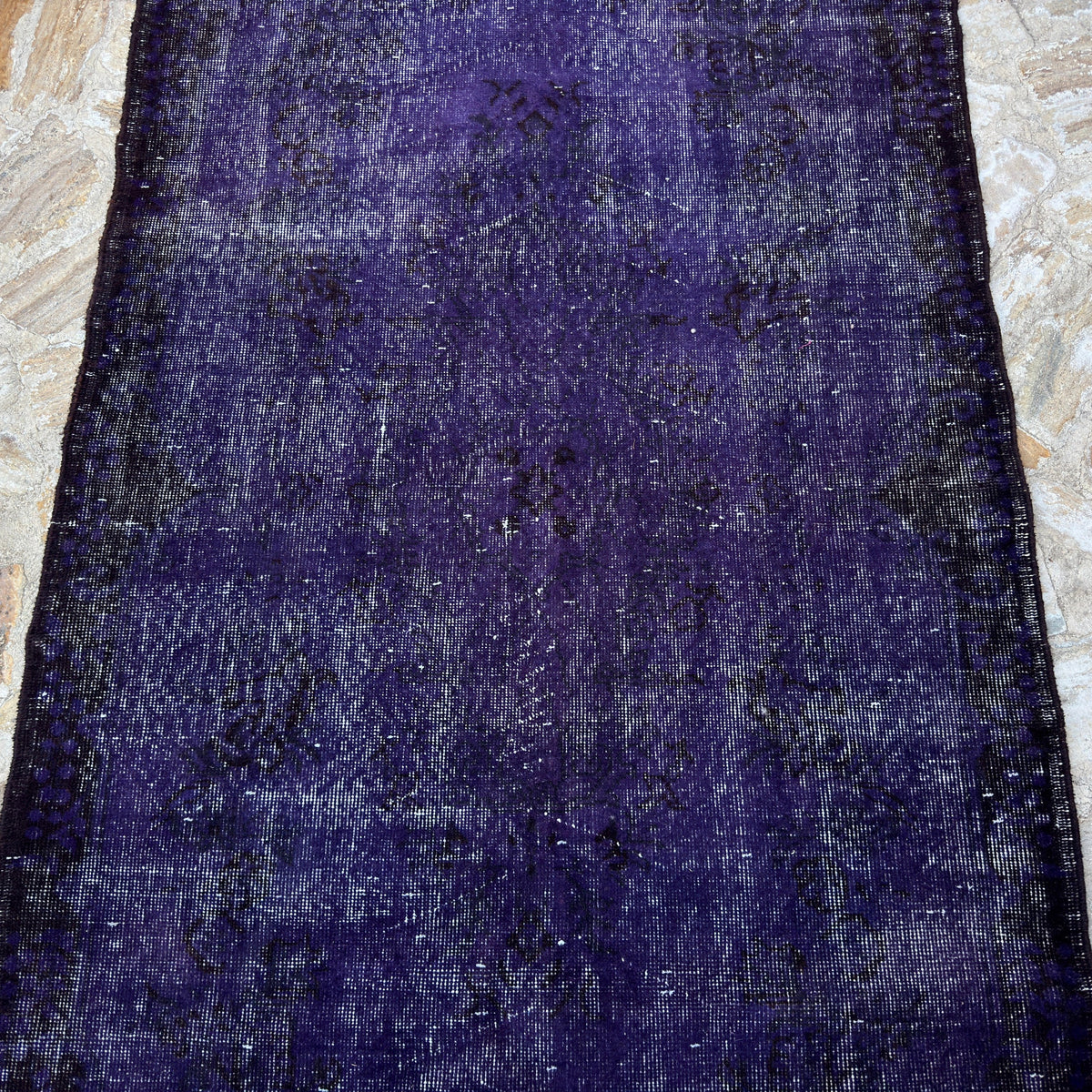
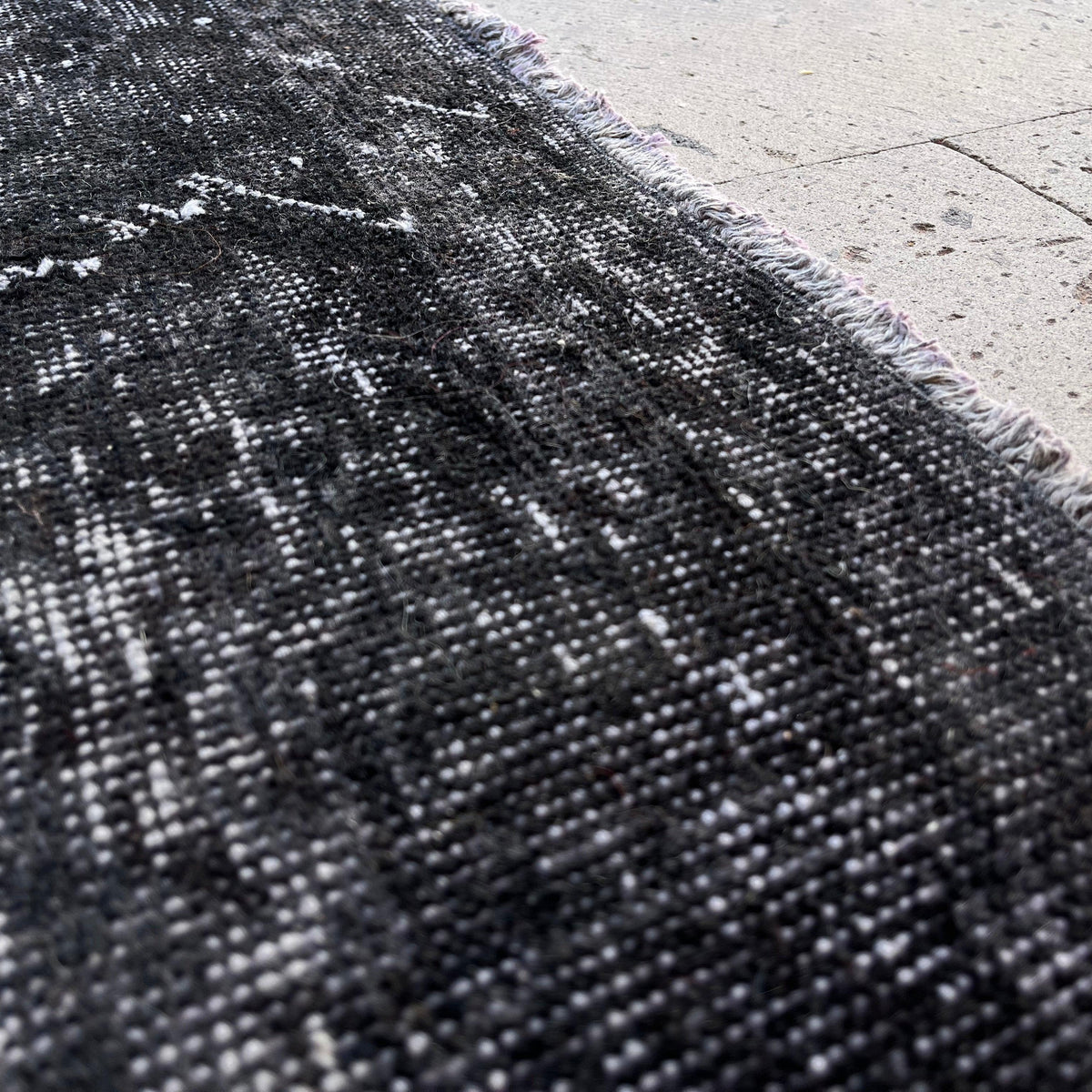
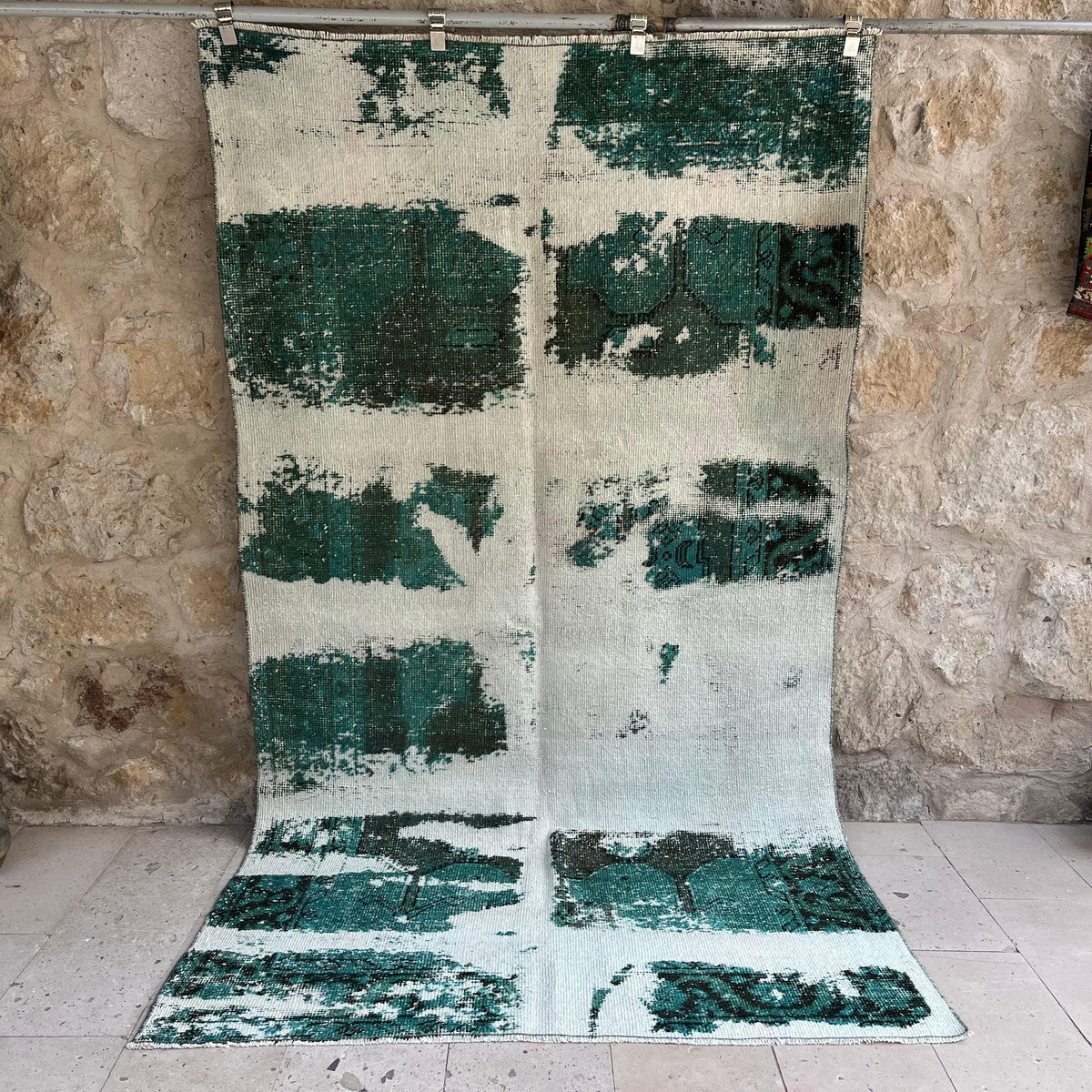
Why the Original Pattern Still Shows Through
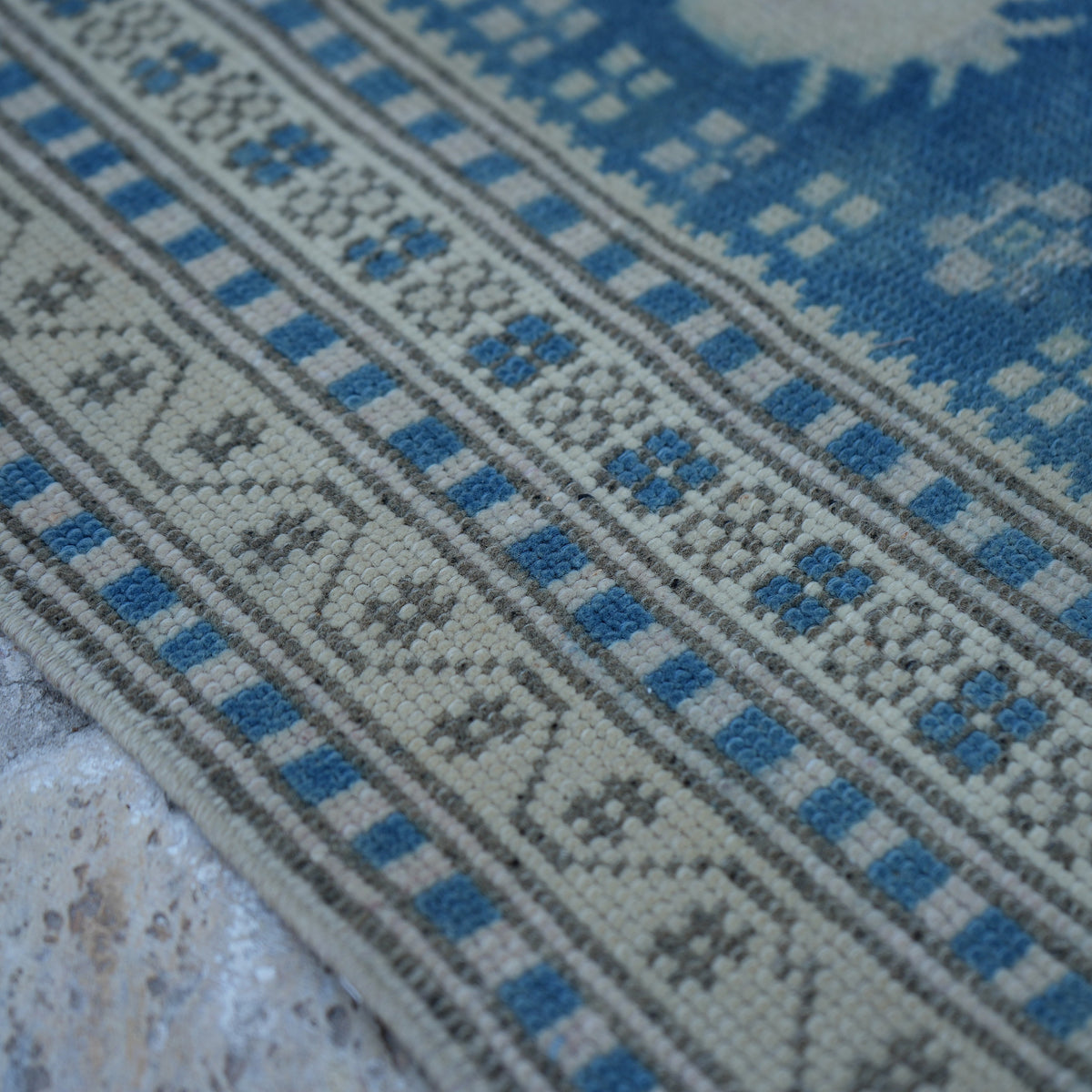
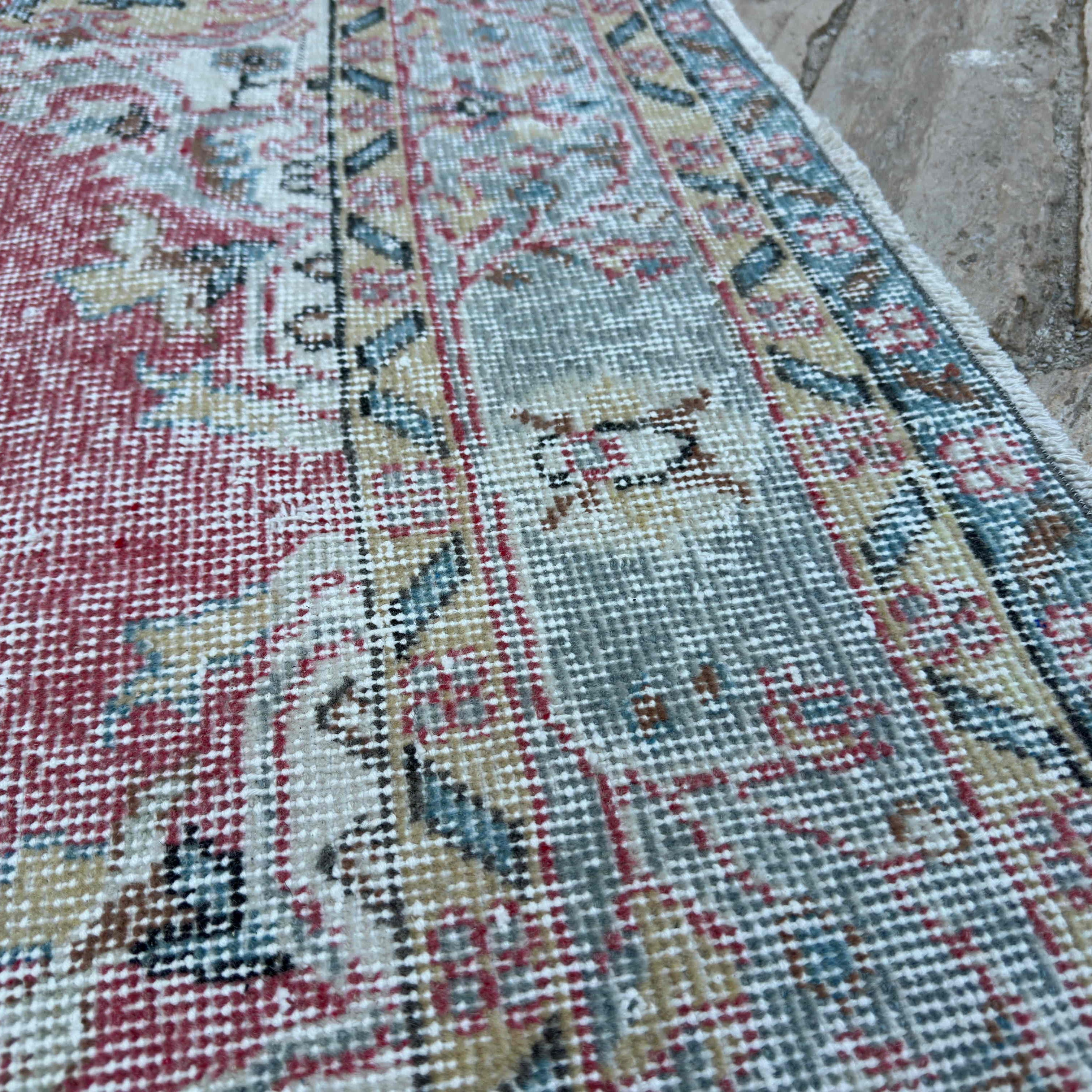
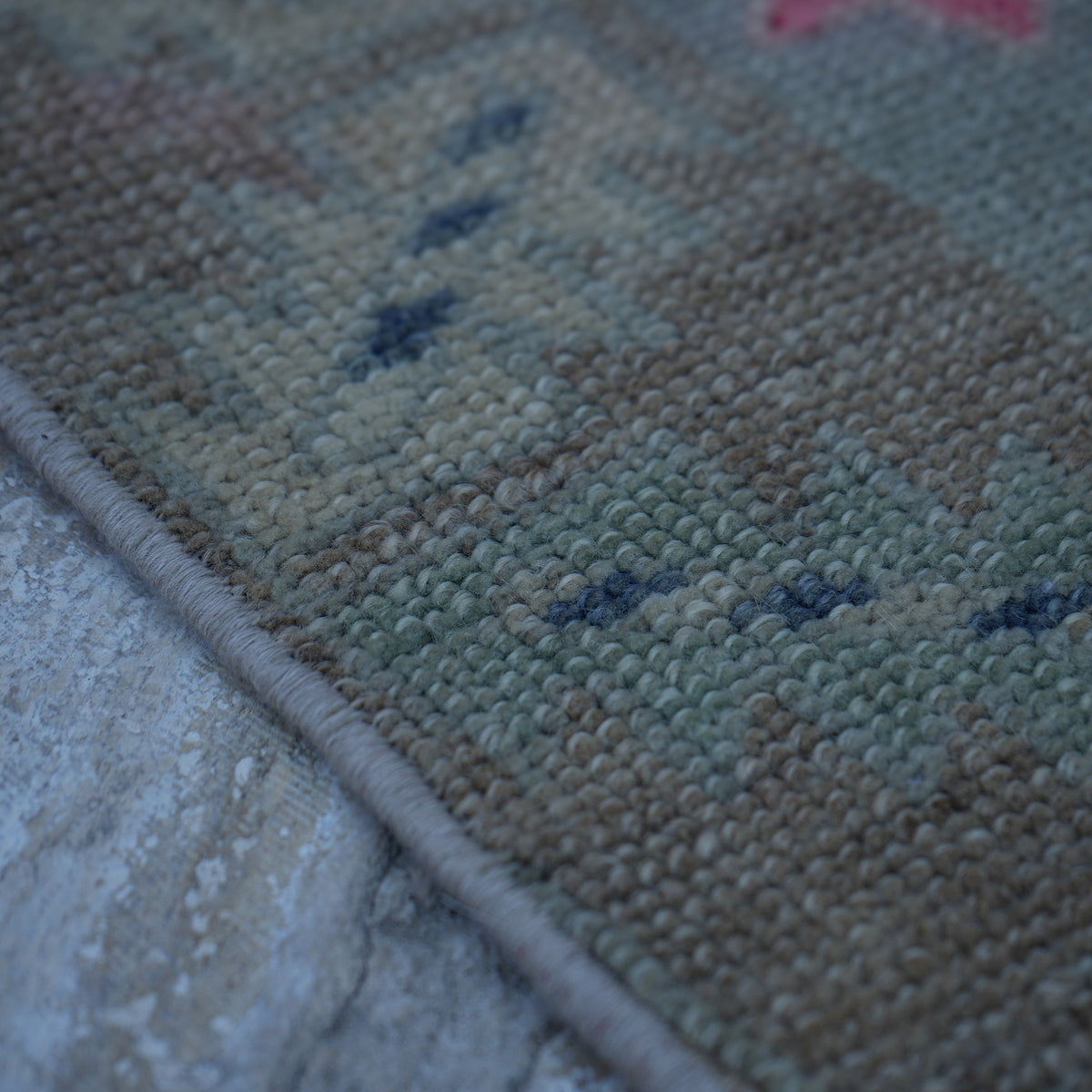
The old motif remains visible because worn areas, remaining original dyes, and variations in the wool absorb color at different intensities. Overdyeing suits natural-fiber rugs sound enough to take a new dye, especially vintage wool with a hand-knotted foundation.

Why Overdyed Rugs Feel Right for 2026 Interiors
Interiors have been drifting away from polish, toward rooms that look collected rather than staged. An overdyed rug fits that mood — saturated color over worn softness. There's a practical case too: a worn vintage rug with muddy color often gets passed over, though the weave is sound. Overdyeing gives it a second life instead of a landfill trip. Our vintage rugs collection shows overdyed styles beside originals.
Trending Overdyed Rug Colors for 2026
The color story has shifted from the loud, primary-saturated tones that once defined overdyed rugs, vintage and antique alike, toward something closer to natural pigment.
- Deep emerald and forest green, grounded rather than bold — our green rugs collection.
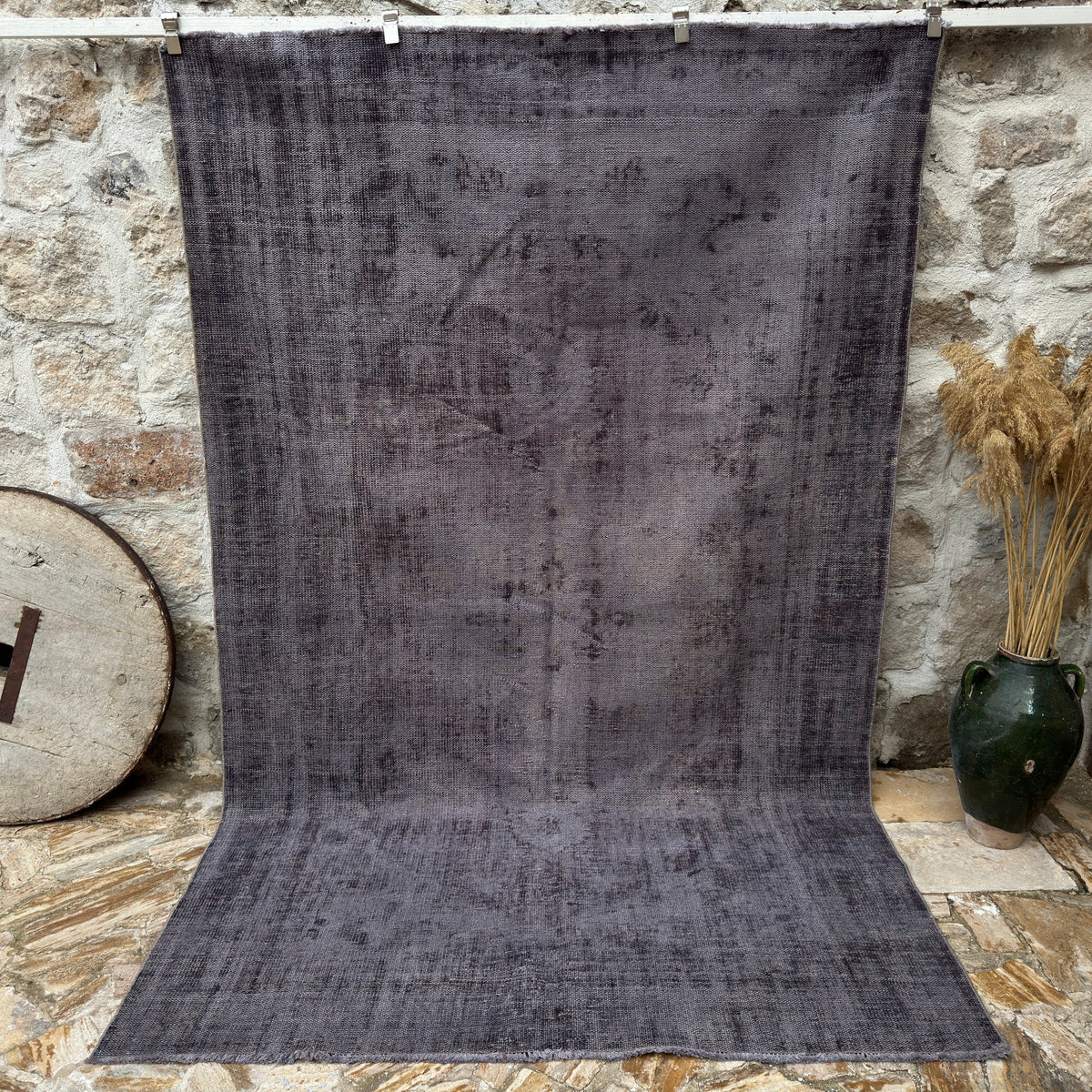
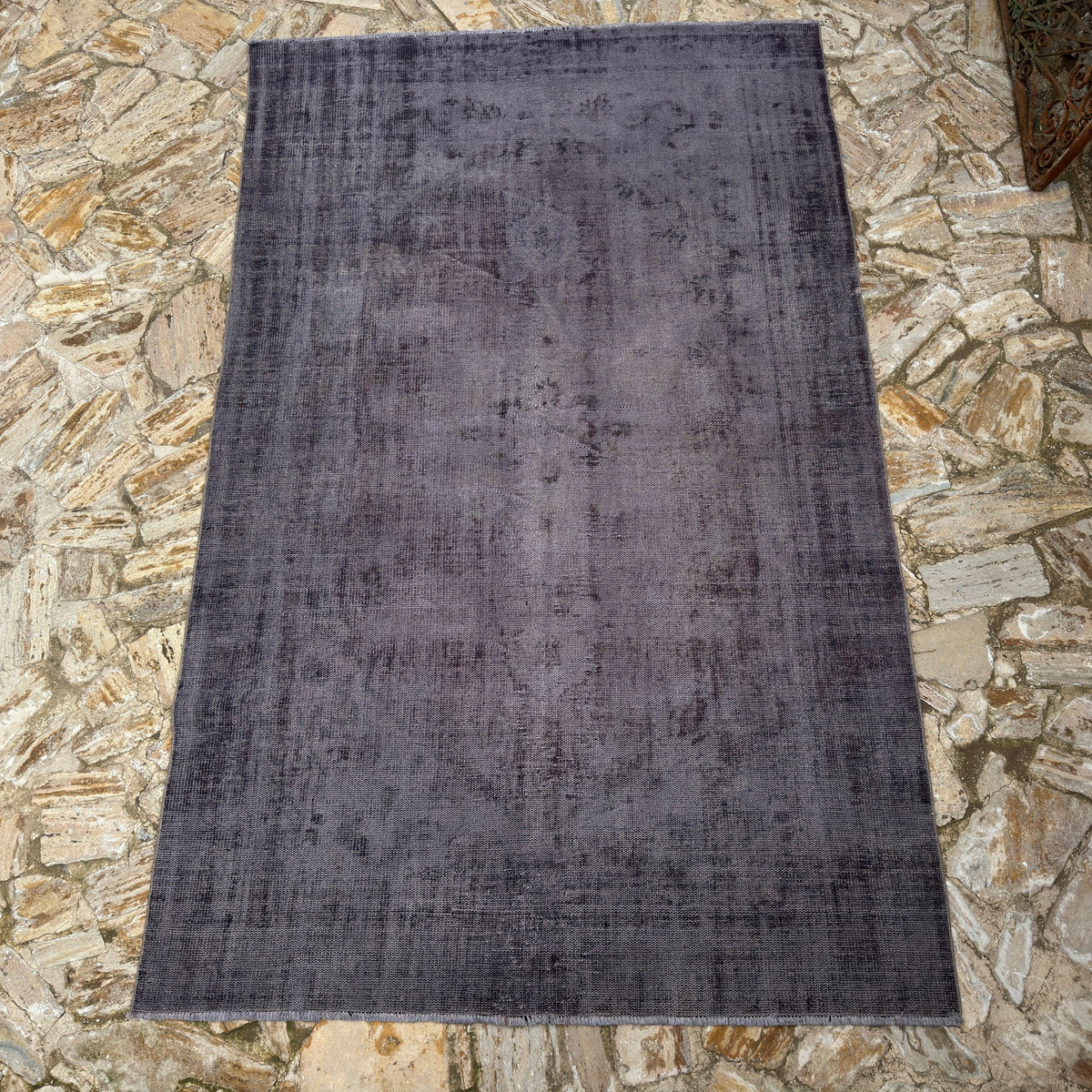
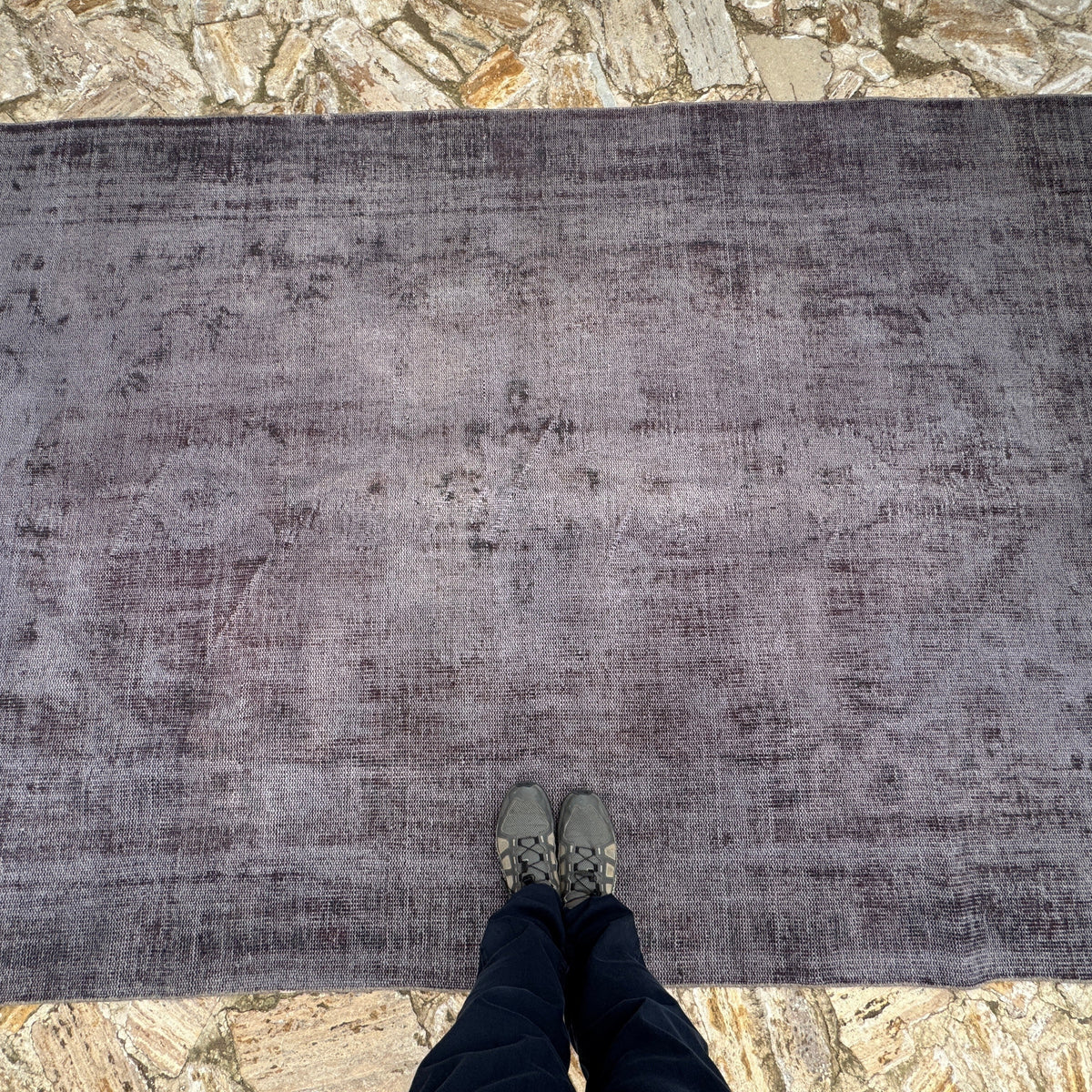
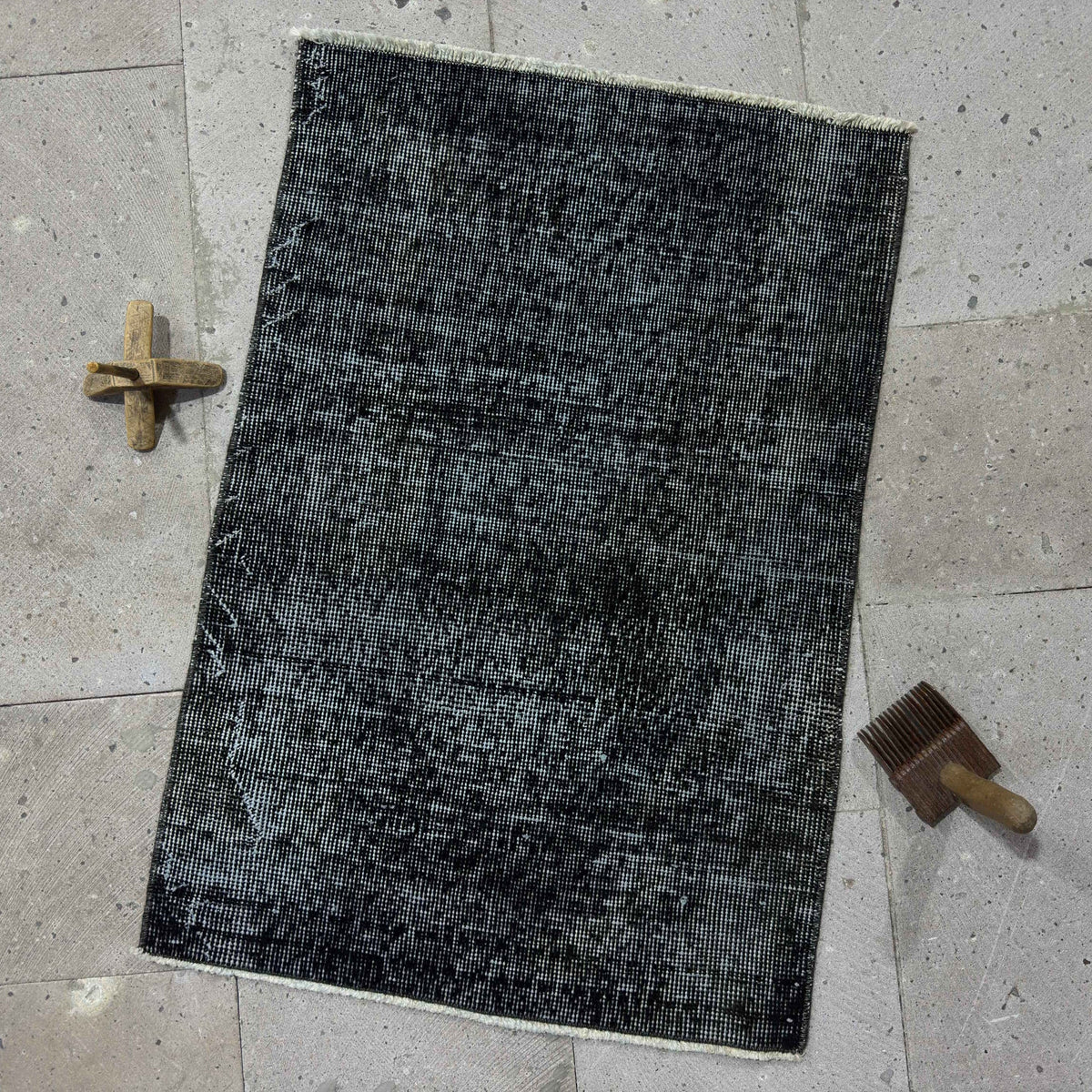
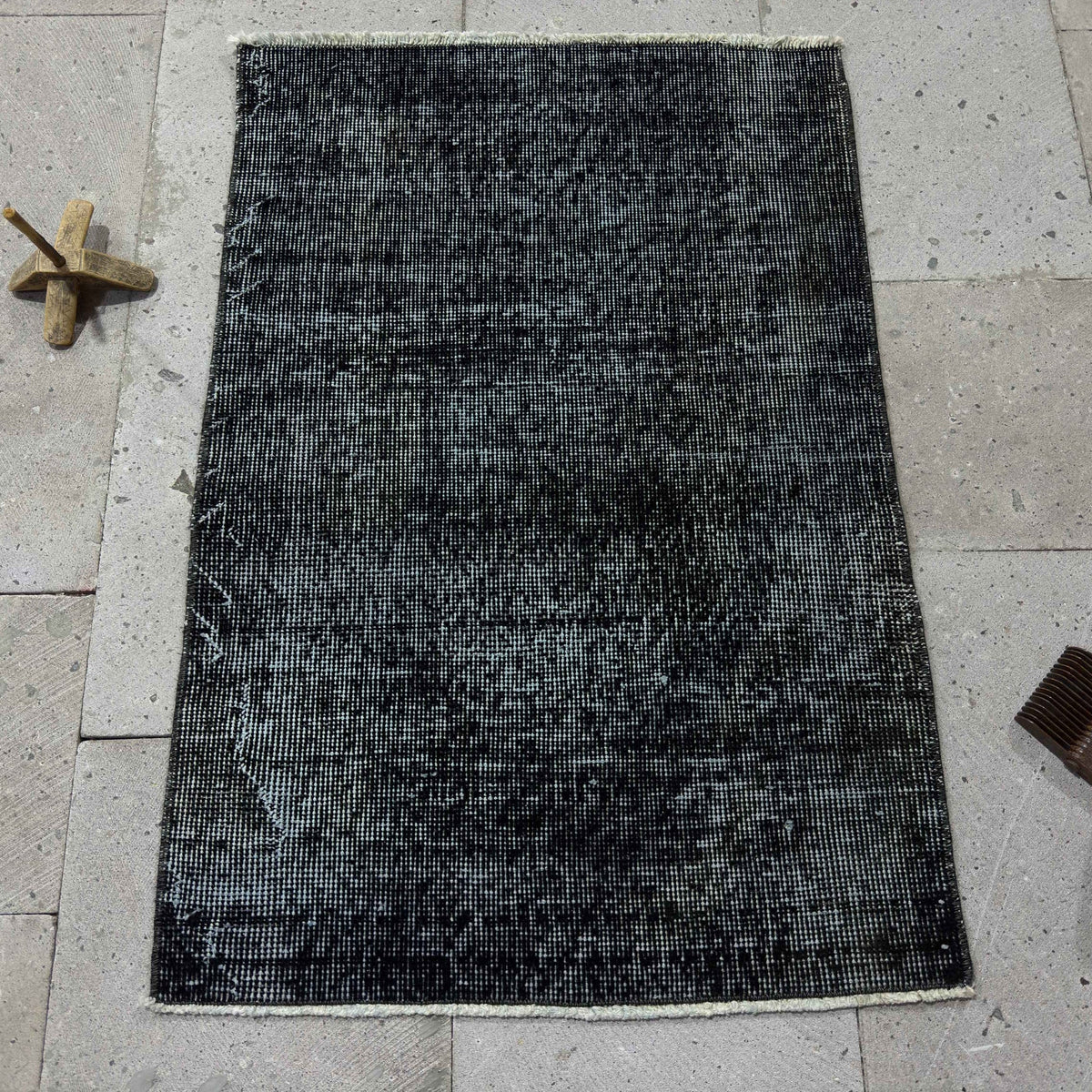
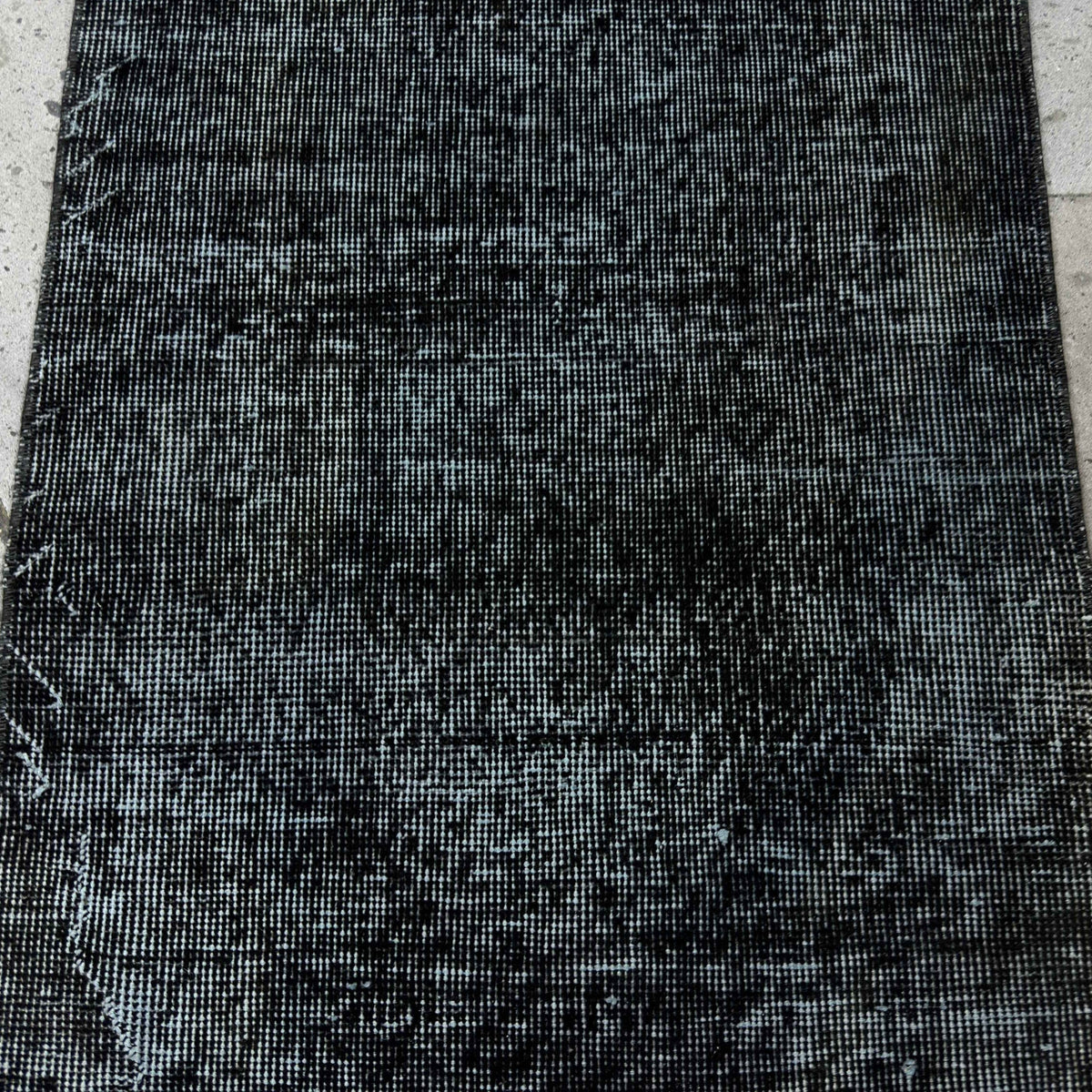
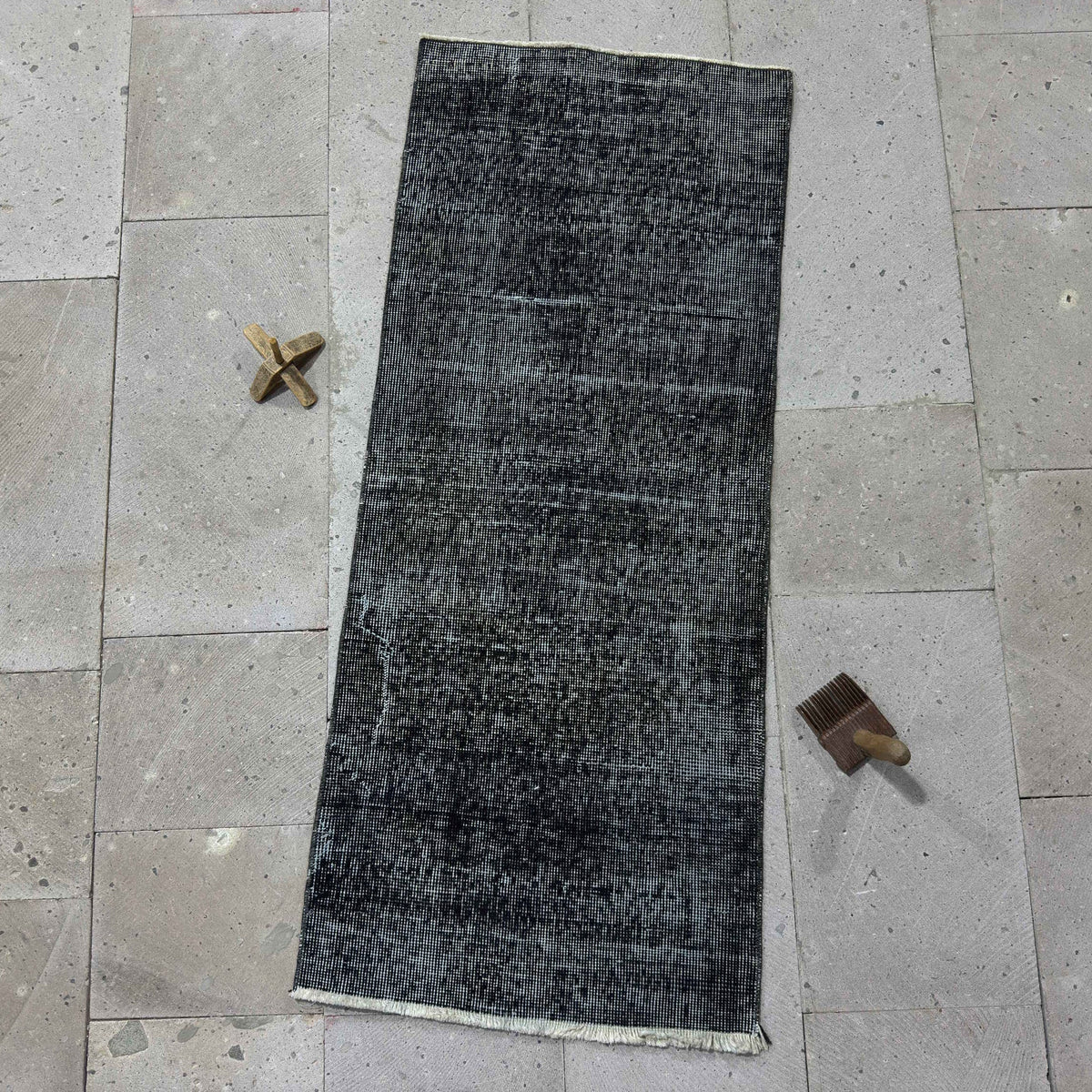
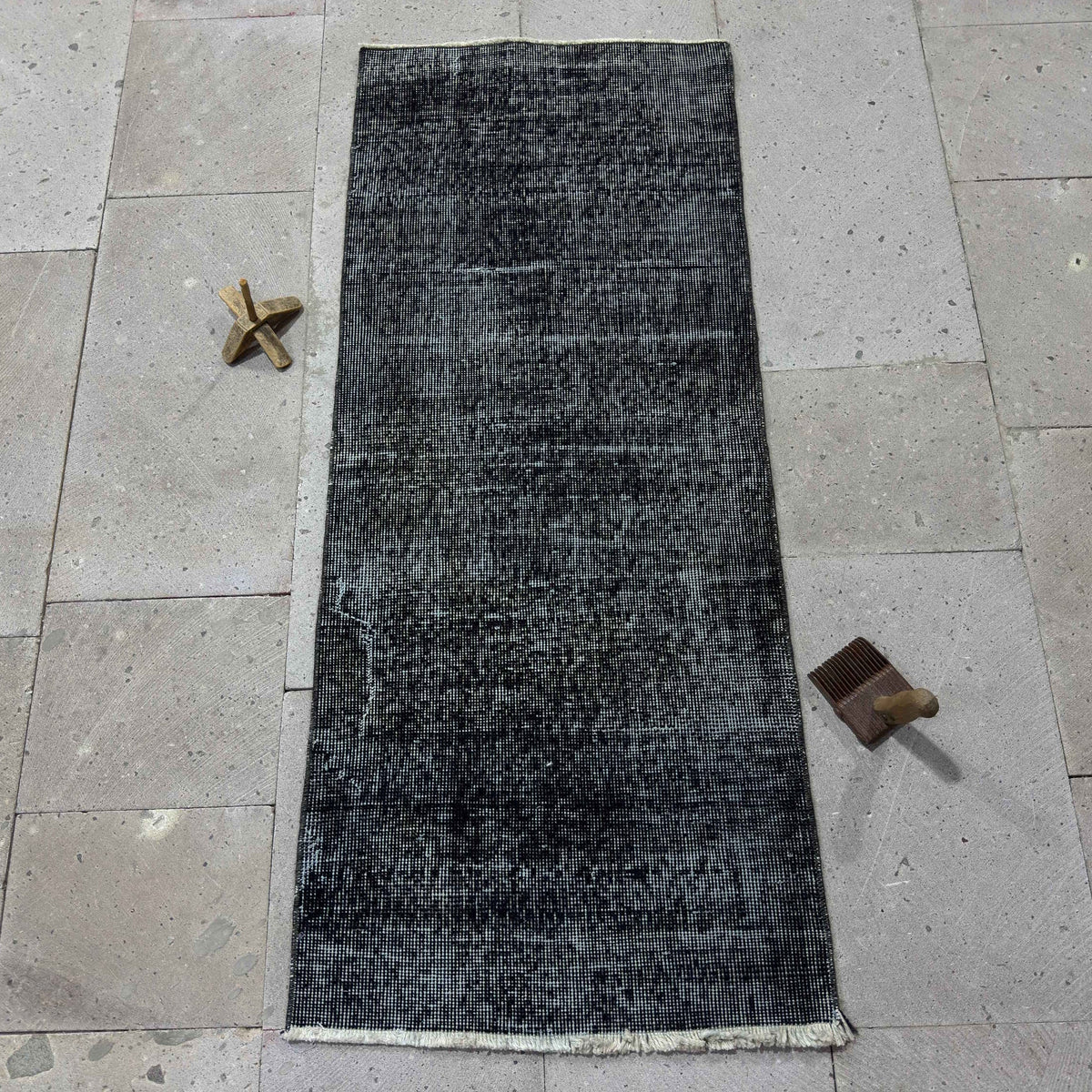
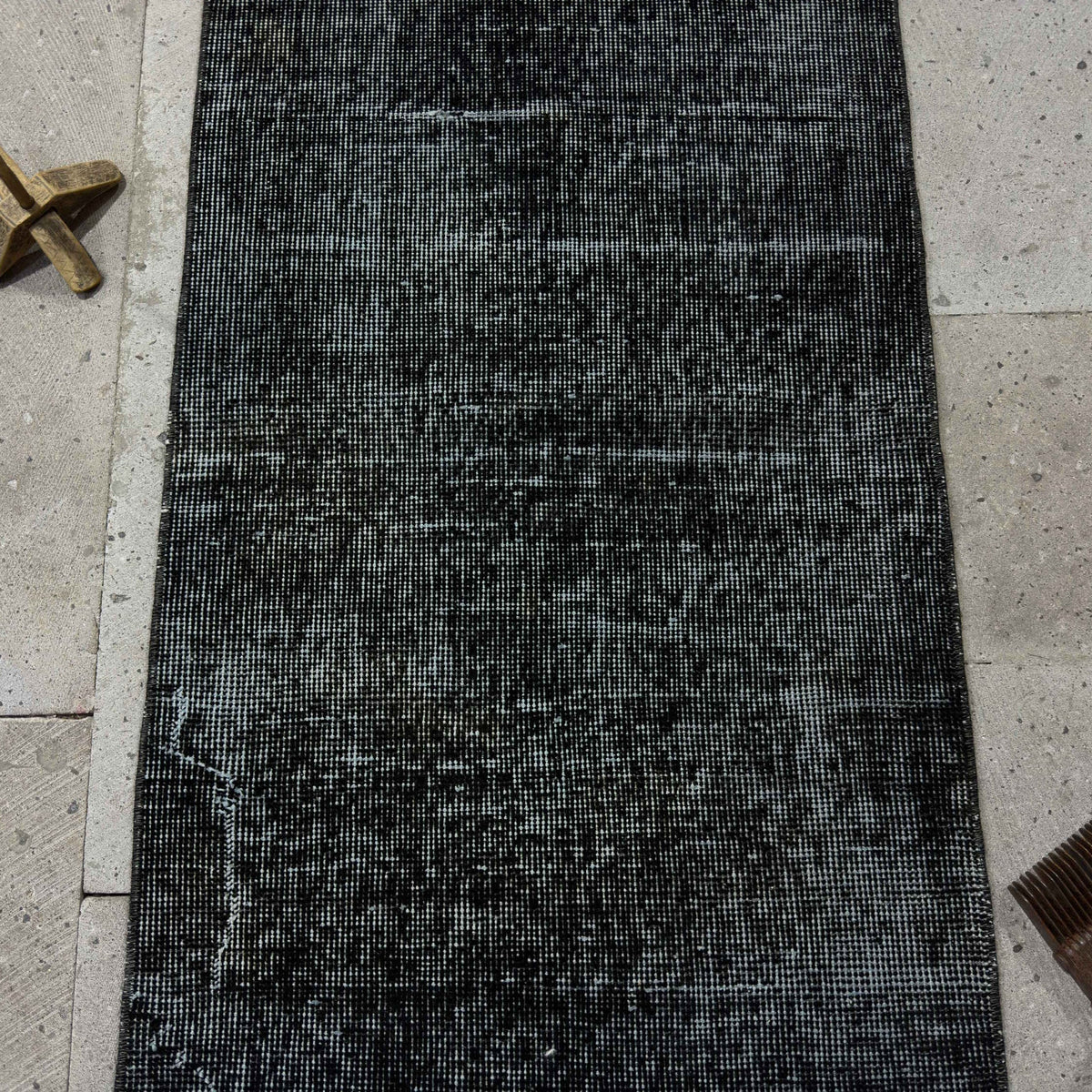
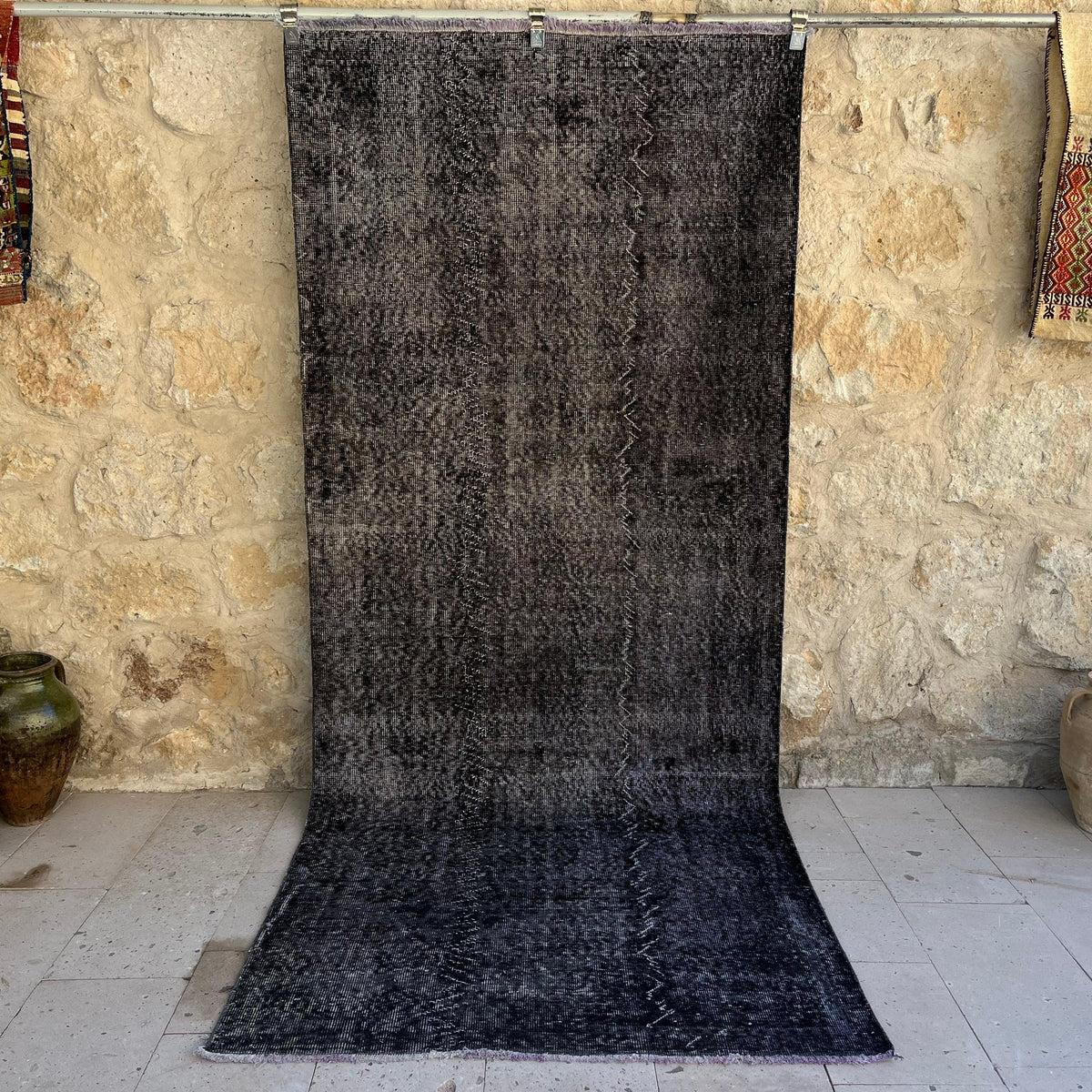
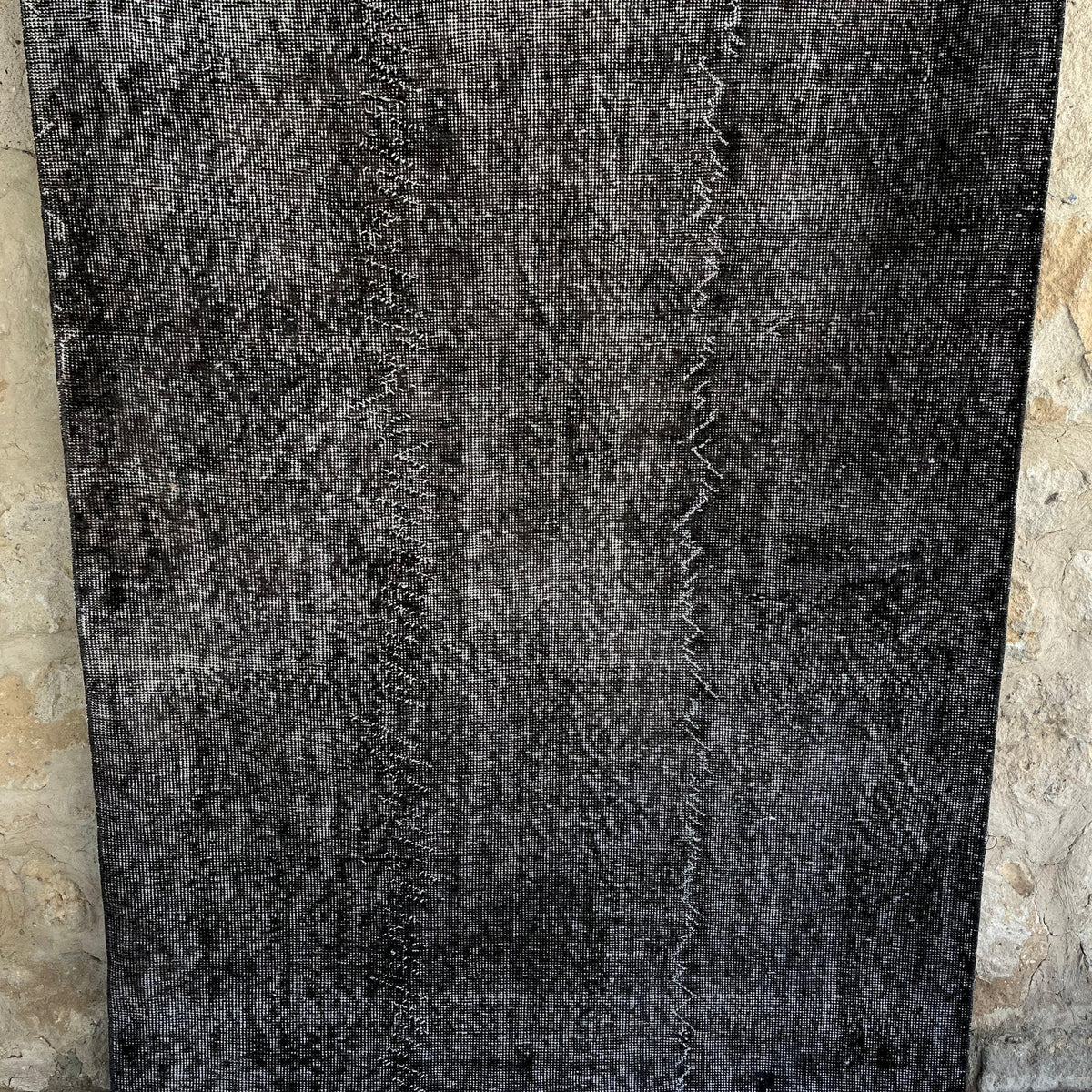
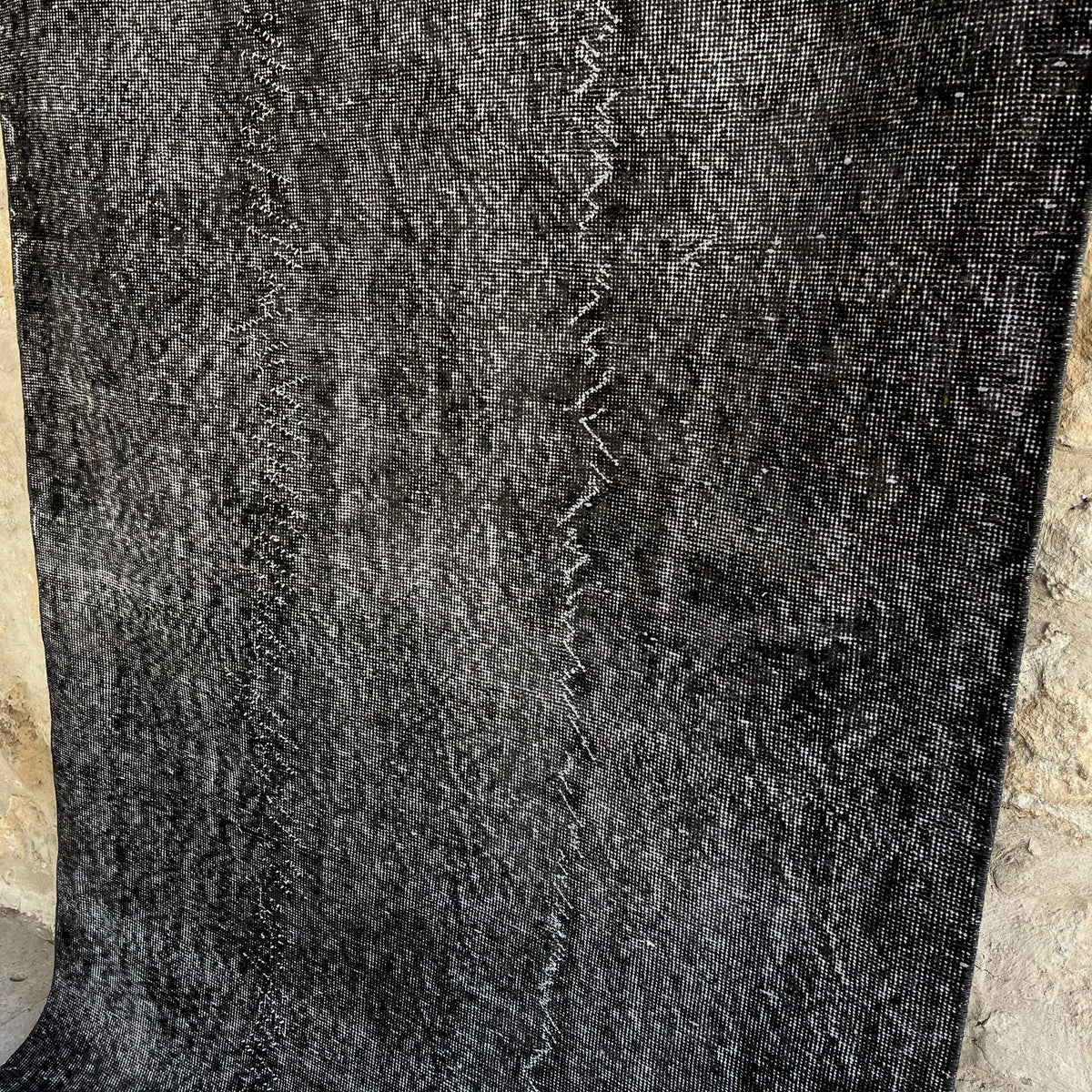
- Charcoal and near-black, a neutral in most rooms — our black rugs collection.
- Indigo and ink blue, depth without going fully dark — our blue rugs collection.
- Rust and oxblood, warmer than the fire-engine reds overdyeing used to favor — our red rugs collection.
- Mineral taupe and warm beige, the quietest and easiest to place — our beige rugs collection.
None is more correct than the others — it depends on what's already in the room.

Where to Use an Overdyed Rug in Your Home
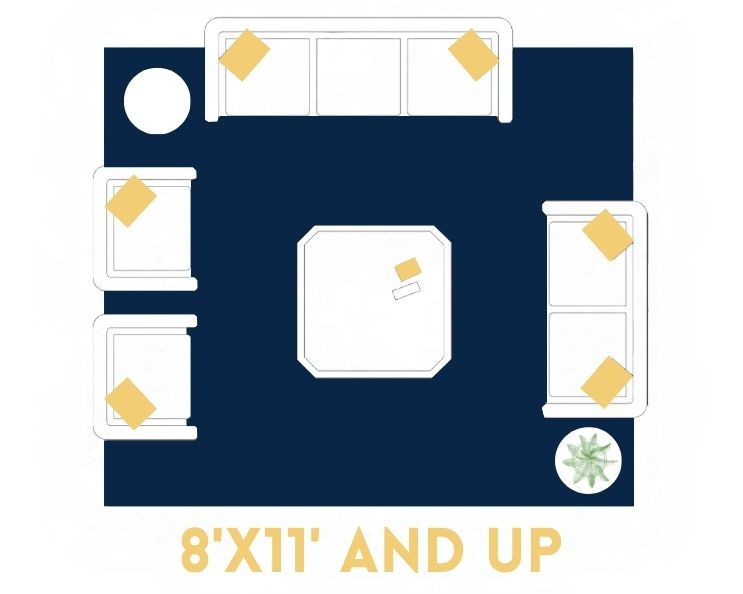
A saturated overdyed rug reads differently depending on the room's light — an emerald or indigo piece looks jewel-toned by midday, moodier by lamplight. Living rooms are usually the easiest place to start, under a sofa and chairs, where the rug can be the one bold element in a calm palette. Our living room rugs collection is built around that kind of piece.
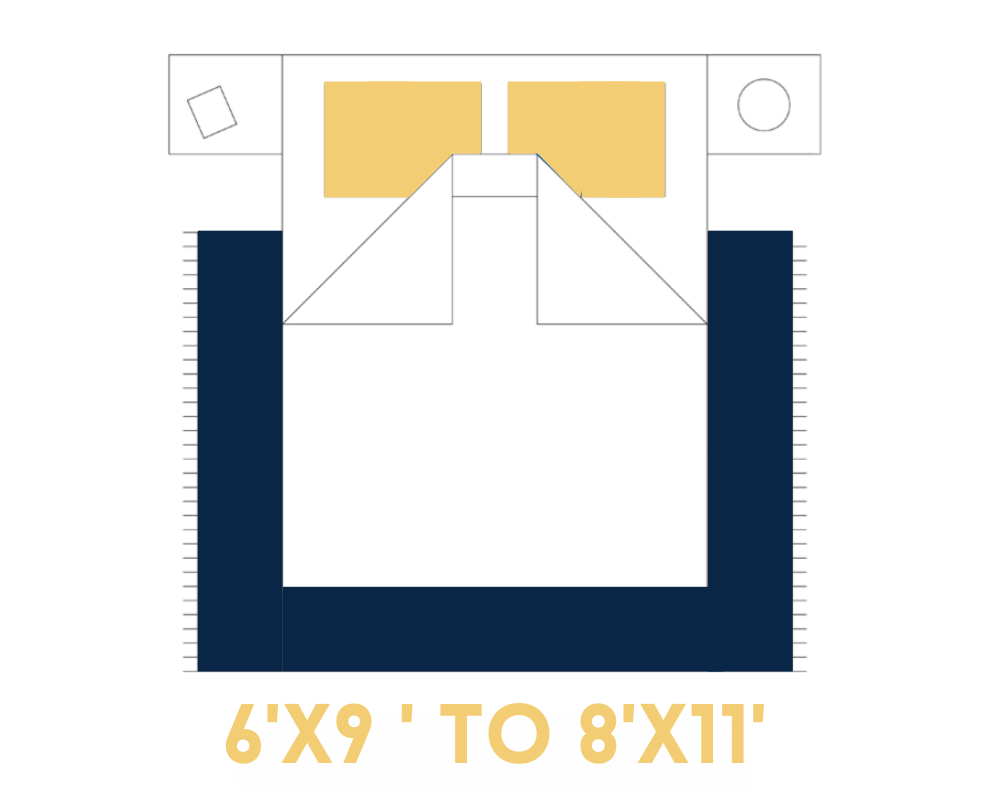
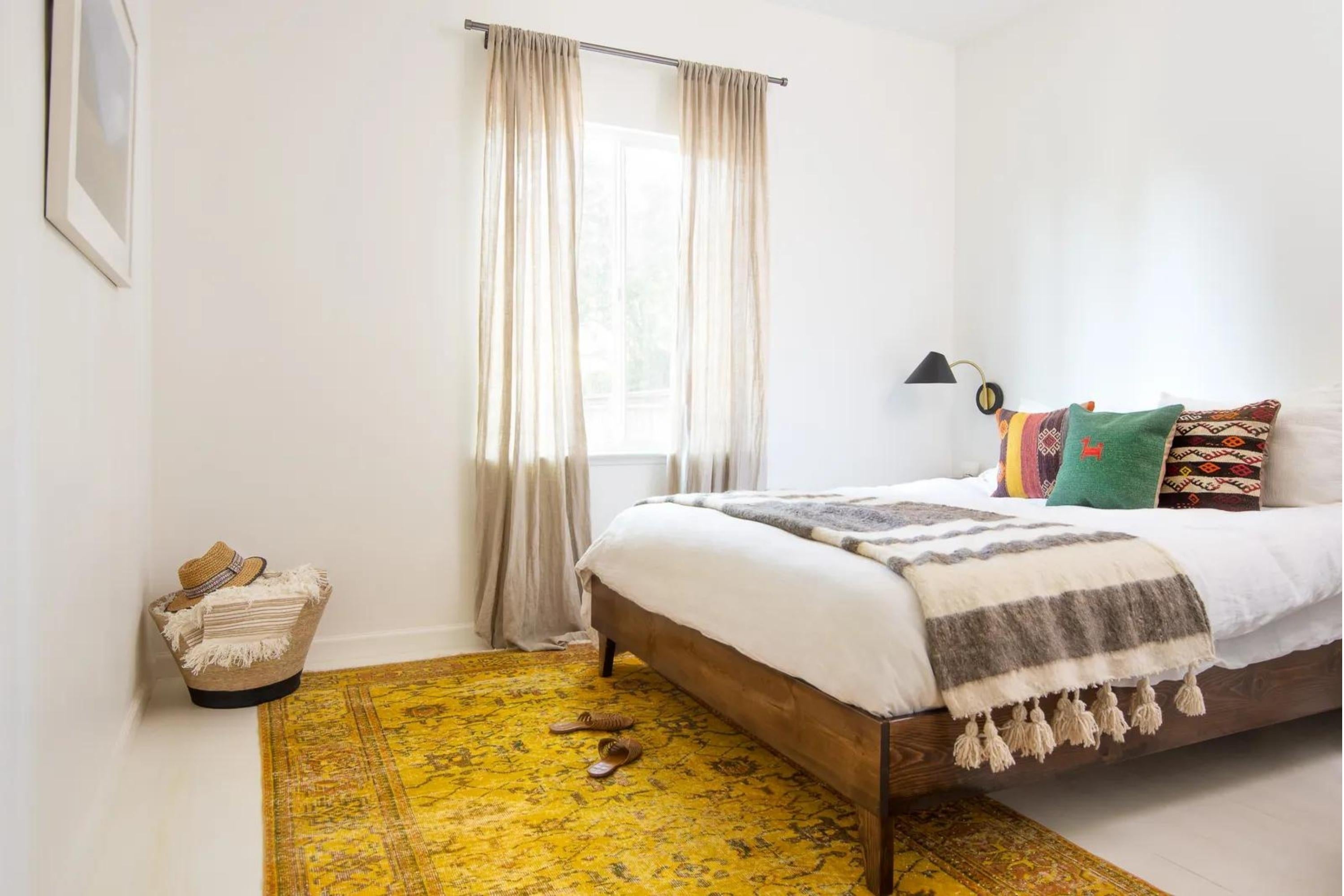
Bedrooms ask for something gentler — a fully saturated charcoal rug can feel heavy in a room meant for winding down, so a softer tone like dusty rose works better. Our bedroom rugs collection includes several quieter options.
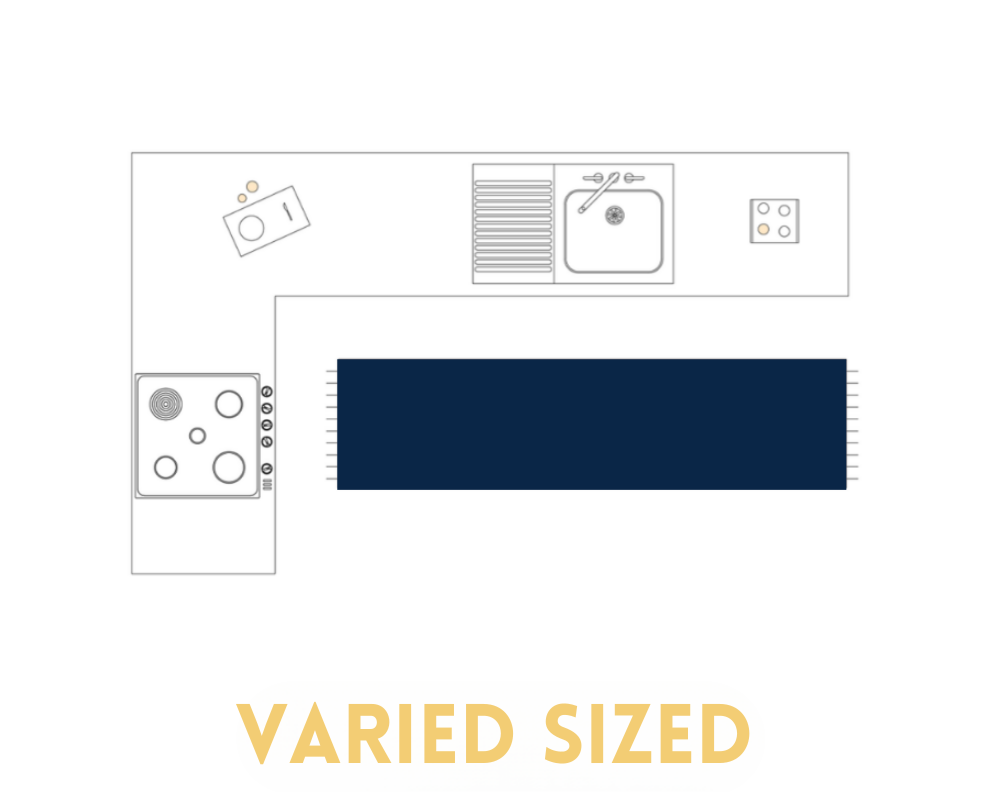
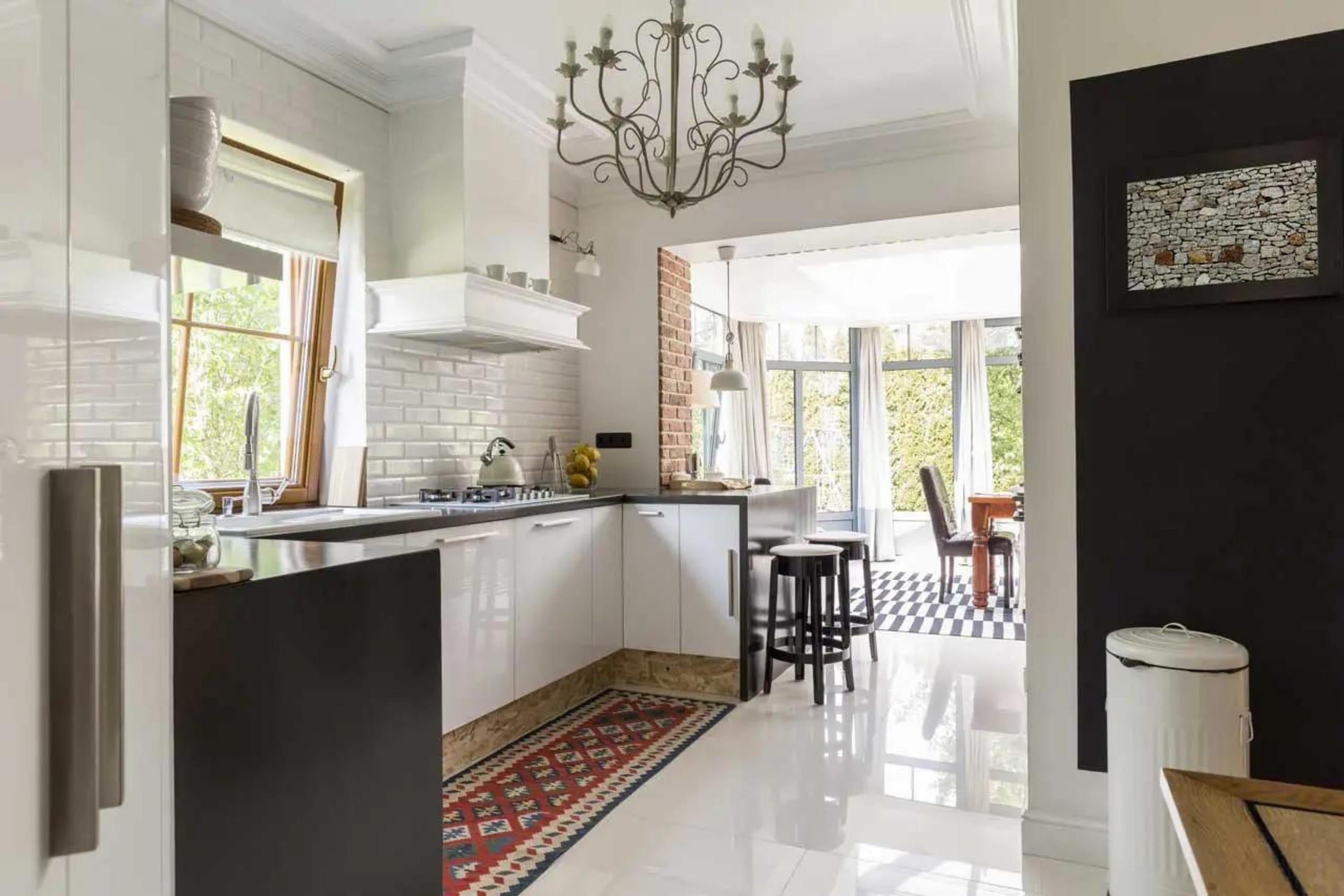
In an entryway or hallway, an overdyed runner adds color without overwhelming a narrow space. Choose a lower-pile rug that won't catch on the door, and use a rug pad to reduce slipping. Browse our runner rugs collection for narrower layouts.

How to Tell a Real Handwoven Overdyed Rug From a Fake
Check the Fringe and the Back of the Rug
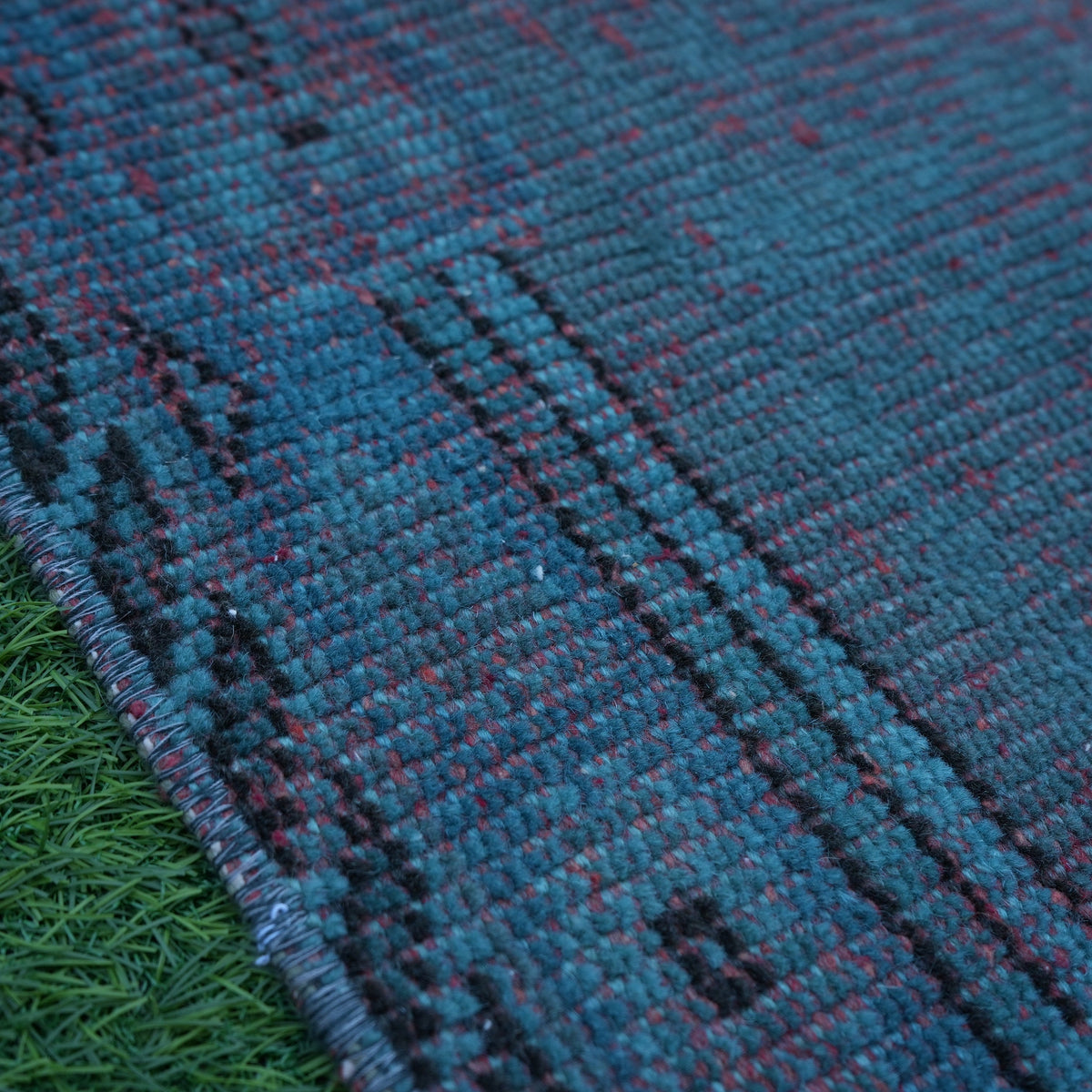
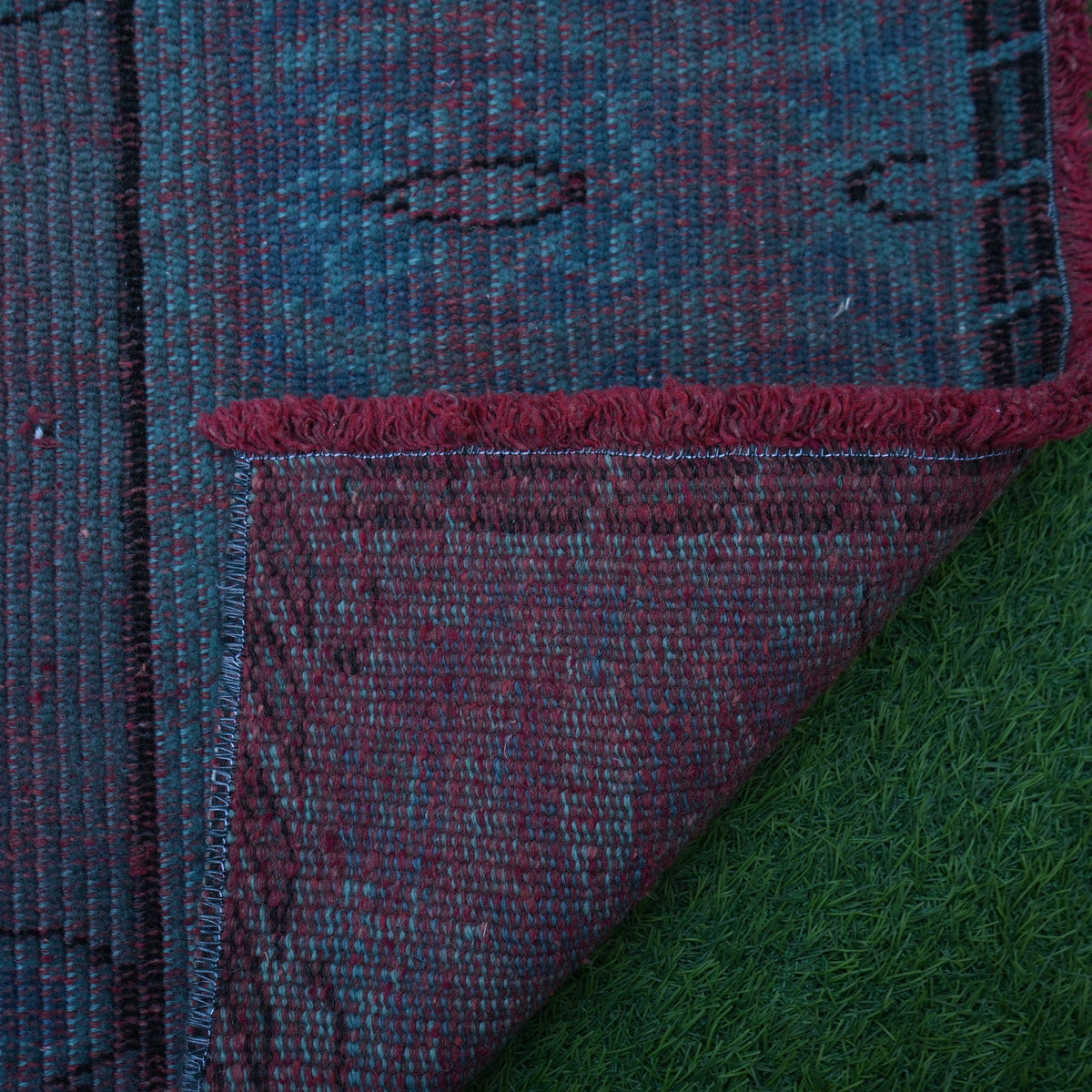
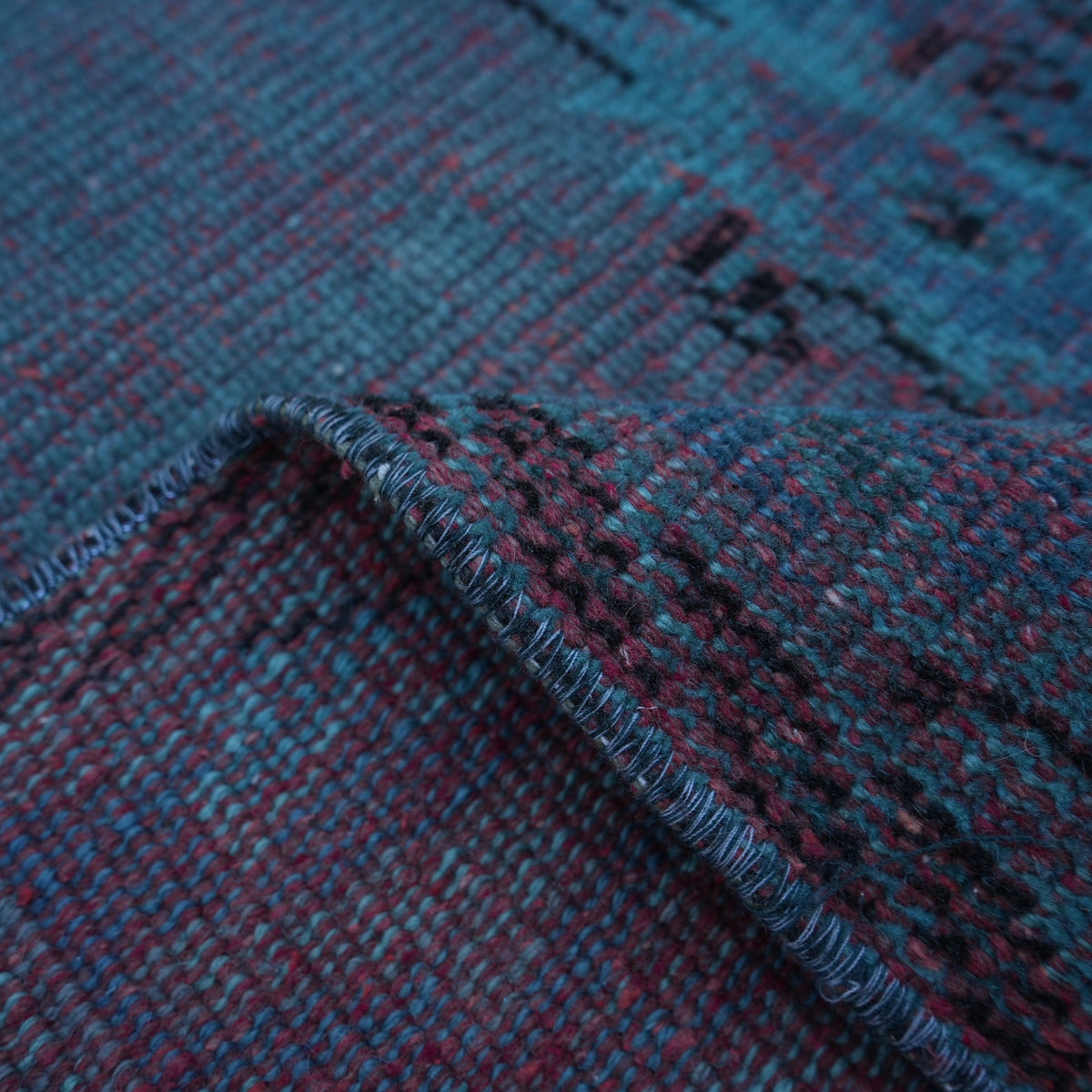
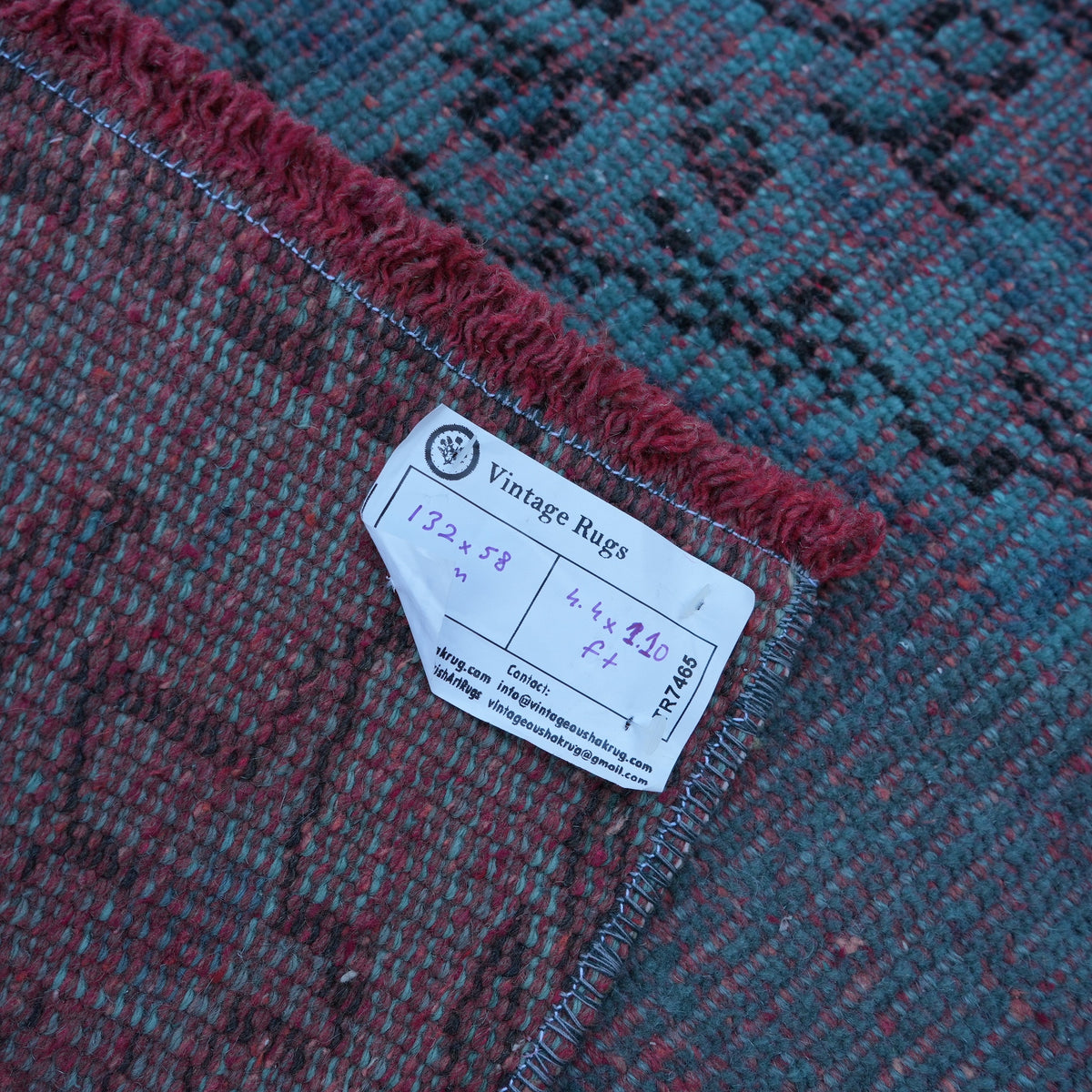
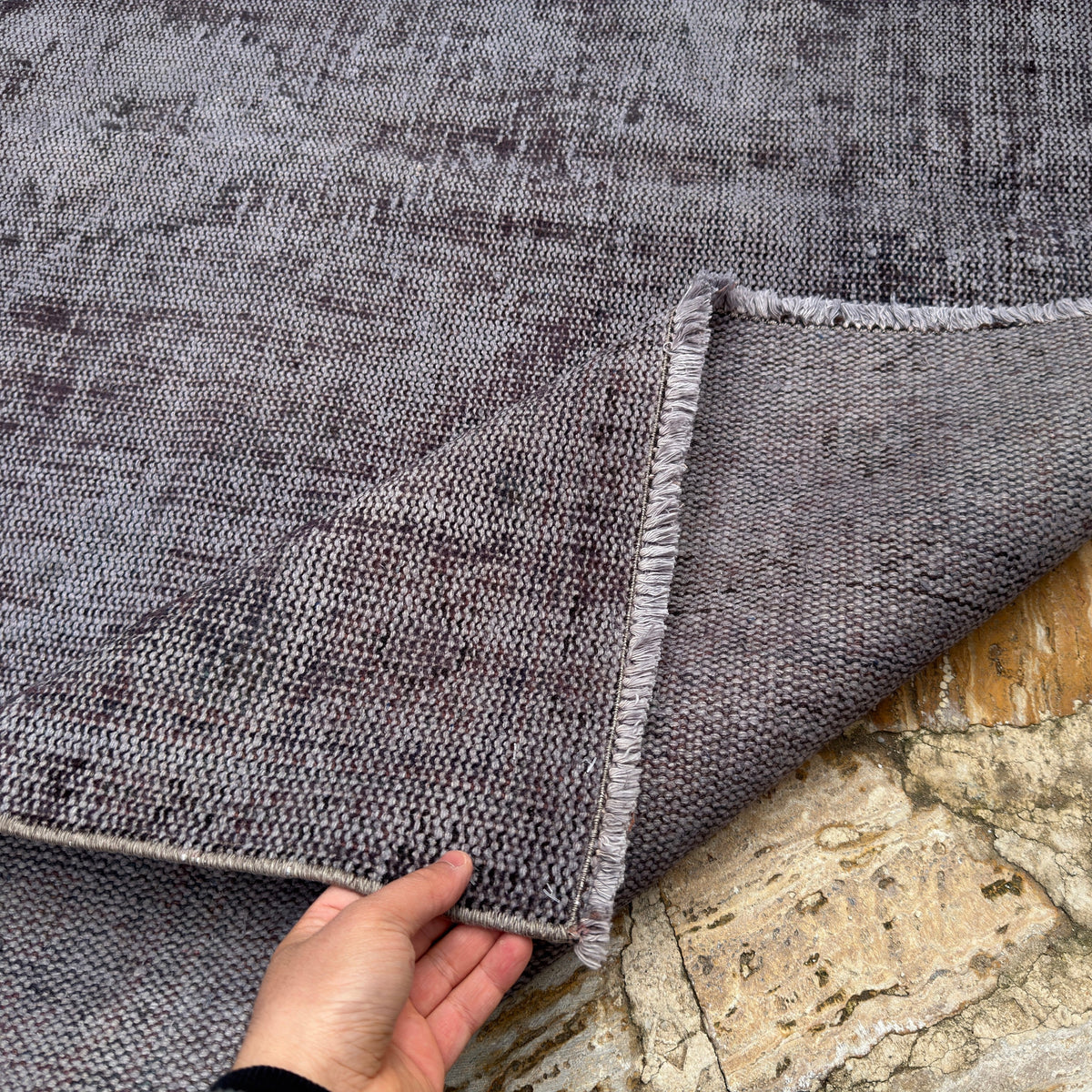
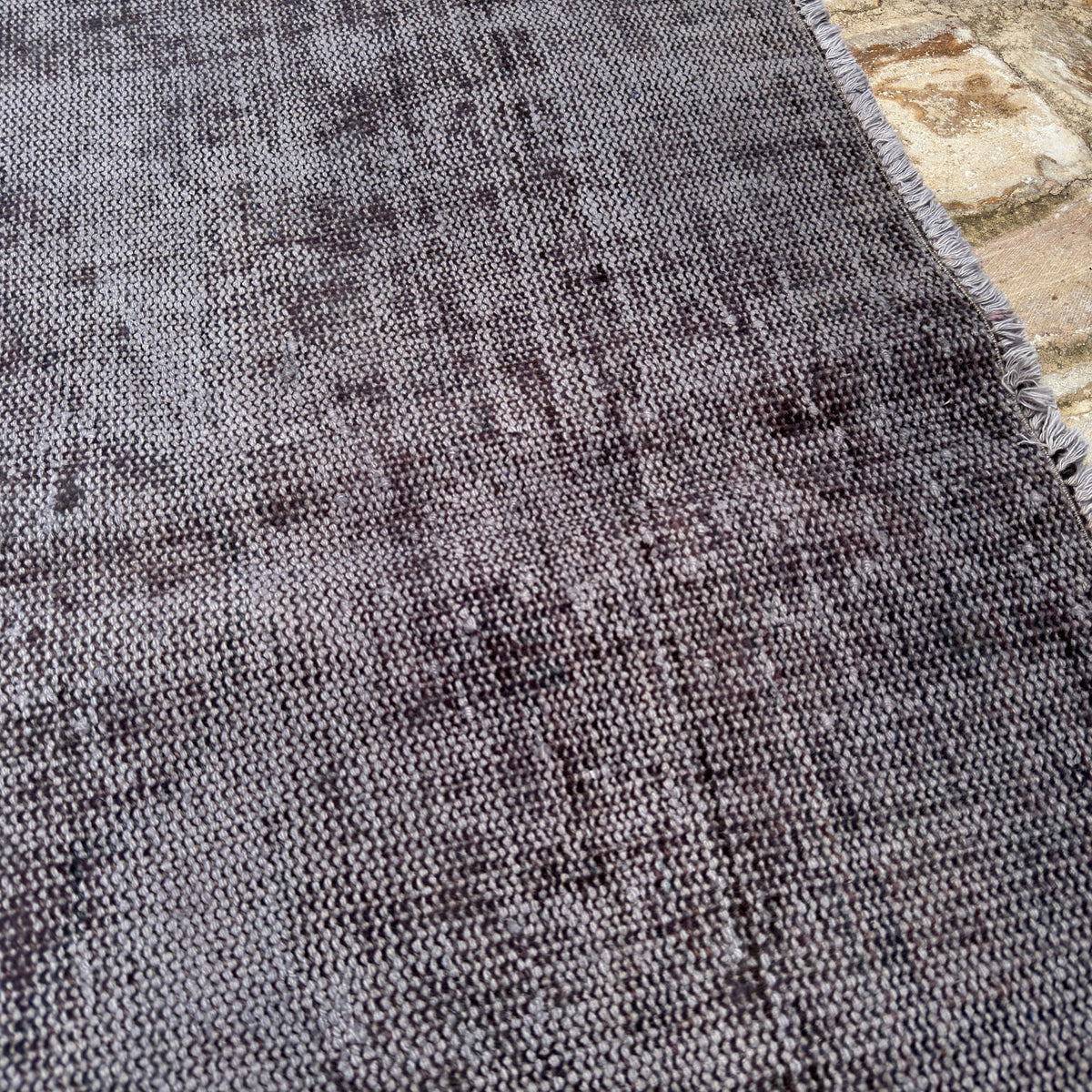
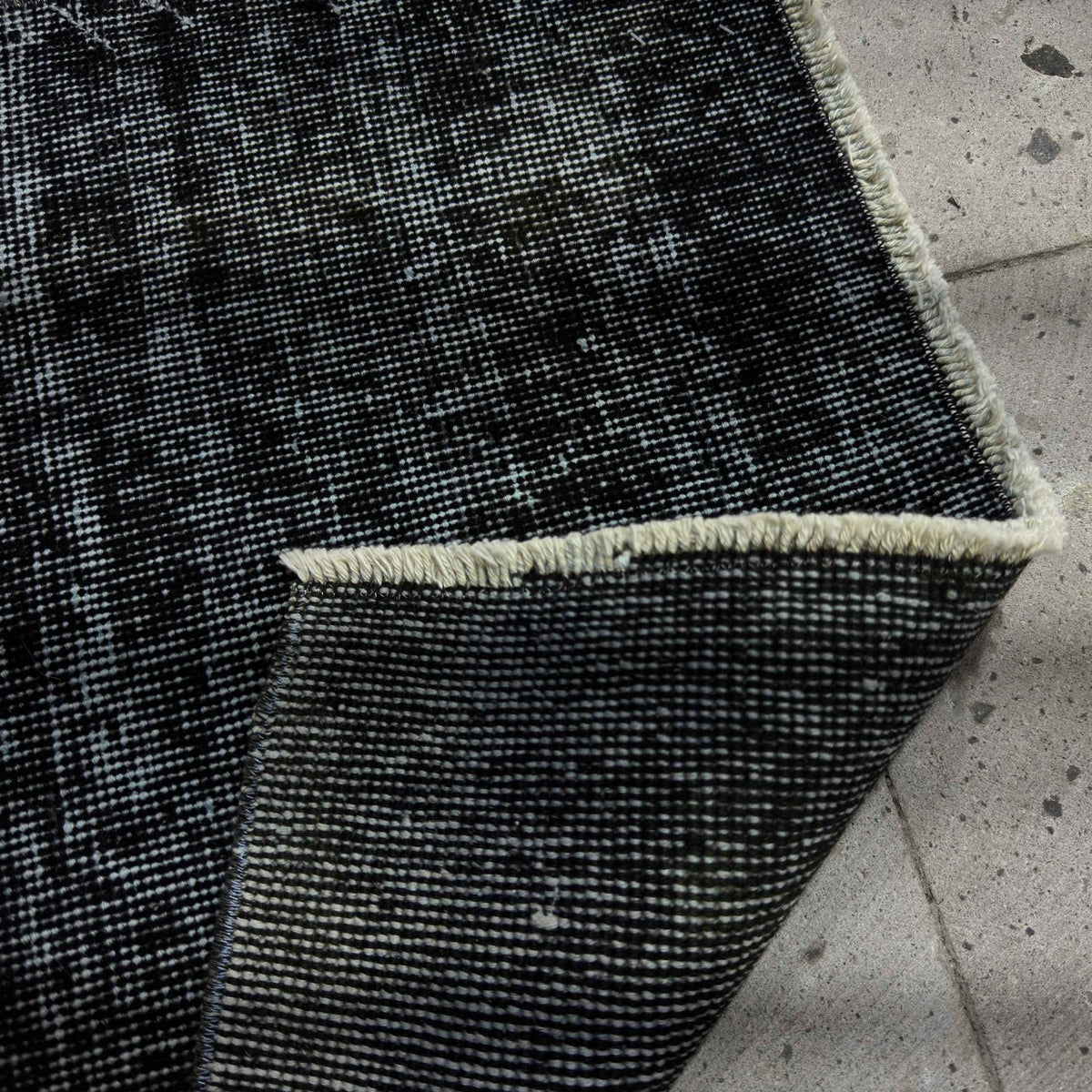
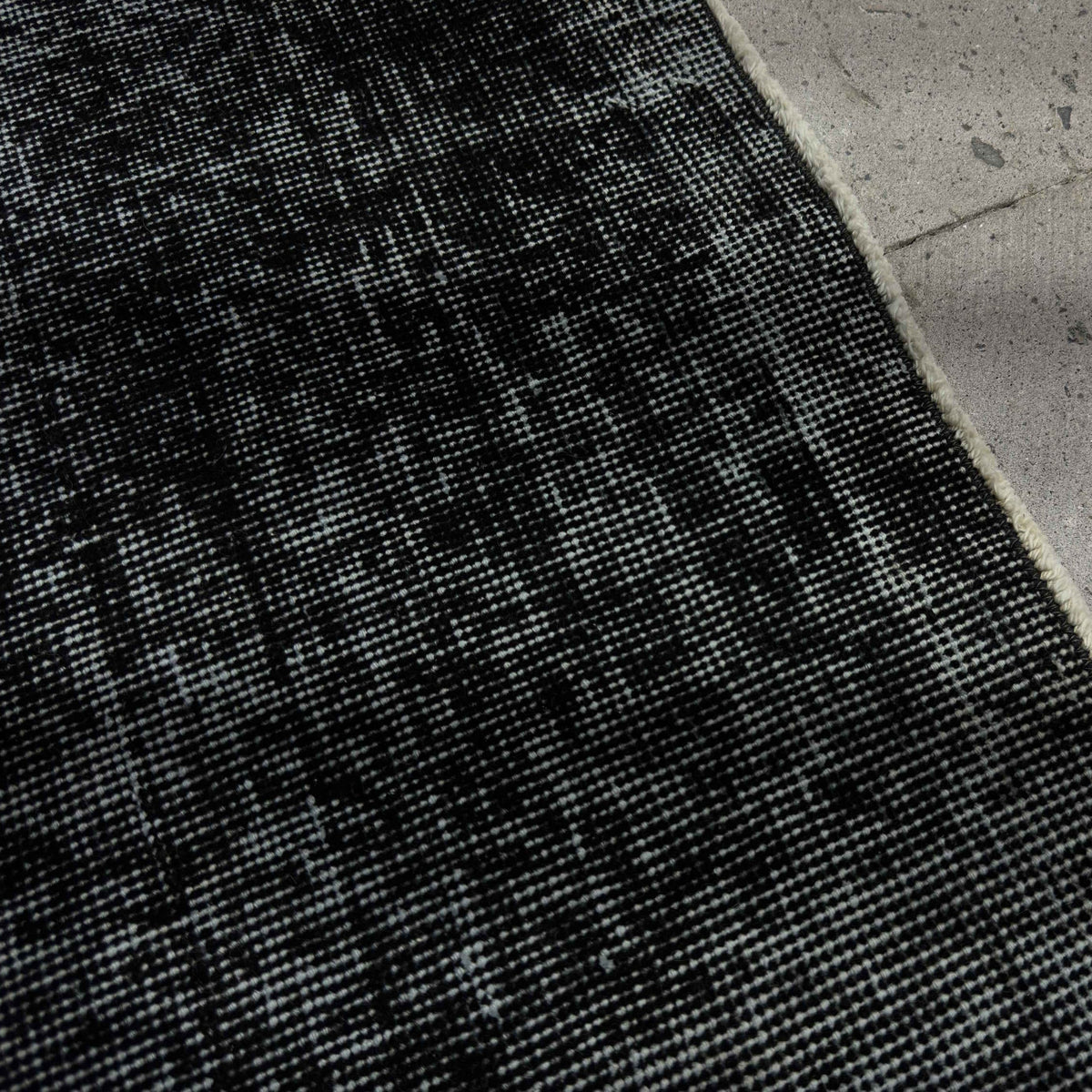
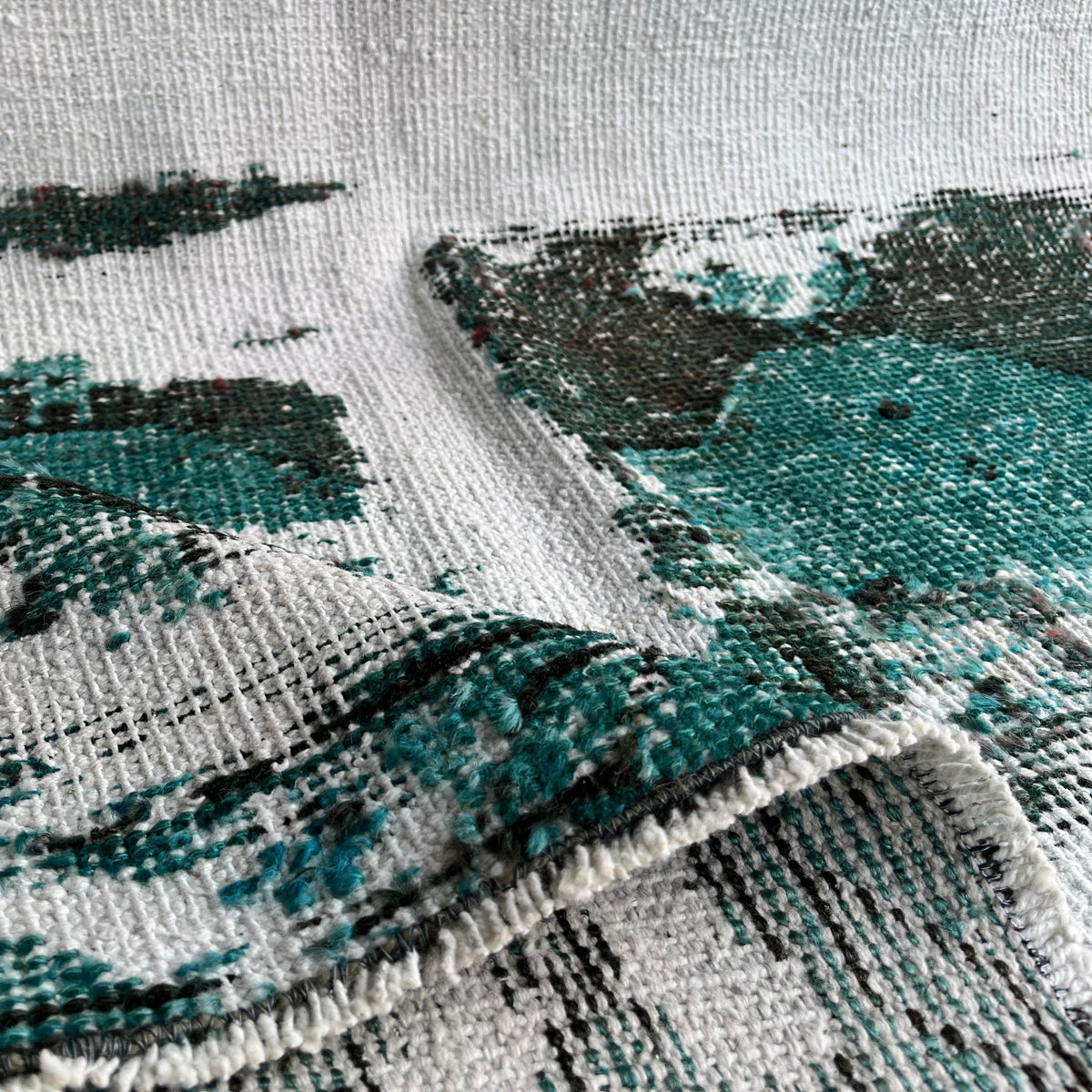
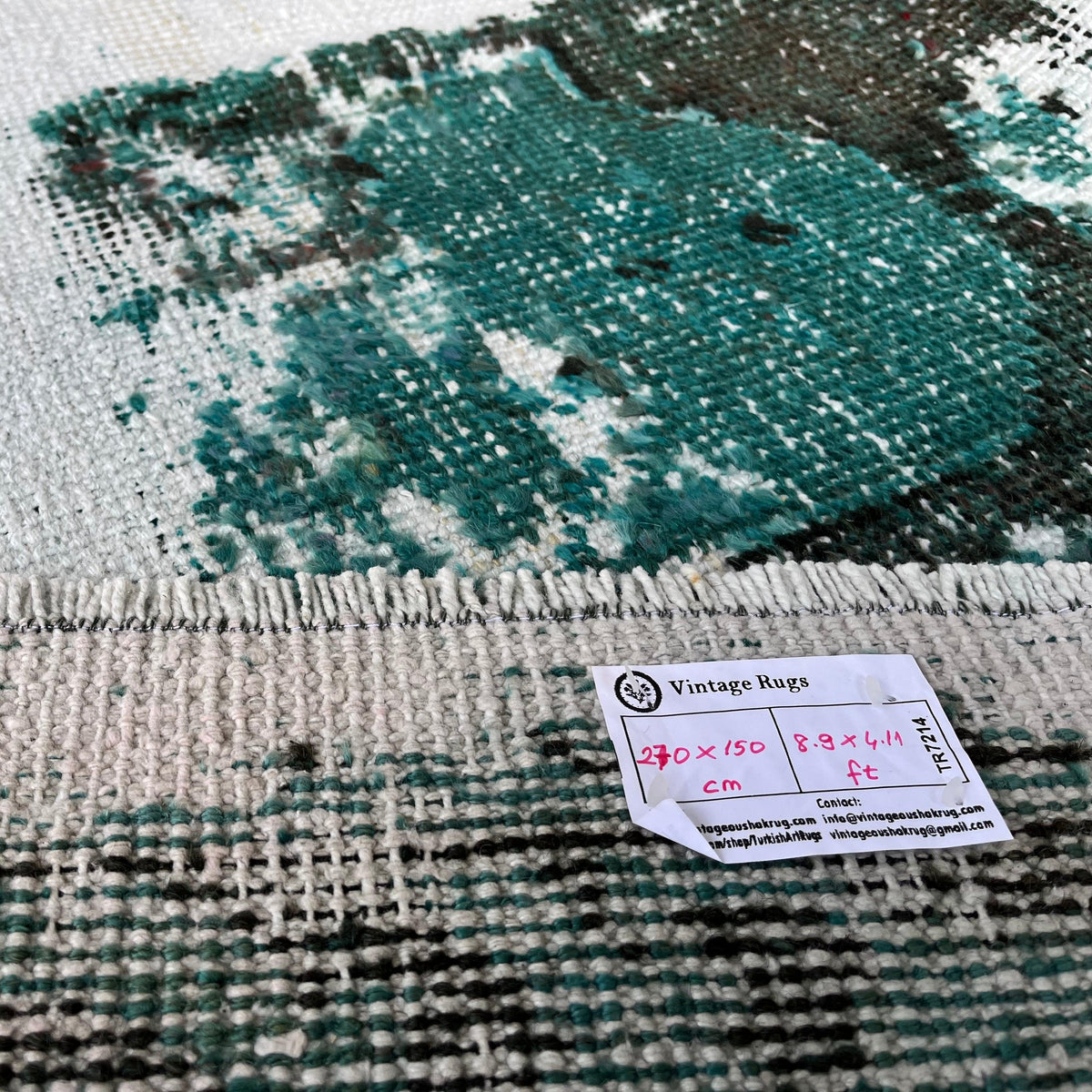
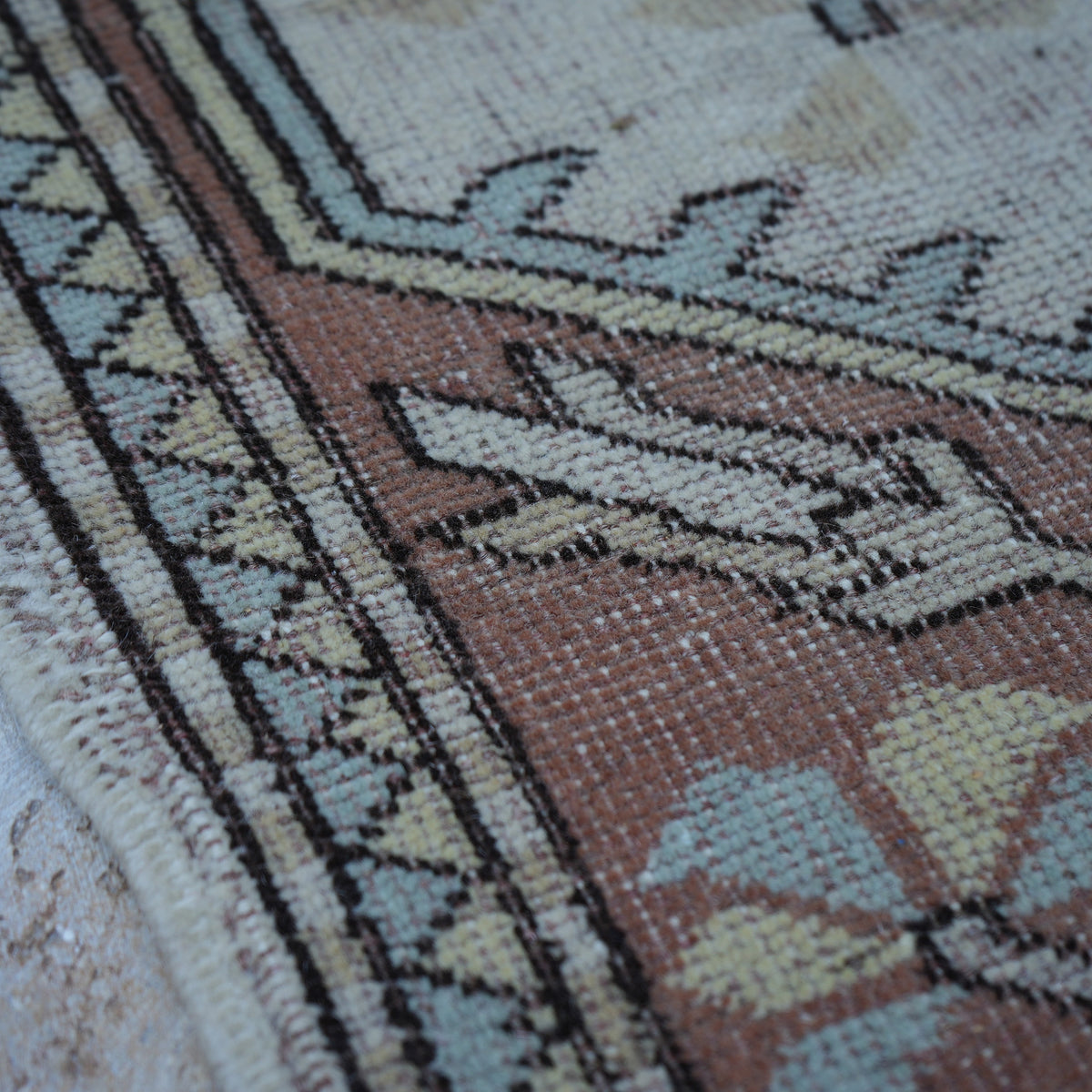
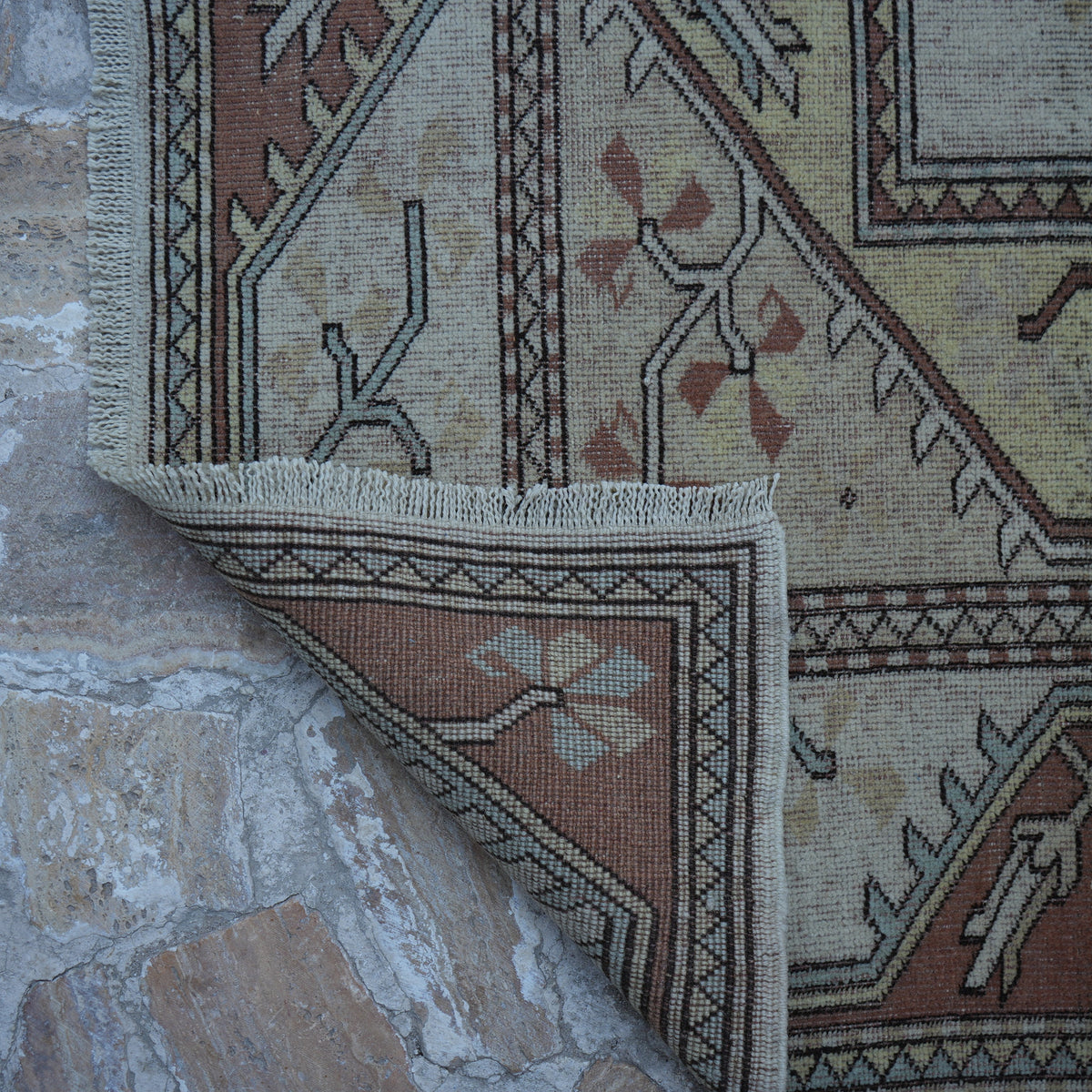
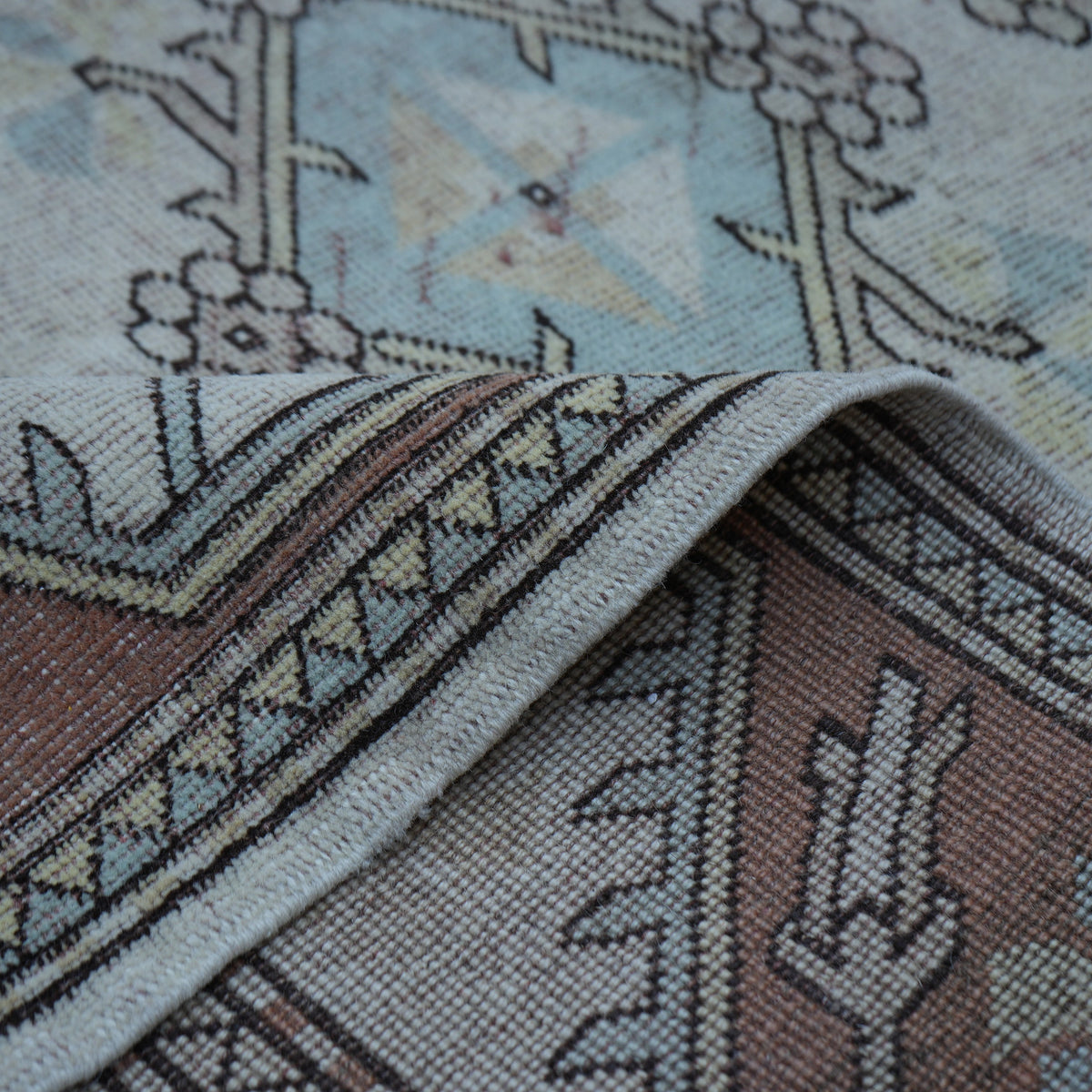
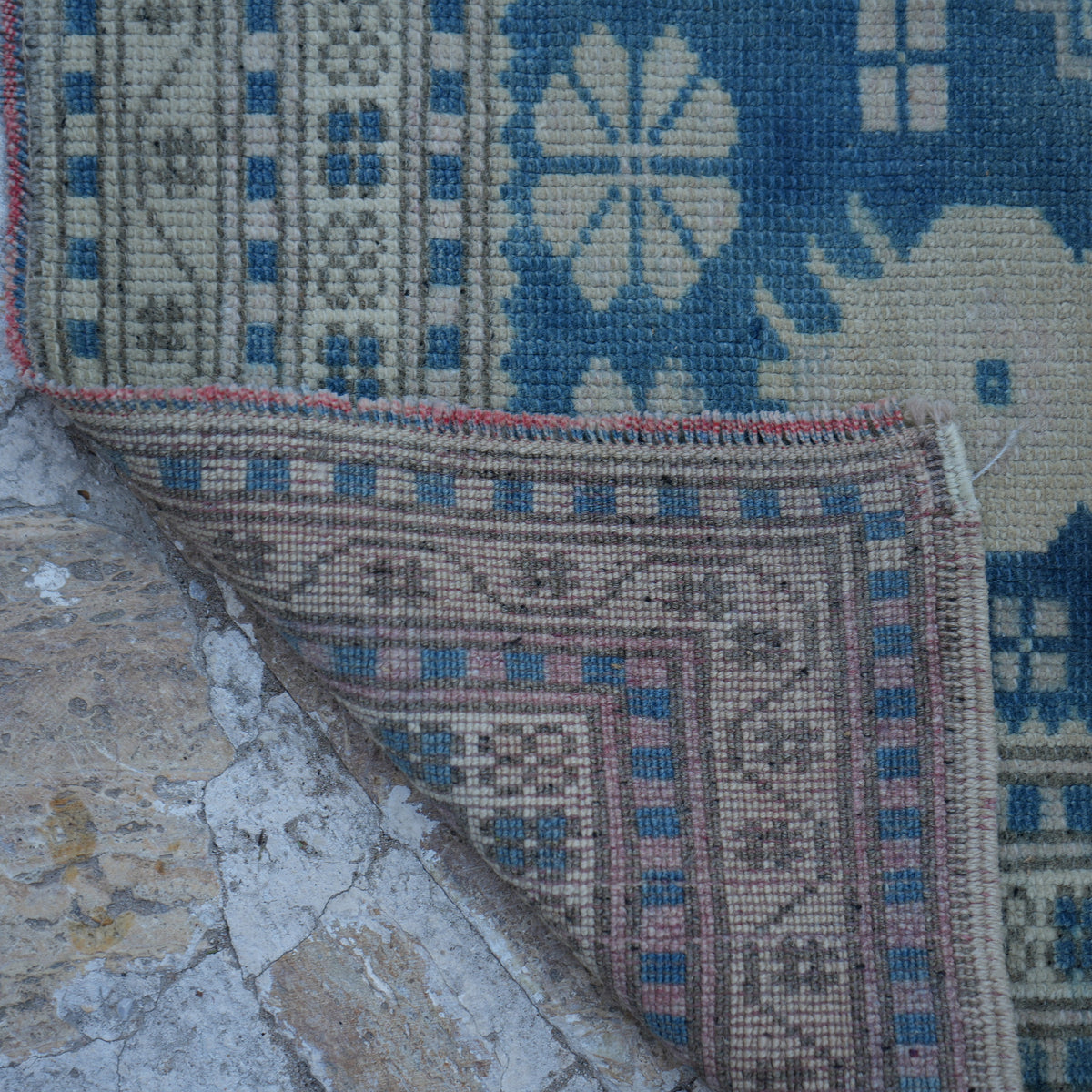
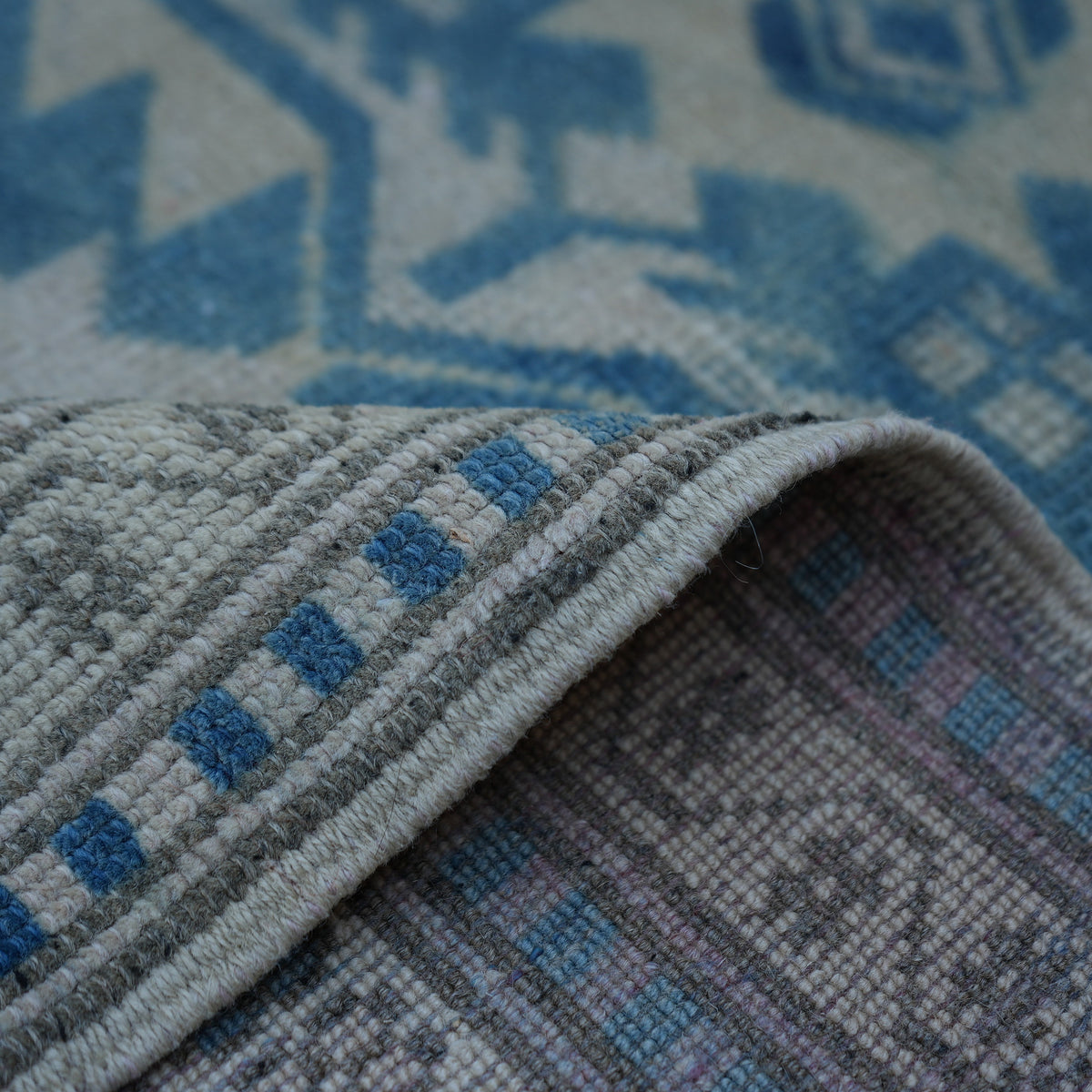
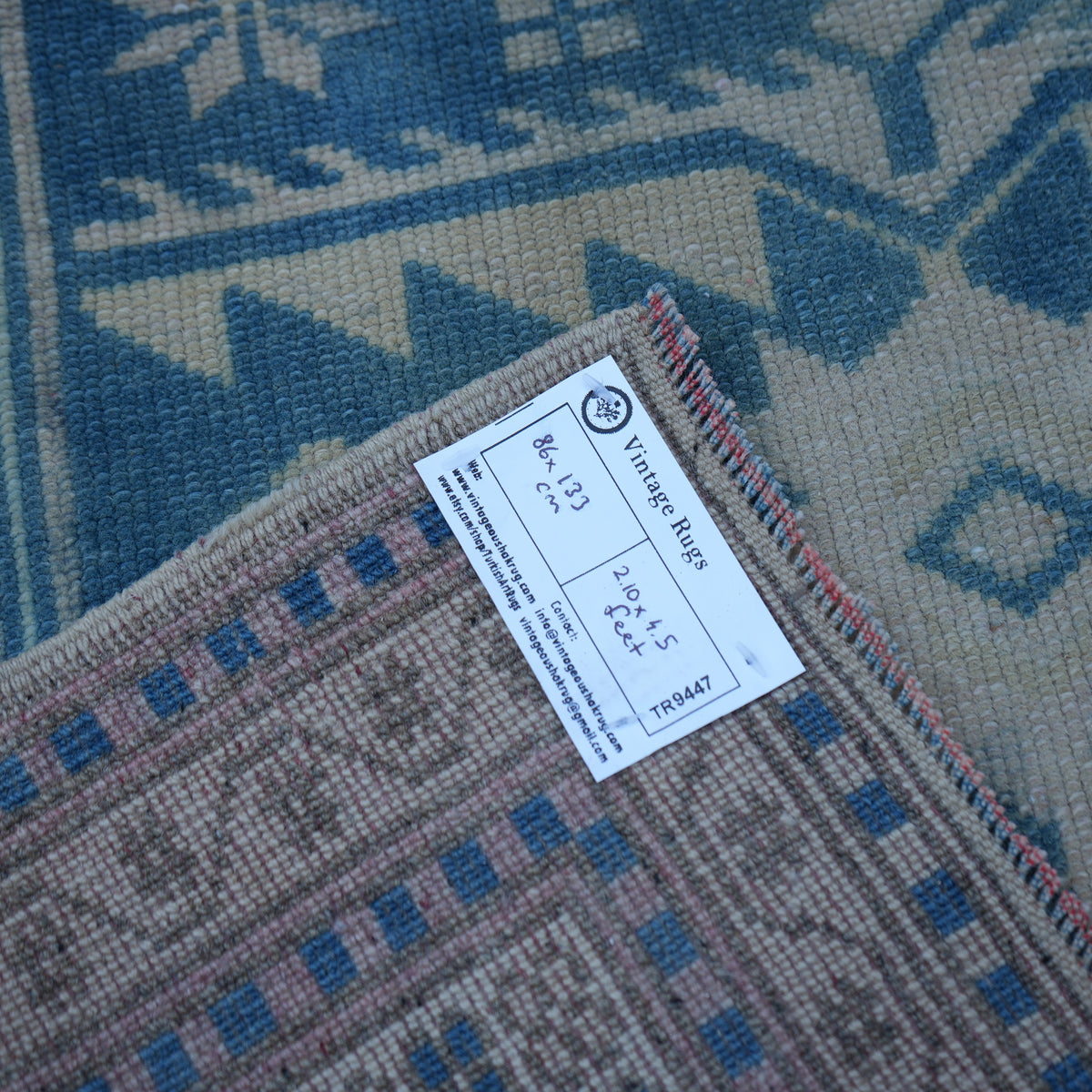
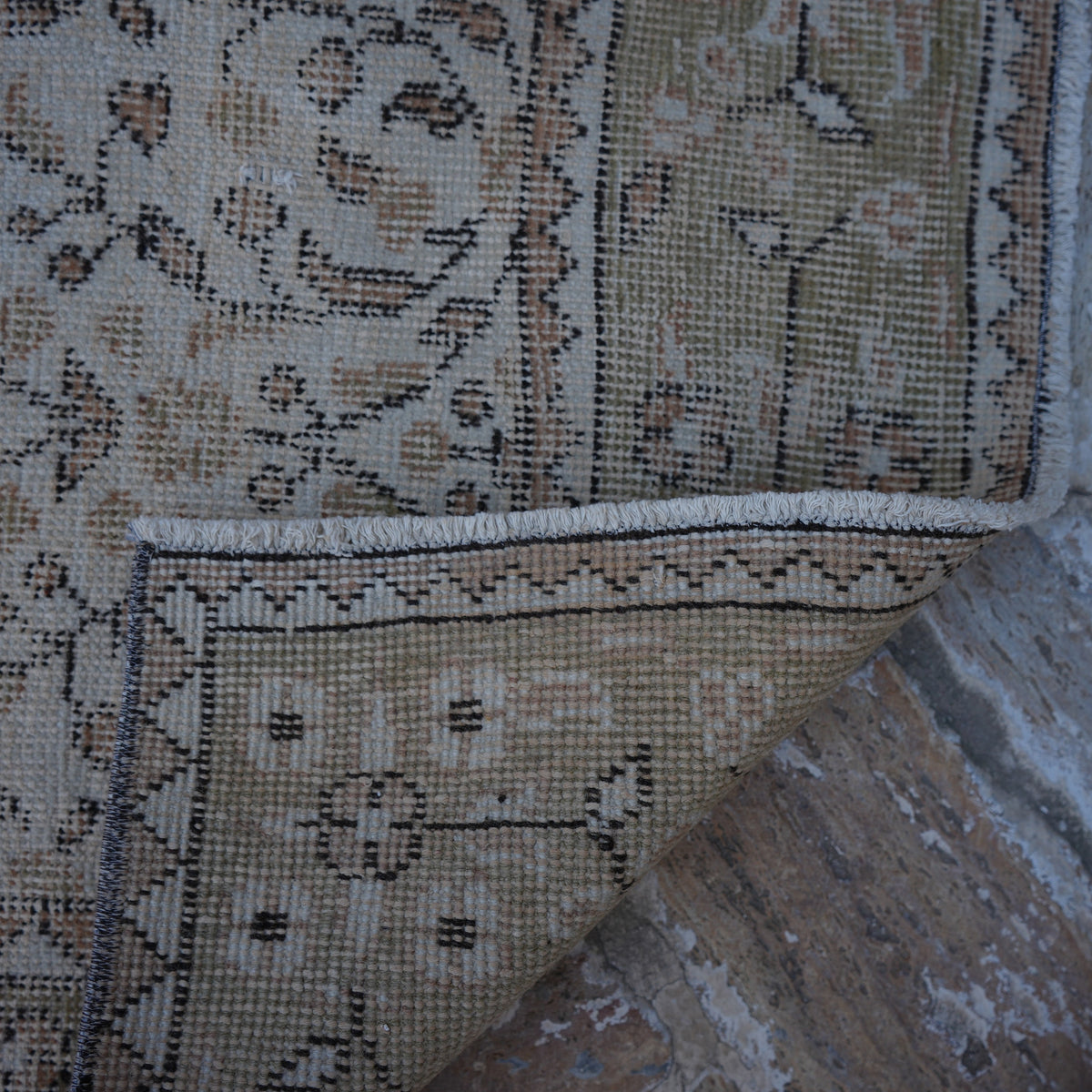
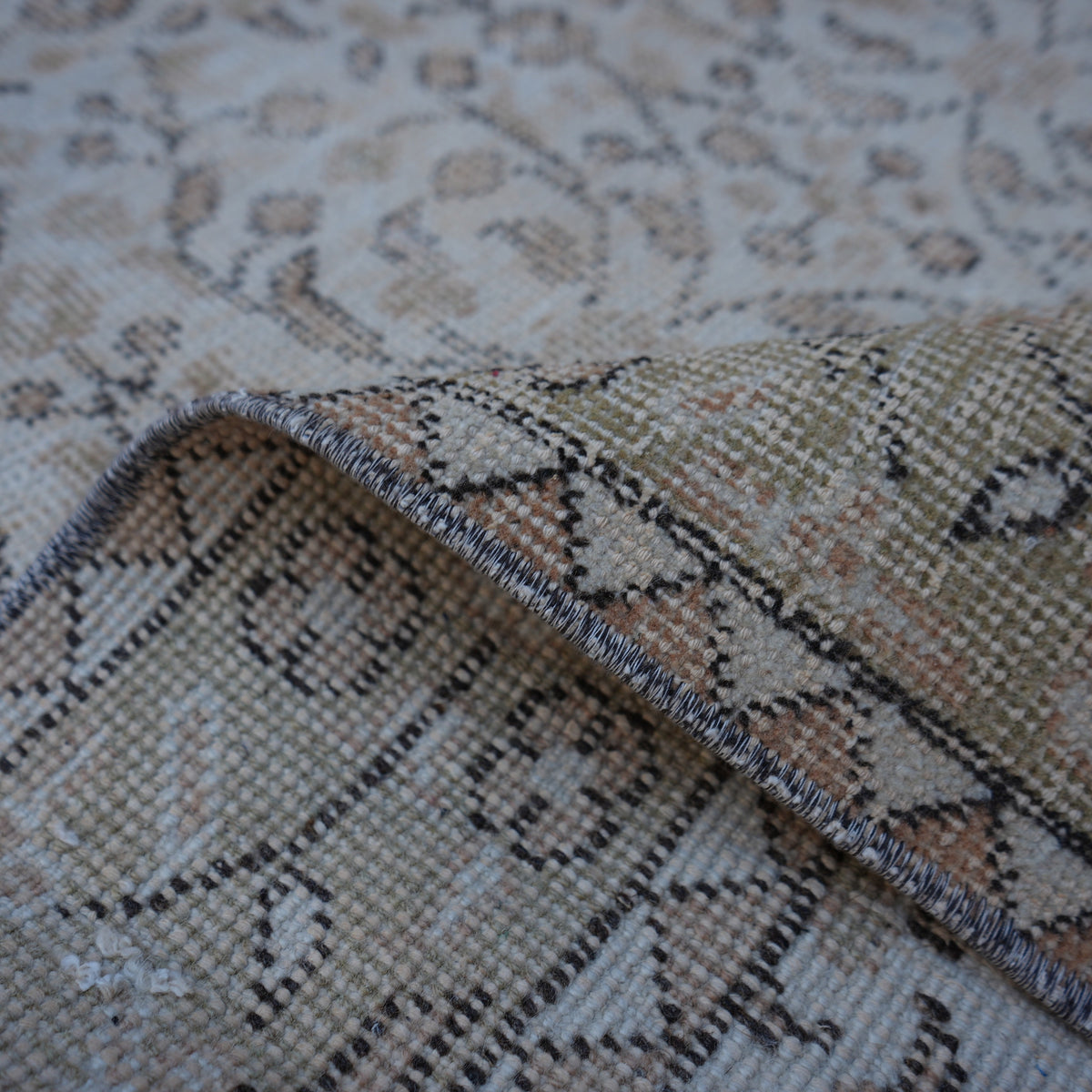
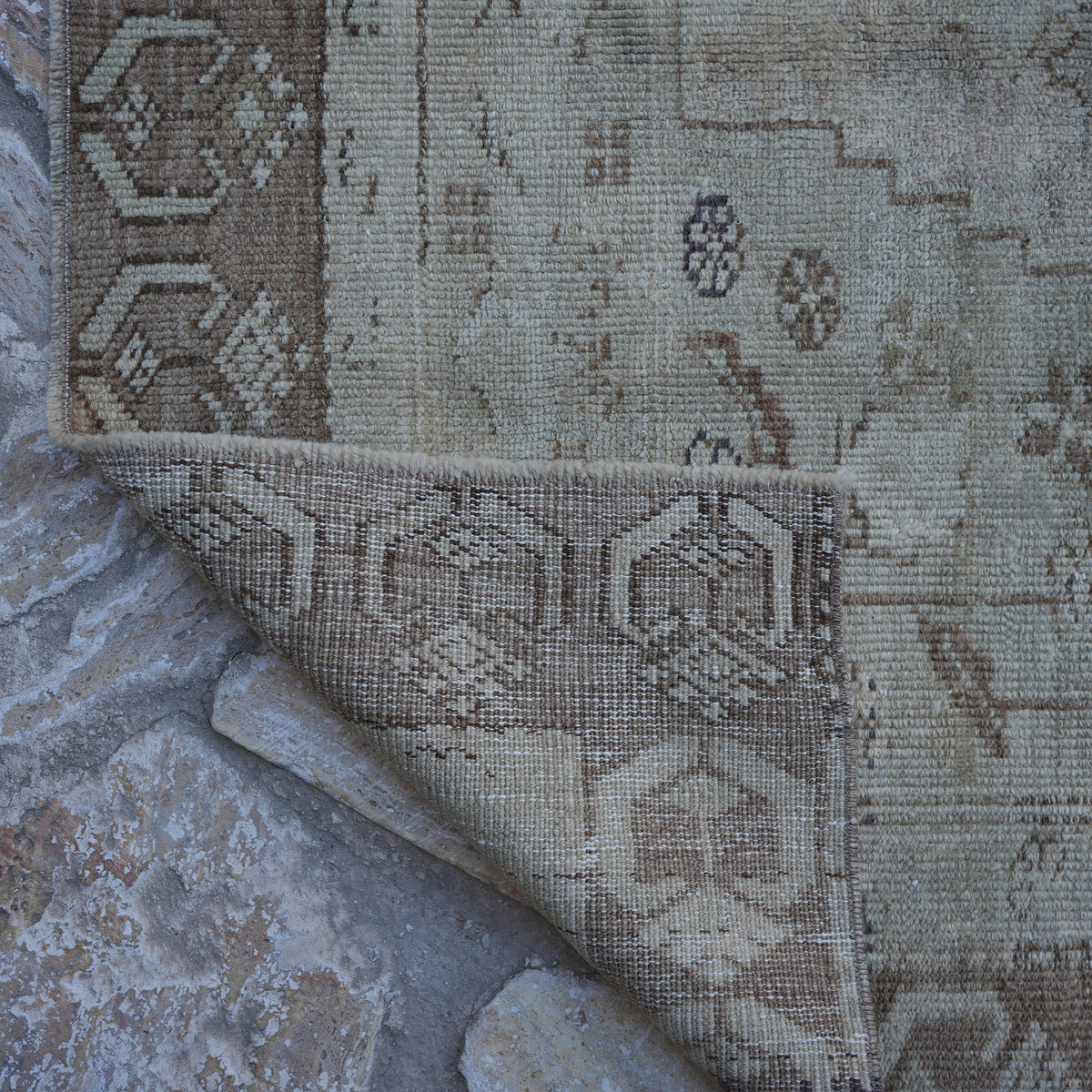
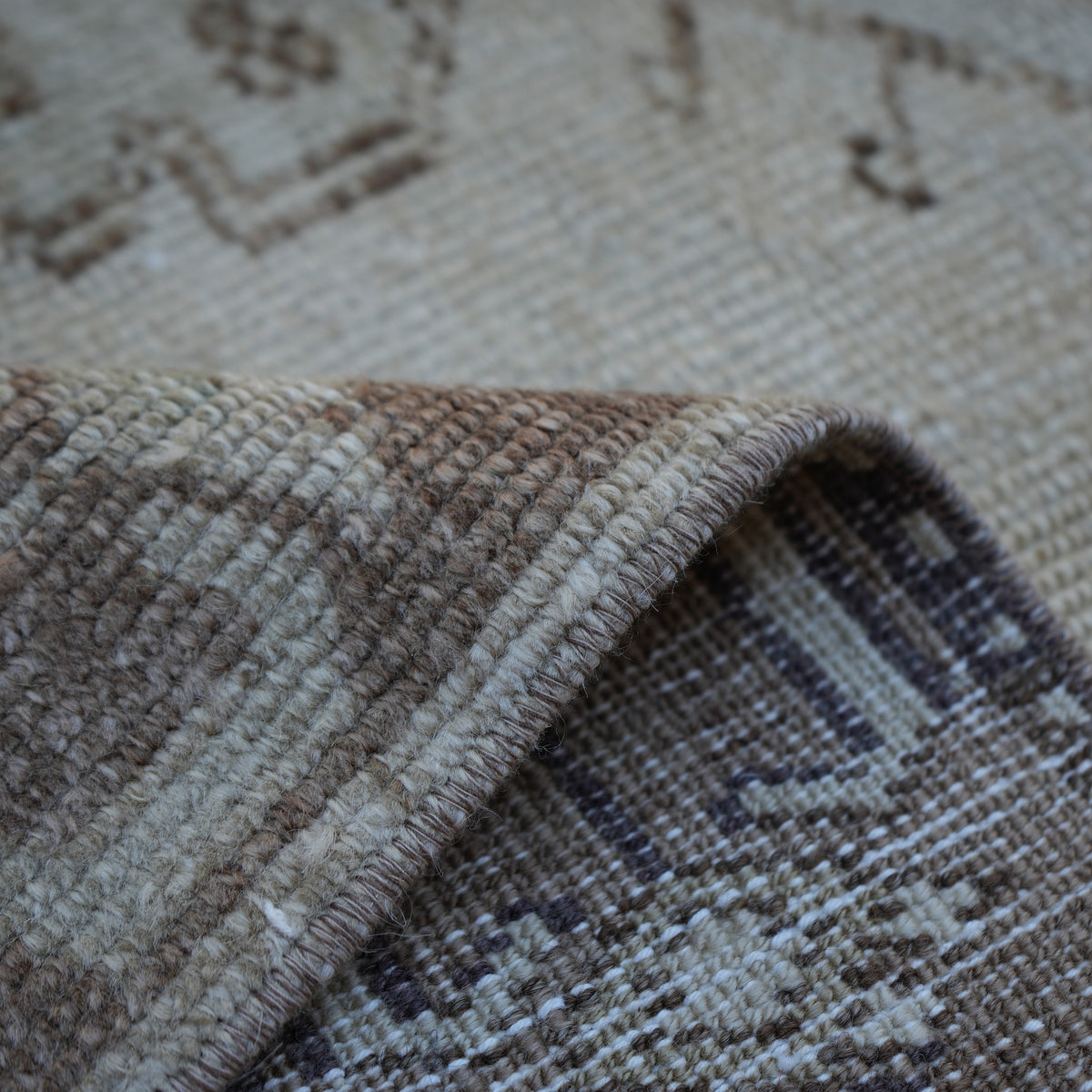
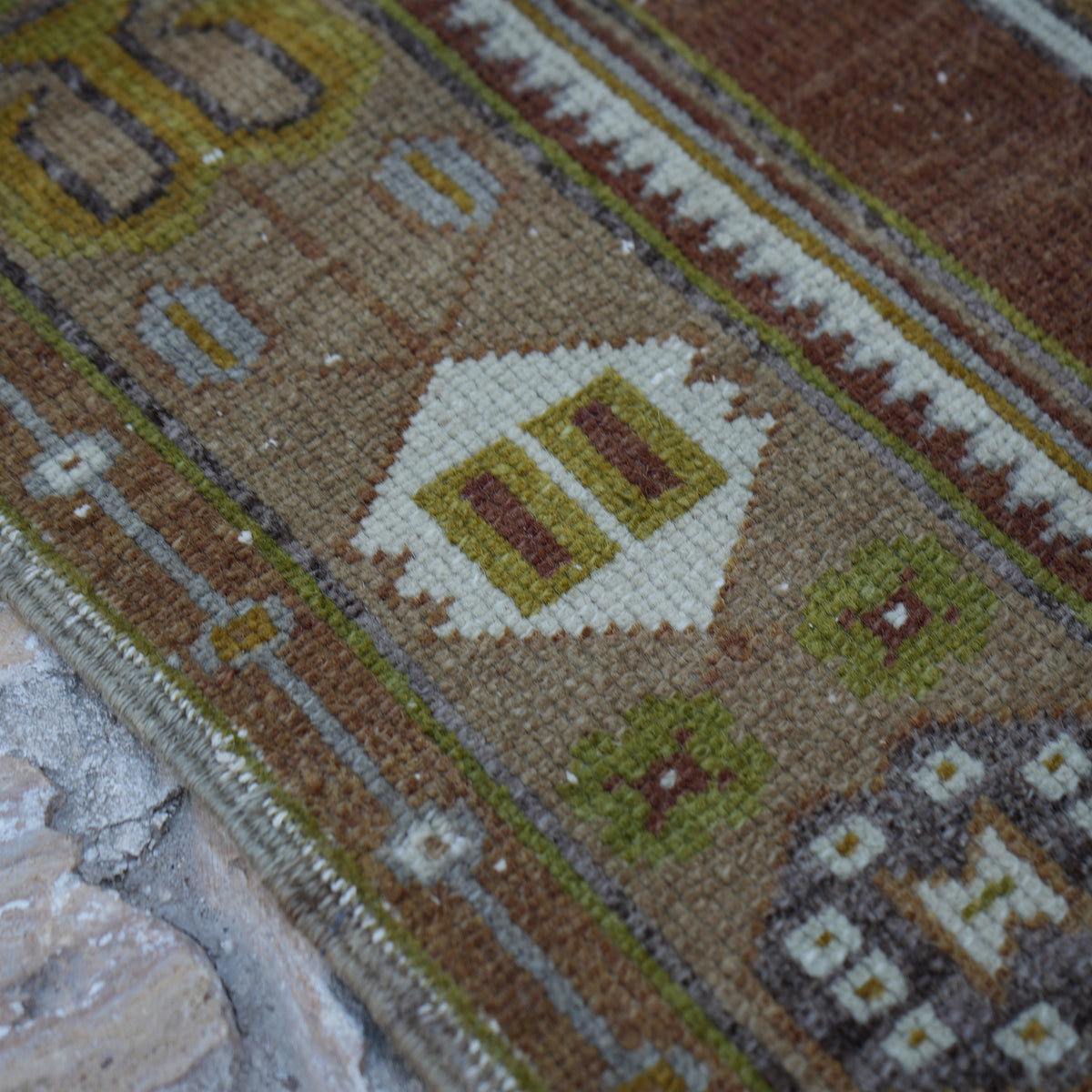
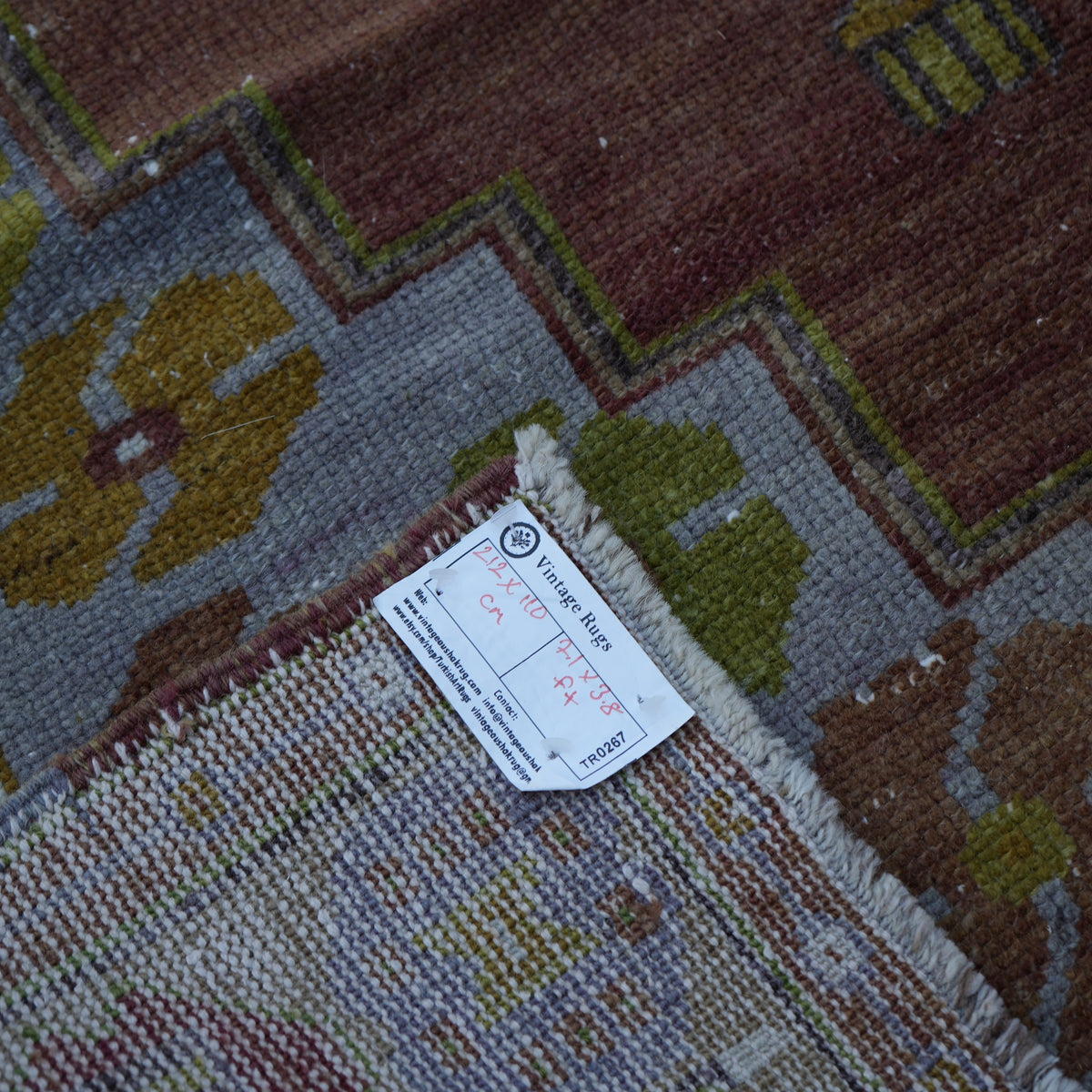
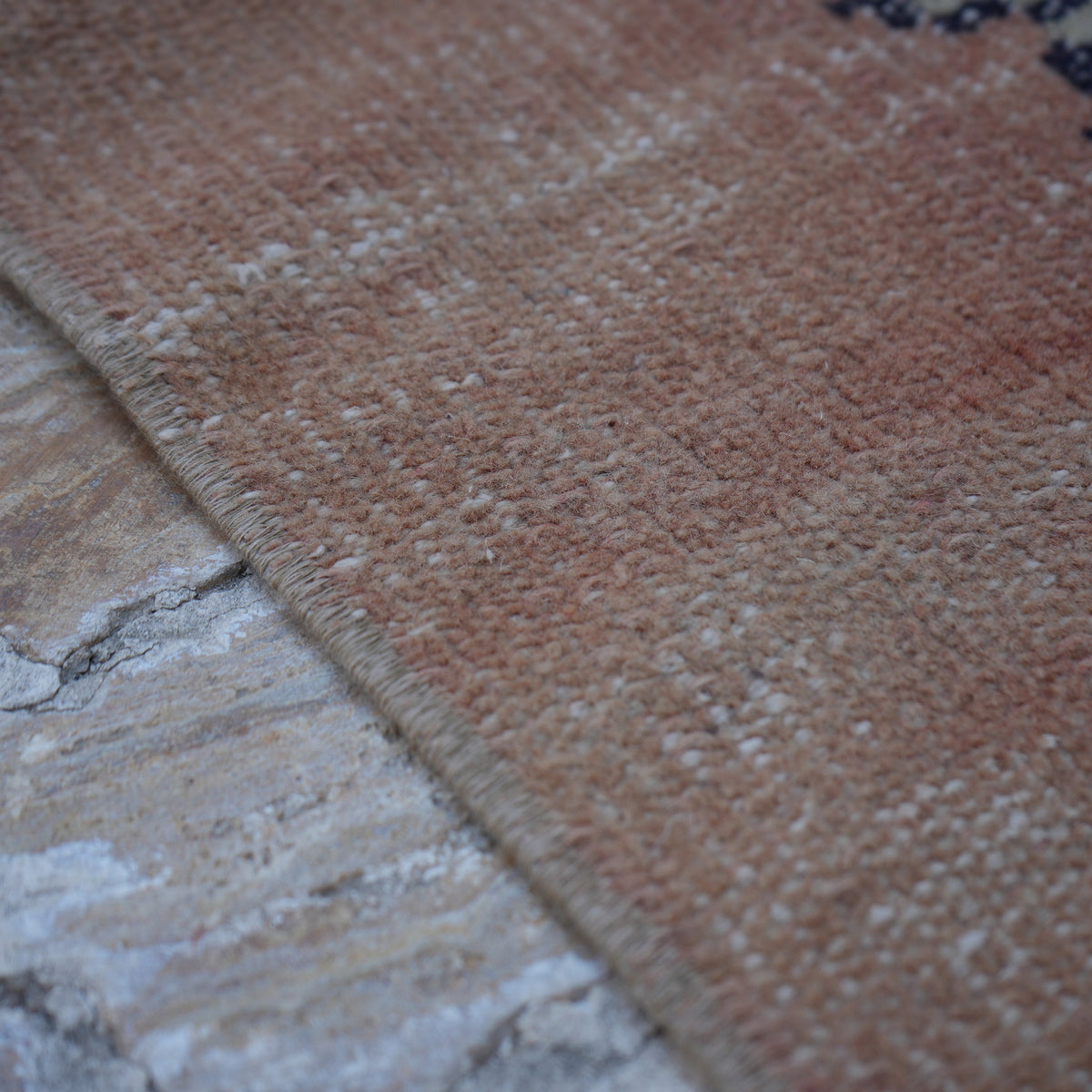
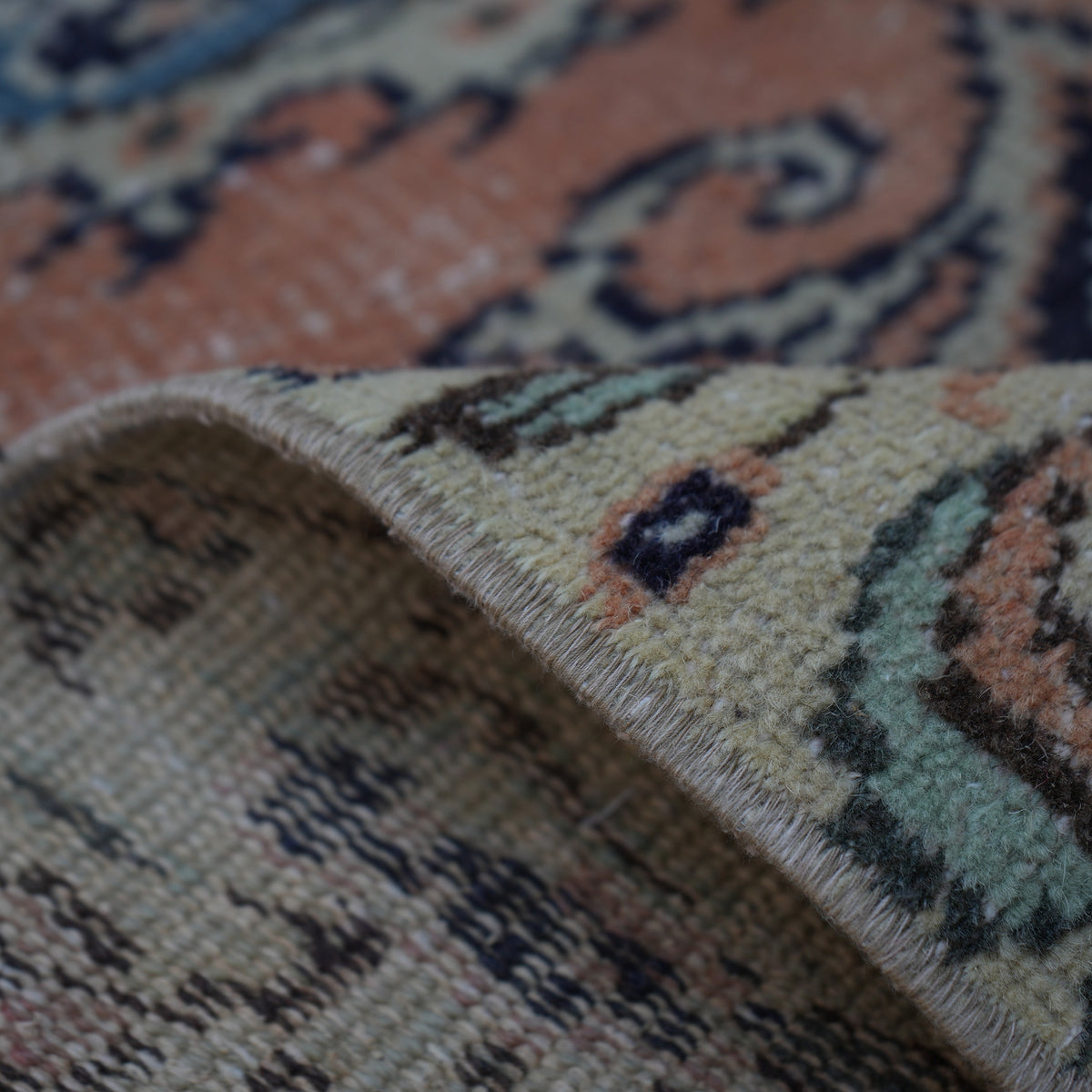
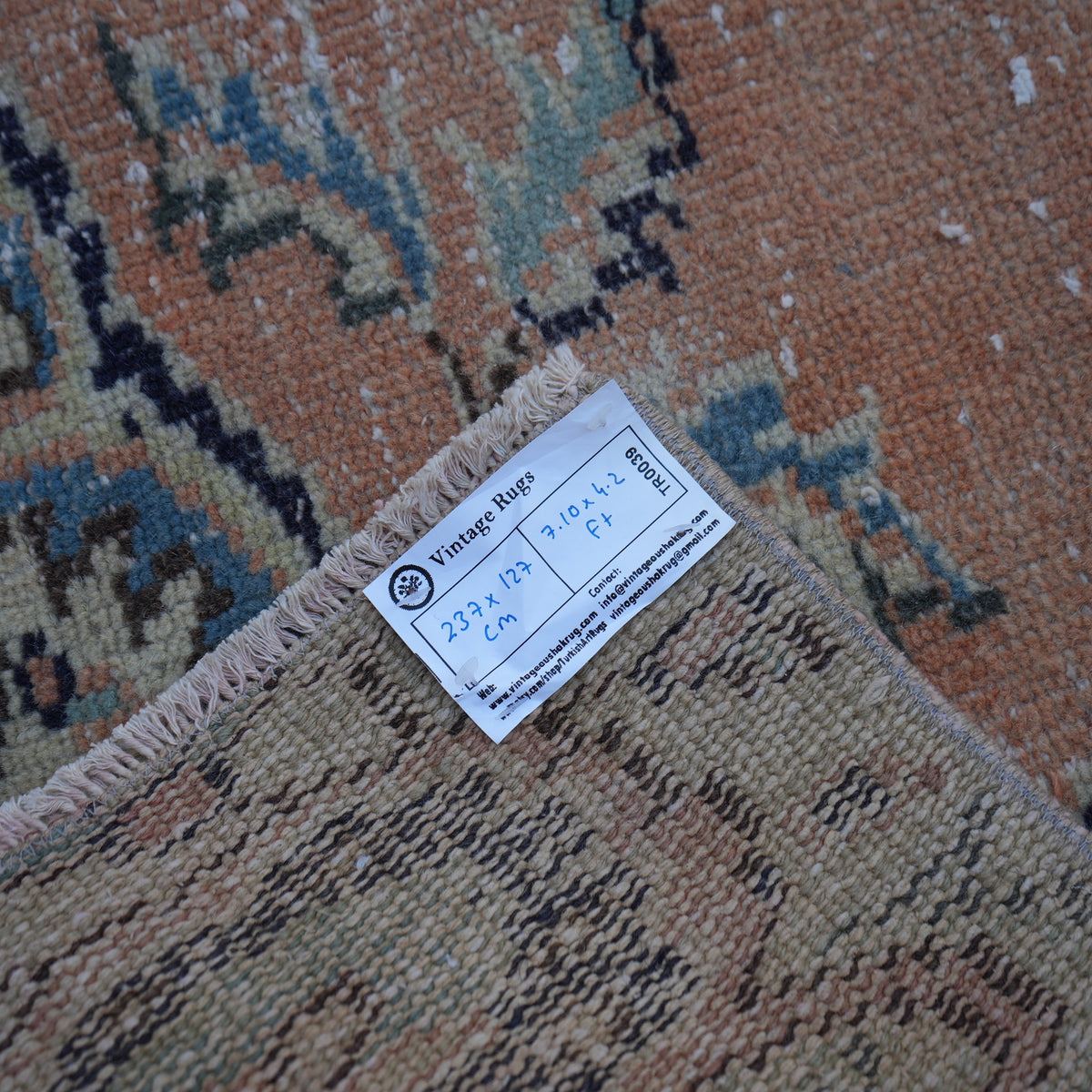
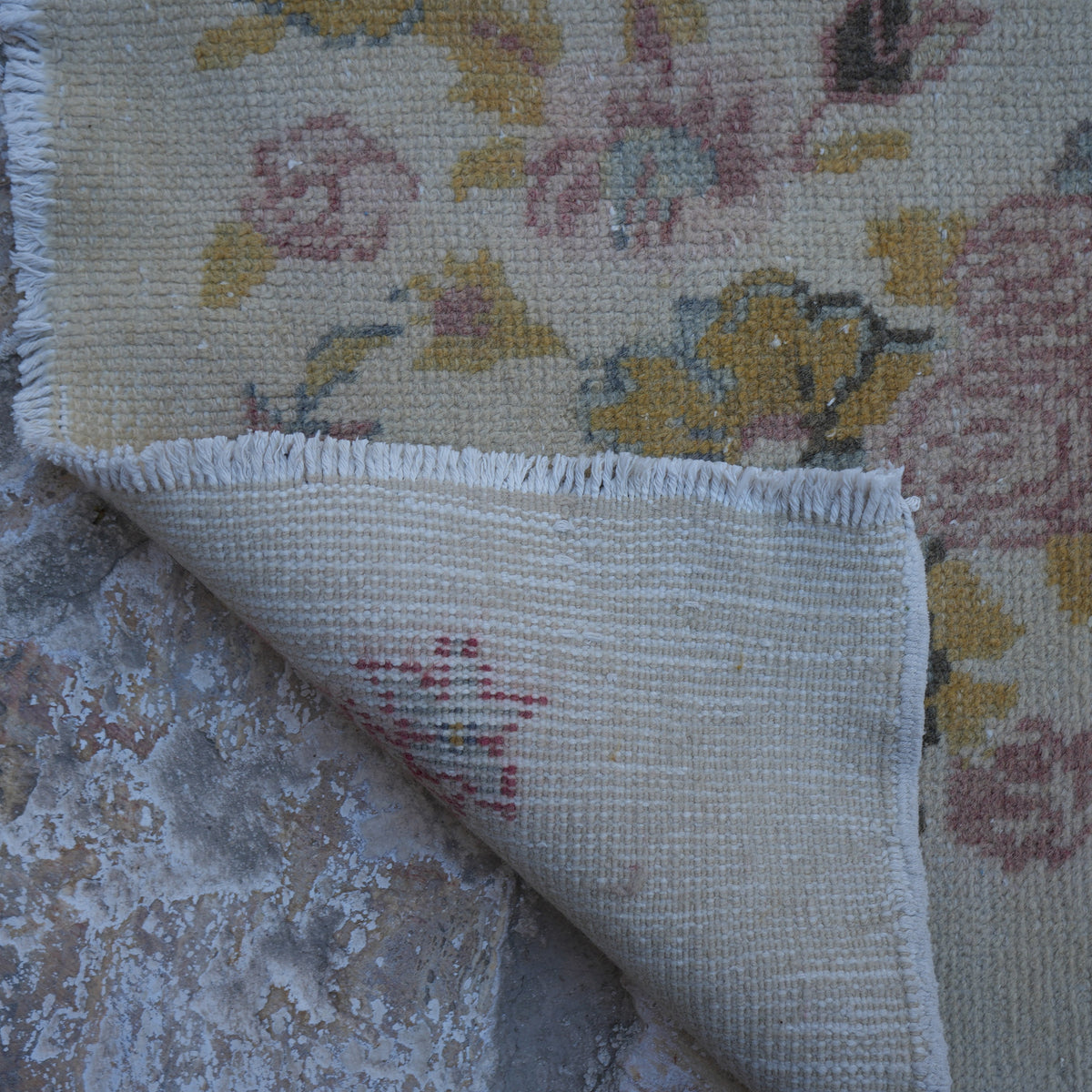
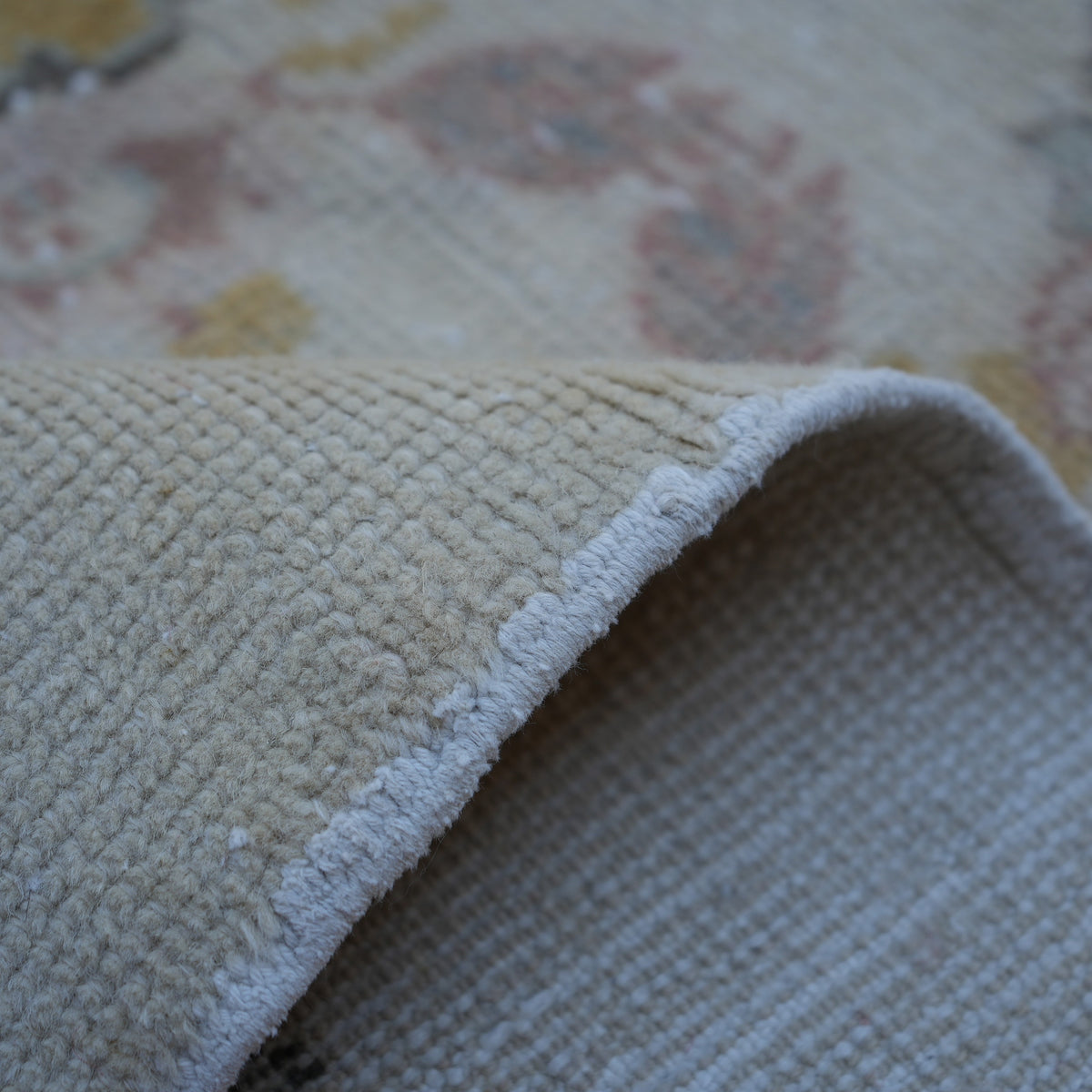
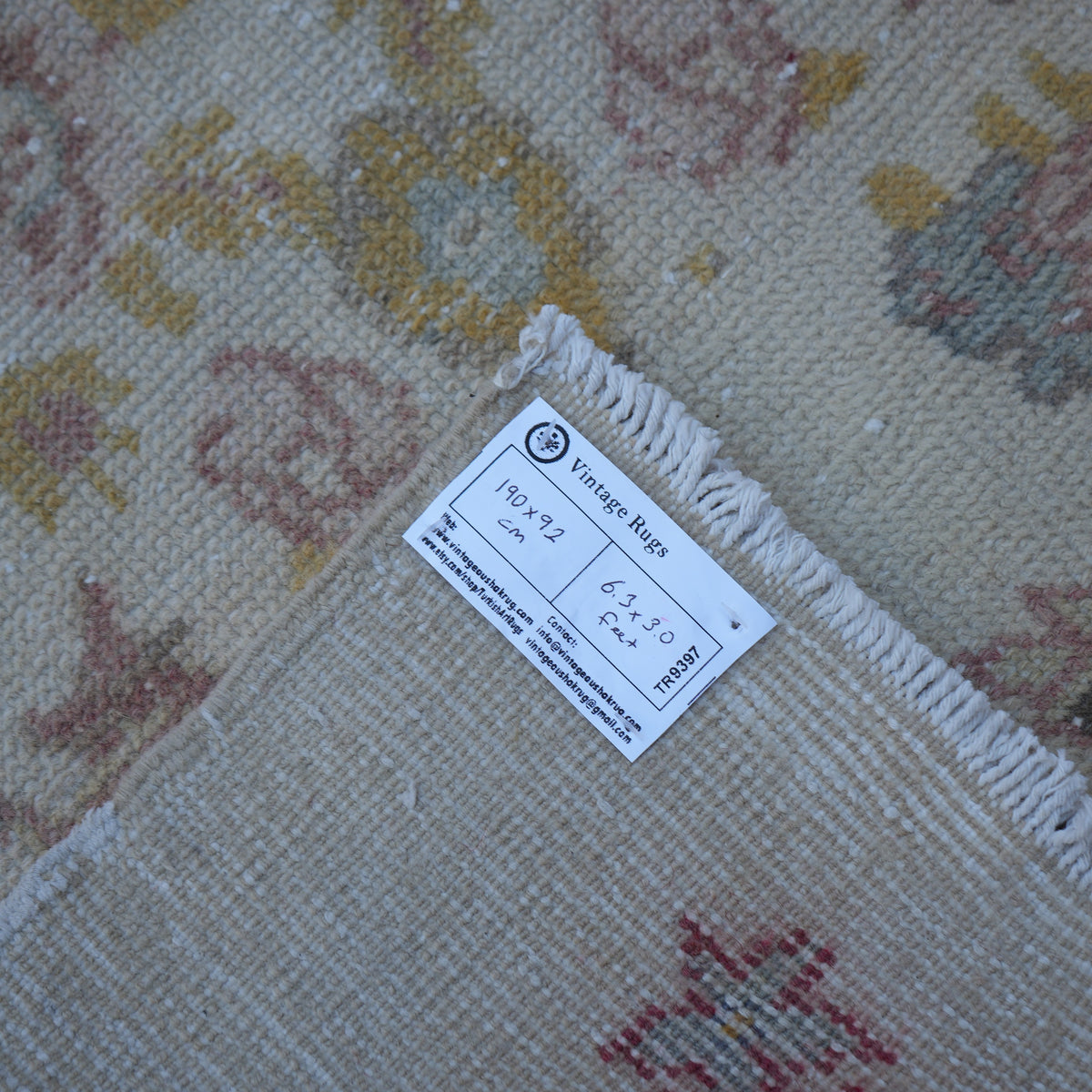
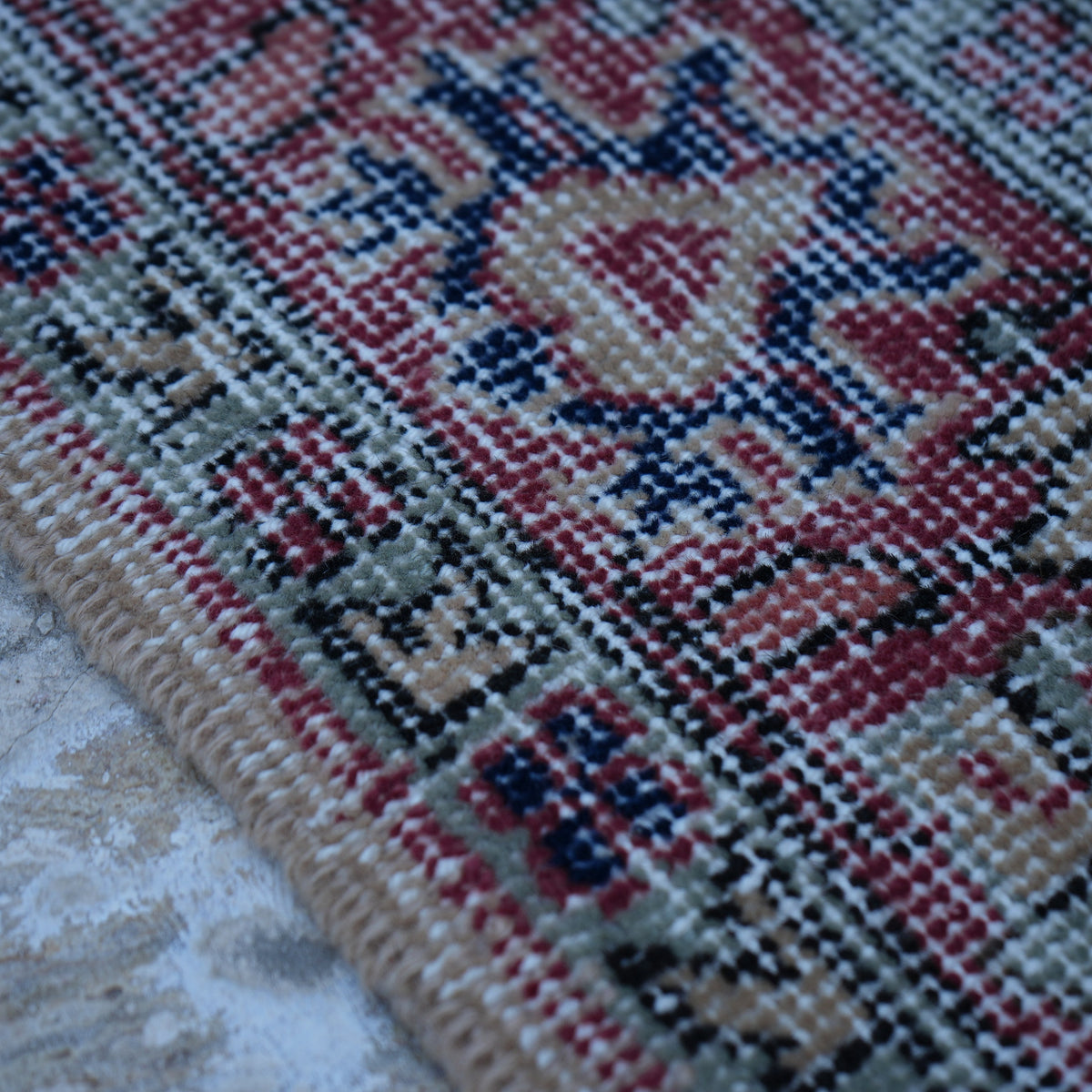
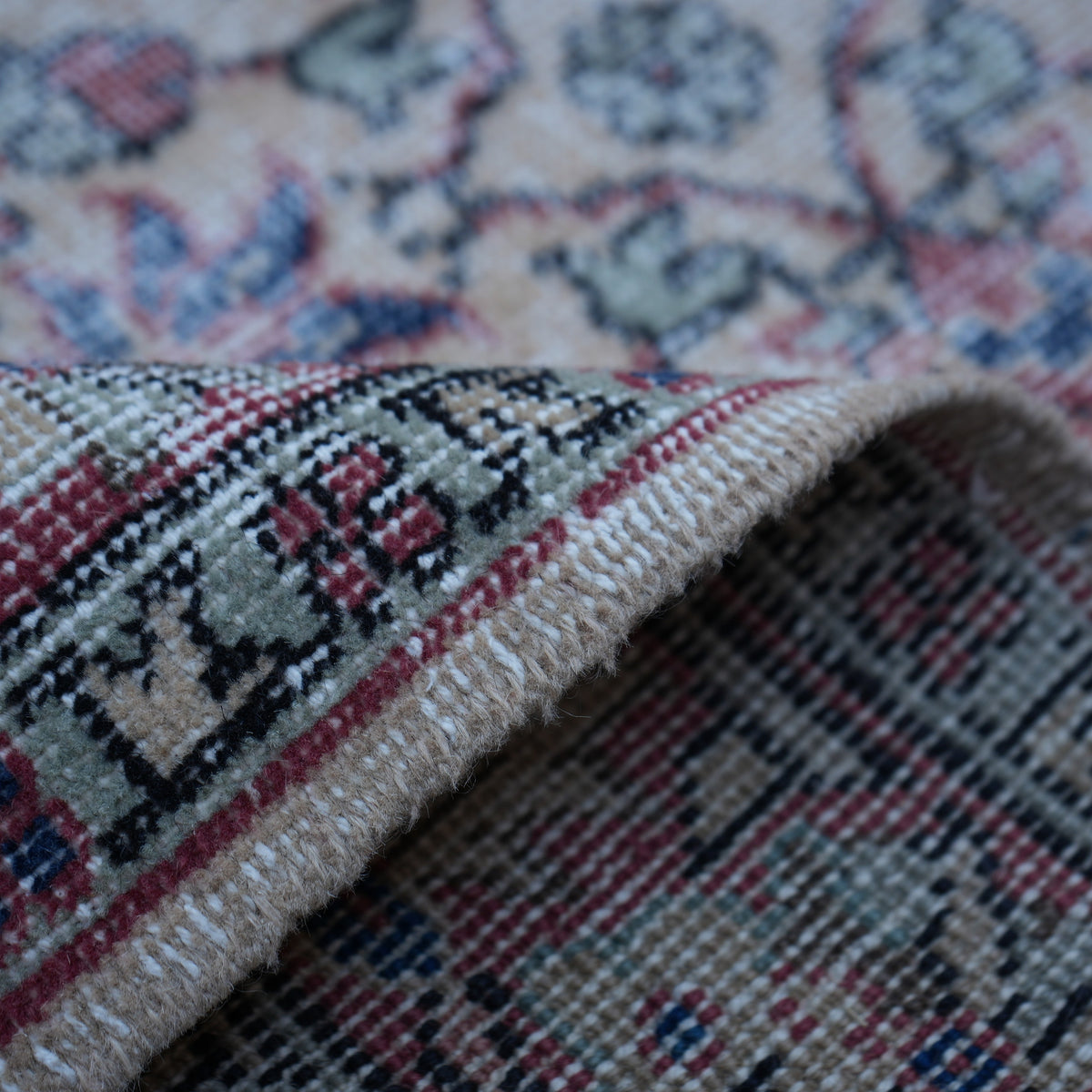
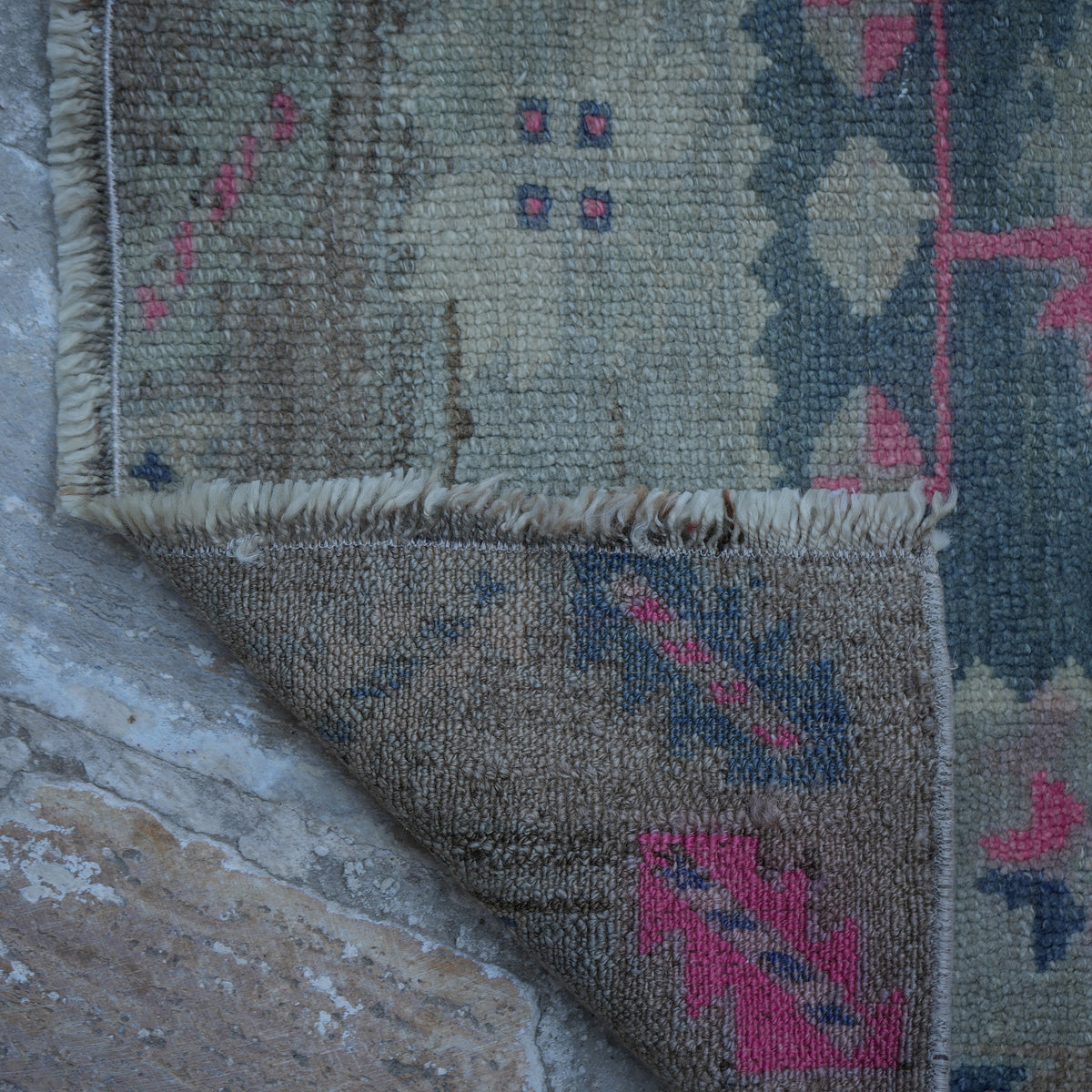
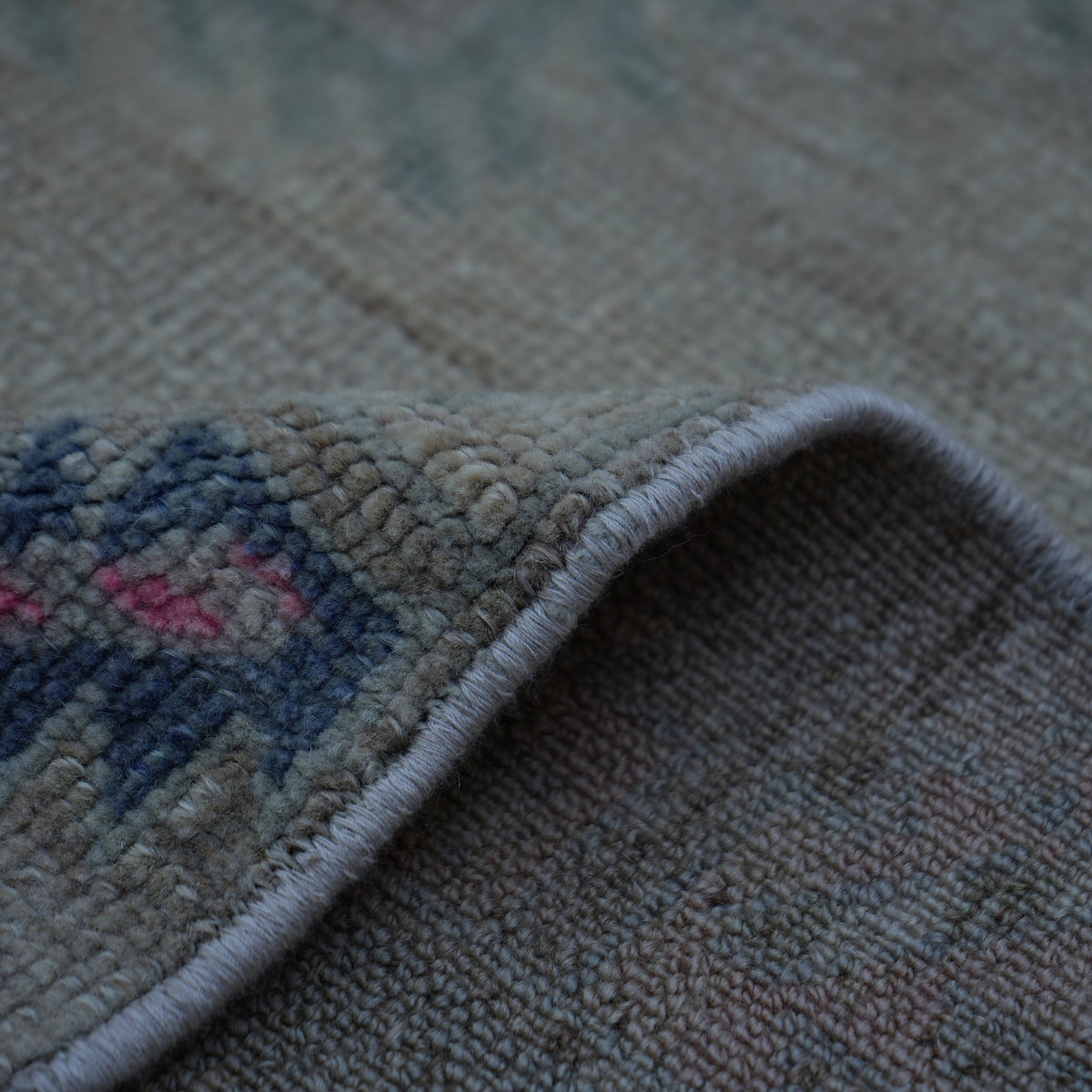
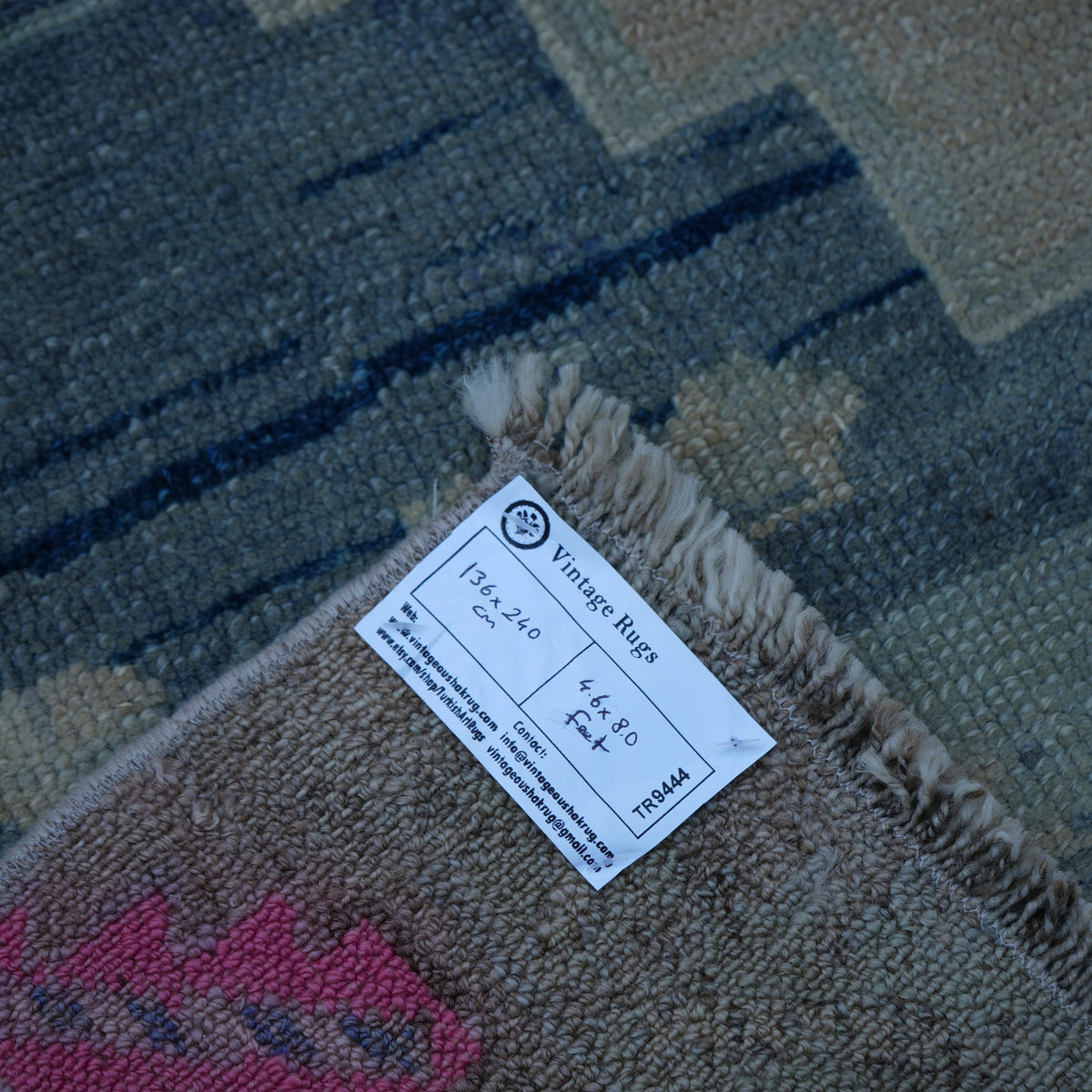
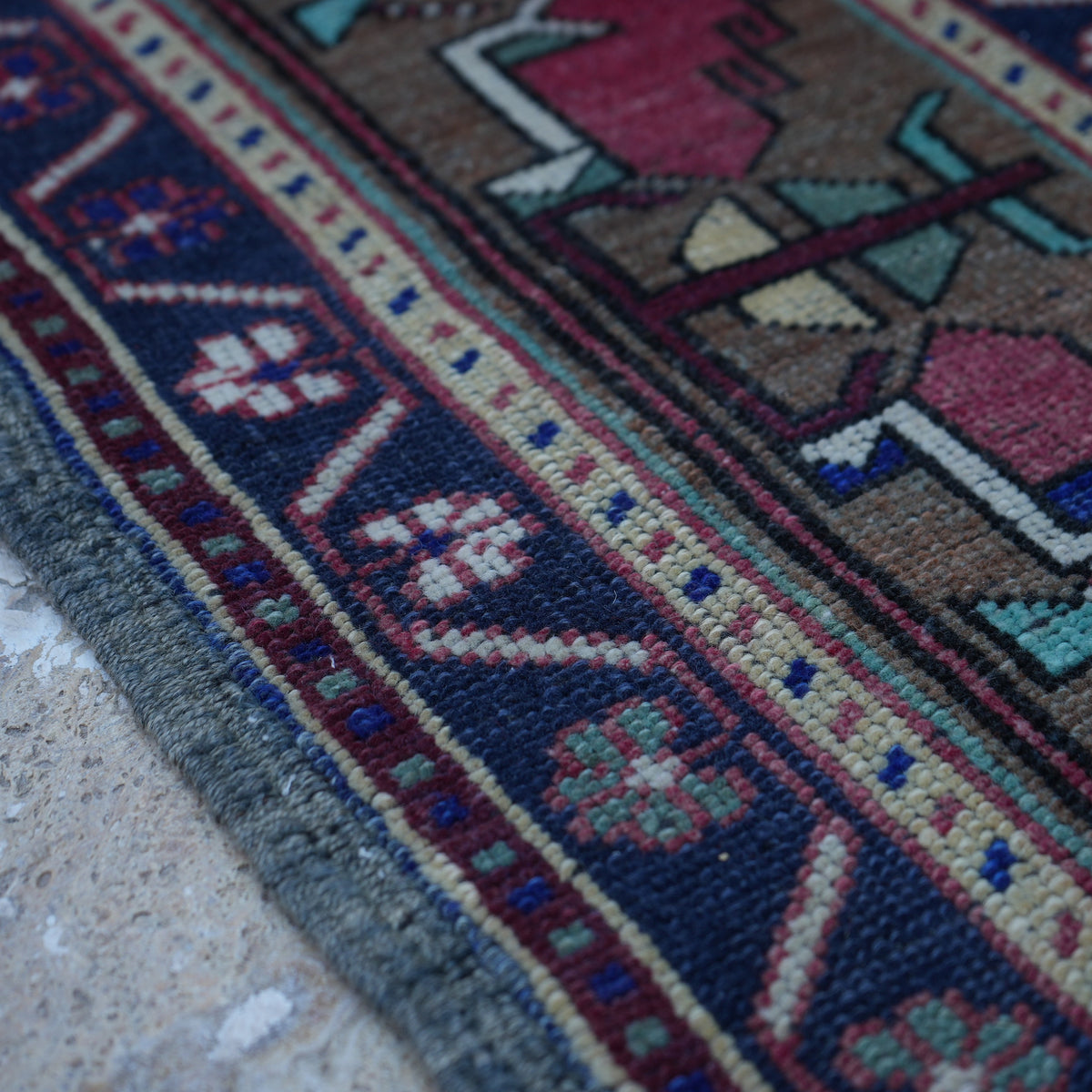
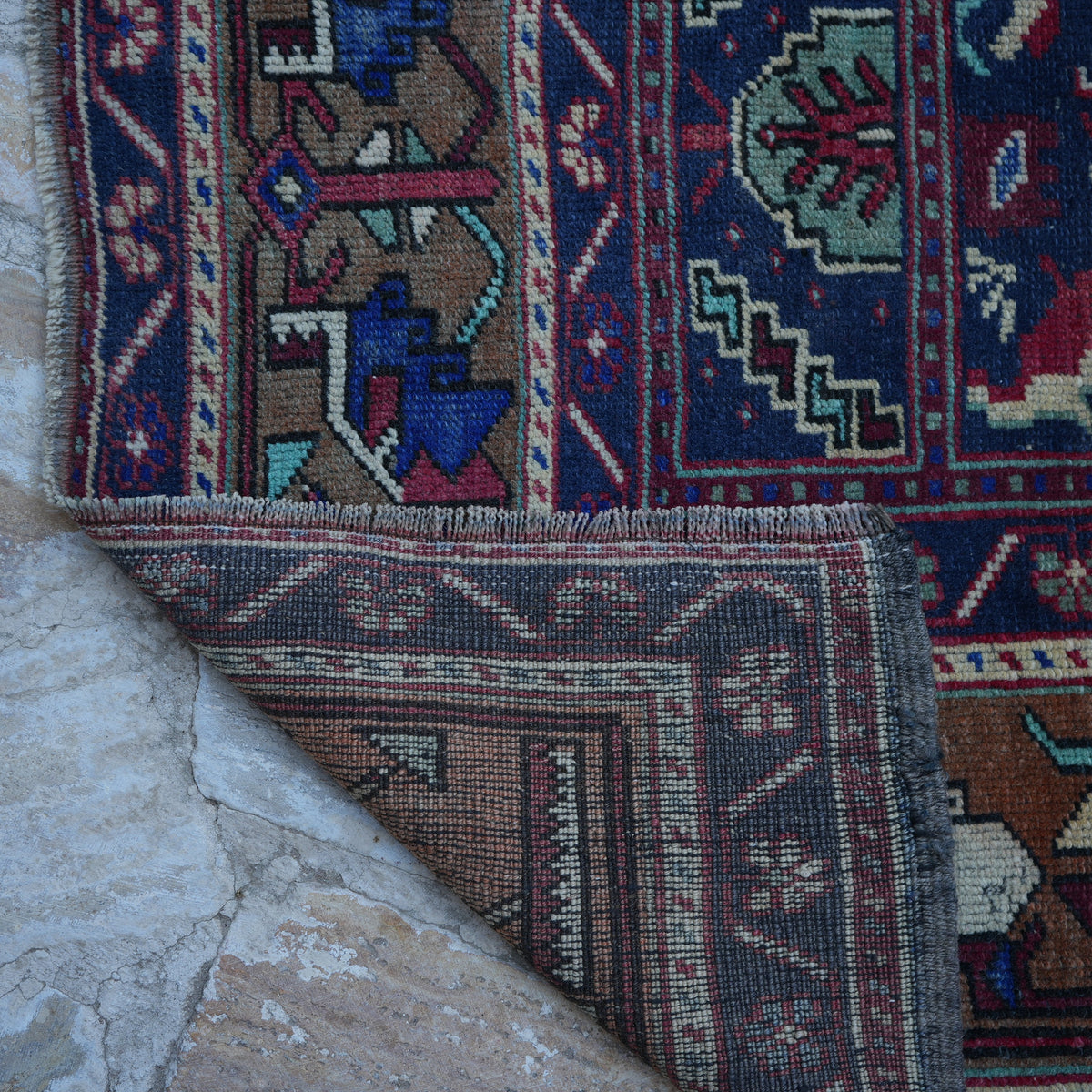
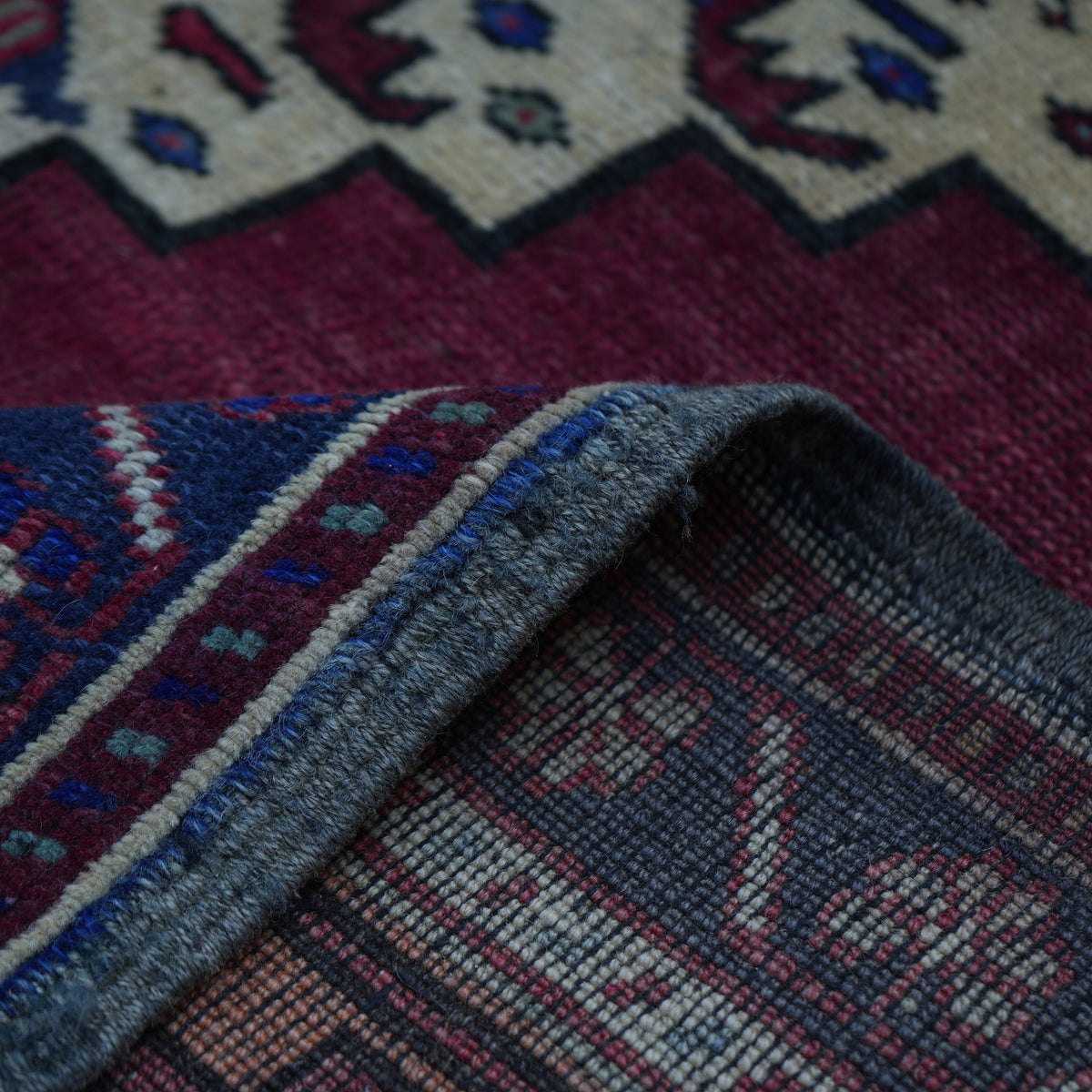
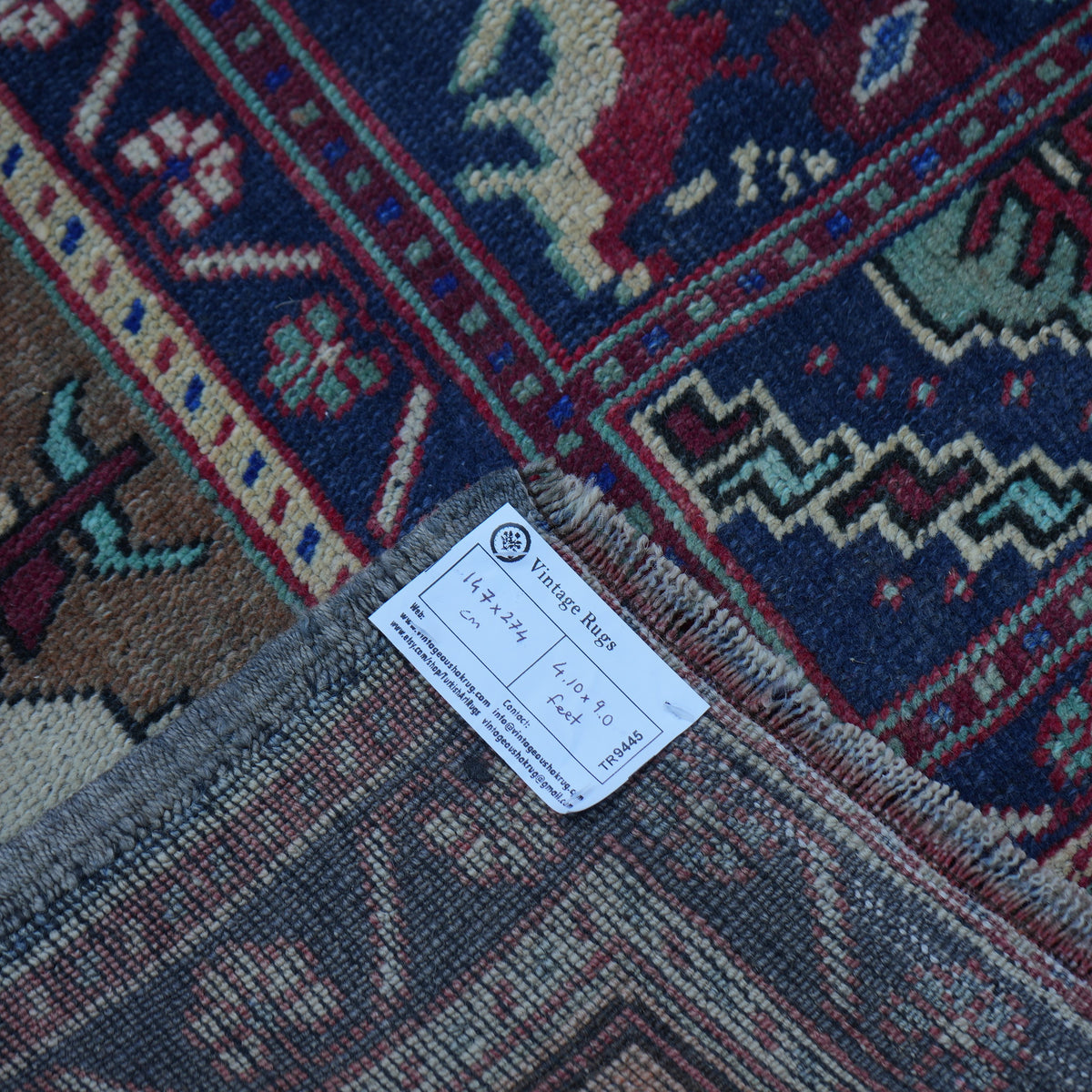
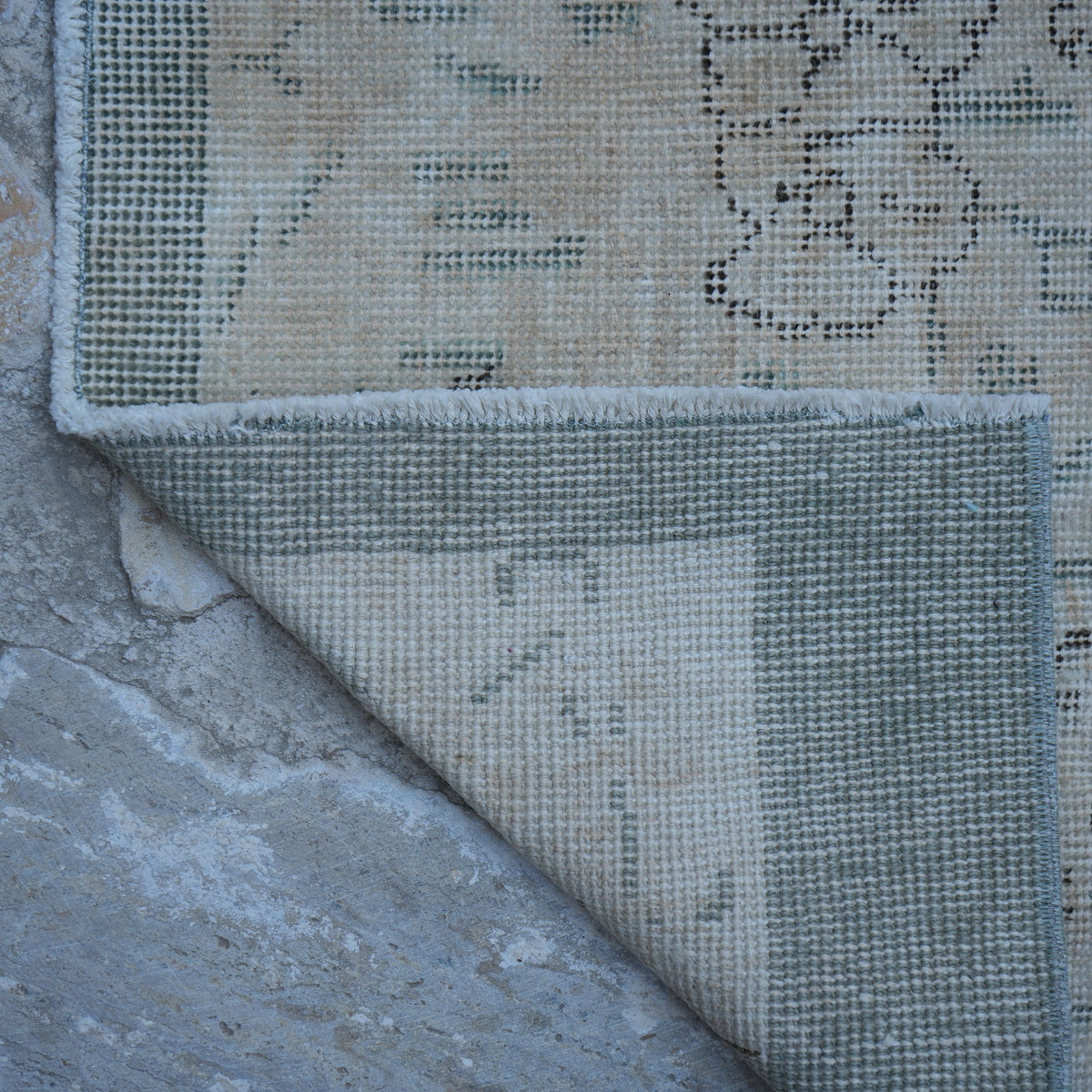
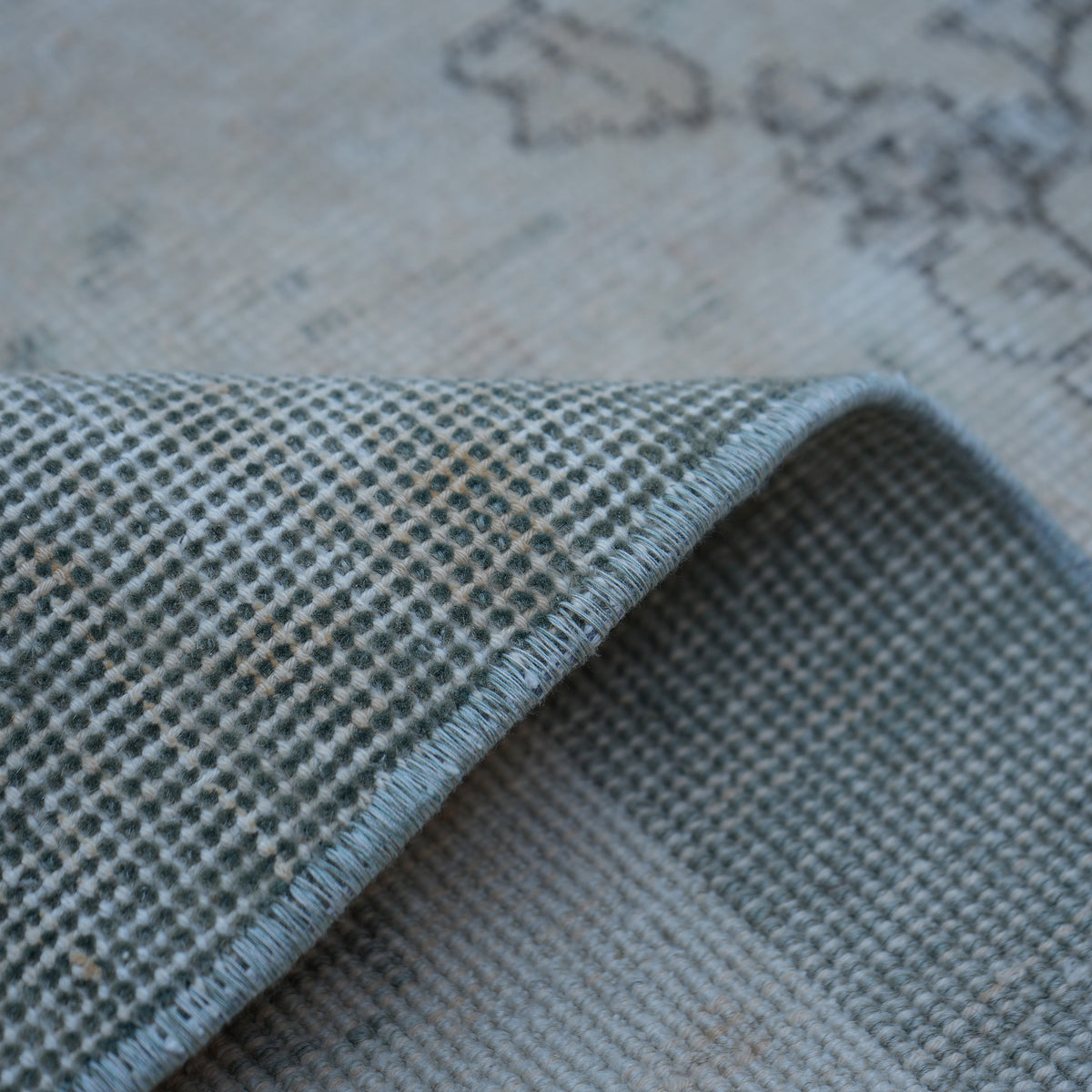
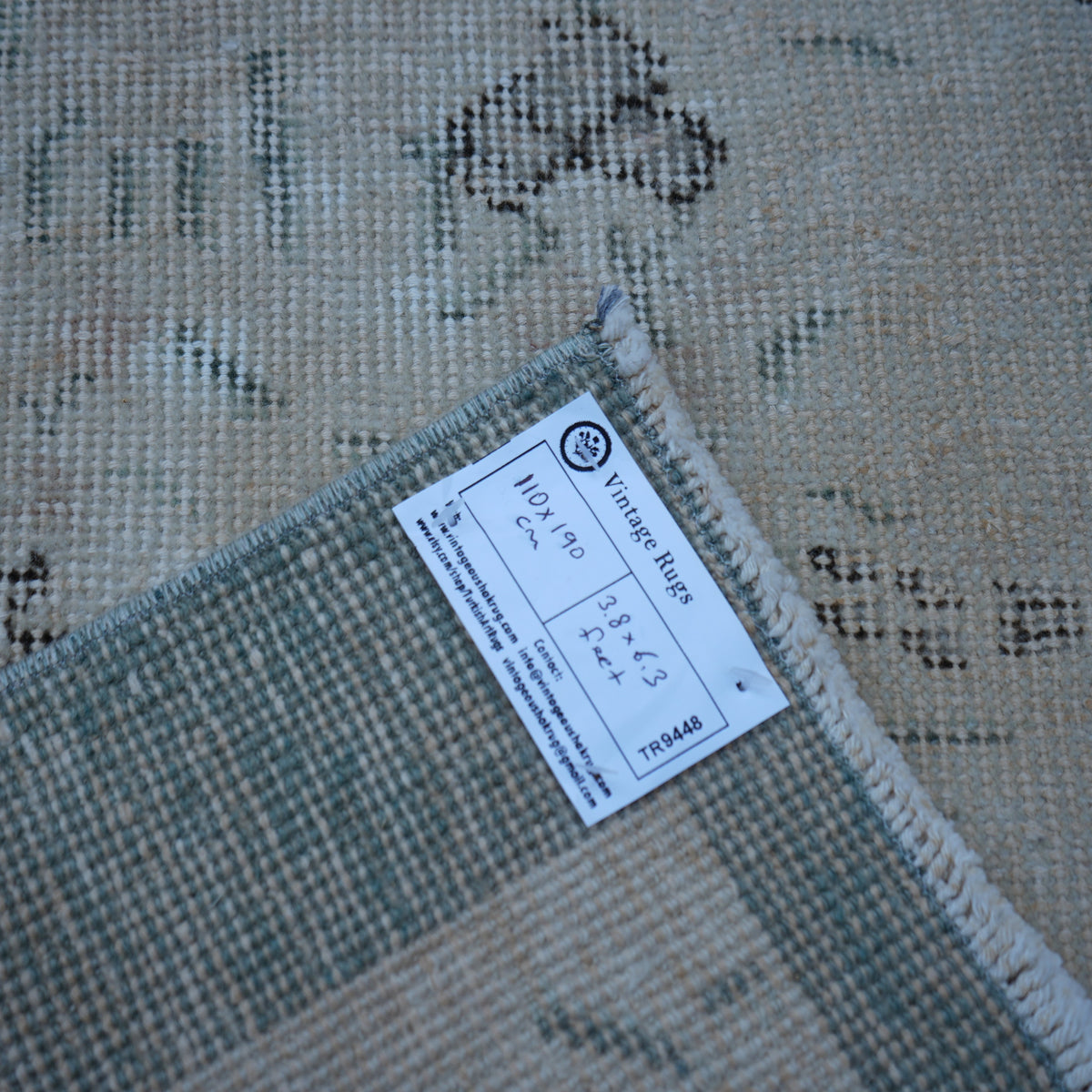
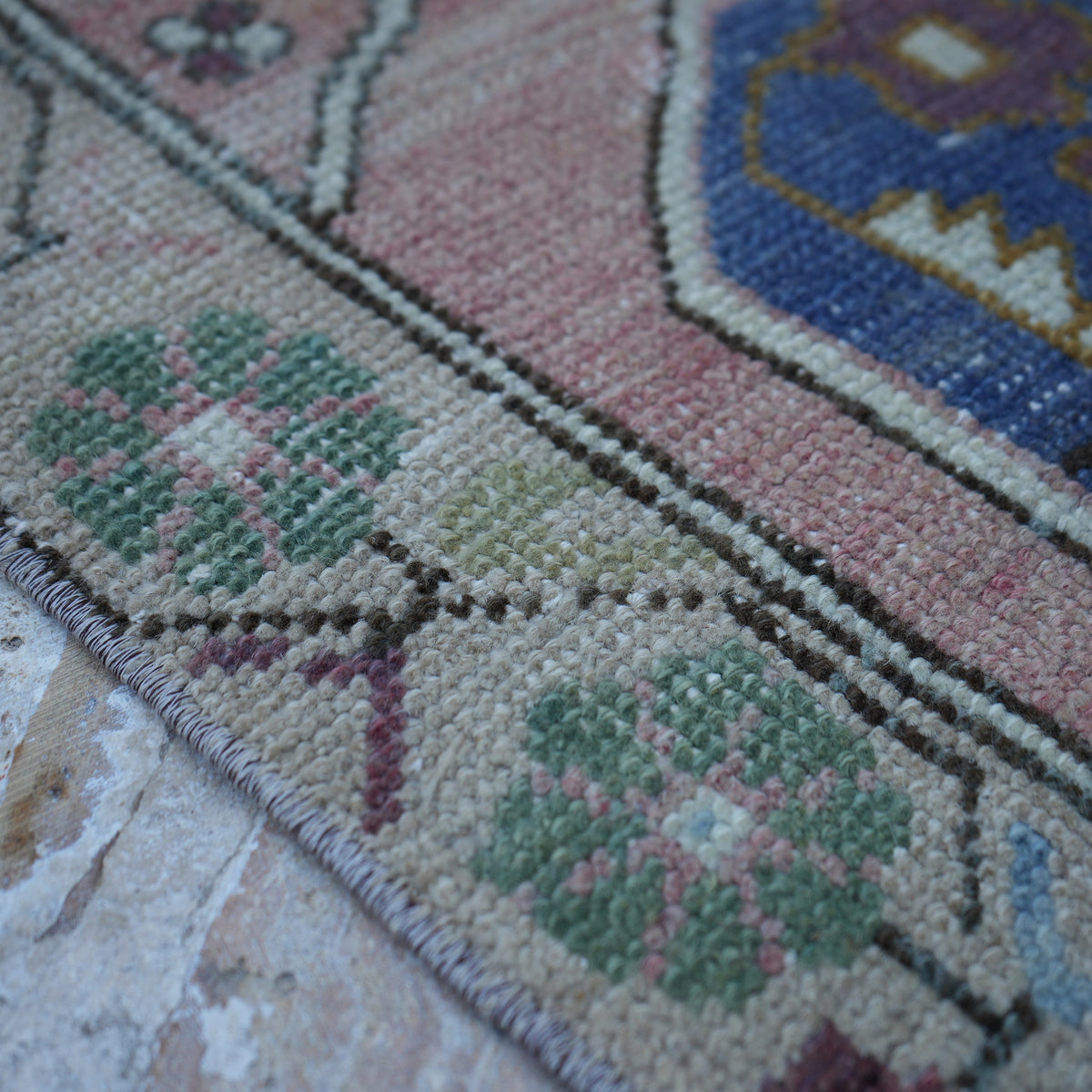
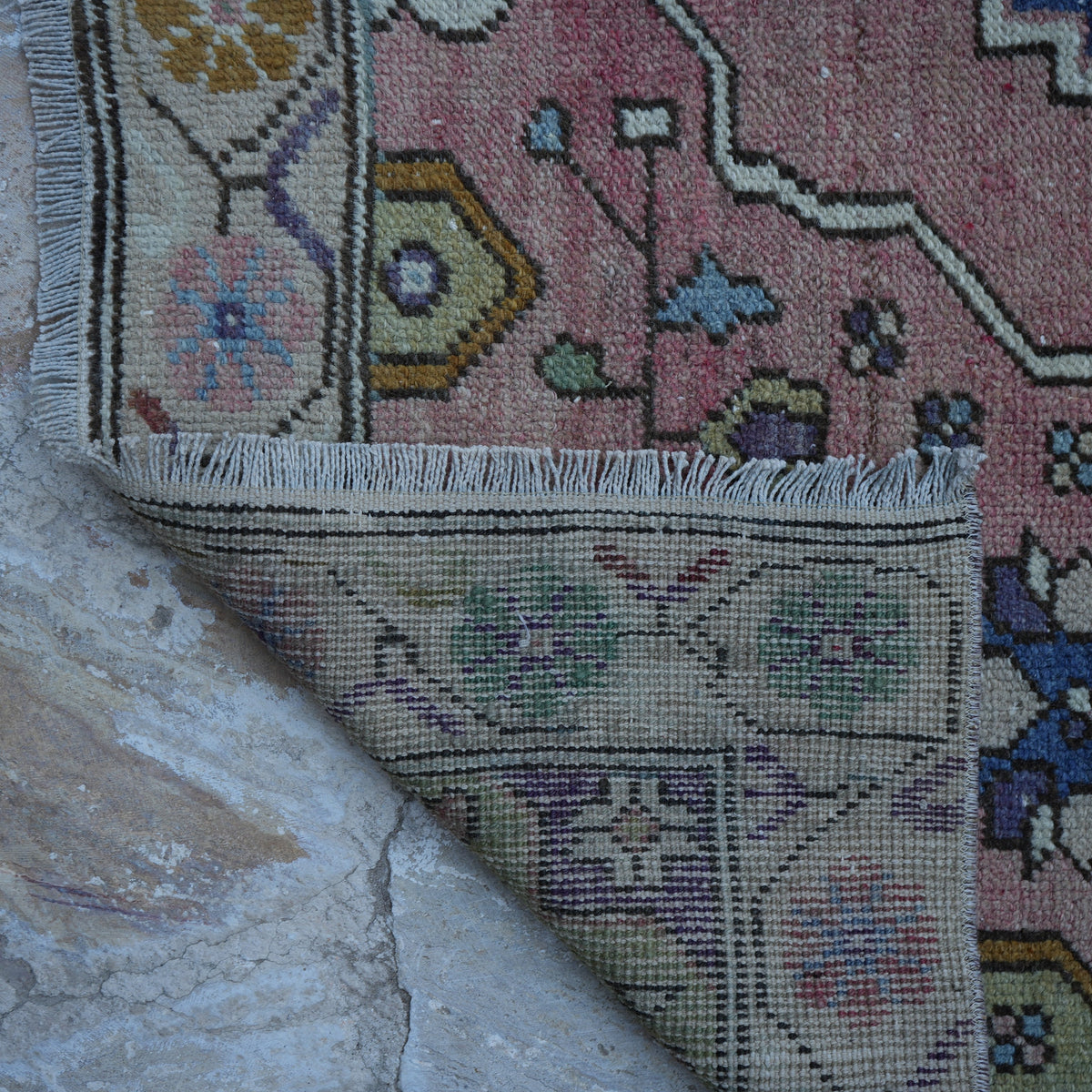
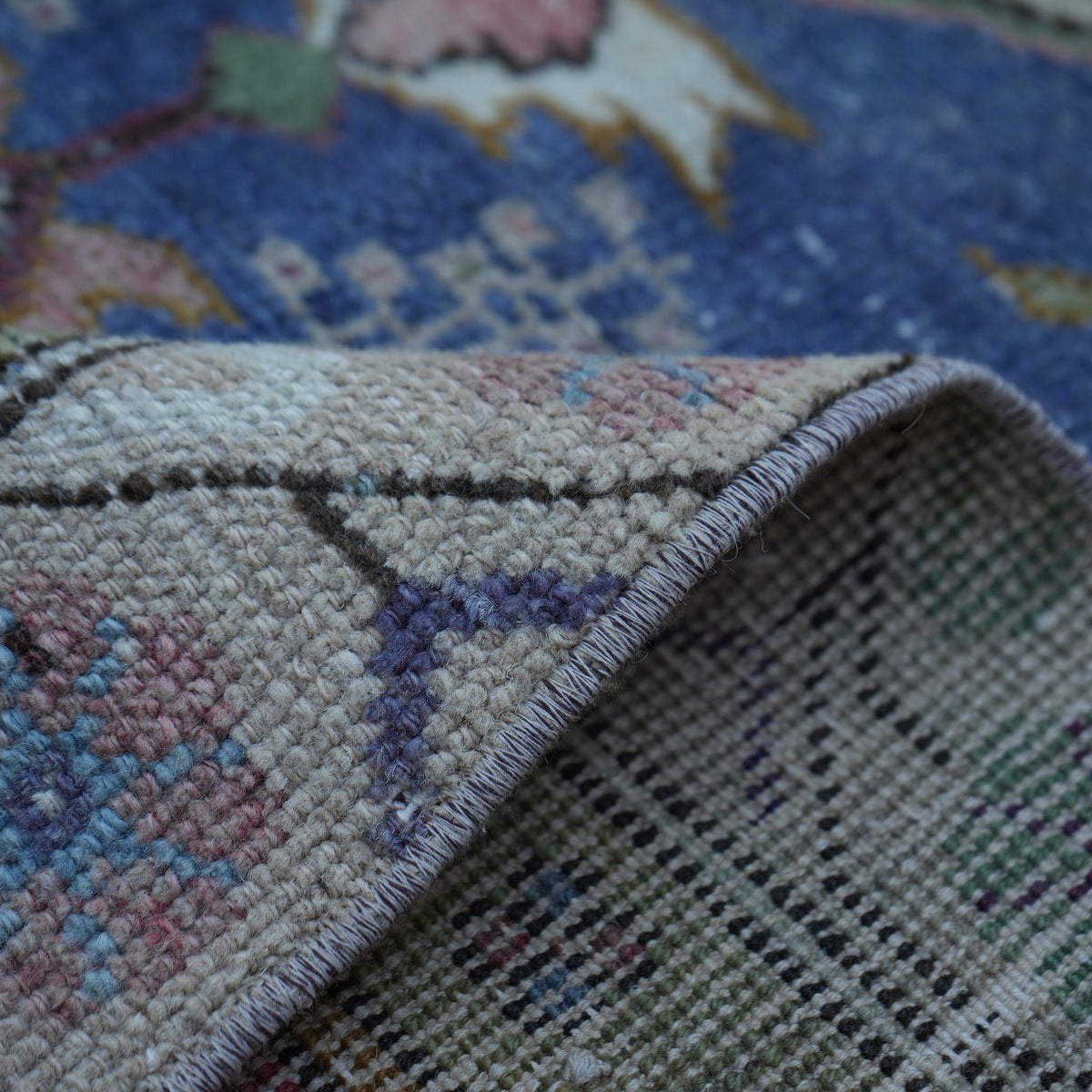
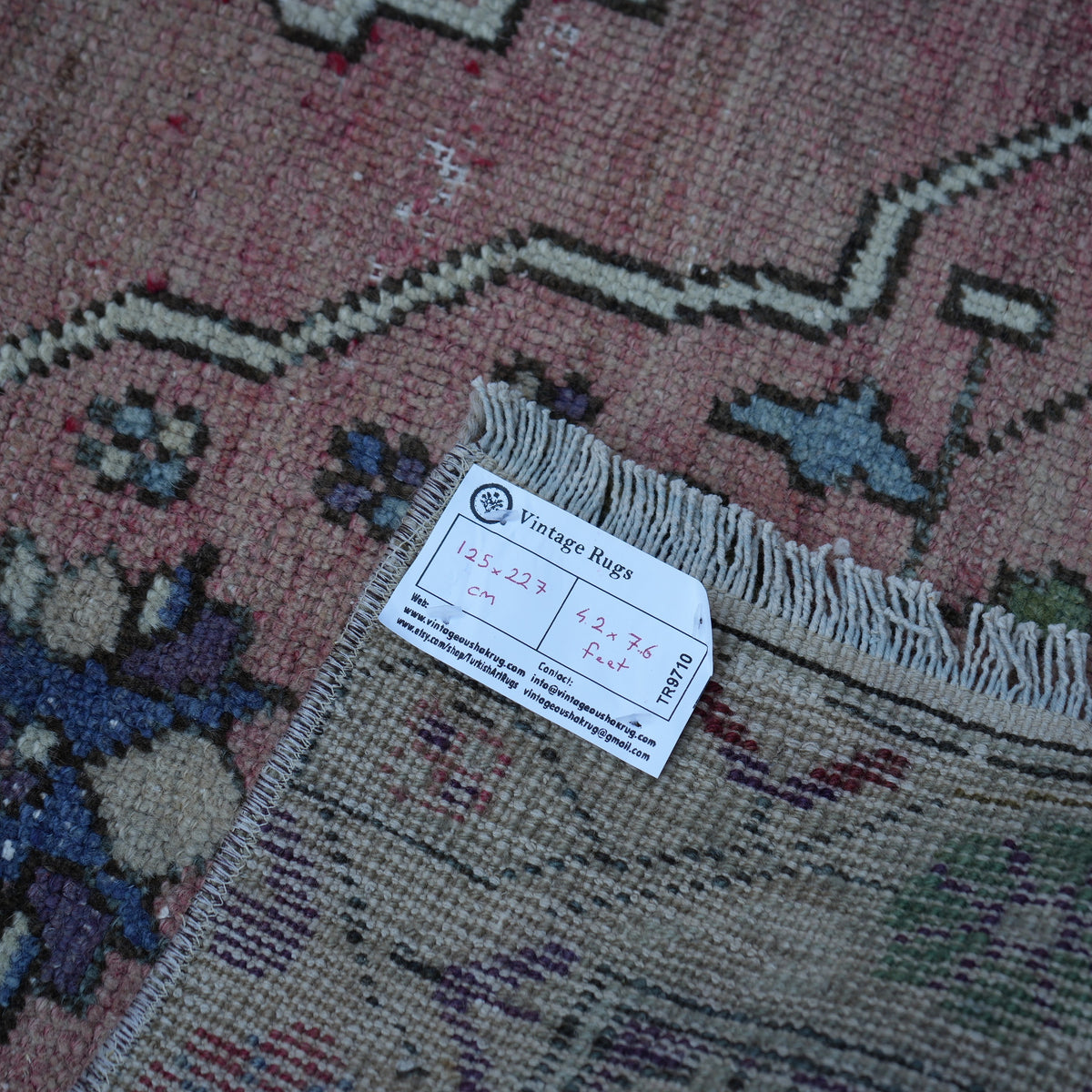
Turn the rug over first. A genuine hand-knotted piece shows the same pattern on the back as the front, with knots slightly irregular — no two rows identical, because a person tied them. A listing described as a hand-knotted, vintage overdyed wool oriental rug should match what's underneath. A glued or fabric-covered backing usually points to tufted construction, though construction and overdyeing are separate questions, so weigh the back and seller's description together, not one test alone.
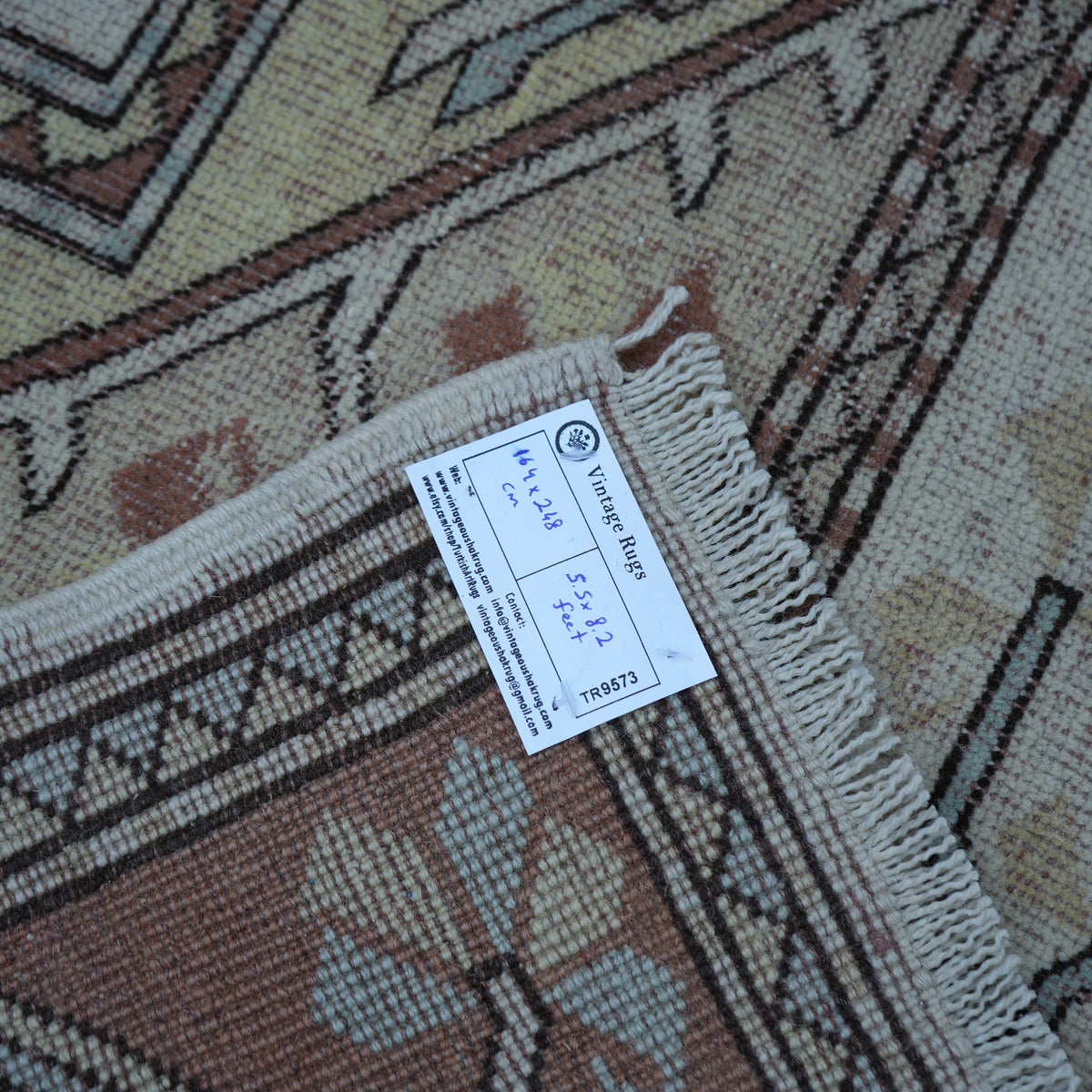
Then check the fringe: on a real hand-knotted rug, it's the exposed warp thread, continuous with the foundation. A separately attached fringe can be a warning sign on a rug sold as original — though genuine vintage rugs sometimes have later fringe repairs too, so weigh it alongside the back and knots, not alone.
Why Price Tells the Real Story
Why is one overdyed rug $250 and another $1,500? The price reflects more than the color: size, condition, wool quality, age, and how clearly the pattern reads through the dye all factor in. An unusually low price doesn't automatically mean a rug is fake, but it's reason to examine the construction more closely. A seller who sourced the vintage rug themselves, not through several resellers, can usually tell you where it came from.
How to Care for an Overdyed Rug (So the Color Doesn't Fade)
Overdyed rugs hold their color well when treated like any hand-dyed textile.
- Keep it away from prolonged direct sunlight, one of the main causes of uneven fading.
- Rotate it every six months so fading stays even.
- Vacuum without a beater bar.
- Blot spills instead of scrubbing.
- Have it professionally cleaned when noticeably soiled, not on a fixed schedule.
Is a Handmade Overdyed Rug Worth the Investment?
An overdyed rug asks for a small leap: that a rug someone set aside, in a color it never wore, might beat something made to order. Usually, yes — you're buying real age, re-colored by hand, with tonal variation no factory dye run can replicate. Don't think of it as a financial investment; think of it as a piece with one story already in it, about to start a second. We source our overdyed rugs directly, no middlemen between the workshop and your floor — more on how we work is on our about page. Our overdyed rugs collection is where to start.
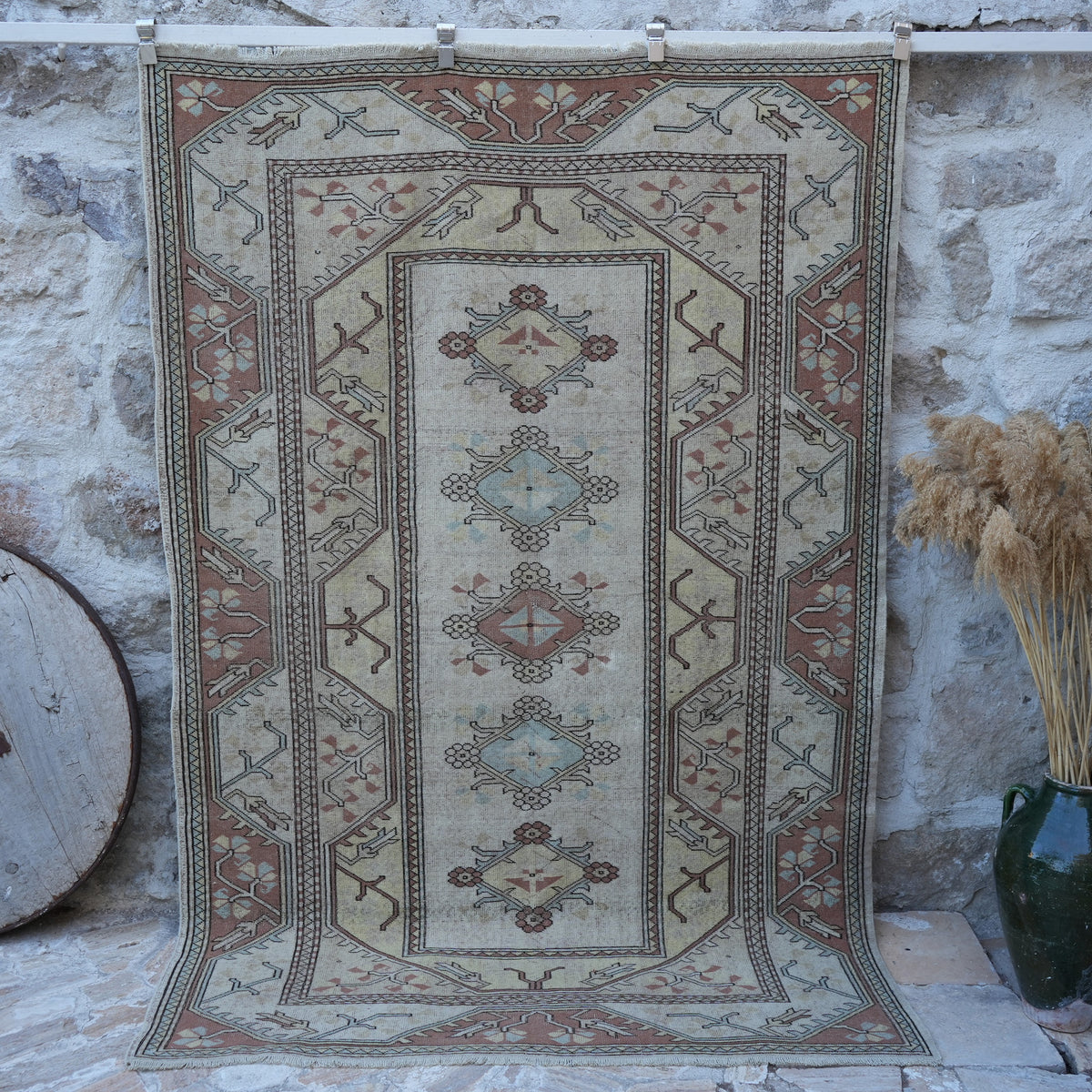
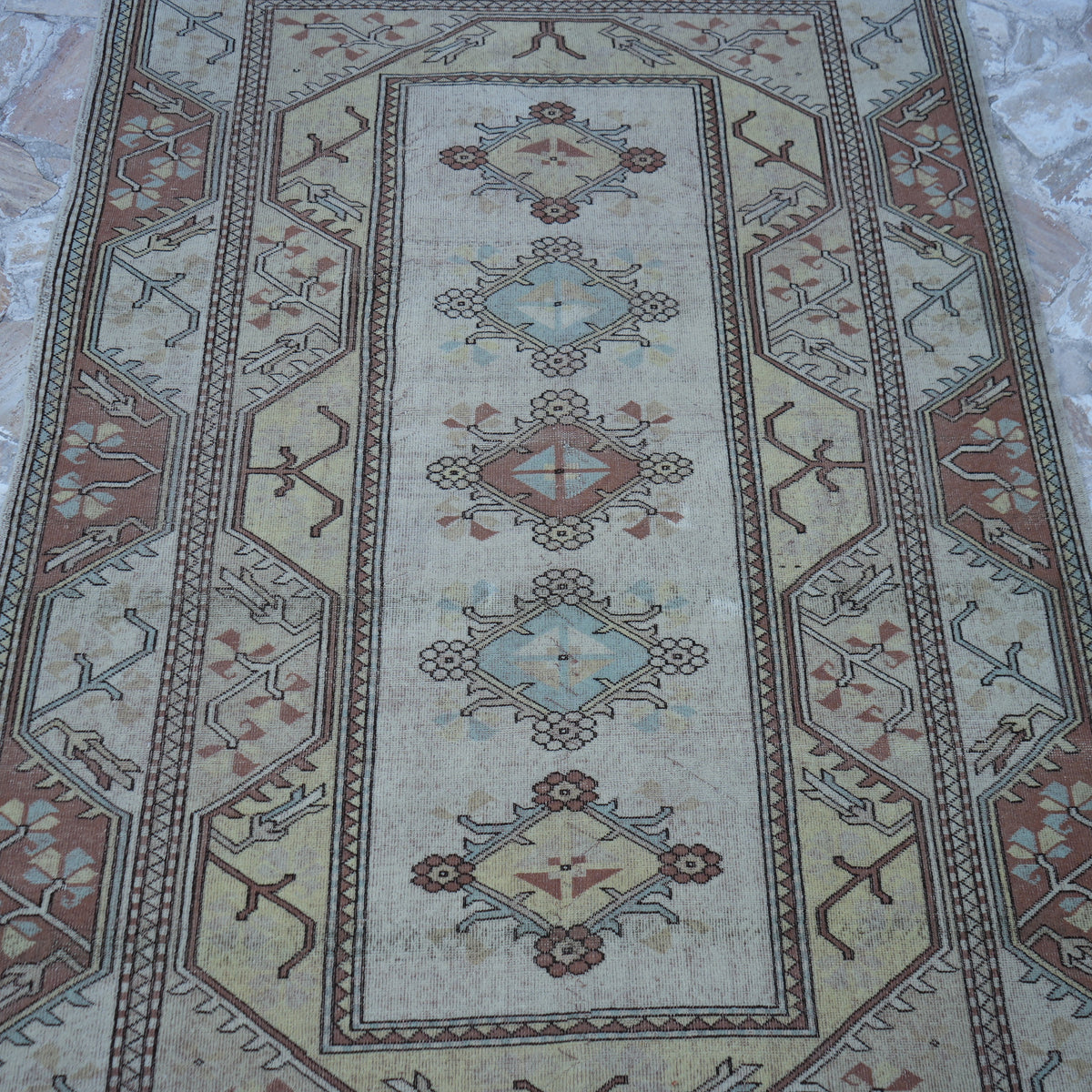
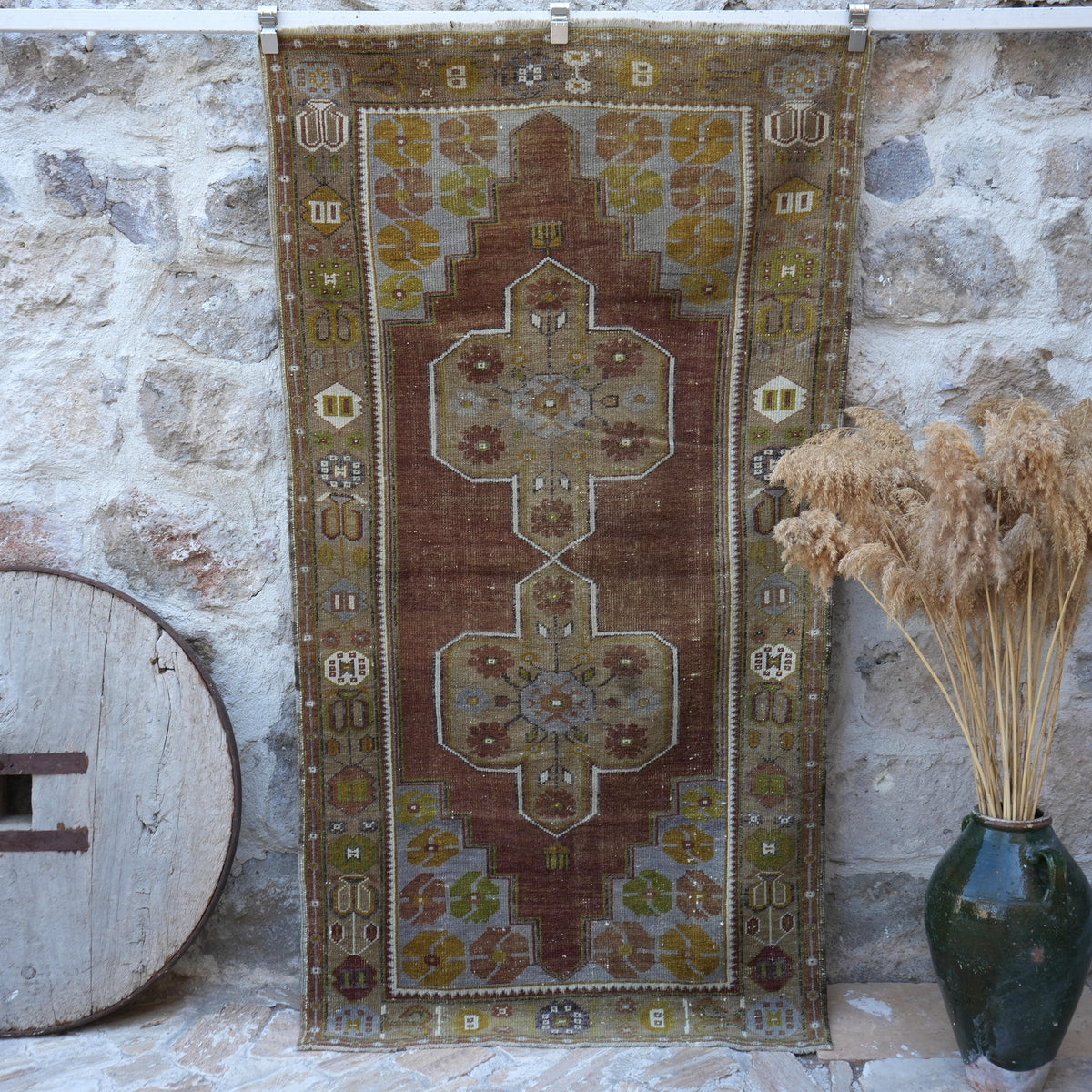
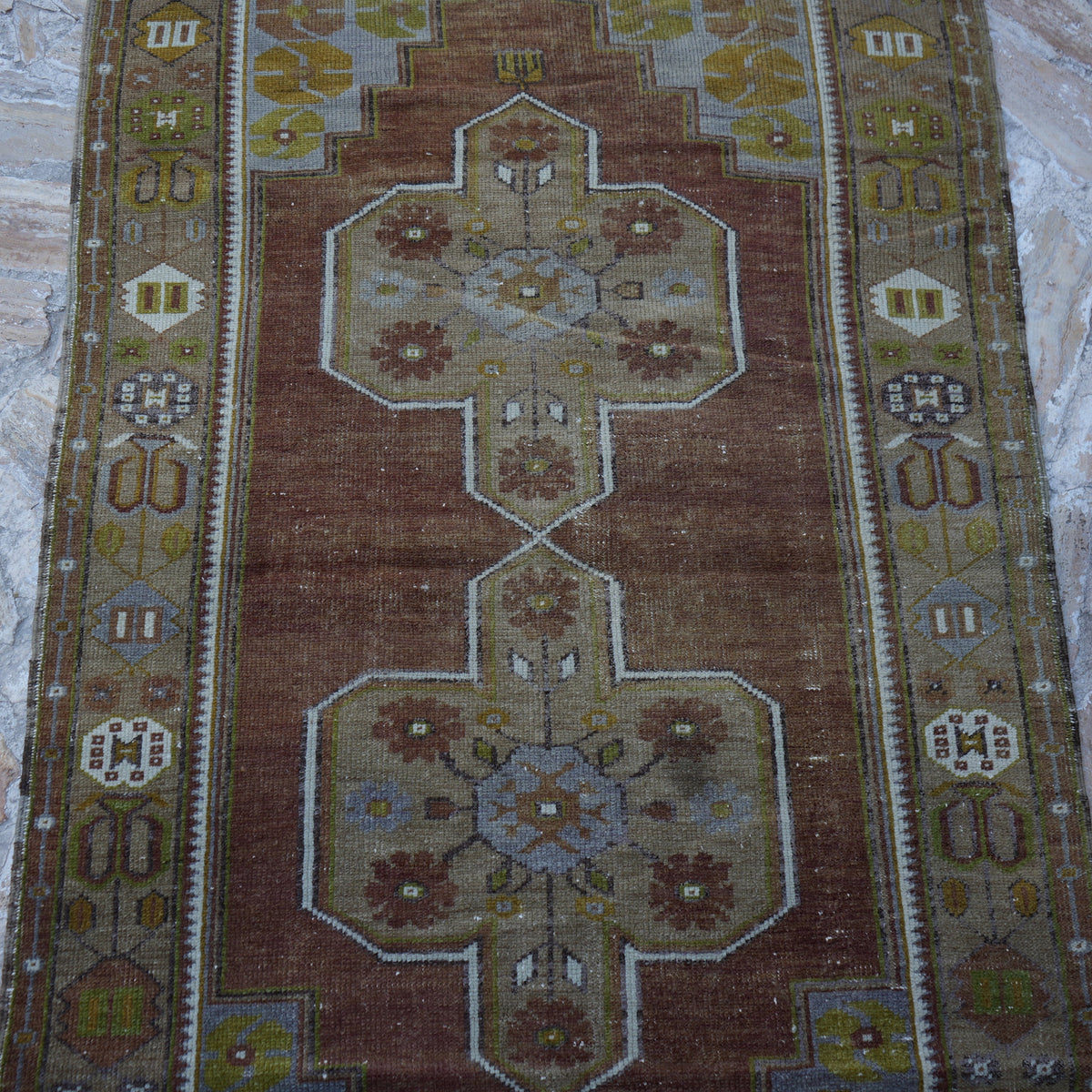
Explore Related Handwoven Rugs











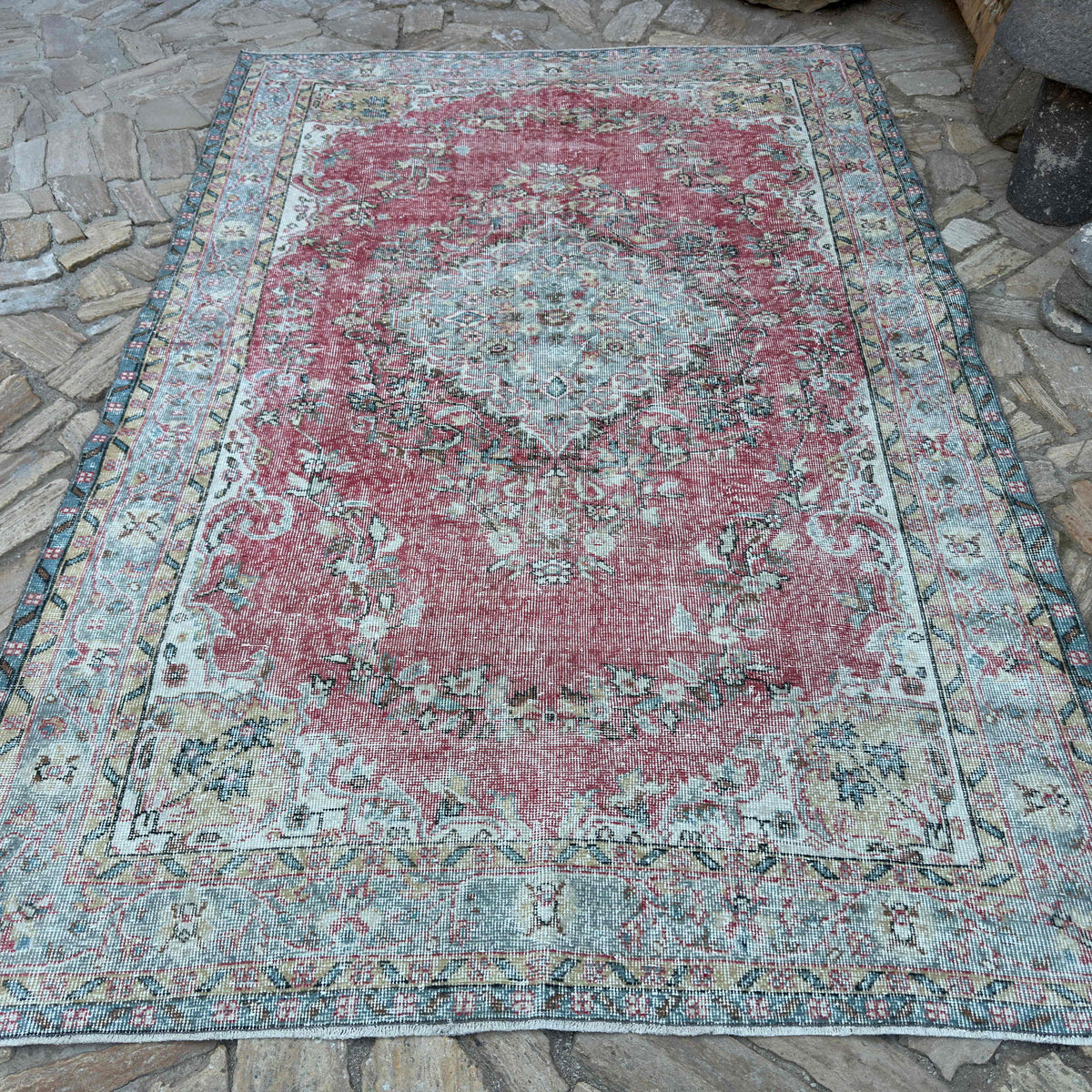
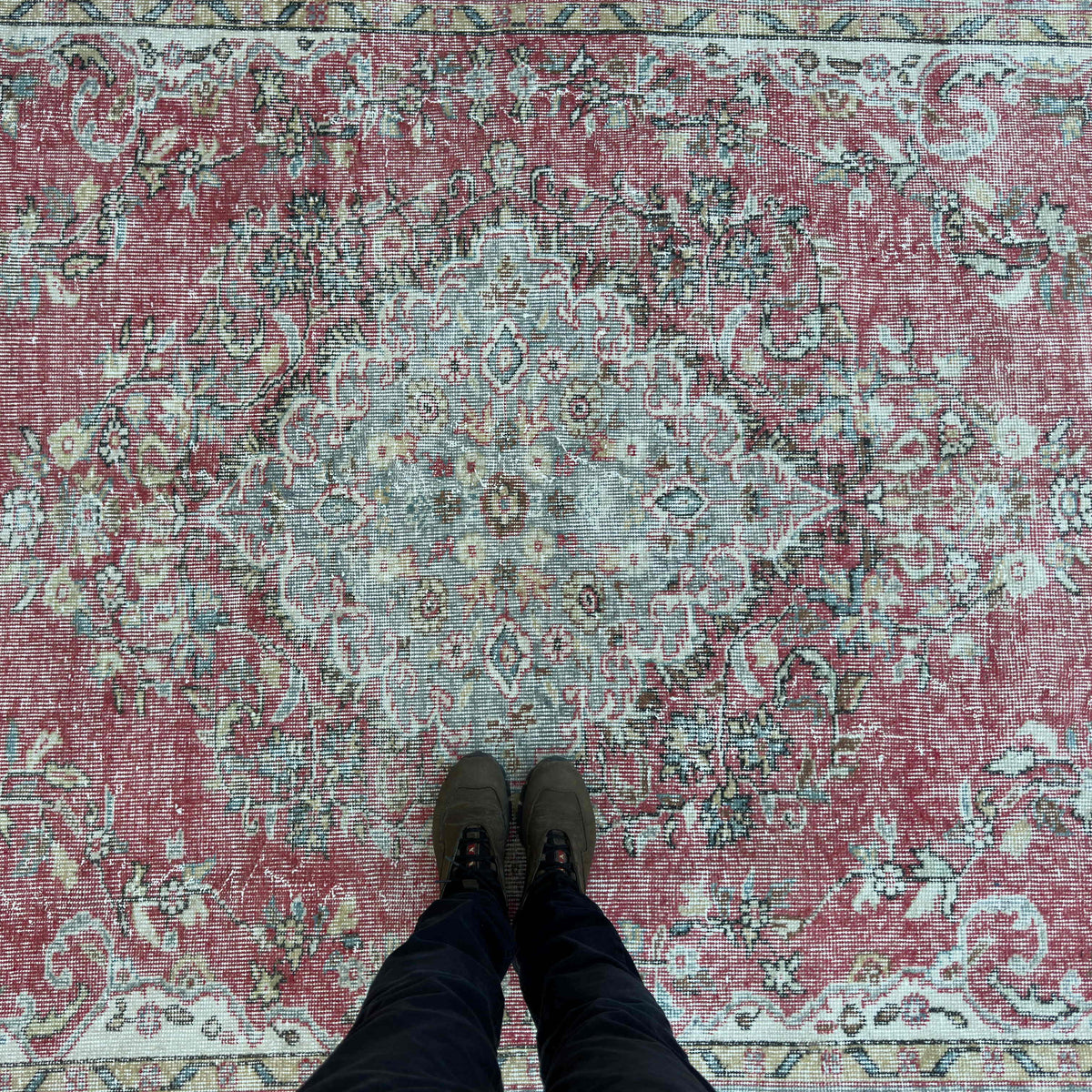


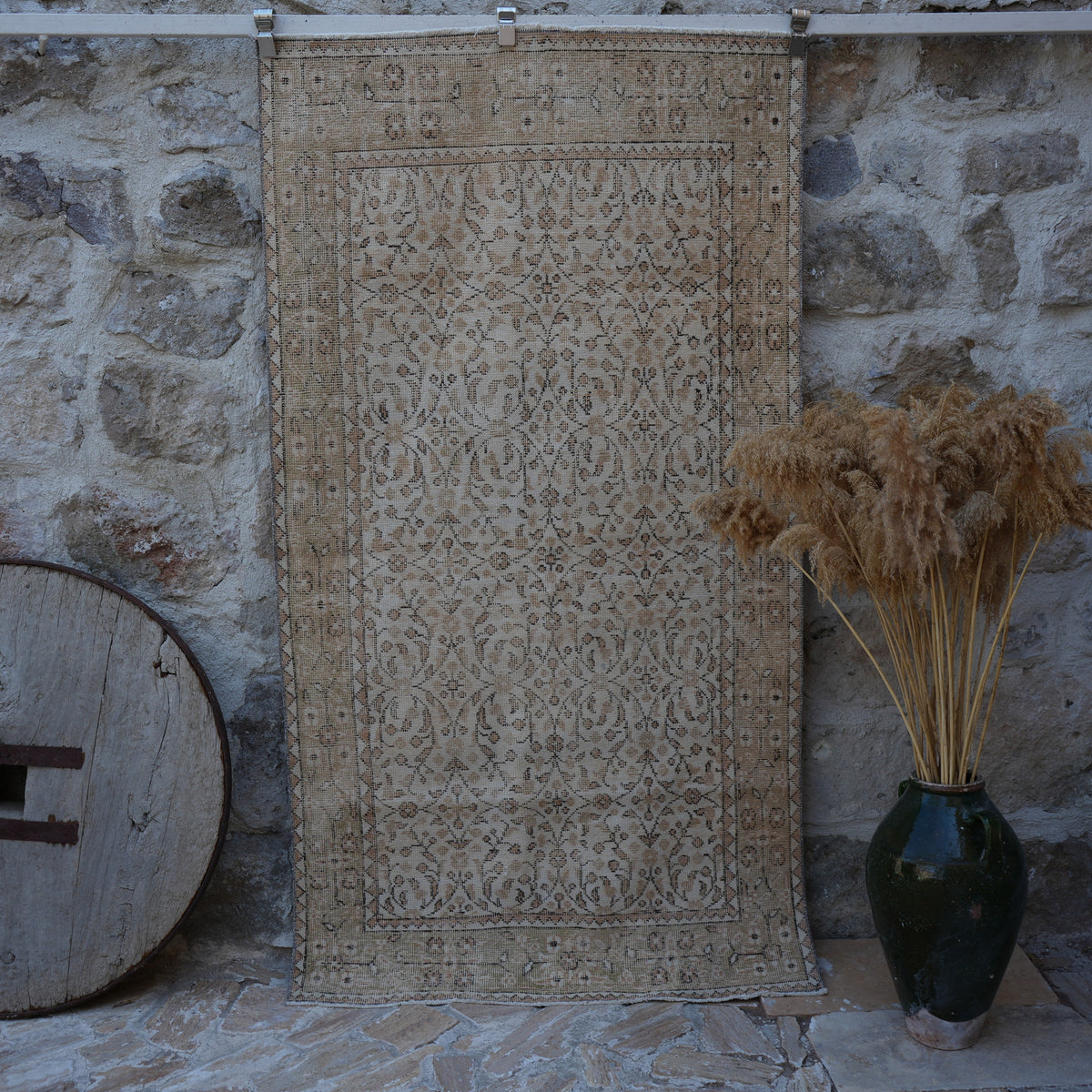
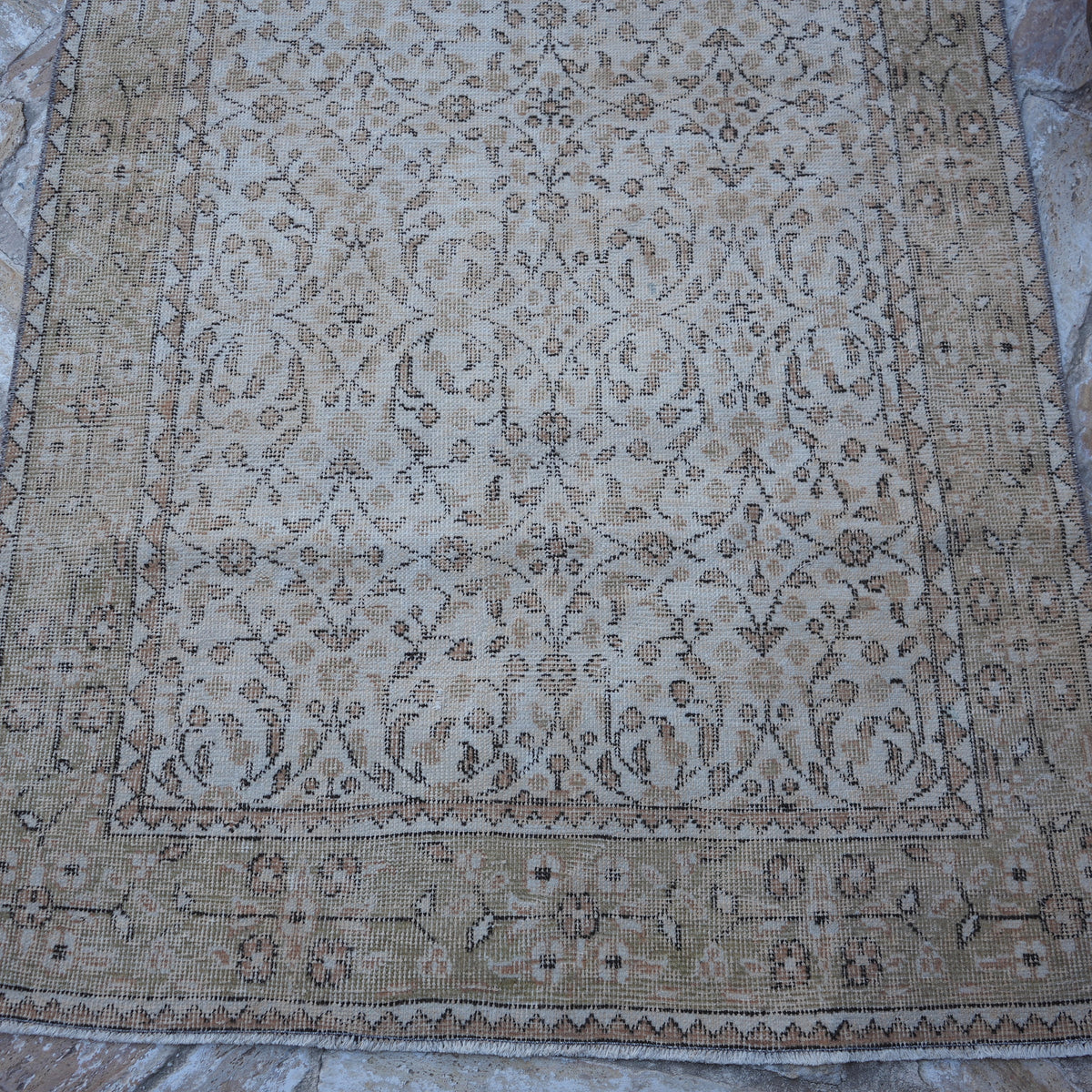




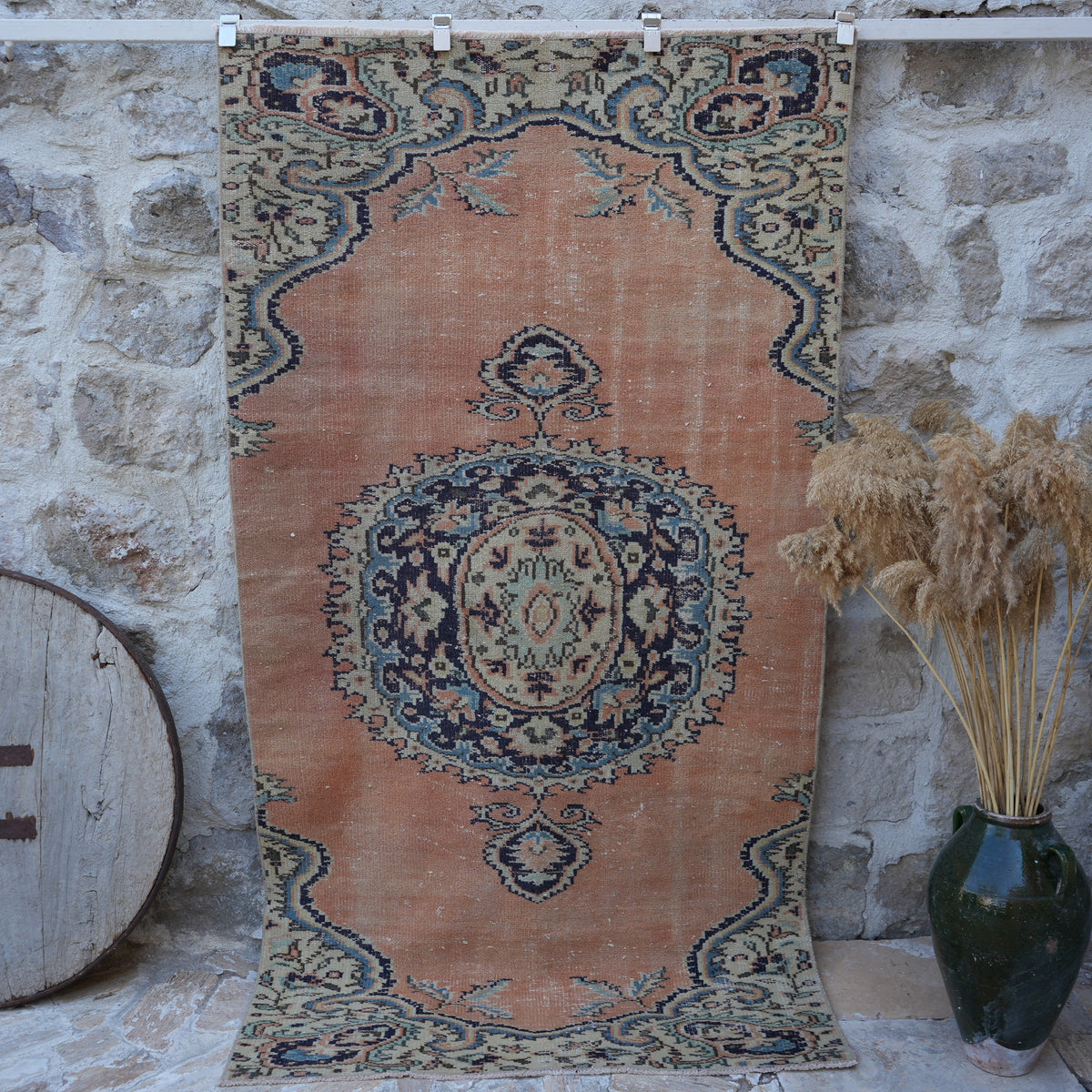
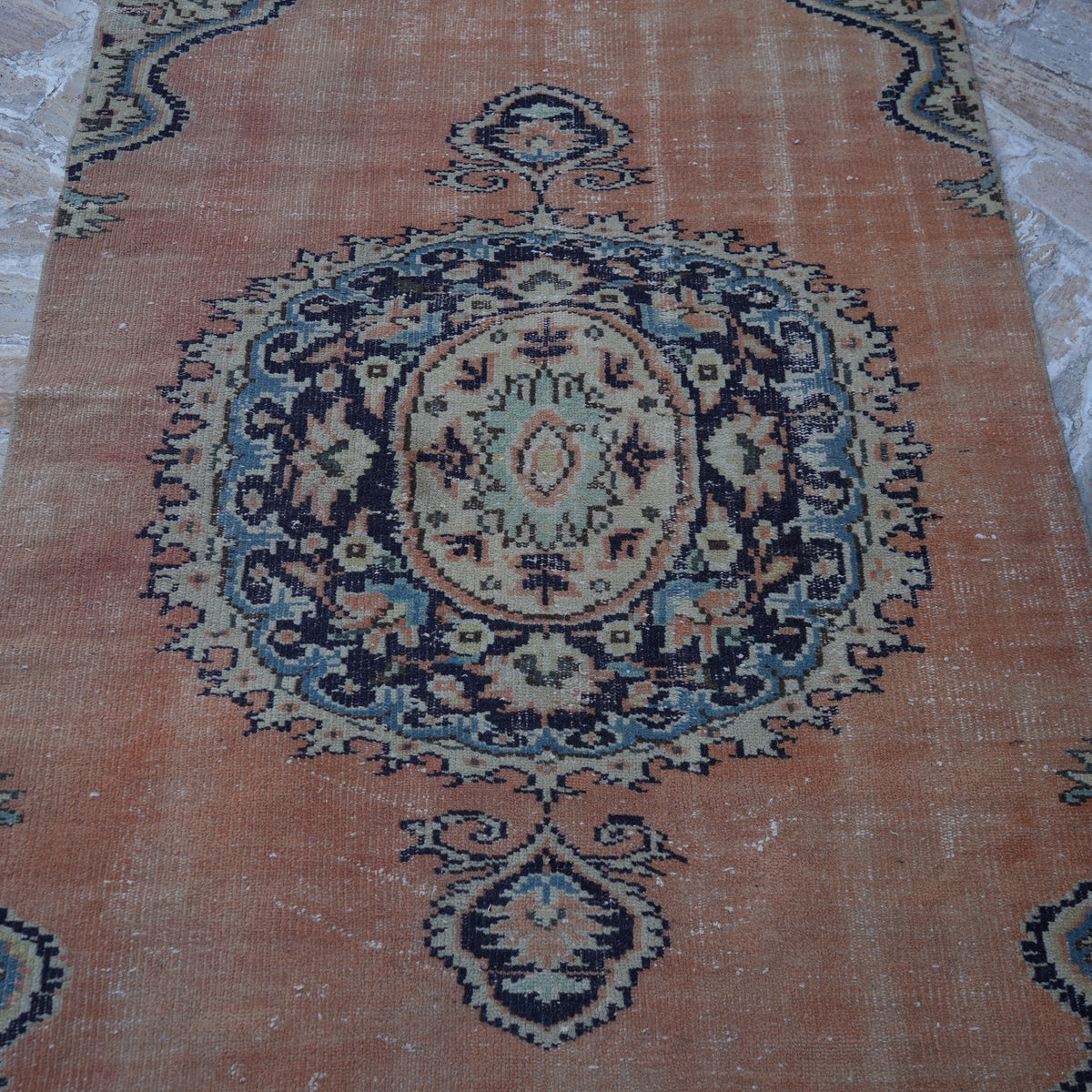





Frequently Asked Questions About Overdyed Rugs
What is an overdyed rug?
A vintage, sometimes antique, hand-knotted rug whose colors have been softened or partially stripped and re-dyed in a new dominant color, with the old pattern still faintly visible underneath.
Are overdyed rugs handmade?
The best ones are — a genuine overdyed rug starts as a hand-knotted vintage rug that's then hand-dyed. Construction and dyeing are separate questions, though: check the back and foundation rather than assuming the dye alone proves how it was made.
How long do overdyed rugs last?
A well-made one can last for years, but longevity depends on the foundation's strength, the wool's condition, dyeing quality, foot traffic, sunlight, and cleaning. Age alone doesn't guarantee durability.
Can any rug be overdyed?
No. It works reliably only on natural fibers like wool, cotton, or silk — synthetics don't absorb dye evenly, and the rug needs to be sound.
What's the difference between overdyed and distressed rugs?
Overdyeing chemically changes the color through bleaching and redyeing. Distressing keeps the original color but wears down the texture intentionally.

