












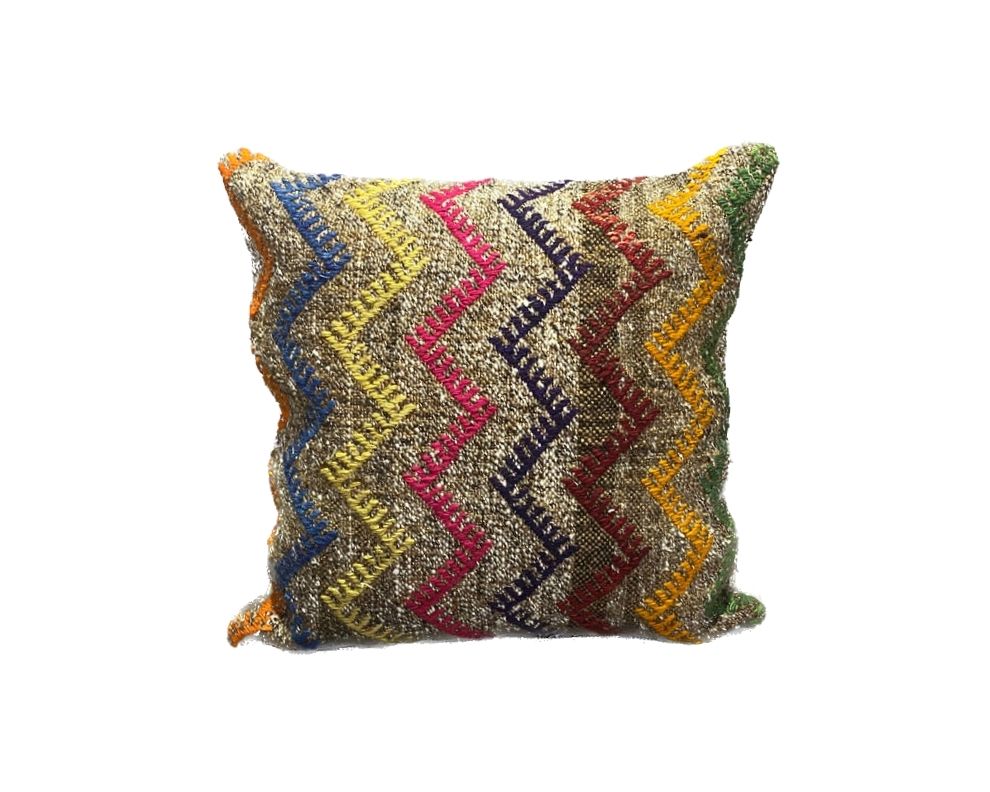

I grew up in Aksaray. Every room in our house had a rug — my mother wove kilims, my aunt too. Nobody talked about rug size back then. The rug was just there, part of the room, as obvious as the walls. It was only later, after I moved to Cappadocia and started spending real time in the markets, learning to read old Anatolian pieces, that I understood what I had felt as a child without being able to name it: a good rug doesn't decorate a room. It completes it.
I get this question from American customers more than any other. "What size rug do I need for my living room with a sectional?" And honestly, my first thought is usually the same: they are probably leaning toward a rug that is too small.
Why Getting the Rug Size Right Matters More With a Sectional
A regular sofa forgives mistakes. A slightly undersized rug just looks a little casual — not catastrophic.
A sectional is different. It already occupies a significant portion of the room. When the rug beneath it is too small, the imbalance is immediate — the sectional looks enormous, the rug looks like a doormat, and the proportion breaks across the entire space. When the rug size is wrong, the whole seating area feels slightly off. You might not be able to name why, but the room never quite settles.

Step 1: How to Measure Your Living Room and Sectional Correctly
Measure first. Not after browsing — measure the actual room and the actual sectional before you look at a single rug.
For the sectional, measure the full footprint: the long side, the short side, and the chaise if there is one. People routinely forget the chaise extension. That mistake alone causes more returns than anything else I see. For the room, measure wall to wall and know how much open floor you're actually working with.
How much floor space should stay uncovered?
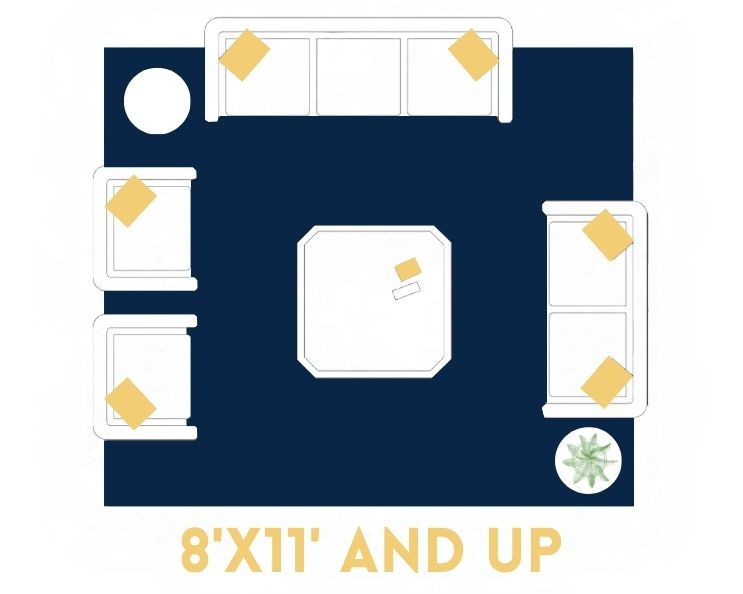
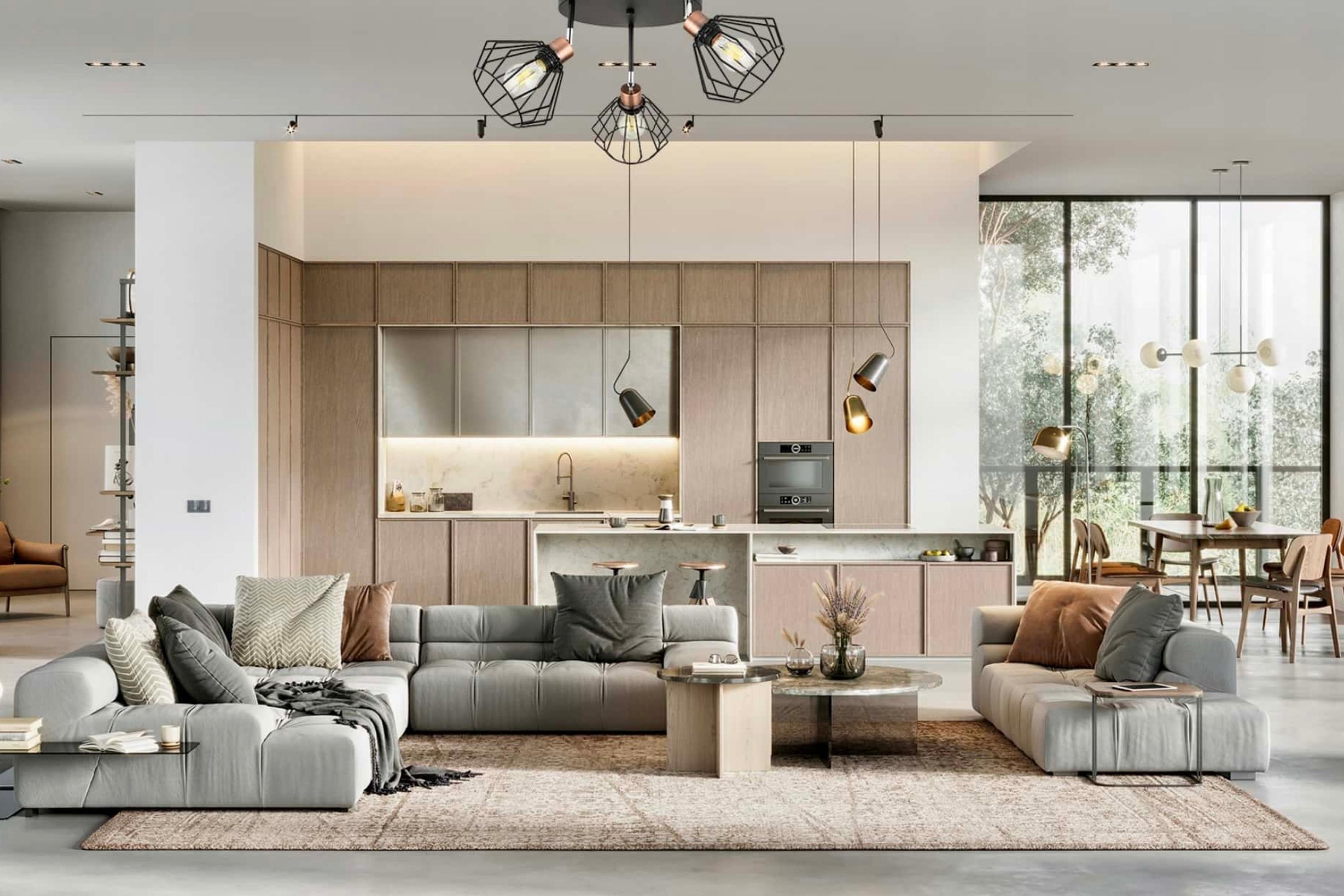
Leave 18 to 24 inches of bare floor between the rug edge and each wall. This keeps the rug from pressing against the walls and choking the room. At minimum, the front legs of your sectional should rest on the rug. Ideally, the rug extends 12 to 18 inches beyond the open sides of the sofa as well.
The tape trick: visualize before you buy
Before ordering, take a roll of masking tape and mark out the rug dimensions on your floor. Live with it for a day. A customer wrote to me last month — she was planning to order an 8×10 because she thought 9×12 would overwhelm her room. She taped the 9×12 first, then came back: "Actually, it fits perfectly." If she hadn't done that, she would have bought the smaller rug and had that familiar sinking feeling when it arrived. Ten minutes with tape prevents weeks of returns.
Rug Size Guide for Sectional Sofas: 8×10, 9×12, and 10×14 Explained
Compact sectionals, rooms under 250 sq ft
Too small for most full-size sectionals
Most standard American living rooms
Safest choice — right for the majority of setups
Large sectionals, open floor plans
All legs on — feels fully intentional
8×10: when does it actually work?
An 8×10 works when the sectional is genuinely compact — a two-piece in a room under roughly 250 square feet. In a standard American living room with a full-size sectional, an 8×10 disappears. The sofa dominates, the rug recedes, and the seating area never coheres. If you're considering this size, you can browse our 8×10 vintage rugs to see what's currently available.
9×12: the most common choice and why
This is the size I recommend to most of my US customers. I had a customer in Florida — large room, generous sectional. I recommended 9×12. He thought it would be too big and ordered an 8×10 instead. A week later he wrote back: it looked tiny in the middle of the room. We sorted it out, but there was extra return shipping, extra waiting. The 9×12 he ended up with looked exactly right. I've been more direct about holding the line on this ever since. Take a look at our 9×12 vintage rugs if you'd like to see what's in stock.
10×14 and larger: open floor plans and big sectionals
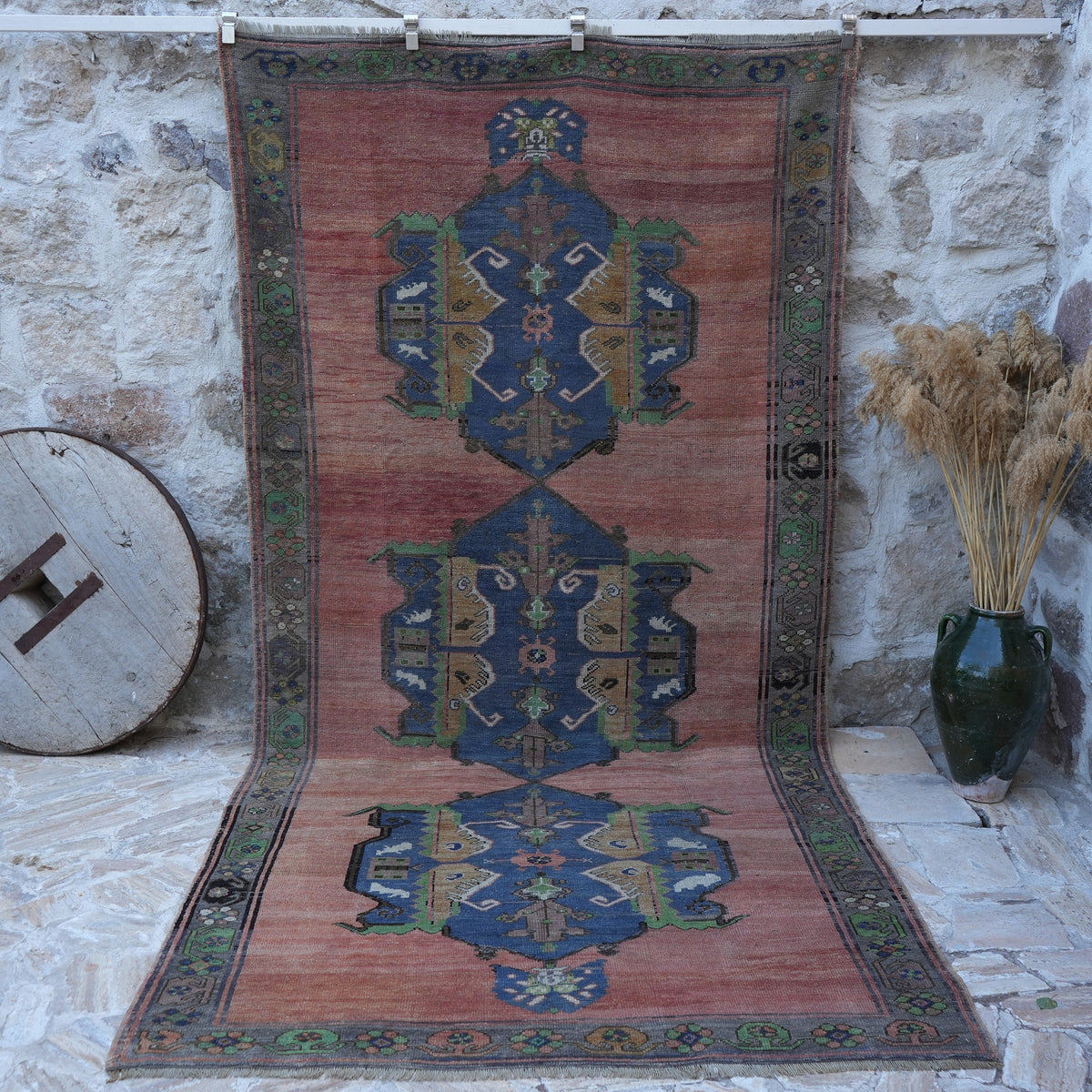
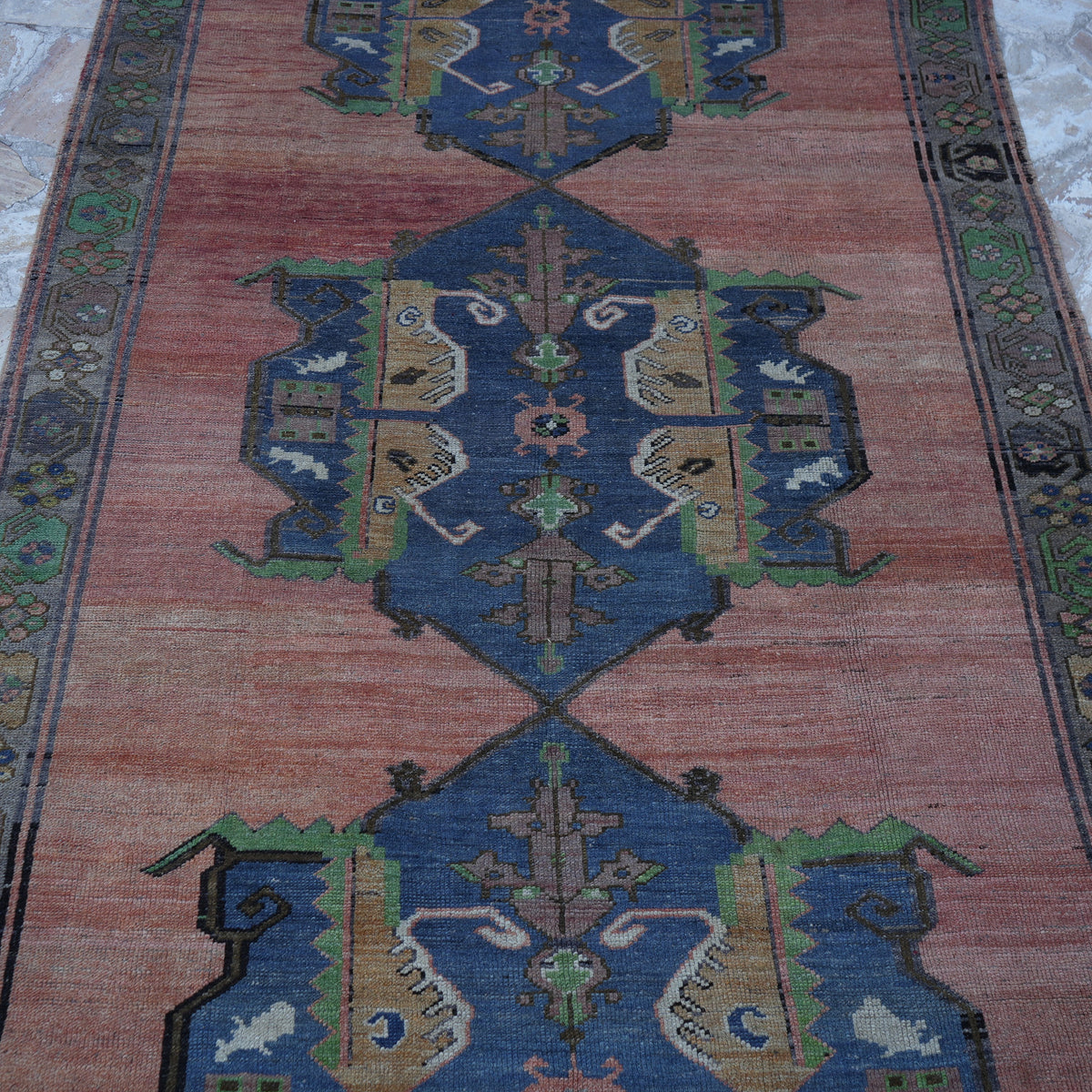
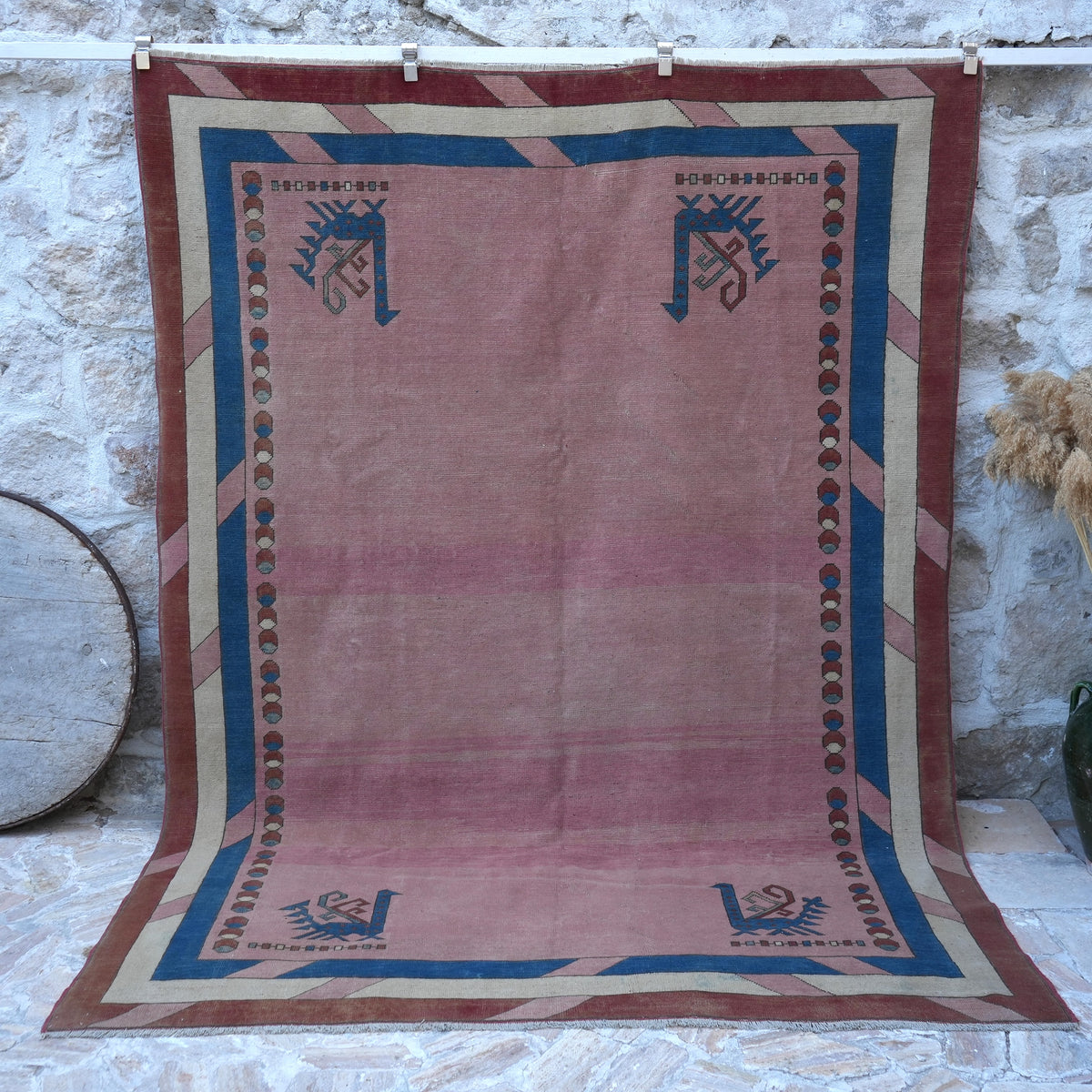
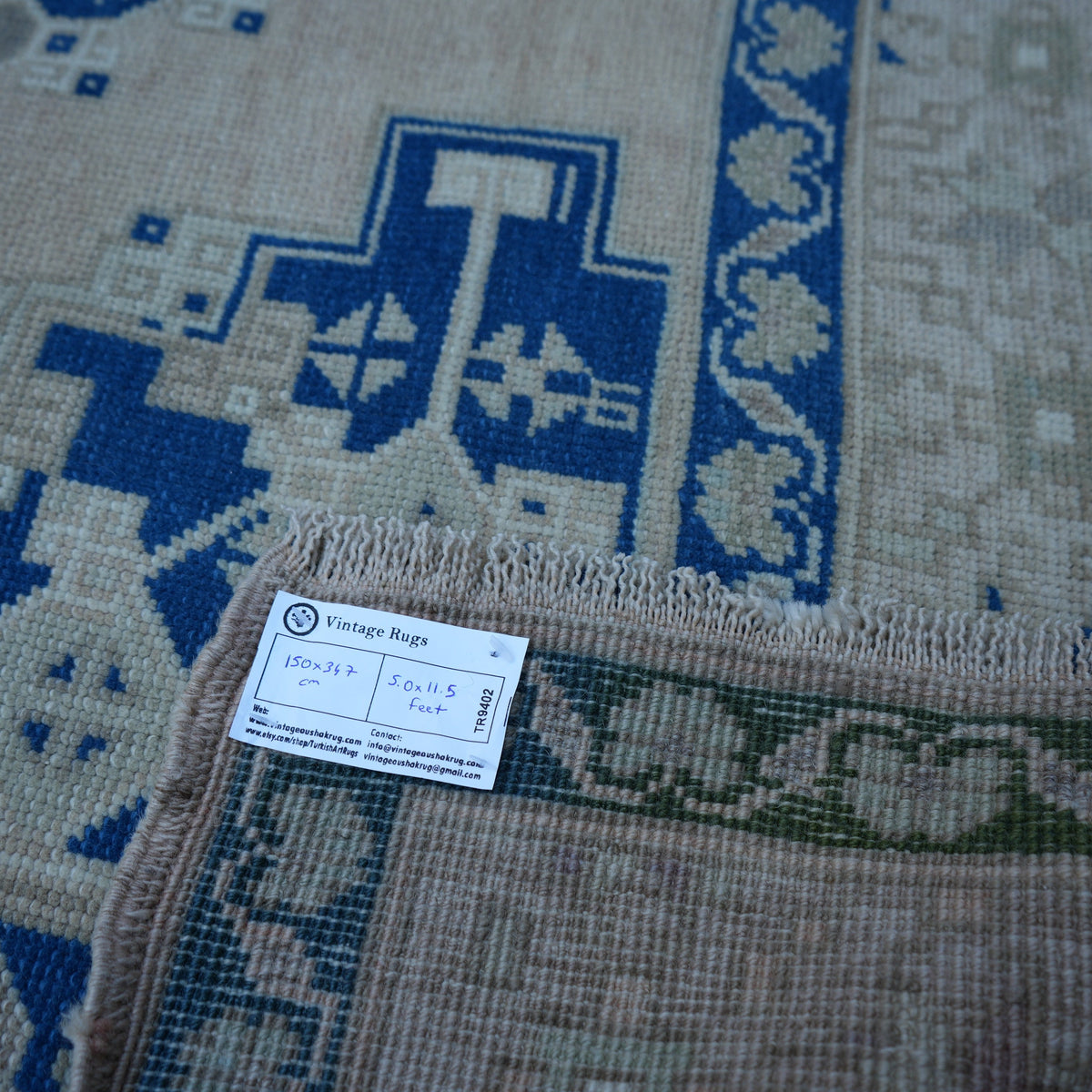
If your sectional wraps across a genuinely open-plan space, or if either side of the sofa extends past 140 inches, you likely need a 10×14. At this scale, all the legs can sit on the rug and the space feels completely intentional. Large vintage rugs at this size are rarer — when you find one you love, don't hesitate. Our extra-large vintage rugs move quickly.

Rug Placement Rules for Every Sectional Shape
L-shaped sectional: measure both arms — not just the long side
The most common mistake with L-shapes is measuring only the long arm and forgetting the short one. Both arms need their front legs on the rug. Measure from the outer corner of each section. A rectangular rug is almost always right here — minimum 9×12, often larger. Our large rugs are a good starting point for most L-configurations.
U-shaped sectional: why small rugs fail here every time
U-shaped sectionals are the most unforgiving shape to get wrong. The sofa wraps around three sides and the rug needs to fill the visual center and extend under the front legs of all three sections. When it doesn't, the seating area breaks into fragments that never read as one space. Think bigger than feels reasonable, then go one size larger than that.
Chaise sectional: don't leave the chaise floating
People mentally treat the chaise as a separate piece and size the rug for the main sofa body. The chaise then hangs off into bare floor. Measure the full arrangement as one unit. Both sections' front legs should rest on the rug — the chaise included.
Curved sectional: when a round rug actually makes sense
If your sectional has a genuinely curved profile, a round rug can complement the shape rather than fight it. Minimum nine feet in diameter, ideally ten. Used carefully, it's a striking choice. Used without thought, it creates more visual confusion than it solves.
The 3 Most Common Rug Placement Mistakes With a Sectional
Rug too small. Almost always the first thing I notice when customers send photos asking why something looks off. Go one size larger than your instinct says.
No contact between rug and sofa. The sectional sits in one place, the rug sits in front of it, and there's a gap between them — as if the rug is being displayed rather than used. The front legs of the sofa need to be on the rug. That physical relationship is what makes a seating area cohere.
Forgetting the coffee table. The coffee table is part of the seating arrangement. When it rests on bare floor inside the ring of the sectional, it looks stranded. At least its front legs should sit on the rug.

Which Rug Material Works Best in a High-Traffic Living Room?
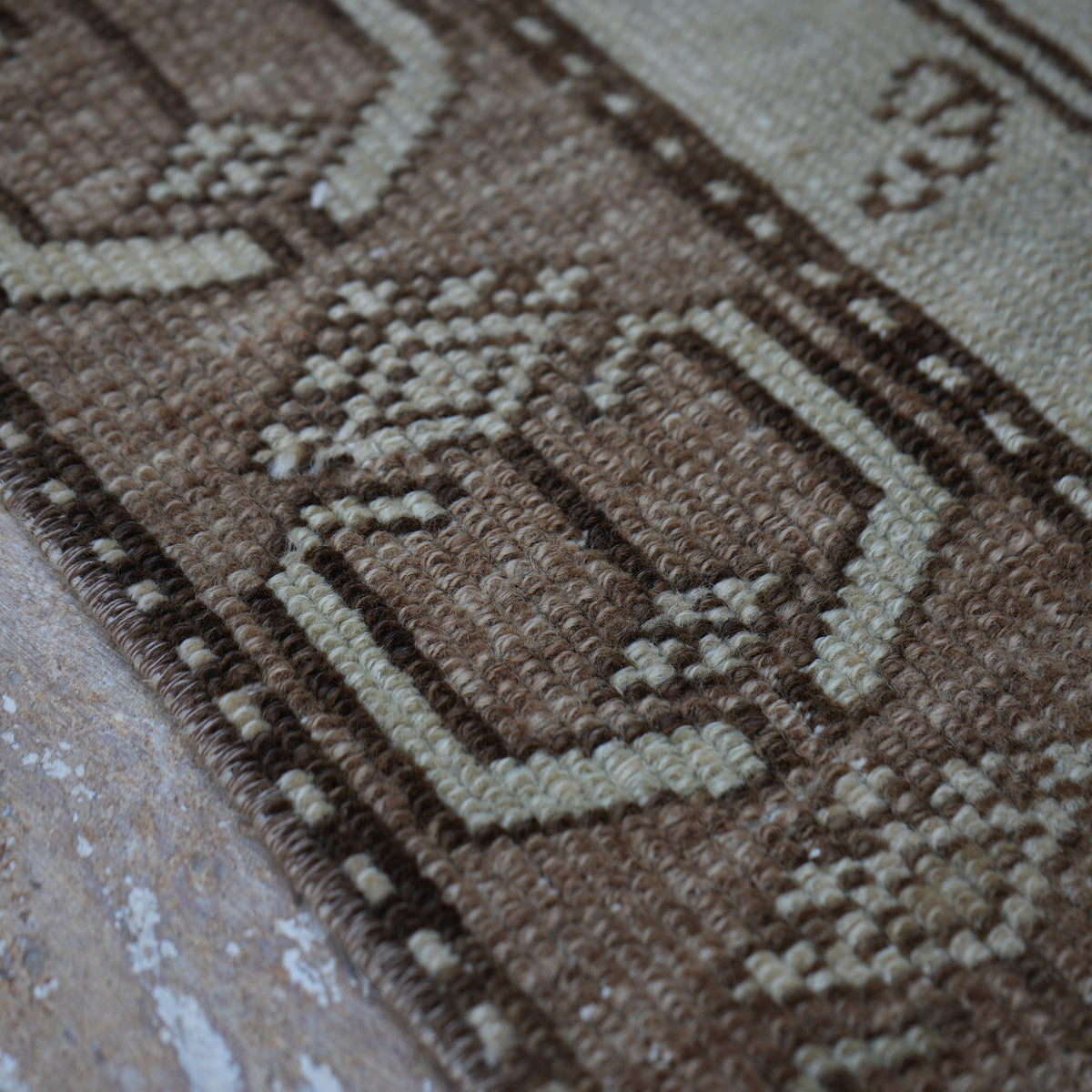
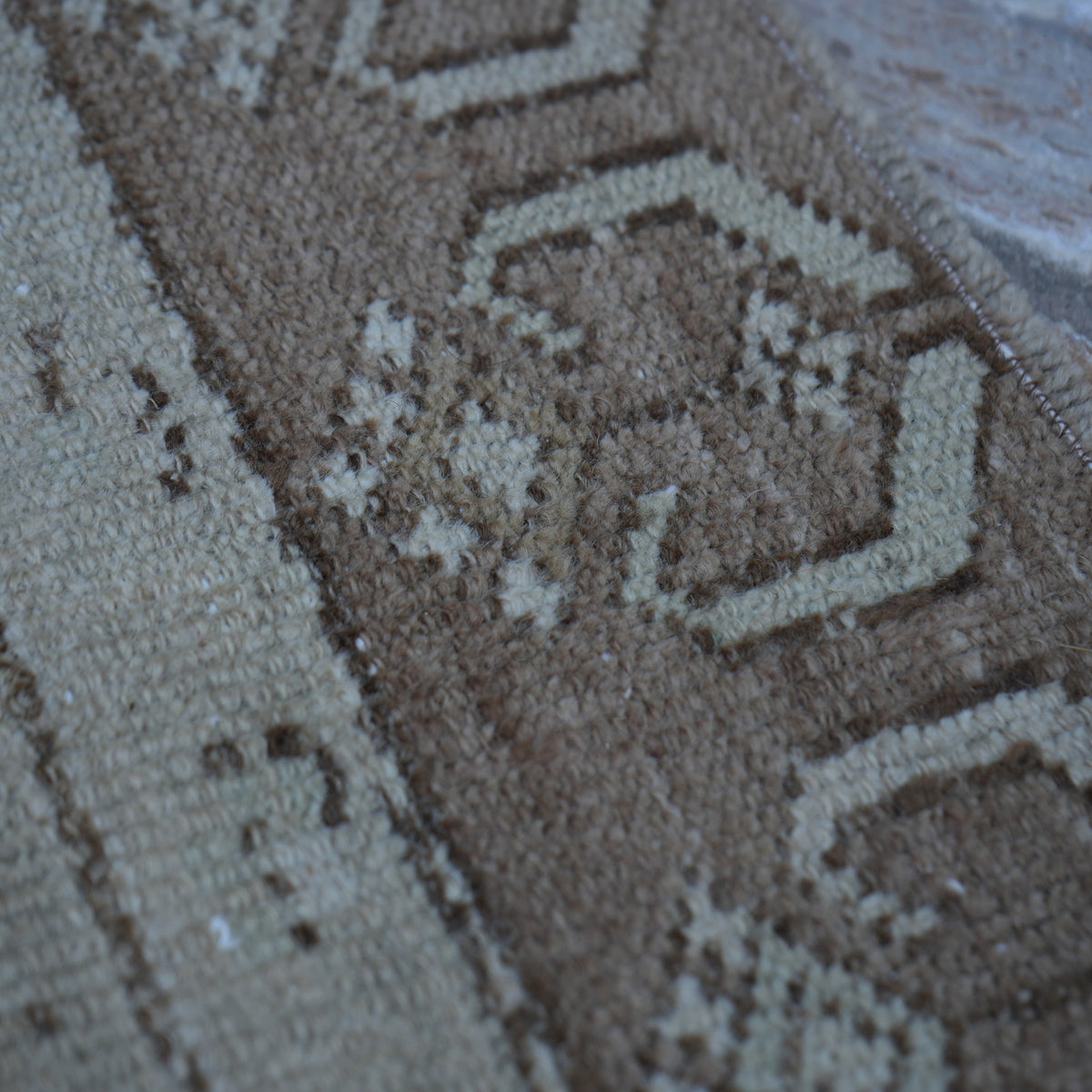
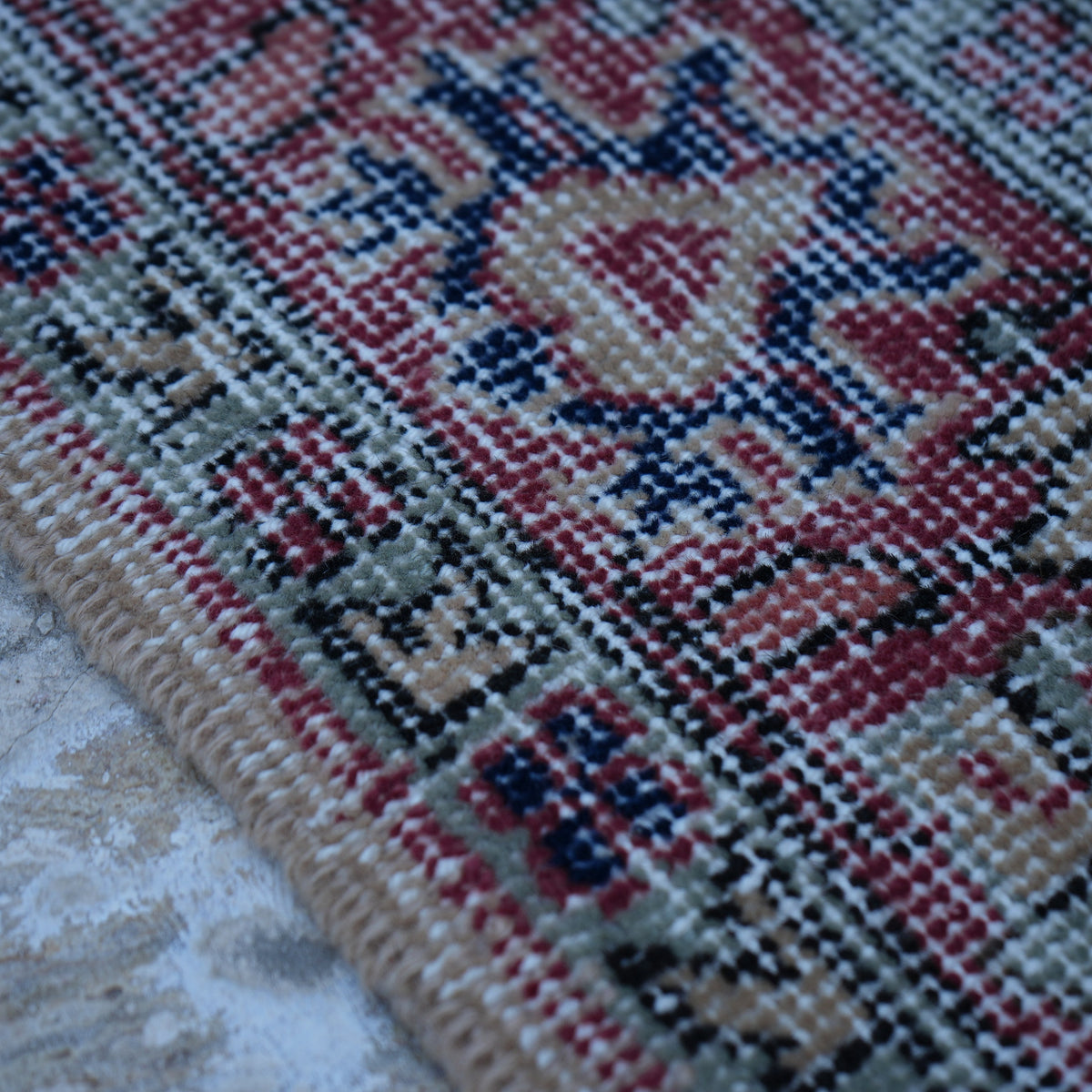
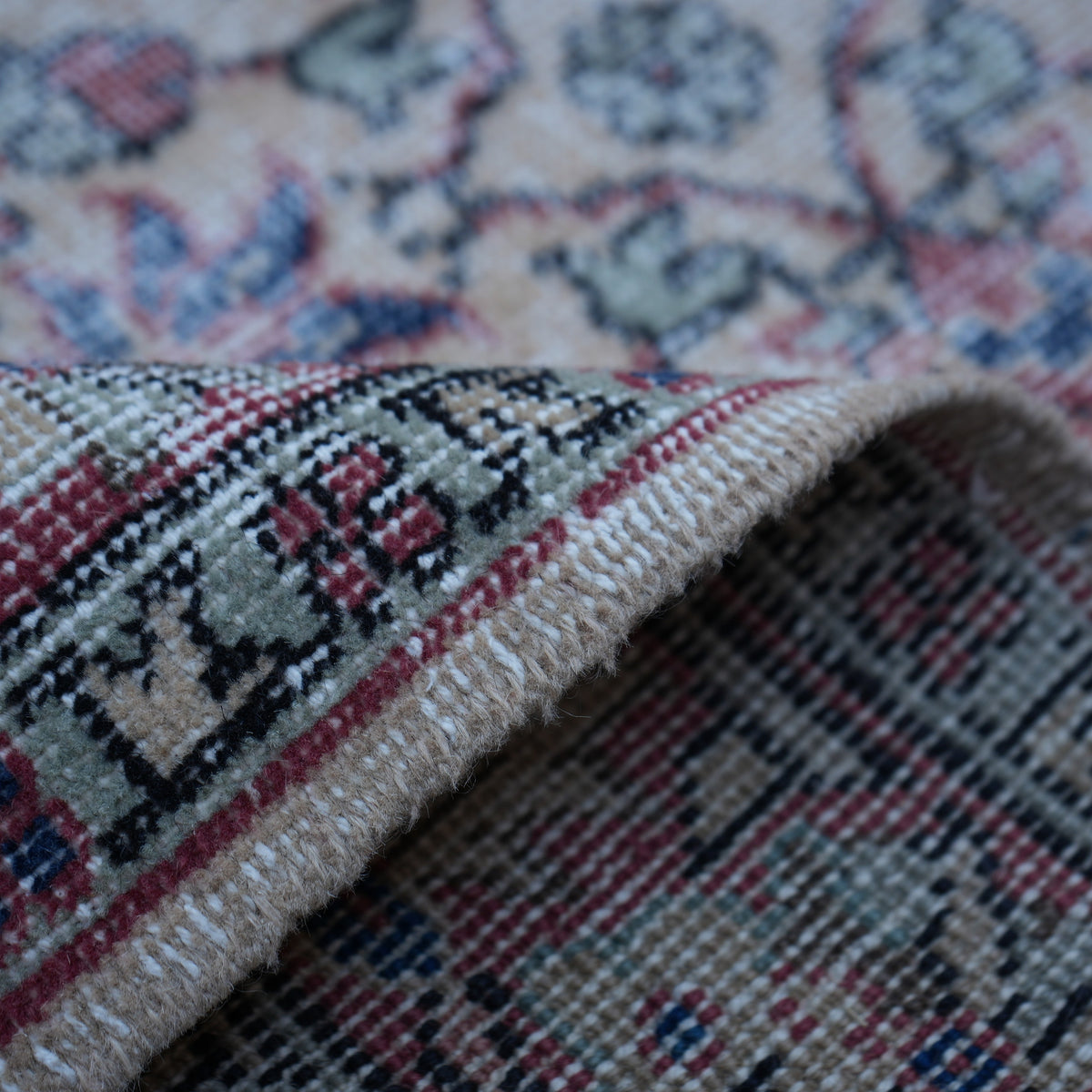
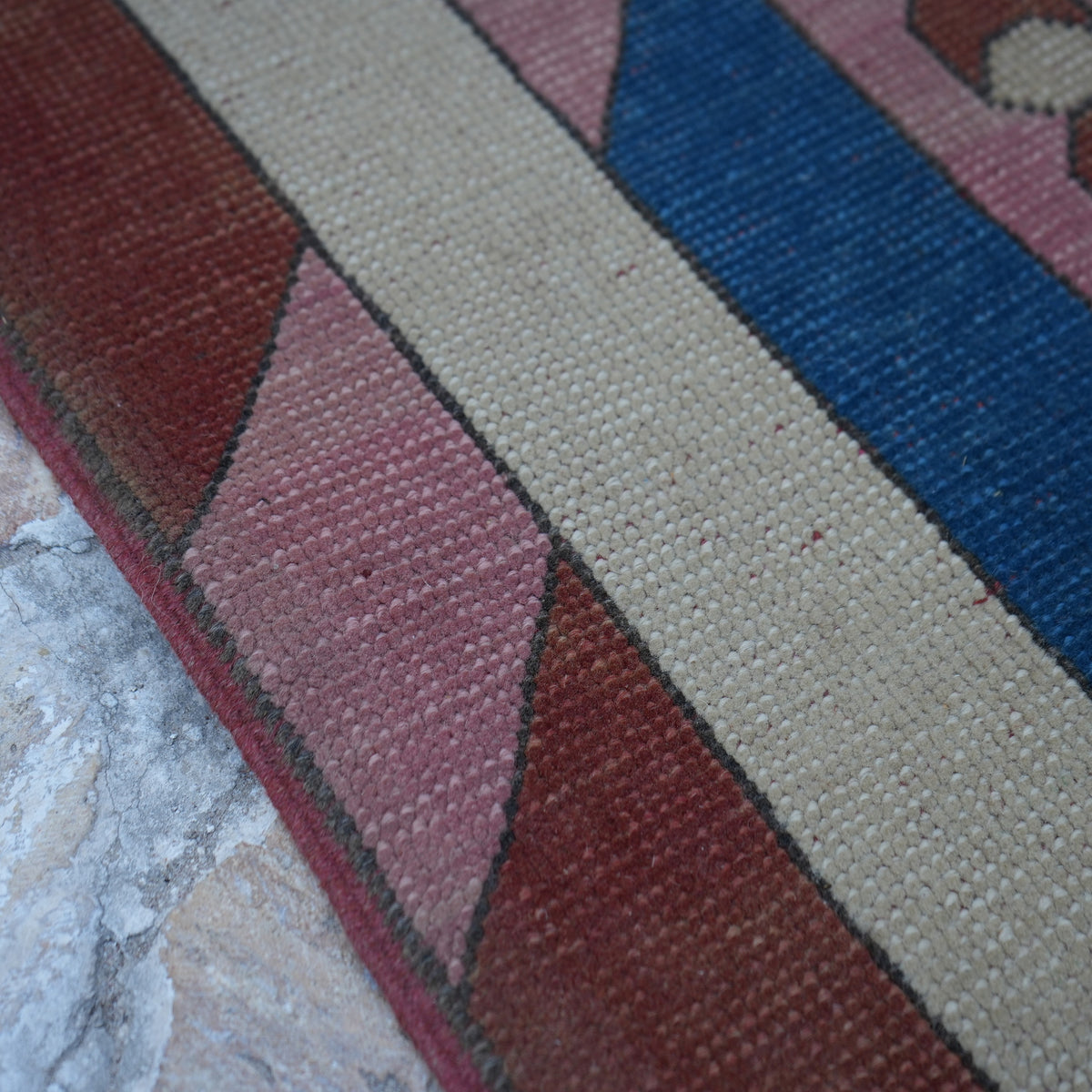
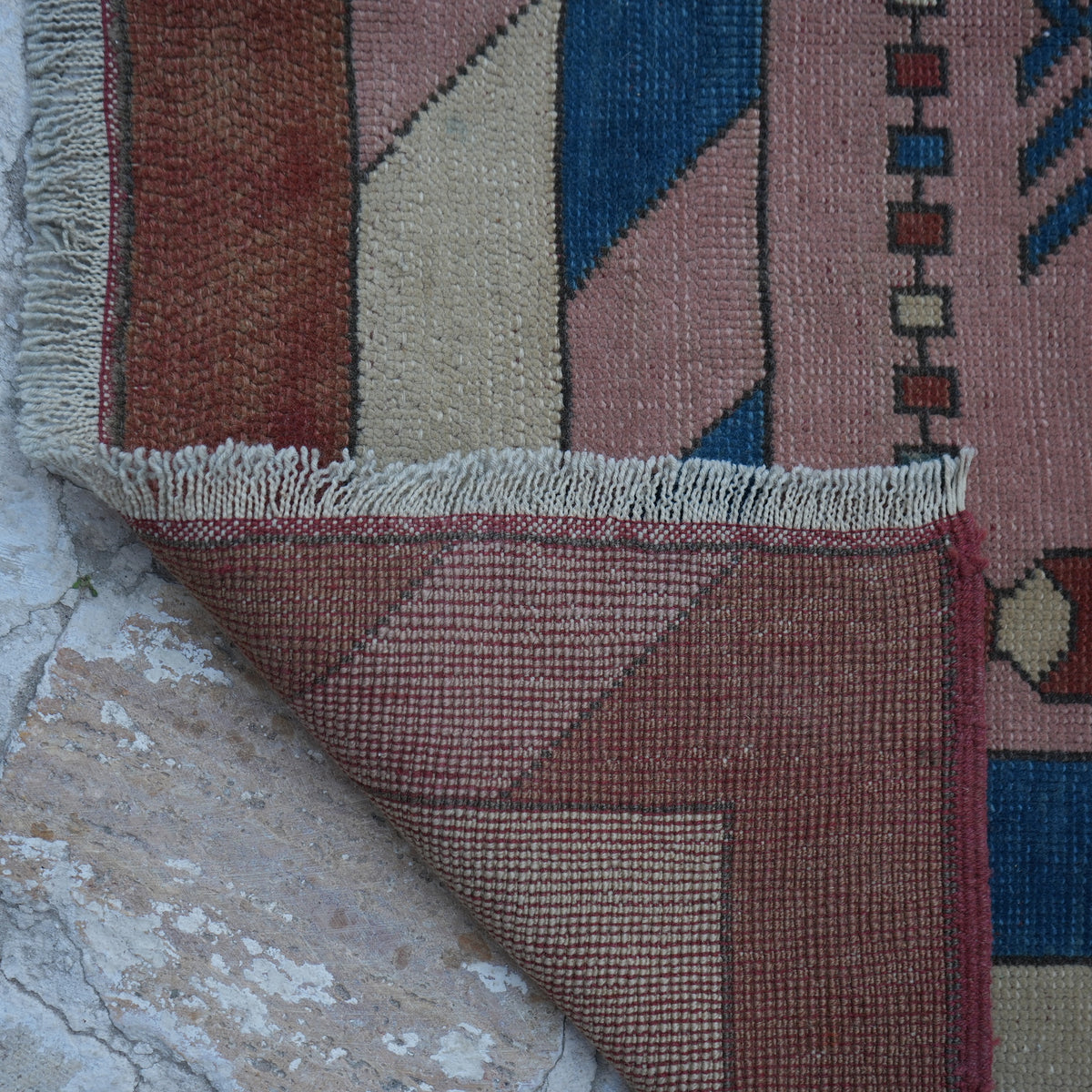
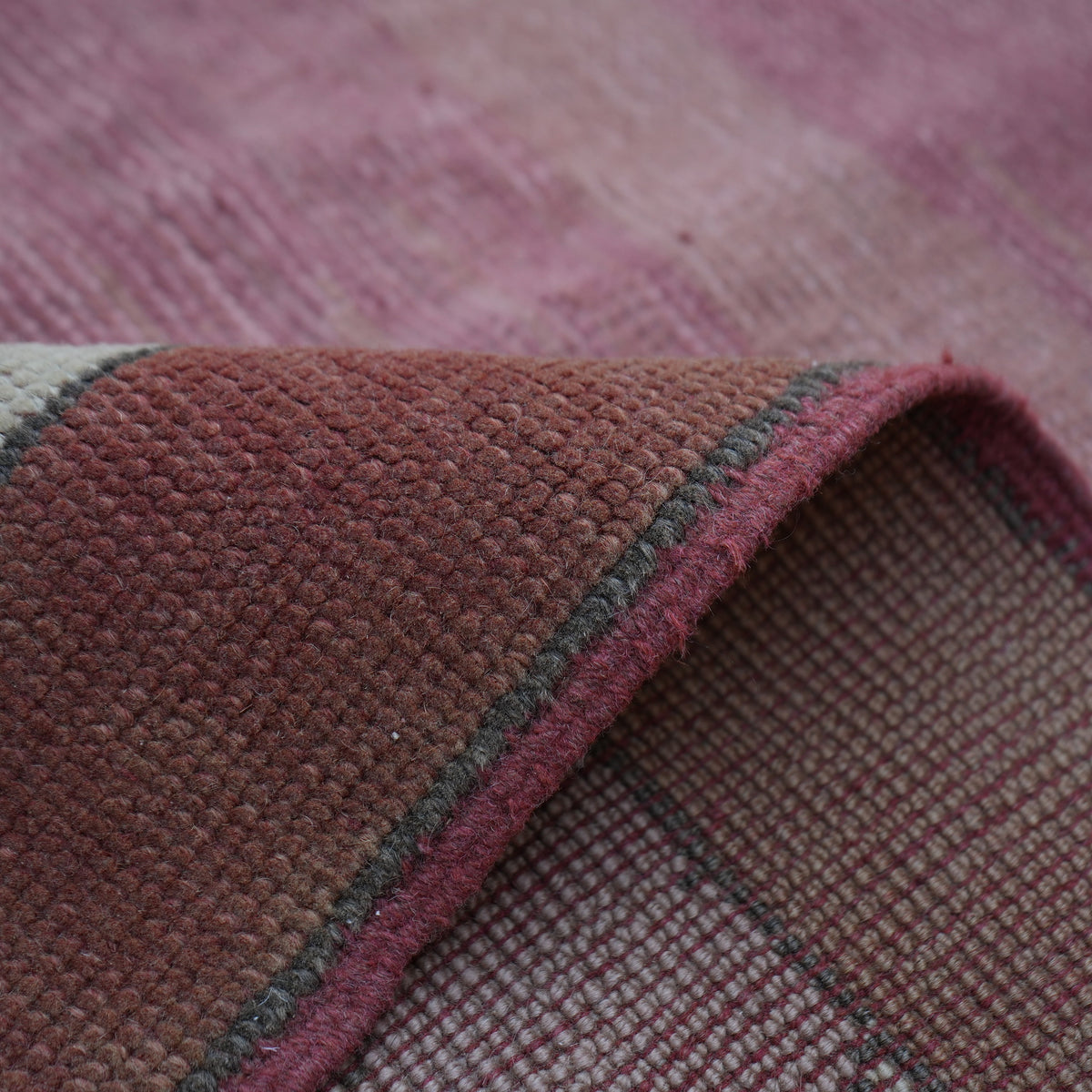
Wool handwoven rugs: the long-term investment
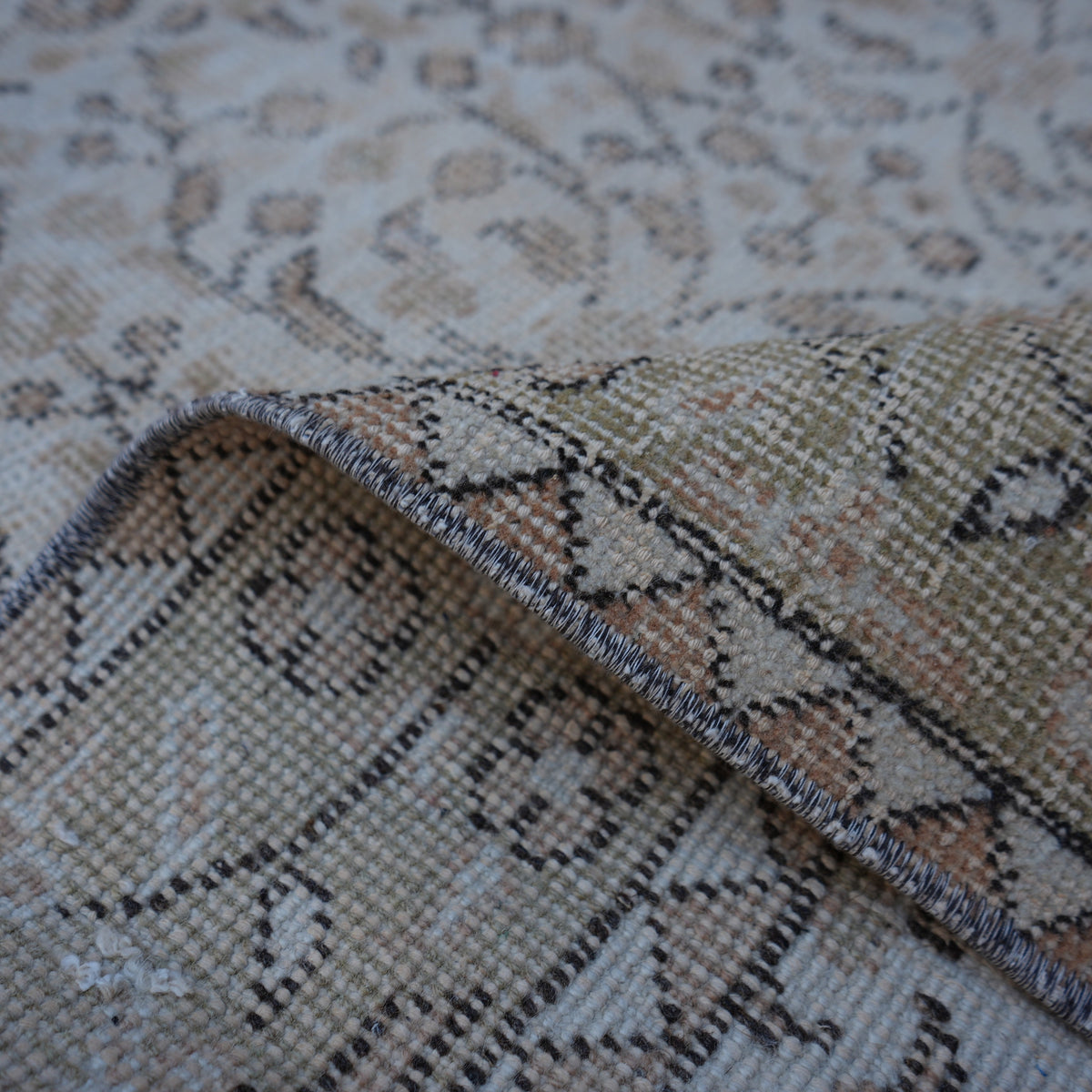
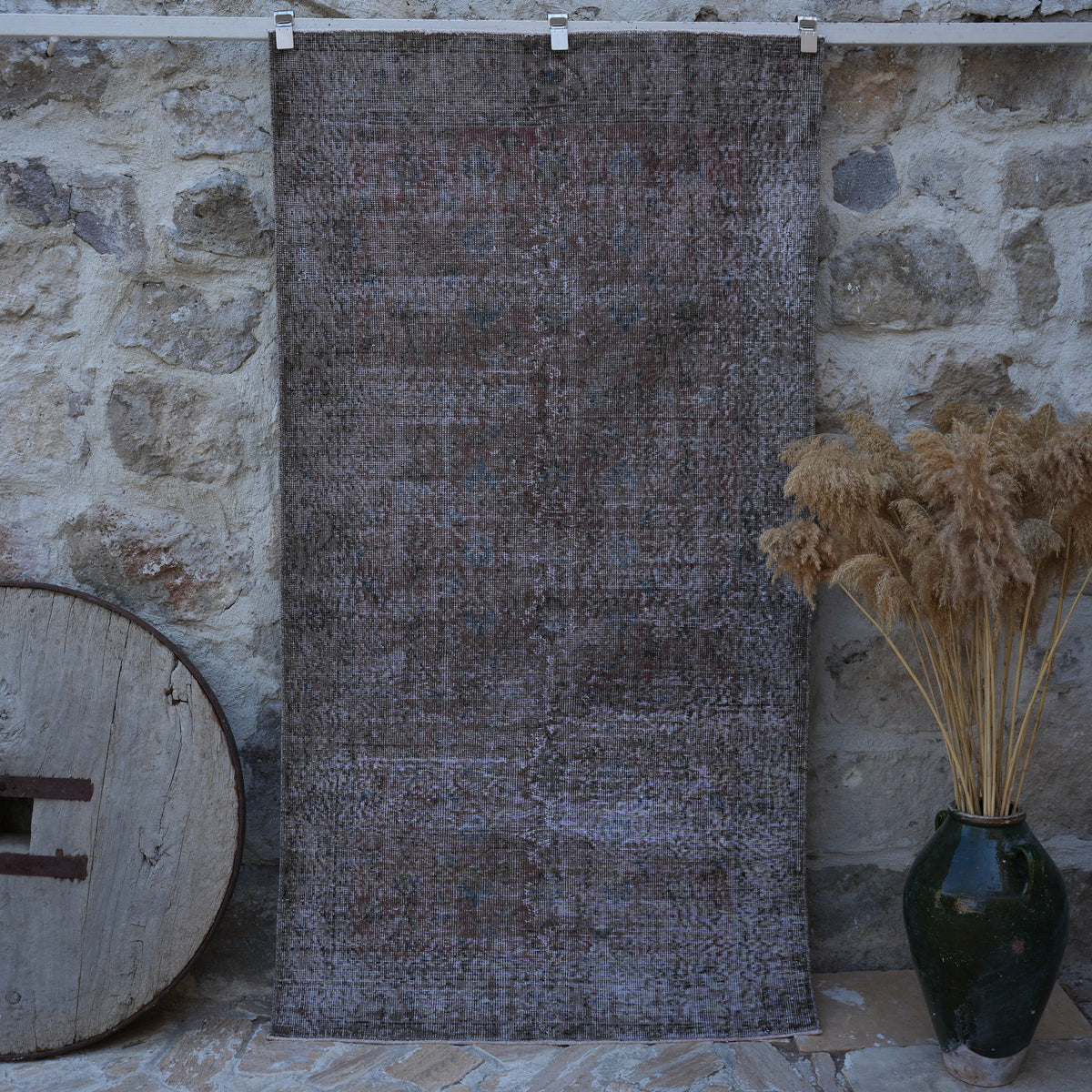
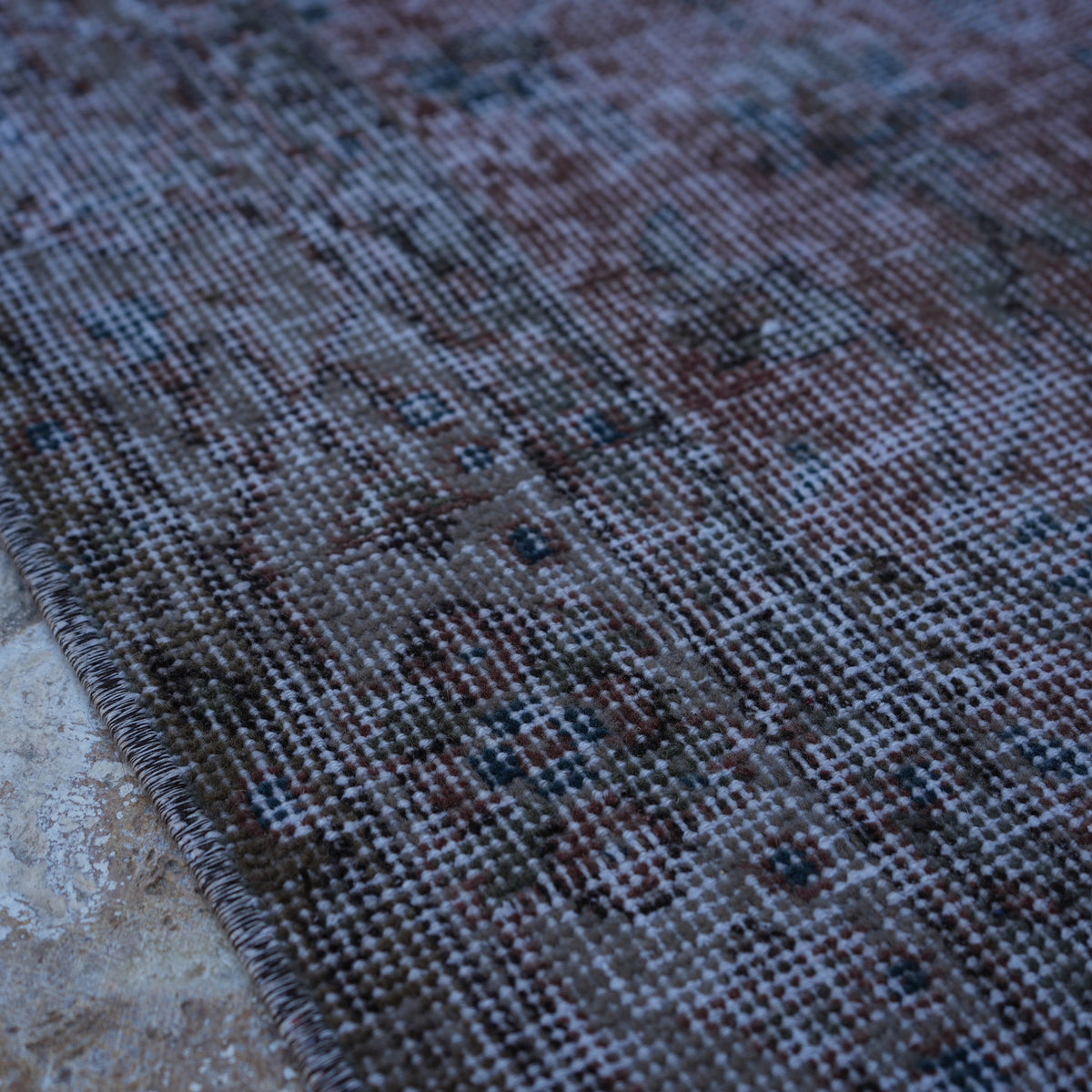
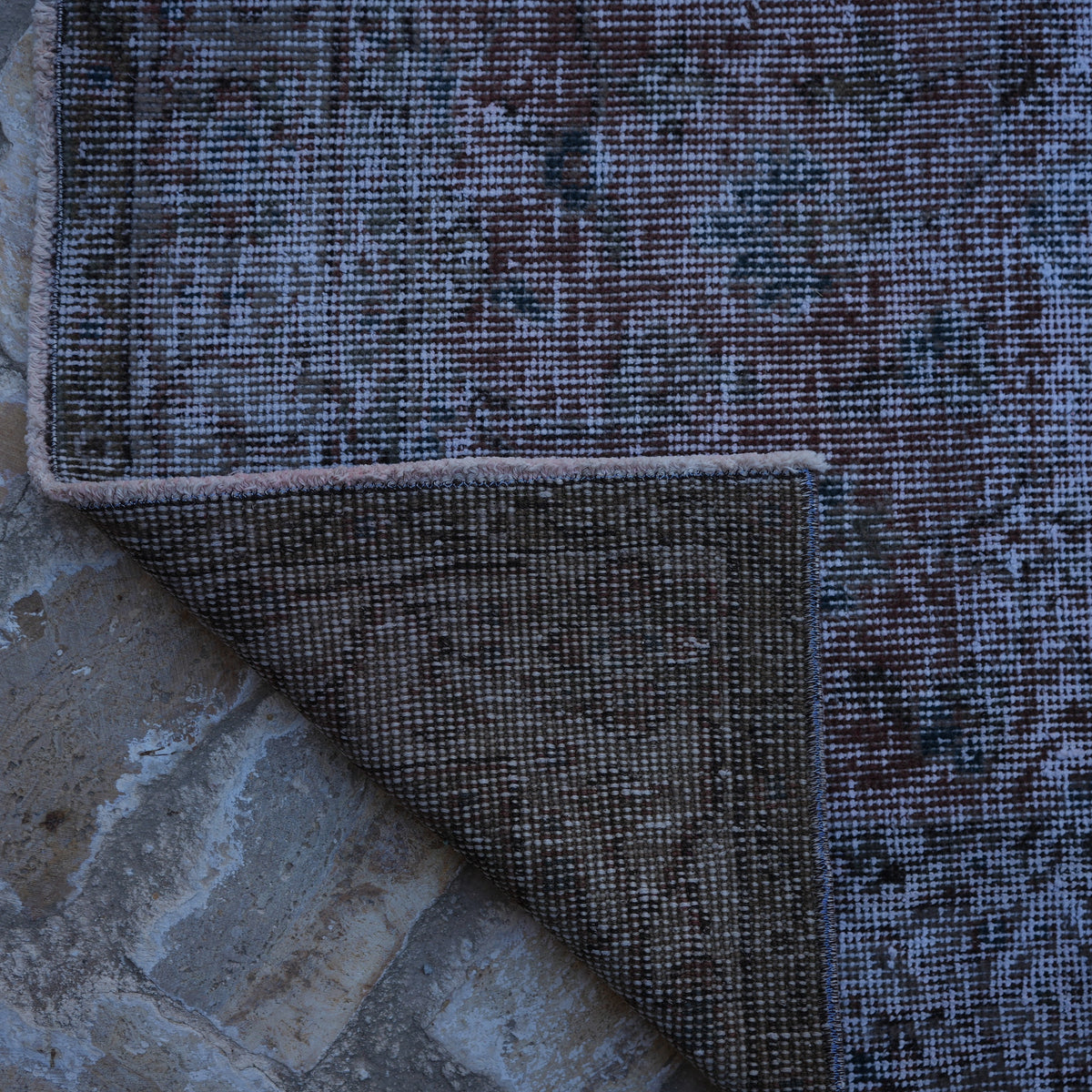
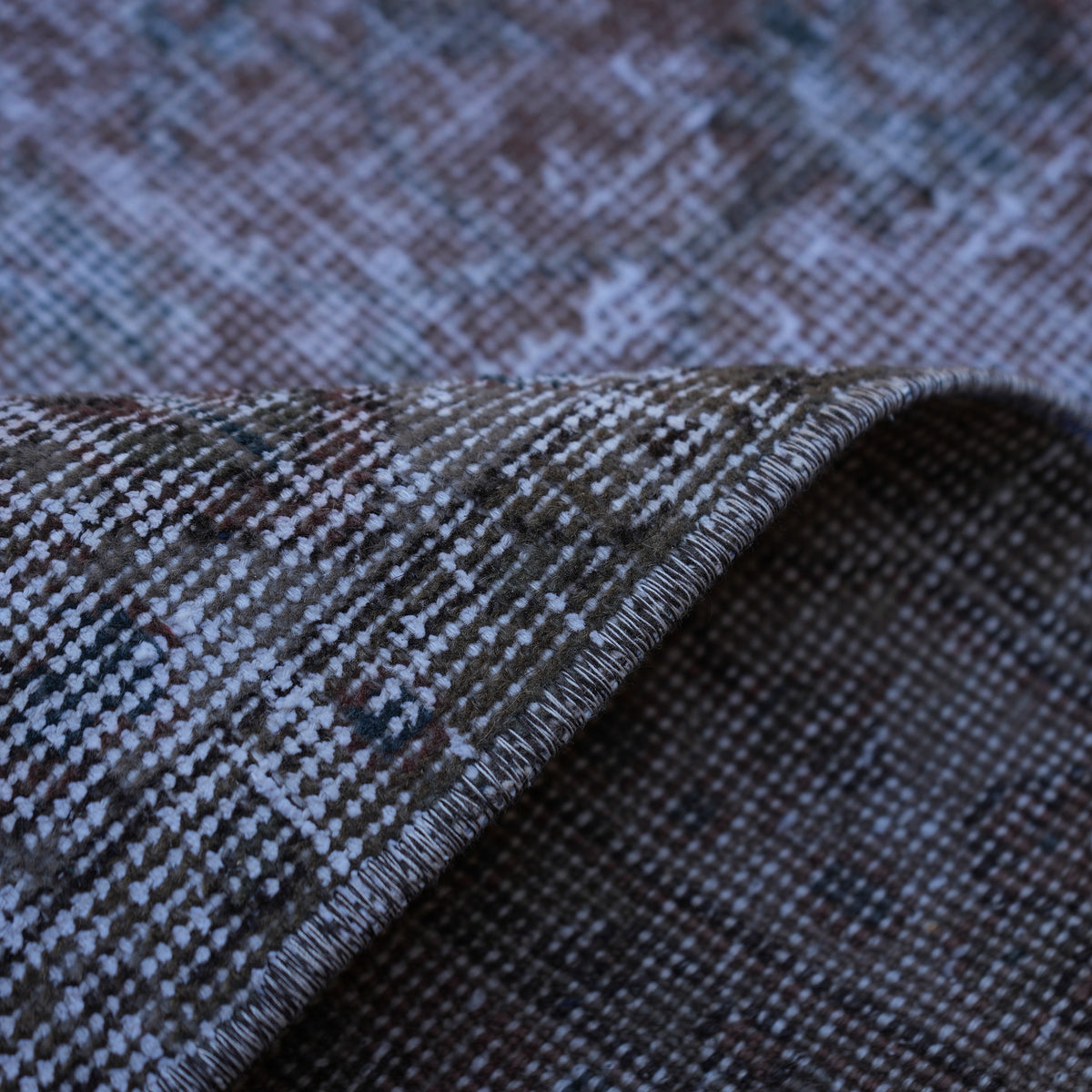
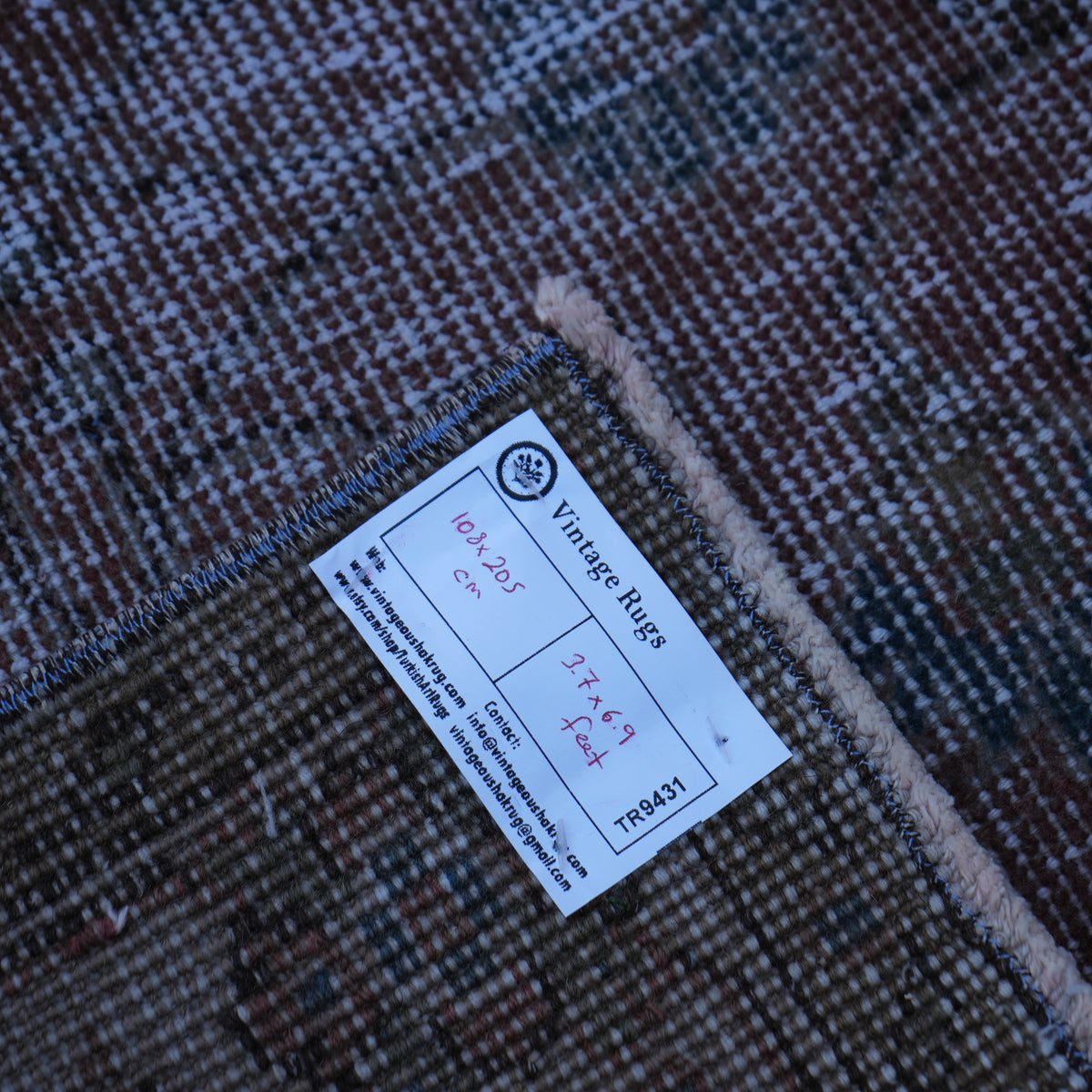
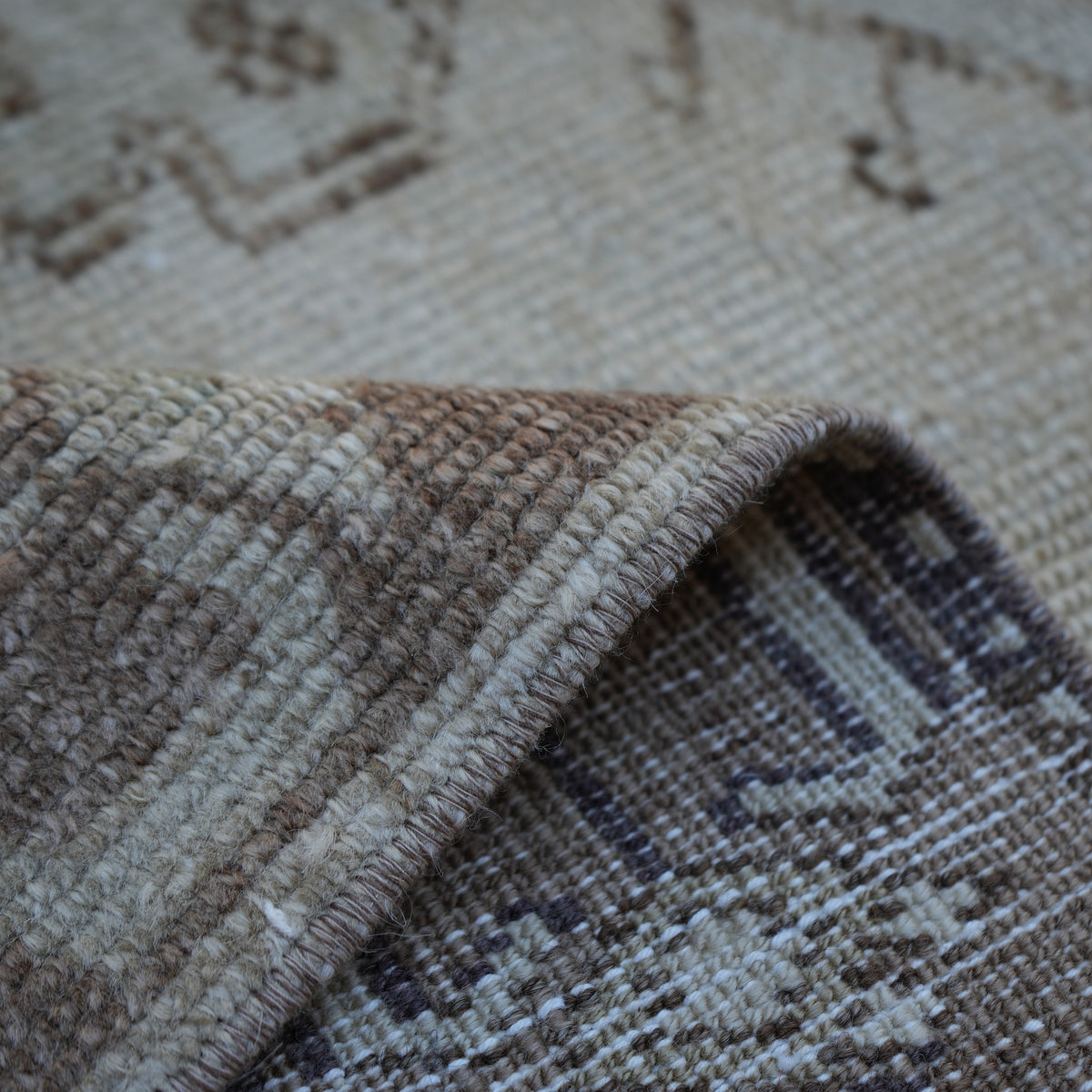
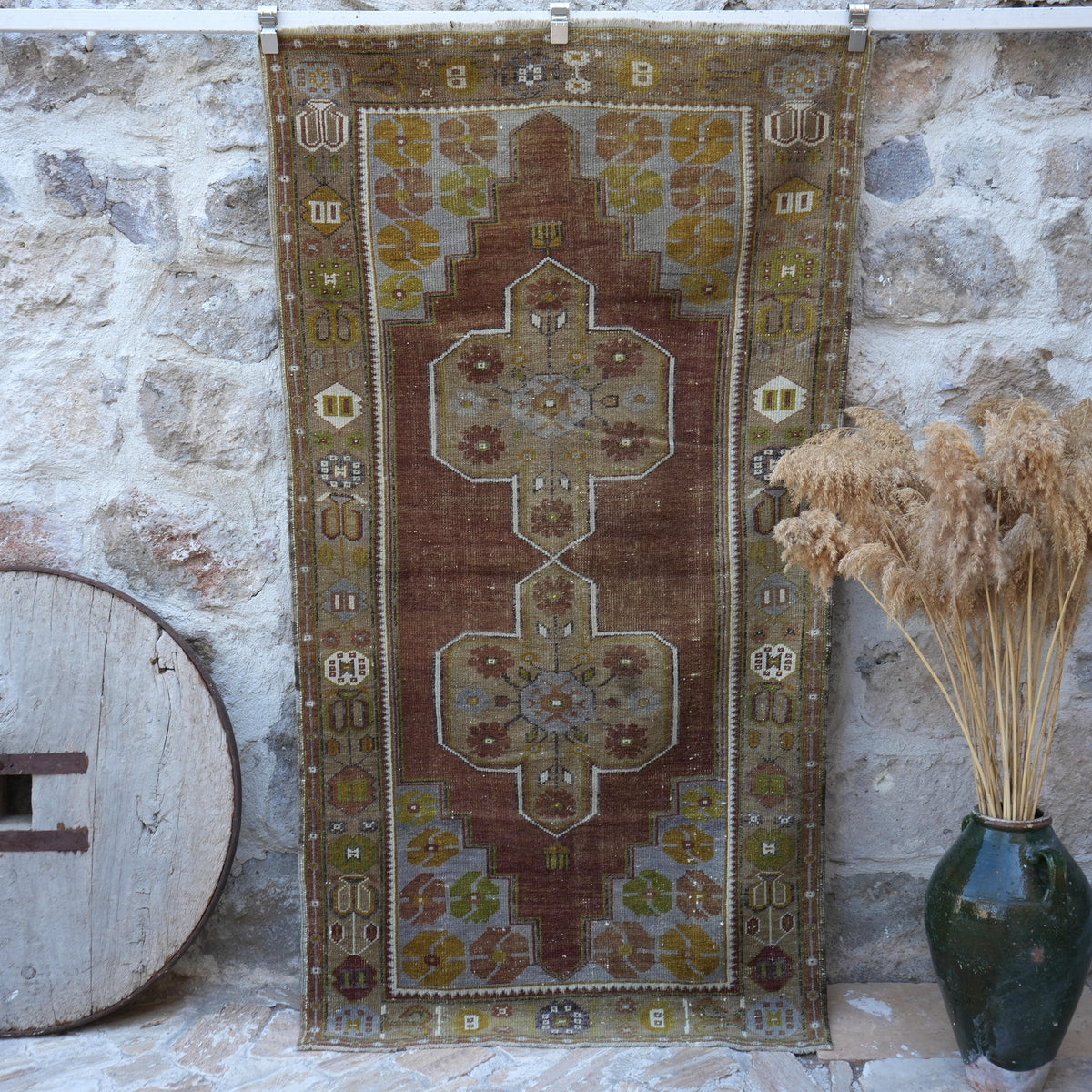
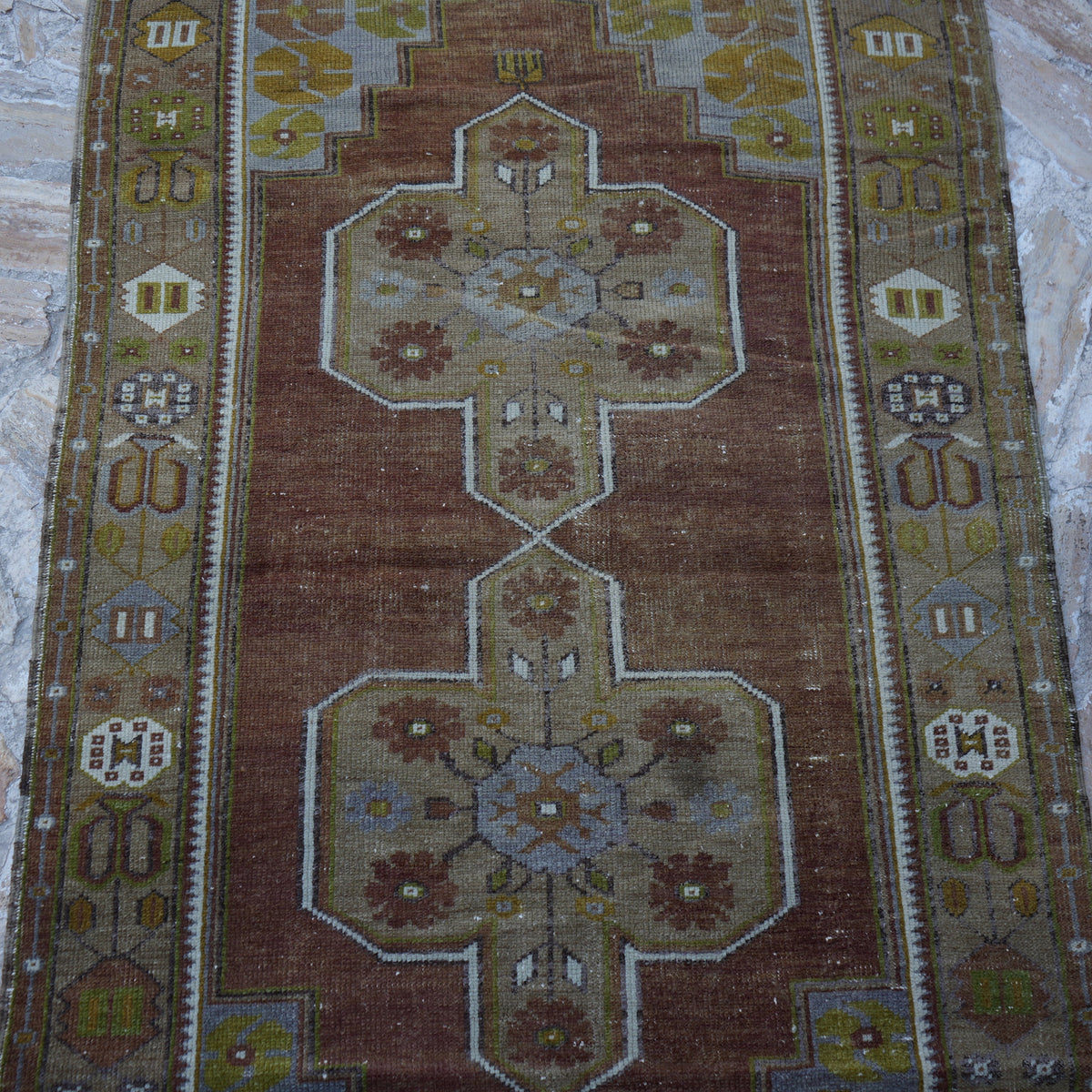
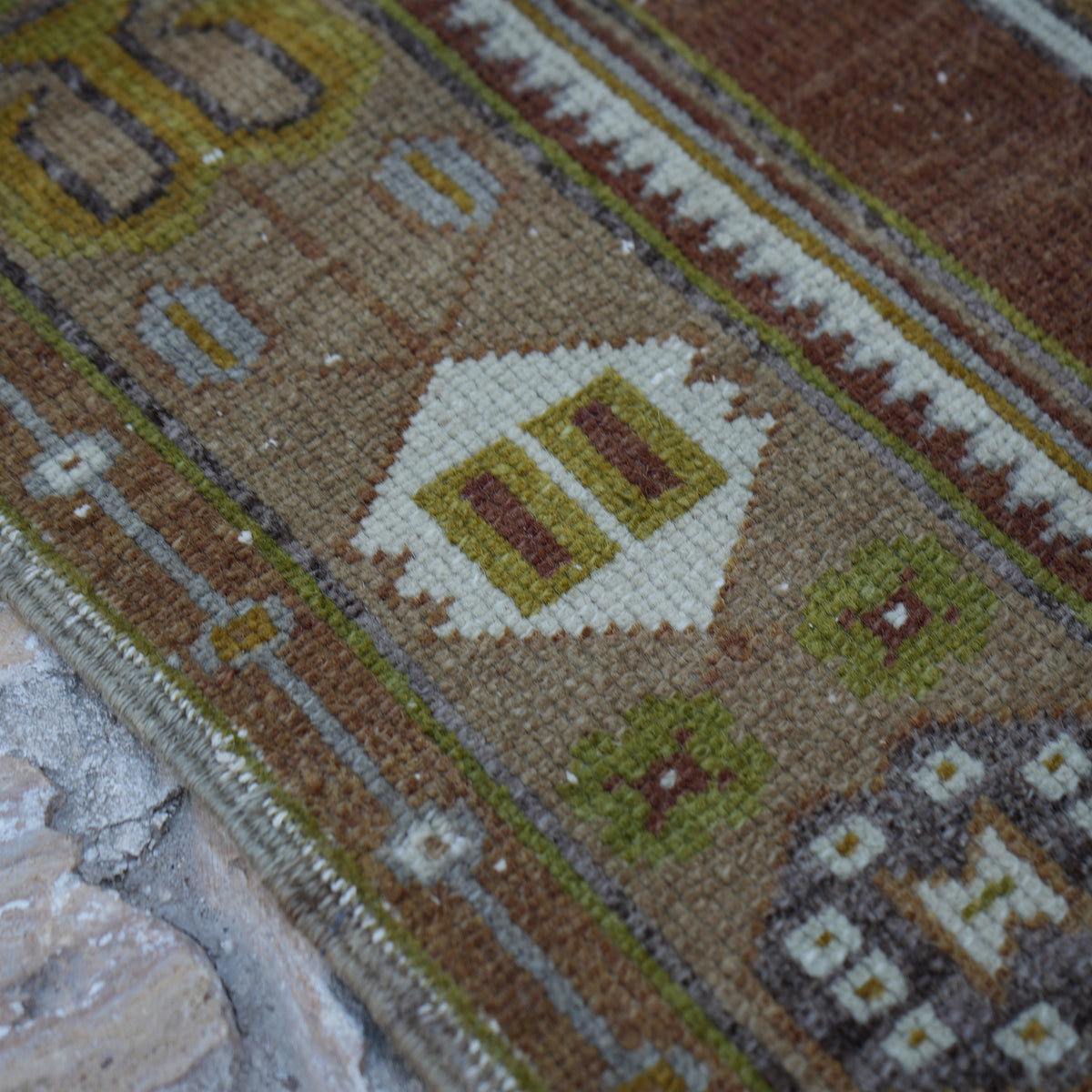
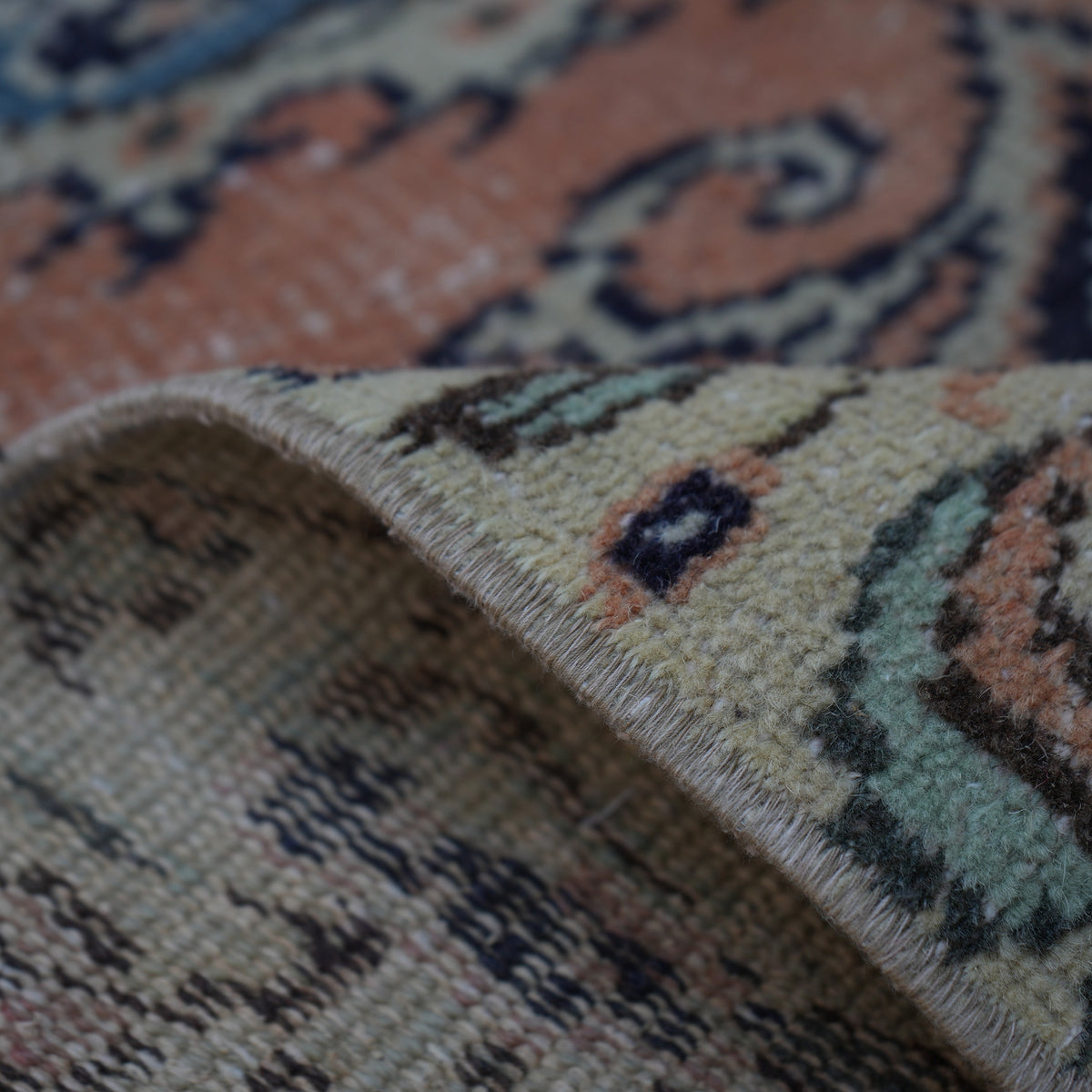
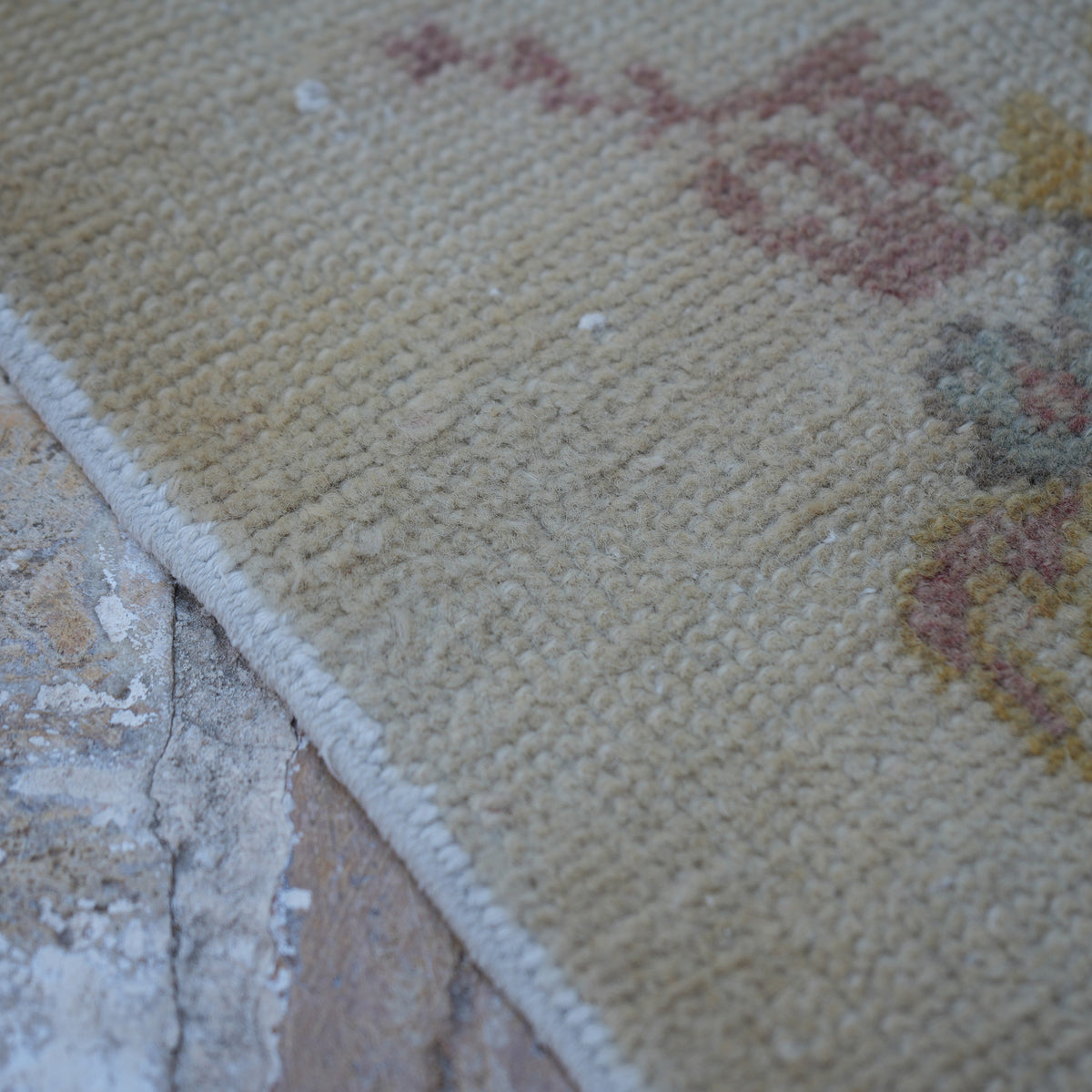
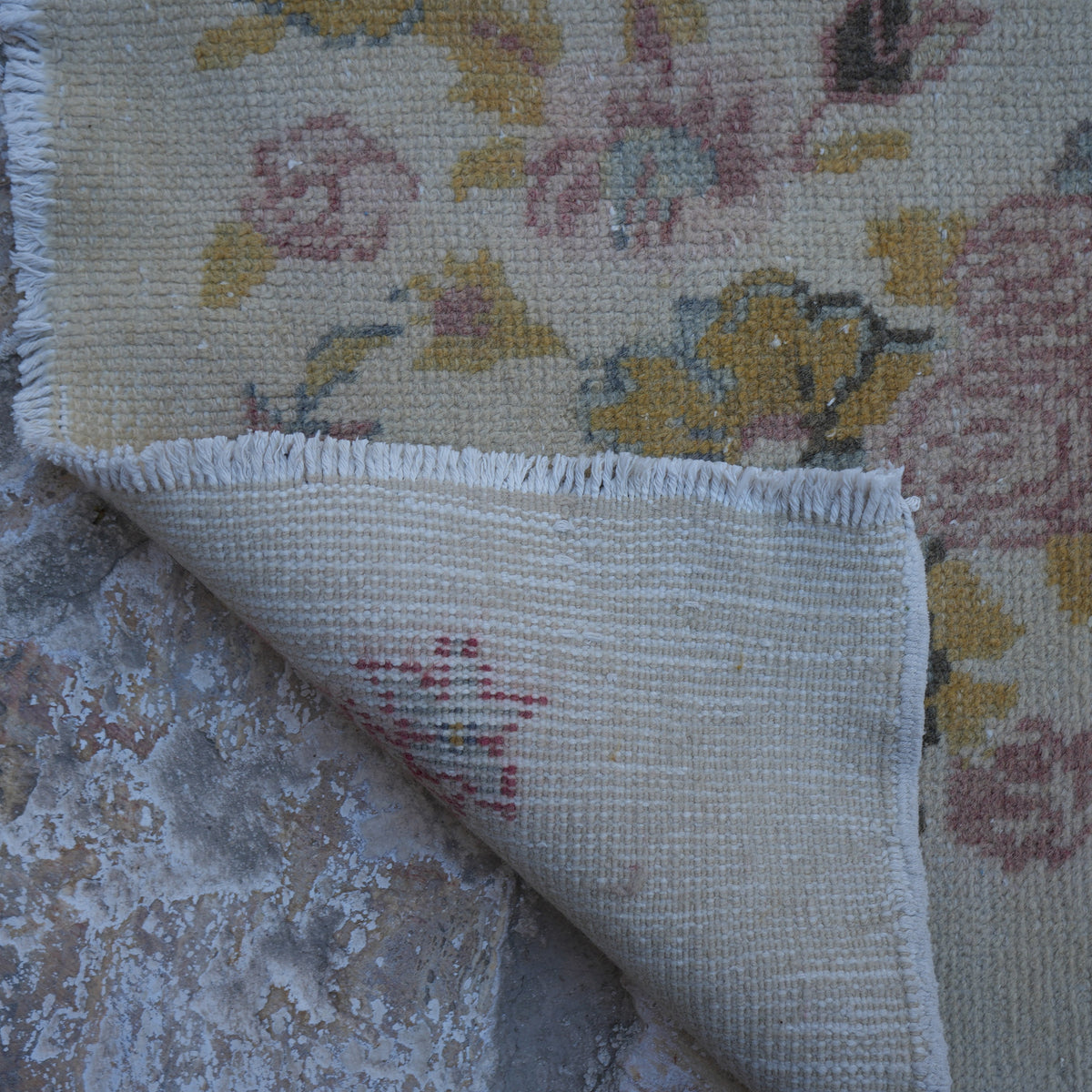
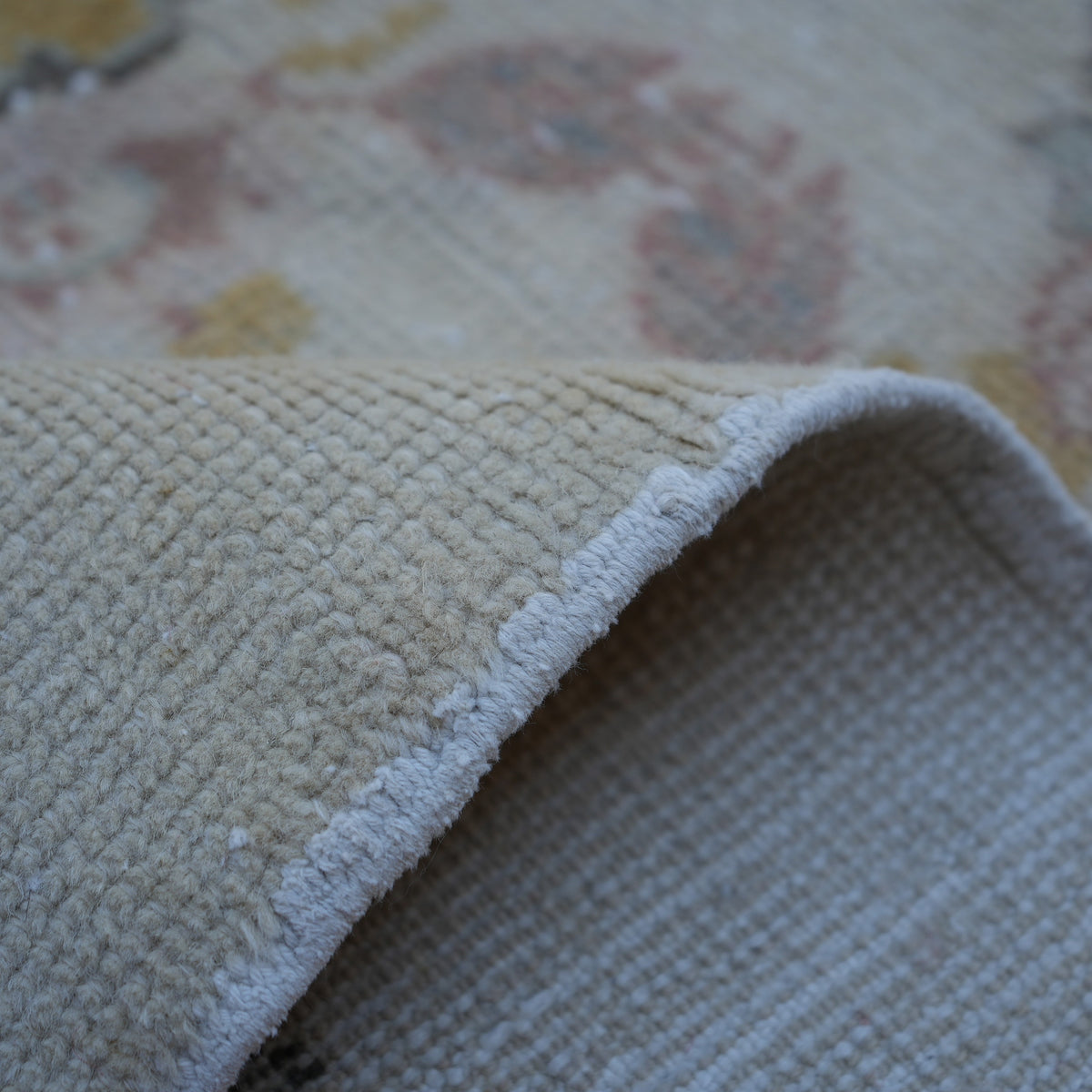
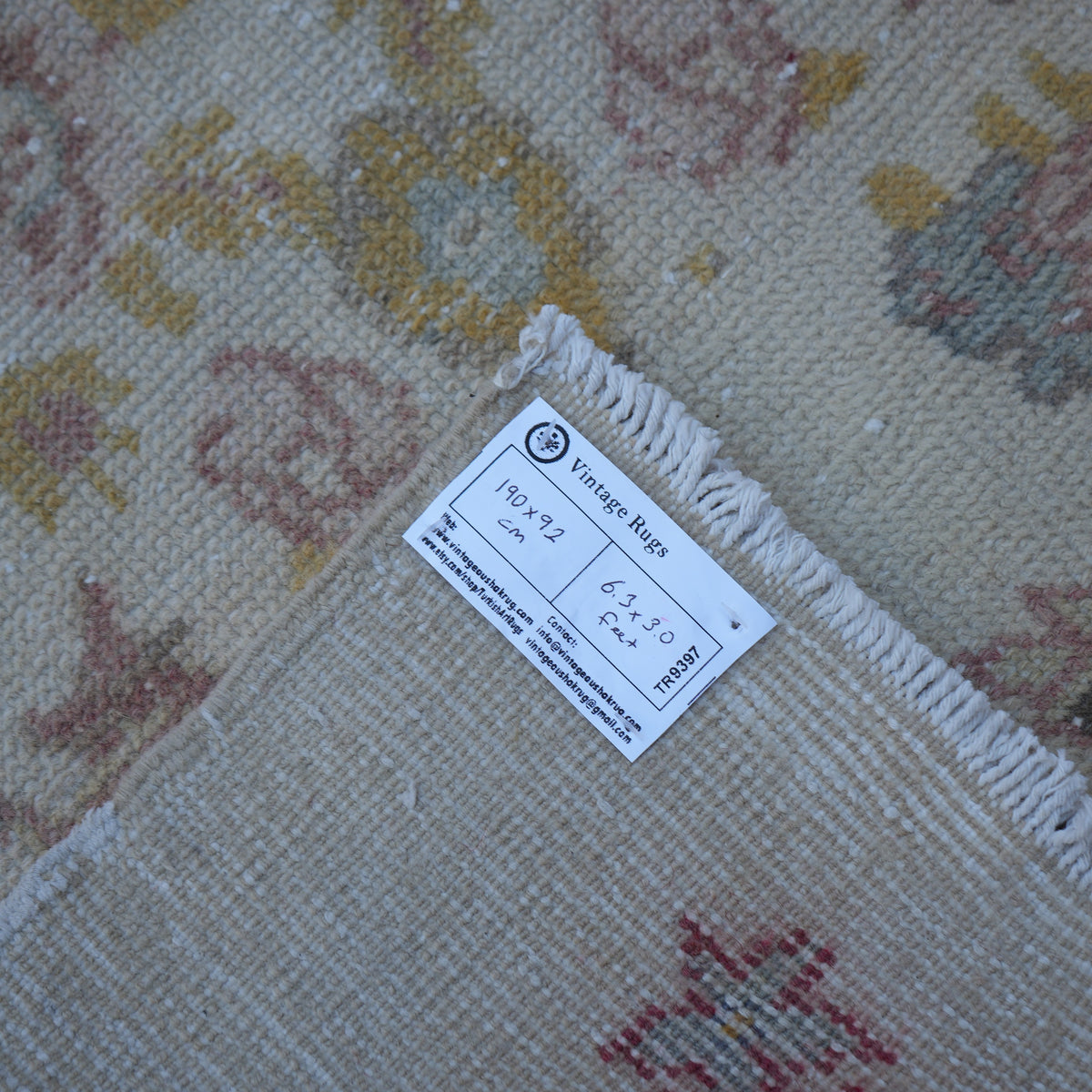
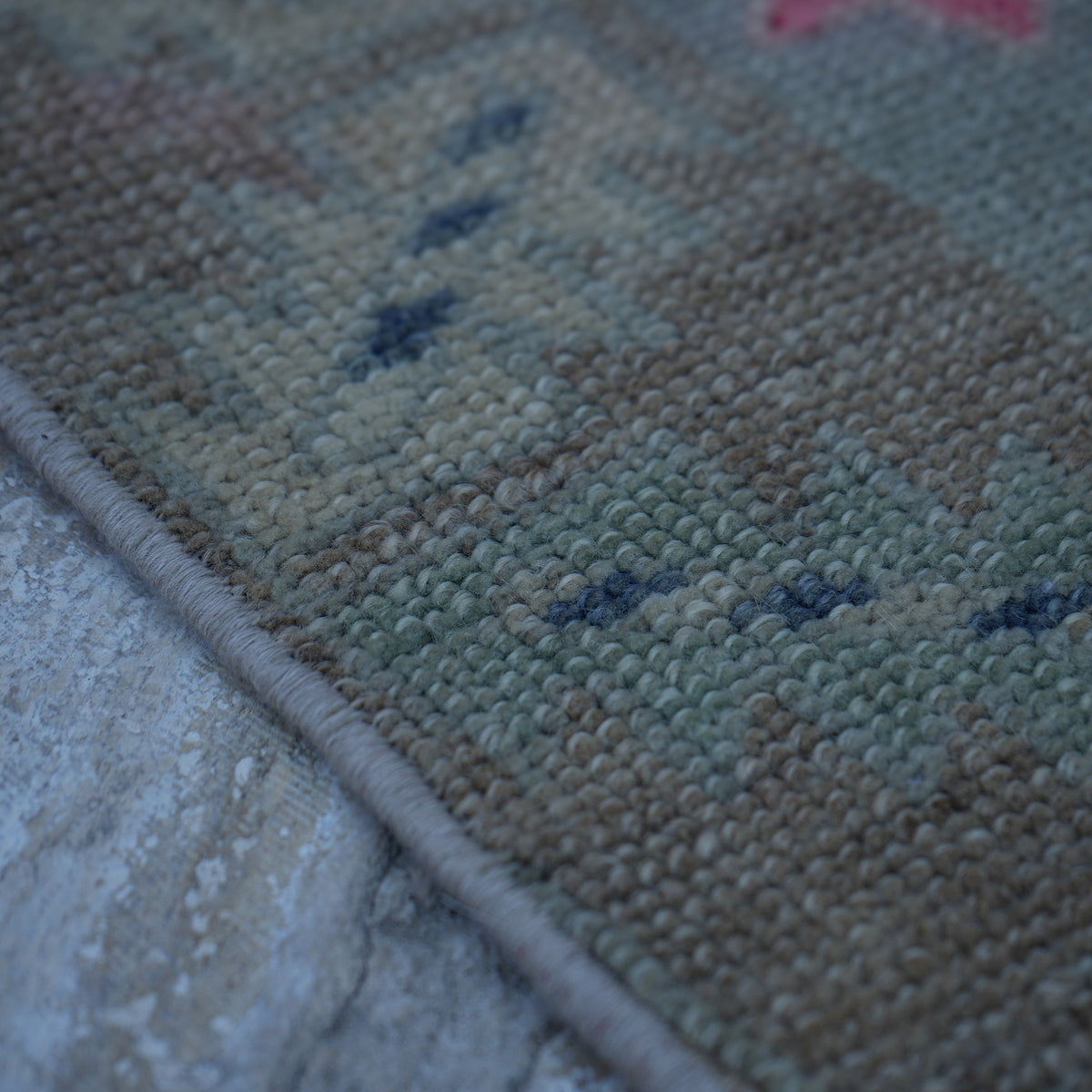
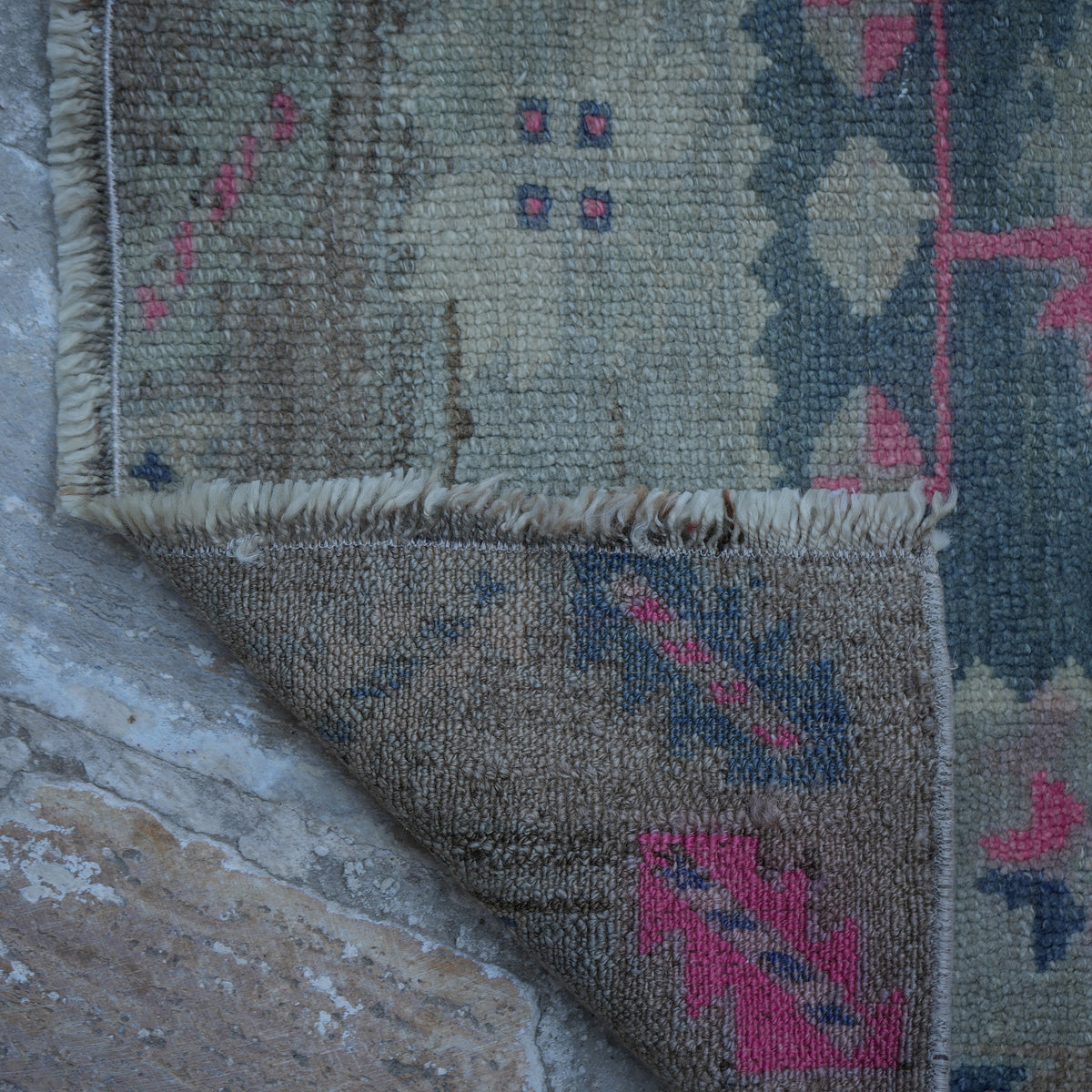
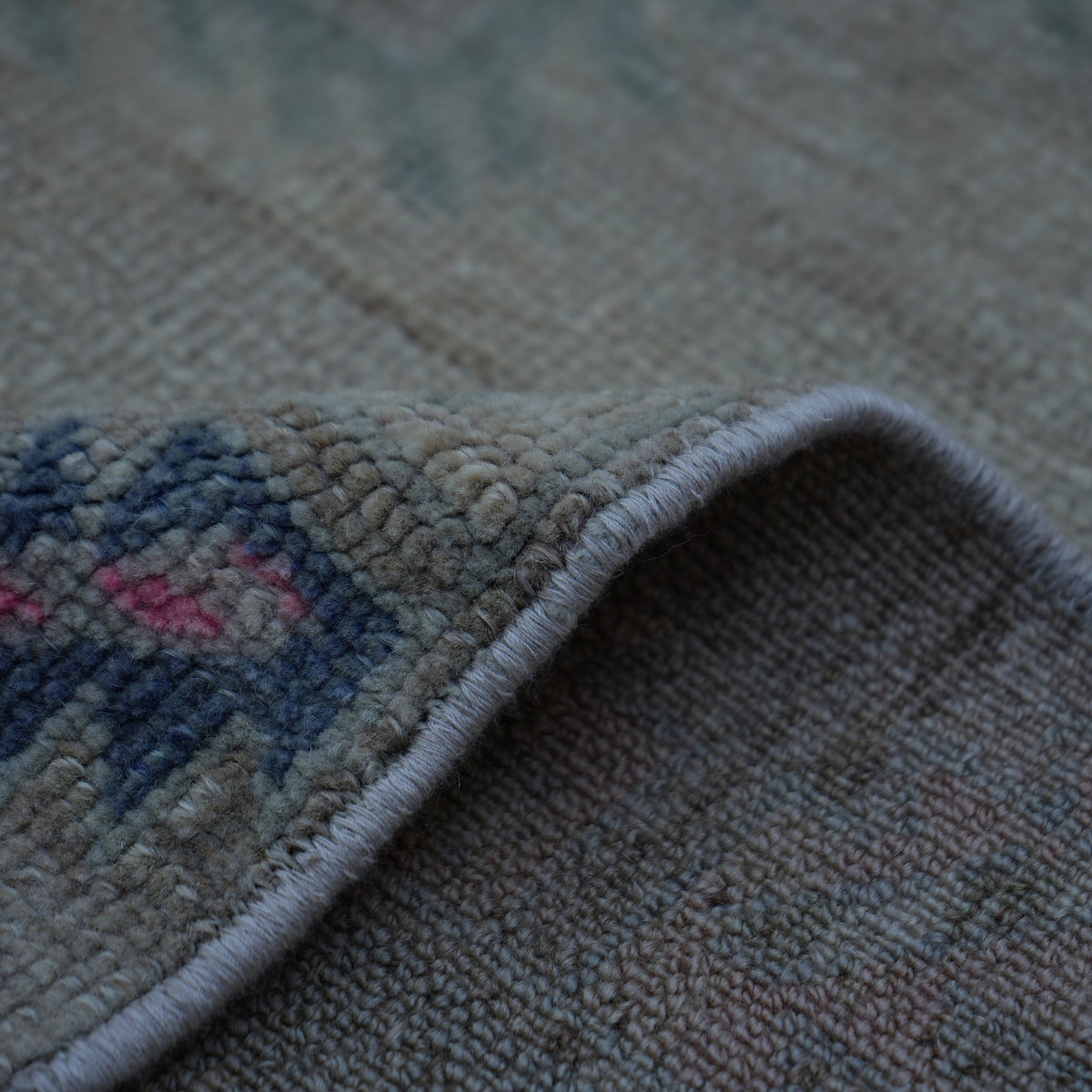
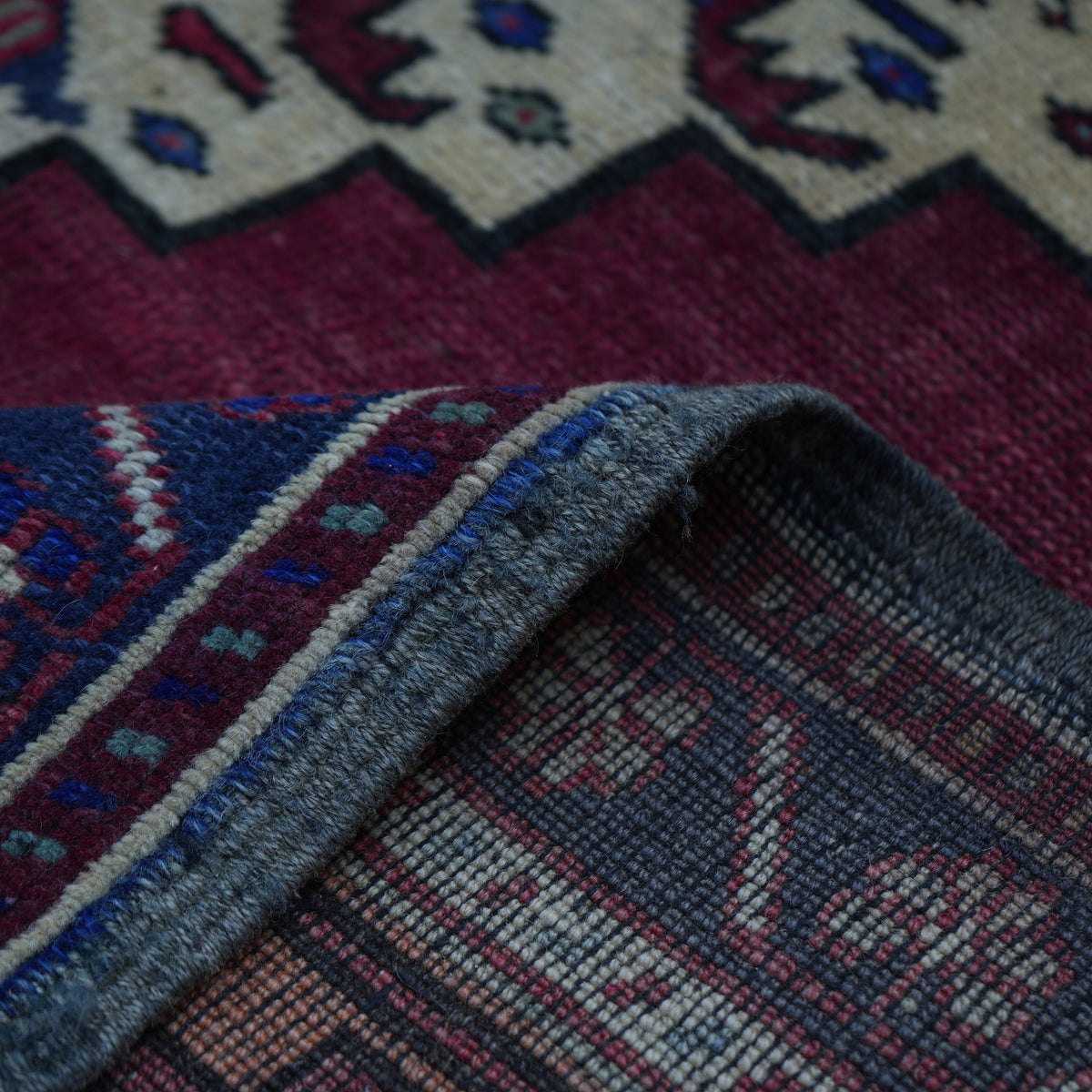
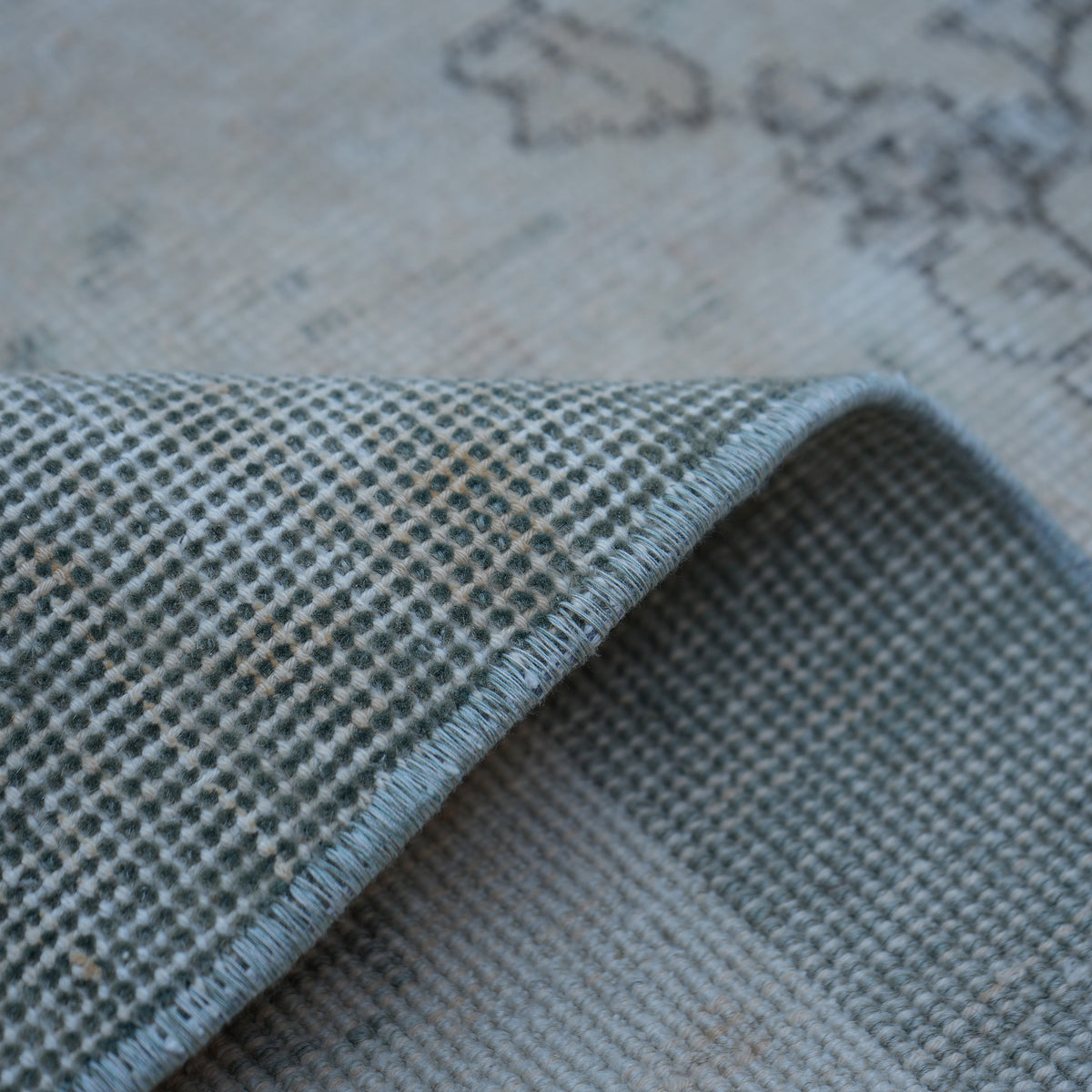
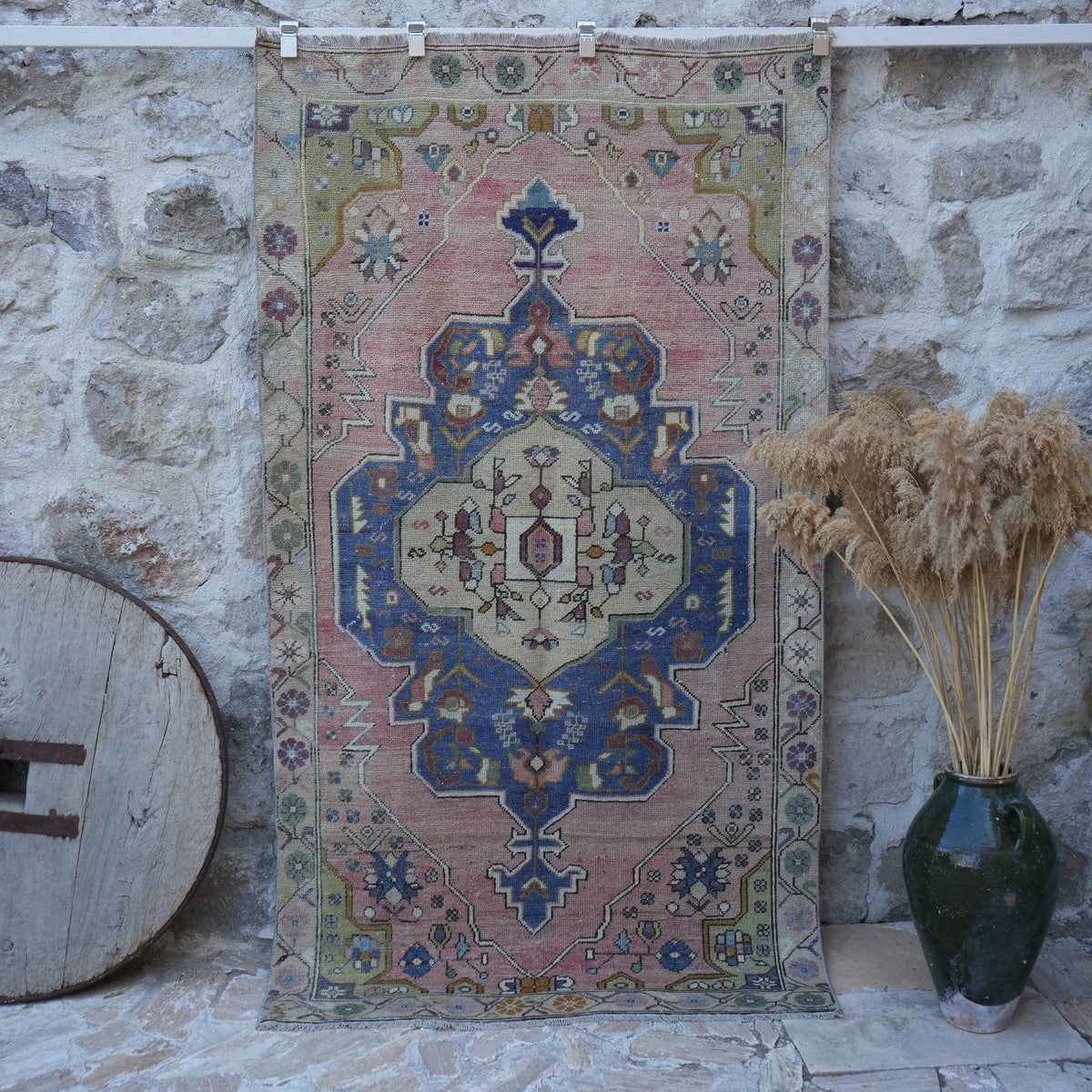
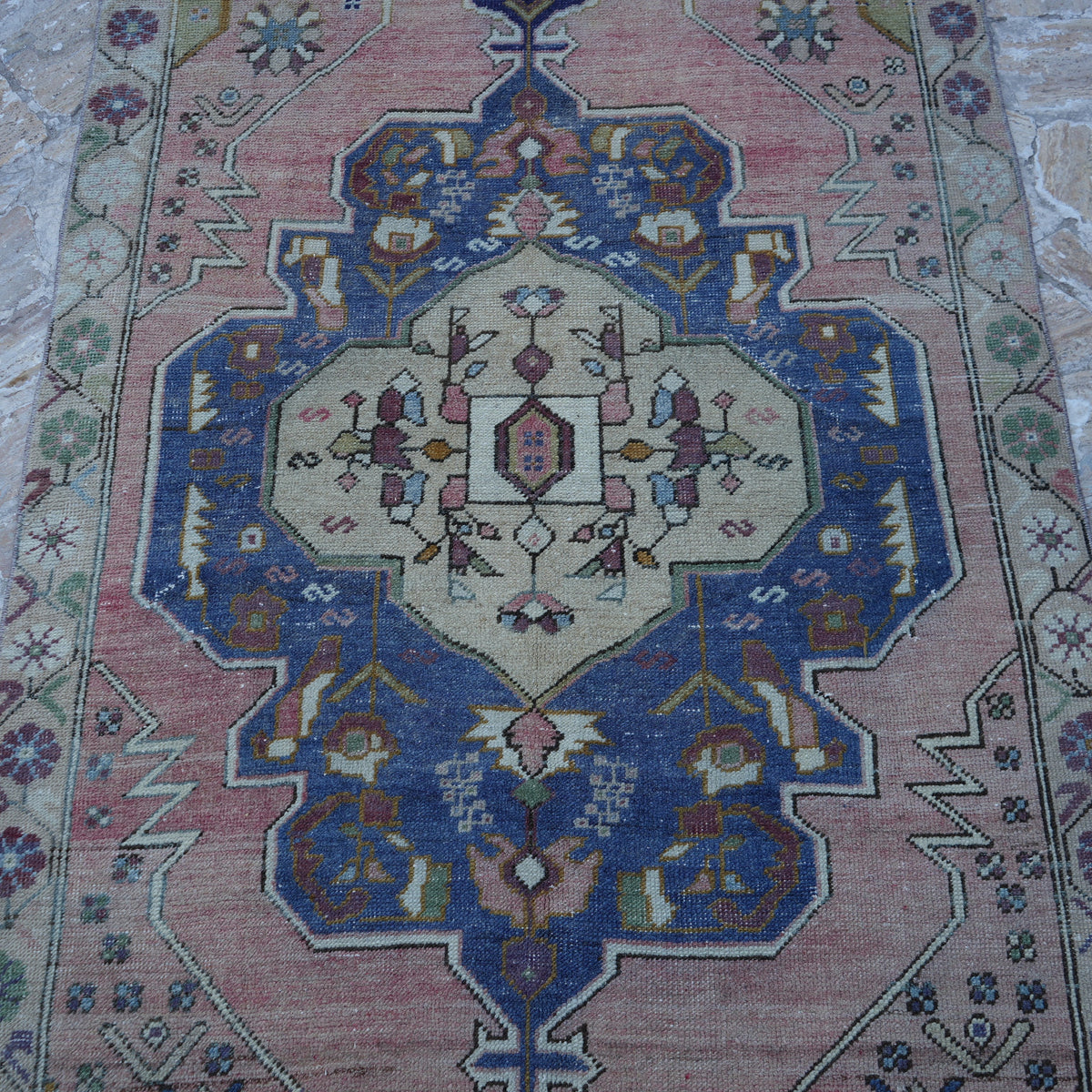
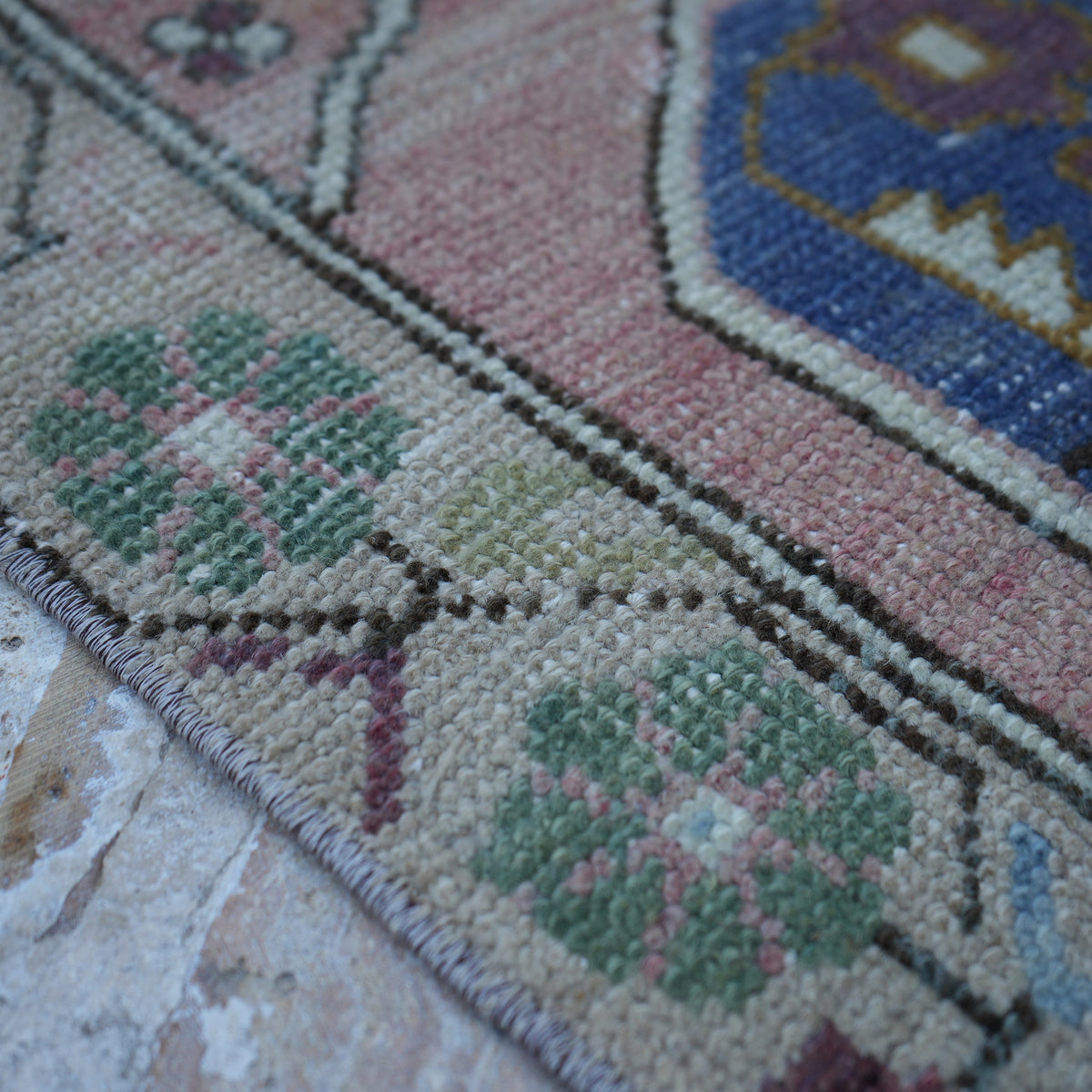
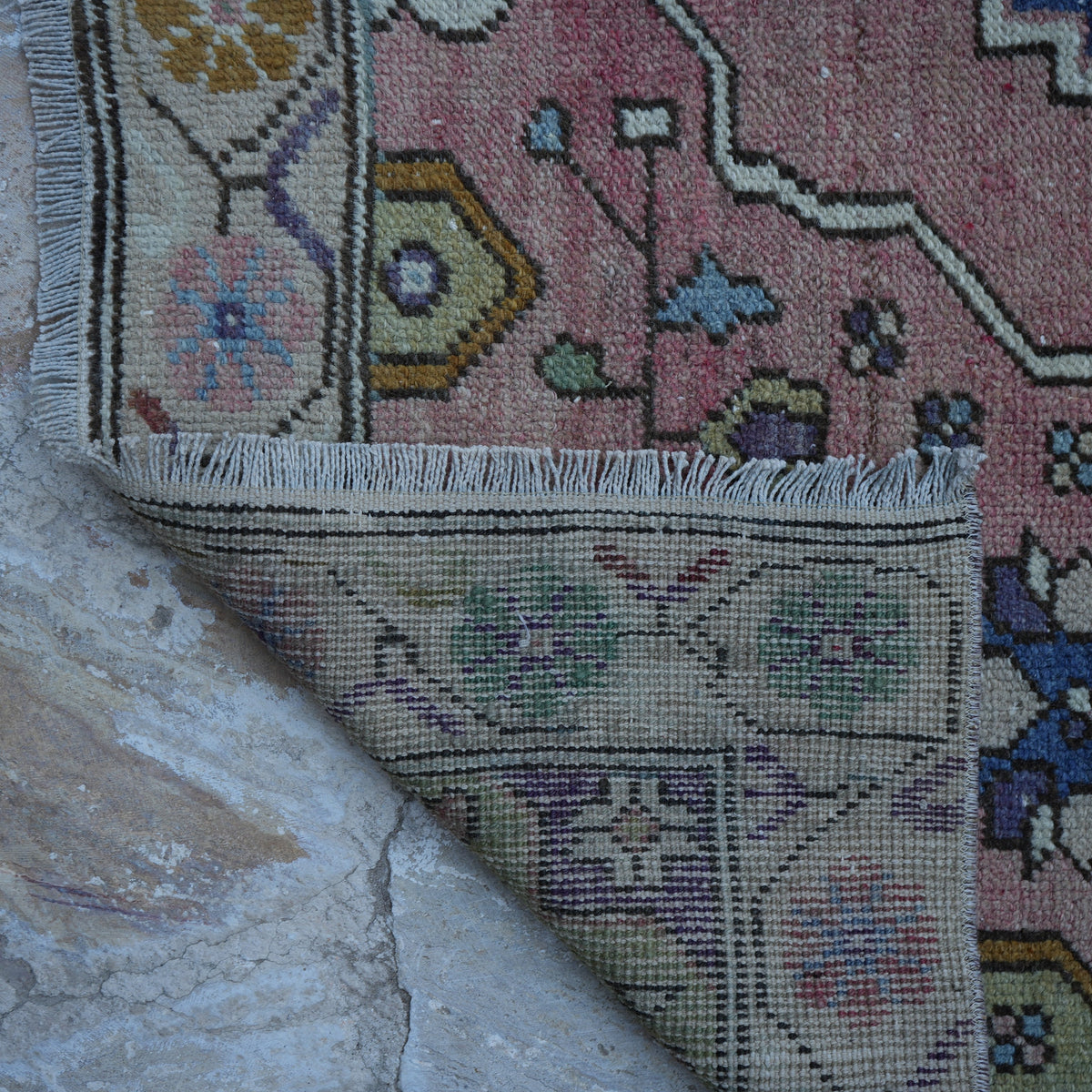
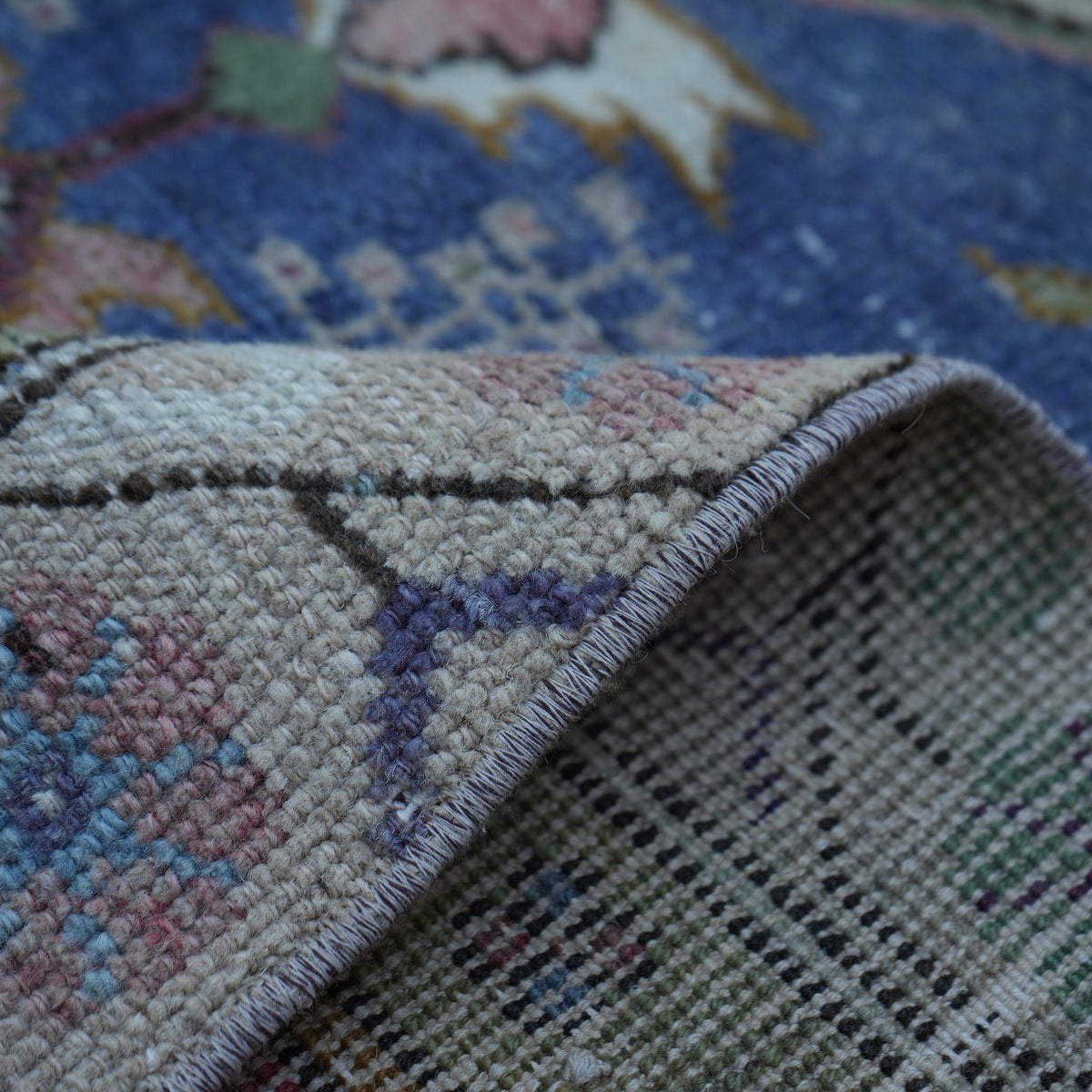
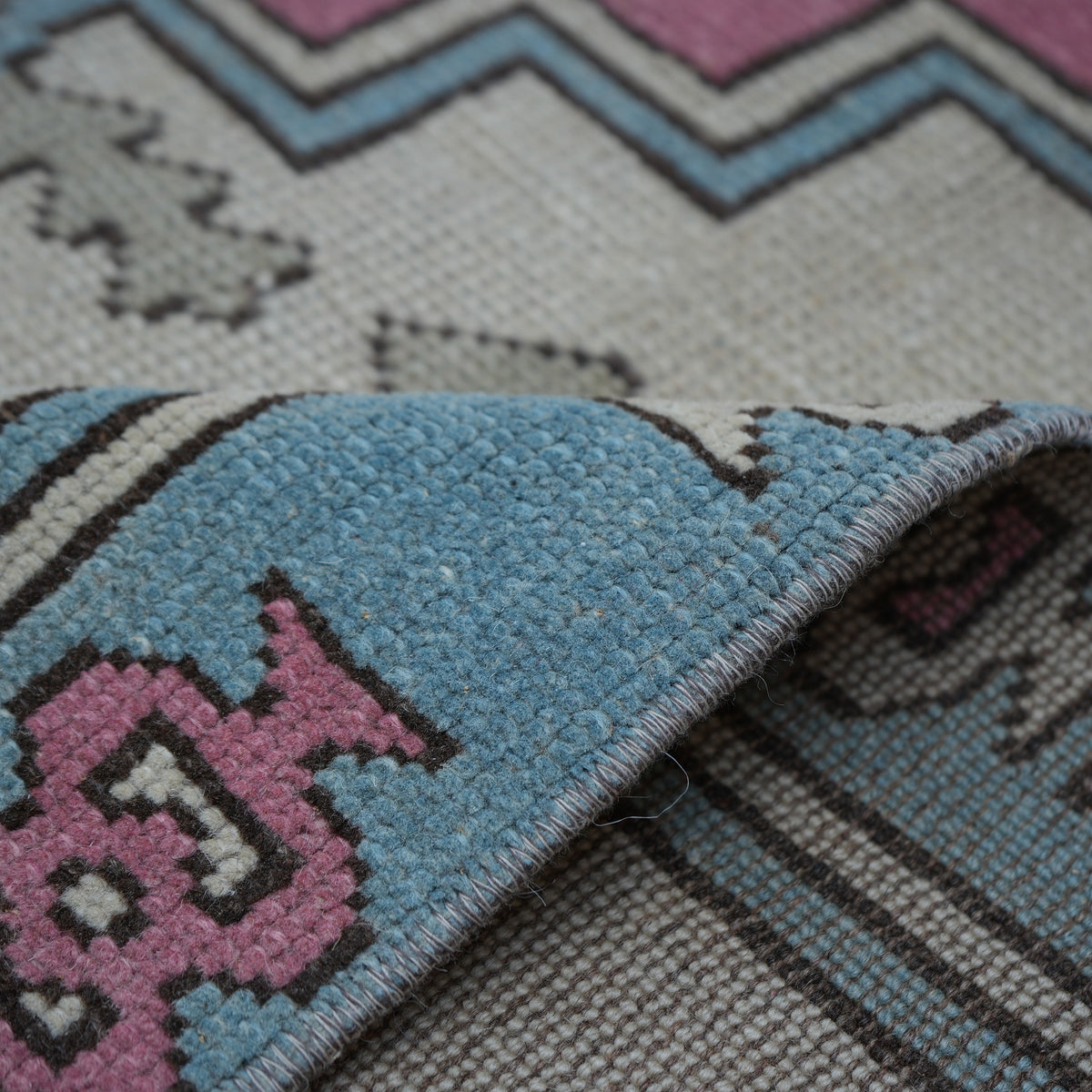
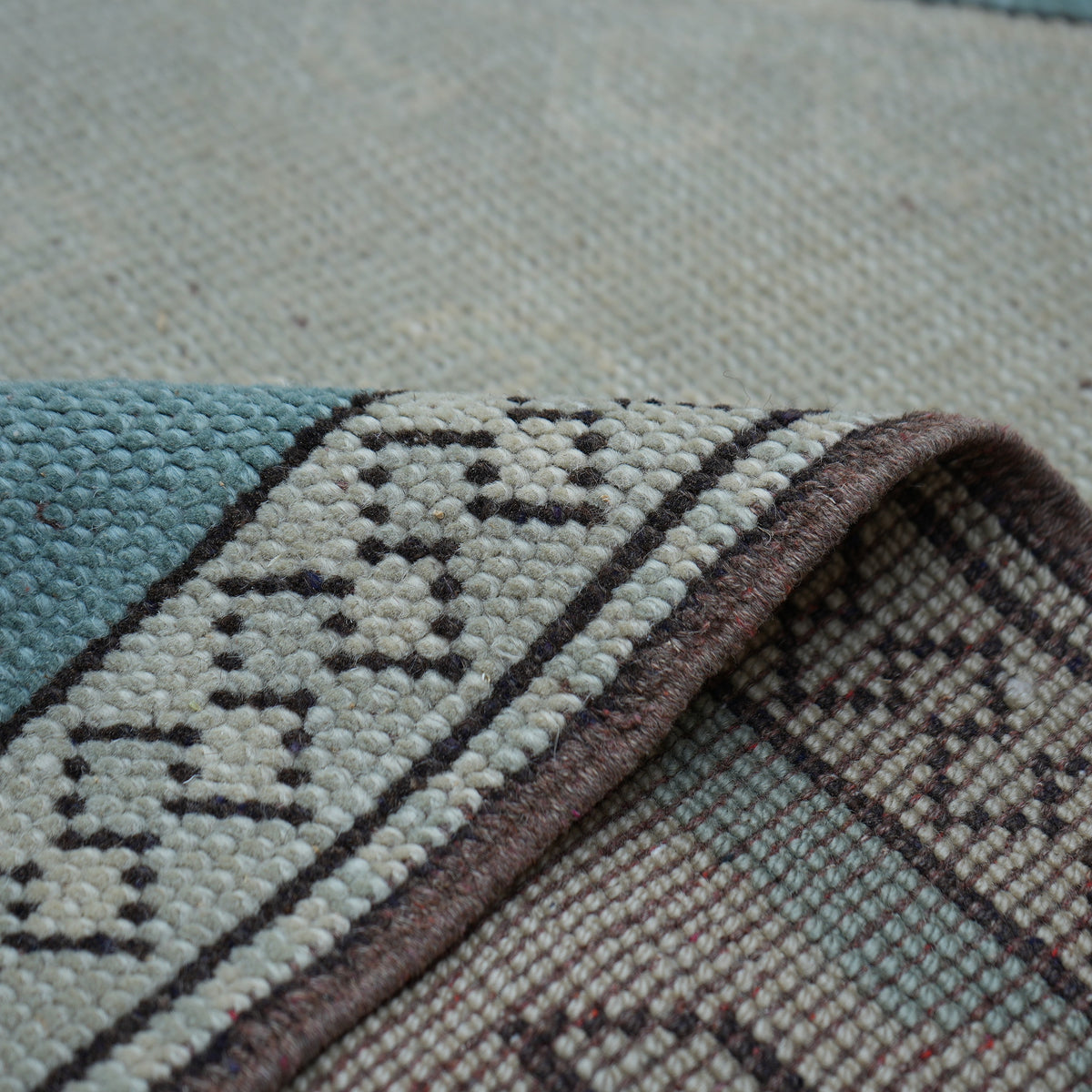
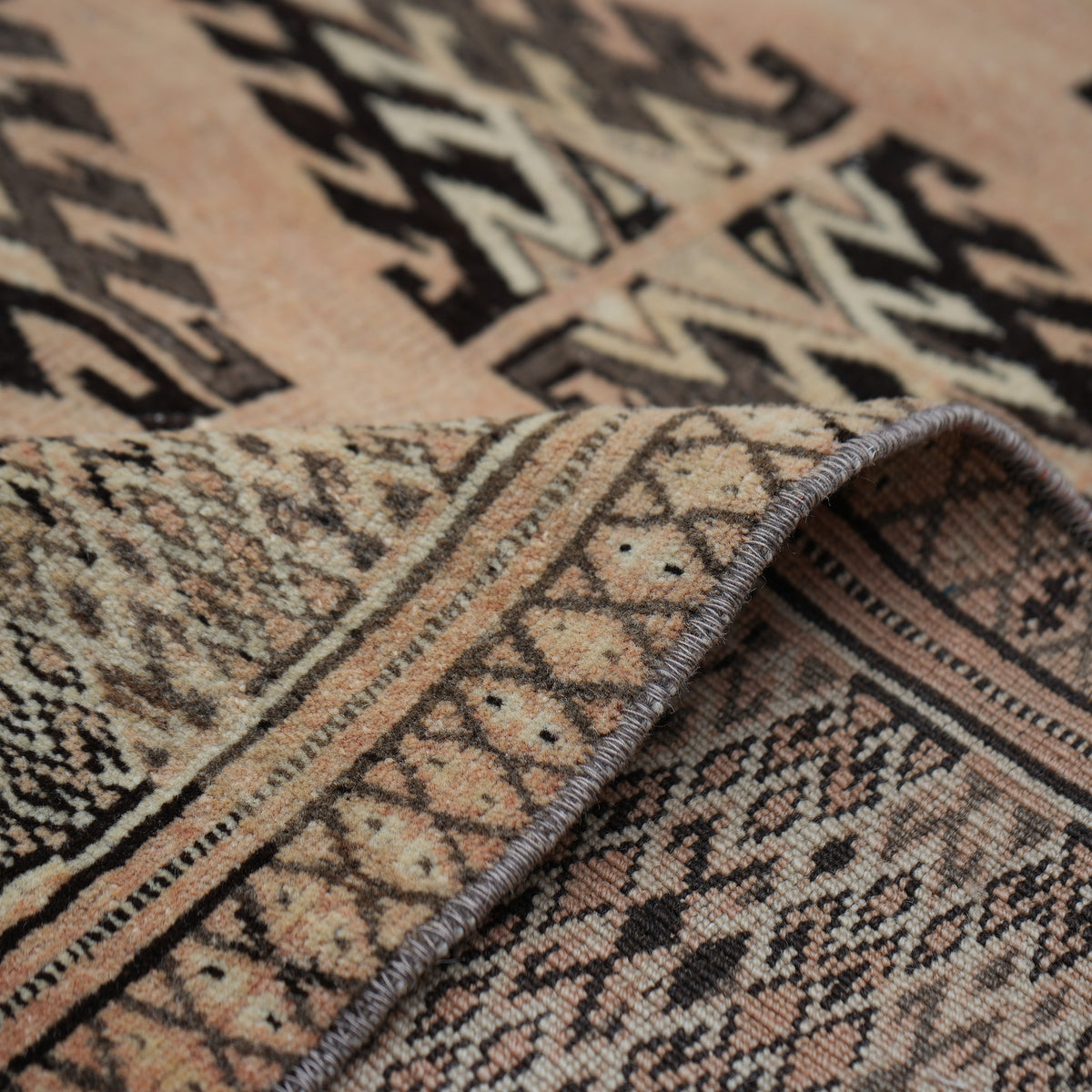
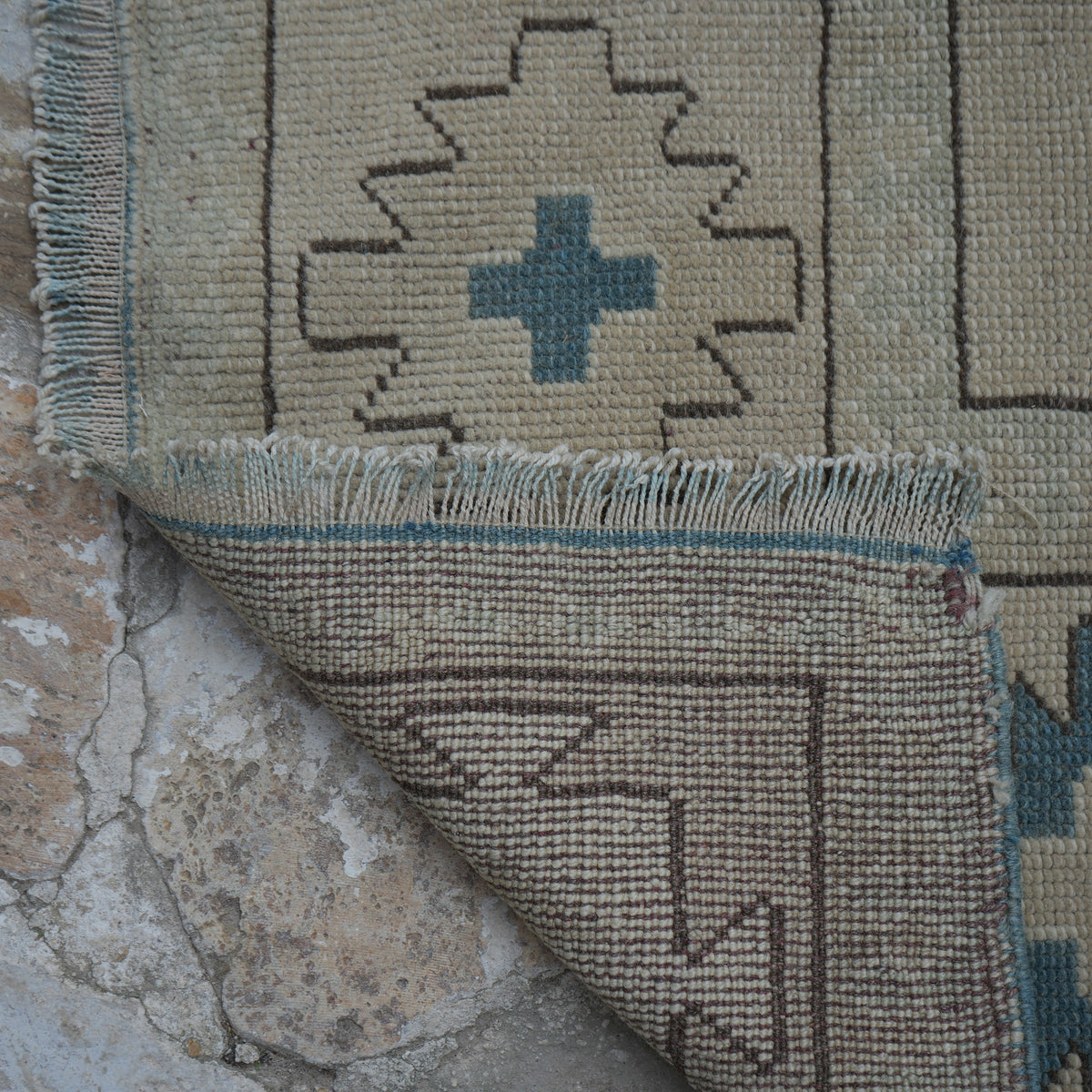
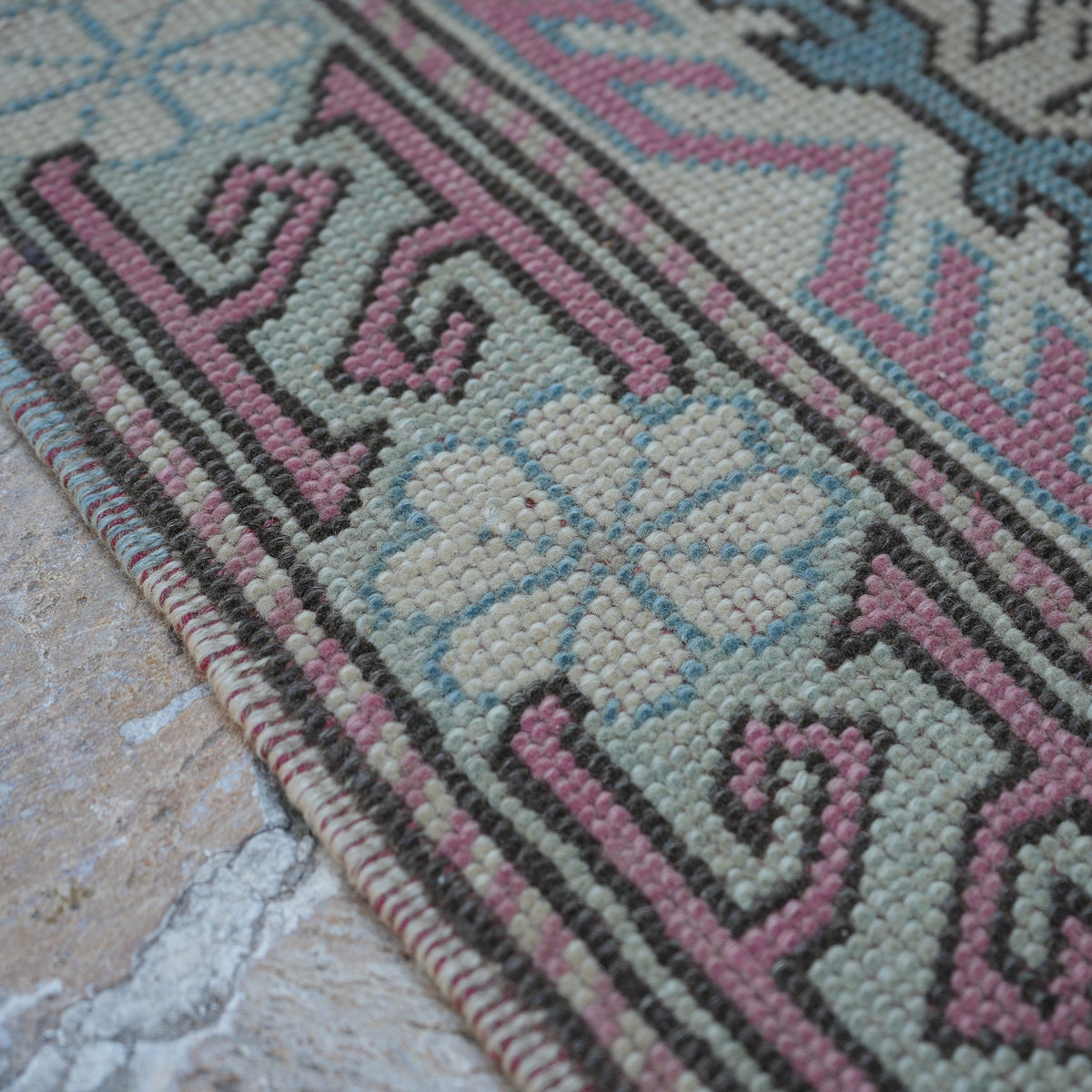
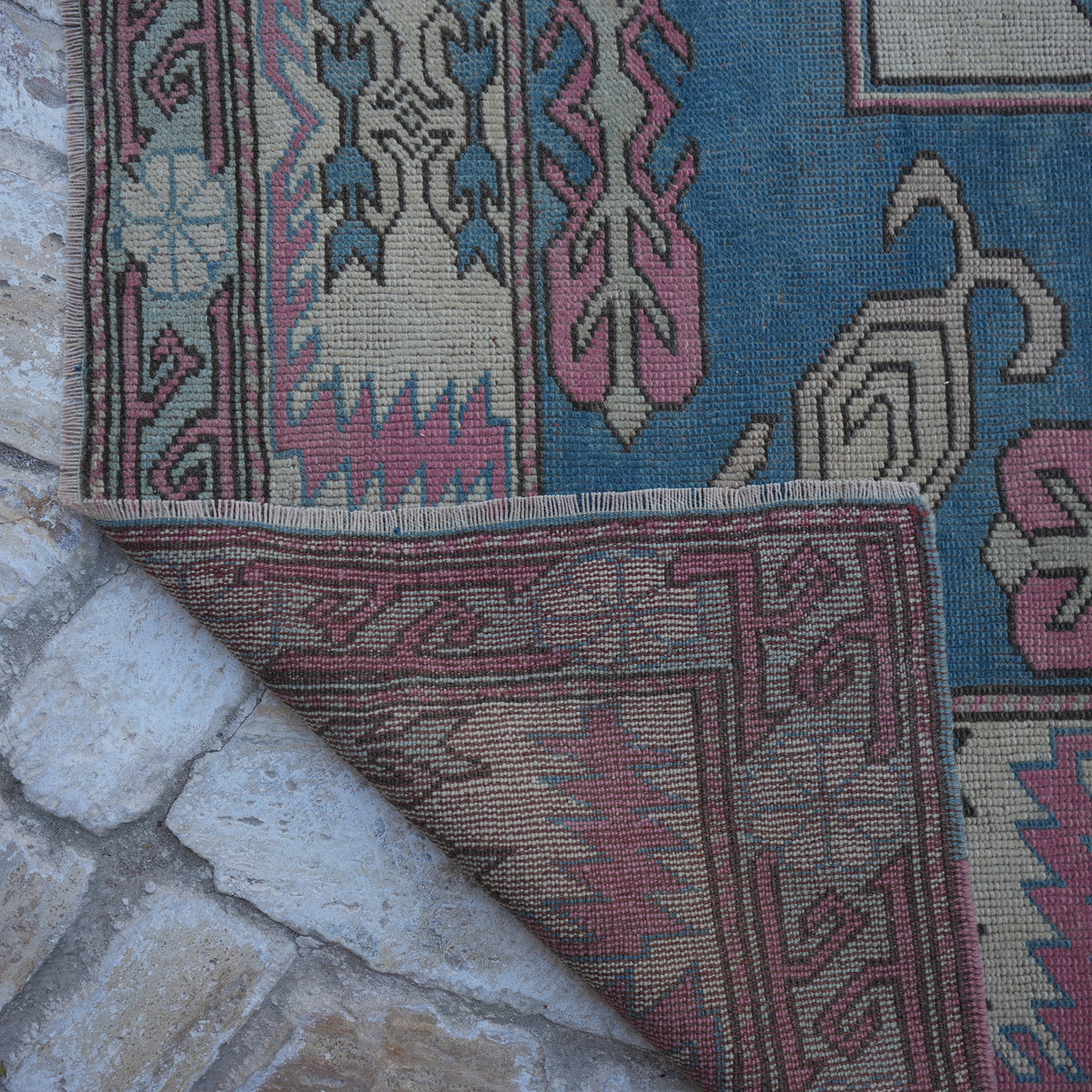
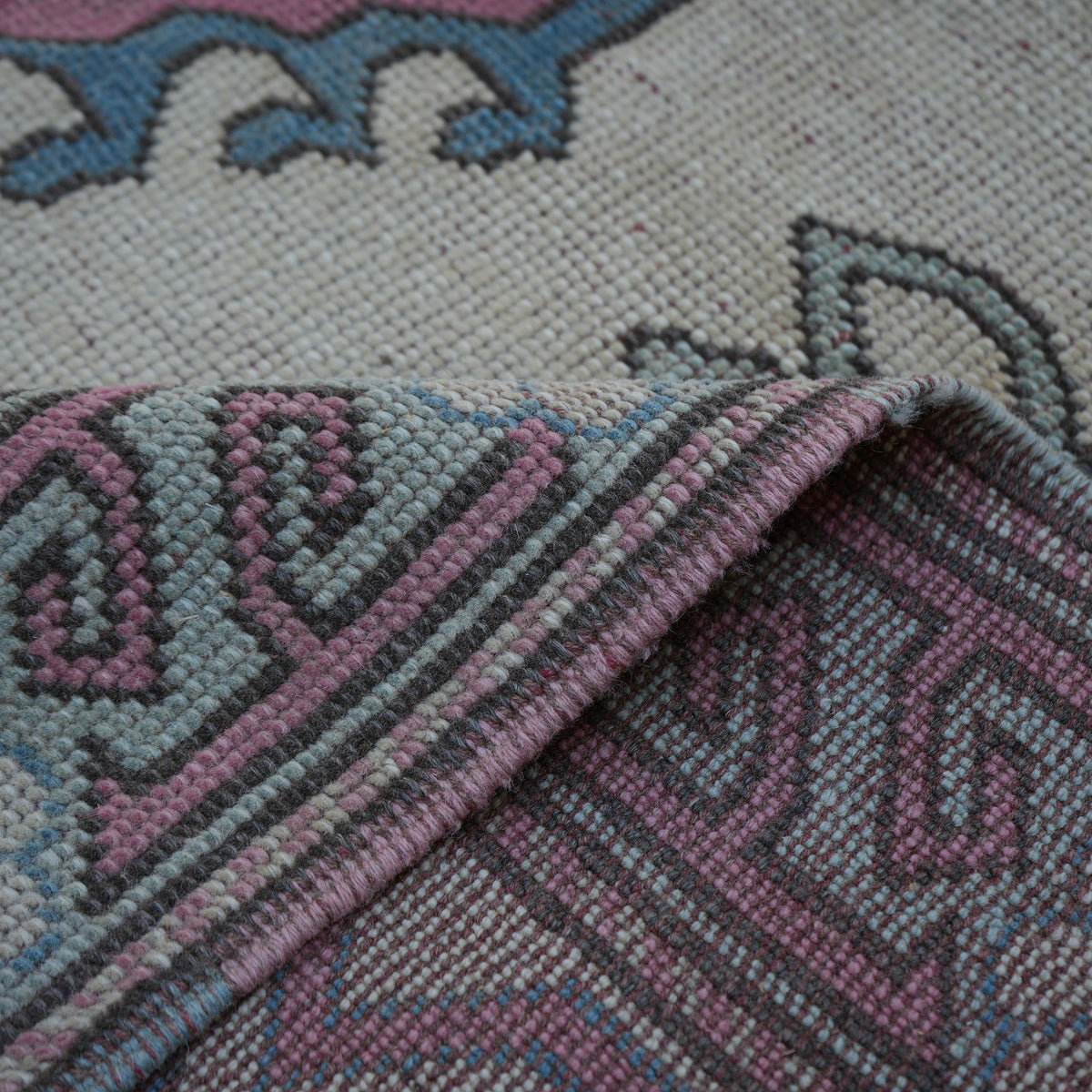
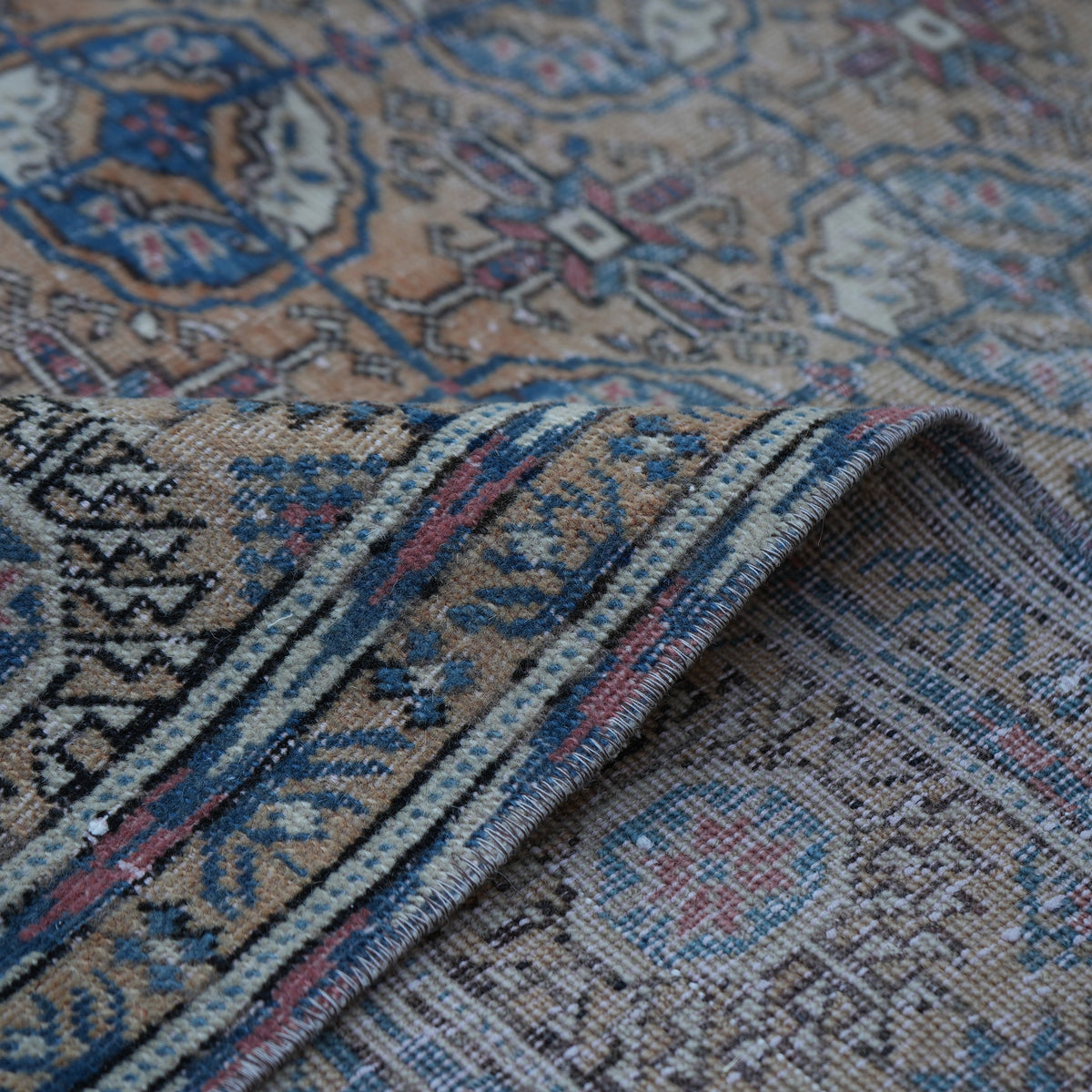
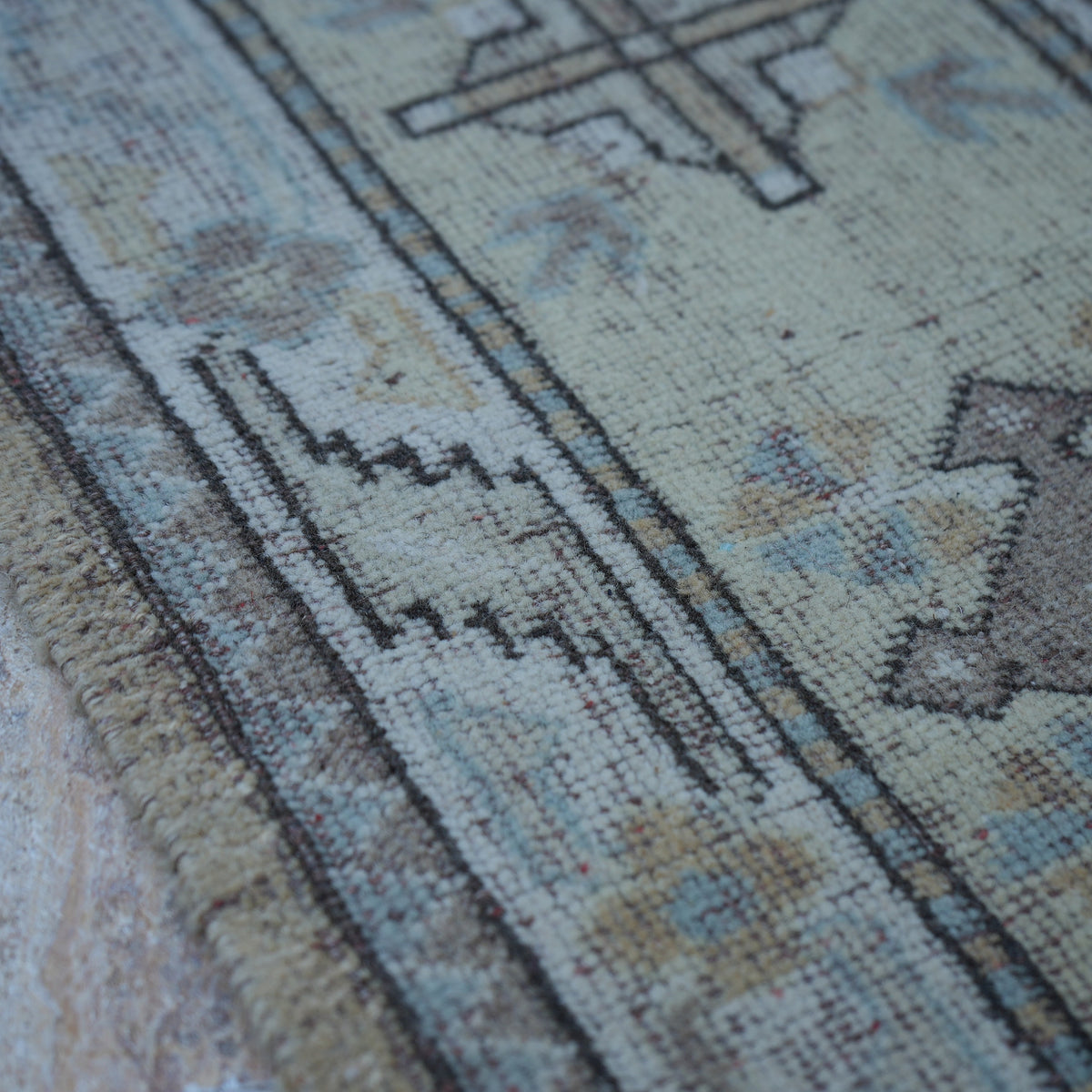
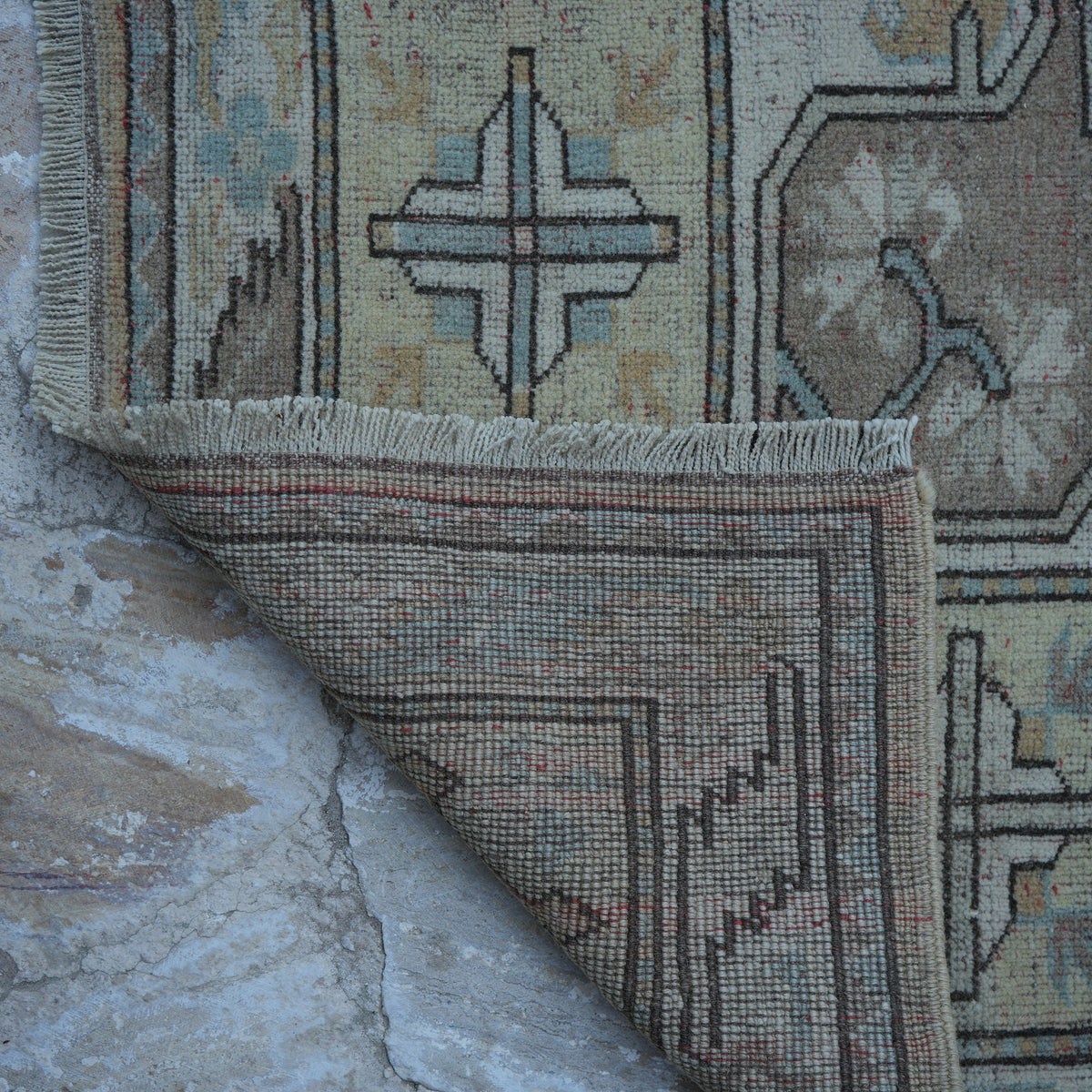
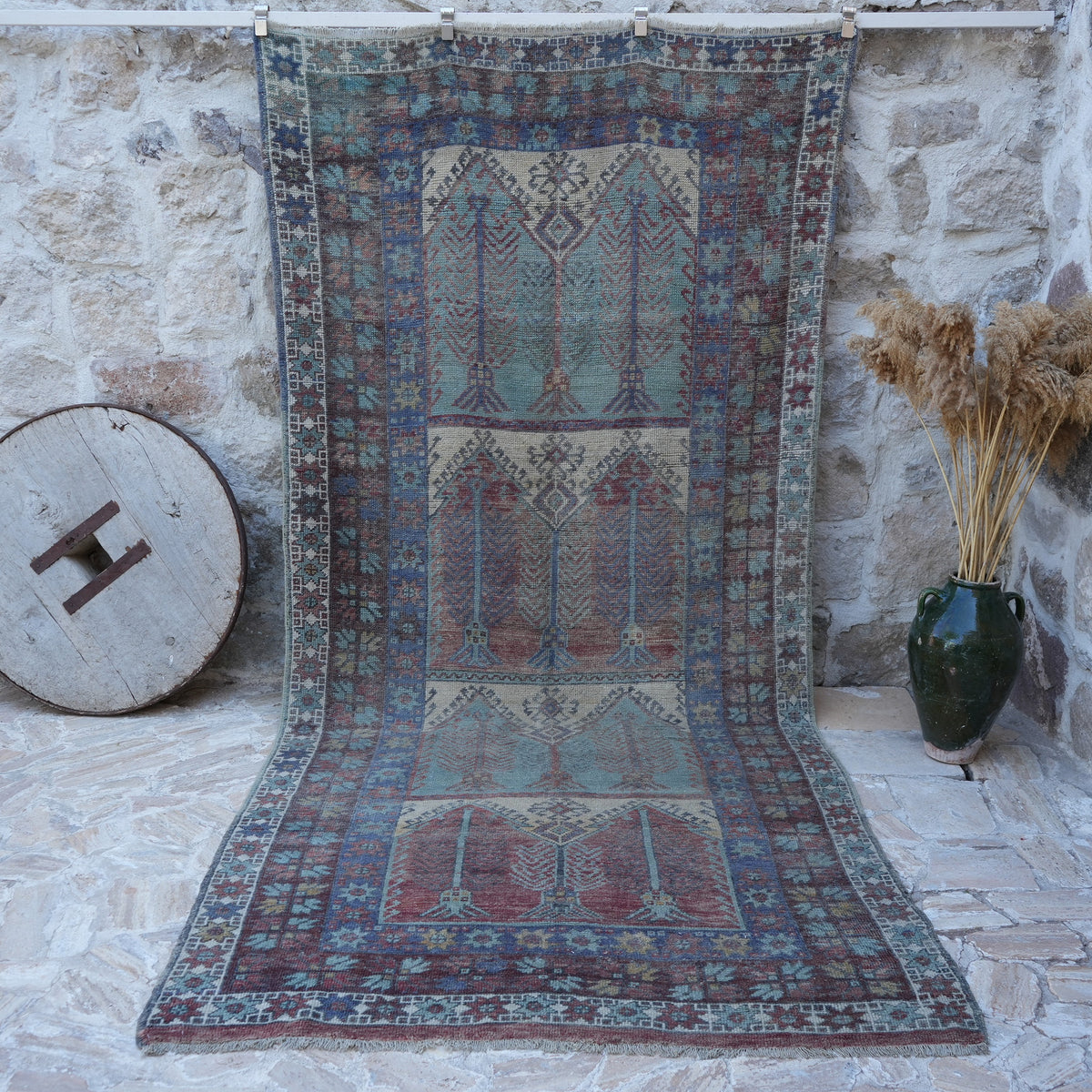
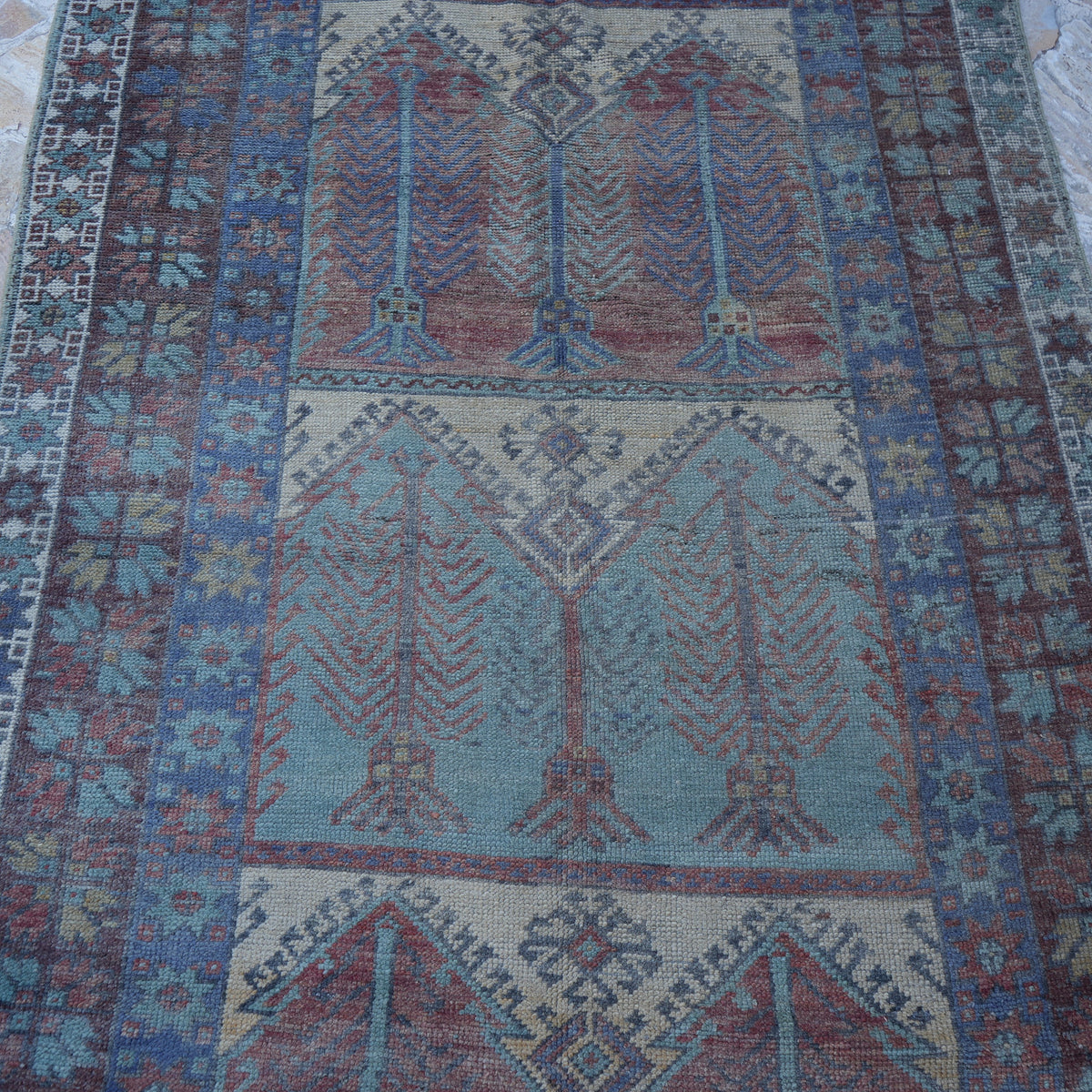
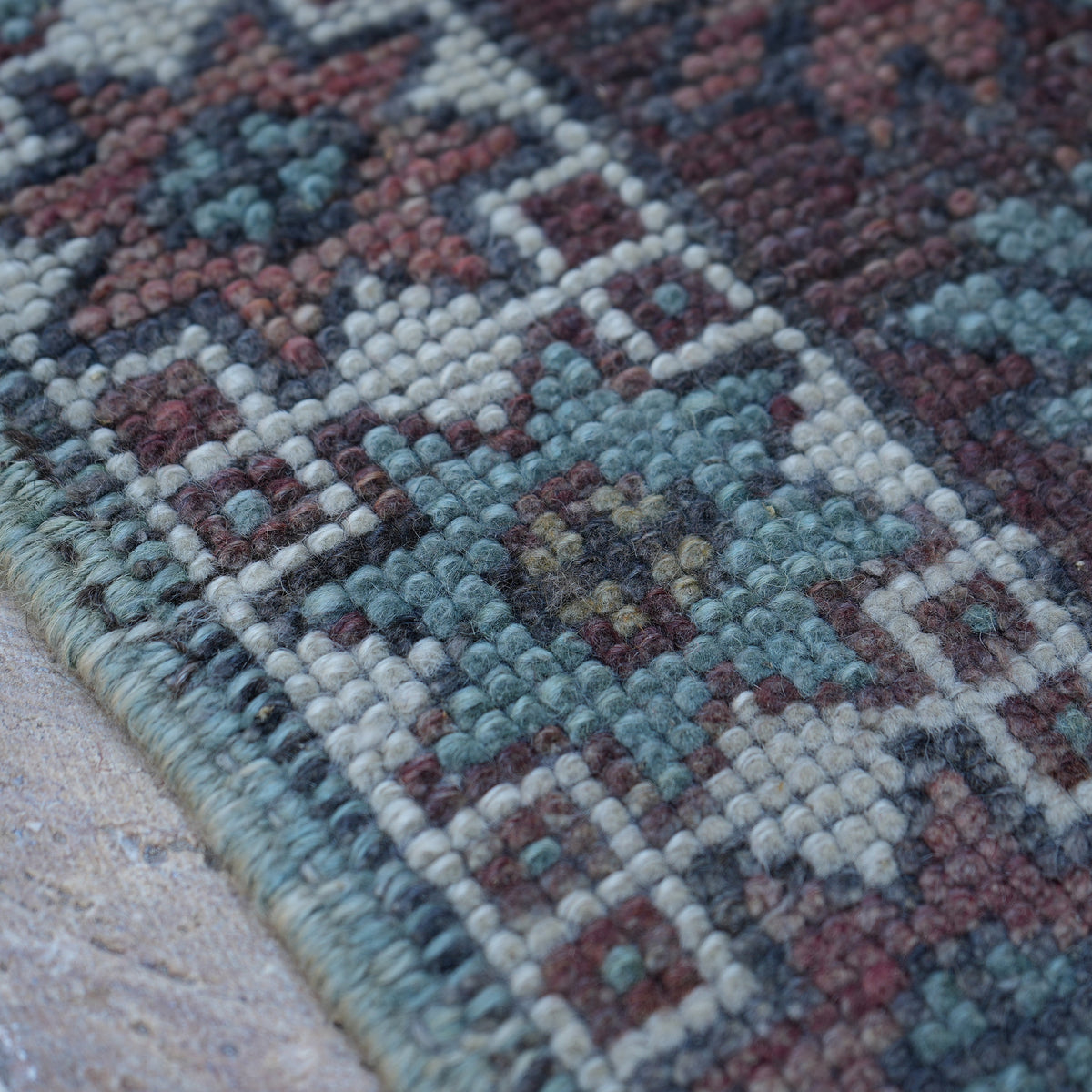
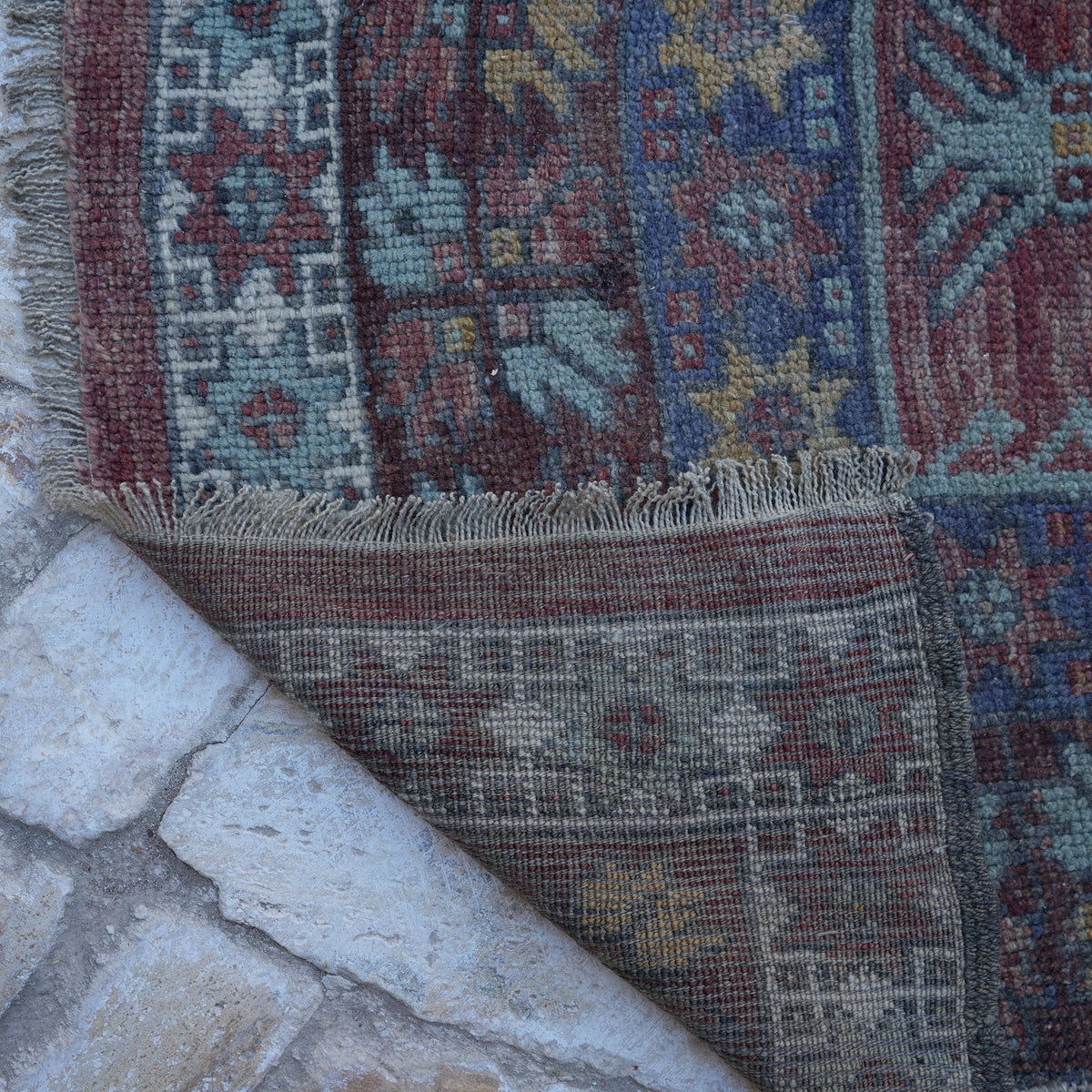
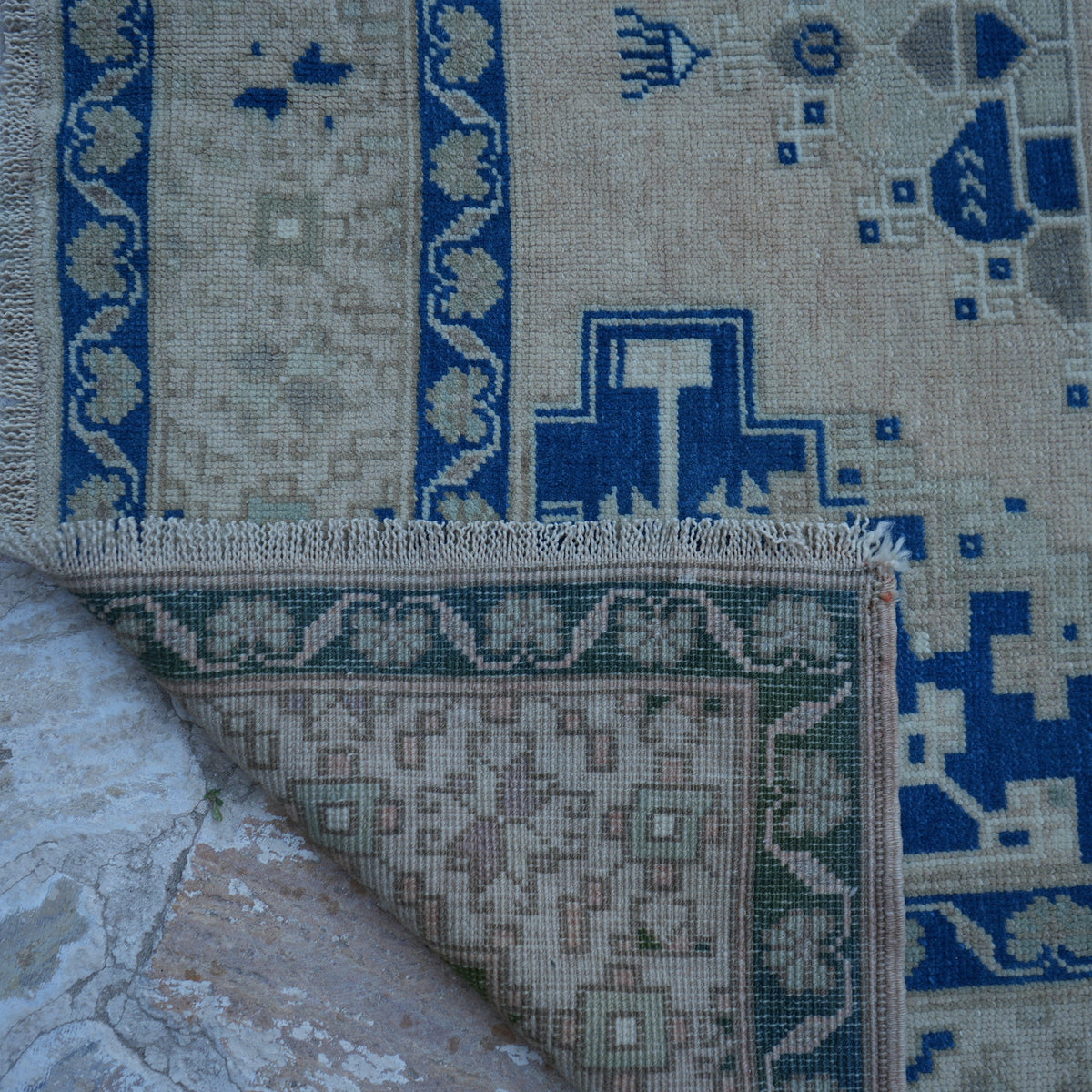
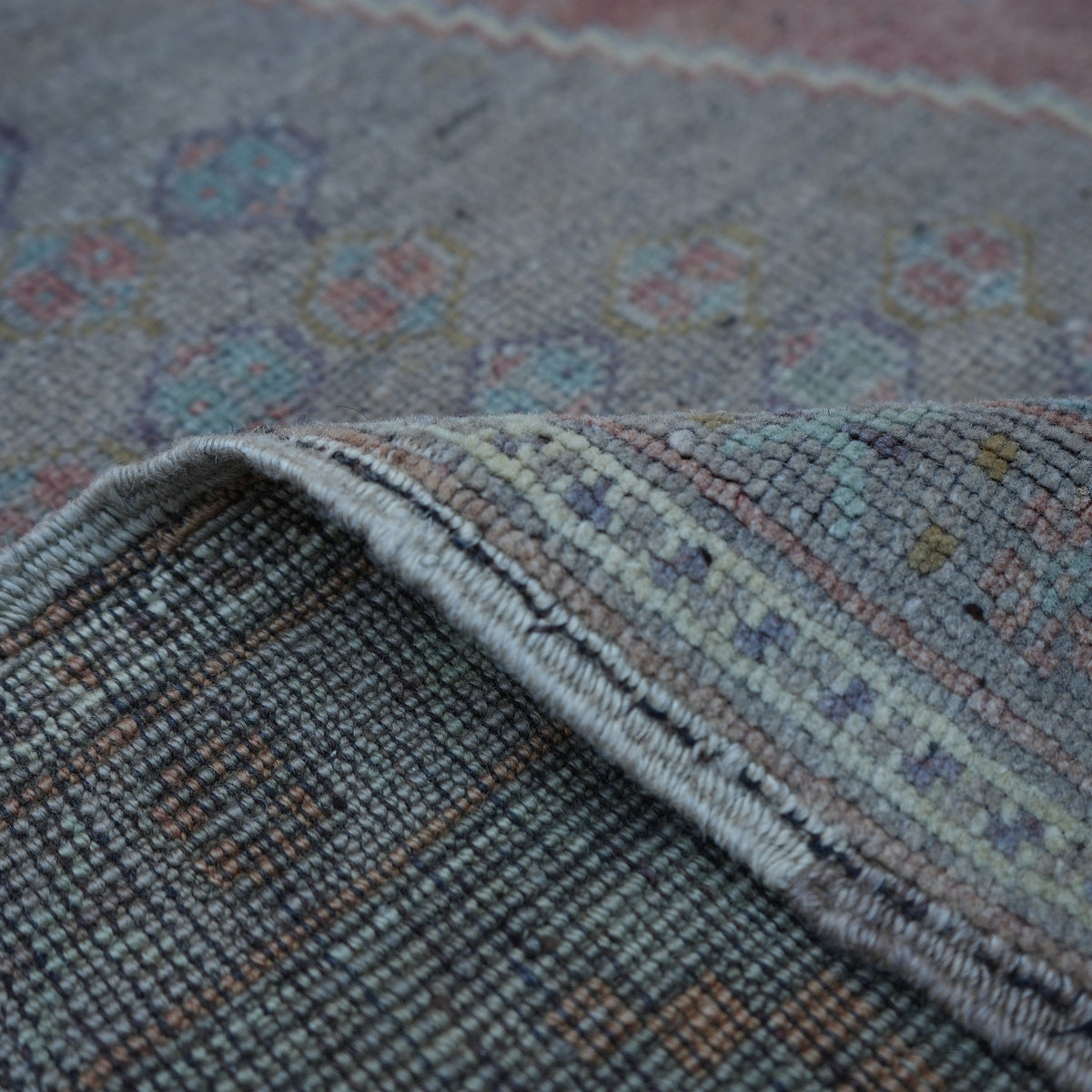
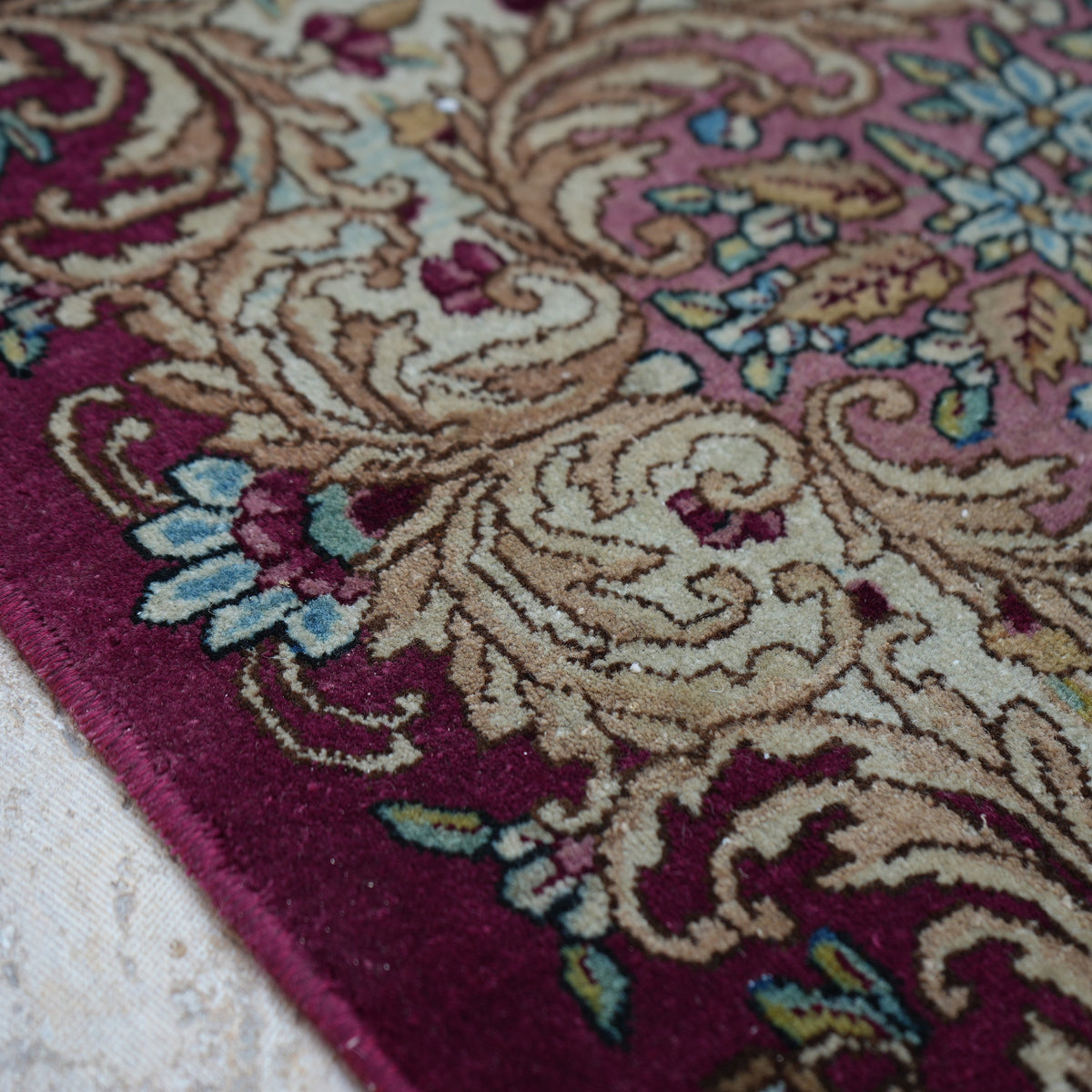
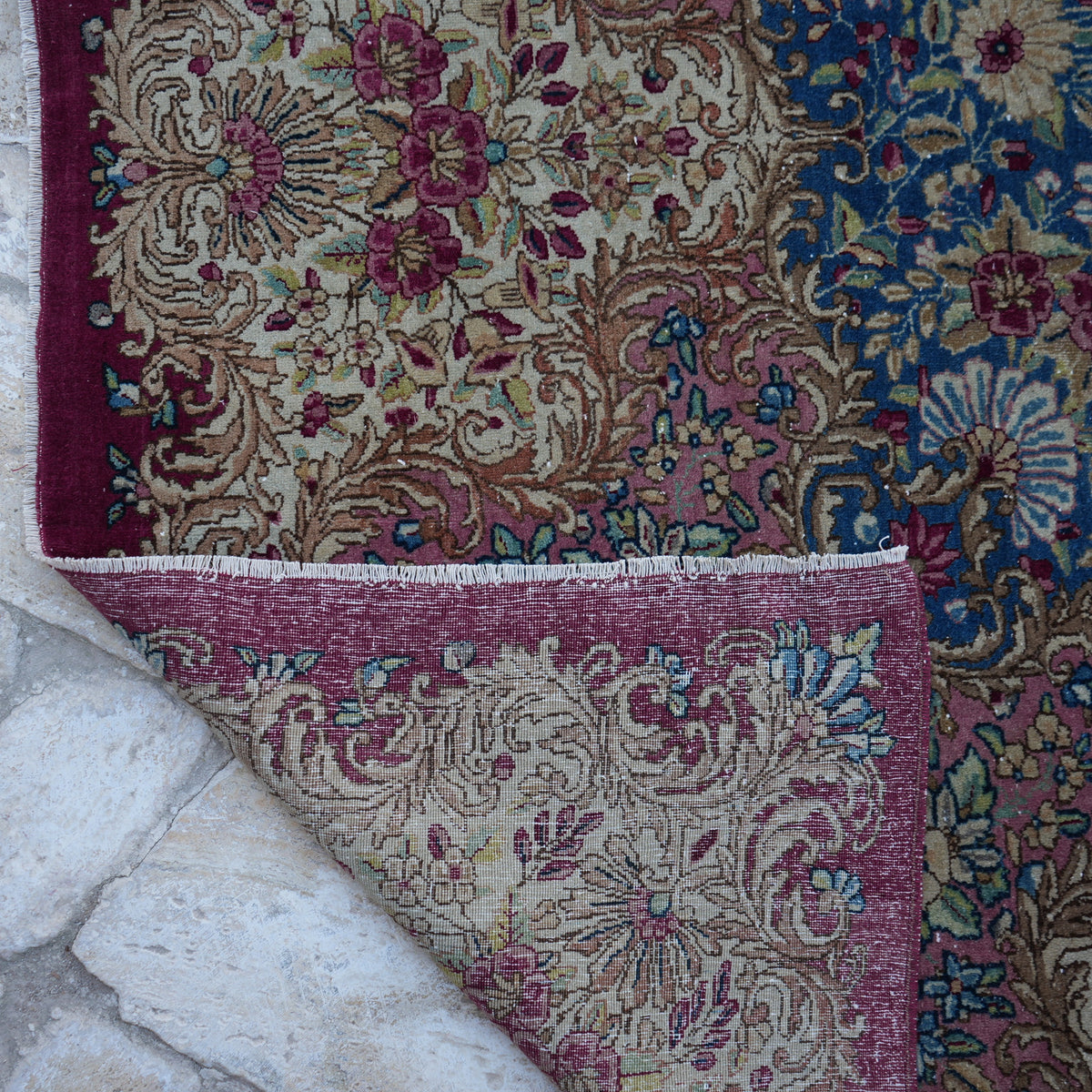
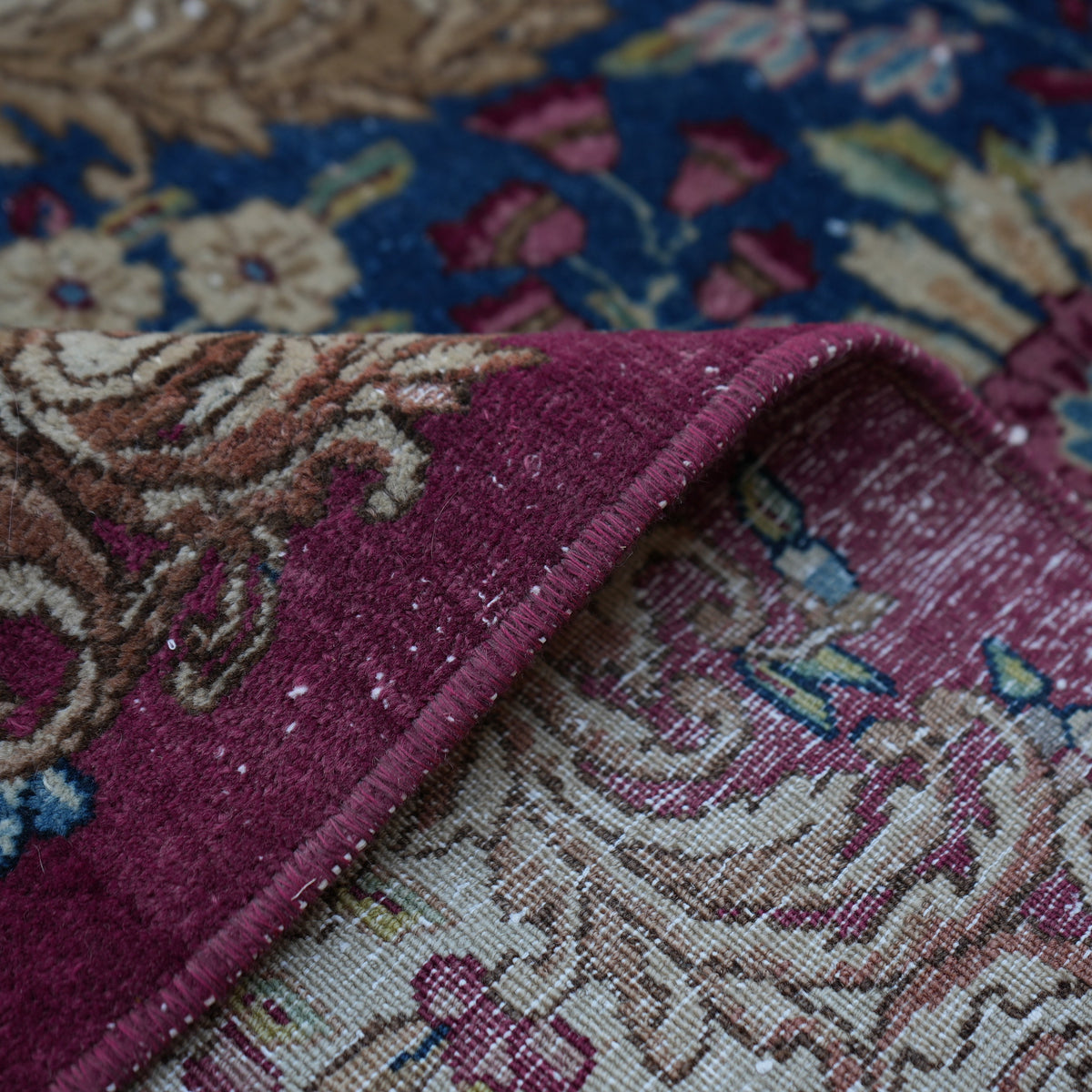
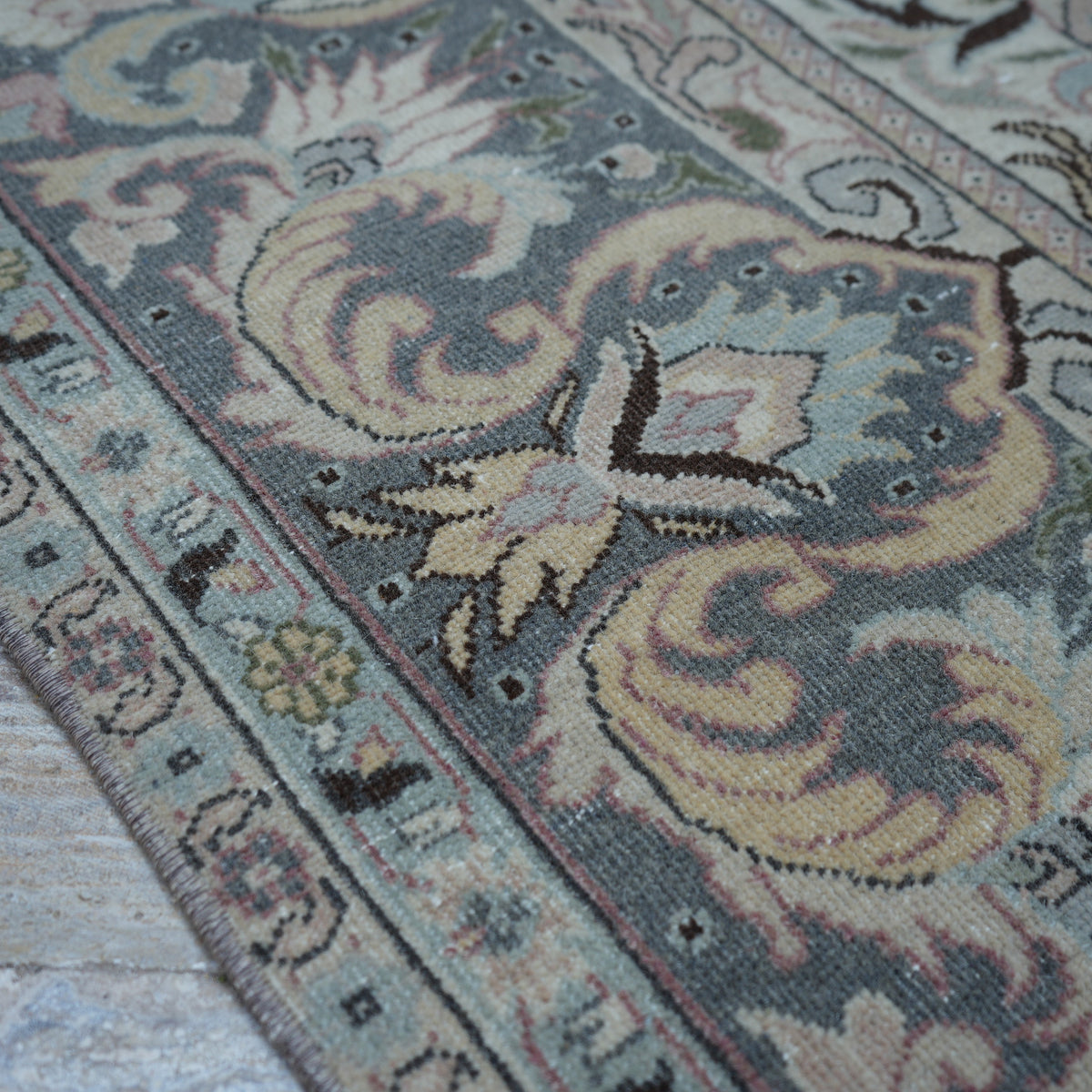
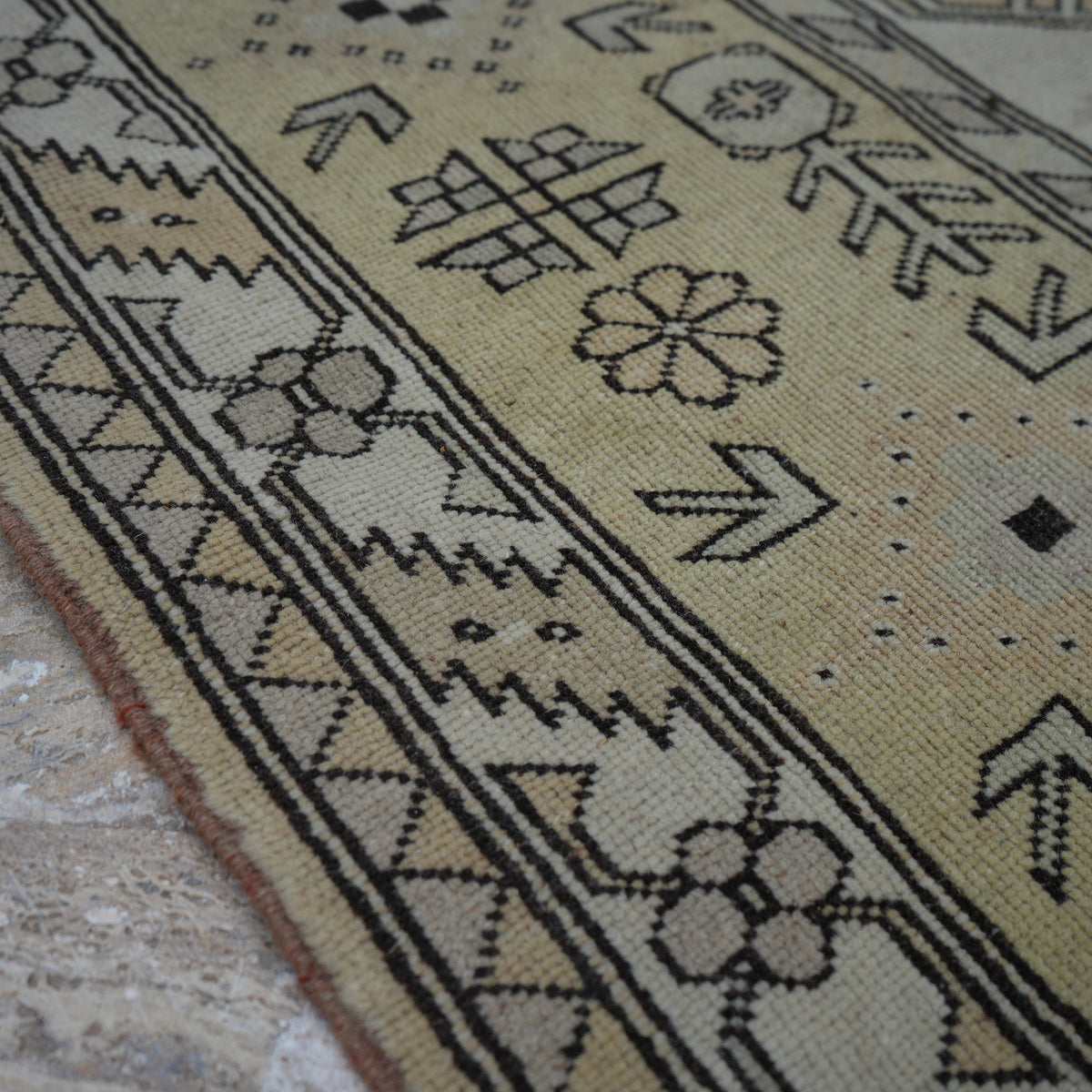
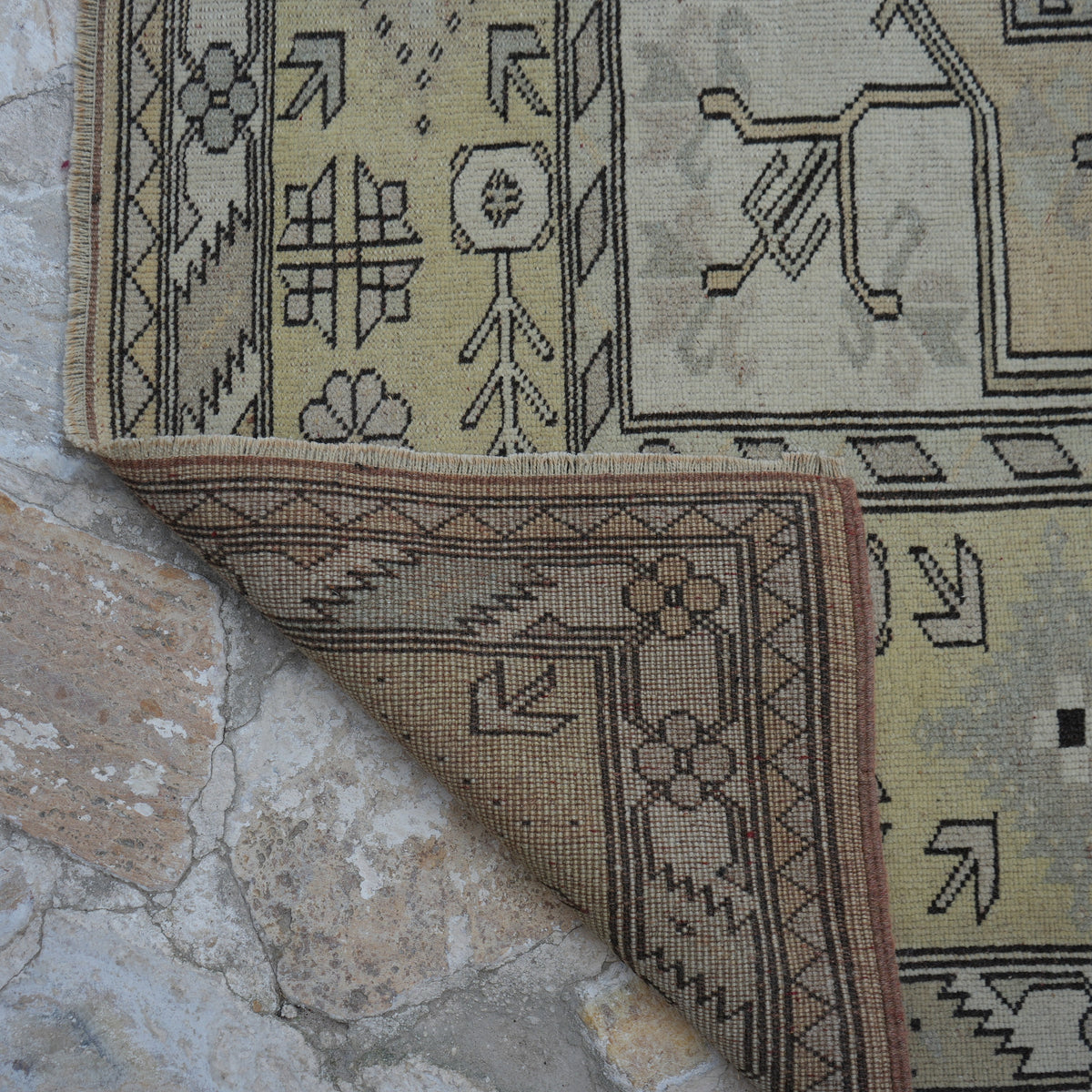
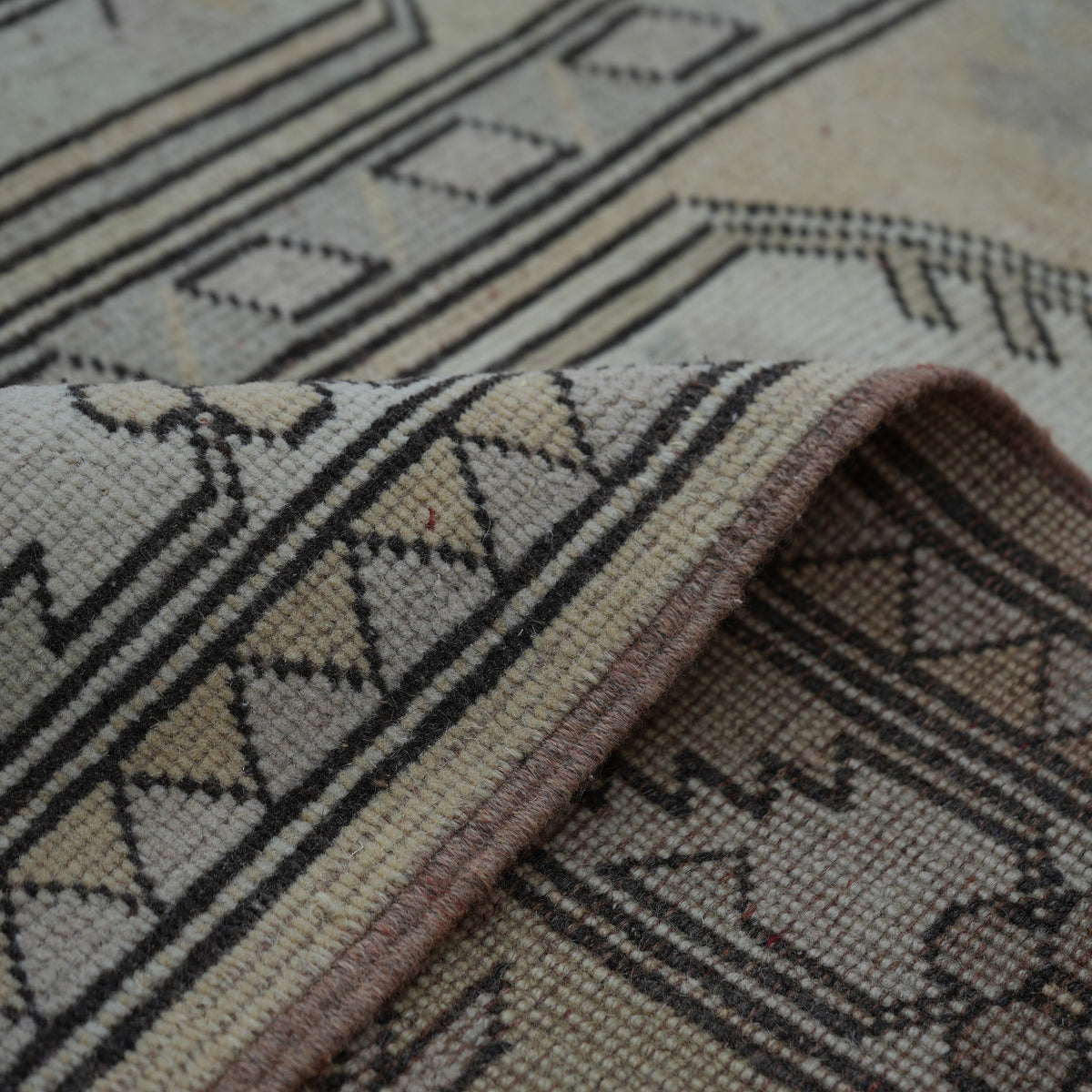
The natural oils in wool help slow absorption, which gives you more time to blot a spill before it settles. I had a customer with two dogs who was nervous about ordering a handwoven Anatolian piece. A year later she wrote back — the rug still looked exactly right. The dogs had slept on it, played on it. Nothing had set in. A vintage wool rug has already survived decades of use before it reaches anyone's home. It has already proved what it's made of. Our vintage Turkish rugs carry that history with them.
Kilim flatweaves: easy care, great for layering
A kilim's flat weave means no pile to trap debris — easier to shake out, easier to spot clean. For families with young children or heavy daily foot traffic, that simplicity matters. Our kilim collection is worth looking at if low maintenance is a priority without sacrificing character.
Oushak rugs: soft pile, neutral tones, pairs with any sectional
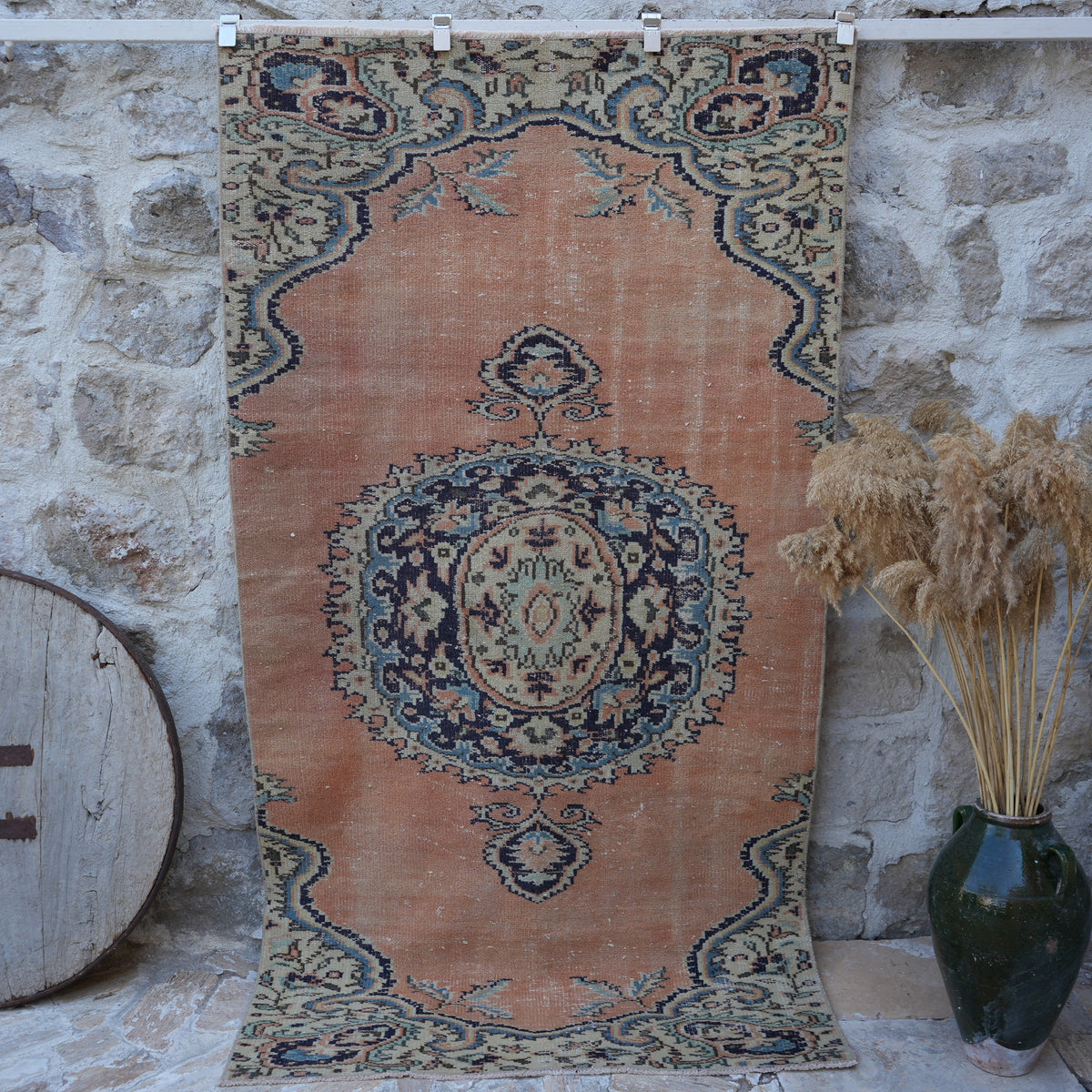
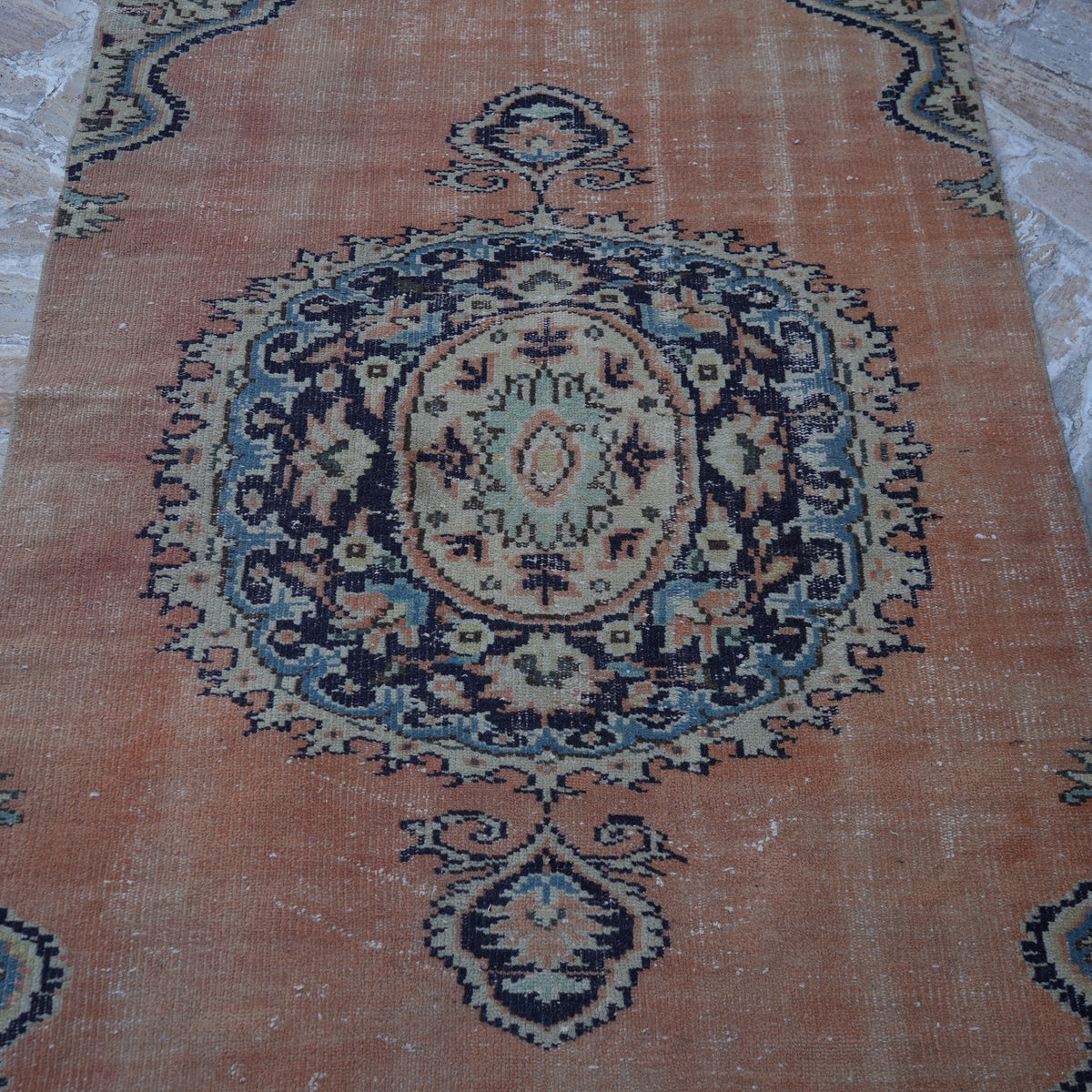
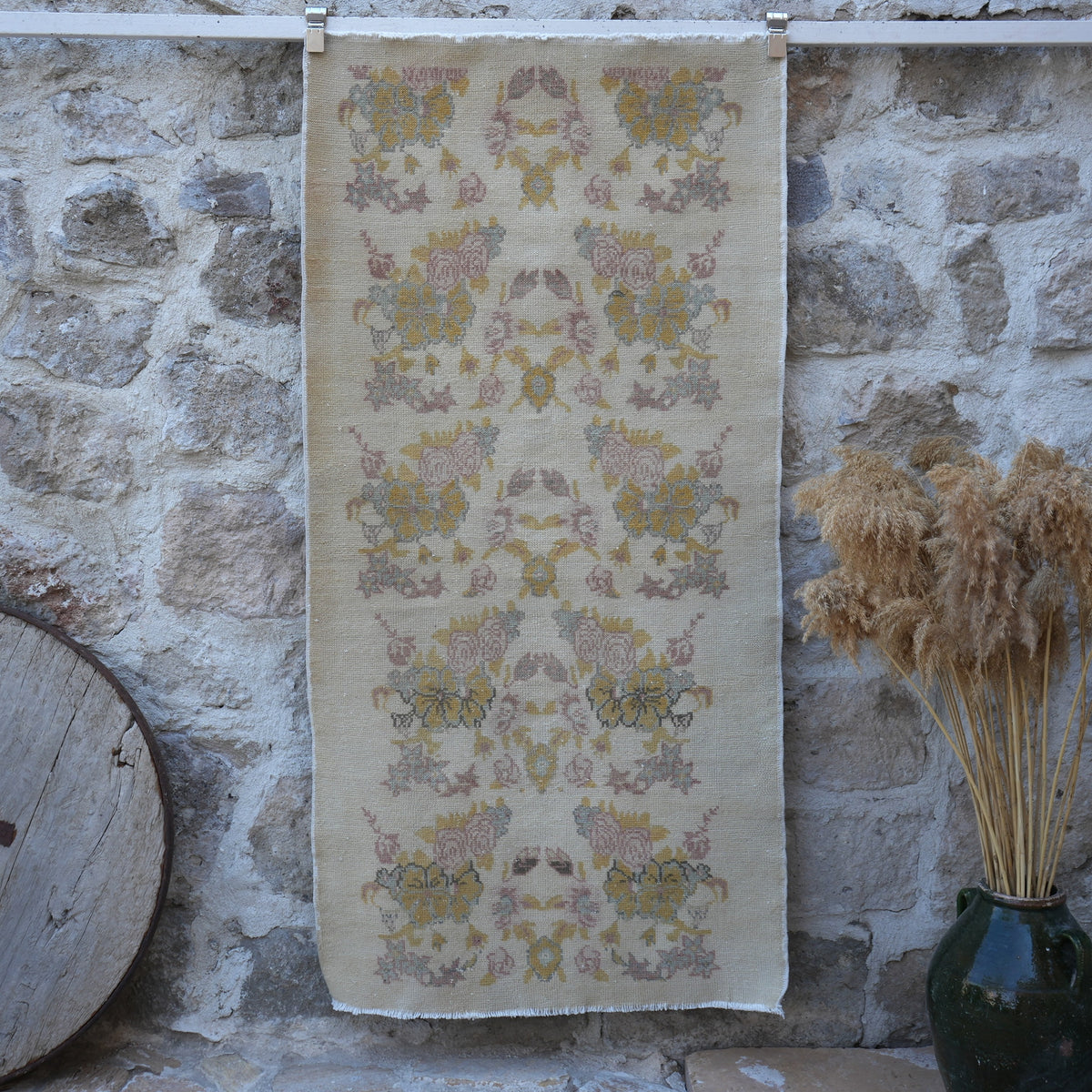
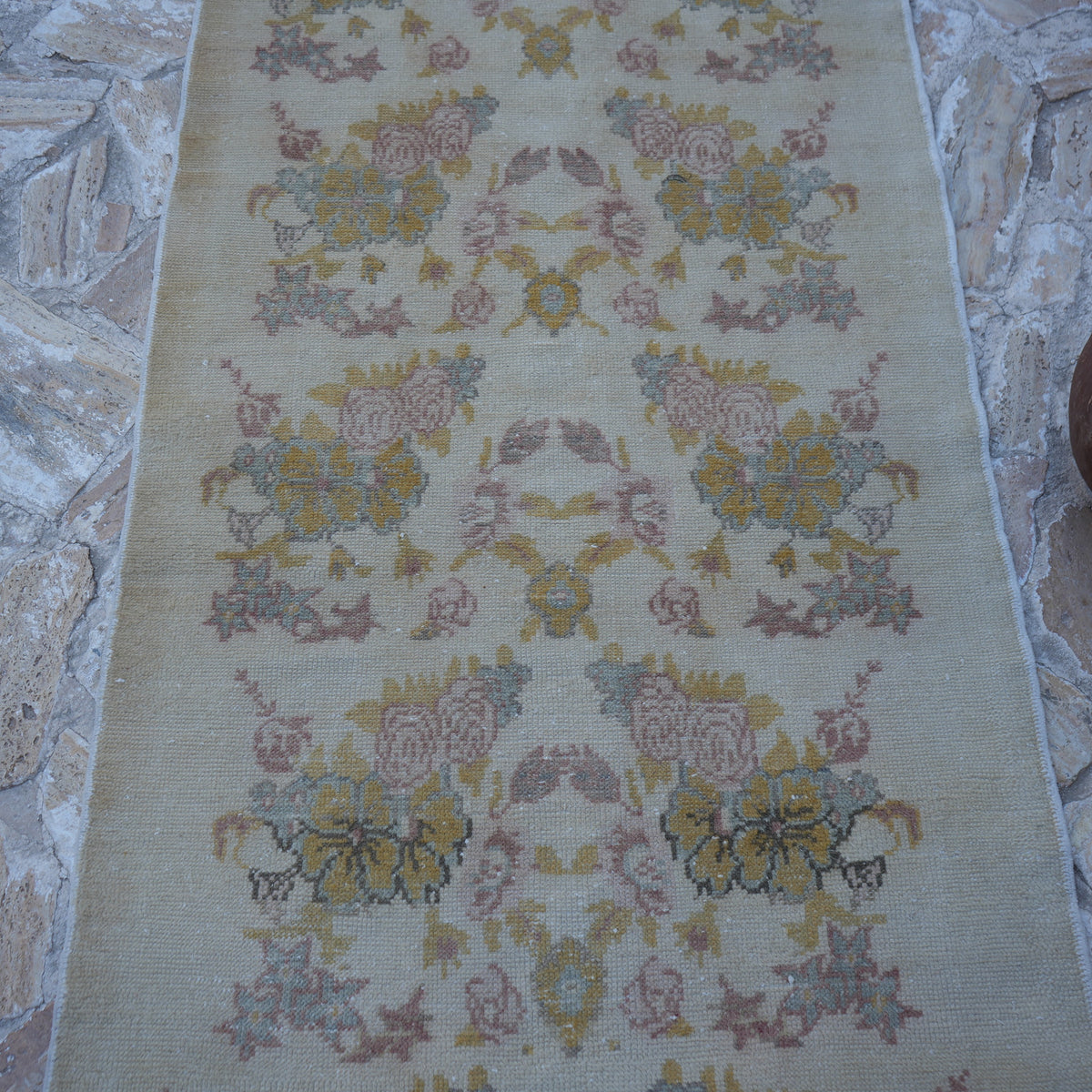
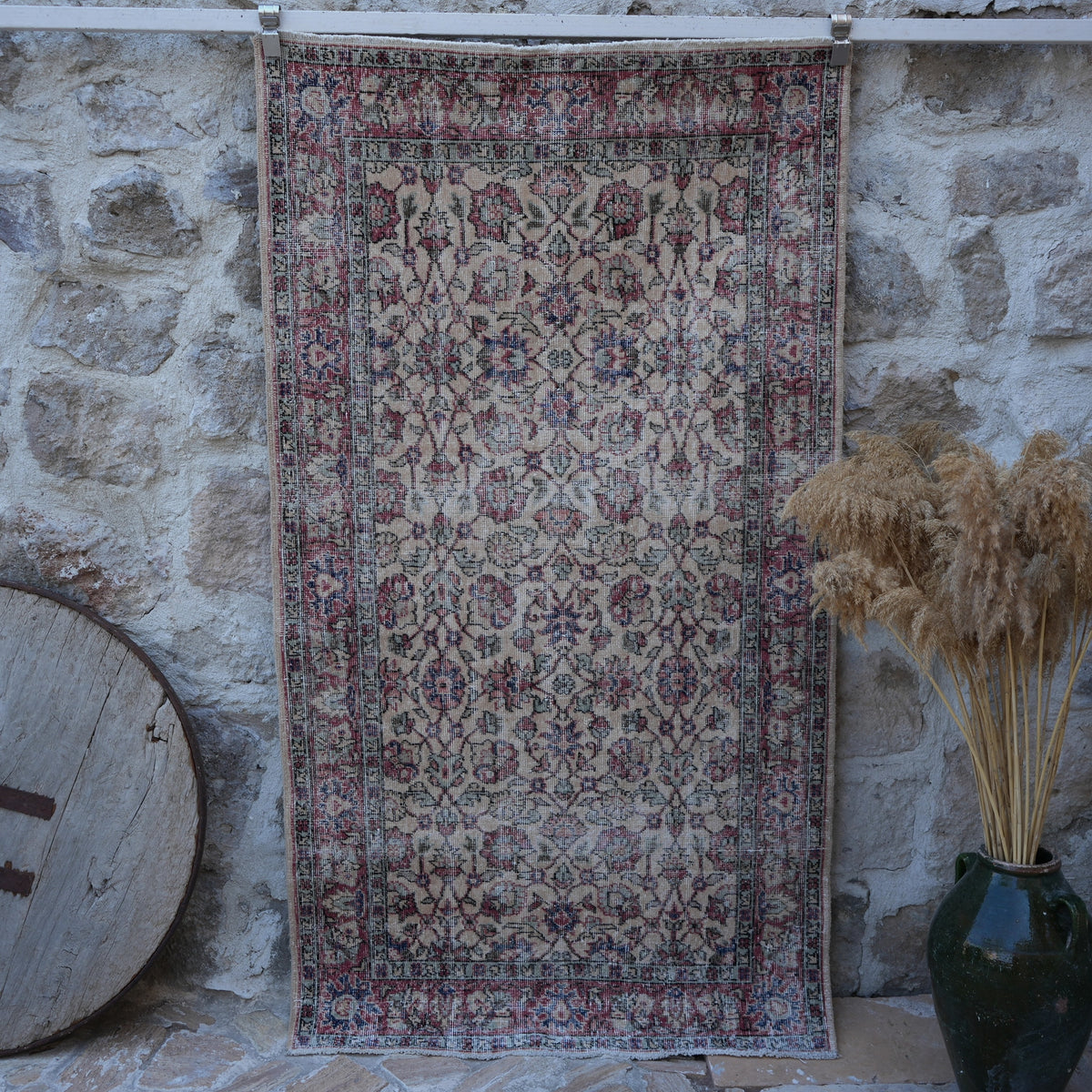
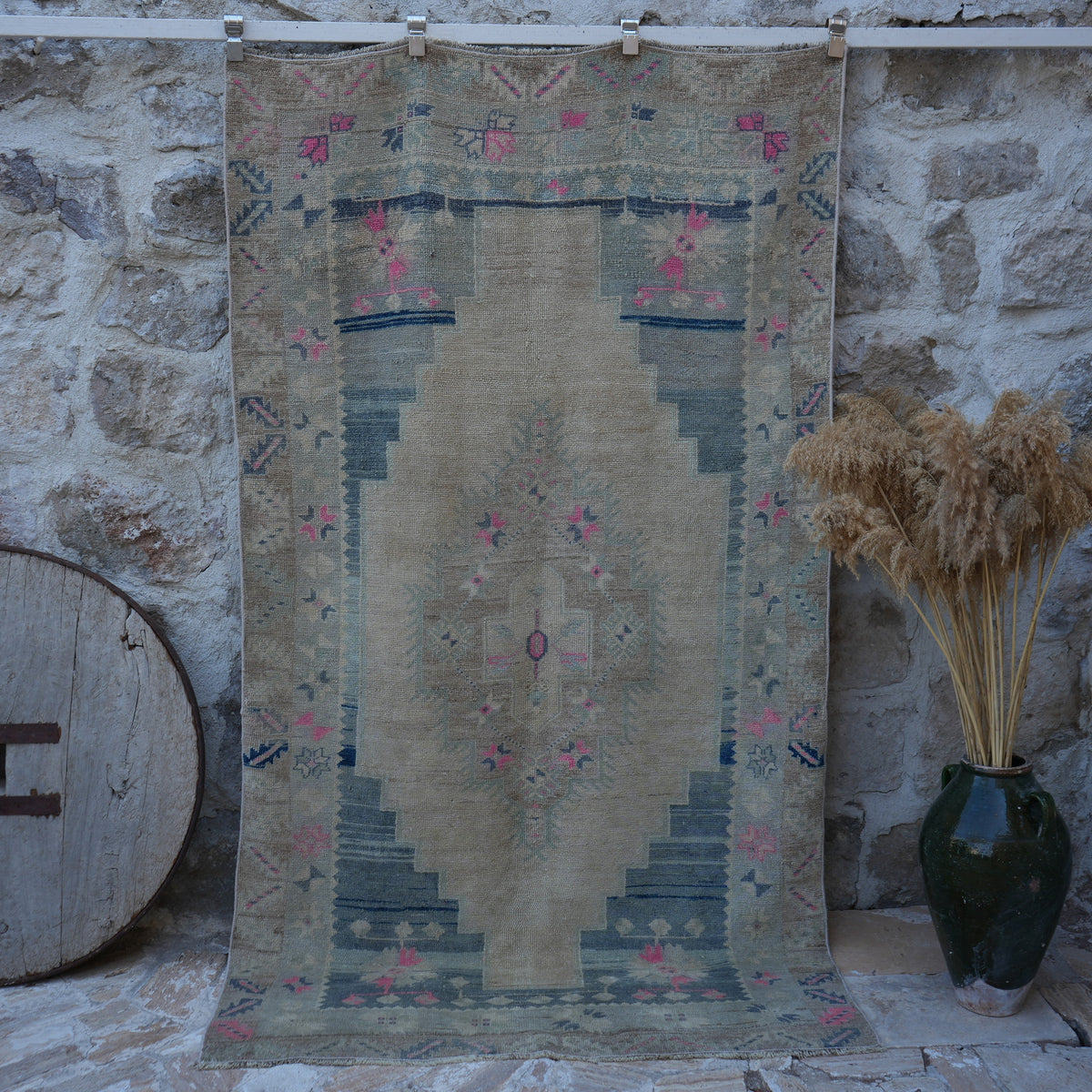
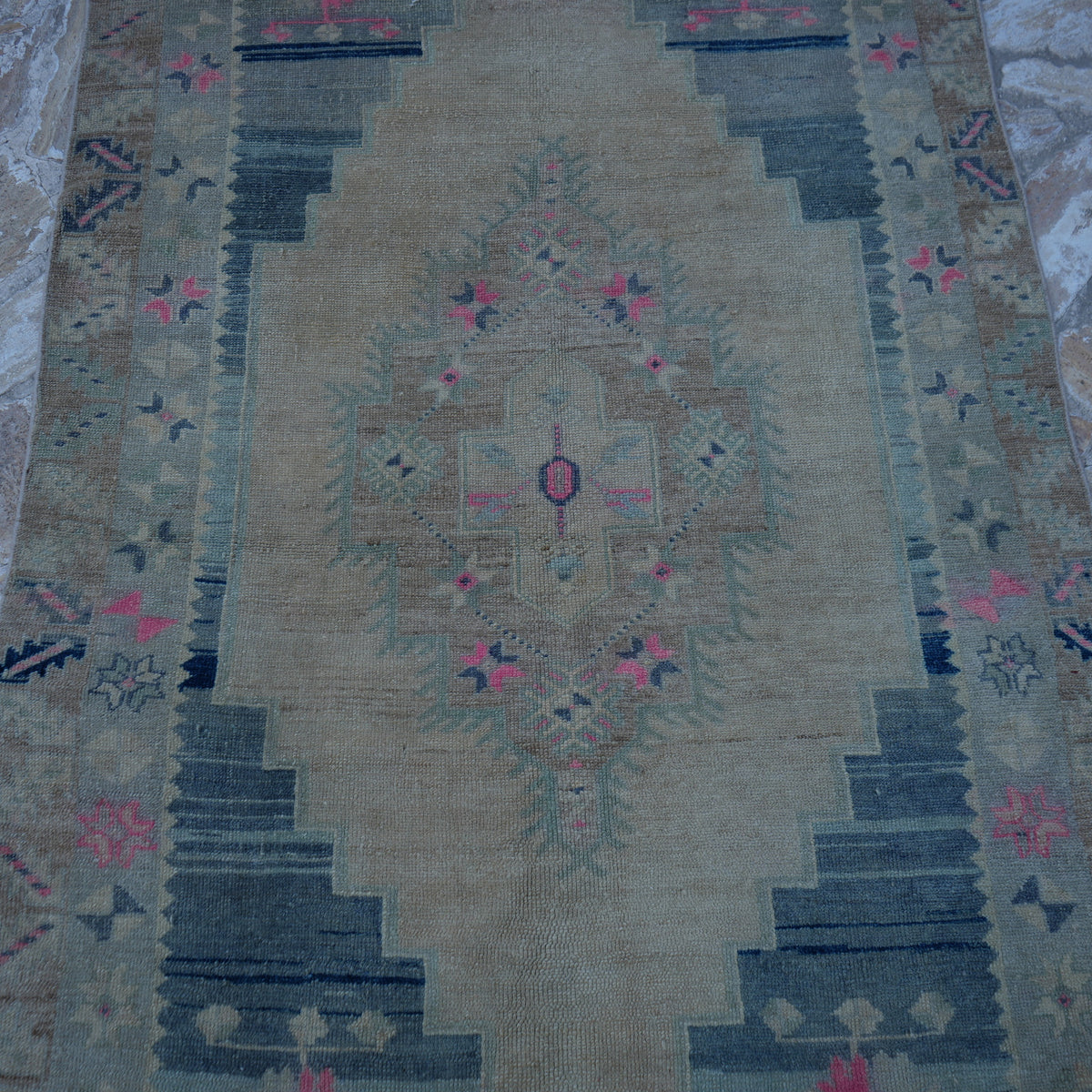
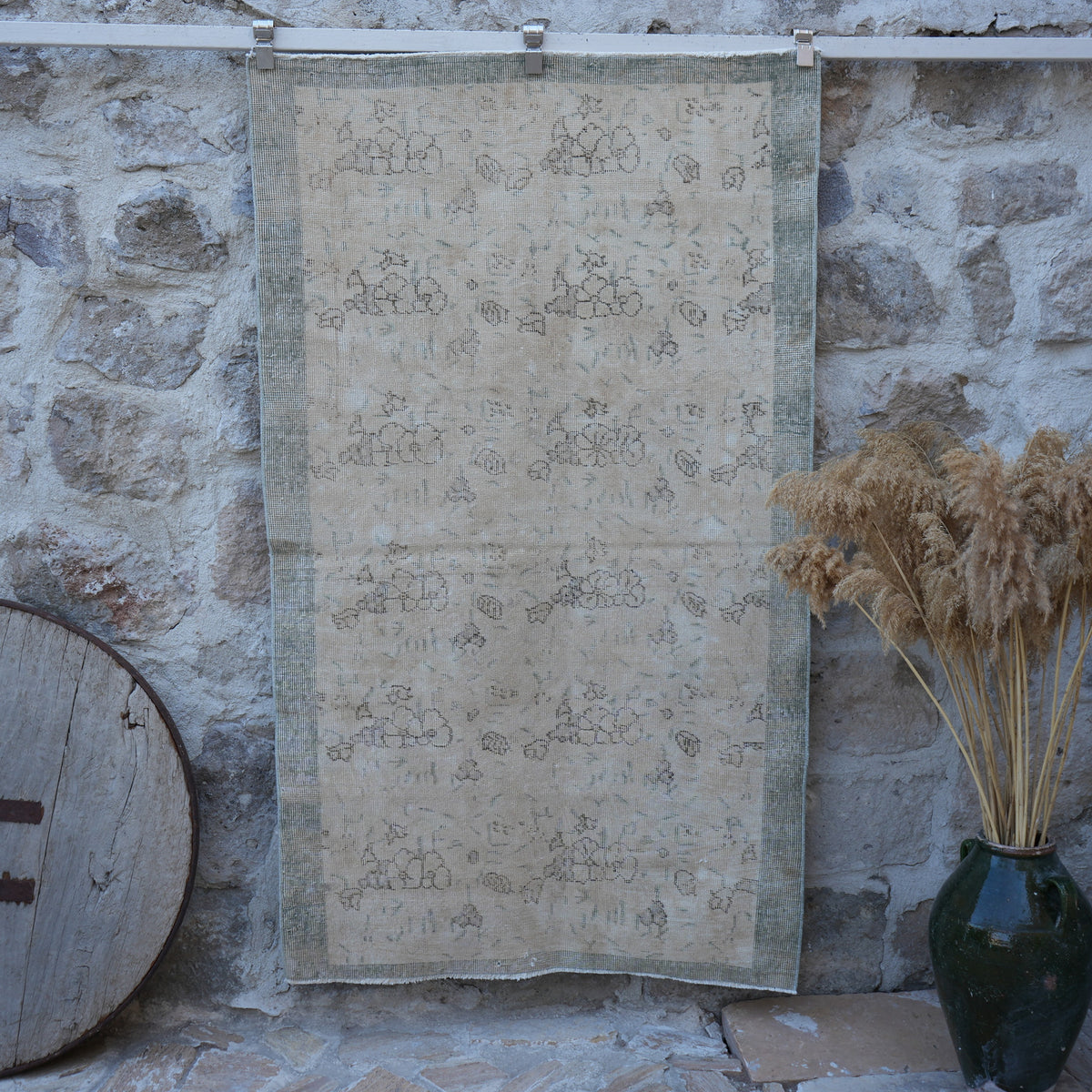
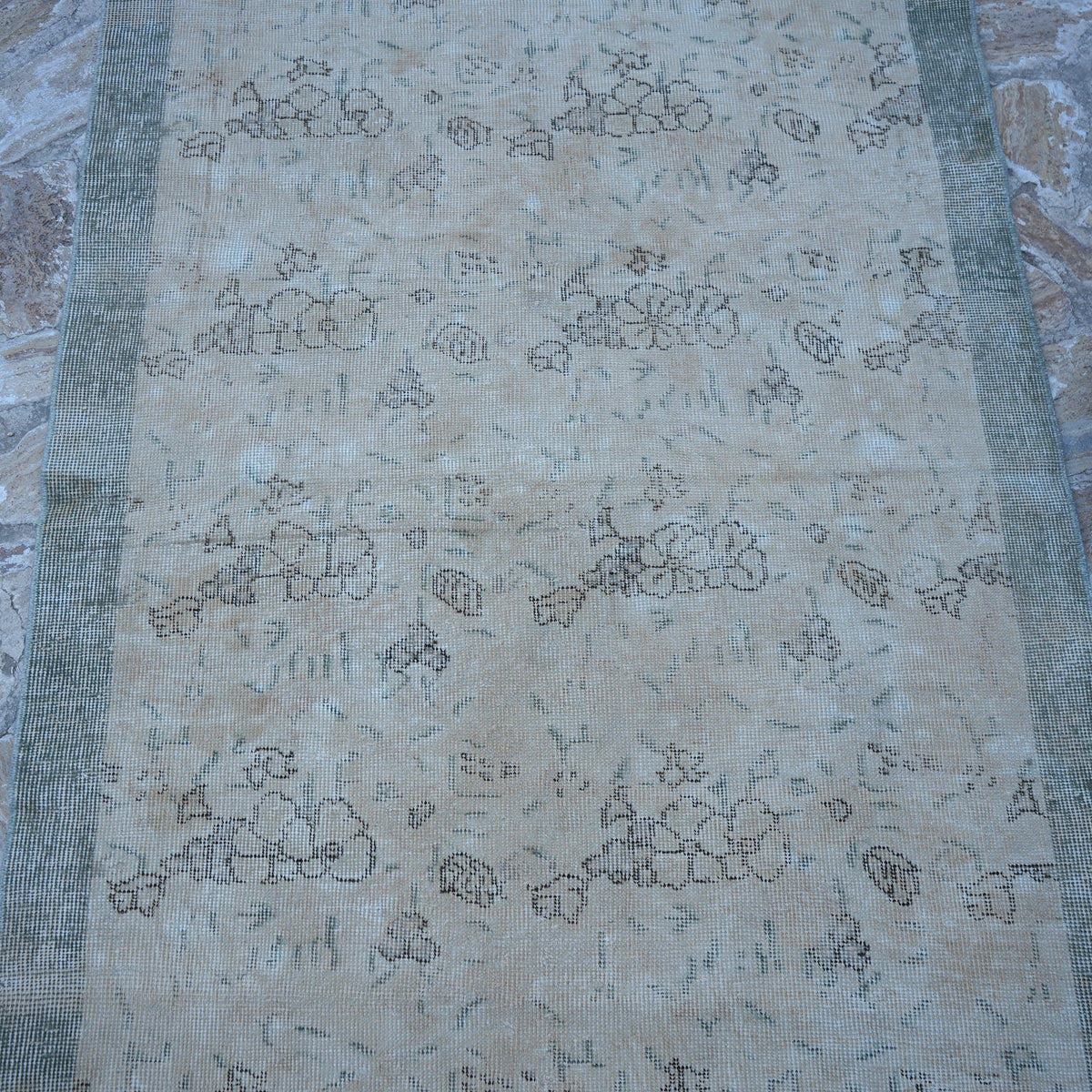
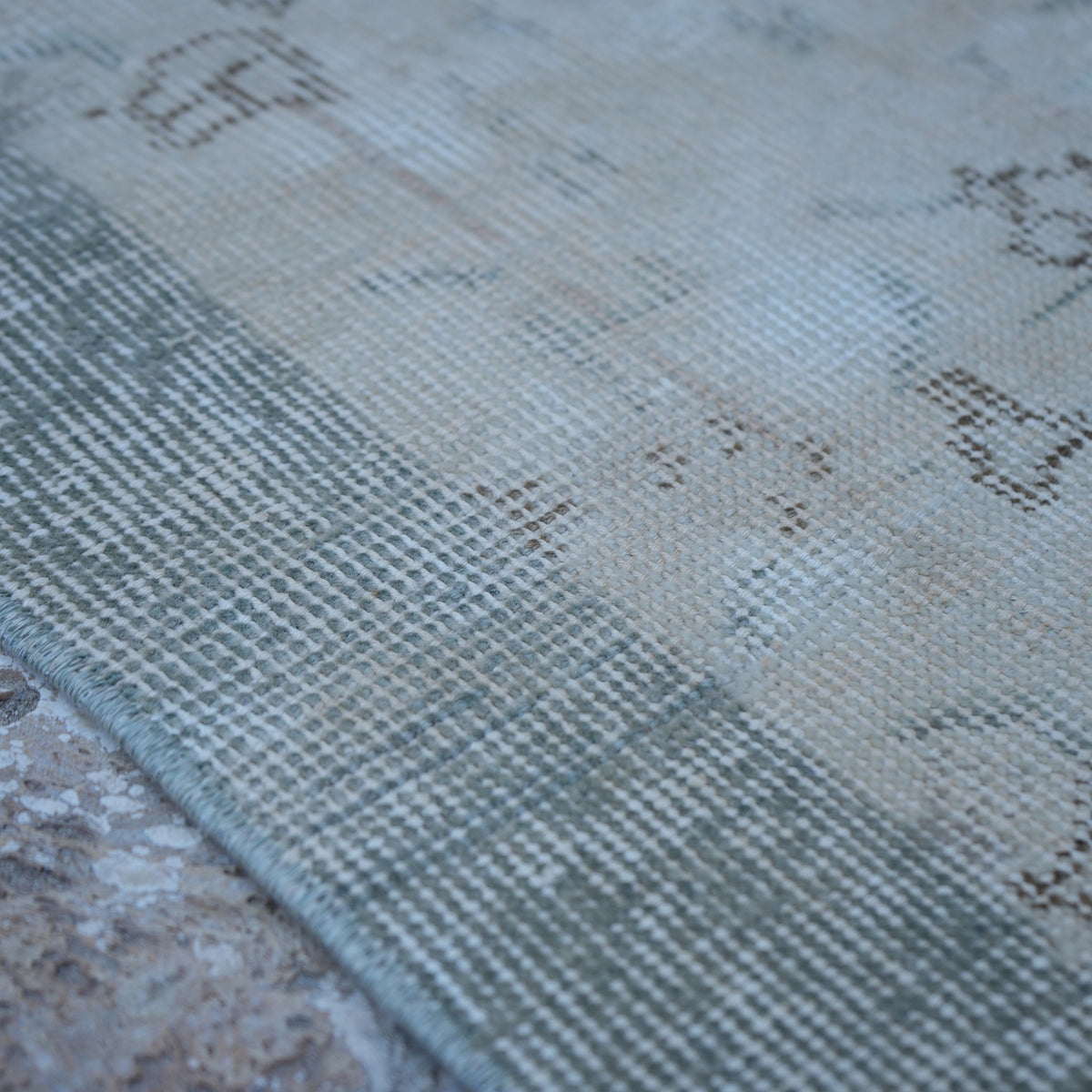
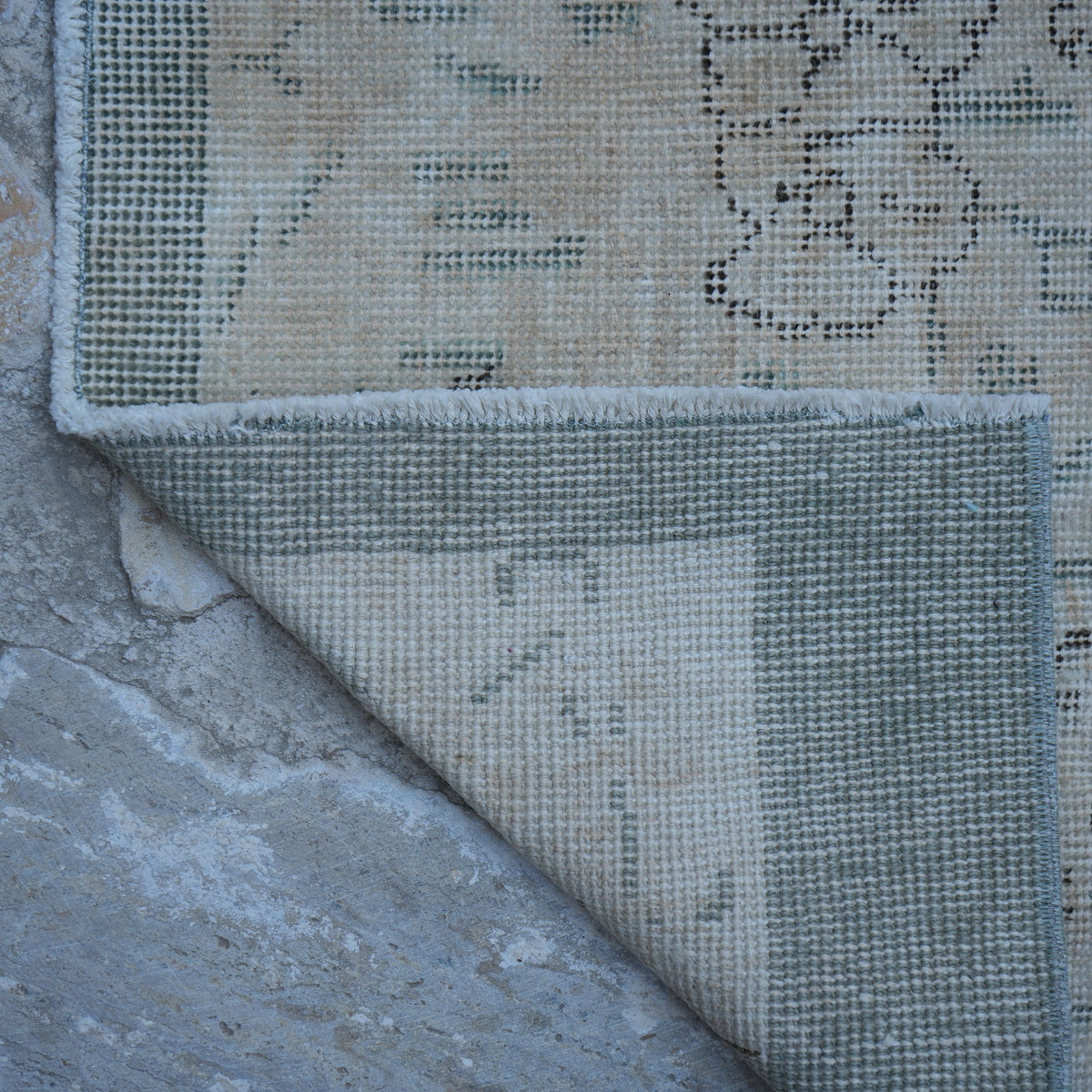
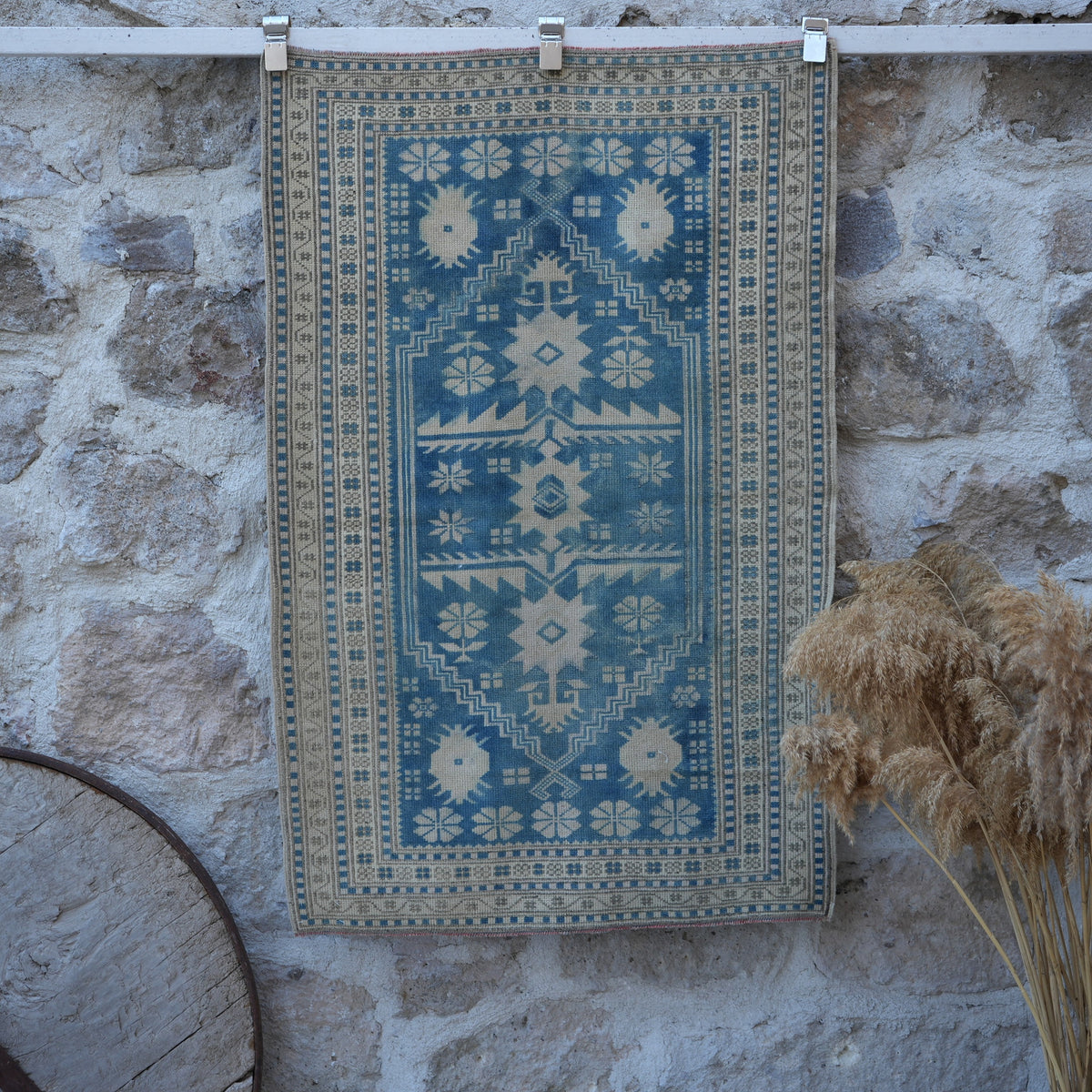
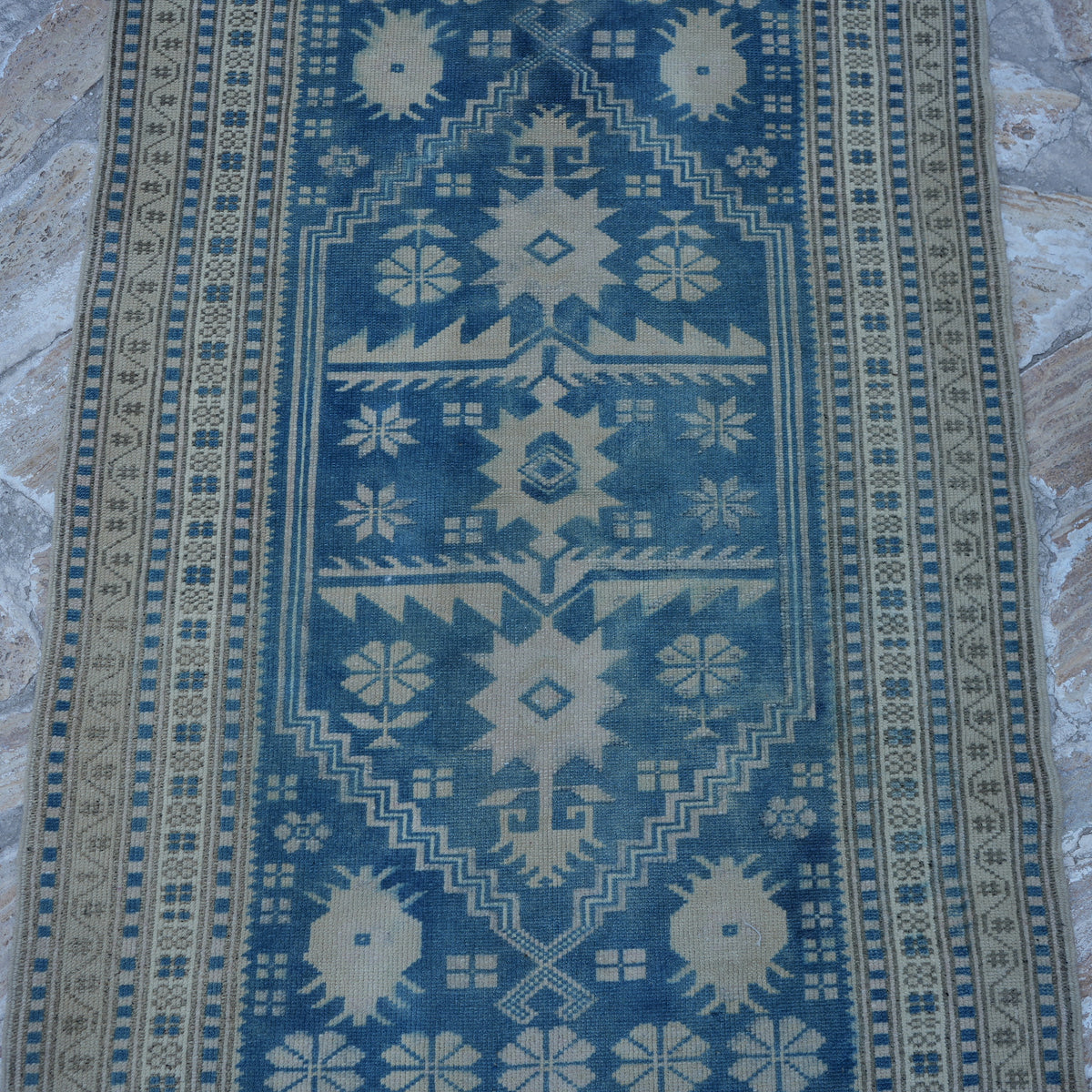
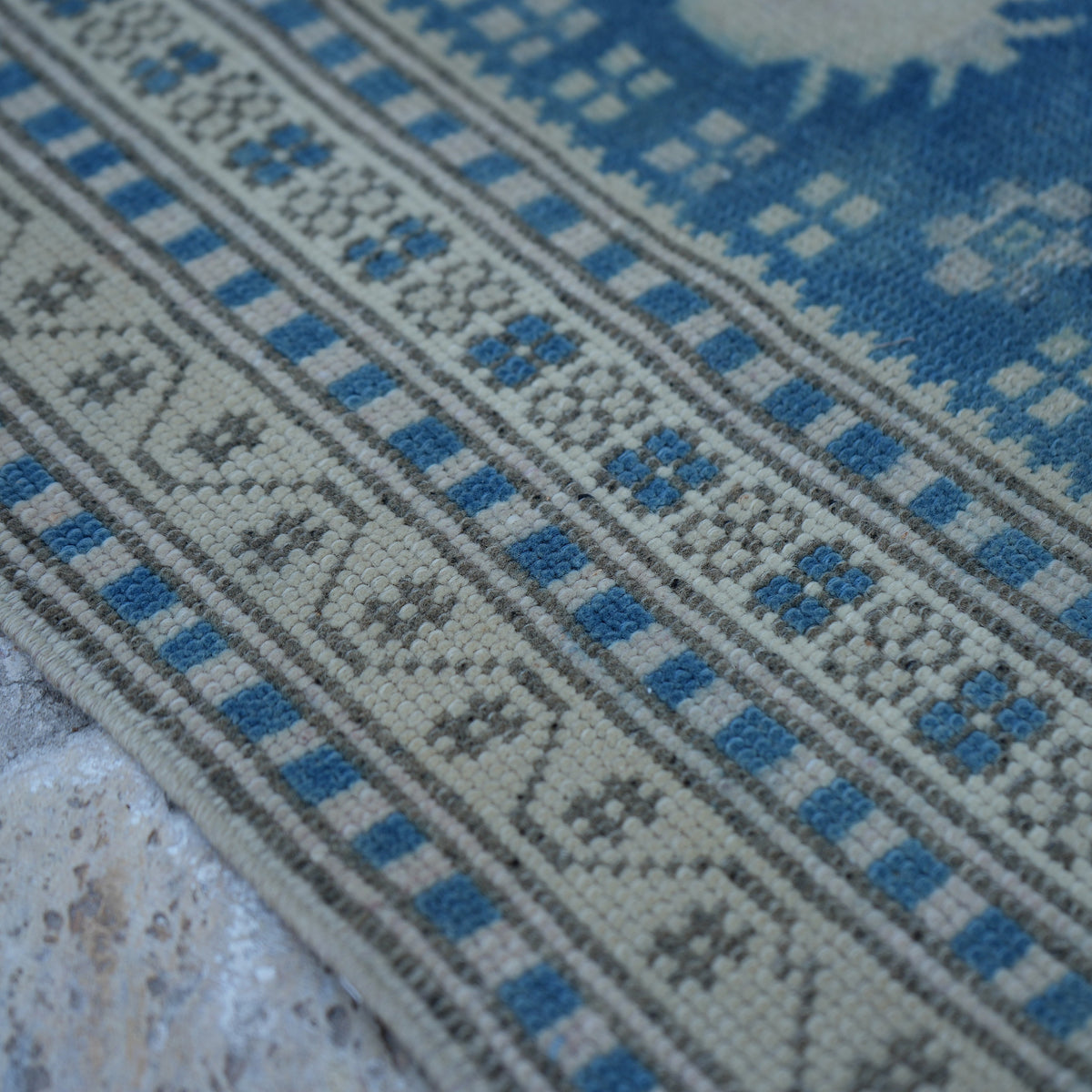
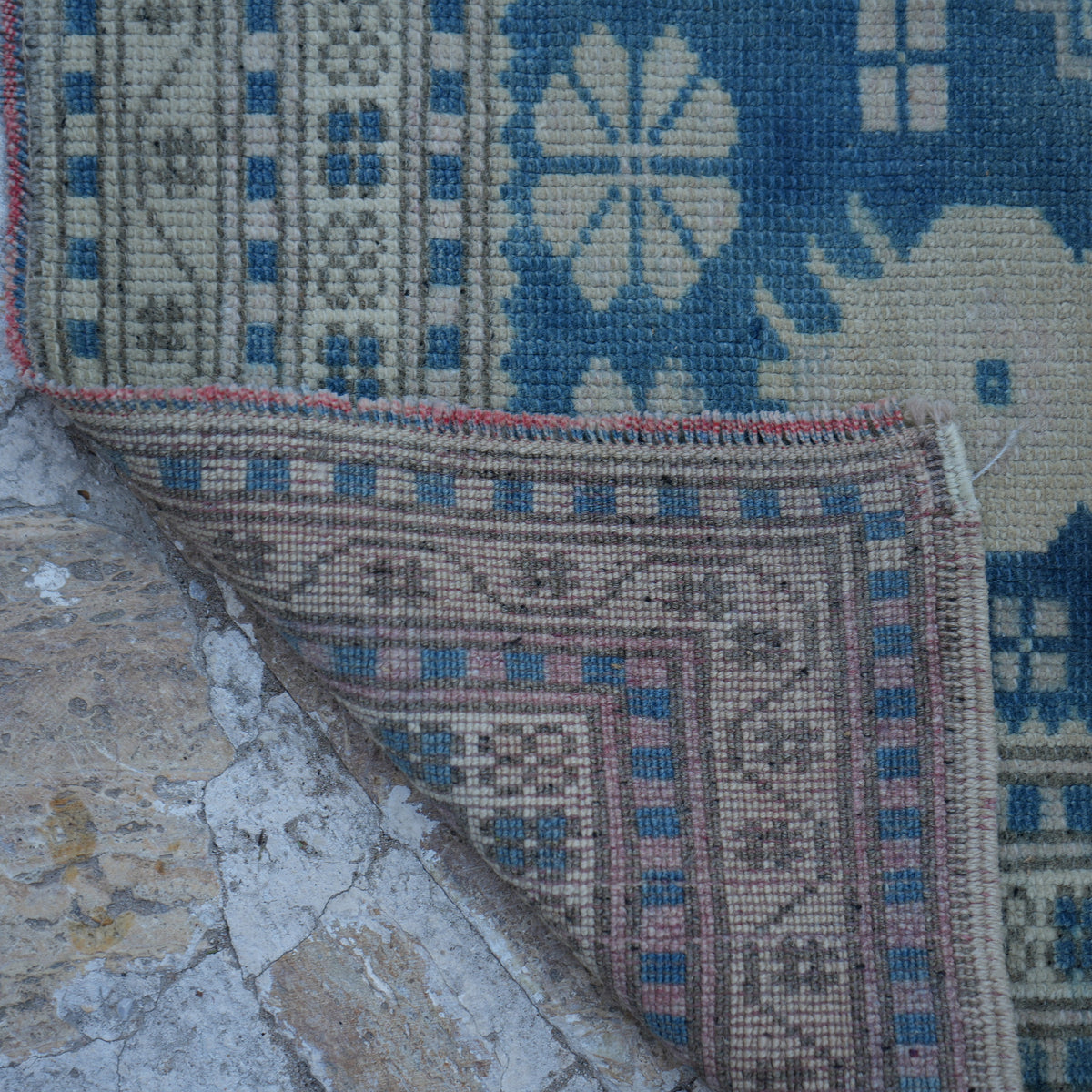
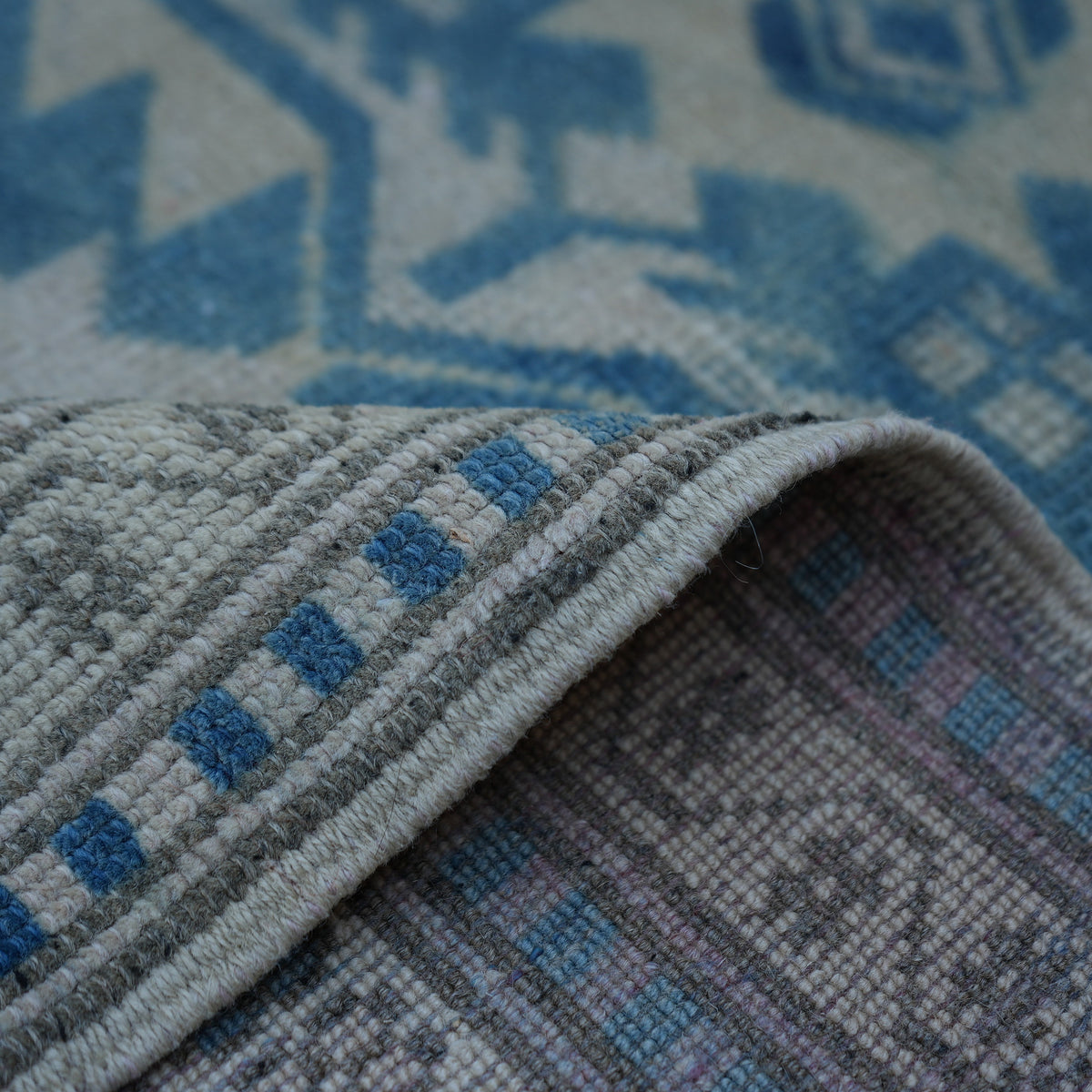
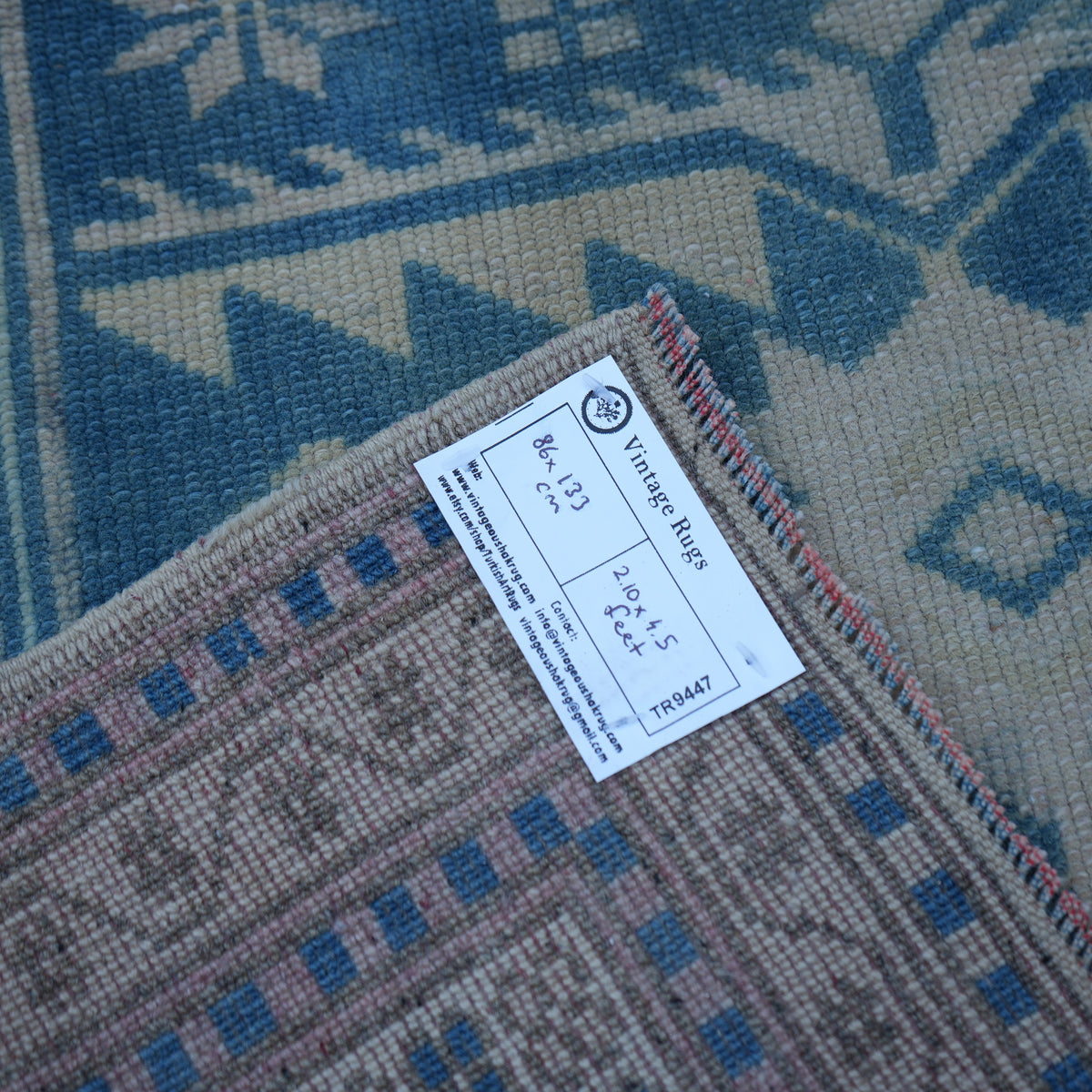
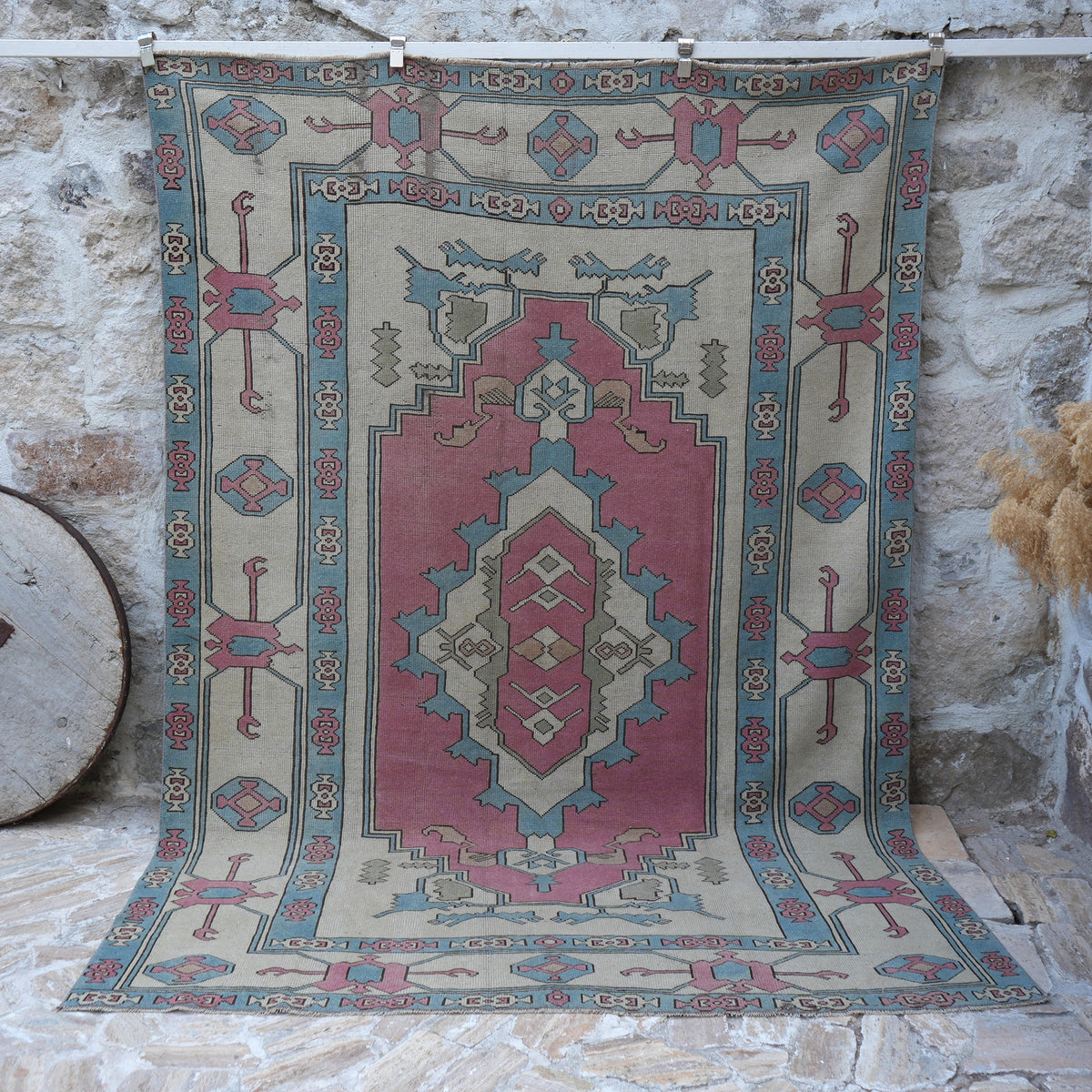
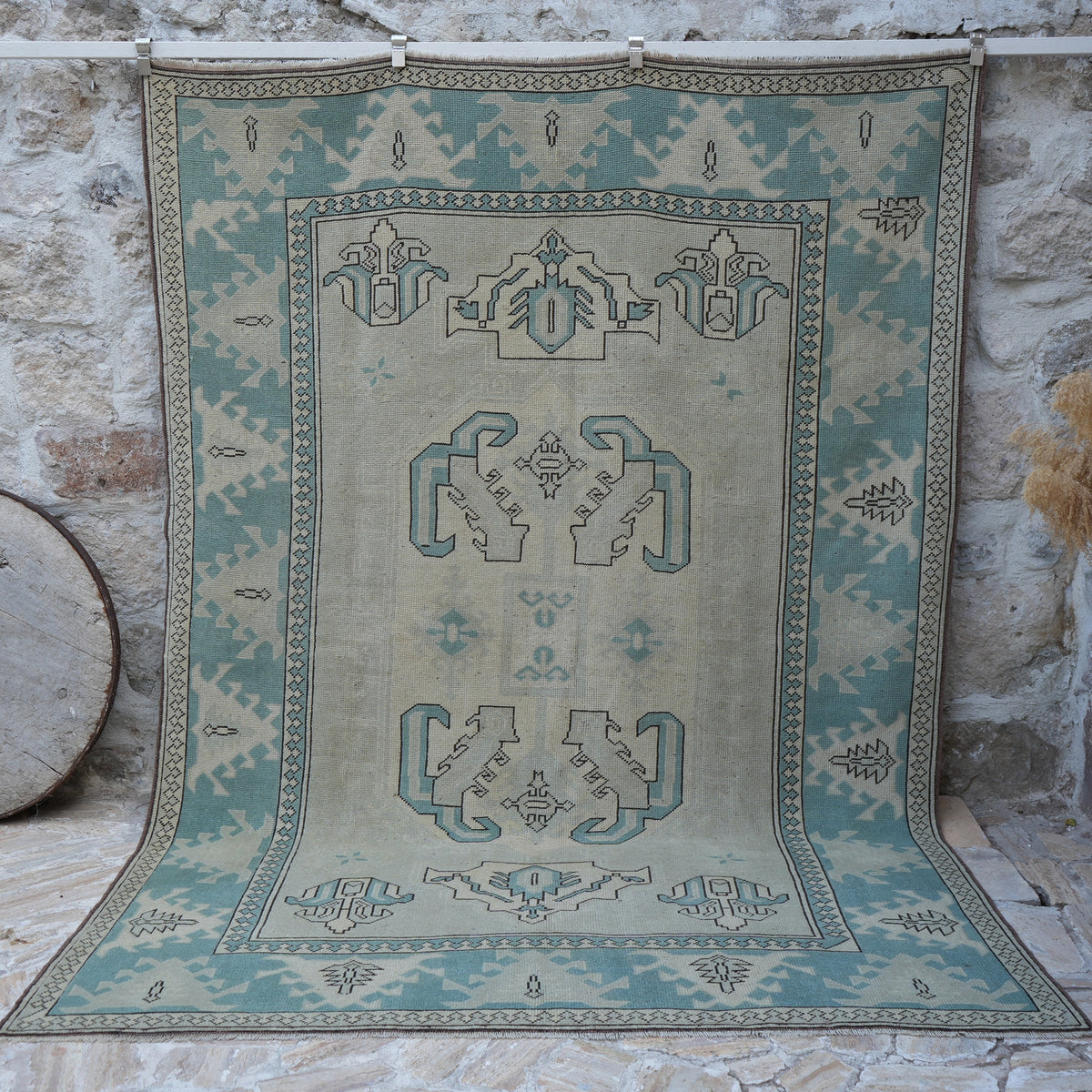
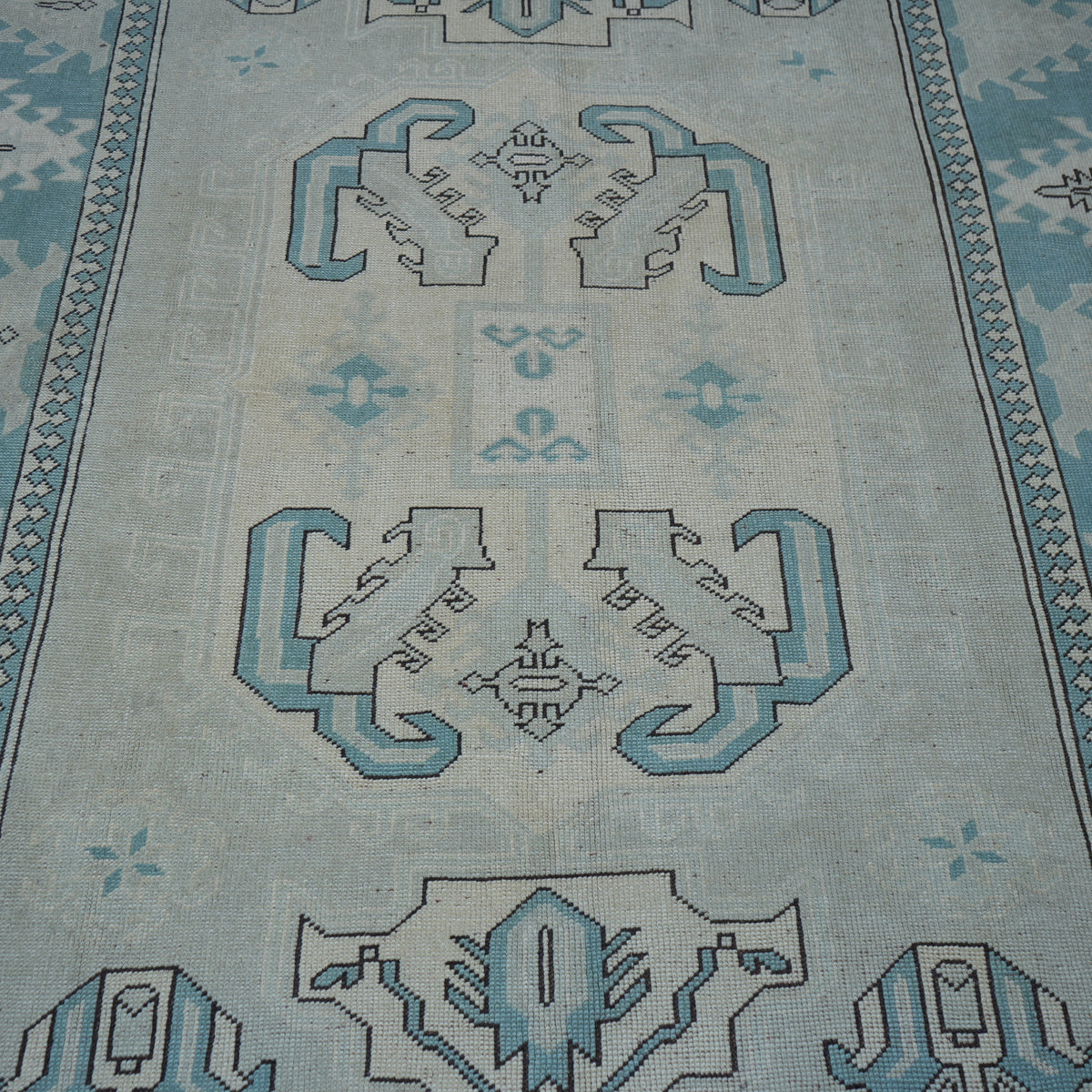
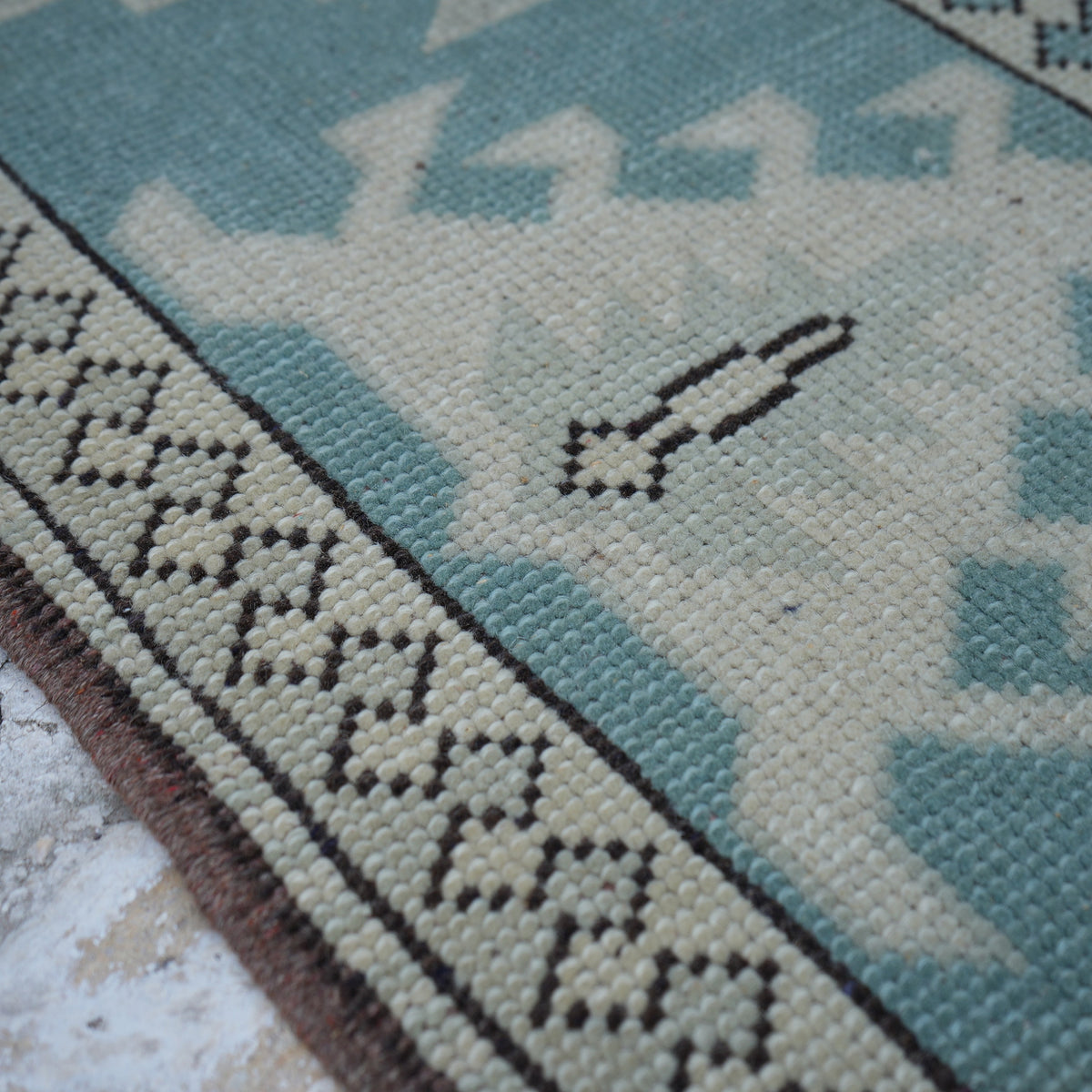
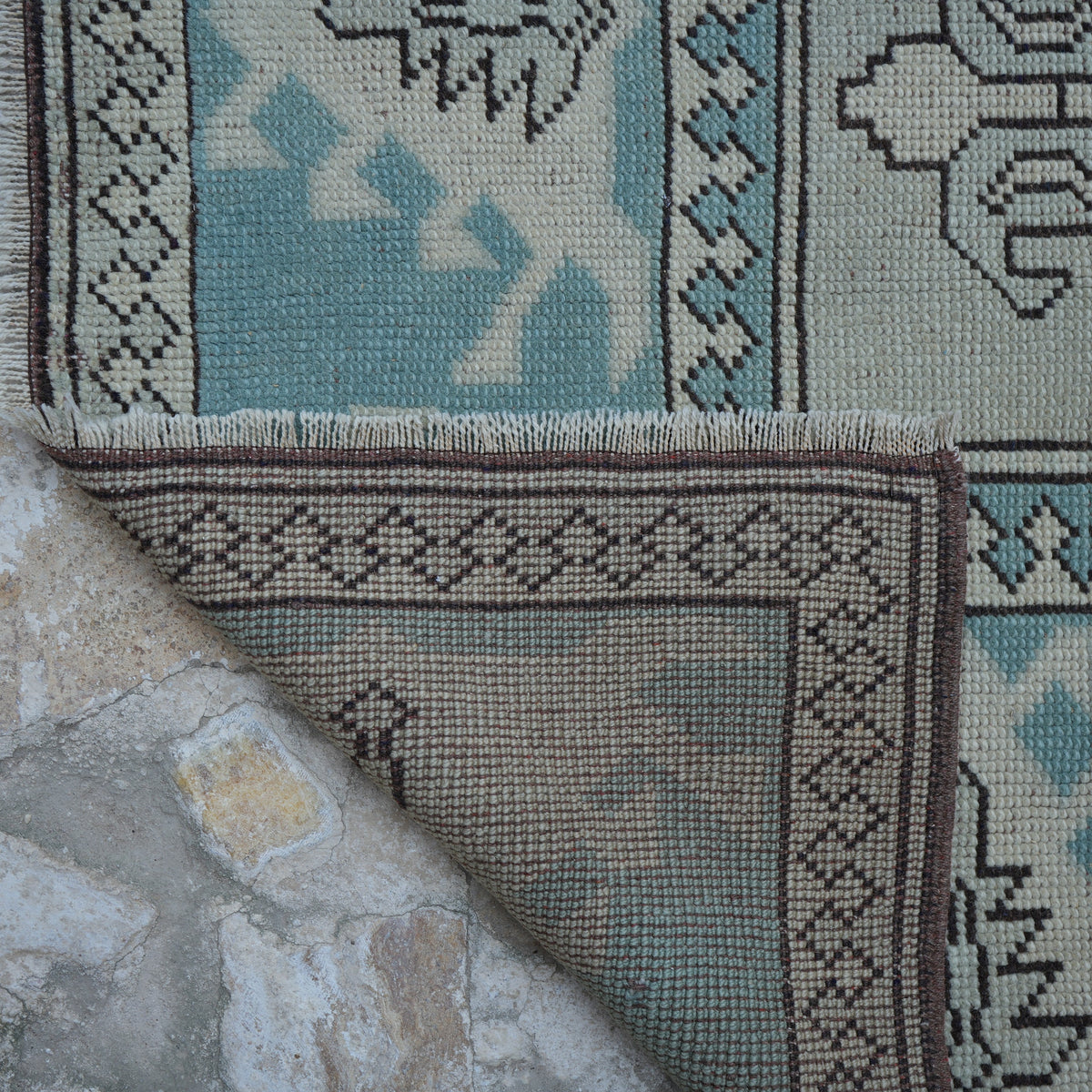
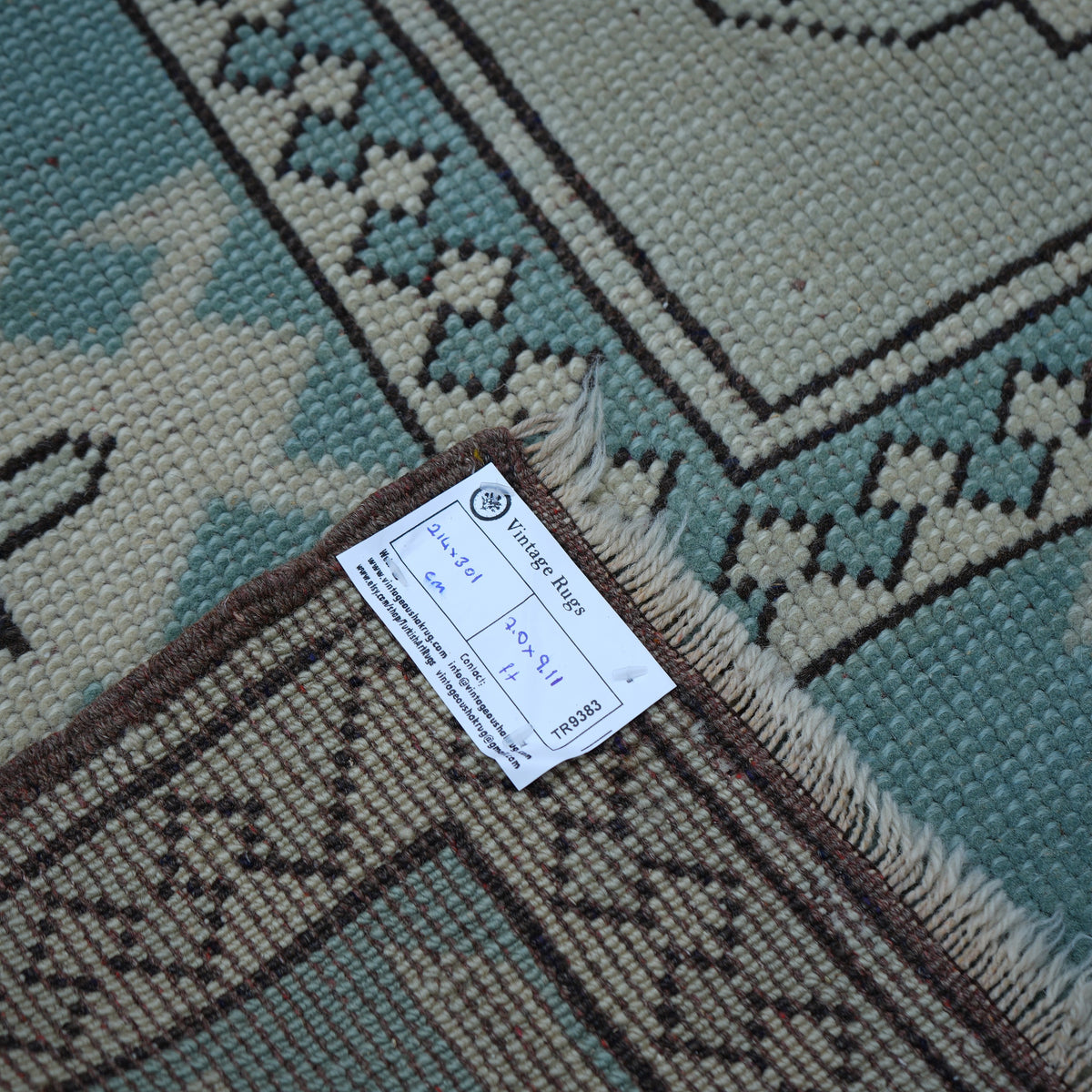
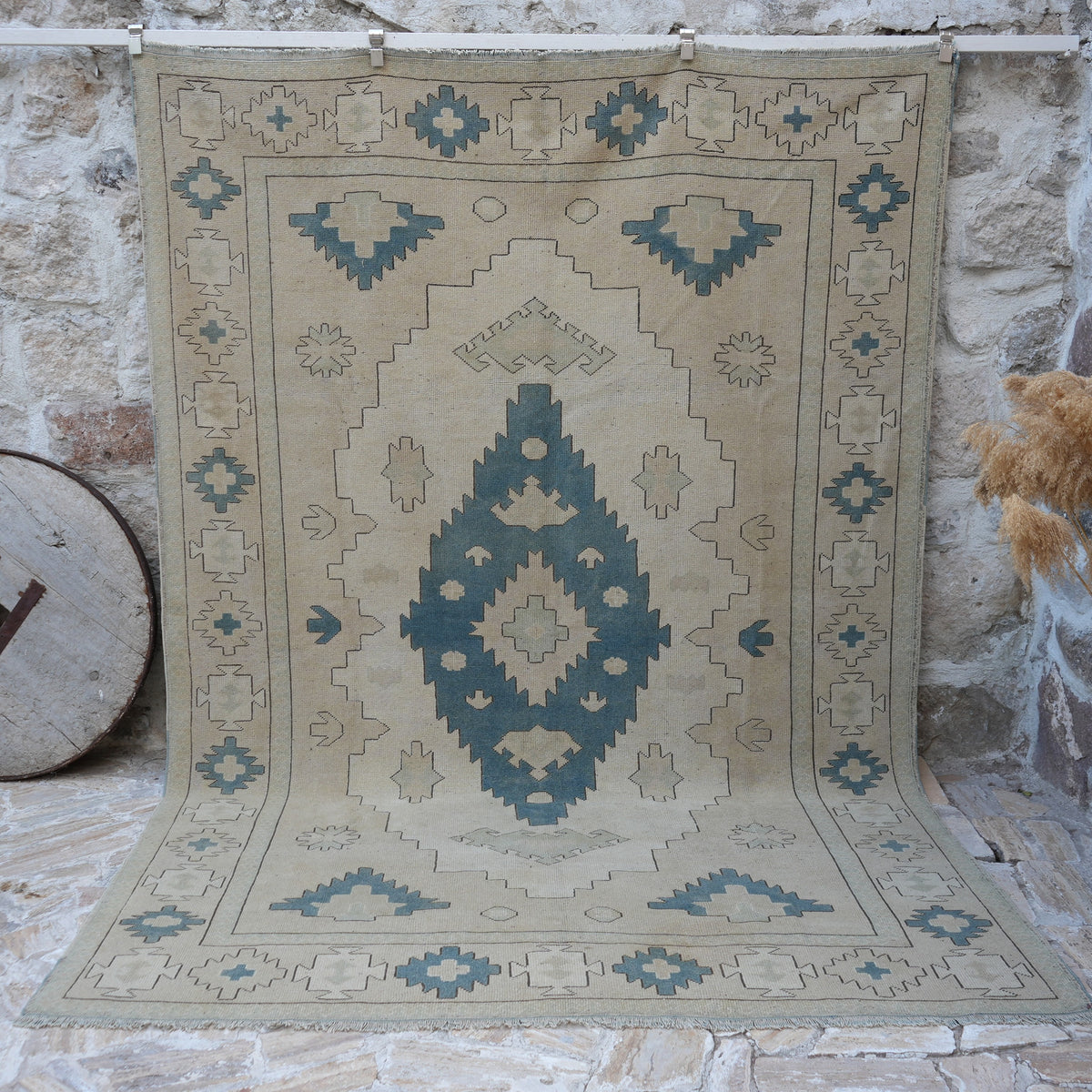
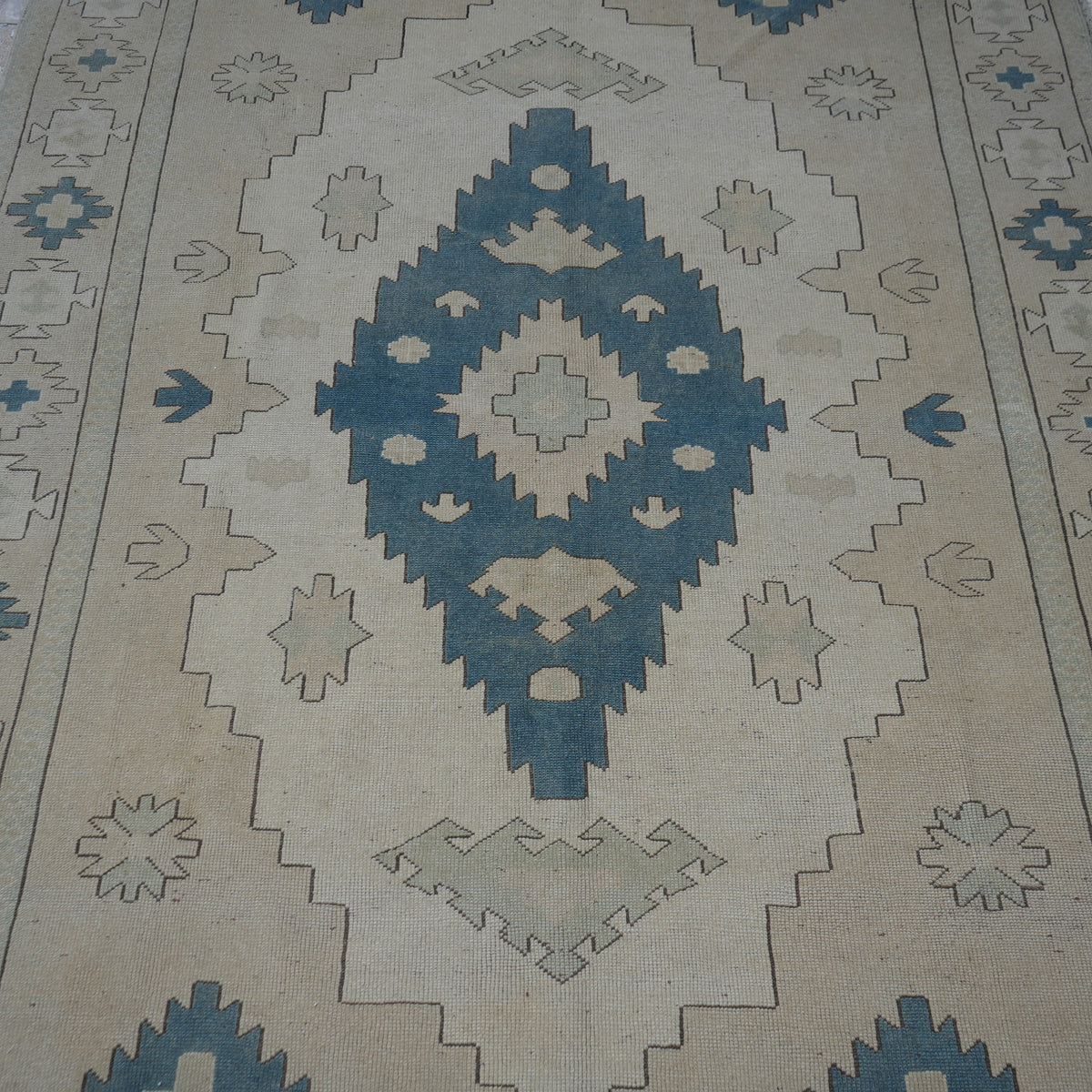
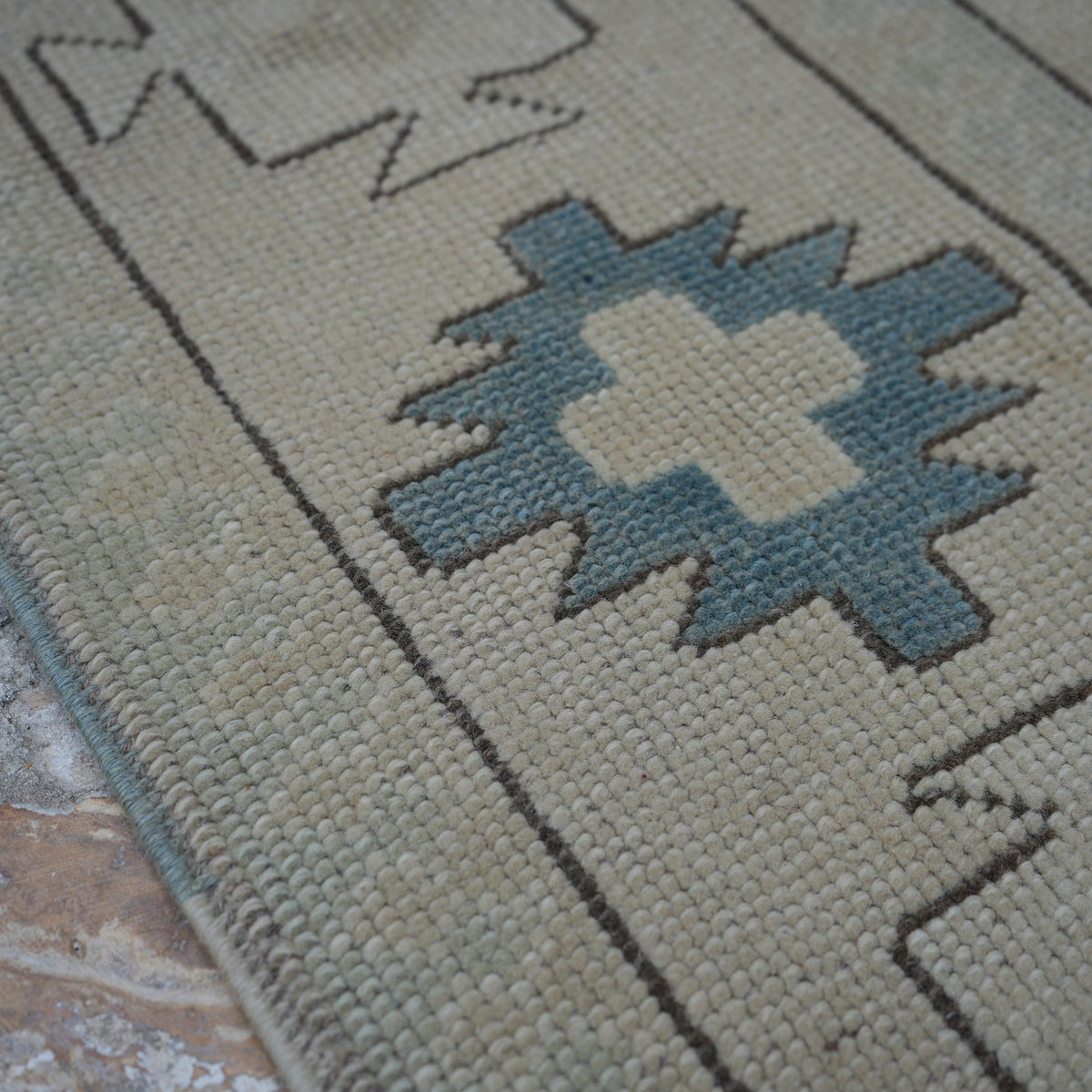
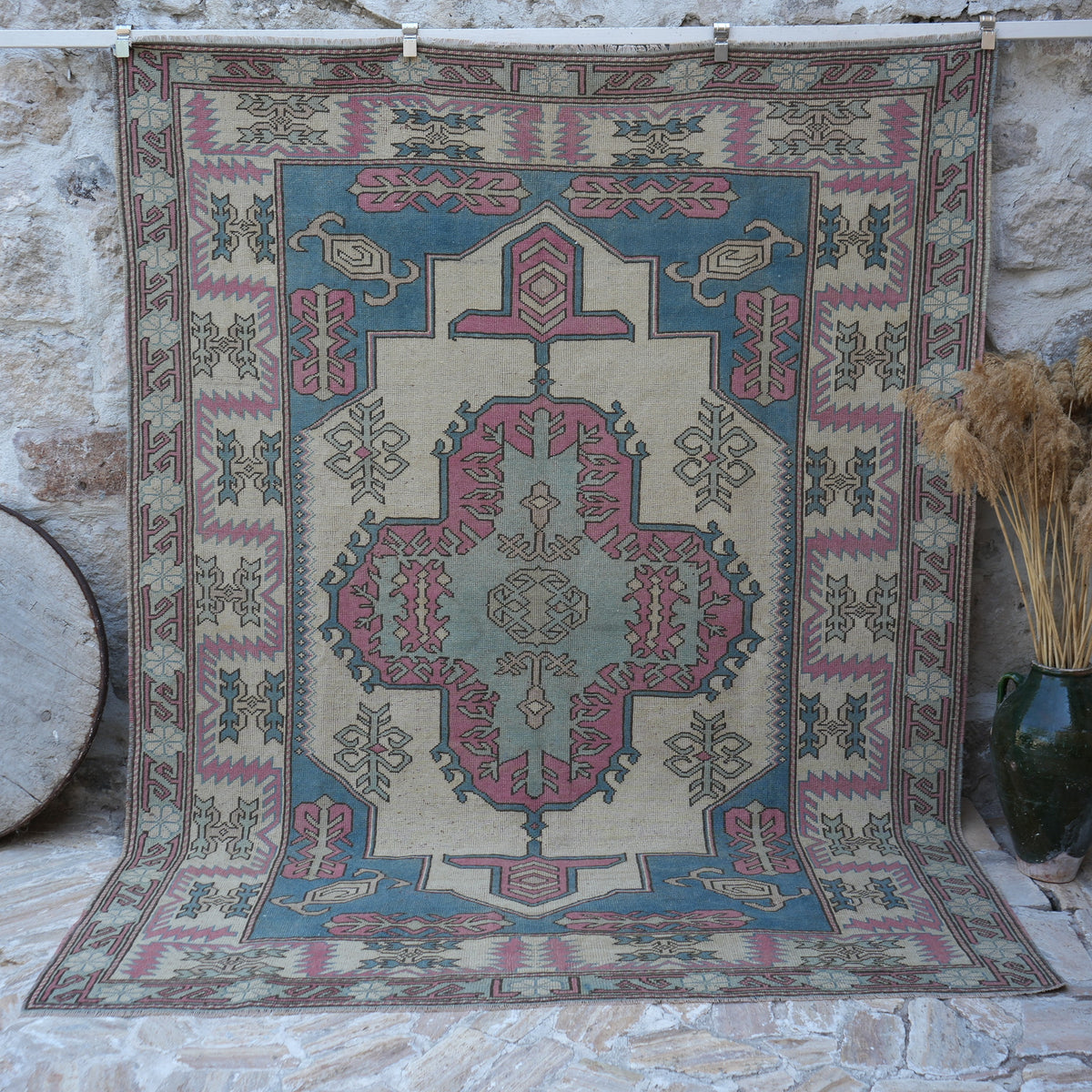
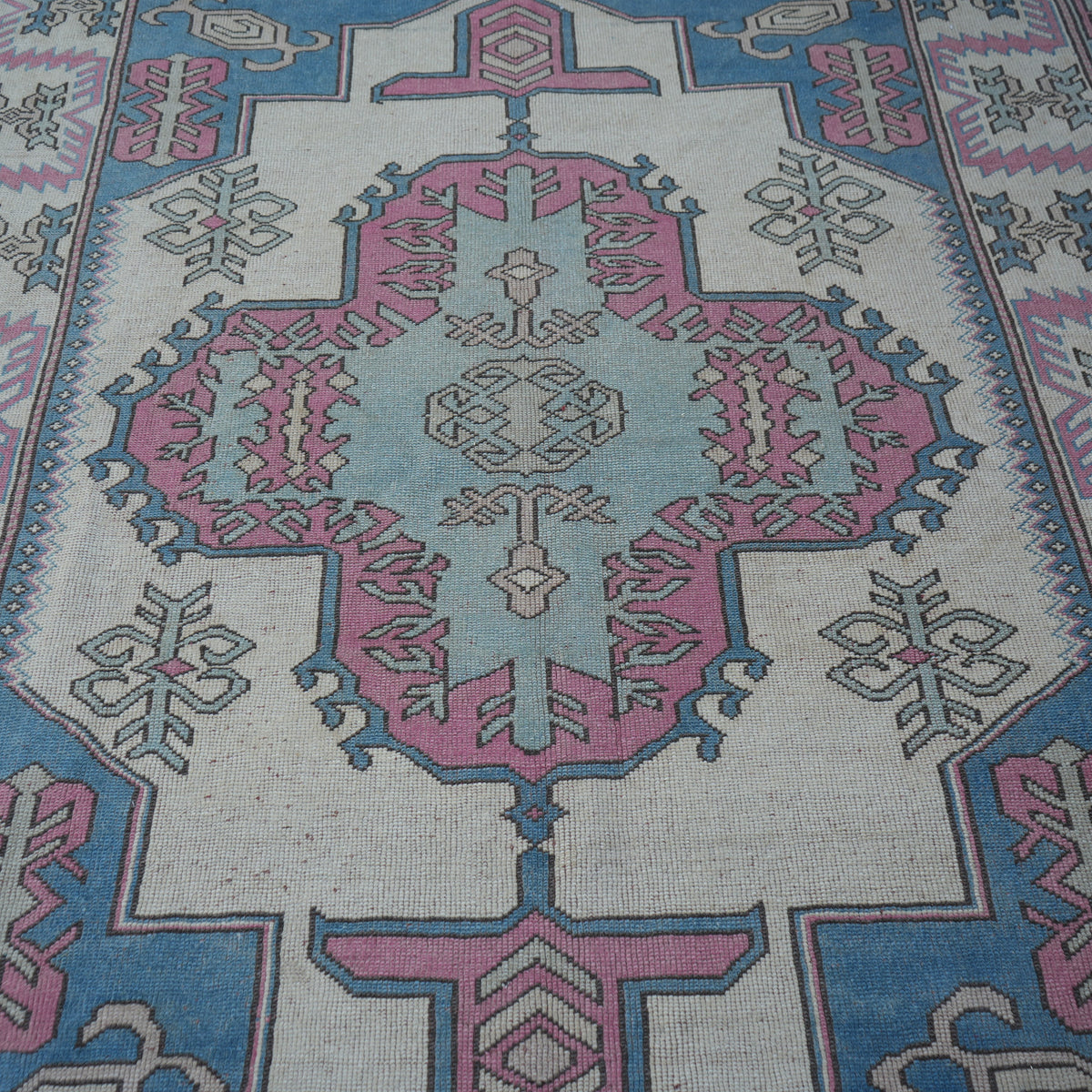
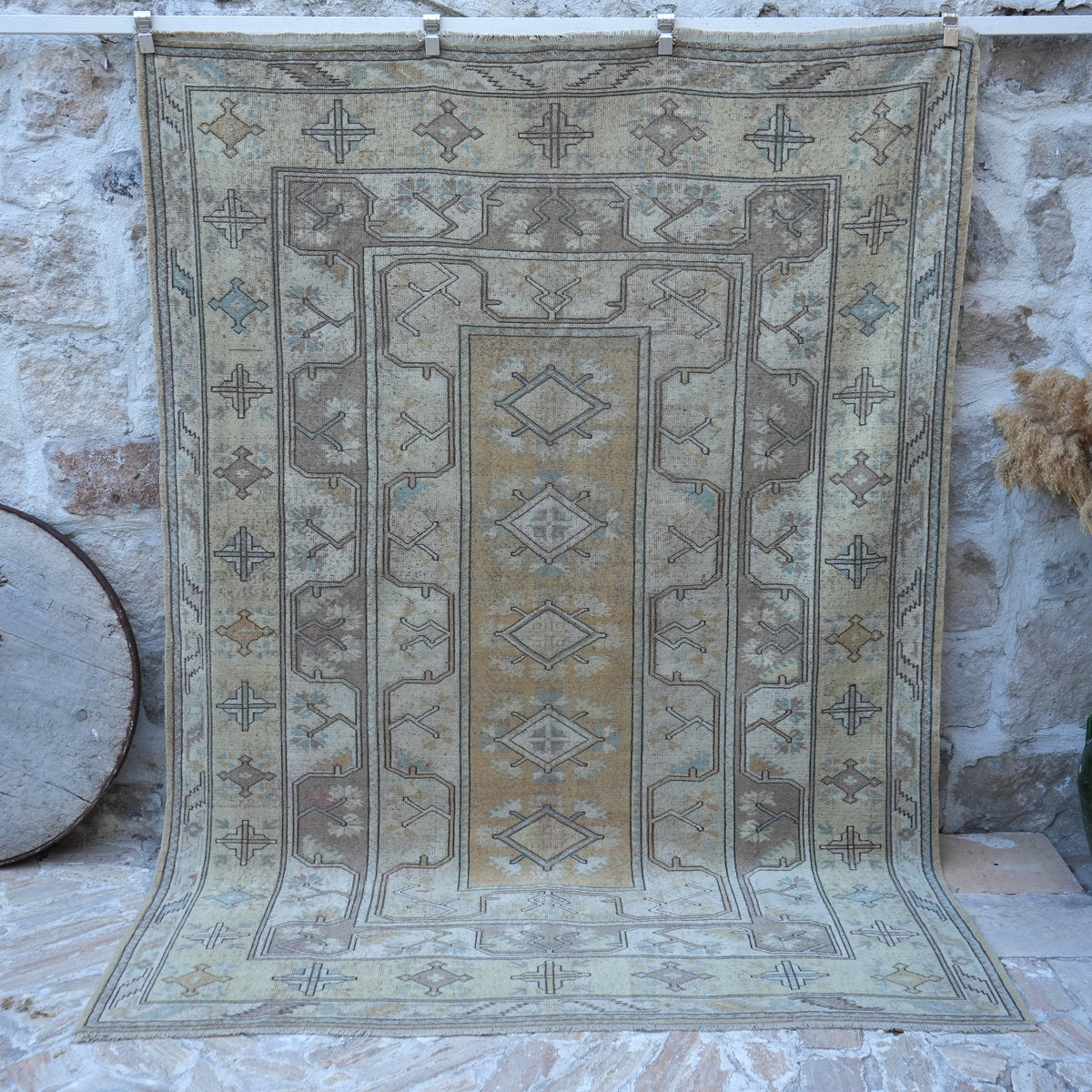
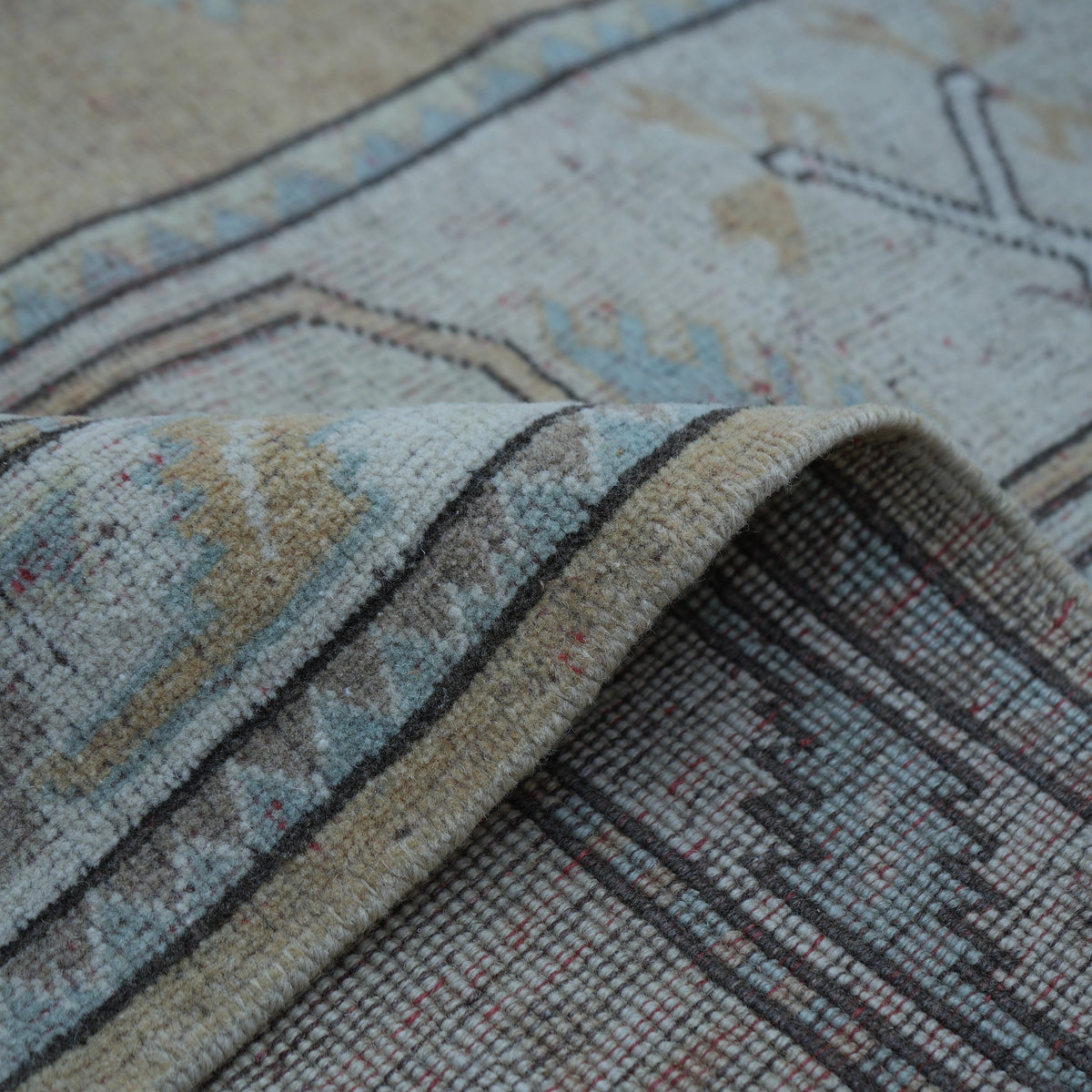
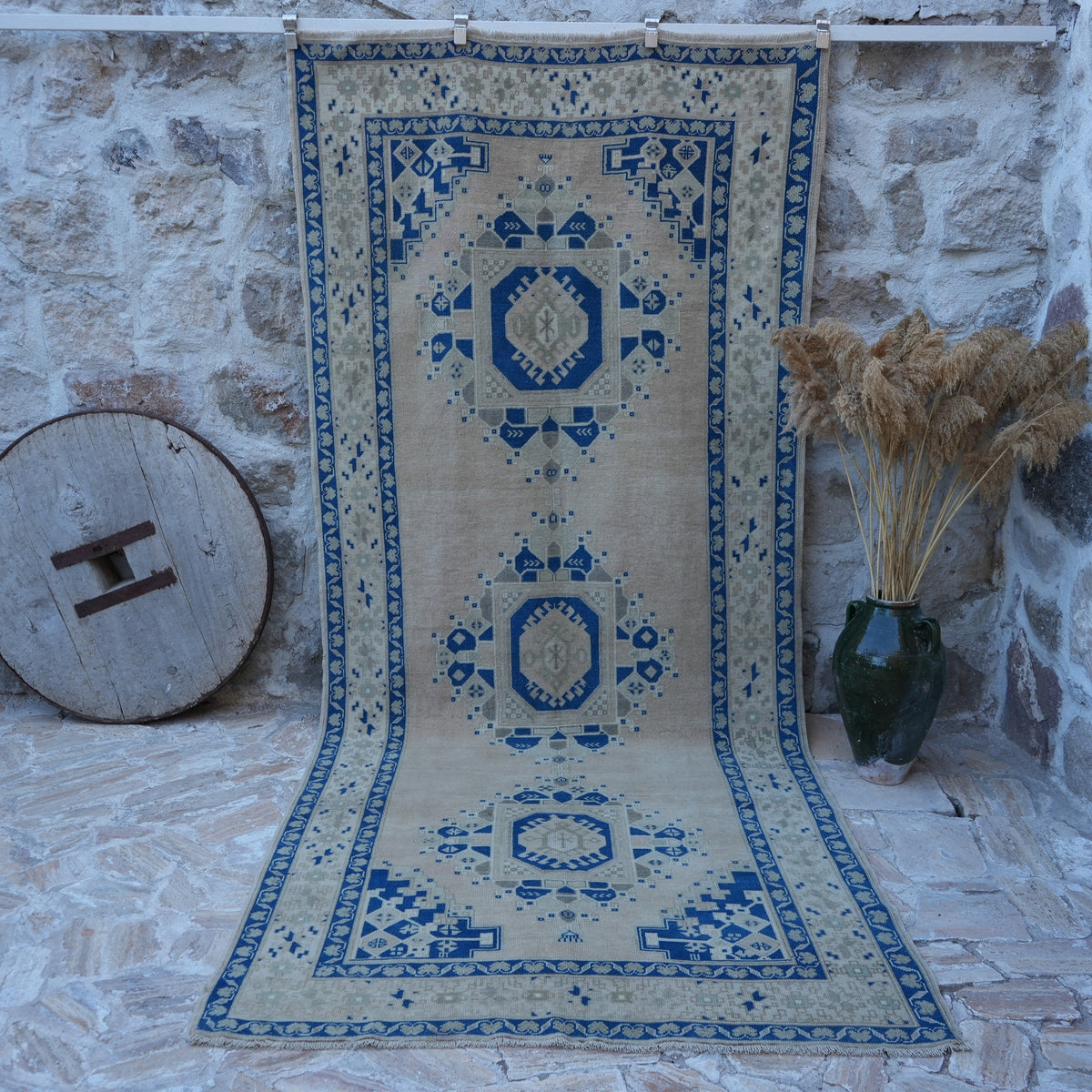
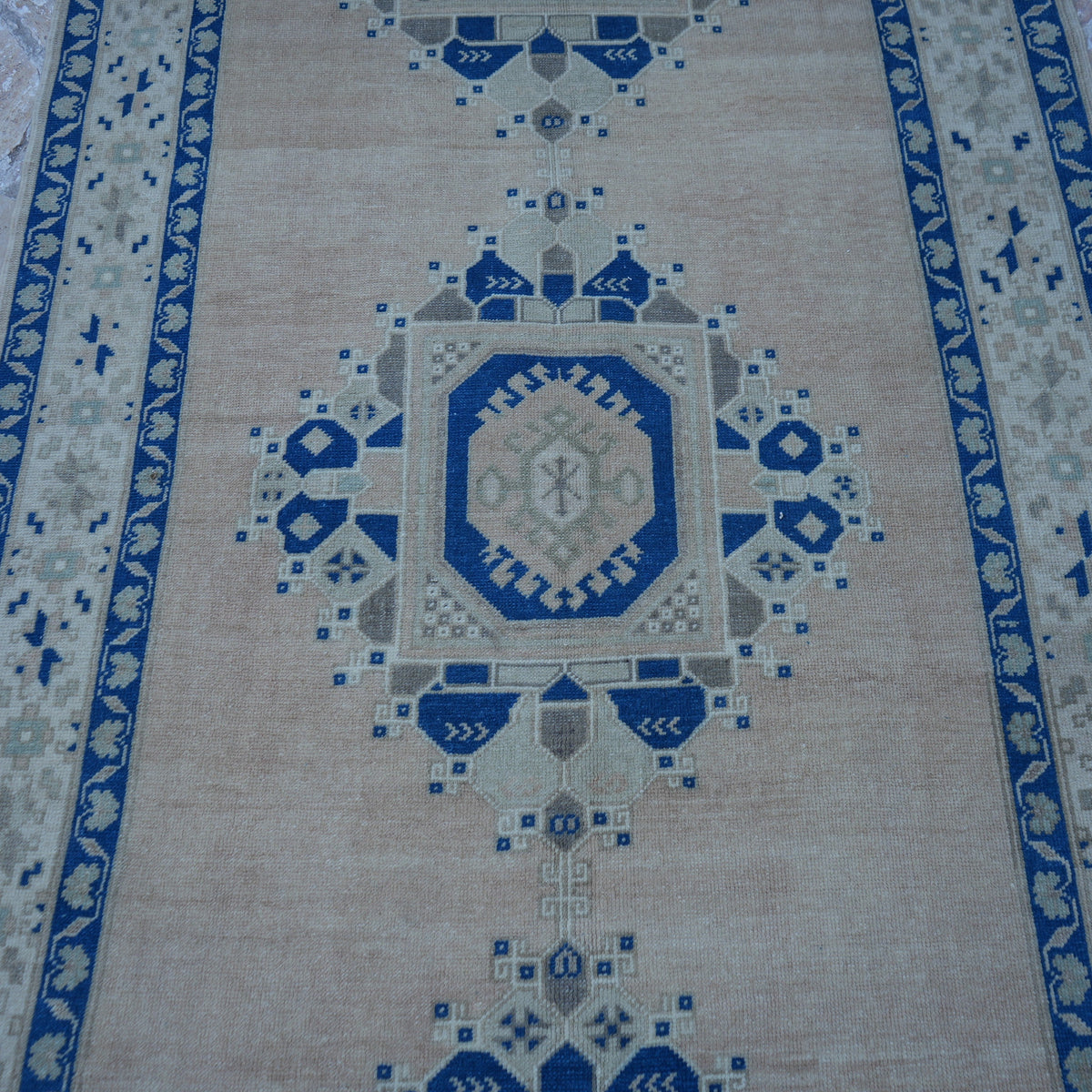
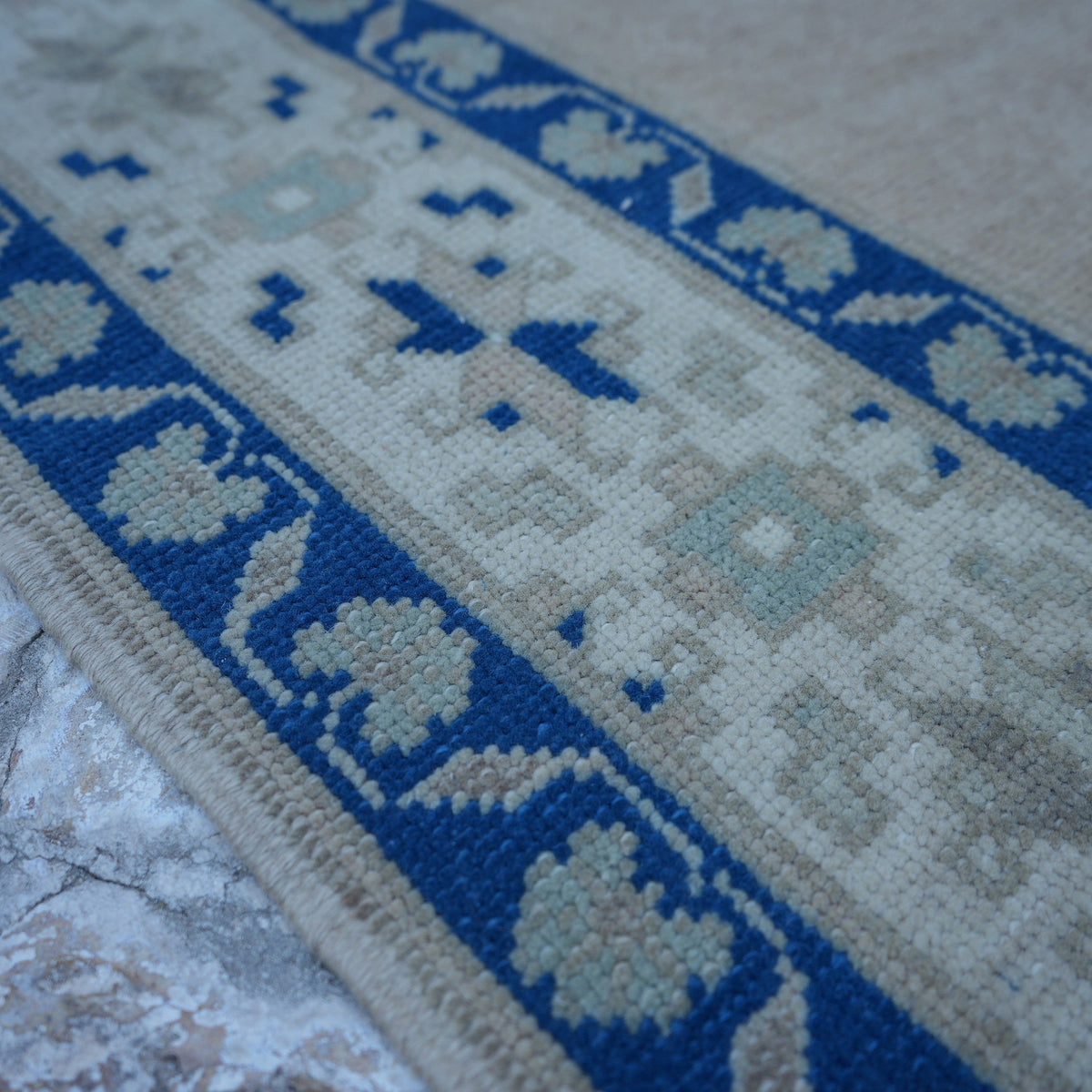
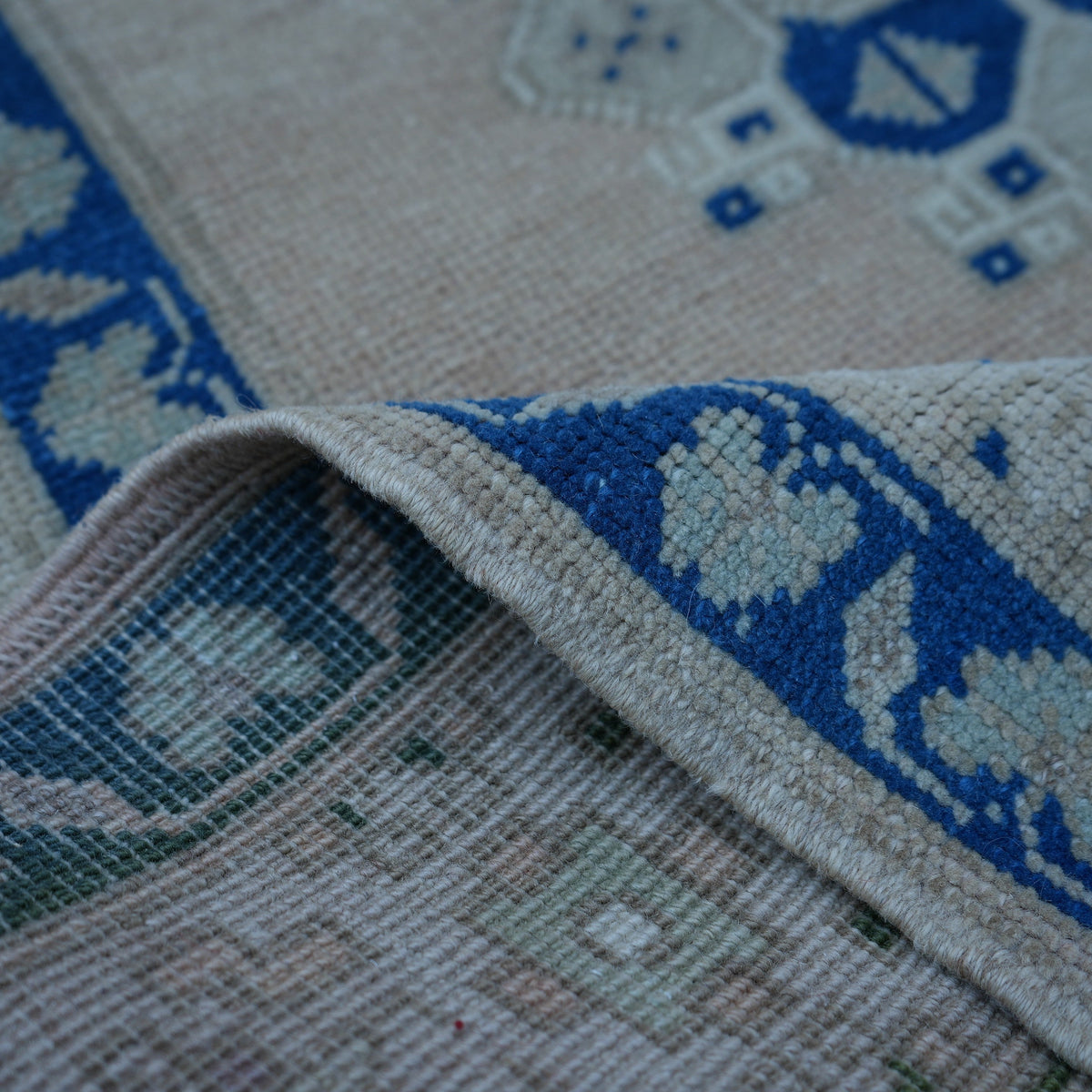
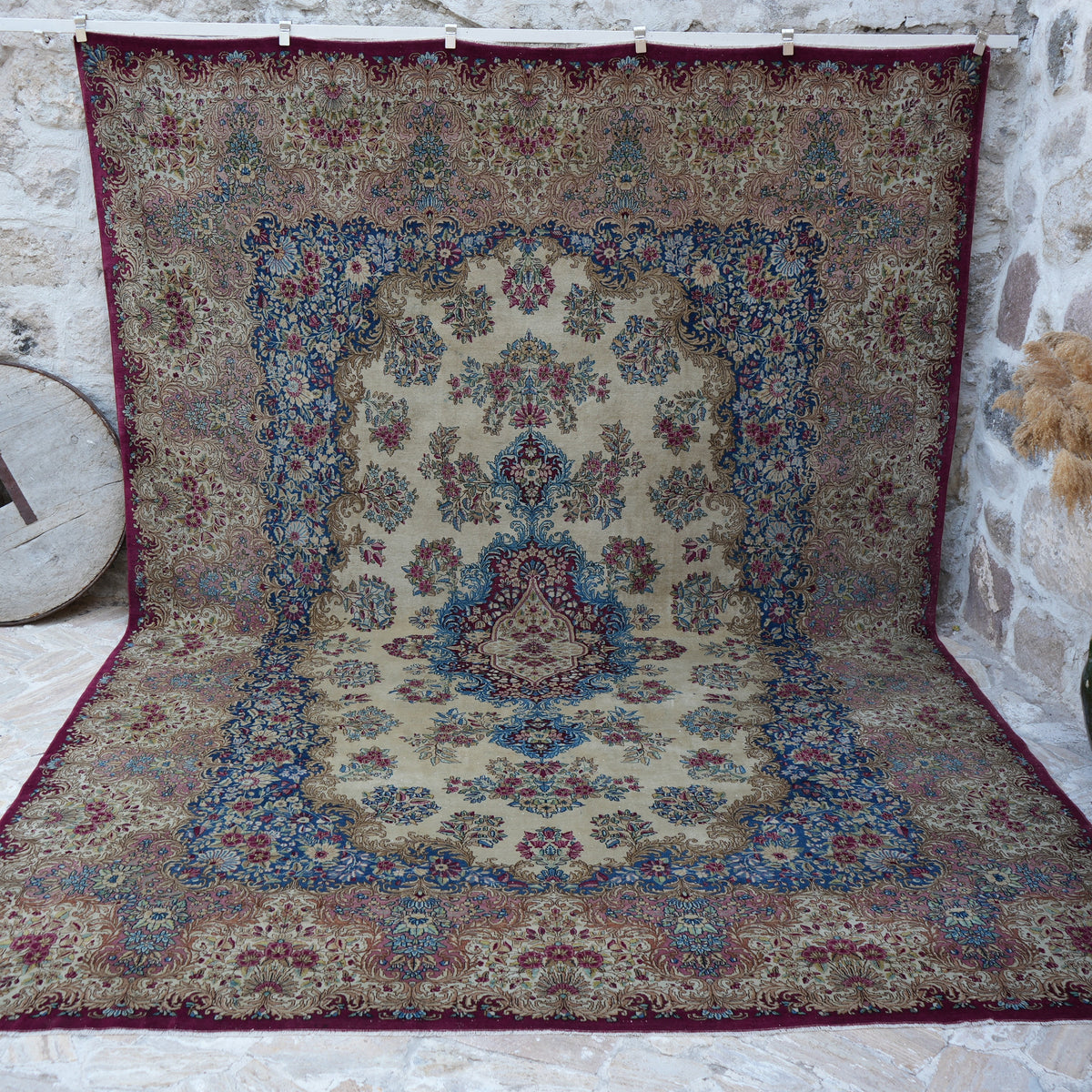
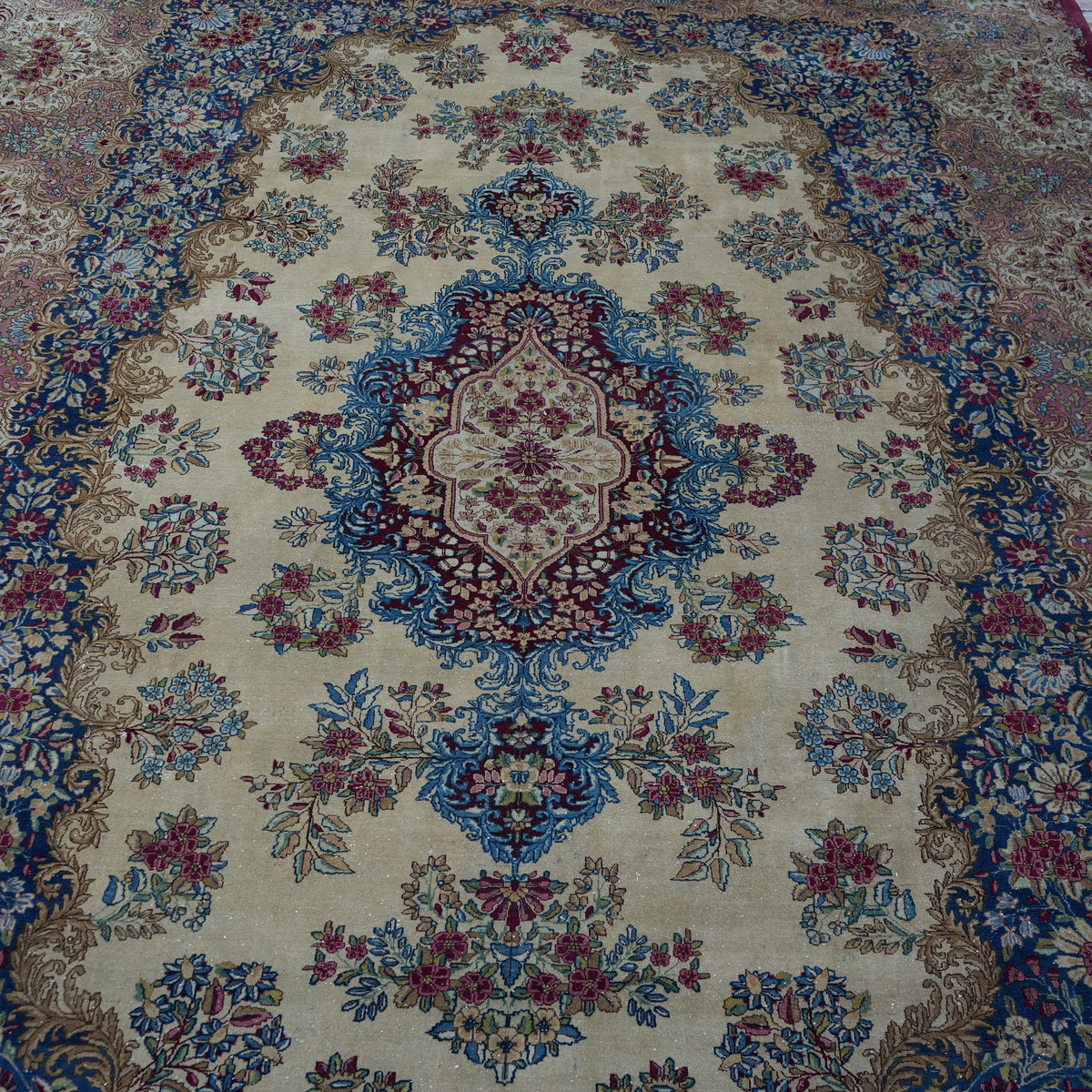
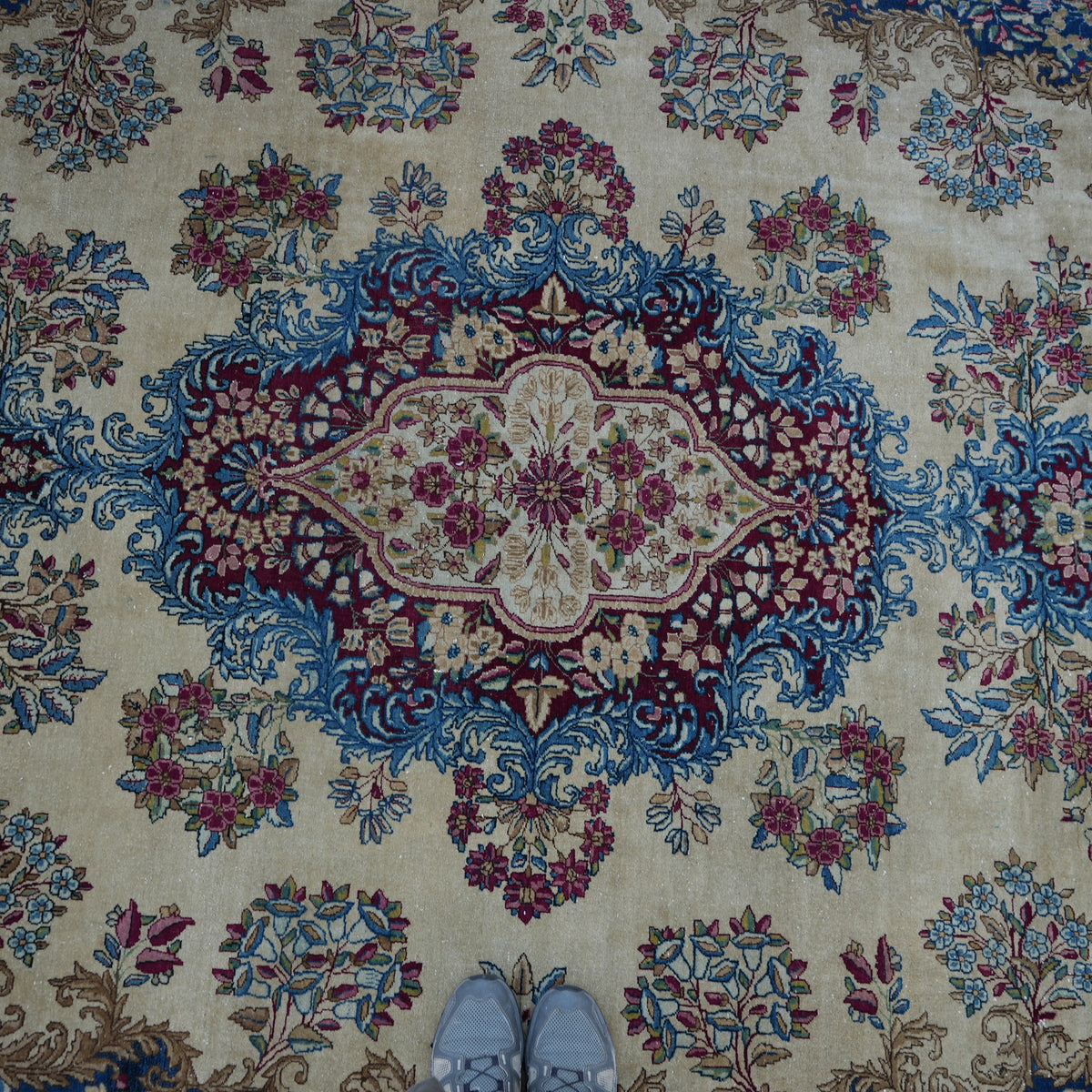
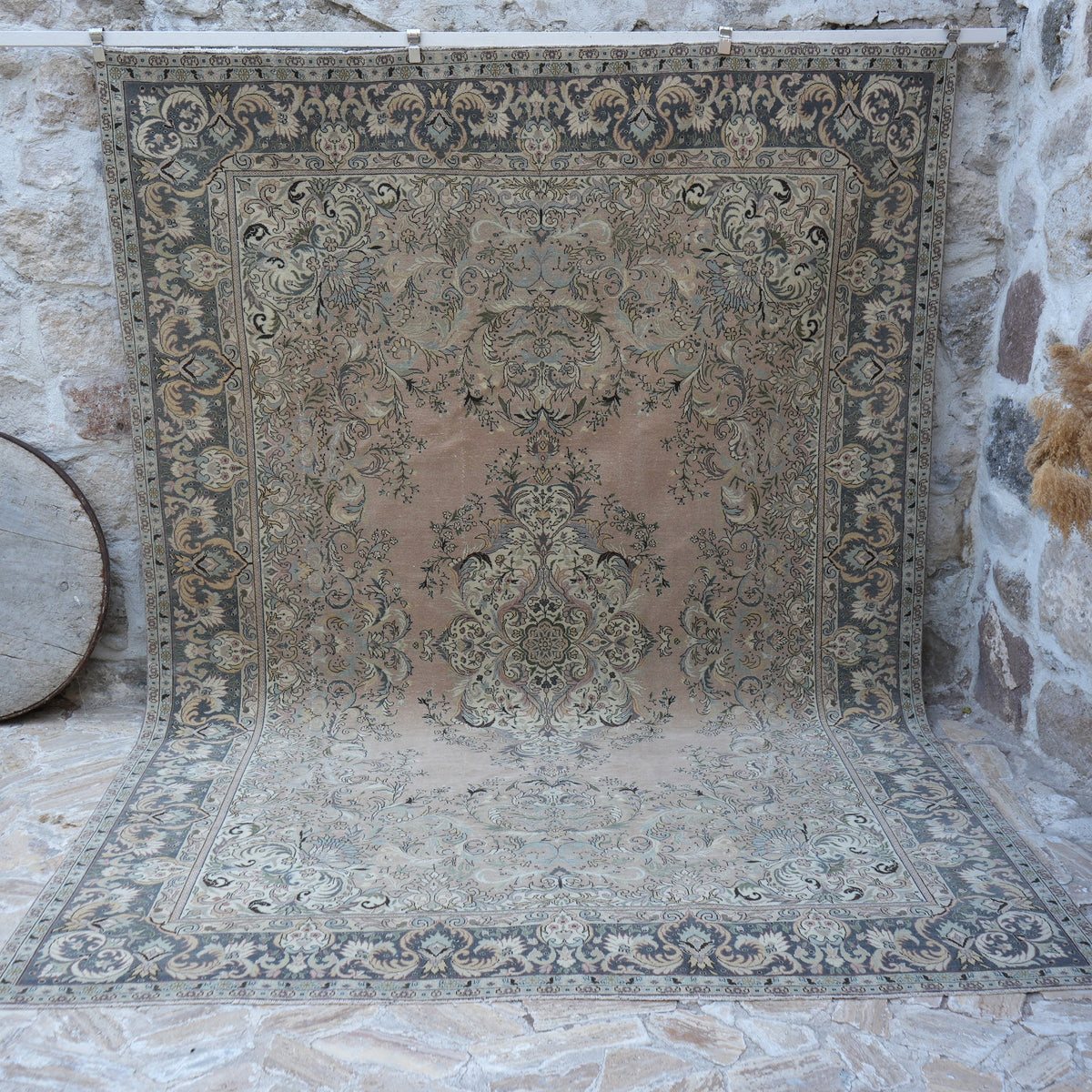
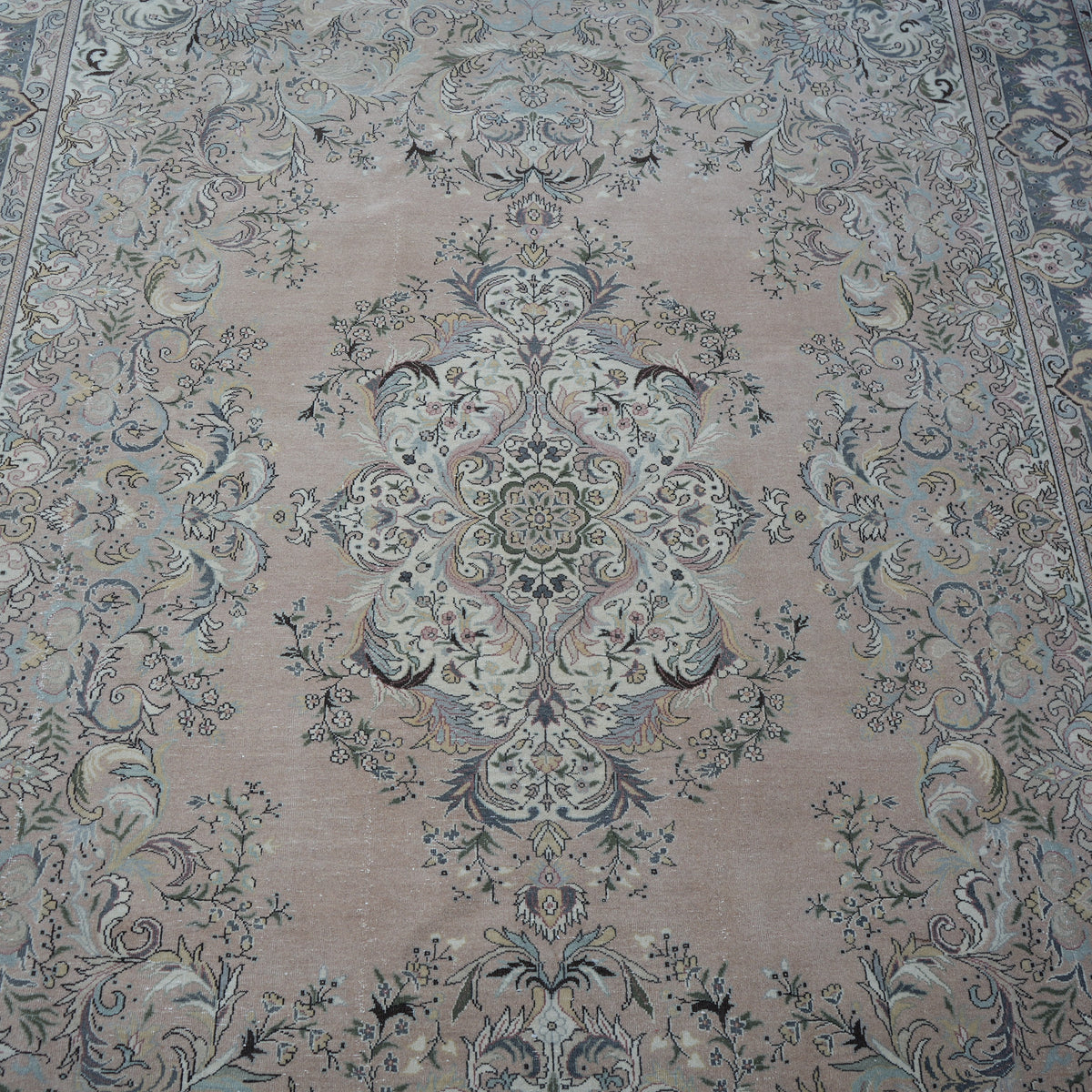
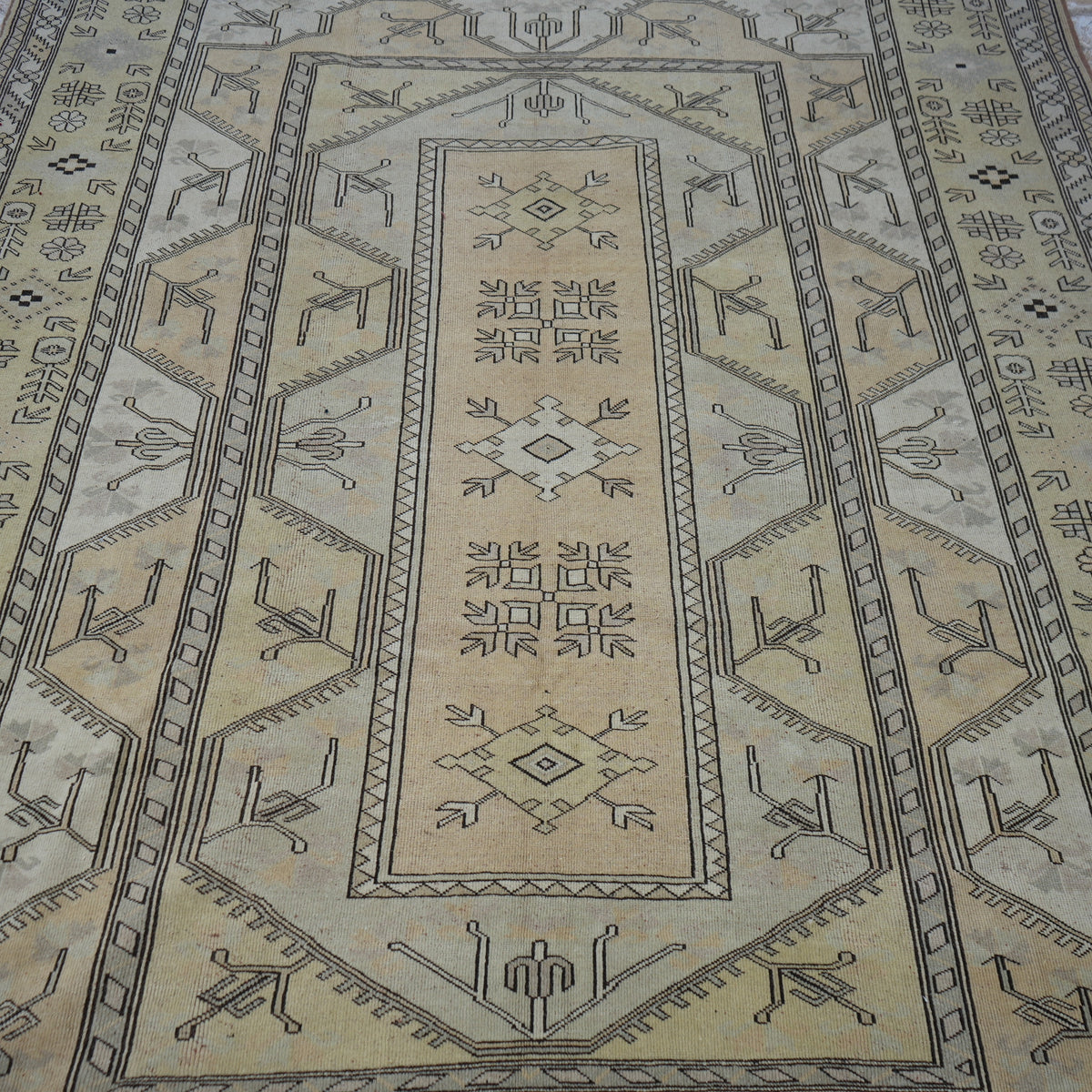
Oushak rugs are consistently the most requested Turkish style among my American customers. The pile is soft and deep, the colors tend toward warm creams and muted blues — tones that sit comfortably beside almost any sectional without competing. Our Oushak collection is a reliable starting point if you want visual character without noise.
How to Choose Rug Color and Pattern for a Sectional Living Room
My customers almost always play it too safe with color. Color is where I spend the most time when helping someone choose — and it's where most people hold back too early. A room where the sofa is neutral, the walls are neutral, and the rug is also neutral ends up with no center of gravity. Everything looks fine. Nothing is memorable.
If your sectional is a solid color, let the rug carry the pattern. Anatolian motifs were refined over centuries — they were never designed to clash, and they give a neutral sofa somewhere to go visually. If your sectional already has texture or weight, pull back and let the rug complement rather than compete. I tell customers this sometimes: if a color is making you slightly nervous, that's often the right one. Browse our living room rugs to see the full collection, our neutral rugs if you want something quieter, or our Turkish rug collection if you're ready for real presence.

From Cappadocia to Your Living Room: How I Source Every Rug
When I'm in the field — at a market in Cappadocia, or in someone's home in a village — I'm almost always thinking about where the piece I'm holding will end up. I'll hold a rug and think: this is a Texas living room, wide, light walls, gray sectional. It sounds like guessing. It usually isn't.
One of the best moments in this work happens when I've chosen a rug on instinct and then a customer writes describing exactly what they're looking for. The piece I picked already matches. Two weeks later: "This changed the room." That's why I'm particular about what I bring in. Every piece in our new arrivals has been through my hands first.
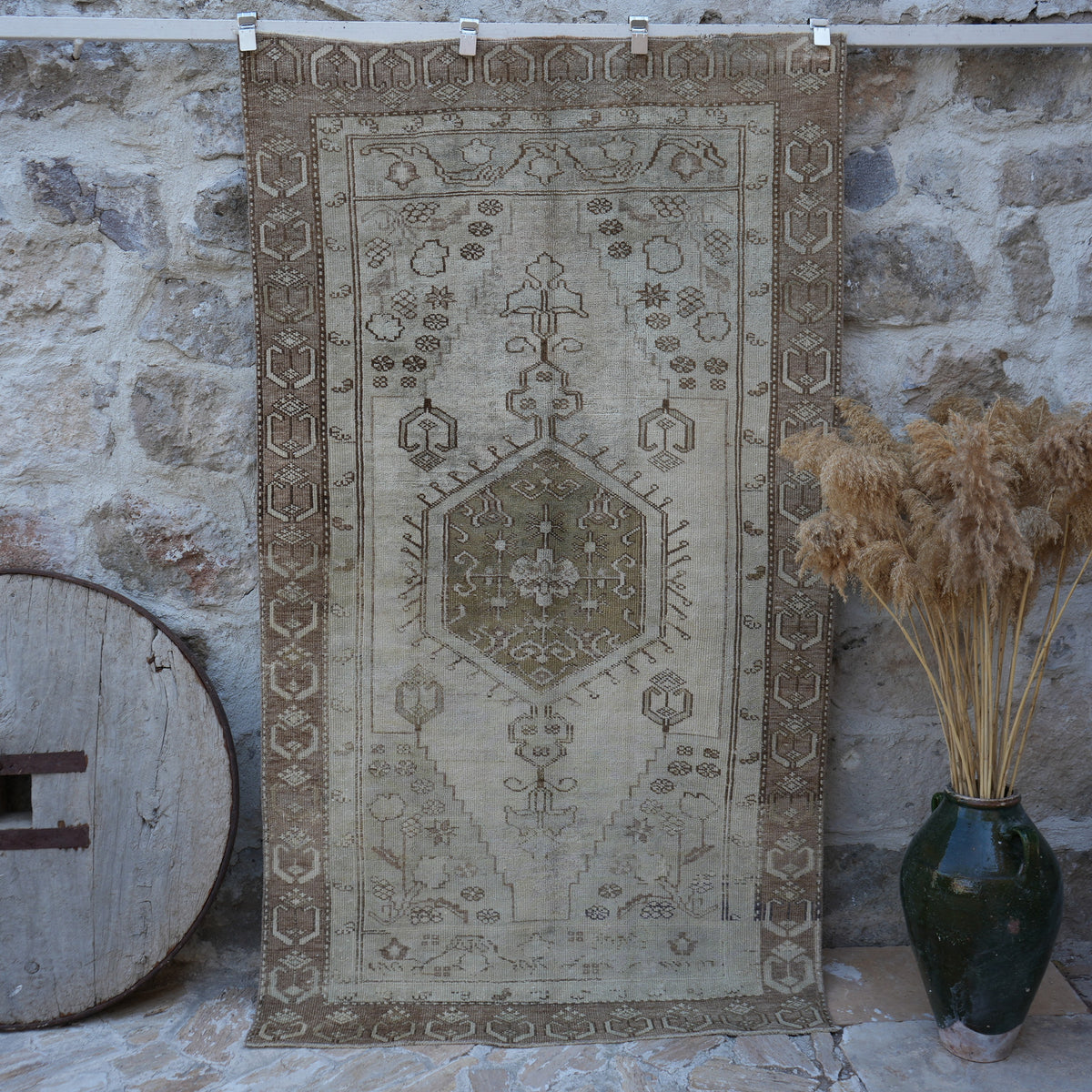
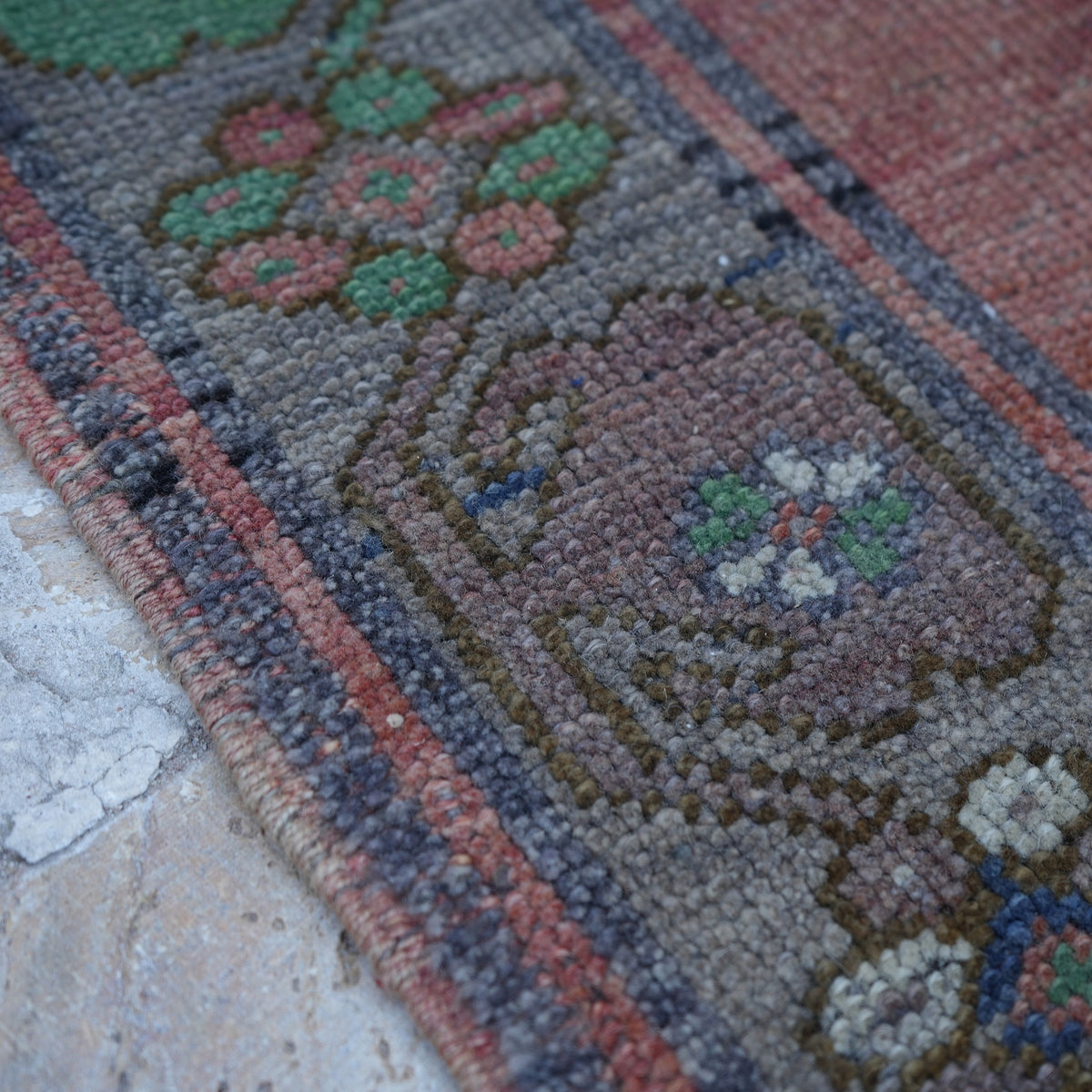
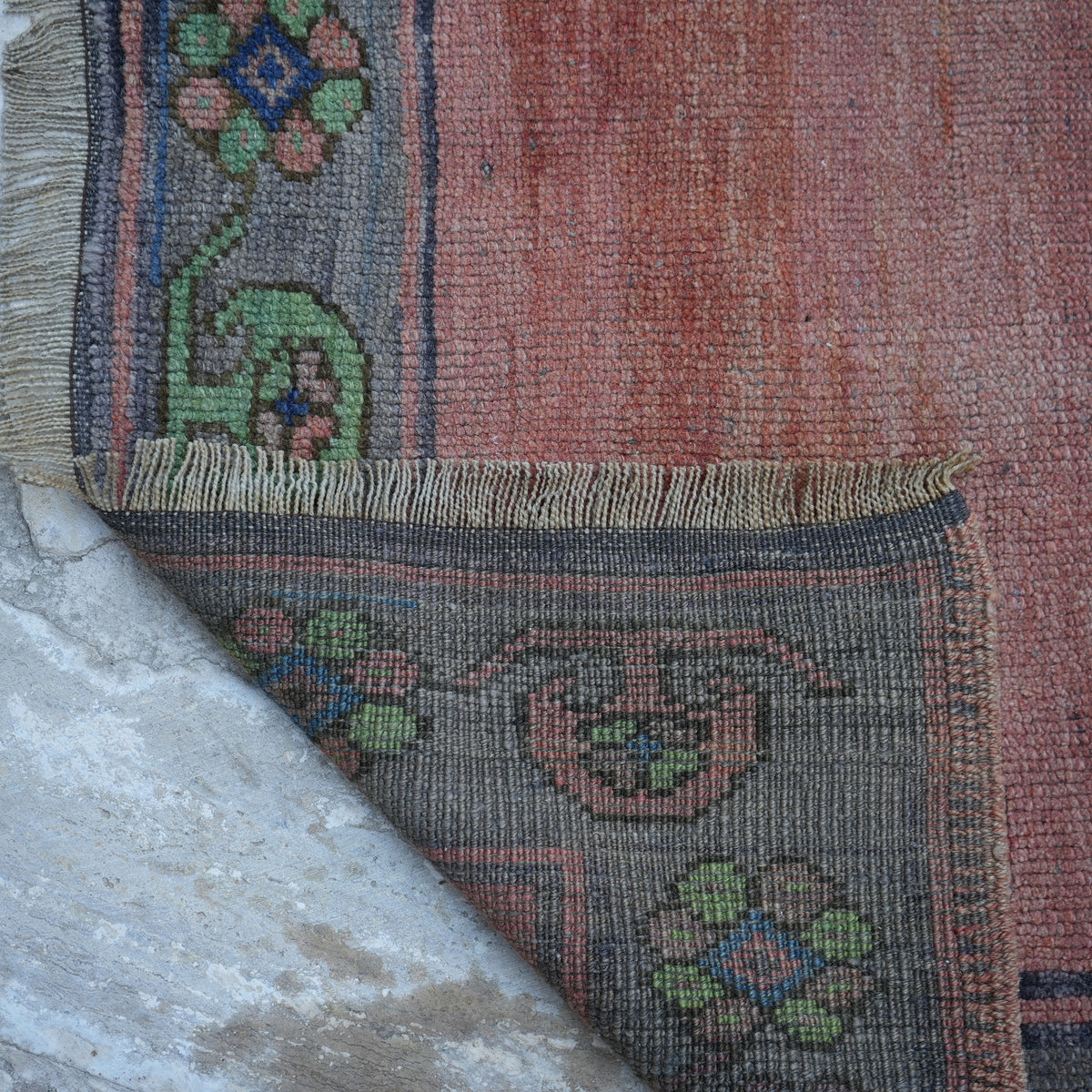
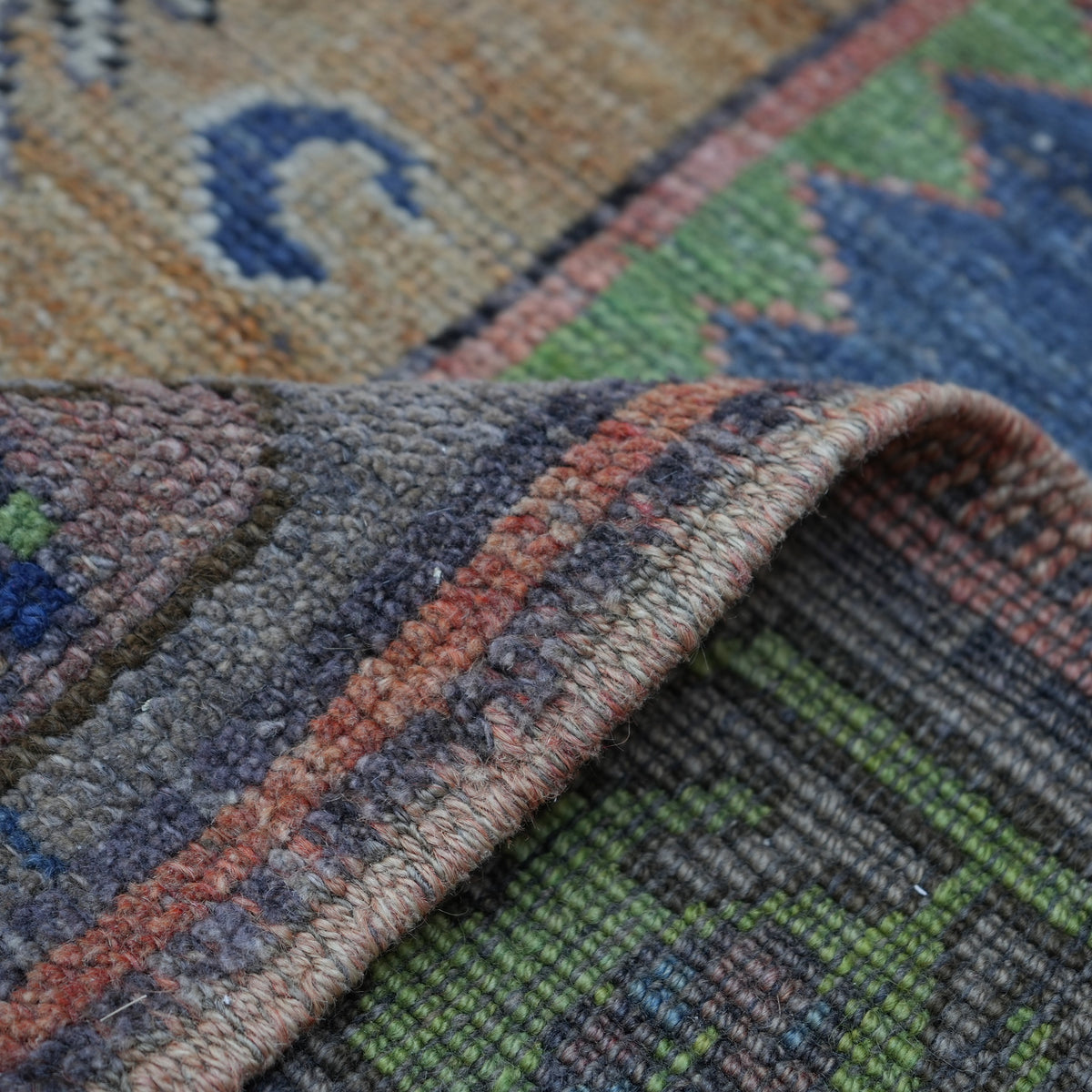
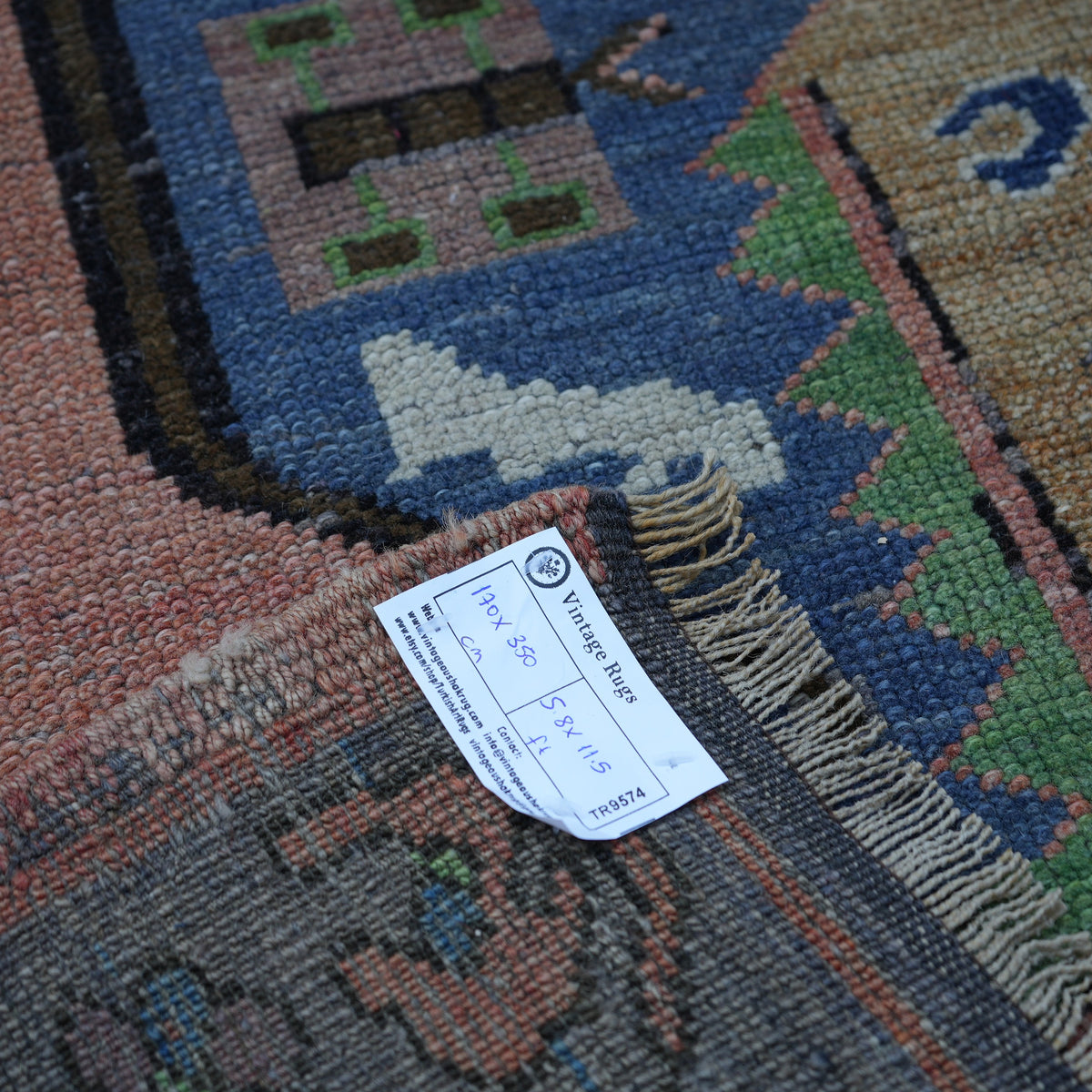
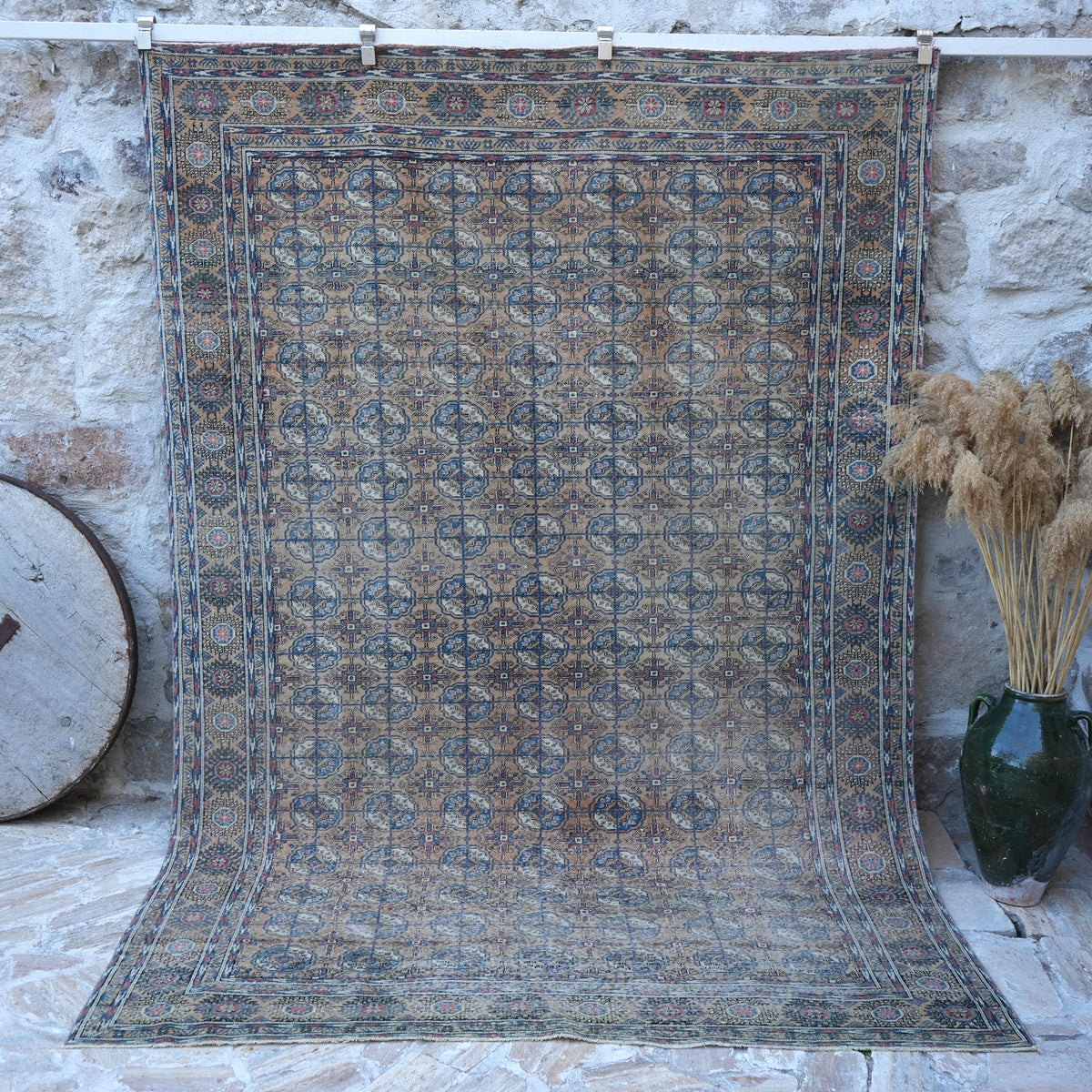
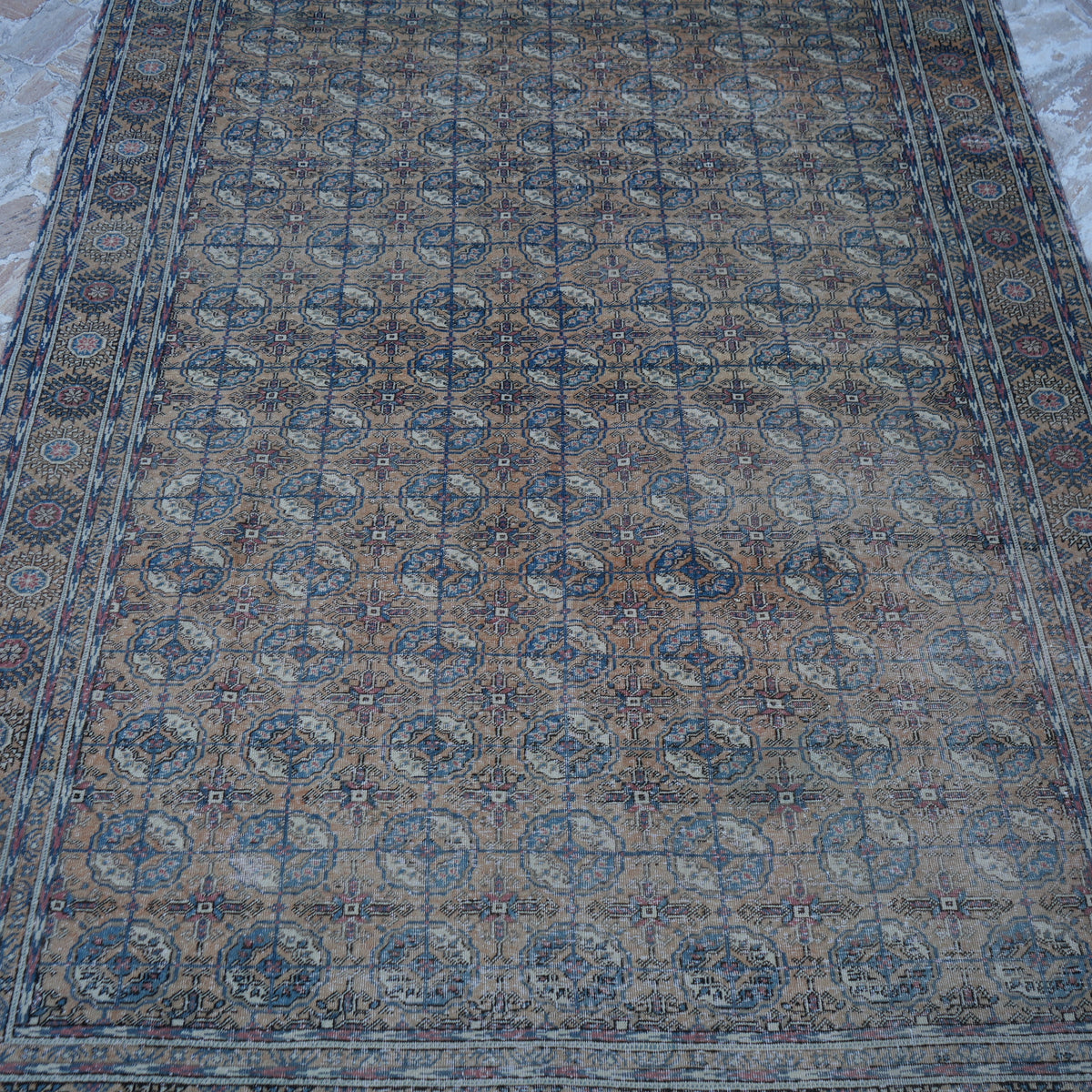
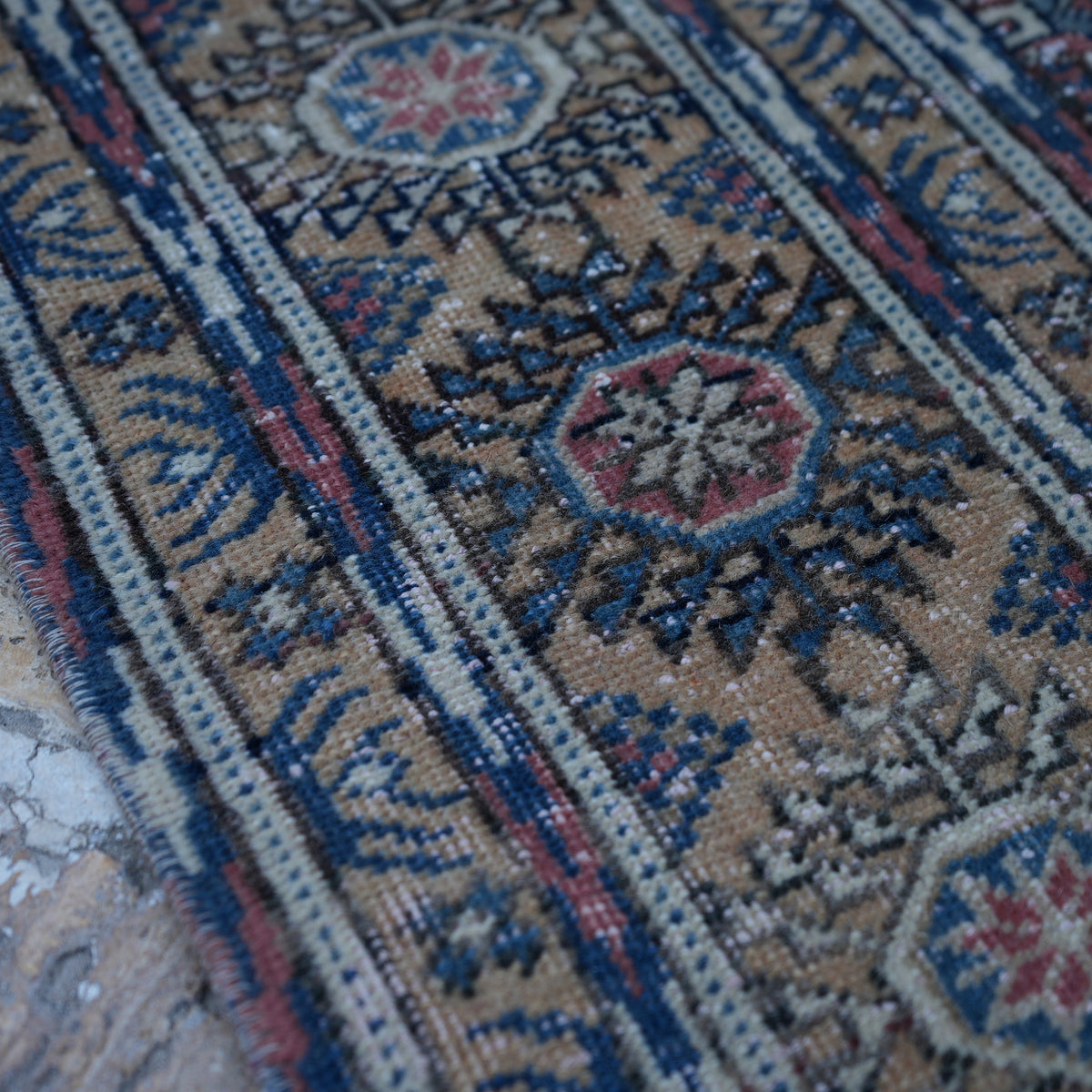
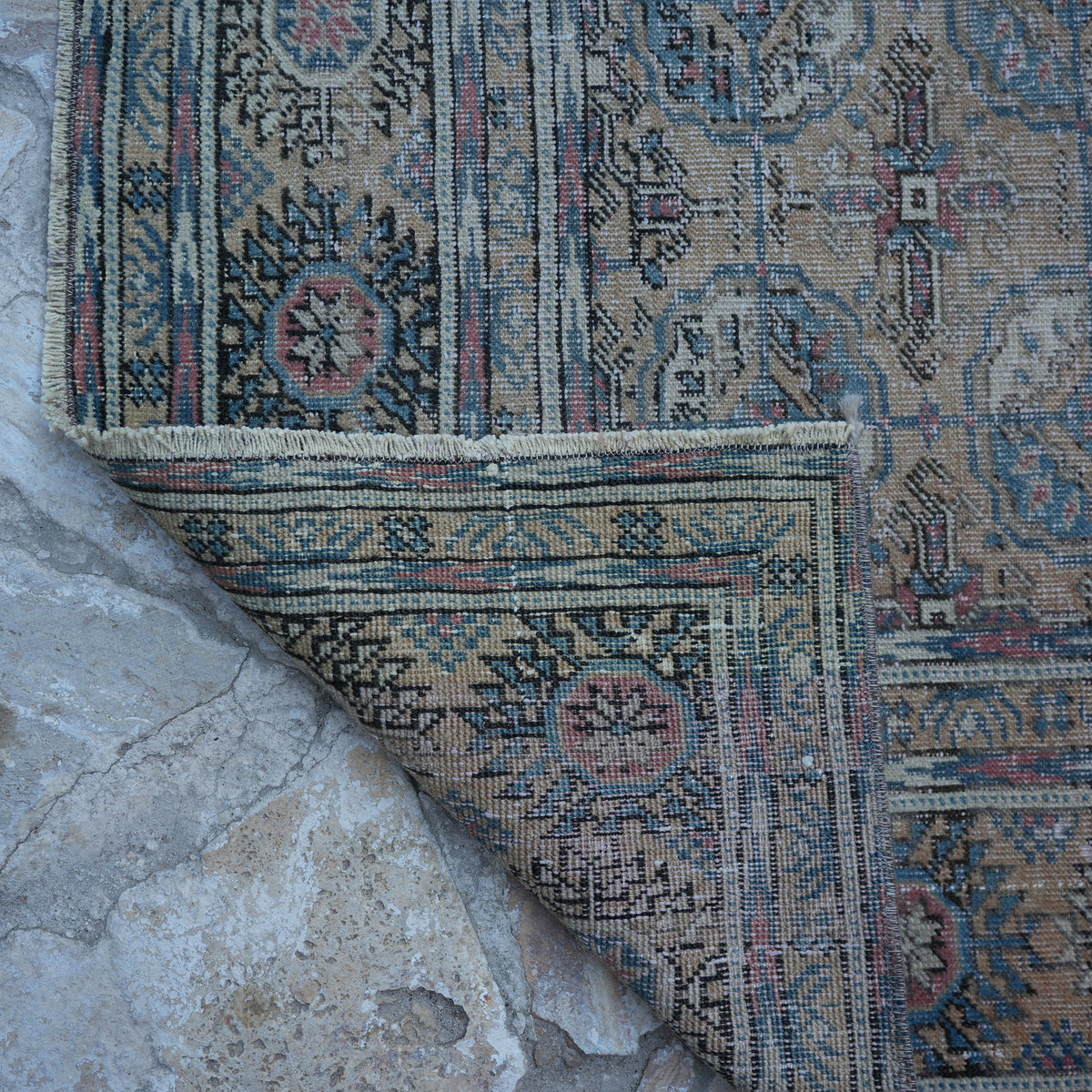
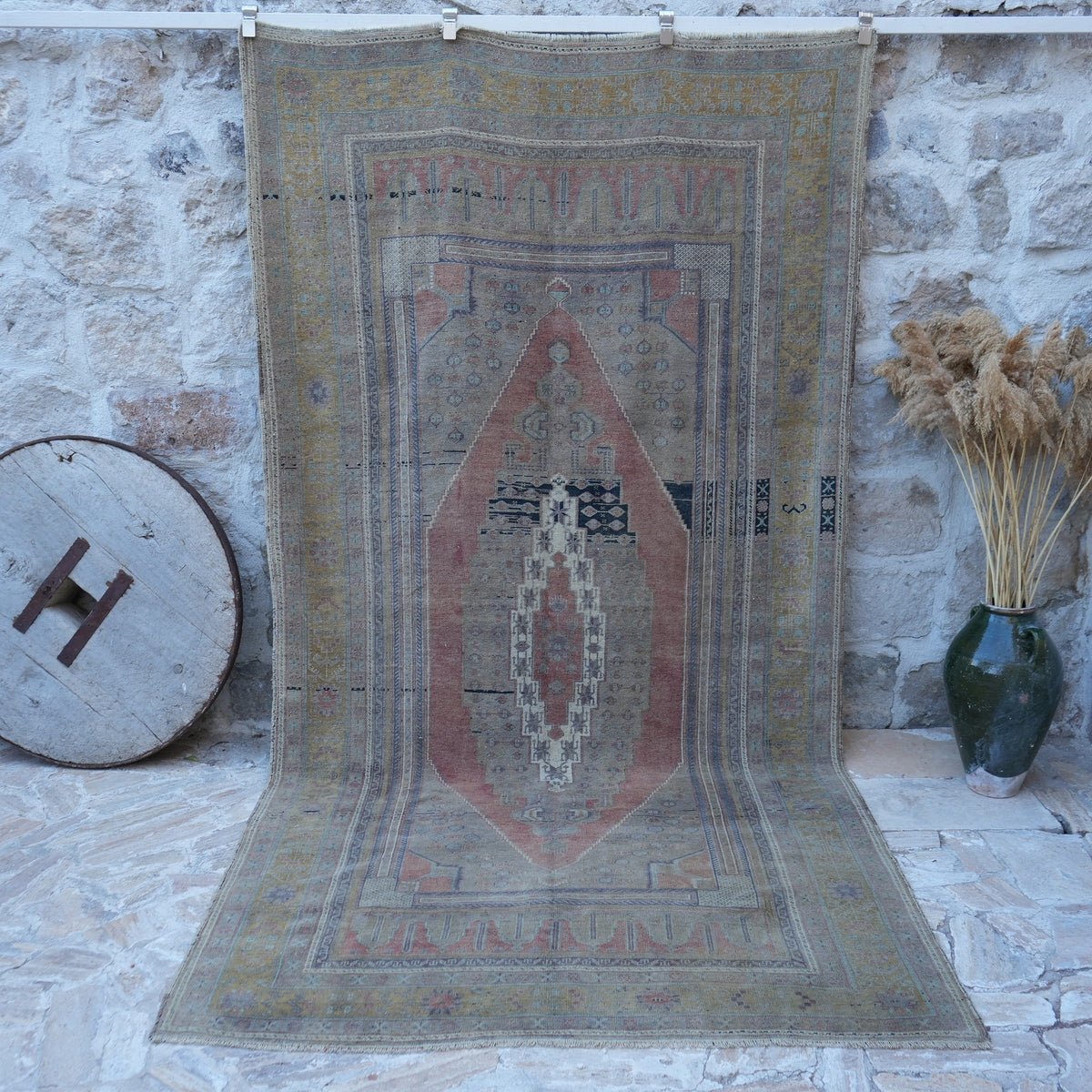
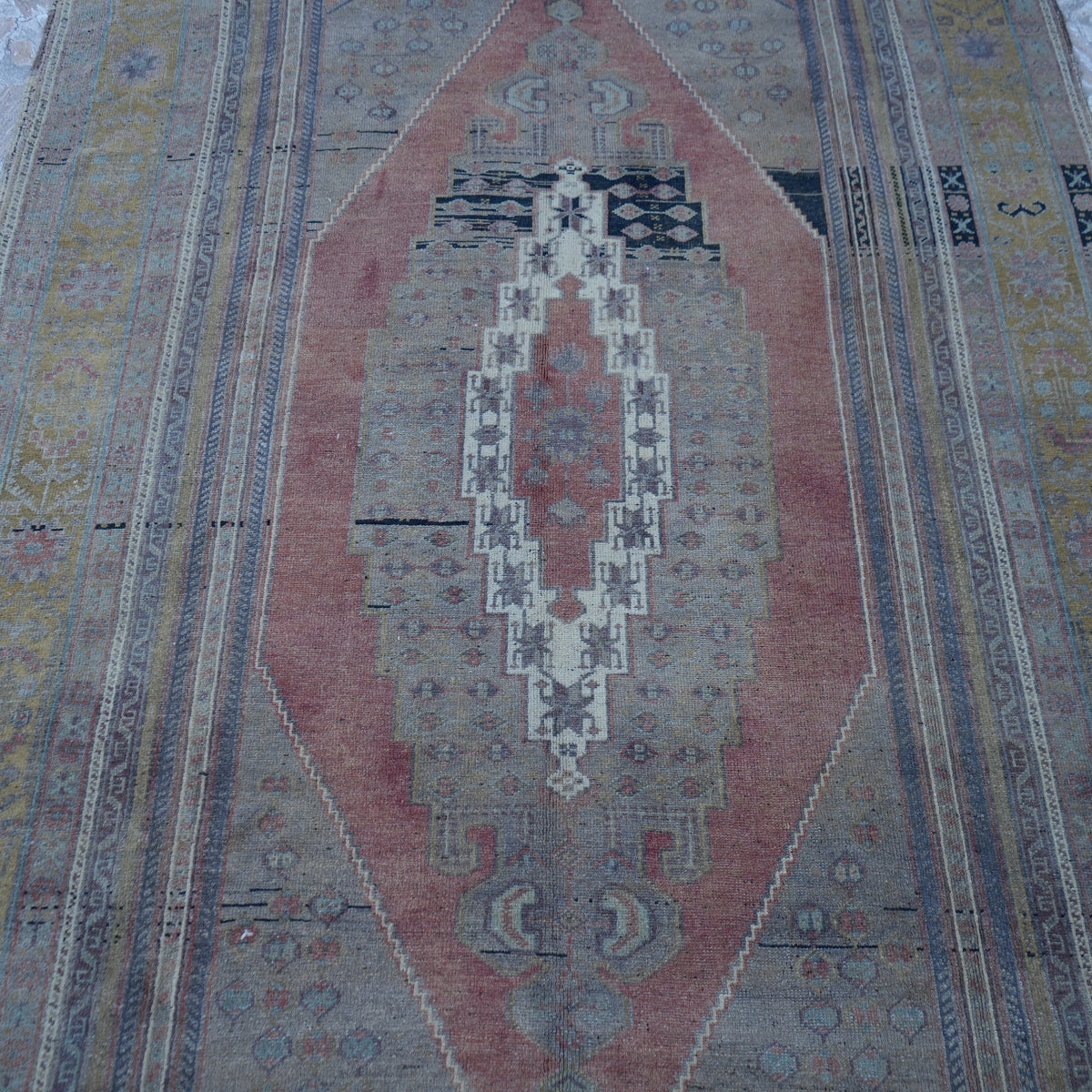
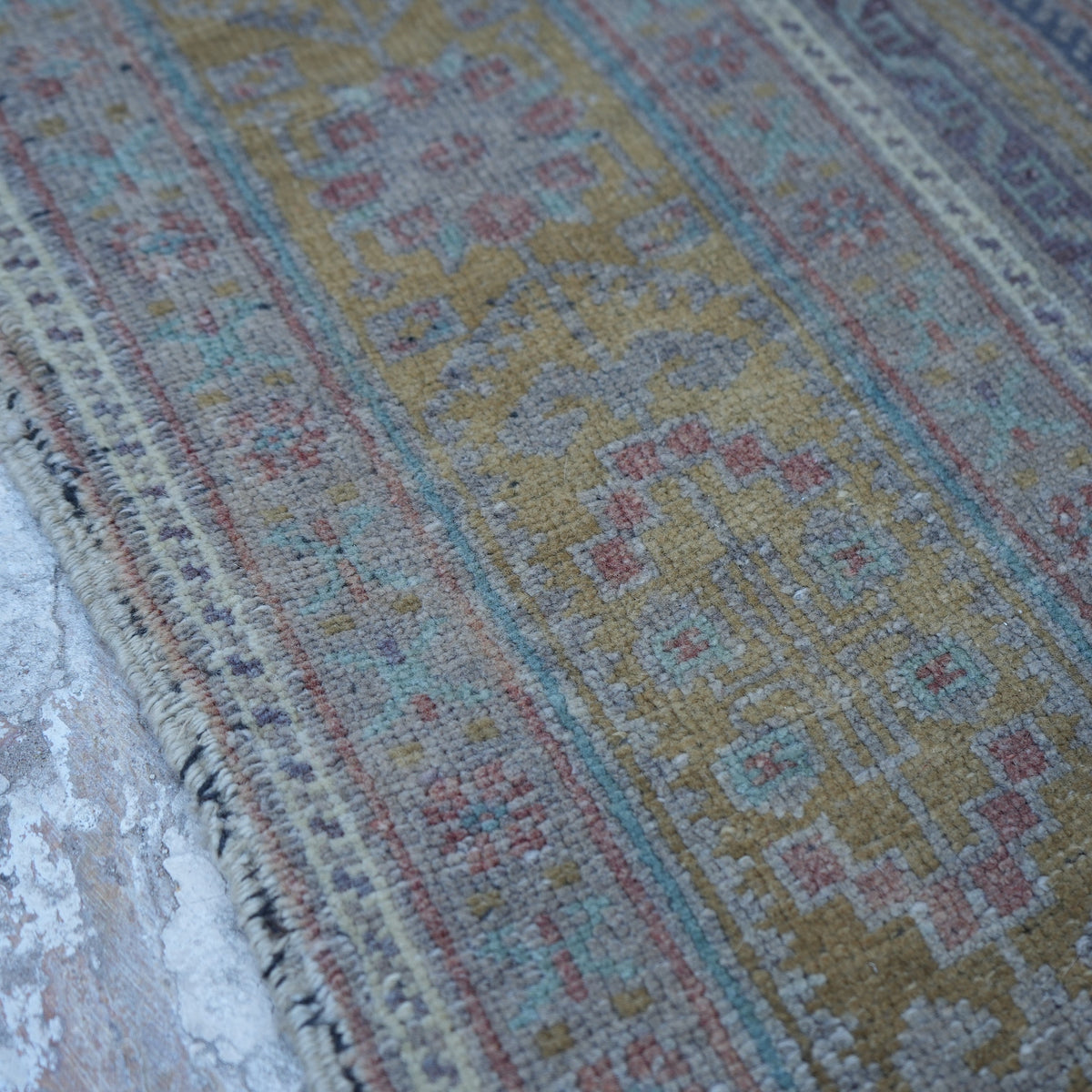
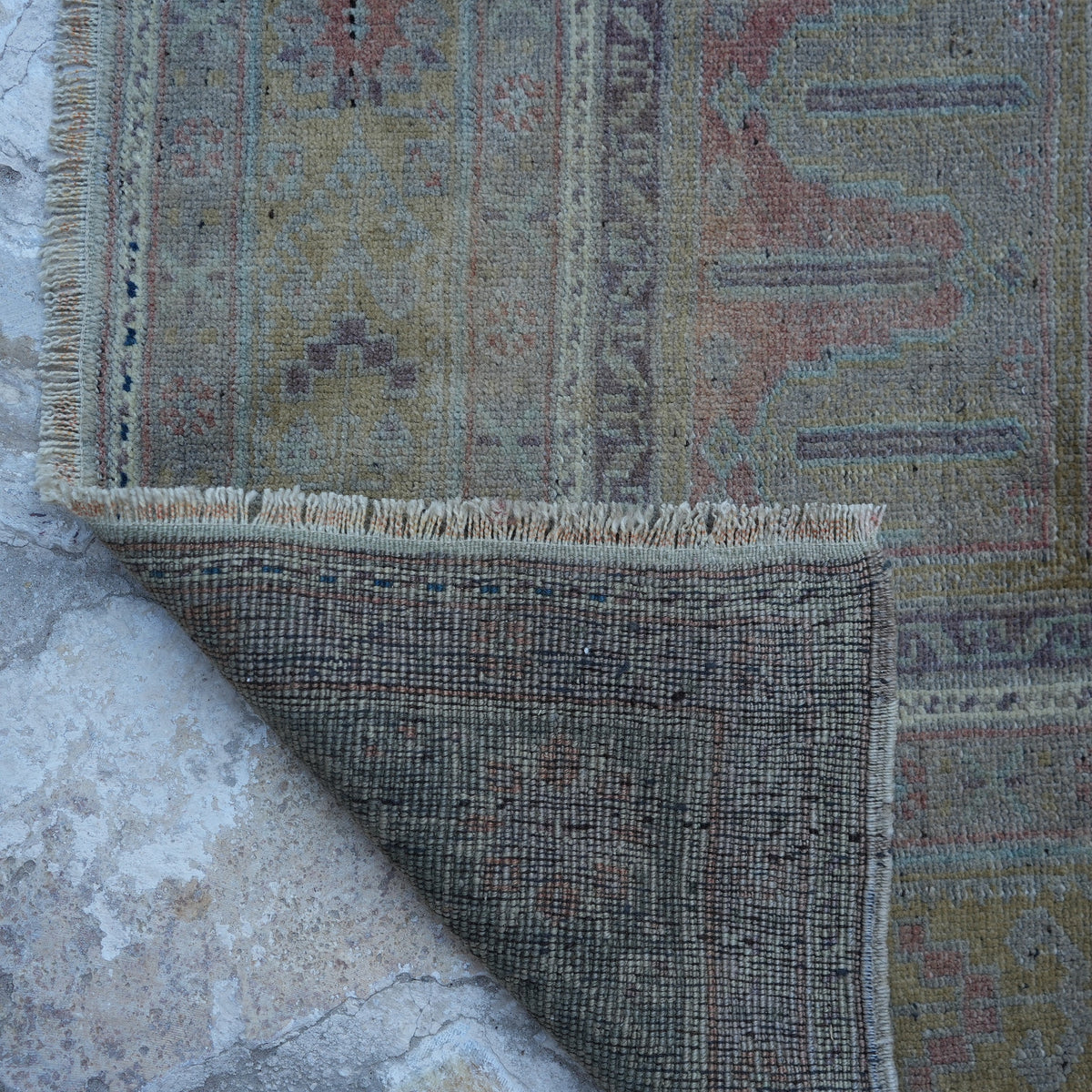
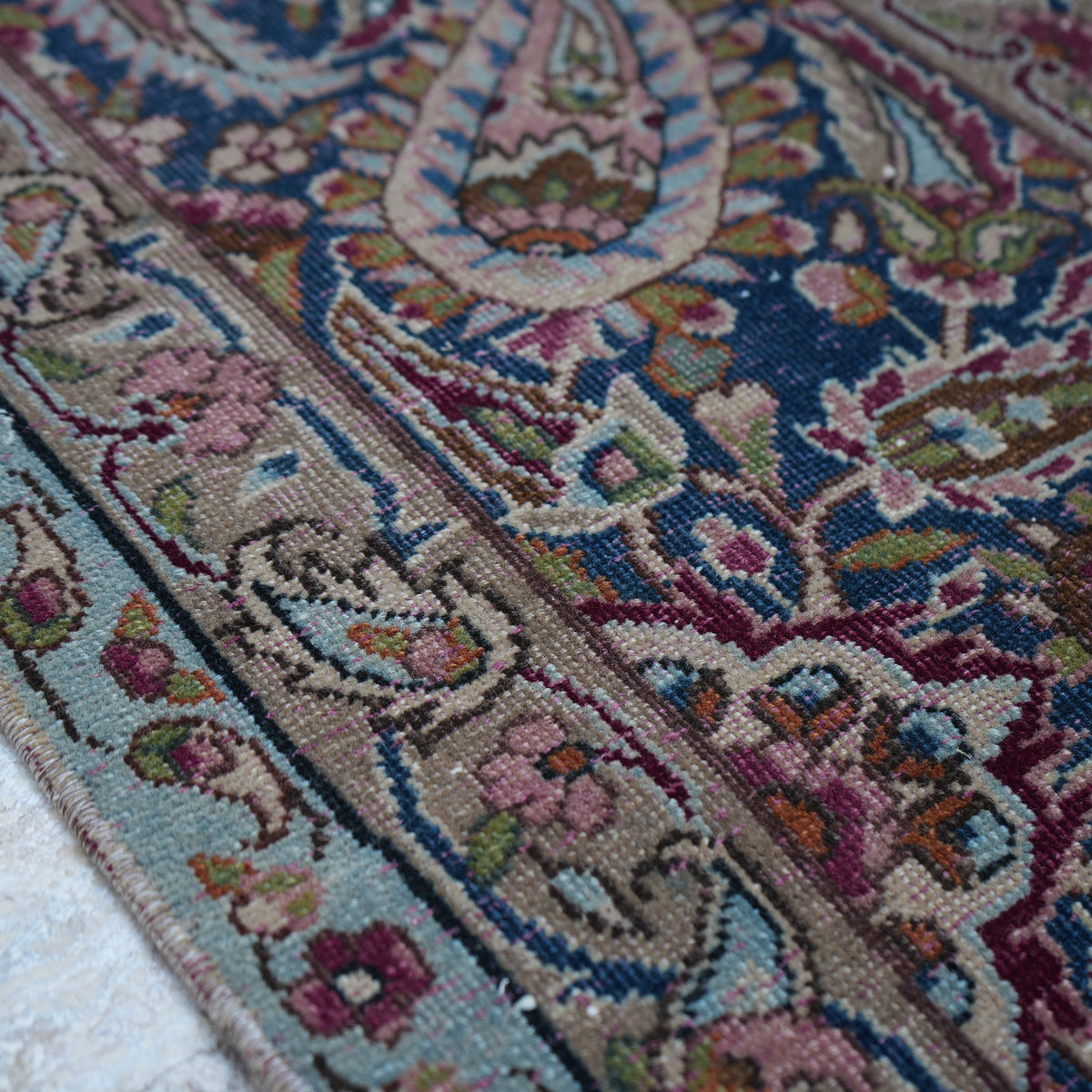
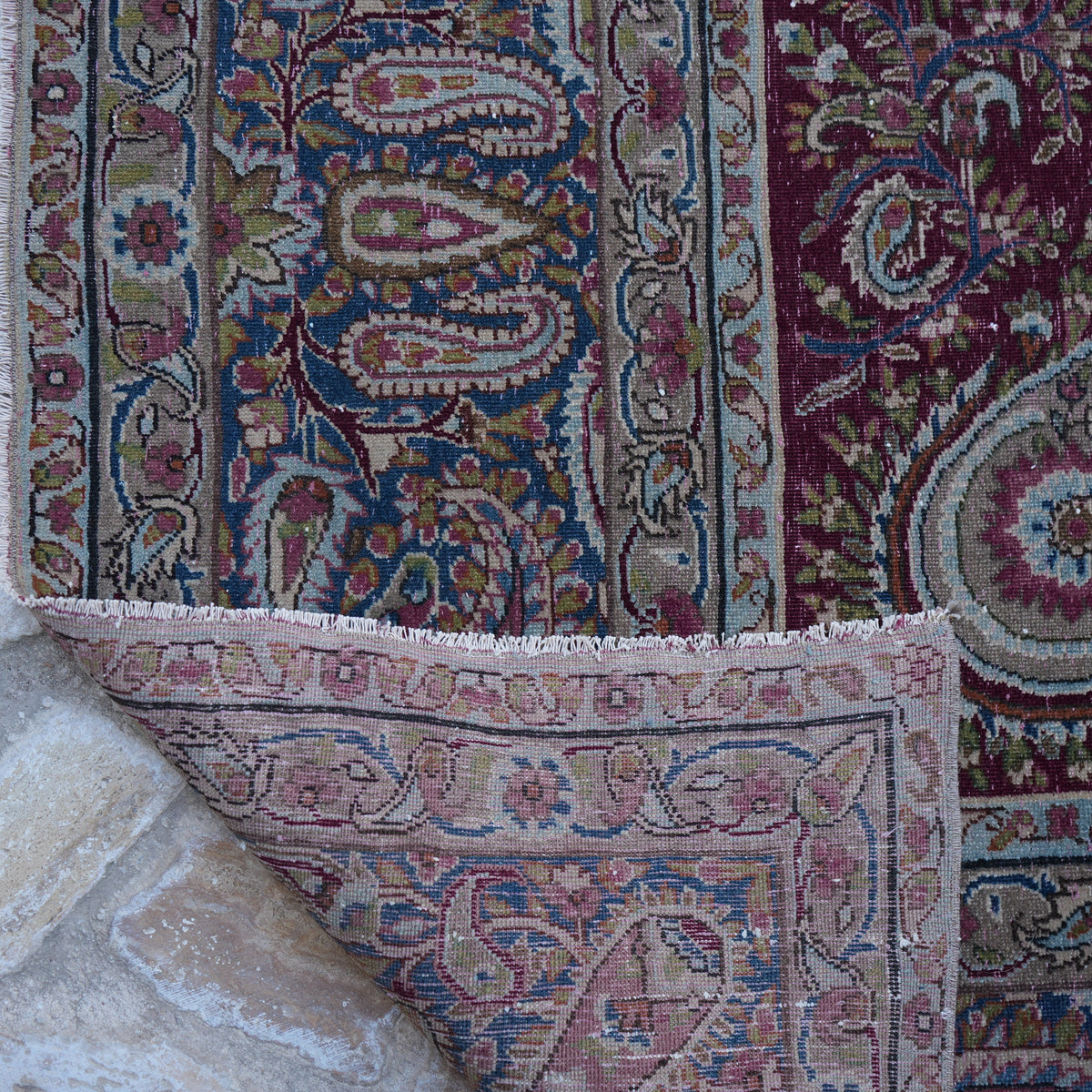
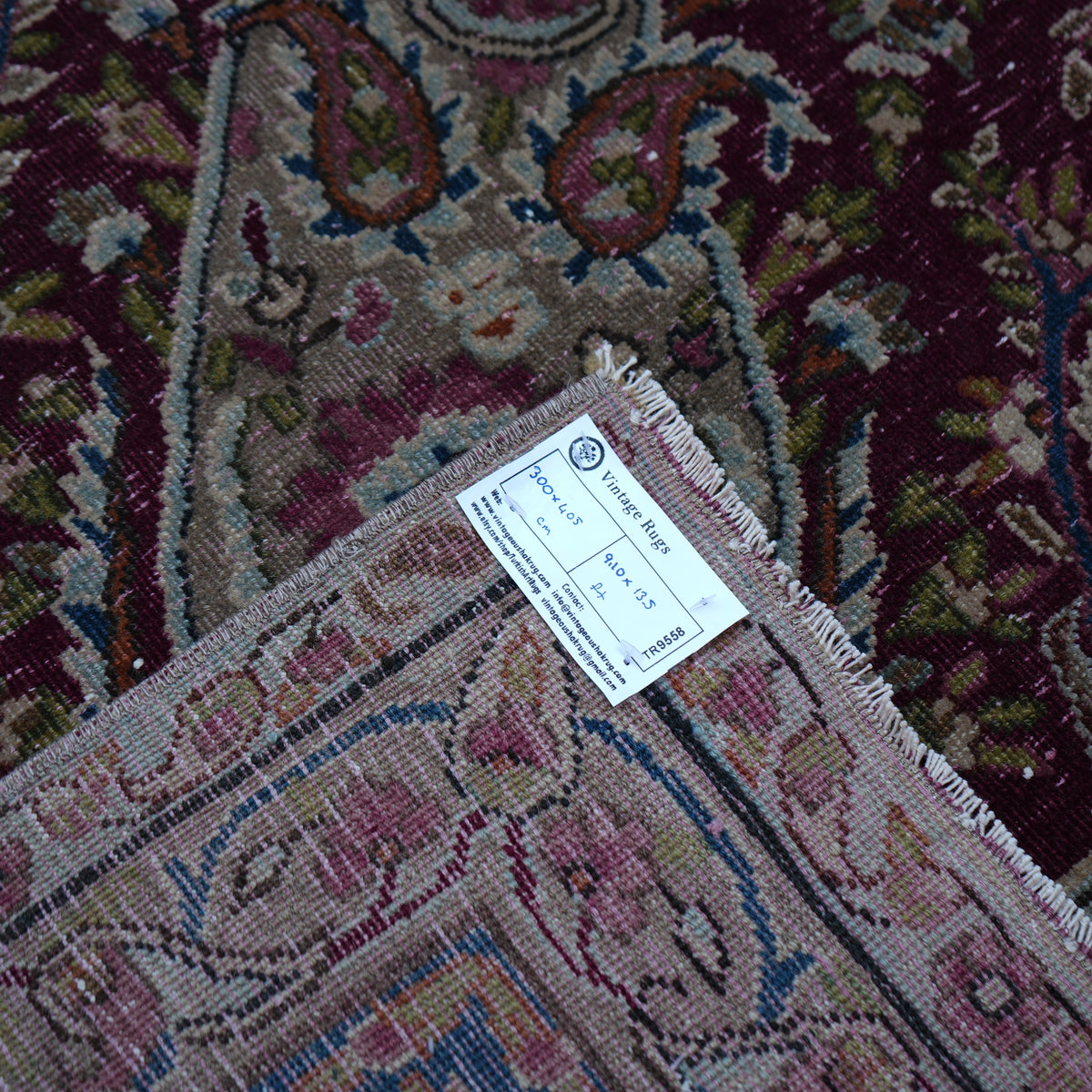
Shop Living Room Rugs by Size
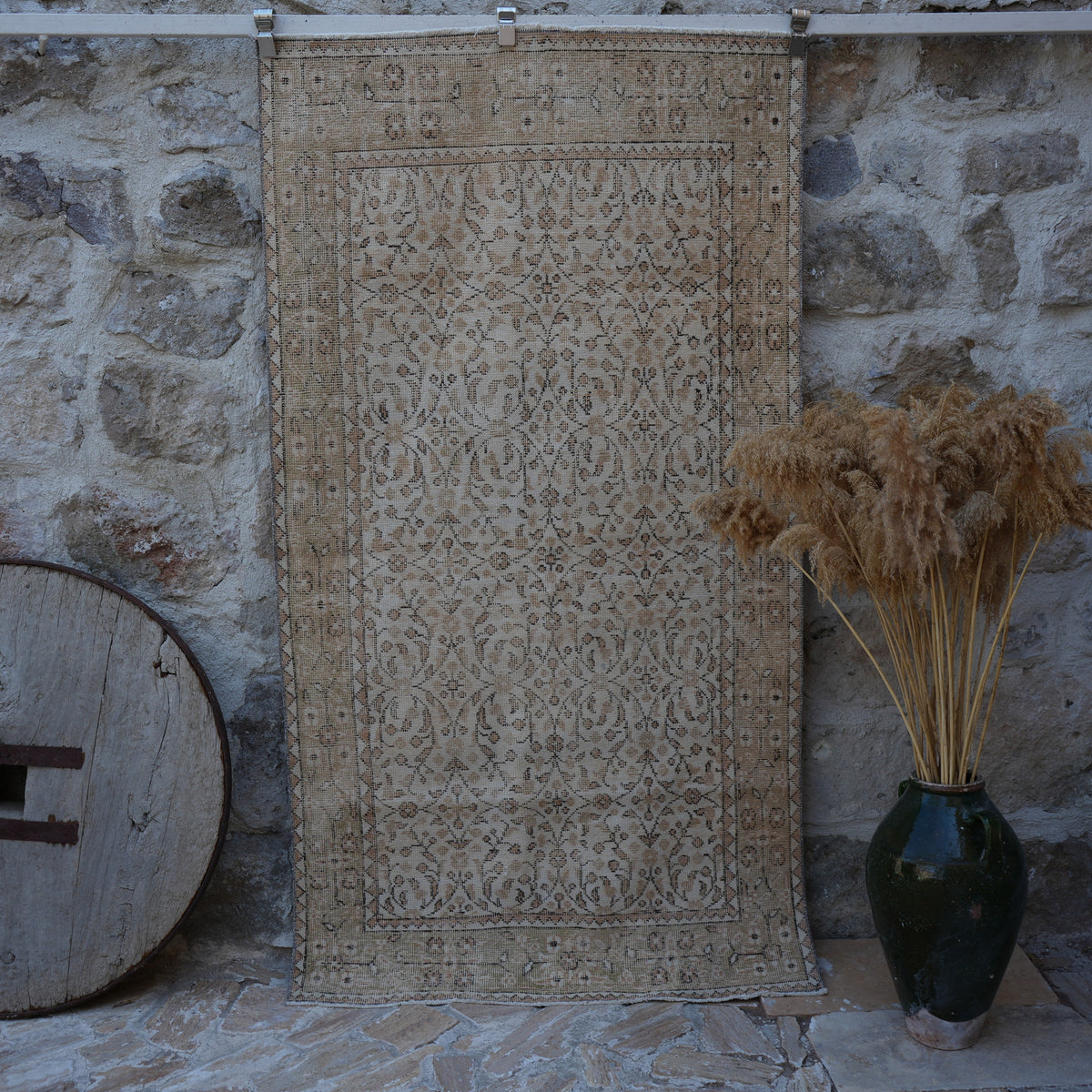
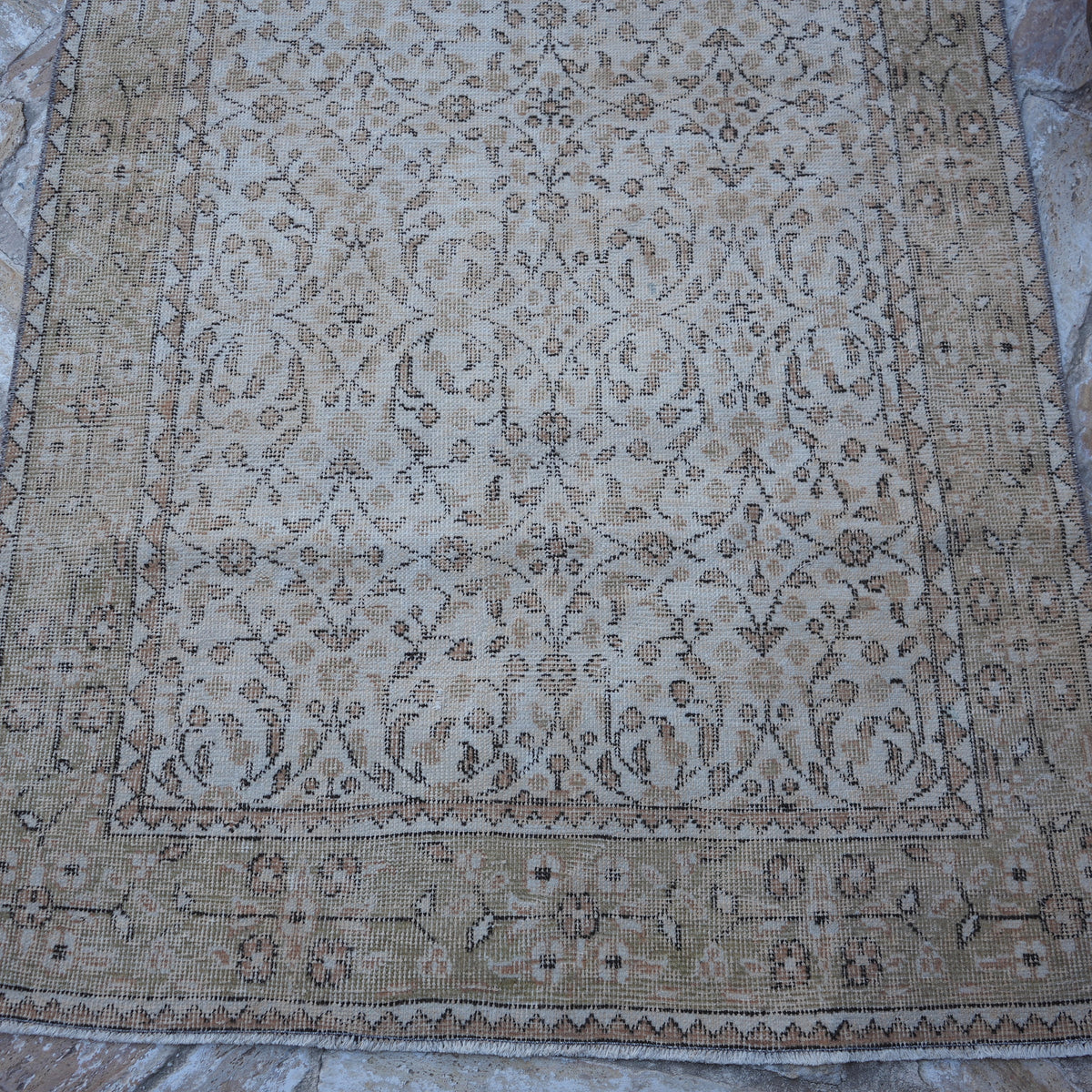

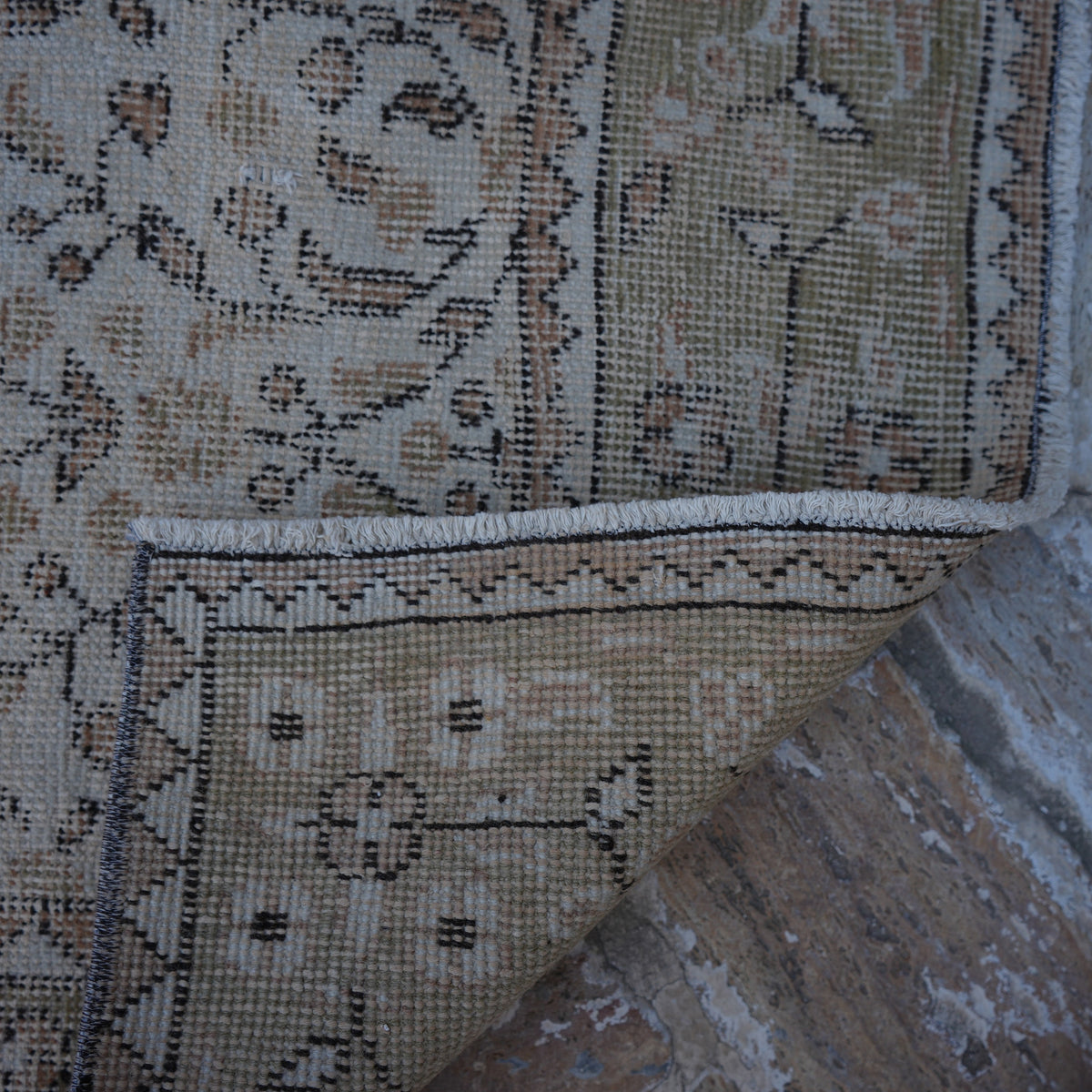








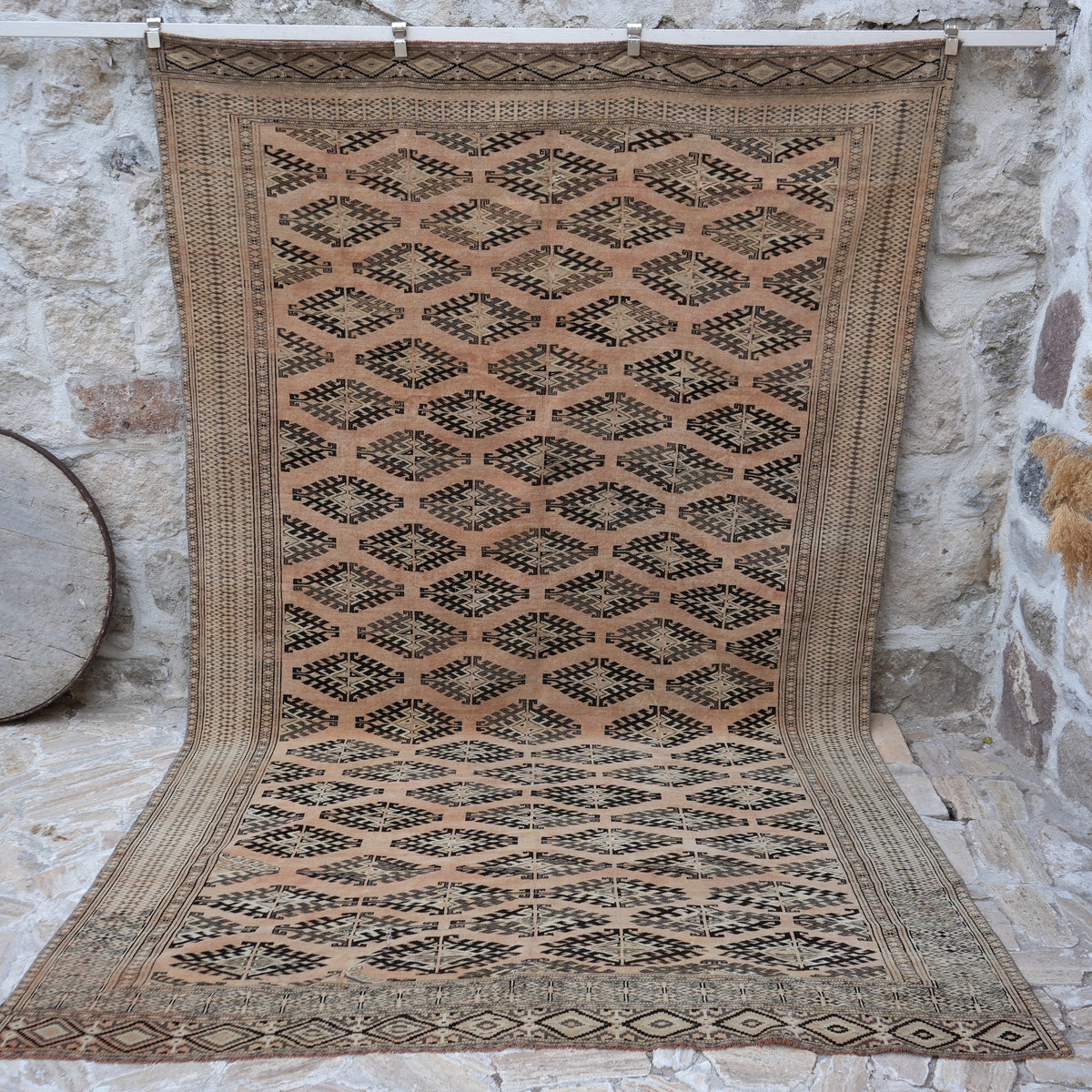
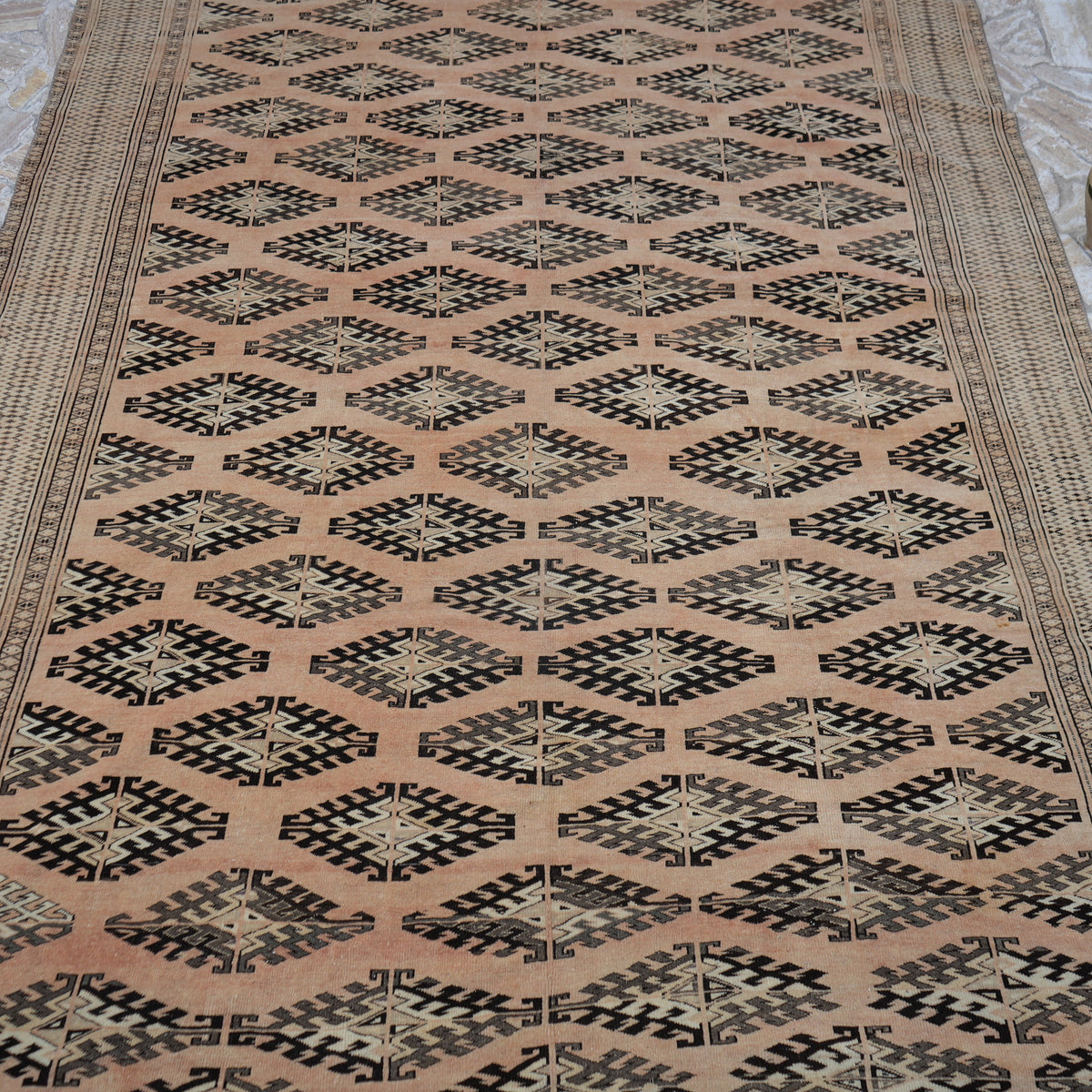
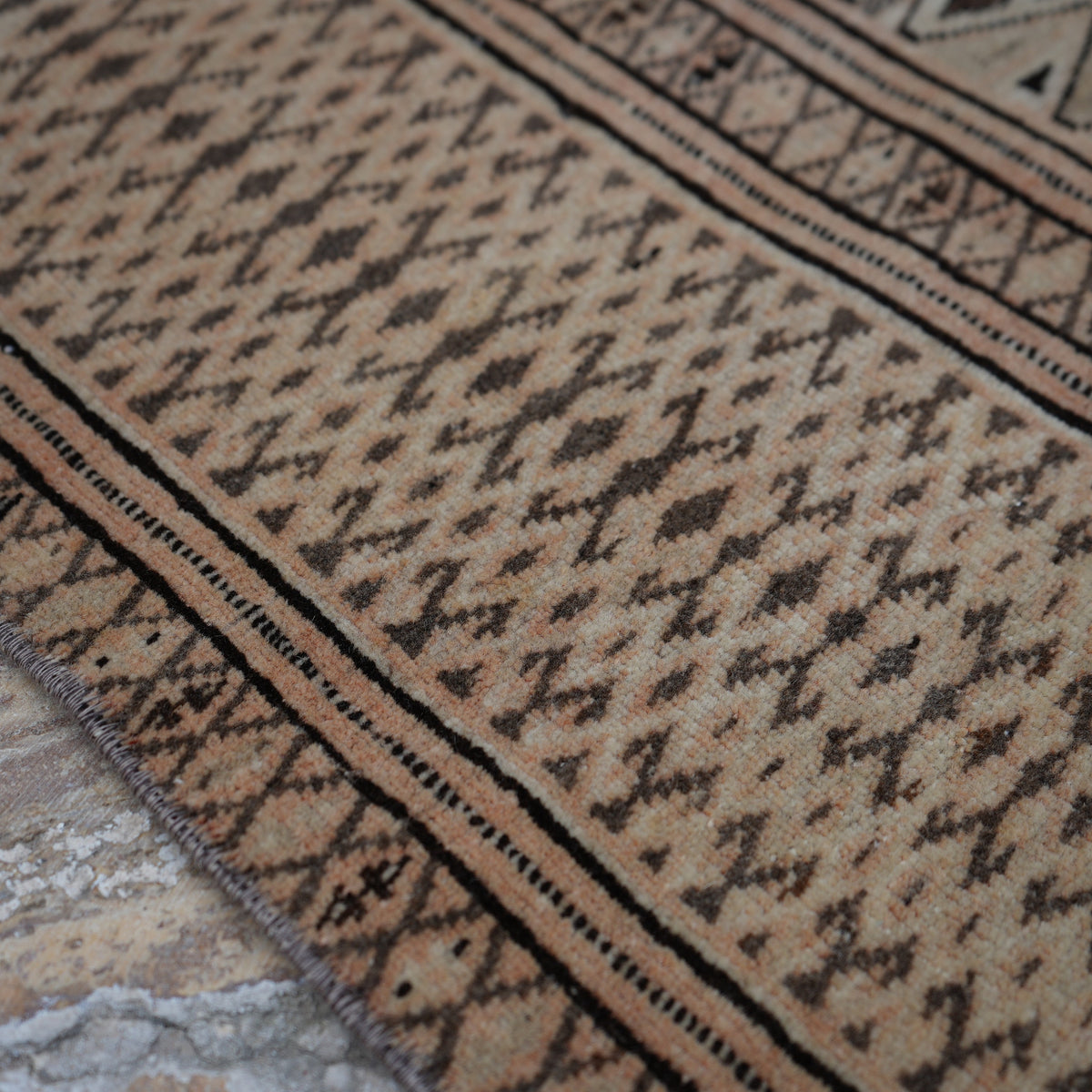
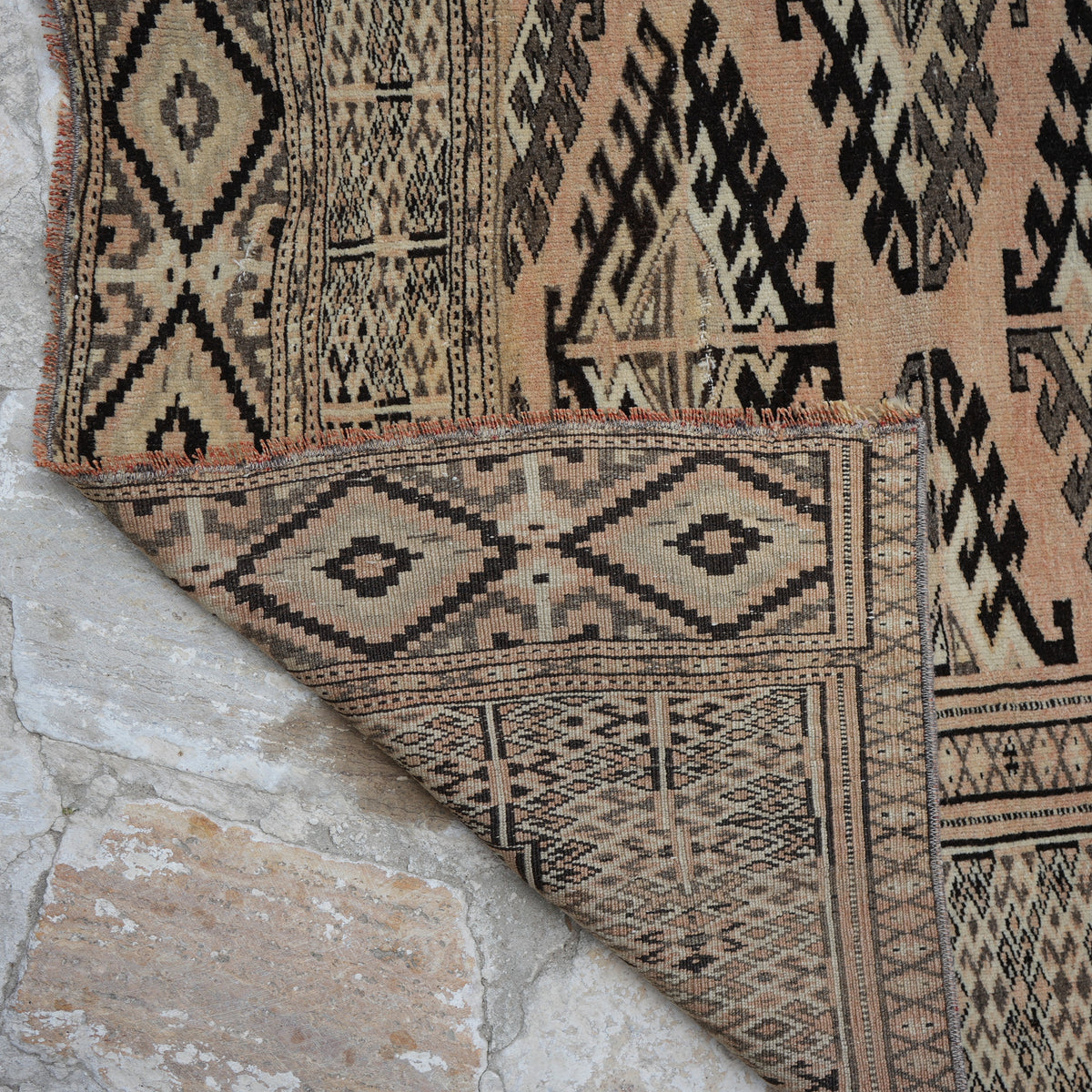


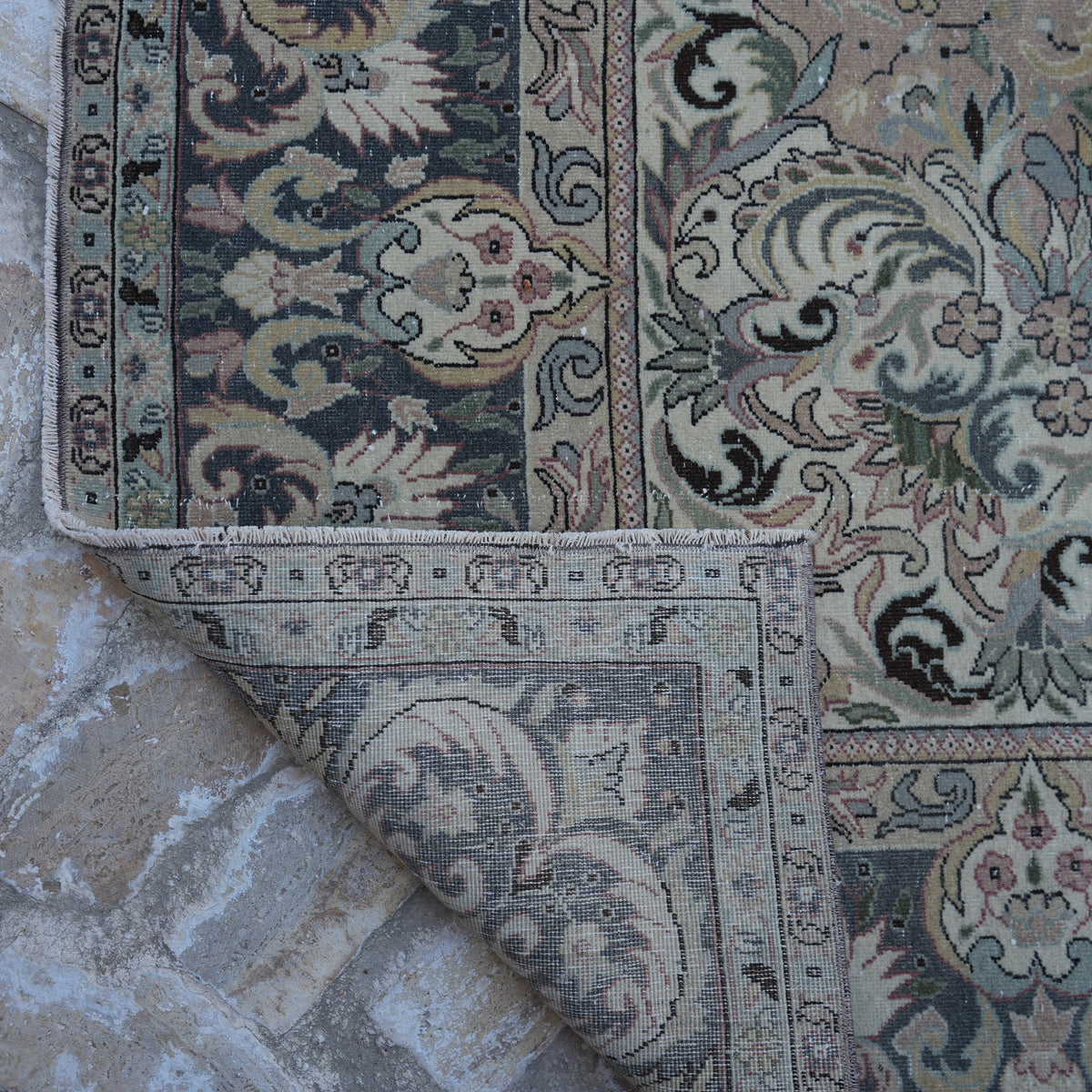
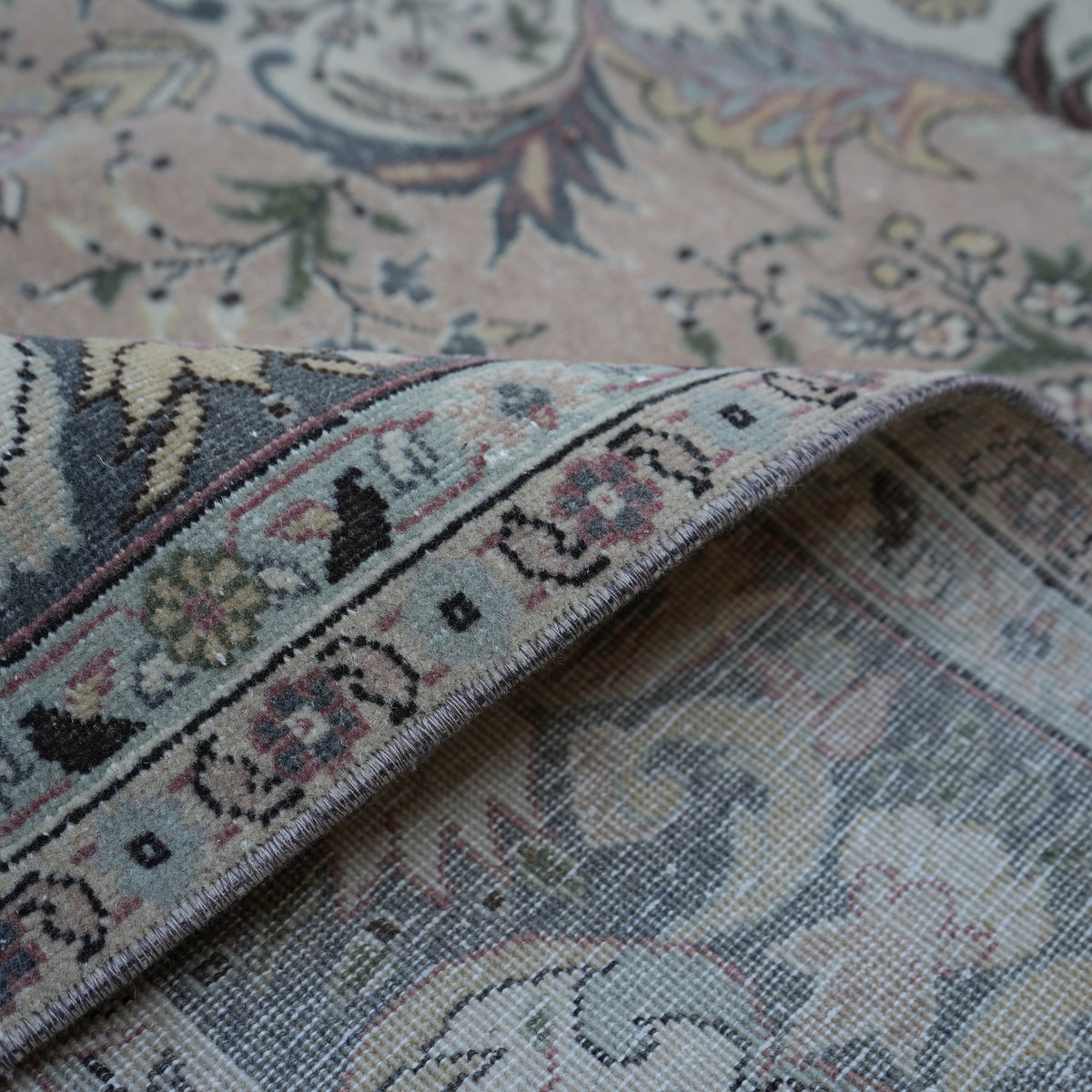
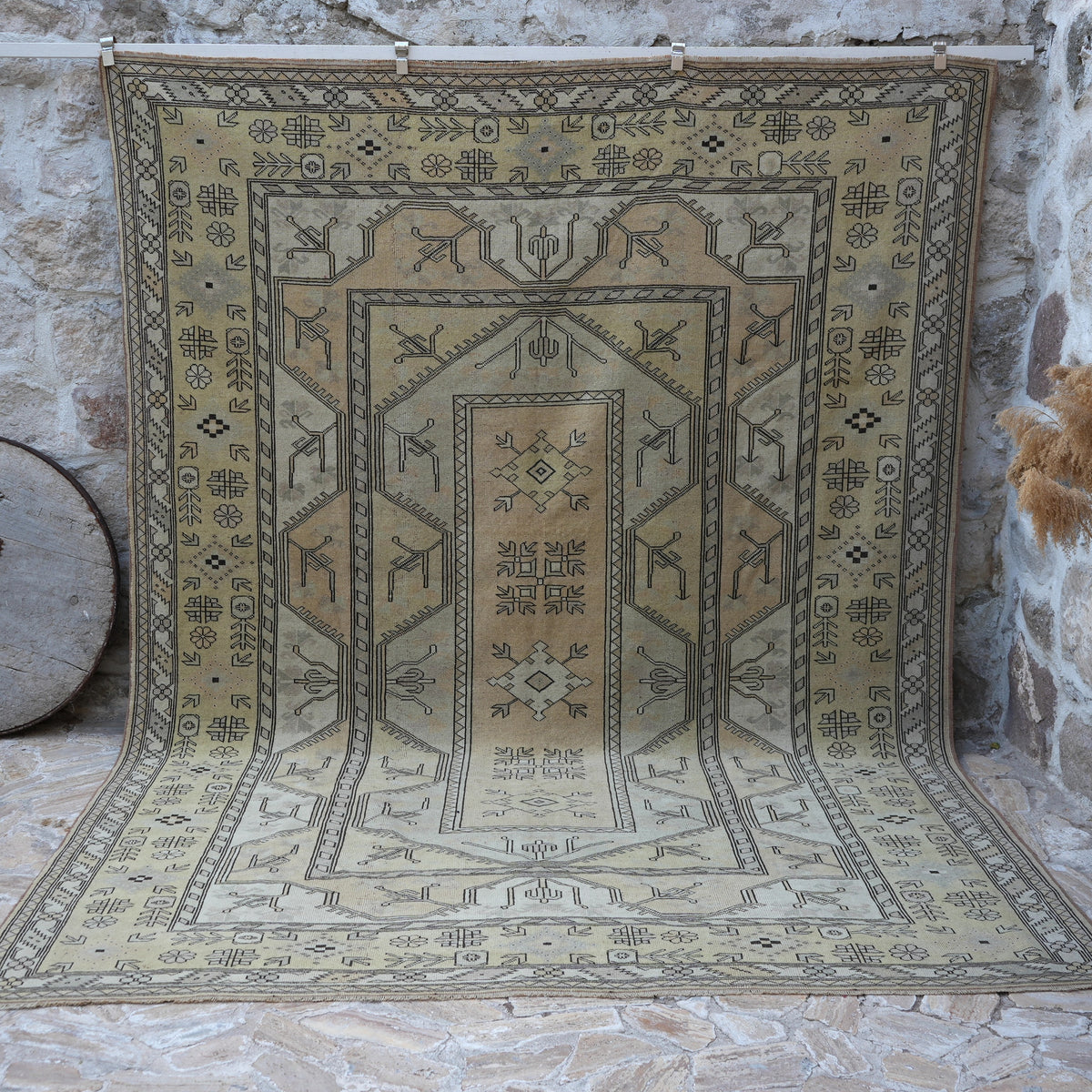


Frequently Asked Questions
What is the most common rug size for a living room with a sectional sofa?
9×12 is the right choice for most standard American living rooms. It anchors the front legs of both sofa sections, extends naturally on the open sides, and leaves the right amount of floor visible at the perimeter. For larger rooms or oversized sectionals, a 10×14 is the better fit.
Should the rug be larger or smaller than the sectional?
Always larger. At minimum, the front legs of every section should rest on the rug. Ideally, the rug extends 12 to 18 inches beyond the open sides of the sofa as well.
Can I use a vintage handwoven rug with a sectional sofa?
Yes — and it's one of the more practical choices for a high-use living room. Vintage handwoven wool has already survived decades of daily life. The natural oils in the fiber help slow liquid absorption, and the pile recovers well from furniture compression. Our vintage Turkish rugs are a strong match for American living rooms with sectionals.
How far should a rug extend past a sectional sofa?
On open sides, 12 to 24 inches is the standard range. At the walls, aim for roughly 18 inches of bare floor as a baseline to keep the room from feeling closed in.
What rug material is best for families with kids or pets?
Handwoven wool holds up well — the natural oils in the fiber slow absorption and give you time to clean a spill before it sets. For something even more low-maintenance, a kilim flatweave has no pile to trap debris, shakes out easily, and handles heavy daily traffic well.

