














In my early years selling rugs, I made a mistake I still think about. I was buying from markets in and around Cappadocia, washing pieces, sending them to the US. Some were high pile — thick, fluffy, the kind that look impressive in photos and feel soft the moment you press your palm into them. Customers bought them. The images performed well.
Then the messages started. "The vacuum won't pull anything out." "There's a smell that won't fully go away." "My kid tripped on the edge." I sourced every rug myself. I washed them. I sent them. Those complaints were mine to own.
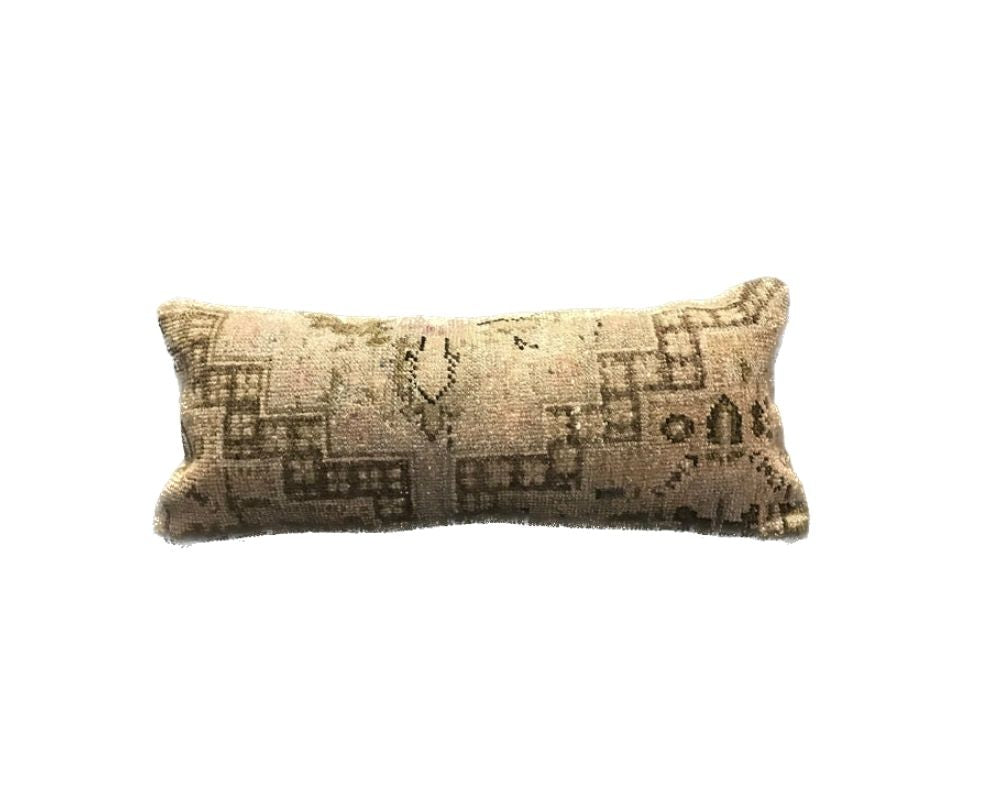
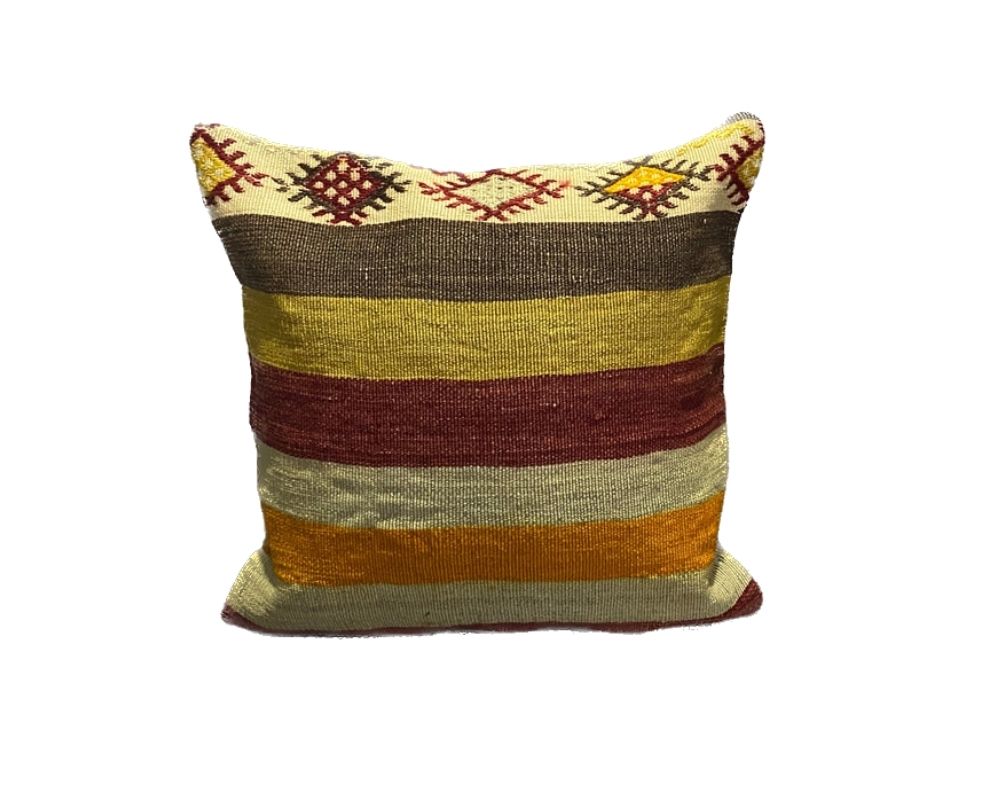
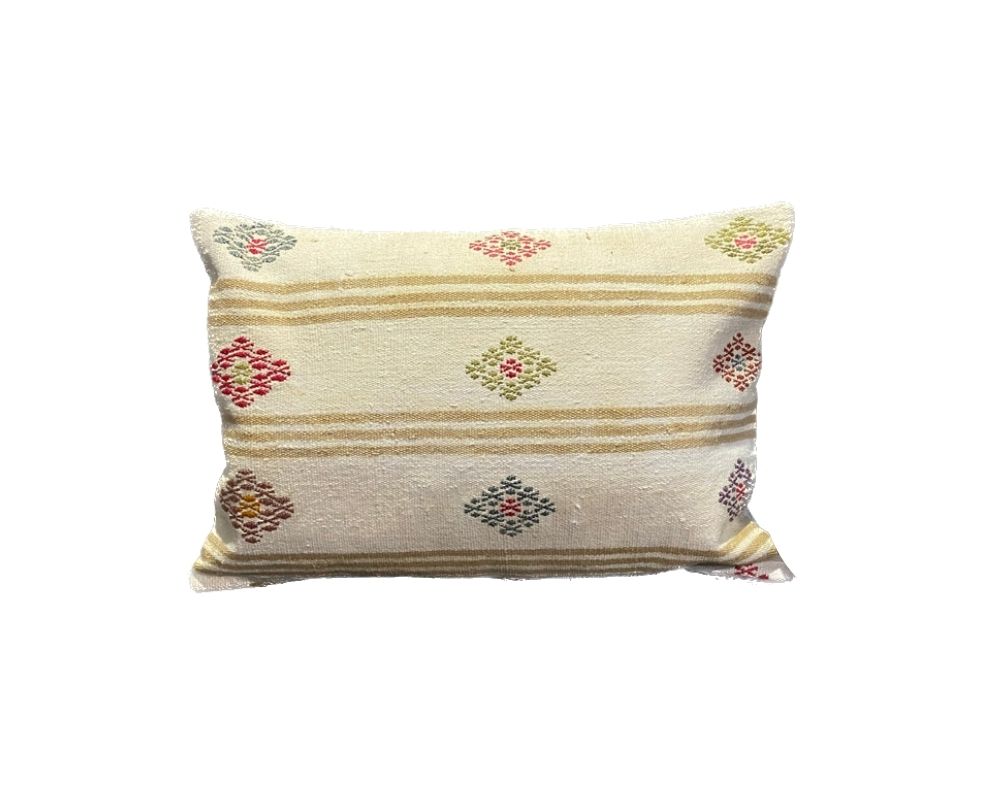
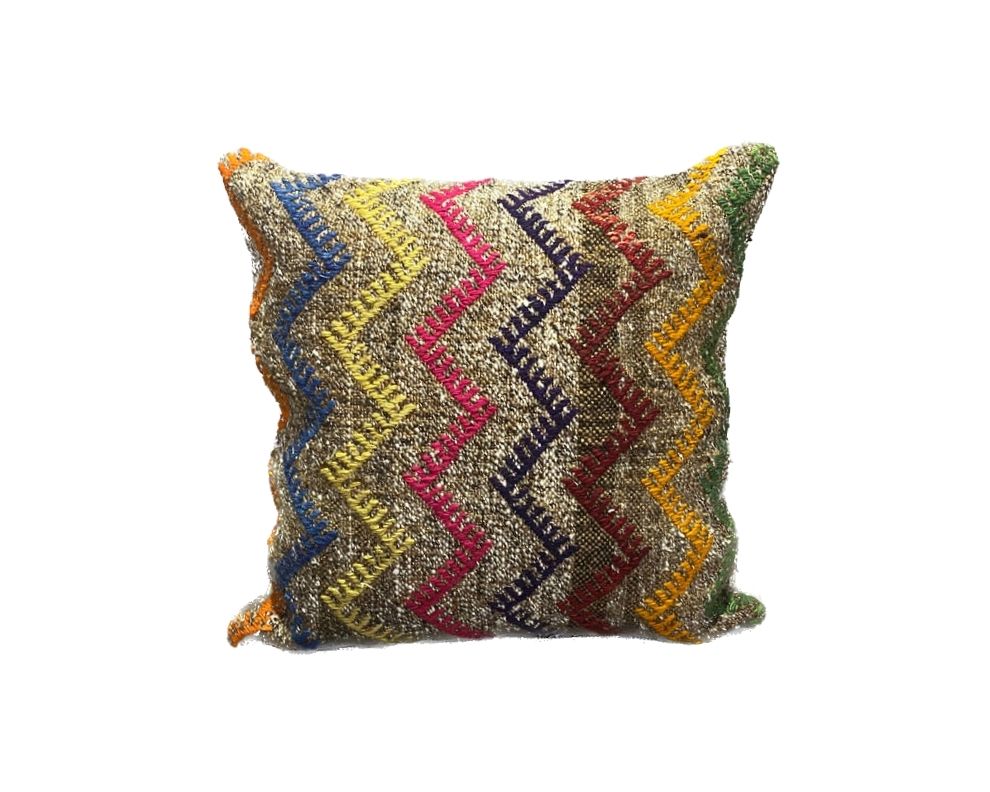
Then the vintage pieces came through — old Anatolian village rugs, kilims, Oushaks. By their nature, almost entirely low pile. Some nearly flat. I sent those out too.
The silence that followed taught me more than any guide ever could.
Quick answer — is low pile or high pile better?
For most real homes, low pile is the better choice. It handles daily traffic, pets, kids, dining chairs, vacuuming, and long-term wear far better than high pile. High pile makes sense in low-traffic bedrooms, nurseries, or quiet corners where softness matters more than maintenance.
Pile height at a glance
Low pile
Approximately 0.2 inches / 0.5 cm. Dense, practical, easy to vacuum, and best for most rooms.
Medium pile
Approximately 0.5 inches / 1.2 cm. A softer middle ground, but still more demanding than low pile.
High pile
Approximately 0.8 inches / 2 cm. Plush and cozy, but harder to clean and easier to crush or mat.

What Is Rug Pile Height?
Pile height is how long the fibers stand above the rug's backing — measured from the base of the weave to the tip of each strand. Three categories: low pile (approximately 0.2" / 0.5 cm), medium pile (approximately 0.5" / 1.2 cm), and high pile (approximately 0.8" / 2 cm). Kilims, flat-woven with no pile at all, sit at roughly 2mm.
Pile height is not an indicator of quality. A hand-knotted low pile Oushak is a more demanding piece of craft than almost any high pile rug on the market. The length of the fiber tells you nothing about what went into making it.
On every Kirmen rug listing, you'll find pile height labeled as Low, Medium, or High — with the measurement in centimeters. Most of our pieces land at 0.5 cm or under. That is not a curatorial accident.
Low Pile — Short Fibers, Long Life
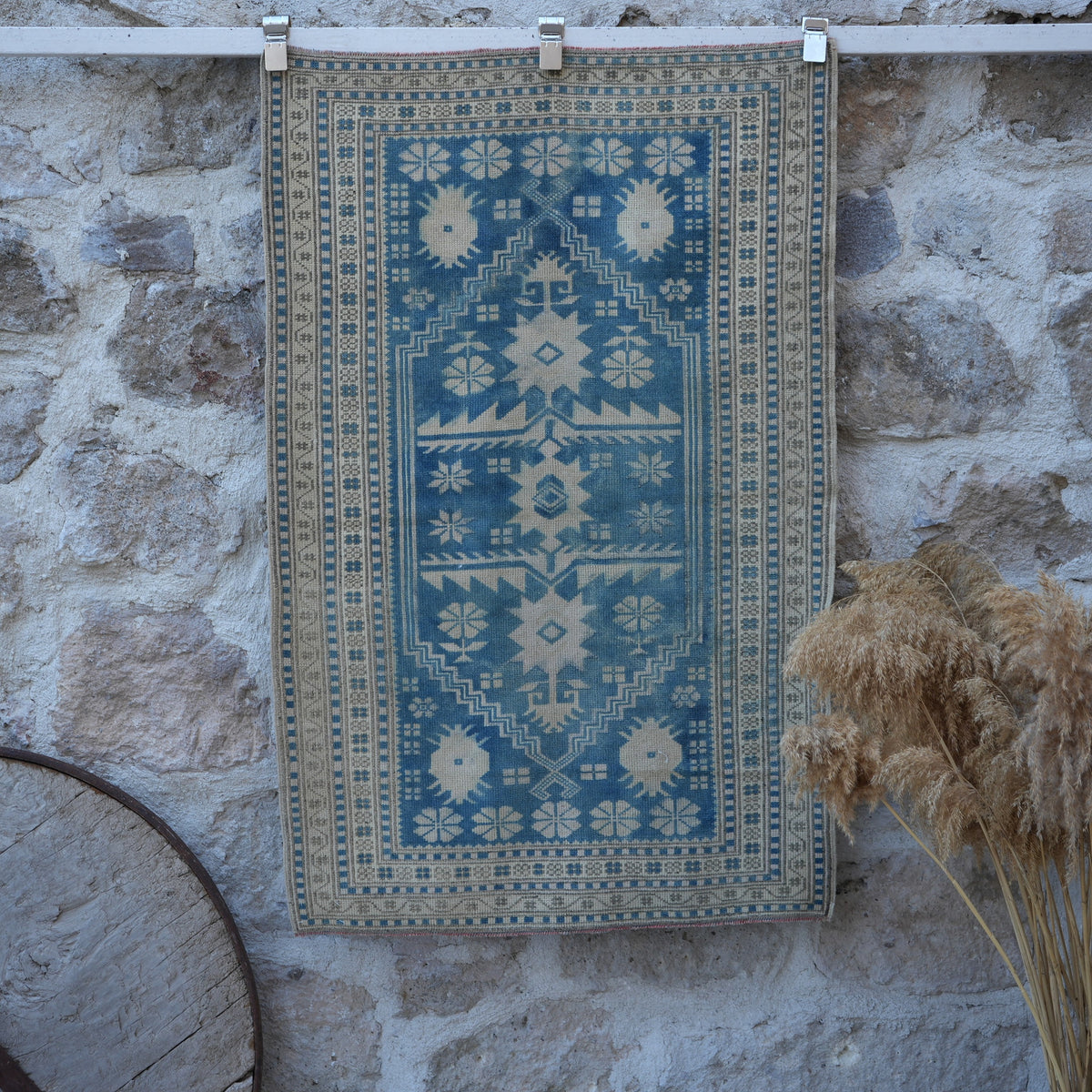
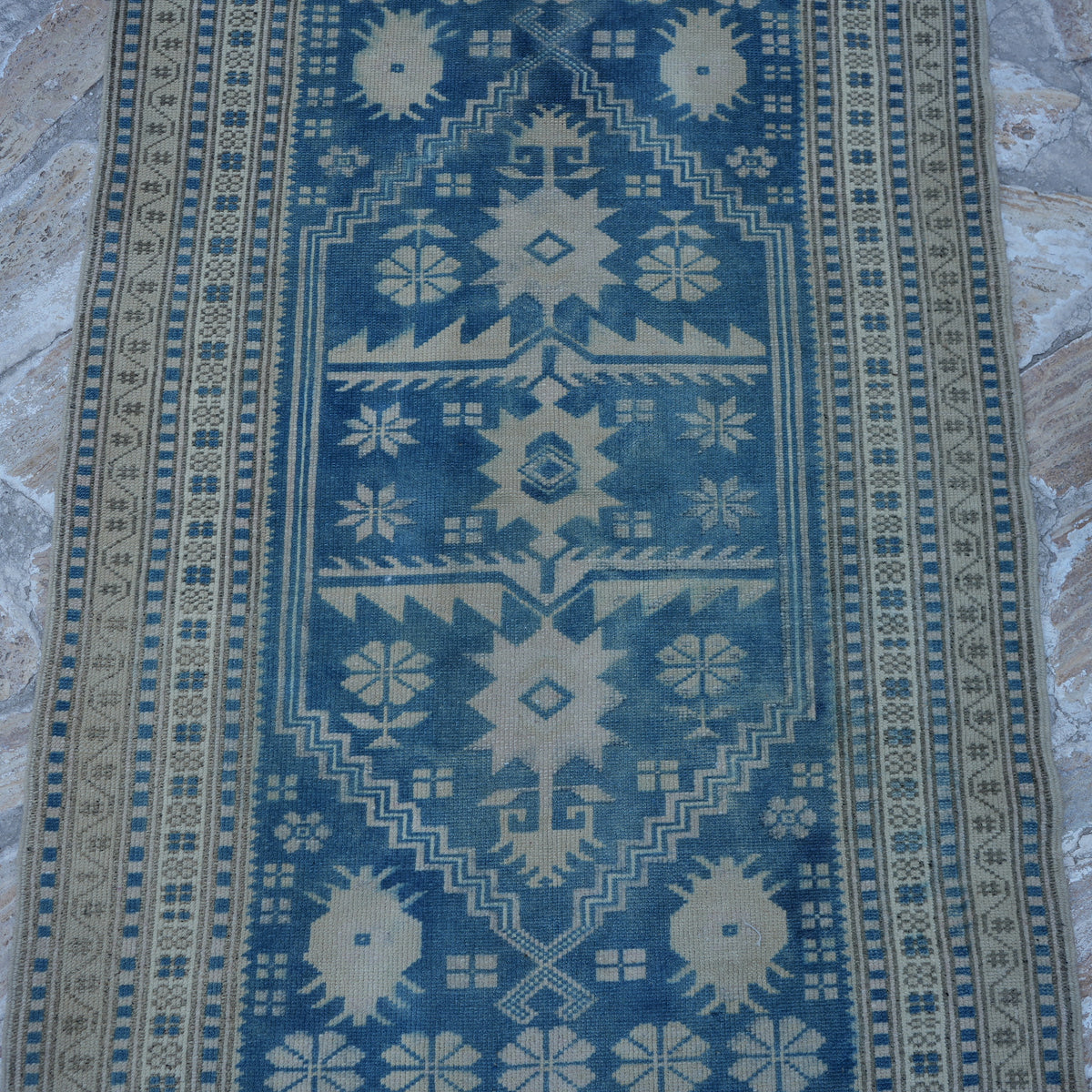
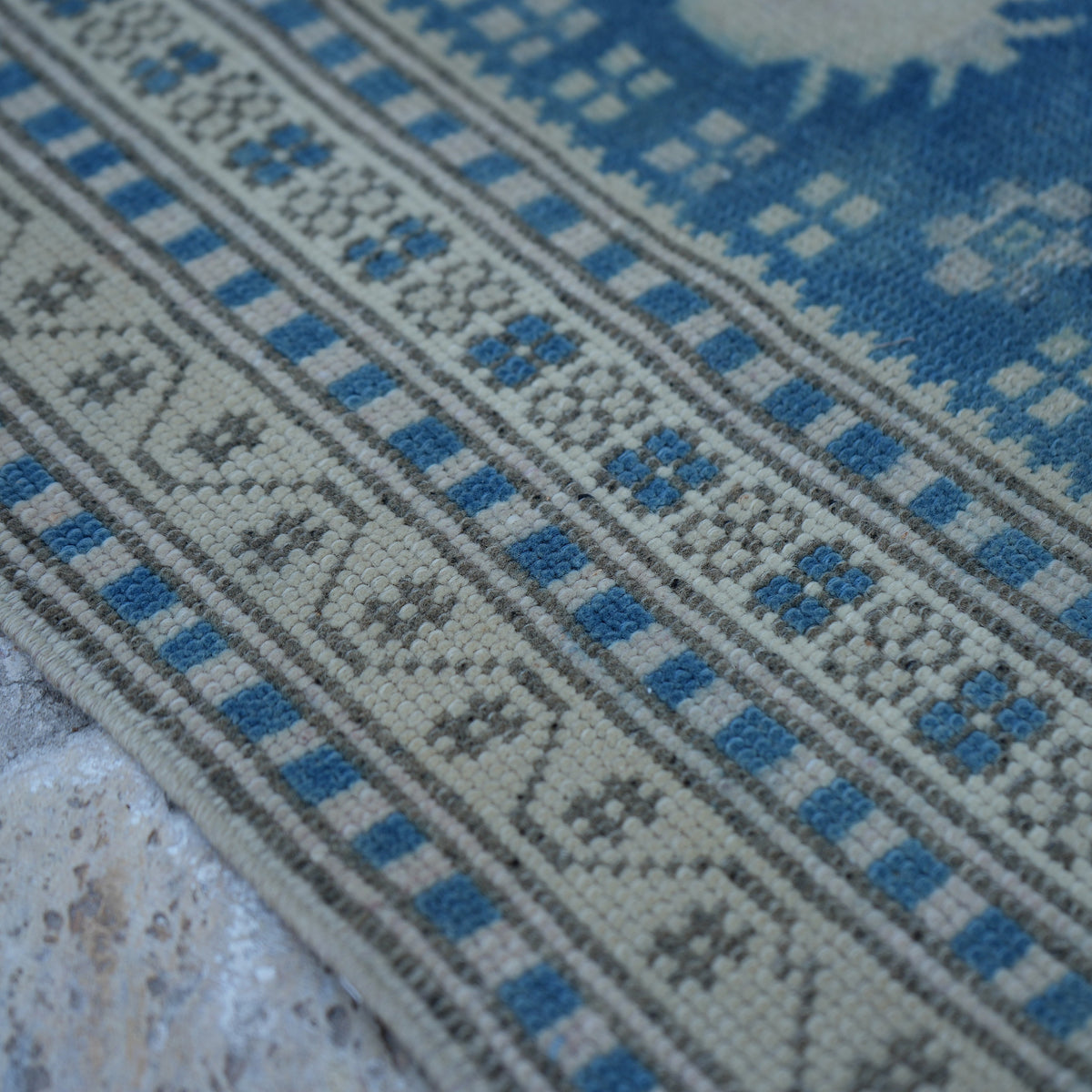
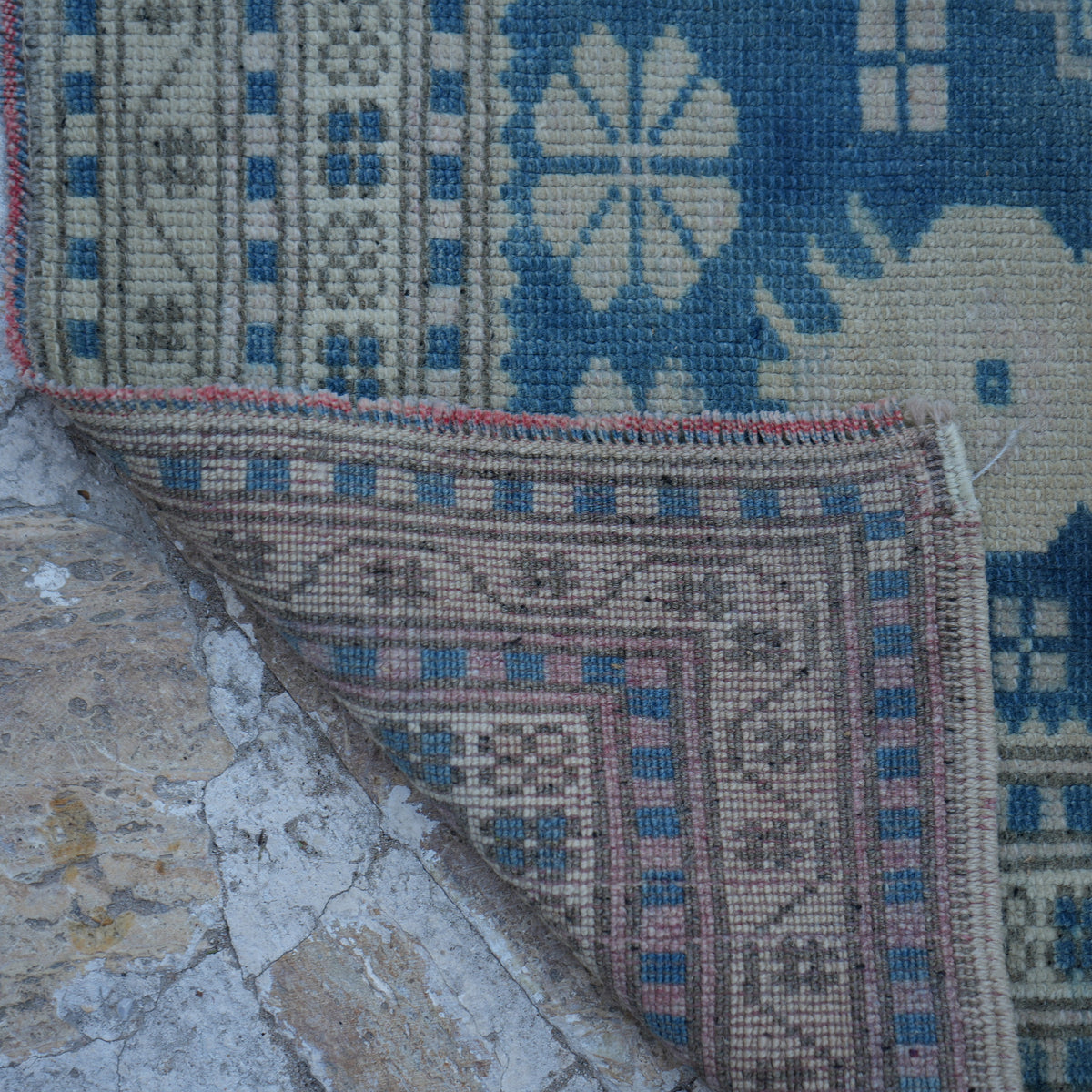
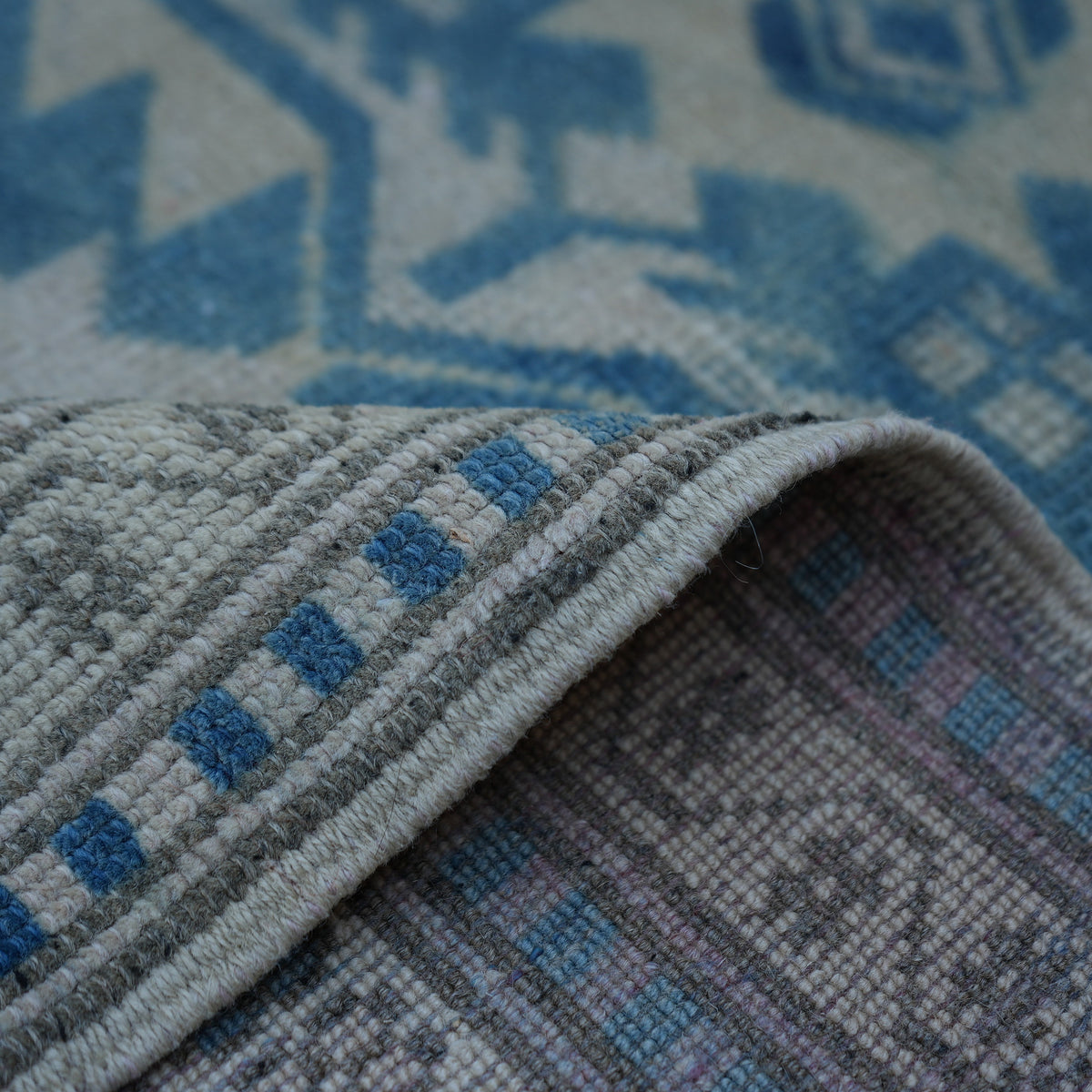
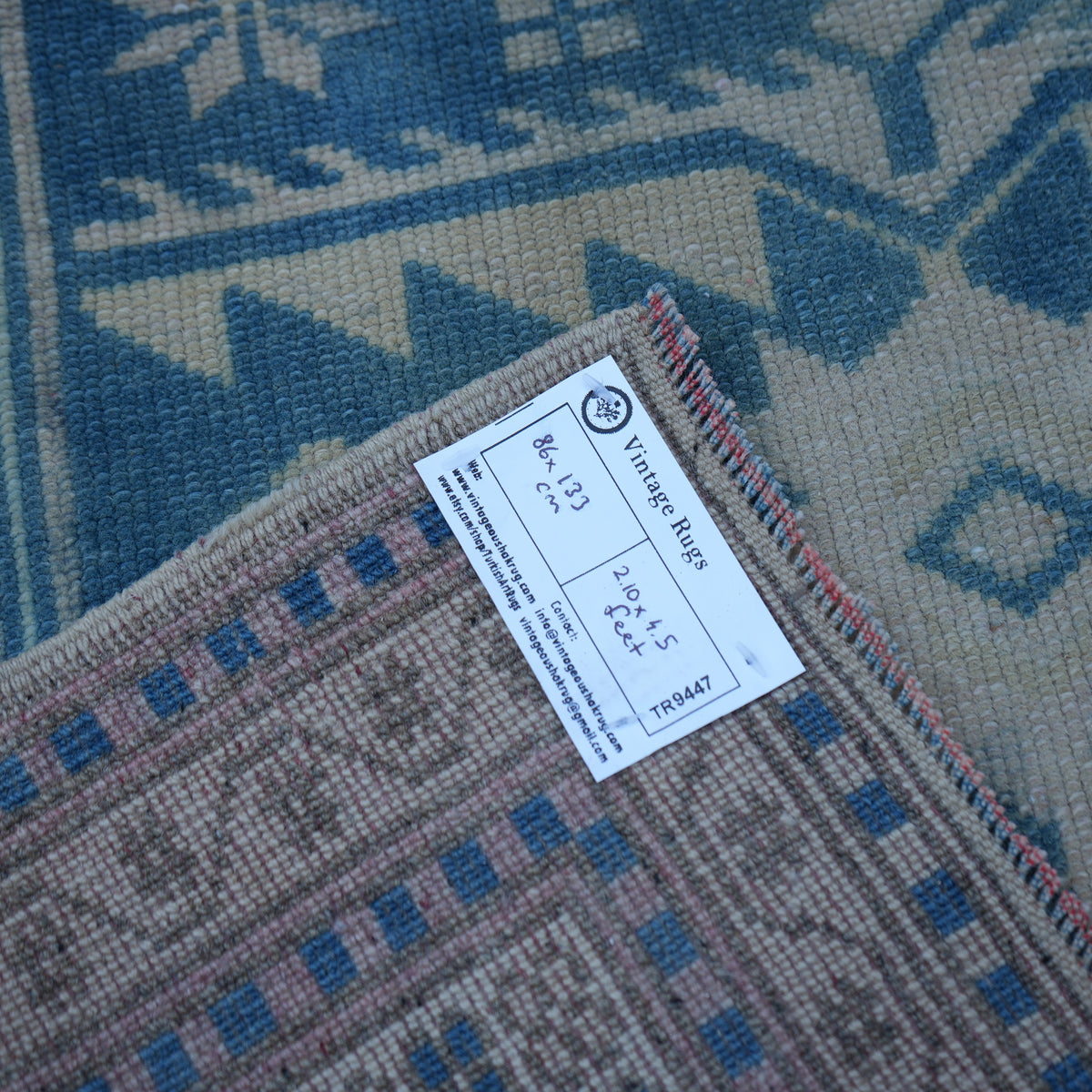
Low pile rugs have short, tightly packed fibers. The surface feels dense and purposeful — you can see the pattern clearly because nothing is blurring the weave. Chairs move freely across the surface. Spills sit on top rather than sinking in. Our Turkish rugs and kilim rugs fall almost entirely into this category.
High Pile — Plush, Cozy, and Demanding
High pile offers a soft, sometimes deep surface underfoot. Shag rugs sit at the far end of this spectrum — thick, textural, beautiful in lifestyle photography. They feel extraordinary on day one. What the photos don't show is the specialized vacuum attachment, the professional cleaning bill, and the furniture legs leaving permanent impressions that never fully recover. Our shag rugs are there if you want that texture — but go in with a clear picture of what they ask of you.

The Honest Truth About Low Pile — From Someone Who Handles These Rugs Every Day
I have trimmed pile by hand. With scissors, one section at a time — shearing a rug the way you'd cut hair. I do it when a piece comes in with fiber too long for what I know a real home needs. Because a rug that looks beautiful in a warehouse does not always live well in a house.
Low Pile Rugs Age Better — Here's What I've Seen
An 80-year-old Oushak will show you something high pile cannot. The pattern is still sharp. The color still has depth. The structure is intact. It looks worn — but worn the way a leather jacket ages, not the way a cheap sofa collapses.
High pile mats down in heavy-traffic zones while lower-traffic areas stay tall. After a year or two, the unevenness is visible from across the room. I tell customers: "This rug saw three generations before yours. It is still here."
Low Pile Is the Traditional Choice in Anatolia — Not the Compromise
The weaving traditions of Cappadocia, Aksaray, Konya, and the Oushak region almost universally produced low pile or flat-woven pieces. Nomadic and village weavers understood what a rug had to survive — daily foot traffic, animals, washing, cold winters. This was not a limitation. It was accumulated craft knowledge.
When customers ask me why these old rugs are low pile, I say: "The person who wove this knew a child would sit on it, an animal would sleep near it, and it would be washed once a year. They built it accordingly."

Room by Room — Where Low Pile Wins
Living Room
The living room is where most buyers go wrong with pile height. It is also the room with the most traffic — guests, children, pets, furniture being rearranged. Low pile handles all of it without showing the strain. Chairs move without resistance, vacuuming takes a few passes, and the pattern stays visible for years rather than months. Our vintage rugs and Oushak rugs work across different living room styles, whether the space is spare and modern or layered and eclectic.
Dining Room & Entryway
Dining room chairs drag constantly — in, out, angled. Spills need to stay at the surface, not travel into the fiber before you can act. Entryways see the heaviest daily foot traffic of any room. Low pile — ideally a kilim or tightly woven wool piece, or a runner for narrow entryways — handles both without compression or visible wear appearing within months. There is no real debate in these rooms.
Bedroom — Where High Pile Has a Real Place
I used to recommend low pile across every room. The bedroom is where I've softened that position.
Traffic is low, and the barefoot-on-soft-fibers feeling genuinely matters here. High pile earns its place in a bedroom. That said — most buyers don't realize this — softness comes from the material, not the pile length. A low pile rug in hand-spun natural wool is genuinely soft underfoot and warmer than it looks. Many customers expecting to need high pile for their bedroom change their minds after feeling a vintage Oushak on a wooden floor. The wool does the work.

High Pile — The Full Picture
The most common mistake I see is winter buying. Customers assume a thicker pile means a warmer room. It doesn't — warmth comes from the material. A low pile rug in hand-spun natural wool insulates, breathes, and regulates temperature far better than a synthetic high pile rug at any fiber length.
The Maintenance Reality
Standard vacuums struggle on long pile fibers. Most high pile rugs need a suction-only setting or a specialized attachment — and even then, debris embedded deep in the fiber stays there. Longer carpet fibers are widely associated with greater accumulation of allergens including dust mites and pet dander, which is a persistent concern for allergy-prone households. Spills that reach the base of long fibers take longer to dry completely, raising the risk of mildew in humid climates. And heavy furniture leaves impressions that don't spring back.
When High Pile Makes Sense
A low-traffic bedroom. A nursery. A reading corner. A small accent piece in a quiet space. These are the honest use cases. Outside of them, the maintenance cost outweighs the comfort benefit for most households.

Why Authentic Turkish Rugs Are Almost Always Low Pile
The Turkish Ghiordes knot, used throughout Anatolia, produces a dense, tight structure clipped short to preserve pattern definition. Longer fibers would blur the edges of the motifs that define these pieces visually. The look requires the low pile — they are not separable.
The rugs that survived decades of real use and found their way to market are, almost without exception, low pile. Part of that is natural selection: the tightly built pieces lasted. Part of it is what decades of walking do — the fiber compresses and tightens over time. The pile on a vintage piece is not what it started with. It is what it earned.
Our Turkish rugs, kilim rugs, Oushak rugs, vintage rugs, and neutral rugs are almost entirely low pile — not because we filter for it, but because that is what authentic Anatolian craft looks like.
Low Pile or High Pile — Quick Guide
Choose low pile for living rooms, dining rooms, hallways, entryways, and kitchens. For homes with pets or children. If you want a rug that looks the same in five years as it does today. If you are drawn to vintage, kilim, Oushak, or Turkish aesthetics — the visual language of Anatolian craft is, by nature, low pile.
Consider high pile for a low-traffic bedroom, a nursery, or a small accent piece where comfort is the only priority and maintenance is not a concern.
A Note From Kadir
I didn't set out to build a low pile collection. The collection built itself.
Every time I walk through a market in Cappadocia — turning pieces over, holding fiber up to the light — I'm not thinking about pile height as a category. I'm asking whether this rug will live well in someone else's home. Whether it will survive the dog, the dining table, the child learning to walk.
The rugs that answer yes are almost always low pile. That is what the tradition produced. That is what has lasted. If you want to see what just came in from Cappadocia, new arrivals are here.
Find a low pile rug that can live with your home
Browse one-of-a-kind Turkish, Oushak, kilim, and vintage Anatolian rugs — washed in Cappadocia, photographed honestly, and ready for daily use.
Every piece is cleaned and inspected before shipping.
Softness, warmth, and depth come from the fiber.
Low pile rugs handle traffic, furniture, pets, and cleaning better.




Frequently Asked Questions
What is considered a low pile rug?
A low pile rug has fibers measuring approximately 0.2 inches (0.5 cm) from the backing to the surface. The surface feels firm and closely packed, with patterns that appear sharp and defined. Kilims, flat-woven with no pile at all, sit even lower — typically around 2mm.
Are Turkish rugs low pile?
Nearly all authentic handwoven Turkish rugs — including Oushak, kilim, and vintage Anatolian pieces — are low pile or flat-woven. The Turkish Ghiordes knot produces a tight, dense weave clipped short to preserve pattern clarity. Decades of use compress the pile further.
Is low pile or high pile better for living rooms?
Low pile performs better in most living rooms. It handles daily traffic, resists furniture indentation, vacuums easily, and holds its appearance over years of use. High pile can work in very low-traffic living rooms, but most households find the maintenance unsustainable.
Is low pile better for pets and kids?
Yes. Low pile fibers don't trap pet hair at depth, making vacuuming effective rather than cosmetic. Spills stay at the surface longer. Children are less likely to catch a foot in short, dense fibers than in long, loose pile.
Can low pile rugs be soft?
Yes — softness comes from the material, not the pile length. A hand-spun natural wool rug with low pile is genuinely soft and warmer than it looks. Many customers who expected to need high pile for a bedroom change their minds after feeling a vintage low pile Oushak in person.
What pile height is best for high-traffic areas?
Low pile, without exception. Fibers at 0.2 inches (0.5 cm) or under resist crushing, vacuum efficiently, and maintain their structure under daily foot traffic. High pile in an entryway or hallway will flatten and mat within months.

