













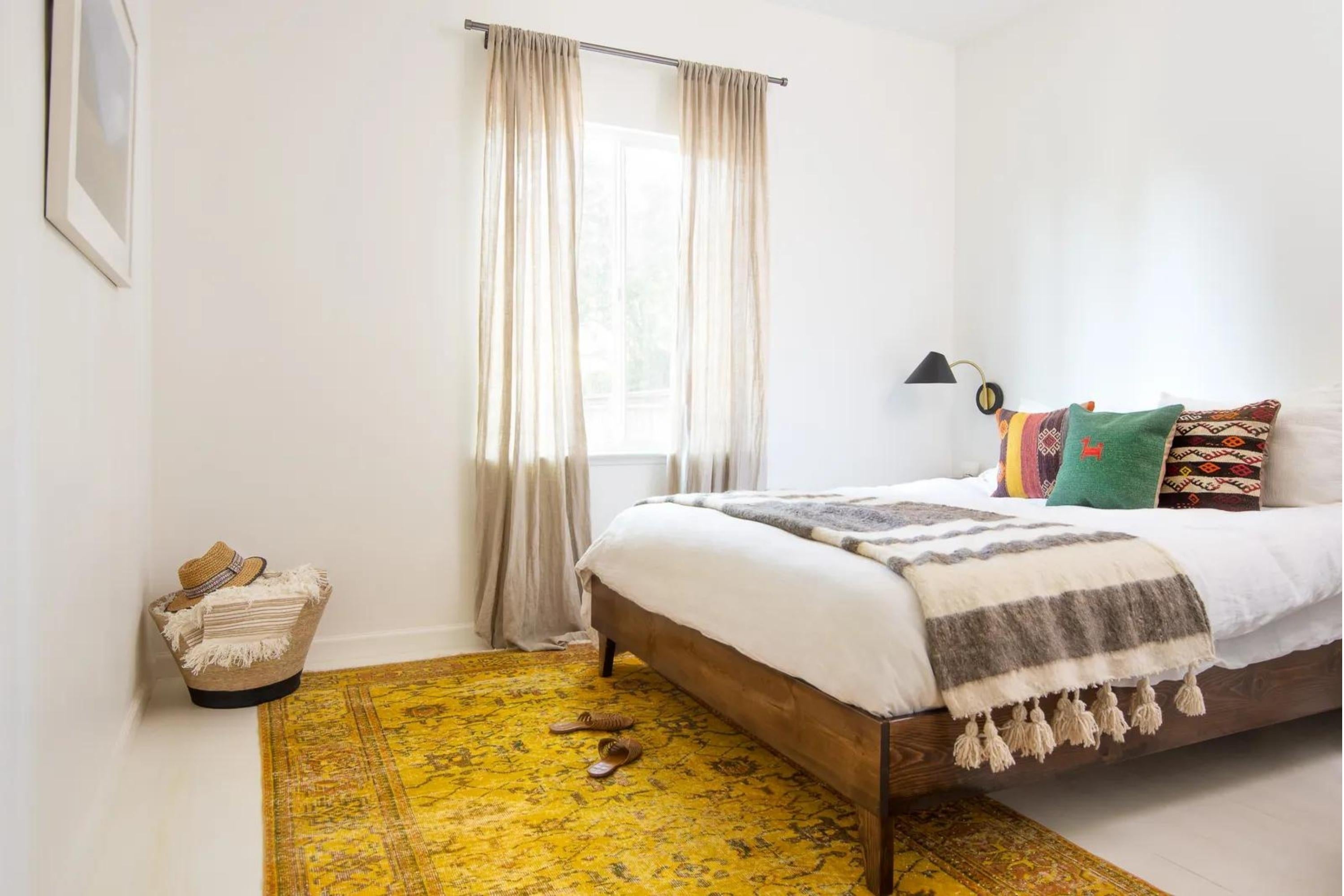
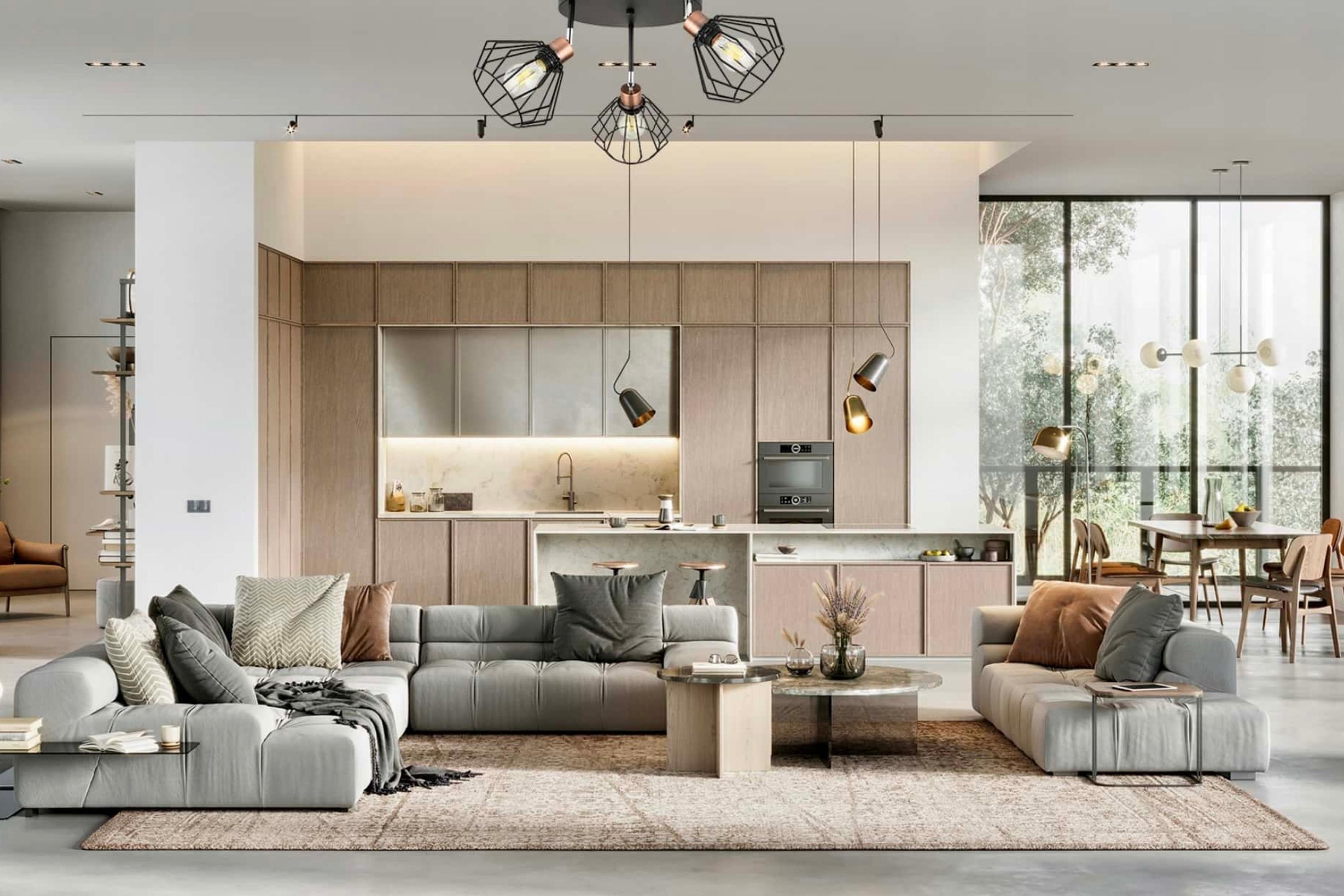
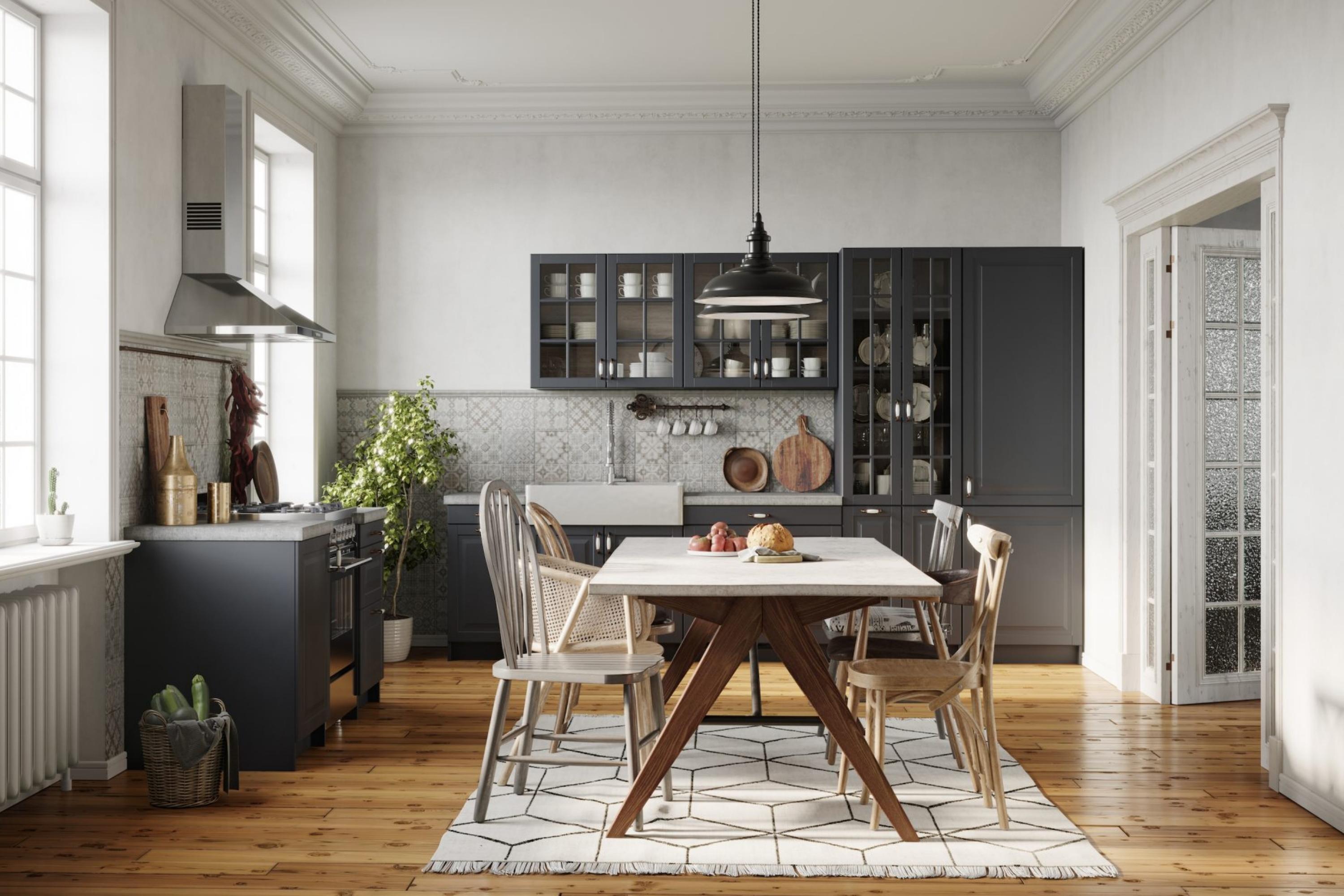

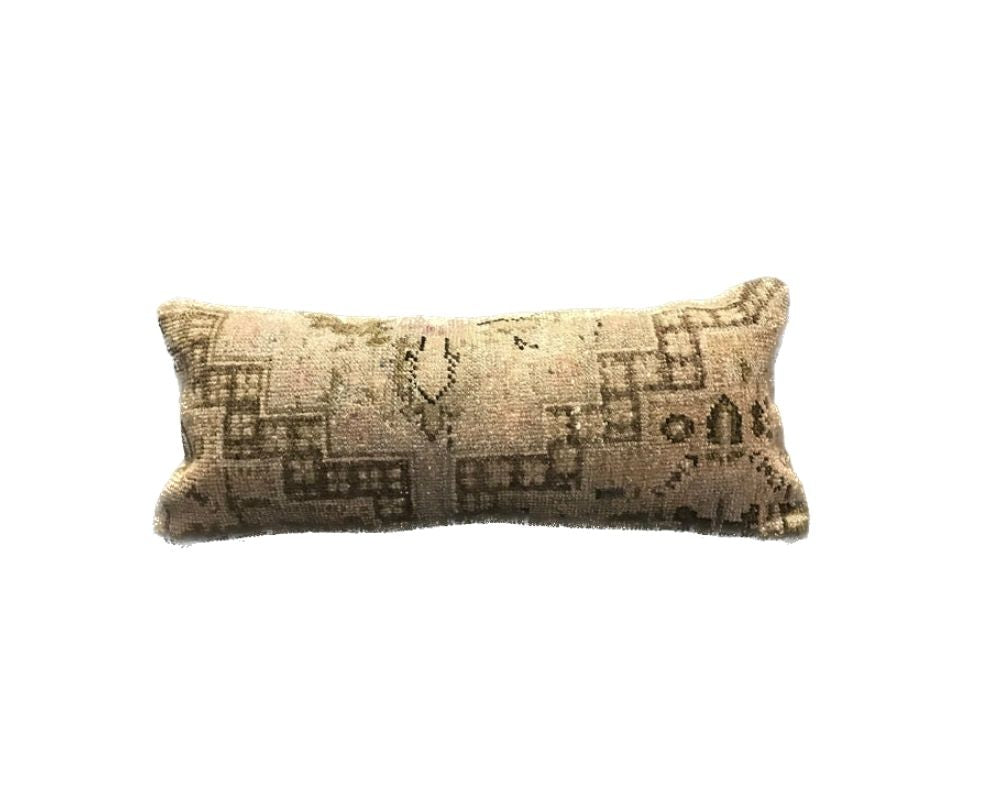
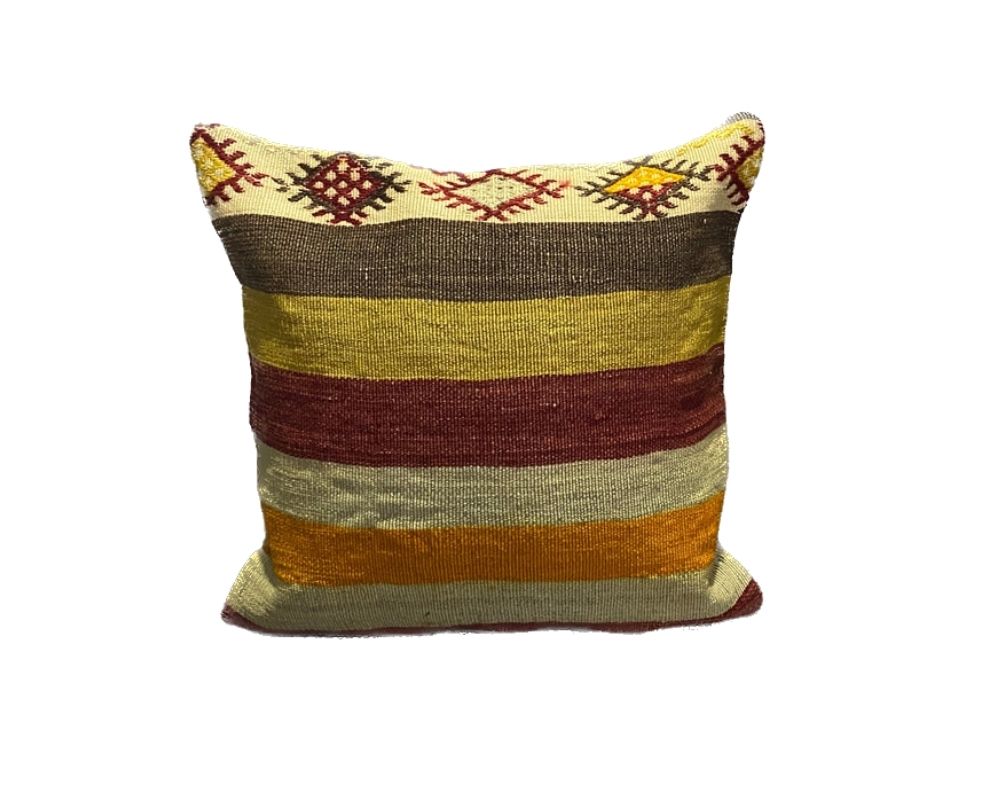
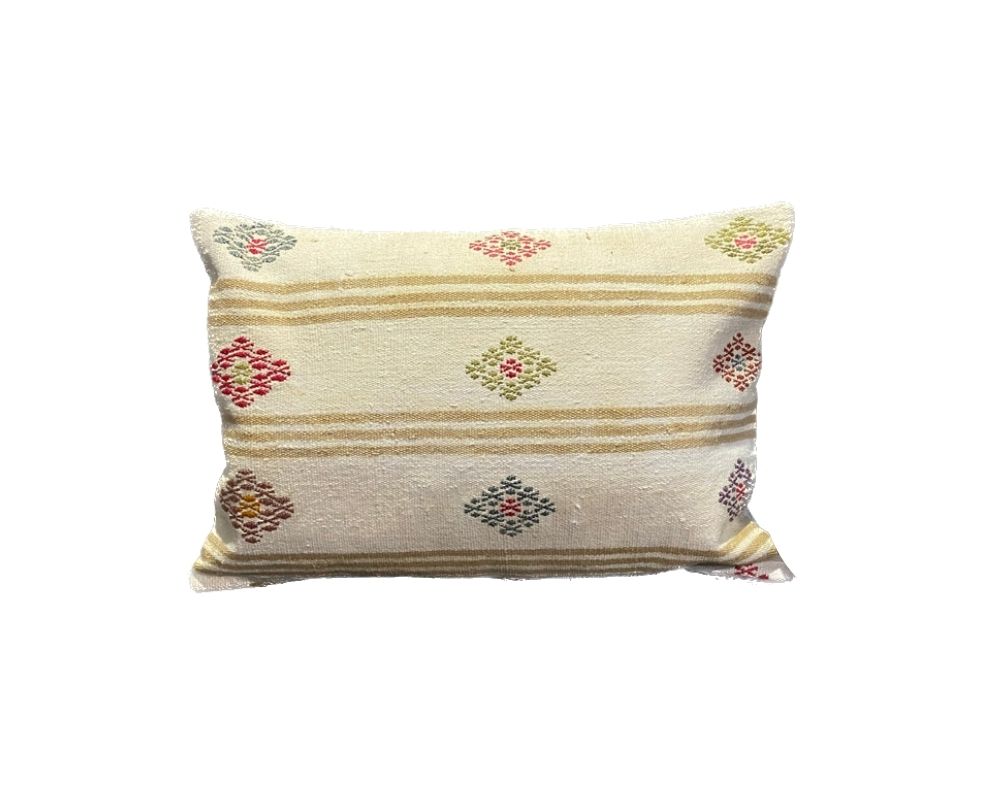
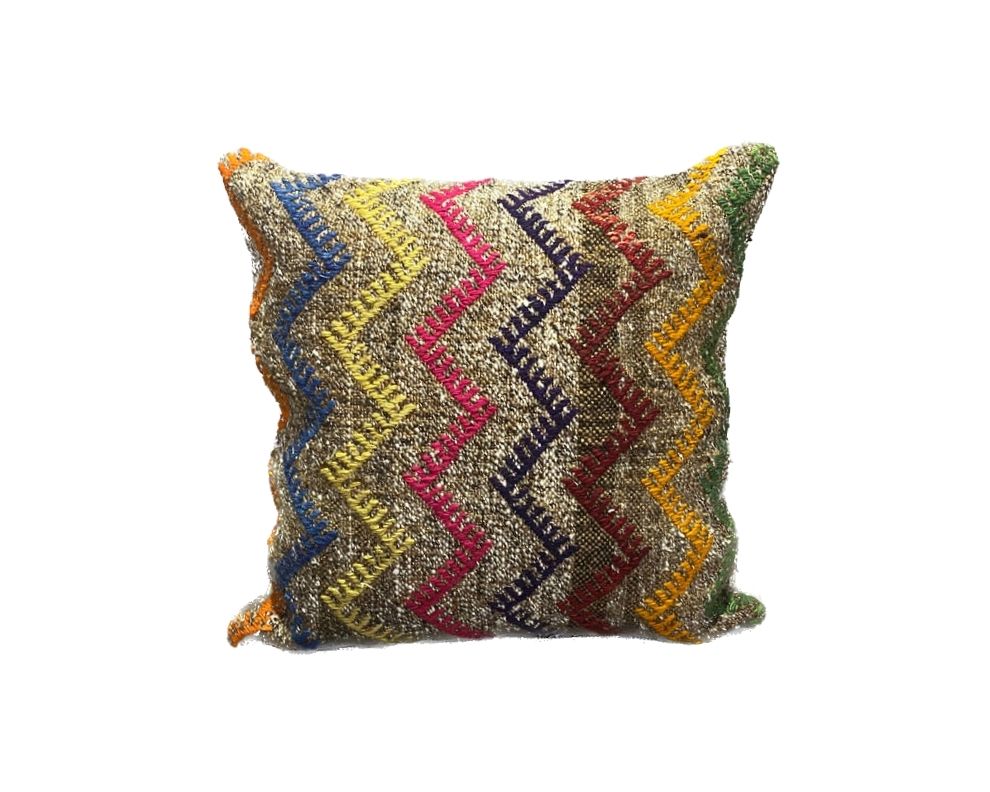

Craftsman homes have always fascinated me — not because of their architecture alone, but because of what their owners choose to put inside them. After years of sourcing rugs in Cappadocia and shipping them to American homes, I started noticing a pattern: the people who connected most deeply with handmade vintage rugs were almost always living in — or dreaming of — a Craftsman style house.
There is something in the DNA of both that responds to the same question: what happens when a home is built around real materials, visible craft, and objects that carry the mark of the human hand?
A Craftsman home is not only a look. It is a set of values: honest material, visible construction, warm natural color, and objects that feel made rather than produced.
Wood, stone, brick, tile, wool — every material is allowed to look exactly like itself. Nothing veneered or disguised.
Exposed beams, thick trim, built-ins, joinery — the way the home holds together is part of its character.
Sage, terracotta, rust, amber, oak, burgundy — the landscape brought indoors, without apology.
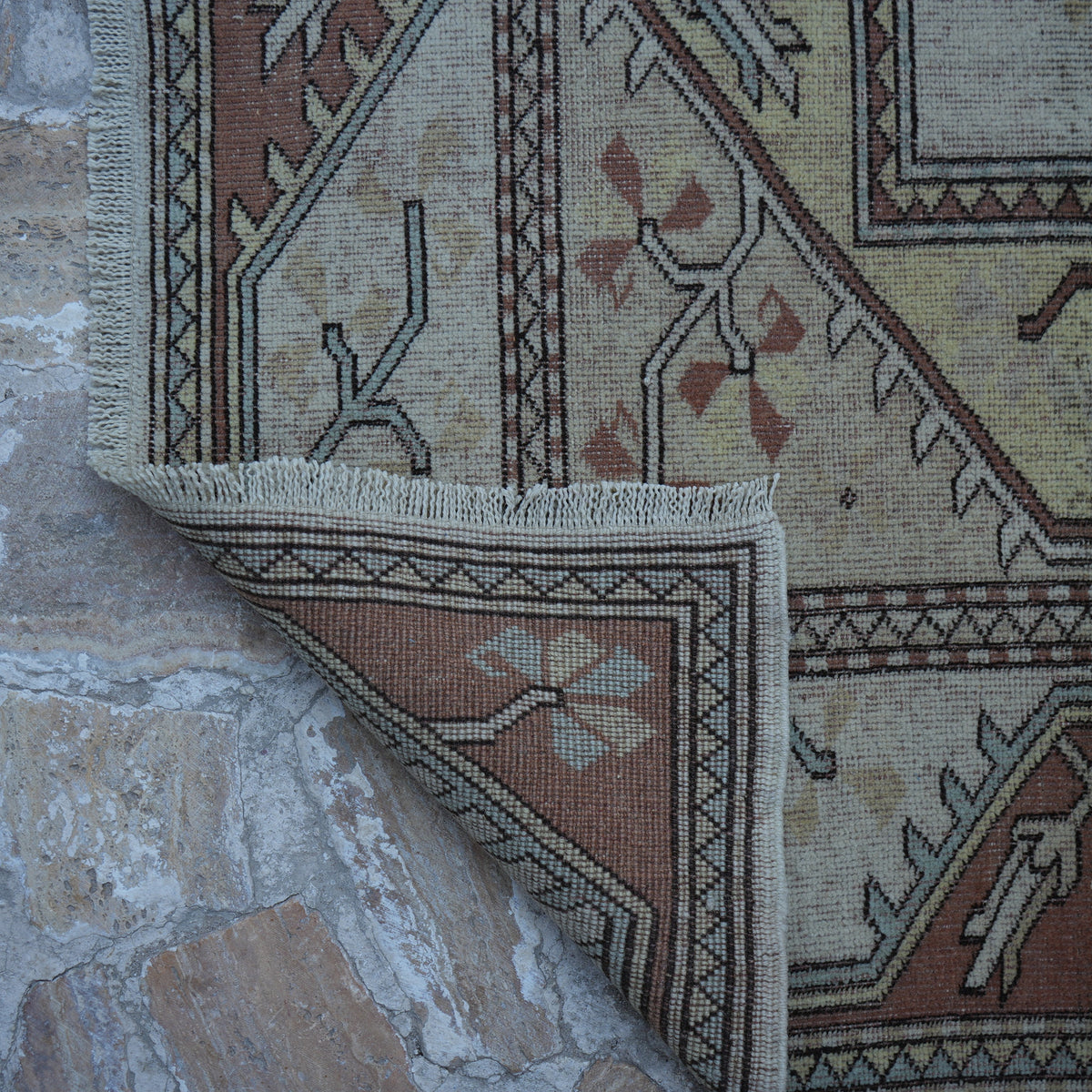
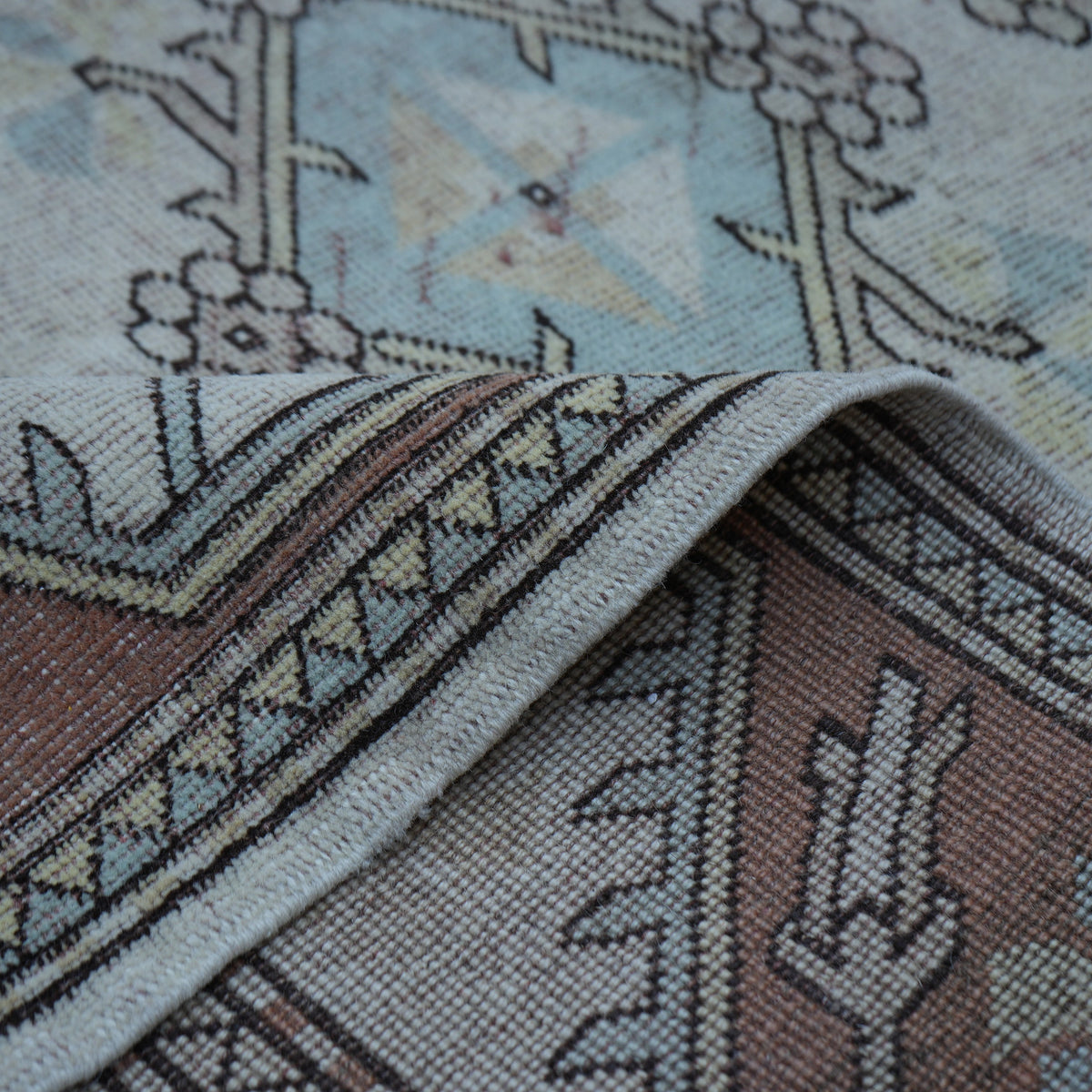
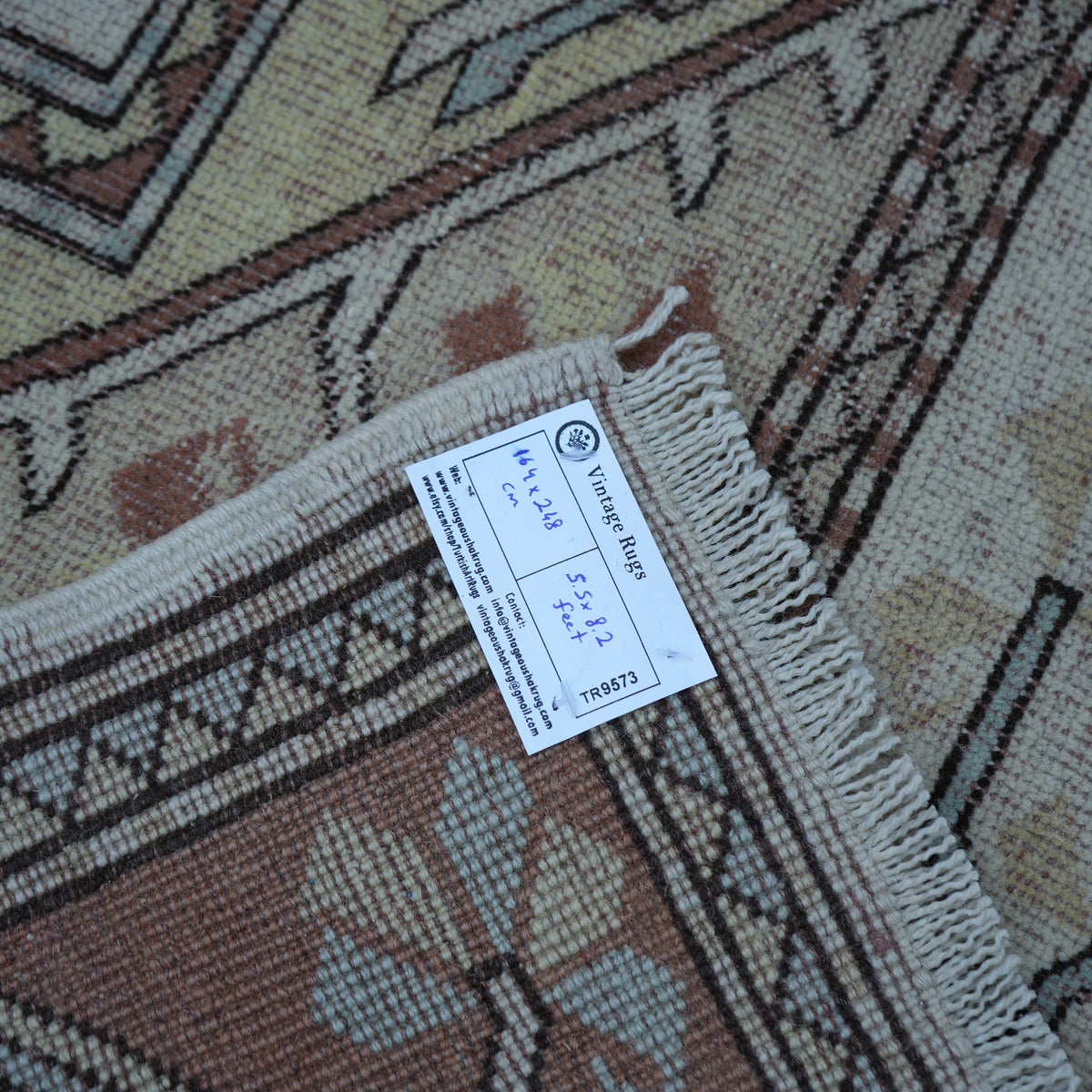
Vintage wool, Anatolian geometry, Oushak softness — objects that carry evidence of the human hand.

What Makes a House “Craftsman”?
A Craftsman home emerged at the turn of the 20th century as a direct argument against what had come before. Victorian homes were dense with ornament — carved molding stacked on carved molding, surfaces treated as canvases for applied decoration. Craftsman said: stop.
The guiding principle was almost confrontational in its simplicity: honest materials, visible craft, nothing hidden. A home's character came from the quality of its materials — not from what was layered on top of them. If wood was structural, you showed the wood. If stone supported the porch, you left the stone rough.
This philosophy traveled from England, where William Morris had been arguing something similar since the 1860s, to America — where Gustav Stickley ran it through his own workshops and built a movement around it. Stickley's magazine, The Craftsman, ran from 1901 to 1916. Its message stayed consistent: mass production flattens everything it touches. The handmade object carries something no machine can replicate.
What Does a Craftsman Home Look Like From the Outside?
The exterior announces itself quietly. A covered front porch runs the width of the facade, held up by tapered columns sitting on low stone or brick pedestals. The roofline is low-pitched, with wide overhanging eaves that expose the rafter tails beneath. Gables appear, sometimes layered. Cladding is natural: wood shingles, cedar board, river stone, brick.
What About the Inside?
Rooms flow into one another more openly than in Victorian homes — not the fully open plans of modern construction, but a looser sequence that lets light move. The fireplace is central, usually faced in tile or stone with a blocky wood mantle, flanked by built-in bookshelves or seating. Overhead, beams are exposed. Trim is thick and flat. Windows are plentiful, often grouped in threes, frequently featuring art glass.
The covered porch, tapered columns, low-pitched roof, exposed interior beams, central fireplace, built-in bookshelves, and wood floors all repeat the same idea: structure should be visible, material should be warm, and decoration should come from craft — not be applied on top of it.
The palette comes from outside the window, not from a trend. Muted sage green. Terracotta. Warm amber. Rust. Deep burgundy. Gold toned down several notches from anything bright. These are the colors of dried grass, autumn hillsides, river clay, pine bark — the Craftsman interior design palette is, at its core, the landscape brought indoors.
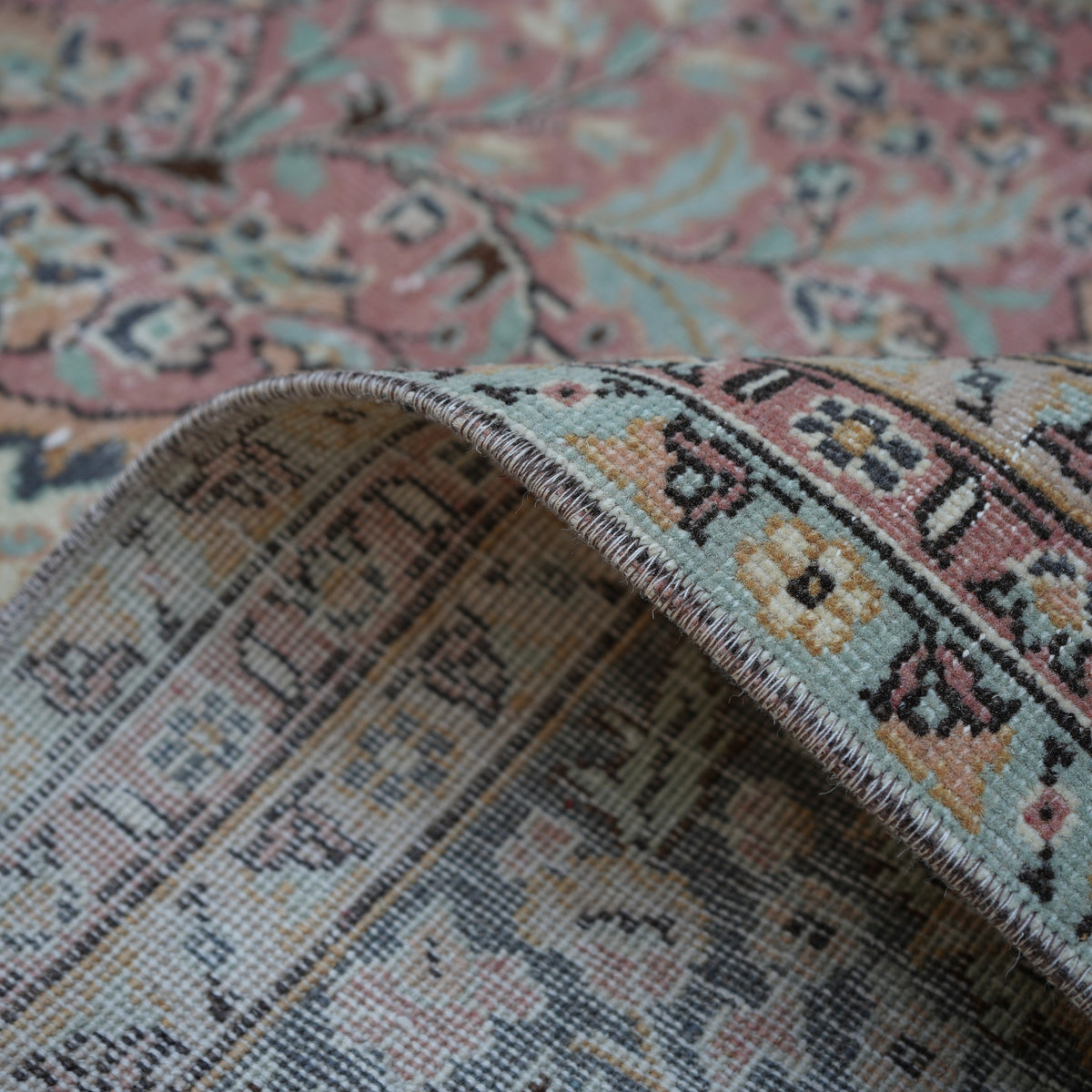
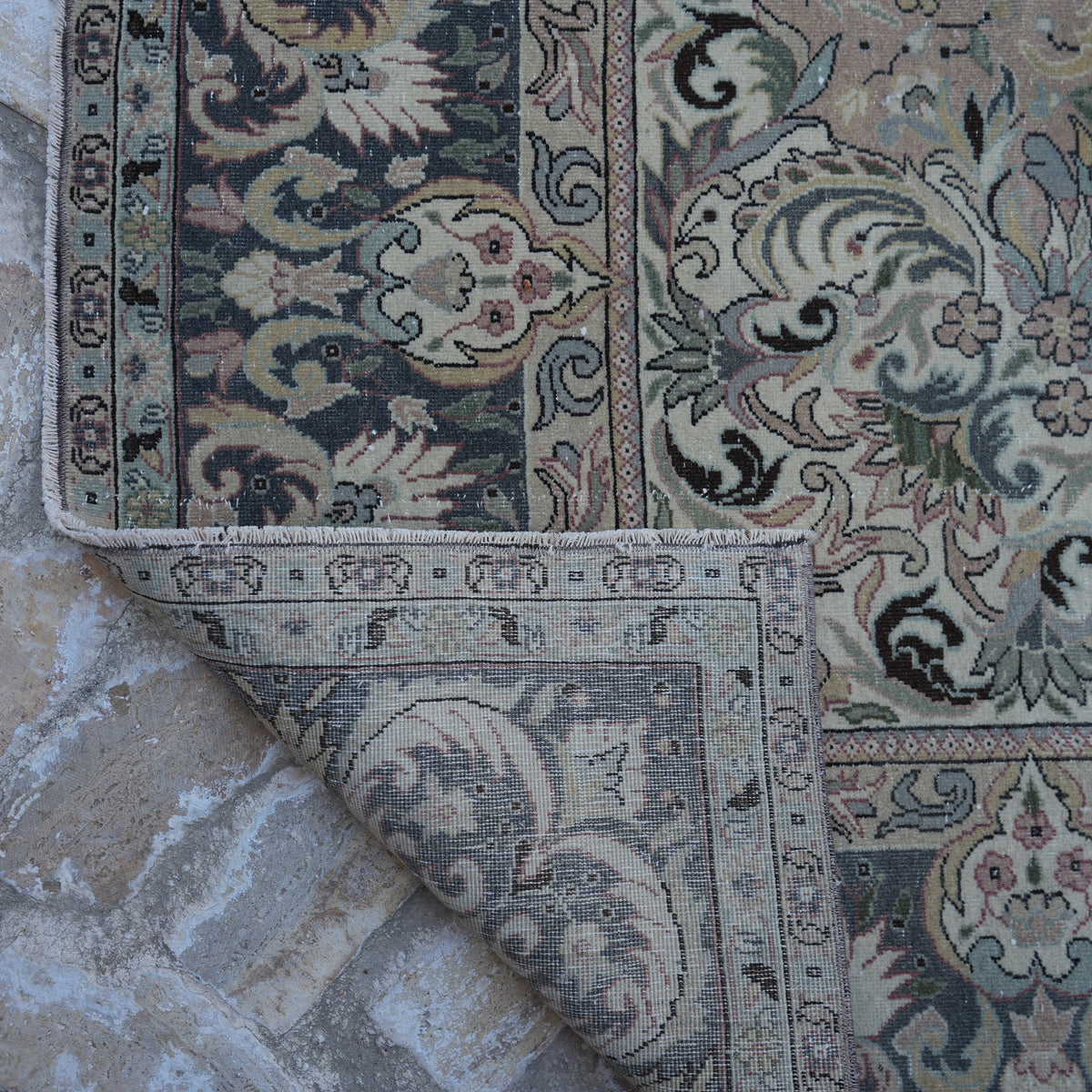
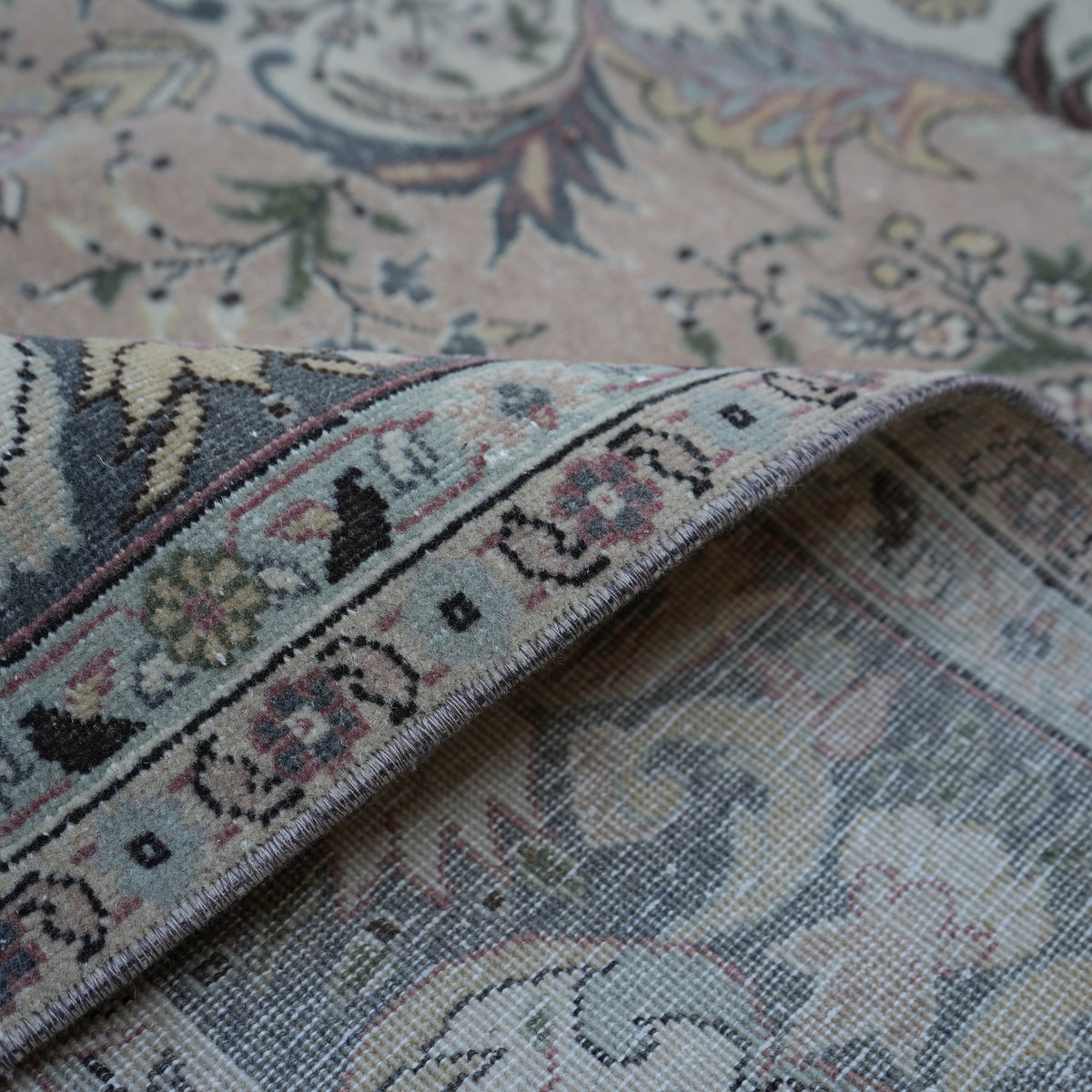
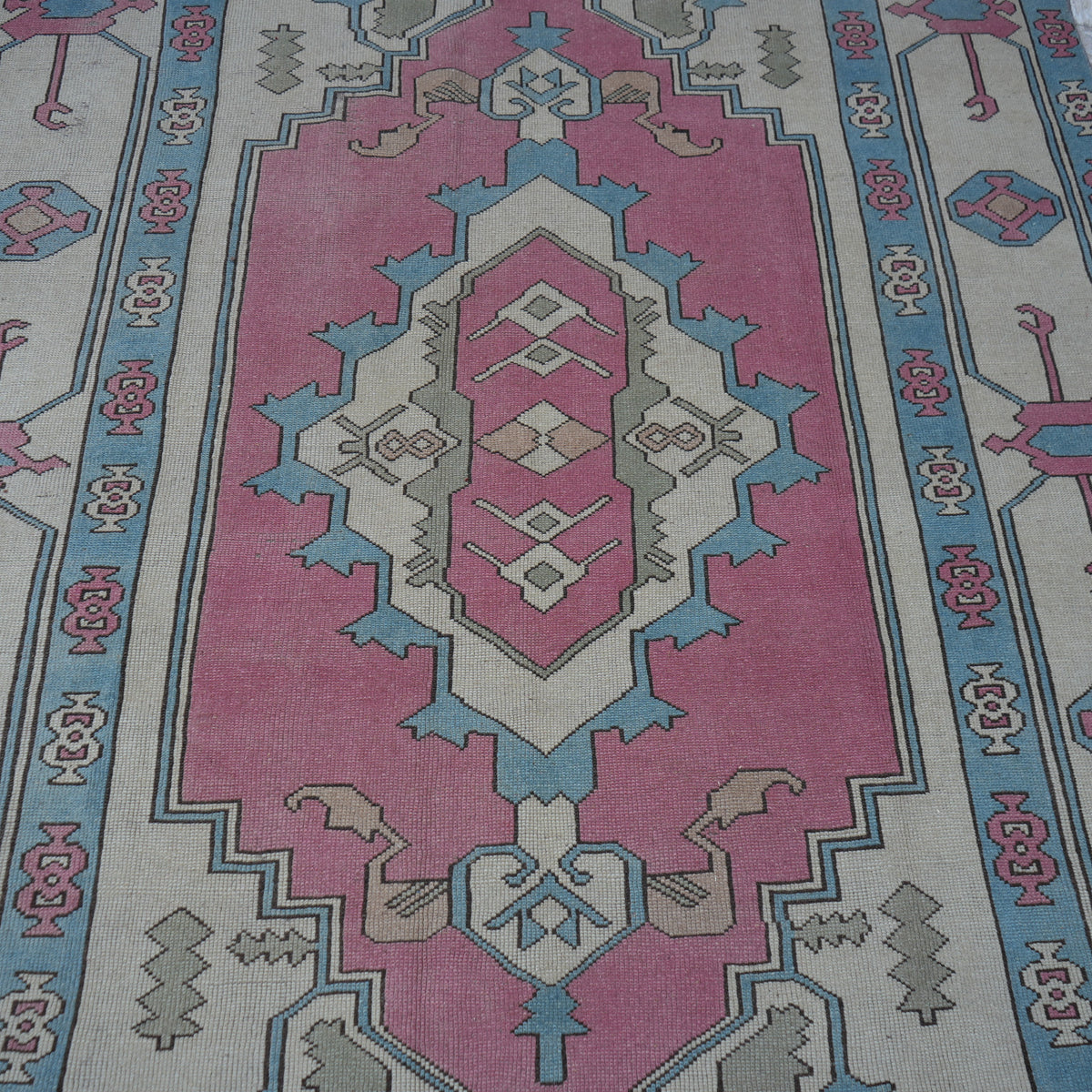
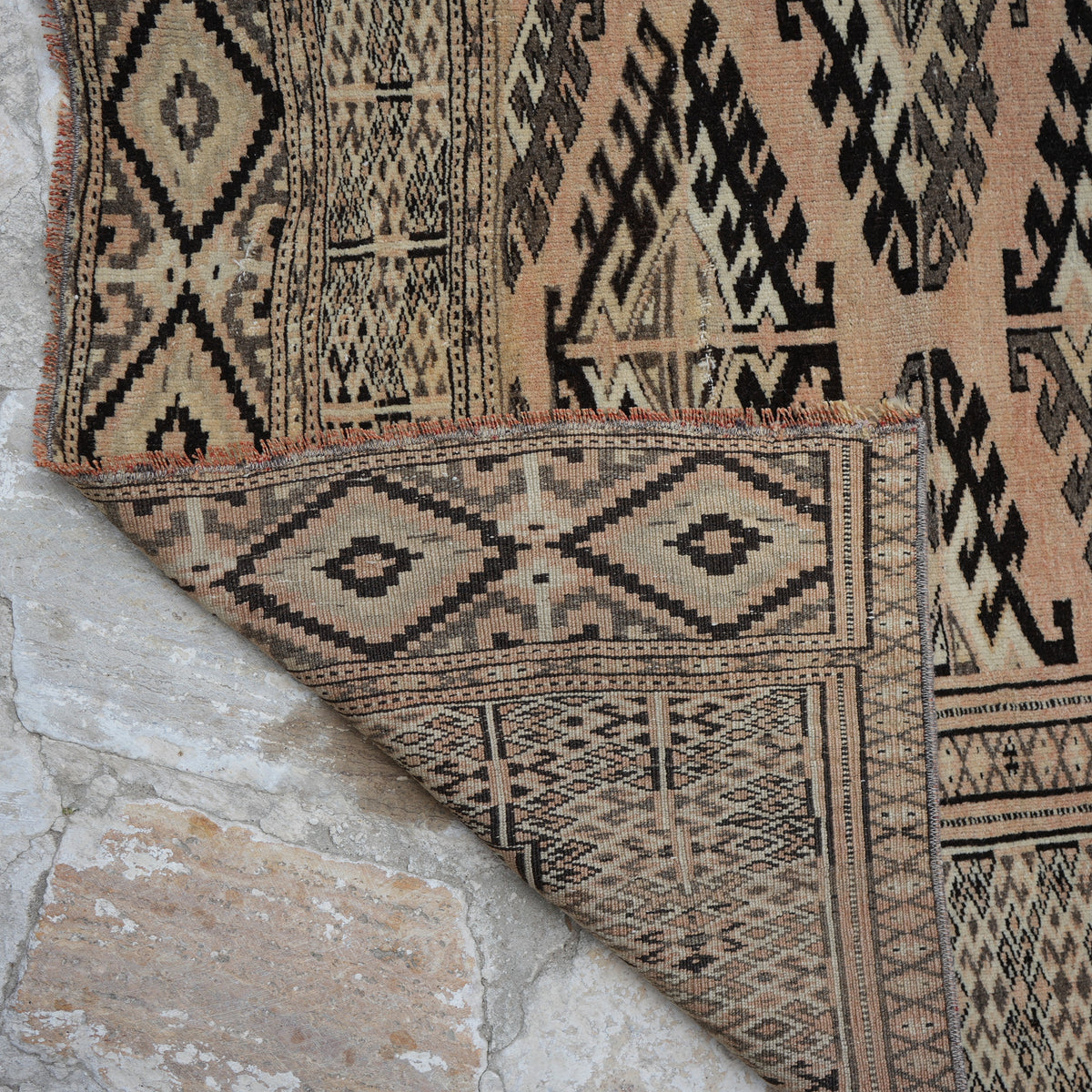
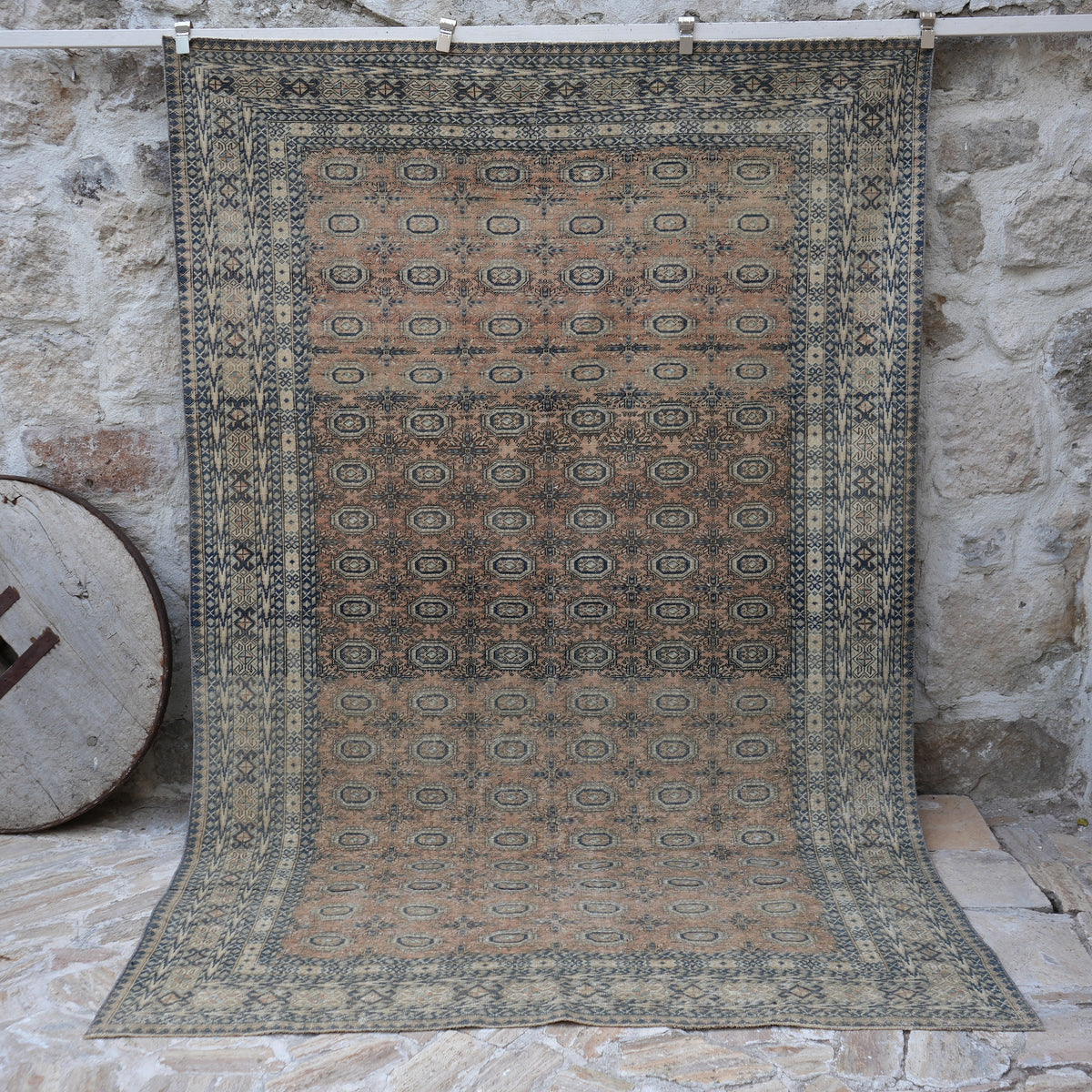
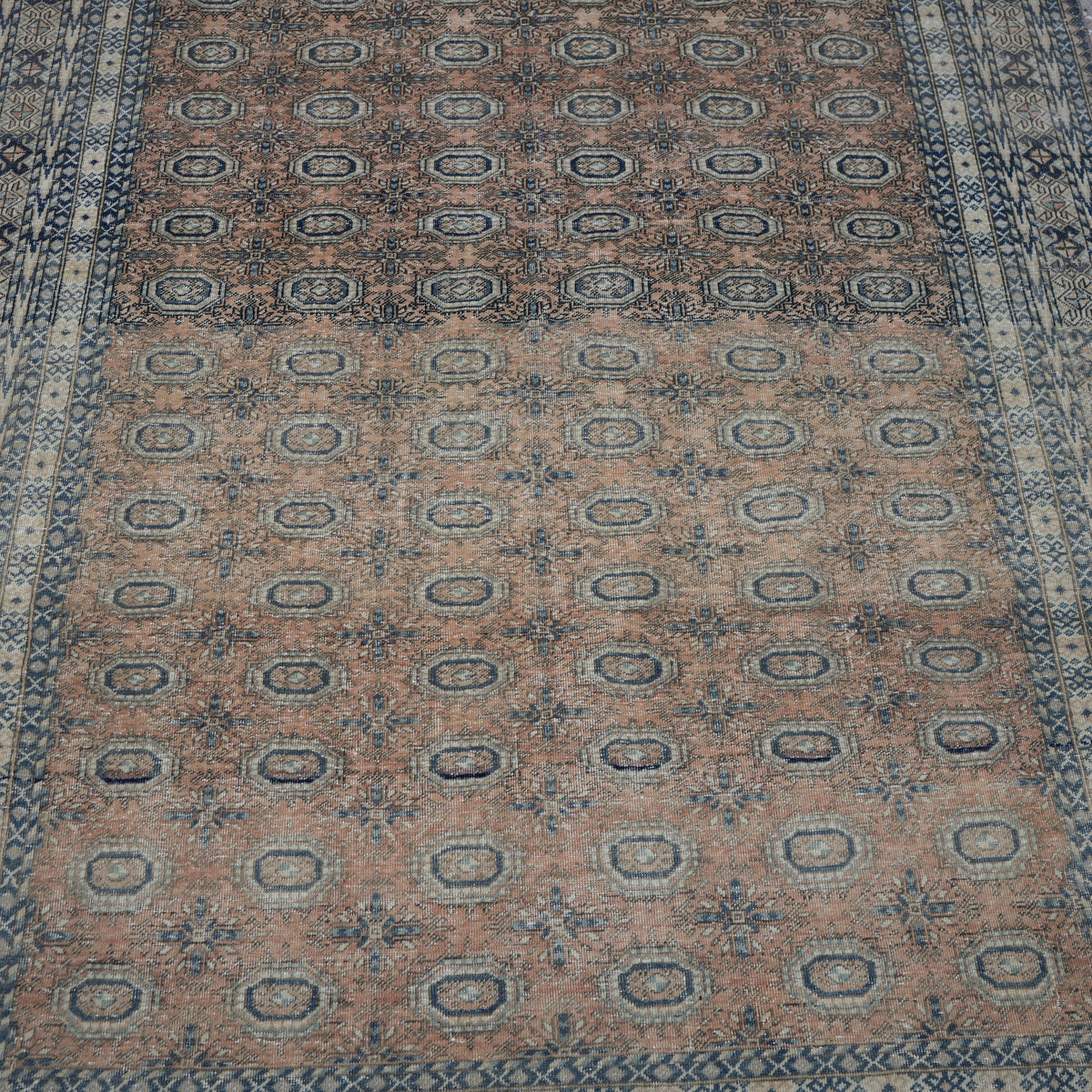
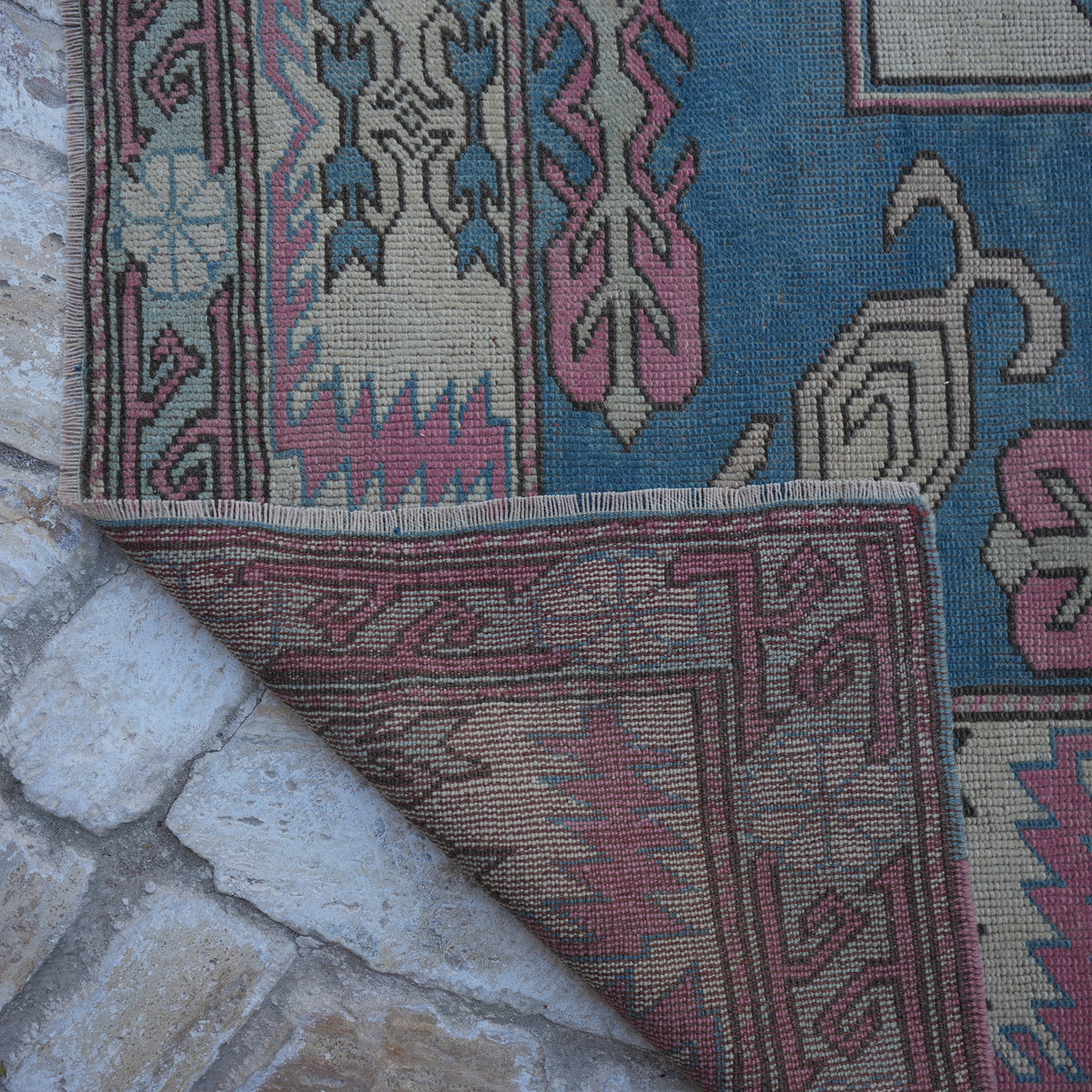
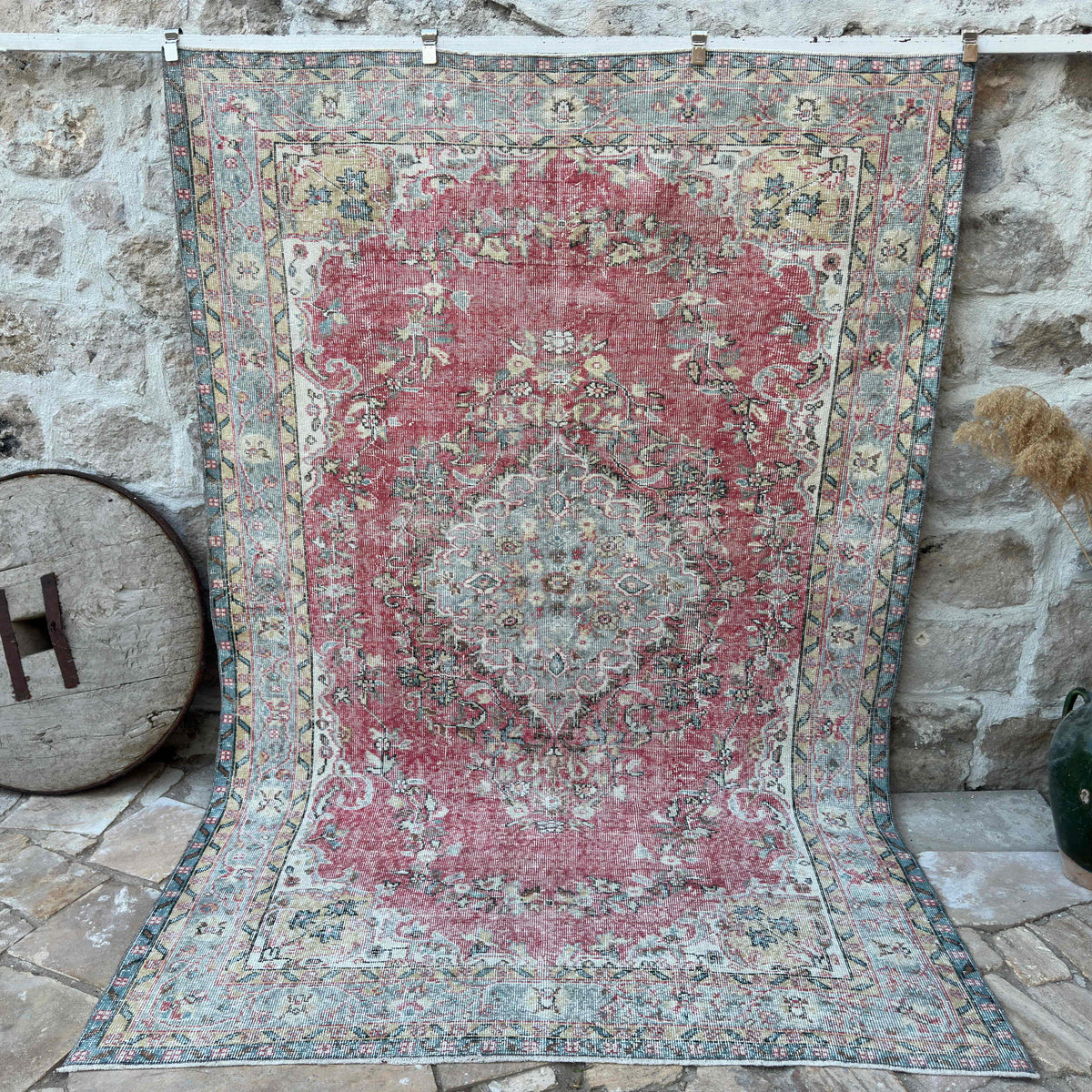
These are also — not coincidentally — the colors running through most authentic vintage Anatolian rugs. Natural wool dyes produce the same tonal range. The connection is not decorative: materials taken from the earth, used without apology.
Craftsman interiors rarely want bright color. They want warm, muted colors that look as if they belong beside oak floors, stone fireplaces, and hand-thrown tile.
England to America, roughly 1860 to 1910. William Morris argued that industrial production had degraded both objects and the people who made them — and spent his career founding workshops, commissioning handwoven textiles, producing designs drawn from nature in flat repeating pattern. His philosophy was moral as much as aesthetic.
In 1900, Gustav Stickley visited Morris's operation in England and returned changed. He began producing furniture in American white oak — no carved ornament, visible joinery, construction that showed exactly how each piece held together. He called it honest.
One detail almost no one mentions: Stickley's Craftsman Workshops produced not just furniture but hand-knotted rugs and textiles. In the pages of The Craftsman, he wrote about floor coverings as part of the total home environment. A machine-made rug, in his view, was a contradiction in terms. An Arts and Crafts home with a factory-produced floor had missed its own point.
William Morris argues for handmade objects, natural materials, and design rooted in craft rather than industrial ornament.
Gustav Stickley visits Morris's operation in England and brings the Arts and Crafts philosophy into an American context.
The Craftsman magazine spreads the idea of honest furniture, visible construction, and the complete handmade home.
Restored Craftsman homes still ask for the same thing on the floor: real wool, real handwork, and real material presence.
Yes, though the two are routinely confused — even by people who live in one.
Bungalow is a building type: typically one or one-and-a-half stories, compact, with an open plan and a prominent front porch. Craftsman is a design philosophy. A bungalow can be built in Craftsman style — and many were, especially between 1905 and 1930. But not every bungalow is Craftsman, and not every Craftsman house is a bungalow. What defines a Craftsman home is not its footprint but its philosophy: natural materials, visible construction, an aesthetic that refuses ornament for its own sake.
A building type: usually compact, one or one-and-a-half stories, often with a porch and efficient floor plan.
A design philosophy: honest materials, visible construction, warm wood, built-ins, and objects chosen for craft.
Why Craftsman Homes Are Making a Comeback
The interest I see from American customers has shifted noticeably in recent years. More of them are in homes with original woodwork, original tile, original built-ins. More are restoring rather than replacing.
The underlying impulse aligns precisely with what Craftsman home decor has always asked for: buy less, buy better, let what you own mean something. Every material in a Craftsman house was chosen for a reason. It is almost impossible to furnish well with things that are purely disposable.

Craftsman Living Room Ideas
The Craftsman living room is organized around a single anchor: the fireplace. Stone or tile face, blocky wood mantle, built-in bookshelves or benches on both sides — the fireplace is the room's center of gravity, and everything in a thoughtfully designed space responds to it.
Oak floors run throughout, warm and visible. The trim is wide and flat, framing windows and doorways without ornament. Built-in storage disappears into the walls. Light enters through grouped windows and in morning hours crosses the floor at an angle that shows the wood at its warmest.
Good Craftsman decorating ideas tend toward restraint: few objects, each one earning its place. The furniture is low and solid. The hardware is iron or bronze. The palette moves from amber to rust to muted green throughout the room.
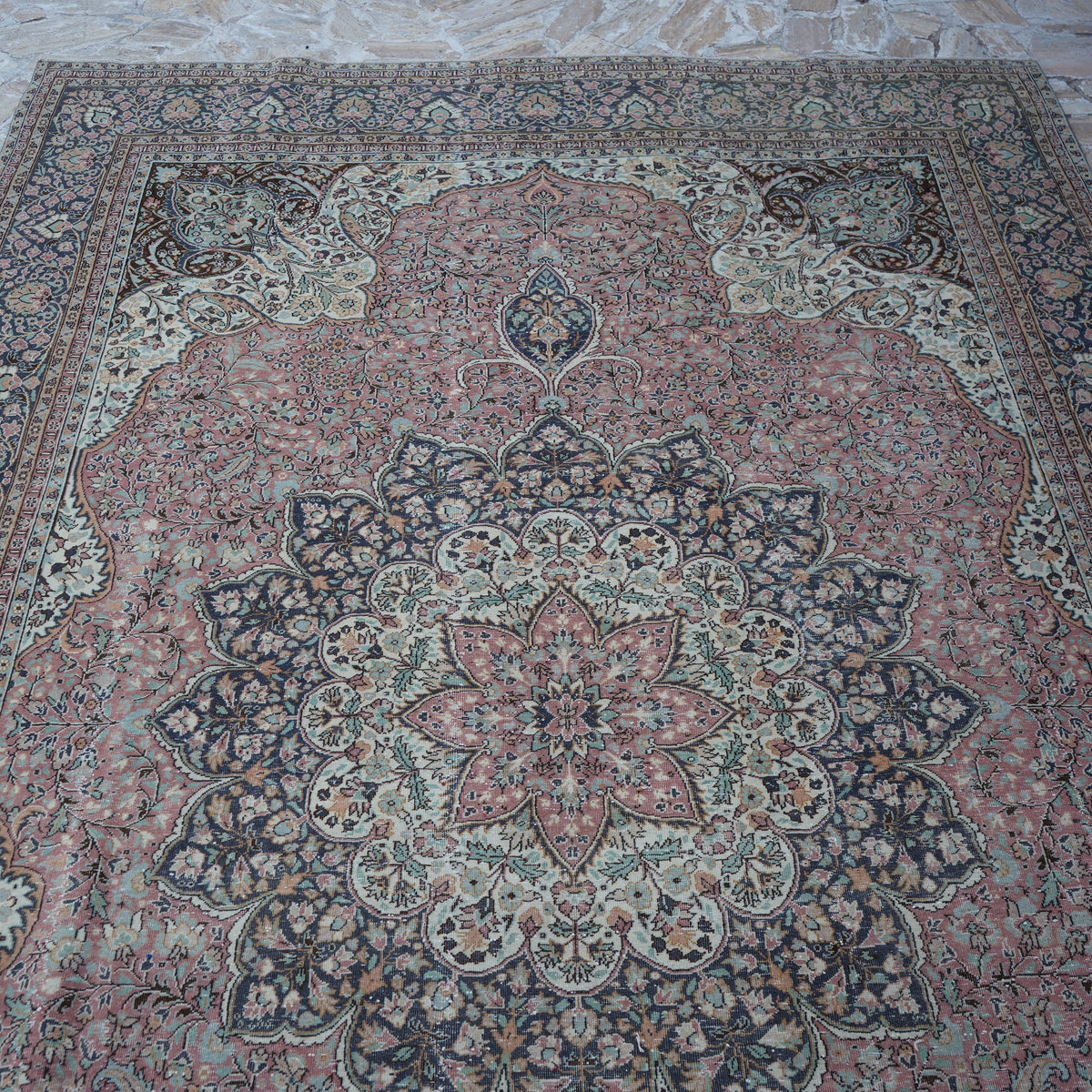
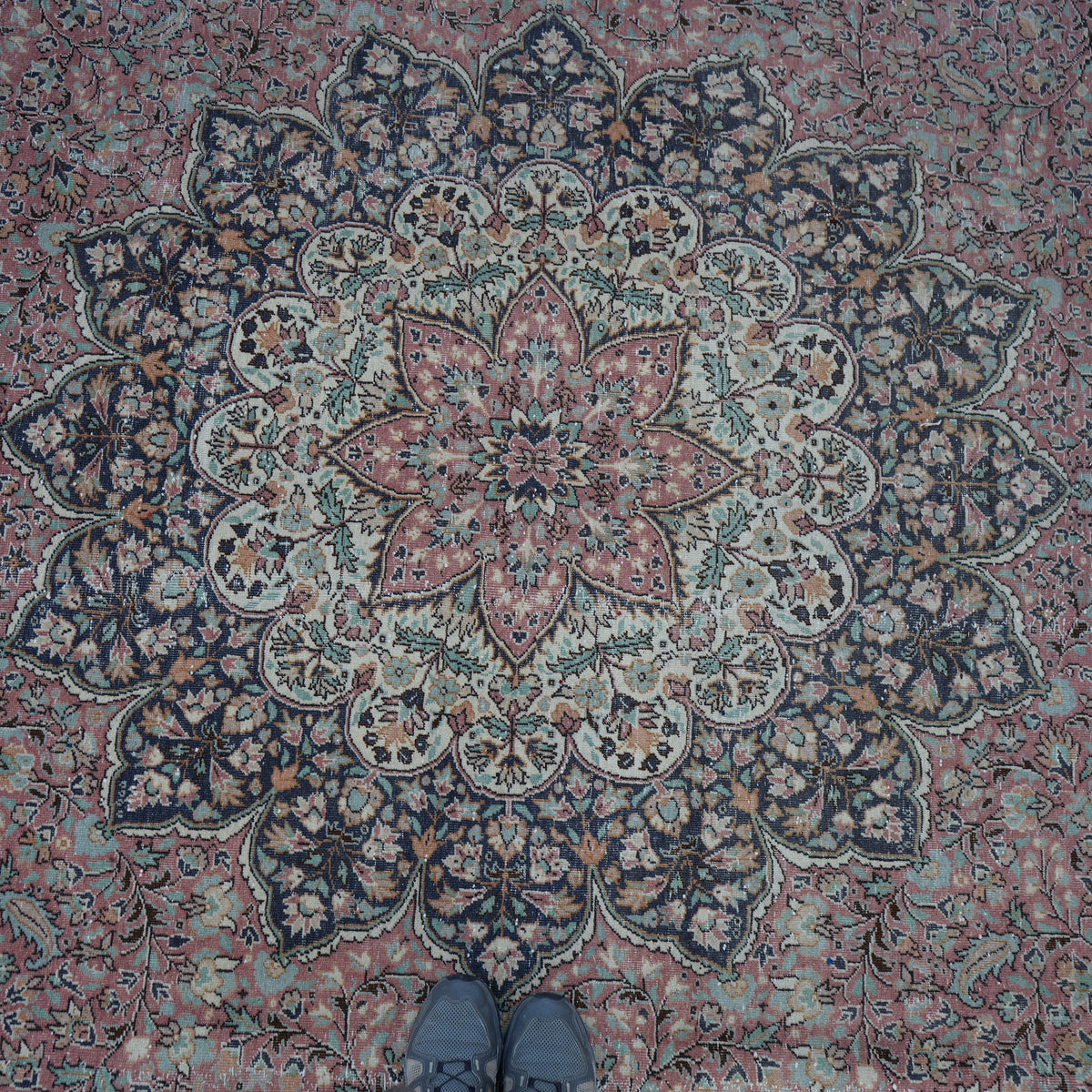
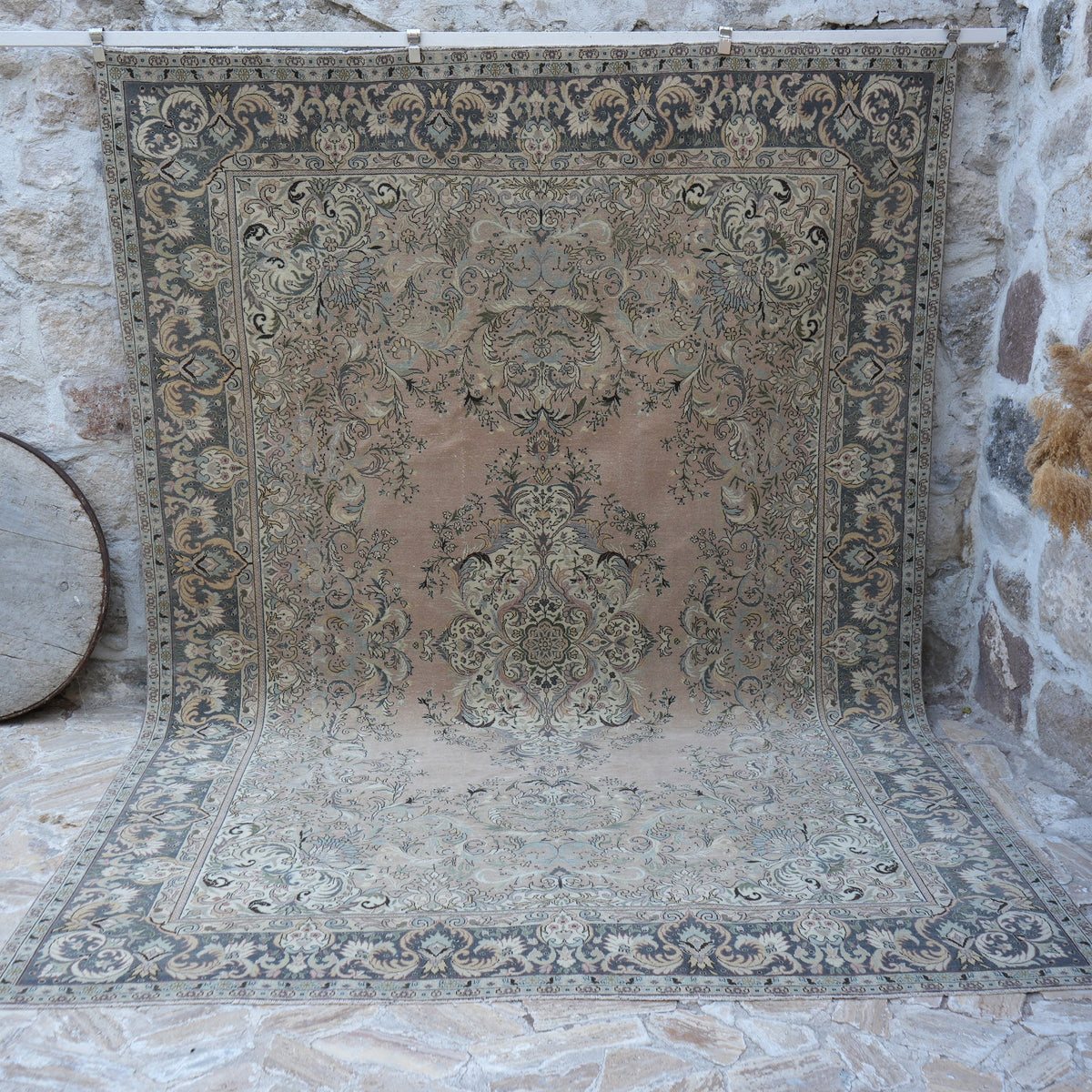
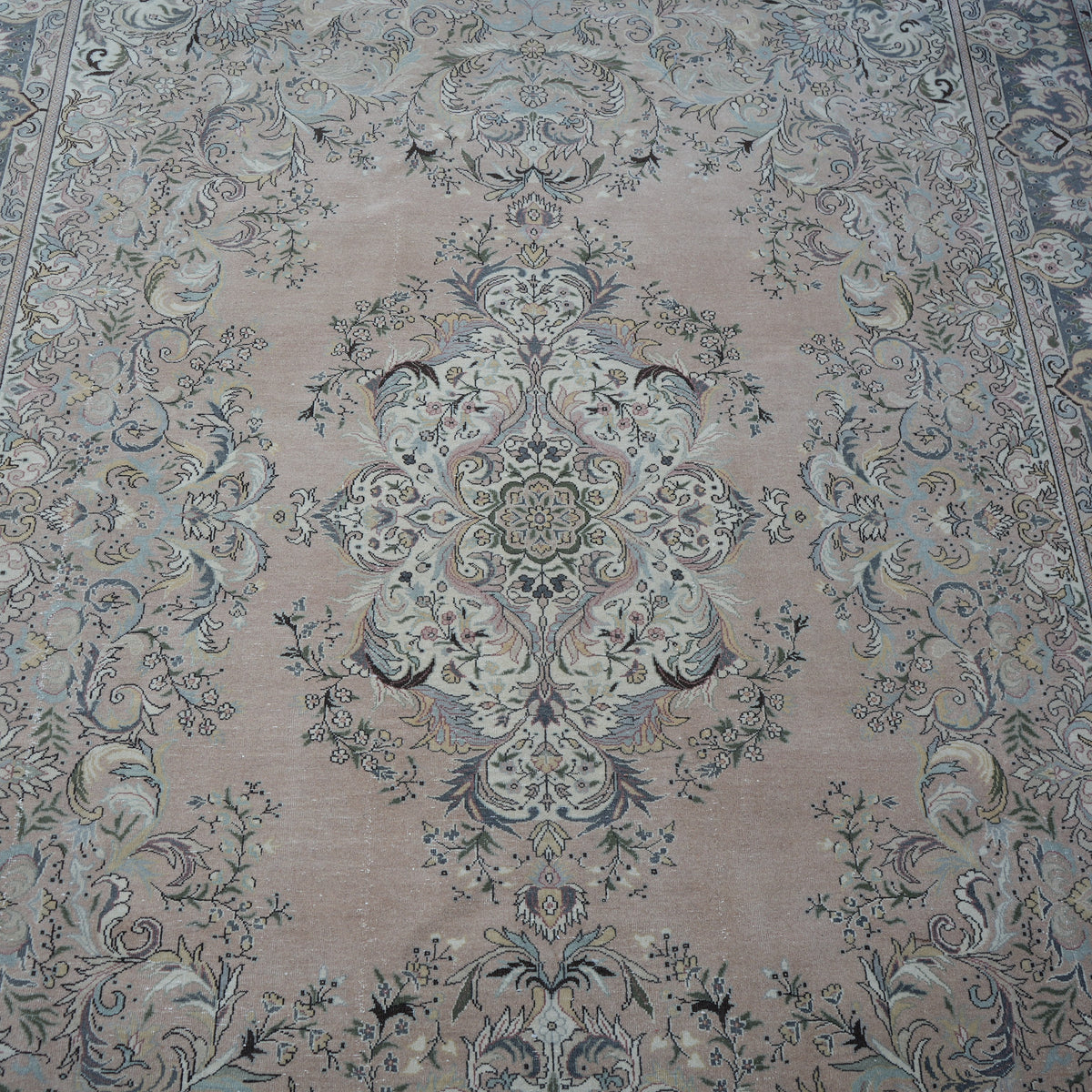
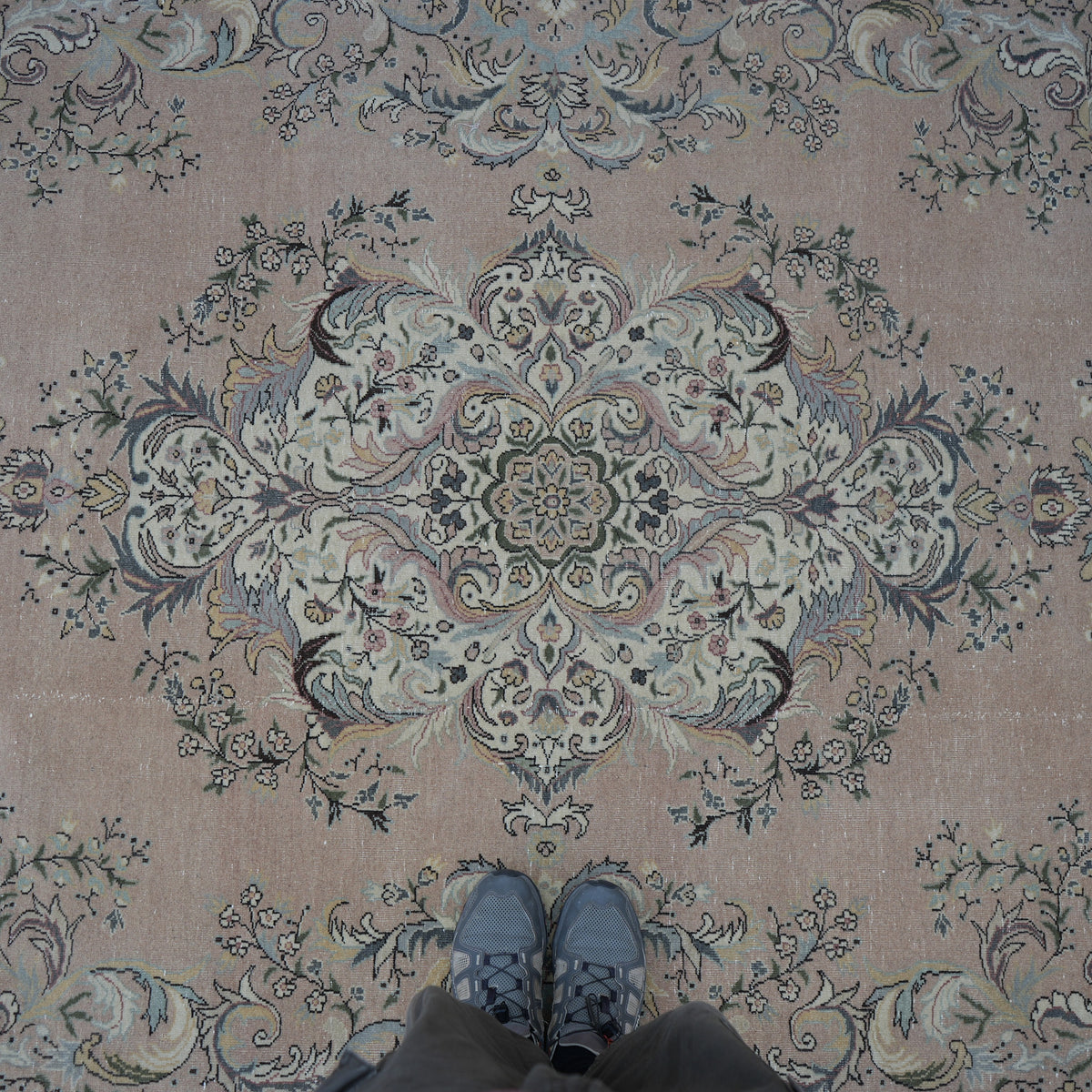
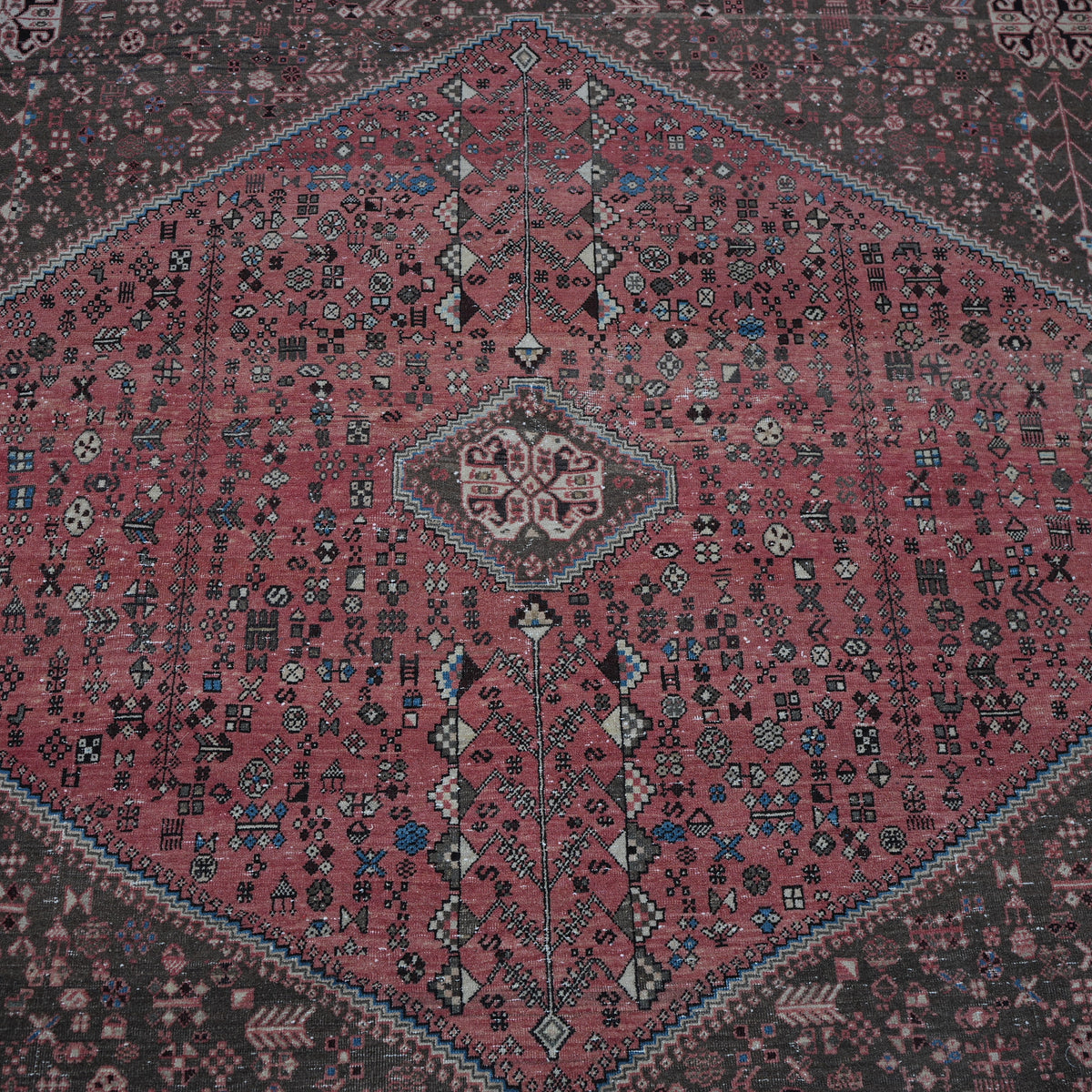
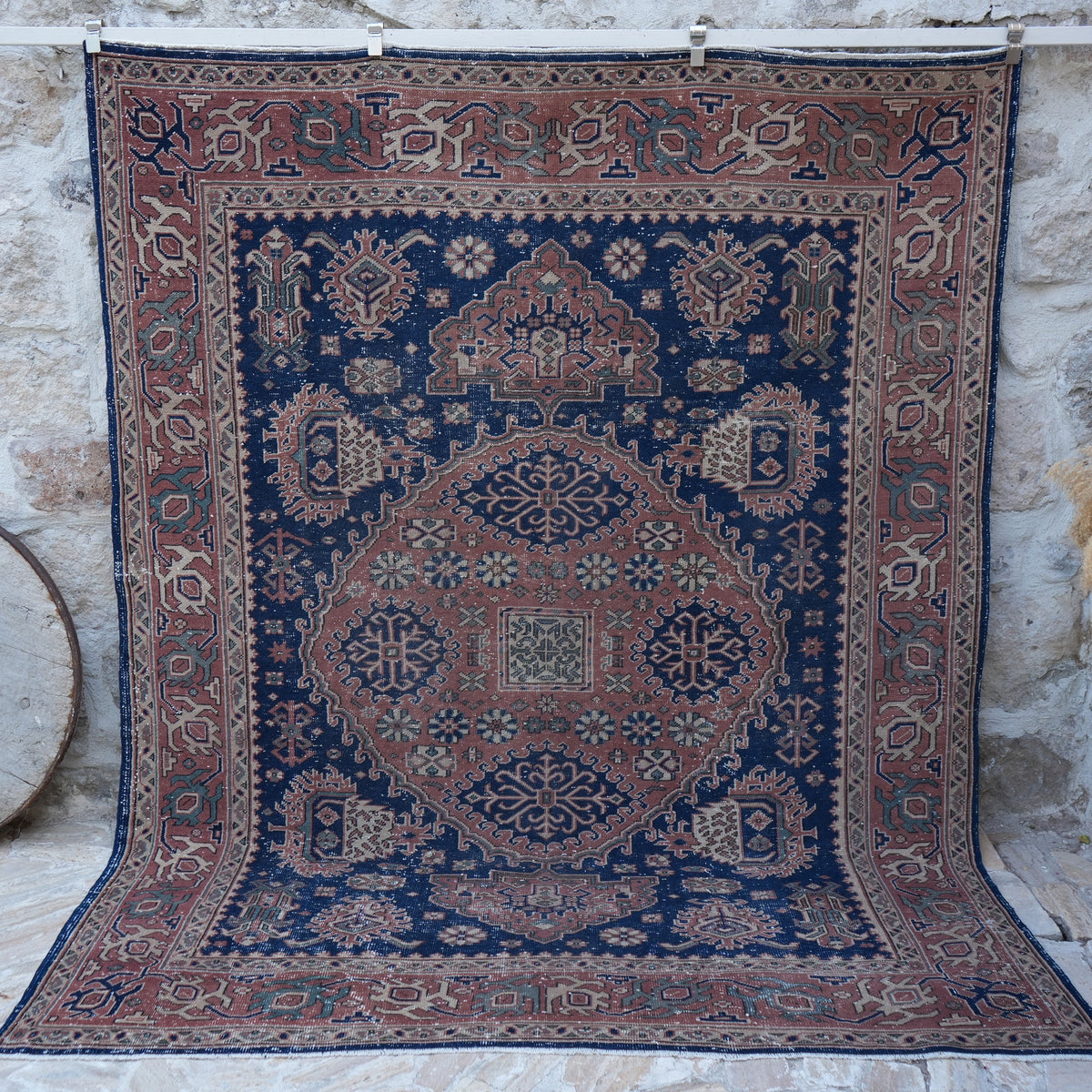
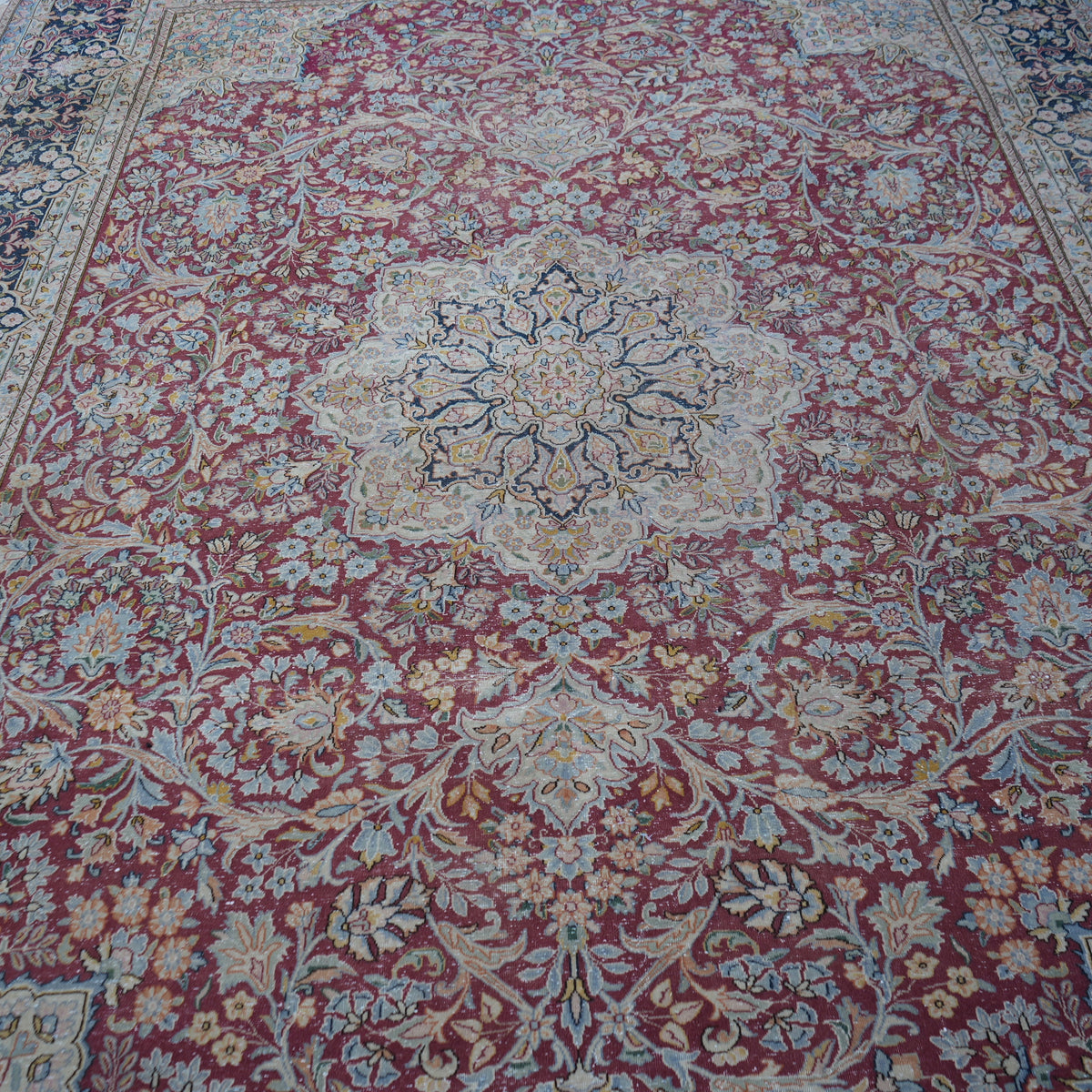
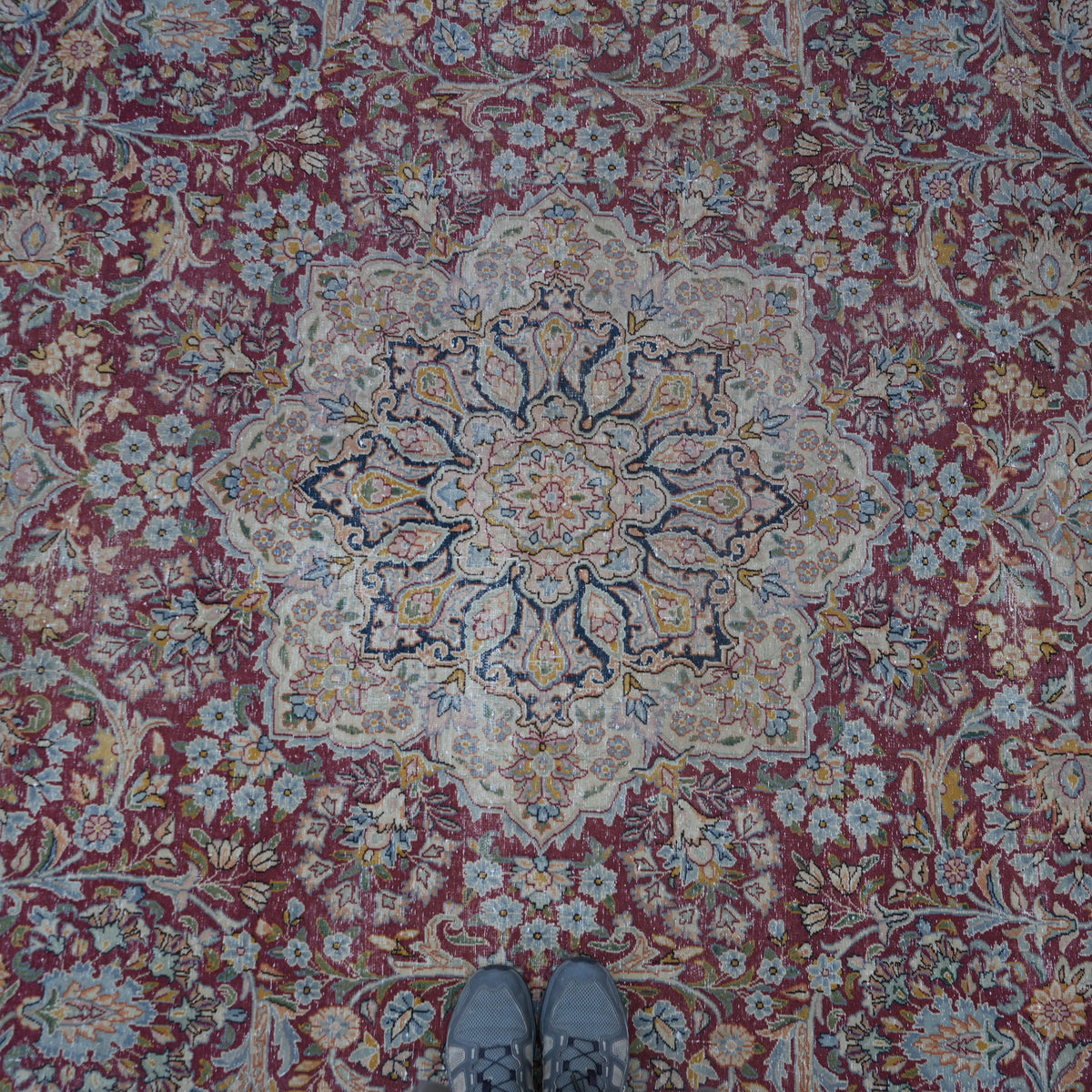
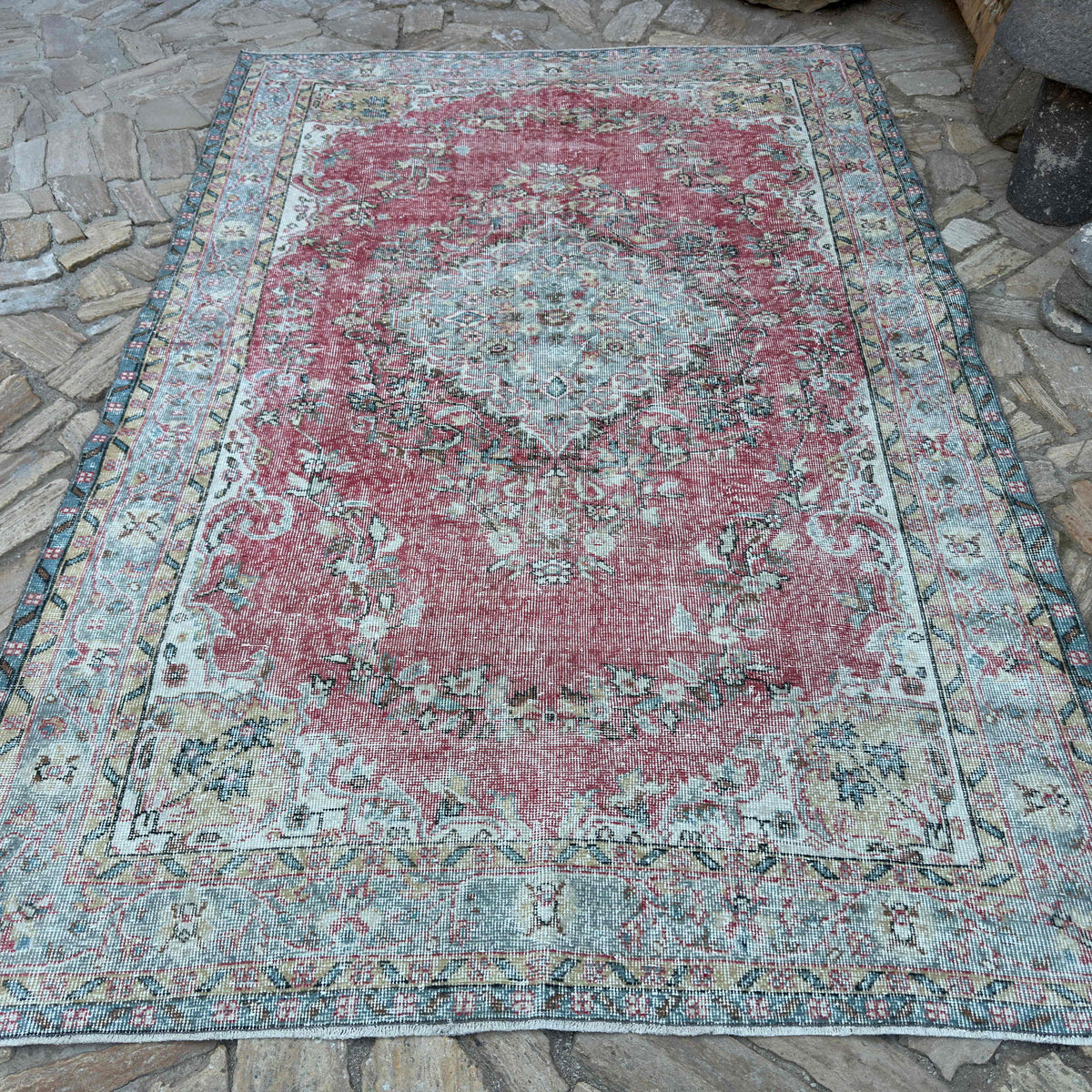
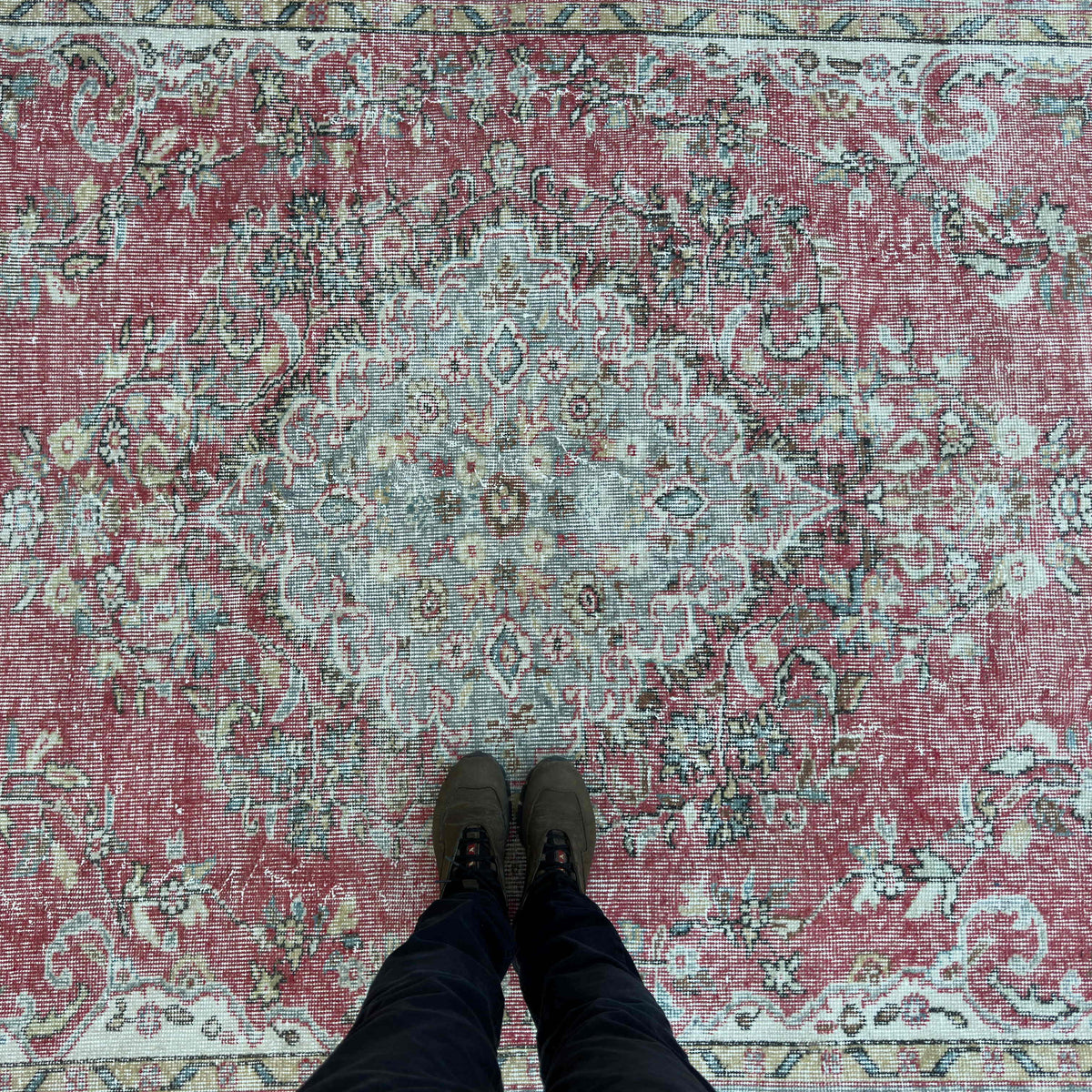
What most Craftsman living rooms are still waiting for is something on the floor that matches the rest of the room's intentionality. A handmade vintage rug — geometric, tribal, grounded in earth tones — completes the conversation the room has been having with itself. Our living room rugs include pieces specifically suited to spaces like this.
What Kind of Rug Actually Belongs in a Craftsman Home?
This is the question I see answered most carelessly — and it matters more than most people realize.
Stickley's position was unambiguous: machine-made objects dishonor the home that holds them. A Craftsman house with a machine-made rug on the floor has a contradiction at its center — one the room will register even when the owner cannot name it.
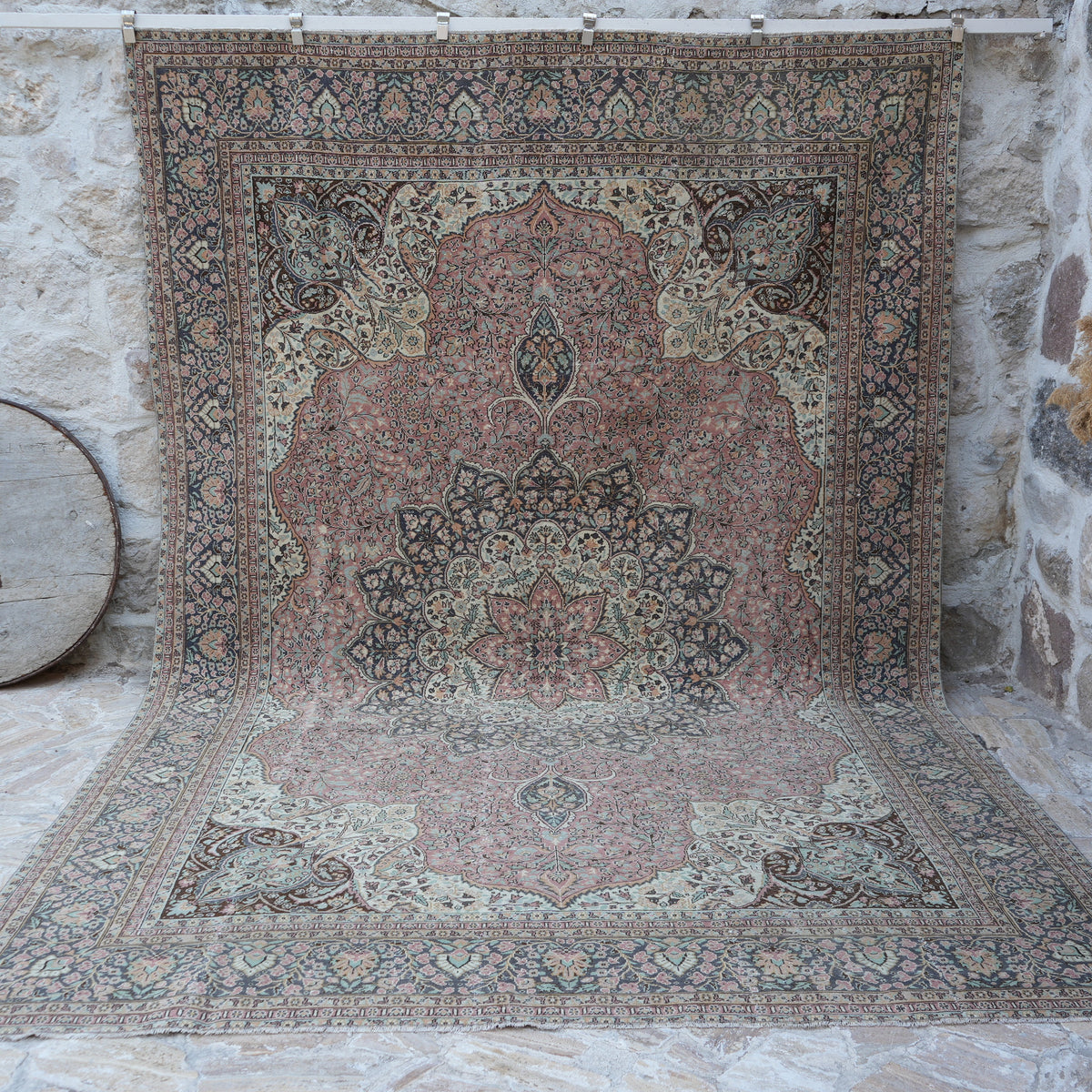
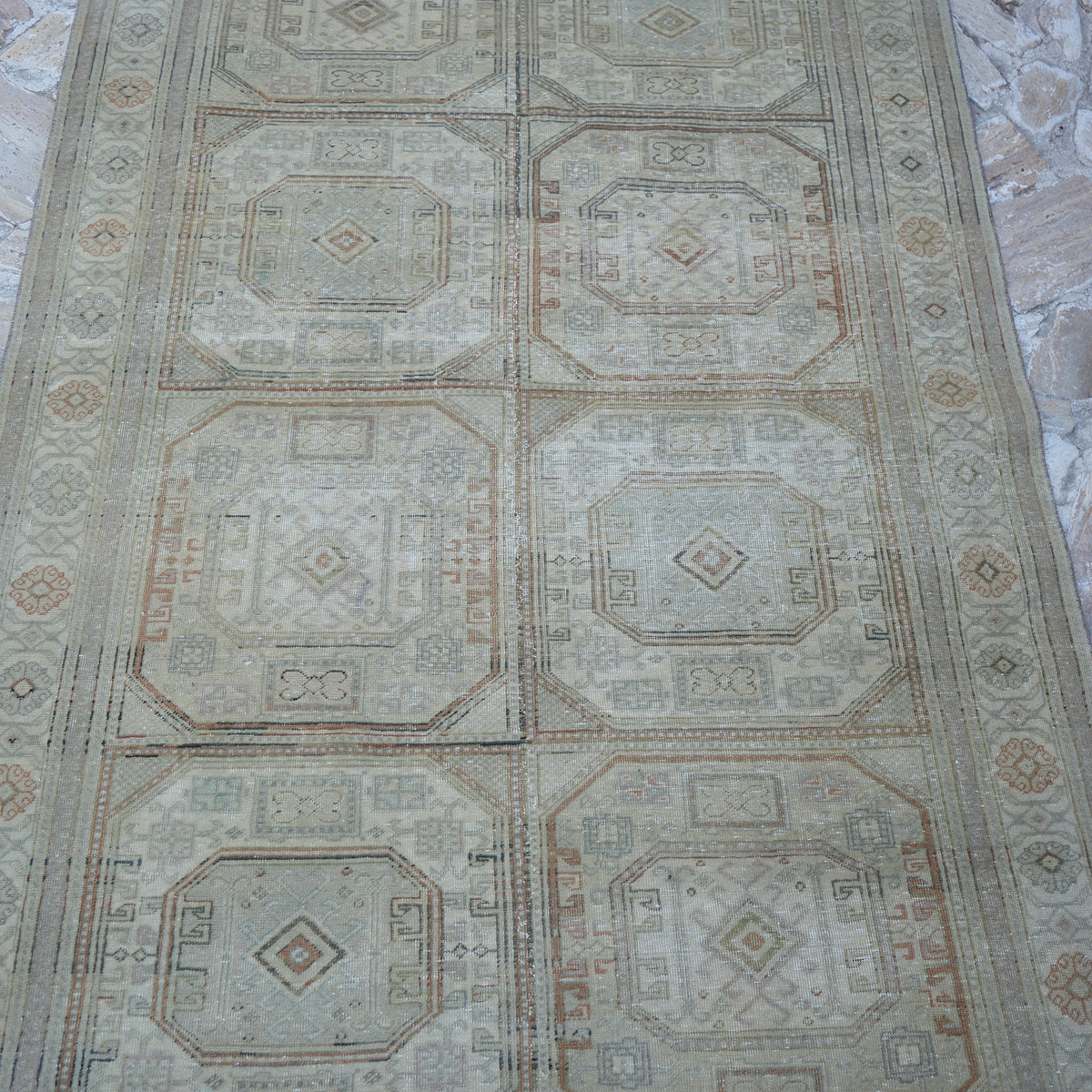
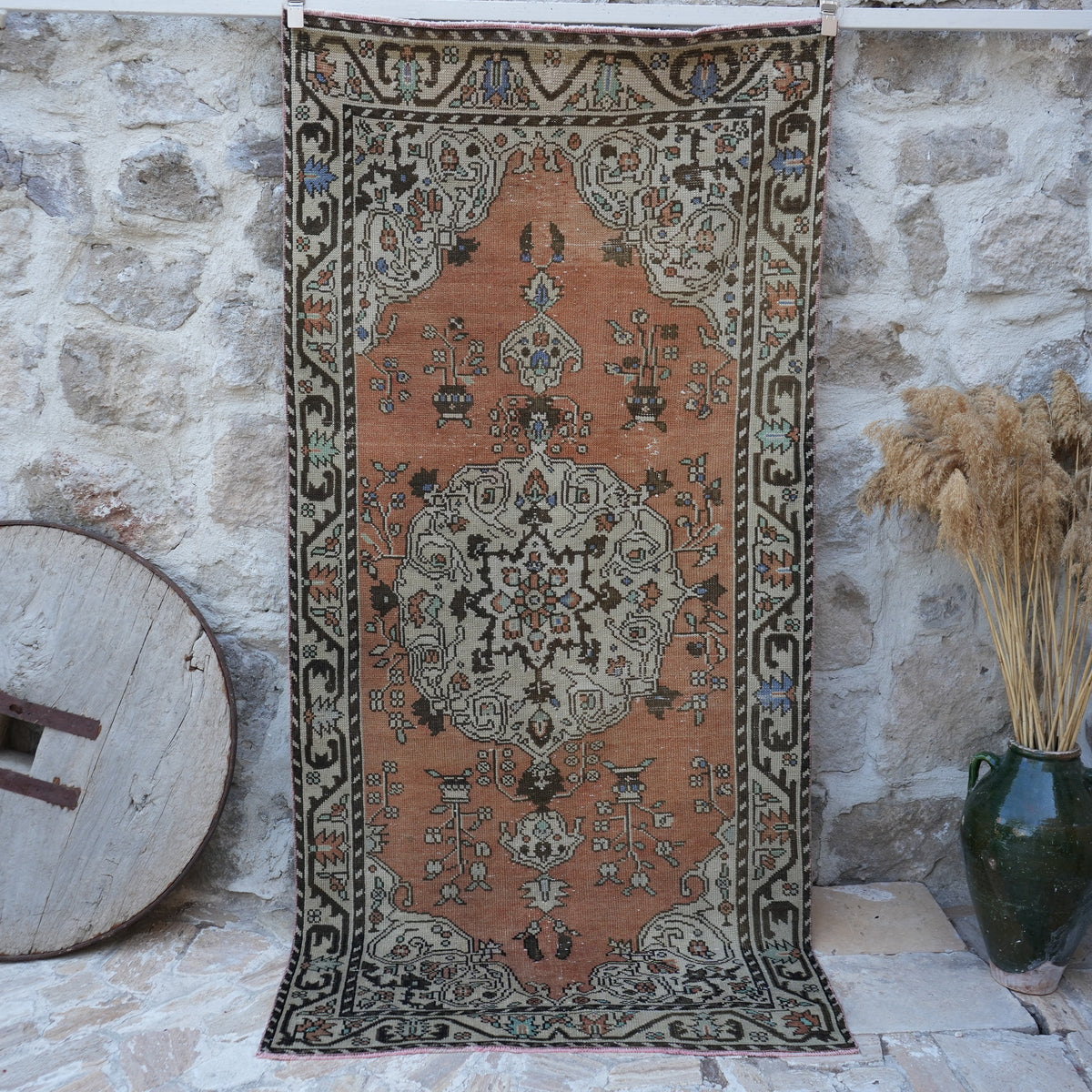
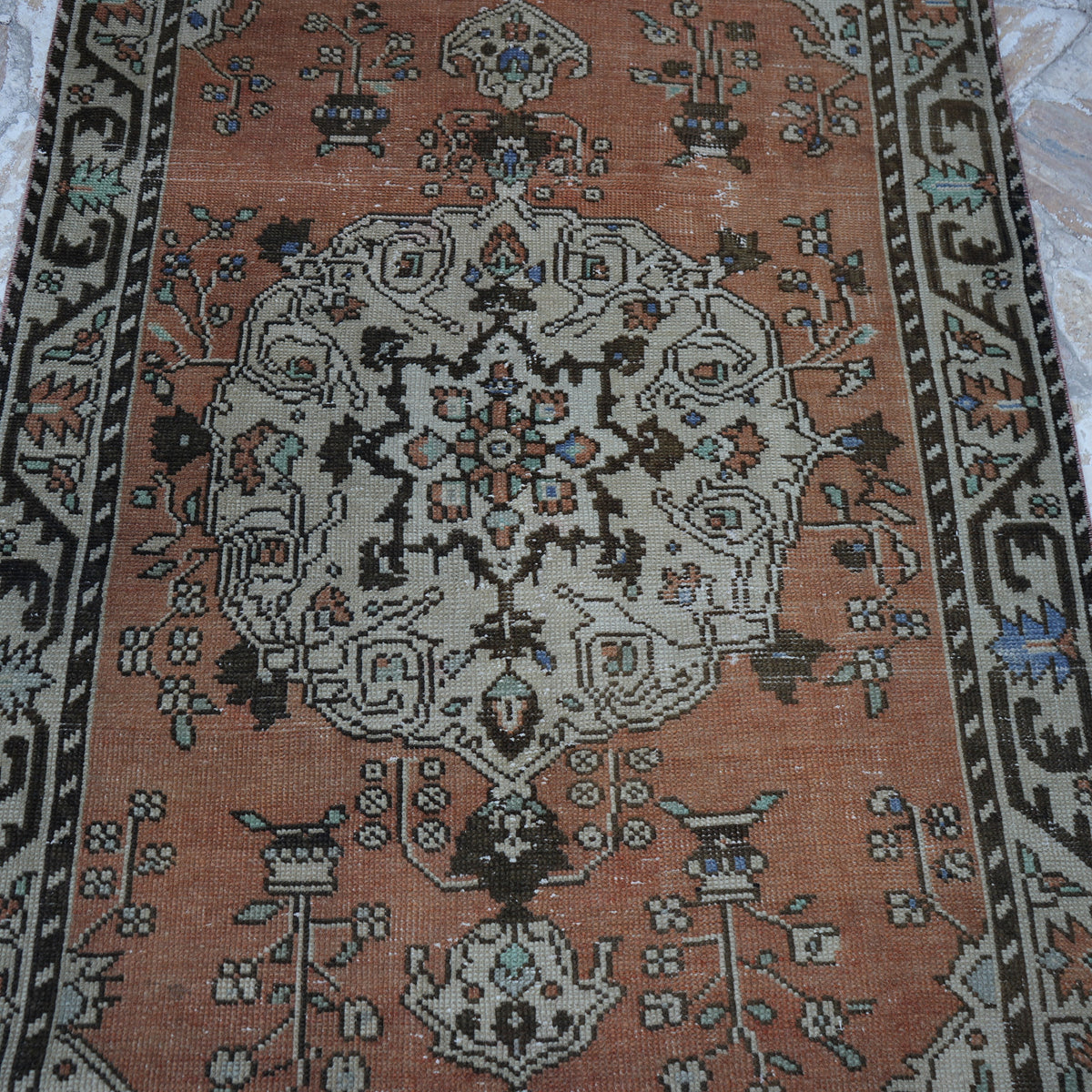
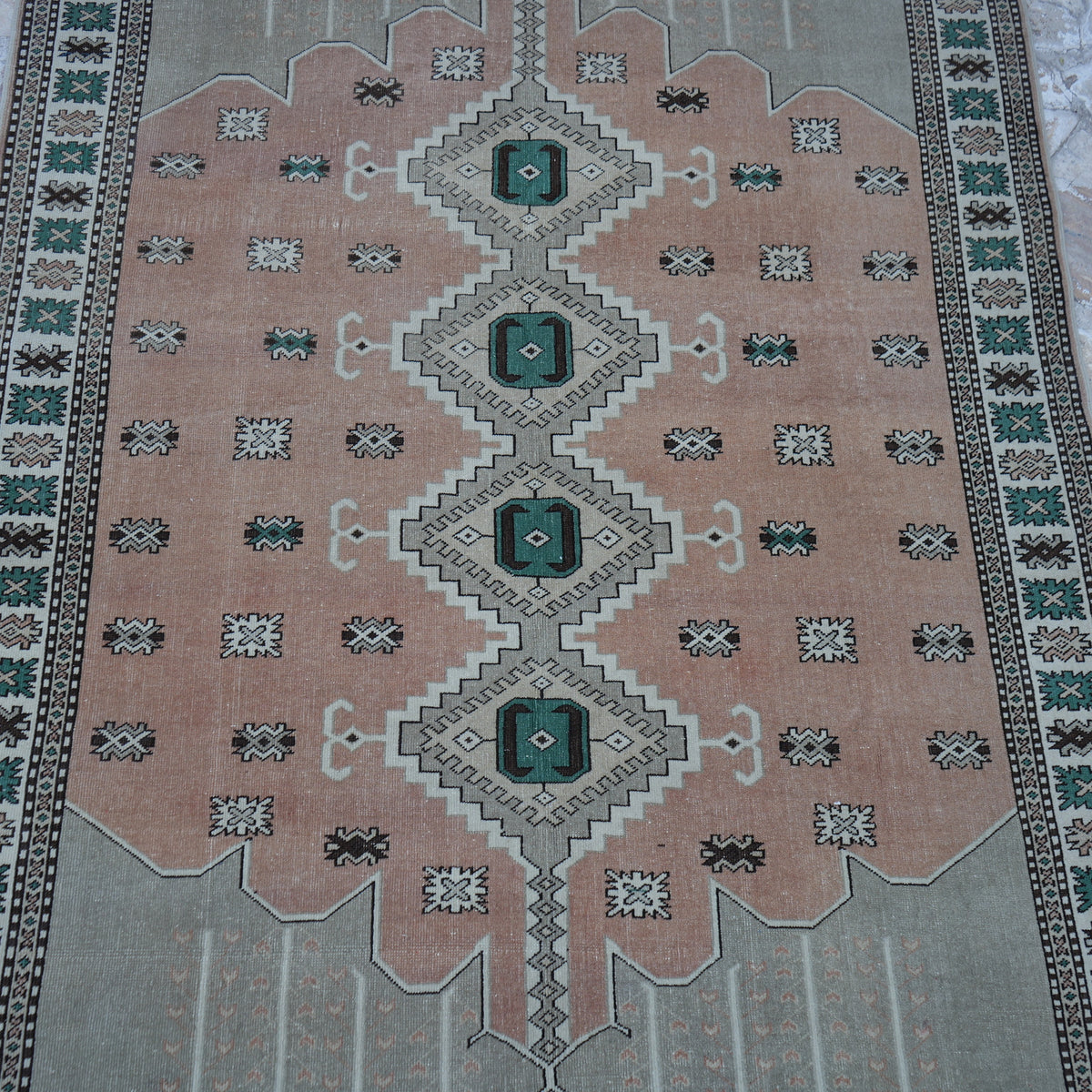
A woman from Ohio once sent me a photo of her restored bungalow. She had uncovered the original beams, rebuilt the fireplace, preserved every built-in she found. Her message was direct: "Everything feels right but the floor is missing something." I suggested a vintage Anatolian rug — faded terracotta ground, tribal geometry, edges gently worn. When her photo came back, the room looked complete. What she had felt as absence had a name: the floor needed something that had already lived.

Colors and Patterns That Fit — And Why Anatolian Geometry Works Here
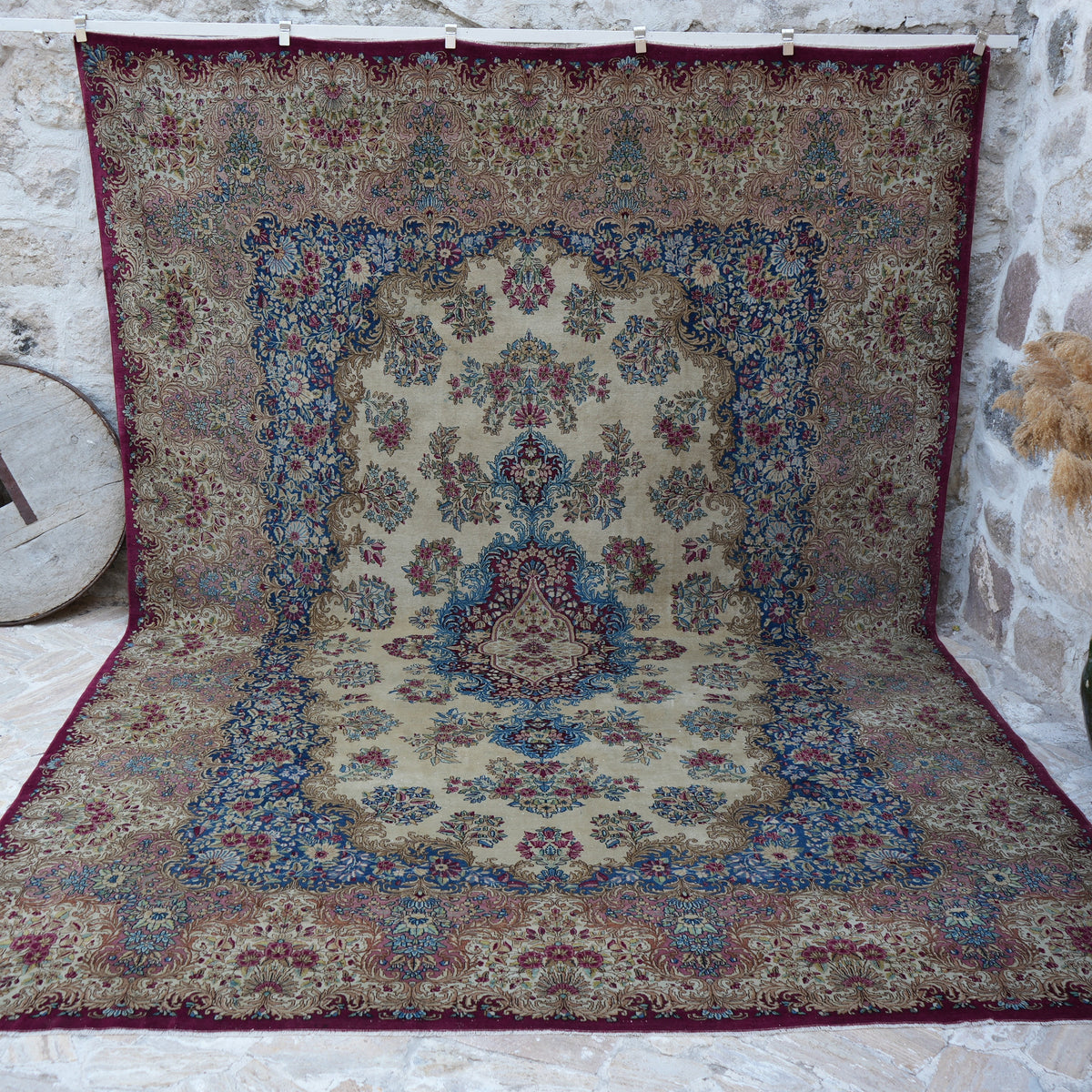
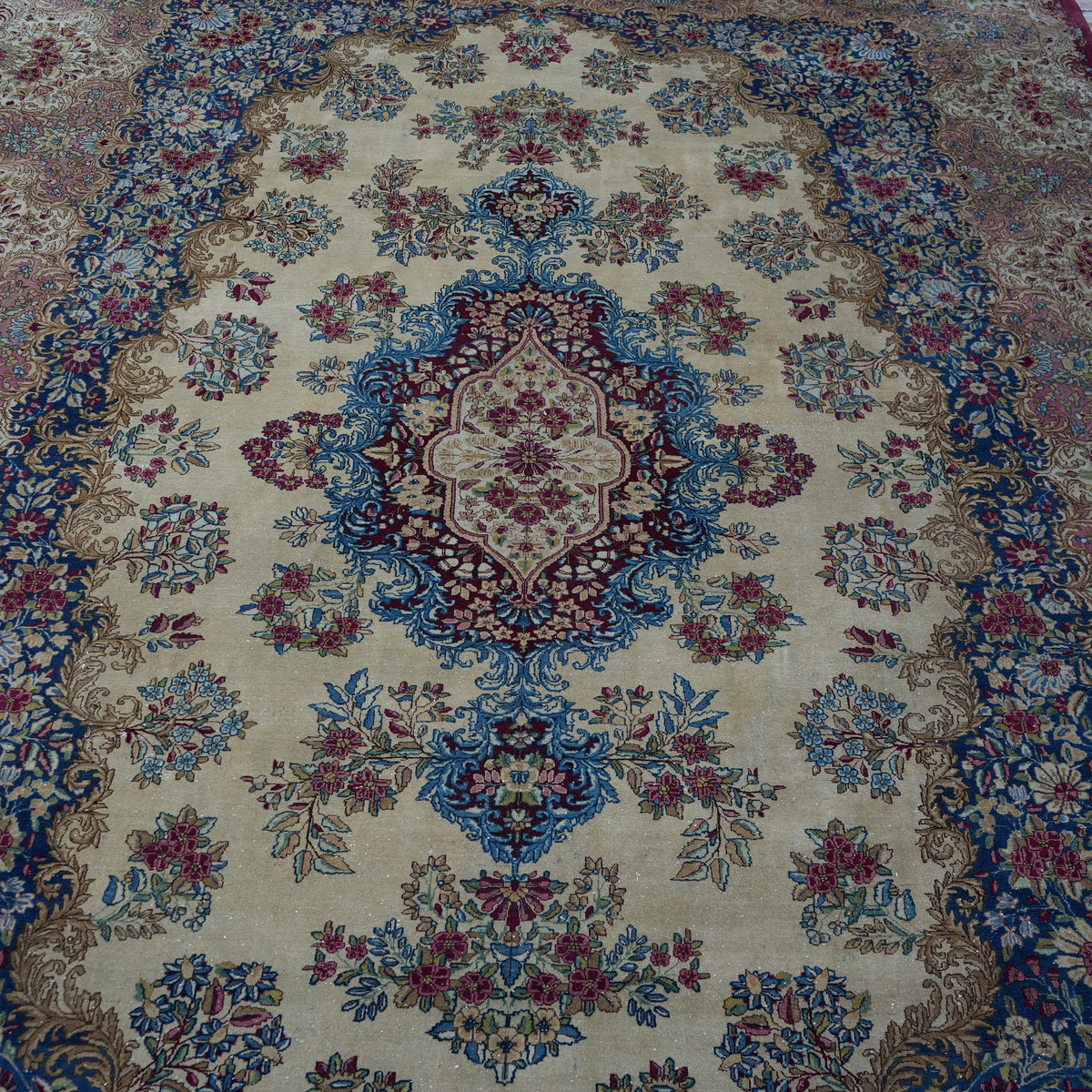
Heavy European florals — the dense, symmetrical roses and vines of French or Italian carpet traditions — compete with Craftsman interiors rather than joining them. The room already has a strong voice: the wood, the stone, the iron hardware. What it needs from the floor is character without noise.
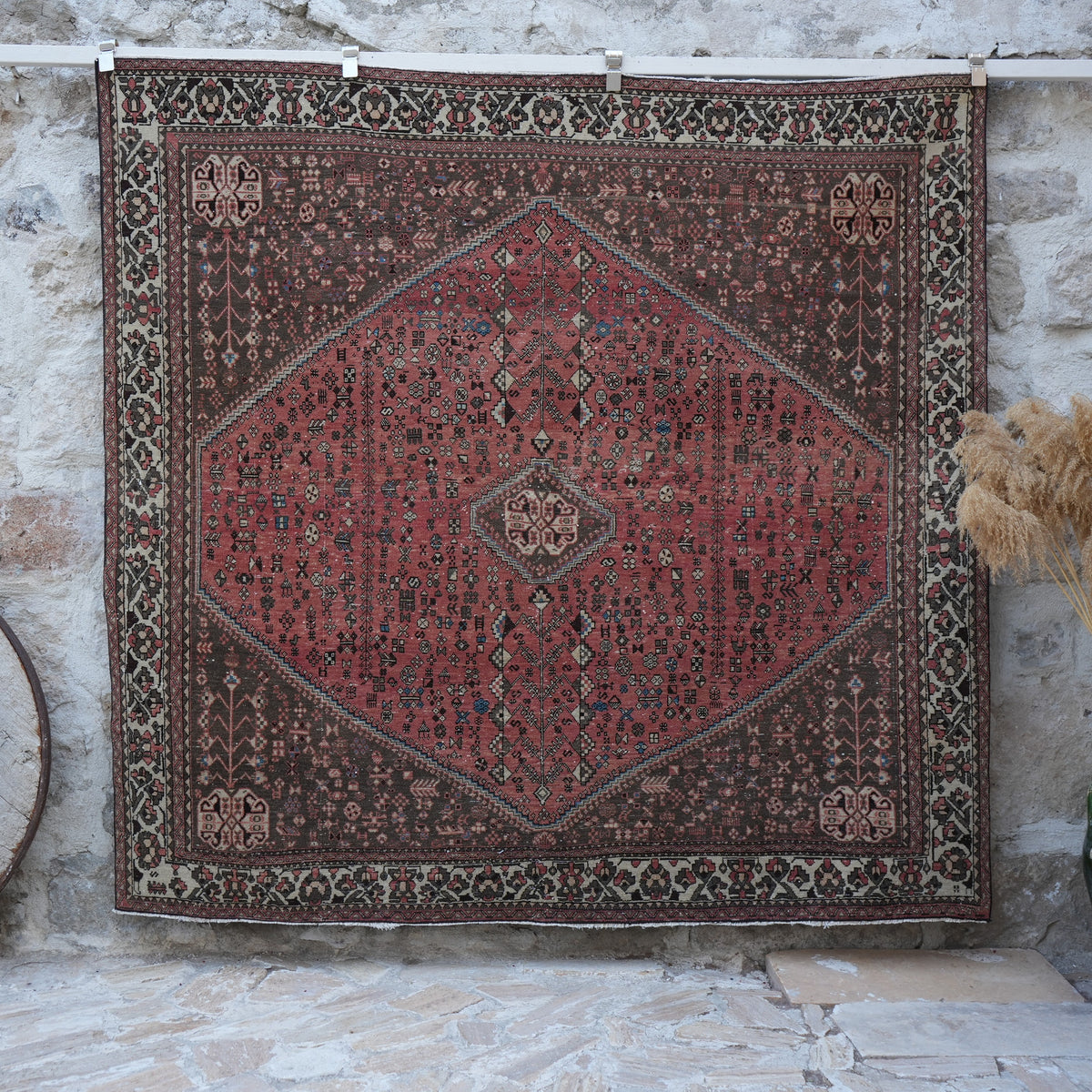
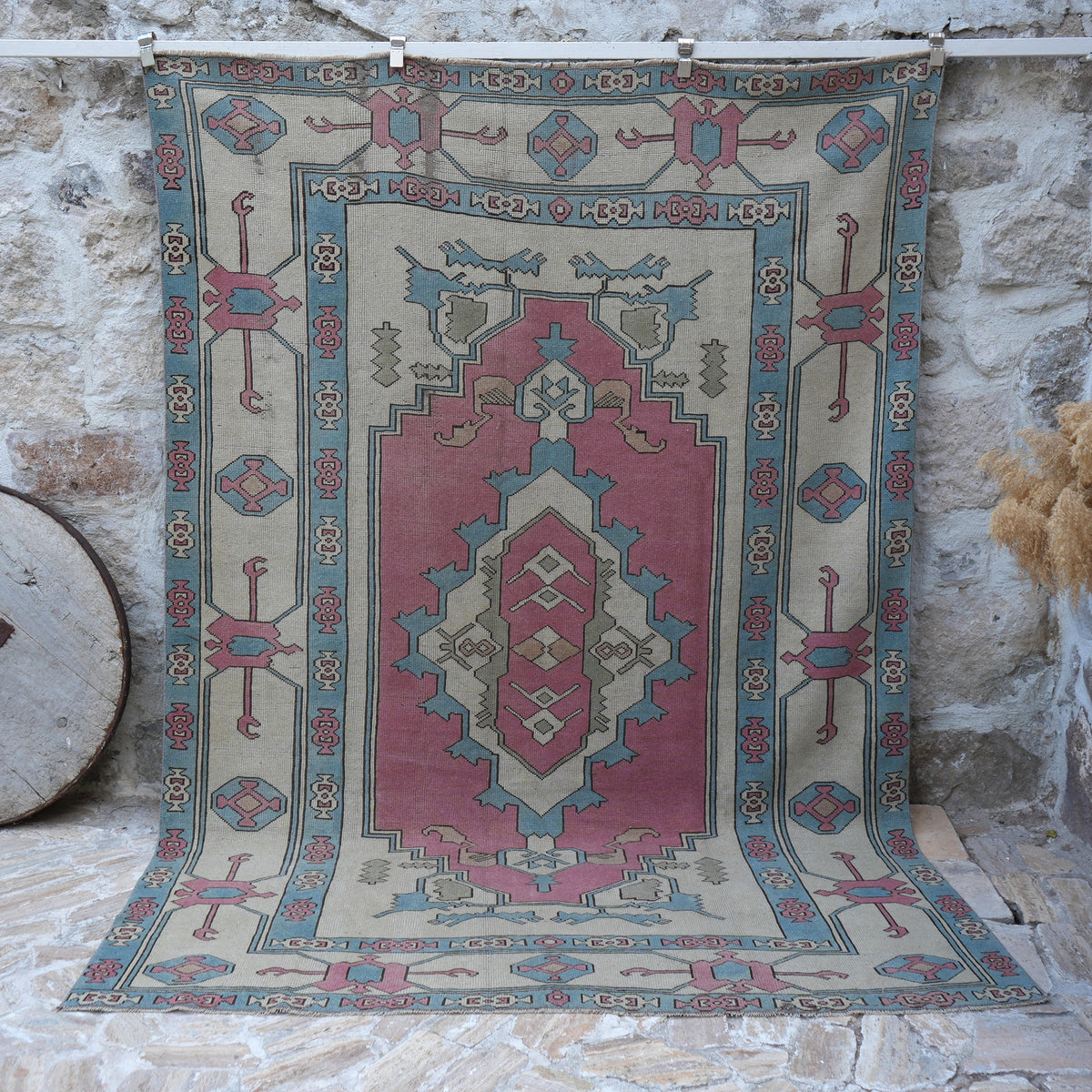
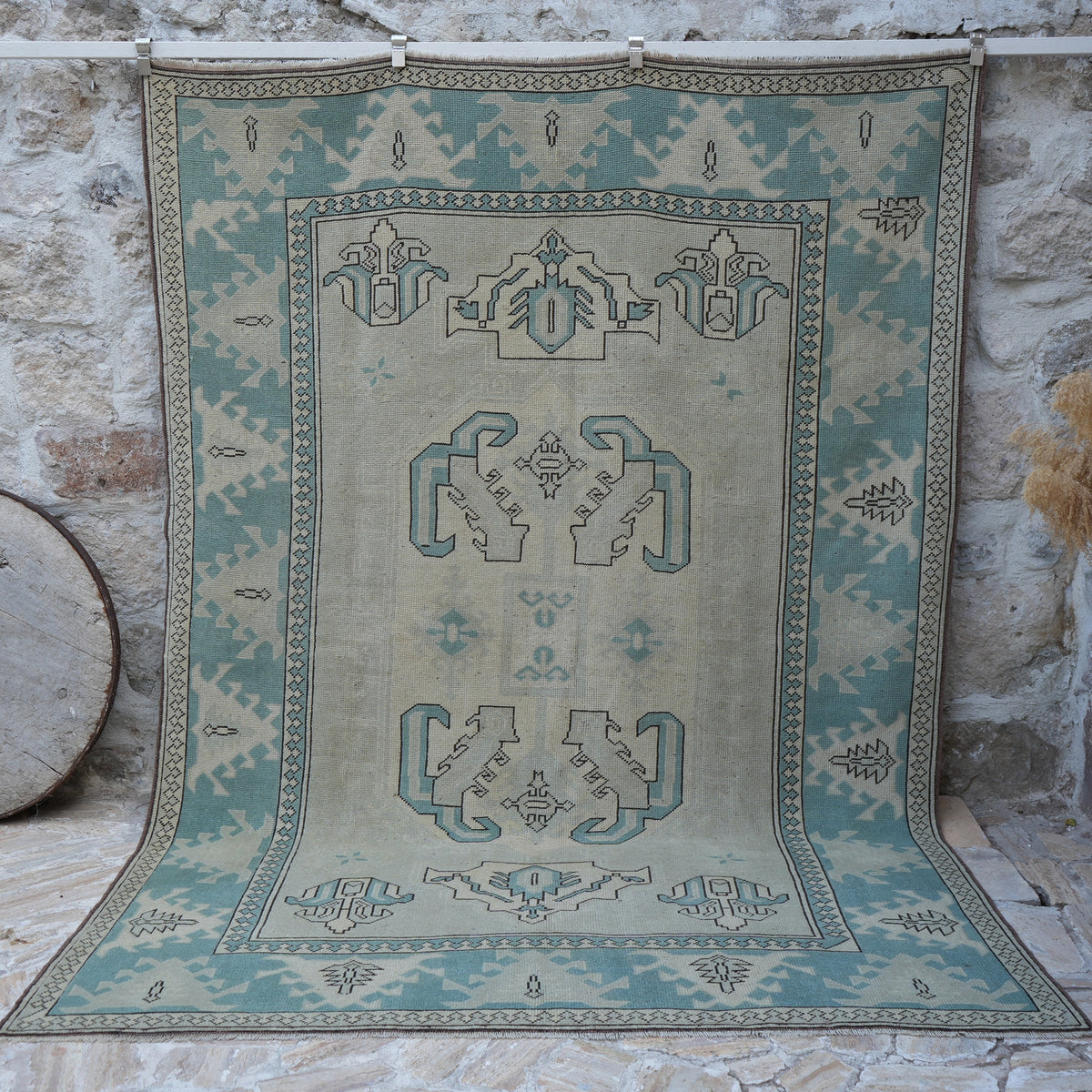
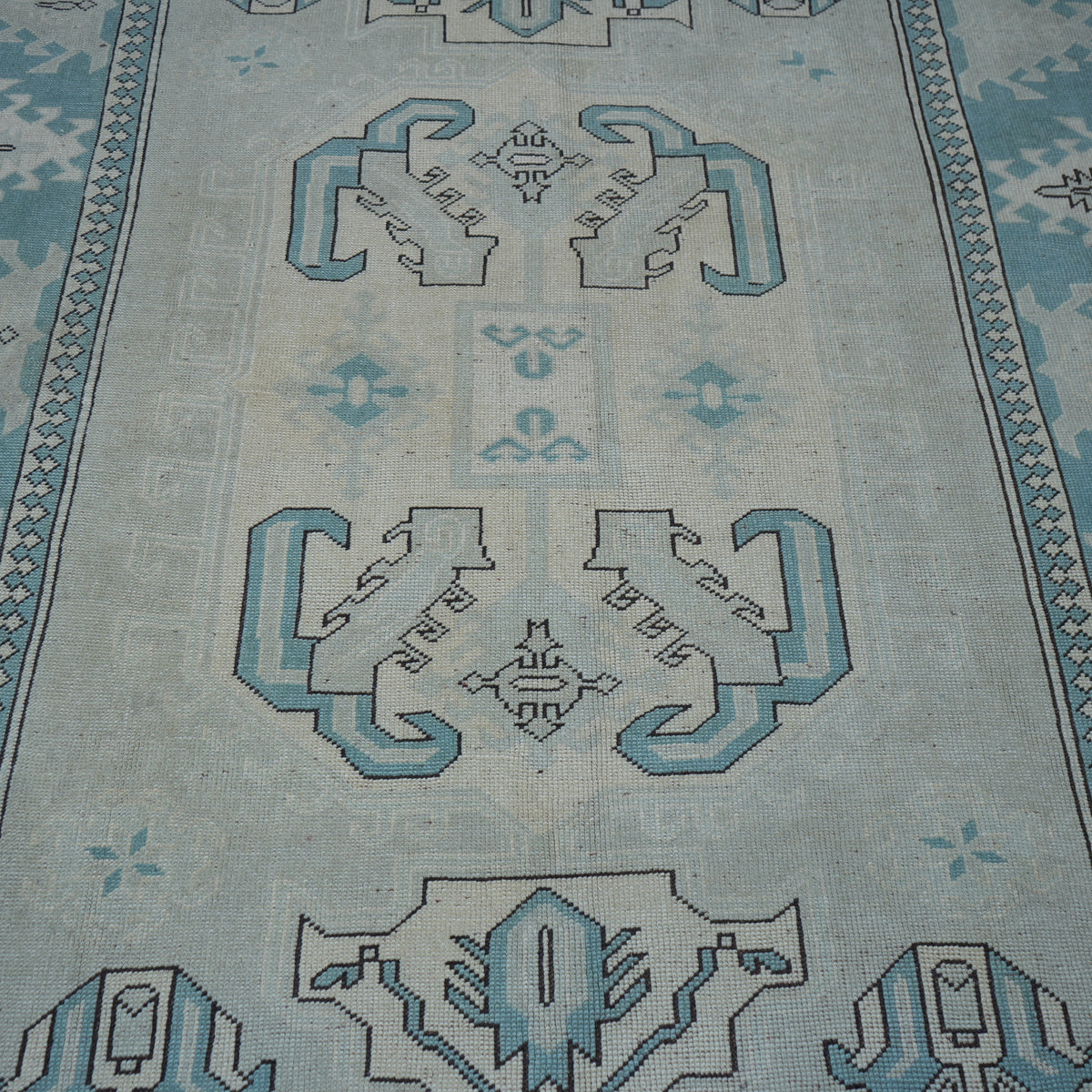
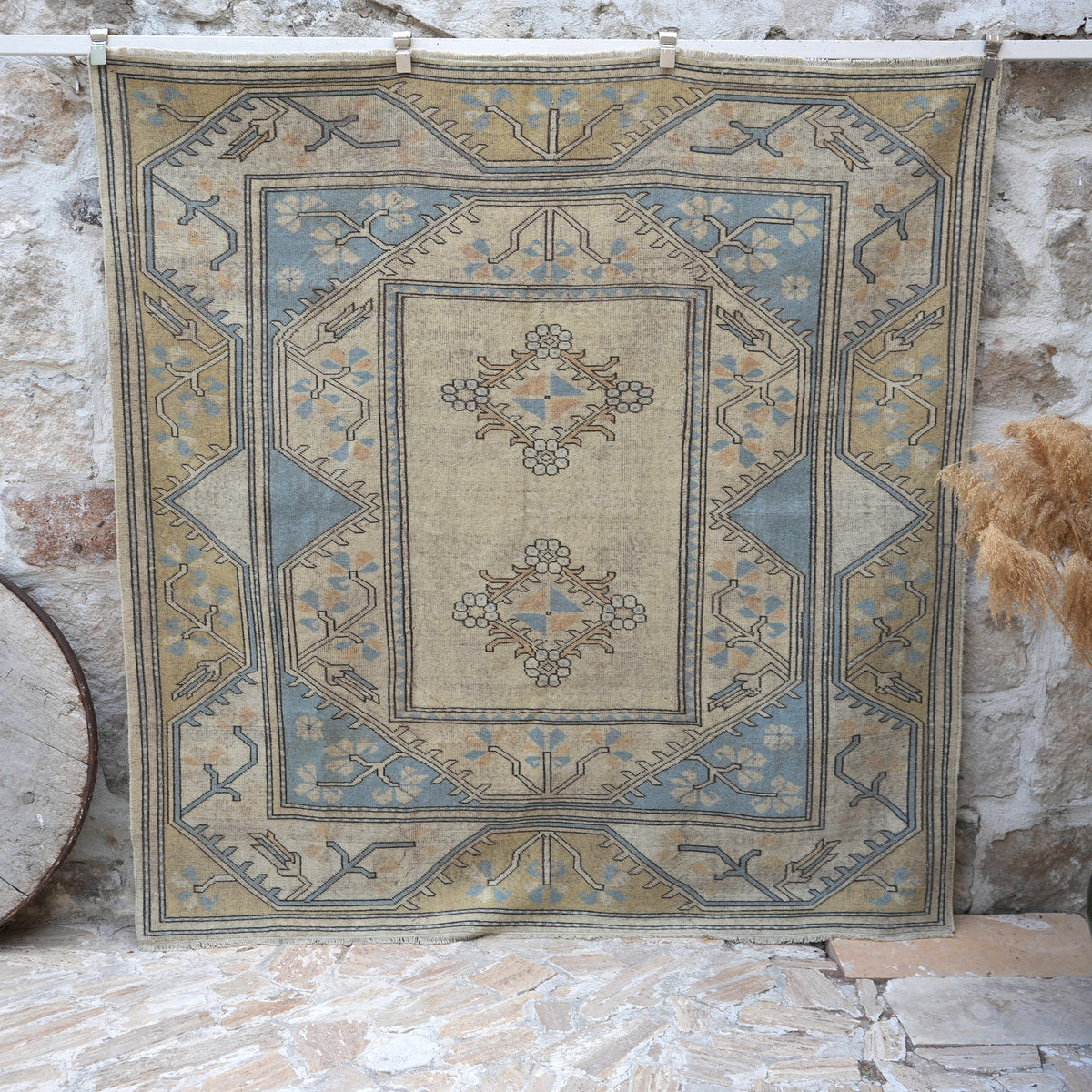
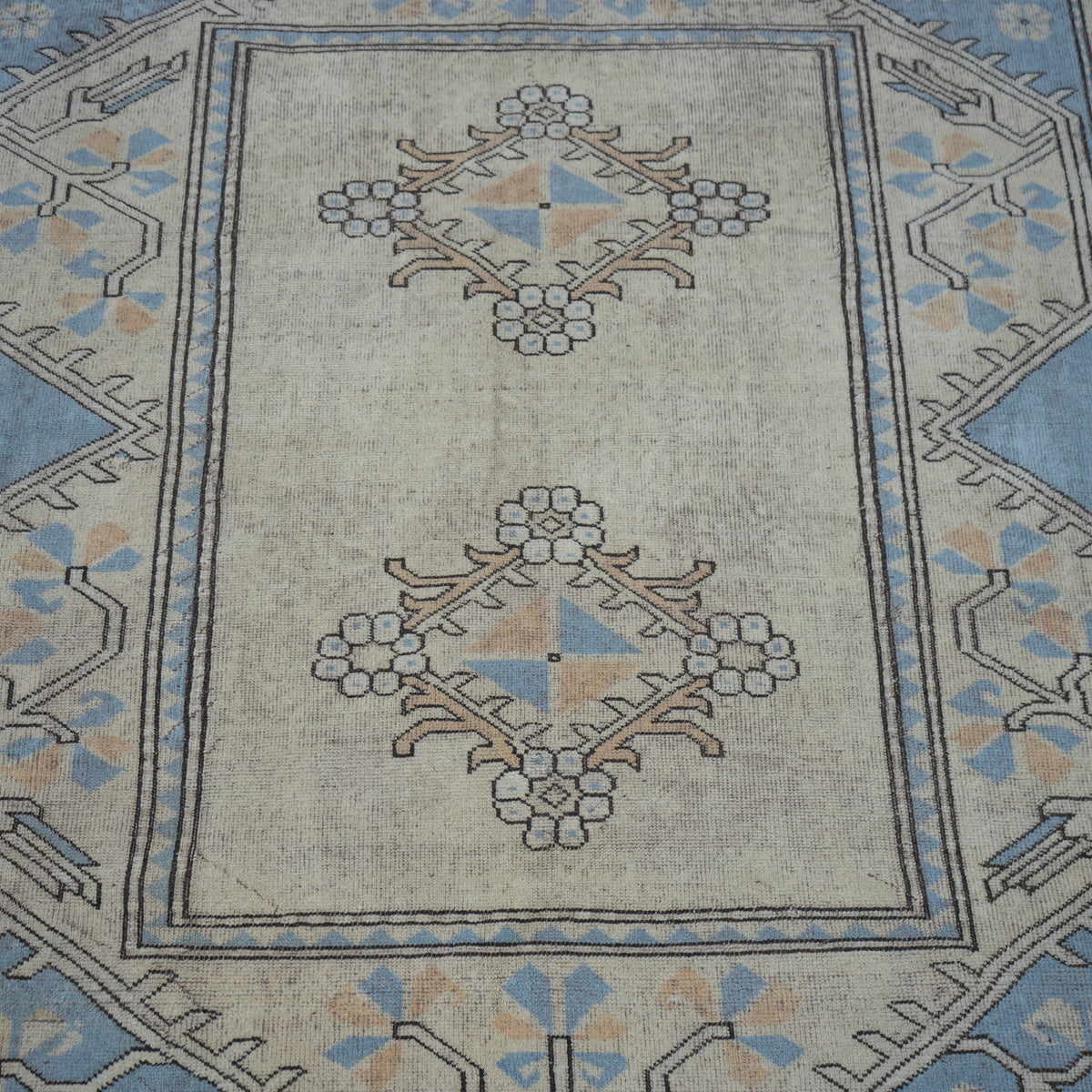
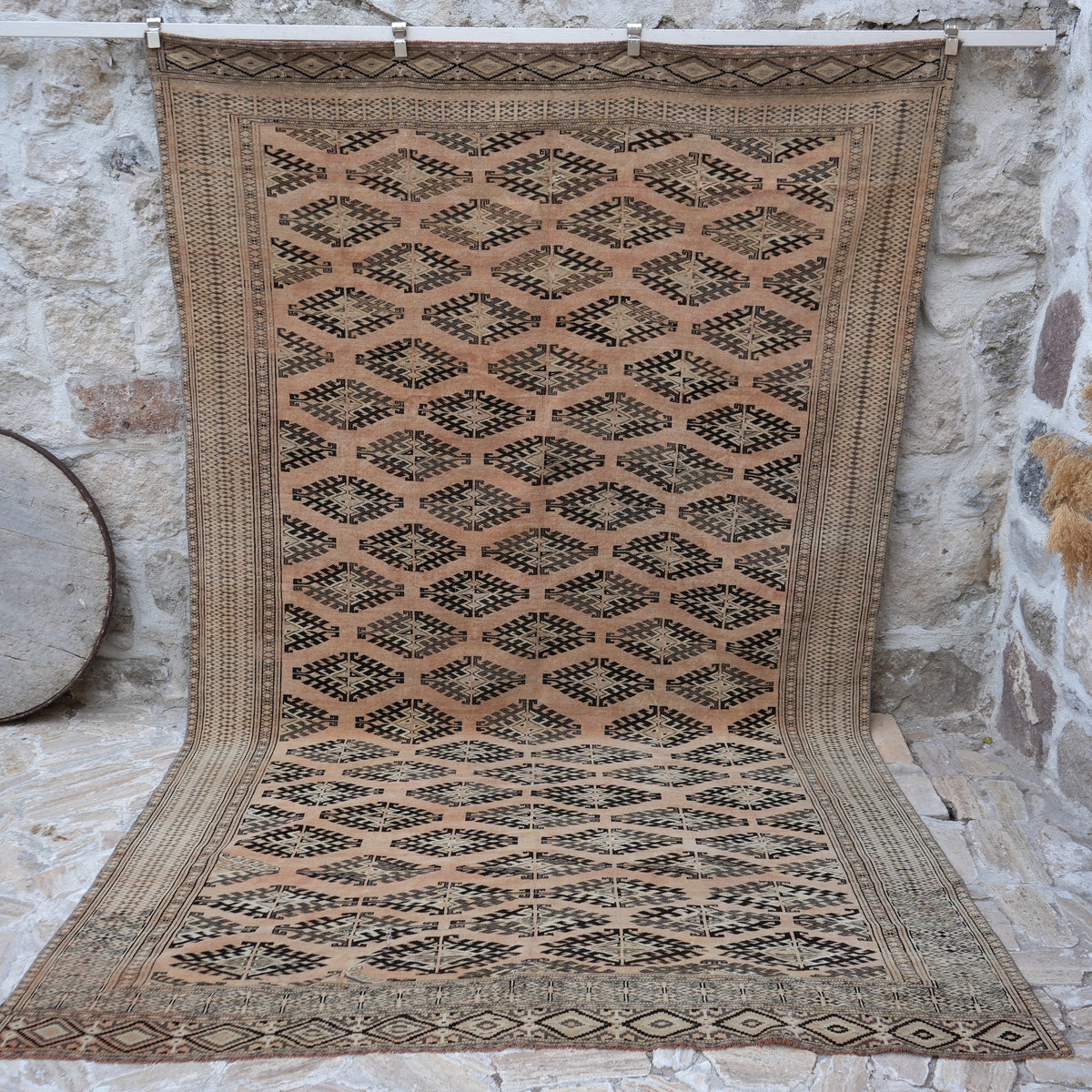
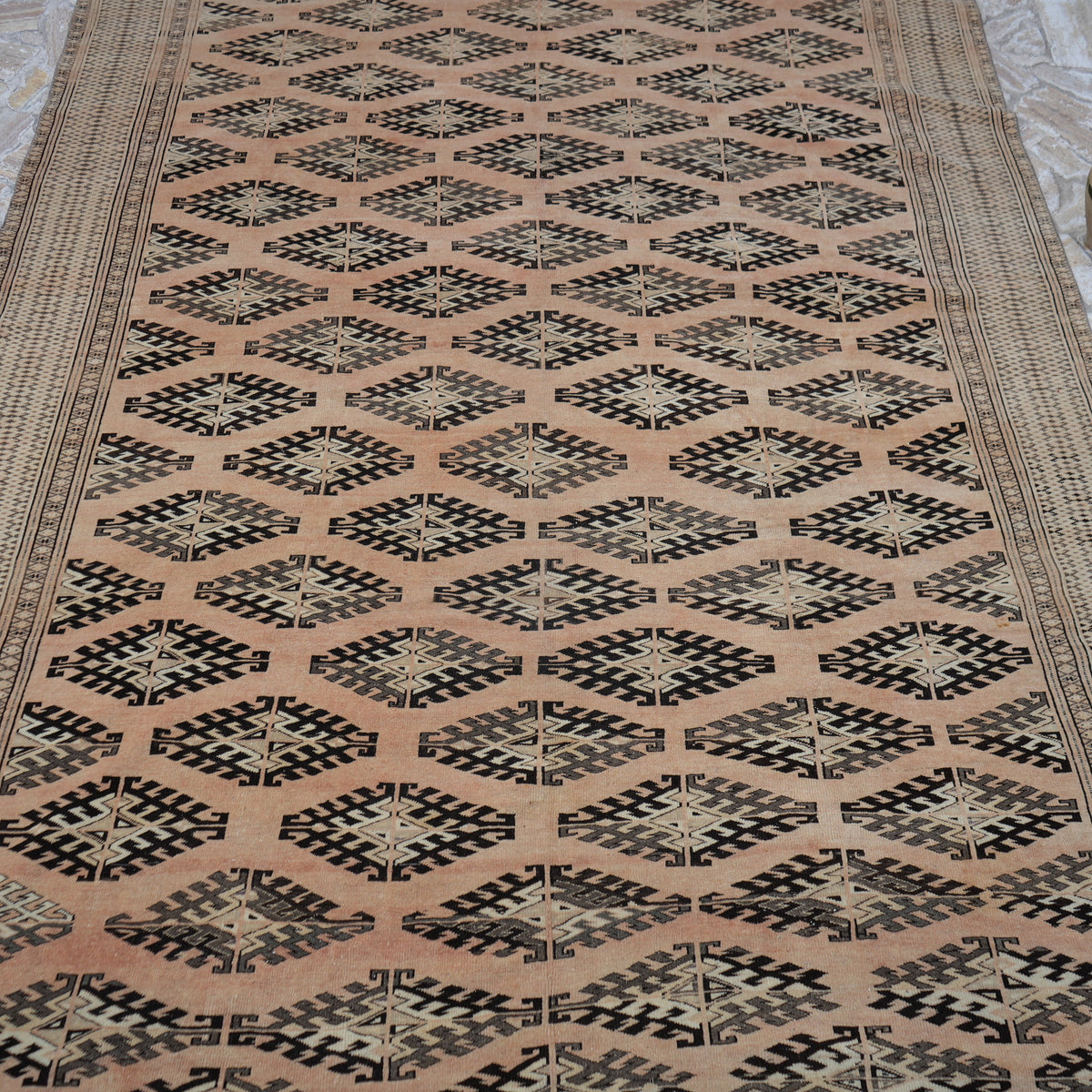
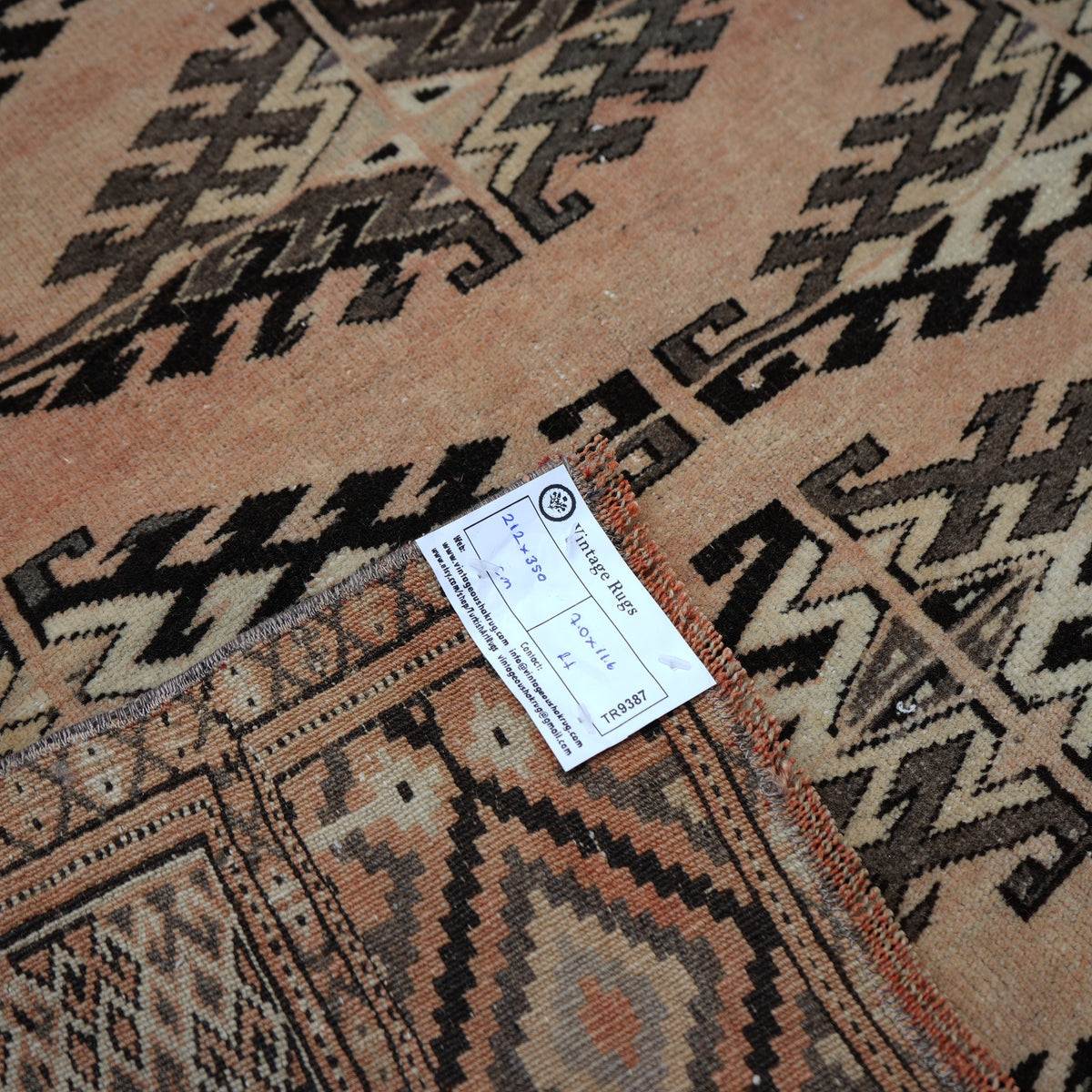
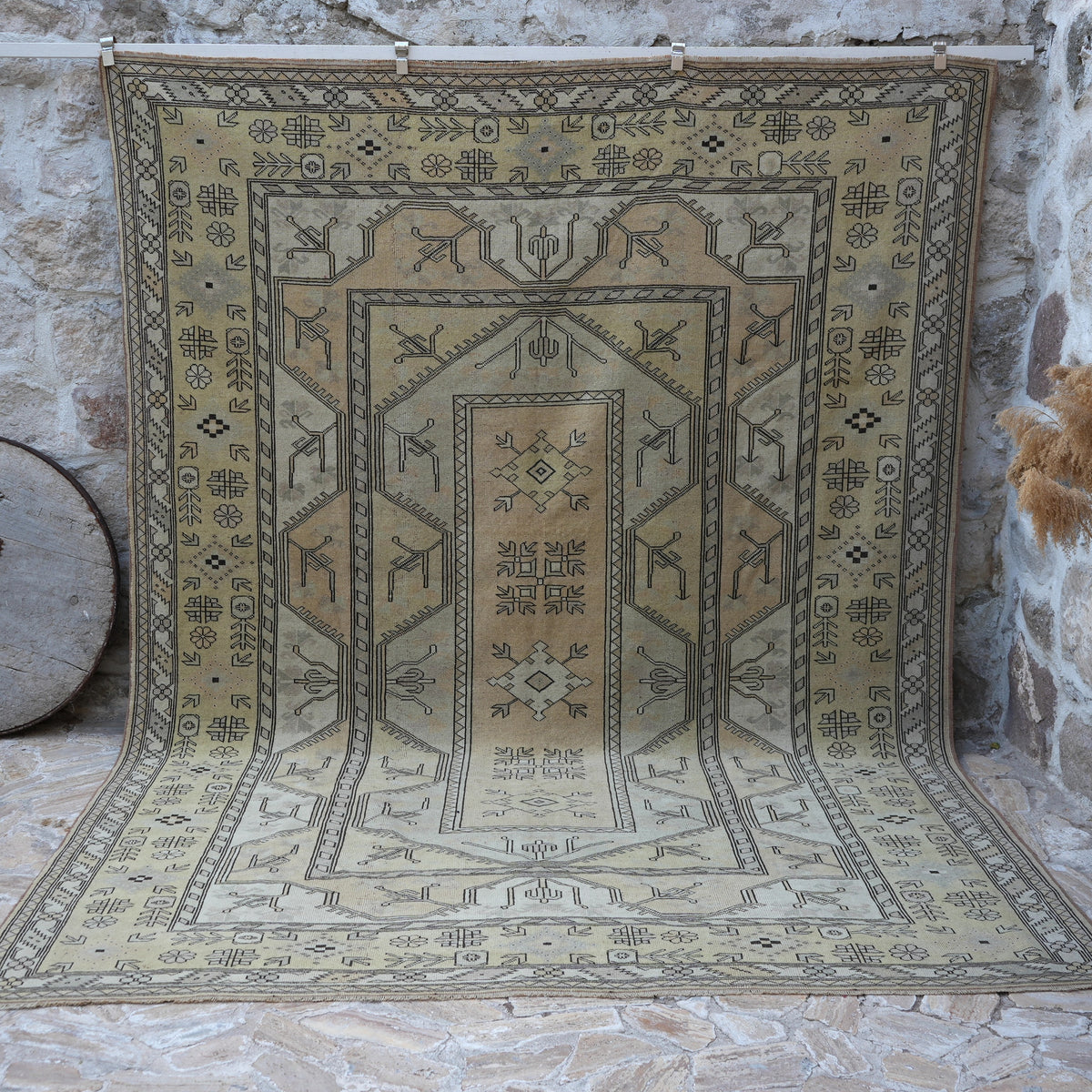
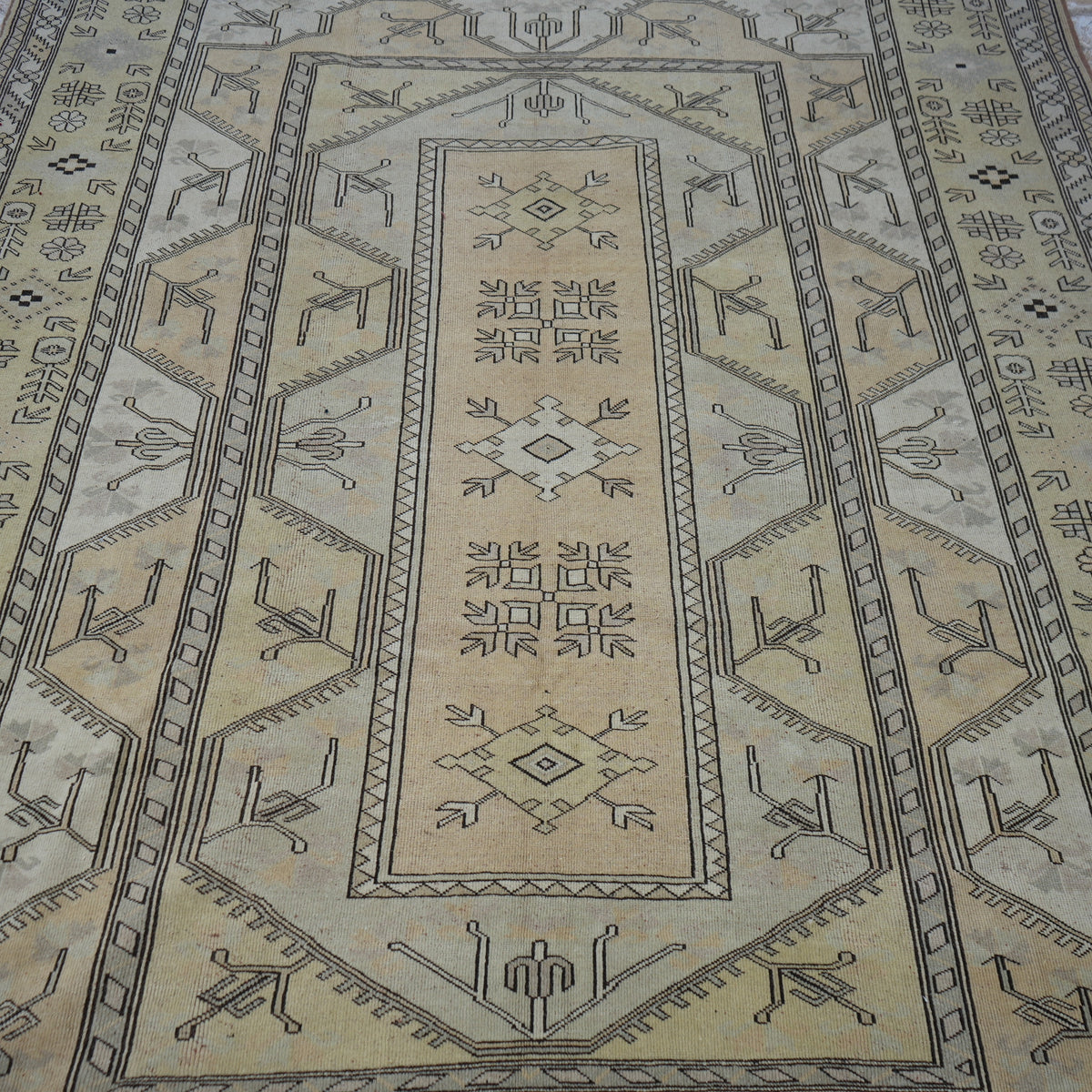
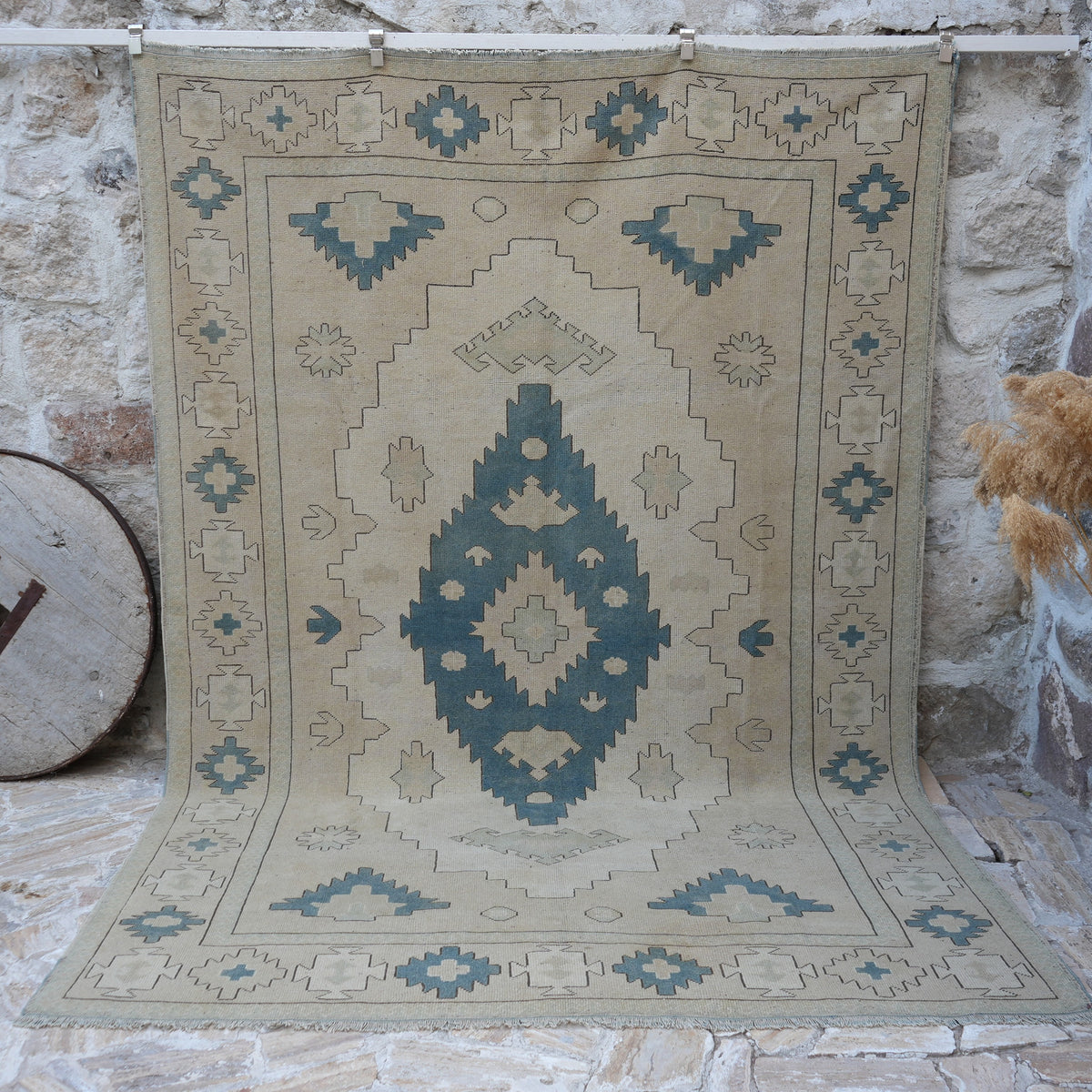
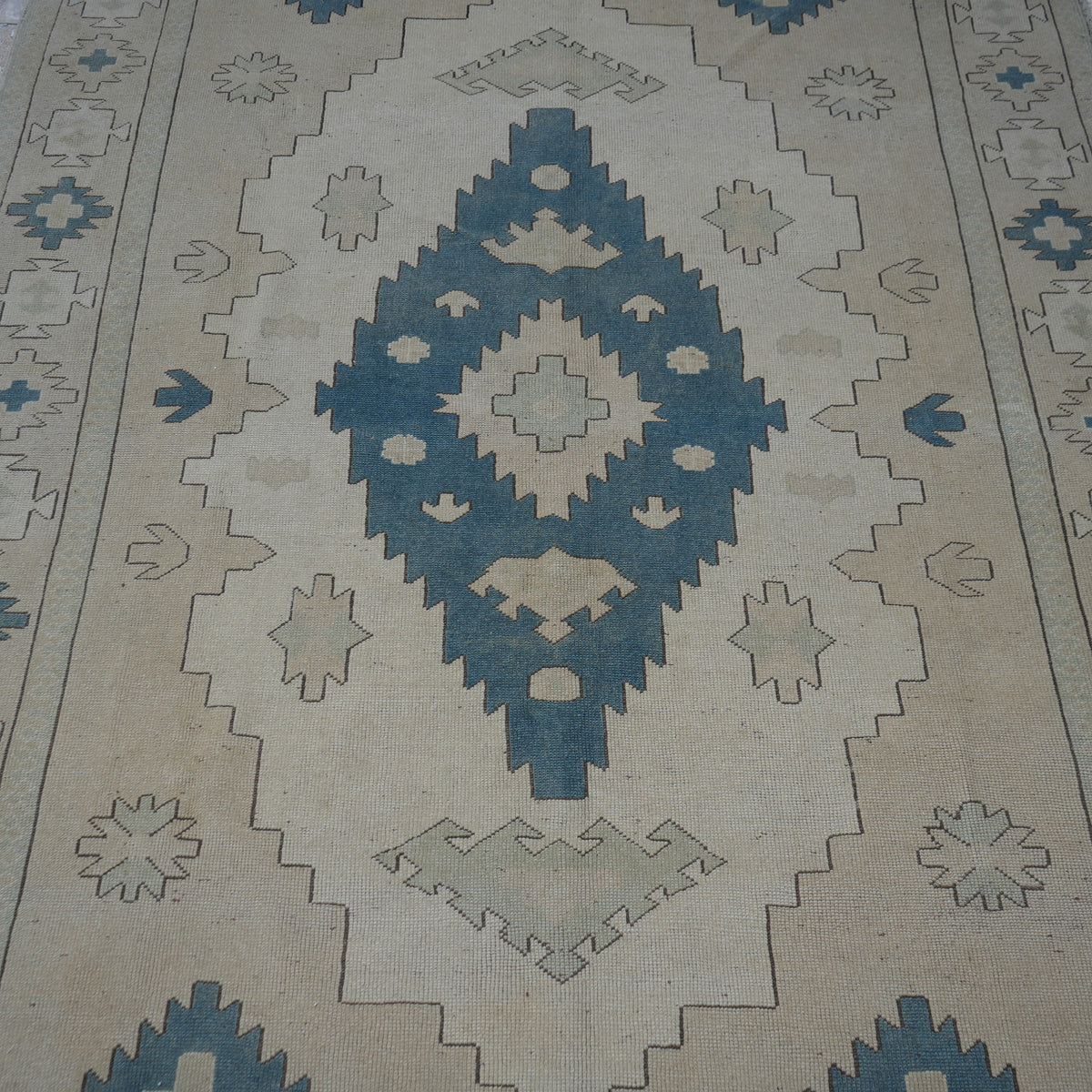
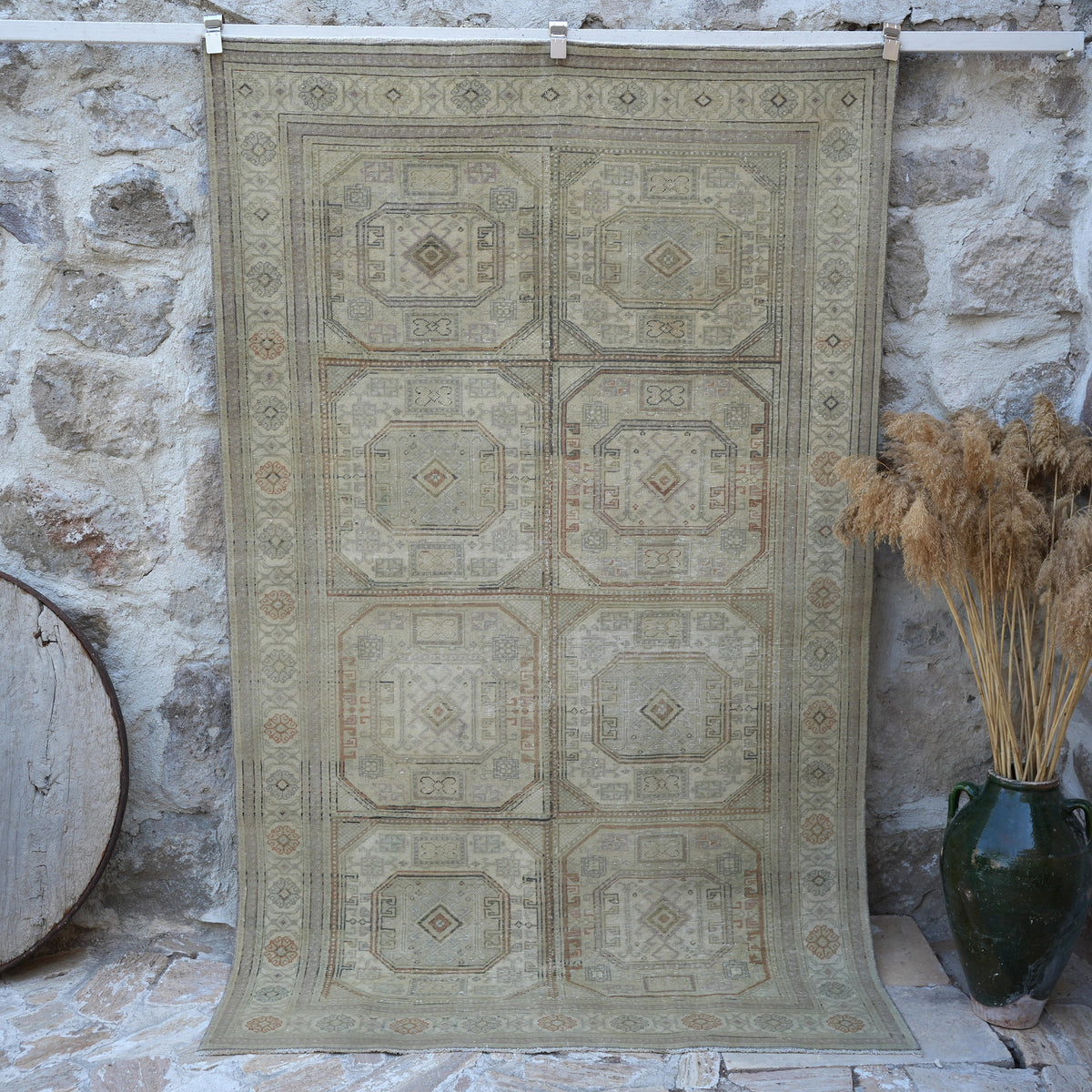
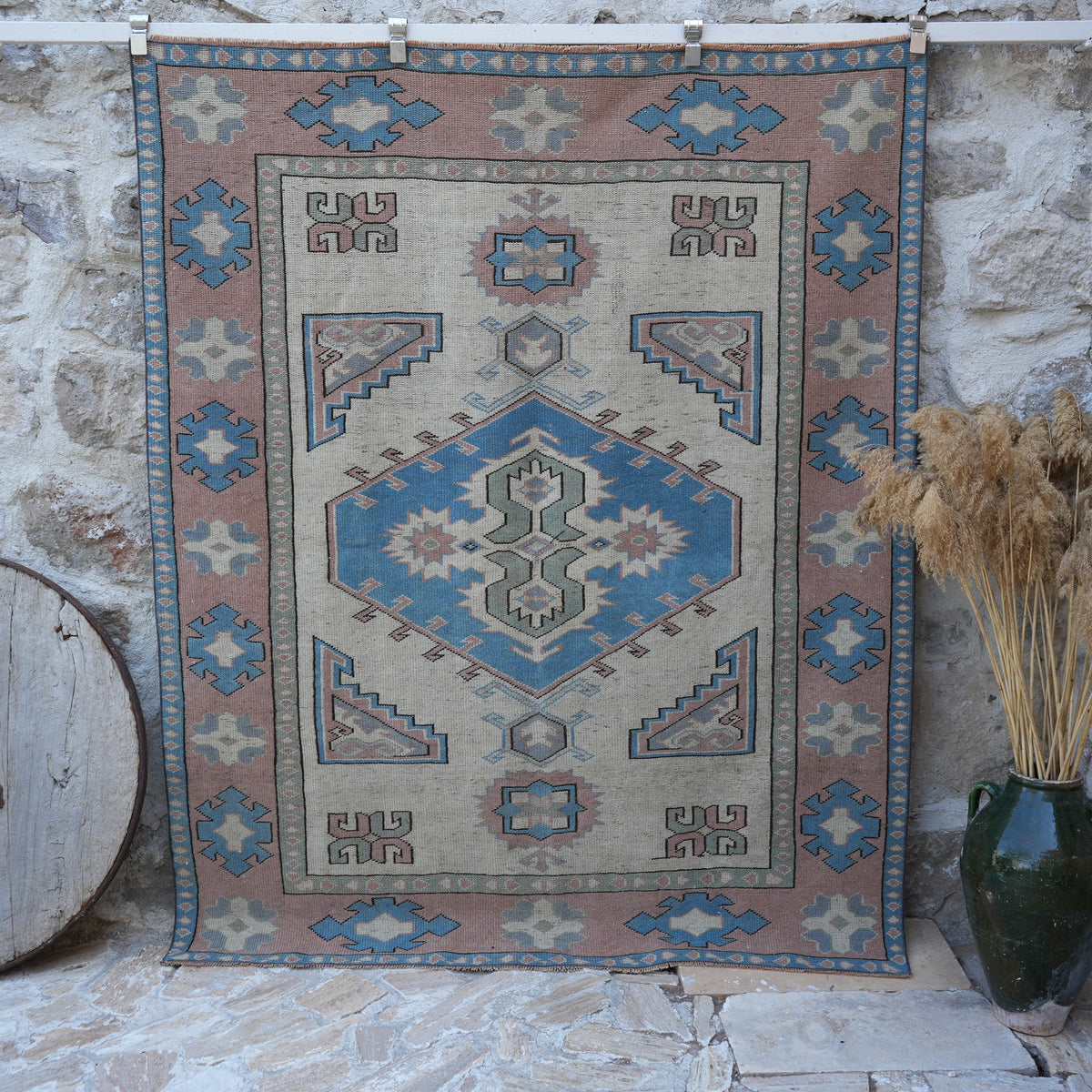
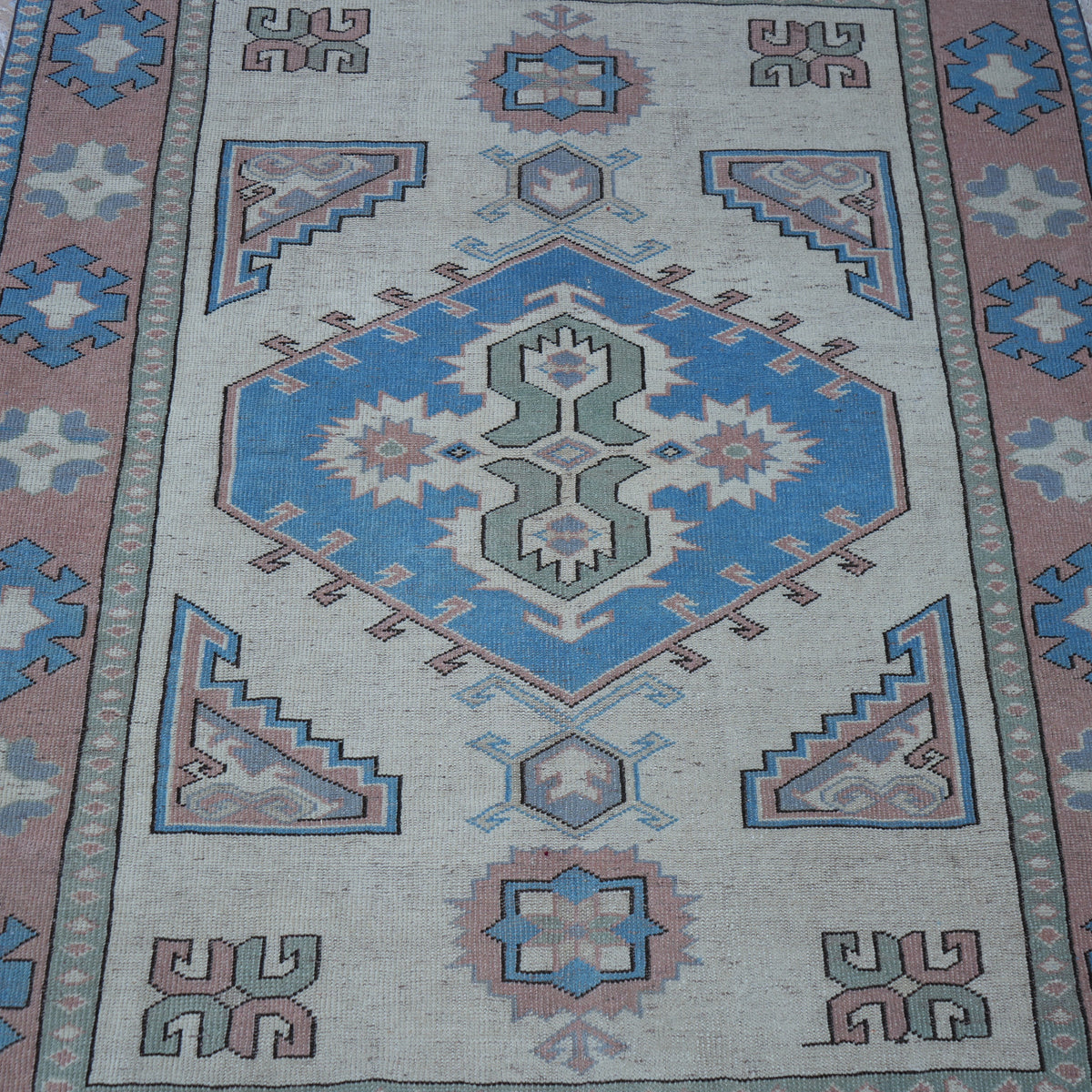
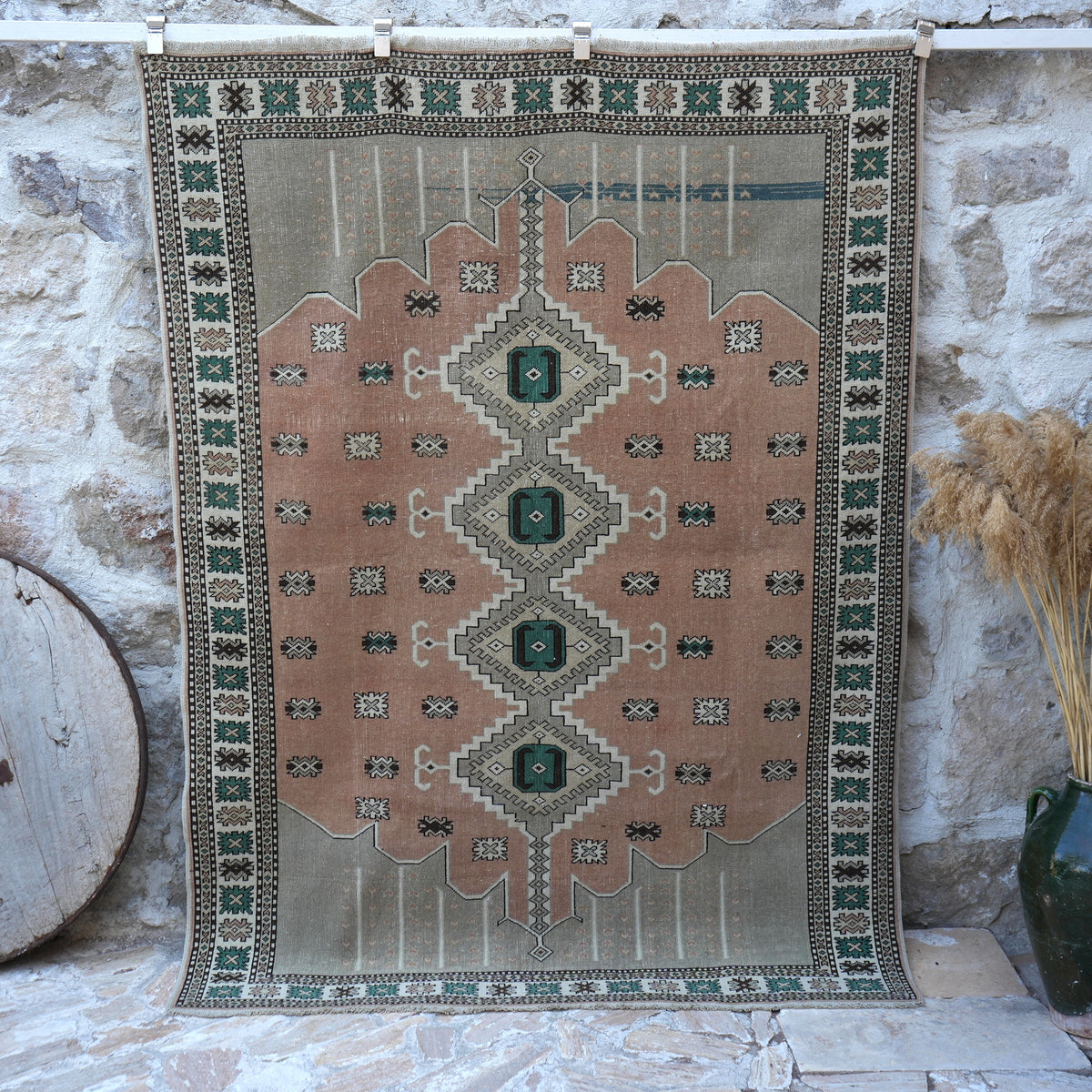
Geometric tribal patterns do this naturally. The repeating forms of Anatolian rugs — medallions, stepped diamonds, angular borders — draw from the same vocabulary as Arts and Crafts design: abstracted nature, flat pattern, honest repetition. A vintage Oushak in faded gold and warm ivory sits beside a quarter-sawn oak floor the way two old friends sit beside each other — without needing an introduction.
Our Oushak rugs include pieces in warm neutrals and terracotta-adjacent tones that Craftsman interiors pull toward naturally. For rooms that already carry strong material presence, kilim rugs work particularly well — the flat weave adds pattern without adding visual weight.
Which Room, Which Size?
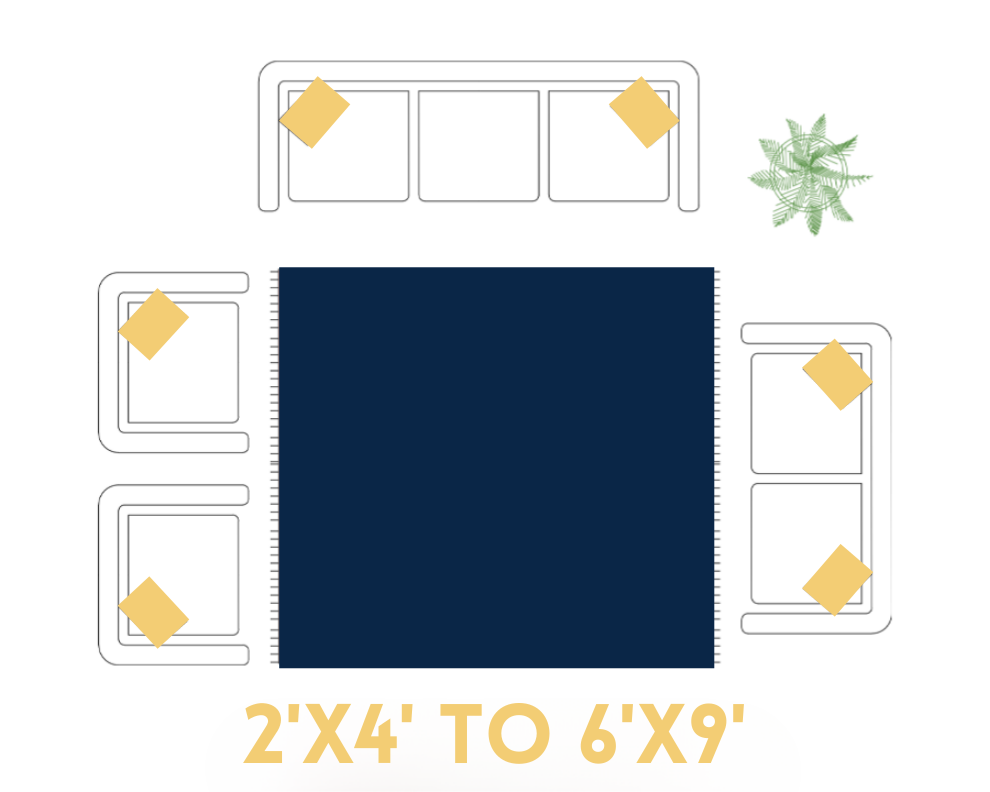
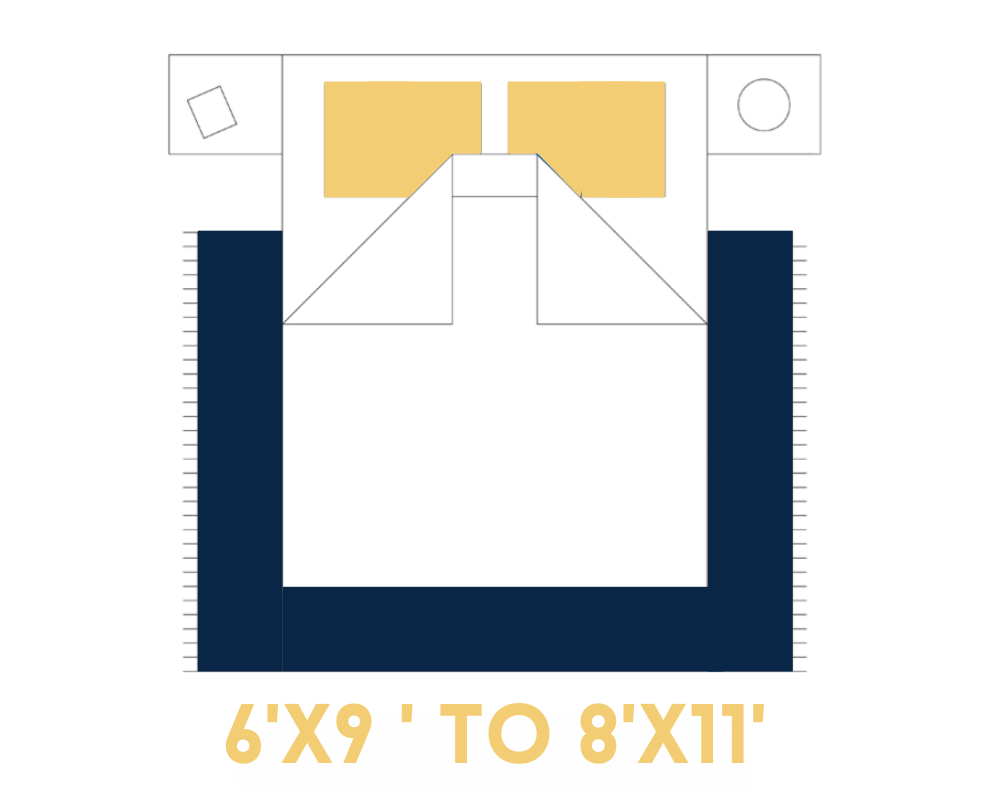
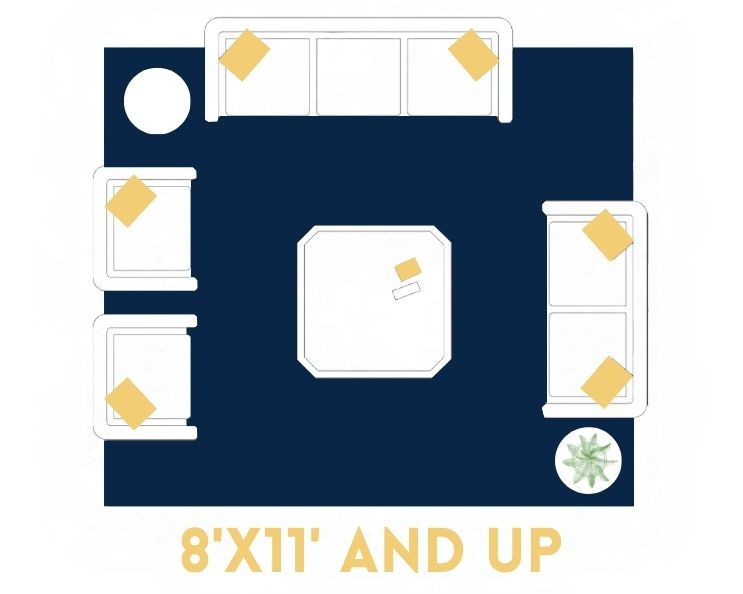
The Craftsman living room anchors around the fireplace. A rug in front of it — under a coffee table, extending toward the sofa — needs to ground the seating area without overrunning the room. An 8×10 is usually the right call; in larger rooms, a 9×12 gives the floor the presence it needs. Our 8×10 vintage rugs and 9×12 vintage rugs are worth starting there.
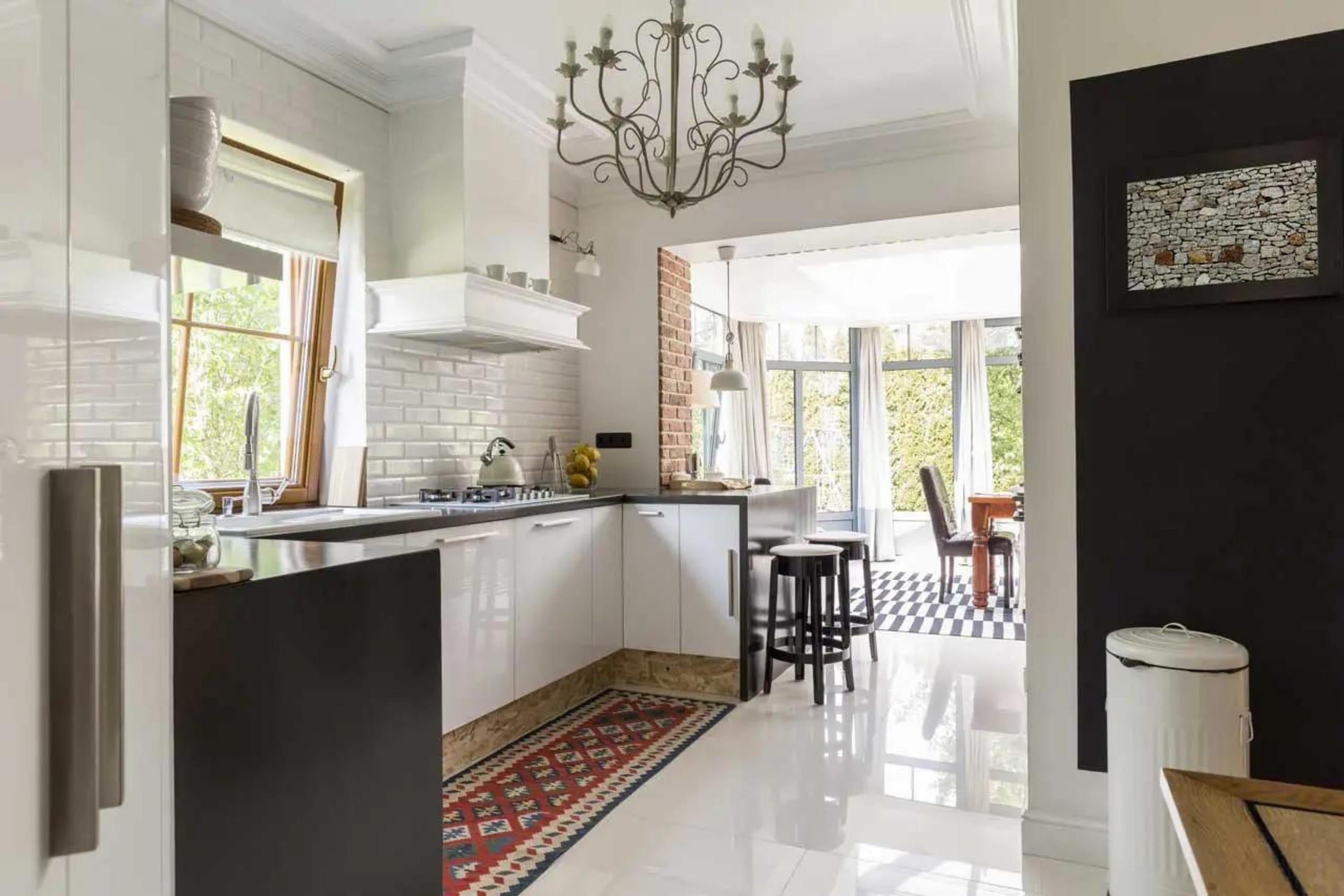
Dining rooms ask for a different calculation. The rug should extend 24 to 30 inches beyond the table on all sides — enough that chair legs stay on the rug when pulled out. Hallways are often overlooked, but they set the tone for everything that follows. A runner in a geometric or tribal pattern does this without overwhelming the space. Our runner rugs include several pieces suited to entryways where you want presence without drama.
What to Look for in a Vintage Rug for a Craftsman Home
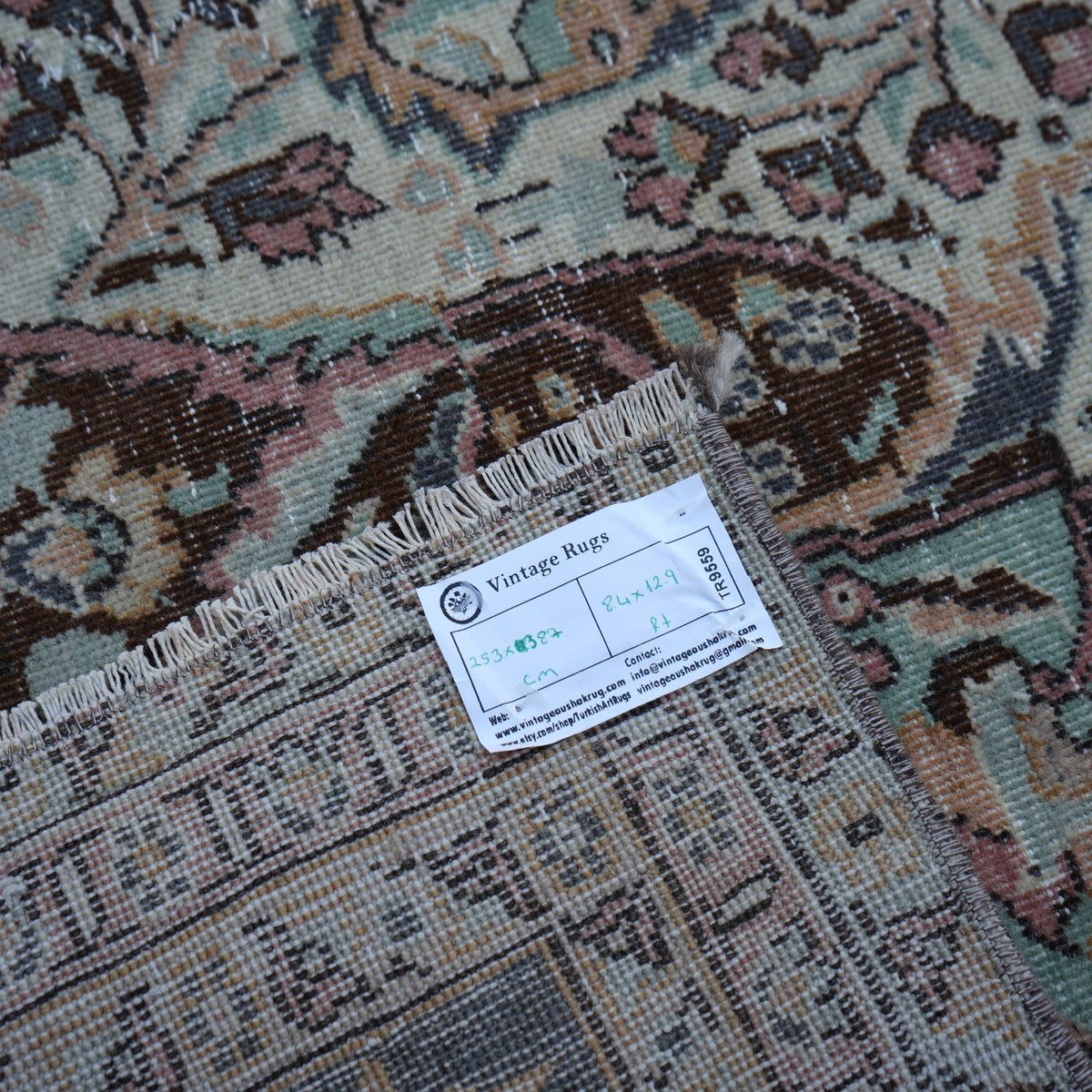
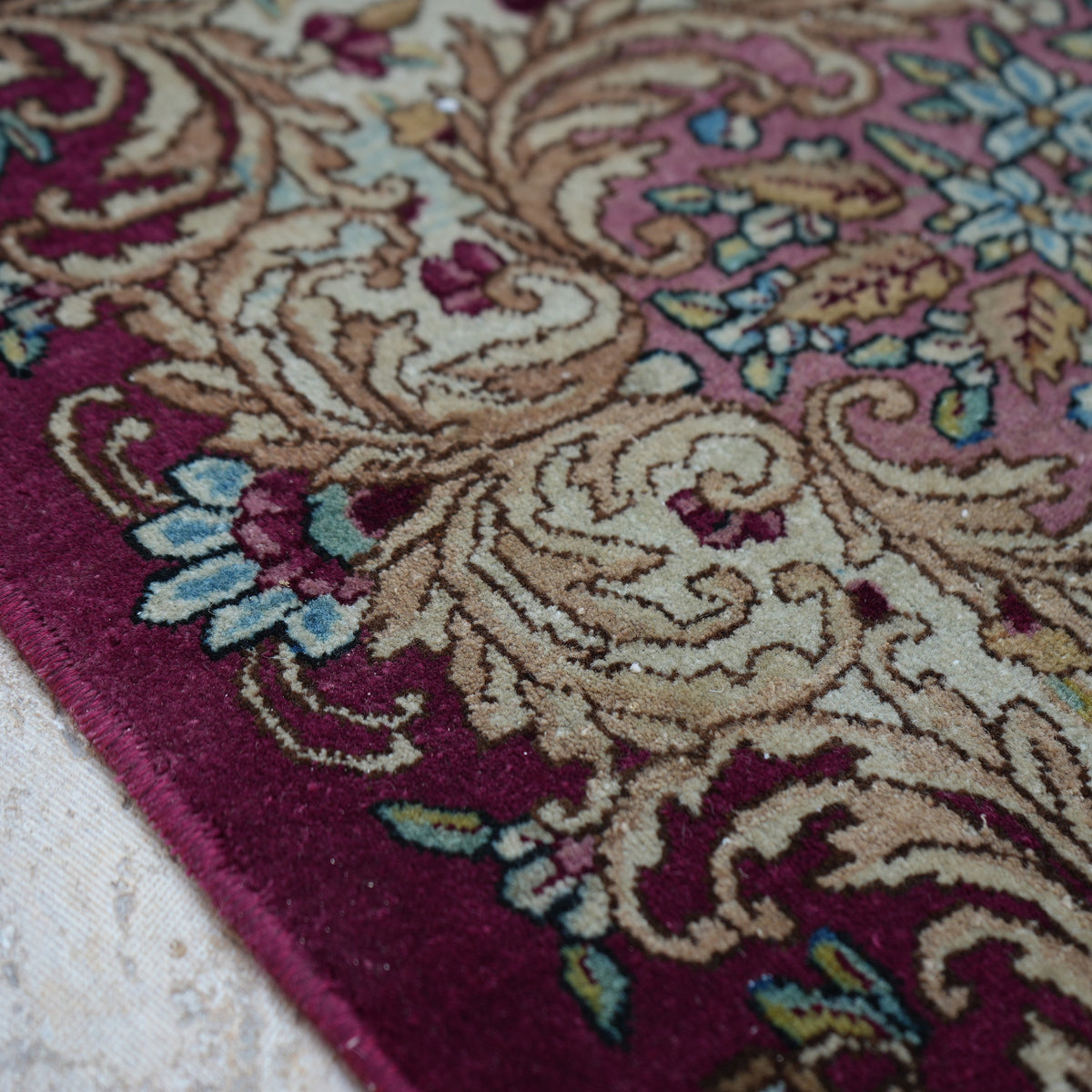
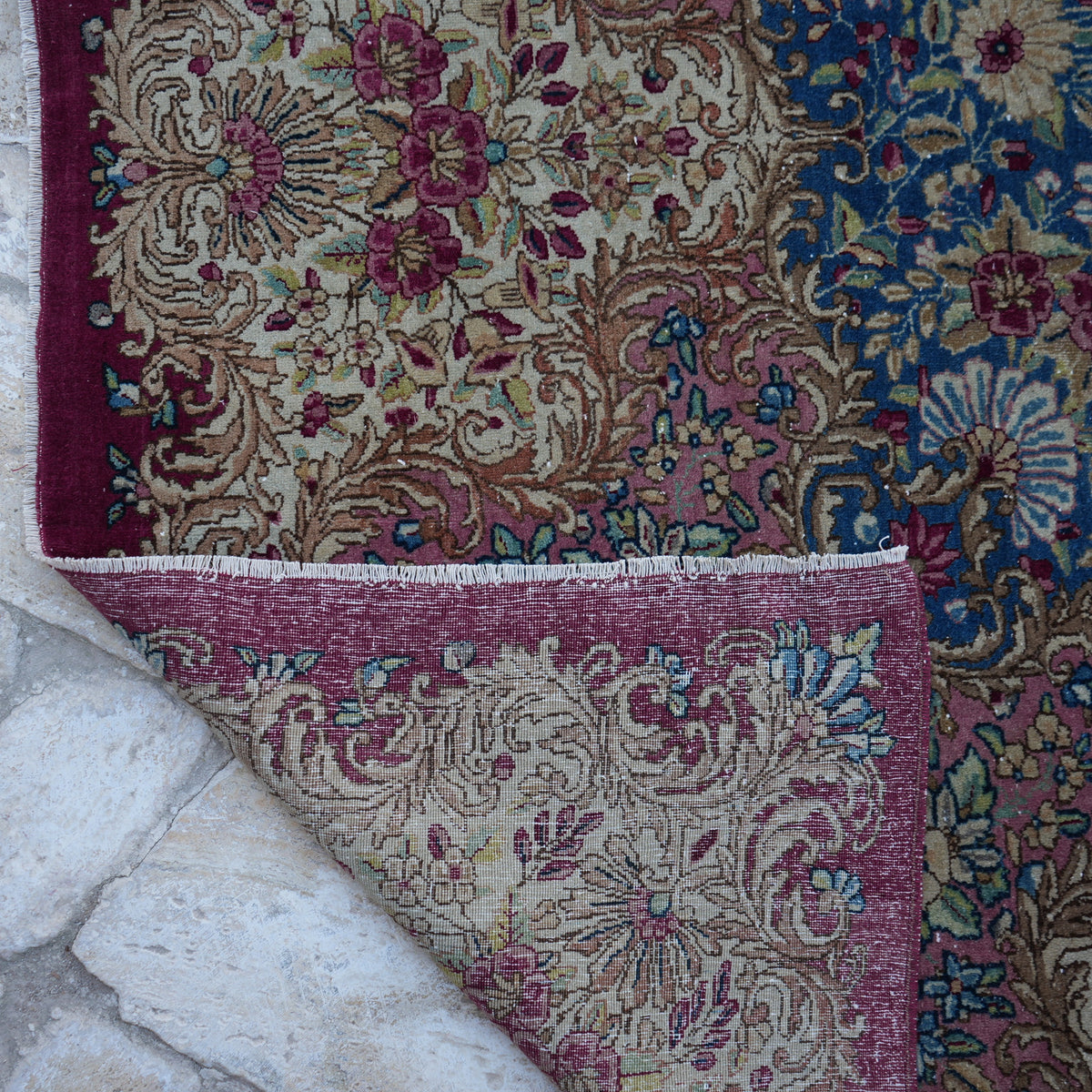
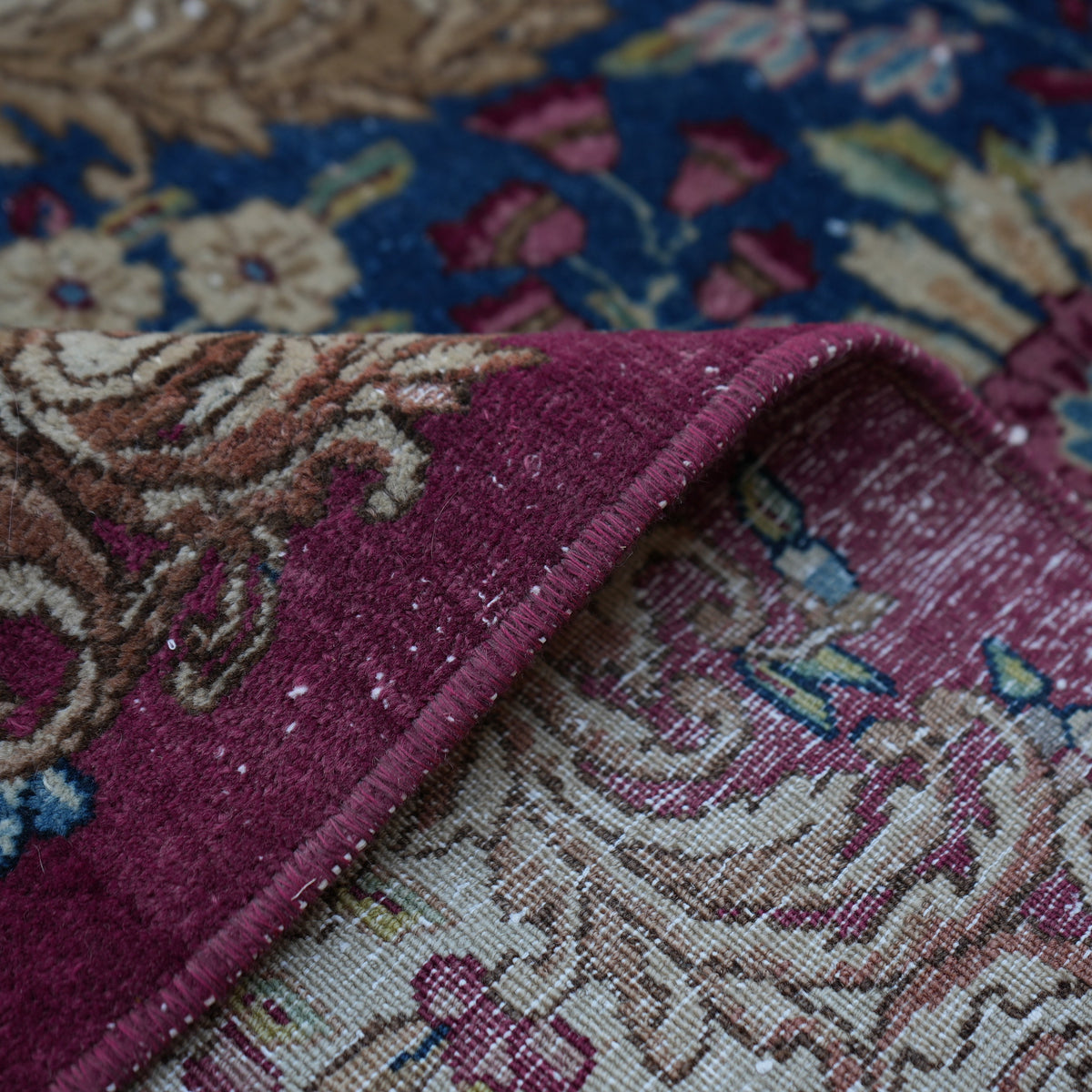
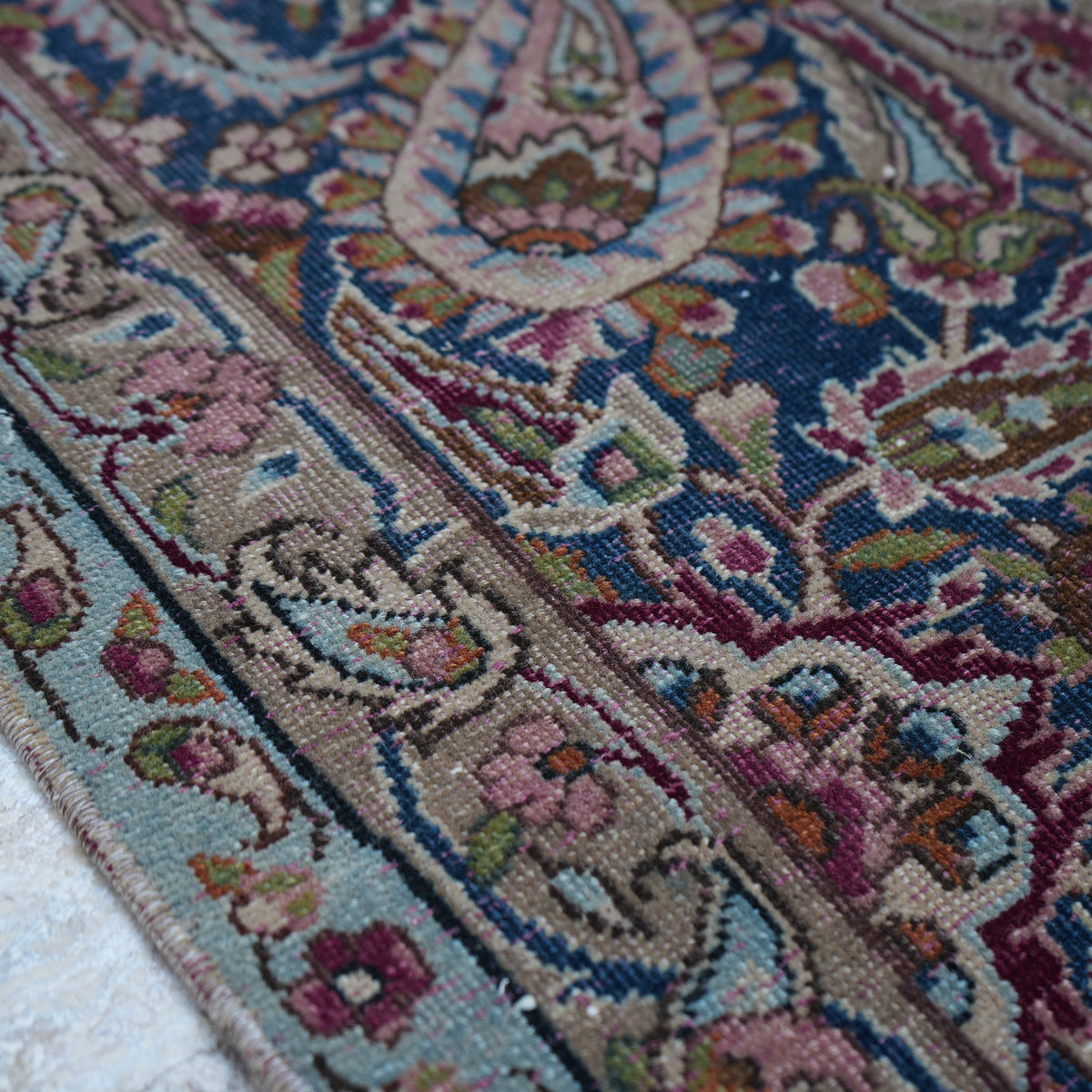
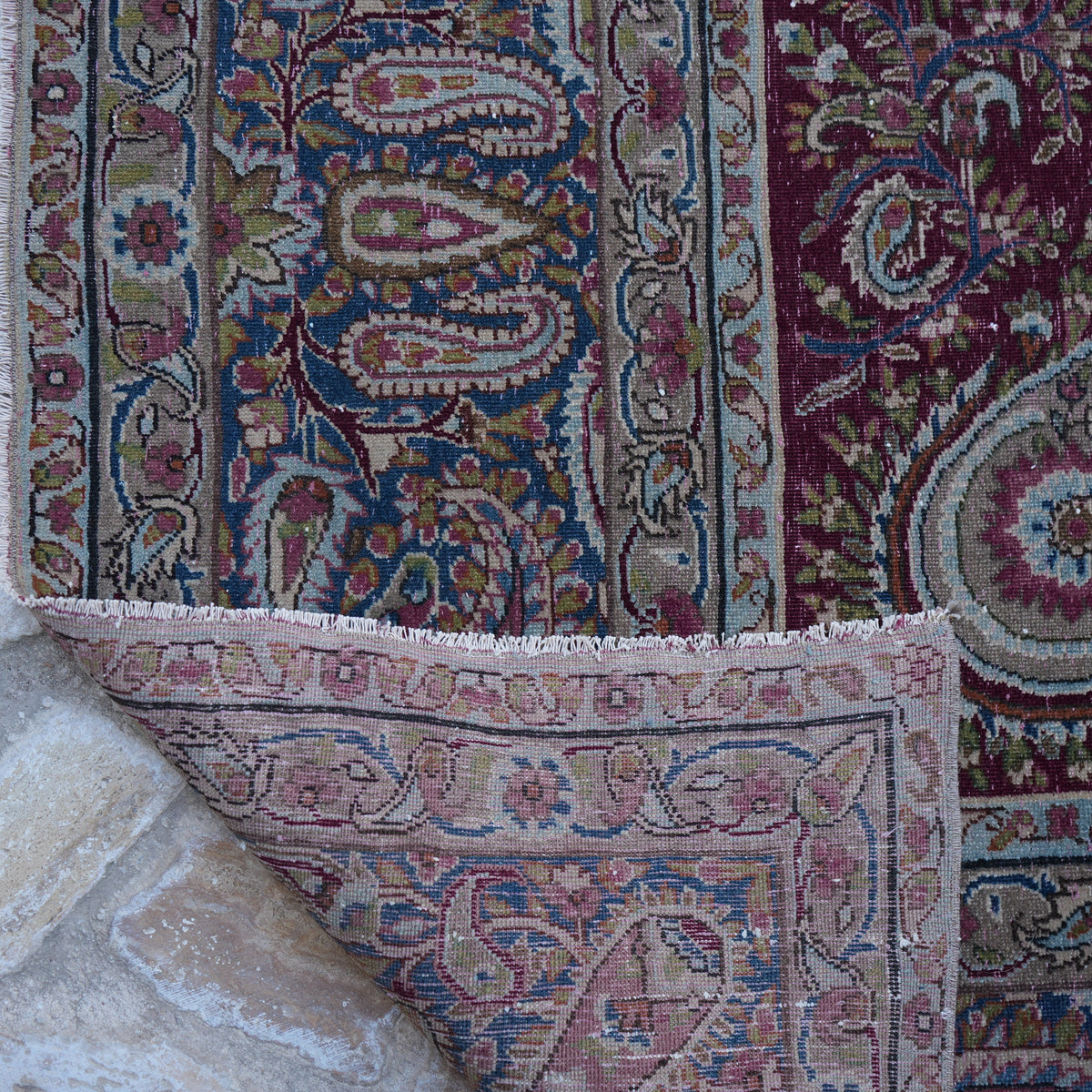
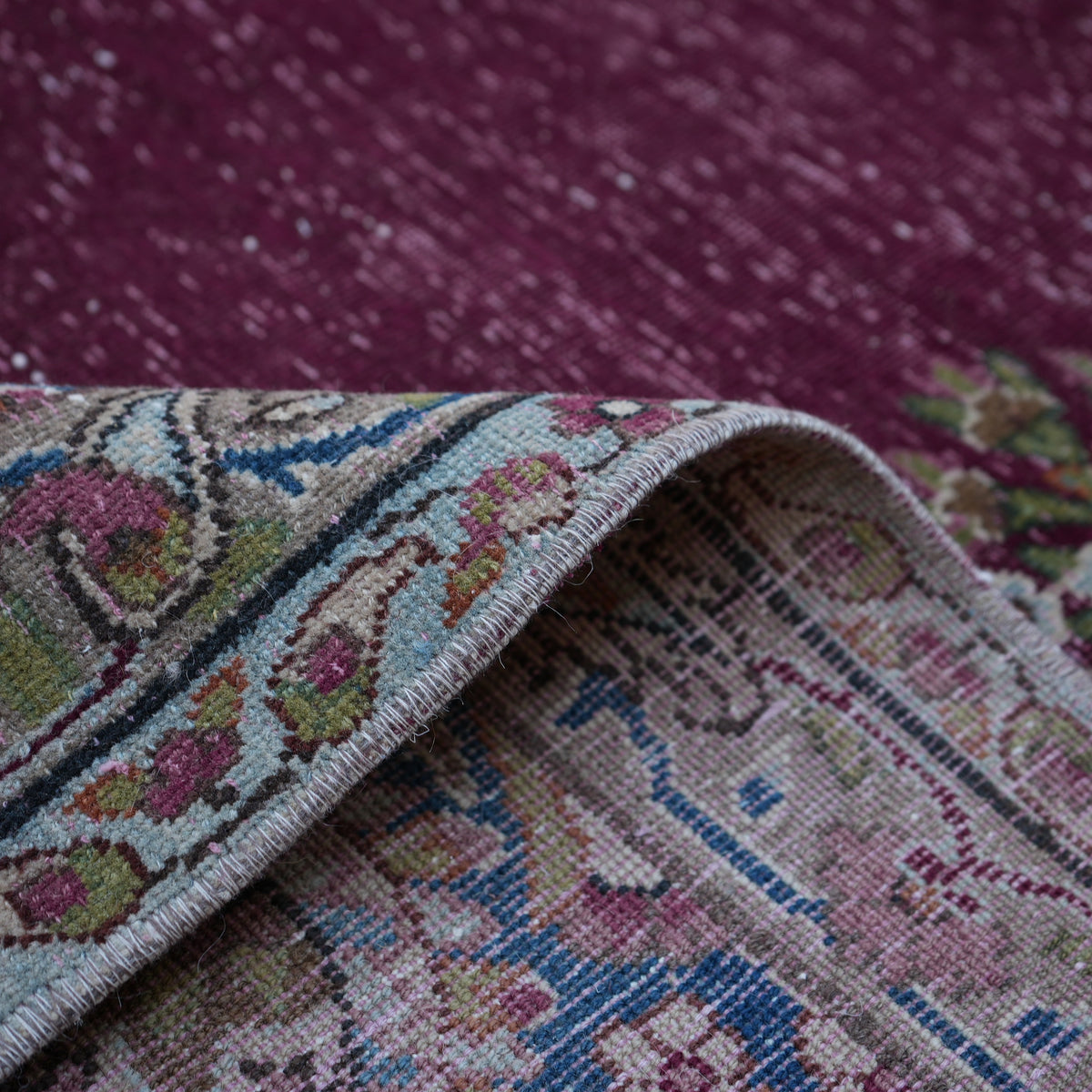
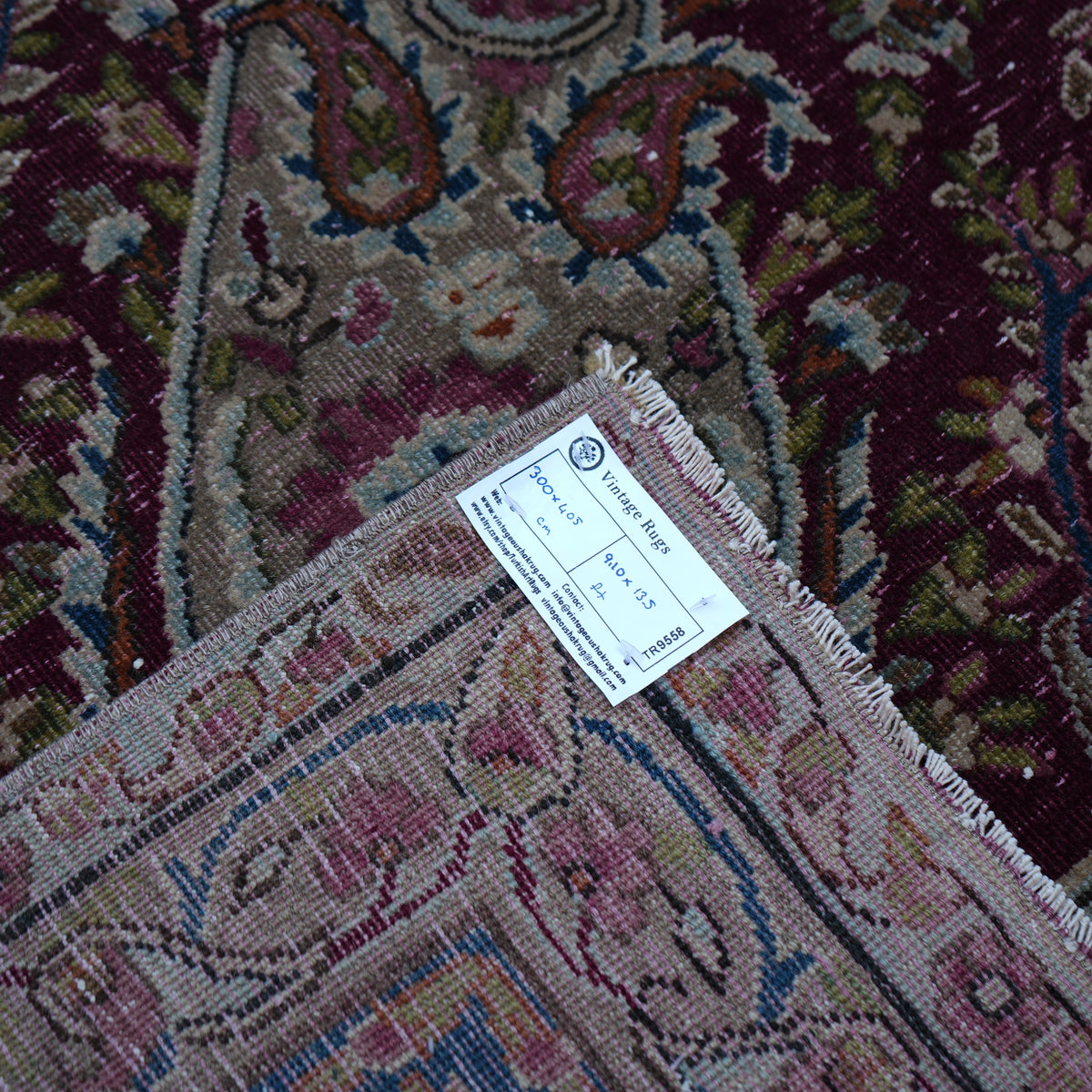
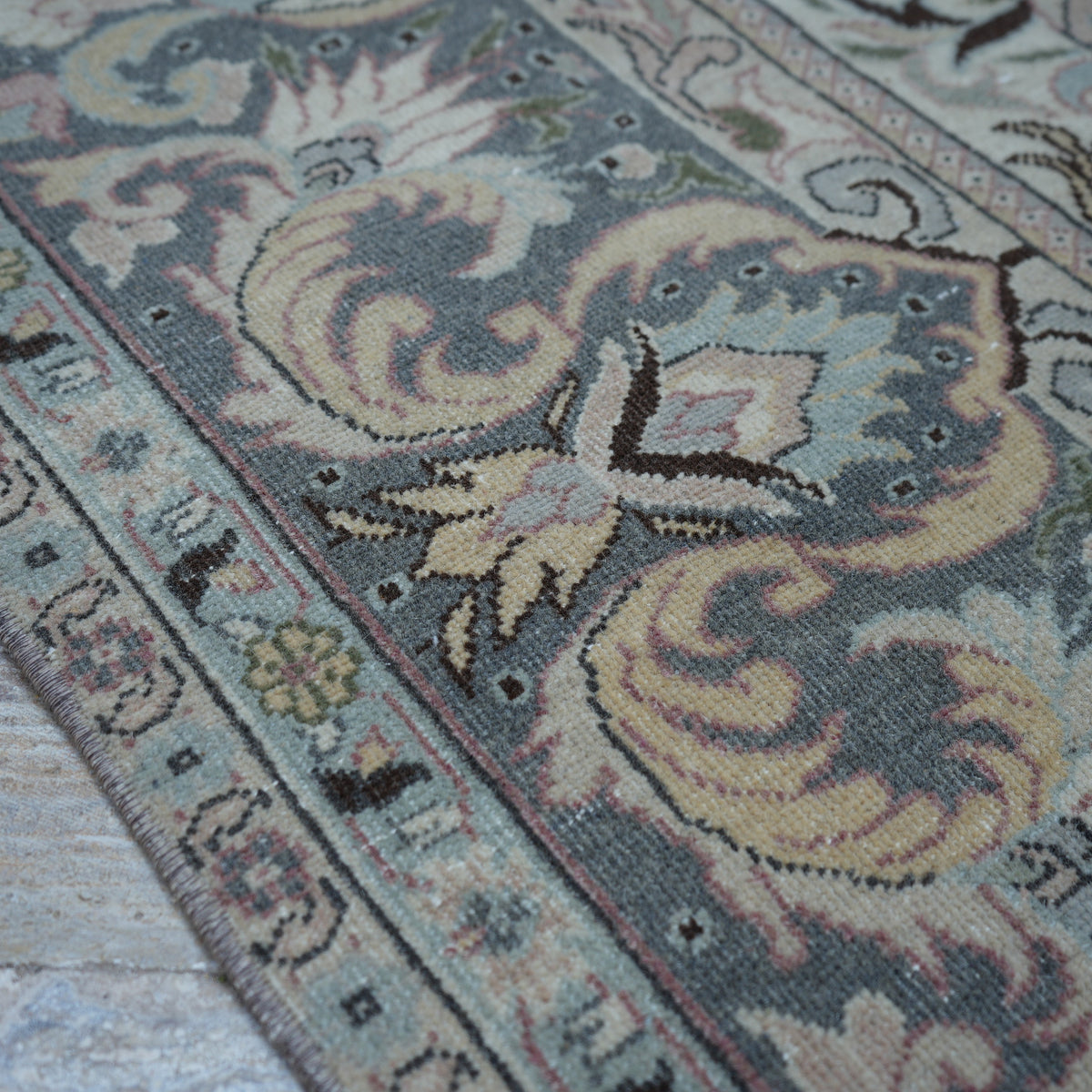
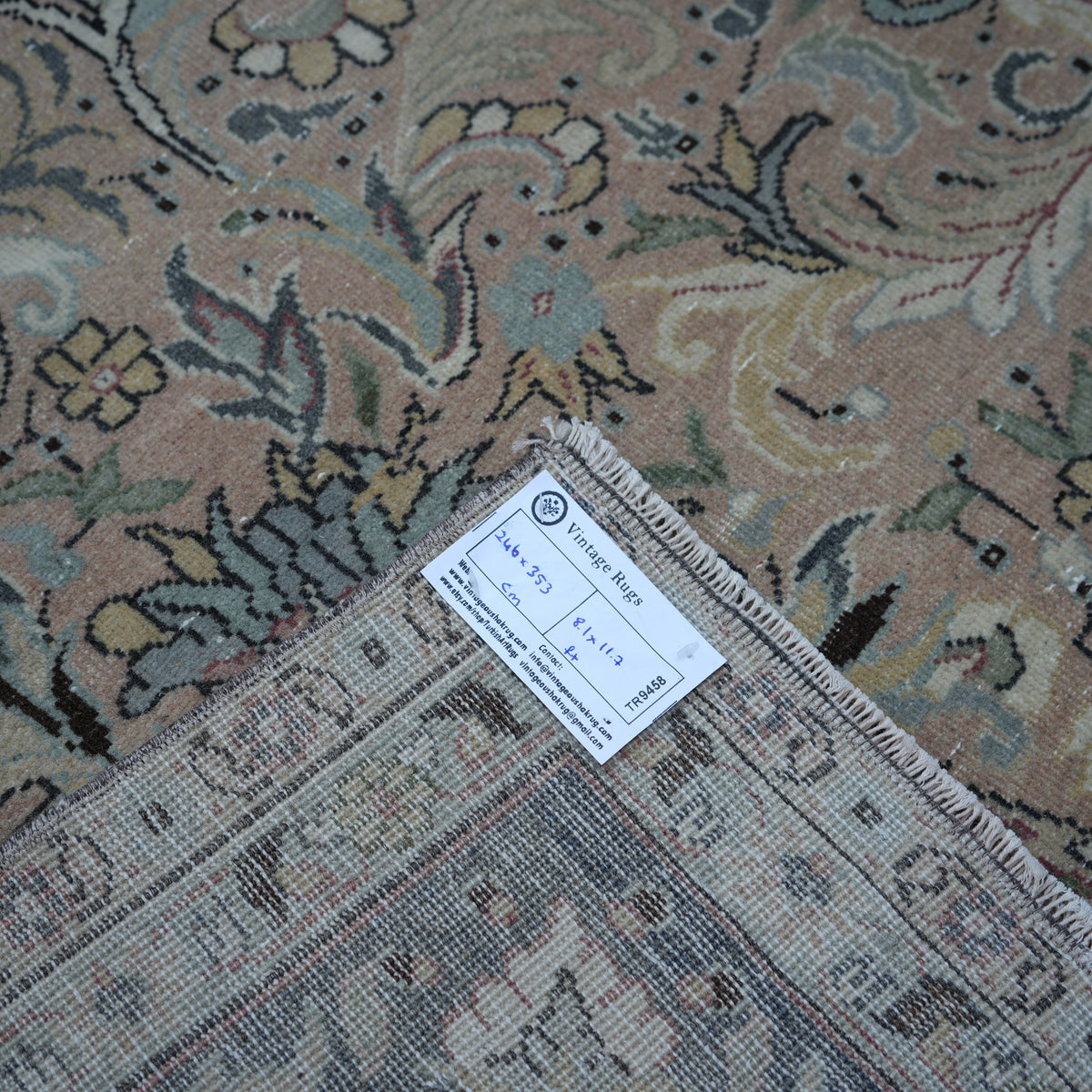
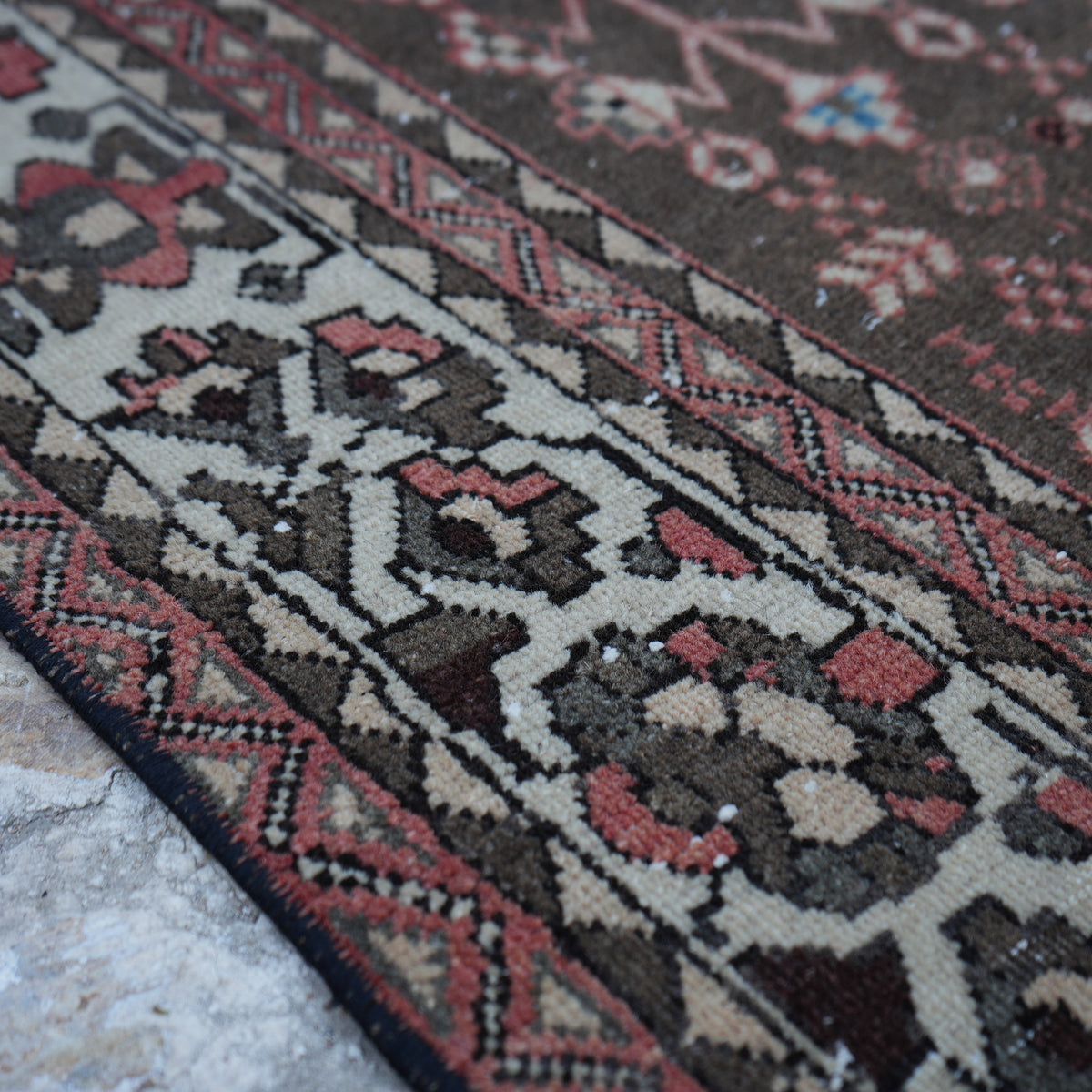
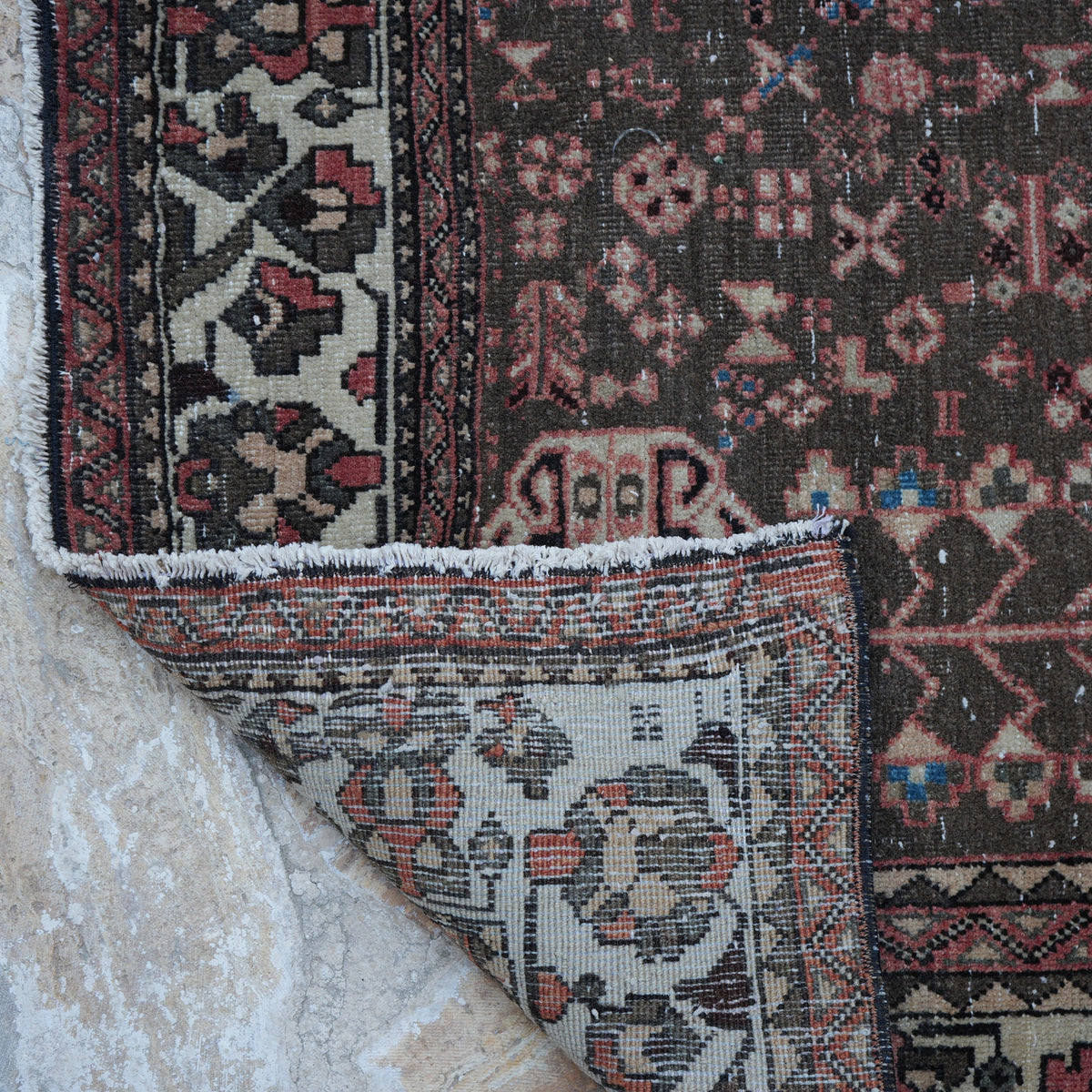
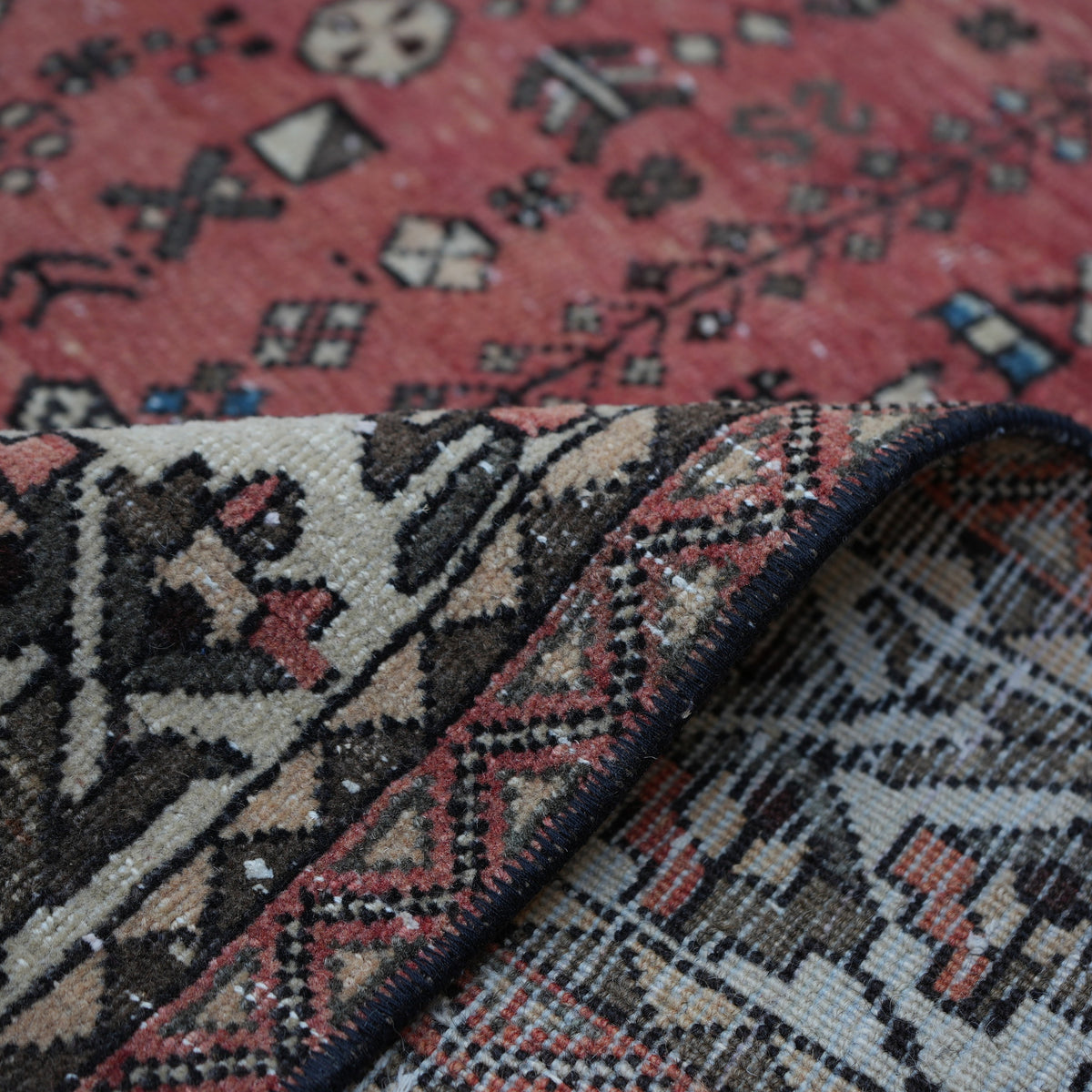
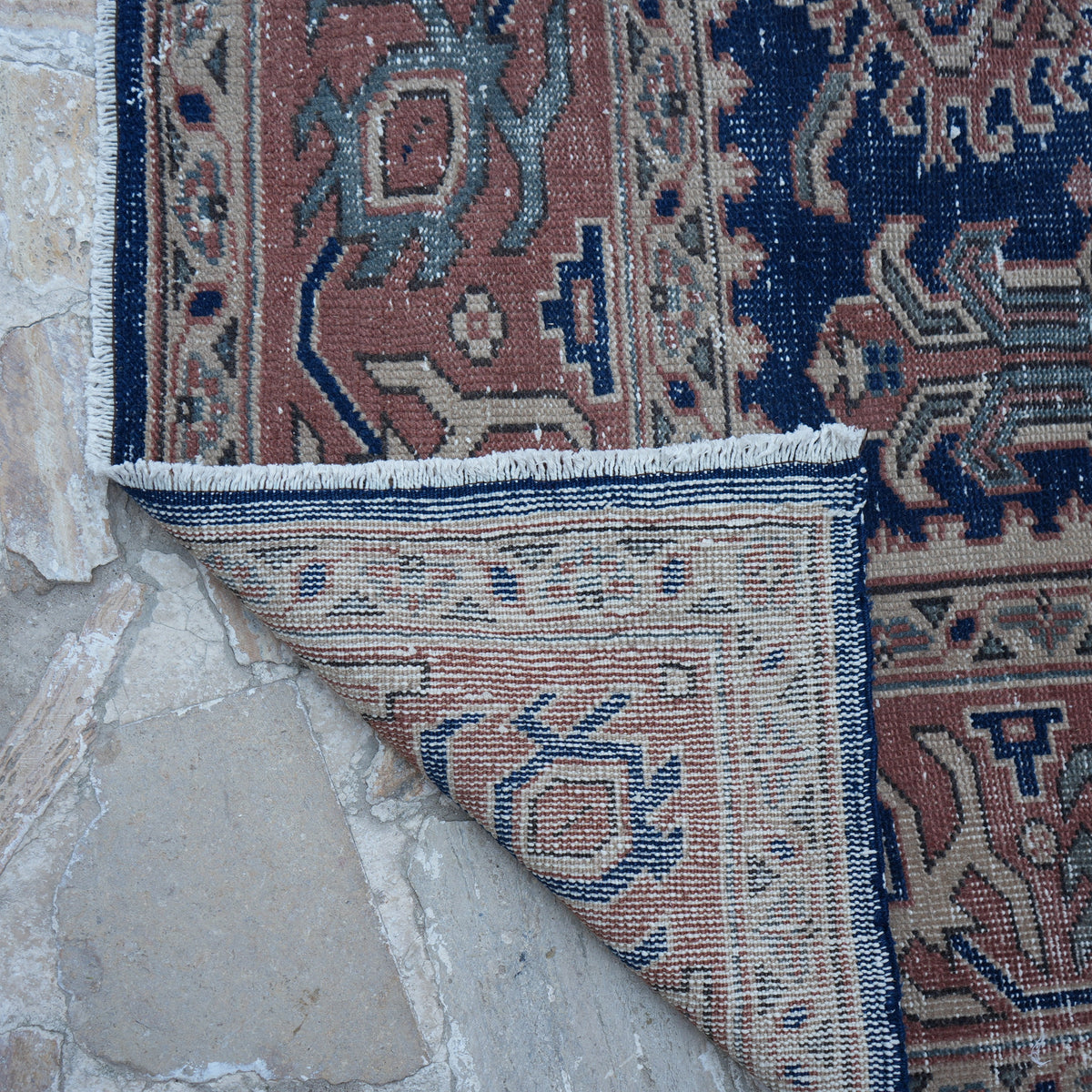
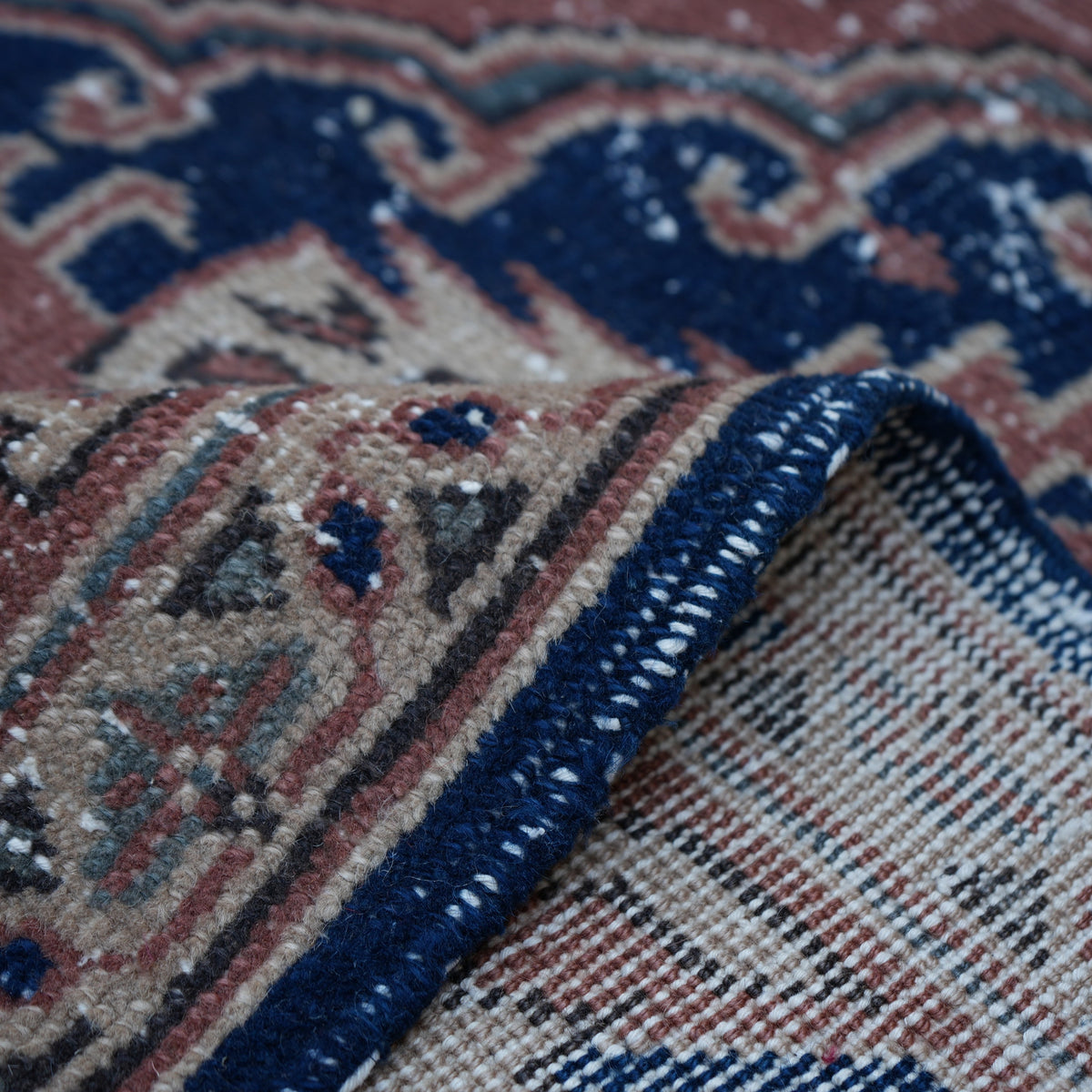
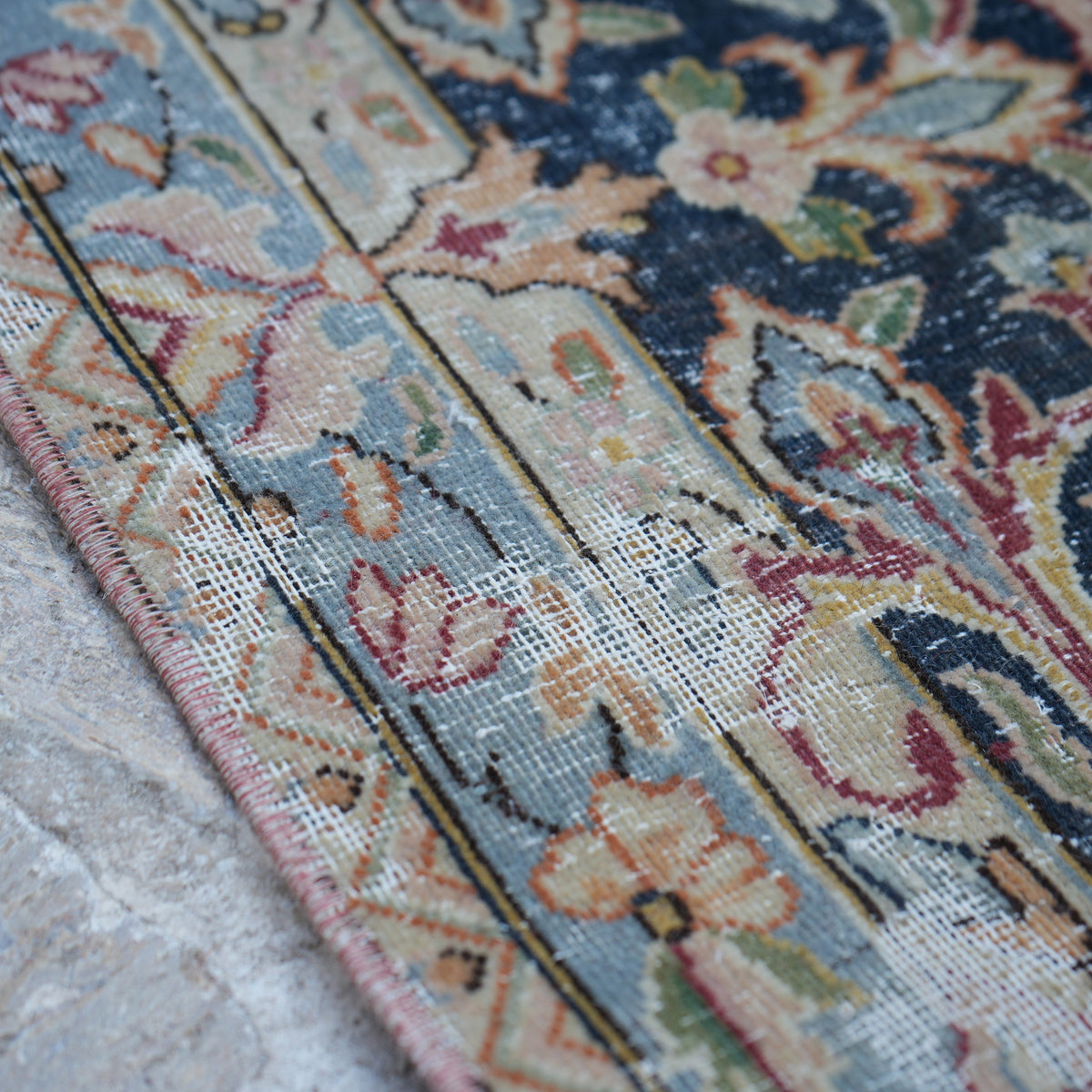
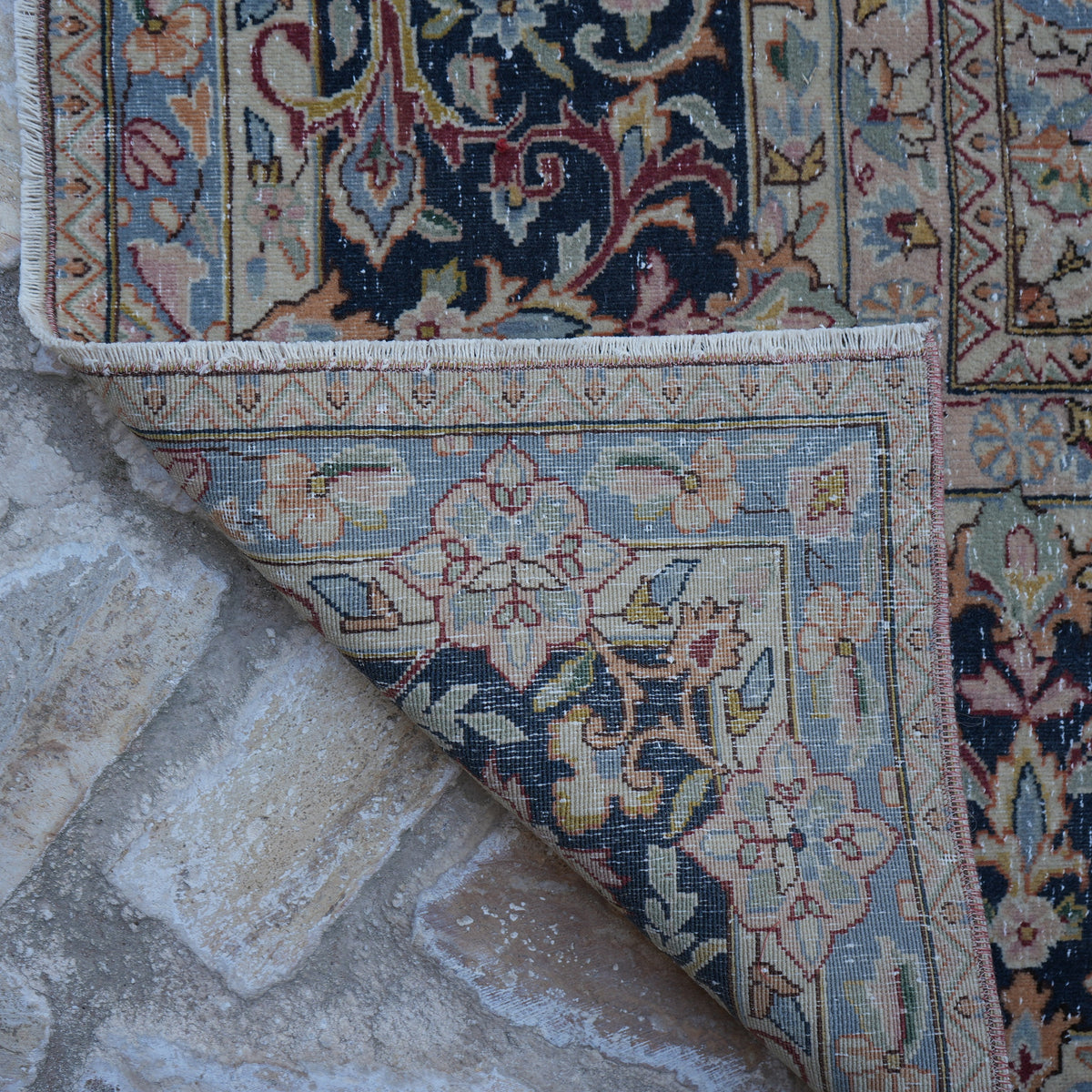
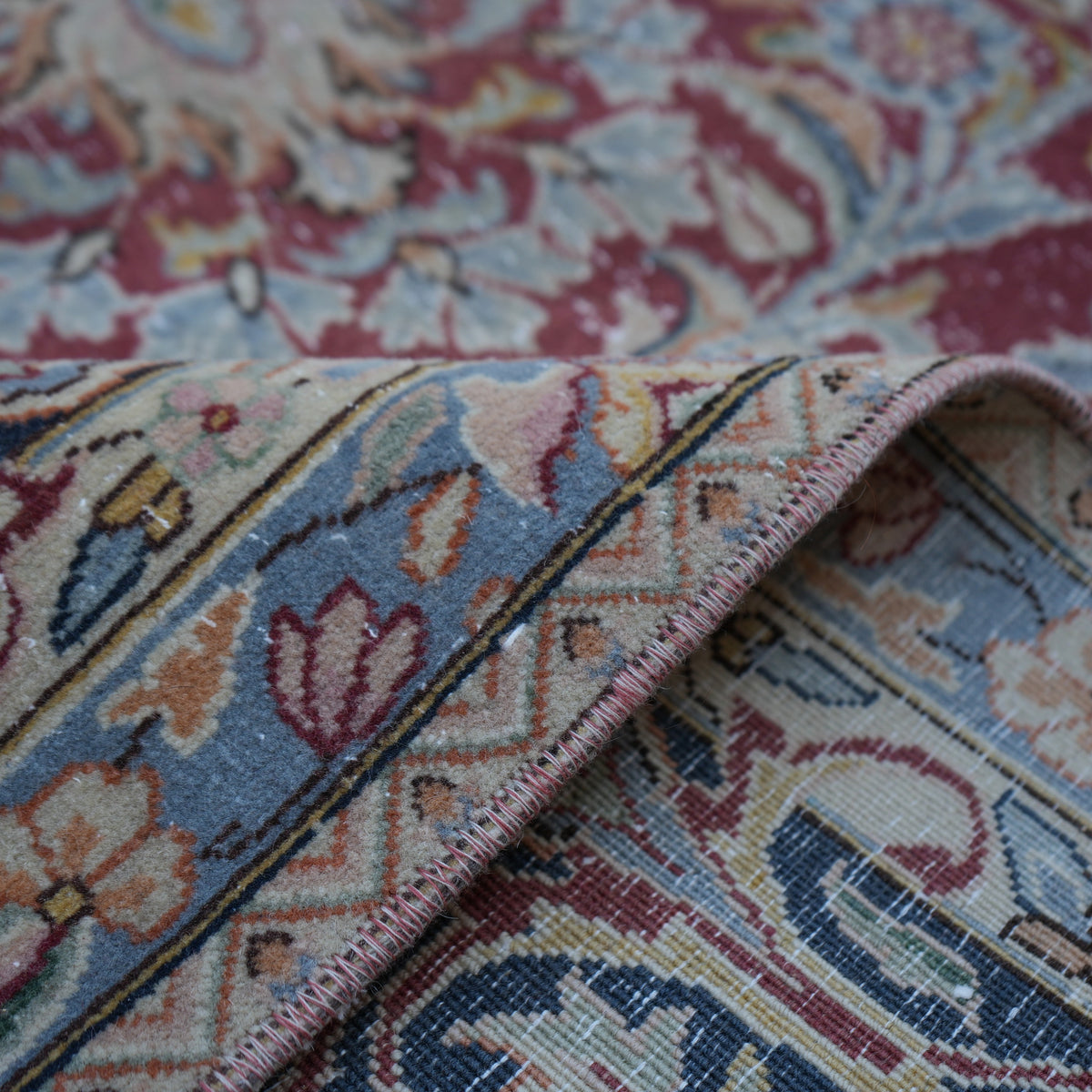
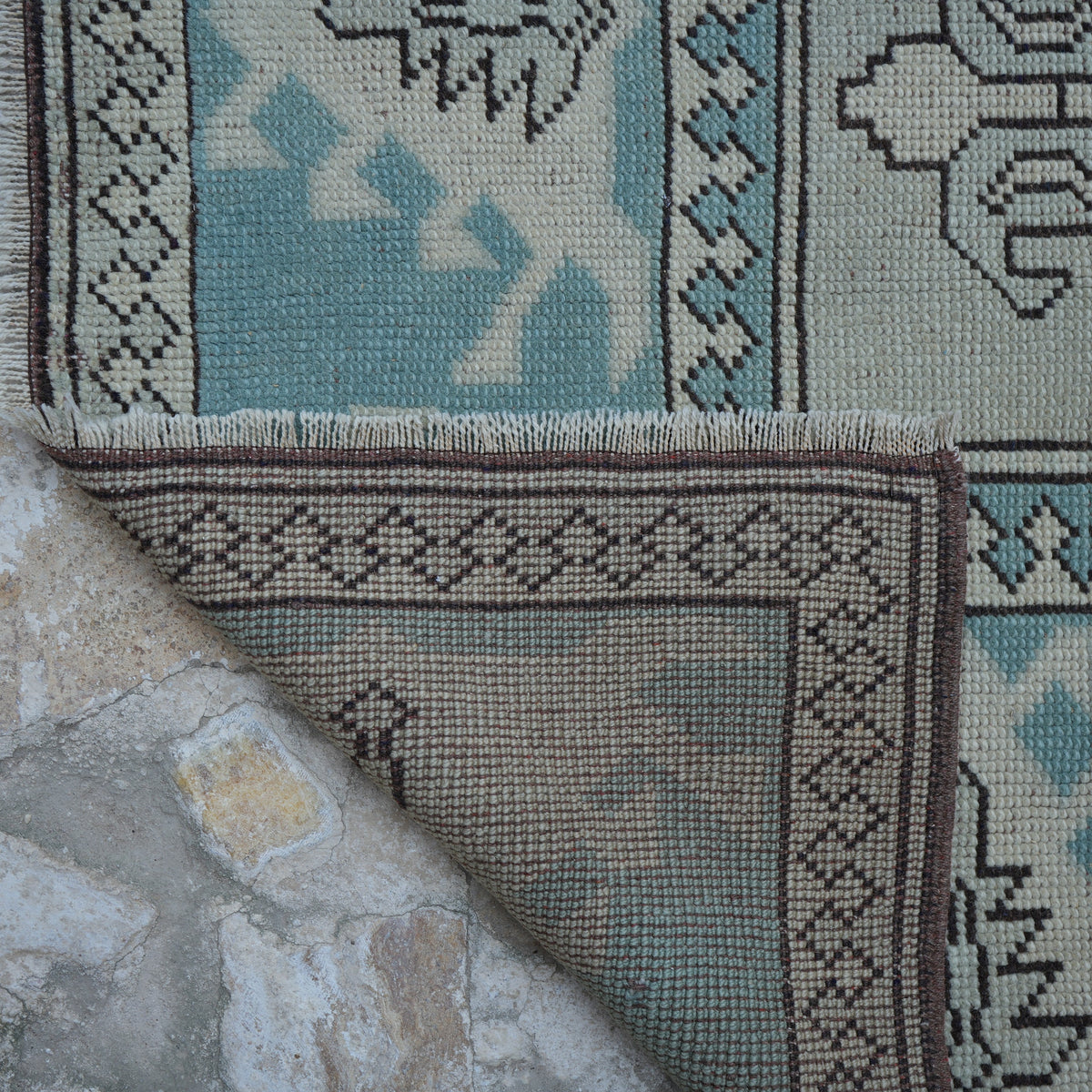
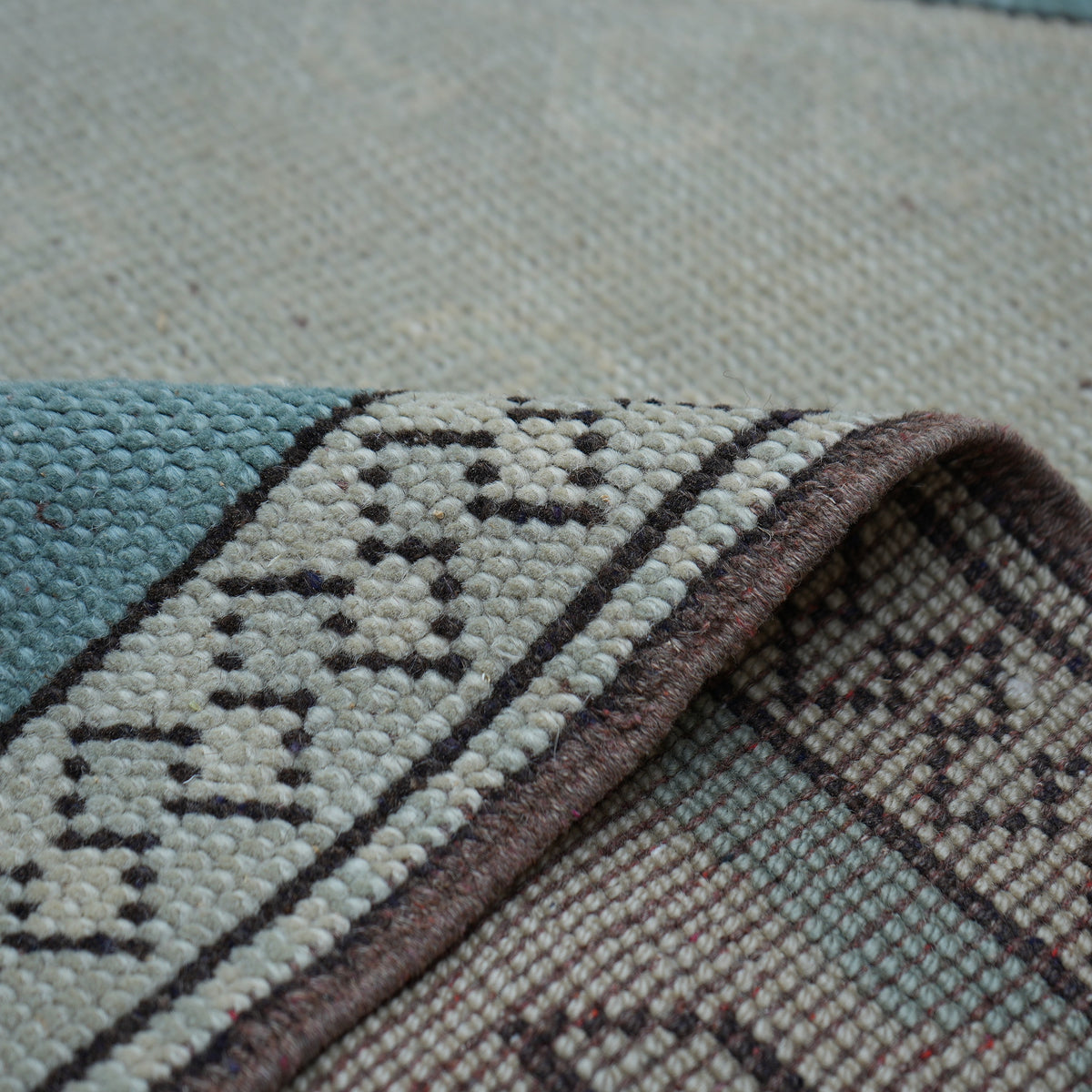
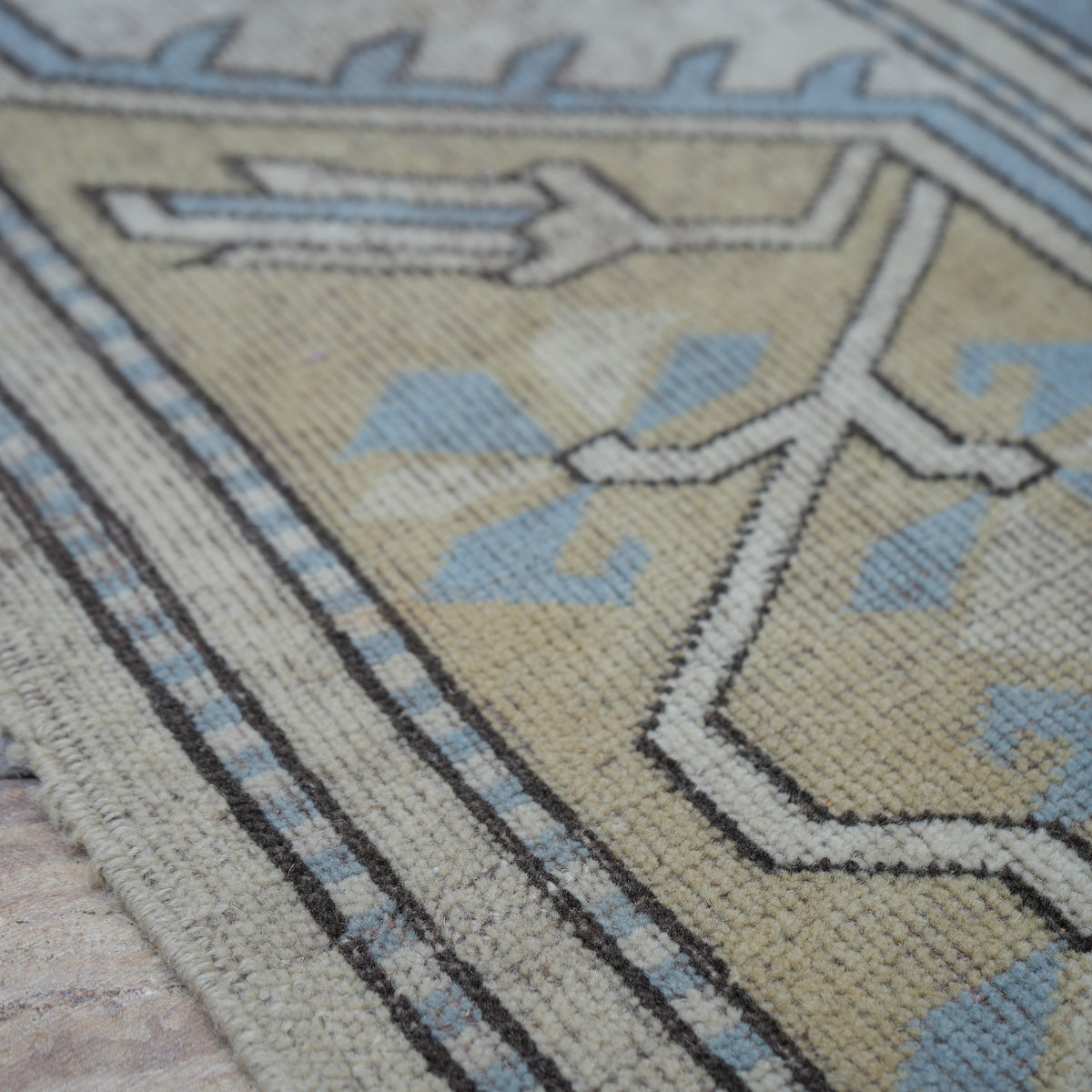
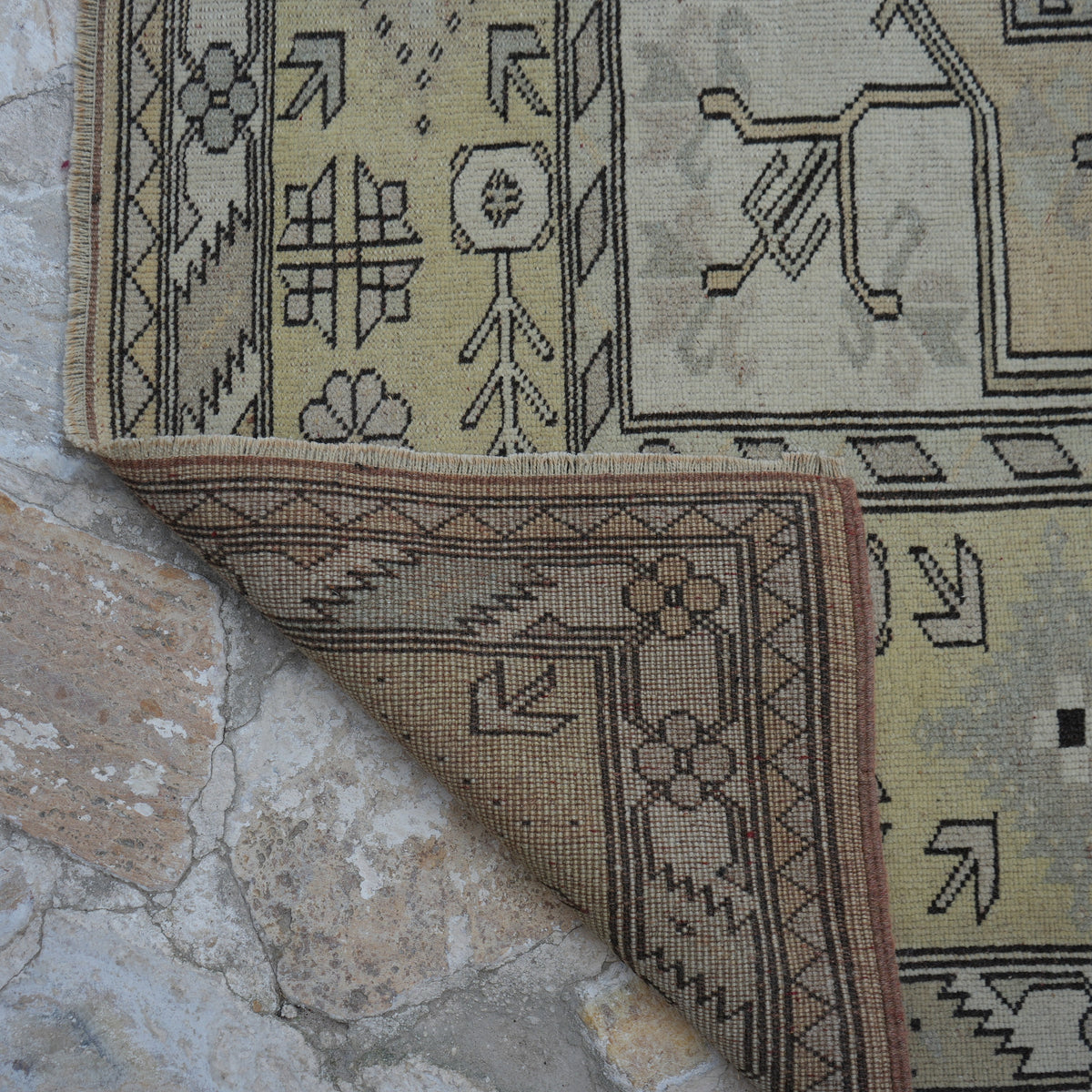
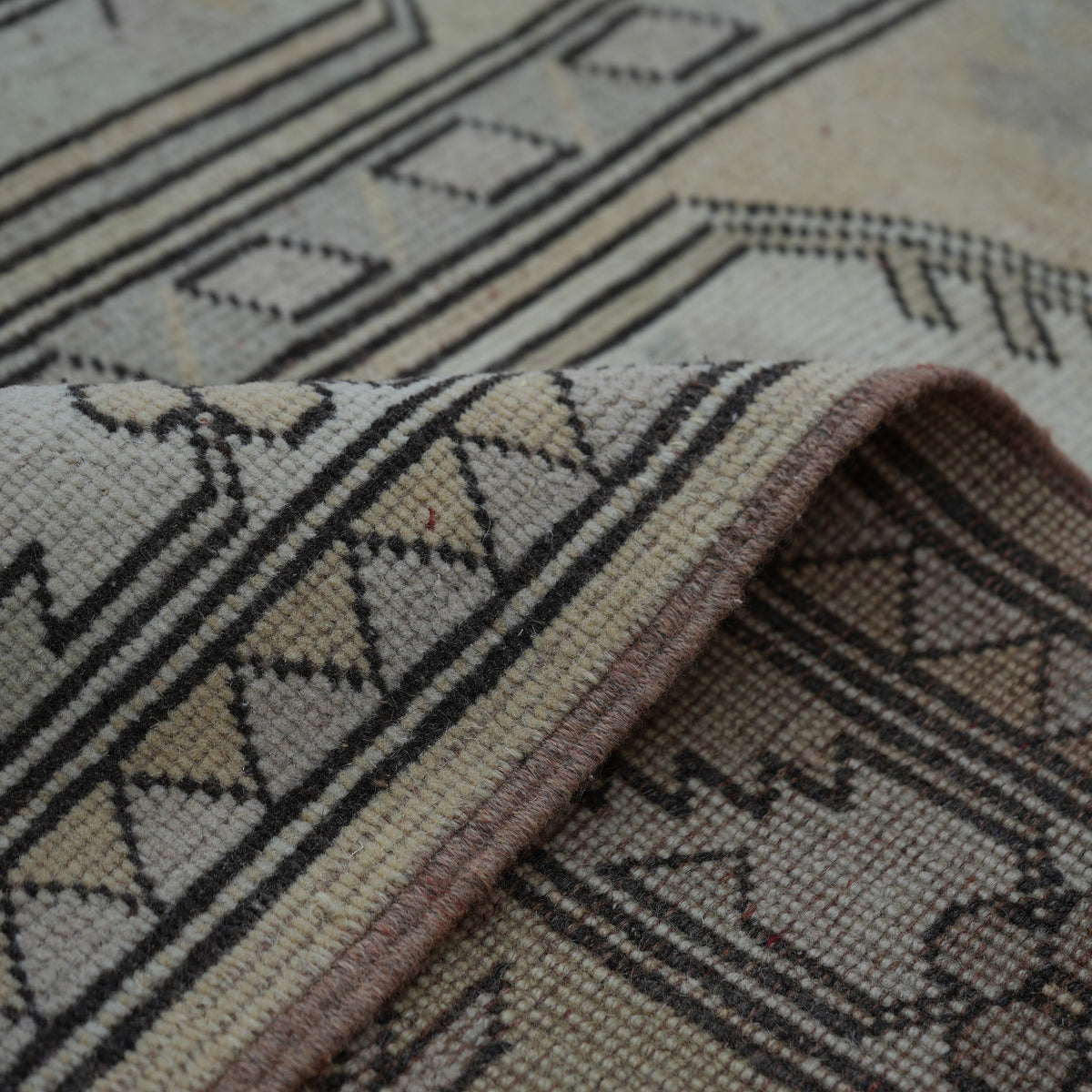
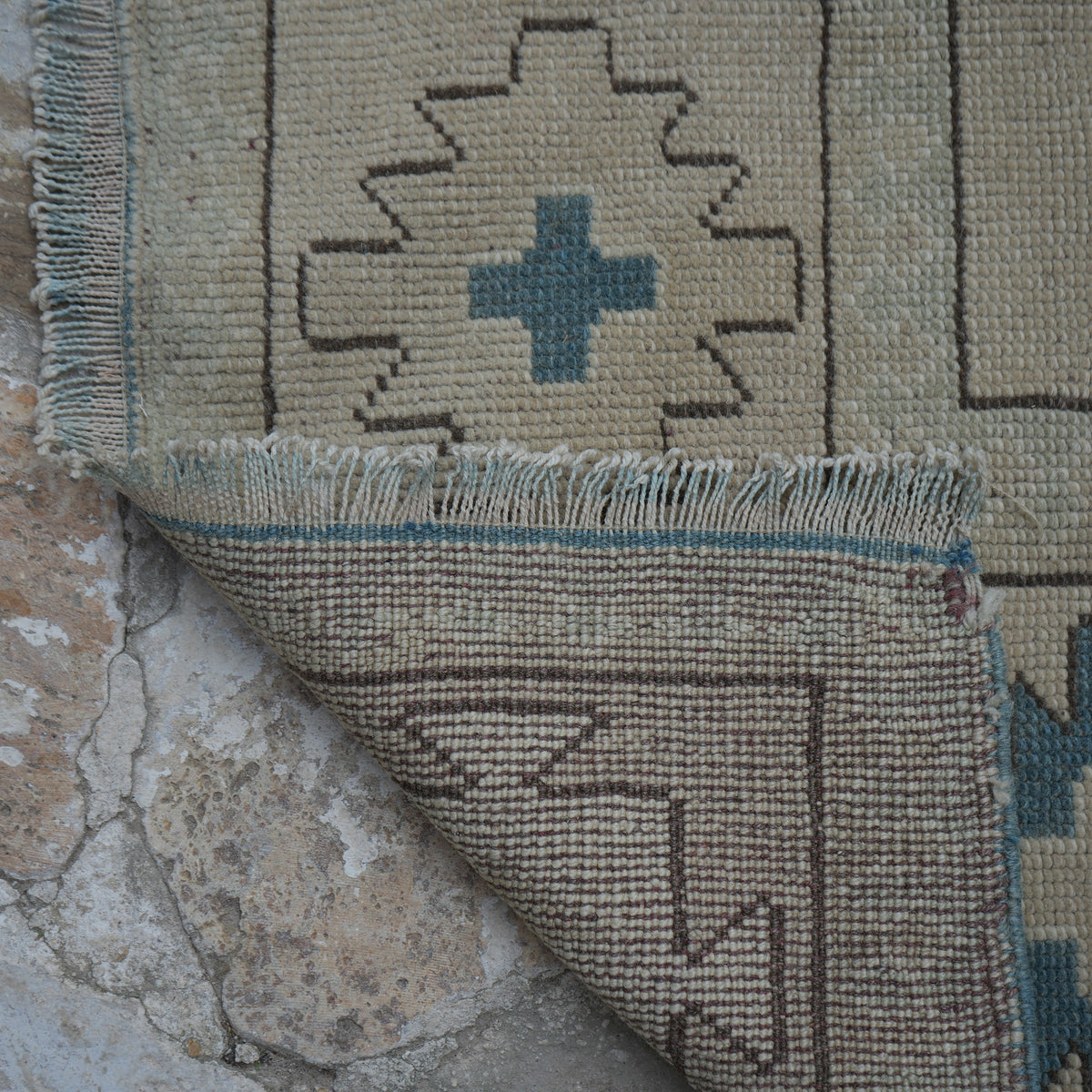
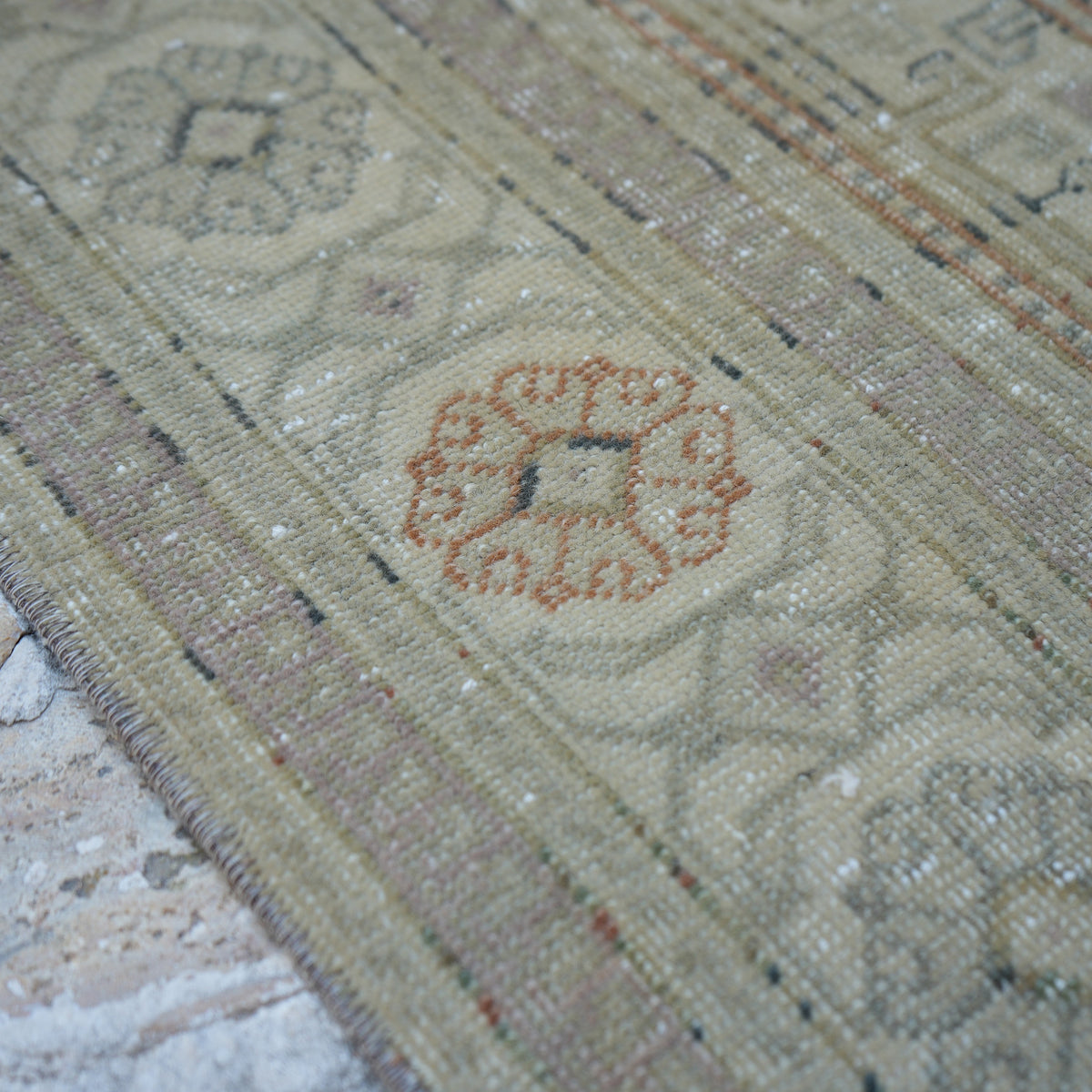
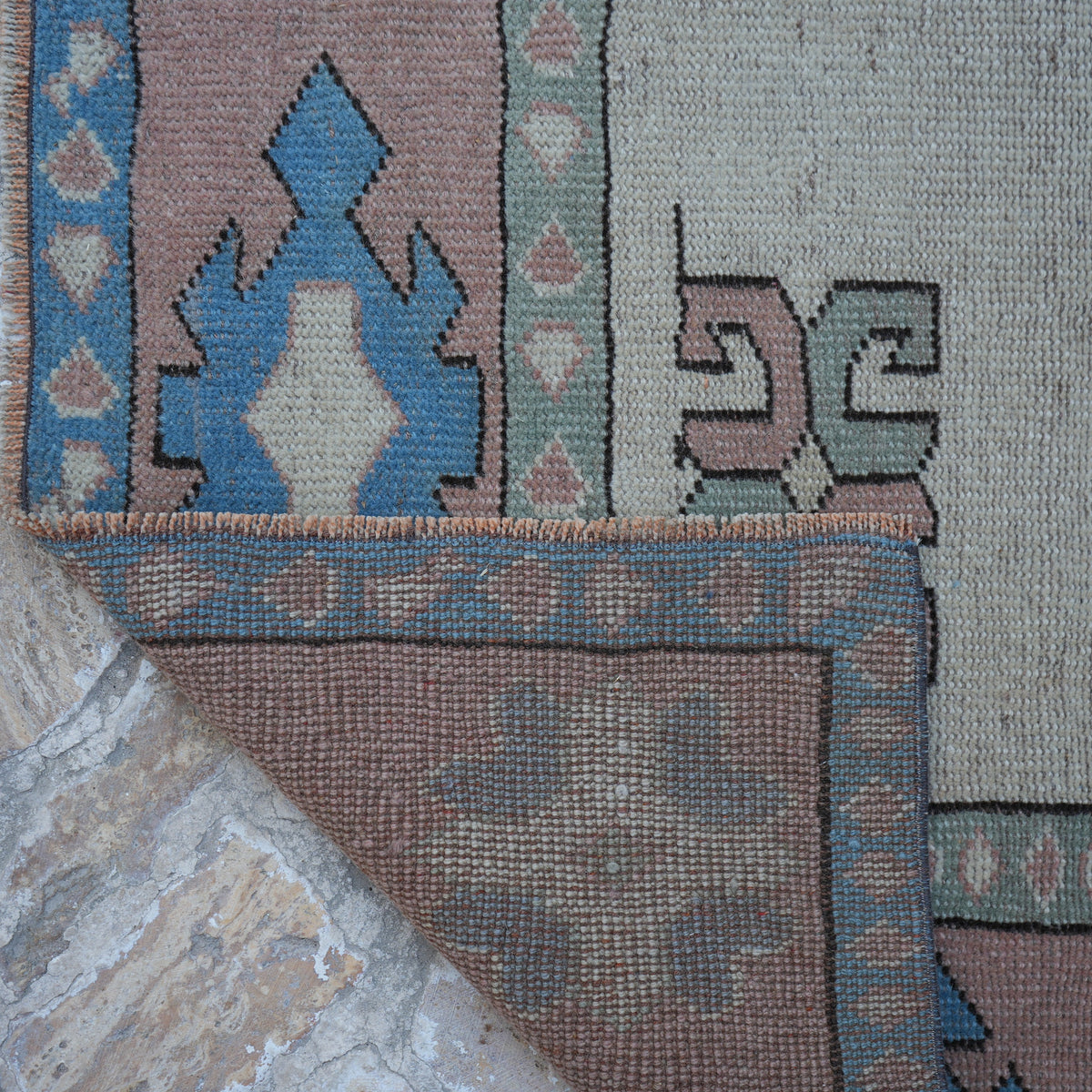
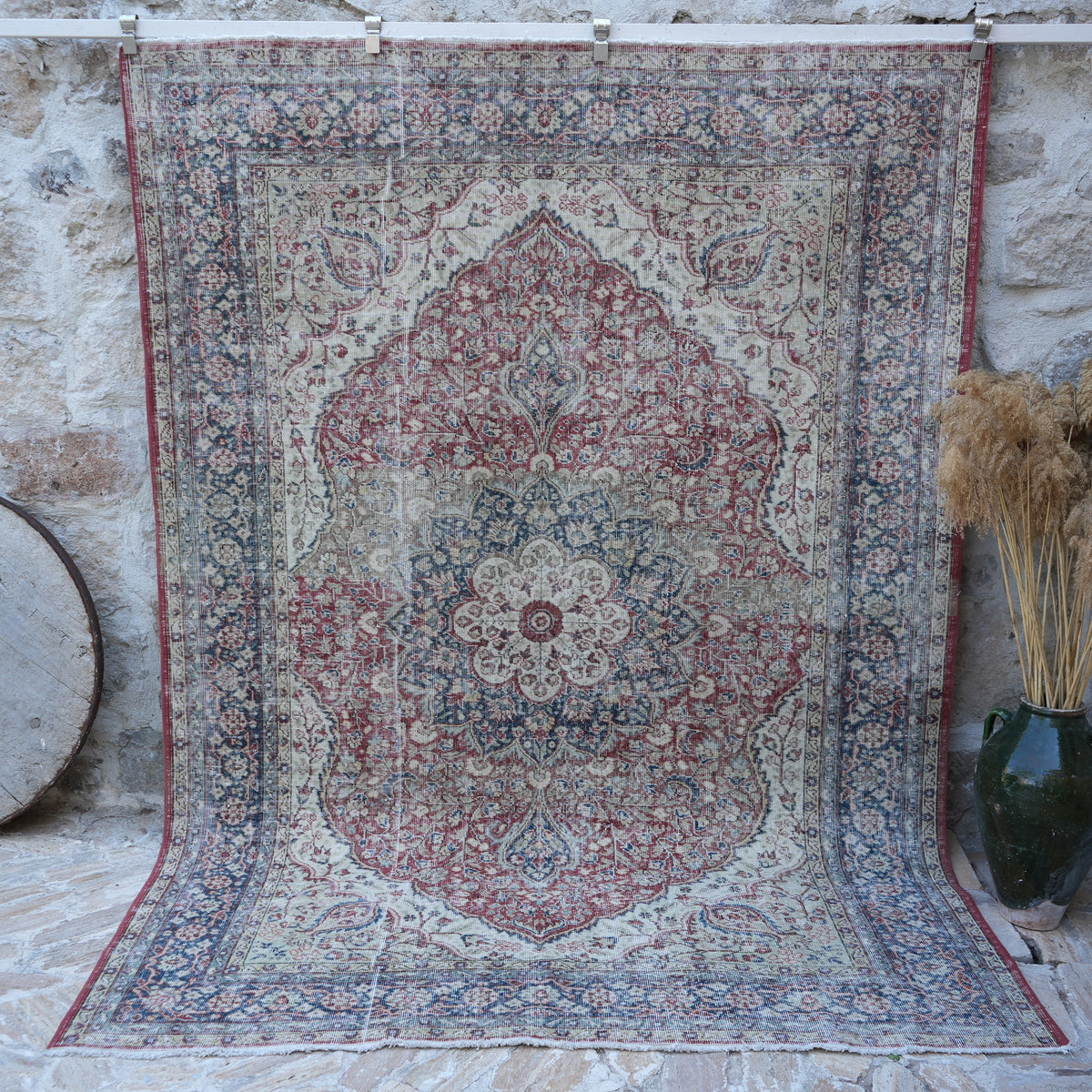
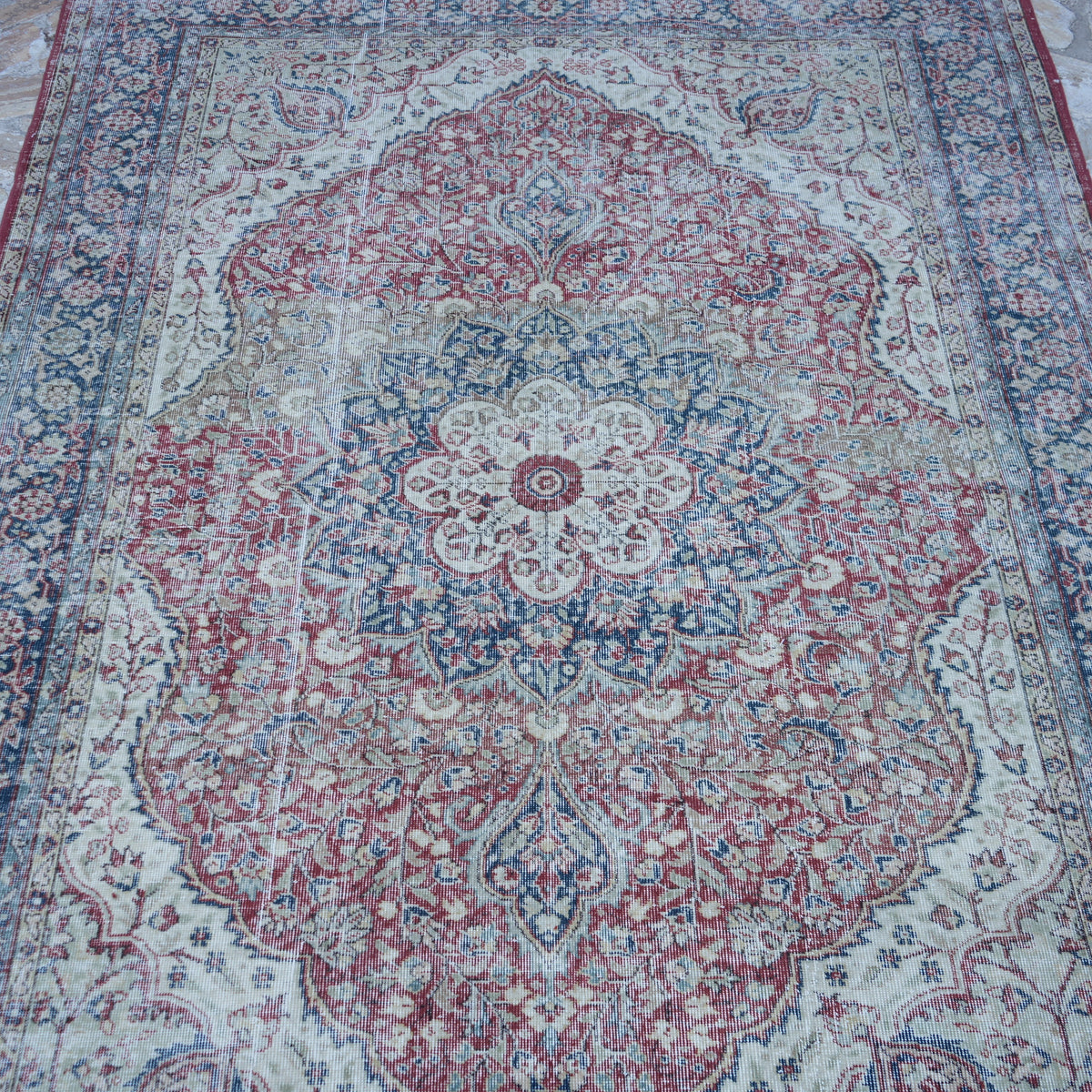
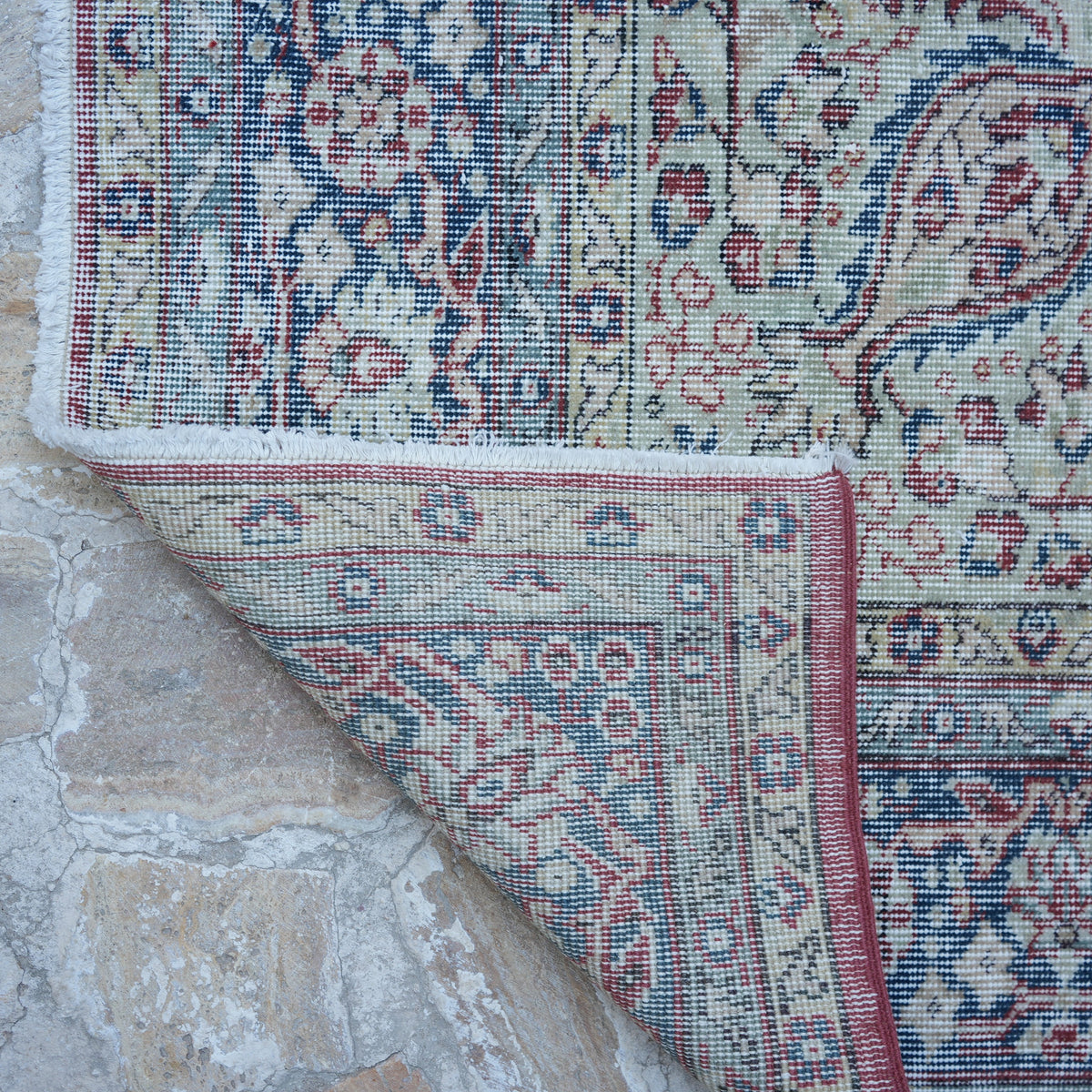
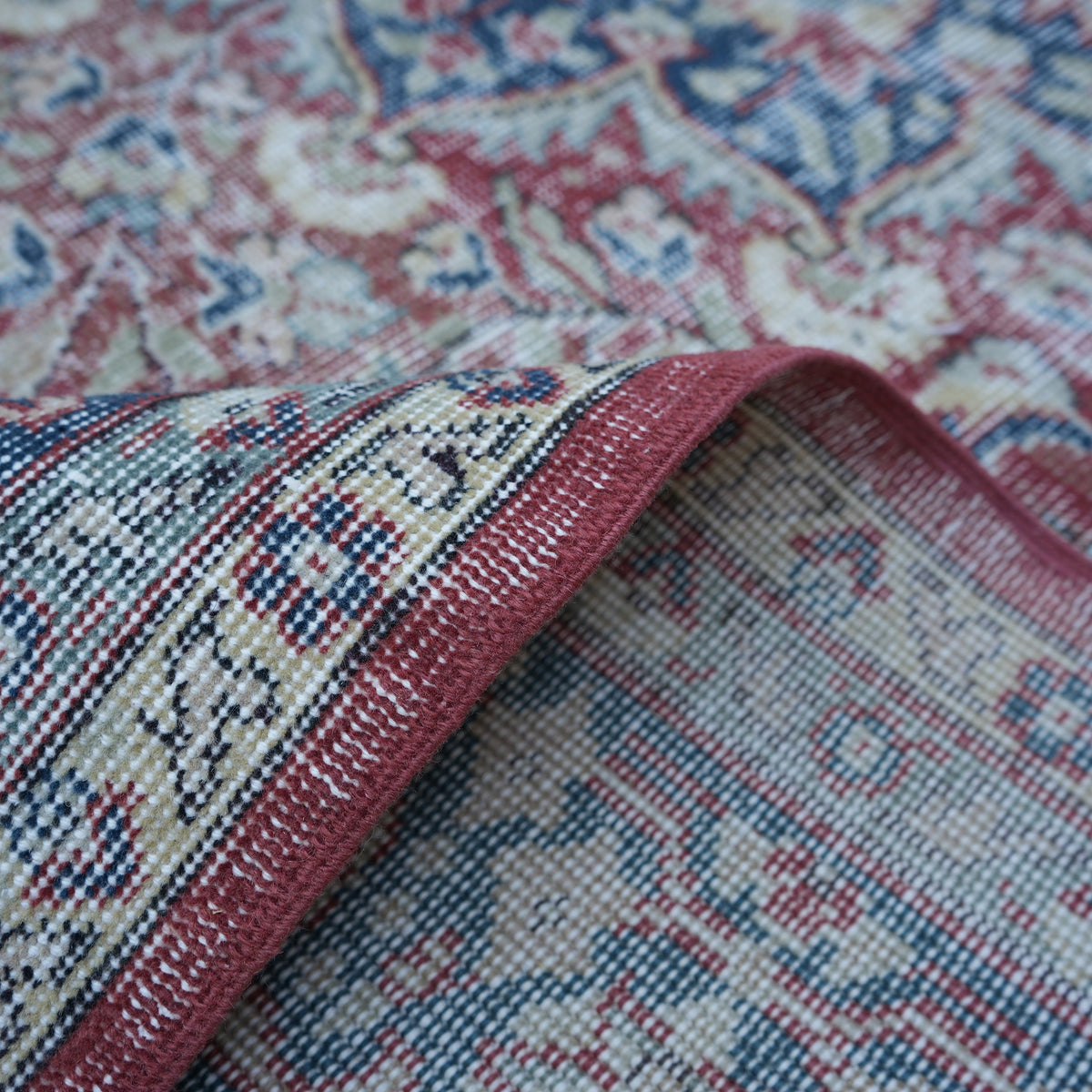
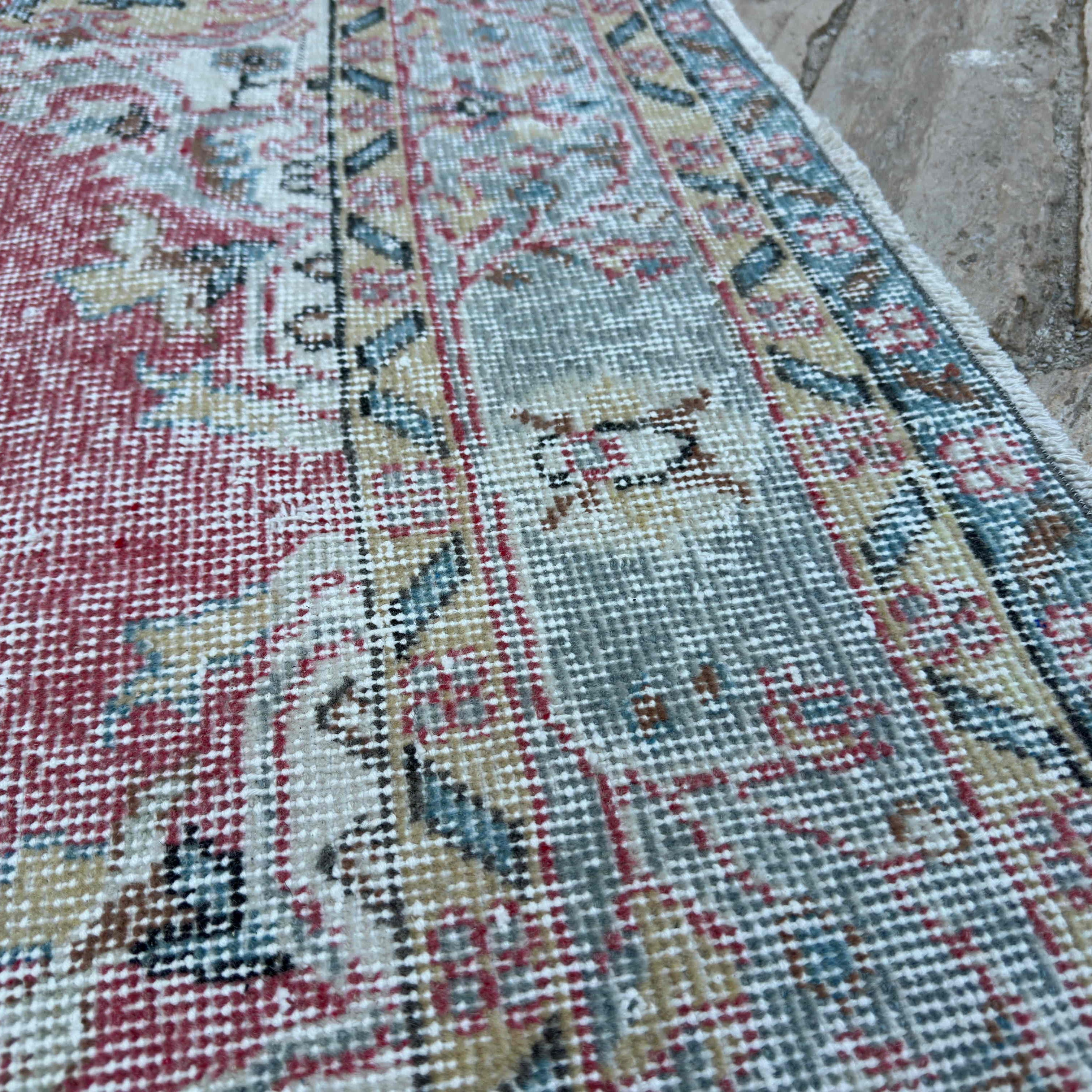
I used to focus heavily on condition when recommending vintage rugs for this kind of home — intact pile, clean edges, minimal visible wear. I have since changed my position on that. A rug that shows nothing has lived through nothing. In a Craftsman house, a rug with worn corners and visible abrash does not look damaged. It looks like it belongs.
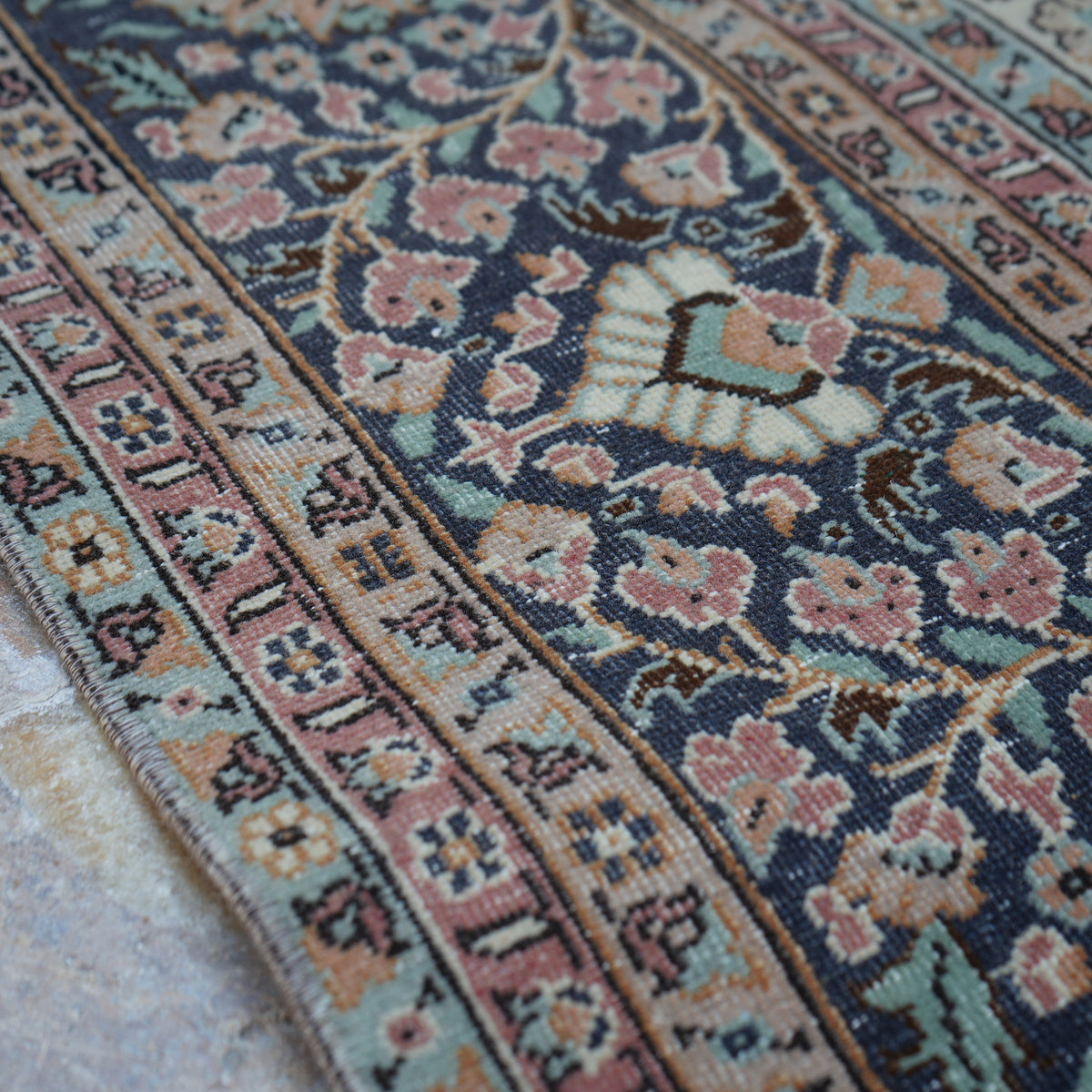
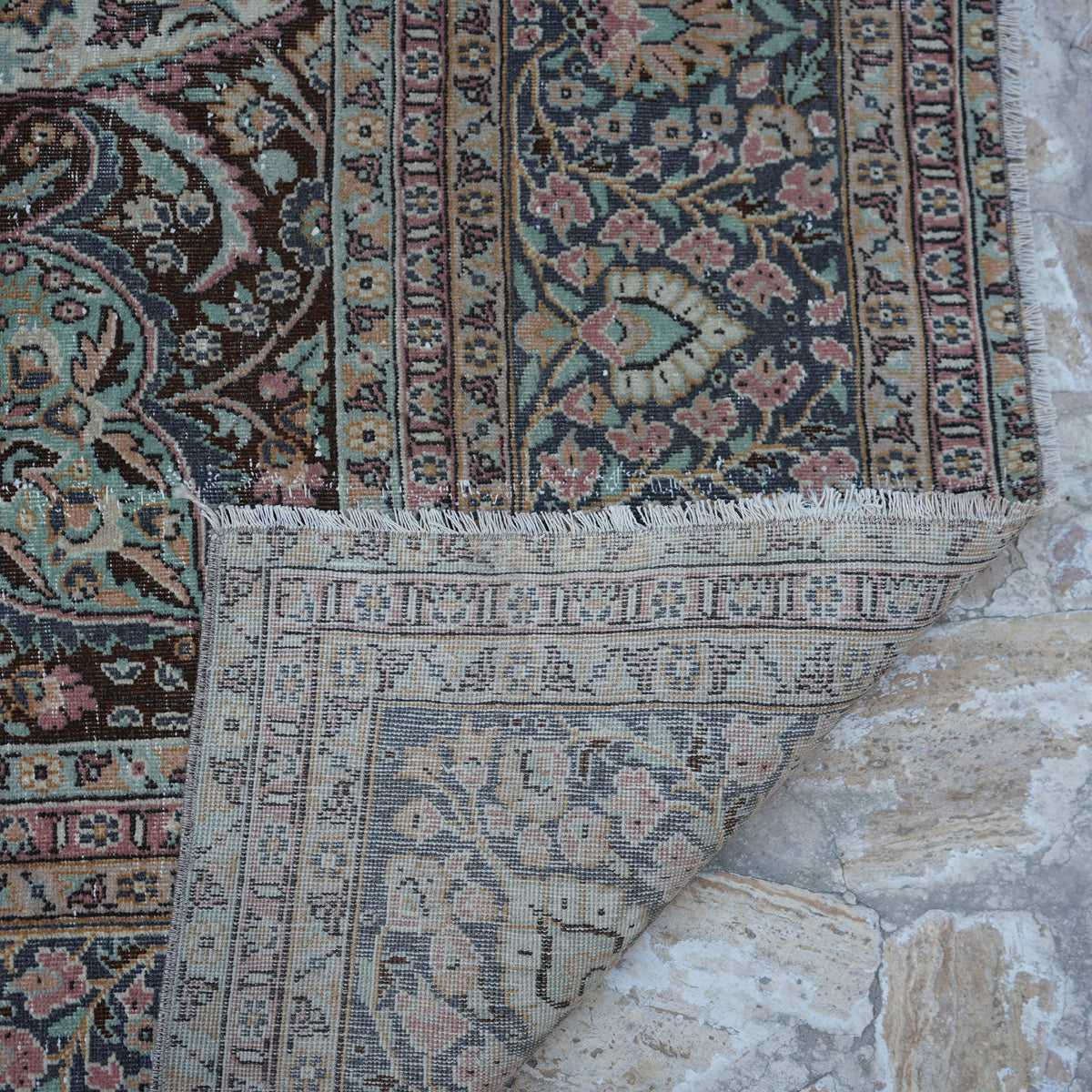
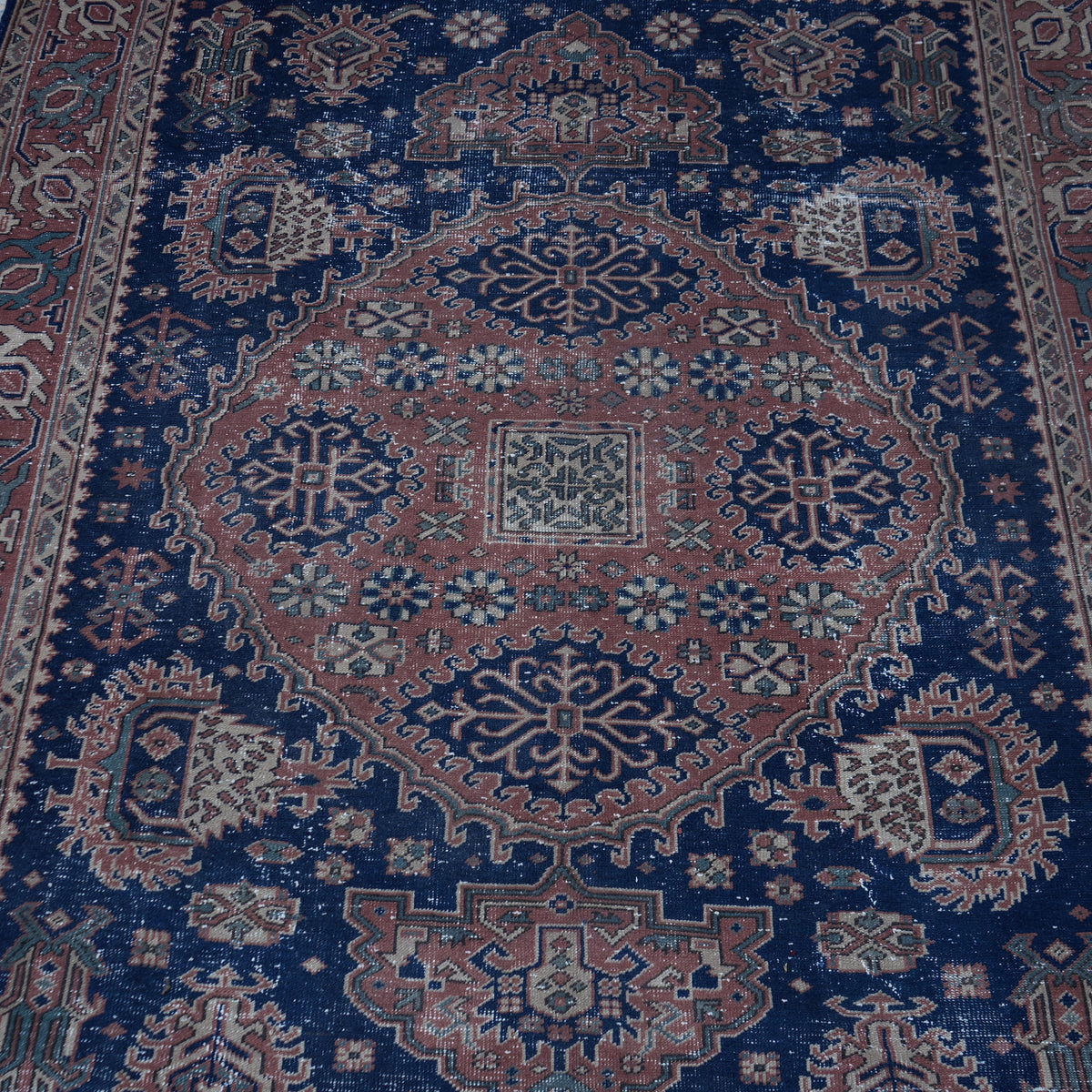
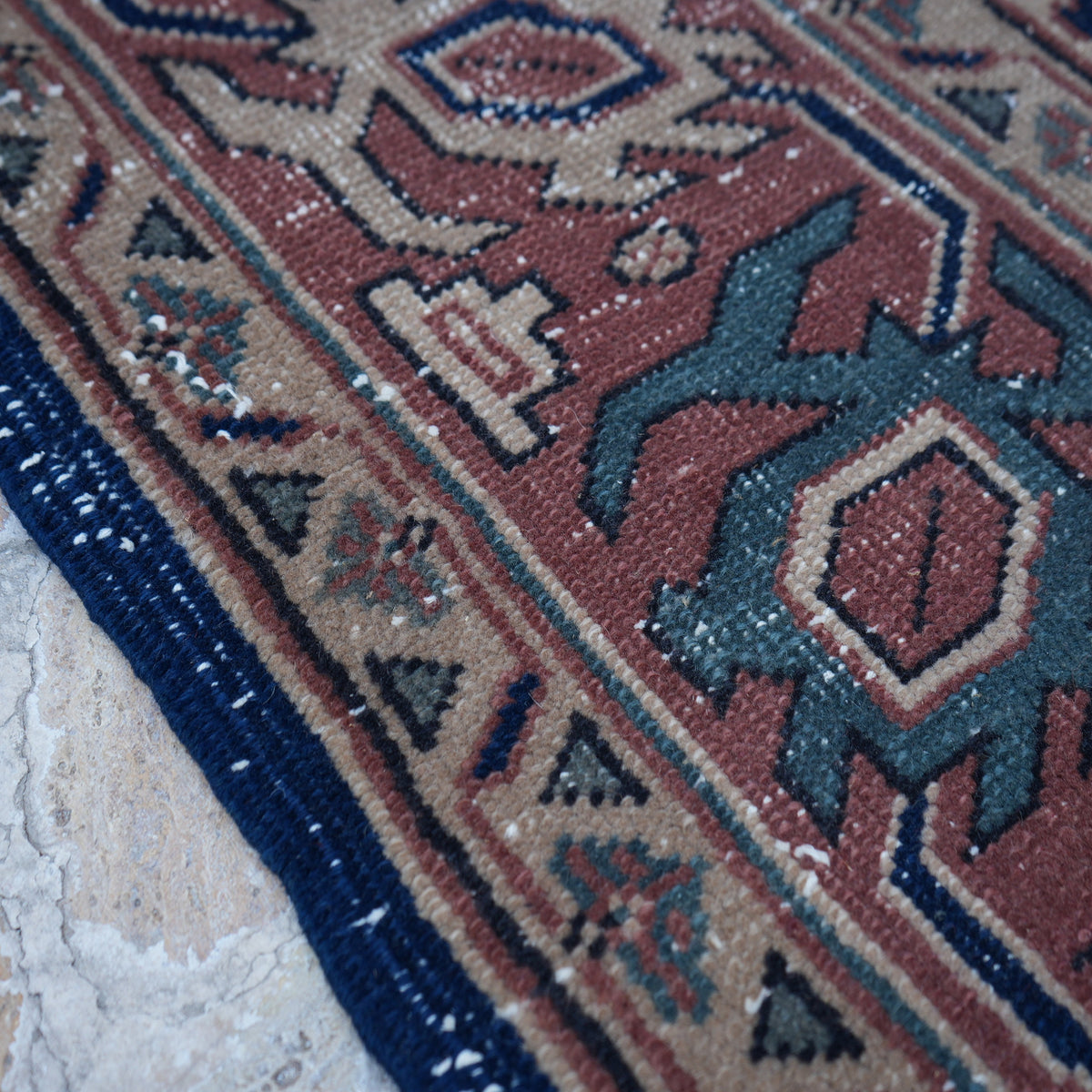
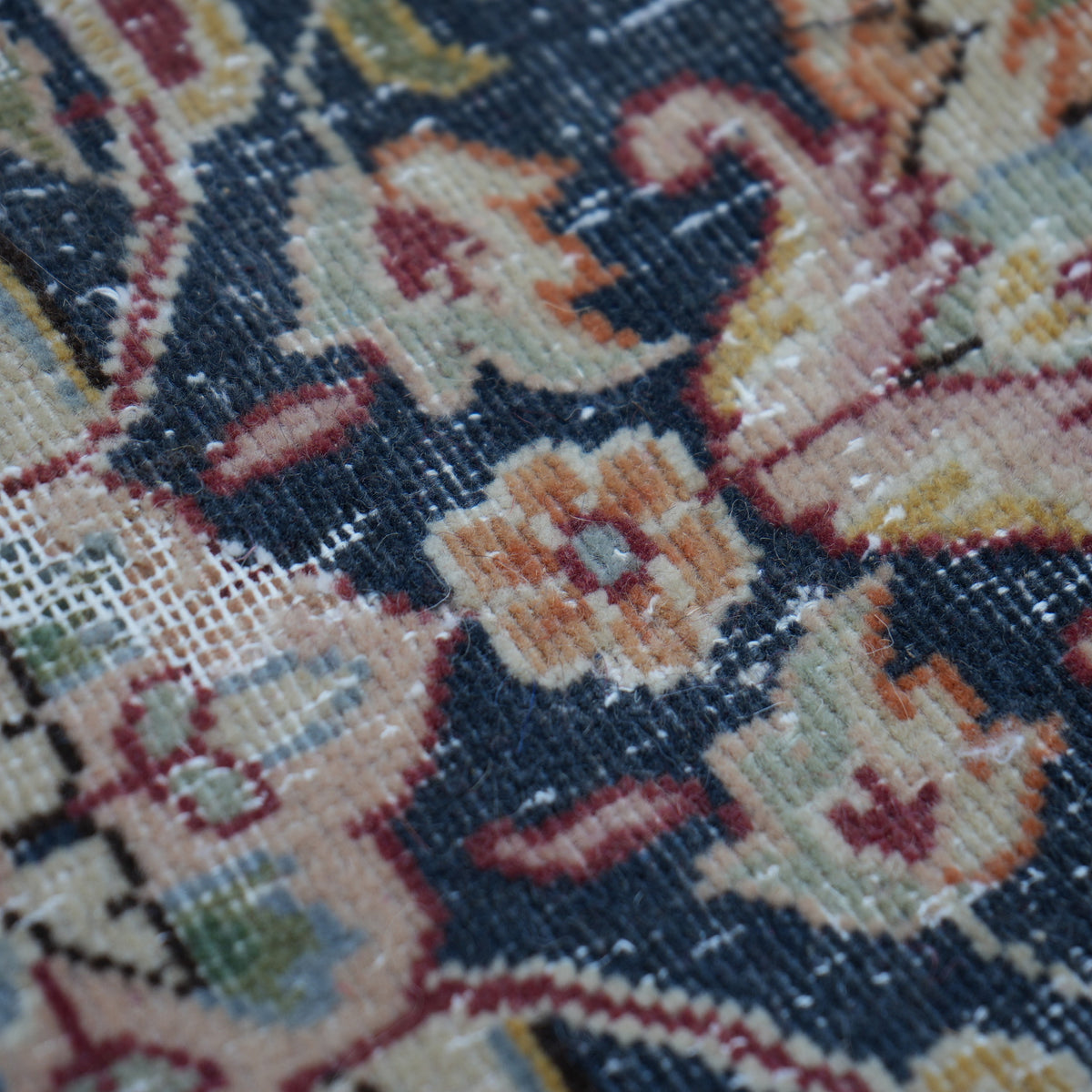
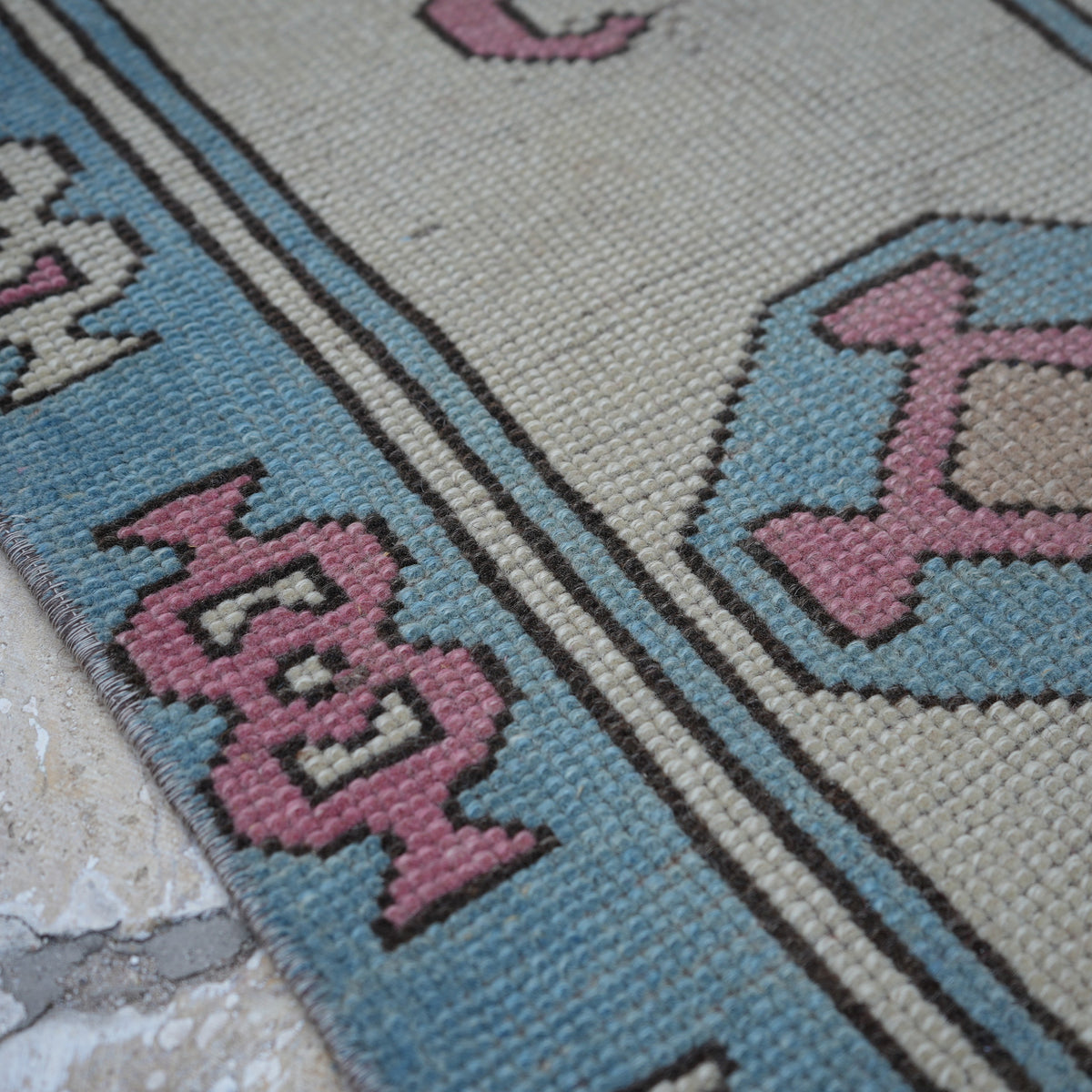
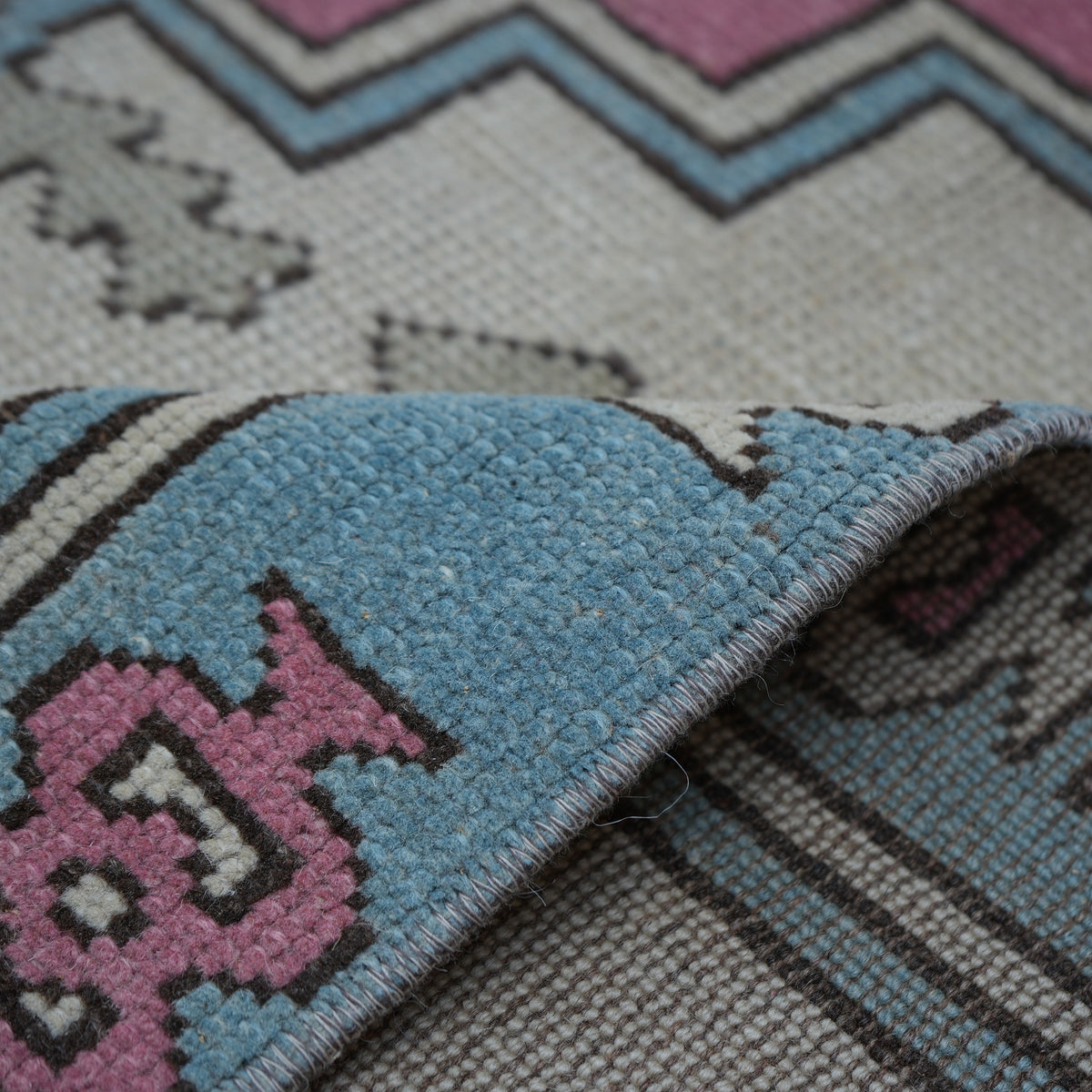
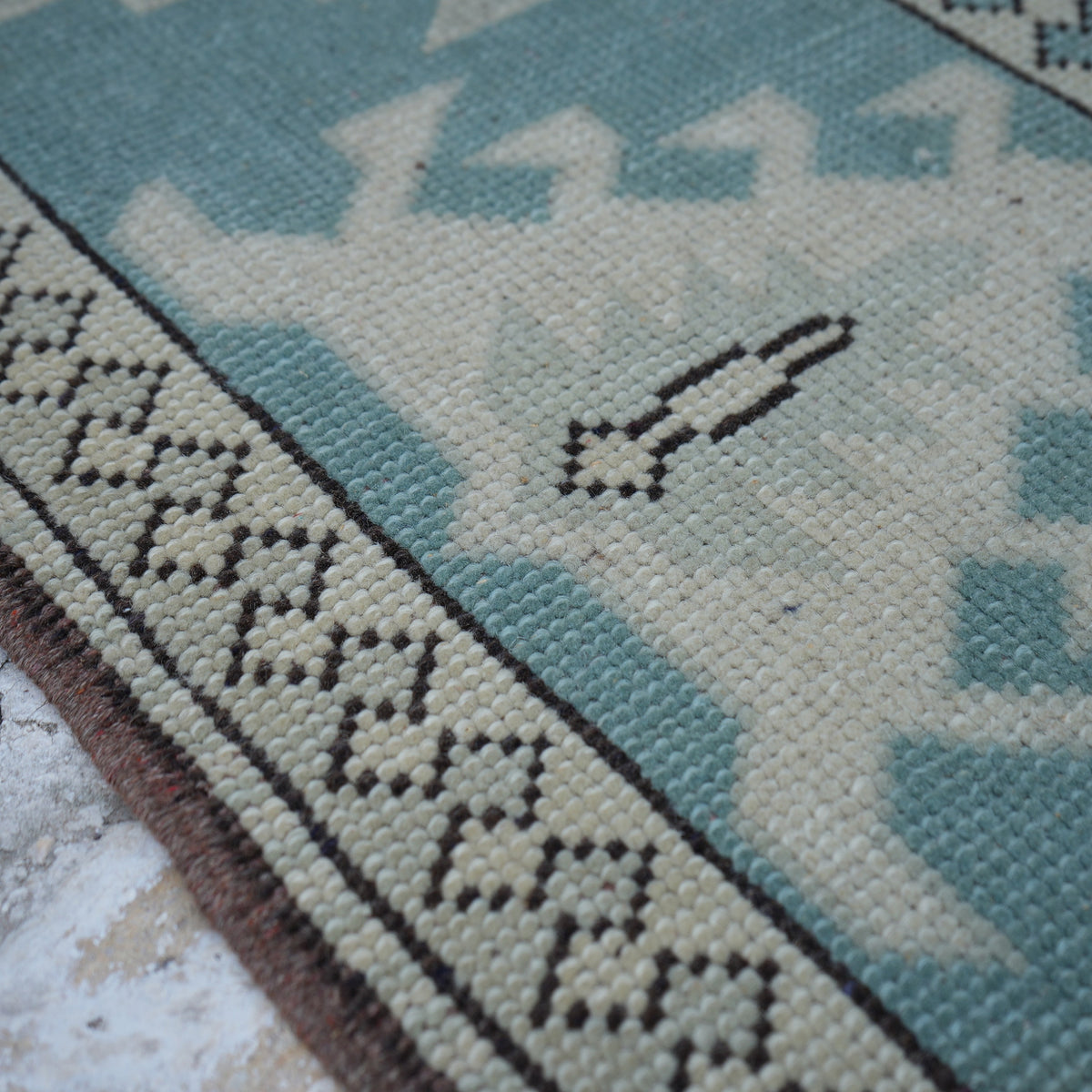
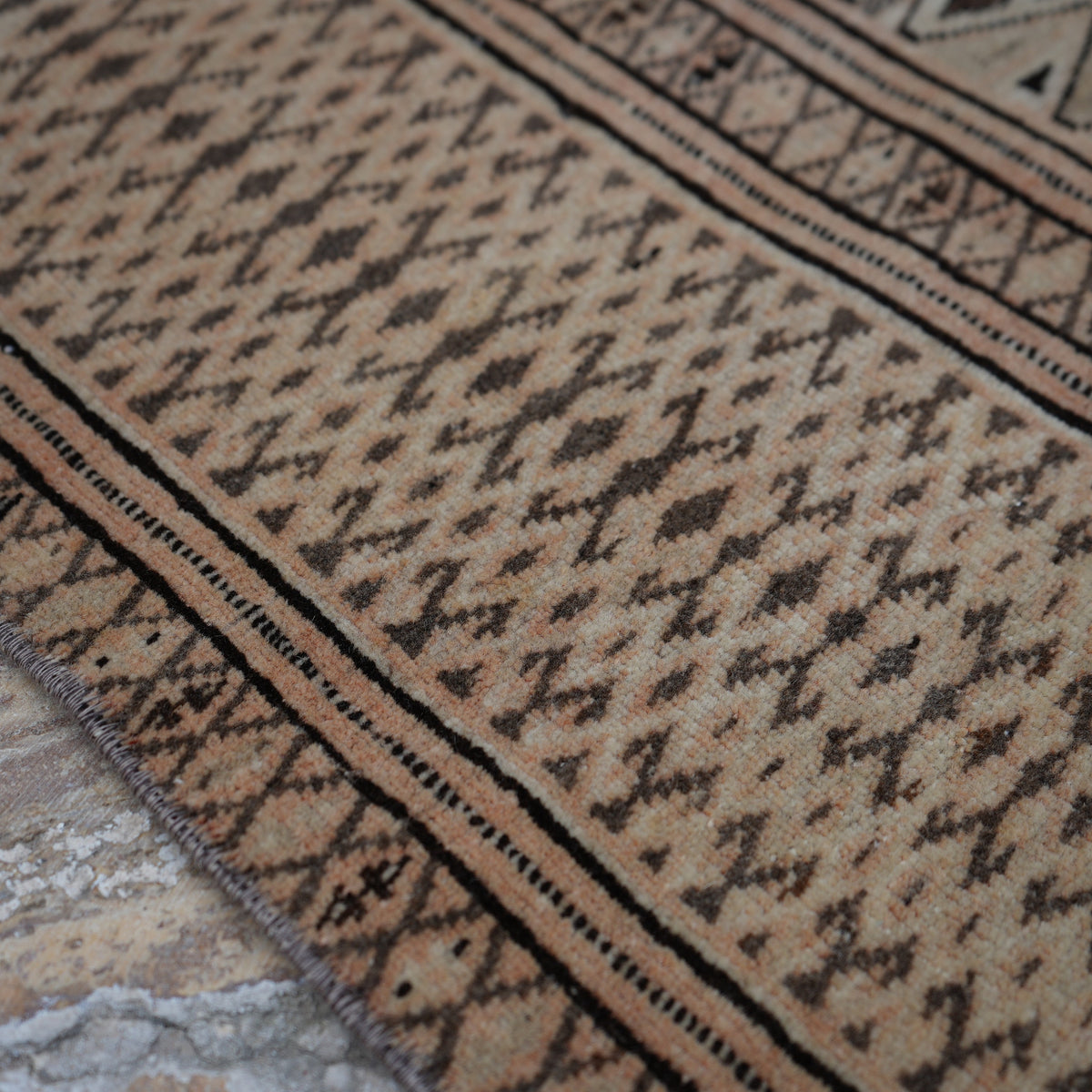
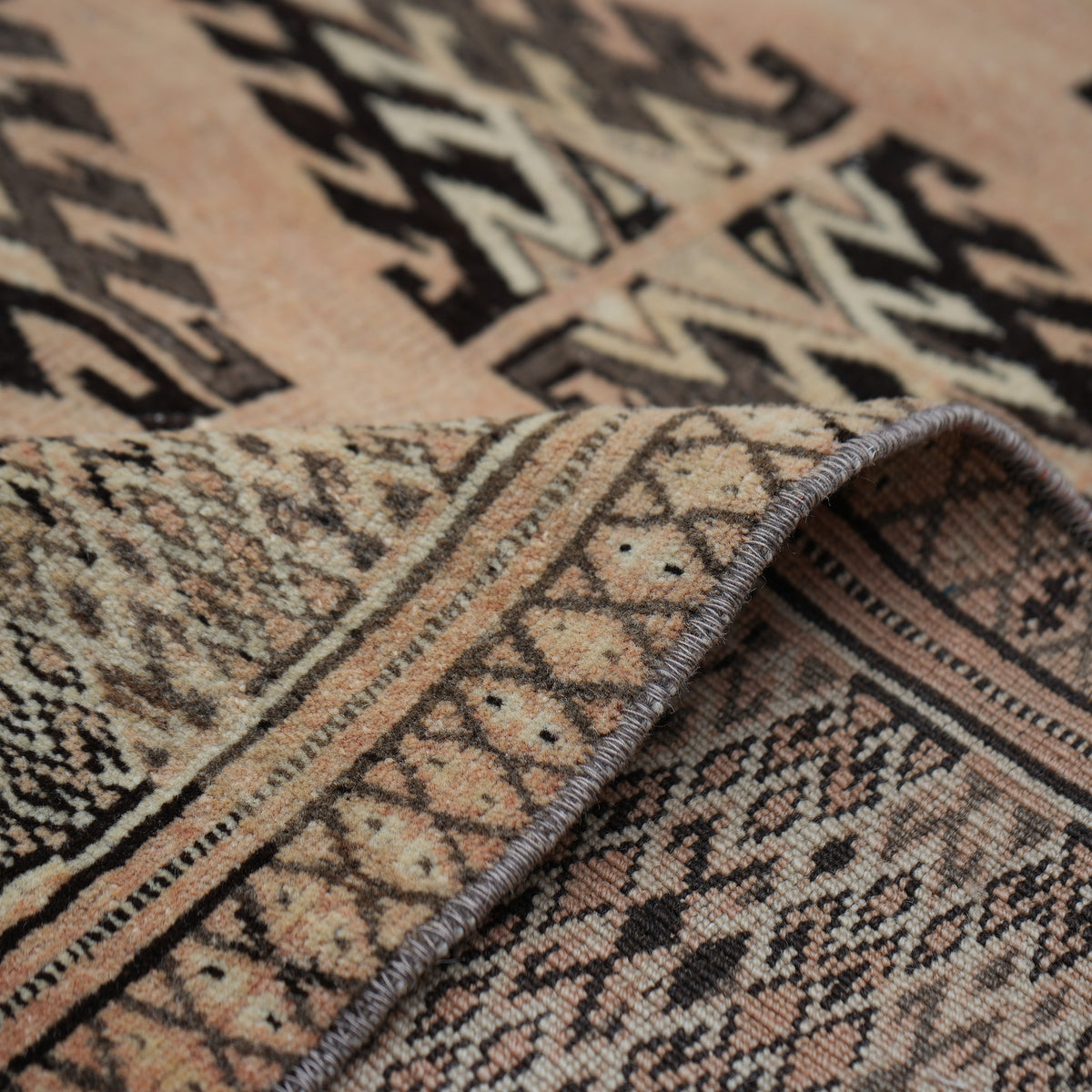
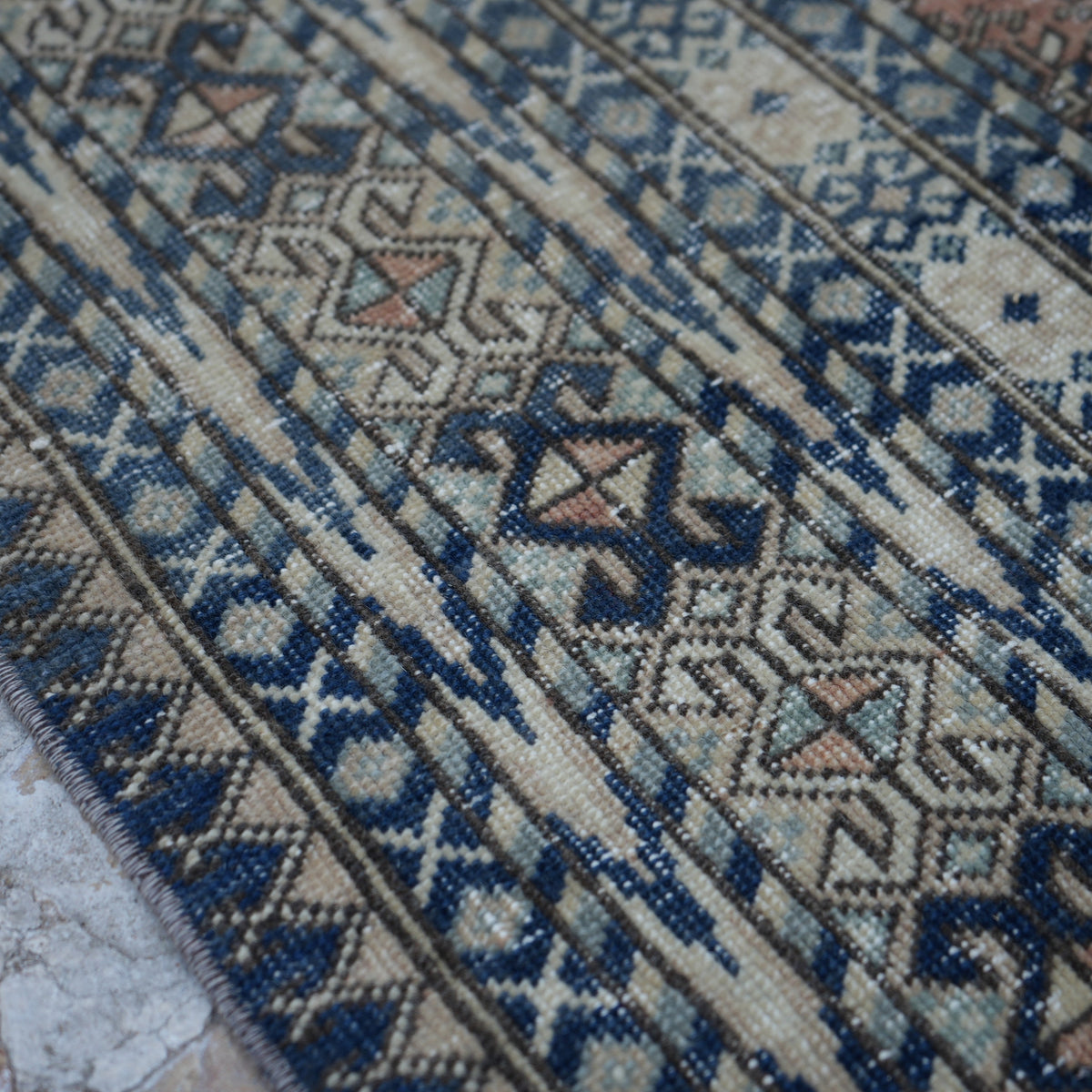
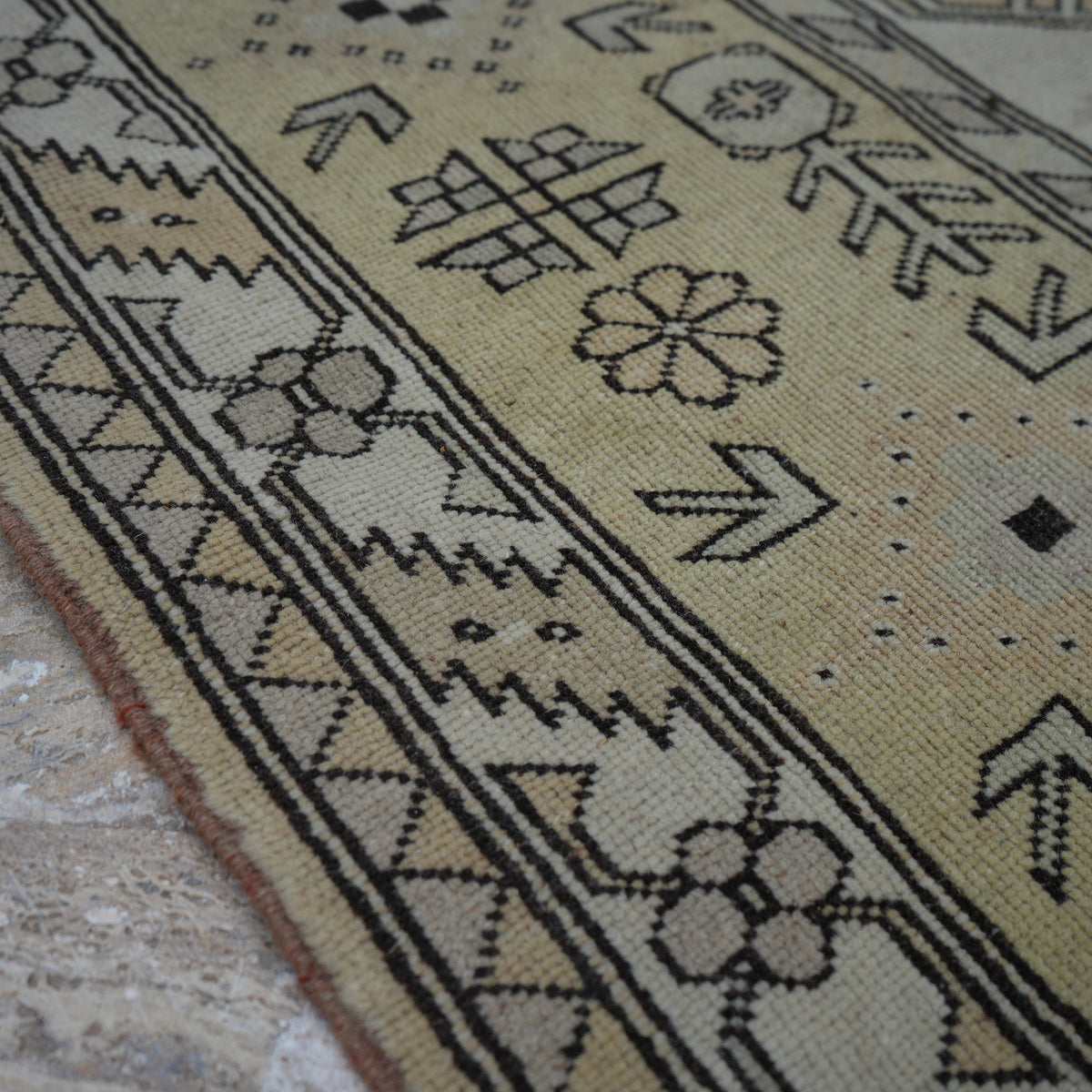
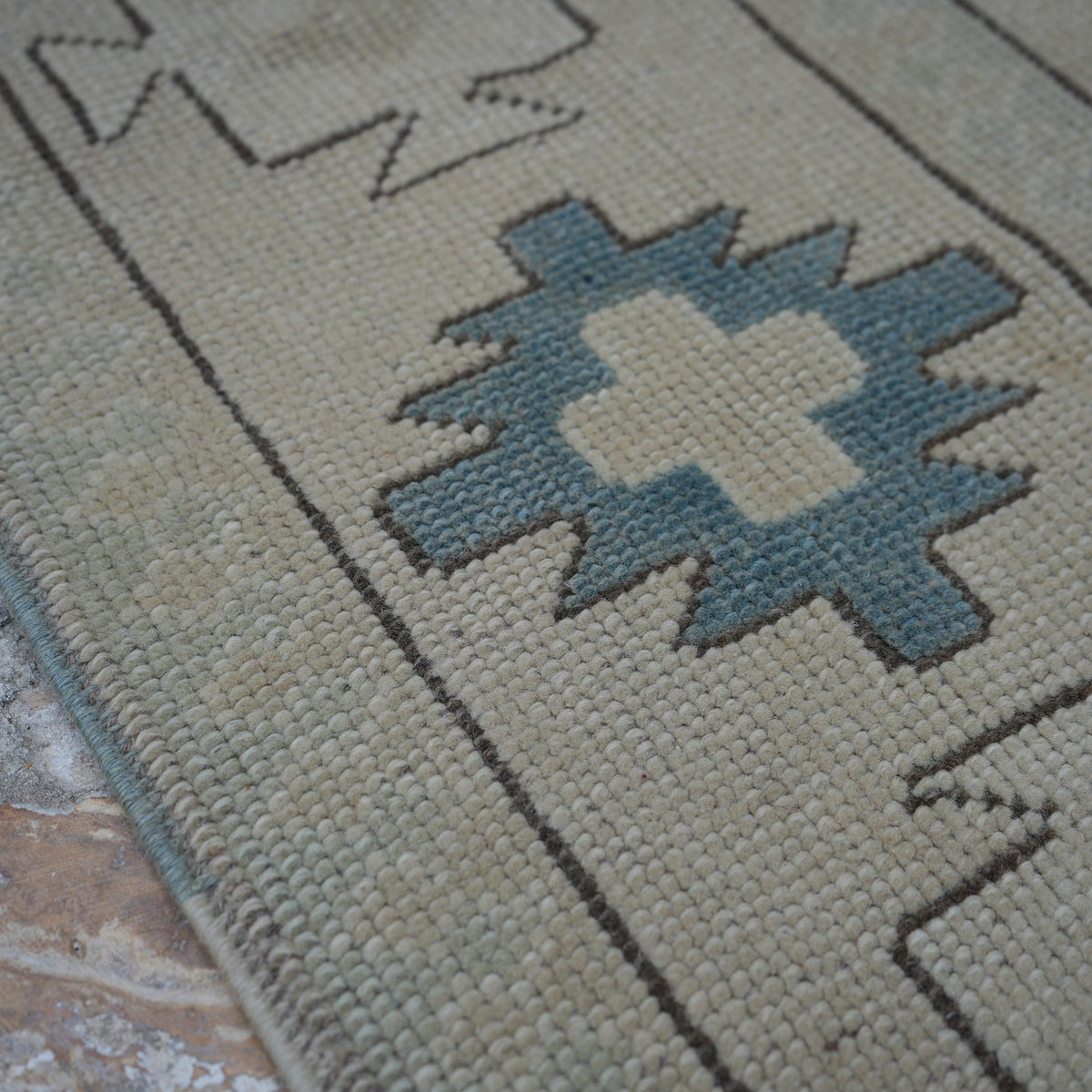
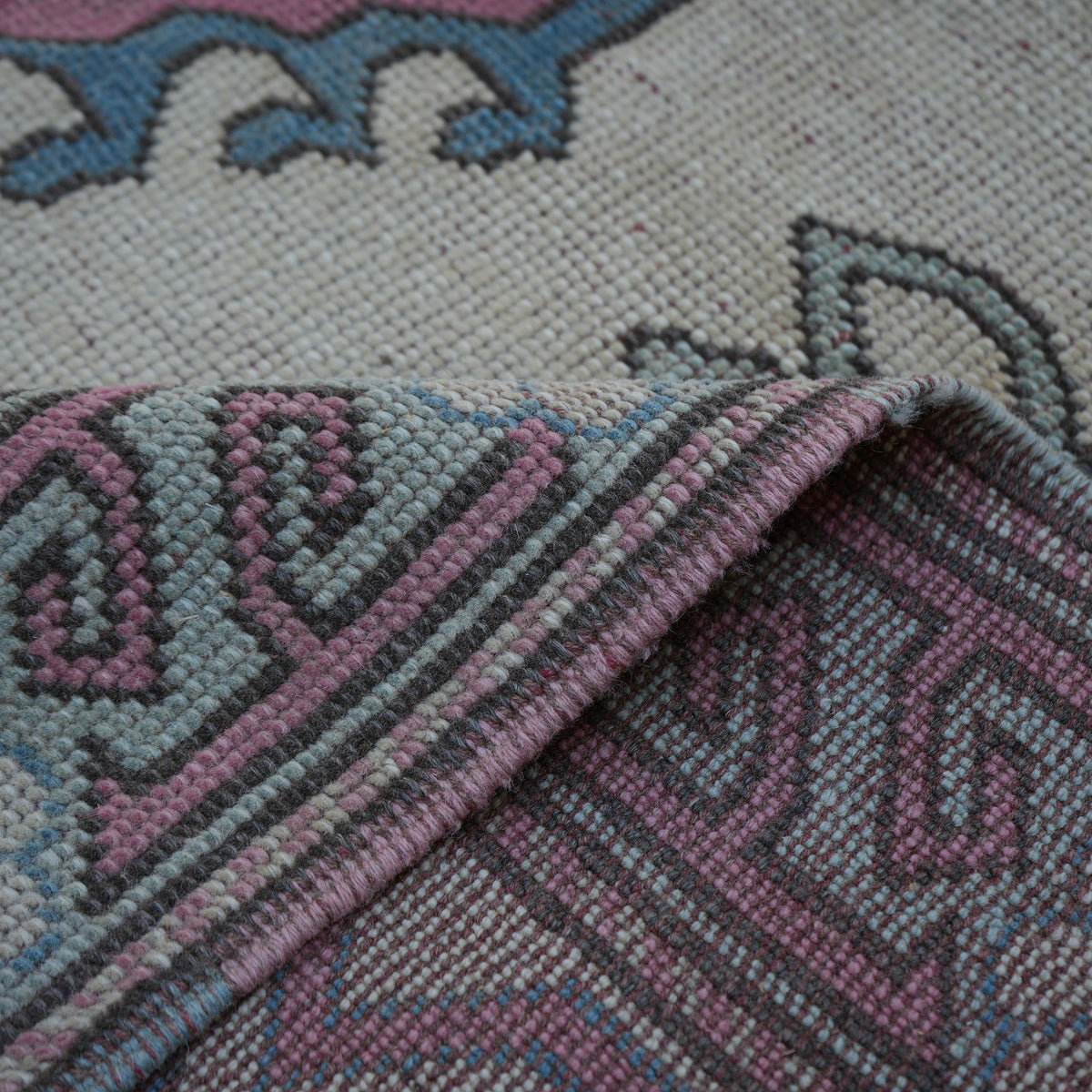
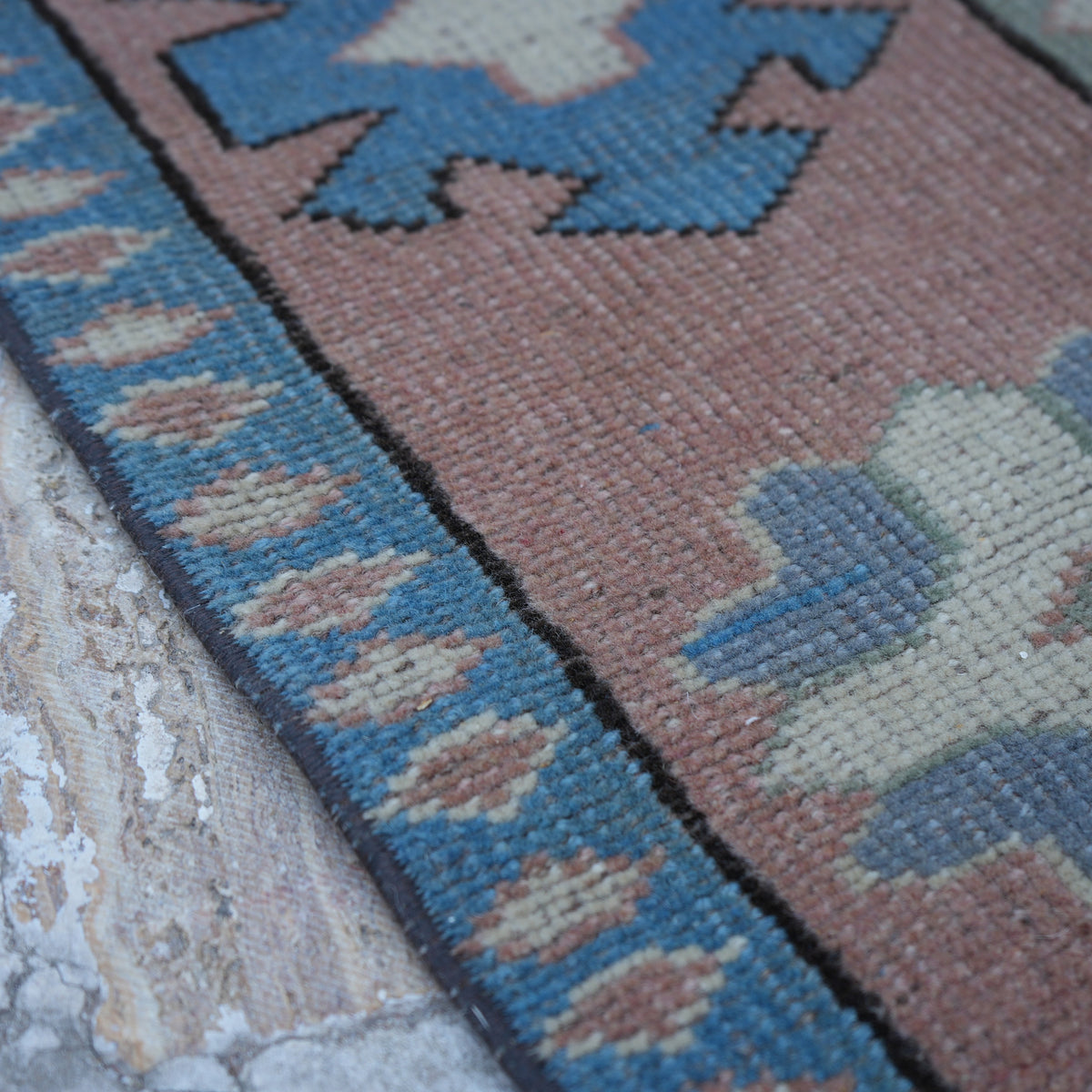
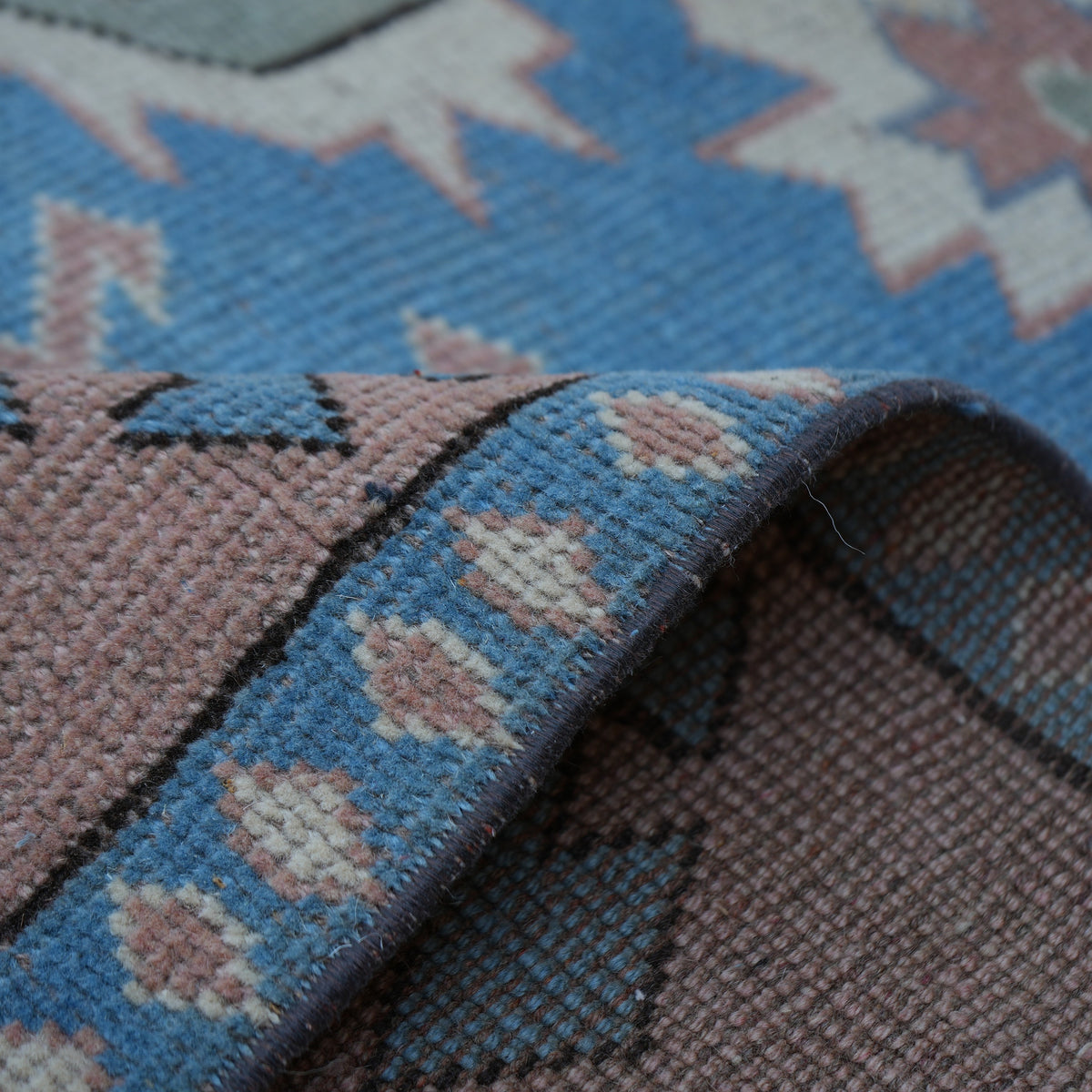
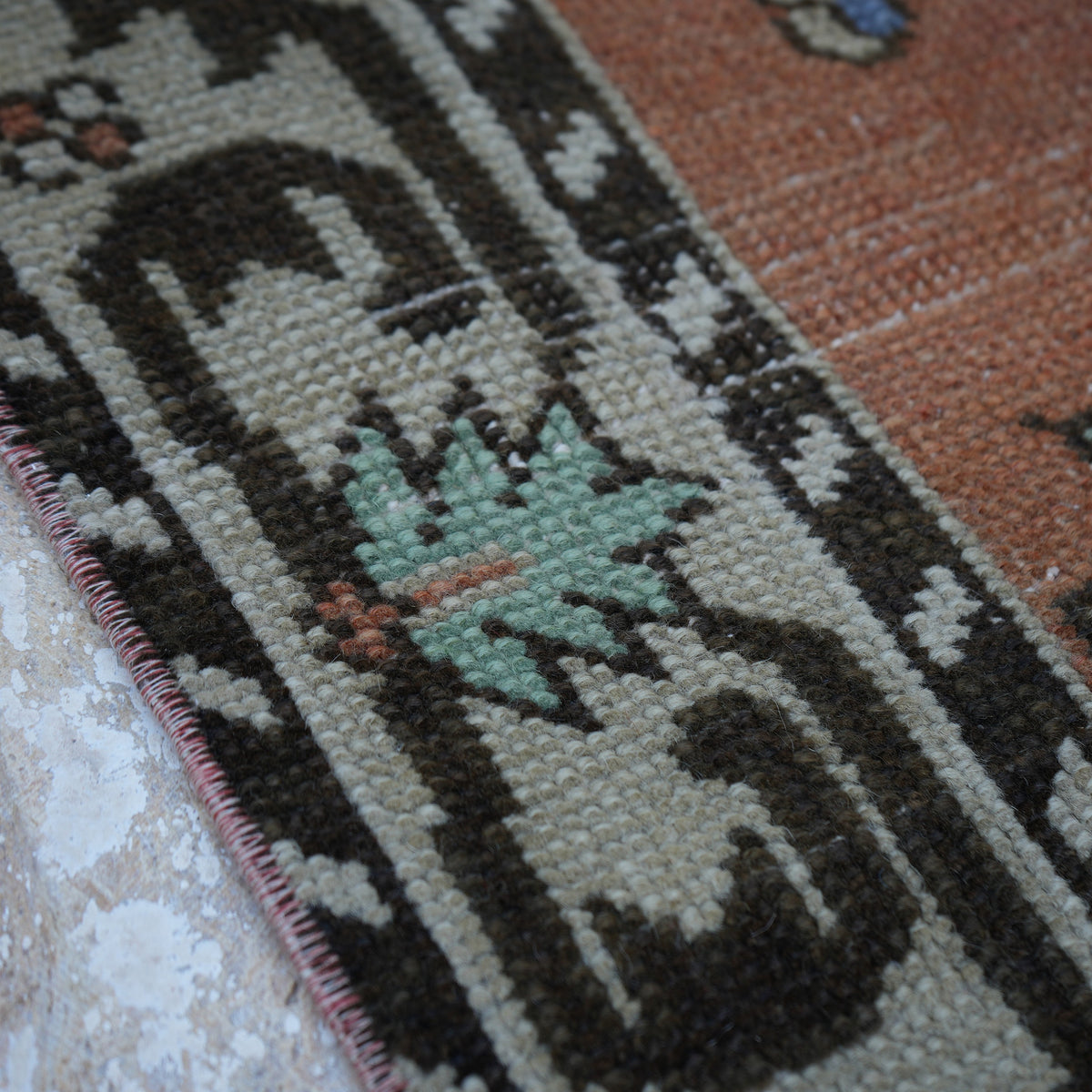
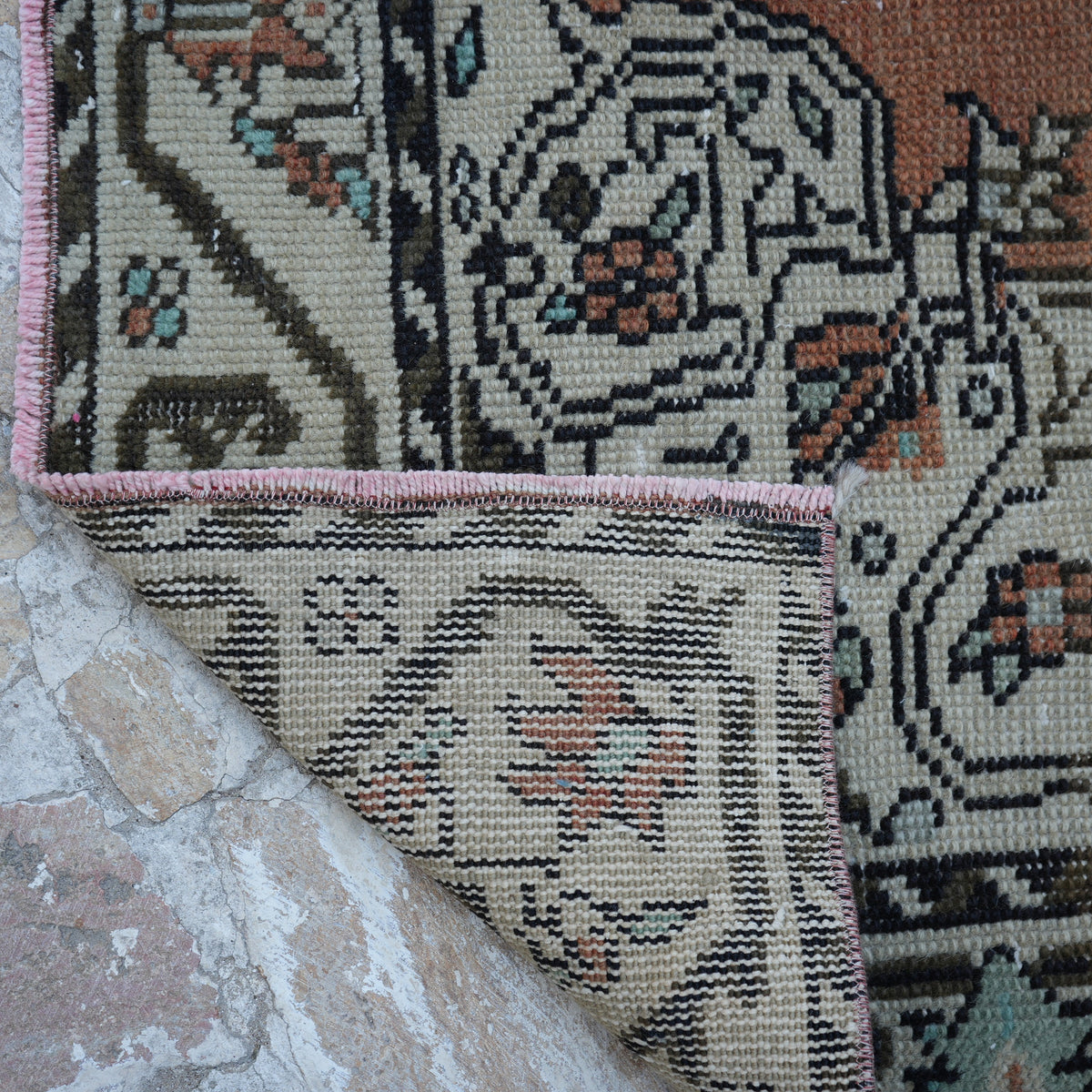
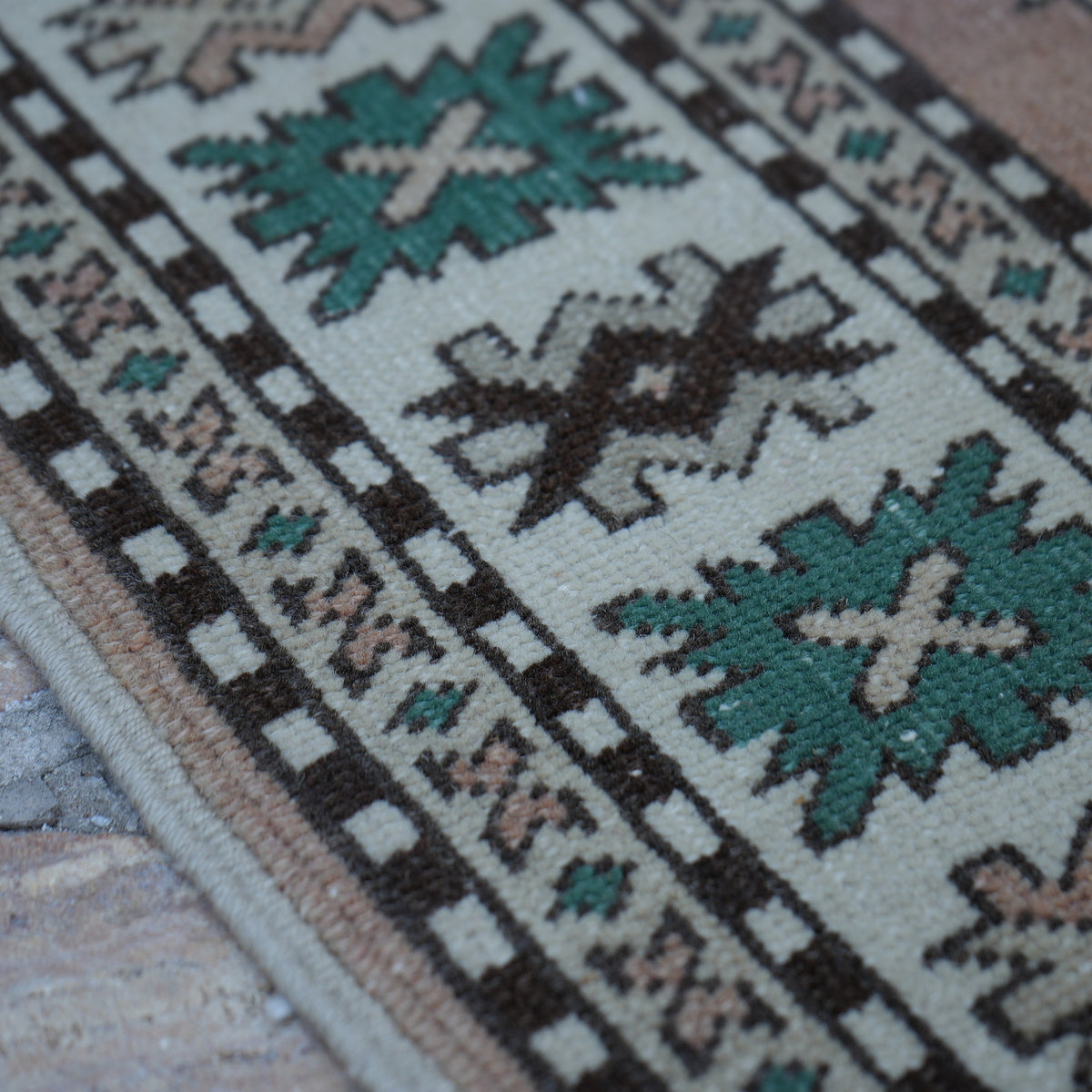
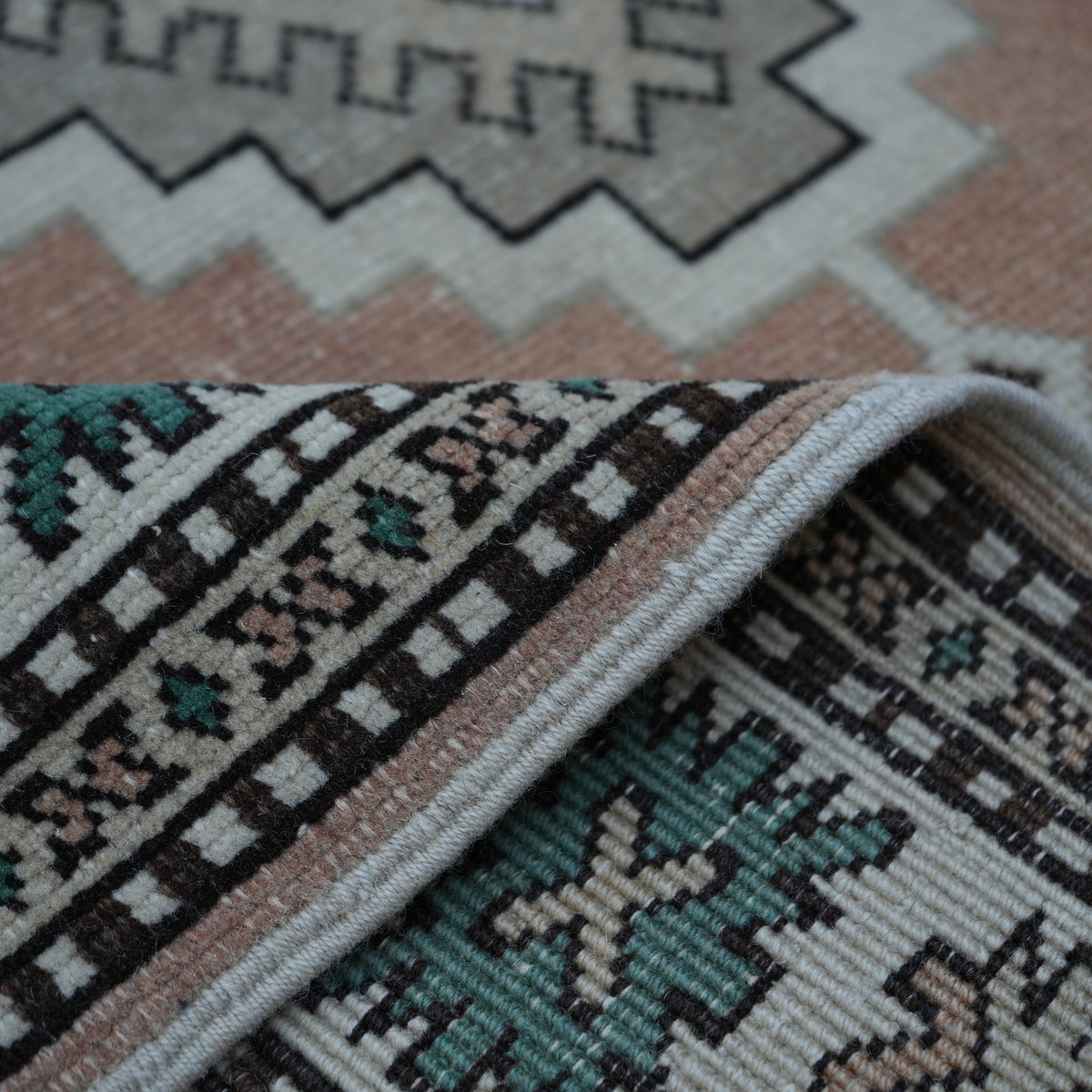
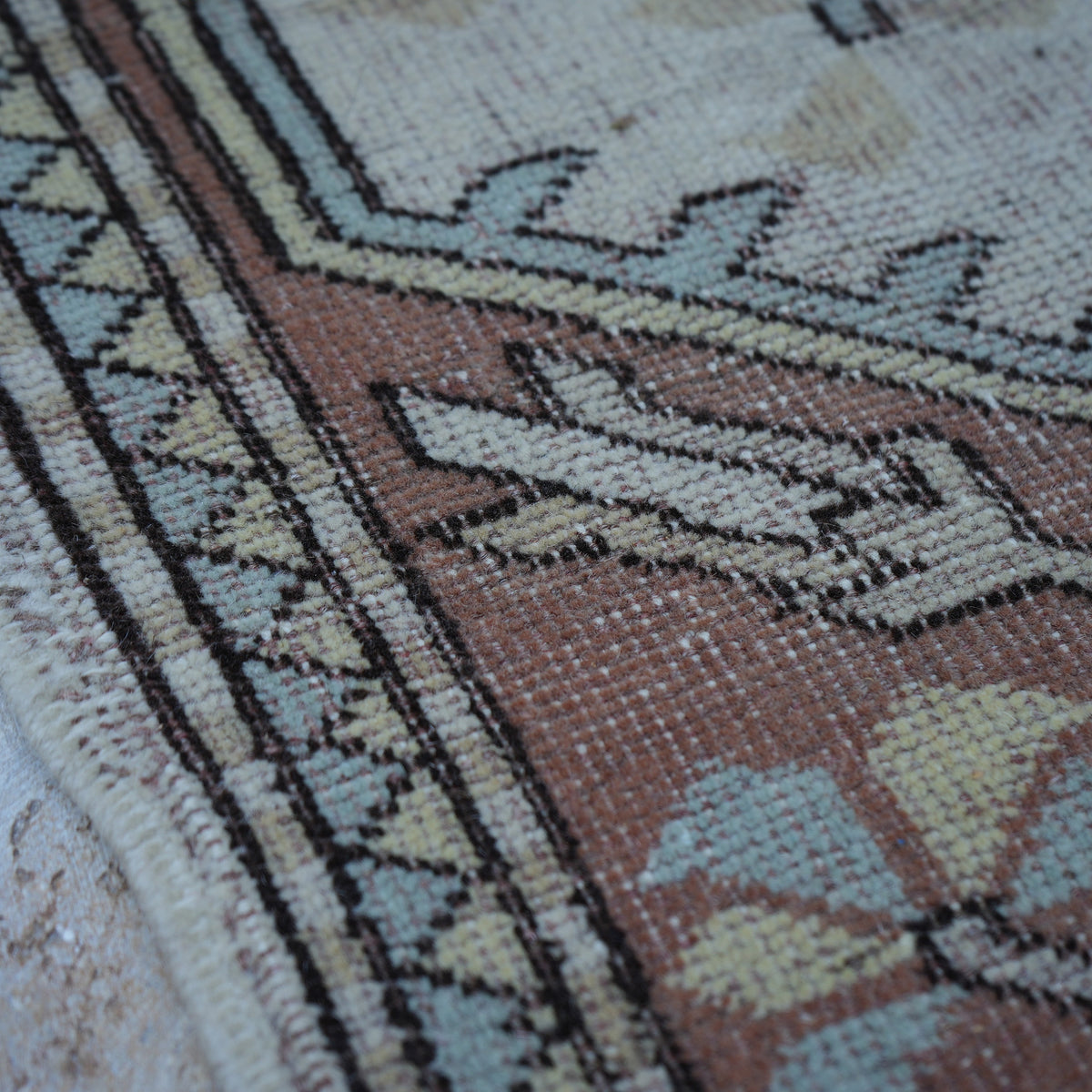
Abrash — the subtle shift in color across the field that comes from hand-spinning and naturally variable dye batches — is evidence of the same principle Craftsman architecture is built on: a real hand, working through real time, making something no machine could replicate.
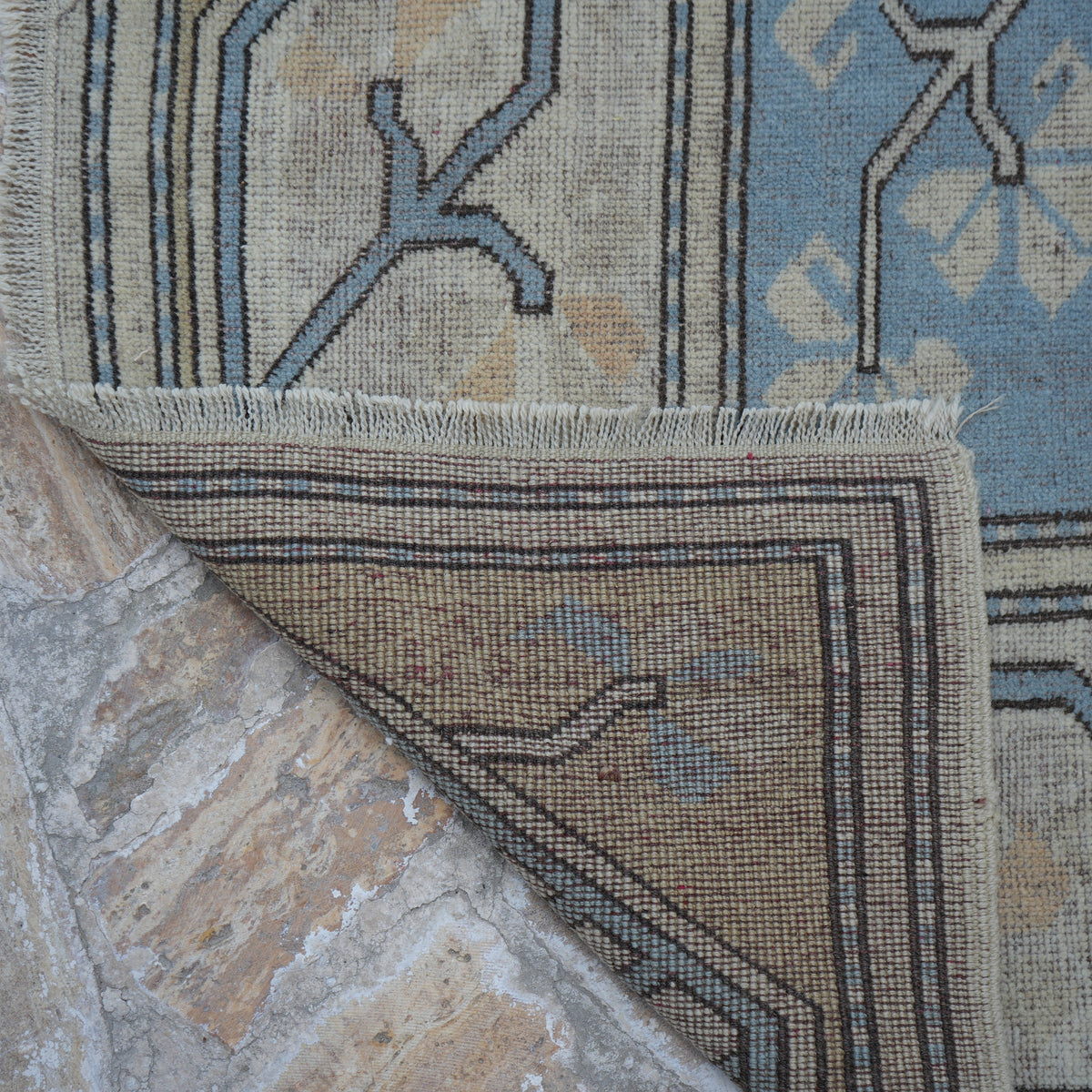
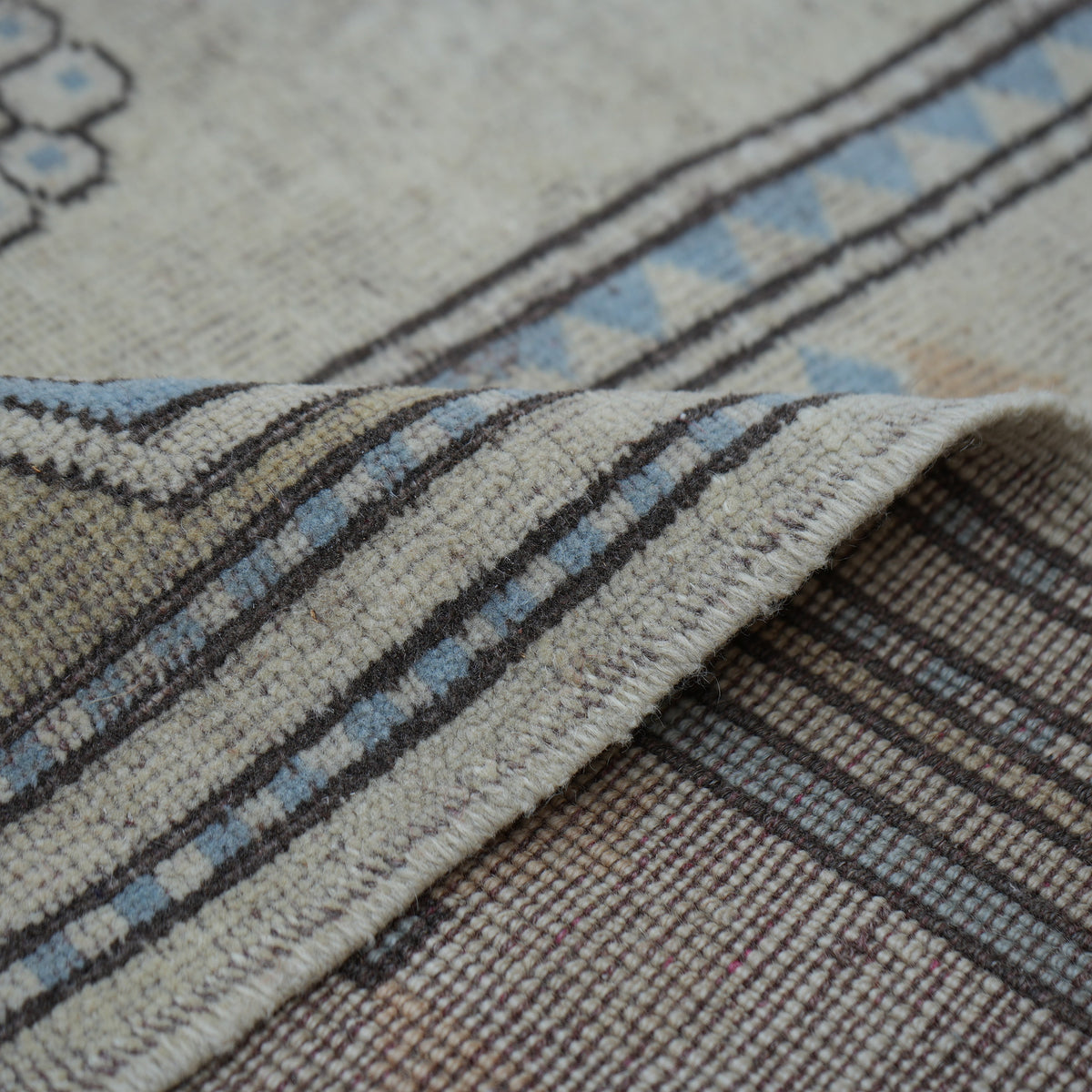
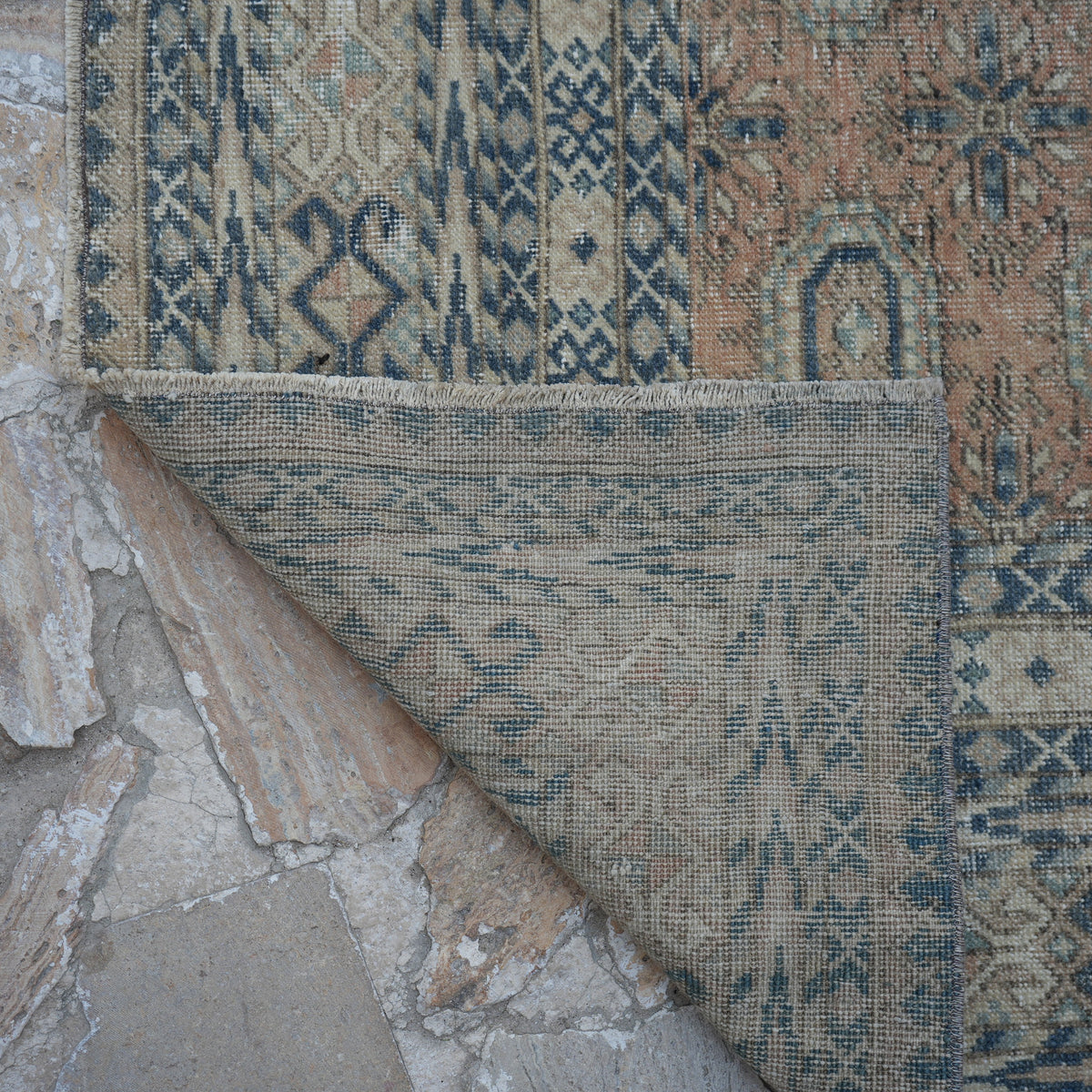
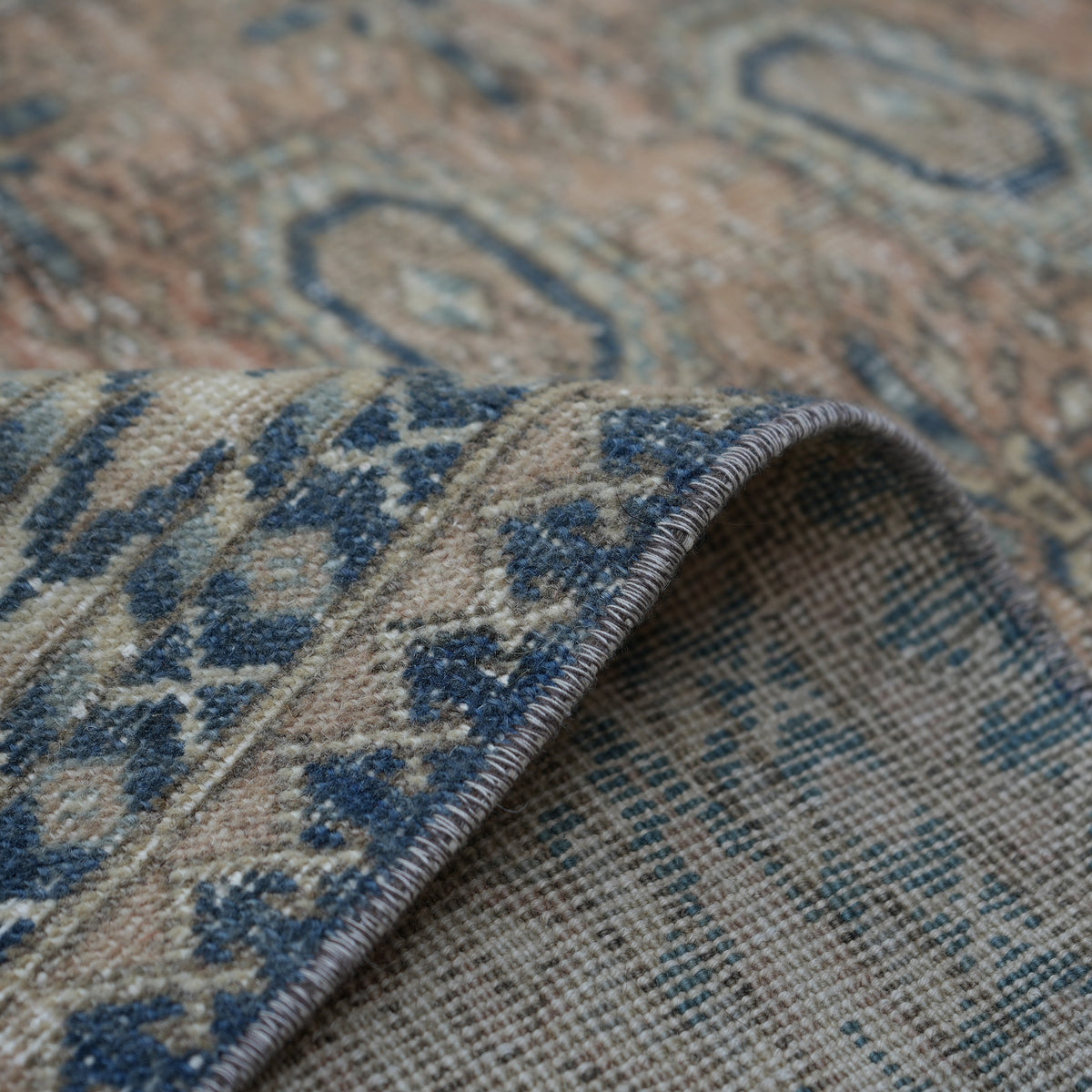
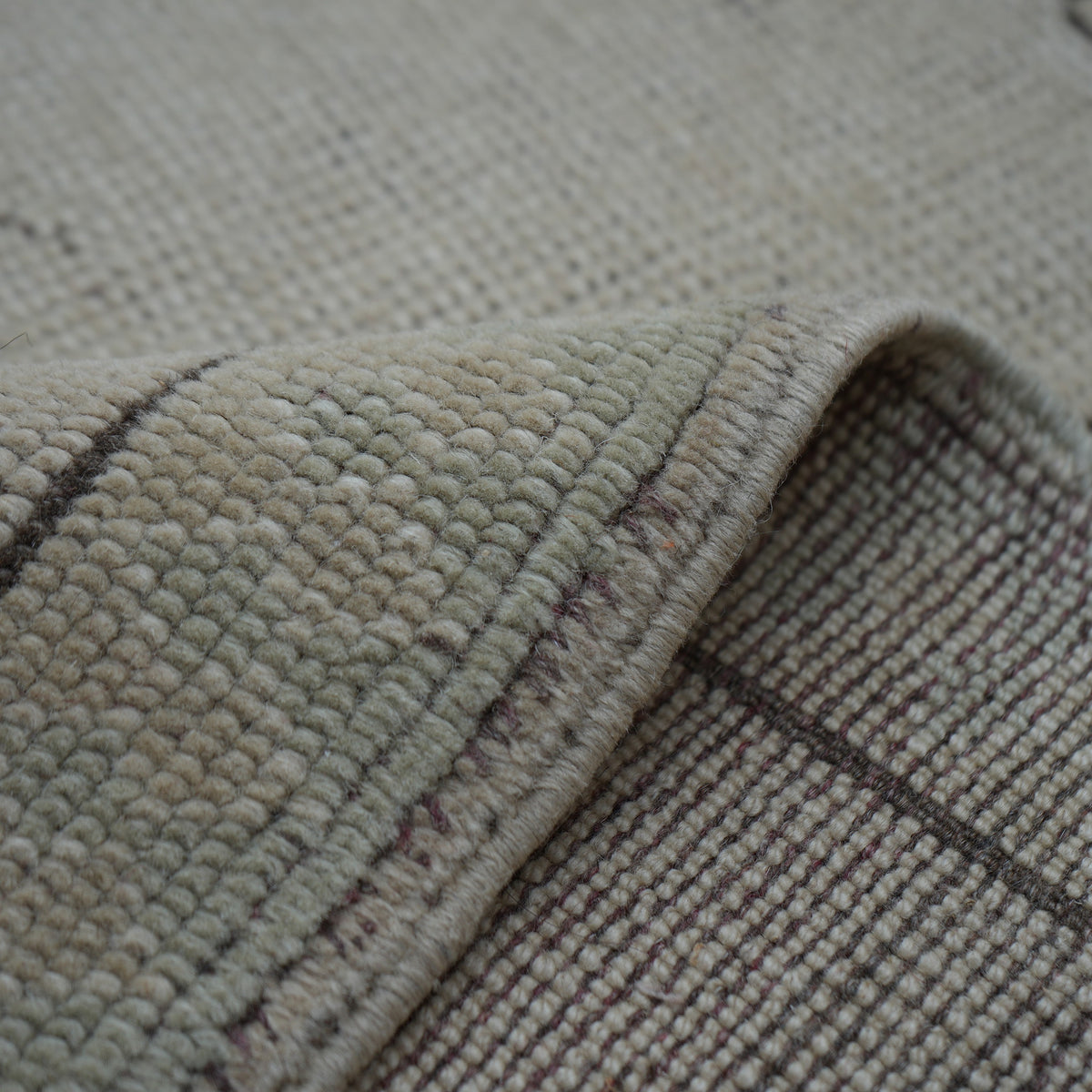
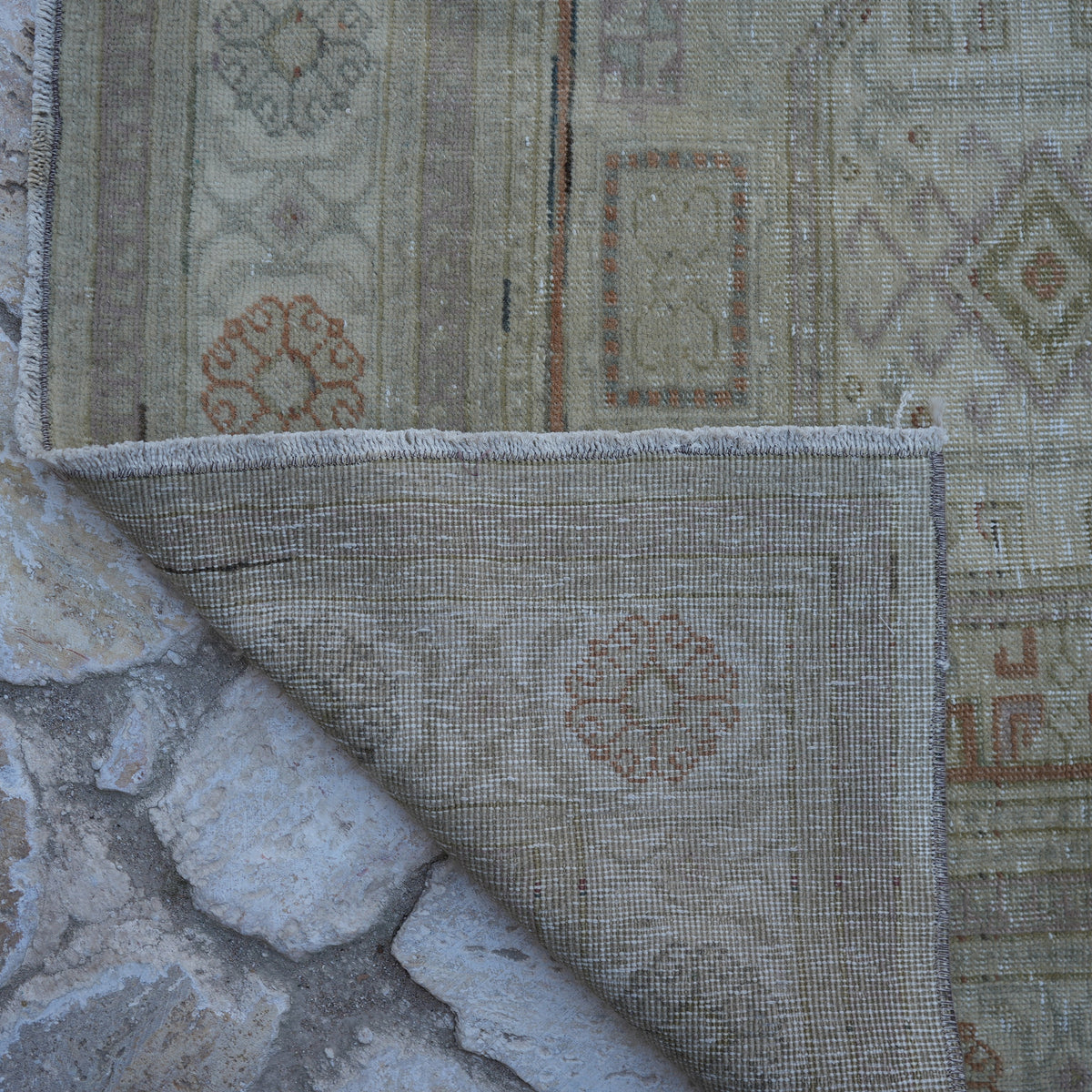
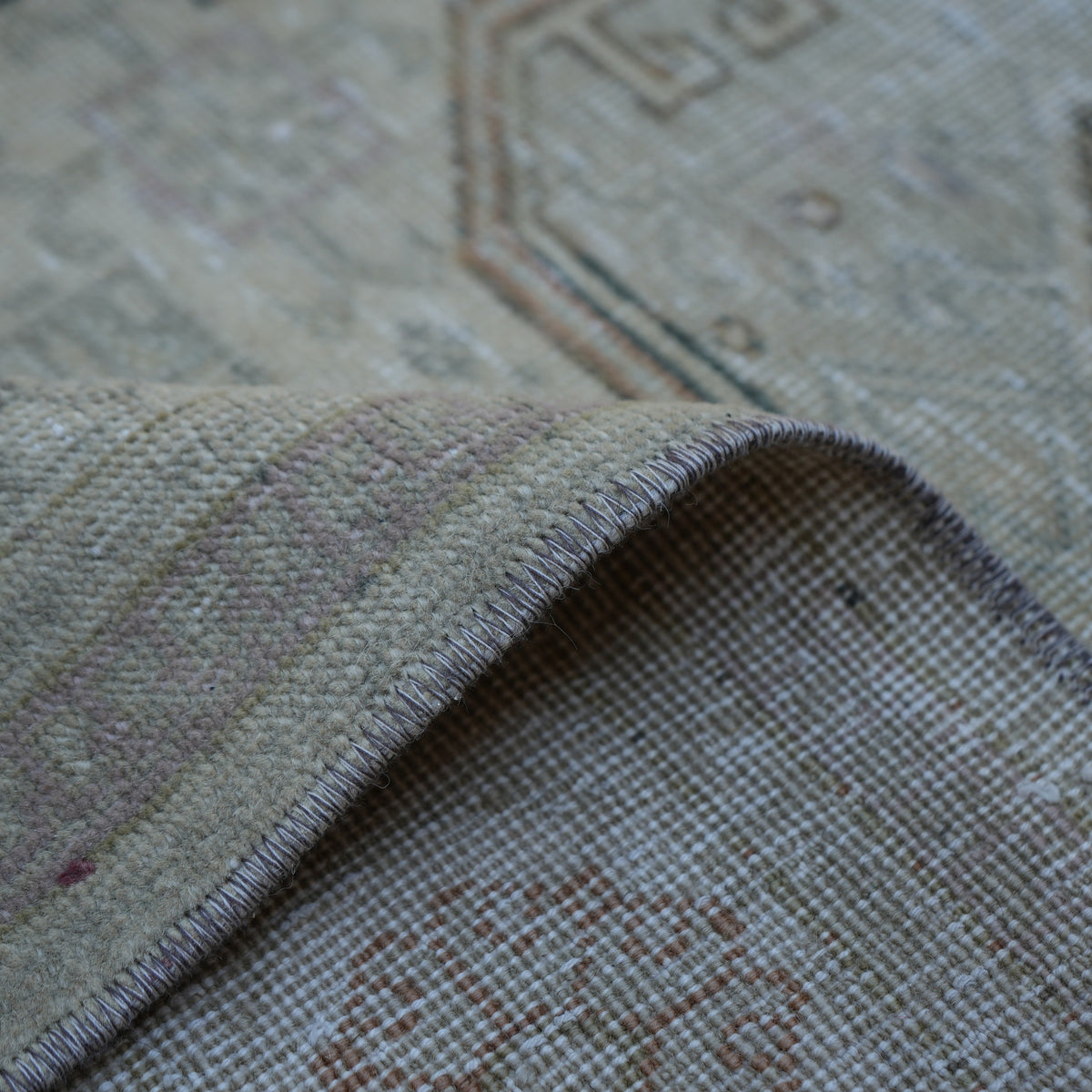
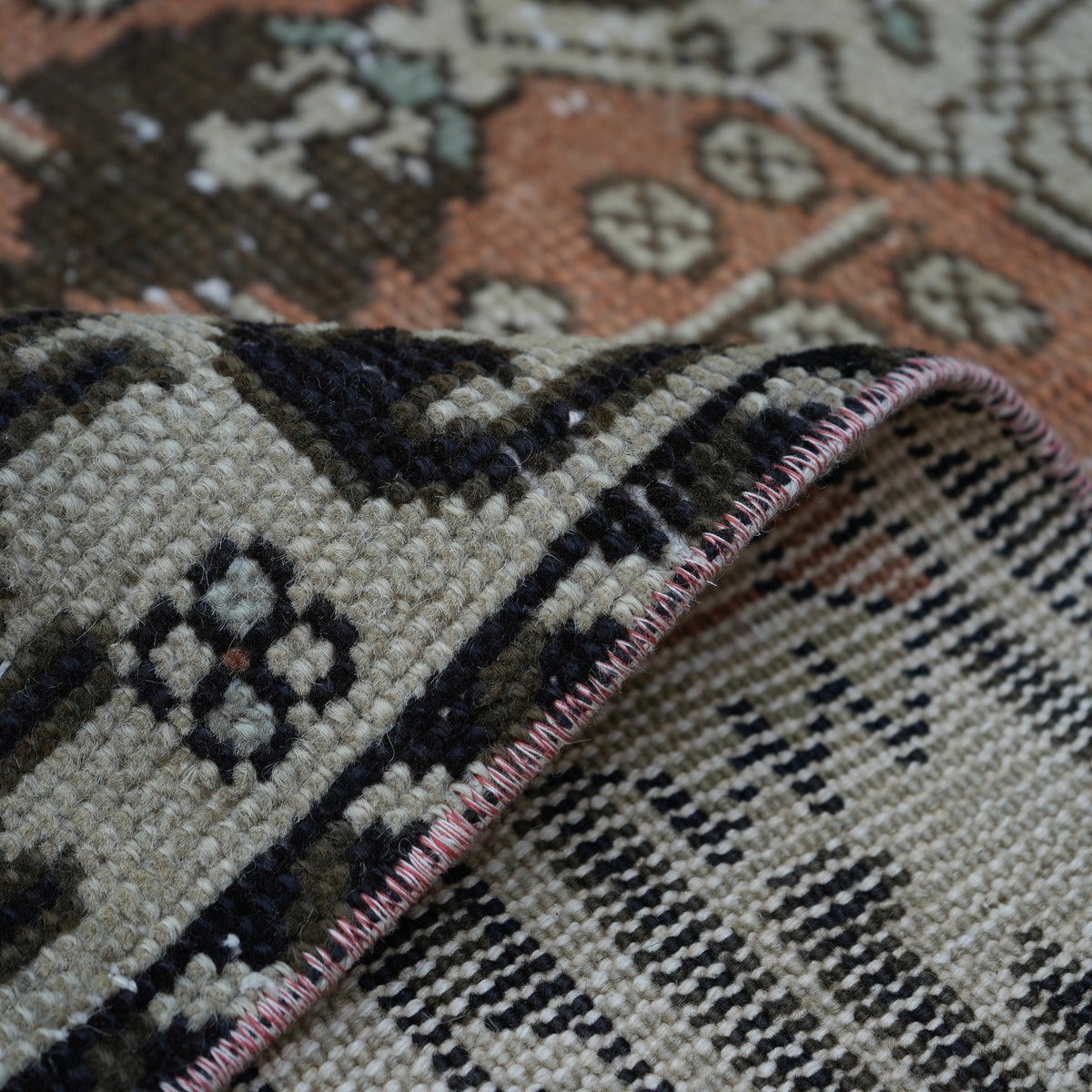
Machine-made rugs age without changing. They fade, they flatten, they become less. A well-made handmade rug develops — the worn areas catch light differently, the colors deepen and open. After thirty years, it looks better than the day it was finished.
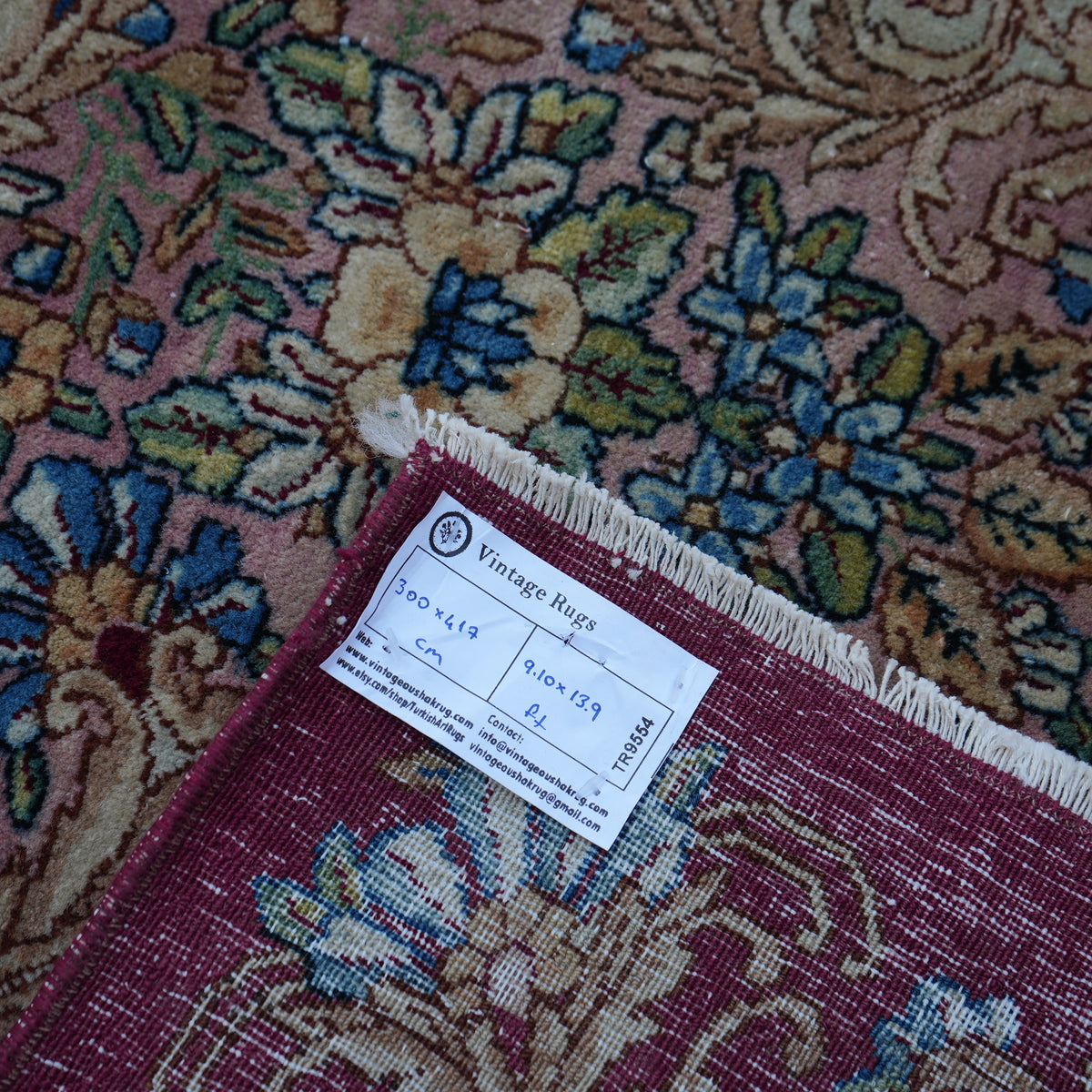
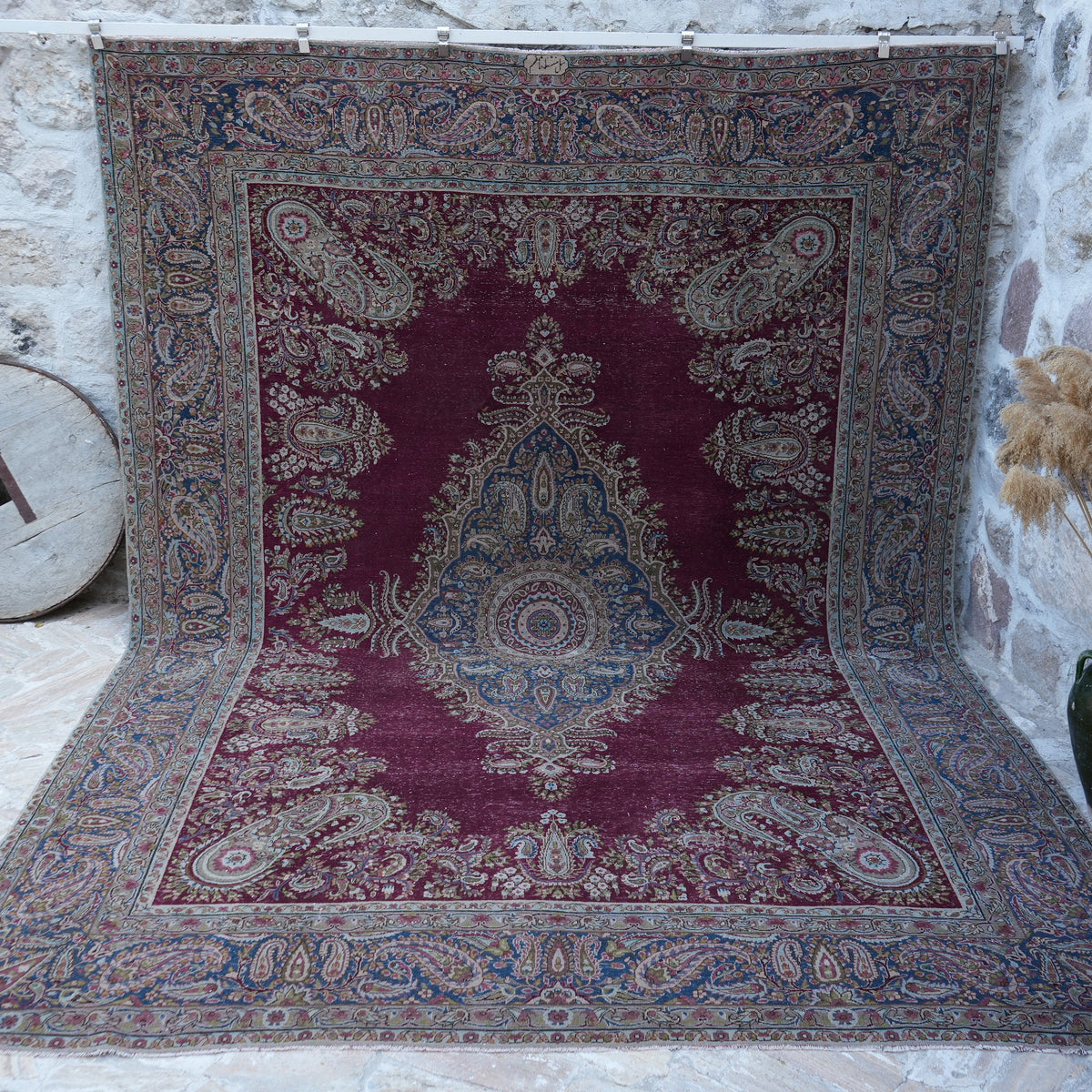
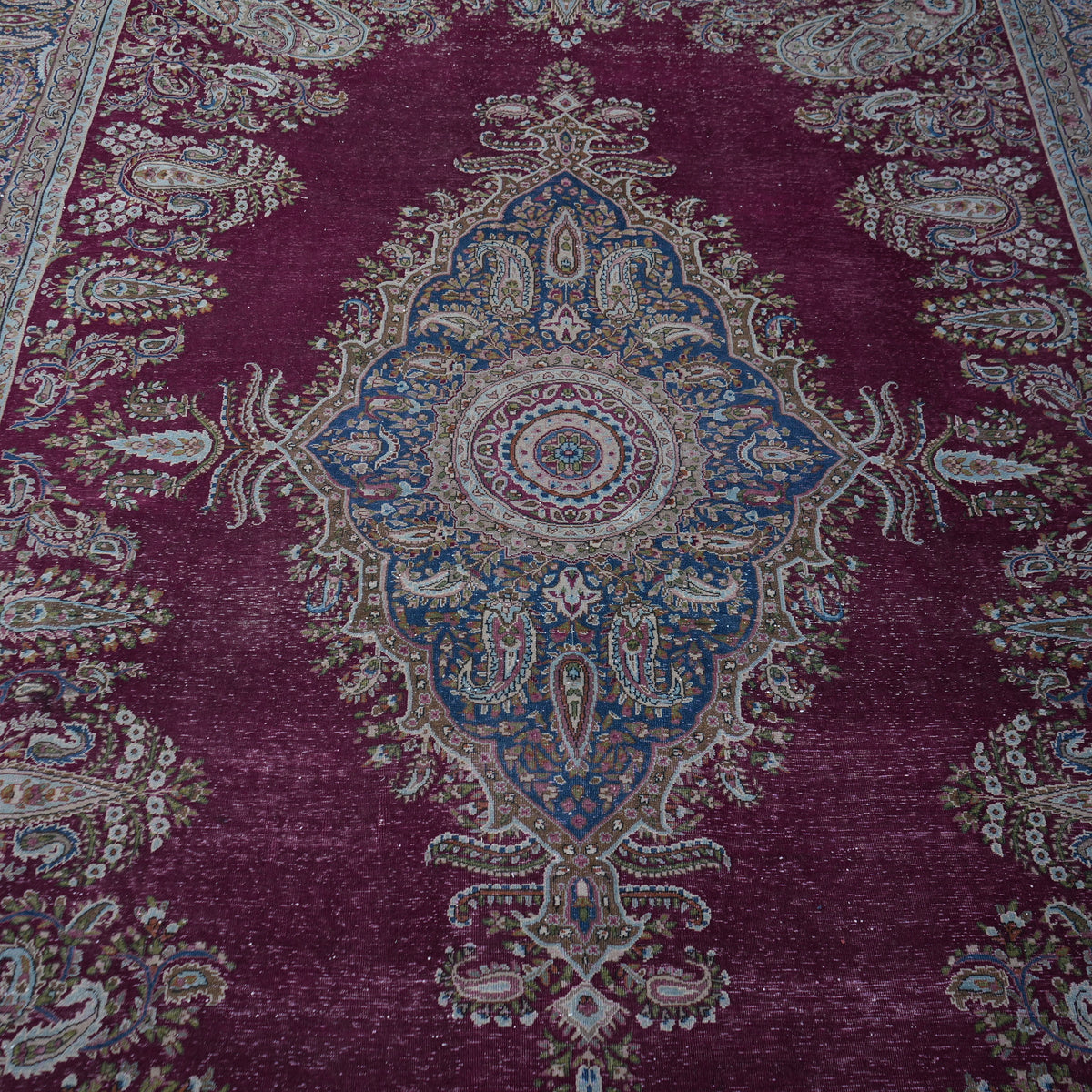
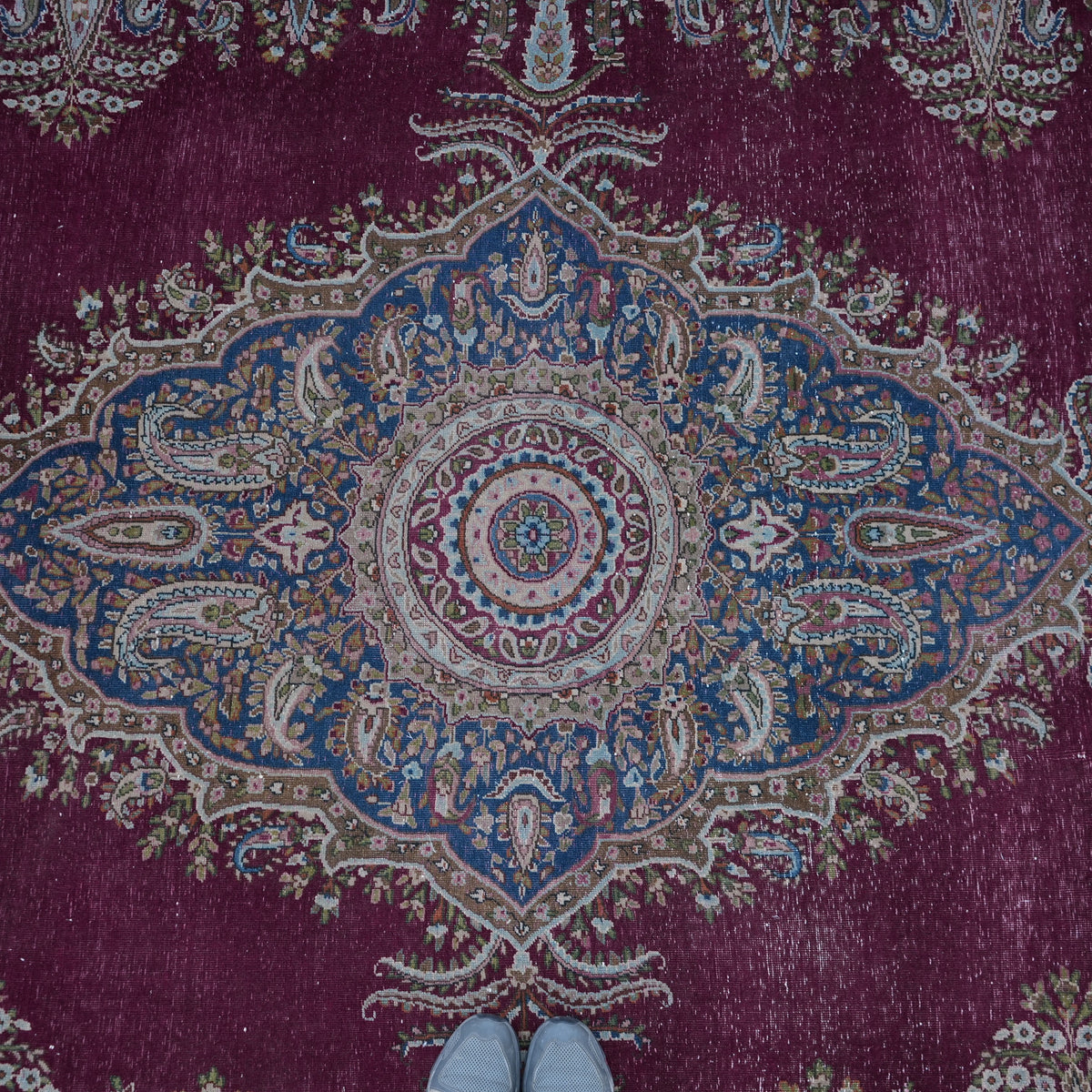
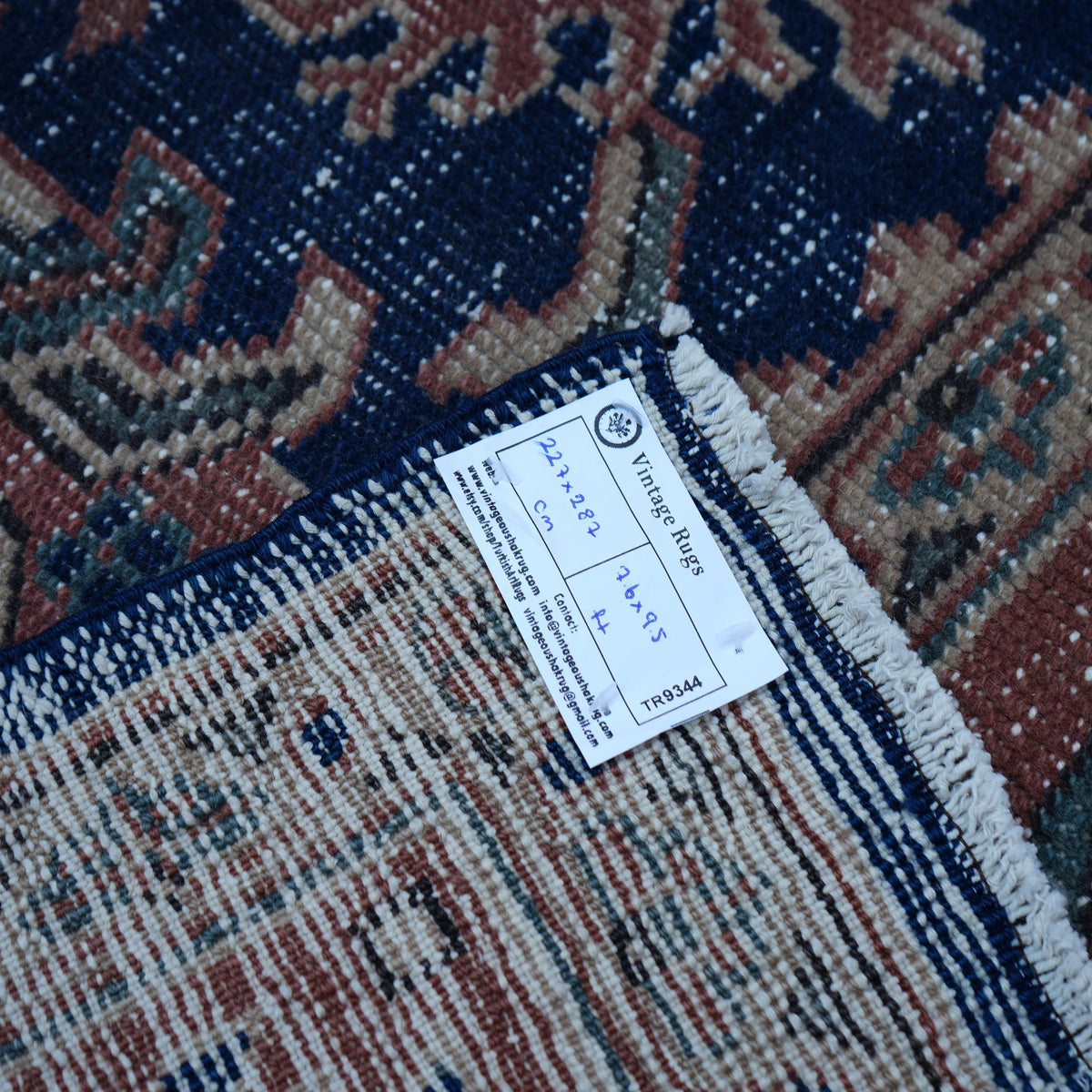
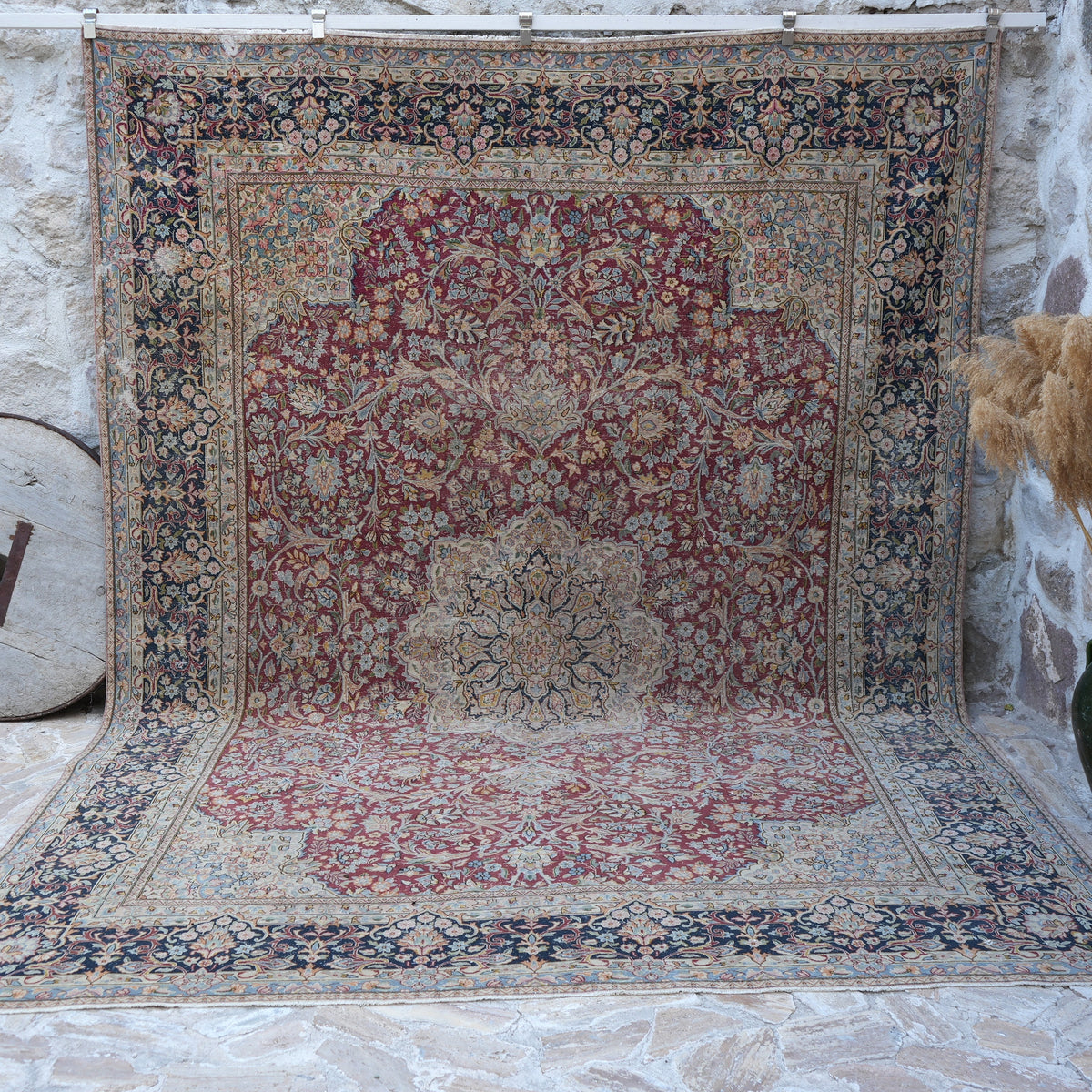
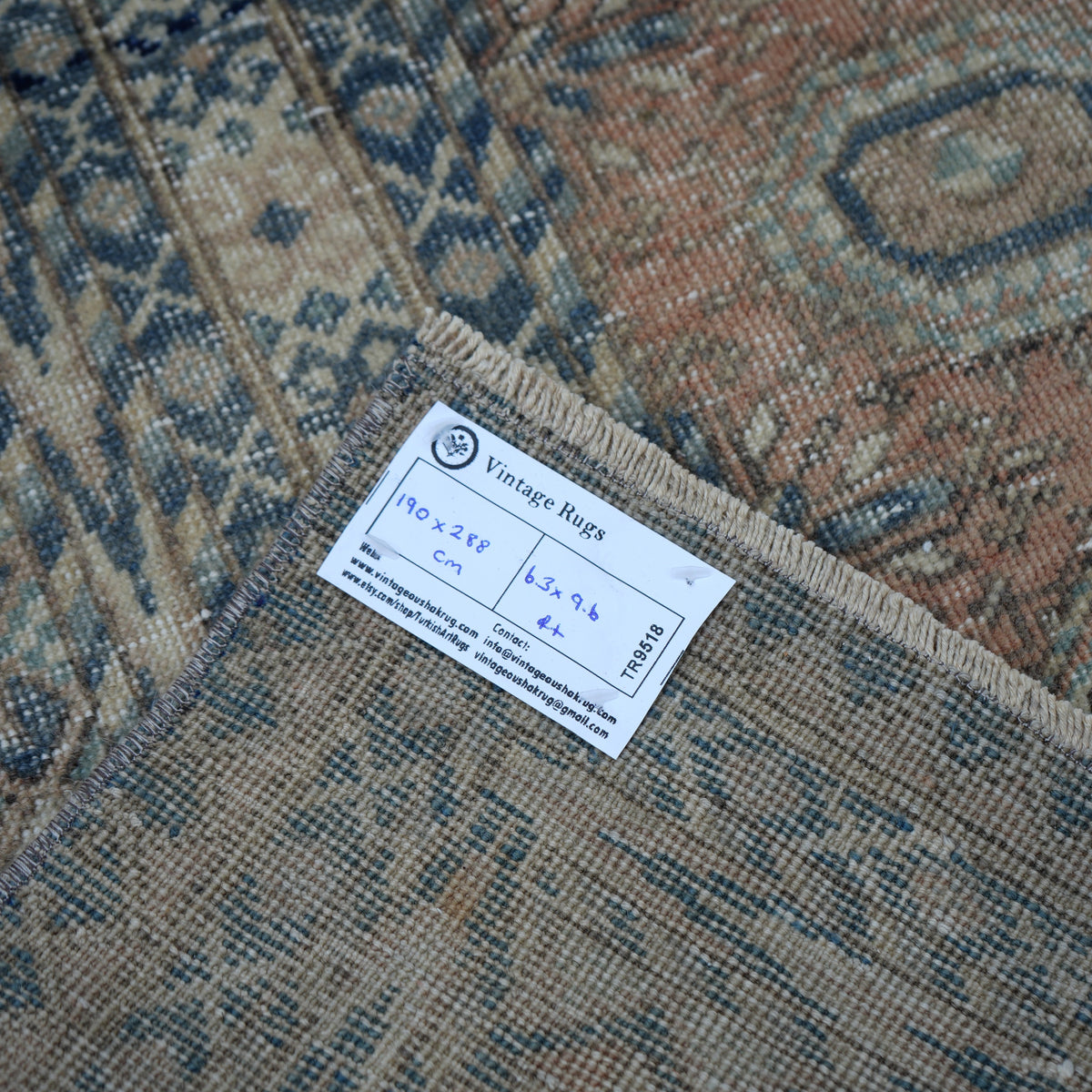
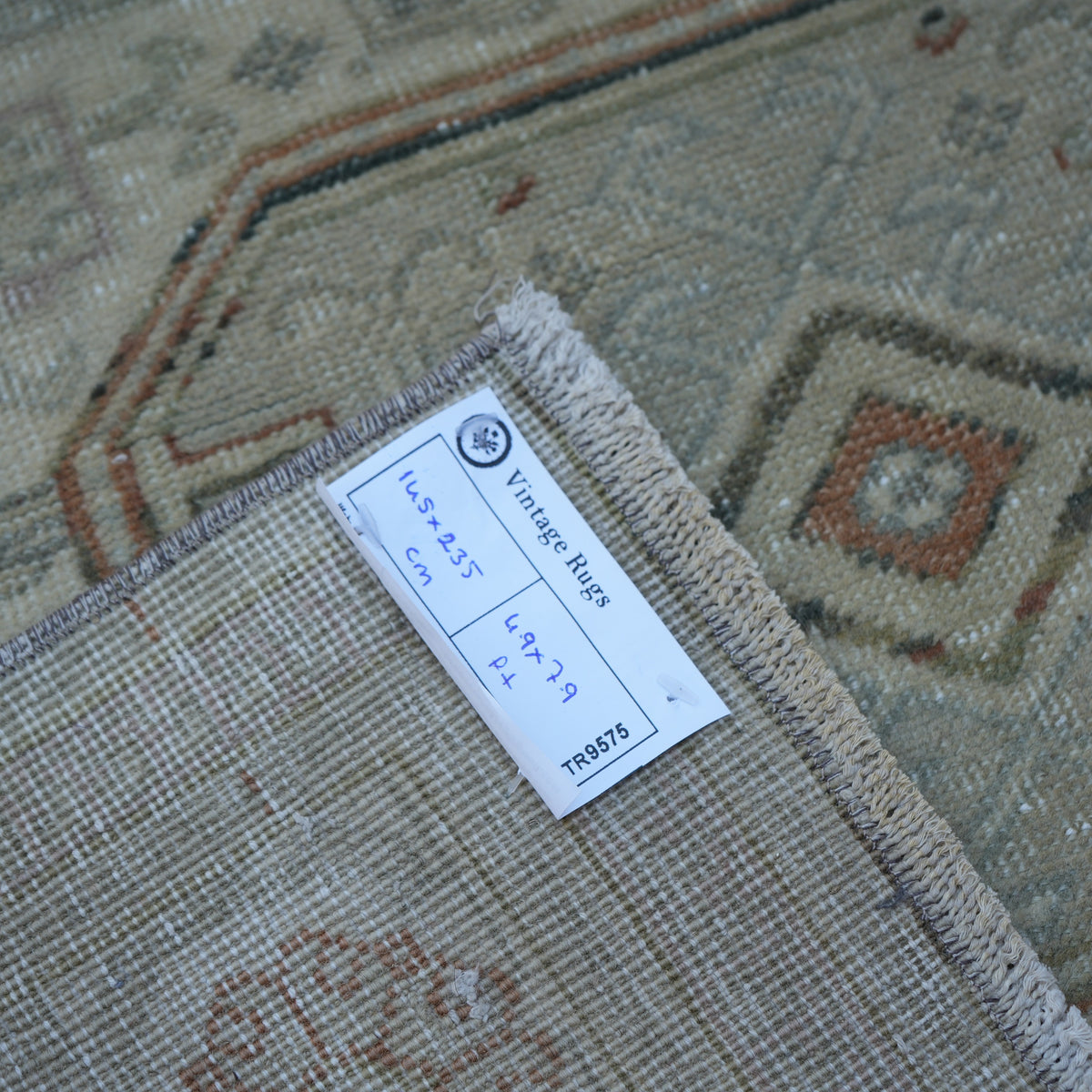
Our vintage rugs are sourced with this in mind. Our antique rugs go further — pieces that have been living in Anatolian homes since well before "vintage" became a marketing category.

Why Handmade Vintage Rugs Feel So at Home Here
The American Arts and Crafts movement was an argument: that industrial production had taken something out of objects, and that something could only be restored by a human hand. Stickley made this argument in a culture that had decided efficiency was the highest value.
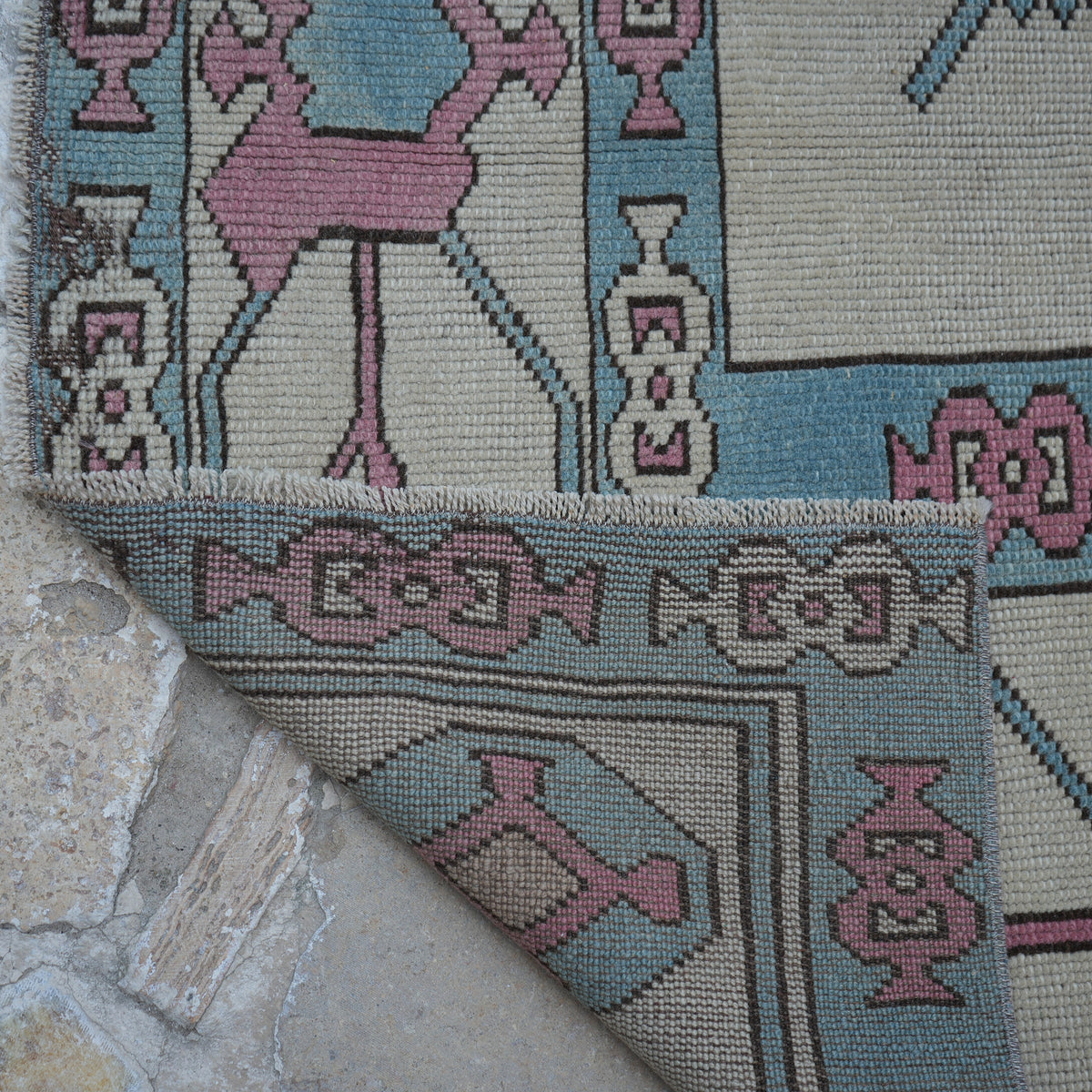
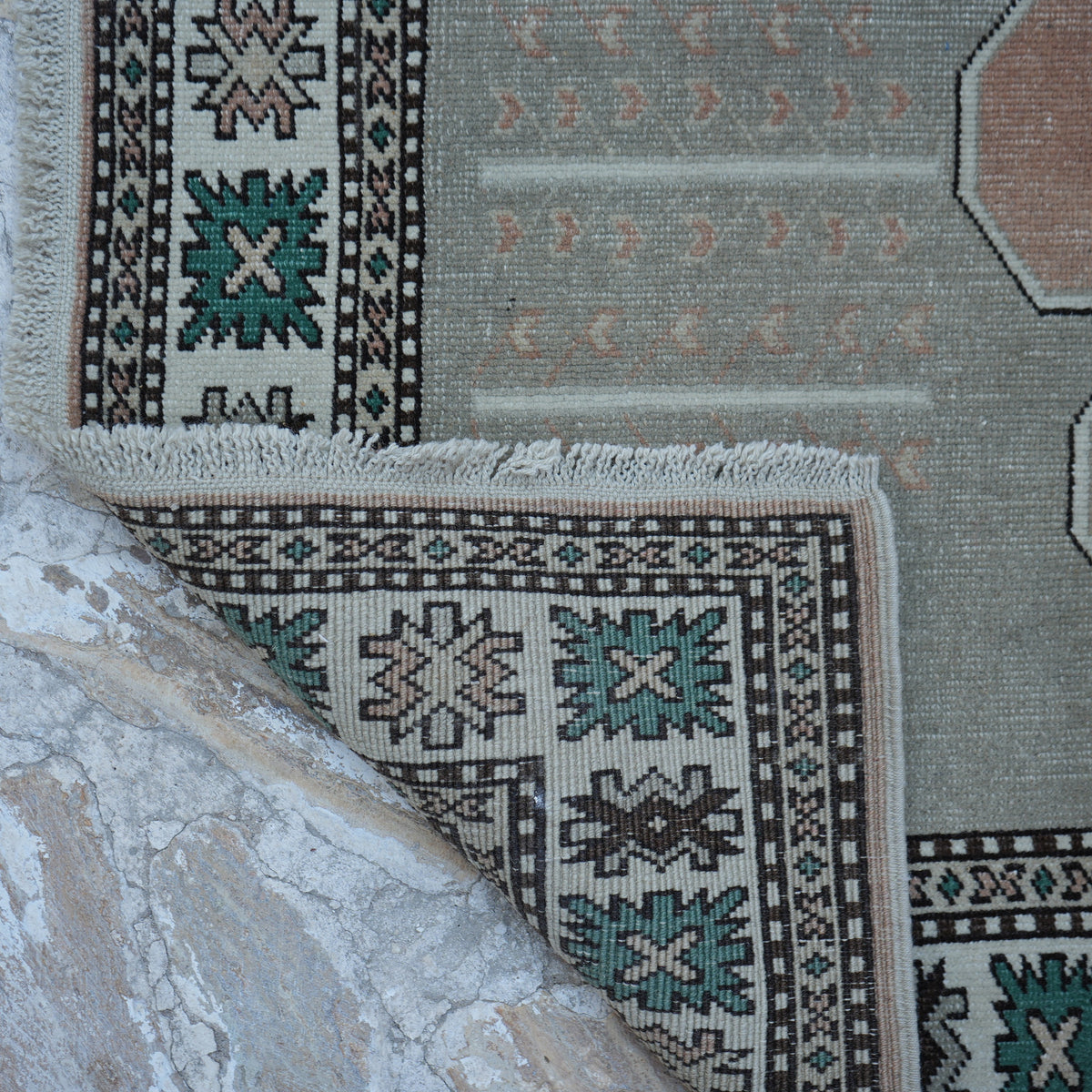
The weavers working in central Anatolia during the same period were not making any argument. They were making rugs the way rugs had always been made — on village looms, with hand-spun wool, with dyes from plants grown locally. Not reacting against industrialization. Simply living by different terms.
Two traditions. Two continents. One set of values.
When a Craftsman home has one of these rugs on its floor, the room finds something it was reaching for — the way that Ohio woman's room looked complete in a way she could feel before she could name it. You can find that piece in our vintage rugs collection.
A Craftsman home asks for more than decoration. It asks for real material, real handwork, and a floor covering that shares the same philosophy as the wood, stone, tile, and built-ins around it.






Frequently Asked Questions
What is a Craftsman style house?
A Craftsman style house is a home built on the principles of the early 20th-century Arts and Crafts movement: natural materials, visible construction, built-in furniture, and an aesthetic that rejects ornament for its own sake. Key features include a covered front porch with tapered columns, a low-pitched roof with wide overhanging eaves, exposed interior beams, a central fireplace, and built-in bookshelves or cabinetry.
What is the difference between a Craftsman house and a bungalow?
Bungalow is a building type — typically one or one-and-a-half stories, compact, with an open floor plan and a prominent front porch. Craftsman is a design philosophy emphasizing natural materials, visible craftsmanship, and honest construction. A bungalow can be built in Craftsman style, but the two are not the same thing.
What colors are used in Craftsman style interiors?
Craftsman interiors favor earth-tone palettes drawn from the natural landscape: muted sage green, terracotta, warm amber, rust, deep burgundy, and gold toned toward warmth rather than brightness. Natural wood stain in warm oak or fir tones plays a major role, as does natural stone and tile around fireplaces.
What kind of rug looks best in a Craftsman home?
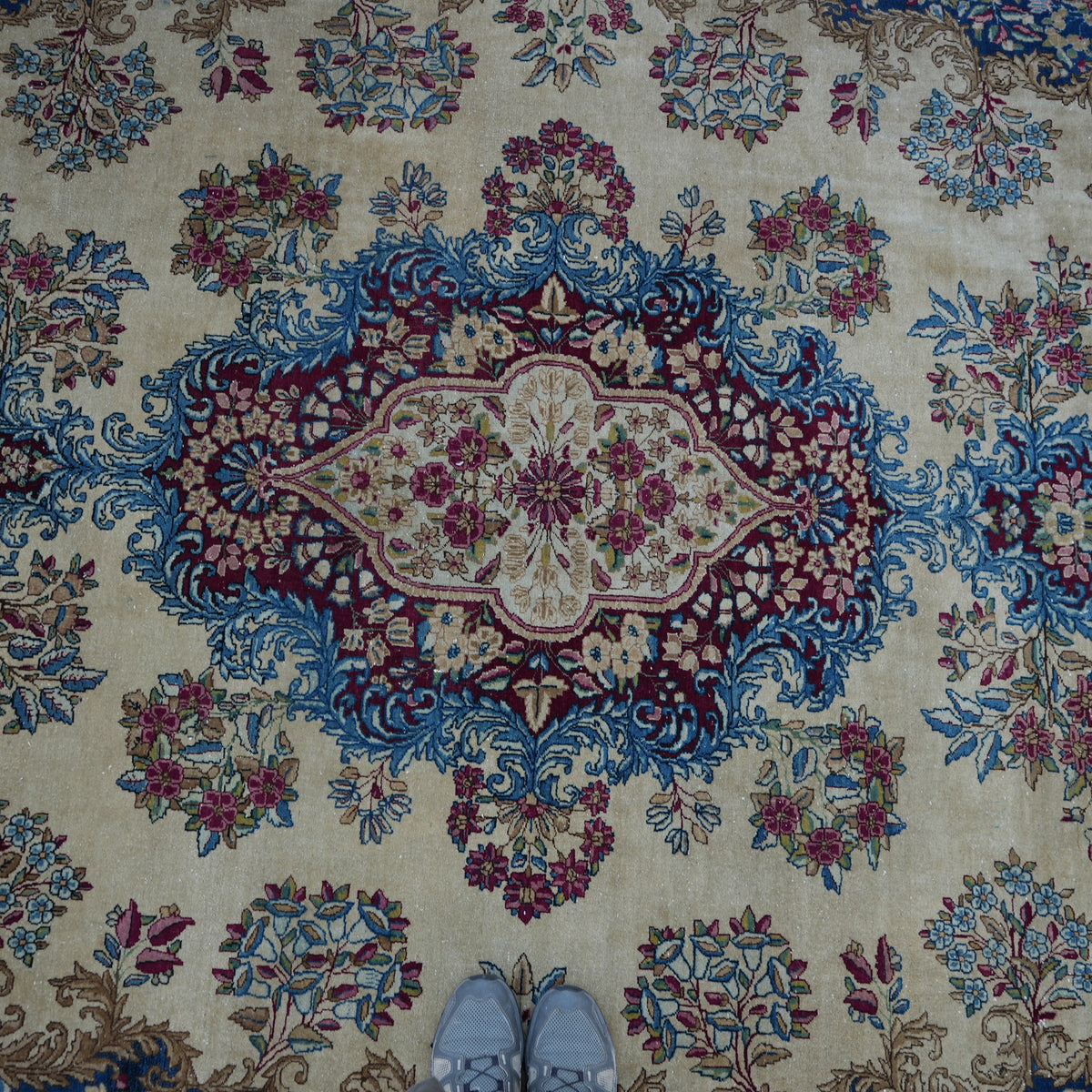
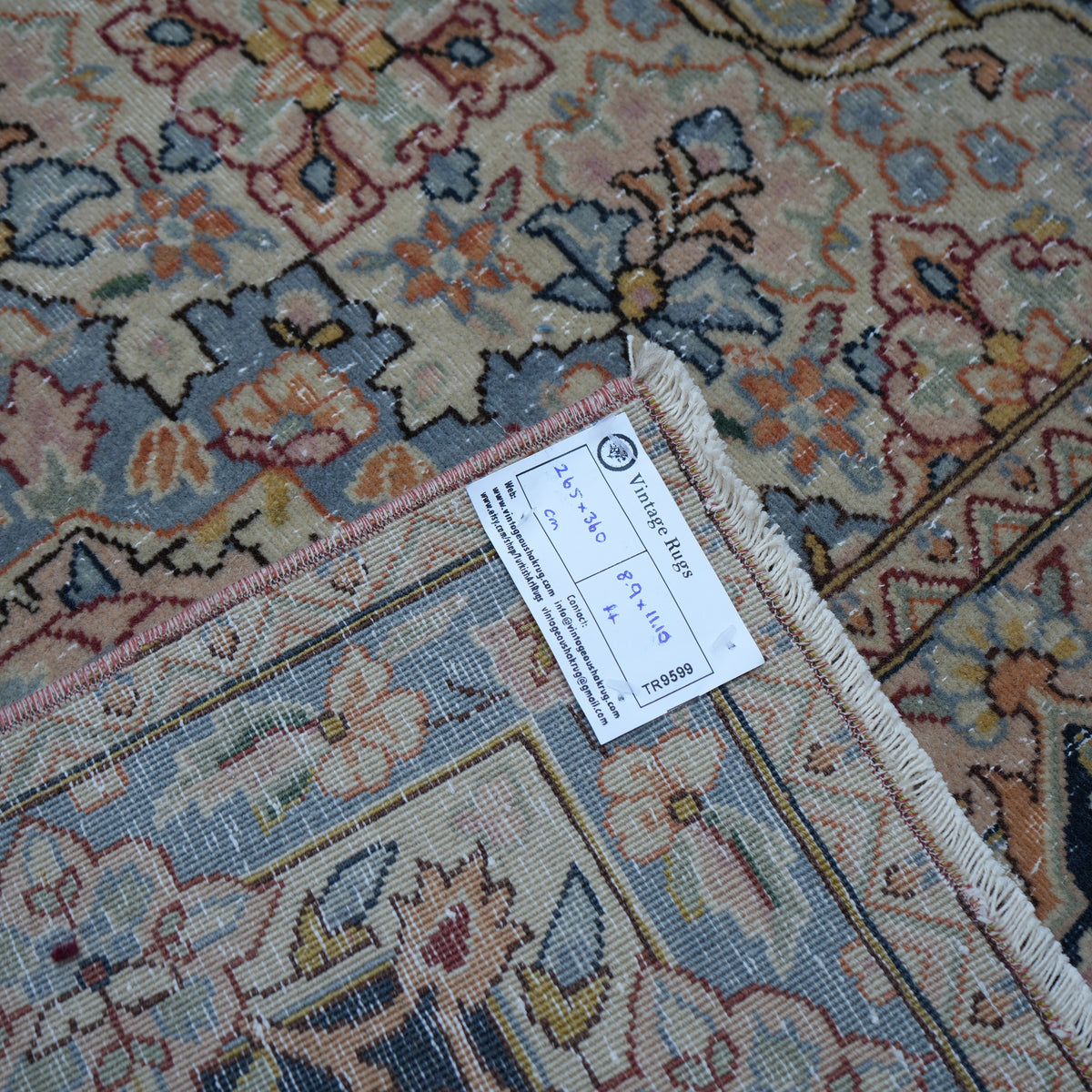
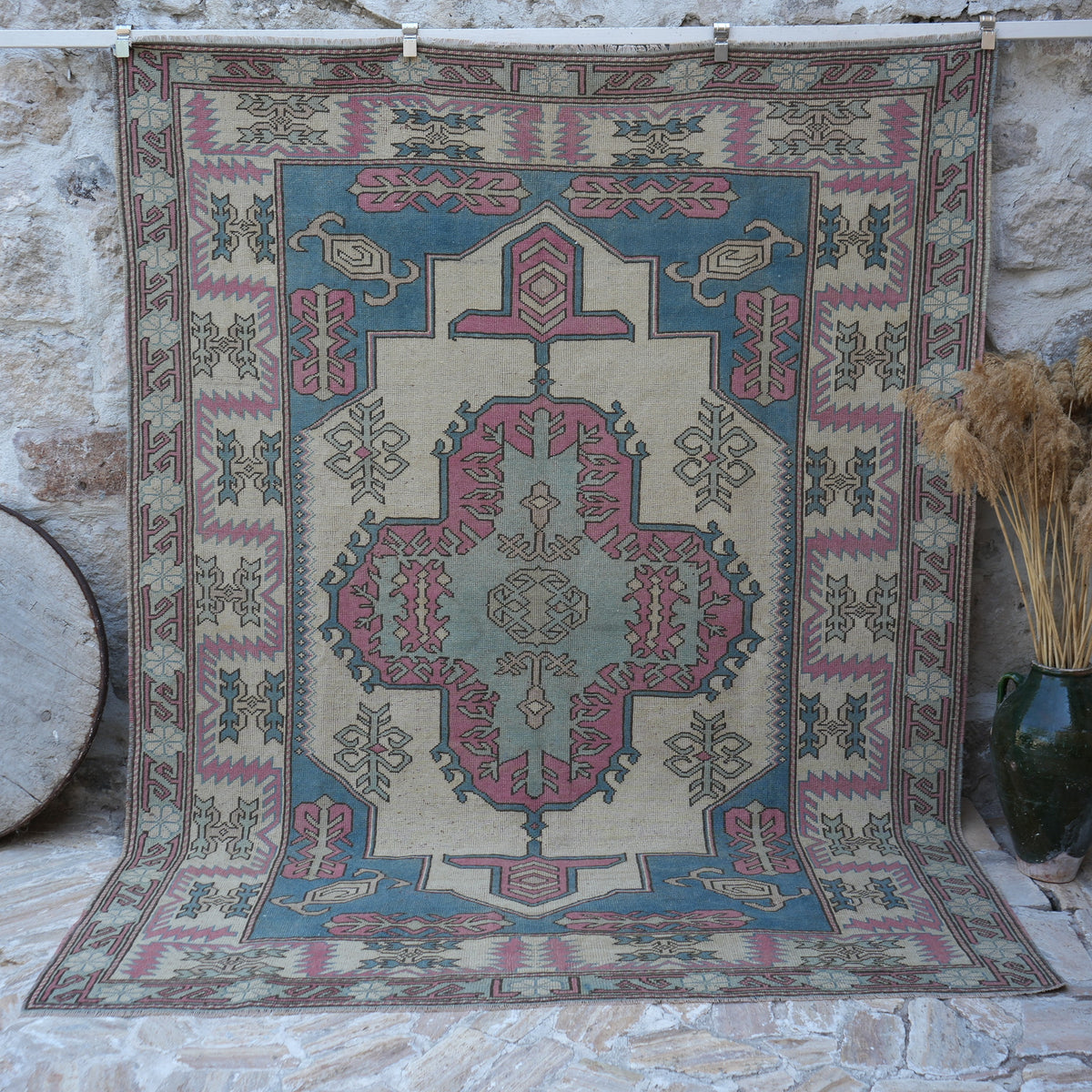
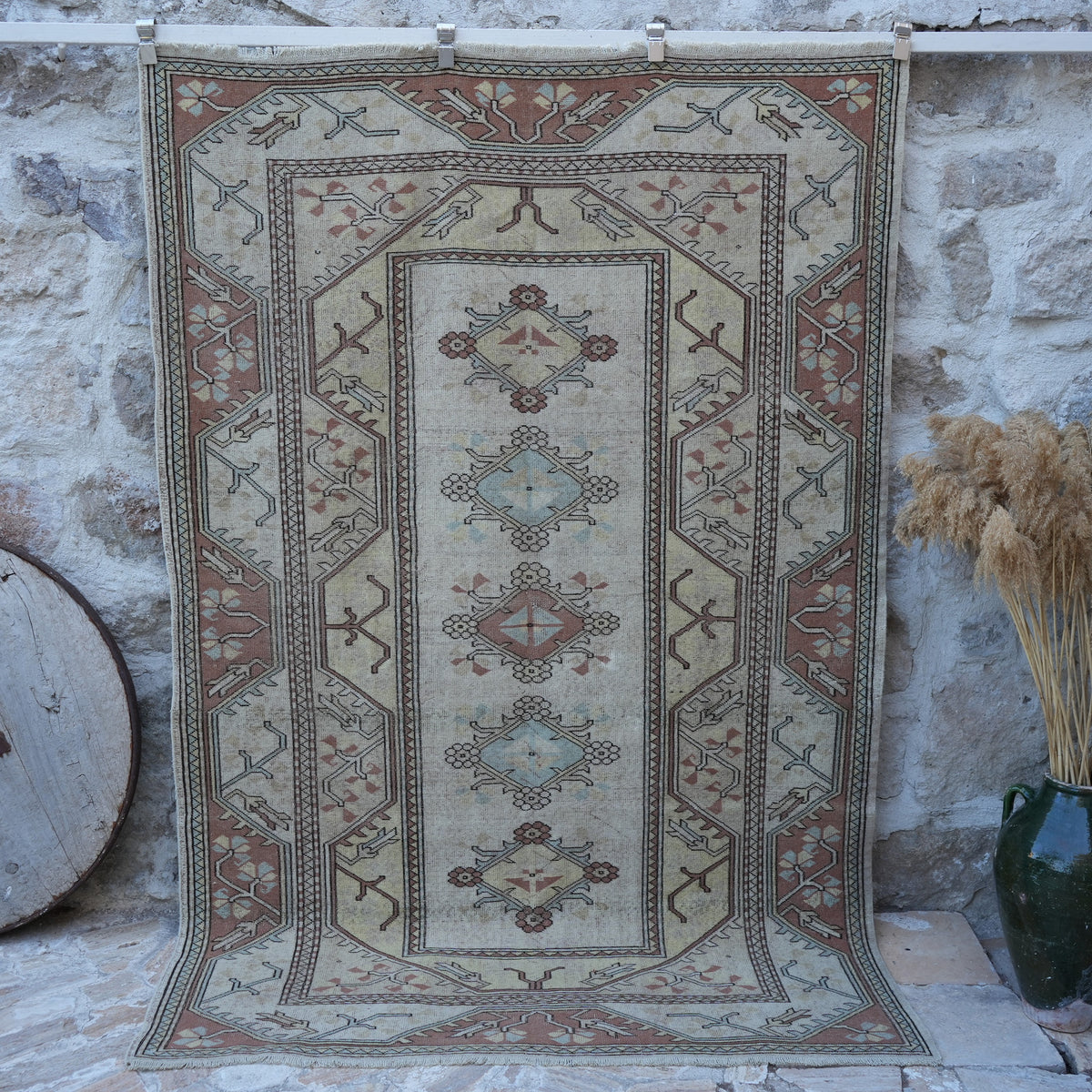
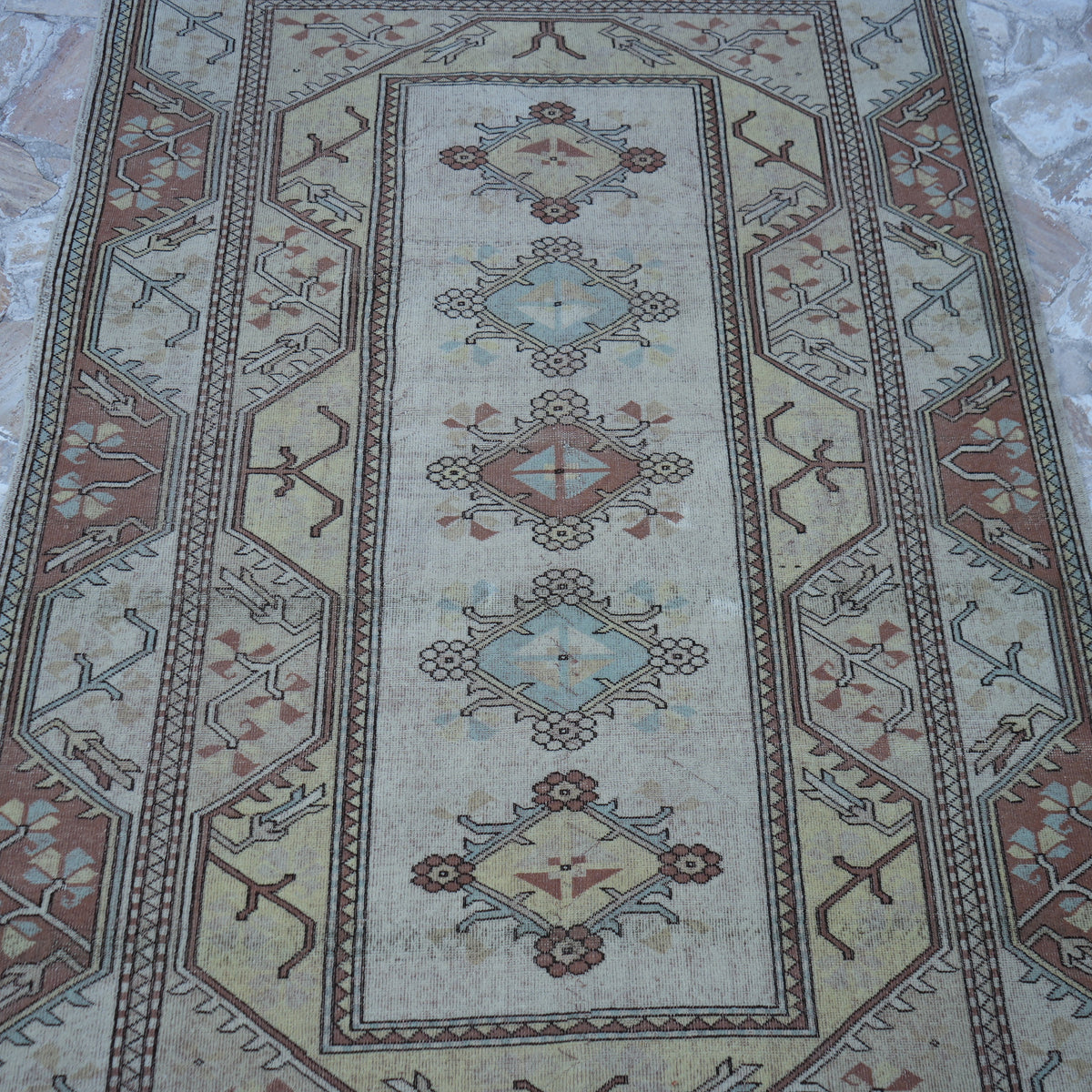
Handmade vintage rugs with geometric or tribal patterns fit best in a Craftsman home. Vintage Oushak rugs in faded golds and warm neutrals, or kilim rugs with flat-weave geometric patterns, align with both the Craftsman color palette and its philosophy of visible craft.
What size rug do I need for a Craftsman living room?
An 8x10 rug is typically the right starting point for a Craftsman living room anchored by a fireplace and sofa grouping. In larger rooms, a 9x12 gives the floor the presence it needs. The rug should sit under the front legs of the sofa and ground the coffee table, with a clear border of wood floor visible around the seating area.
Are Turkish or Anatolian rugs a good fit for Craftsman homes?
Yes — vintage Turkish and Anatolian rugs are among the best choices for Craftsman interiors. Their earth-tone palettes mirror the Craftsman color palette, and both traditions share the same core value: honest materials, visible handcraft, and objects that carry evidence of the human hand.
What is abrash in a handmade rug, and does it work in a Craftsman home?
Abrash is the subtle shift in color across the field of a handmade rug, caused by natural variation in hand-spun wool and dye batches. In a Craftsman home, abrash is not a flaw. It is proof that the rug was made by a real person, with natural materials, at a specific moment in time.

