

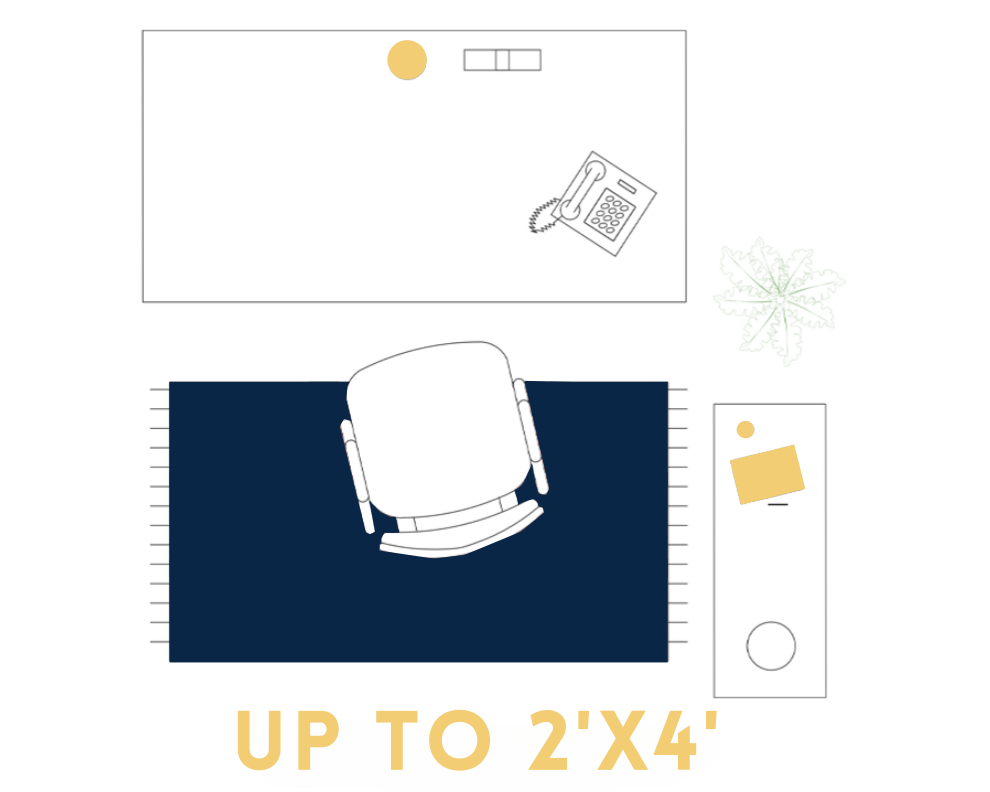
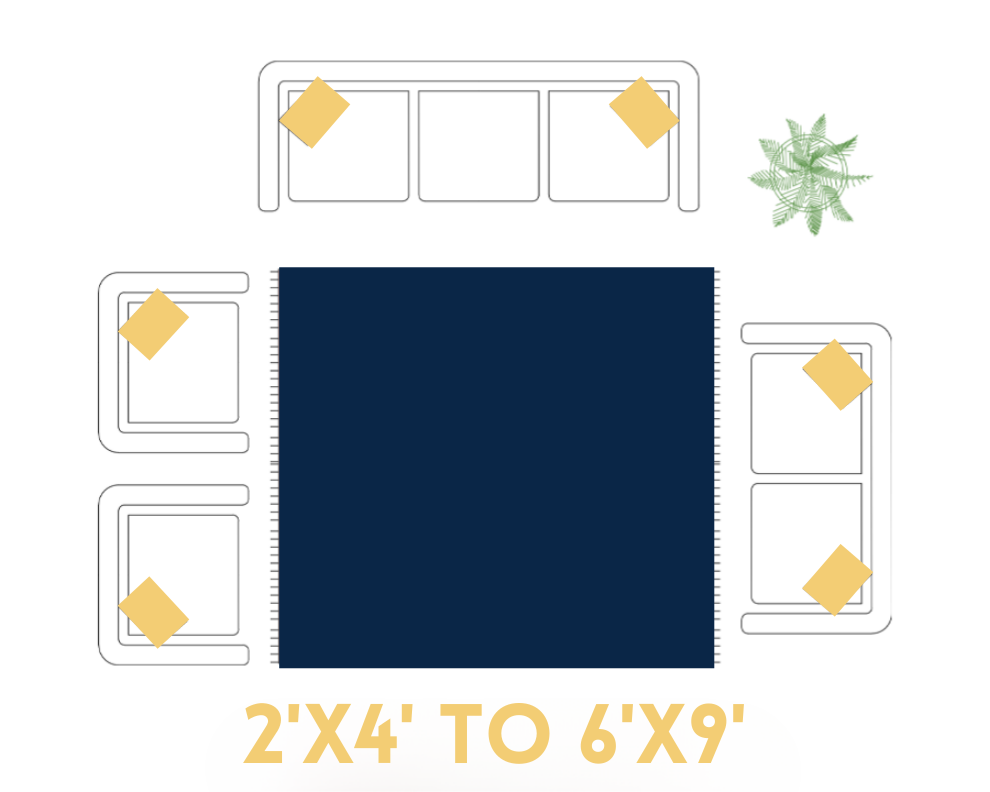
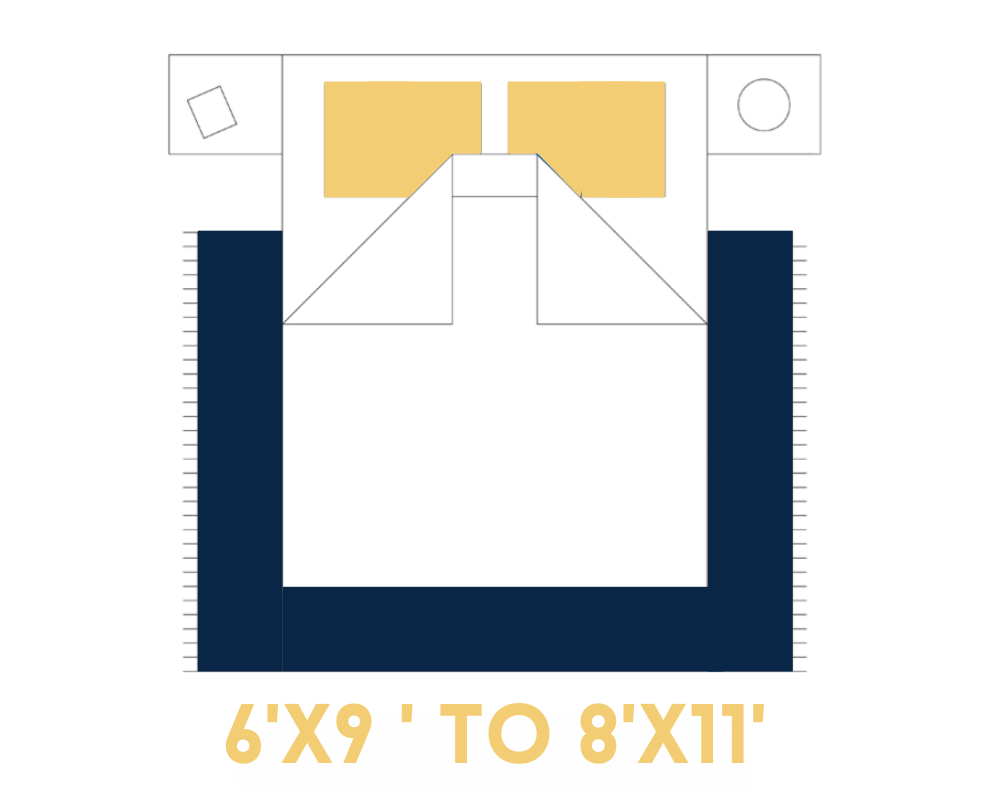
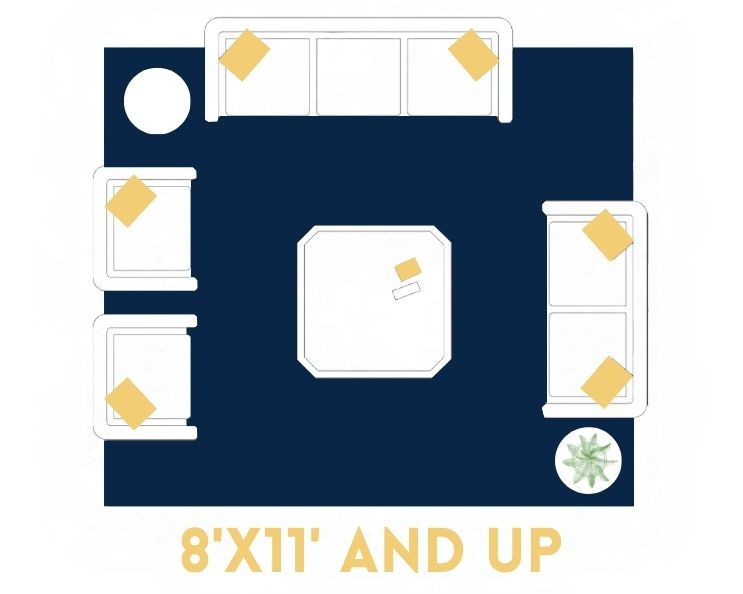











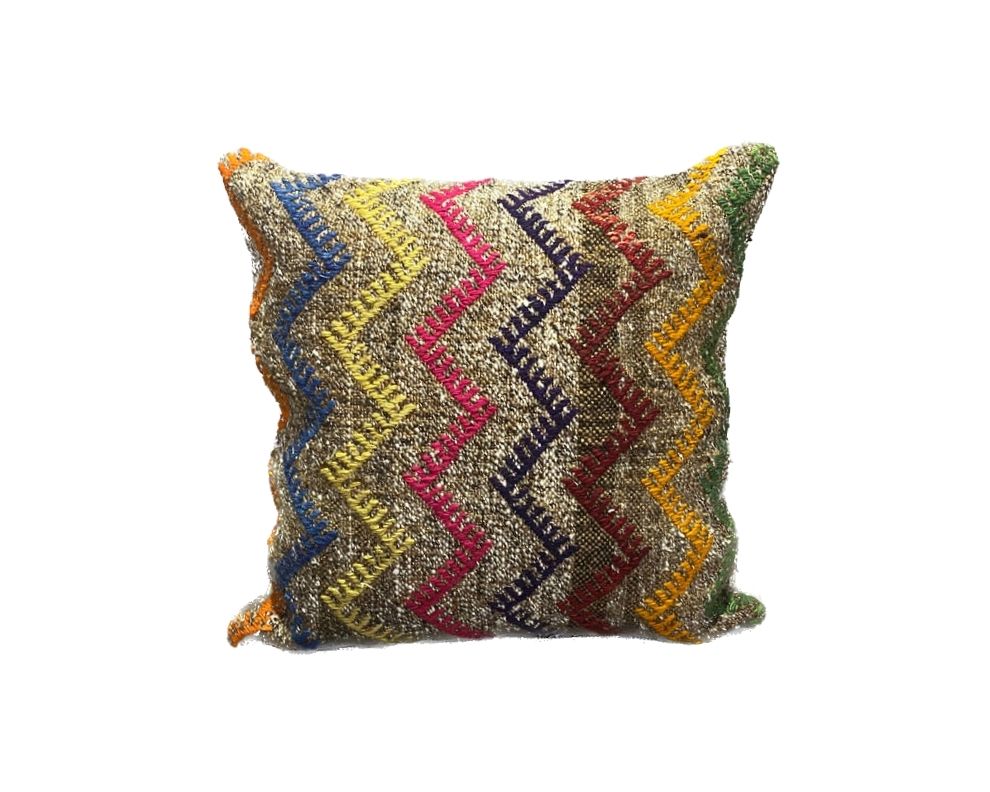

I live in Cappadocia. Stone house, low ceilings, rooms that narrow at unexpected angles. Small spaces are not a design challenge I read about — they are my floor plan.
A woman from New York sent me a photo of her living room last year. There was already a rug in the room — a small one, floating in the center like an island nobody wanted to land on. I told her to remove it before we talked about a new one. She did, sent another photo. The room already looked bigger. Then we put down an 8x10 vintage Oushak and she wrote back two words: "Kadir, sihir." Magic, she called it.
It wasn't magic. It was size, color, and placement. I source every rug in our collection by hand here in Cappadocia, and most of my customers live in compact apartments, not large houses. That shapes everything I'm about to tell you.
Do Rugs Make a Small Room Look Smaller or Bigger?
A well-chosen rug makes a small room feel larger, not smaller. What shrinks a space is a rug that's too small, too dark for the available light, or placed so it fragments the floor rather than unifying it.
Think of a bare floor as a single continuous surface. A small rug breaks it into pieces — a rug-piece surrounded by exposed floor on all sides. The eye registers the gaps and the room reads as smaller than it is. A rug that covers most of the floor reads as floor. The room feels whole. So the question is never whether to use a rug. It's which rug, which size, and where.

Rug Size Is Everything — Why Bigger Usually Wins
The most common mistake is choosing a rug far too small — a 4x6 in a room that needs an 8x10, or a 5x8 floating in front of a sofa with no legs touching it. The instinct makes sense: small room, small rug. But the eye wants continuity, not proportion. A large rug tells the eye the space is generous. A small rug tells the eye to notice the gaps, and the gaps are where the room's limitations live. For many American living rooms, 8x10 is often the starting point, not the ceiling. Our large rugs and medium rugs are organized by dimension if you want to compare sizes against a floor plan.
The "Postage Stamp" Mistake That Shrinks Your Room
Interior designers call it the postage stamp — a rug so small it looks pressed onto the center of the floor, surrounded by empty space on every side. Instead of anchoring the furniture, it floats beneath everything, untethered. In my experience, most customers who tell me their room doesn't feel right are dealing with exactly this problem. The fix is never a new furniture arrangement. It's a larger rug.
The 12-Inch Rule and Furniture Leg Placement
Leave 10 to 12 inches of bare floor between the rug edge and the wall — this border makes the room read as more spacious. At least the front legs of your sofa and chairs should rest on the rug. When furniture connects to the rug, the whole seating arrangement becomes one anchored element. I tell customers: the rug is a stage, the furniture is the cast — if the actors step off the stage, the stage looks empty. Before buying, tape out the rug's dimensions on your floor. Almost nobody does this. The ones who do rarely regret sizing up.

How Rug Color and Pattern Affect the Feel of a Small Space
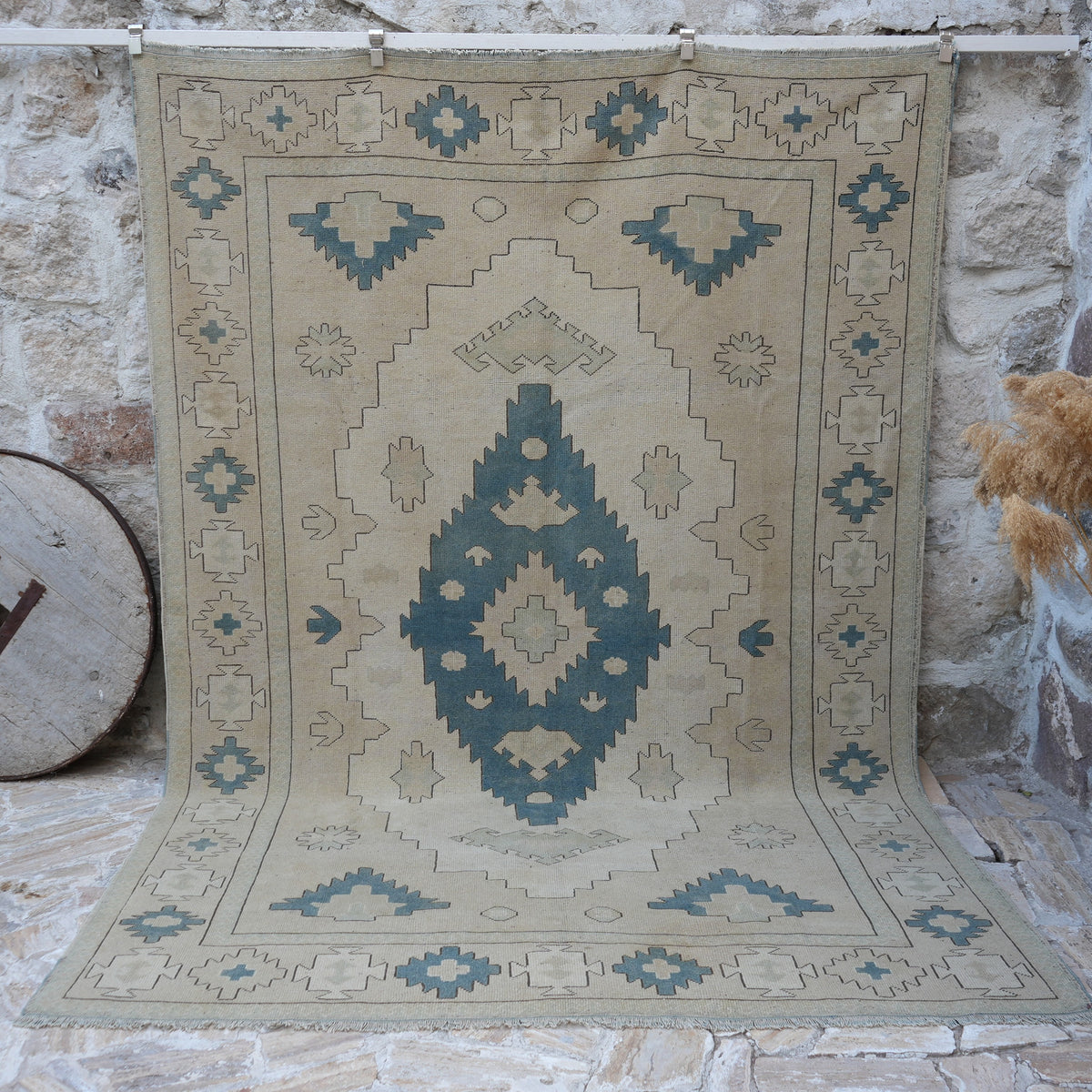
Light colors reflect available light and make surfaces appear farther apart. Dark colors absorb light — which can feel warm, but in a small space that warmth tips toward compression. Pattern controls where the eye moves. Our beige rugs, gray rugs, and broader neutral rugs collection cover the tones that work best here, and the open-field palette of our oushak rugs is a strong starting point.
Light and Neutral Colors That Open Up a Room
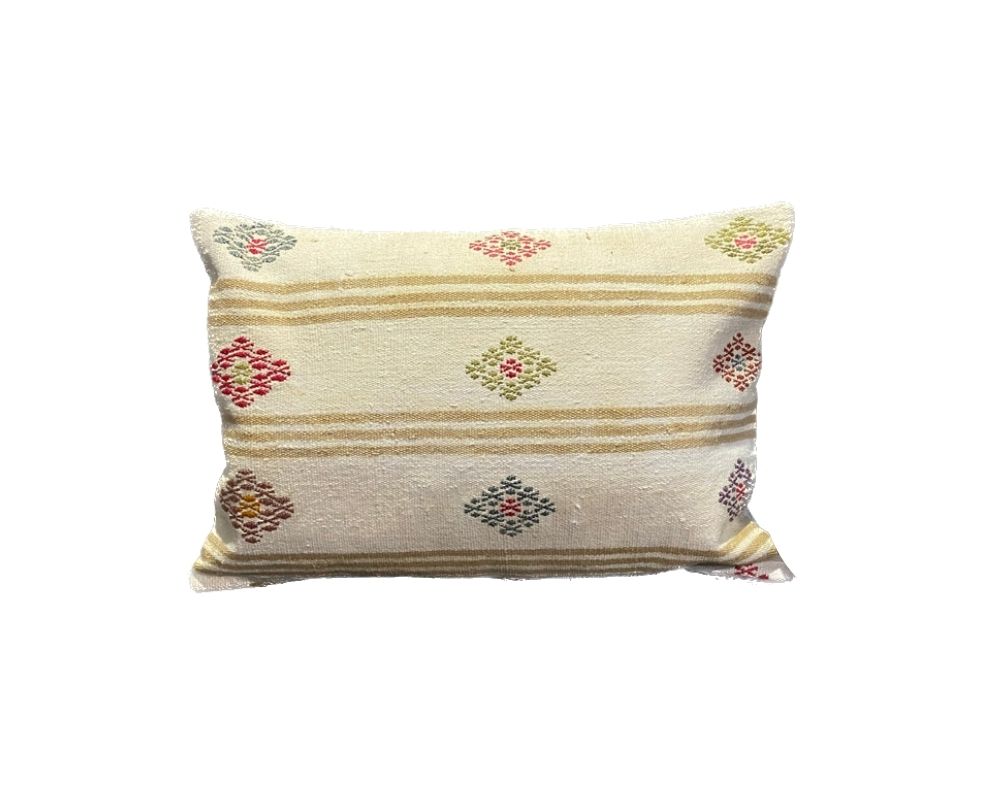
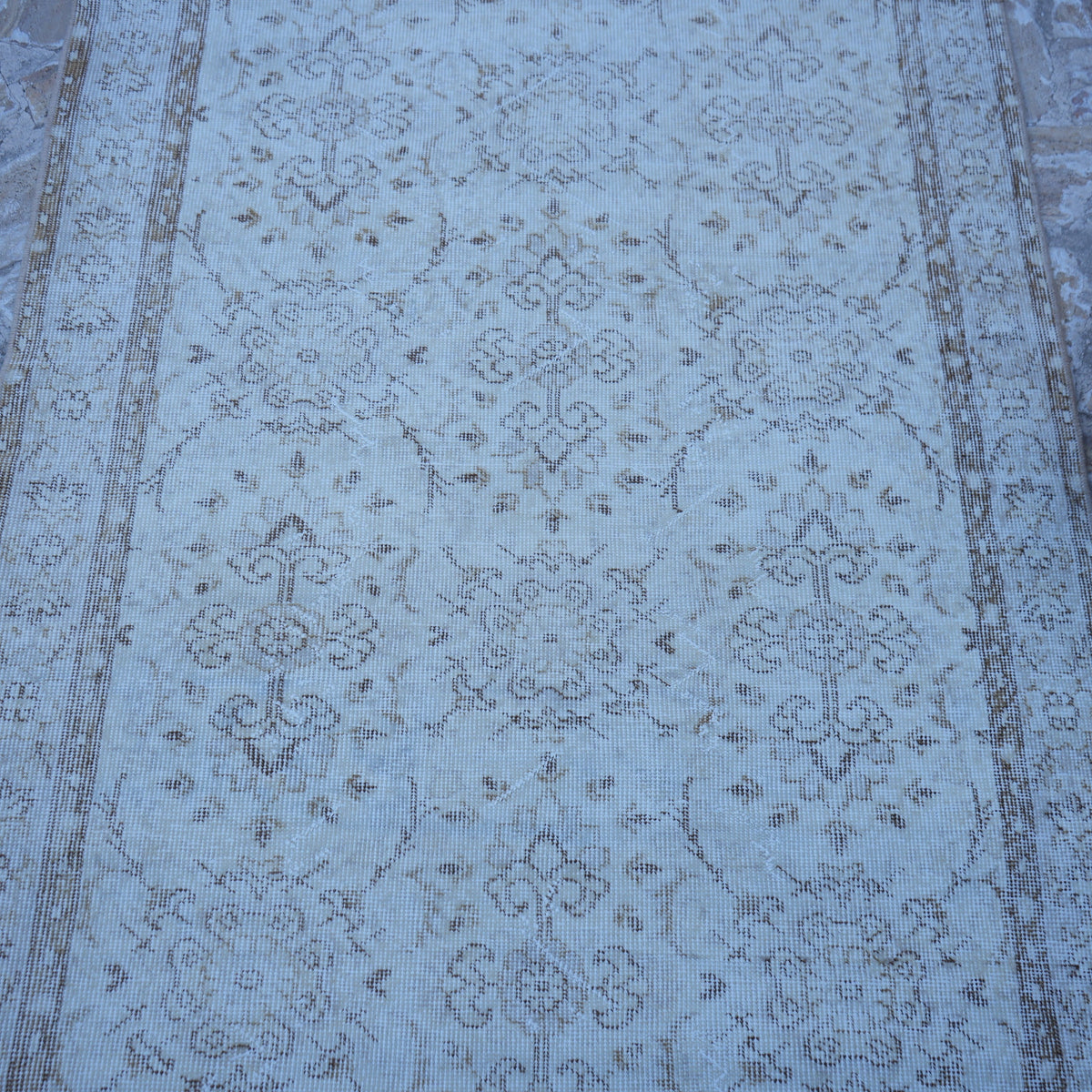
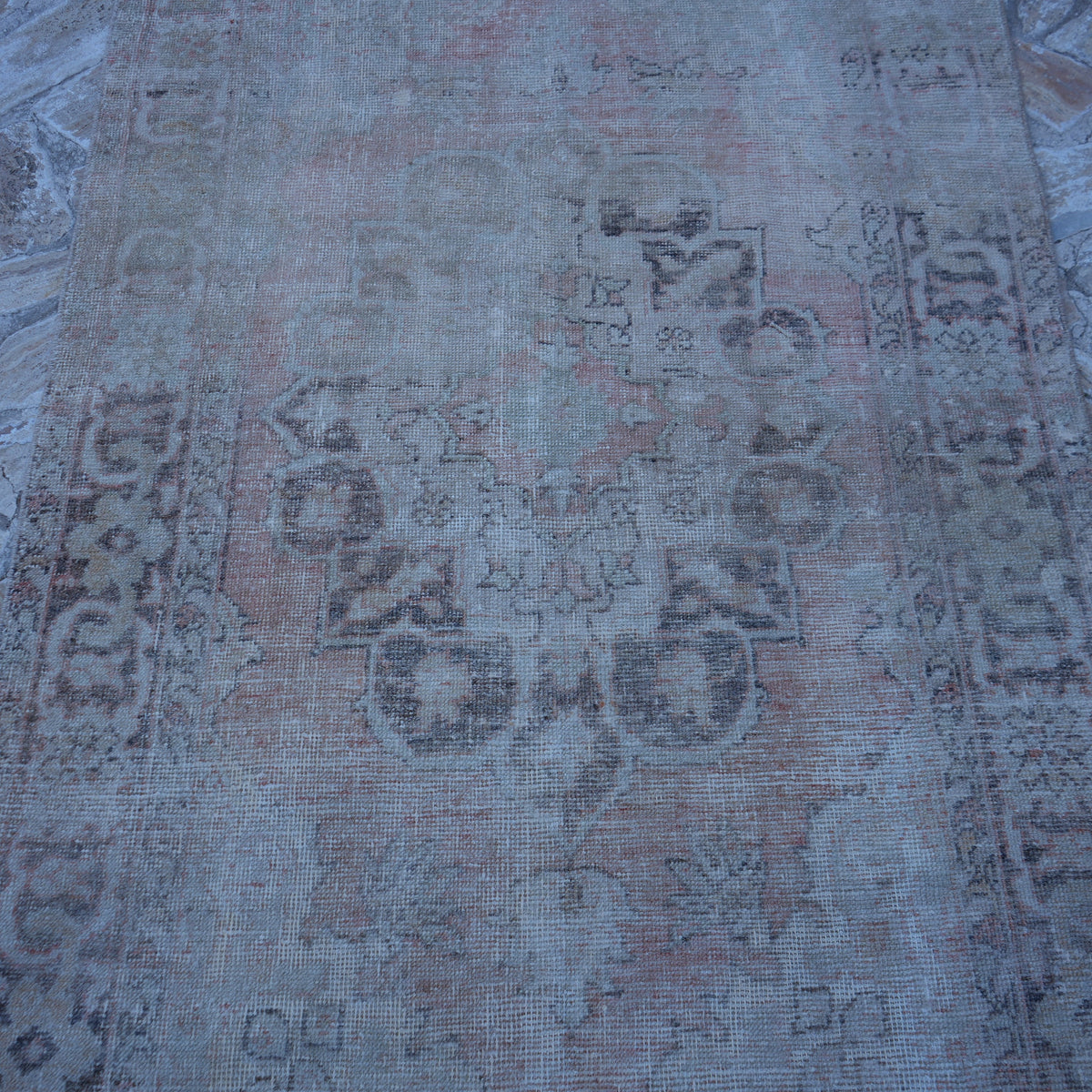
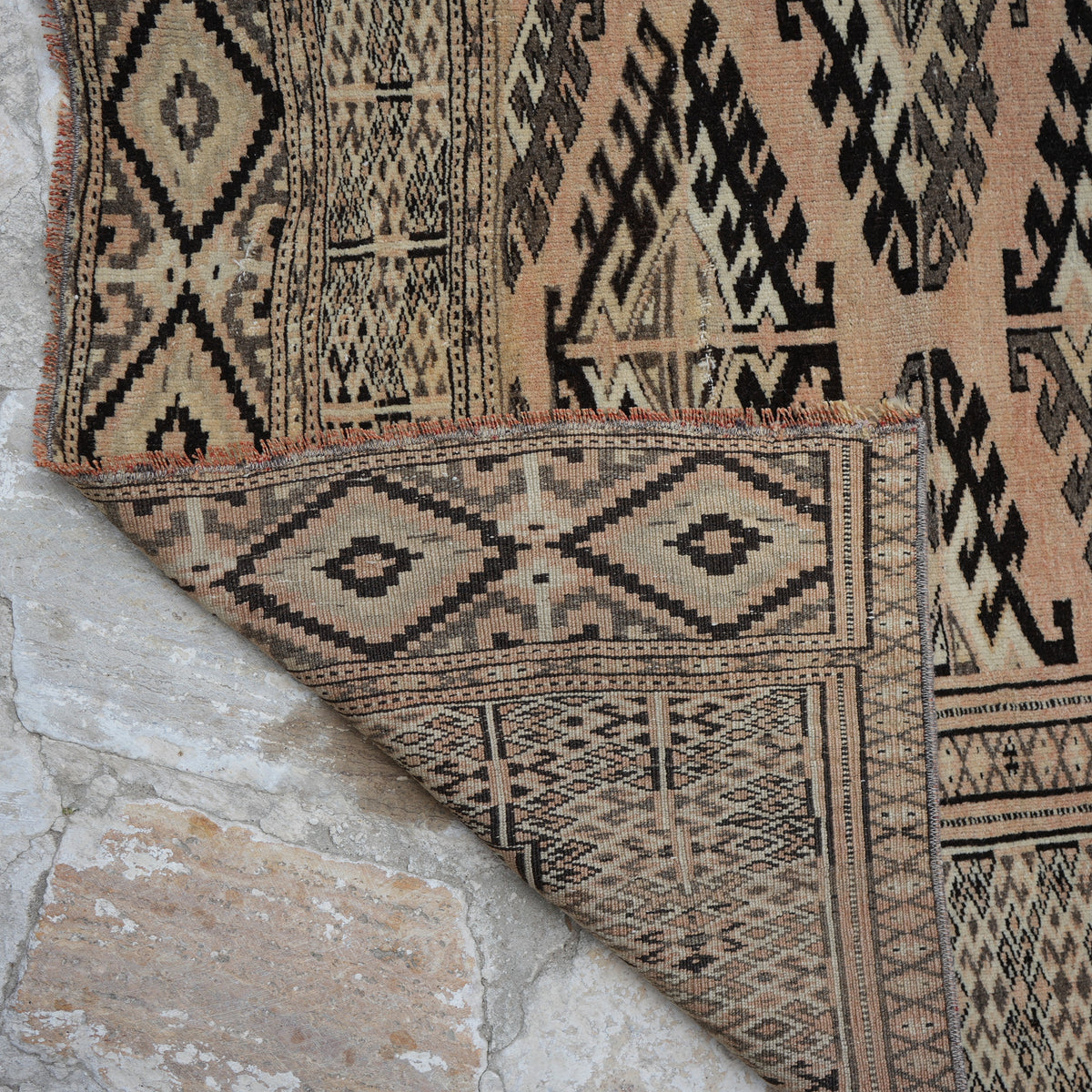
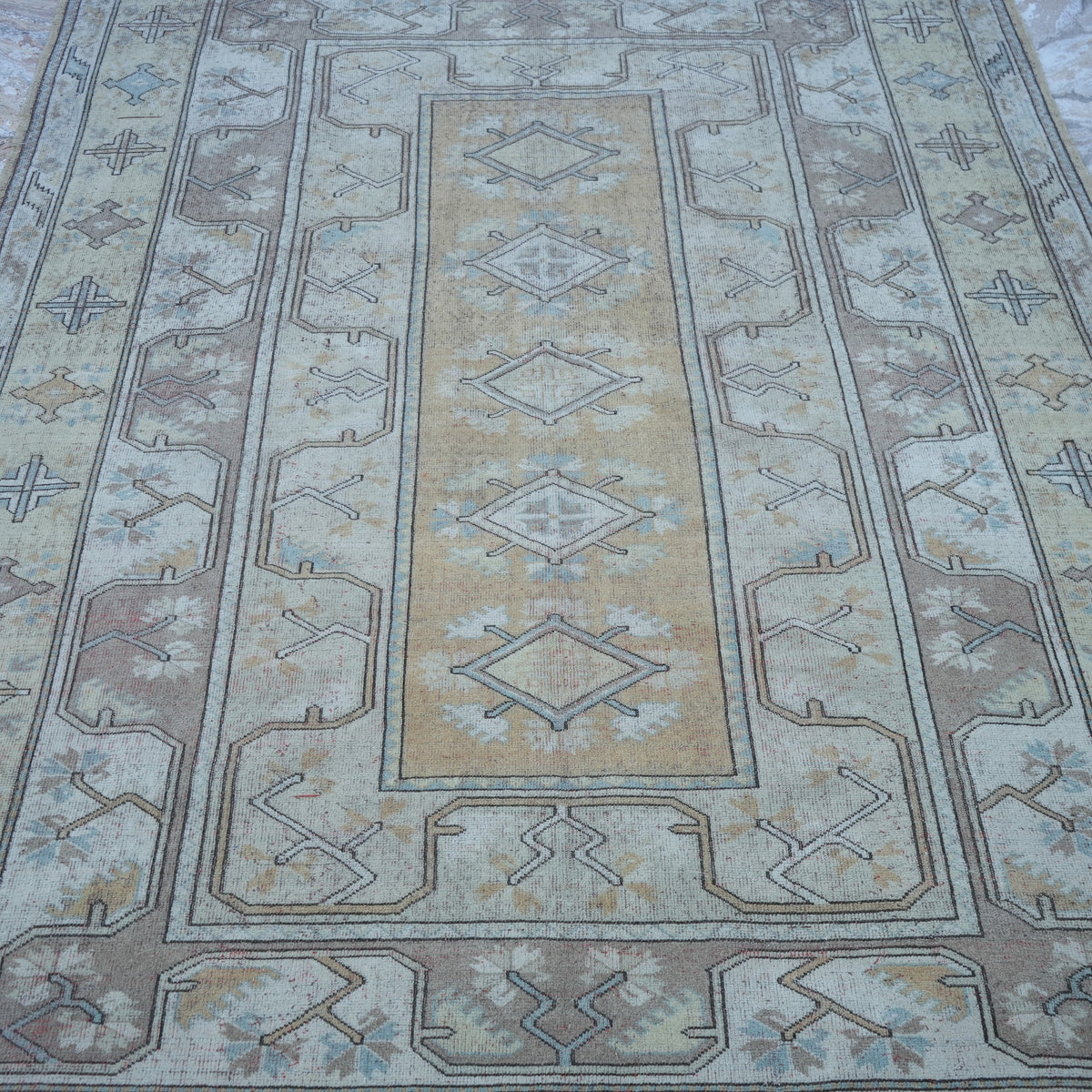
Cream, warm beige, soft gray, muted ivory — these tones reflect rather than absorb. In a room with limited natural light, a light rug can feel almost like a second window. Vintage Turkish rugs have a natural advantage here: plant-based dyes age into softer, quieter versions of themselves over decades. A once-strong terracotta becomes a warm blush — warmth without heaviness, exactly what a compact room needs.
Stripes, Geometric Patterns, and Directional Designs
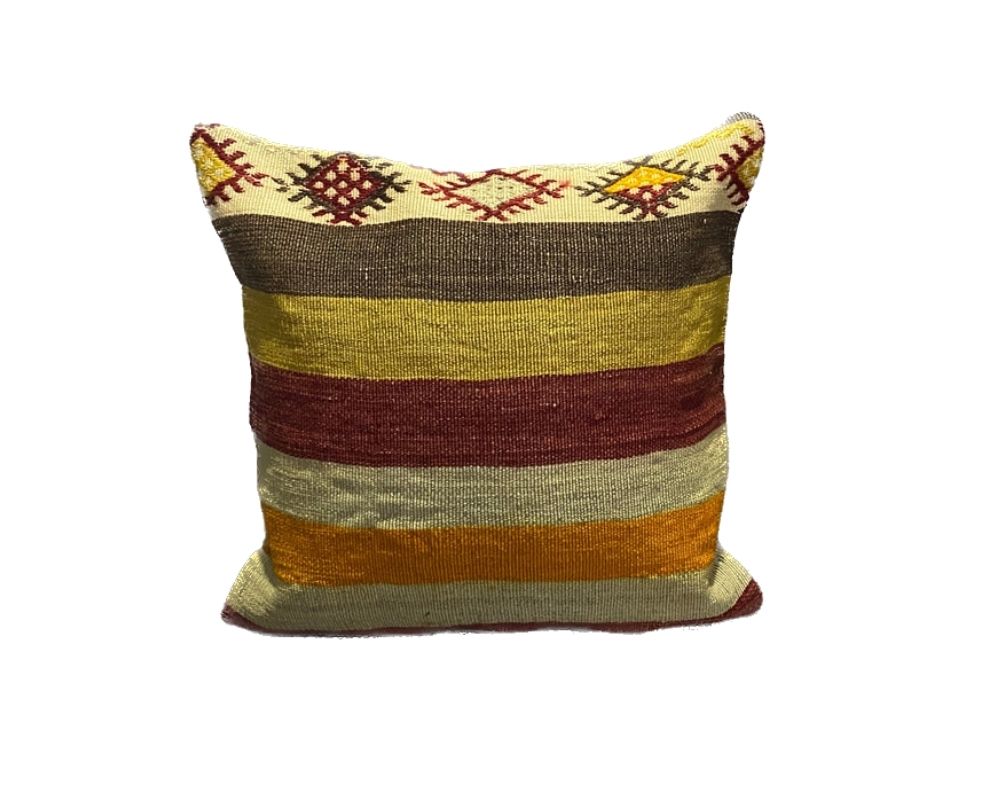
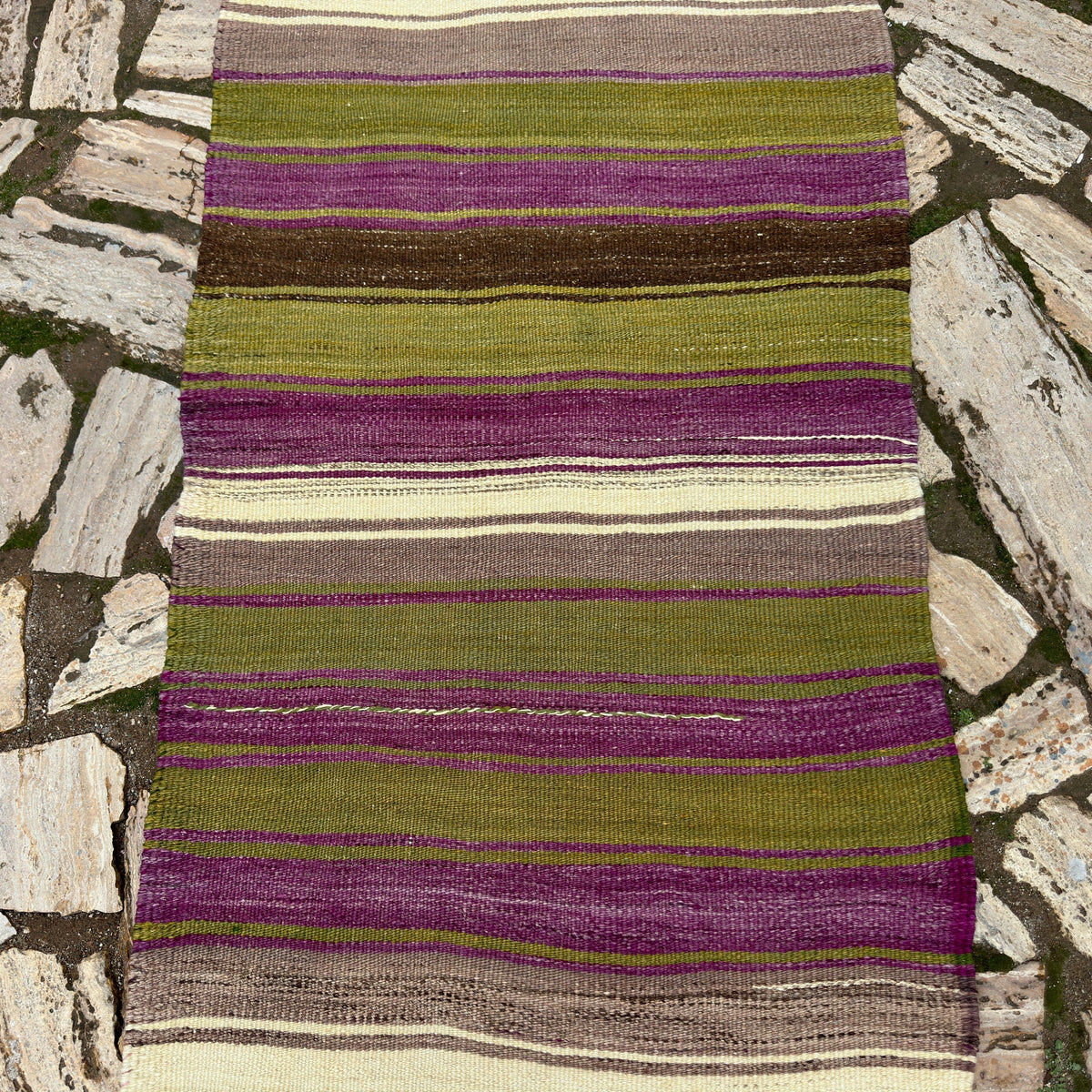
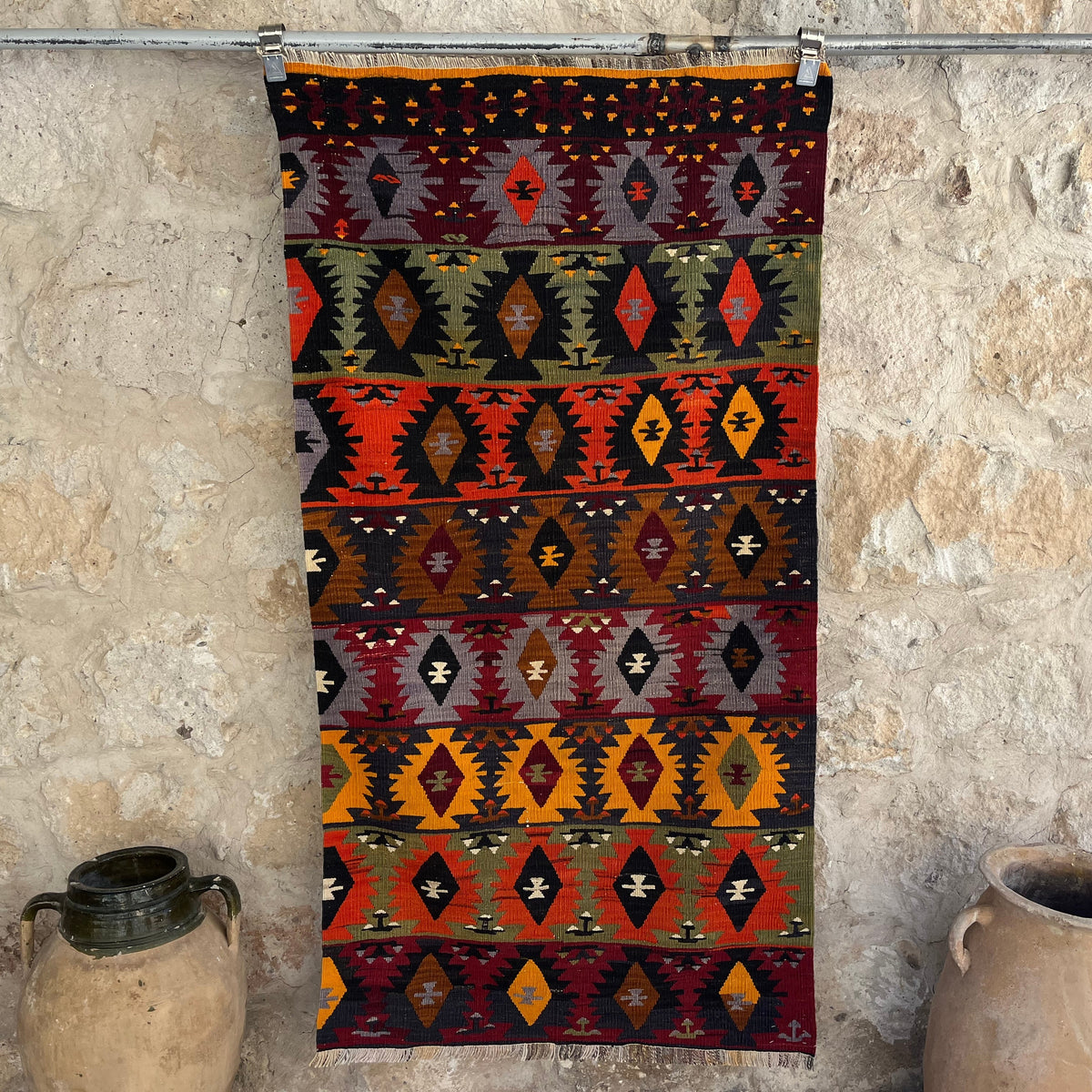
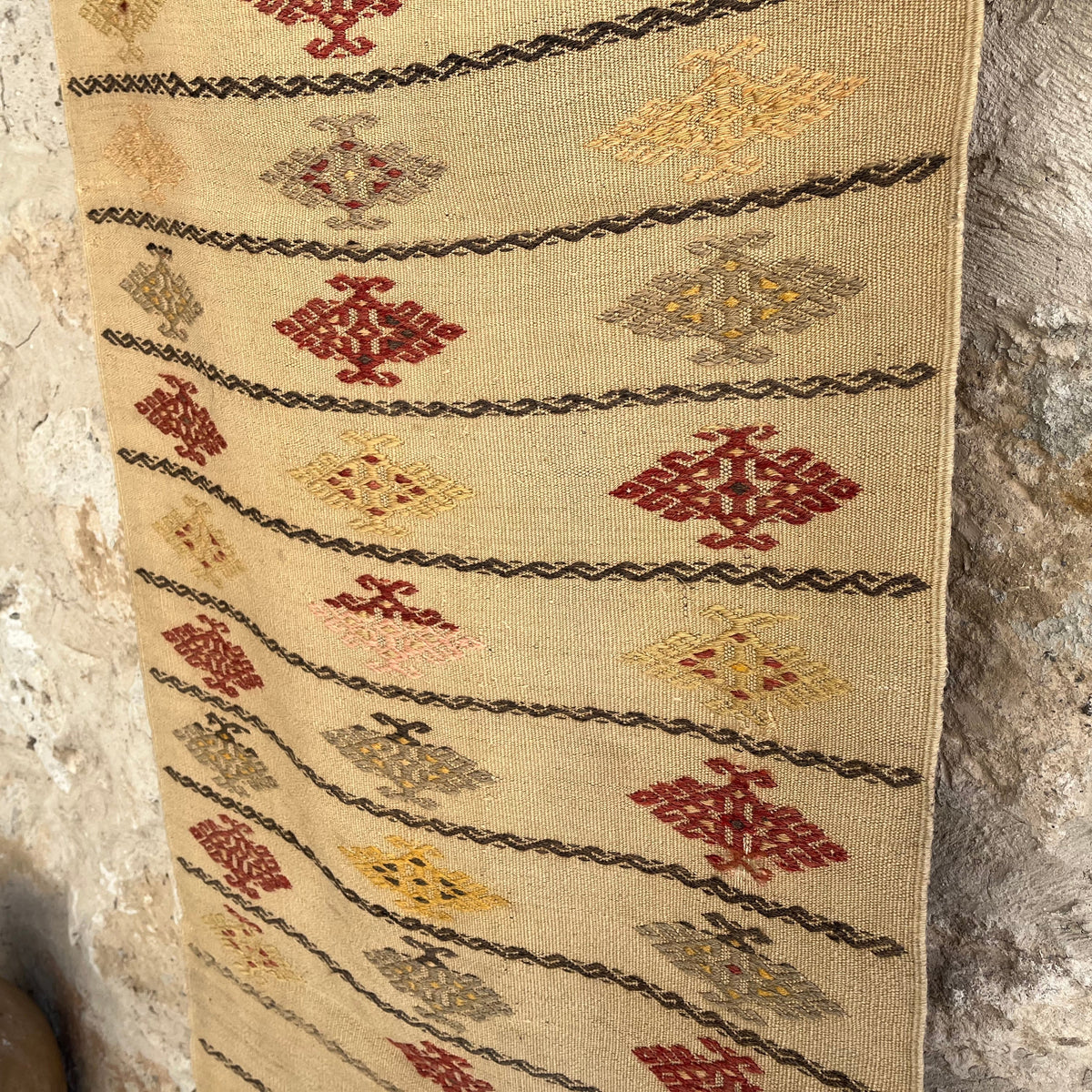
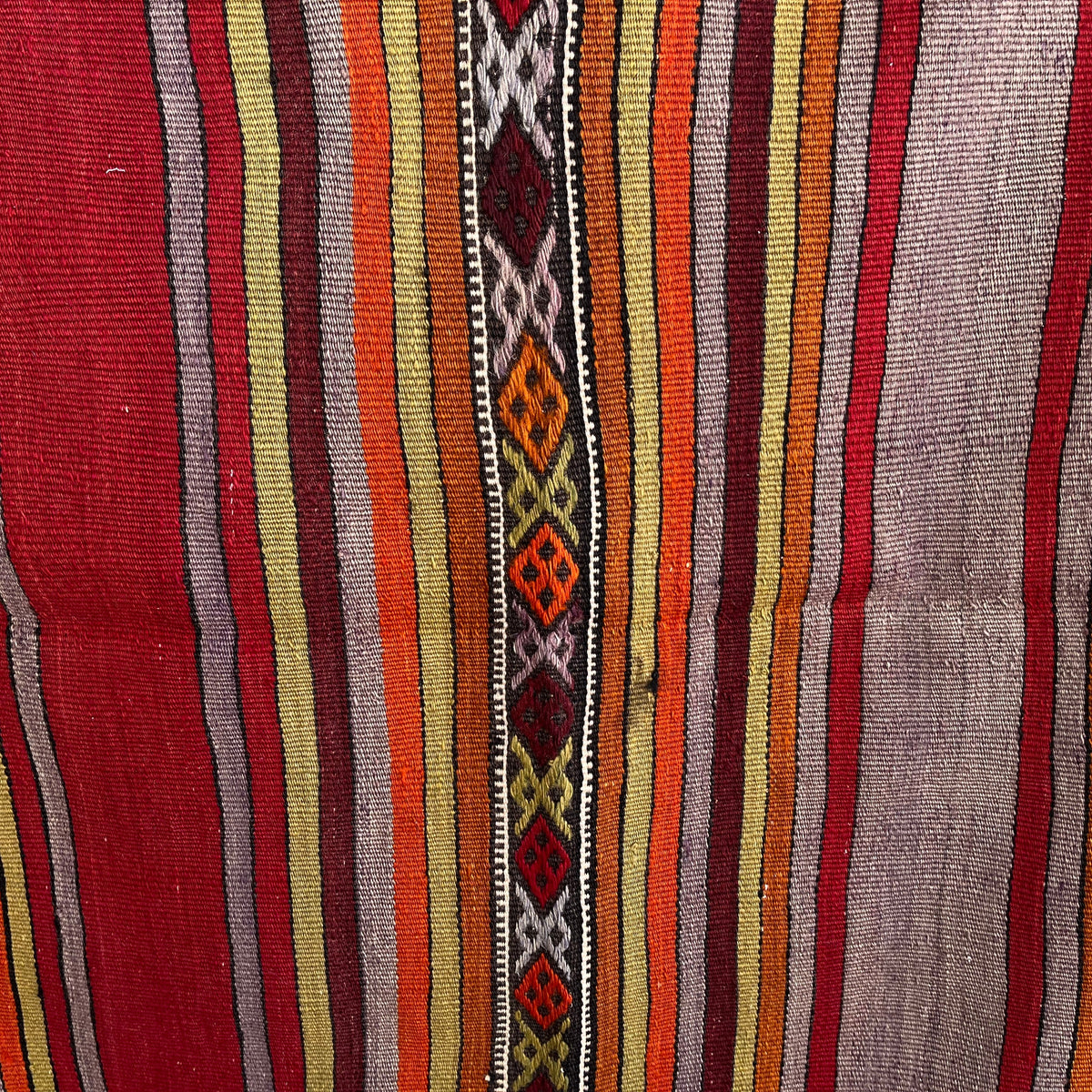
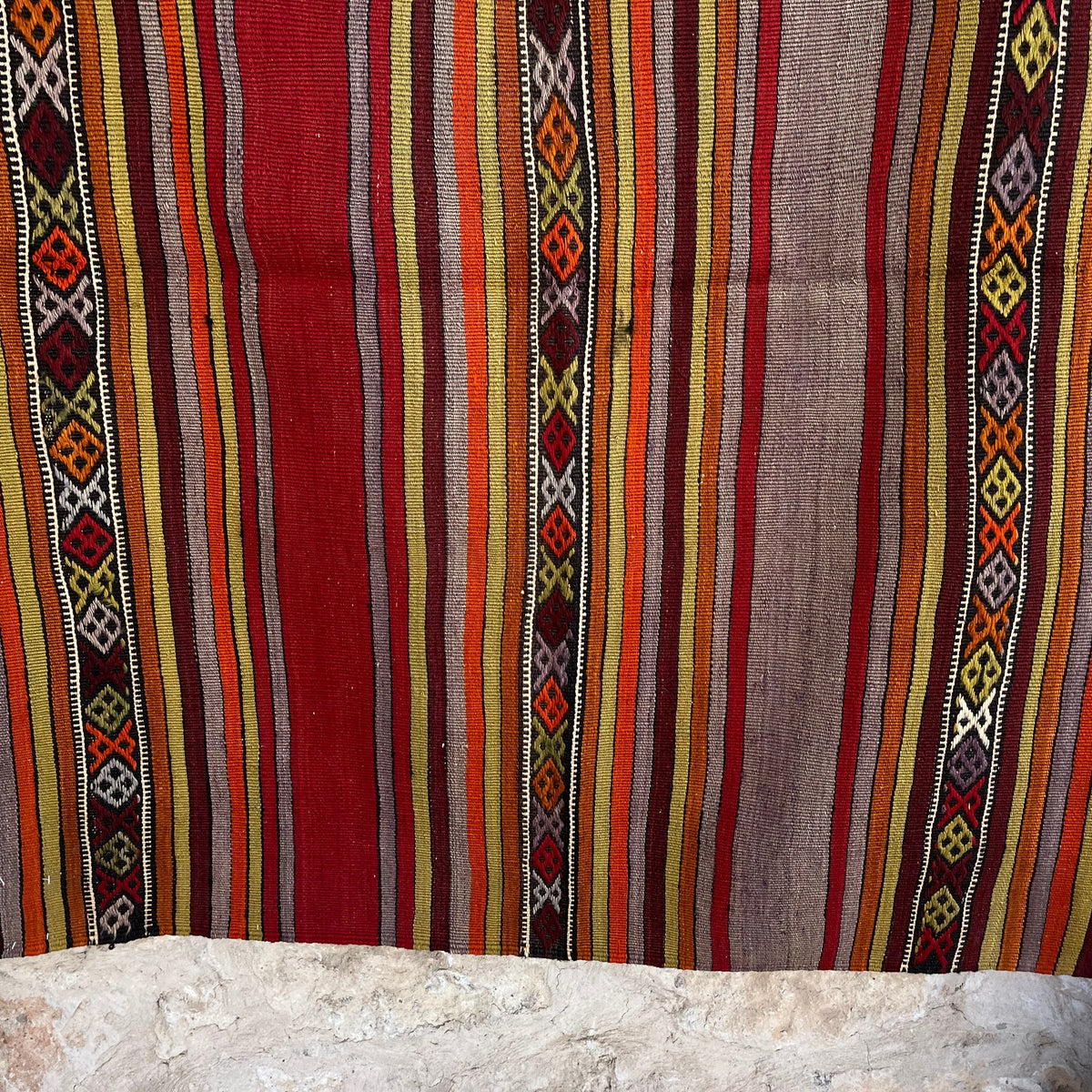
Horizontal lines expand a room visually. Large-scale geometric patterns — found across Anatolian rug-making from kilims to Oushak field designs — keep the eye busy inside the rug itself. When the eye moves through a design, it isn't searching for corners or measuring walls. Small, dense, all-over patterns do the opposite: every inch competing for attention makes a tight room feel cluttered.
What Abrash in Vintage Rugs Does to Depth and Light
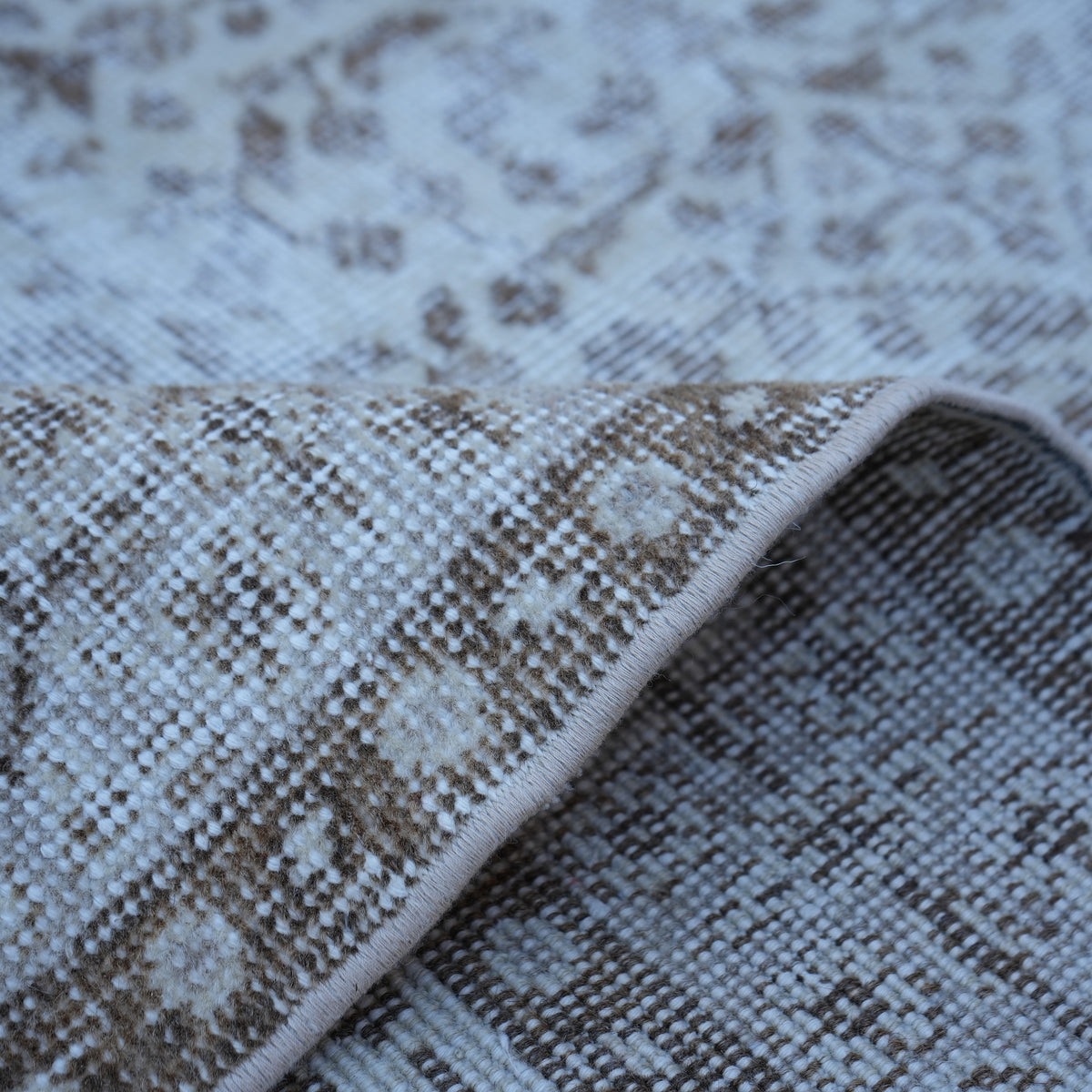
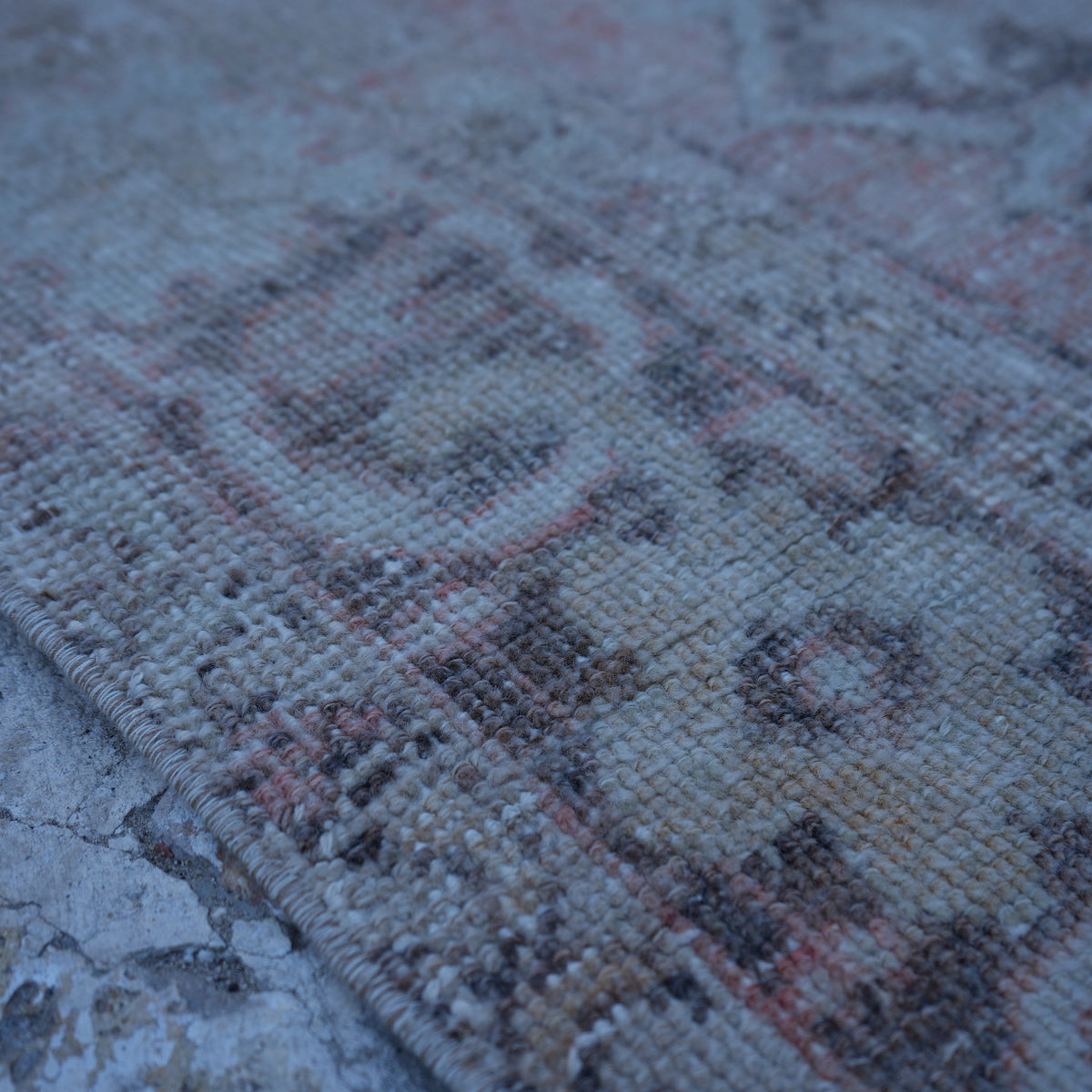
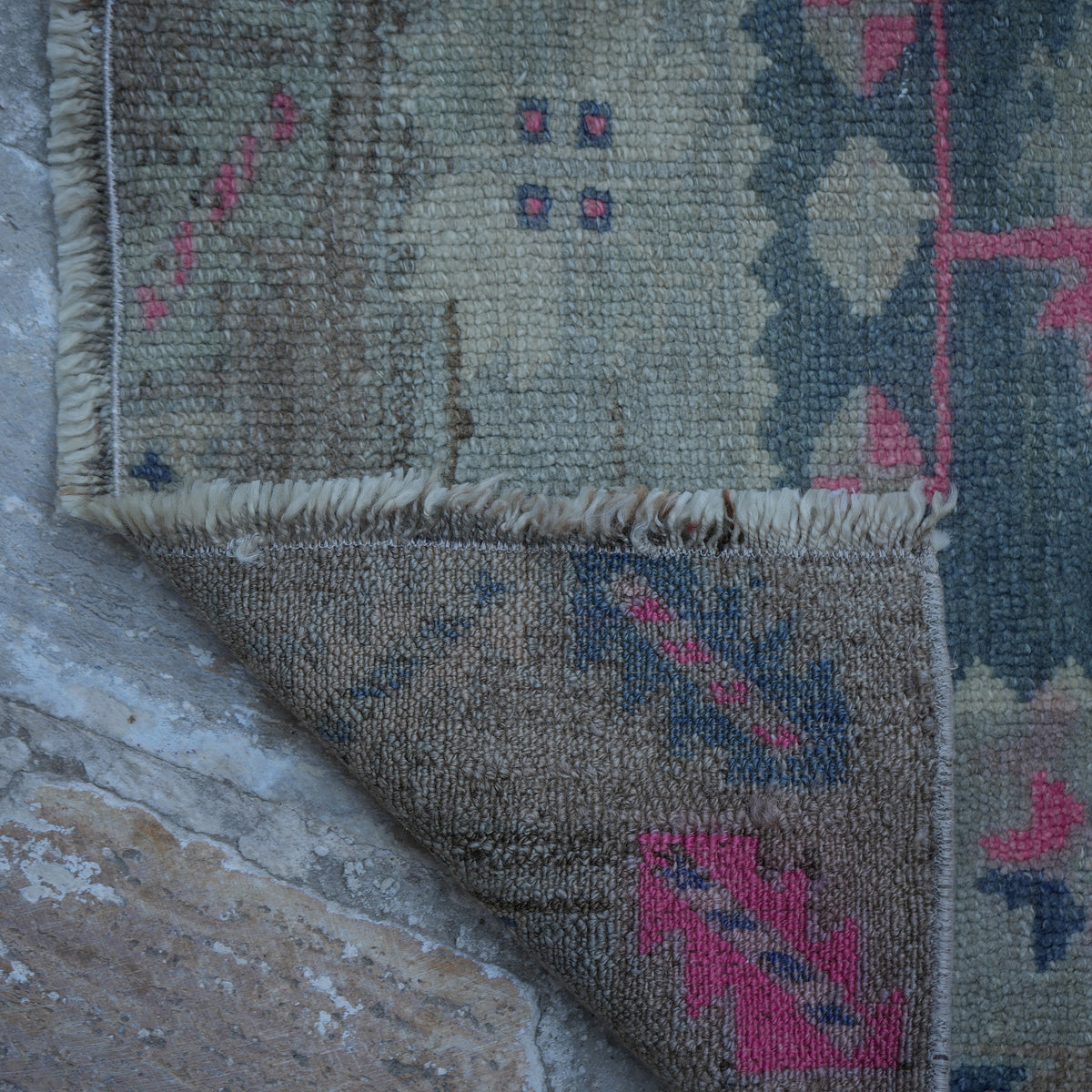
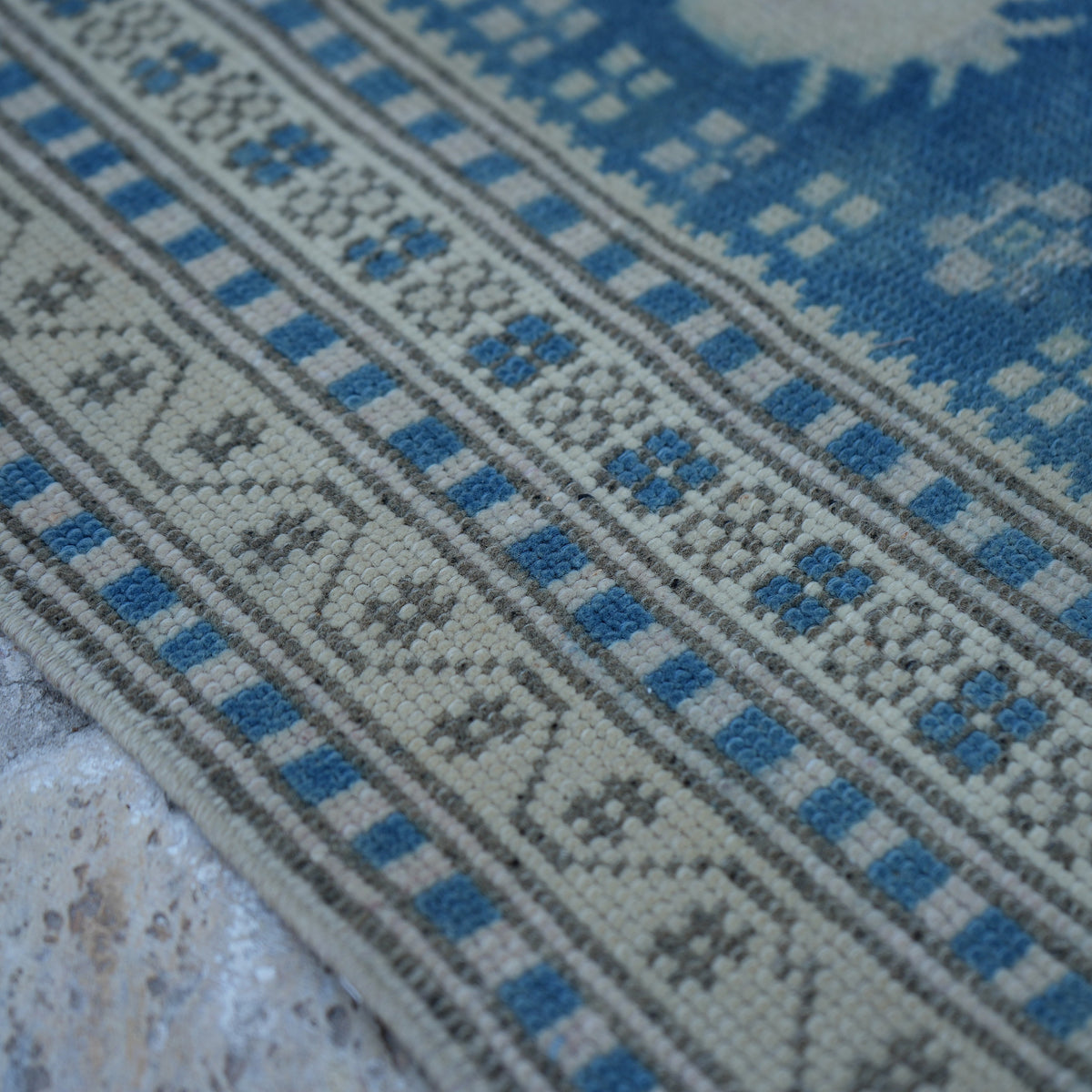
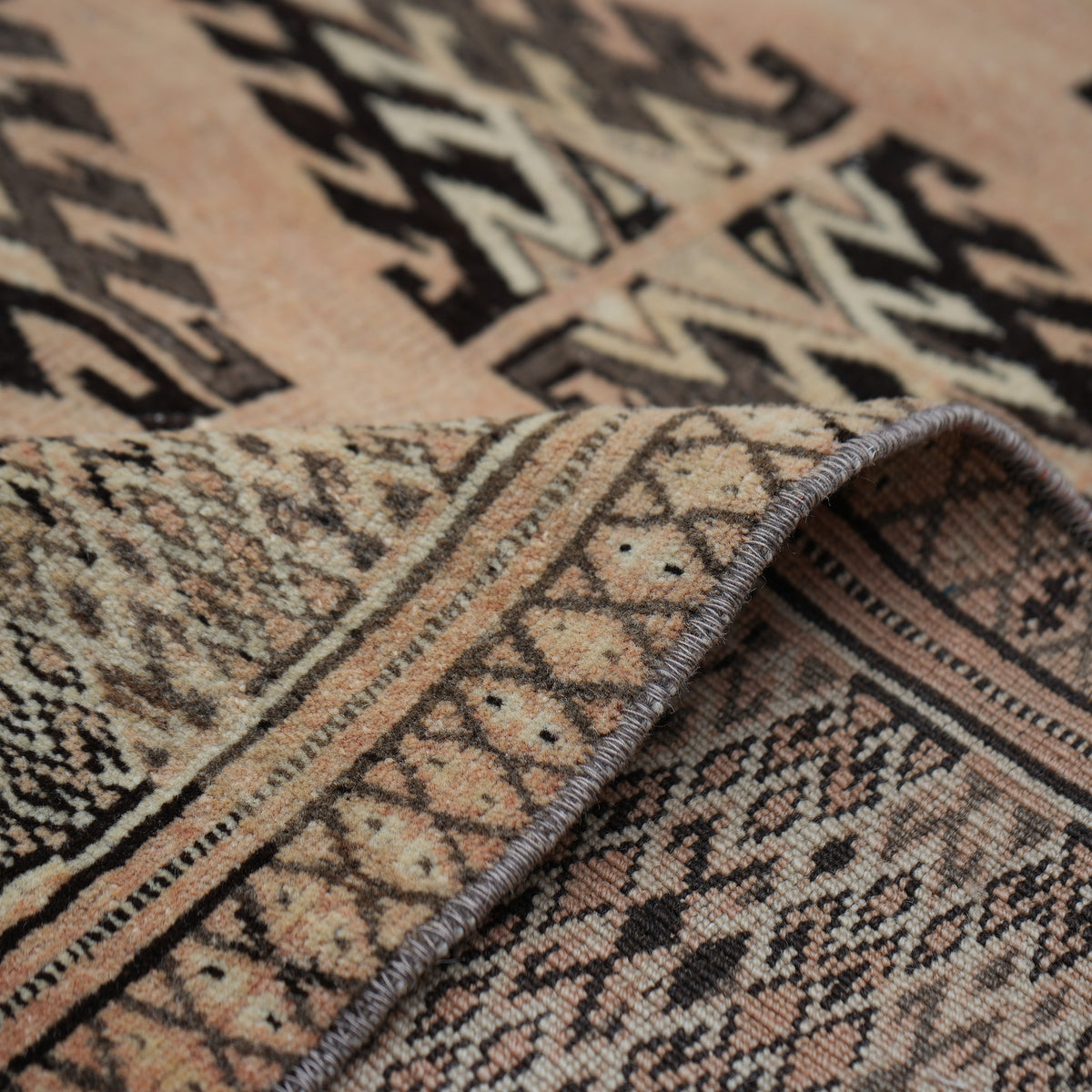
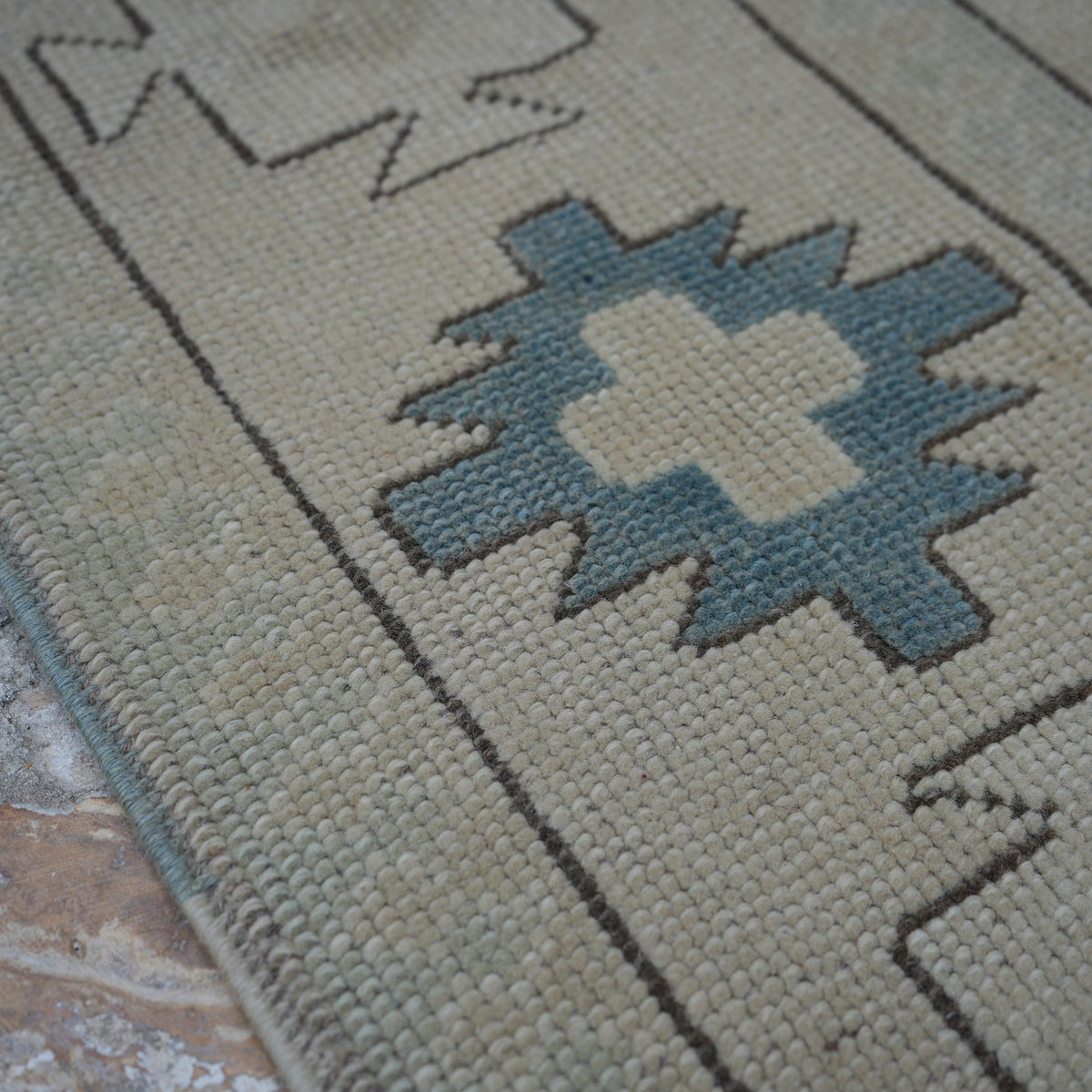
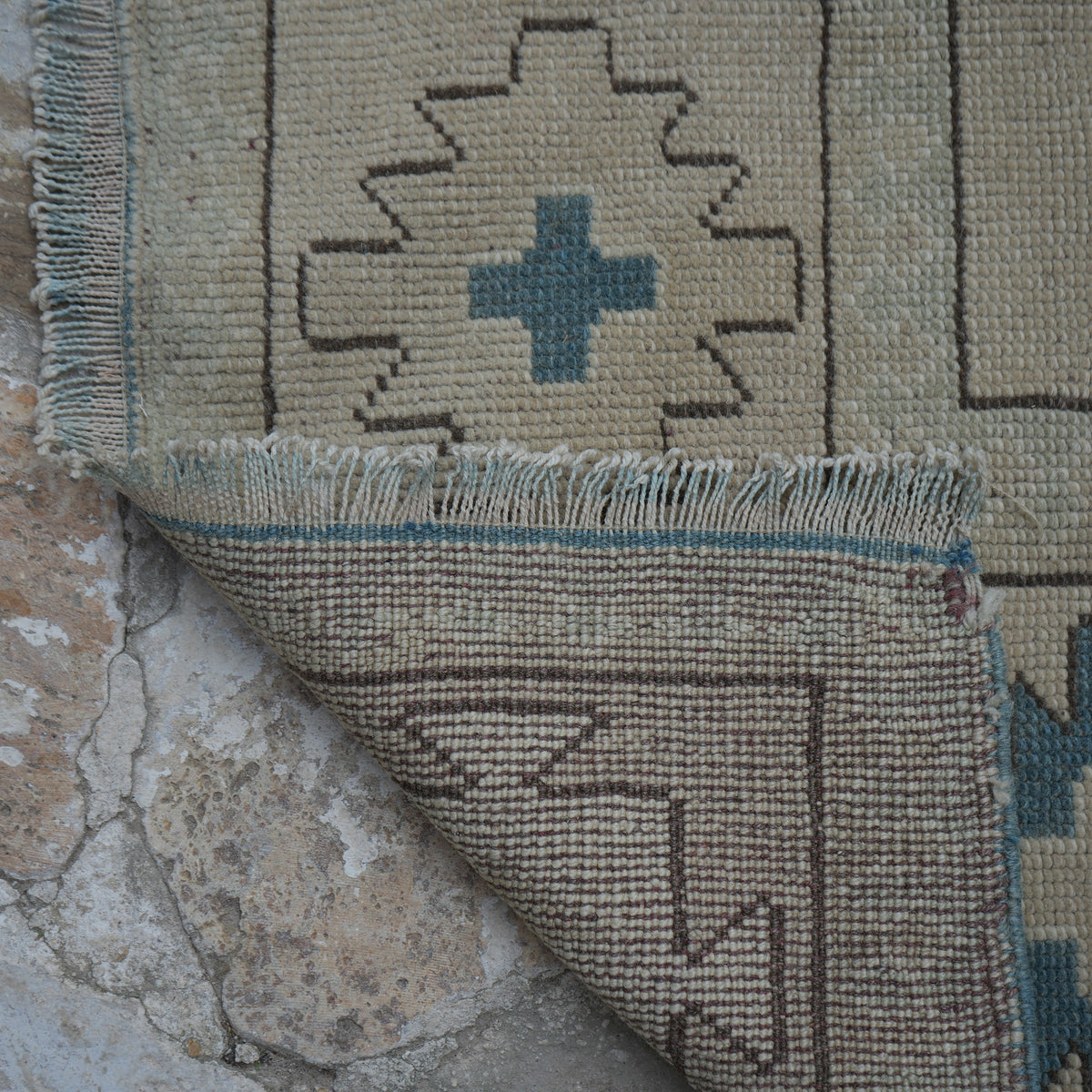
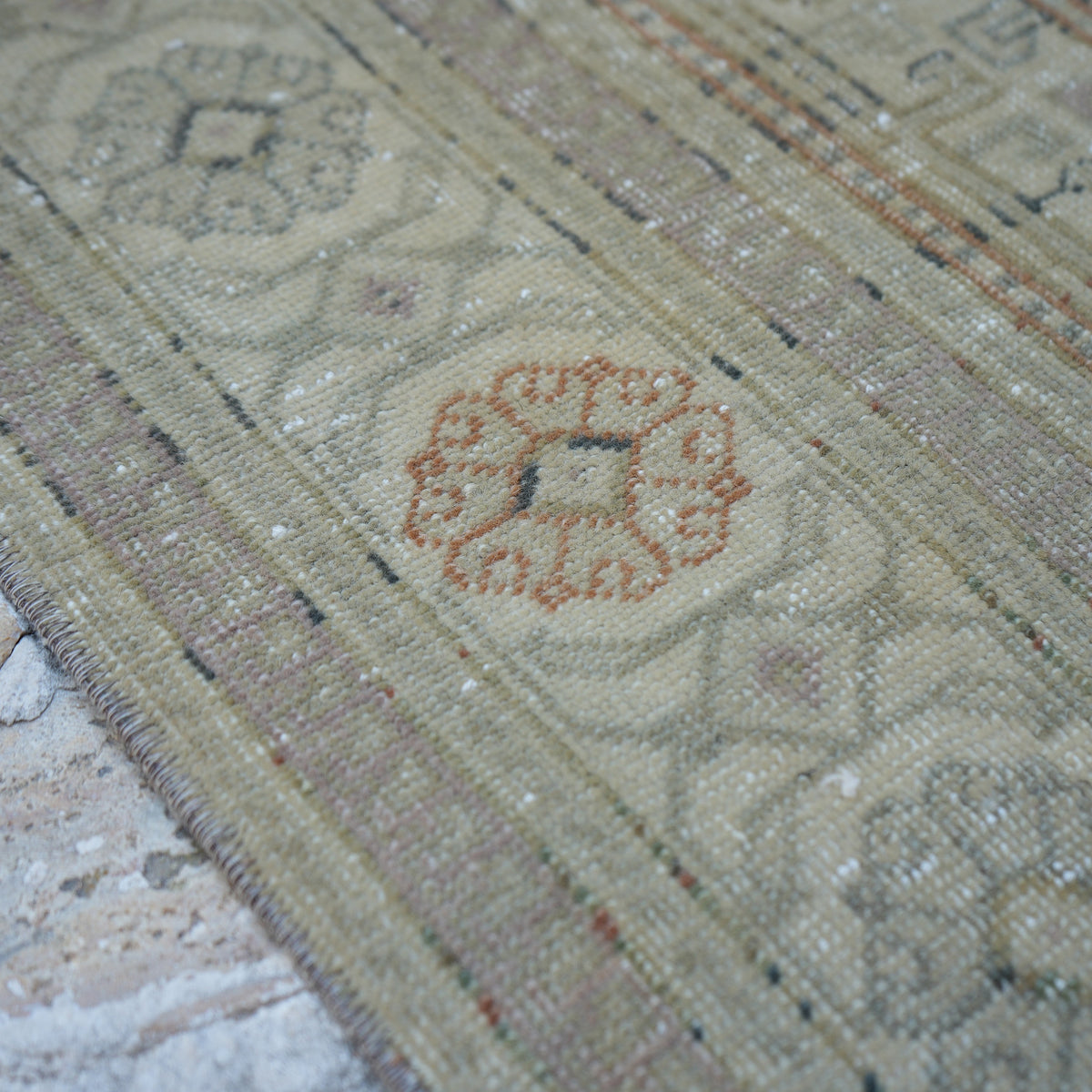
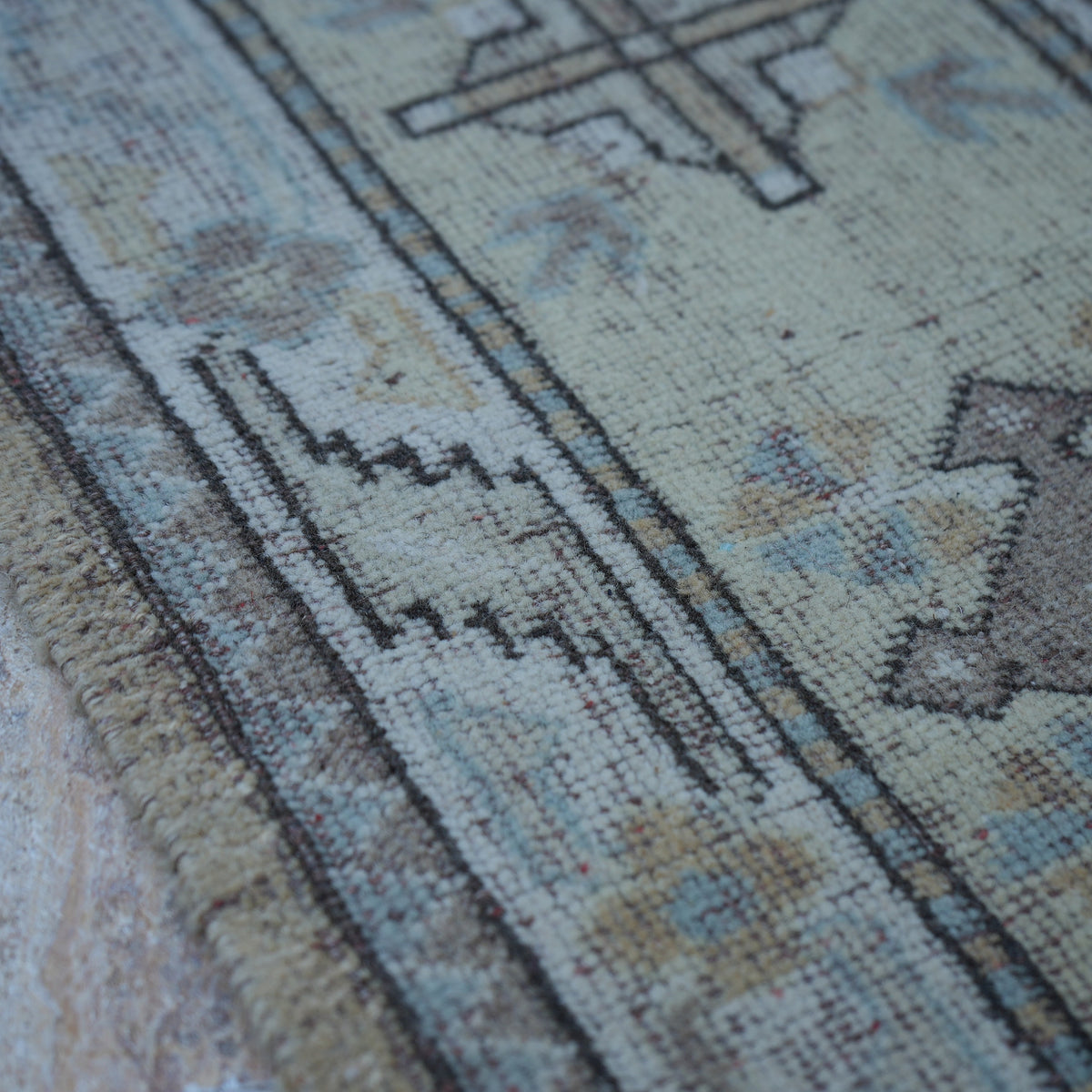
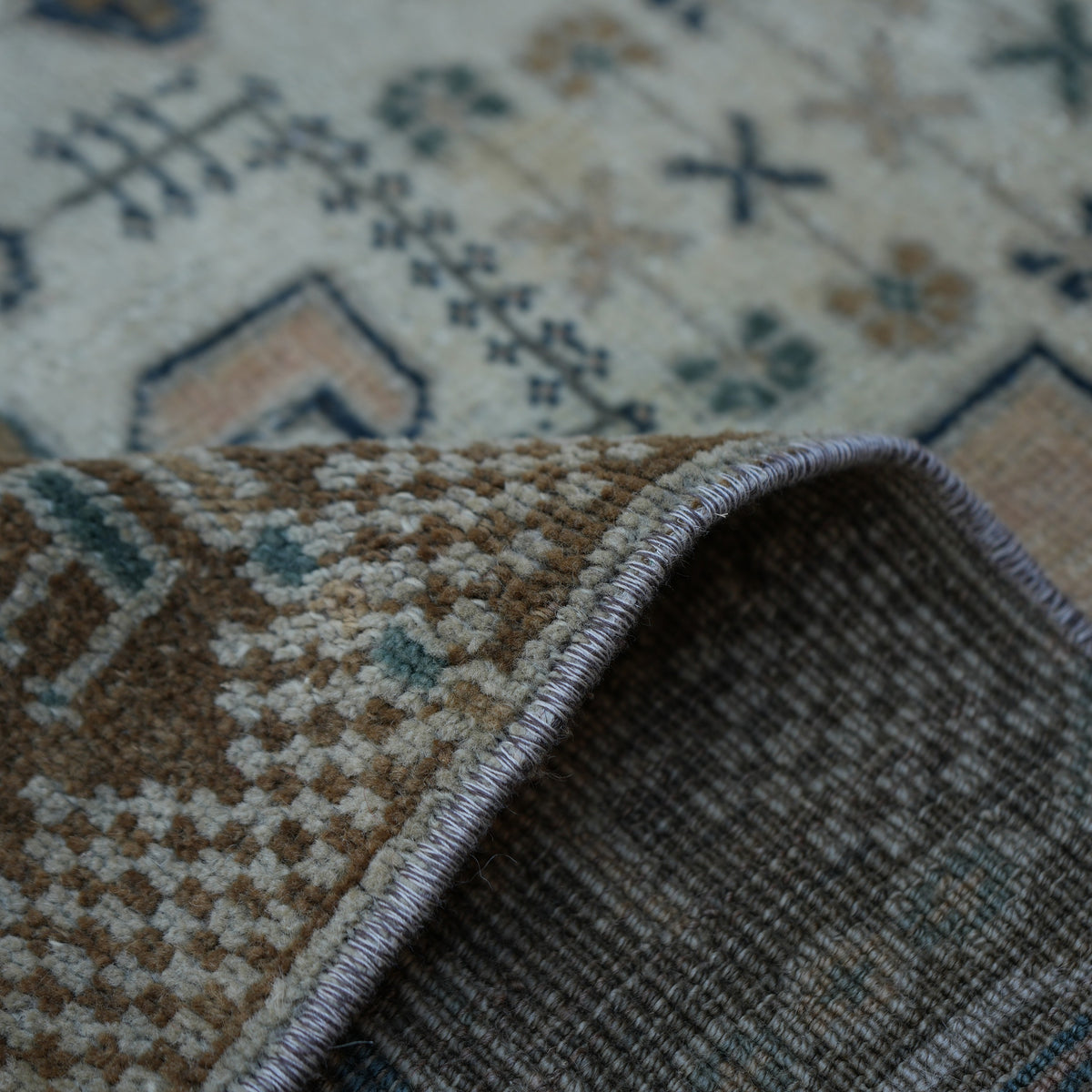
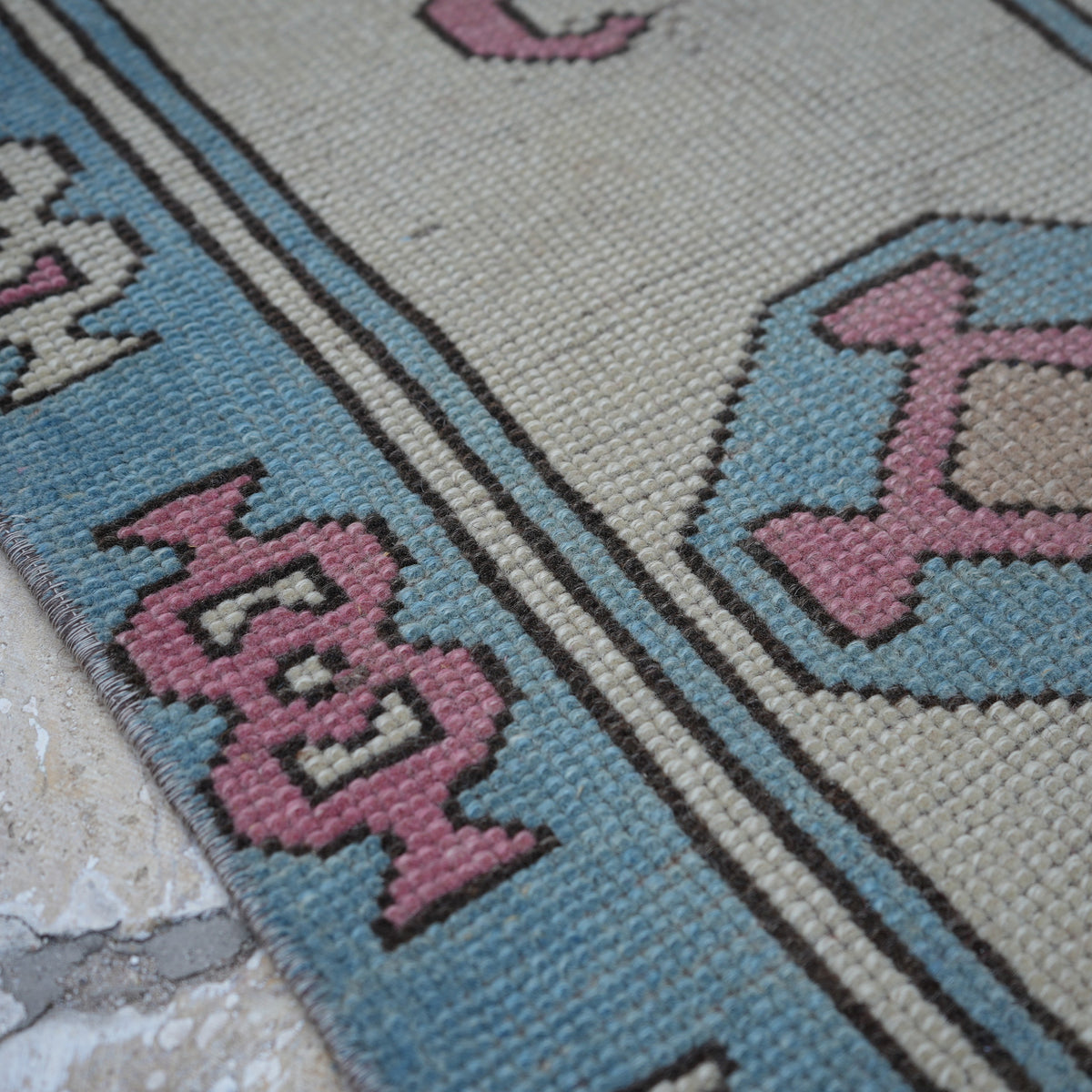
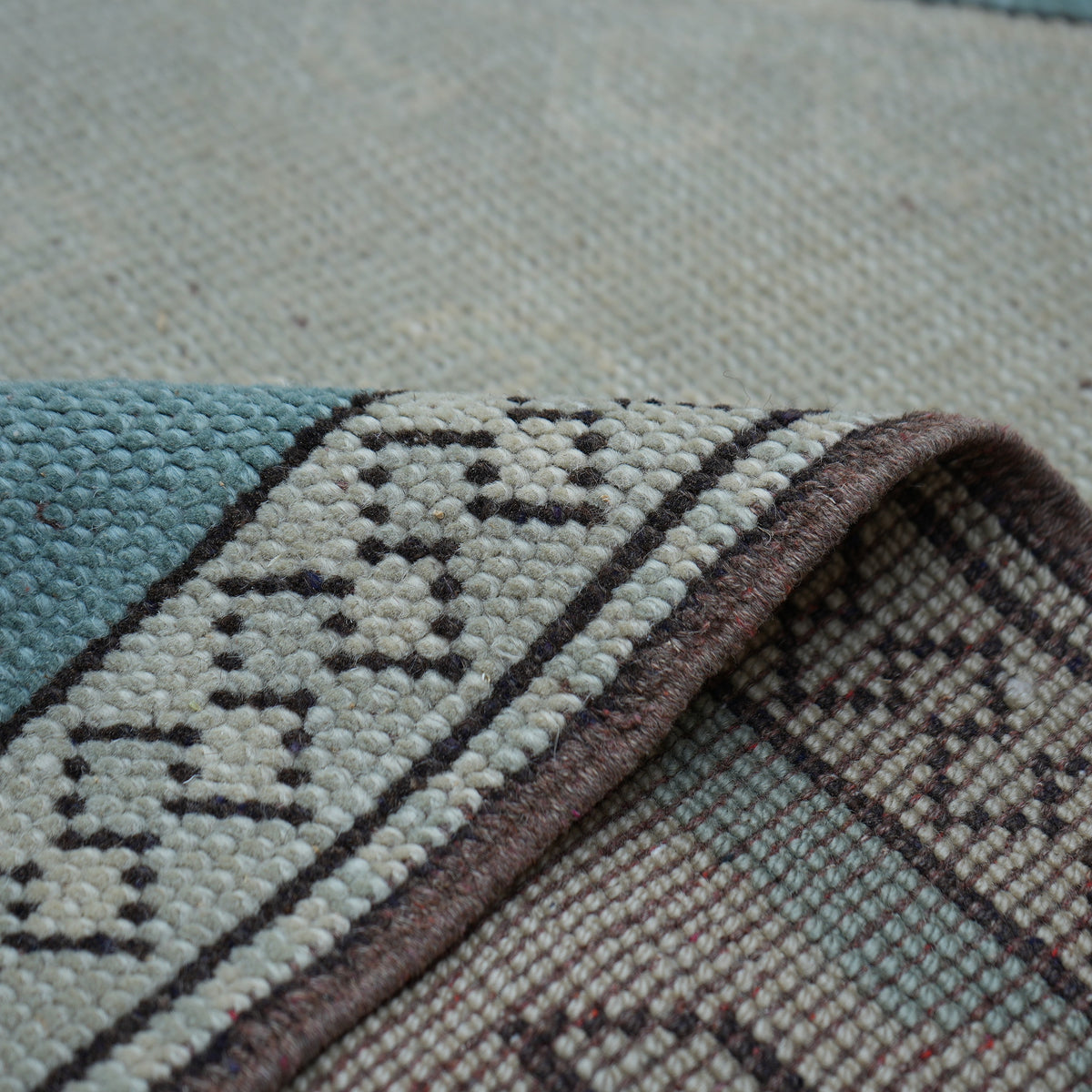
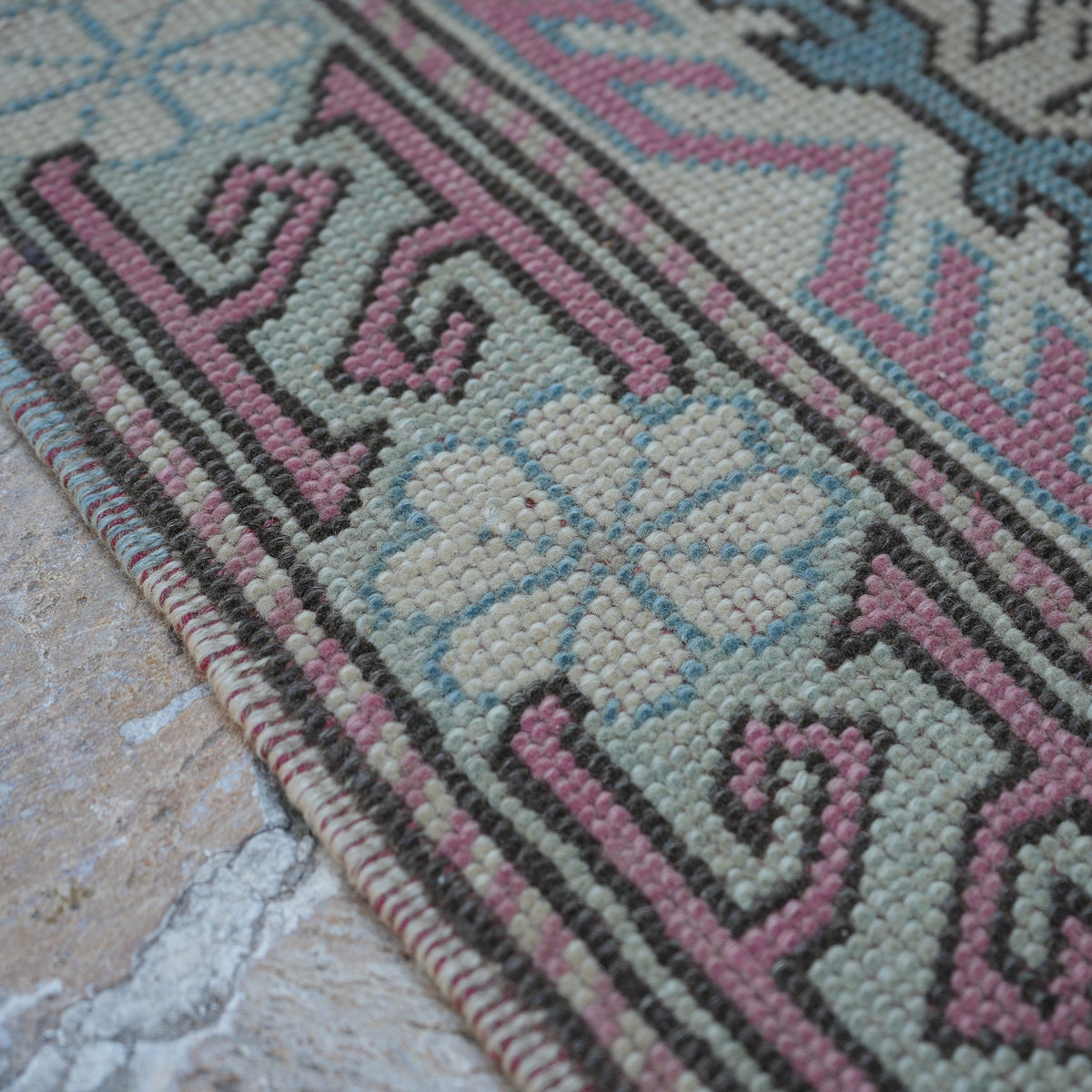
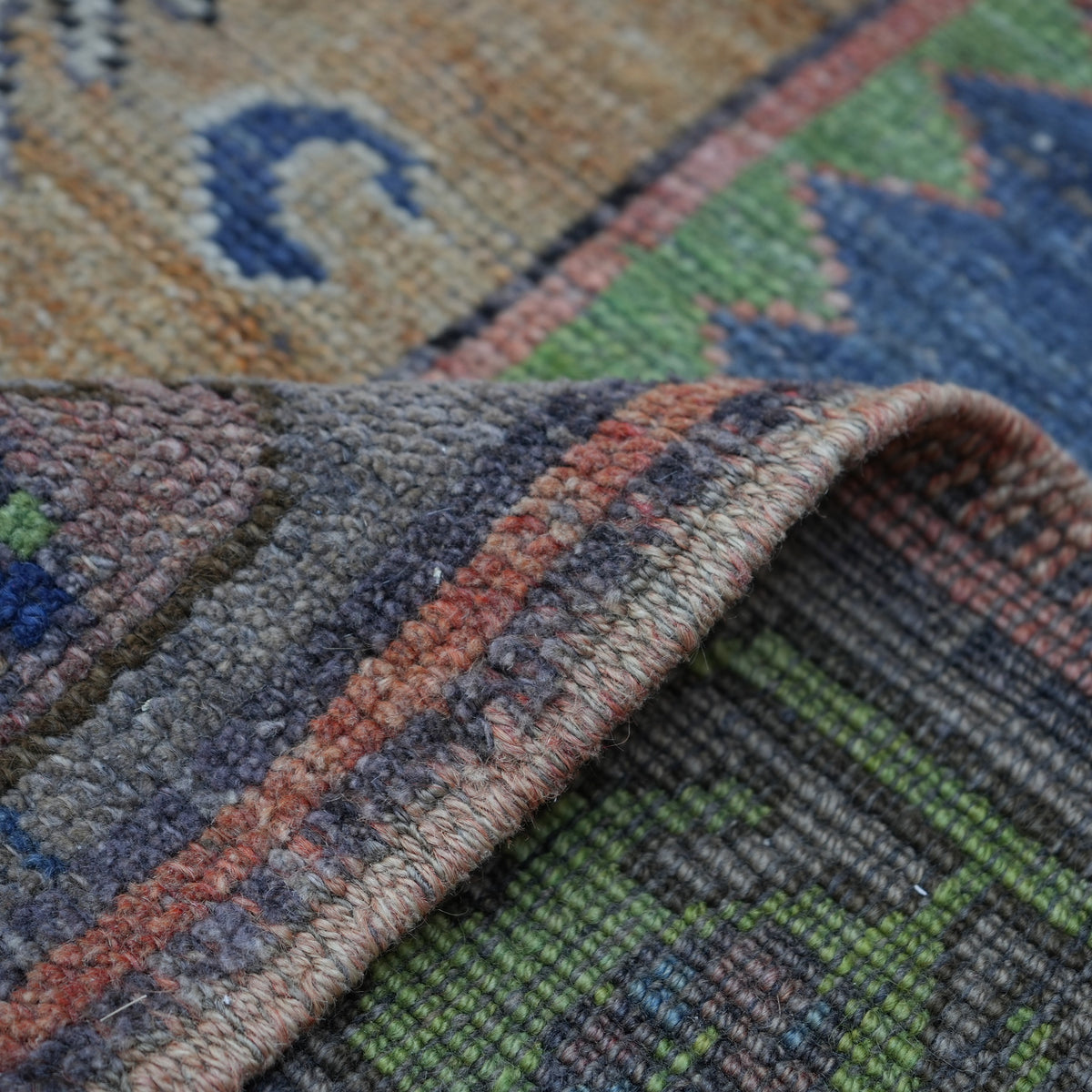
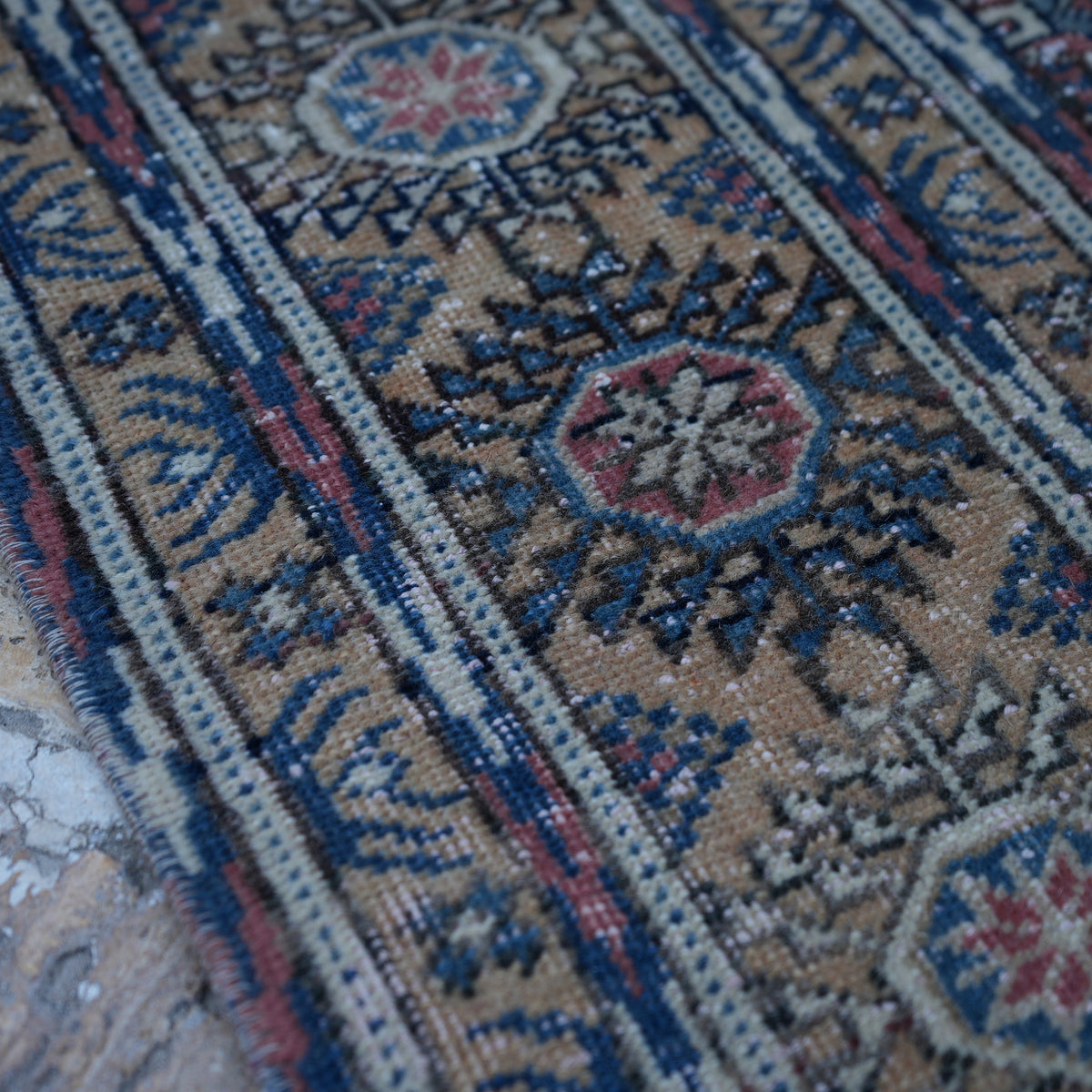
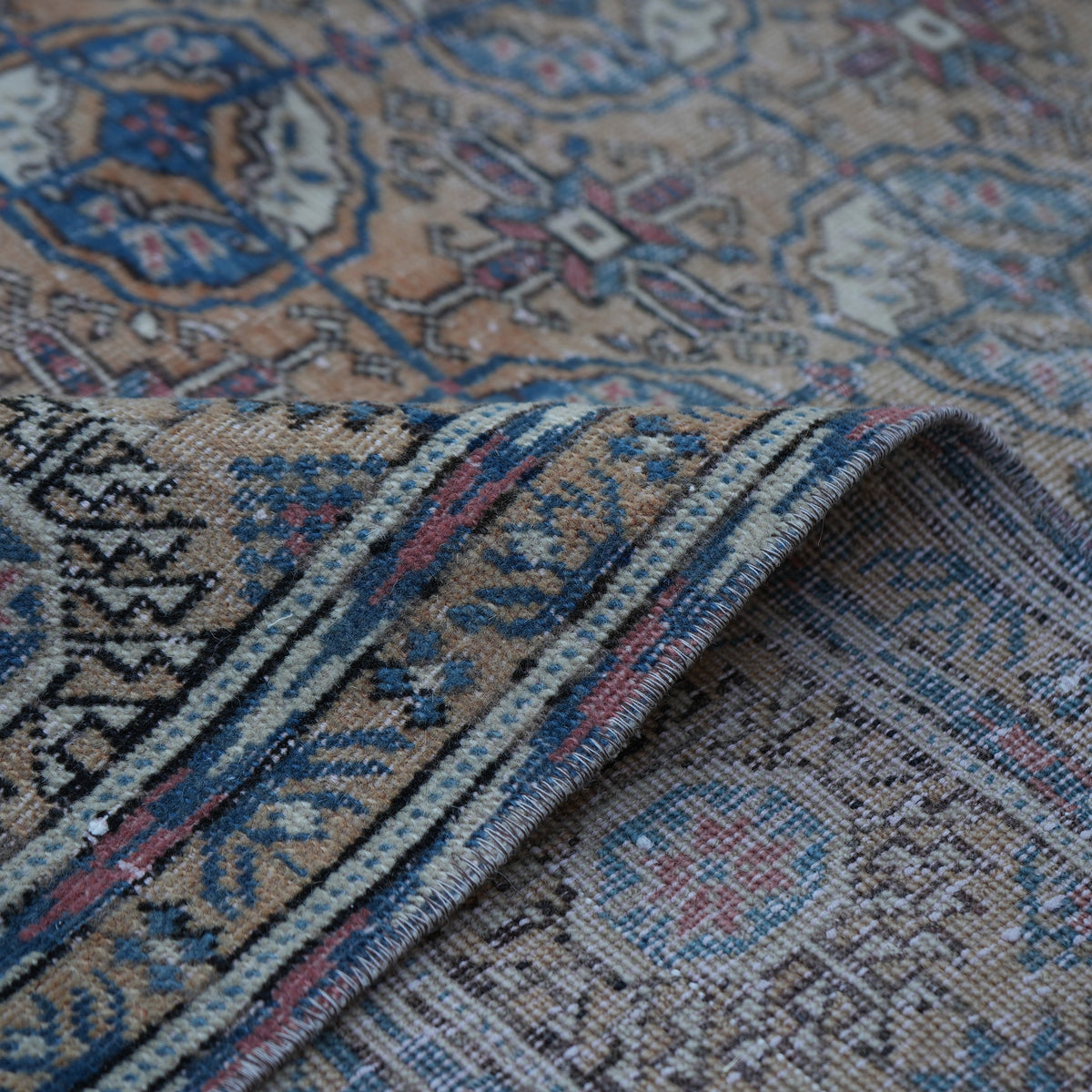
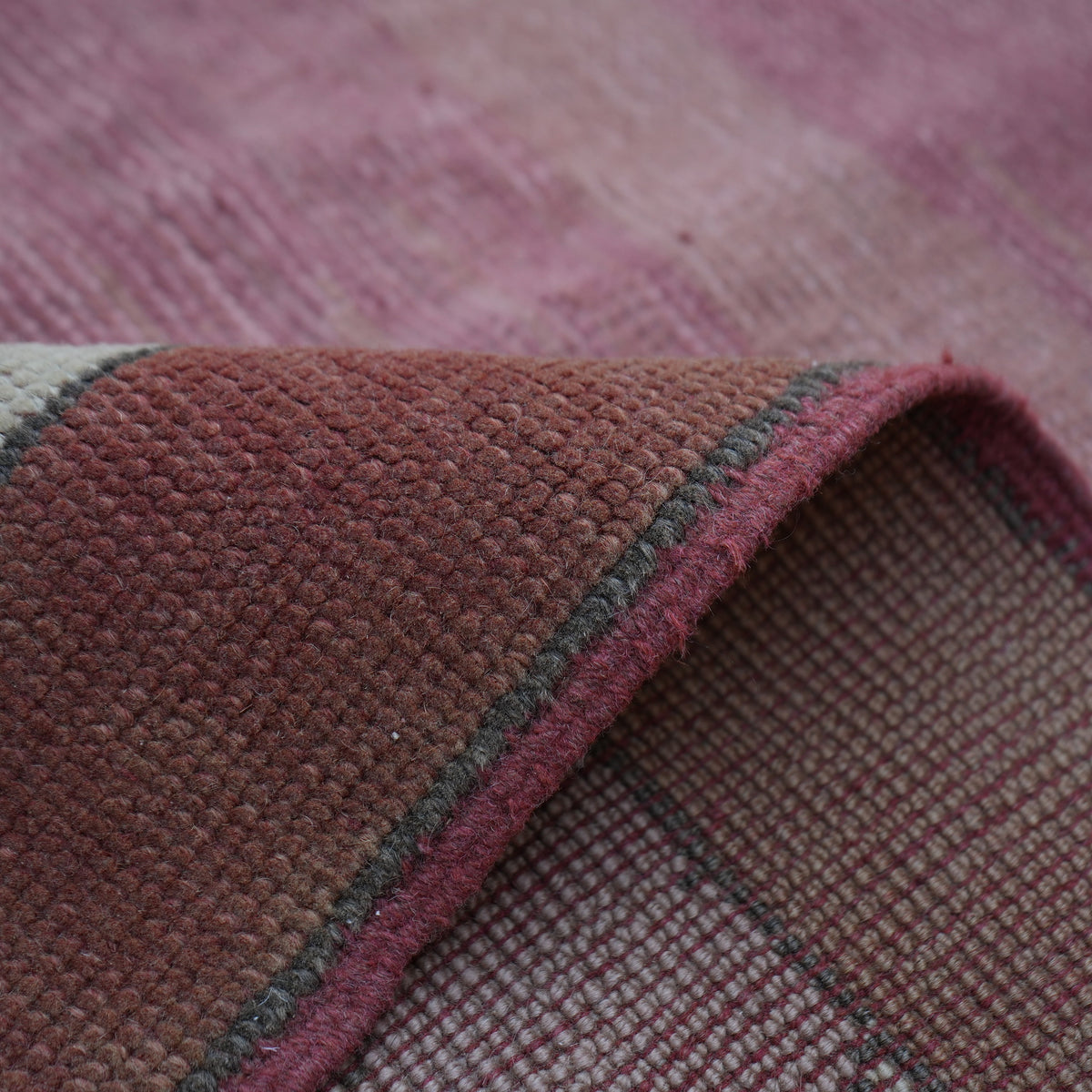
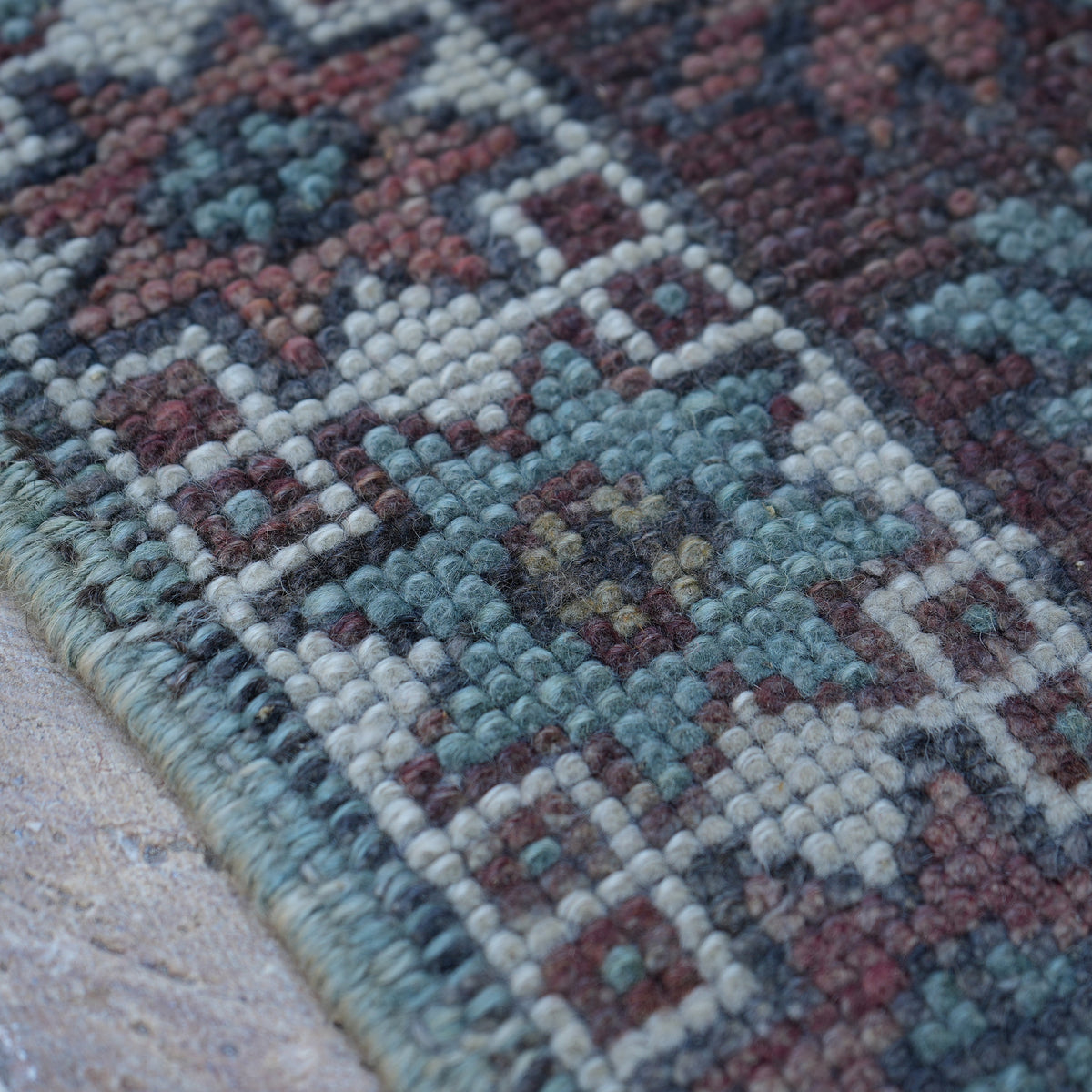
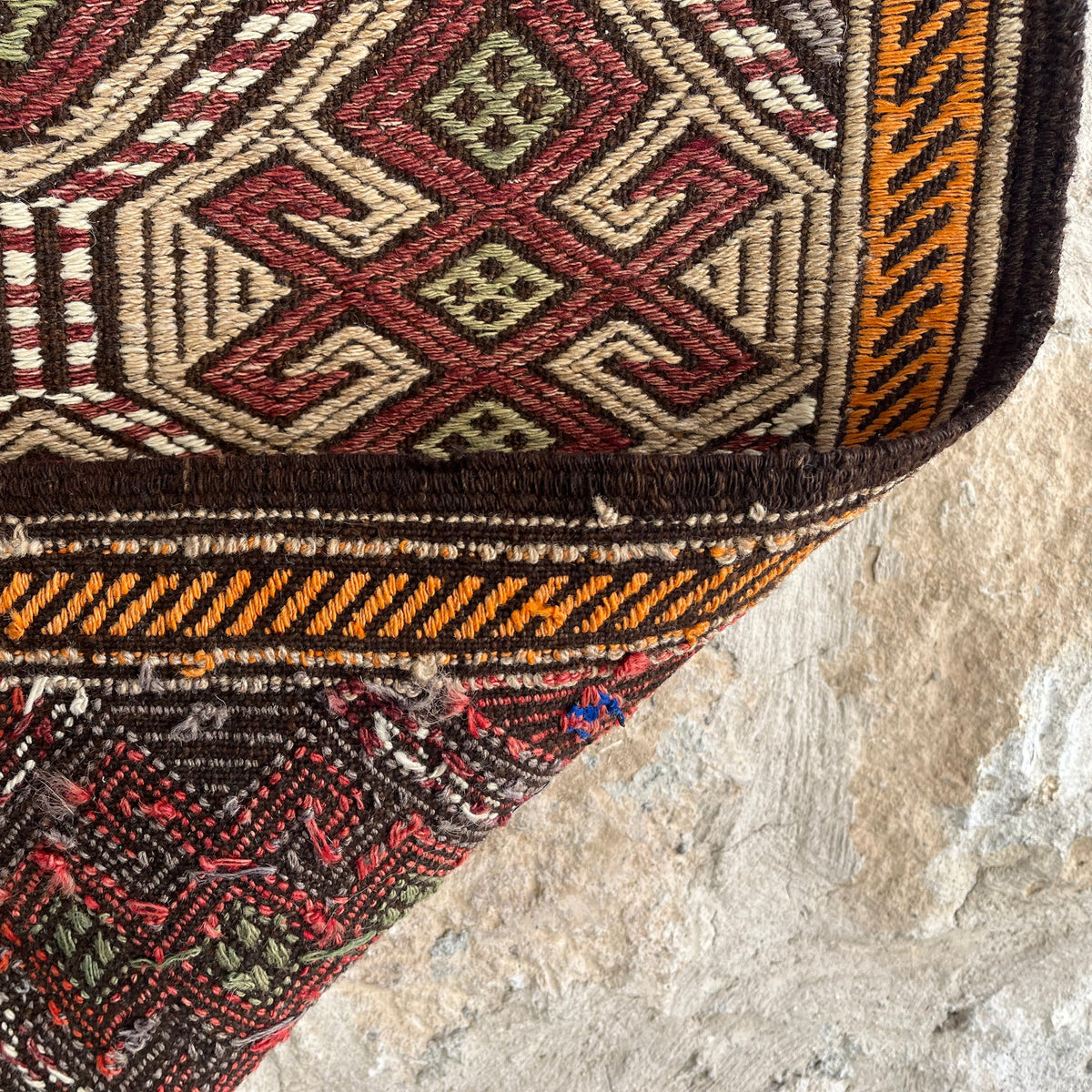
Abrash is the natural color variation in hand-dyed, handwoven rugs — slight shifts in tone caused by wool dyed in separate batches. It is not a defect. A flat color on the floor reads as a surface. A surface with abrash reads as depth — the room gains a dimension it didn't technically have. When I select rugs in Cappadocia, I hold them in the afternoon sun and look specifically for this quality. Those tone shifts in natural-dyed Anatolian wool are something a machine-made rug simply cannot replicate.

The Best Rug Materials for Small Spaces
Why Natural Wool Reflects Light Better Than Synthetics
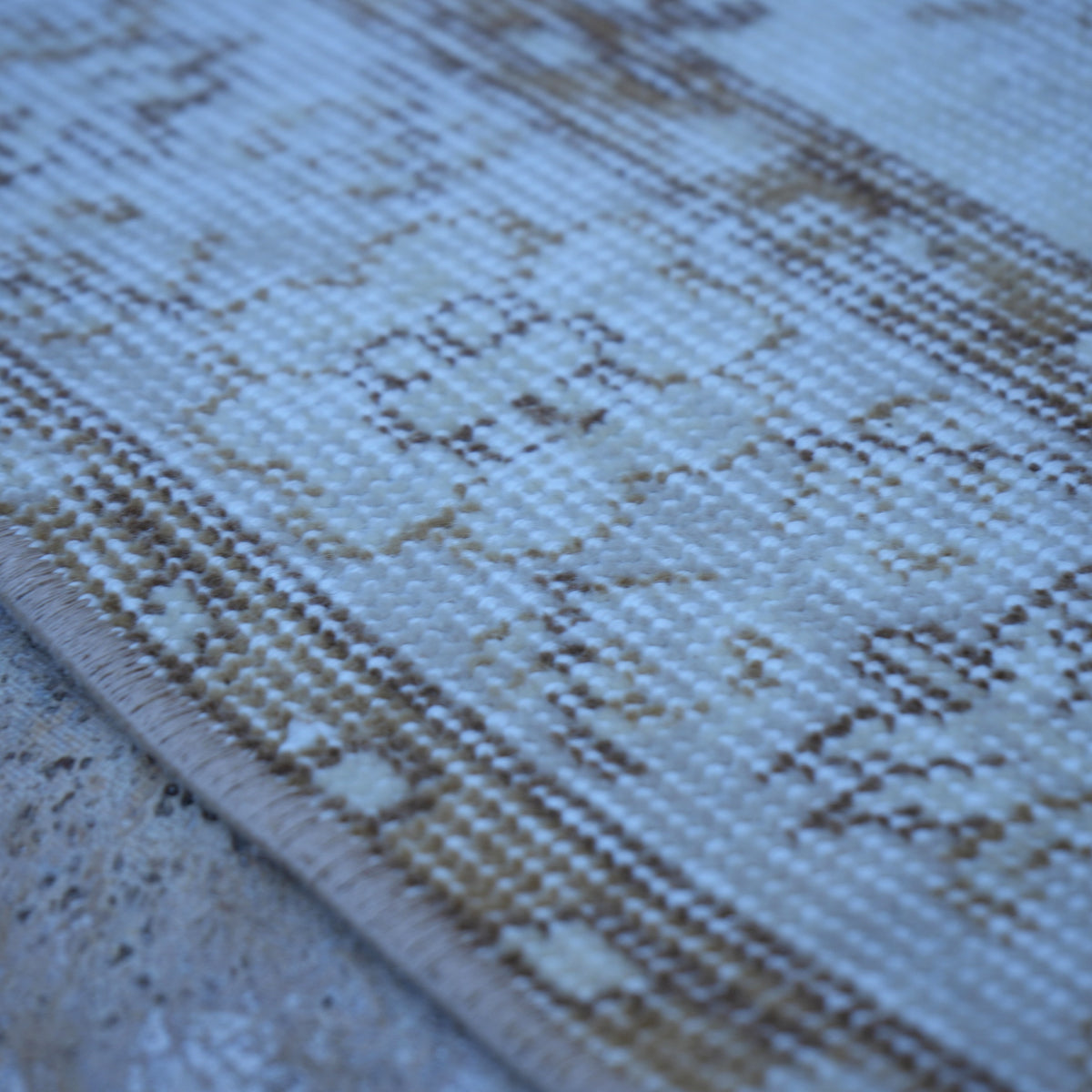
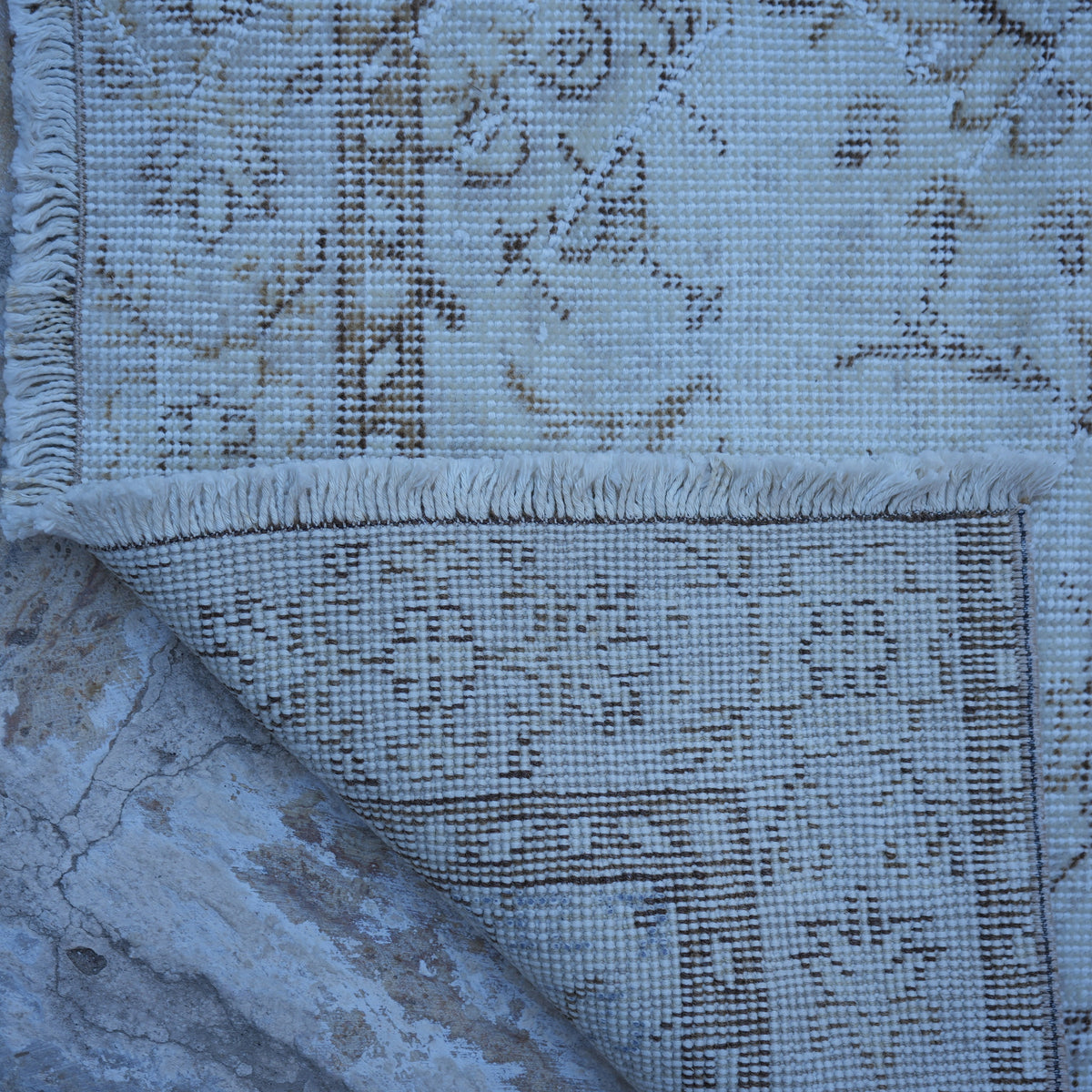
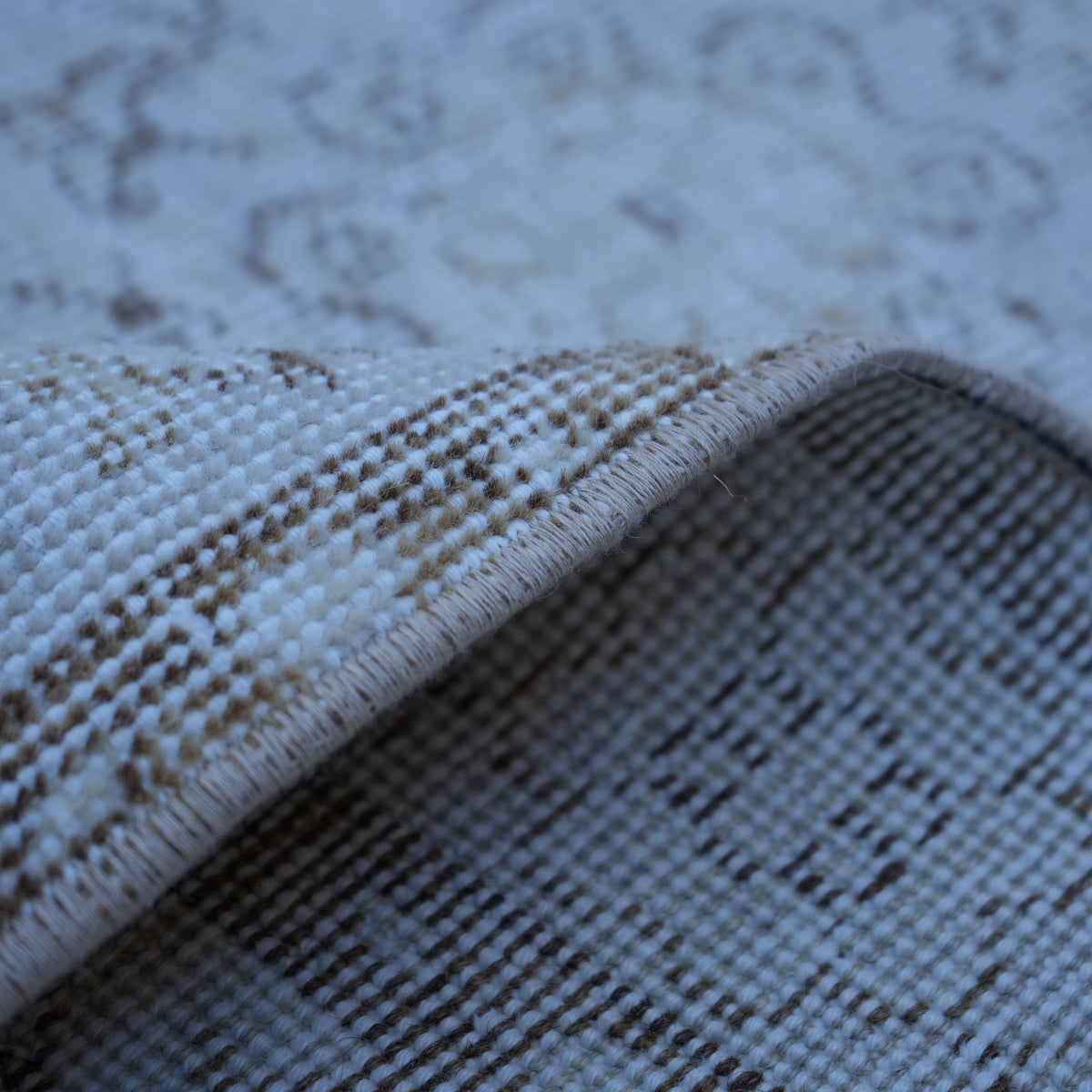
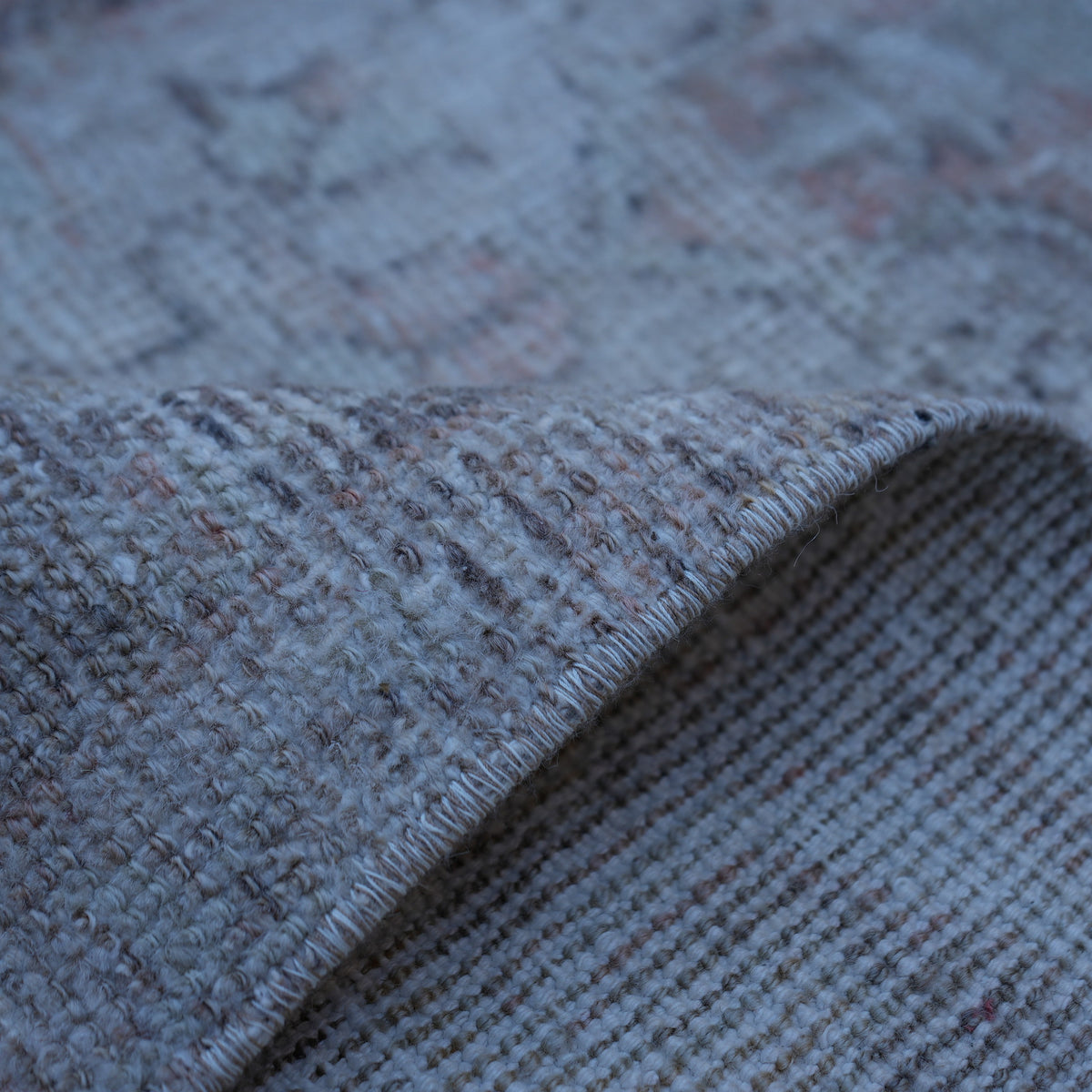
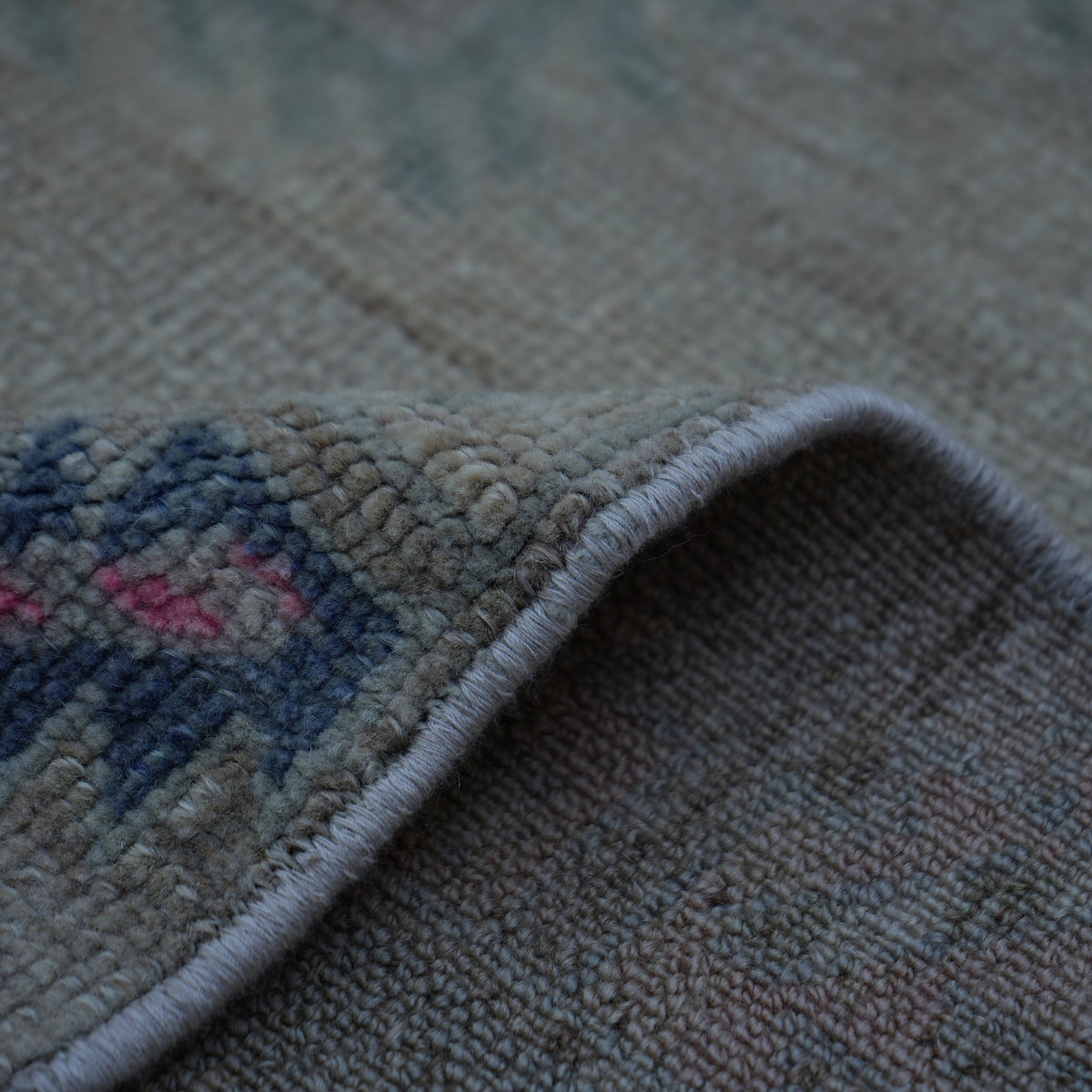
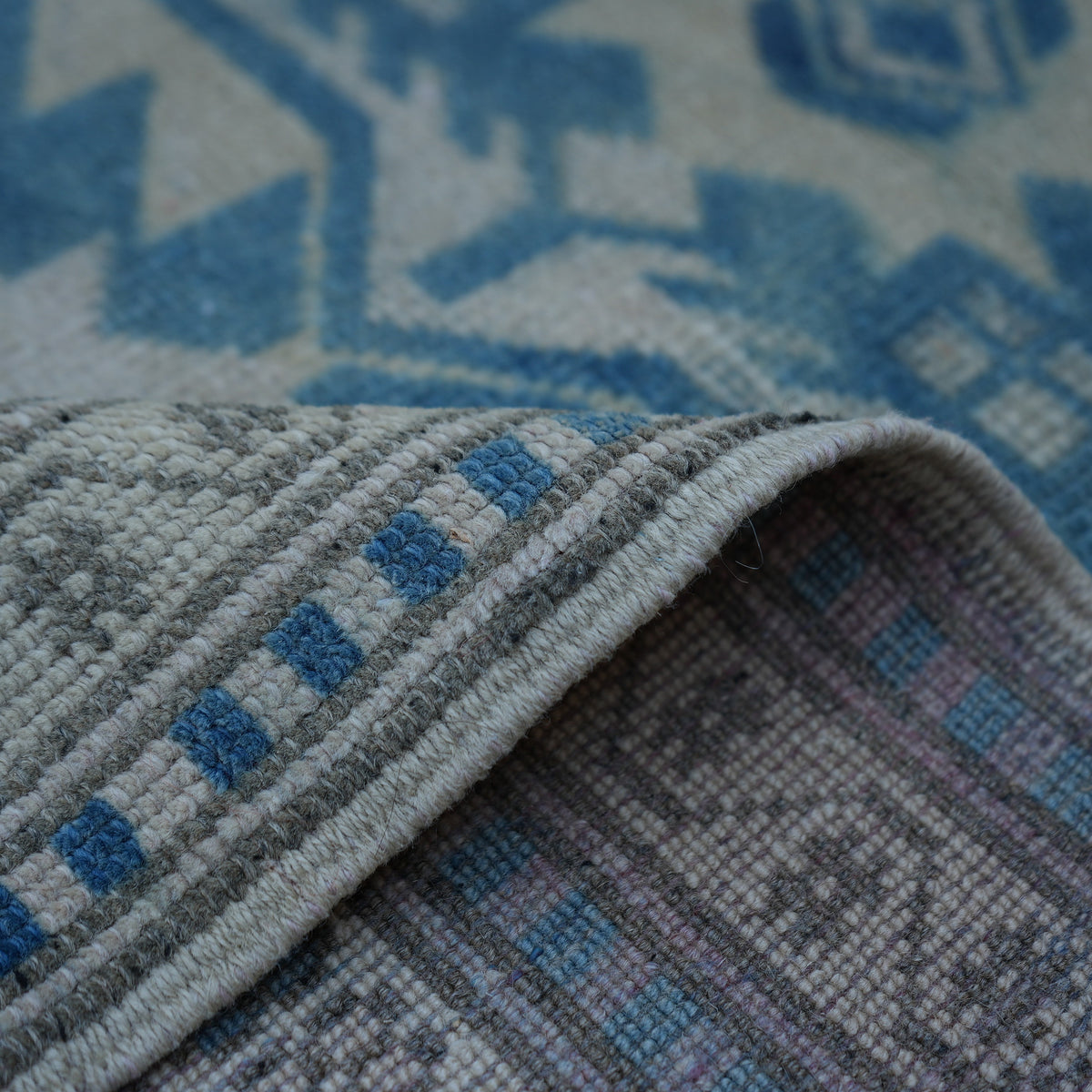
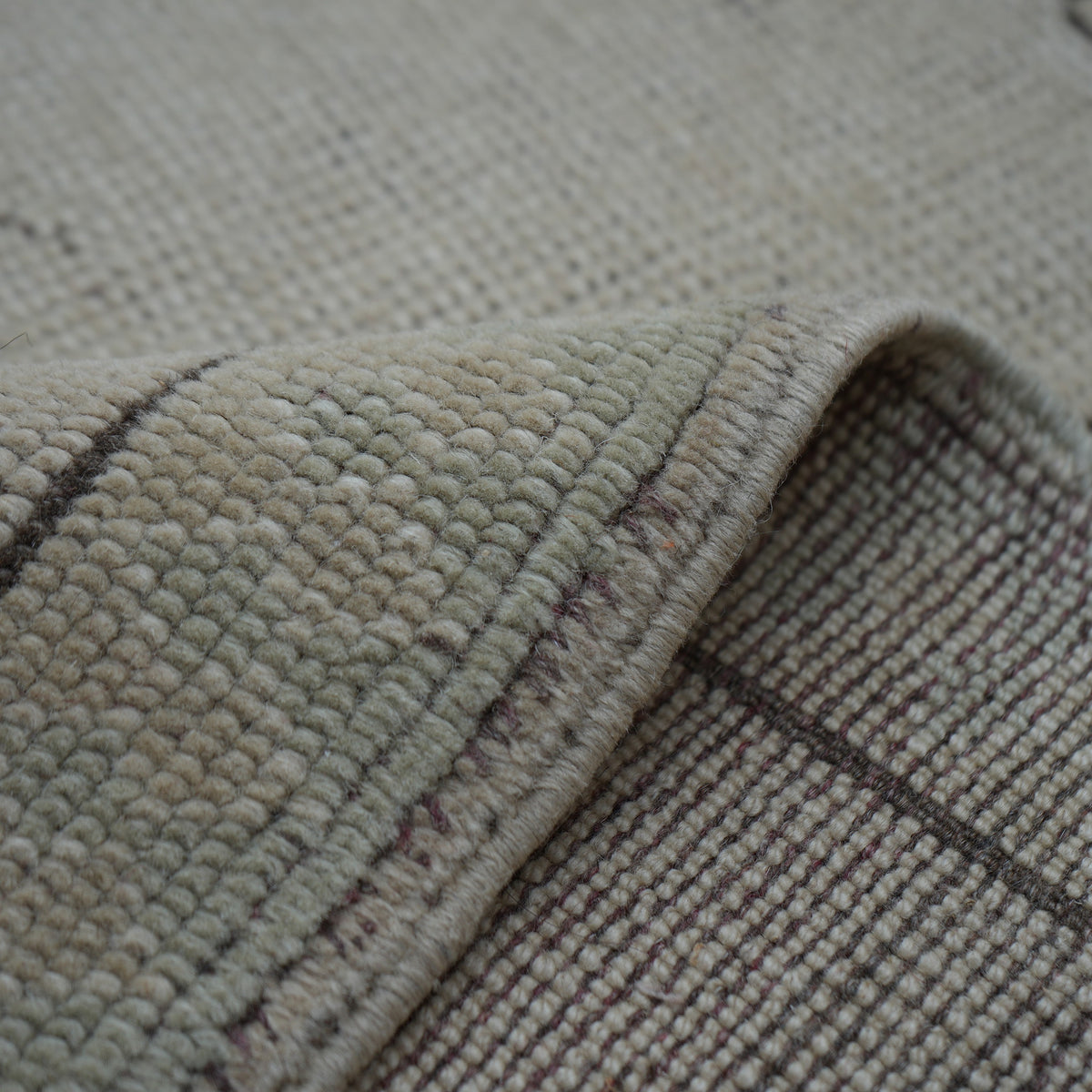
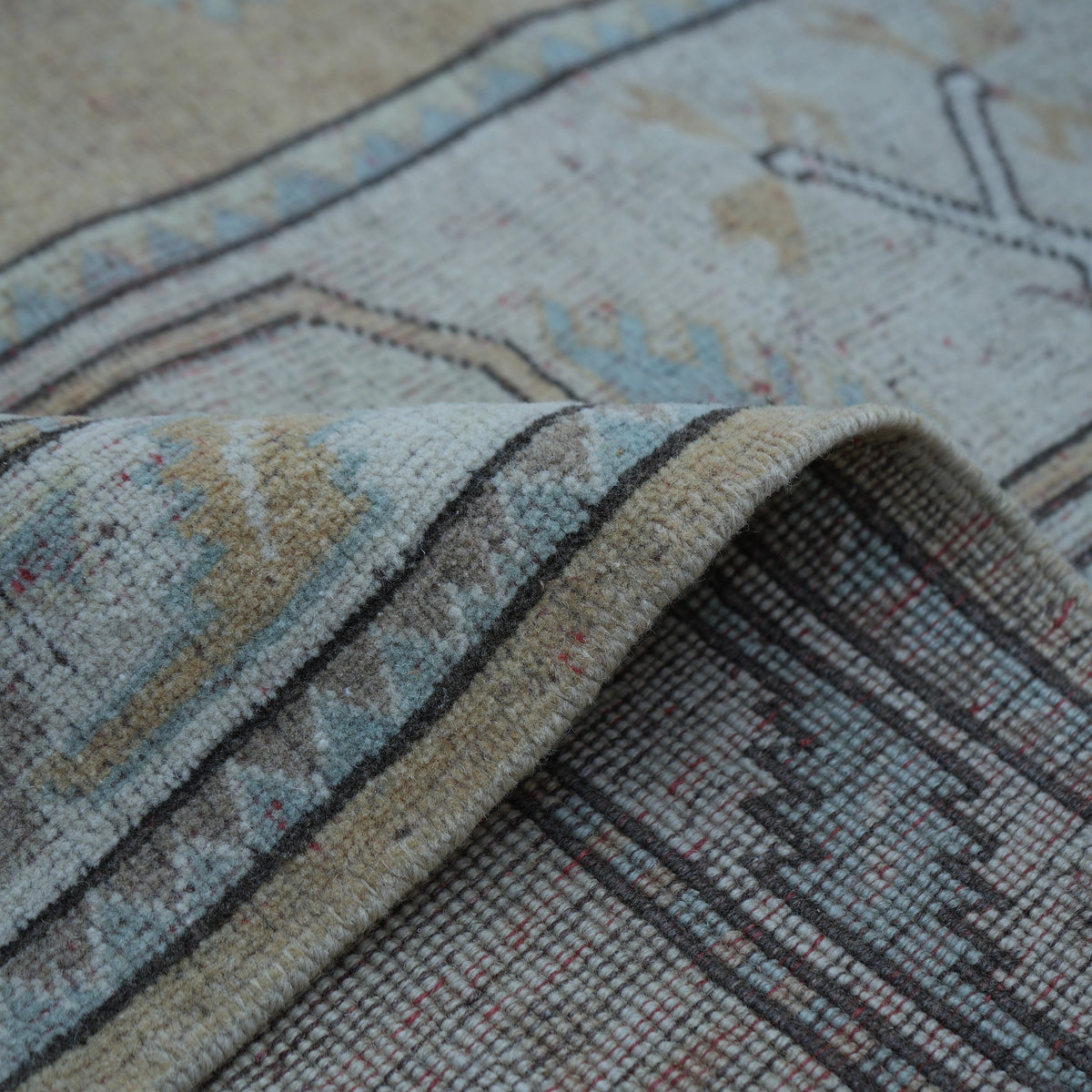
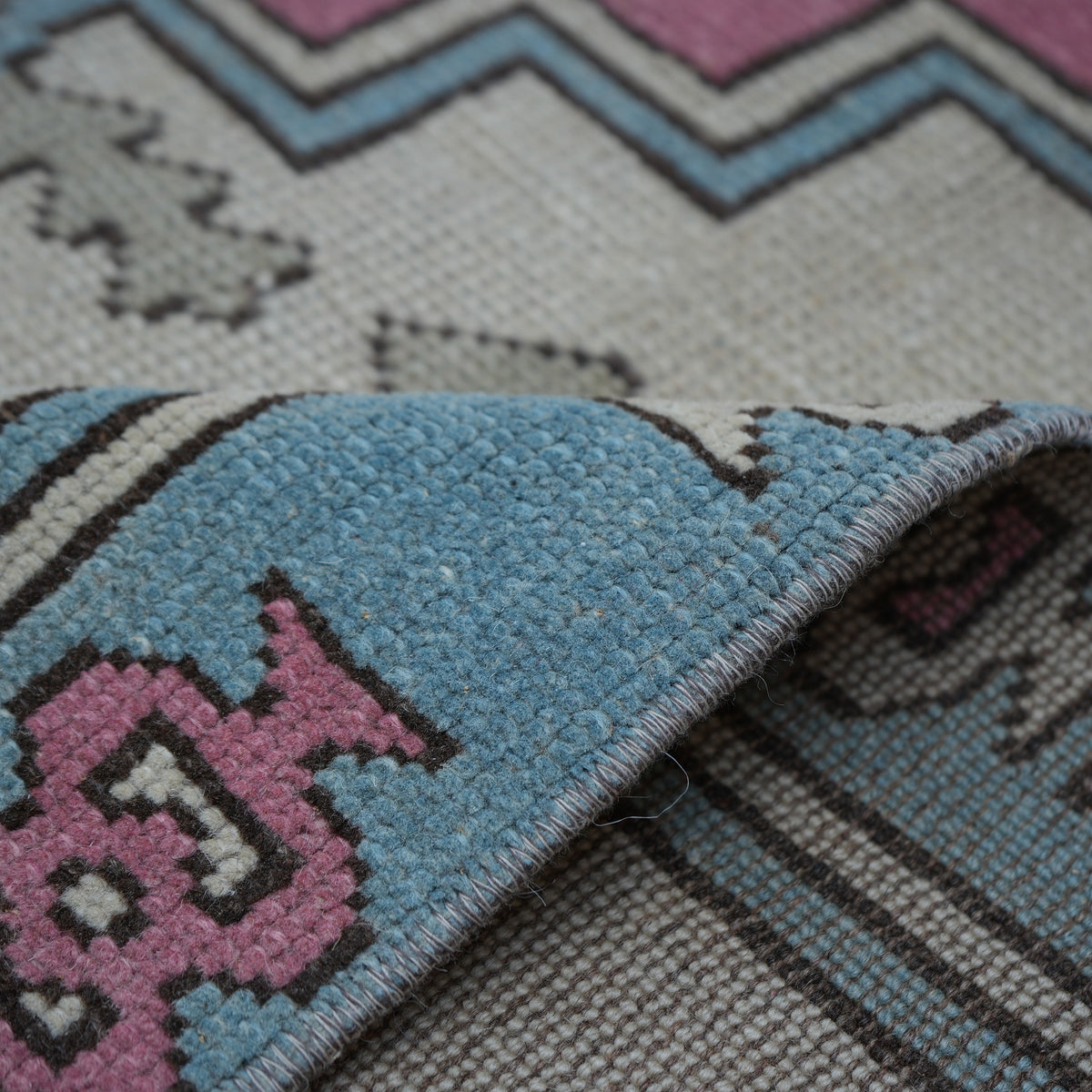
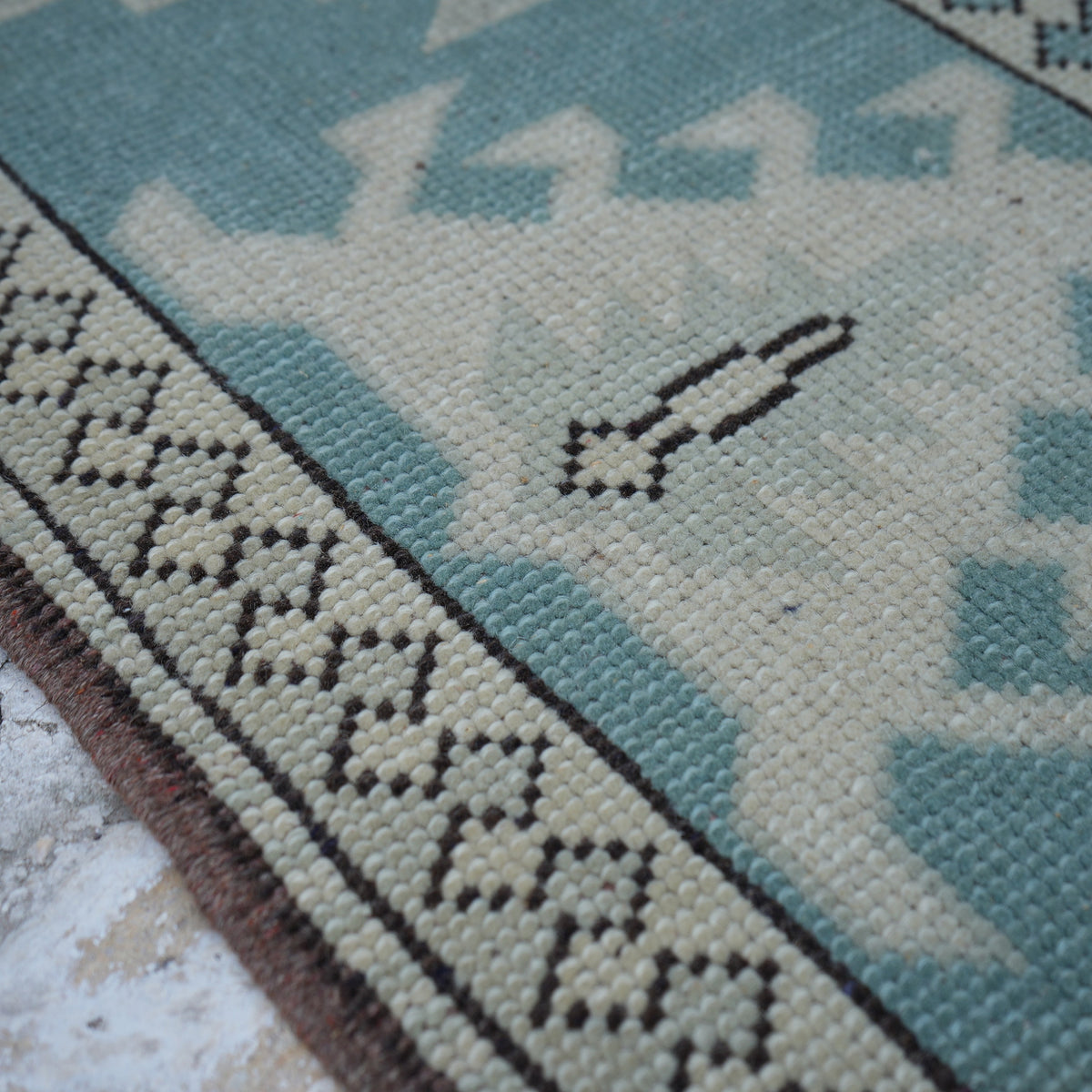
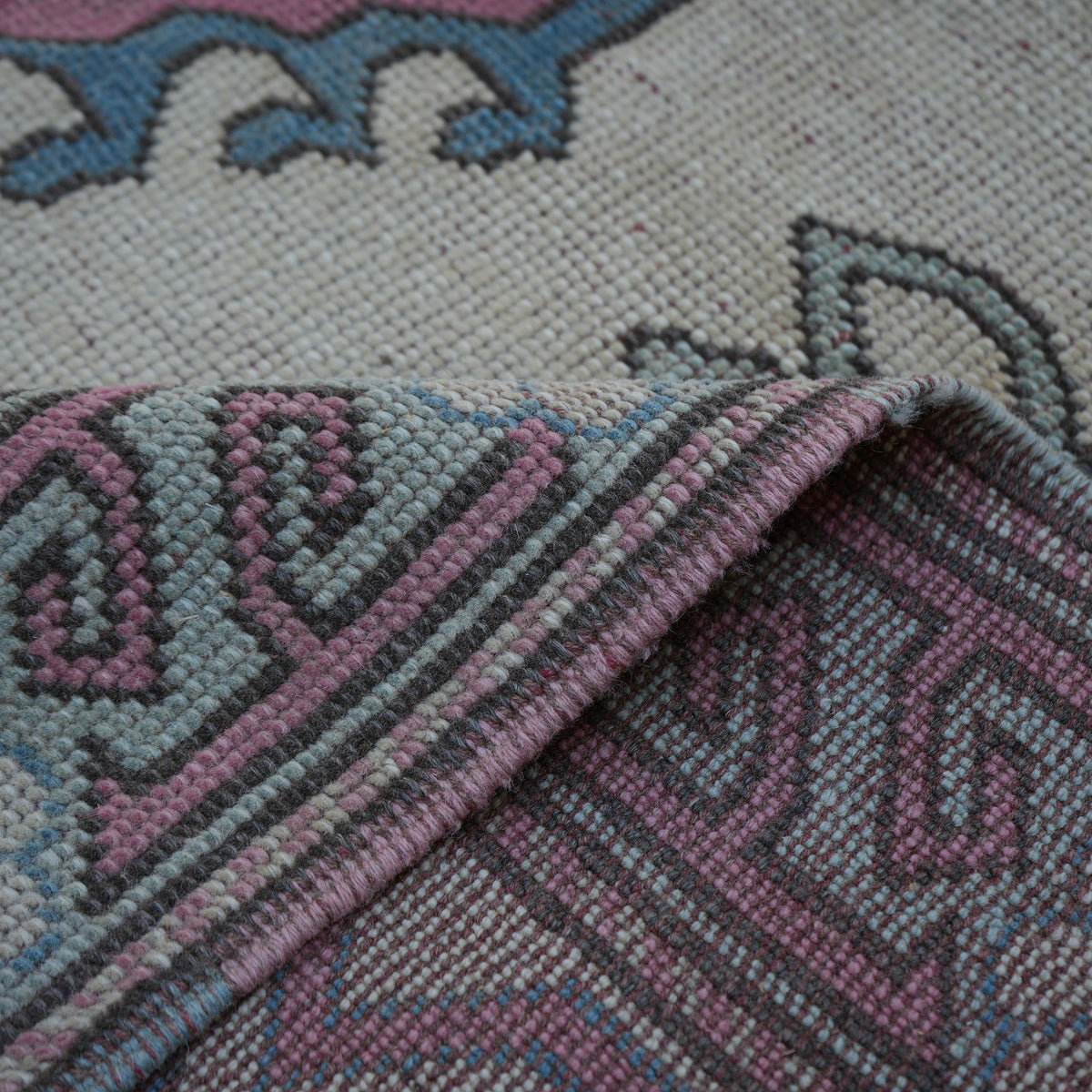
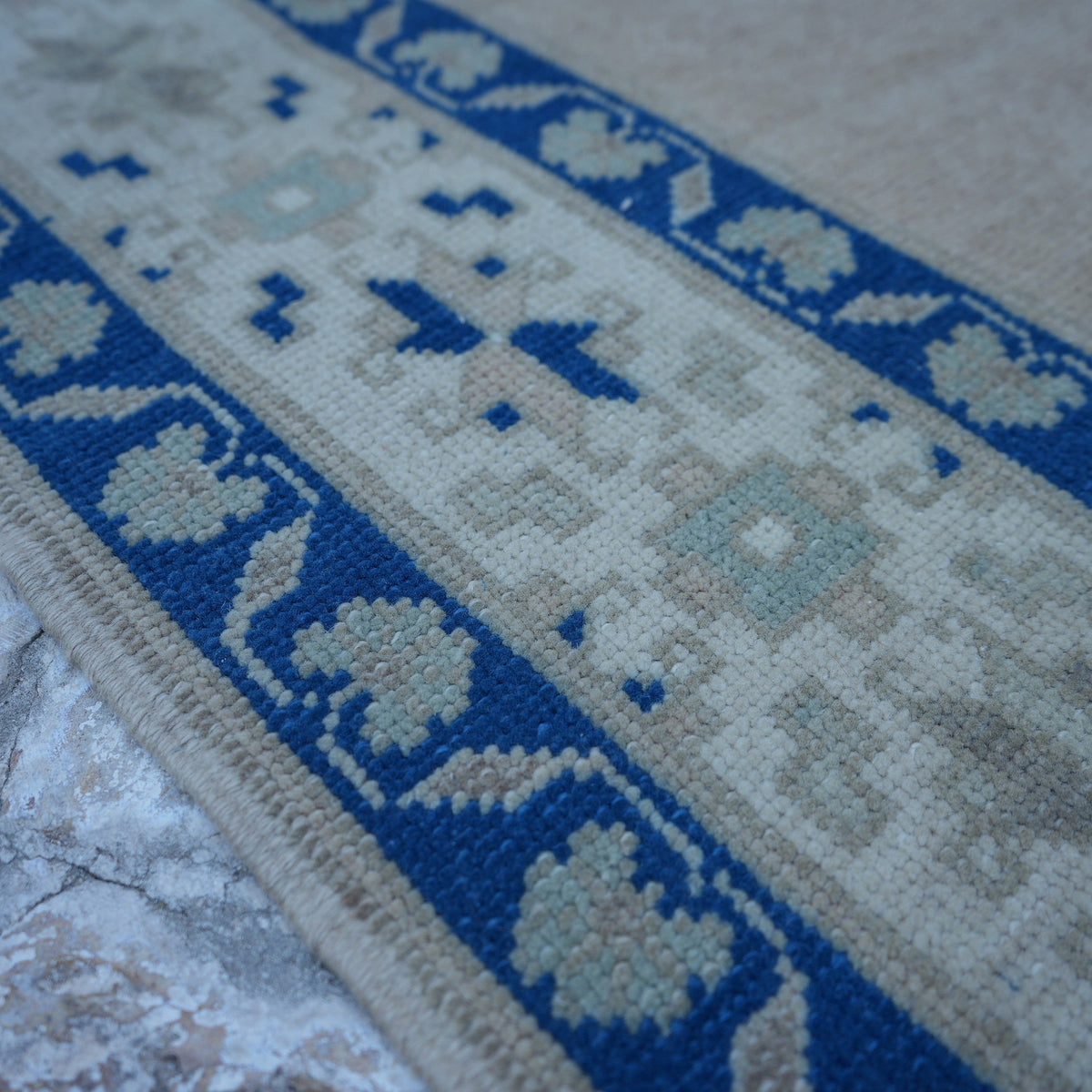
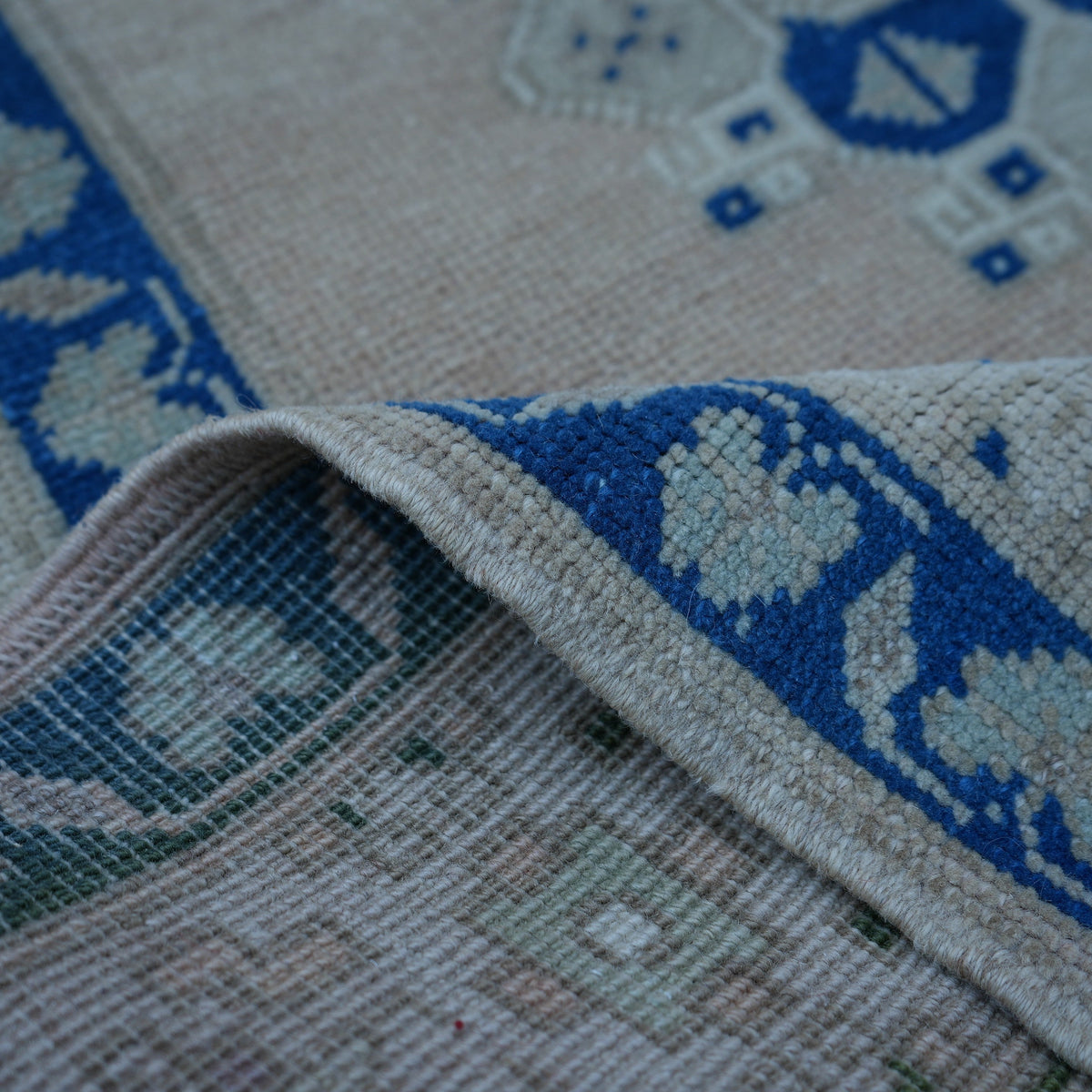
Natural wool fibers catch light from multiple angles rather than reflecting it in a single flat plane — the surface shifts and glows under changing conditions, warm in afternoon sun and softer under lamplight. A synthetic rug reflects light uniformly and reads as static. In a small room, where every visual layer contributes to how the space feels, that difference is visible. Our vintage rugs — particularly the open-field Oushak pieces with their naturally dyed, hand-spun wool — show this quality most clearly.
Flatweave Kilim vs. Hand-Knotted Pile — Which Works Better in Tight Spaces?
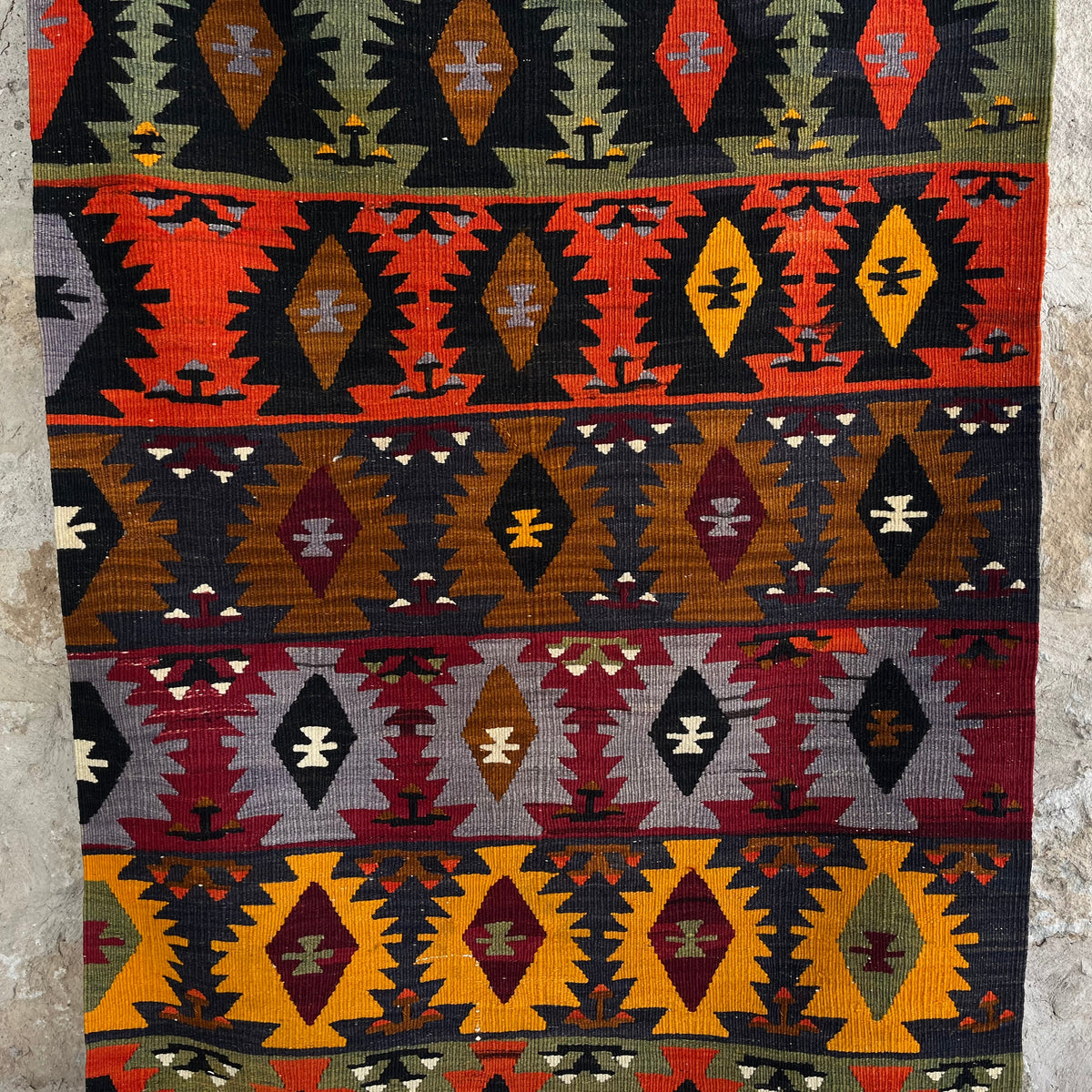
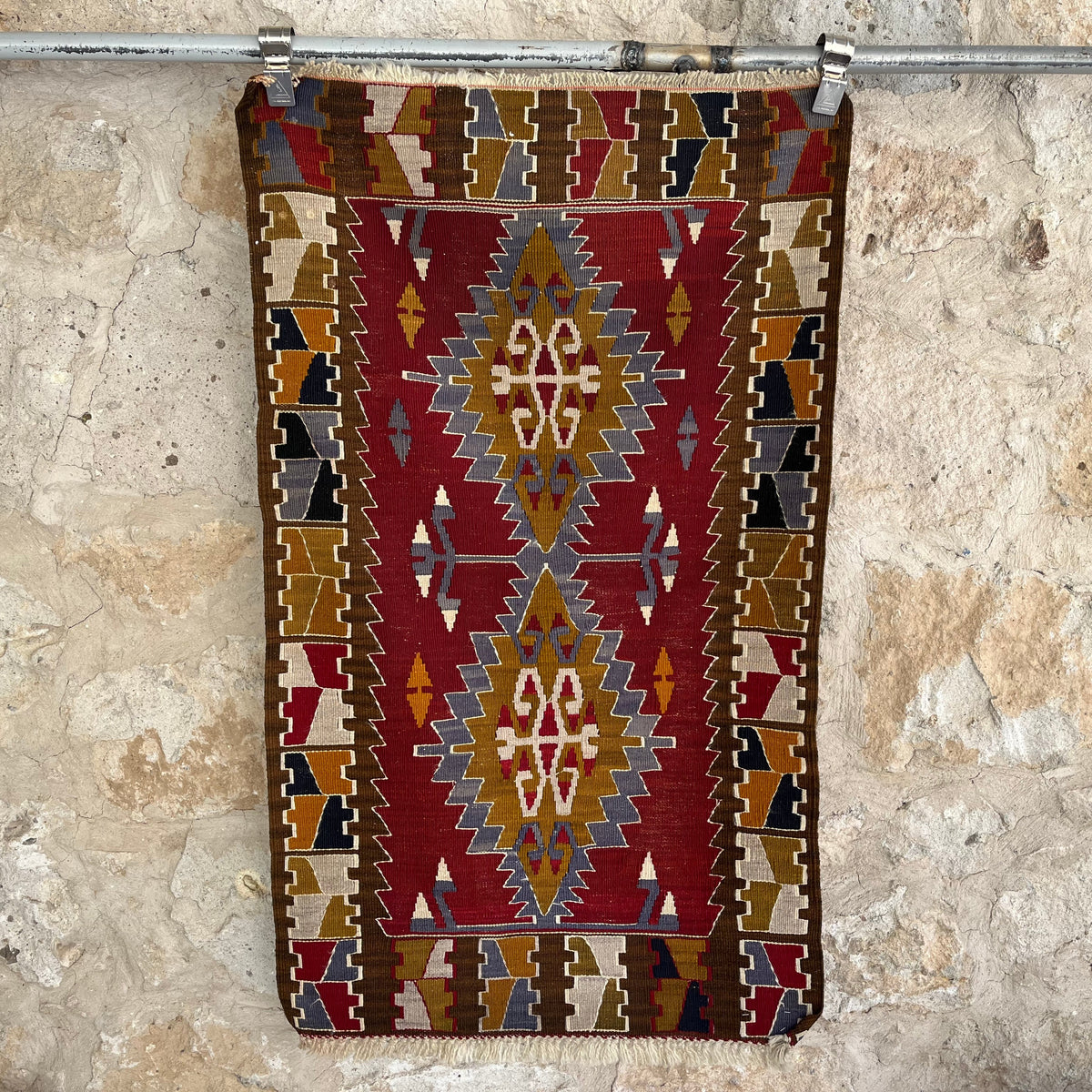
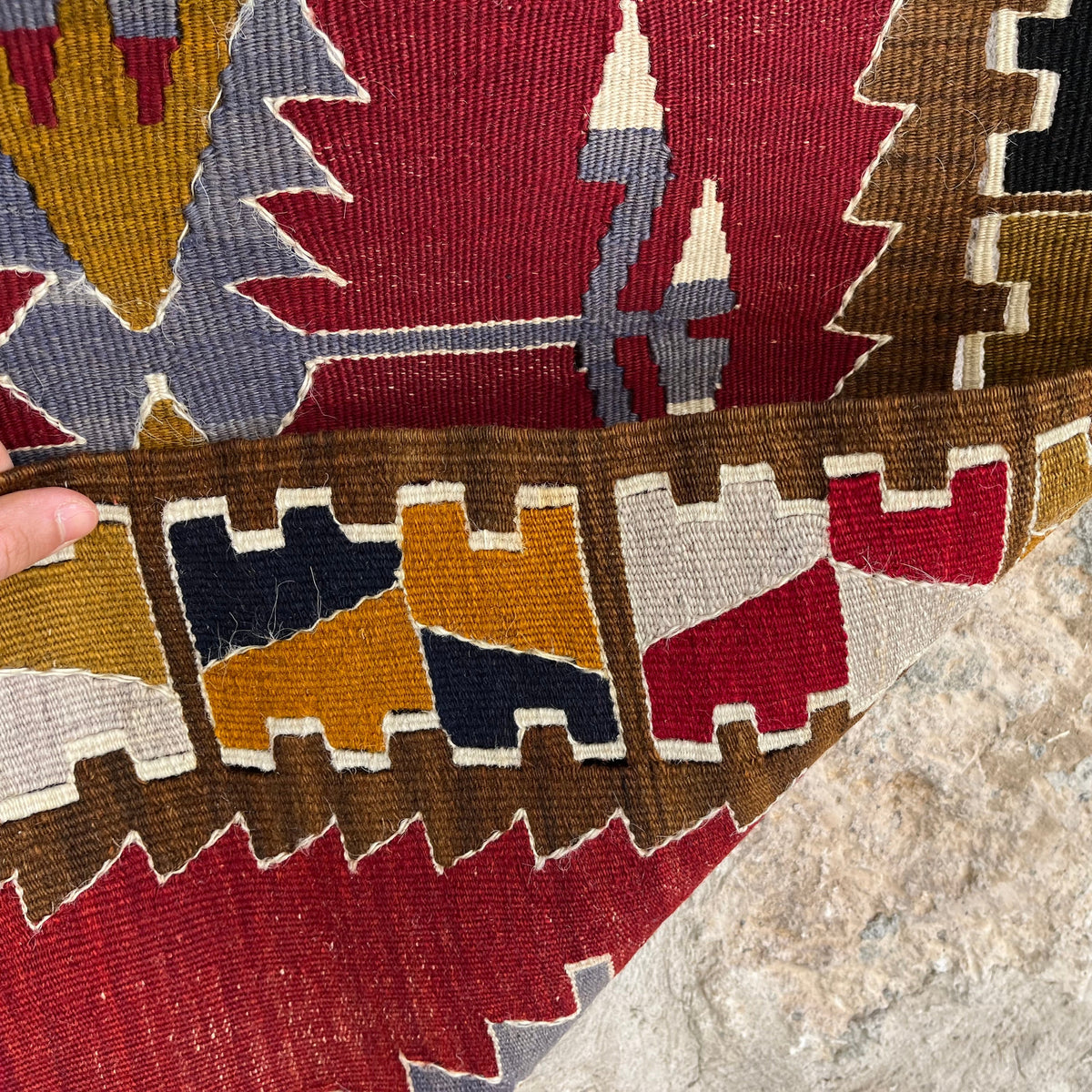
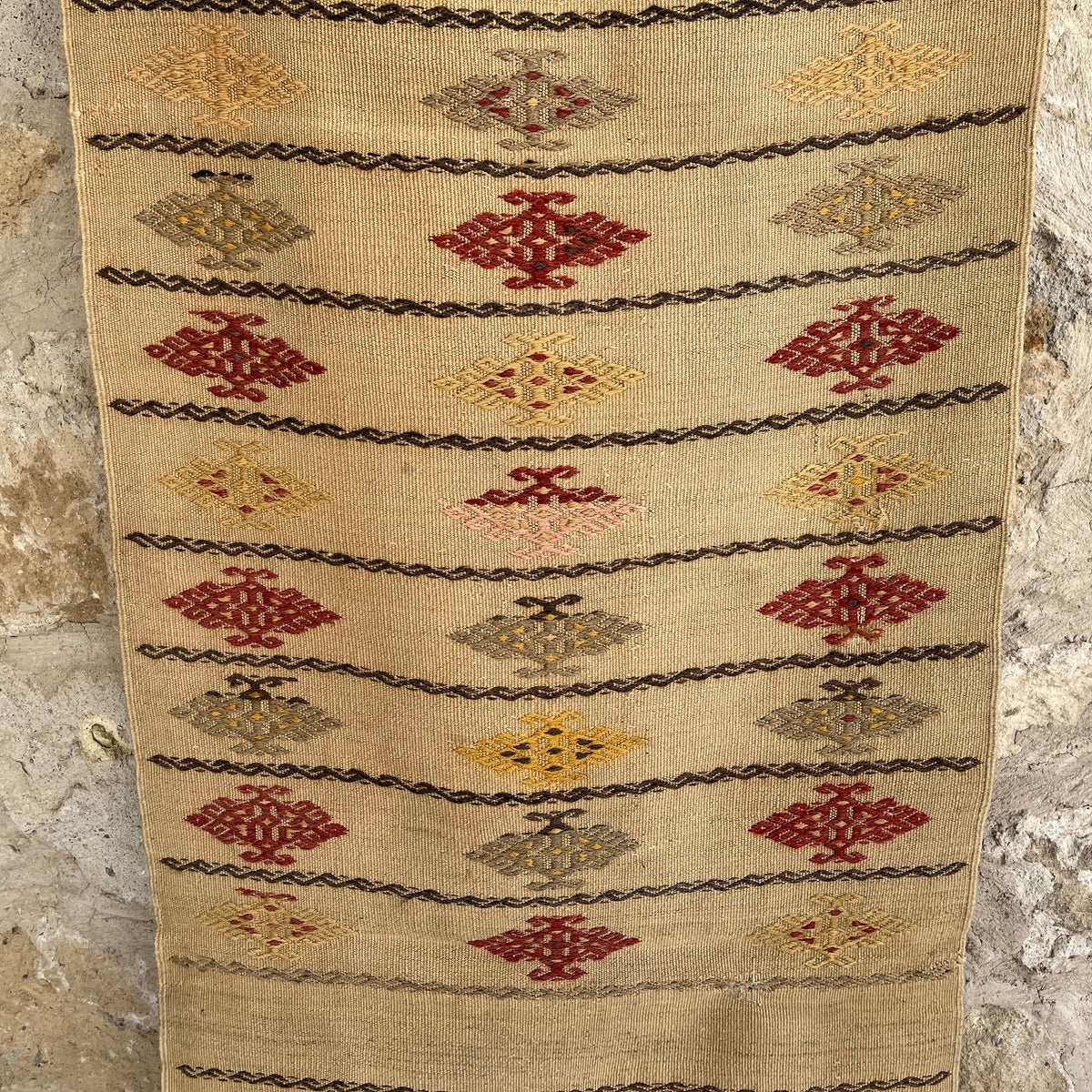
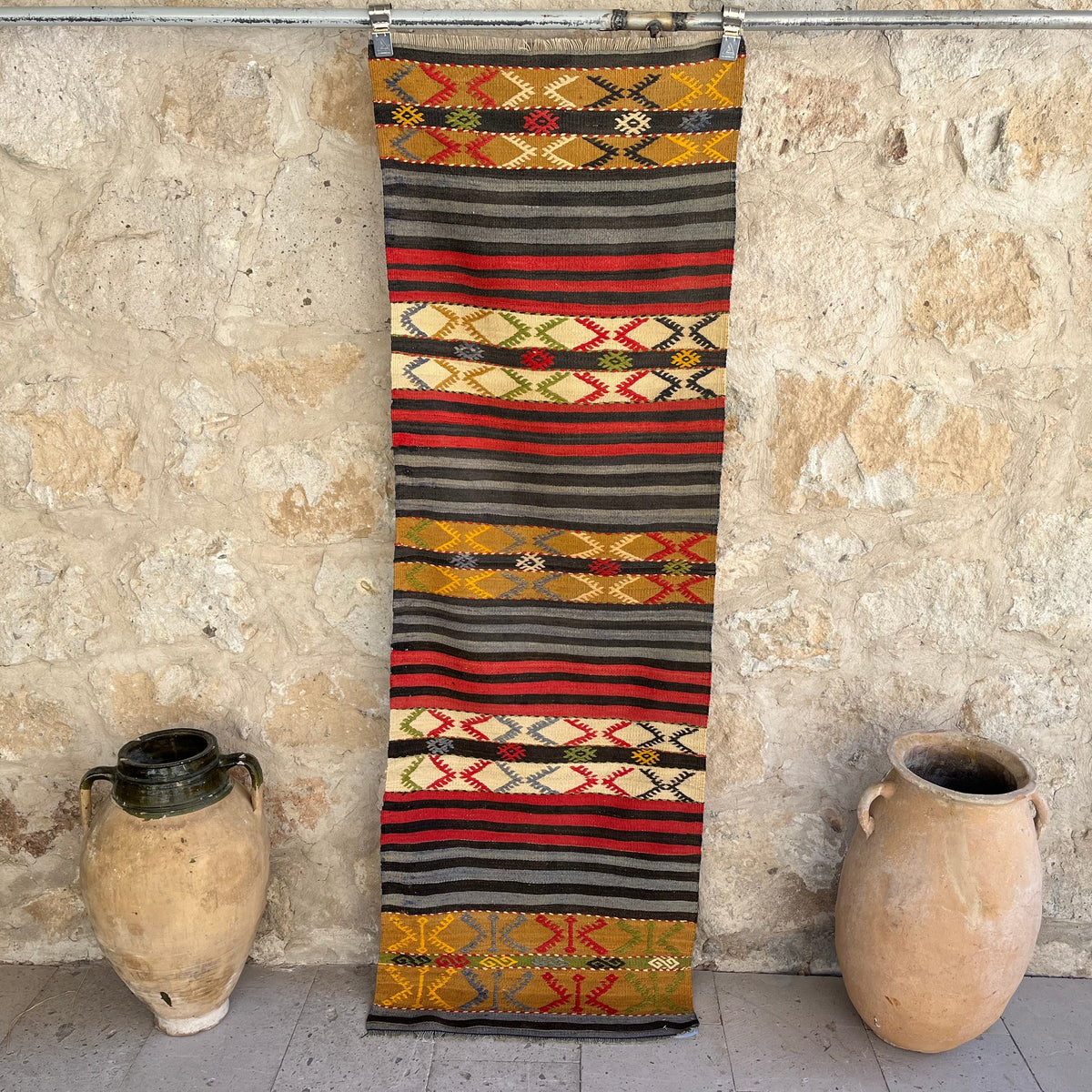
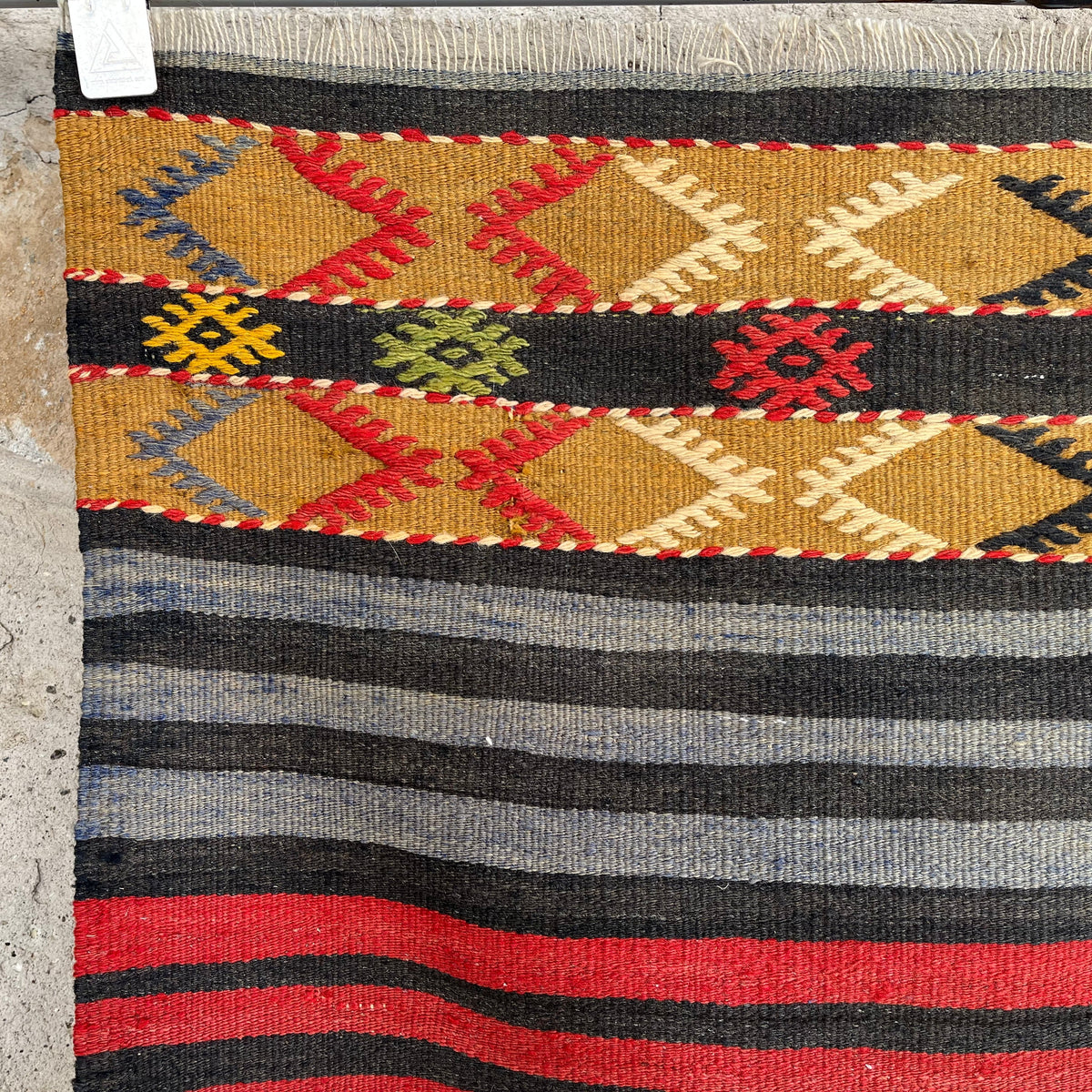
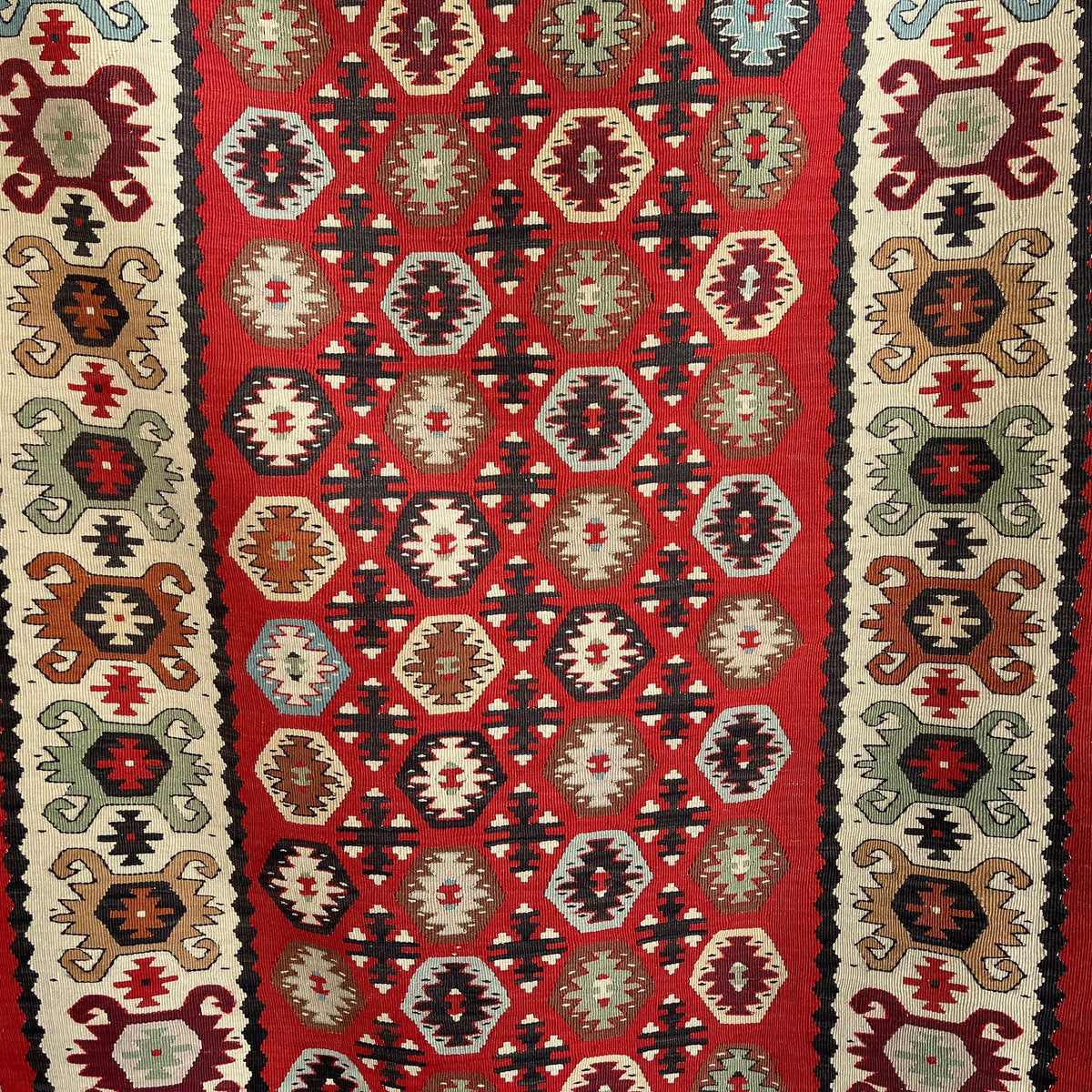
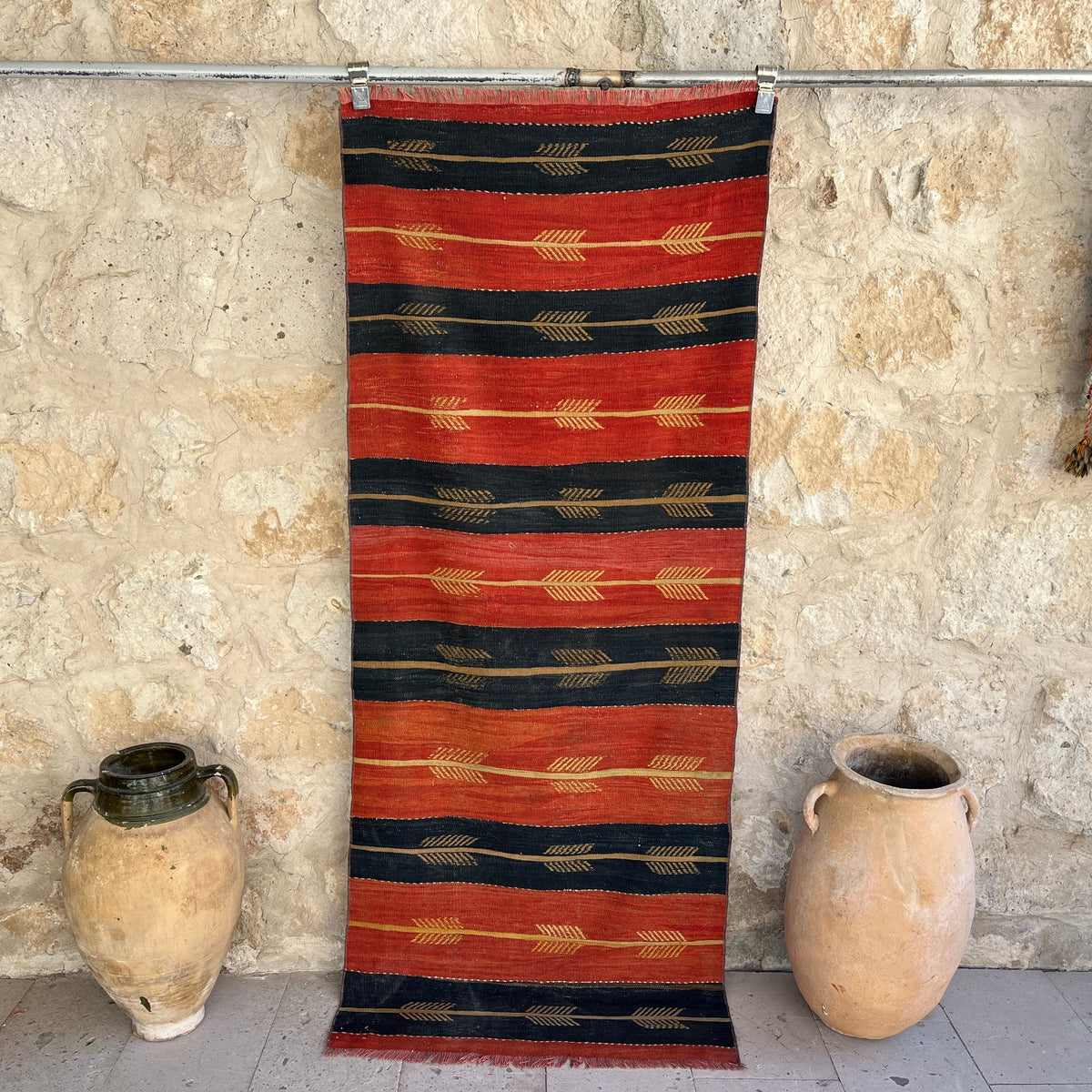
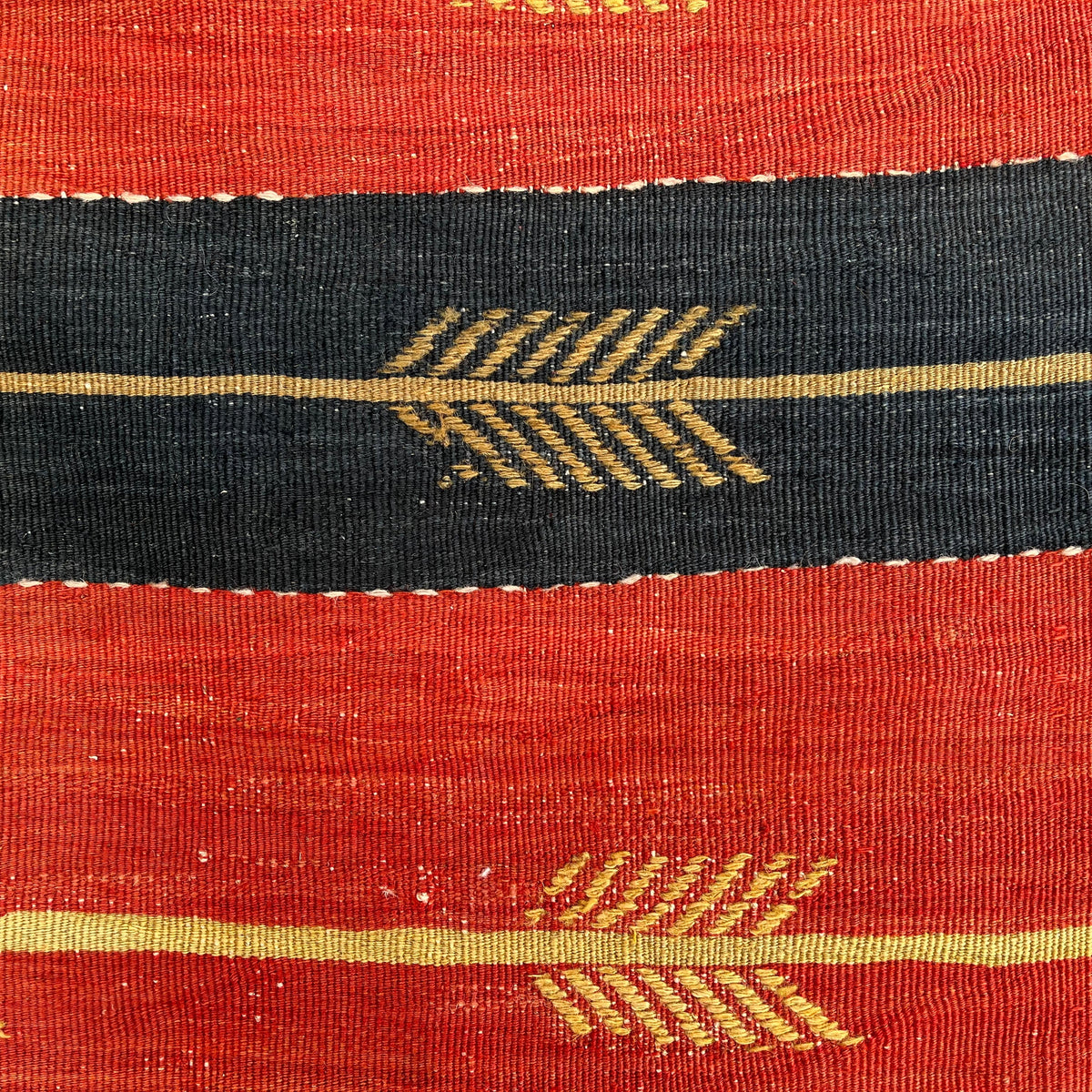
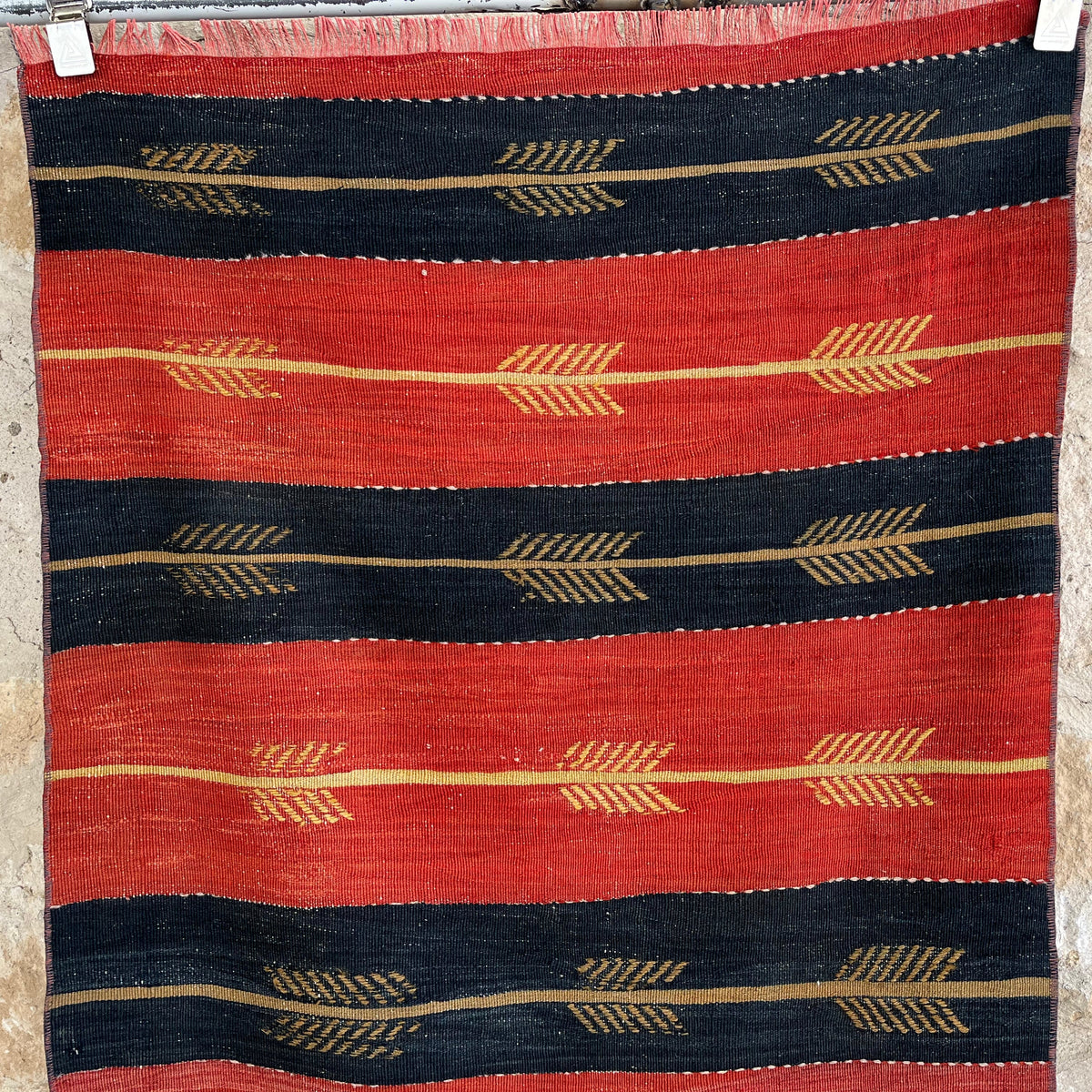
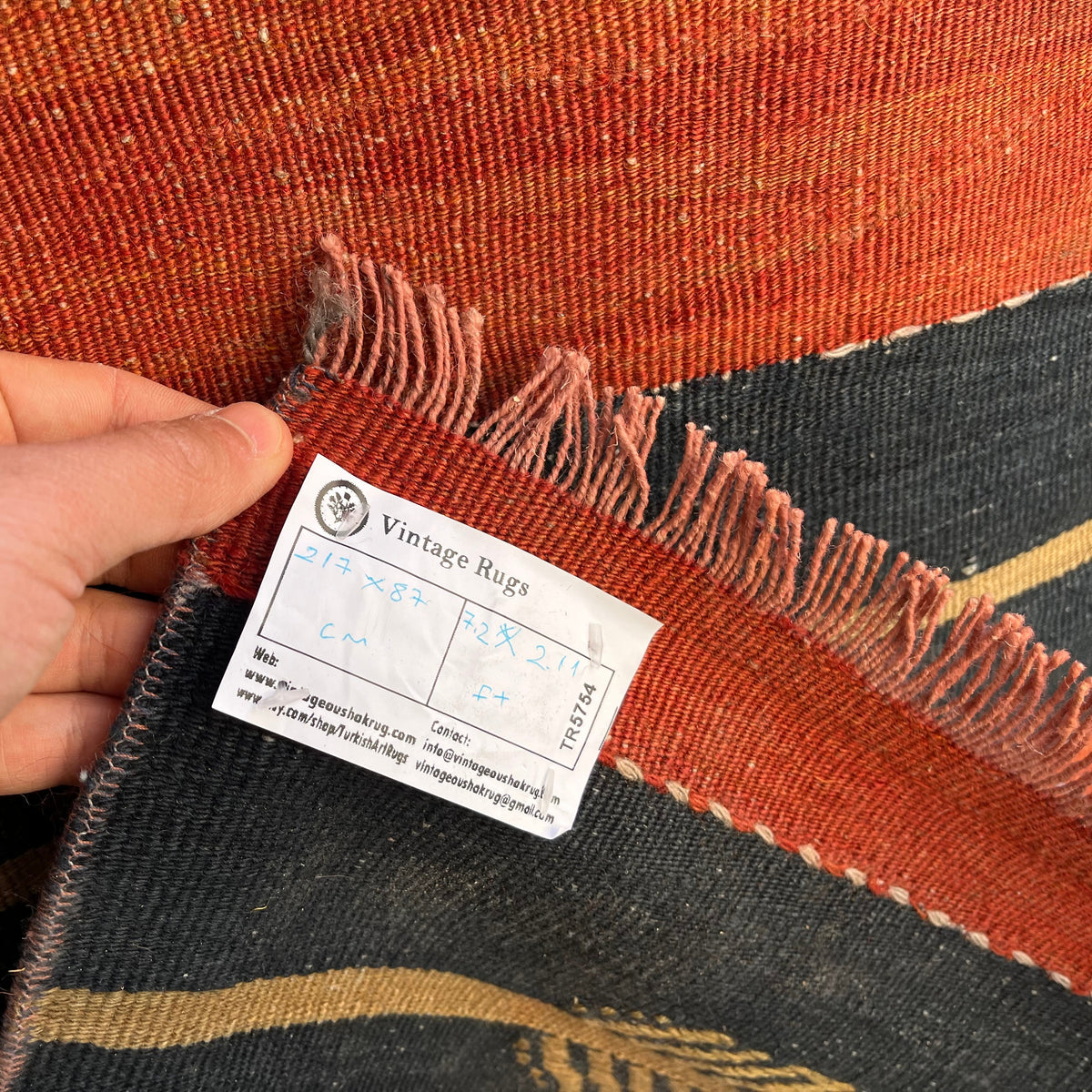
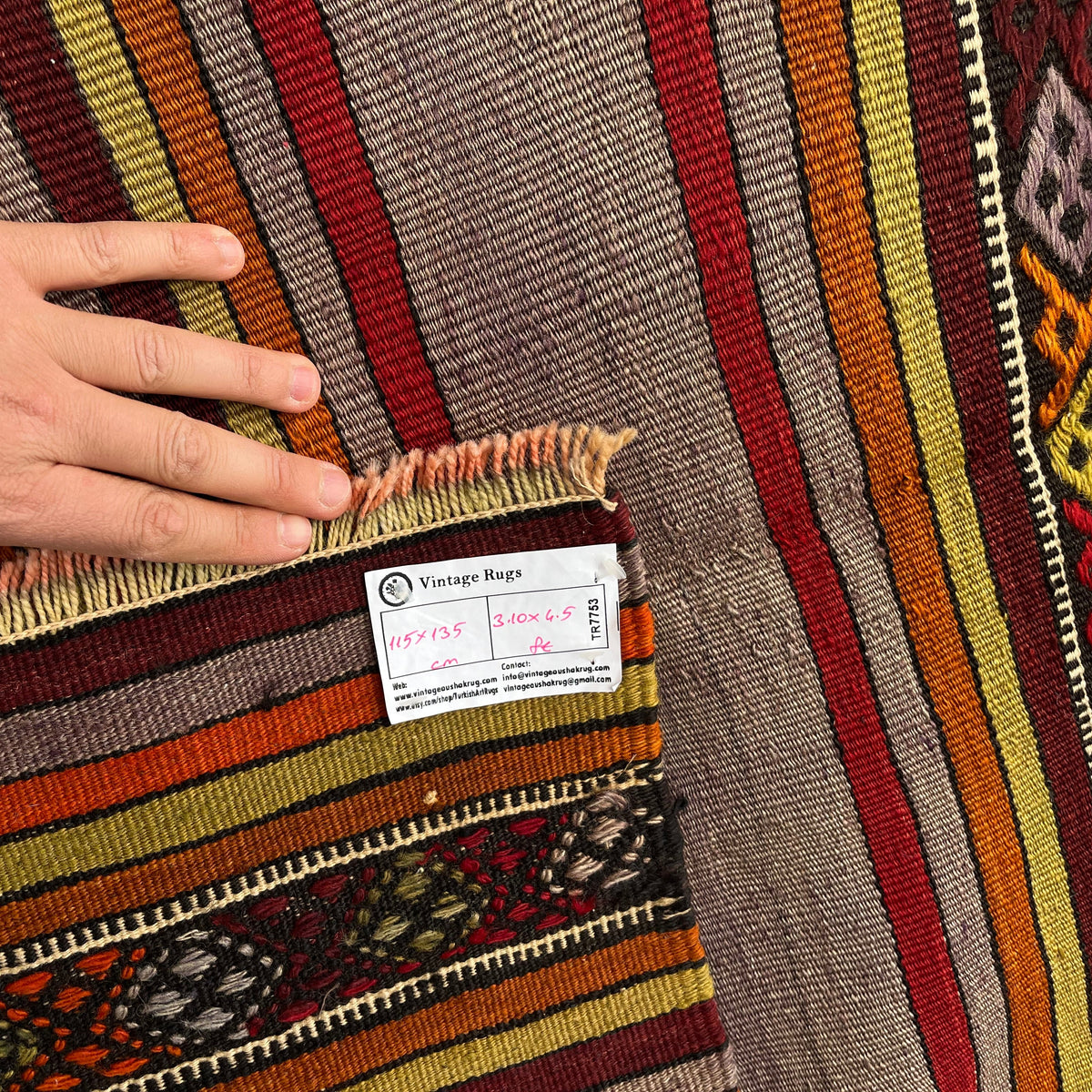
A kilim is flatwoven — no pile, no bulk at floor level. It reads as graphic and clean, and it's easy to reposition when the layout changes. A hand-knotted pile rug brings warmth kilim cannot match, but pile height matters in compact rooms: medium to low pile works well, while very high shag fills a tight space faster than expected. My shortcut — if the customer has pets or kids, I suggest kilim. If they have good natural light and want warmth, I suggest pile. One more practical note: if at least the front legs of your furniture rest on the kilim, it stays in place far better — the rug pad becomes a backup rather than a constant necessity. Our kilim rugs are a good place to start if you're leaning flatweave.

Rug Placement Strategies That Make Any Room Feel Larger
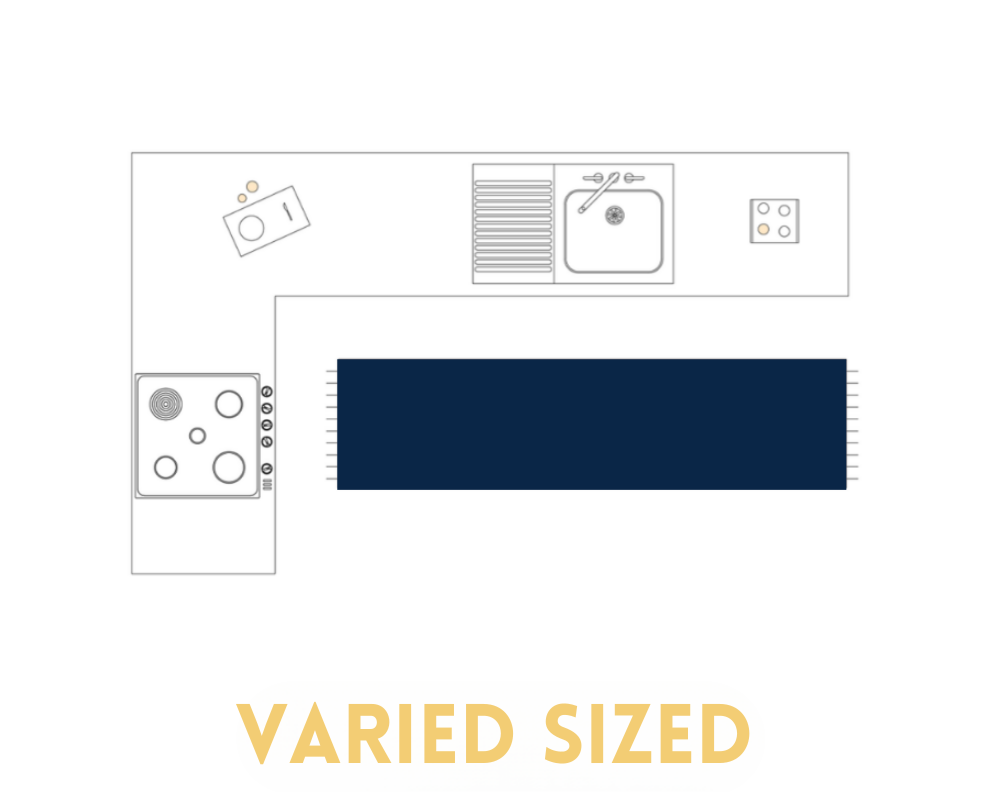
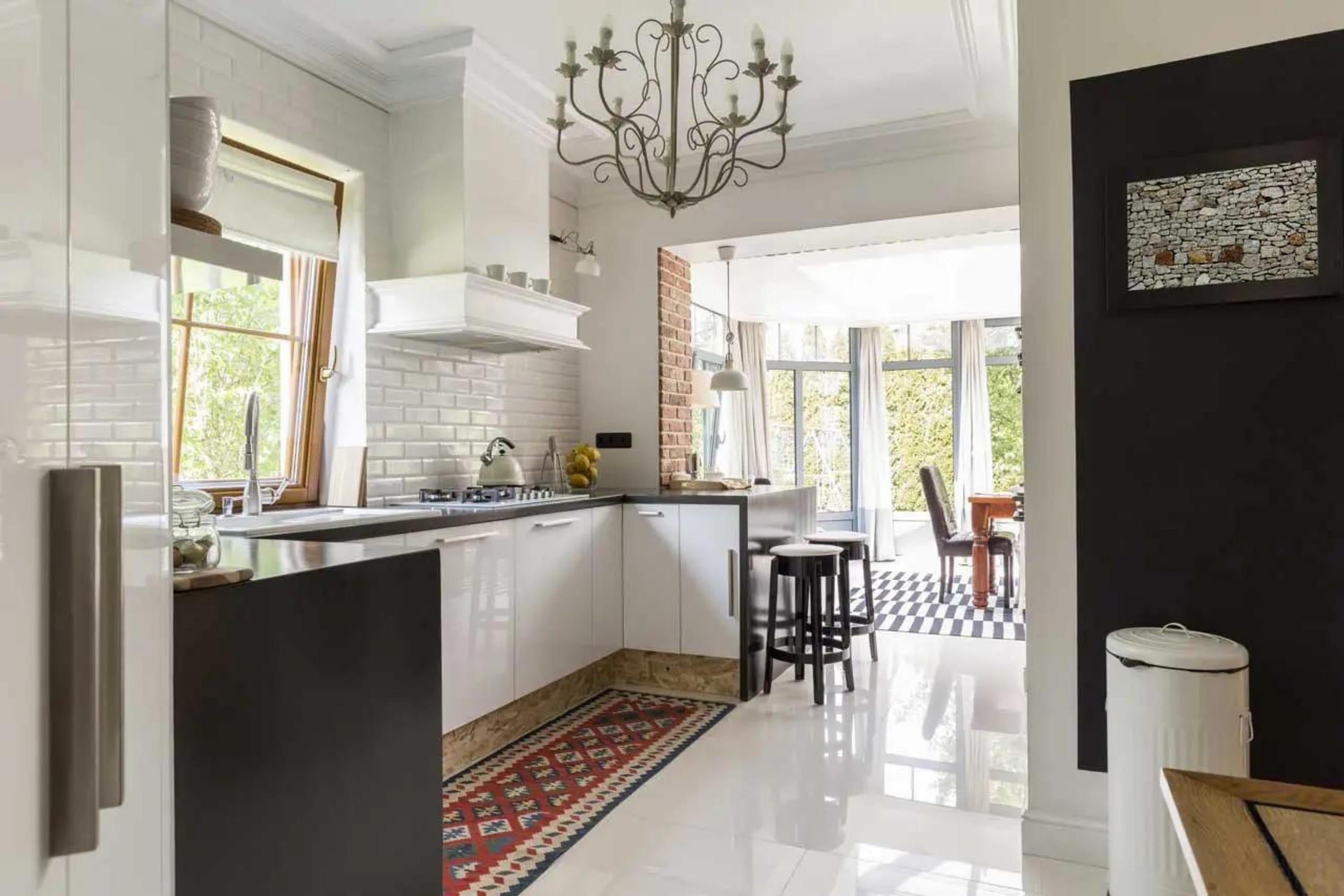
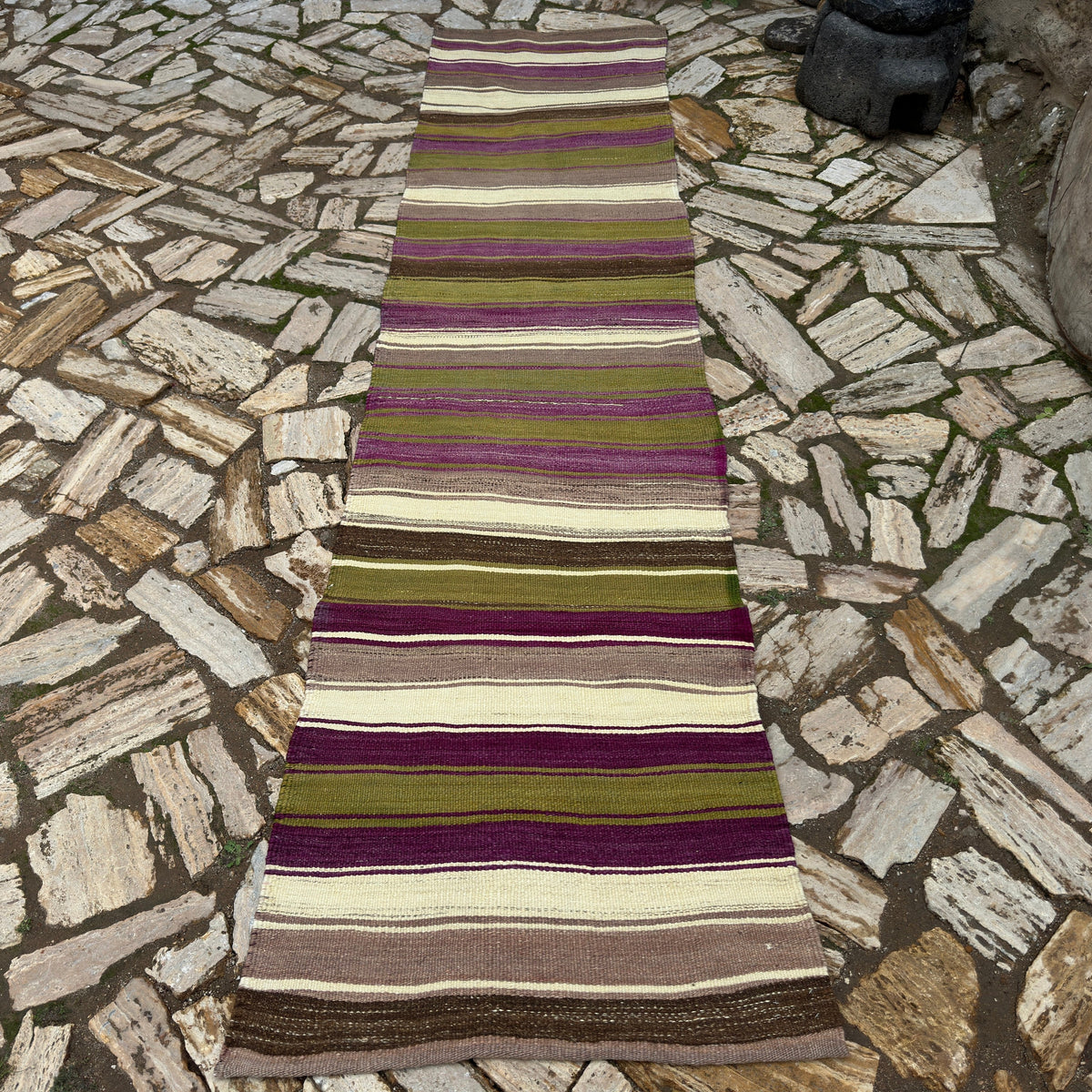
The right rug in the wrong position still shrinks the room. Placement is the third variable and the one most people overlook. Our runner rugs, placed correctly in a narrow hallway, draw the eye forward and turn a corridor into a passage rather than a dead end.
The 3 Layout Options for a Small Living Room
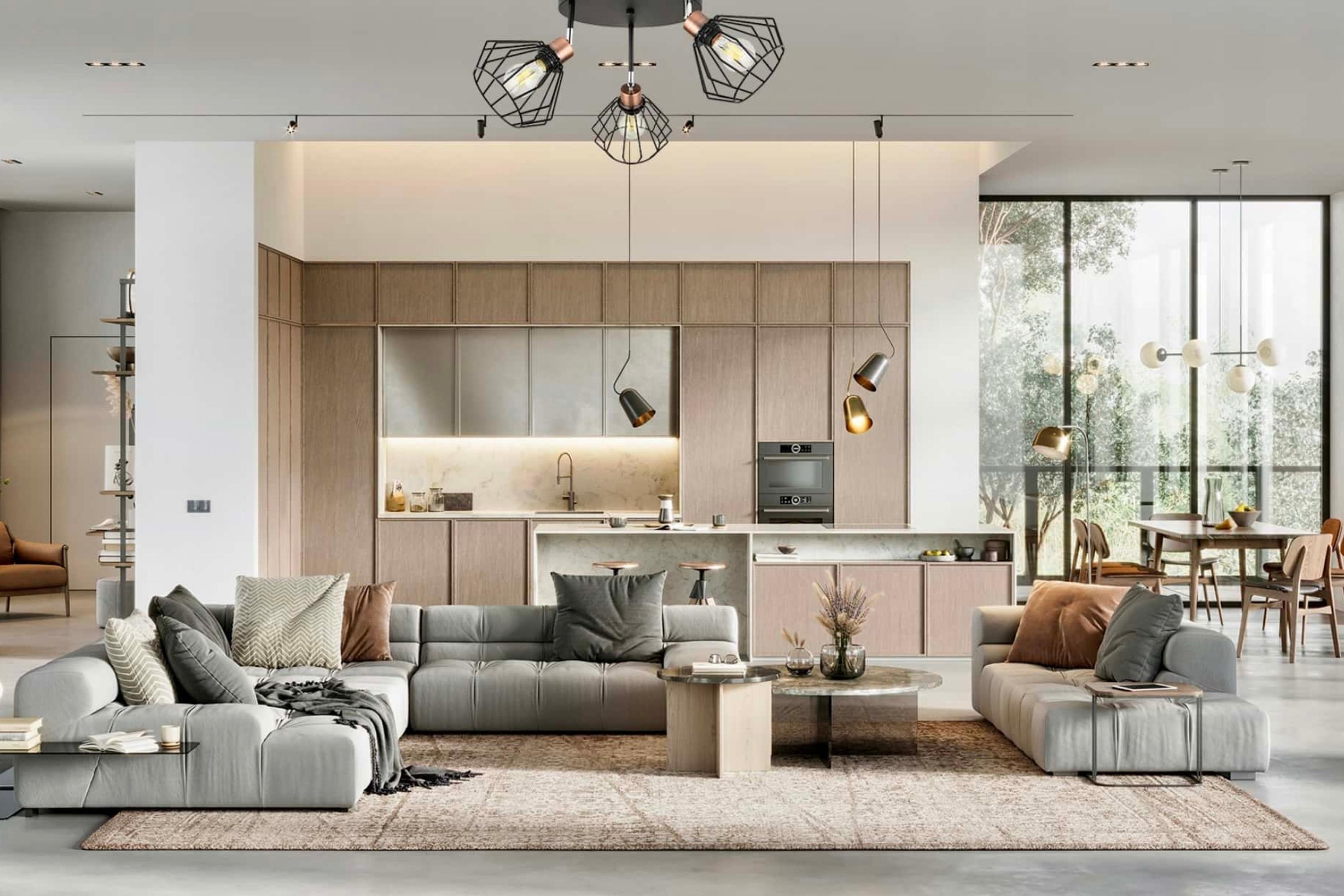
All legs on the rug delivers the most cohesive result — everything reads as one anchored zone — but requires a 9x12 or larger. Front legs only is the most practical arrangement: front legs of the sofa and chairs rest on the rug, back legs on the floor; the eye still reads it as a unified space. No legs on the rug makes everything feel disconnected and typically shrinks the room further. For most compact living rooms, front legs on is the reliable baseline.
When a Round Rug Works Better Than a Rectangle
Square rooms can fight rectangular rugs — competing corners cause the eye to bounce between edges. A round rug removes those angles, softens the geometry, and makes the space read as more open. For a small dining area with a round or square table, or a compact bedroom where you want a defined landing zone, a round rug often reads better than a rectangle.
Room-by-Room Guide — Best Rug for Every Small Space
Living room. Size up from instinct — an 8x10 is the baseline, 9x12 often reads better. At least the front sofa legs should rest on the rug, and light to medium tones work best unless the room has strong natural light.
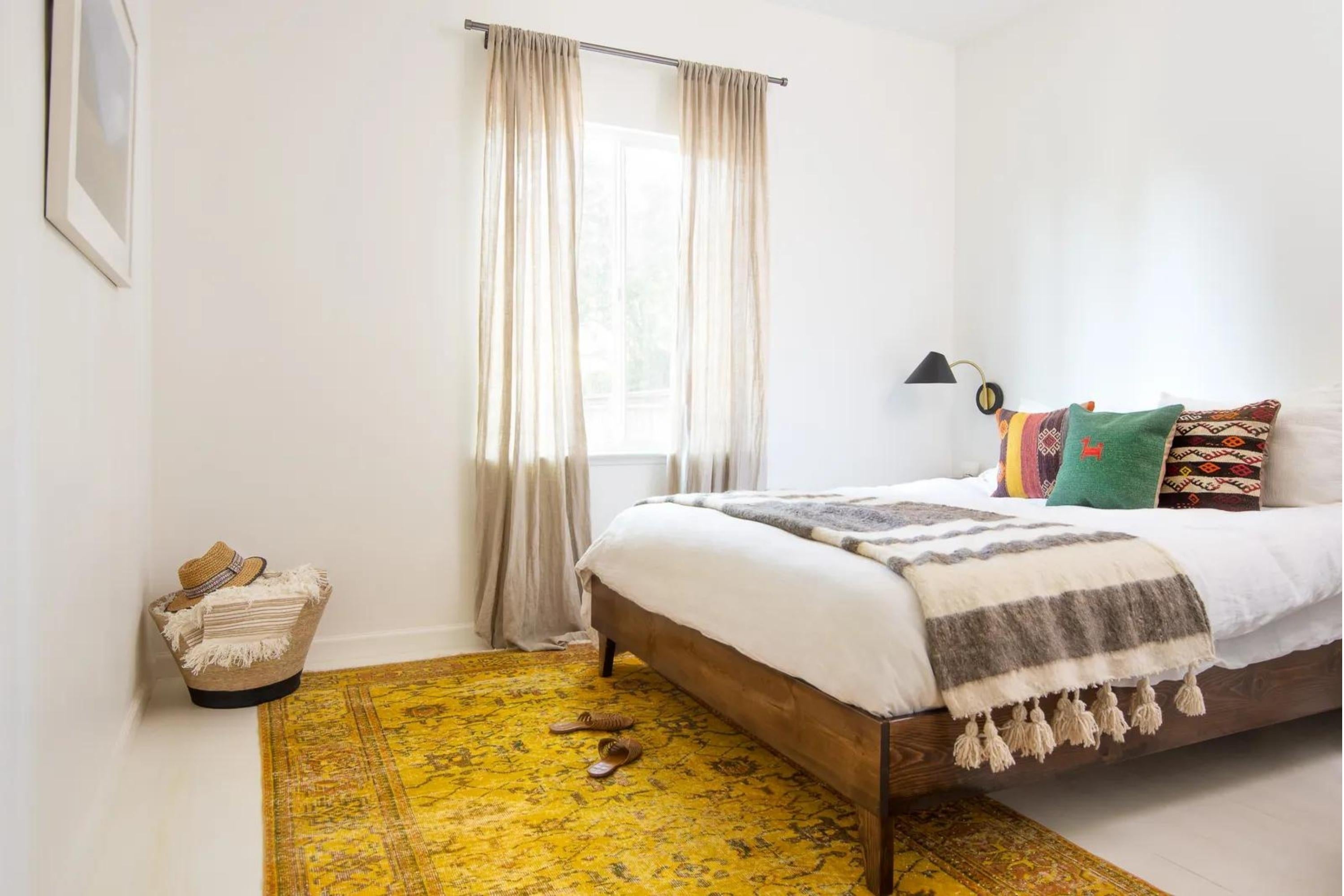
Bedroom. Large enough that feet land on it from both sides of the bed. A 5x8 works in a small bedroom; 6x9 is more comfortable. Our 5x7 vintage rugs are a good starting point when you want vintage character in a genuinely compact space.
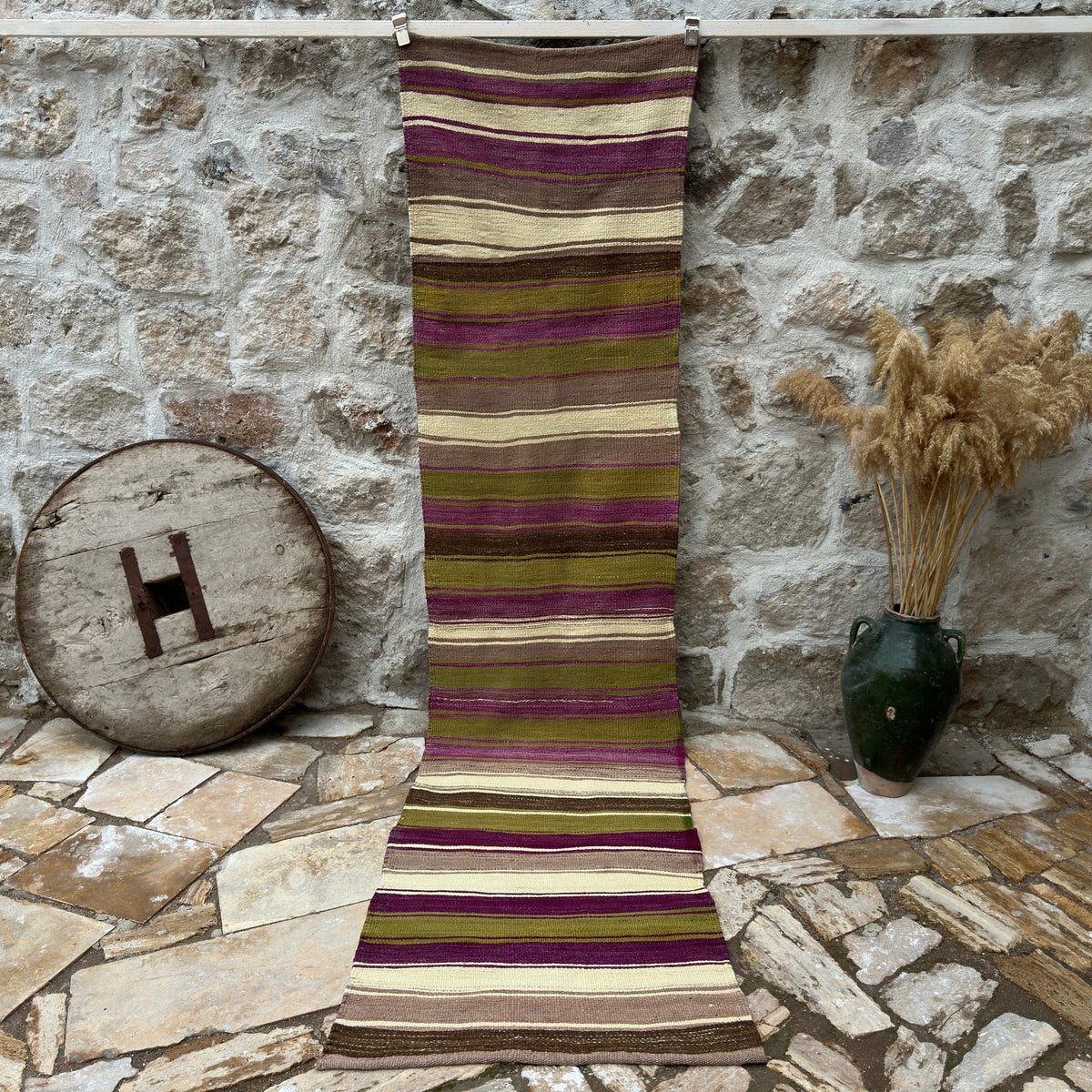
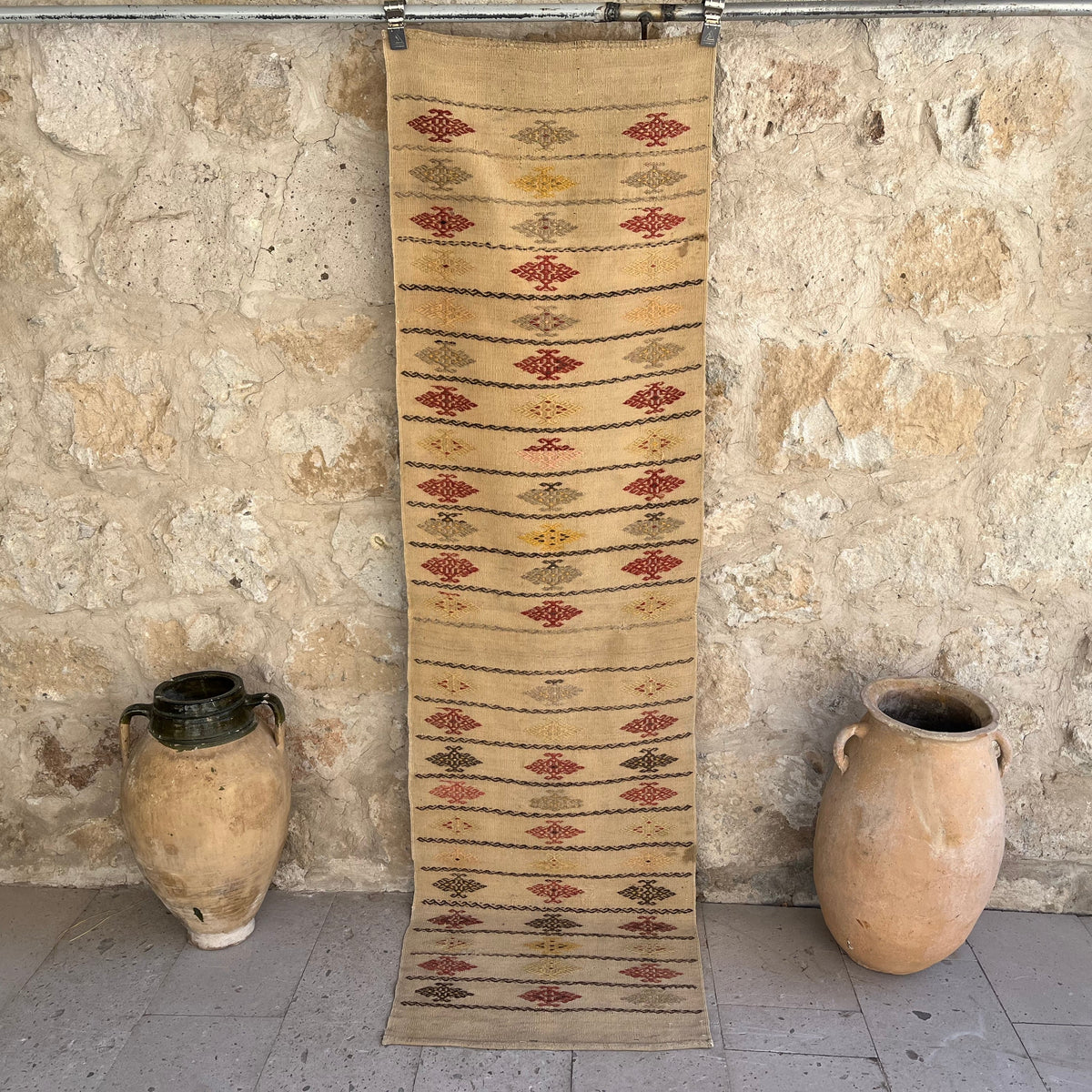
Hallway and entryway. Always a runner — a 2x8 or 2.5x10 draws the eye forward and makes the home feel larger from the first step inside. Our runner rugs go up to 12 feet.
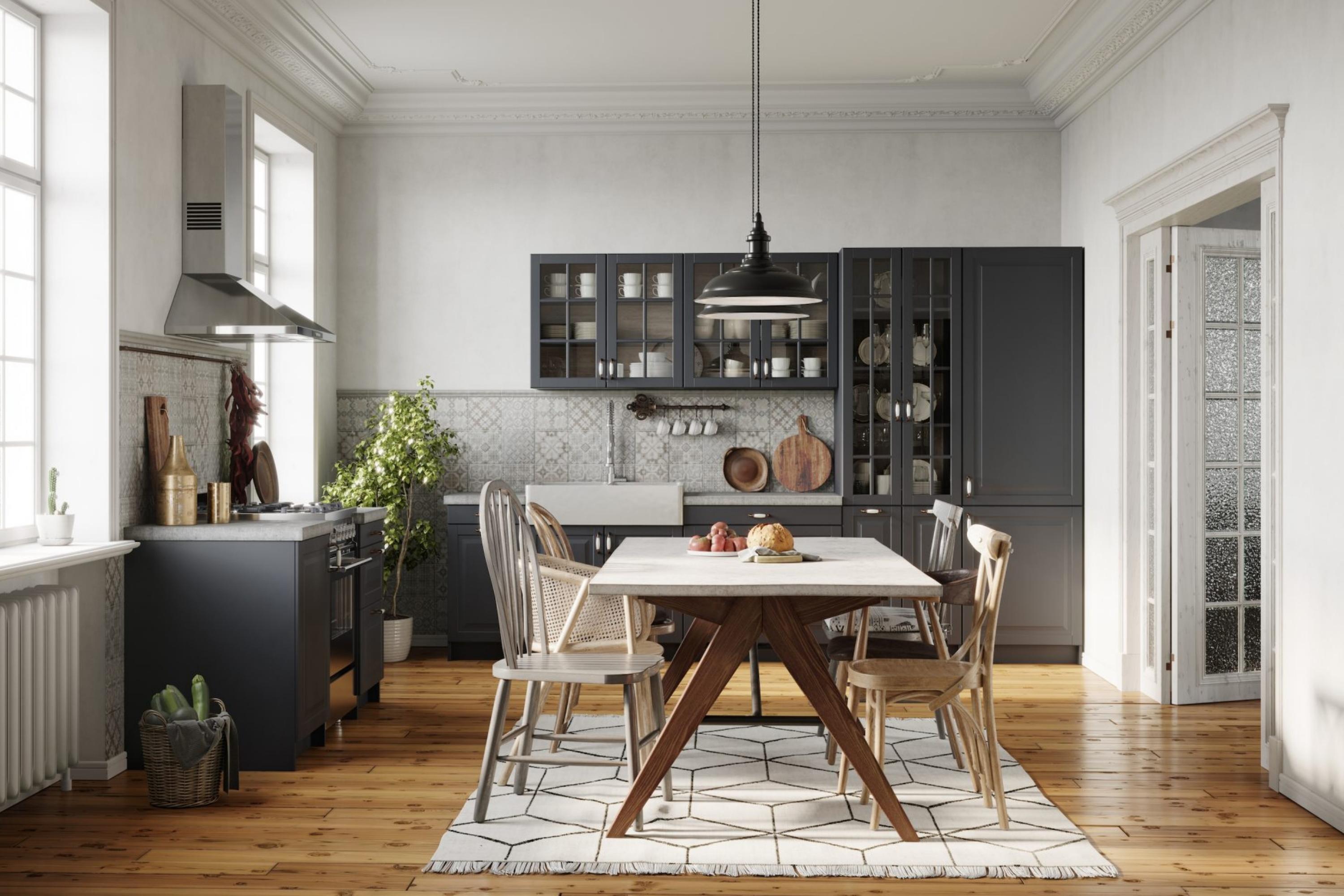
Dining room. The rug must extend far enough that chairs pulled back for sitting remain on it — chairs slide back 18 to 24 inches, so size accordingly. Flatweave cleans easily under dining tables; our kilim rugs are a reliable choice here.
Studio apartment. Define two zones — a living area rug and a sleeping area rug. The rugs draw internal boundaries without walls, and the space reads as significantly larger than an undivided floor.
Common Mistakes That Make Small Spaces Feel Even Smaller
Rug too small. The most frequent and most fixable mistake — when in doubt, go larger.
Multiple small rugs instead of one large one. Two 4x6 rugs don't equal one 8x10. They divide the floor into zones the room didn't ask for and make everything read as smaller and more cluttered. One well-sized rug does what three small ones cannot. This surprises customers more than almost anything else I tell them.
Rug color too close to the floor color. When the rug blends into the flooring, it disappears — the floor reads as flat, undefined, and the rug's effect is lost entirely.
Skipping the rug pad. A kilim or flatweave that shifts underfoot makes the whole room feel unresolved. A rug pad is inexpensive, invisible, and makes the floor feel settled. Our large rugs section includes low-pile vintage options if you need to avoid bulk at floor level.

Why Vintage Handwoven Turkish Rugs Work Especially Well in Small Spaces
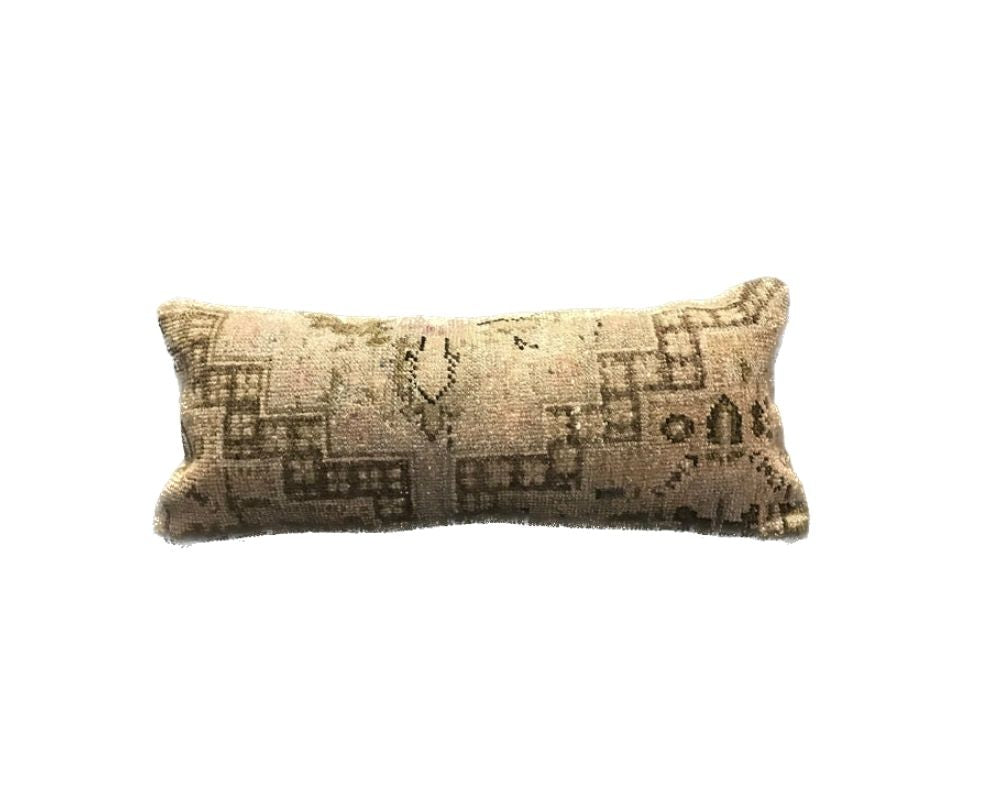
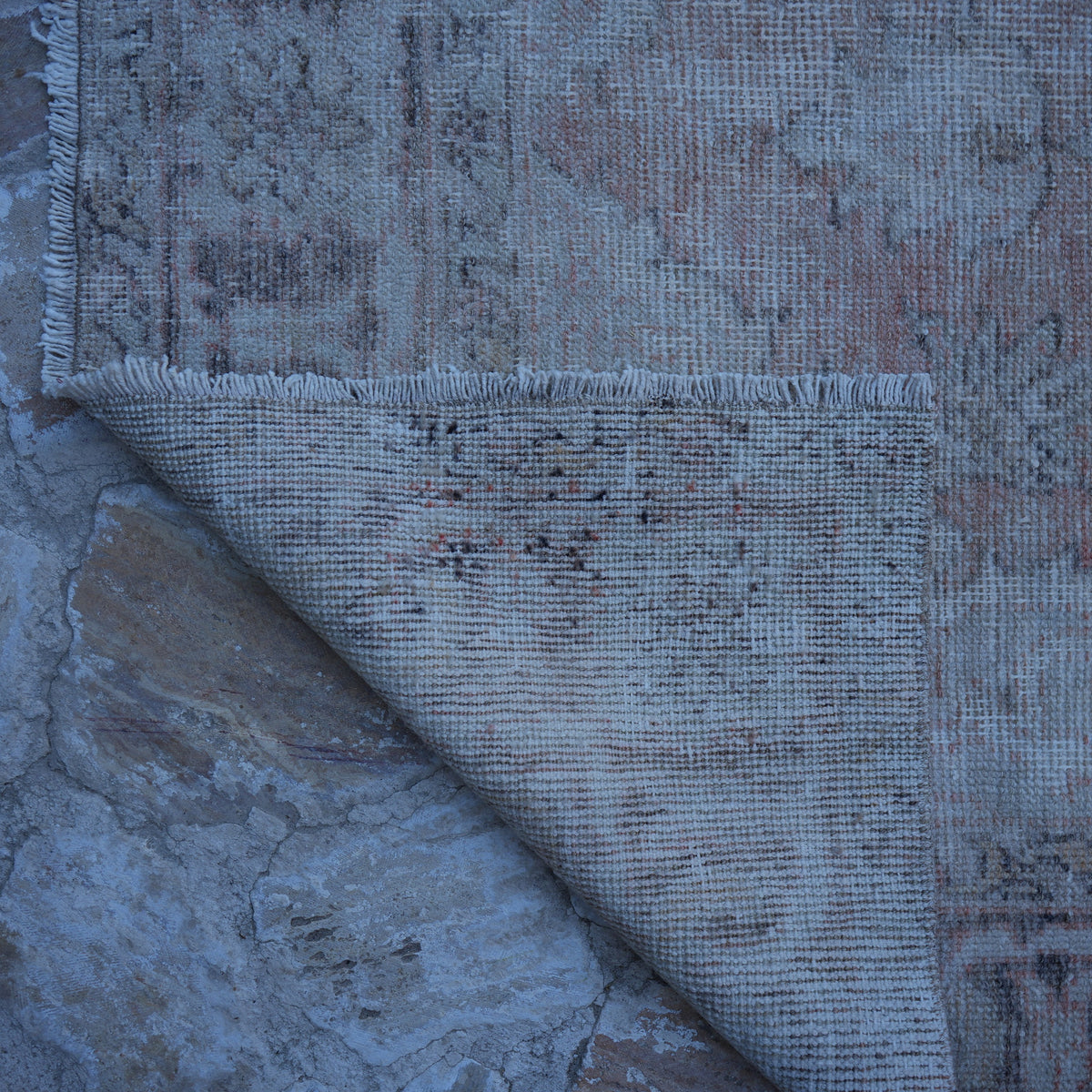
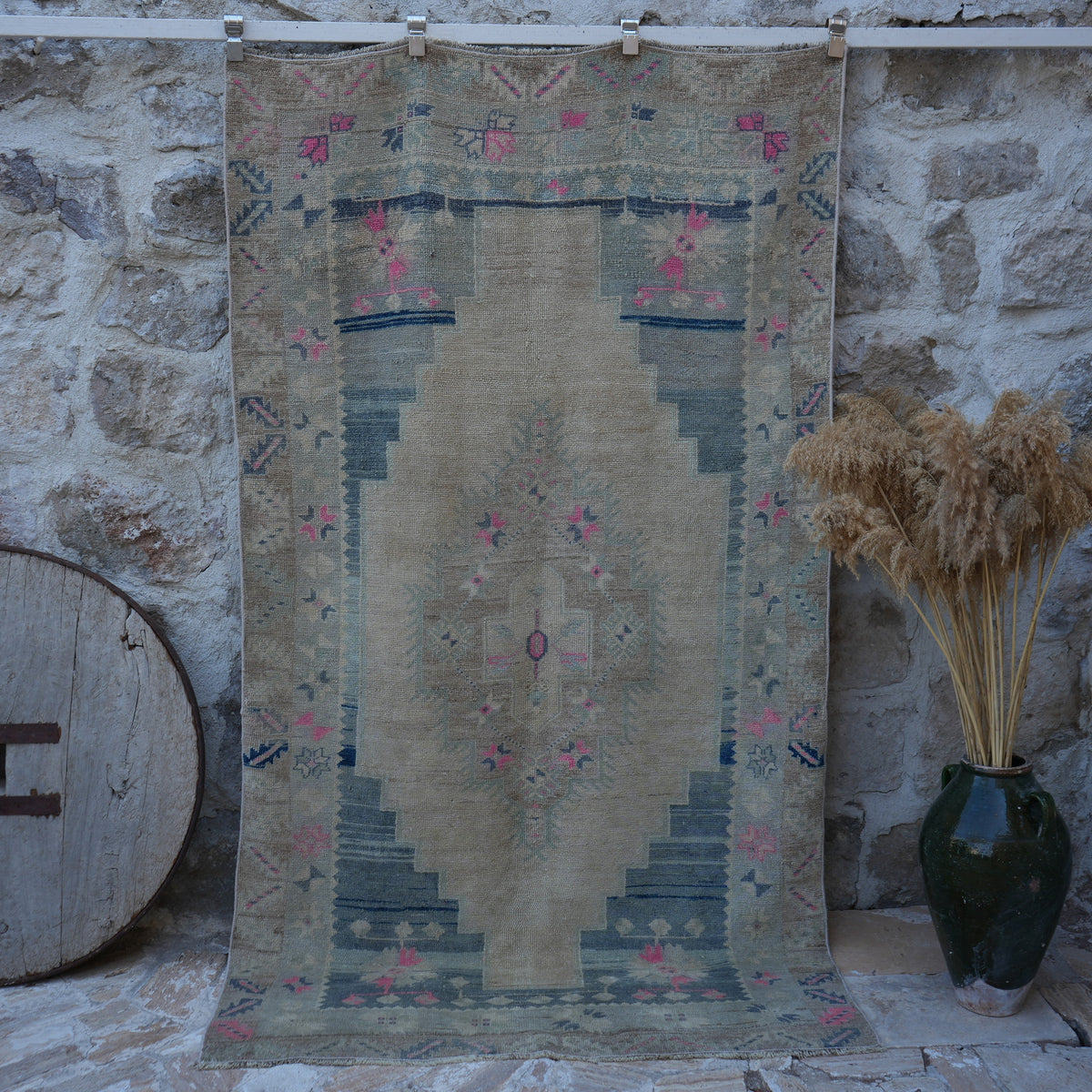
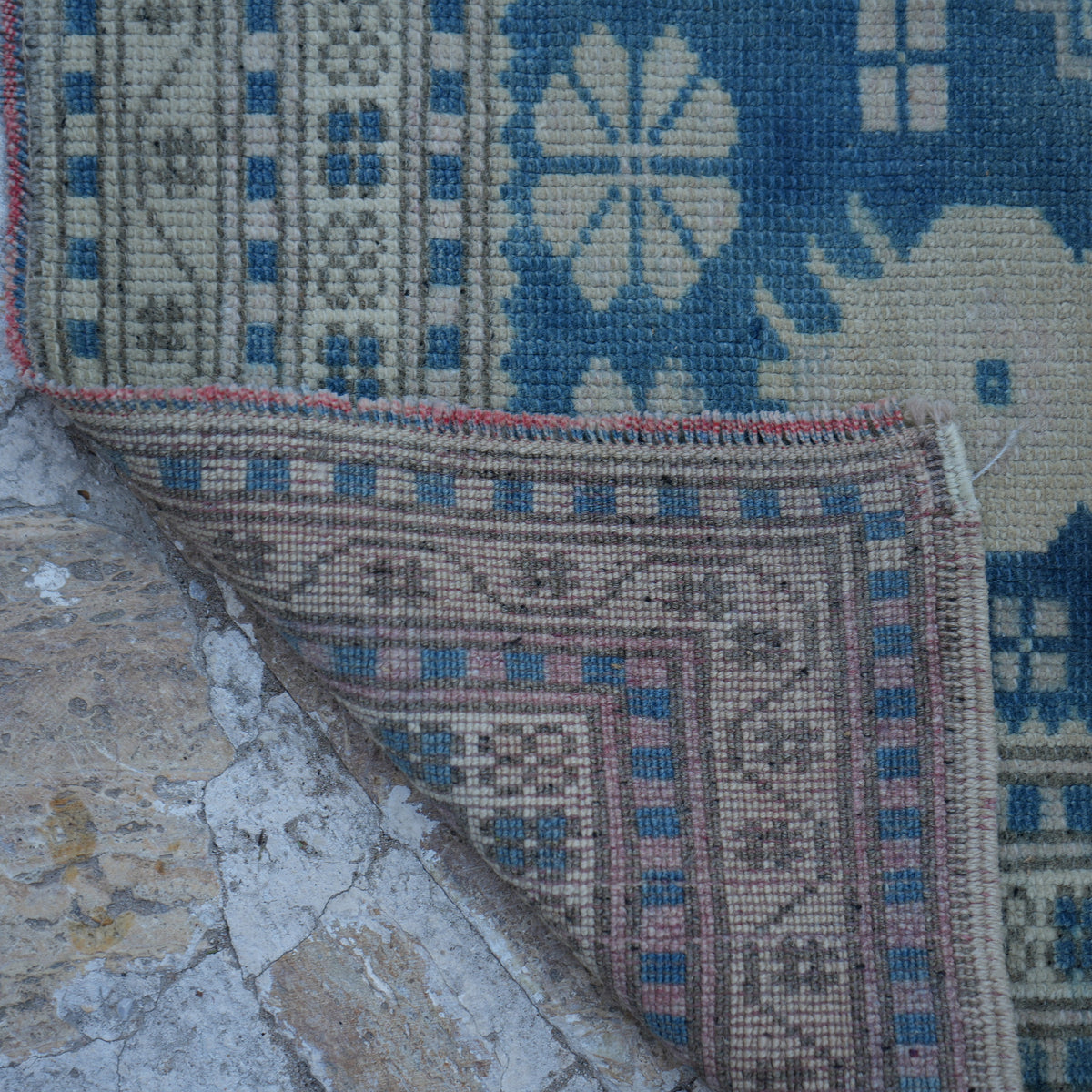
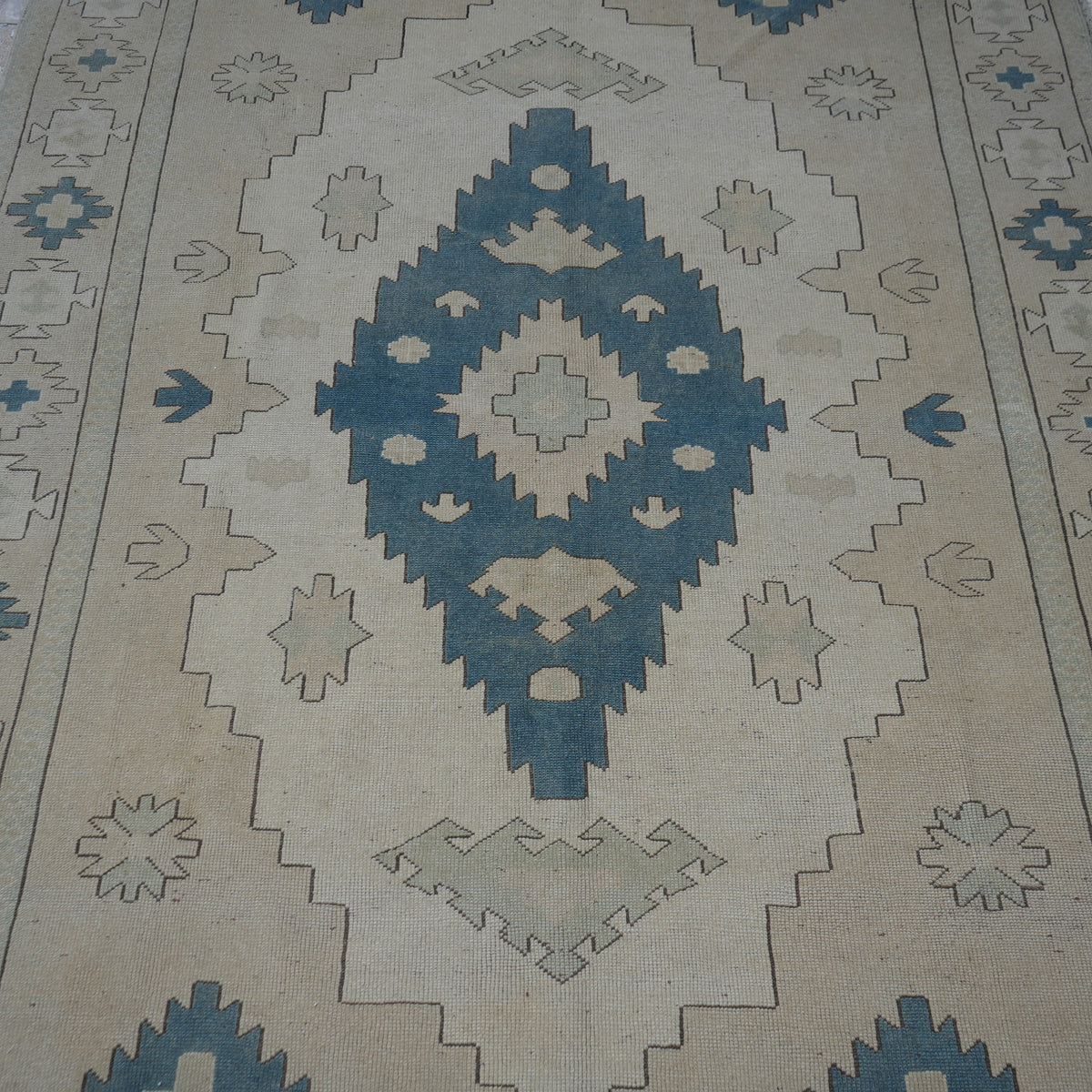
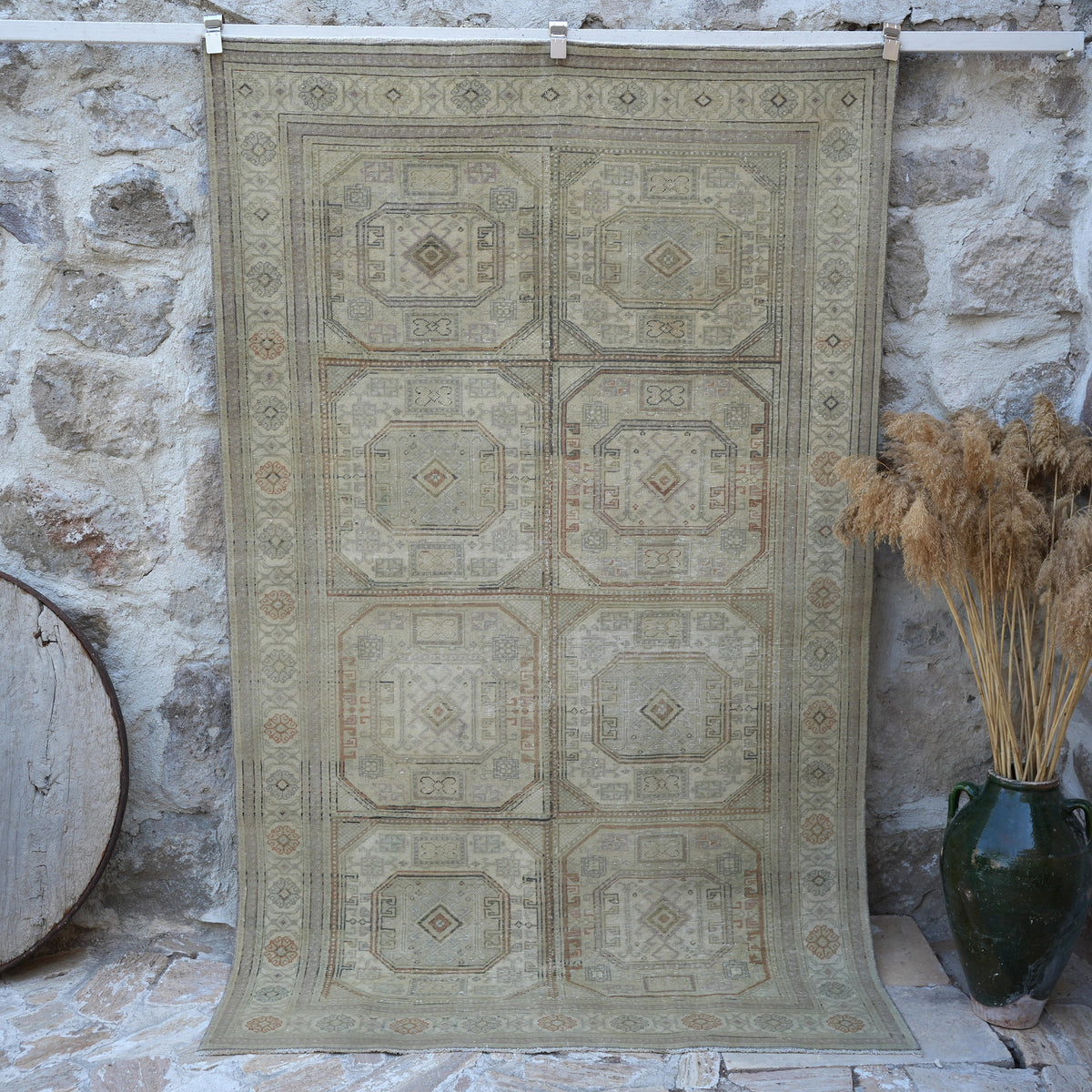
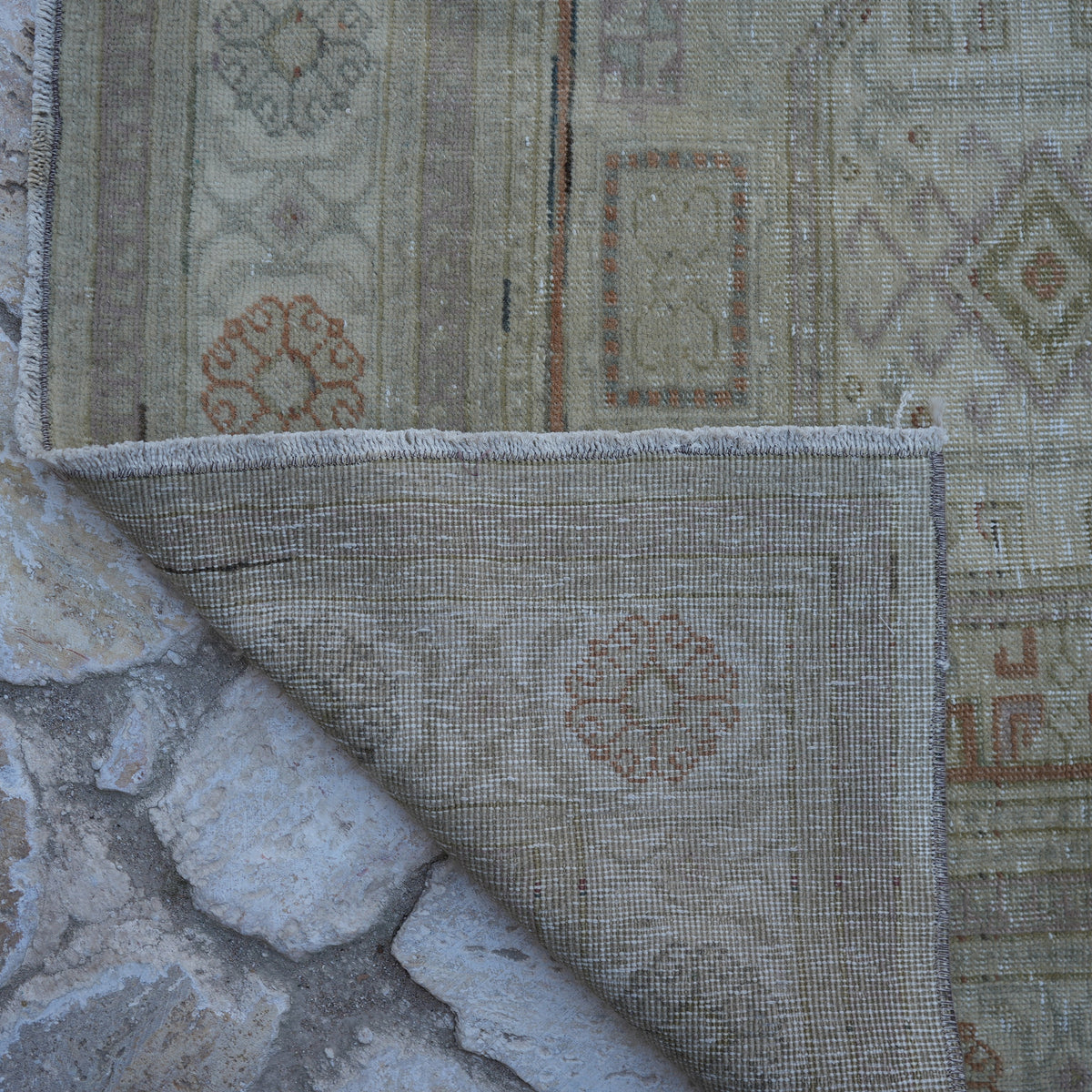
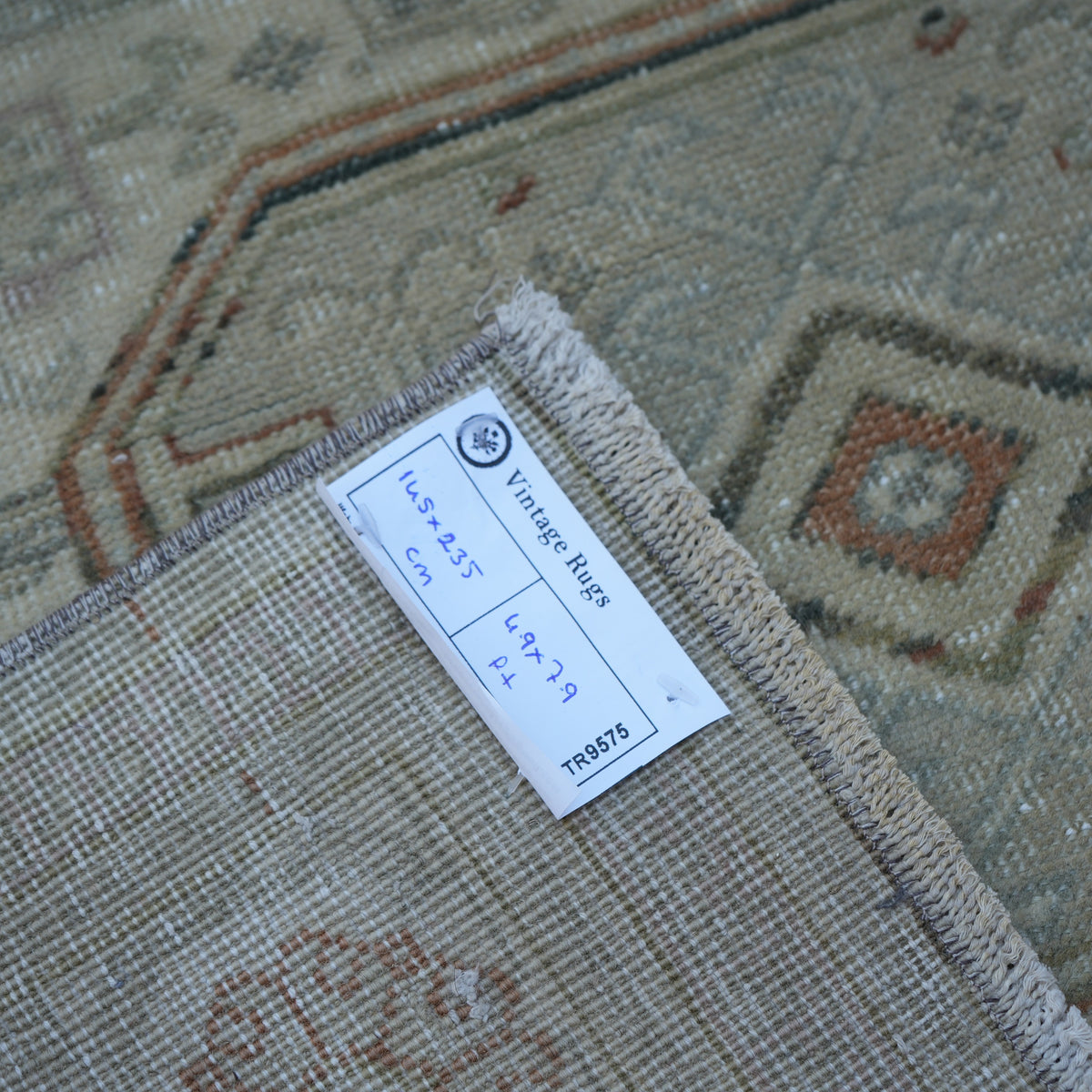
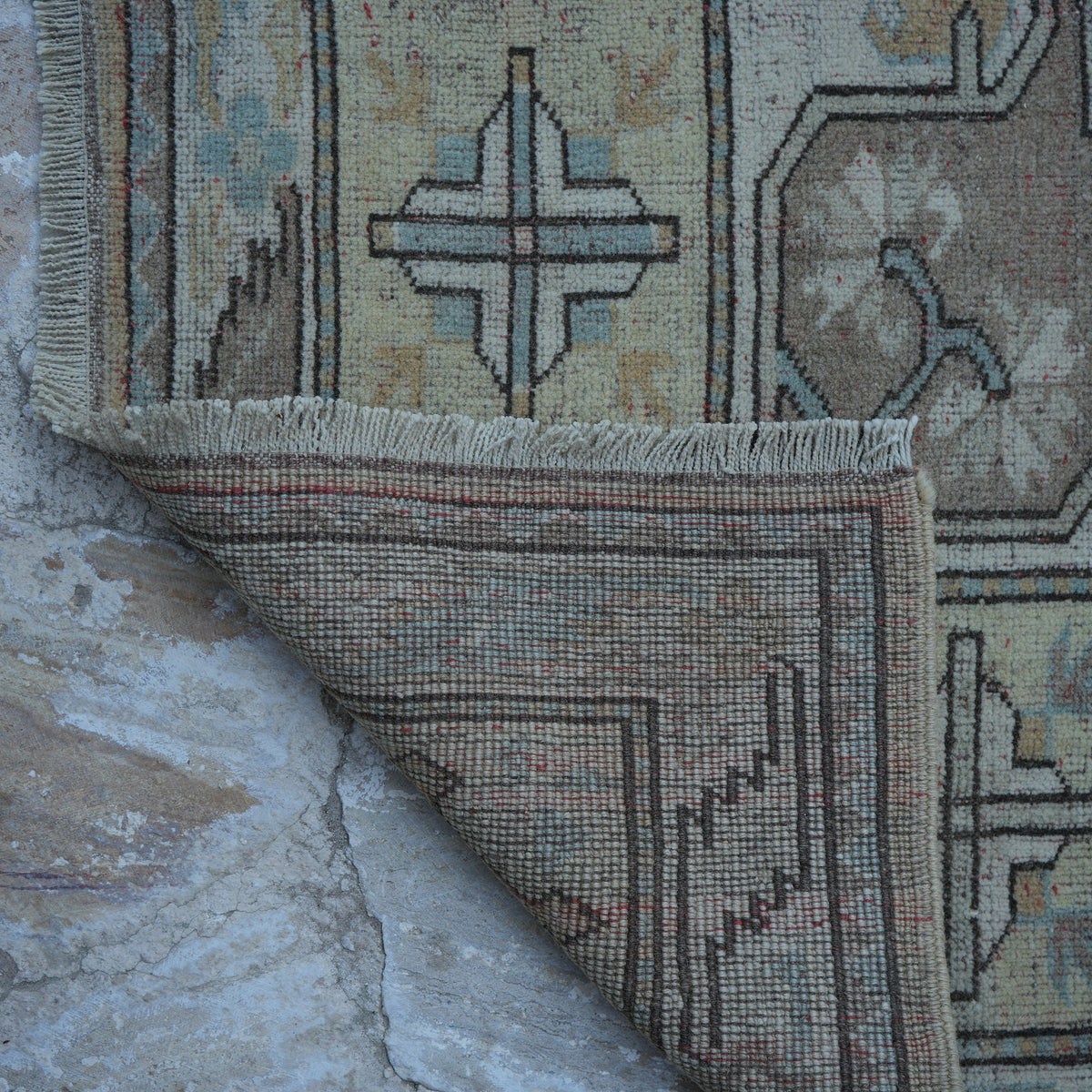
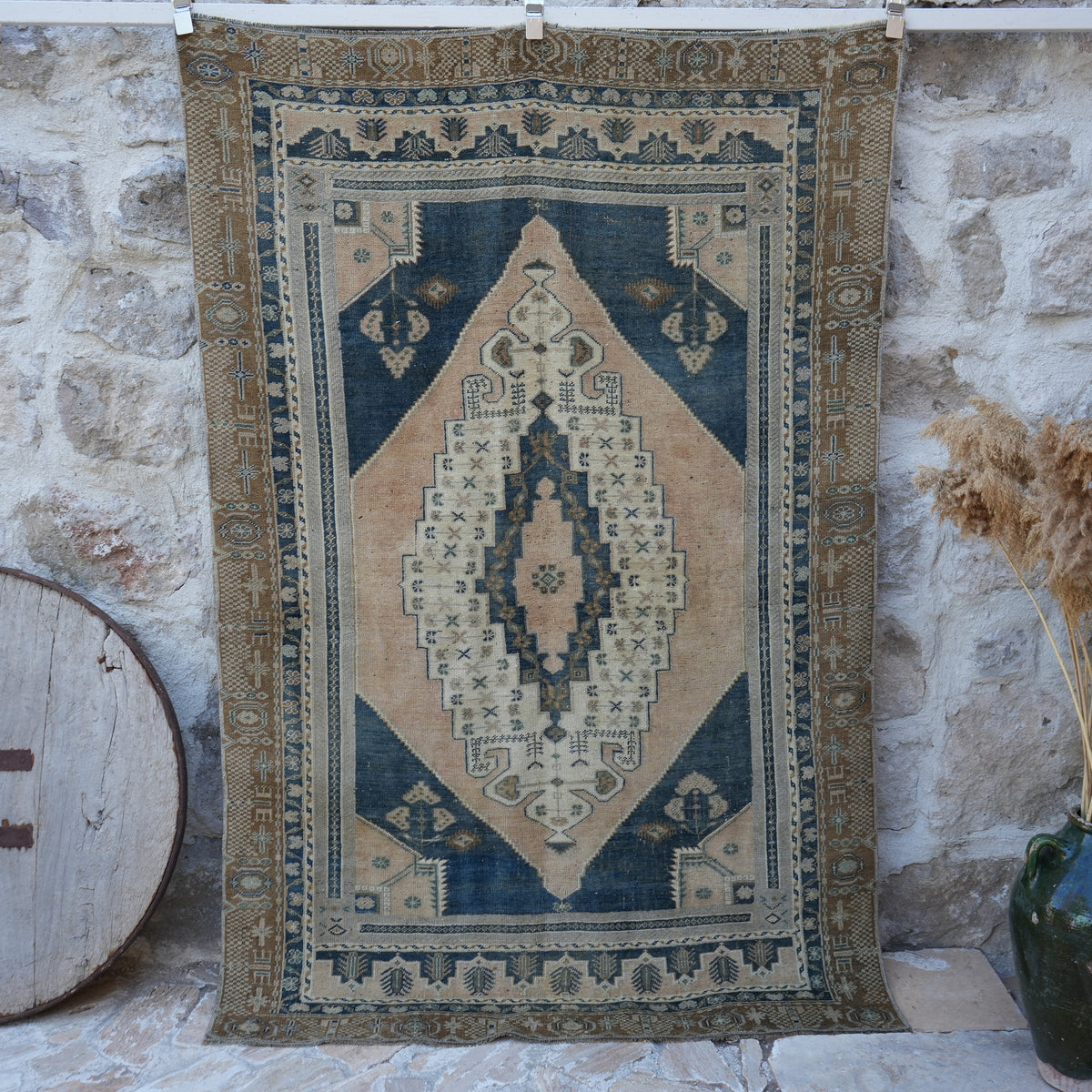
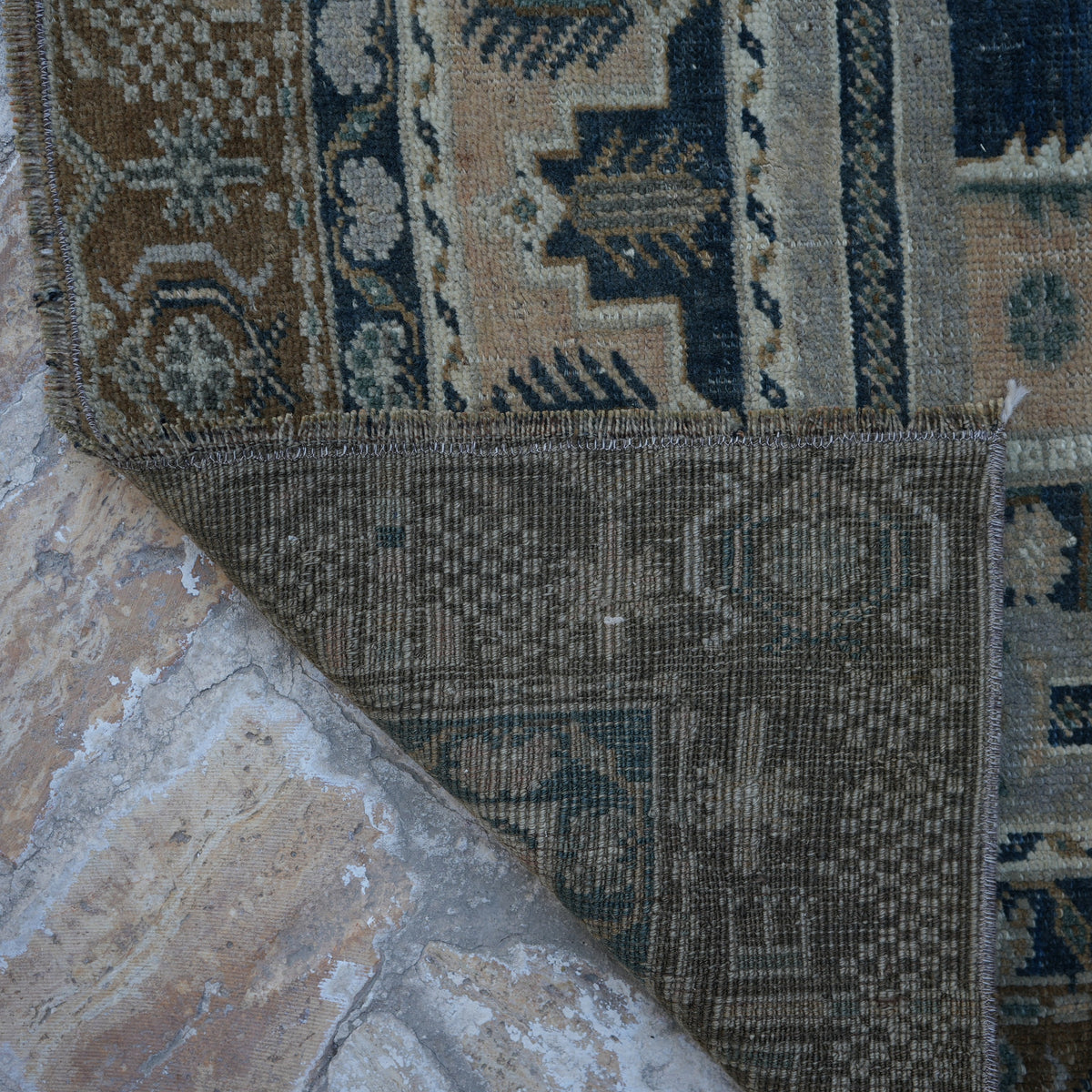
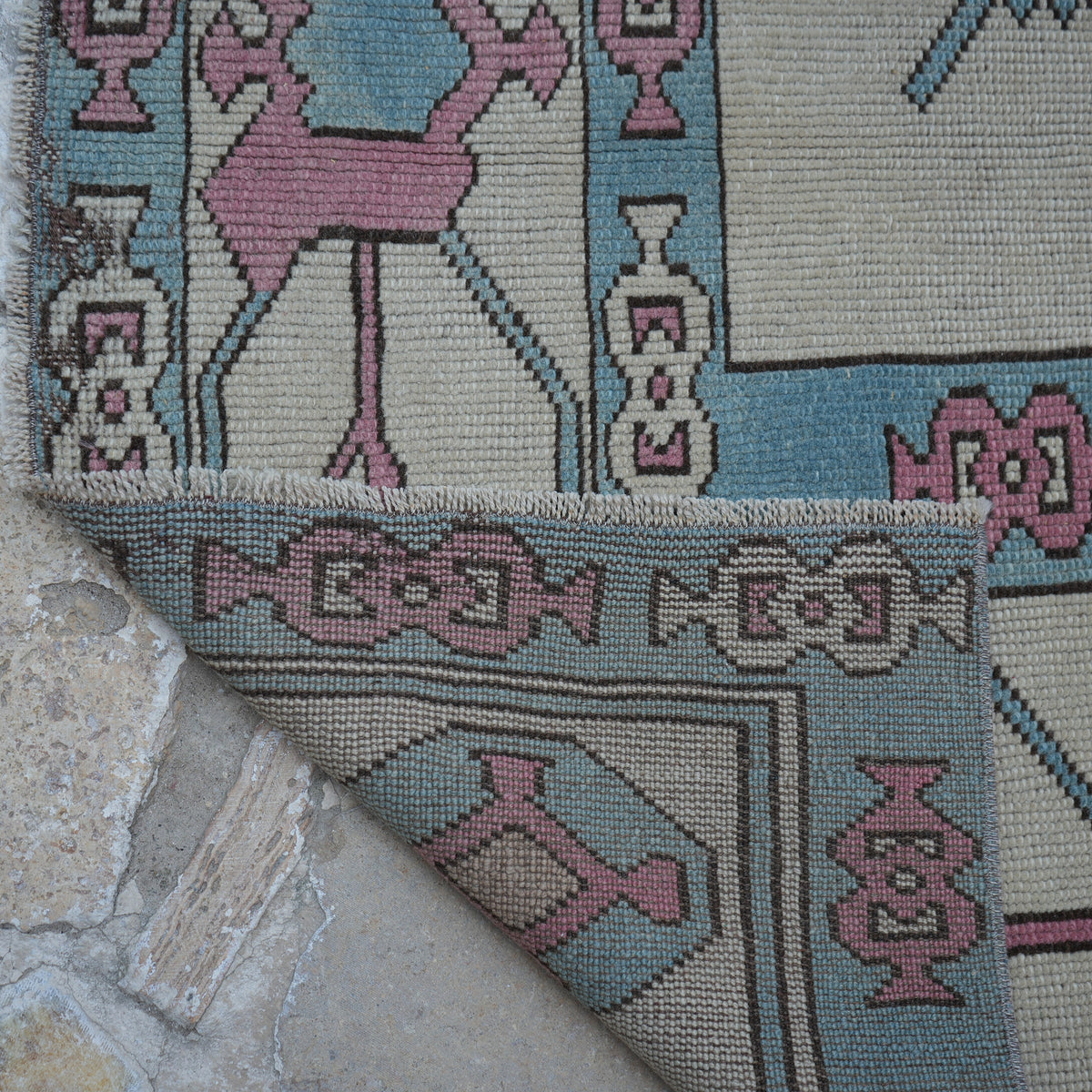
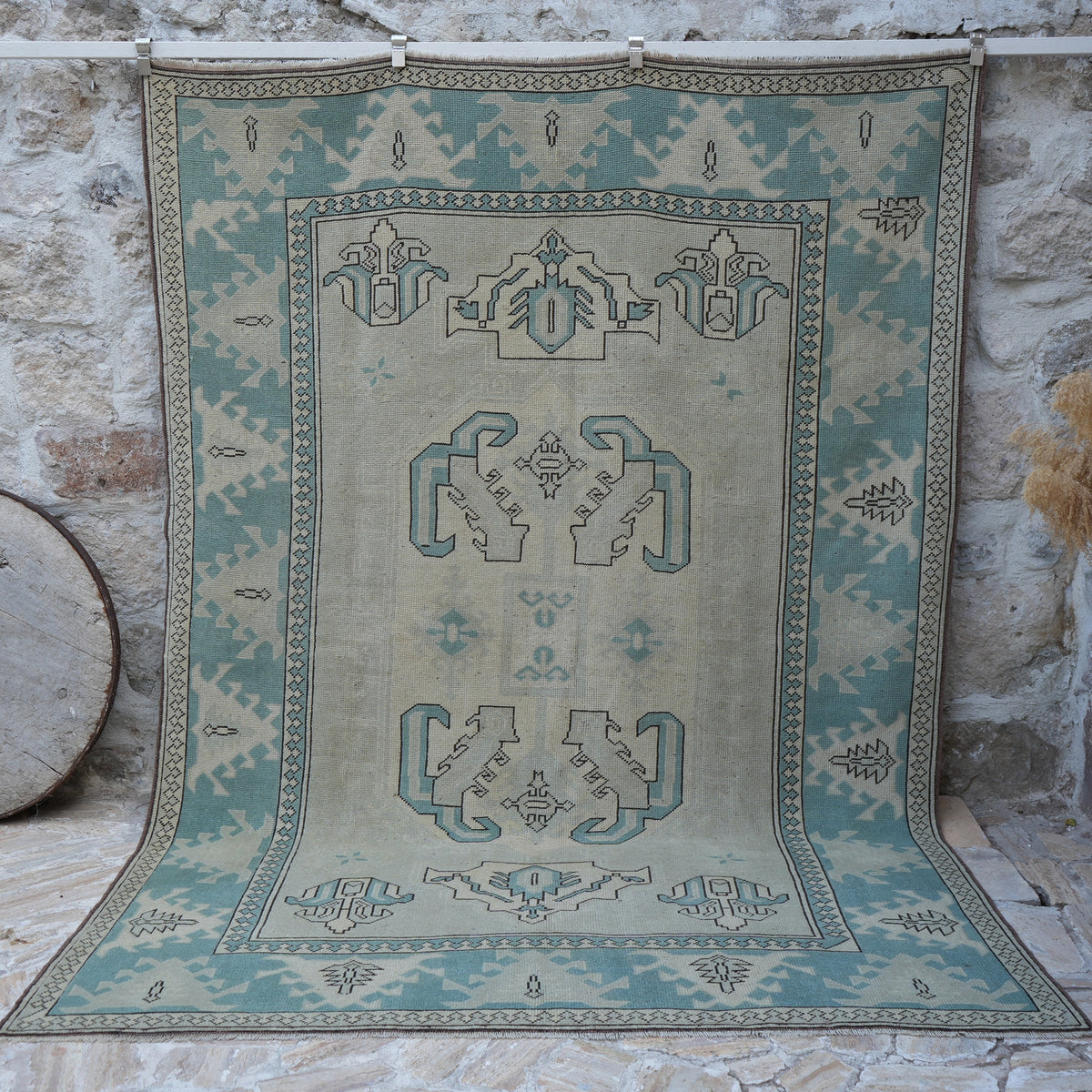
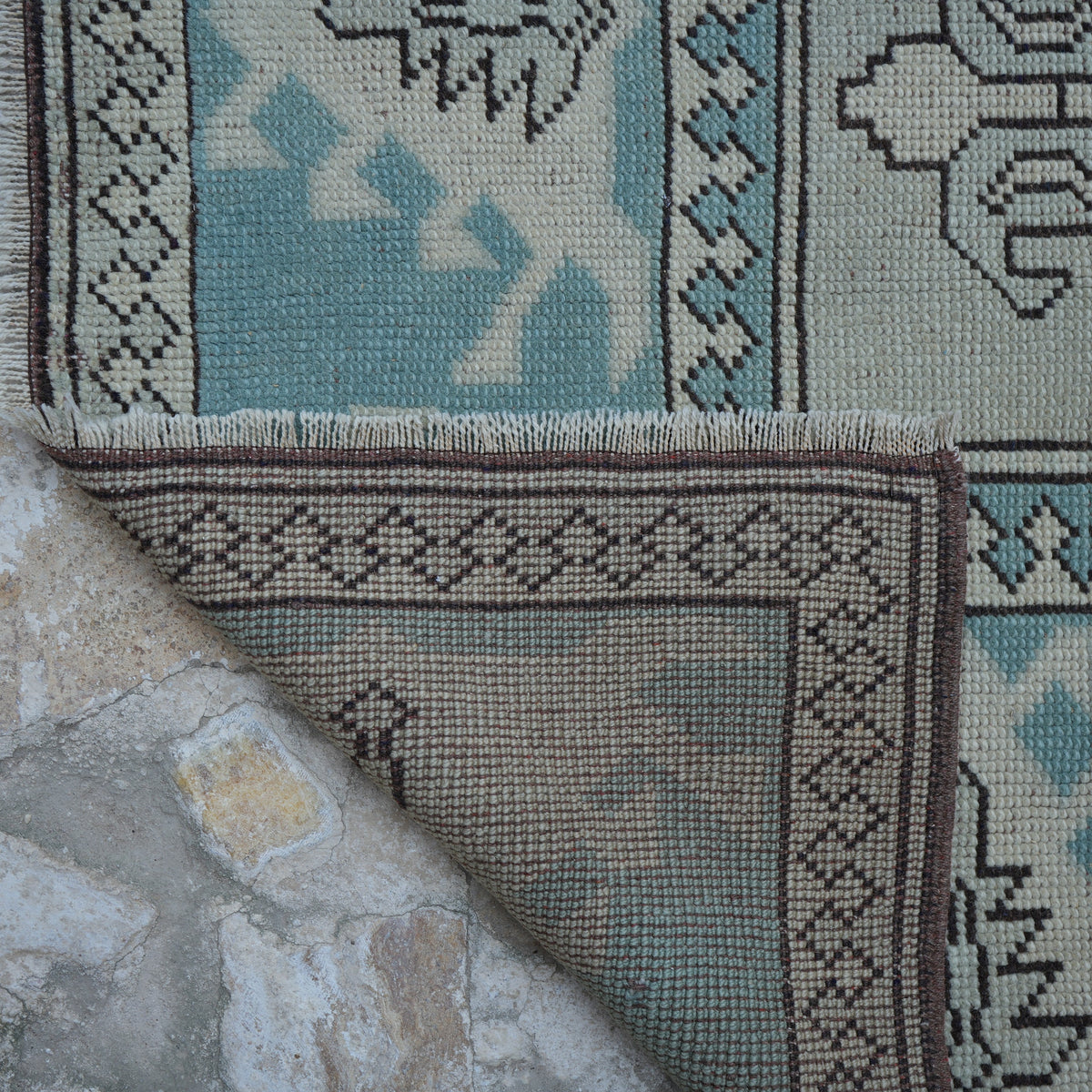
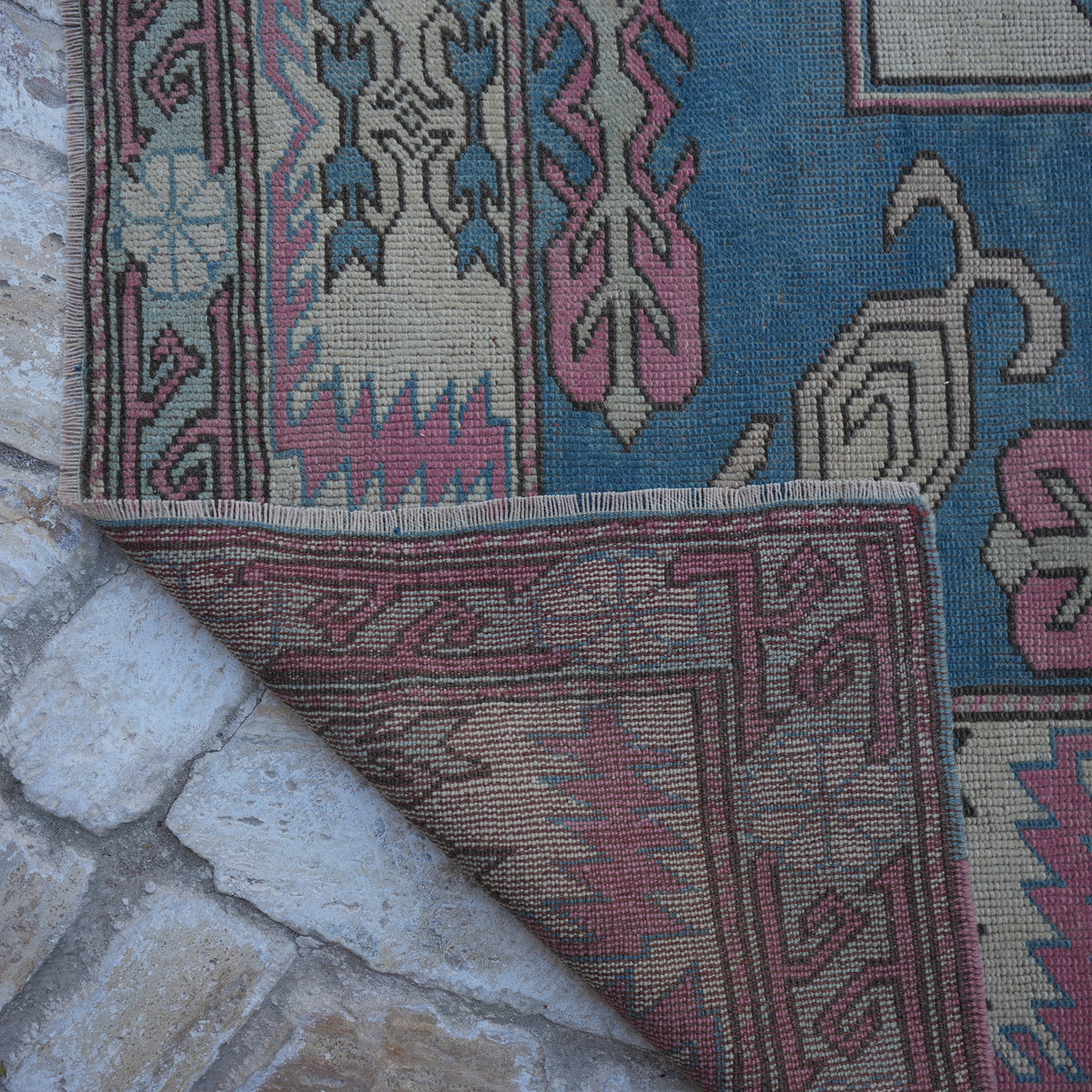
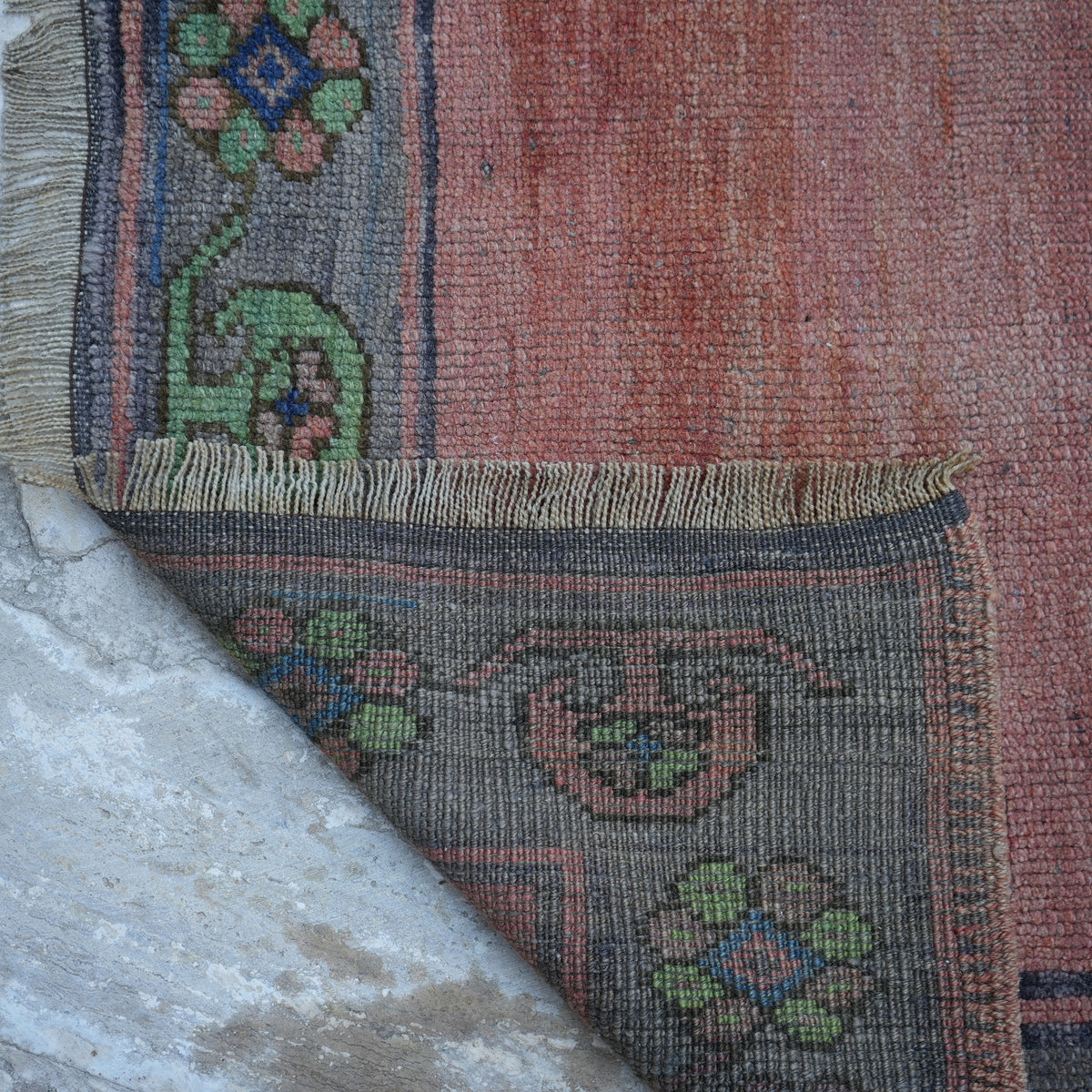
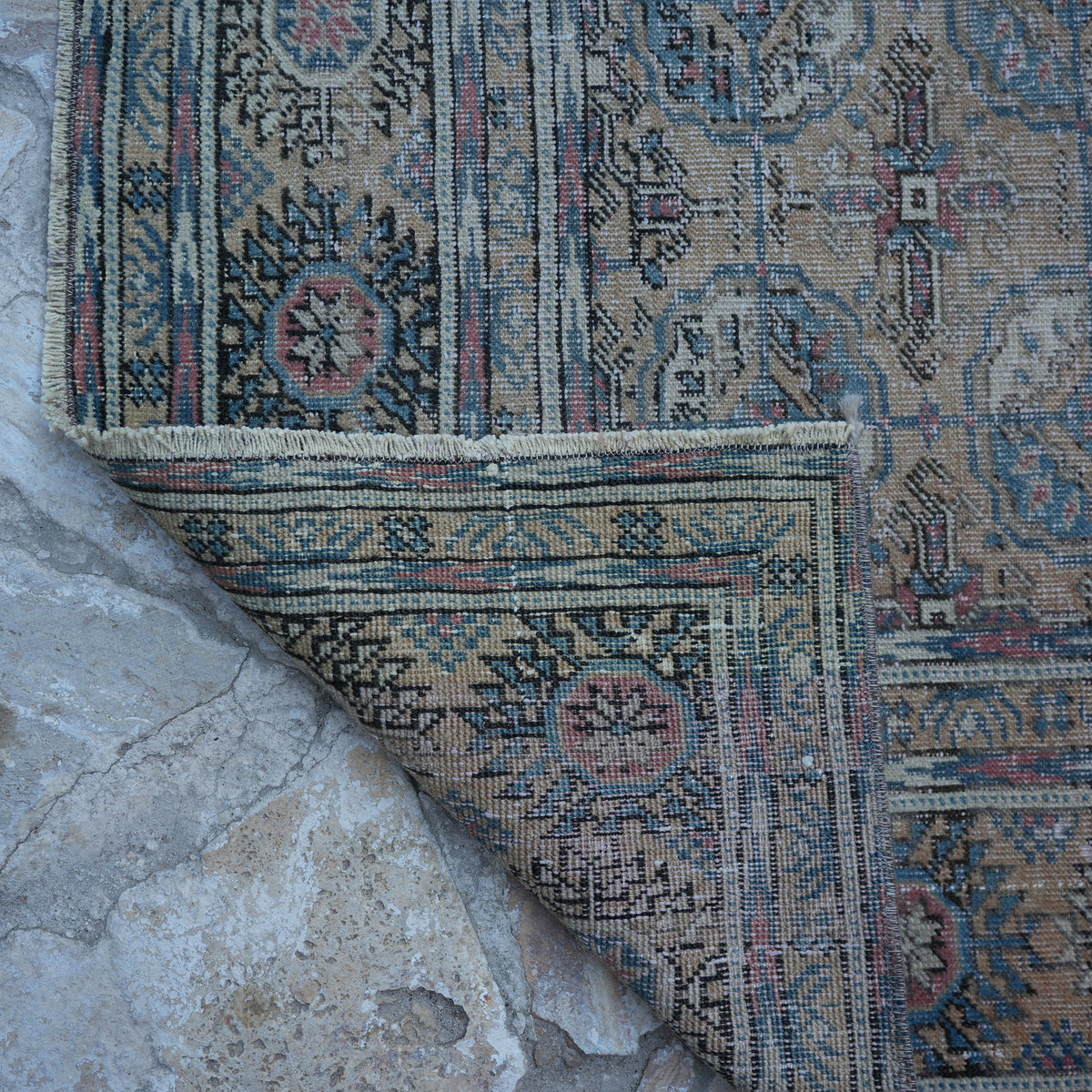
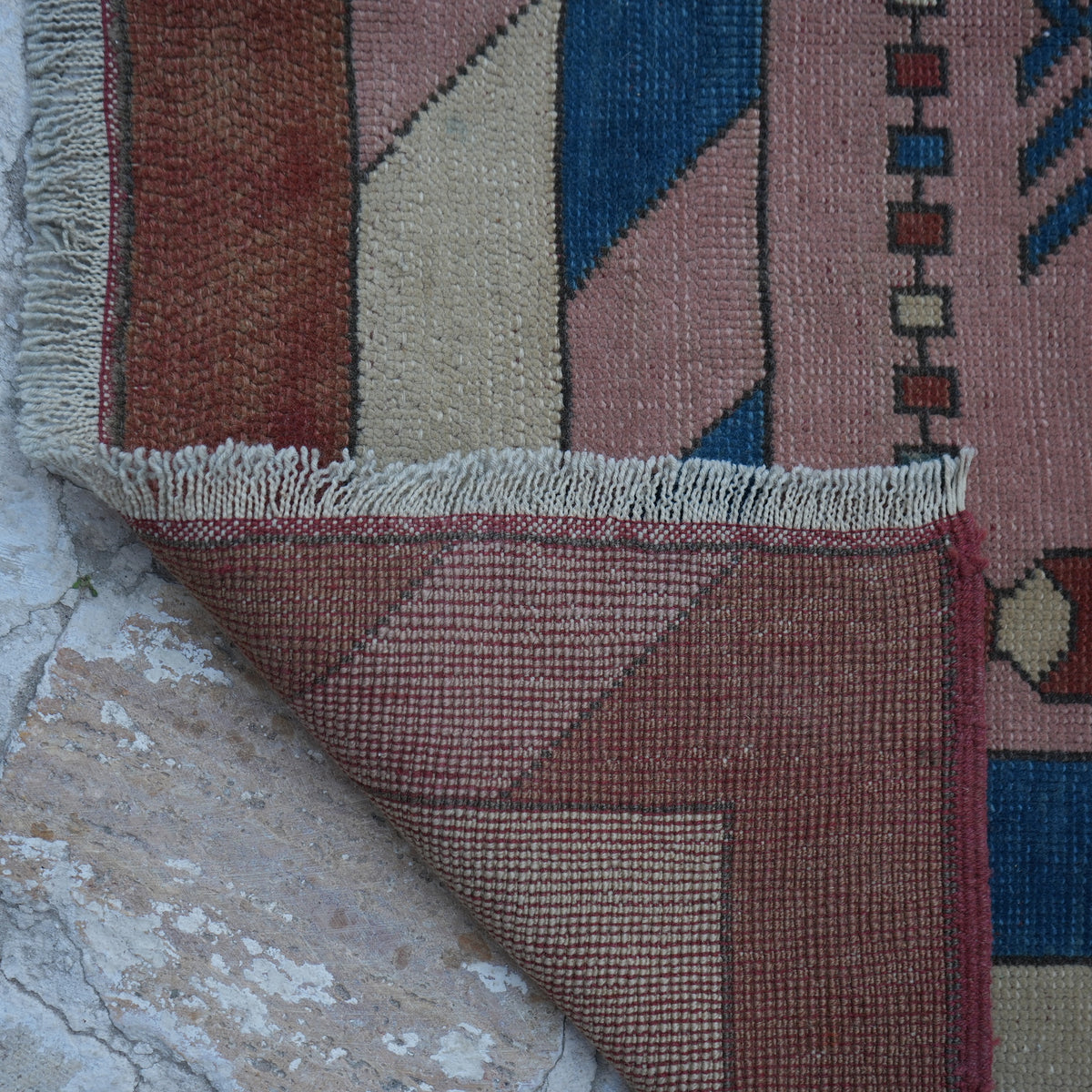
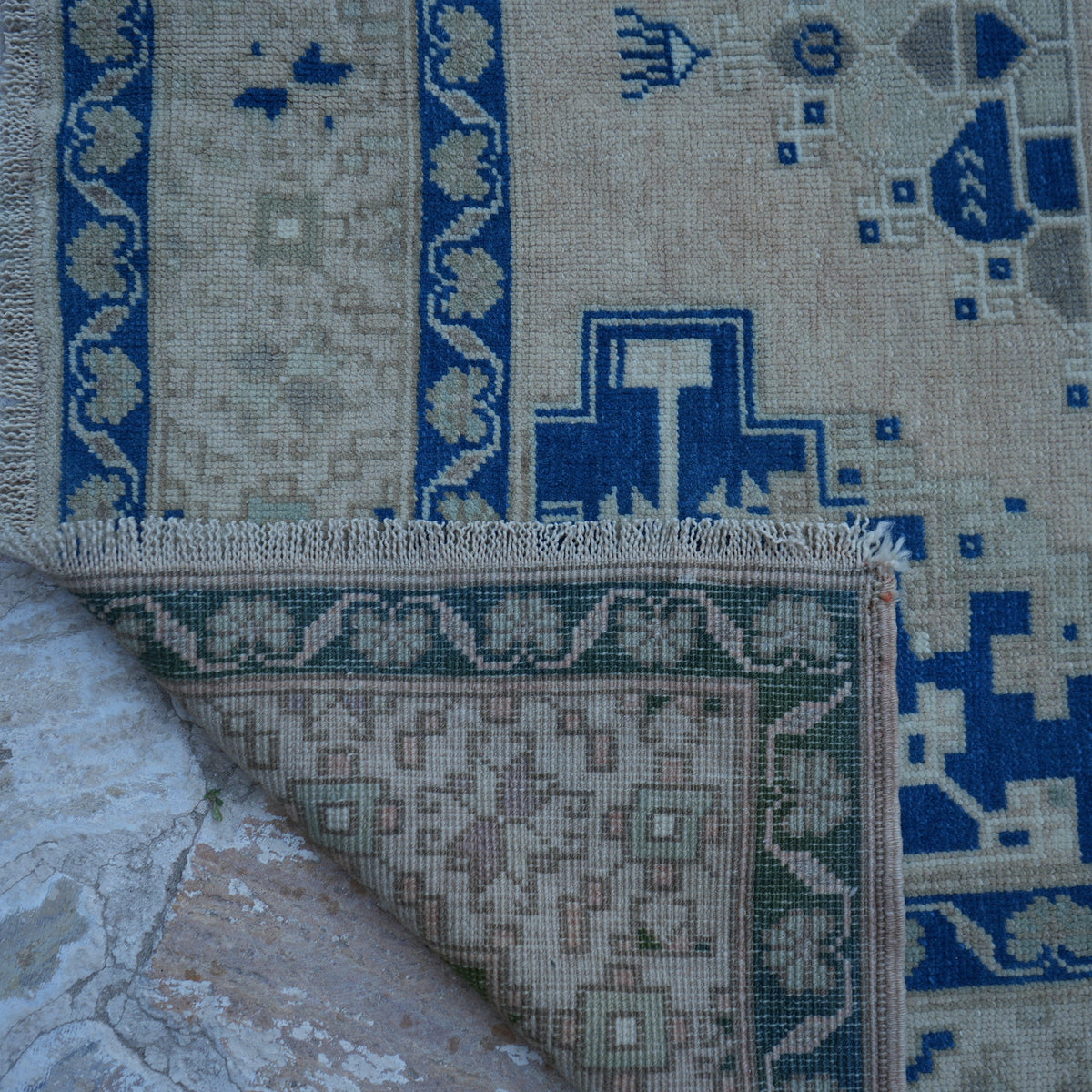
Factory rugs come in fixed dimensions: 5x8, 8x10, 9x12. Vintage rugs are each singular — woven on individual looms, measured by no universal standard. A vintage Anatolian piece might be 5'2" x 7'9". In a small or unusually proportioned room, this matters enormously. The rug that fits perfectly isn't always the one with a round number attached to it — sometimes a vintage piece settles into a compact living room as if it were made for exactly that floor.
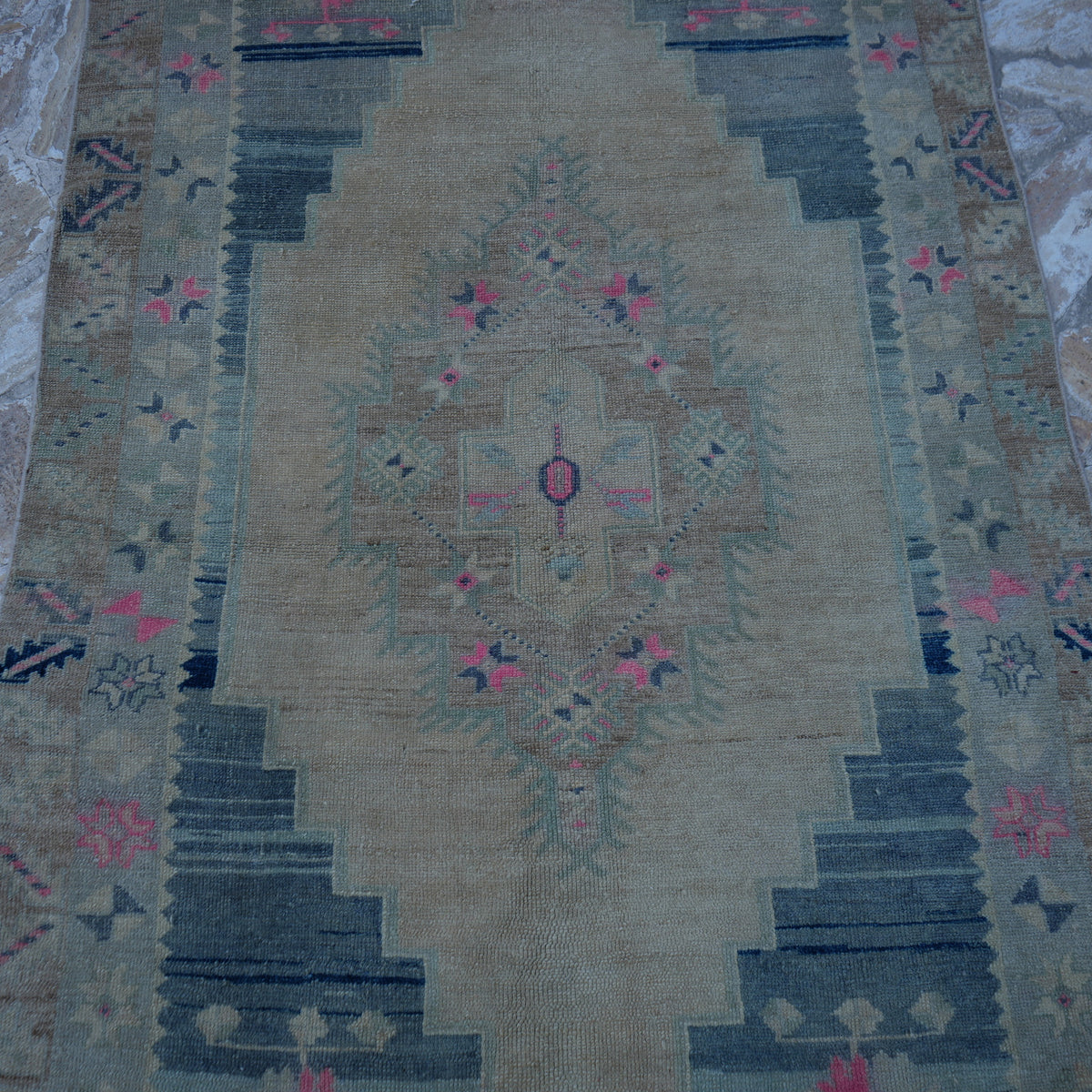
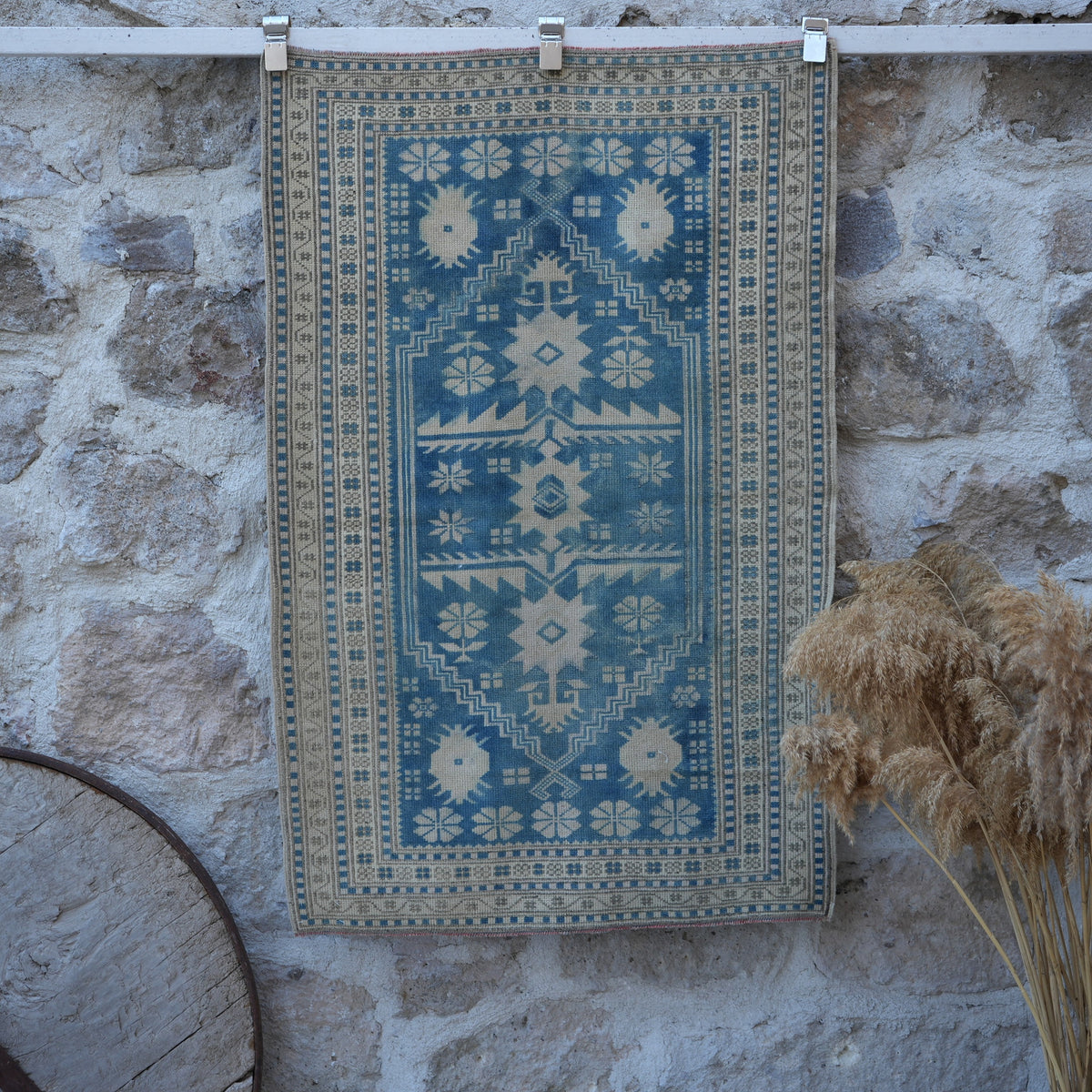
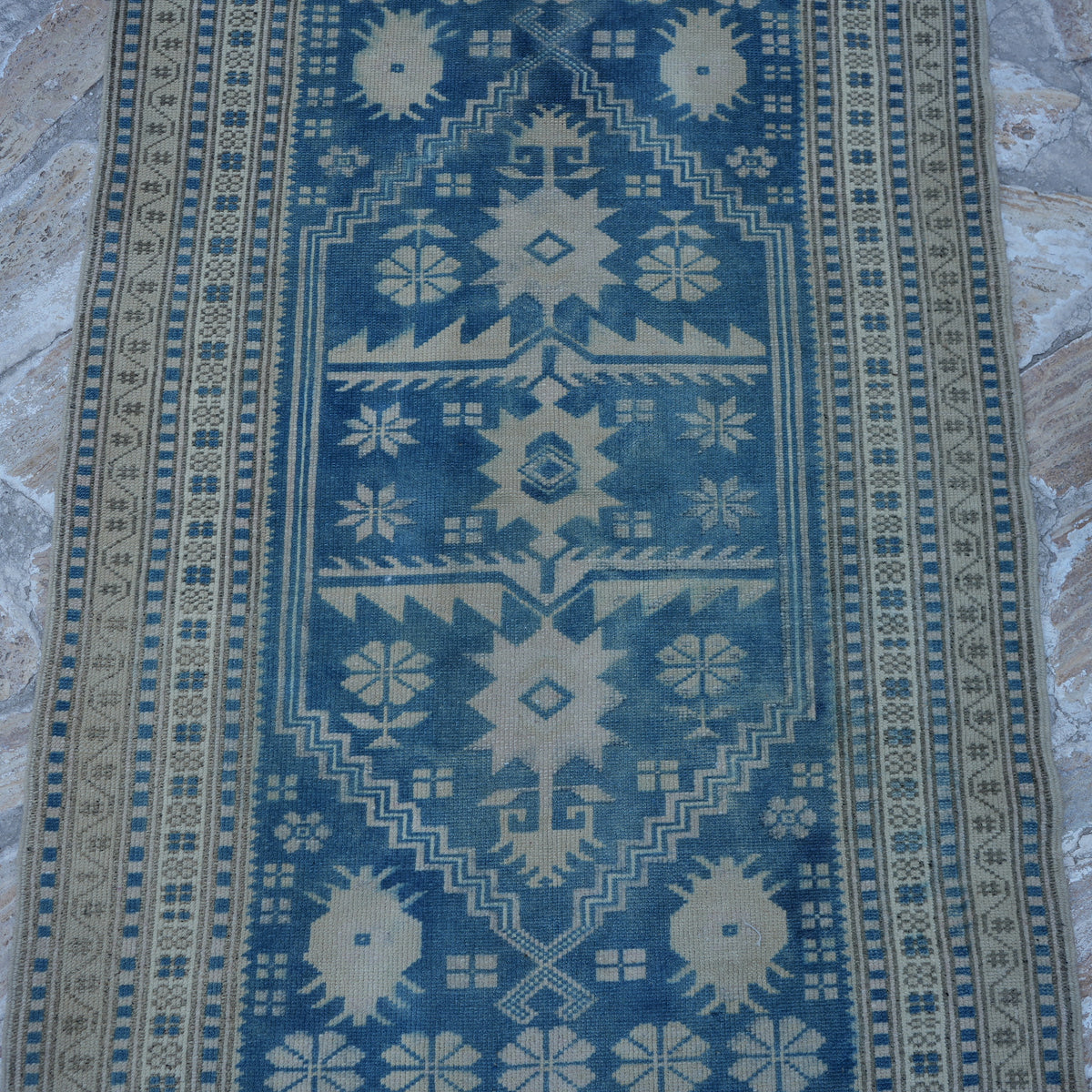
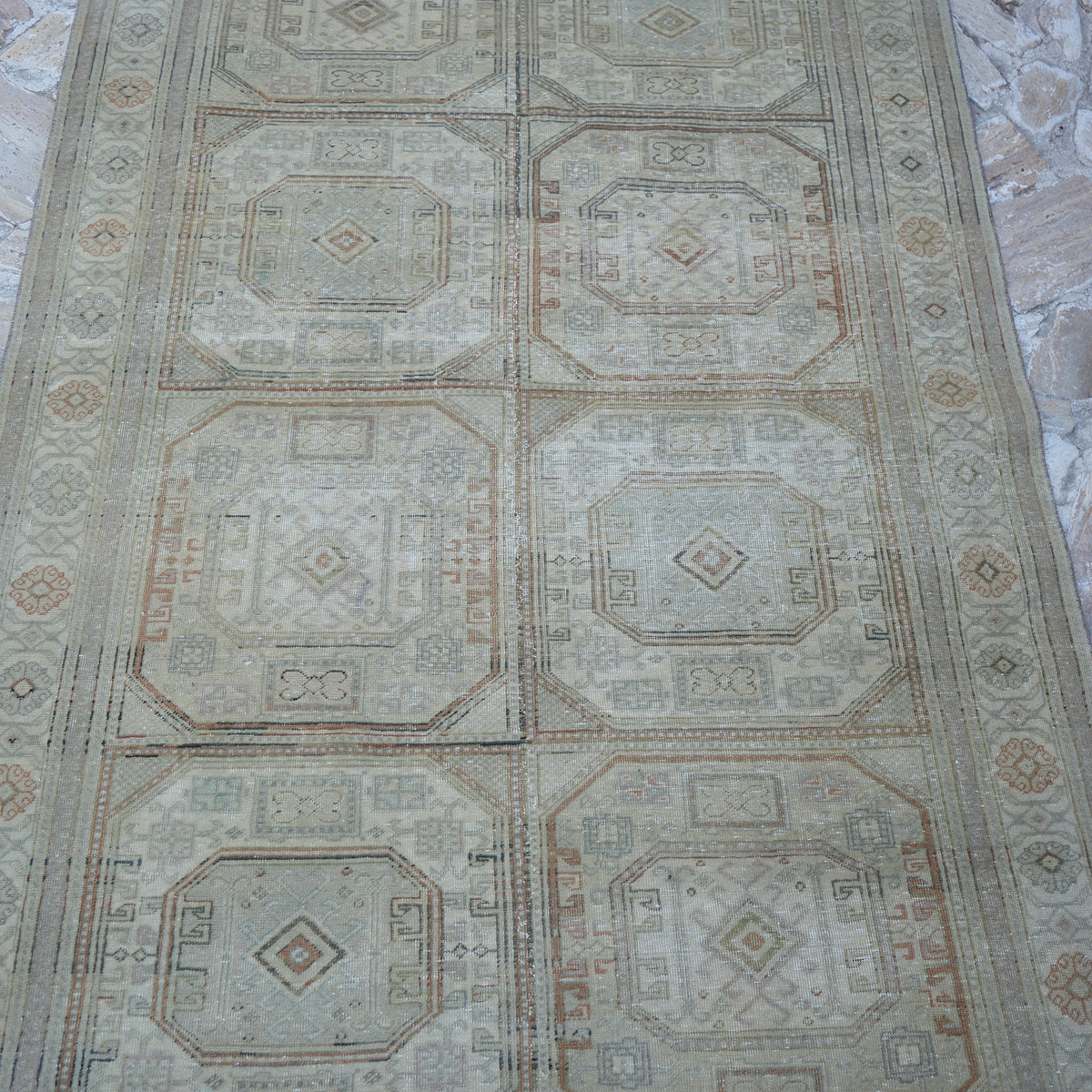
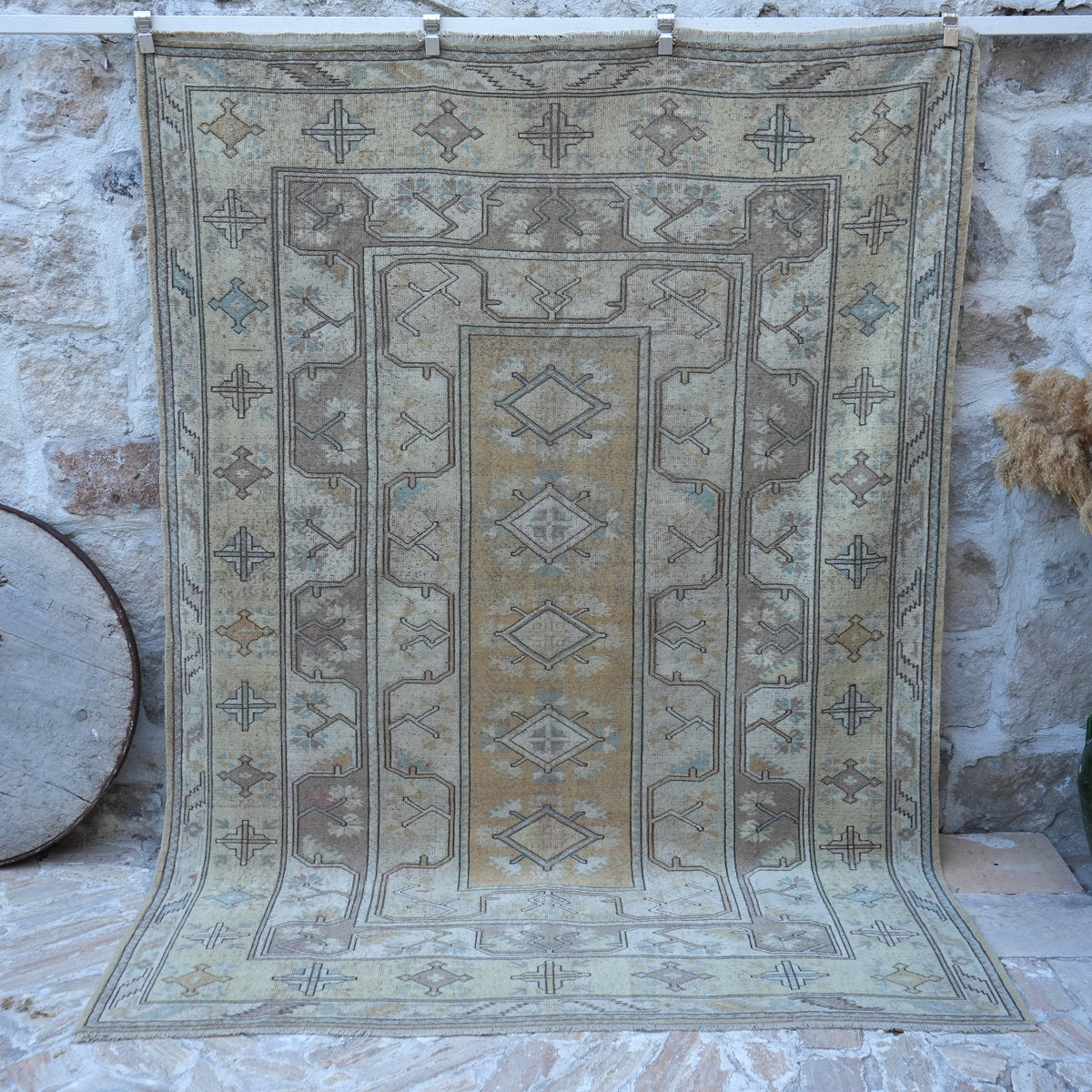
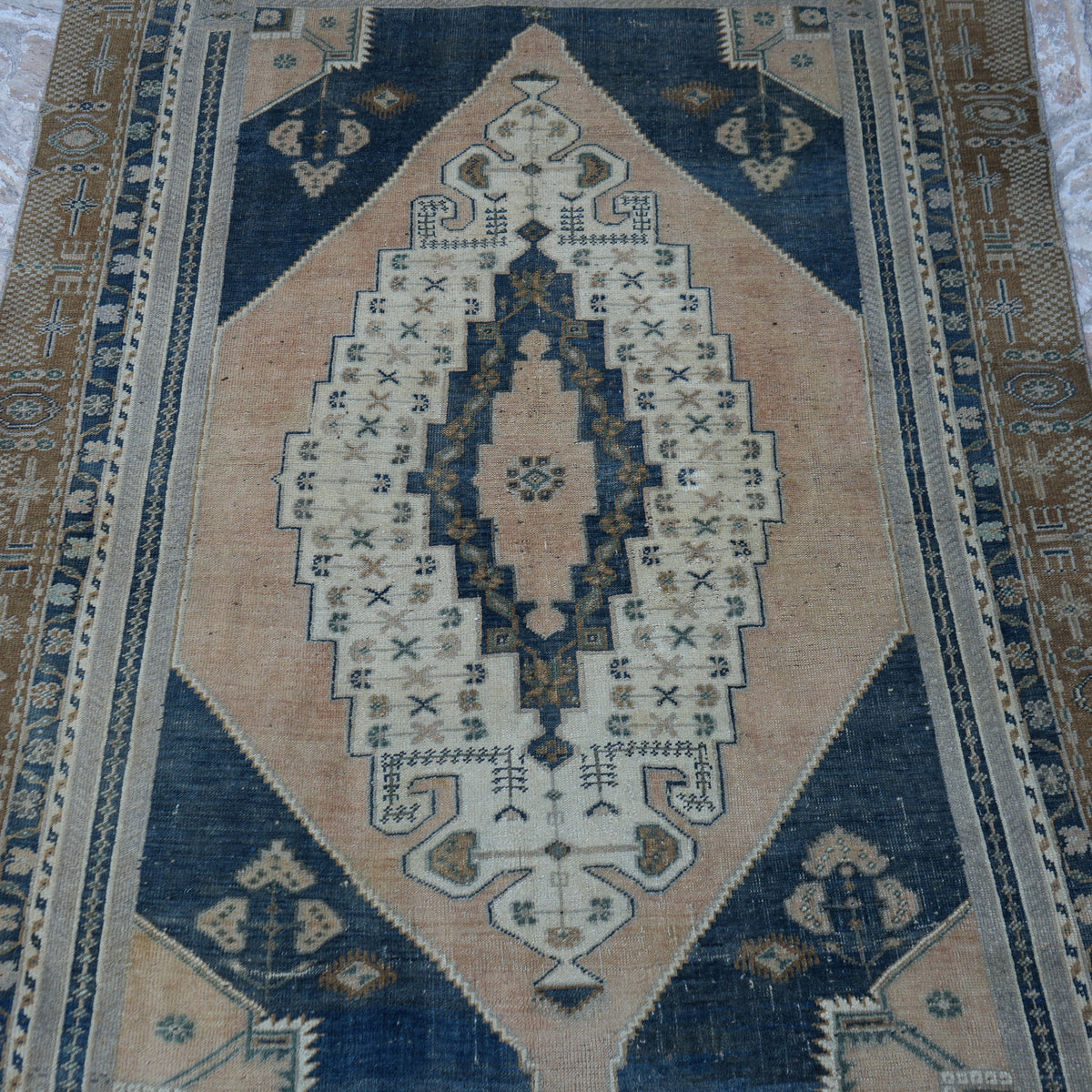
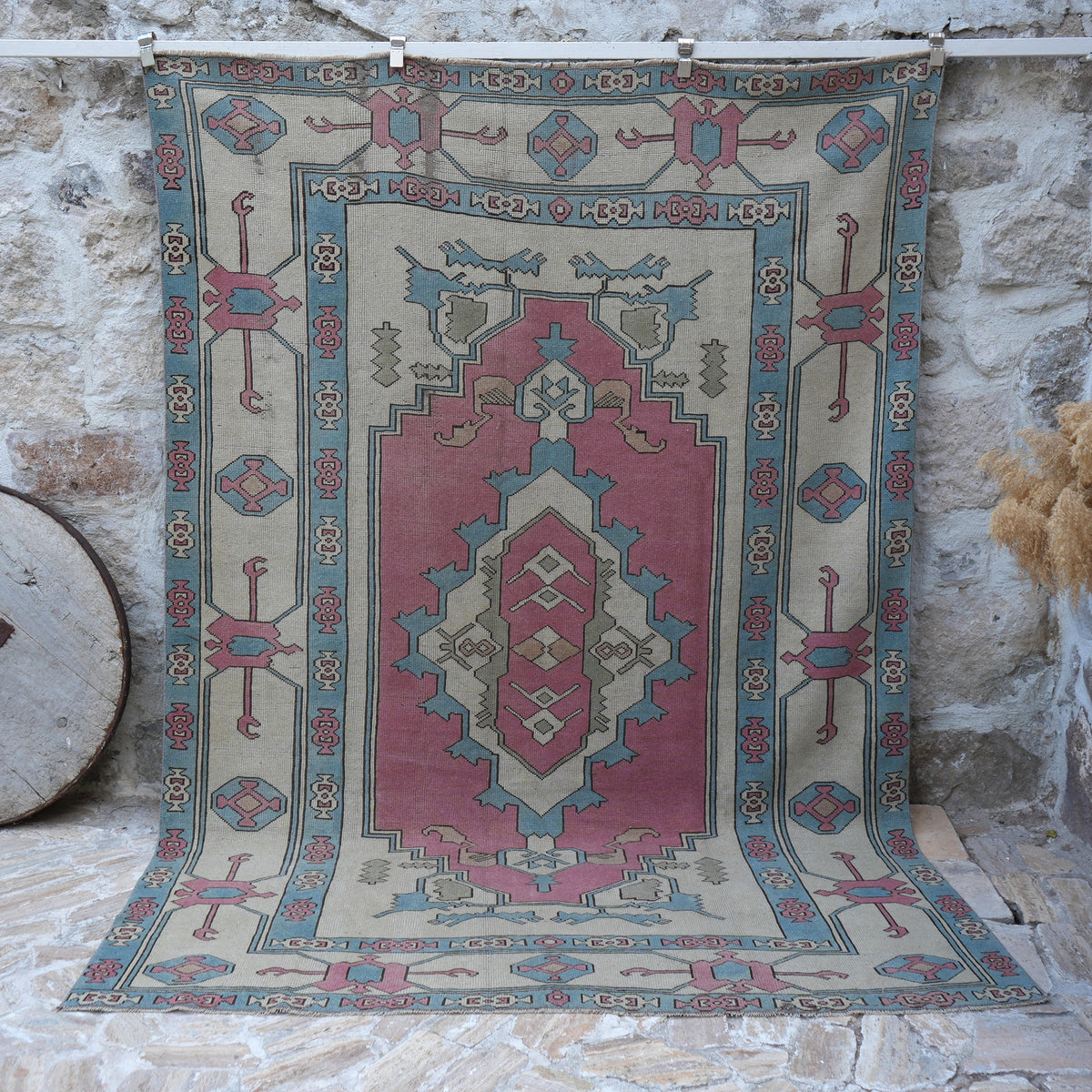
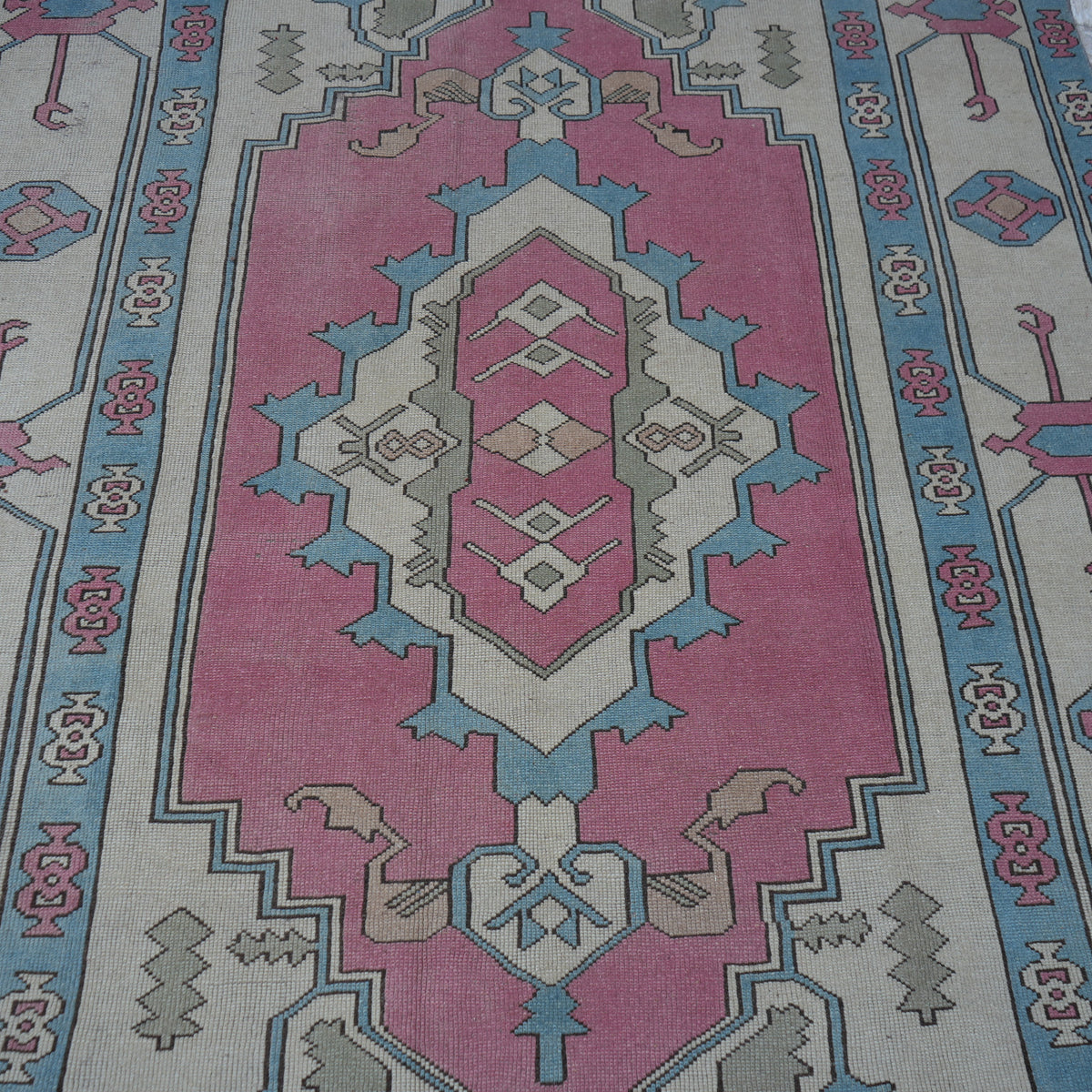
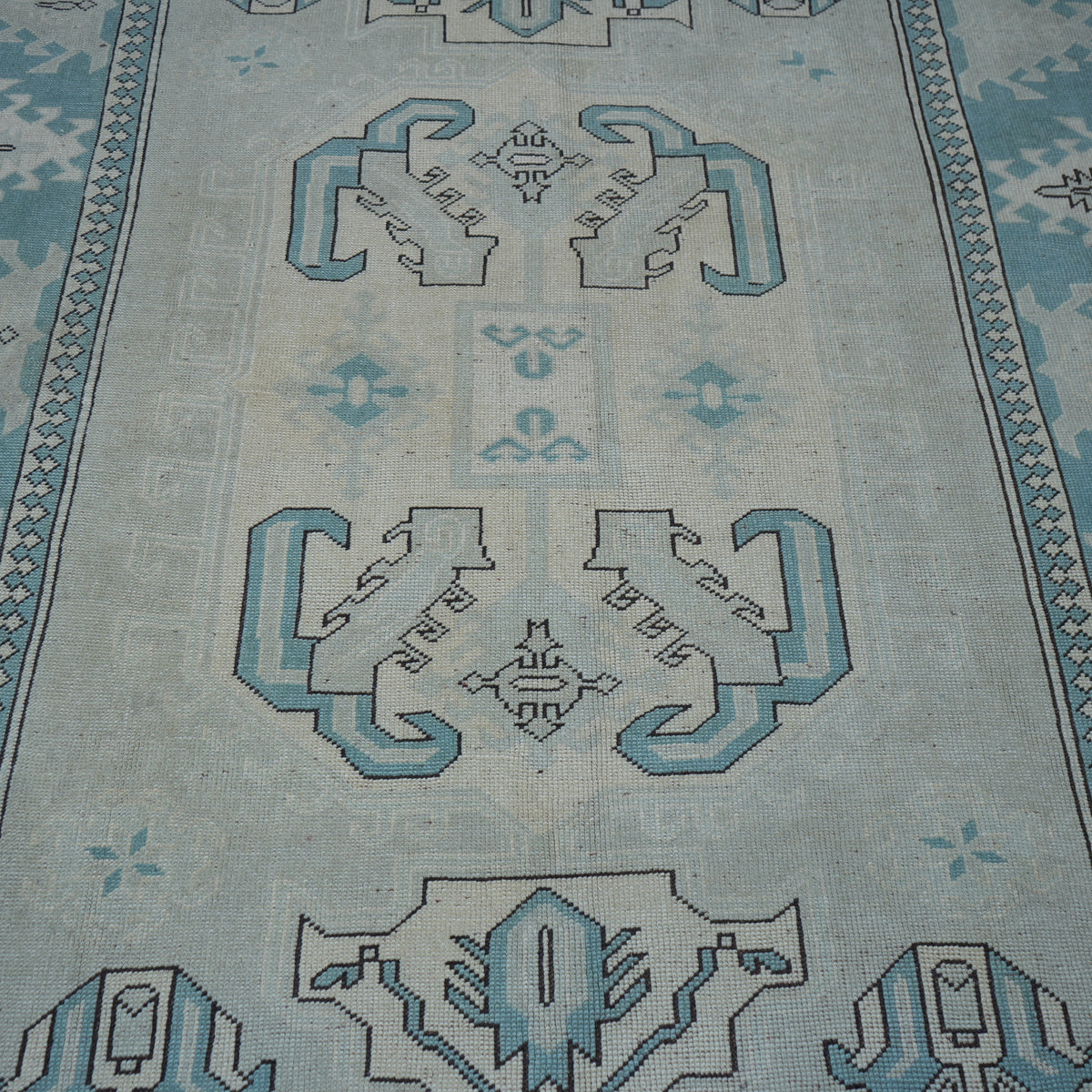
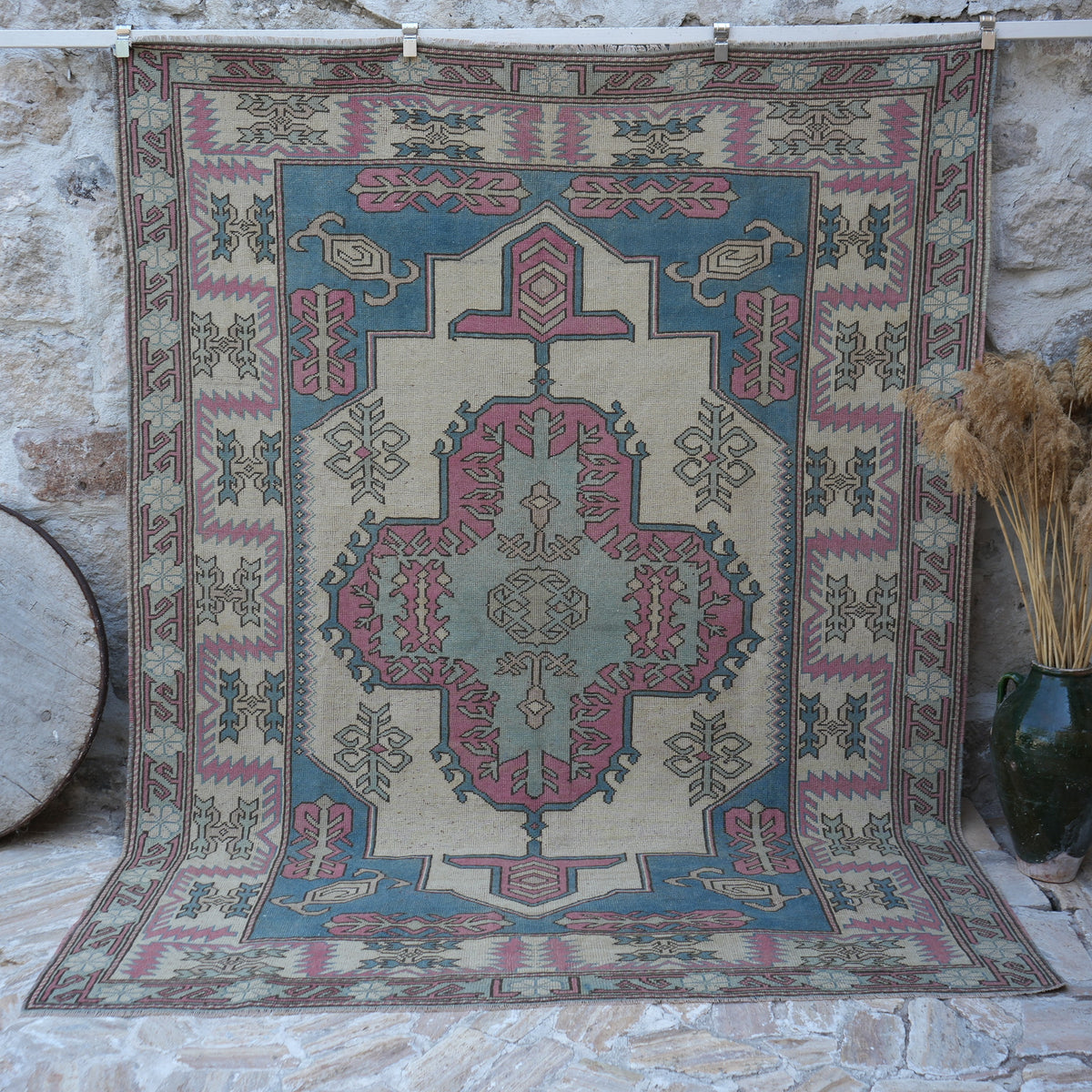
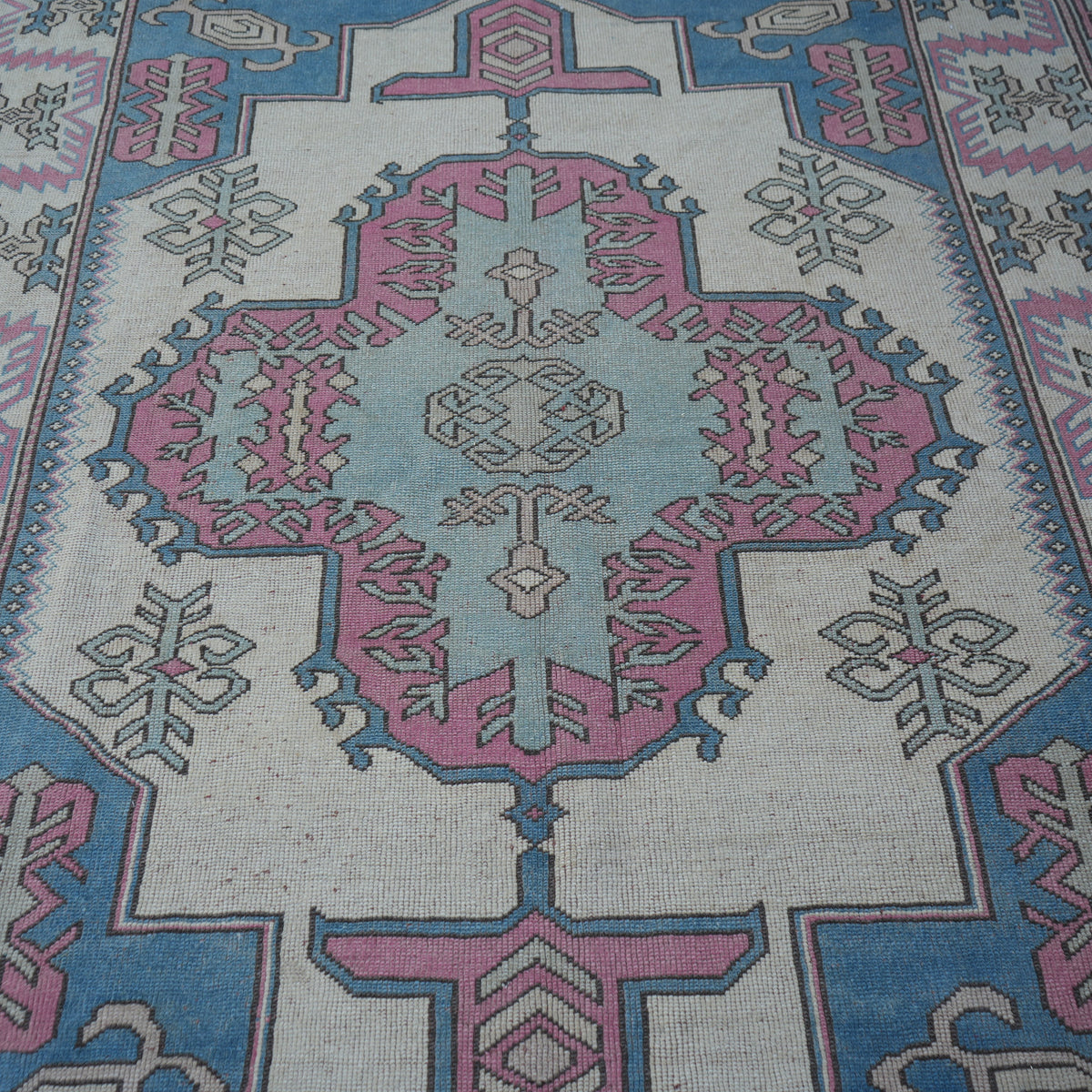
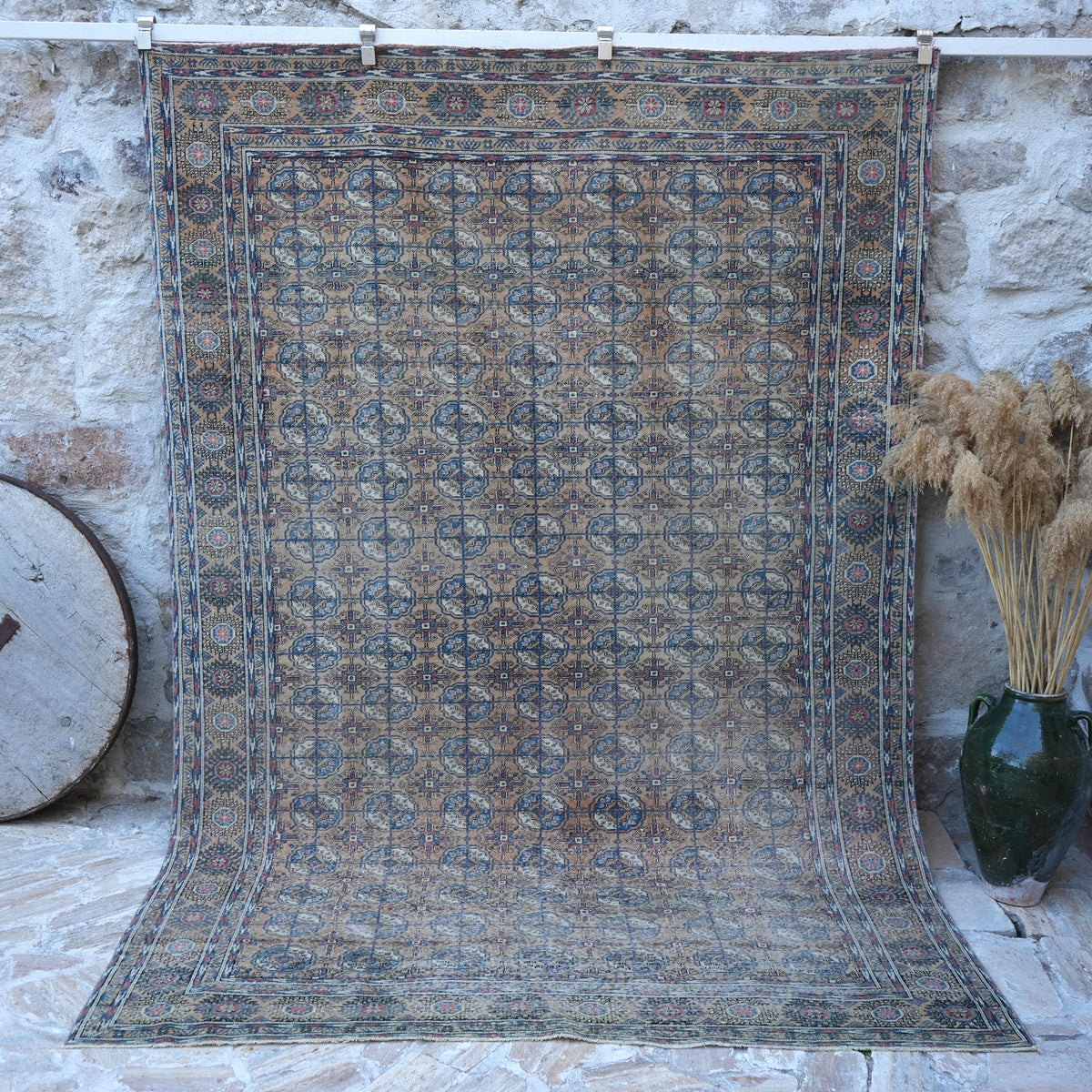
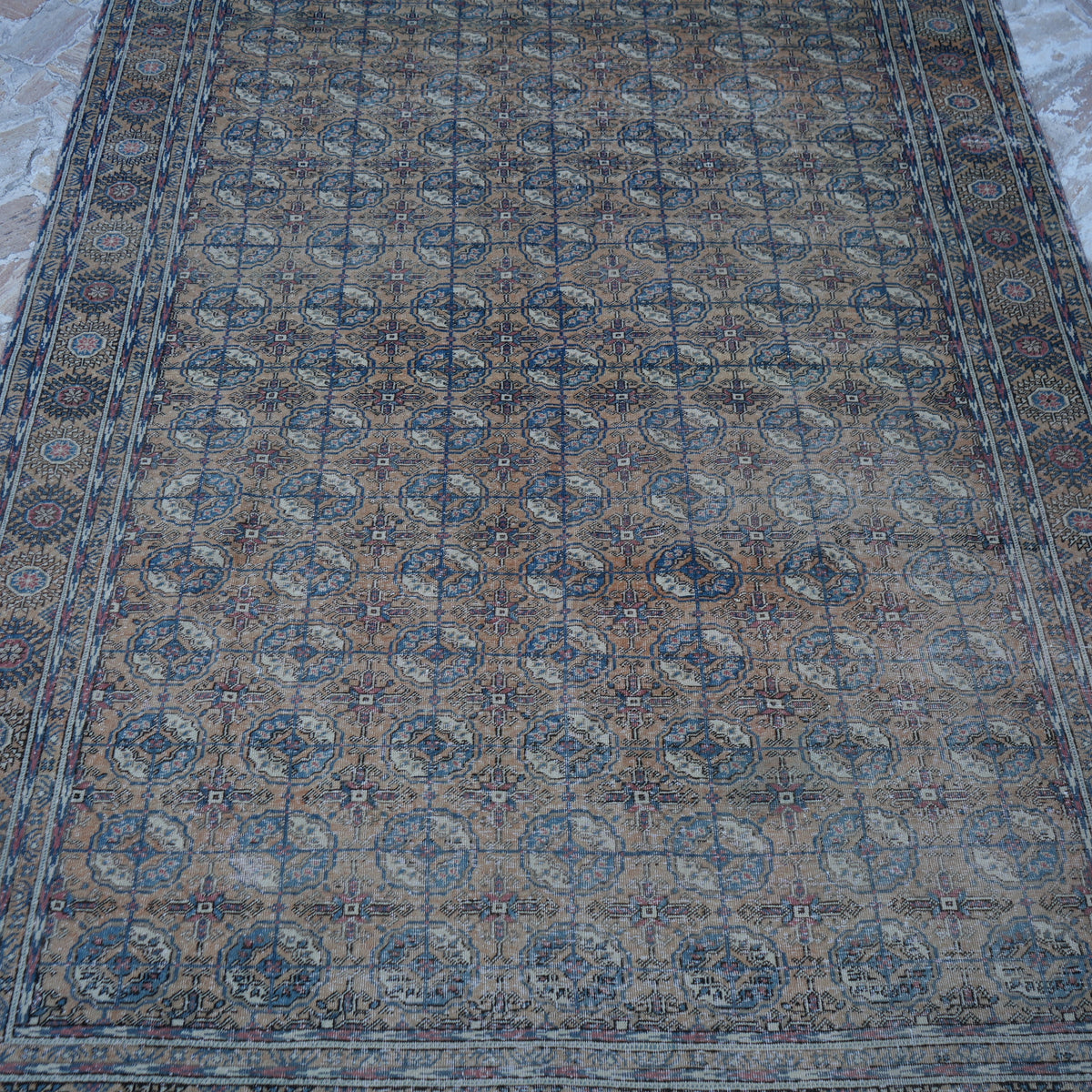
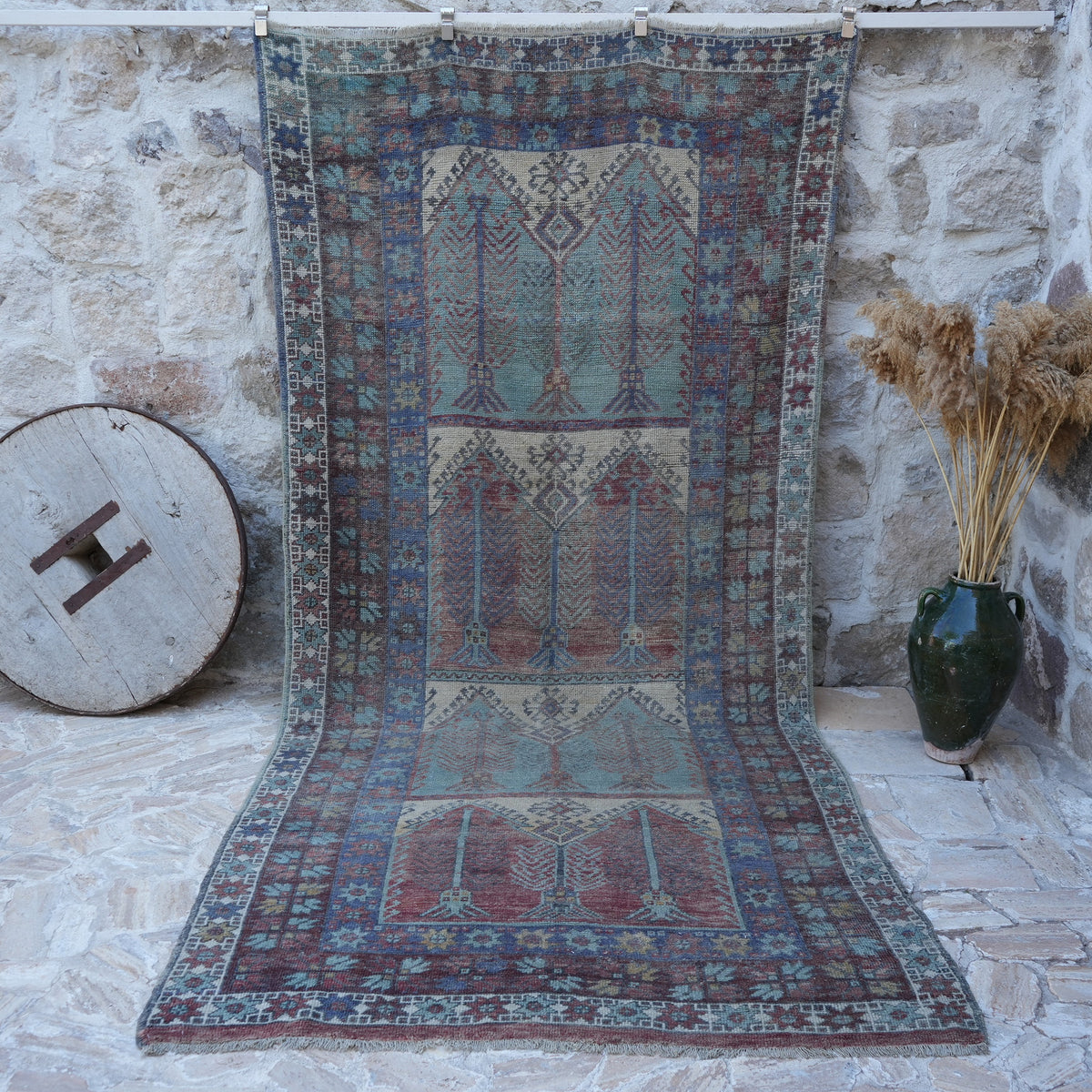
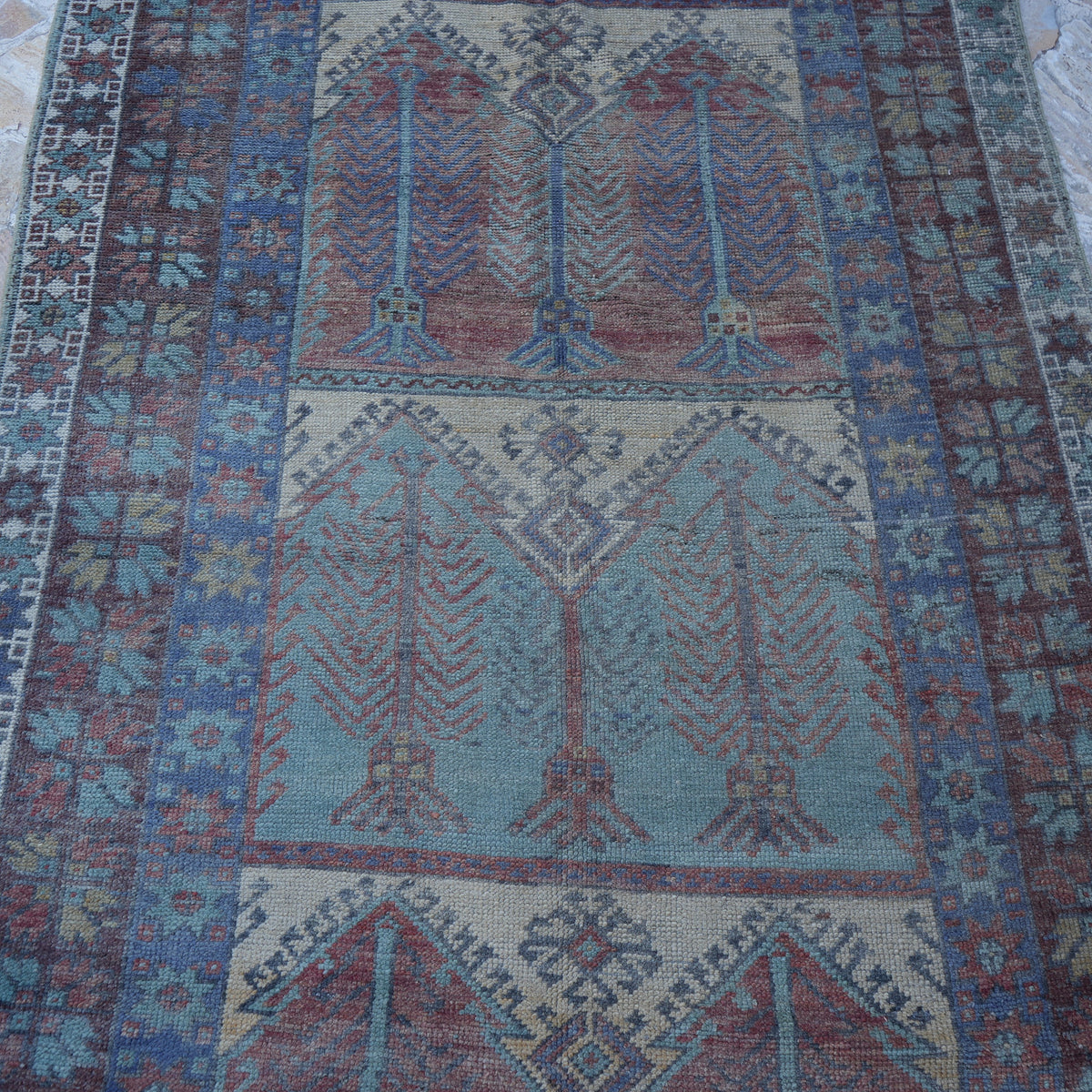
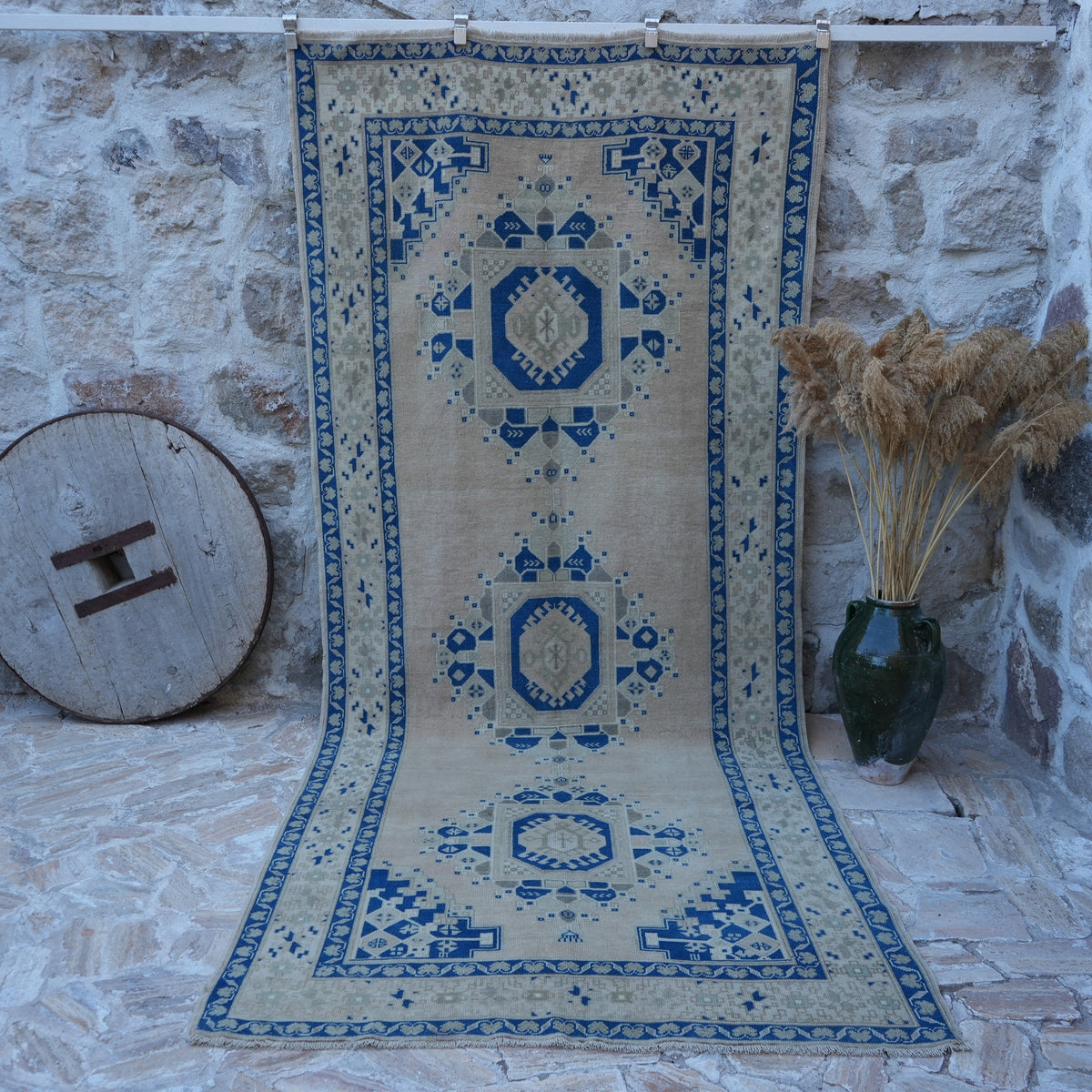
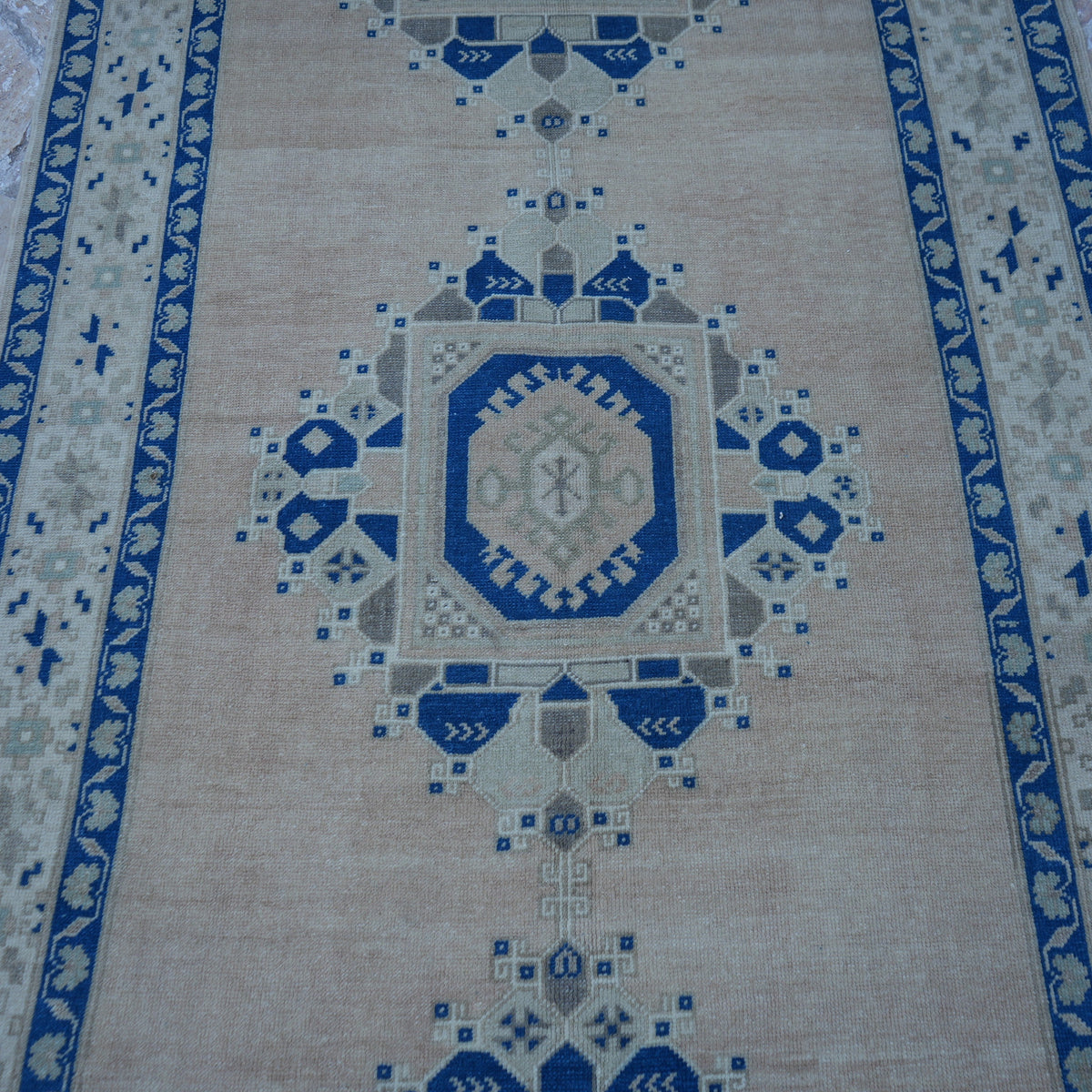
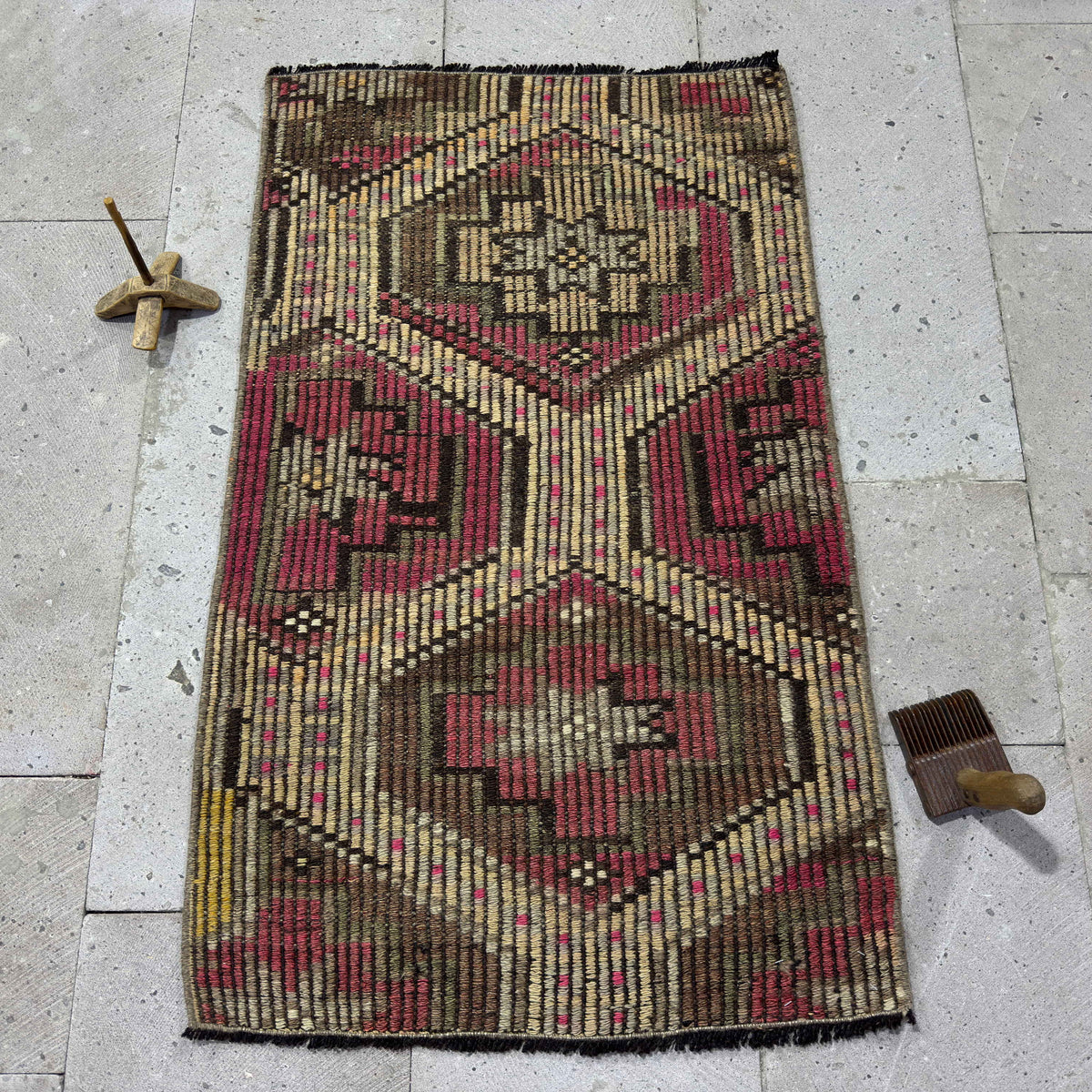
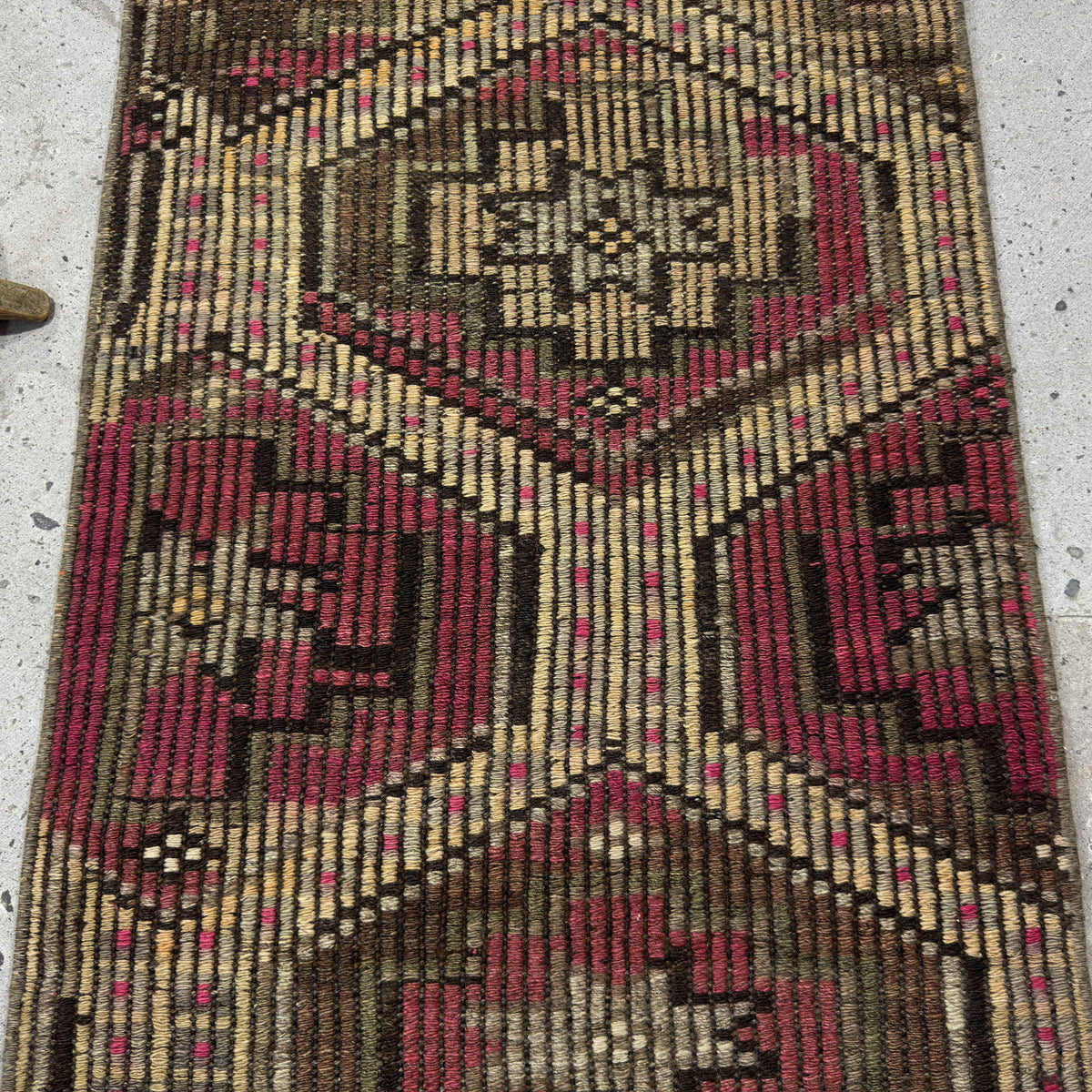
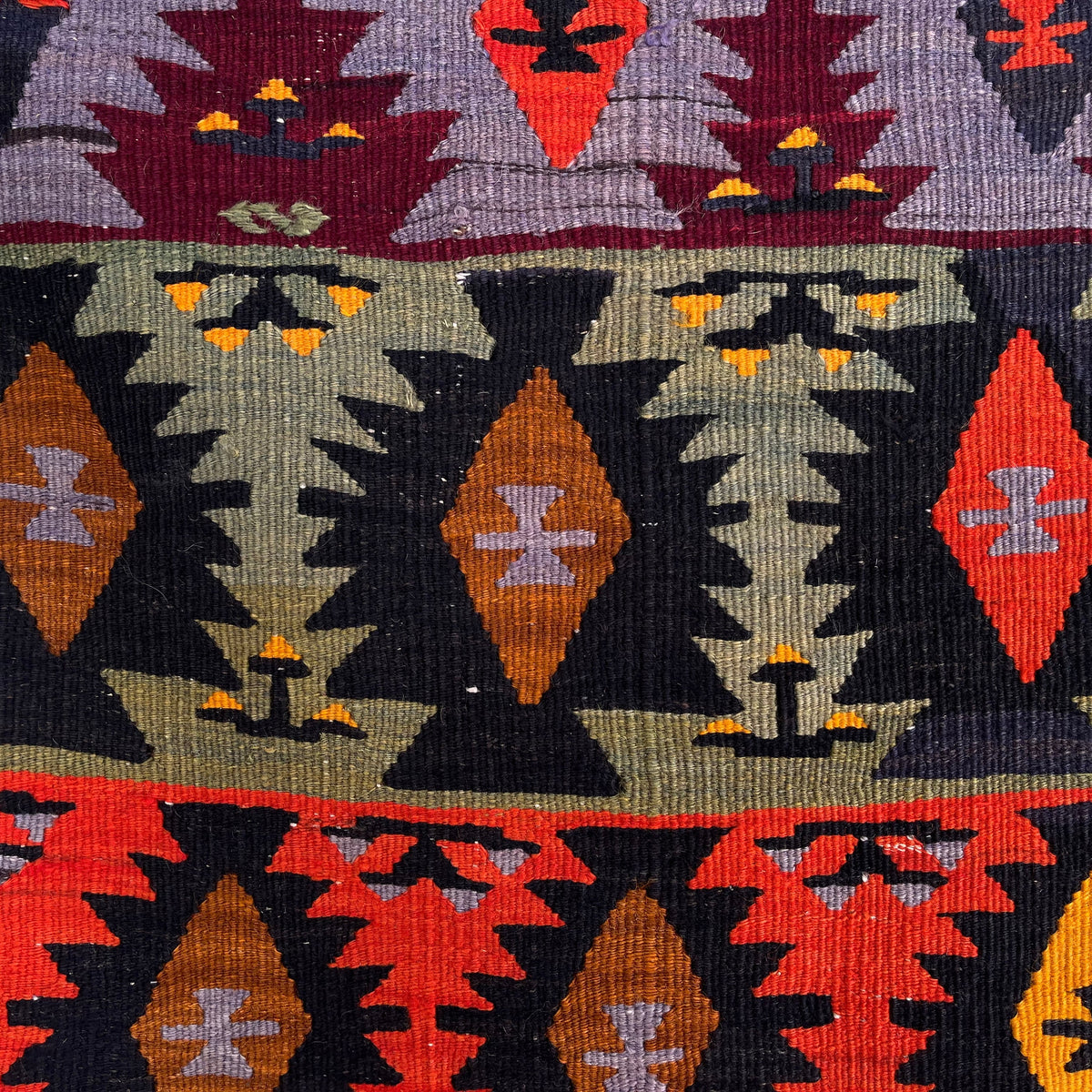
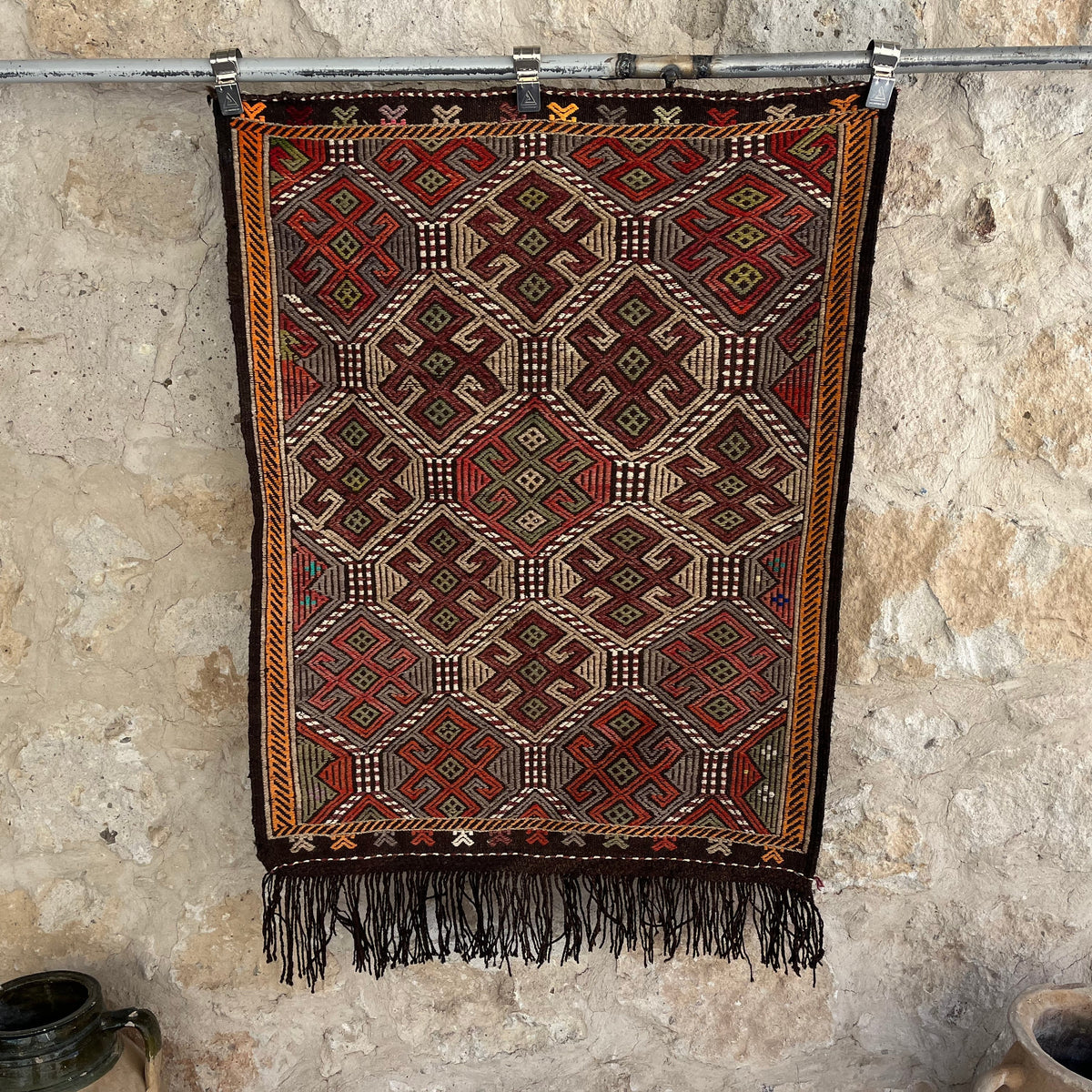
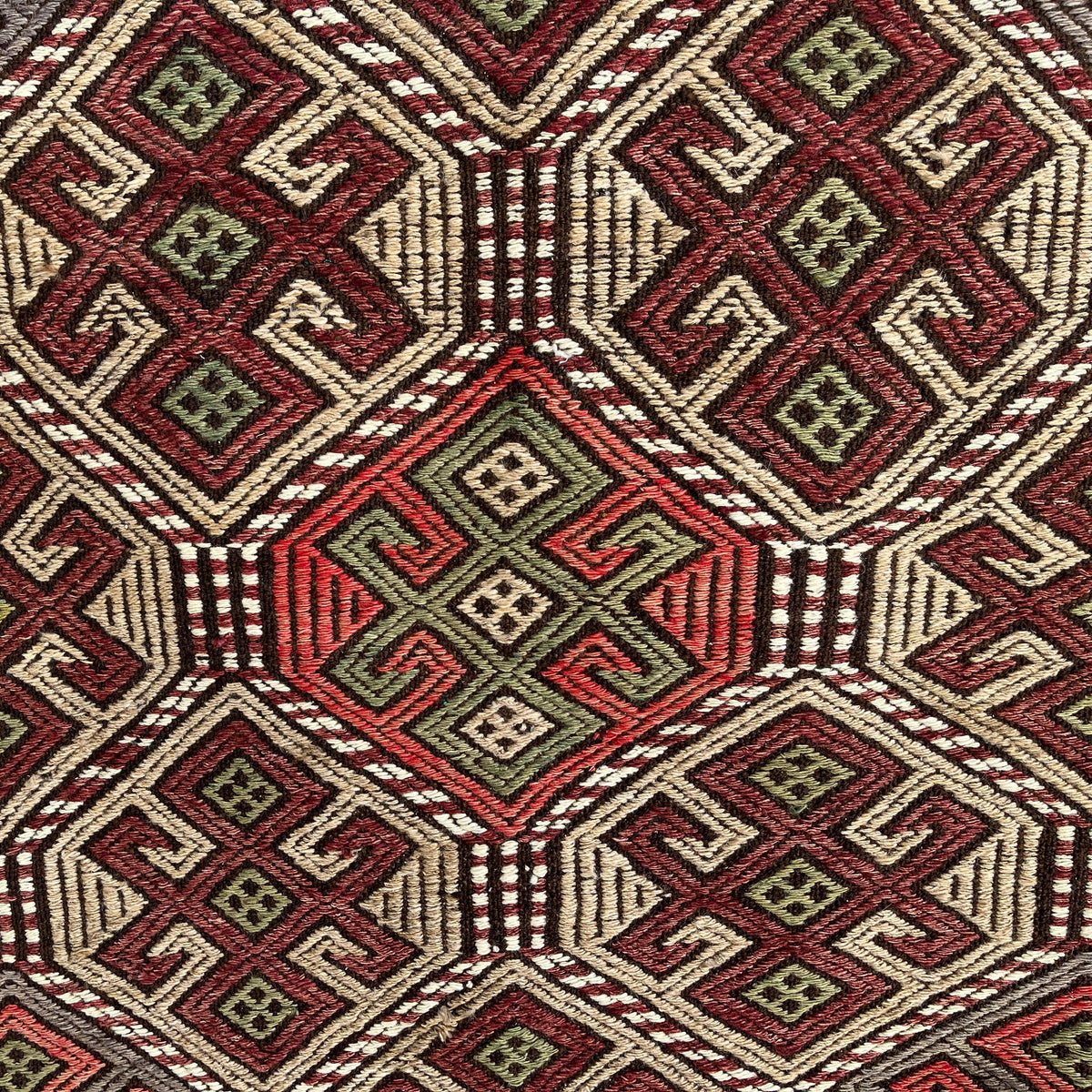
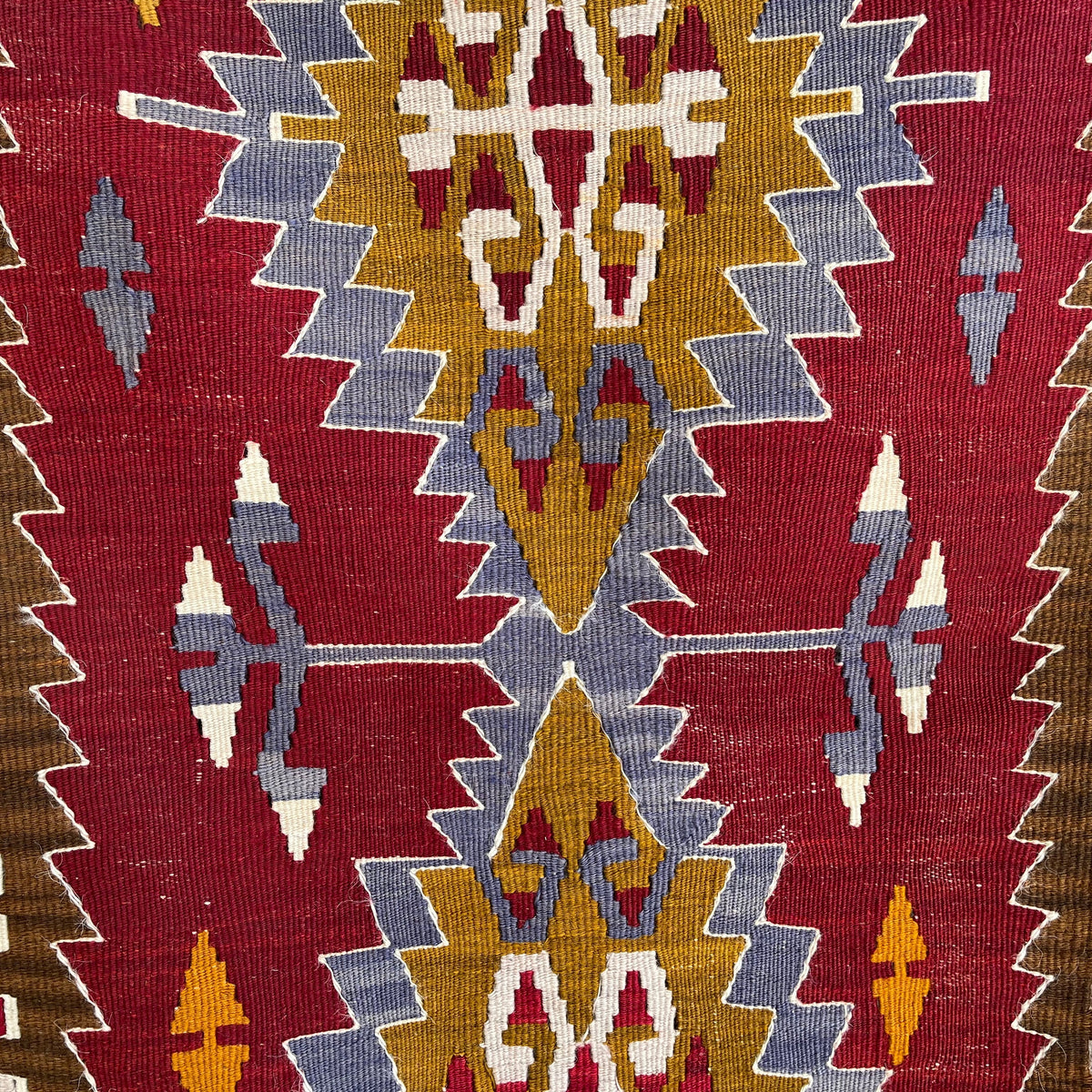
And then there's what the patterns do to the eye. Traditional Anatolian designs — geometric borders, stepped medallions, interconnected diamond fields — were built to hold attention. In a small room, a pattern the eye follows is a pattern that keeps the eye from reaching the walls. The walls stop feeling close. The room stops feeling small. Our vintage rugs, Turkish rugs, oushak rugs, and antique rugs are all selected by hand, in natural light, from here.
If you're still unsure, send me your room dimensions and a photo. I can usually tell you quickly which size, color, and rug style are worth considering — and which ones to skip. Every piece in our collection is one of a kind, so the goal is not just to sell a rug. It is to help you choose the rug that actually works in your room.
Choose a Rug That Makes Your Small Space Feel Bigger
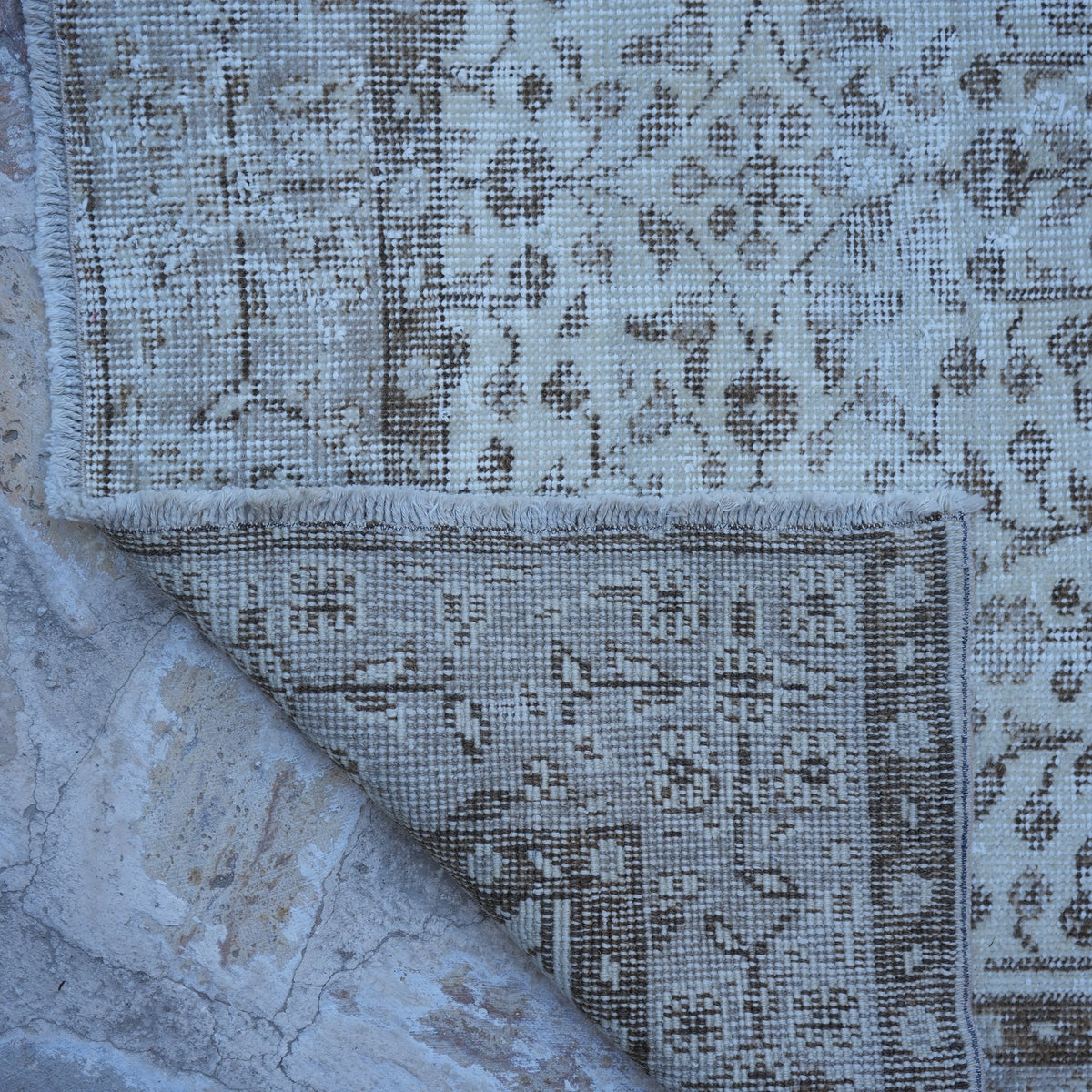
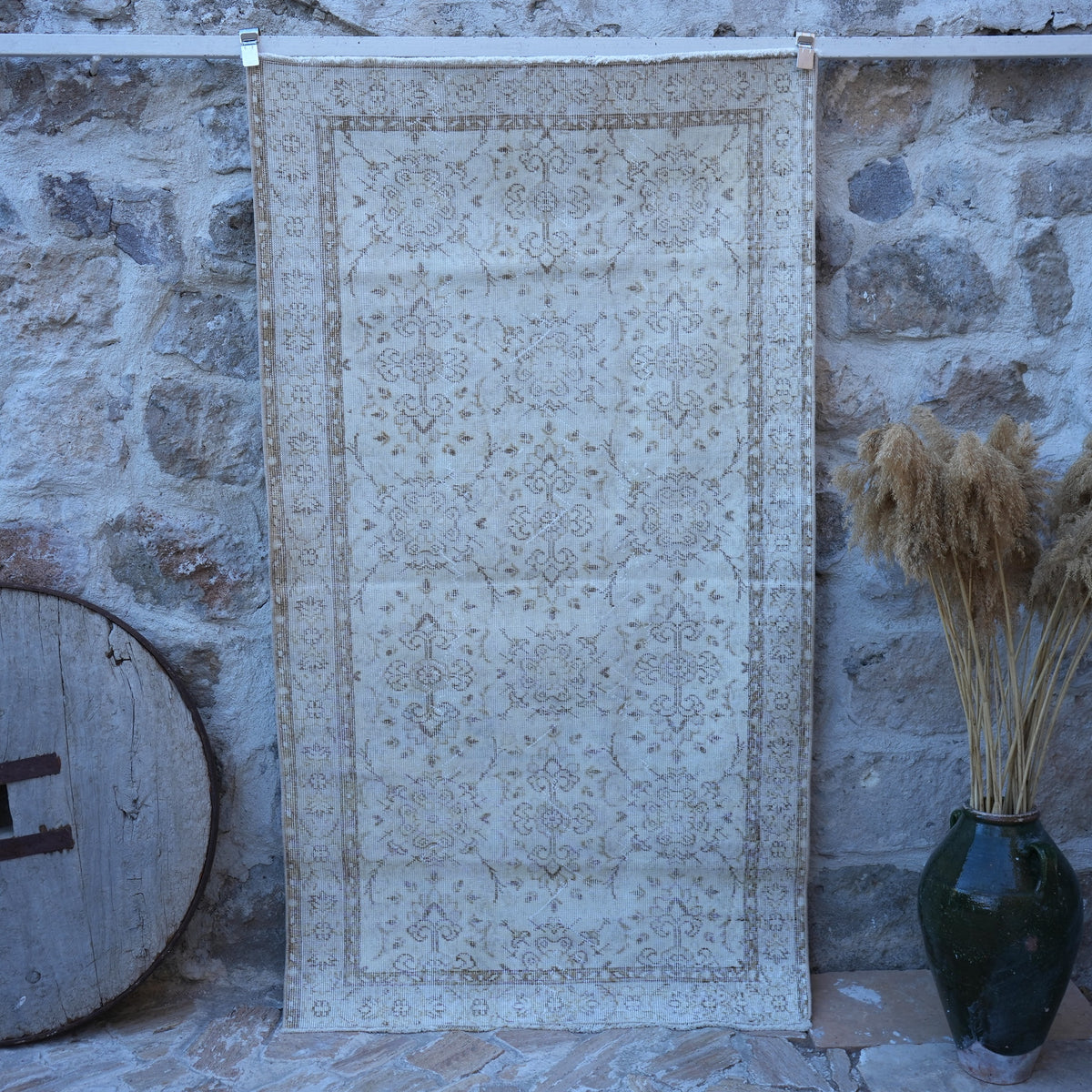
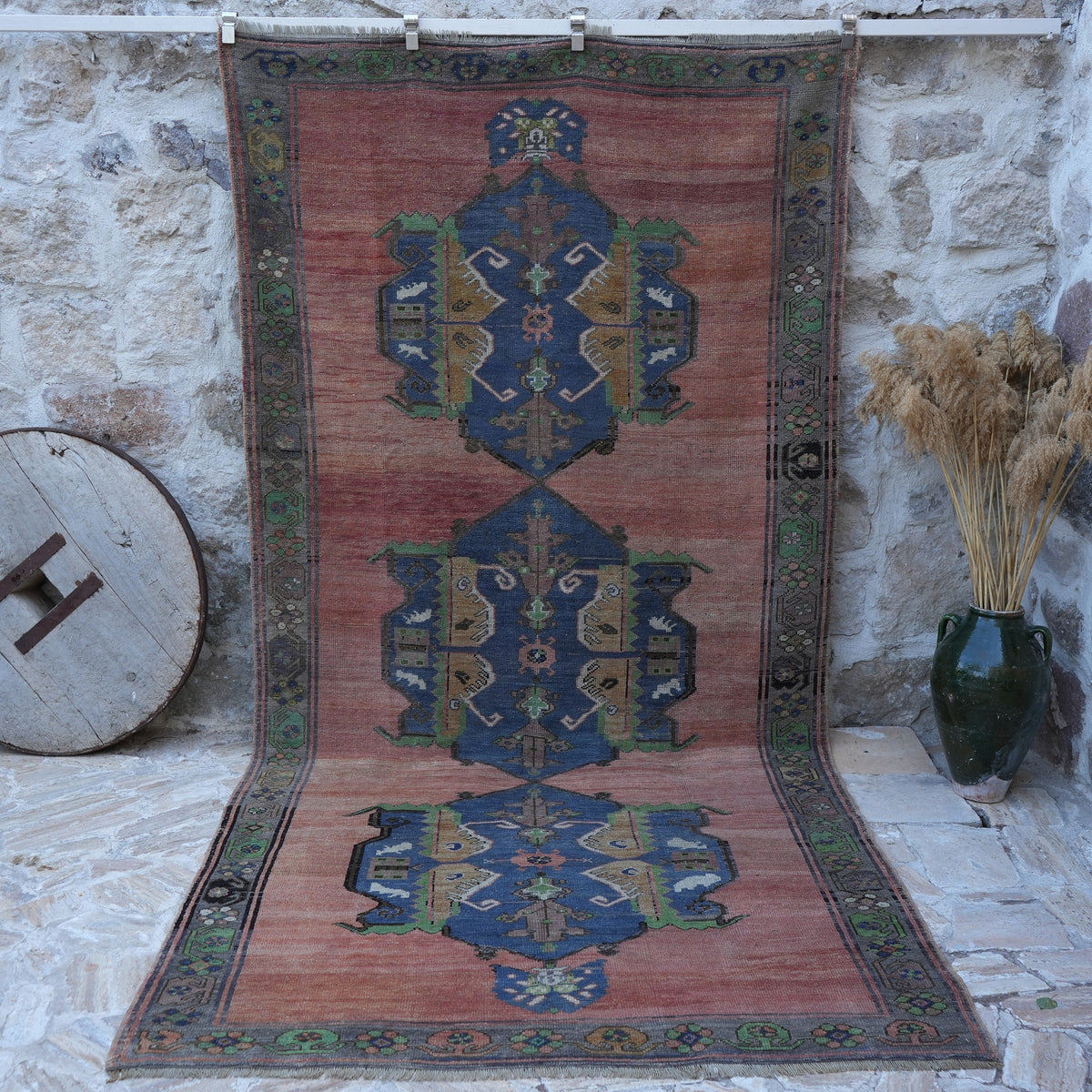
A well-sized handmade rug can visually open a compact room, connect the furniture, and make the floor feel calmer instead of crowded.
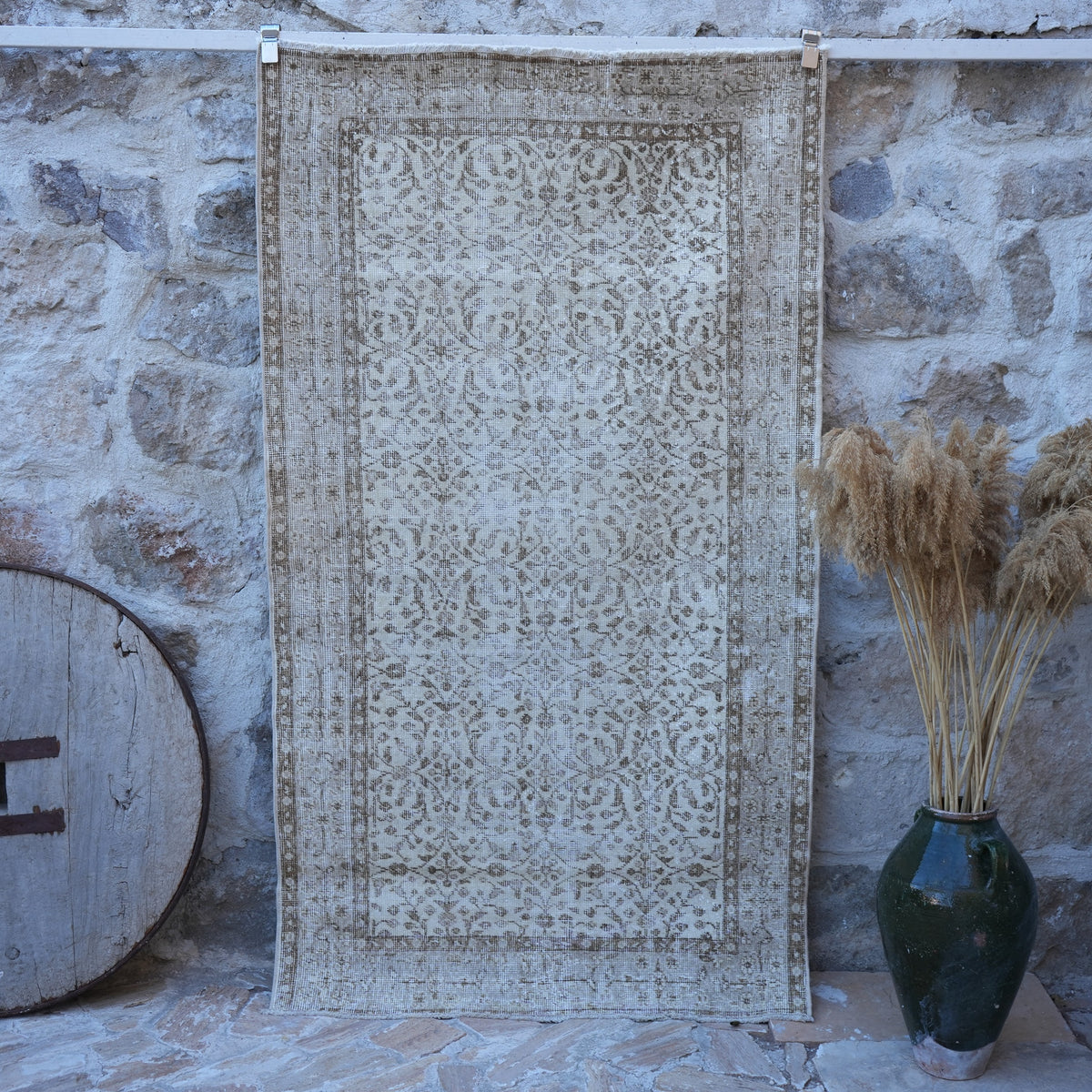
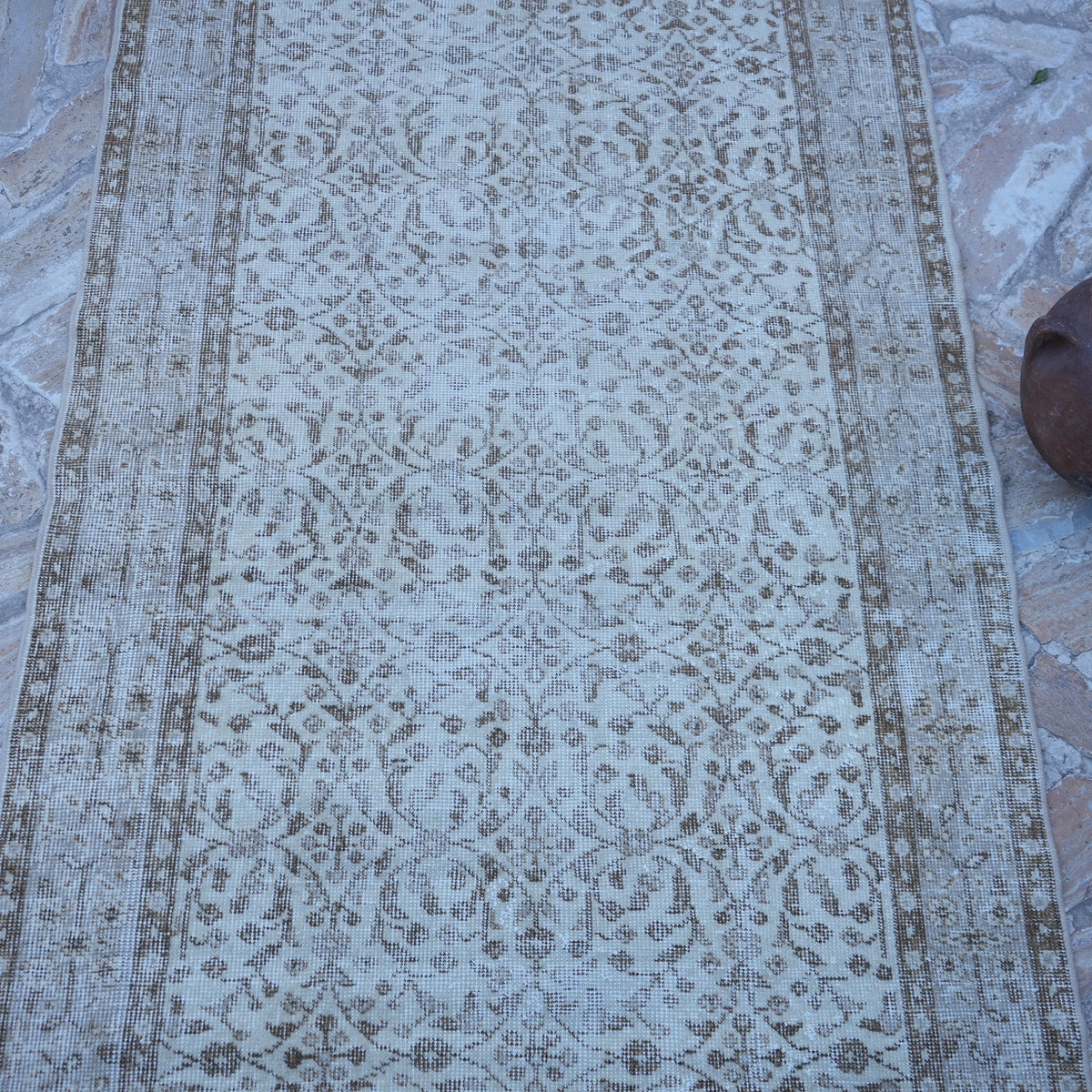
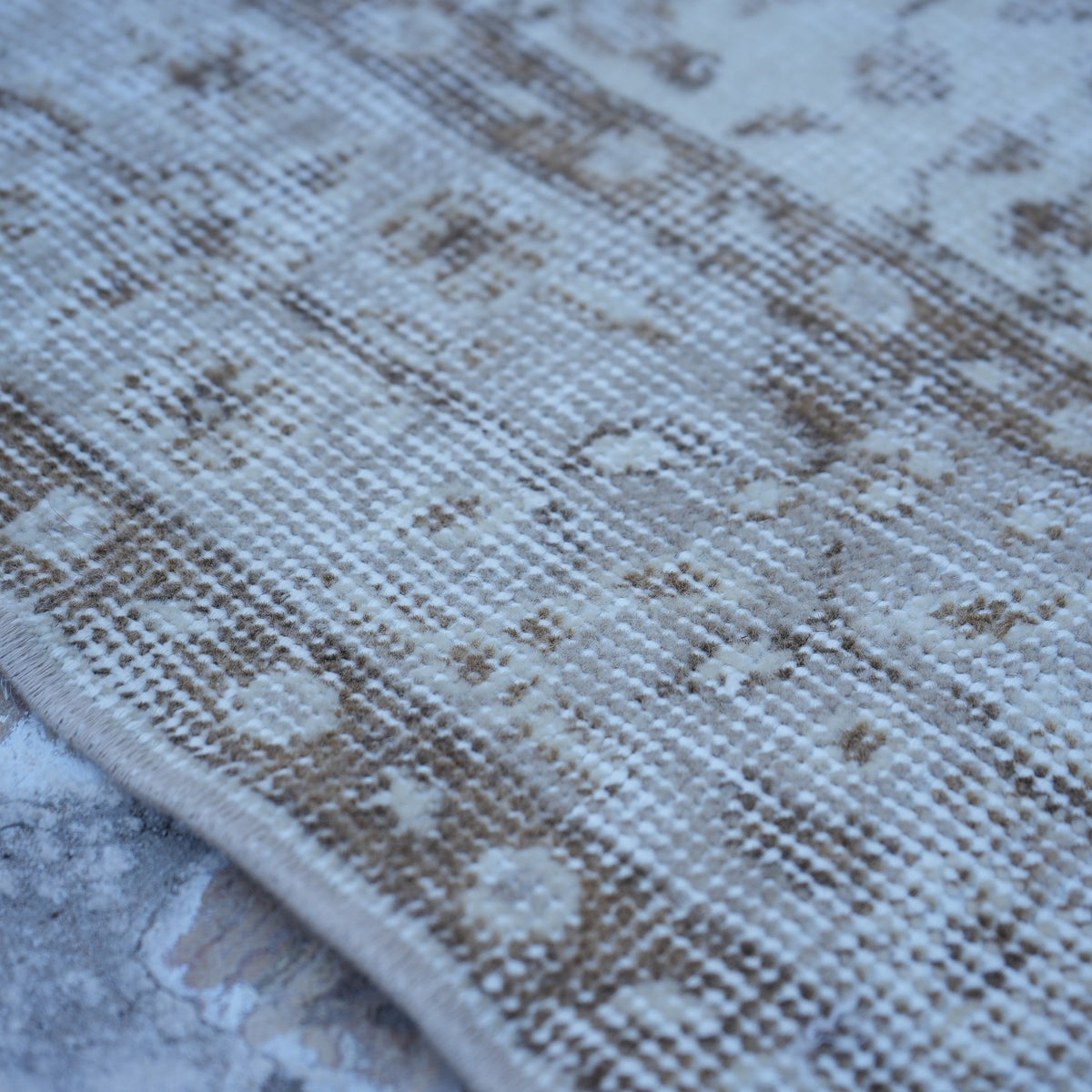
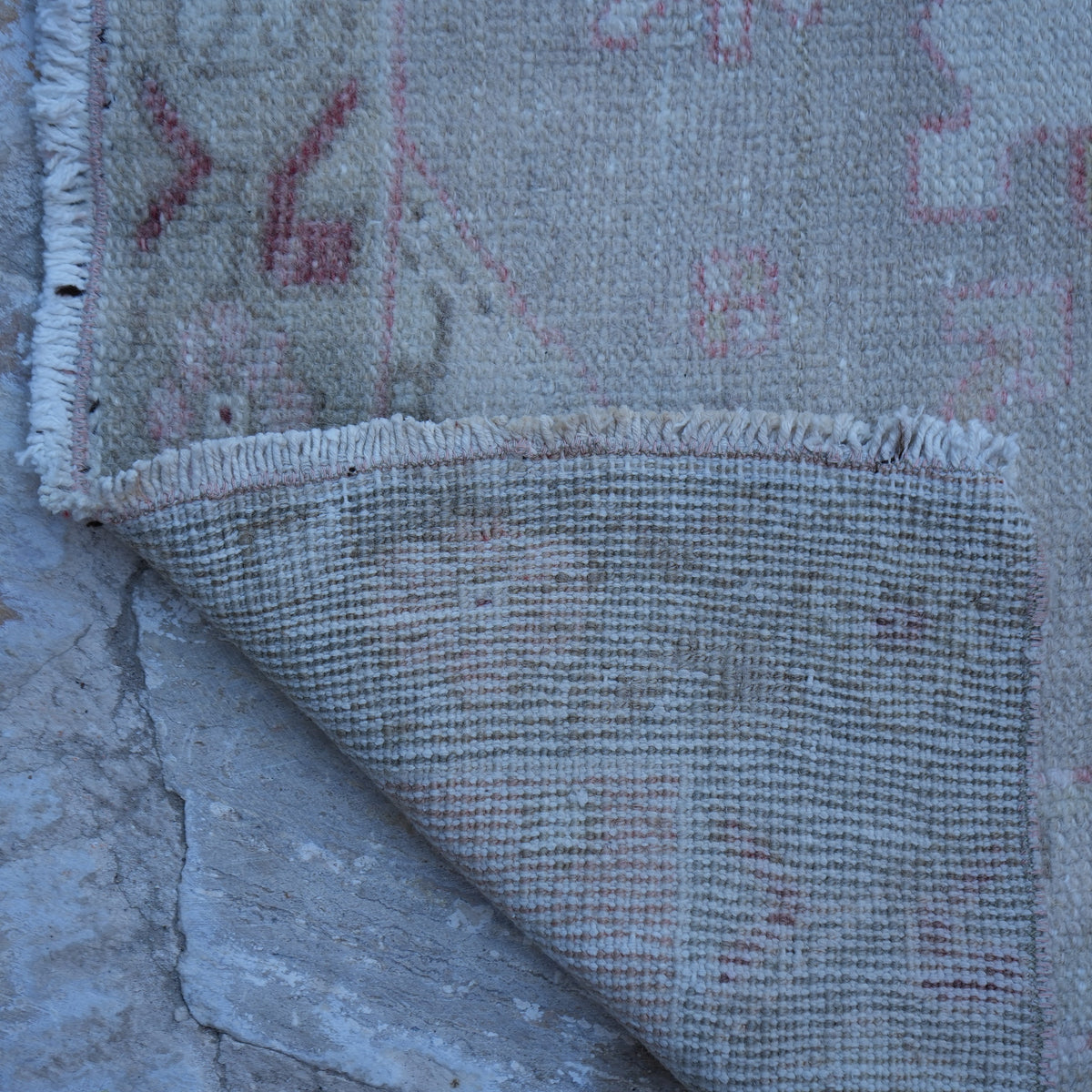
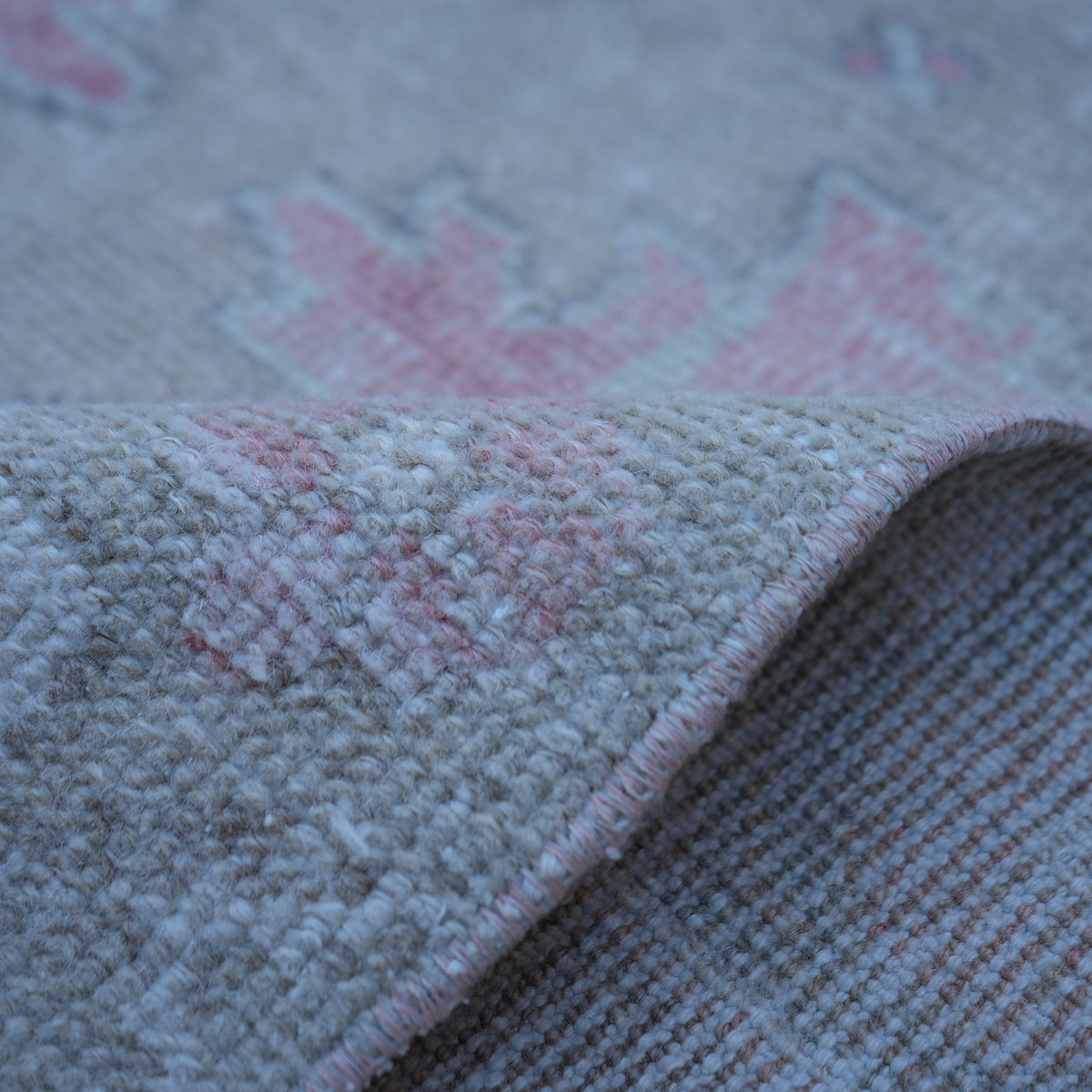
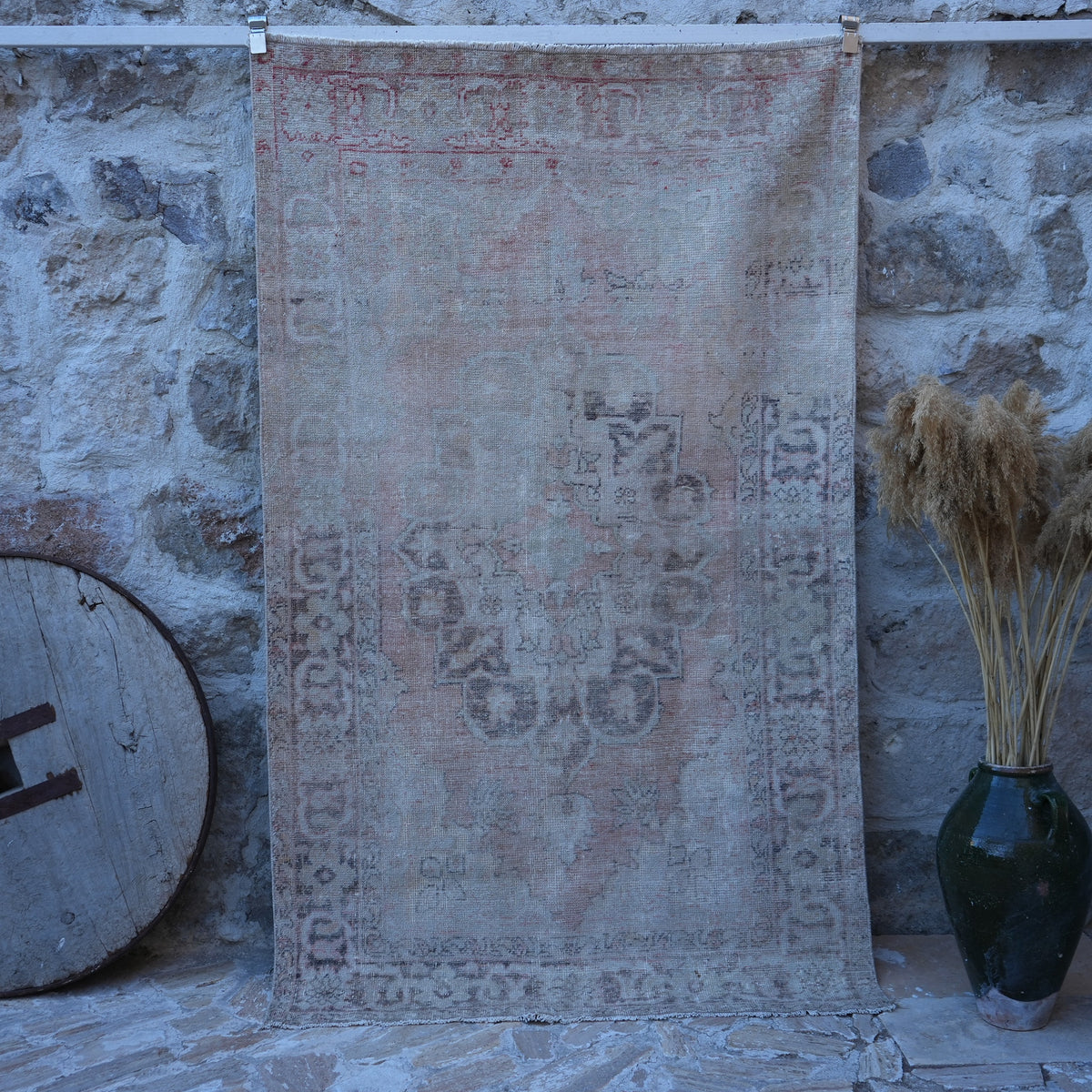
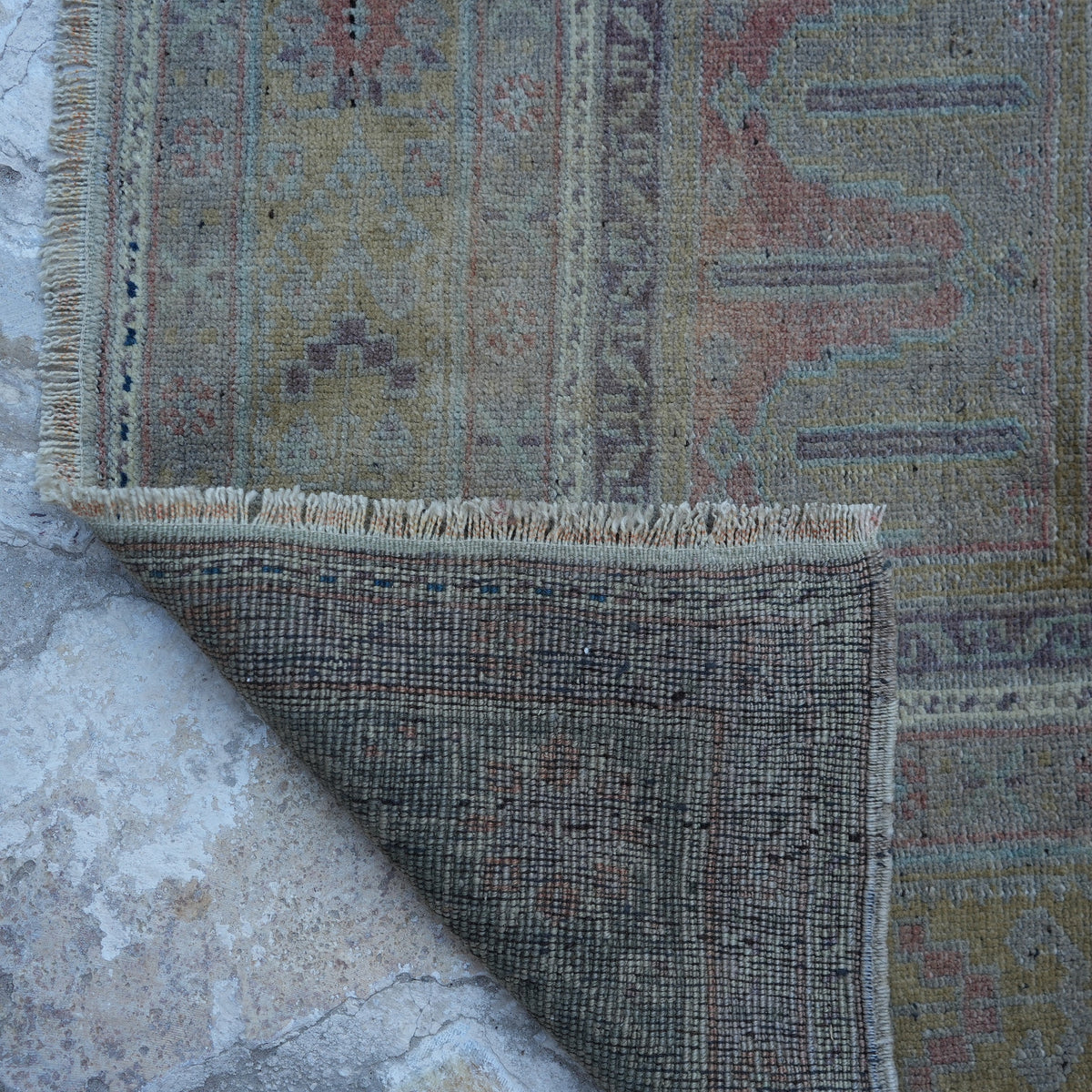
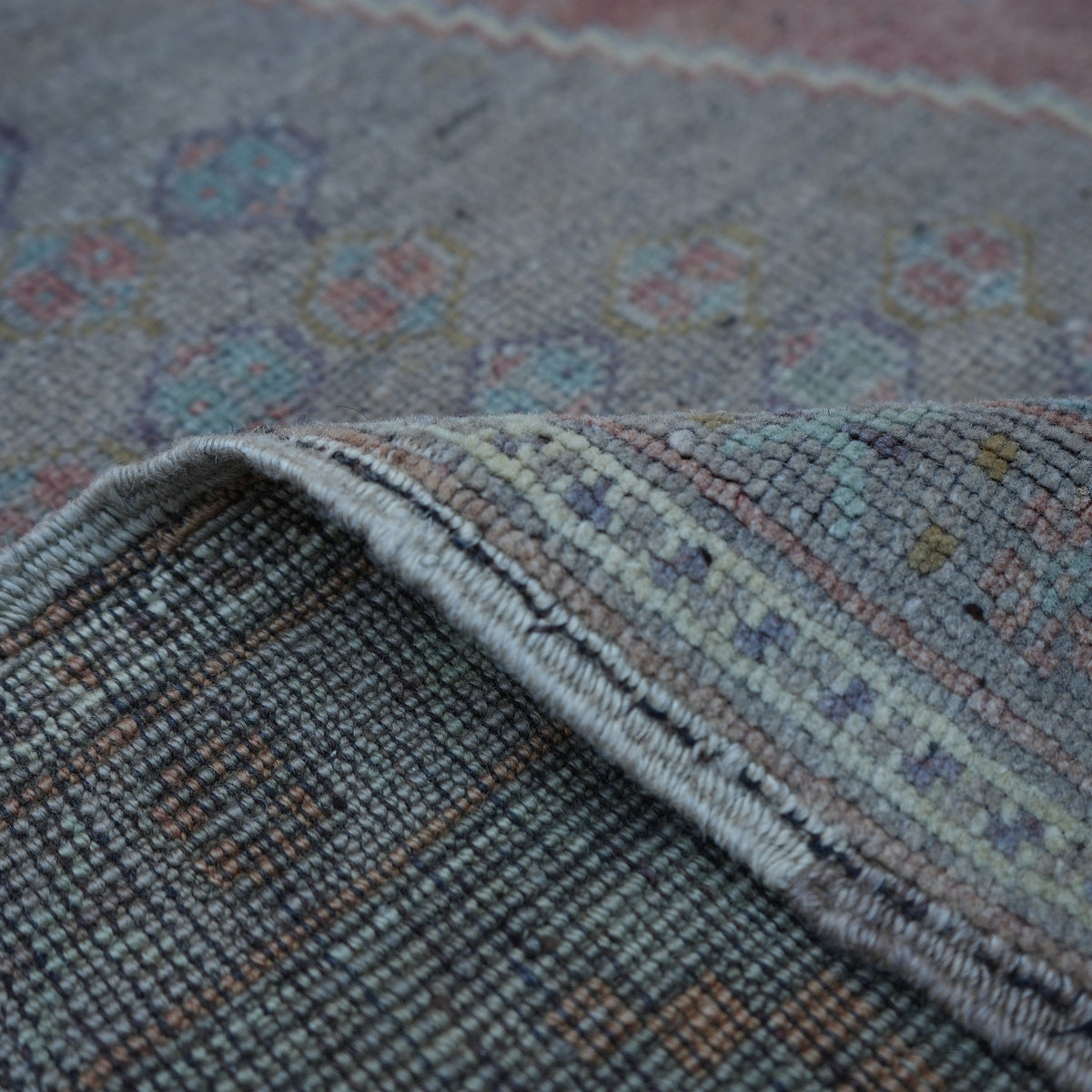
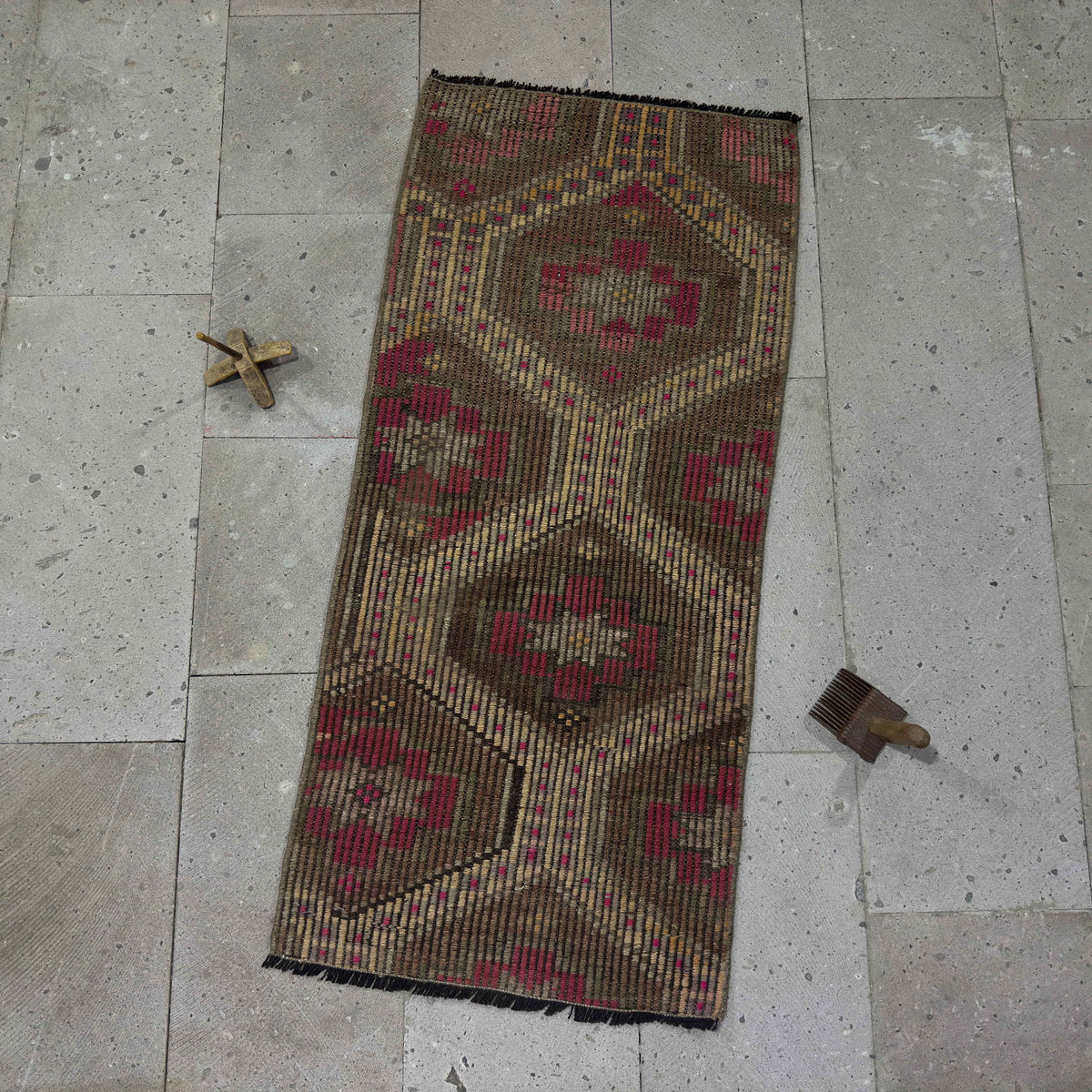
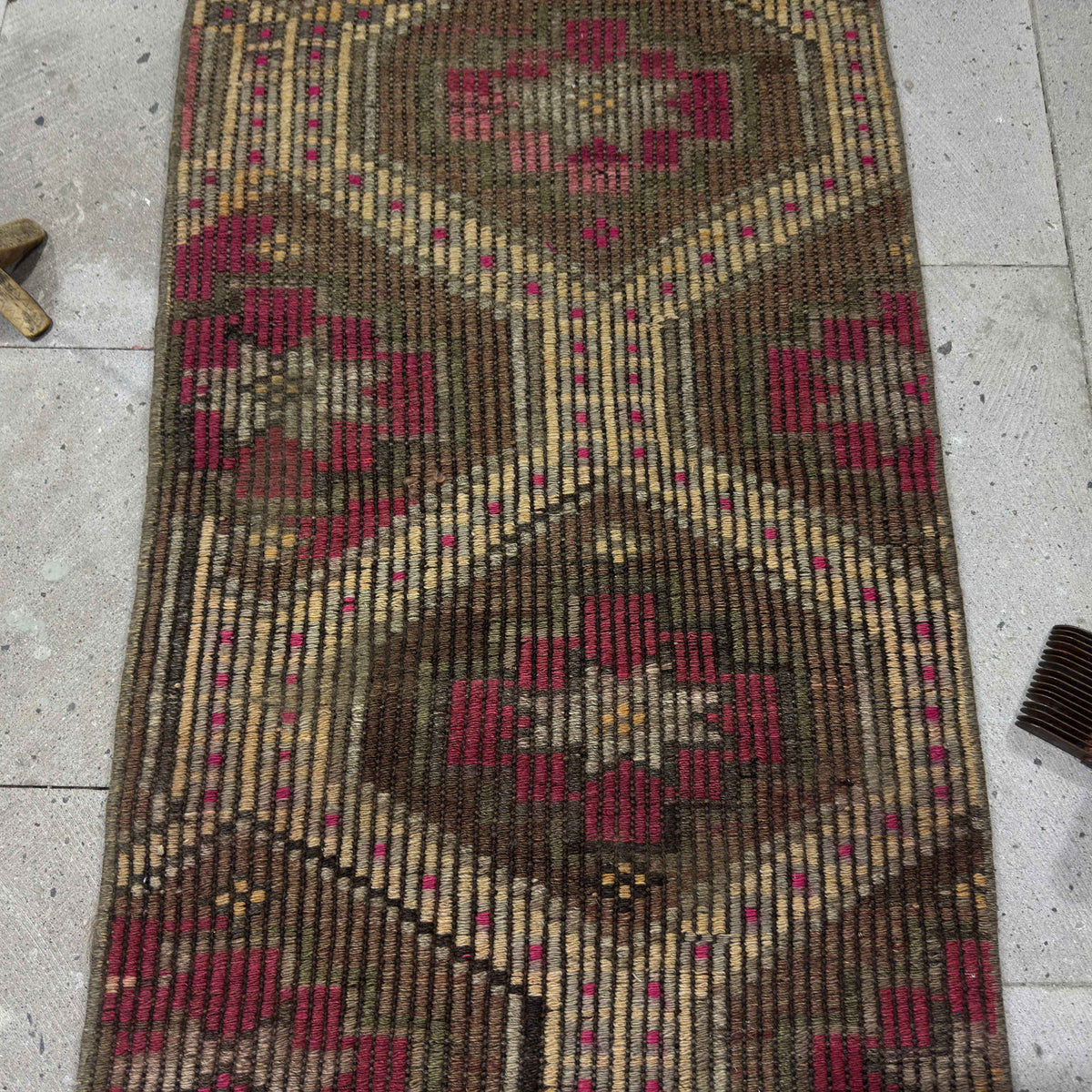
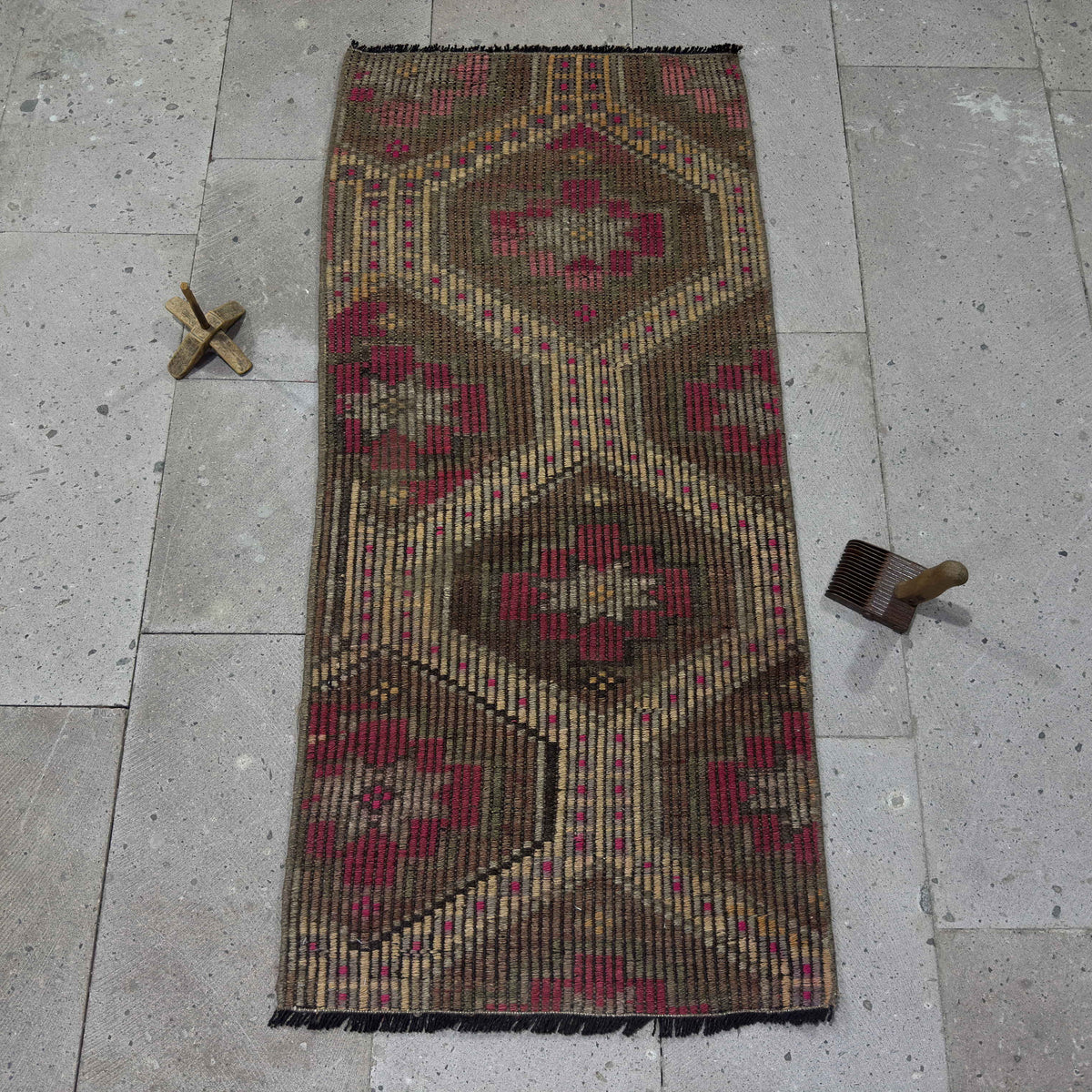
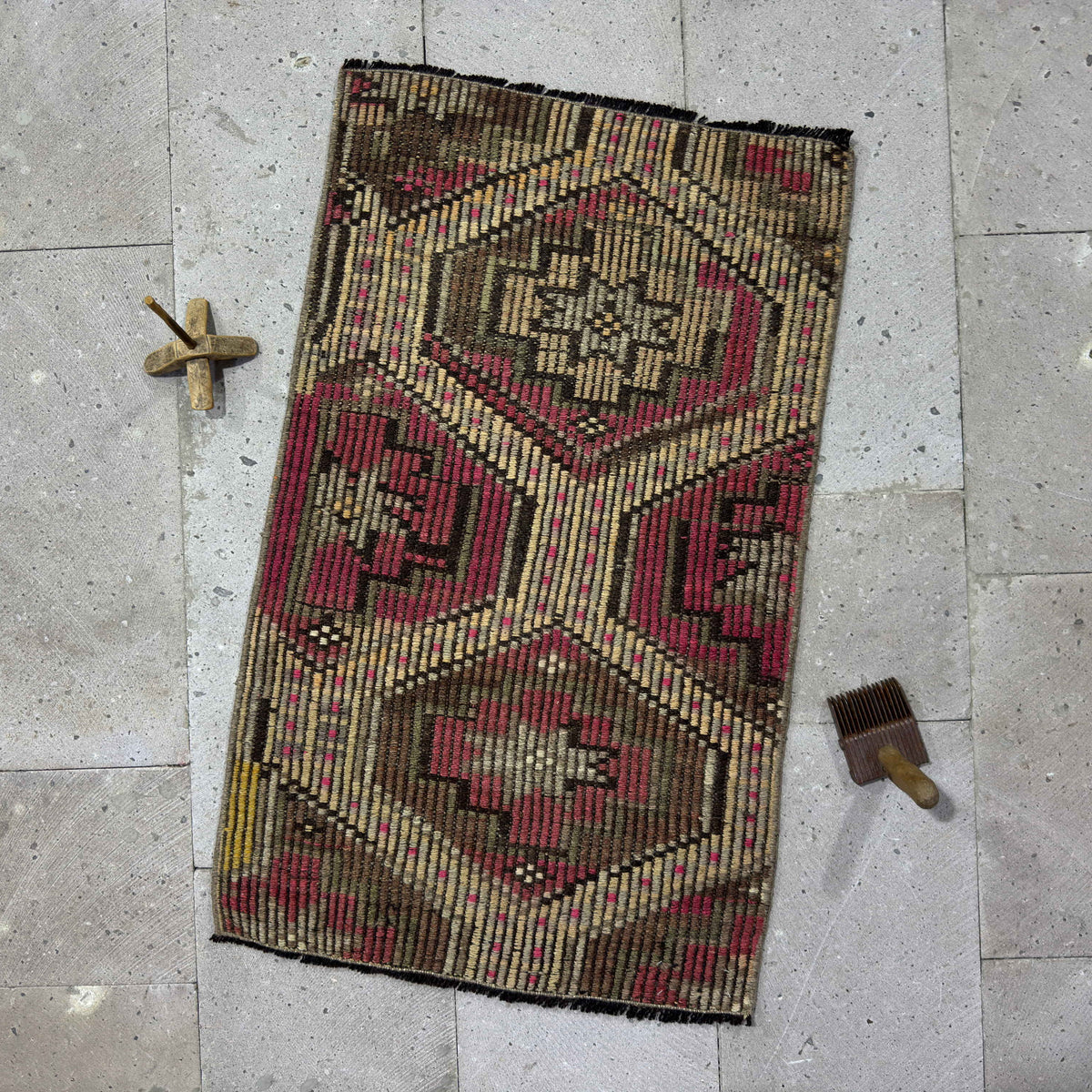
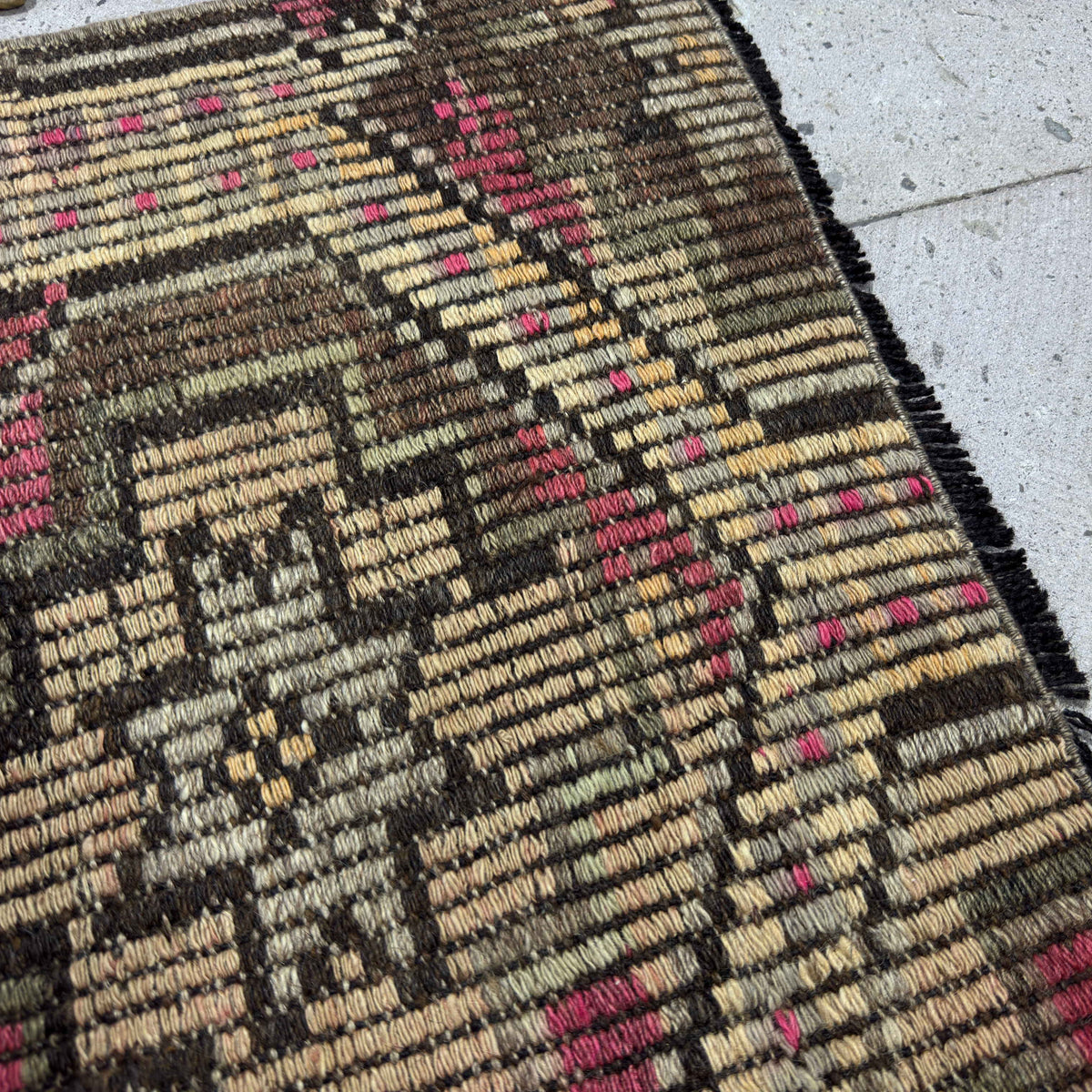
Shop Related Rugs






Frequently Asked Questions
Does a rug make a small room look smaller?
No — the right rug makes a small room feel larger. The mistake is a rug that's too small, too dark, or placed so it fragments the floor. A large, light-toned rug with at least the front furniture legs resting on it unifies the space and makes it read as more open.
What size rug is best for a small living room?
An 8x10 is the right starting point — not the 5x8 most people reach for instinctively. For size-specific browsing, our 8x10 vintage rugs and 9x12 vintage rugs make it easy to compare dimensions before committing.
What color rug makes a room look bigger?
Light tones — cream, warm beige, soft gray, pale ivory — reflect available light and create a sense of openness. Darker rugs can work in well-lit rooms, but in most compact spaces they absorb light and visually compress the room.
Should furniture legs be on or off the rug in a small room?
At minimum, the front legs should be on the rug — this connects the furniture to the floor and makes the seating area read as one unified zone. All legs on is ideal when size allows, but front legs on is the reliable baseline for most rooms.
Is a kilim rug good for a small space?
Yes. A kilim's flat weave keeps it thin — no bulk at floor level — and its geometric character adds visual interest without filling the room. Use a rug pad to prevent sliding. For small entryways, high-traffic rooms, or spaces with pets and kids, kilim is often the clearest choice.
Can I use a round rug in a small room?
Yes — in certain rooms, it's the better choice. Round rugs soften the geometry of square rooms, remove competing corners, and make the space read as more open. They work particularly well under a round or square dining table and in compact bedrooms as a defined landing zone.

