














Most people I talk to think a kitchen rug is a nice extra. Something decorative, maybe. Not something that actually changes the room.
We ship from Cappadocia to kitchens across the country, and the most common question we get — after "what size?" — is "can I really put a vintage rug in the kitchen?" The doubt is real. I understand it. But I have also seen what happens when someone finally tries it.
The photos that stop people mid-scroll on Pinterest — the kitchens that look catalog-ready, layered, like they belong somewhere — almost always have a rug in them. Take the rug out and the same kitchen goes flat.
This guide covers ideas, placement, sizing, material, and care — in the order that actually matters when you are making the decision.
15 Kitchen Rug Ideas For Every Layout And Style
Start with the way your kitchen actually works. A runner helps movement, a small rug anchors the sink, a medium rug can ground an island, and a vintage piece can turn a plain kitchen into the room people remember.
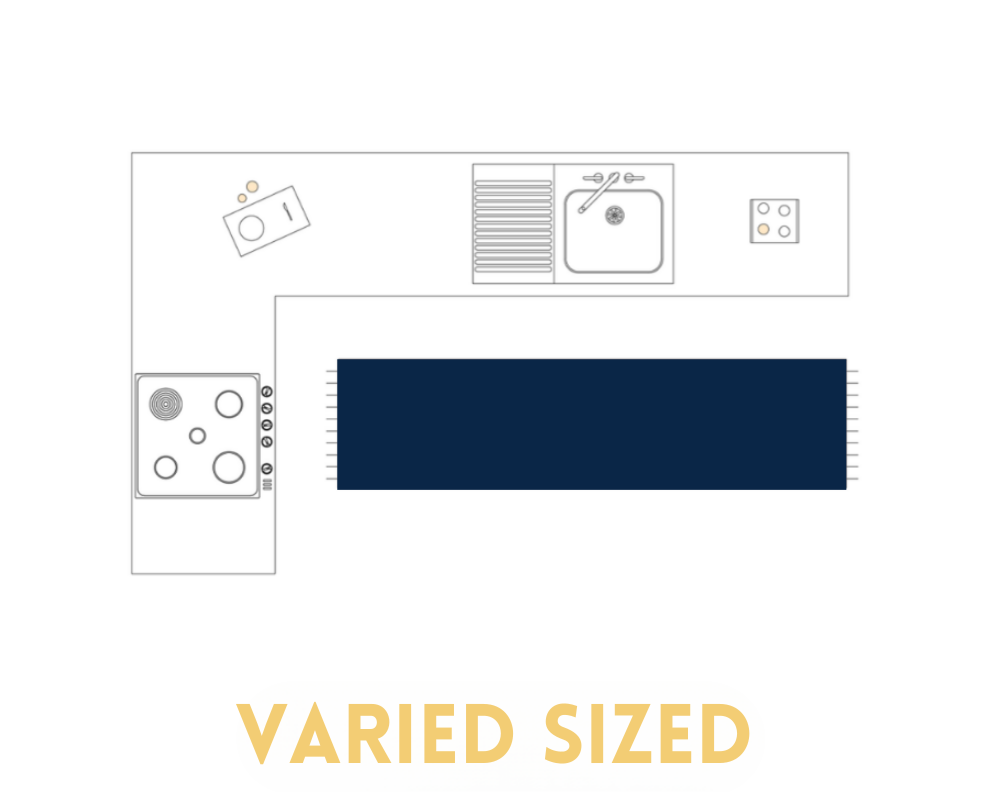
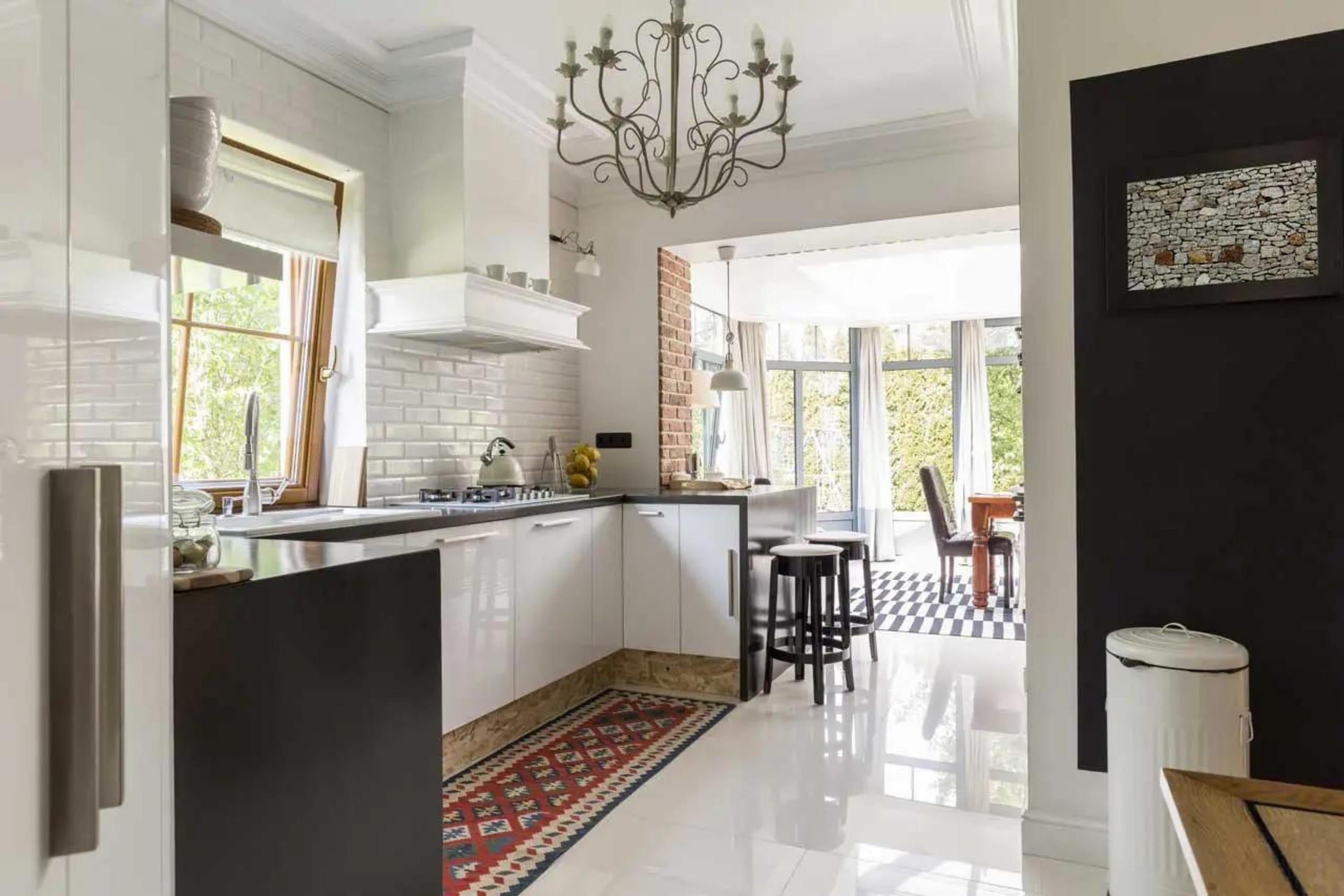
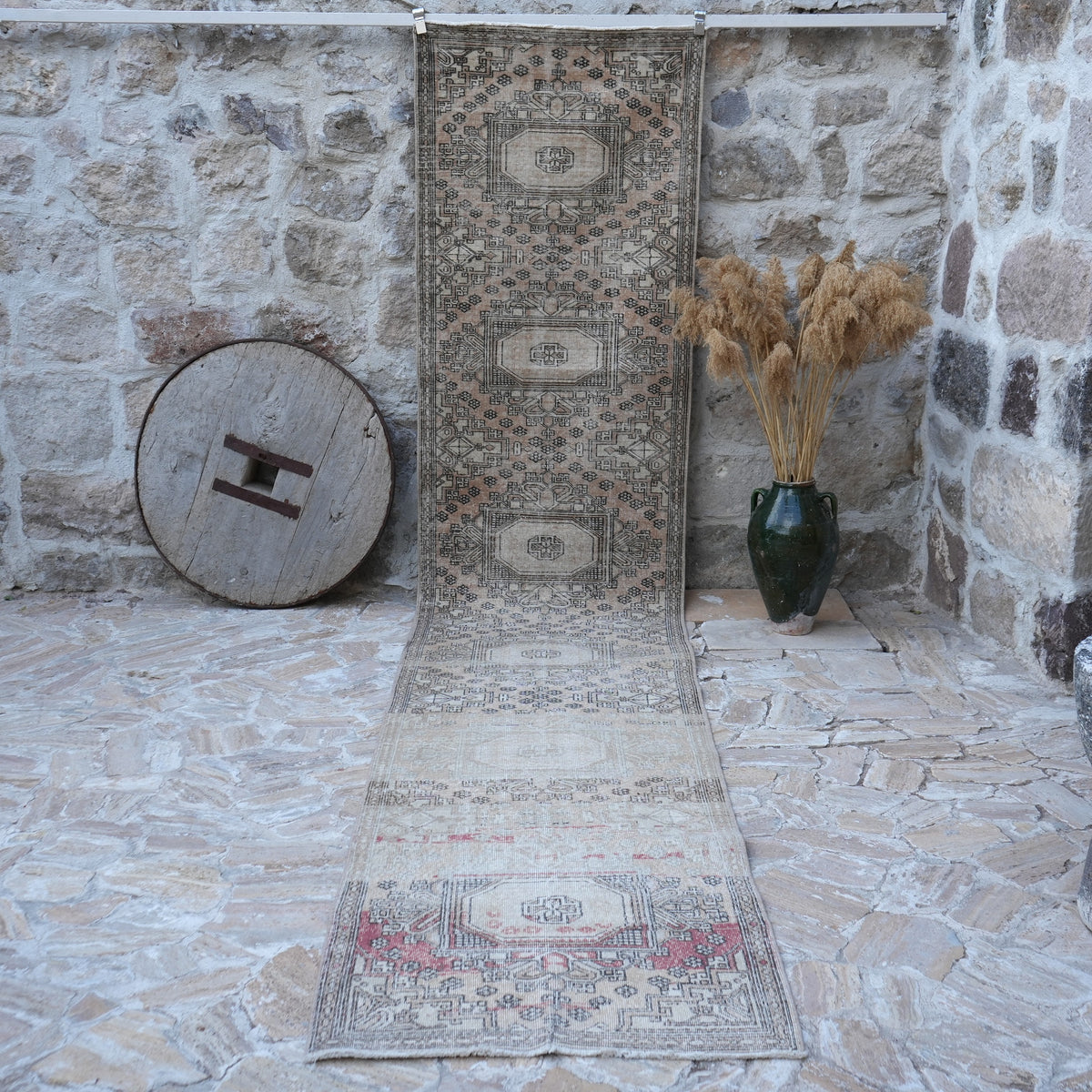
The most effective placement for galley and single-wall kitchens. A runner rug covers the sink-stove traffic zone beautifully.
If you only use one rug, this is the spot. A 2×3 or 3×5 from our small rugs anchors the room with almost no effort.
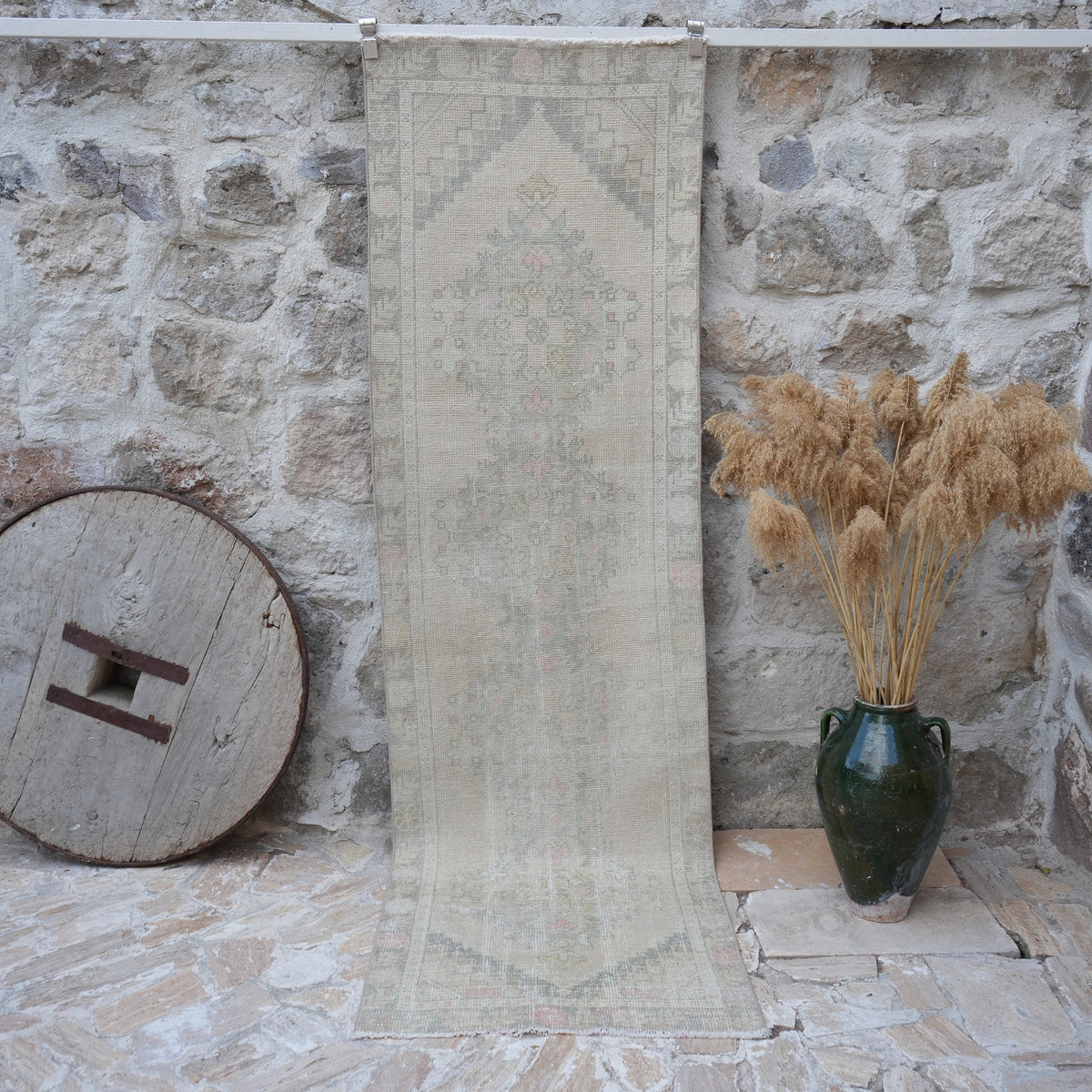
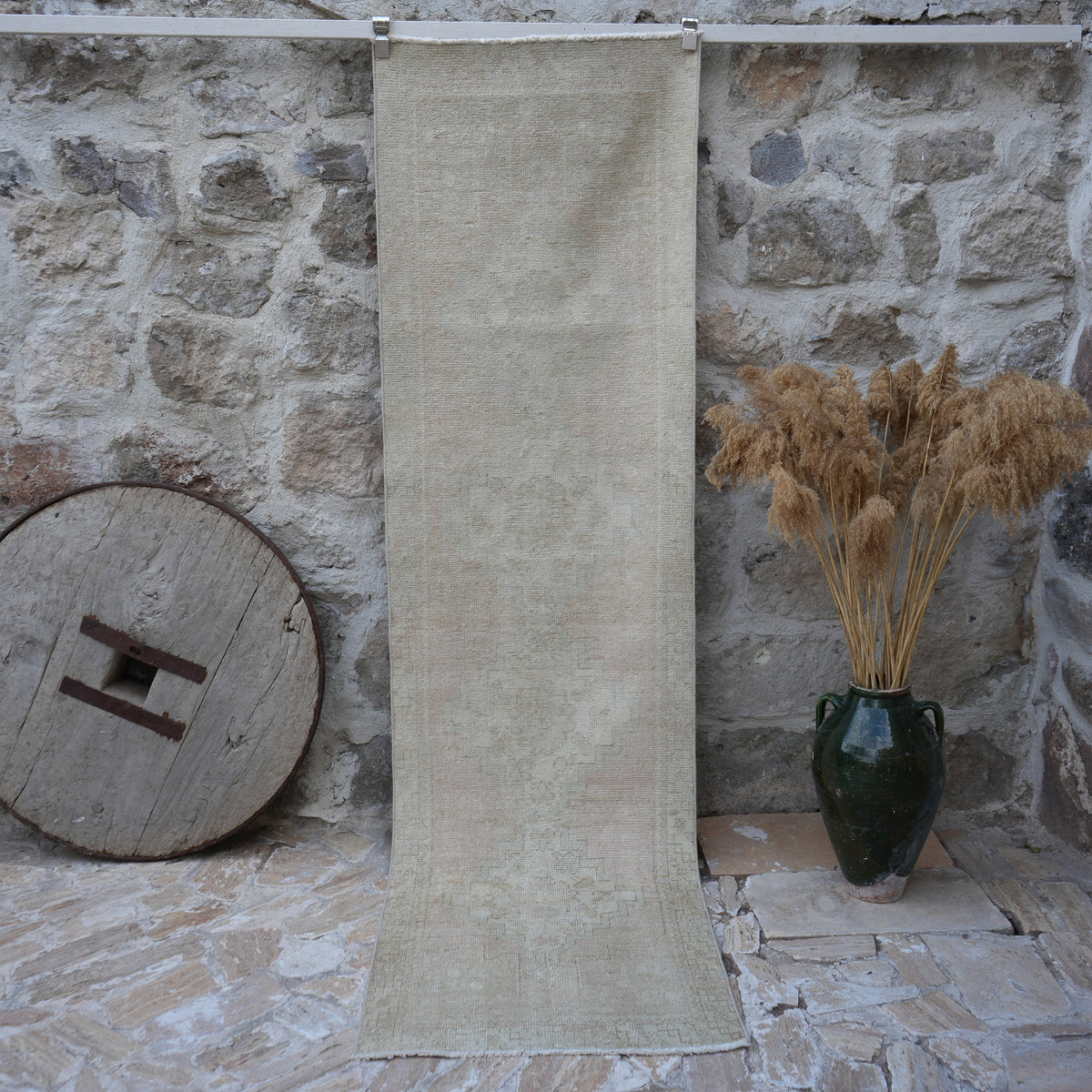
A 2×6 or 2×8 vintage runner naturally connects the two busiest zones and hides small daily marks better than any uniform surface.
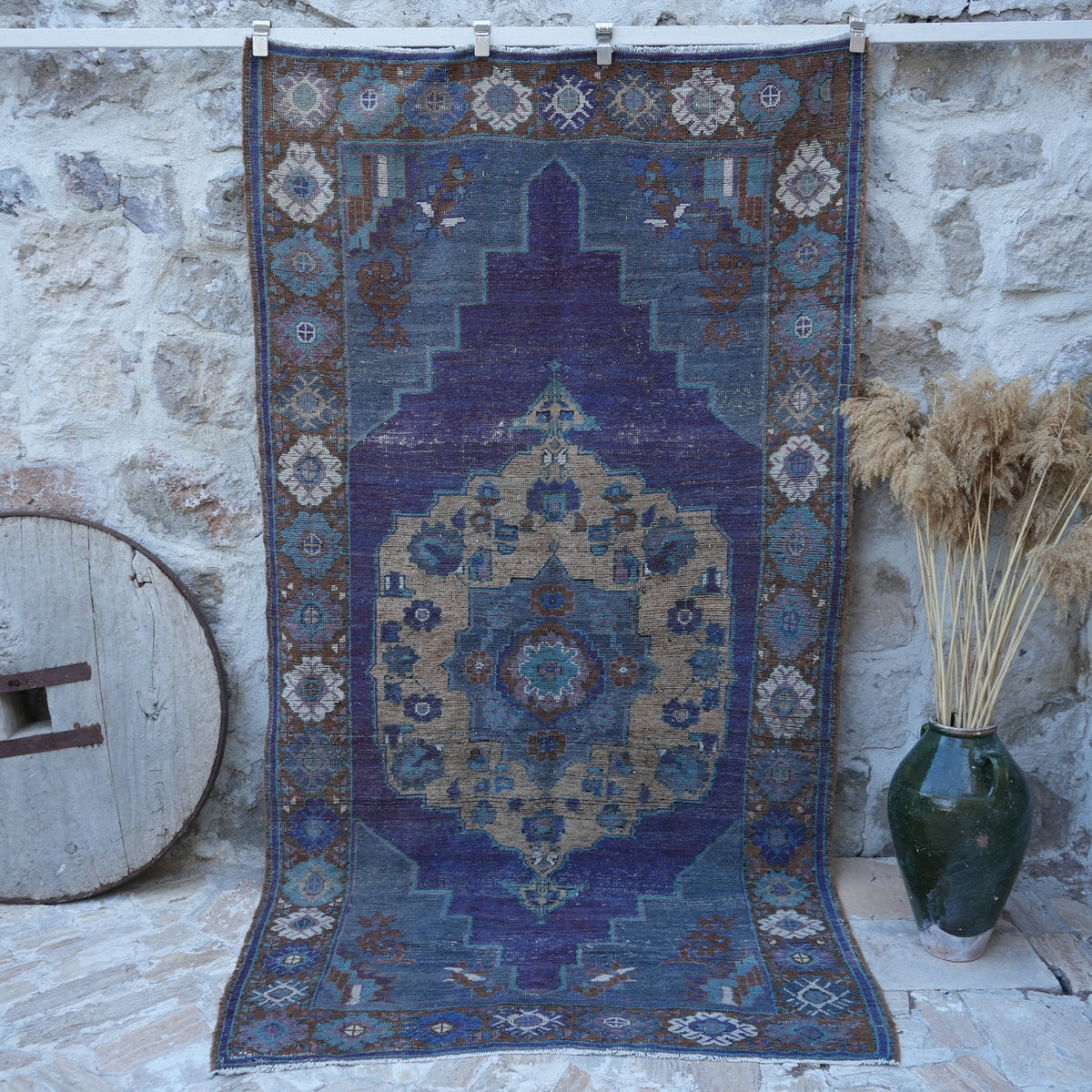
White cabinets become a canvas. A blue, red, or terracotta vintage rug gives the whole kitchen depth it did not have before.
Place it along the active prep side rather than under the whole island. A 2×6 or 2×8 keeps the floor warm without crowding the space.
A 4×6 or 5×8 centered under the island creates a grounded, designed look. Browse medium rugs for this layout.
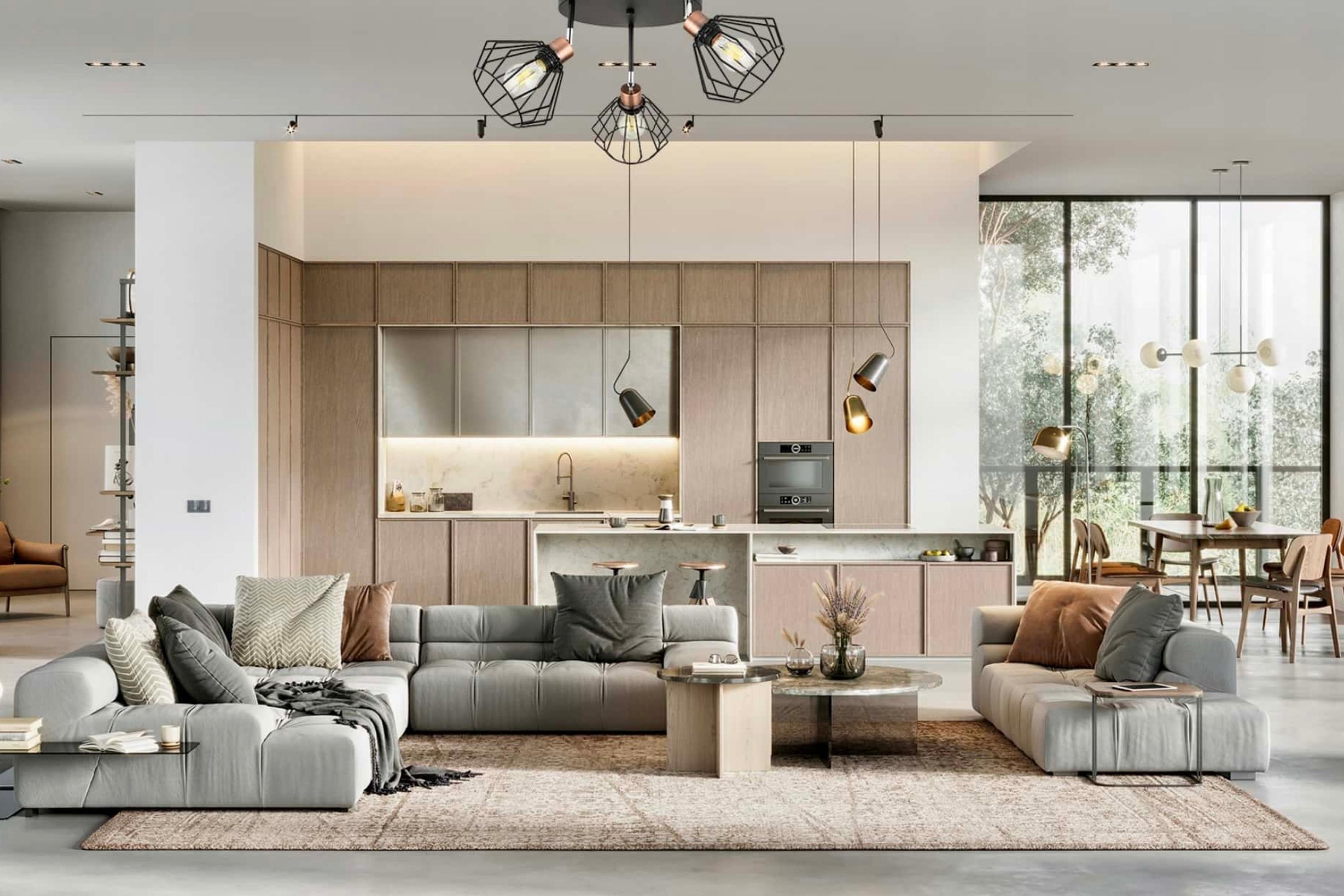
A rug draws a natural visual boundary between cooking, dining, and living zones without needing walls or dividers.
Flat-front cabinets, quartz, and matte black hardware can feel cold. A handmade vintage rug adds warmth modern surfaces cannot create alone.
Flat-woven kilim rugs sit low, stay practical, and reinforce the lengthwise feeling of a galley kitchen.
In tight spaces, one good 2×3 near the sink works better than two competing pieces. See our small rugs.
In beige, wood, and white kitchens, a bold vintage rug gives the eye one confident place to land.
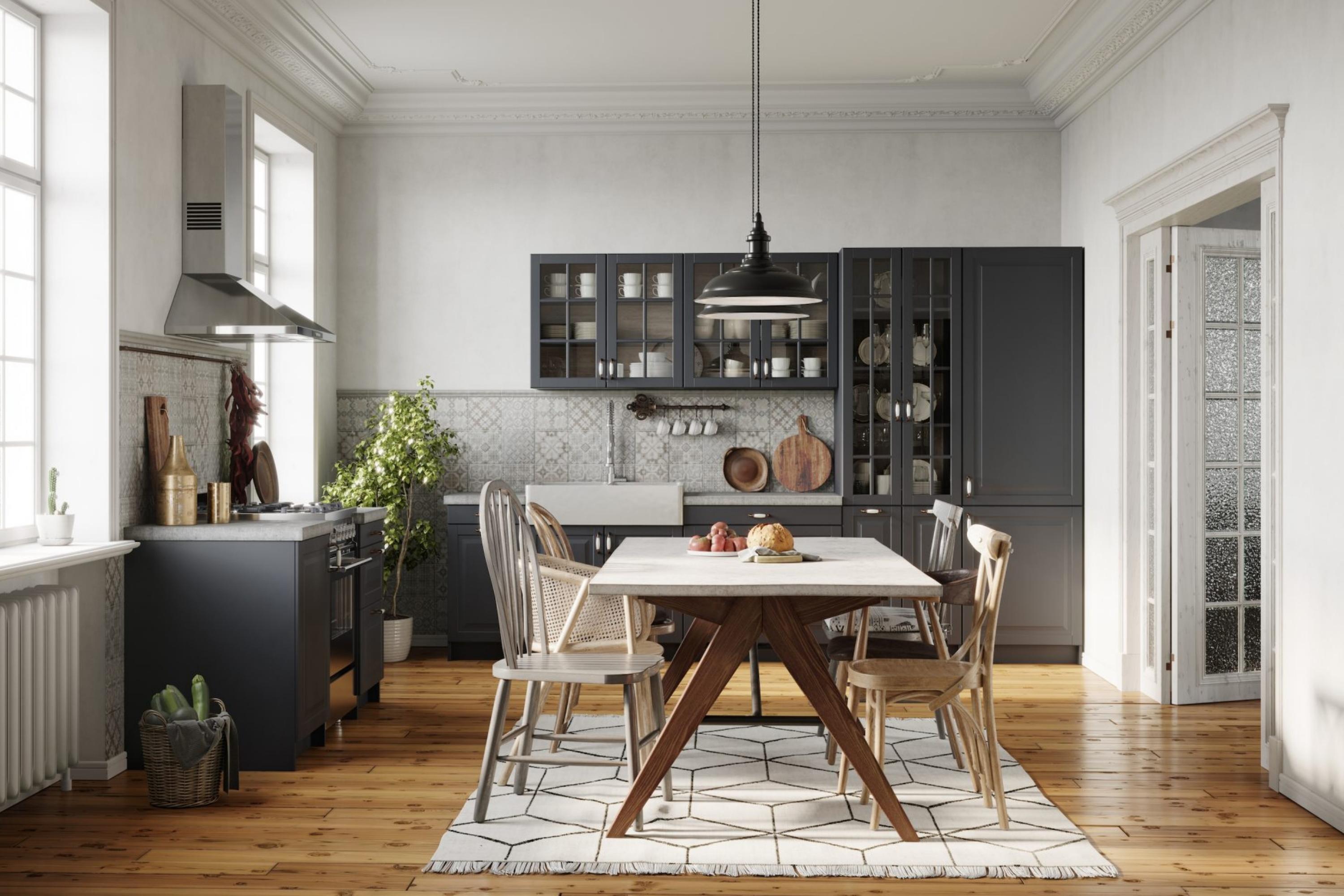
Navy, forest green, and near-black cabinets work best with lighter rugs — aged ivory, faded sand, or soft terracotta.
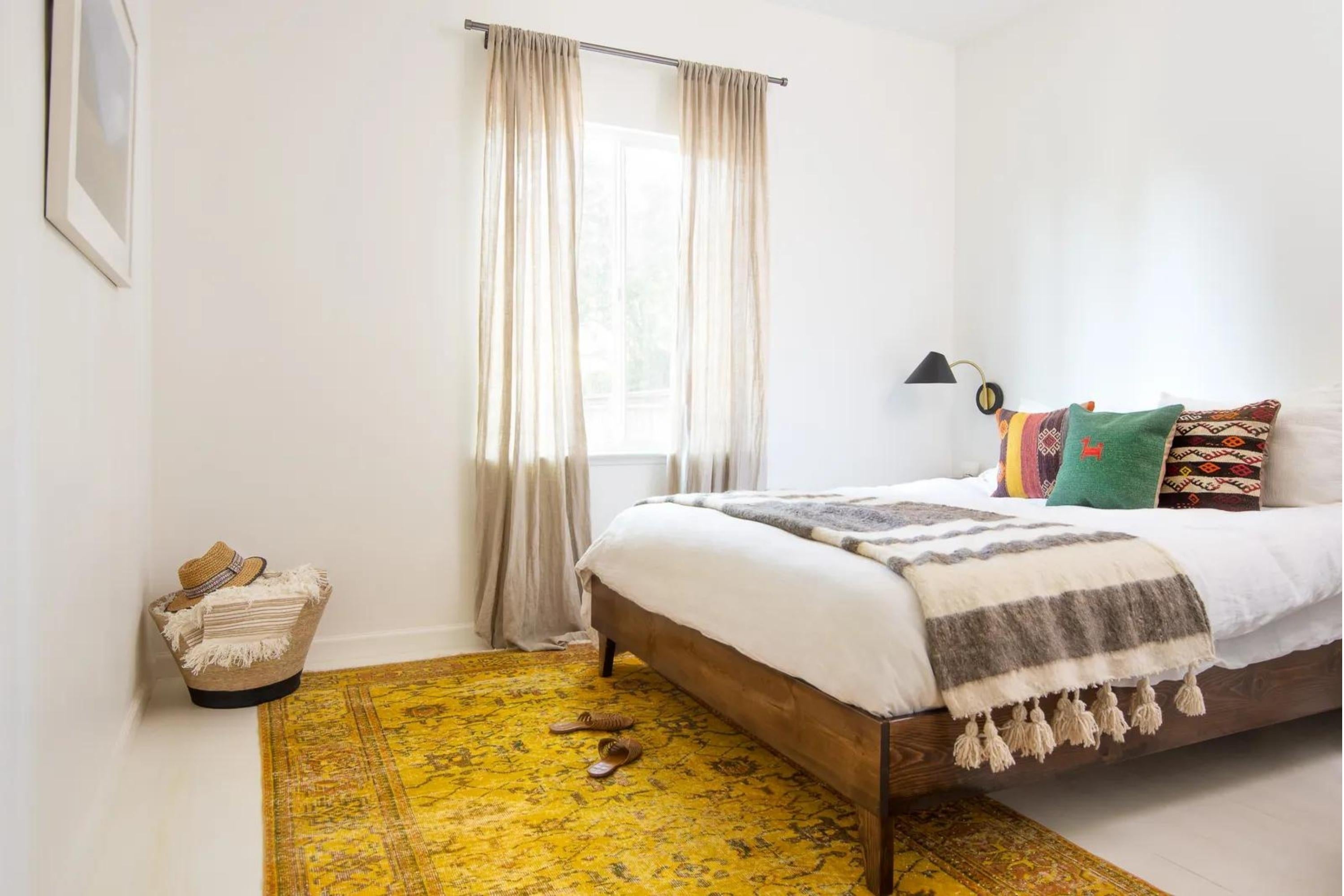
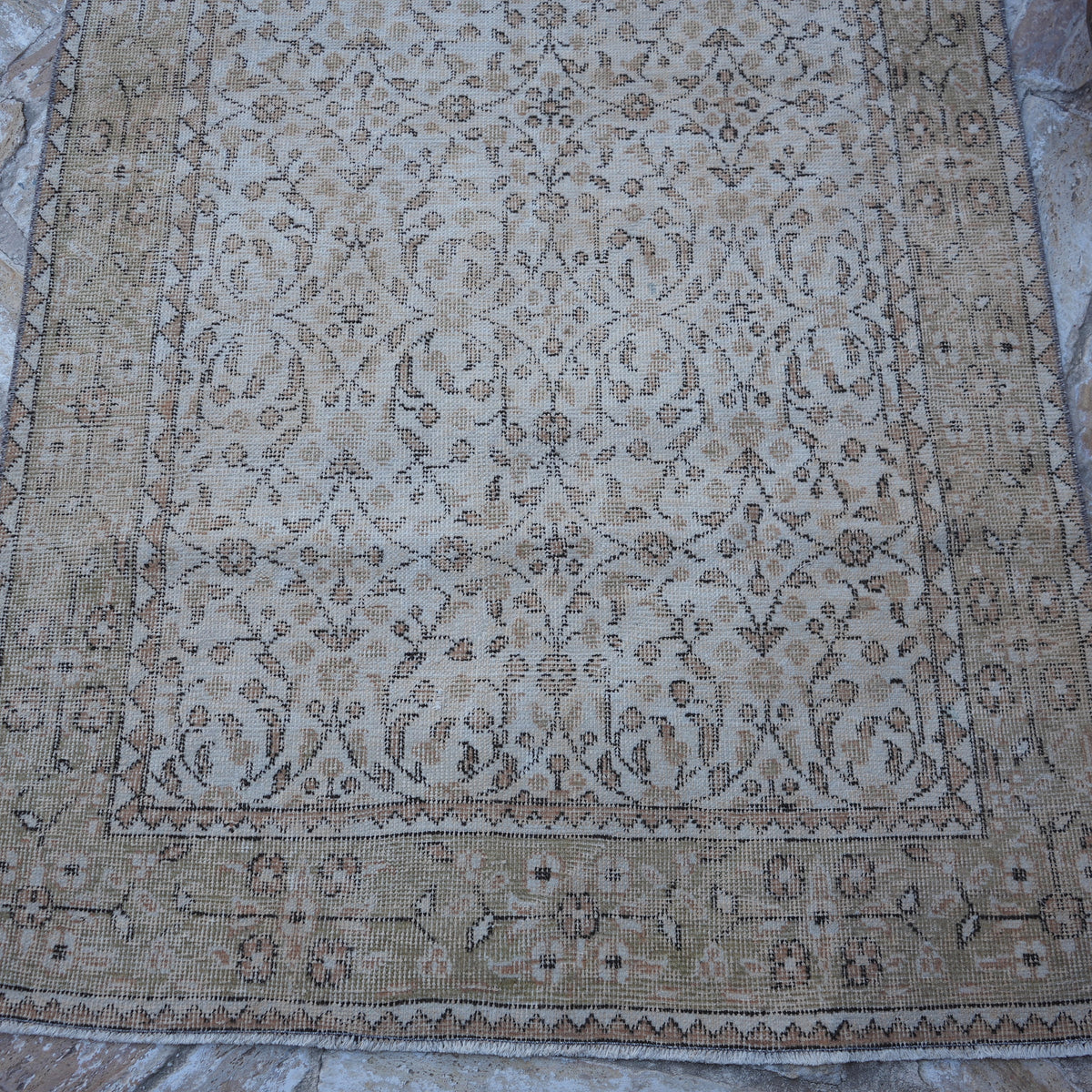
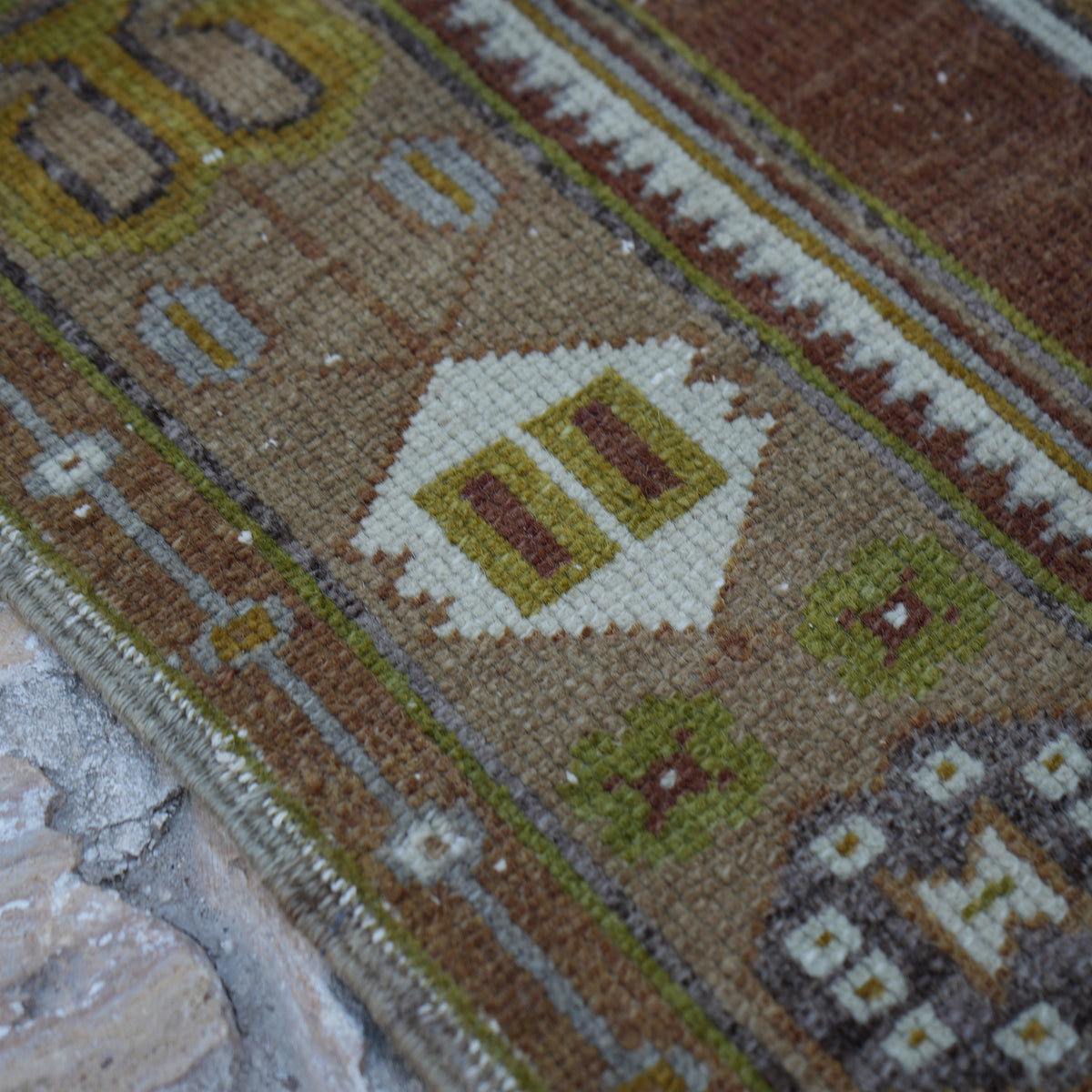
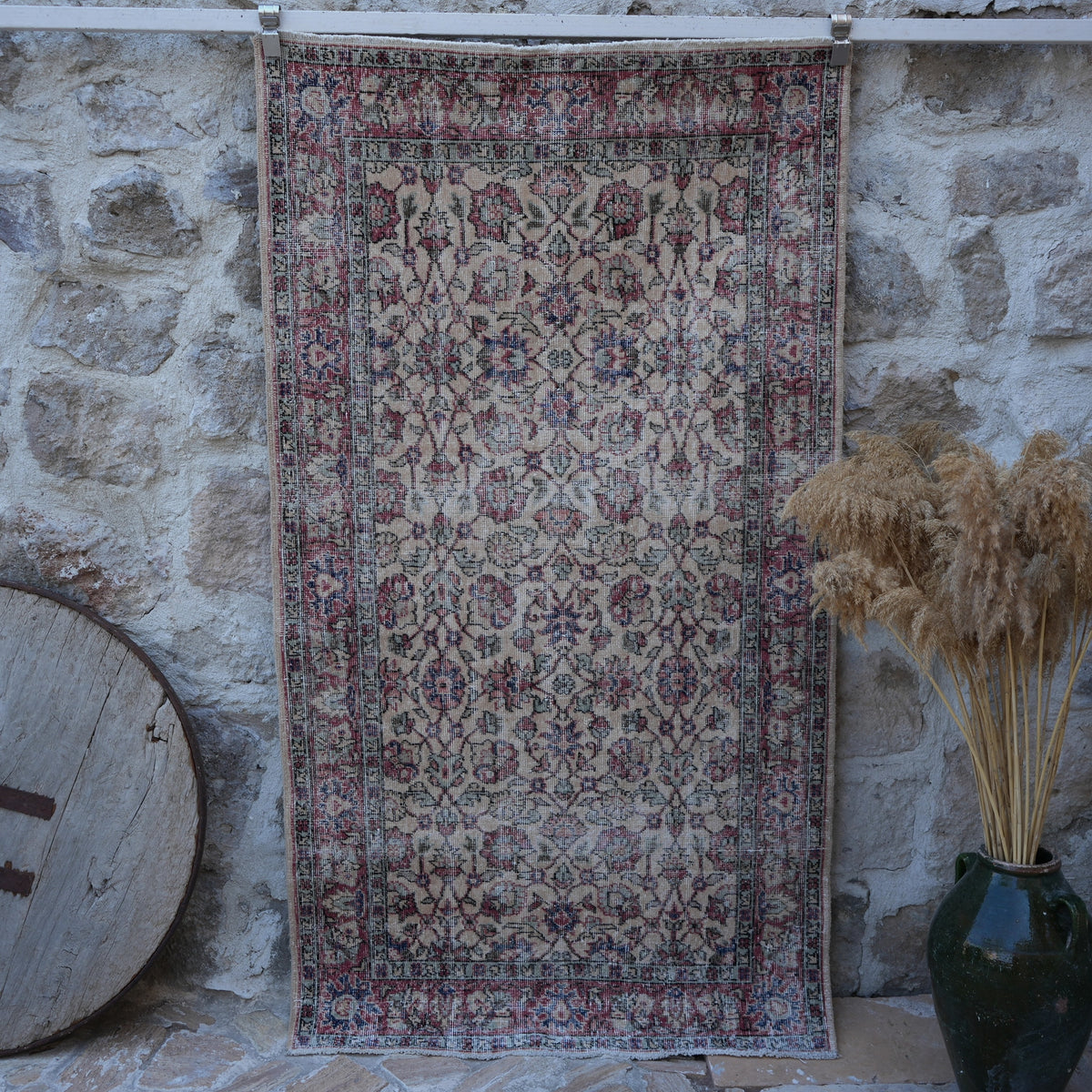
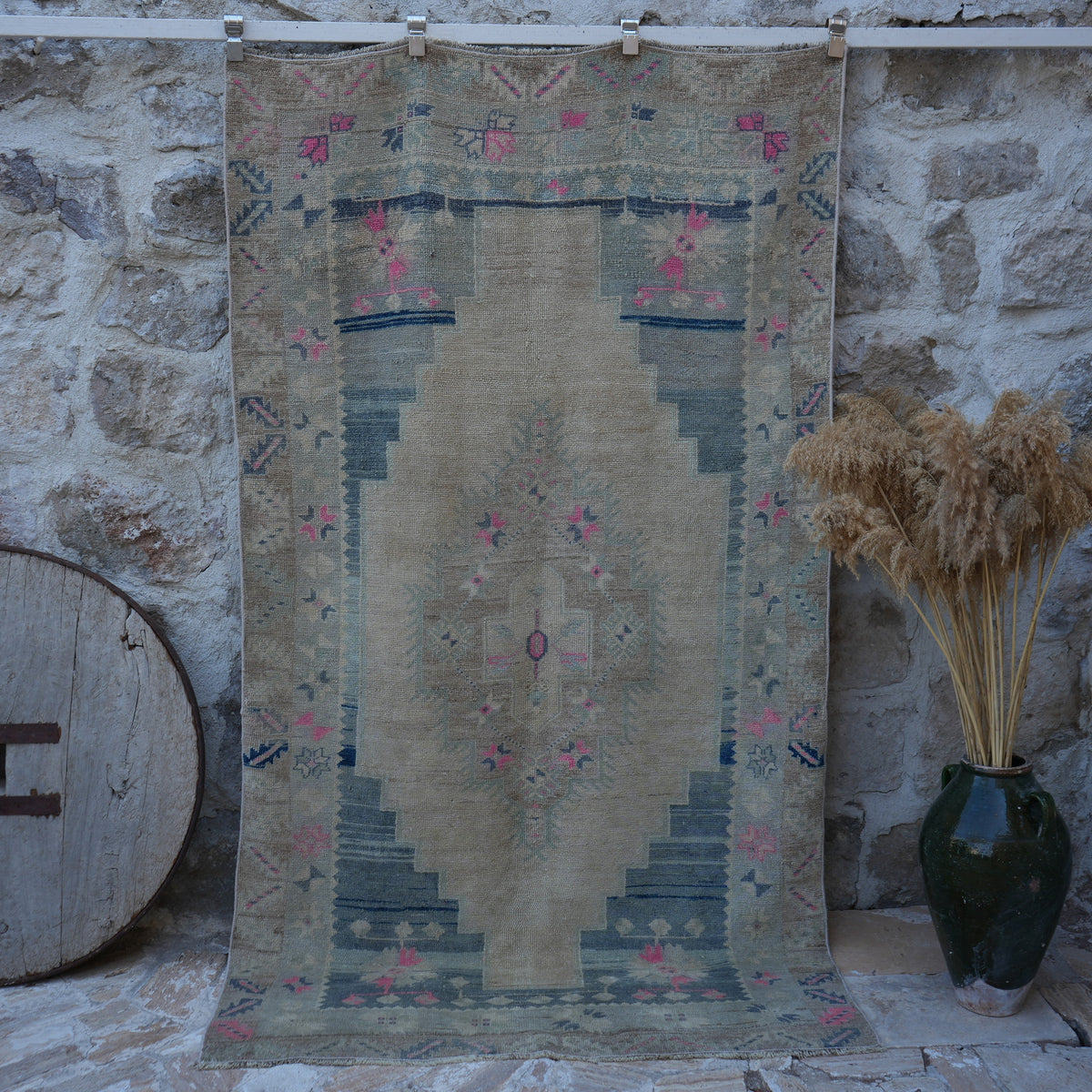
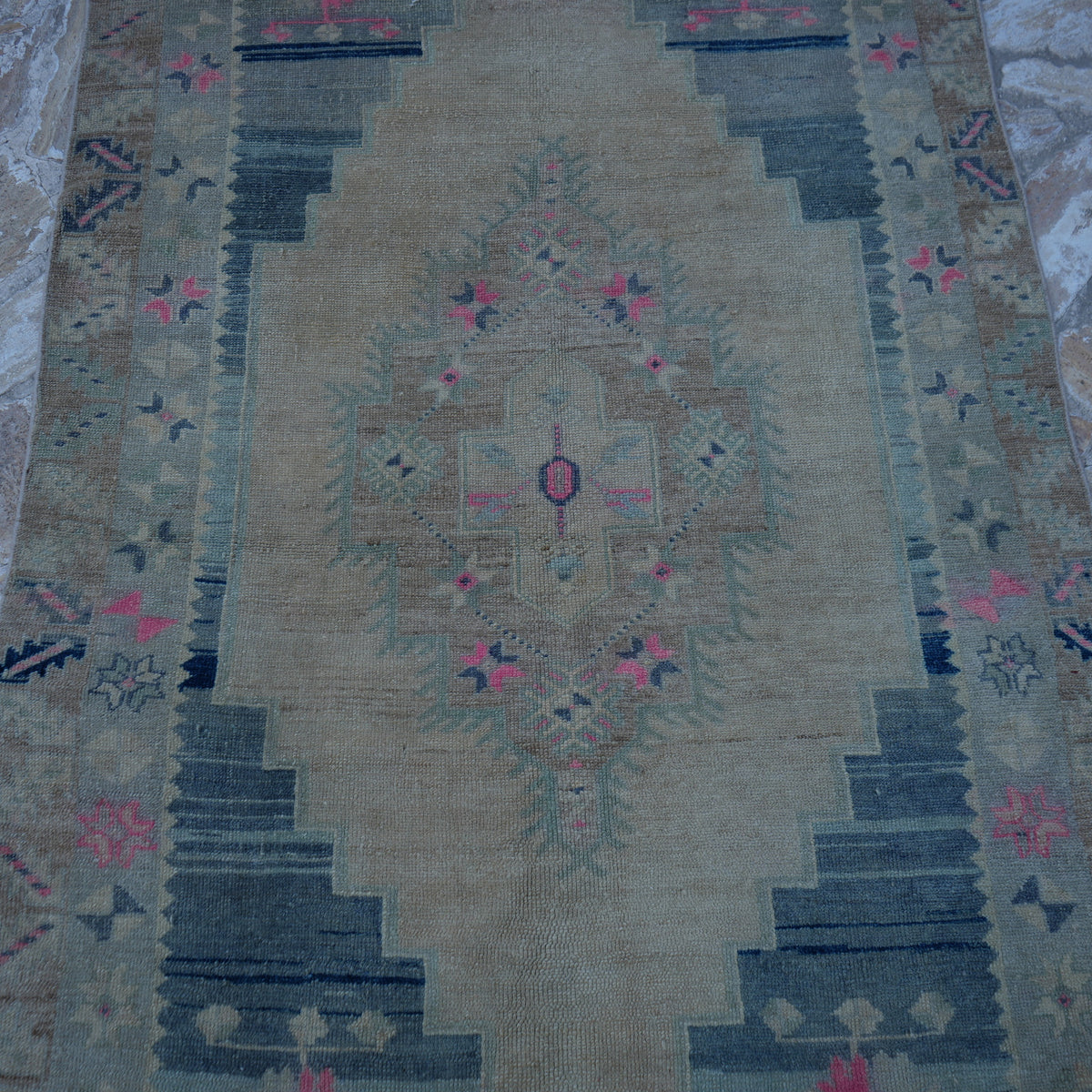
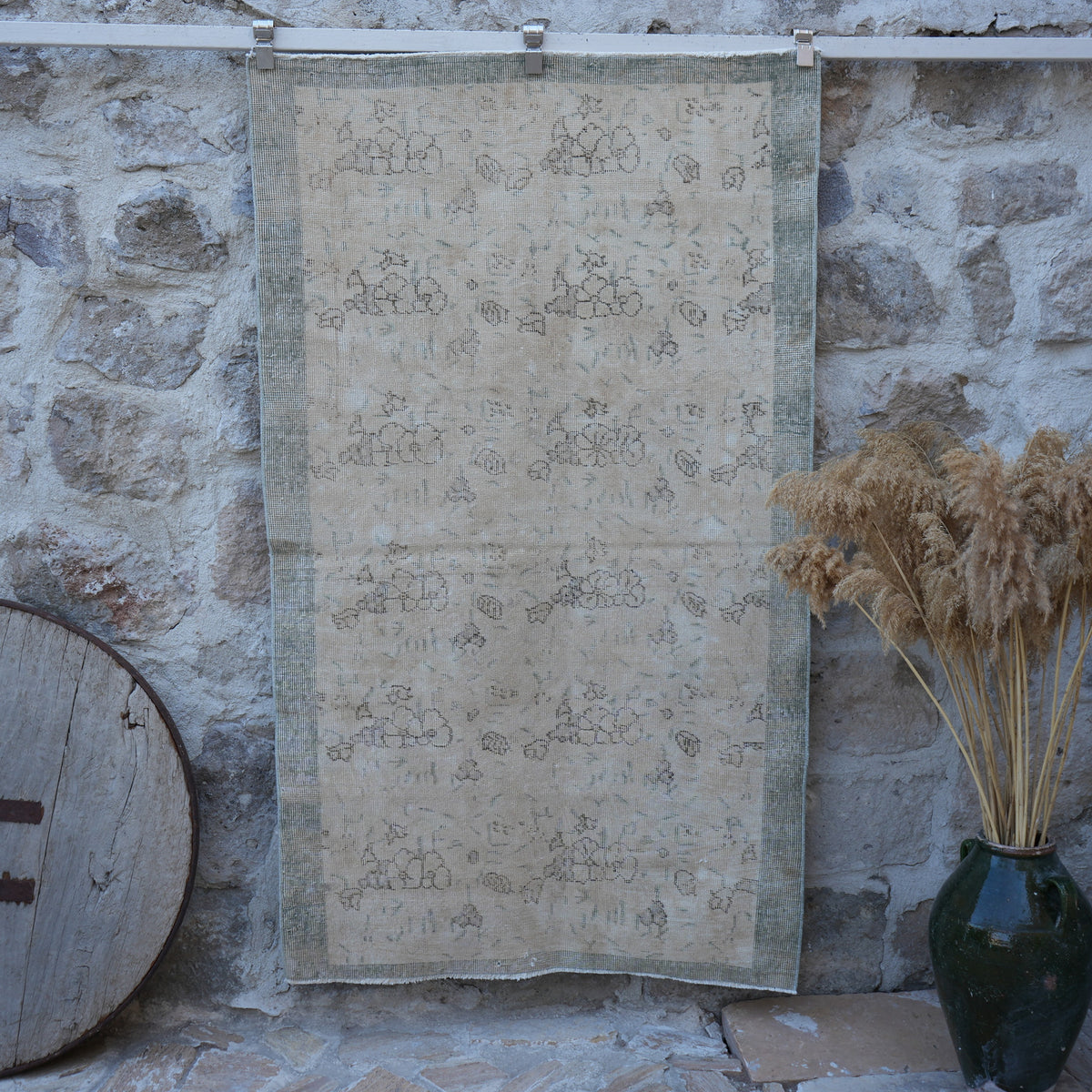
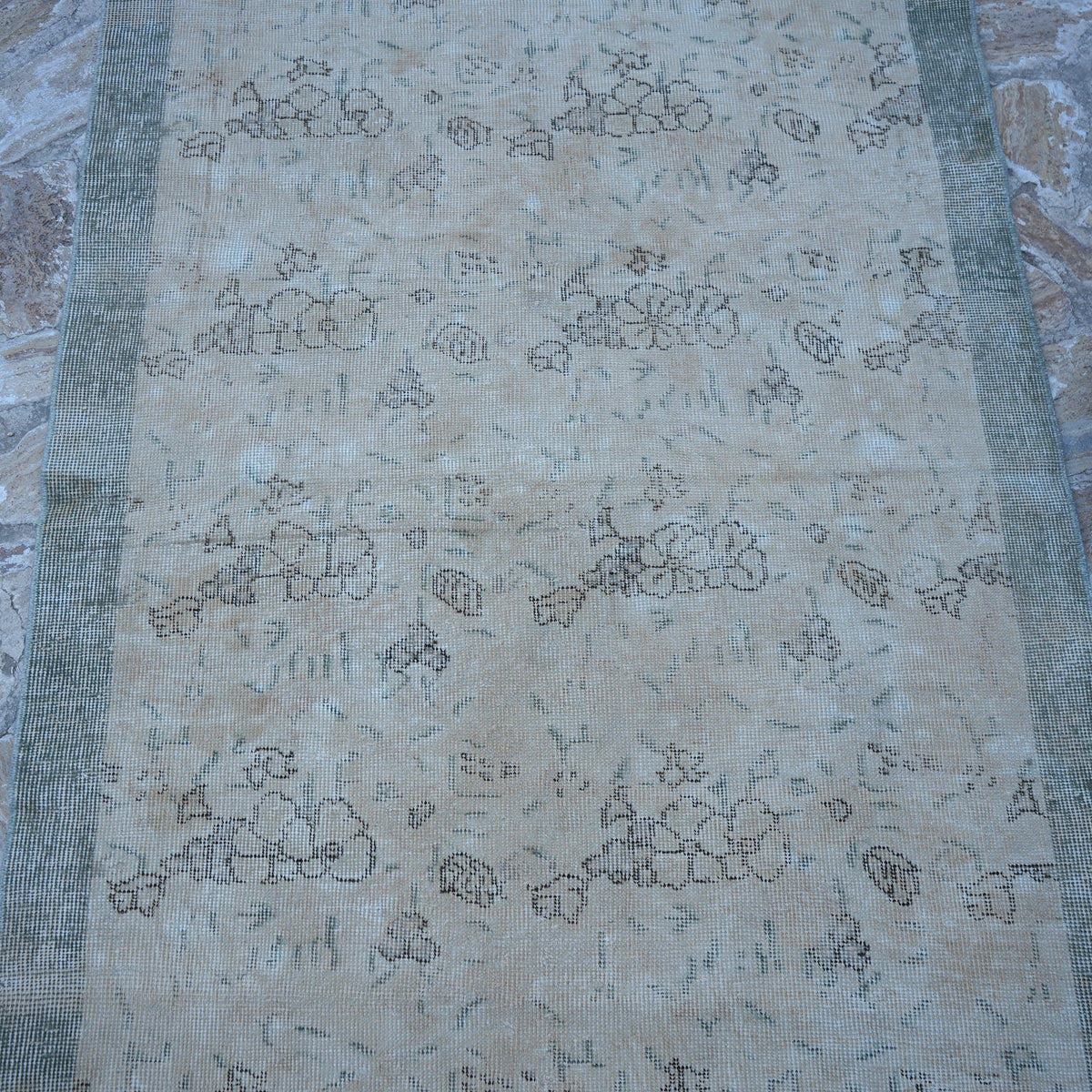
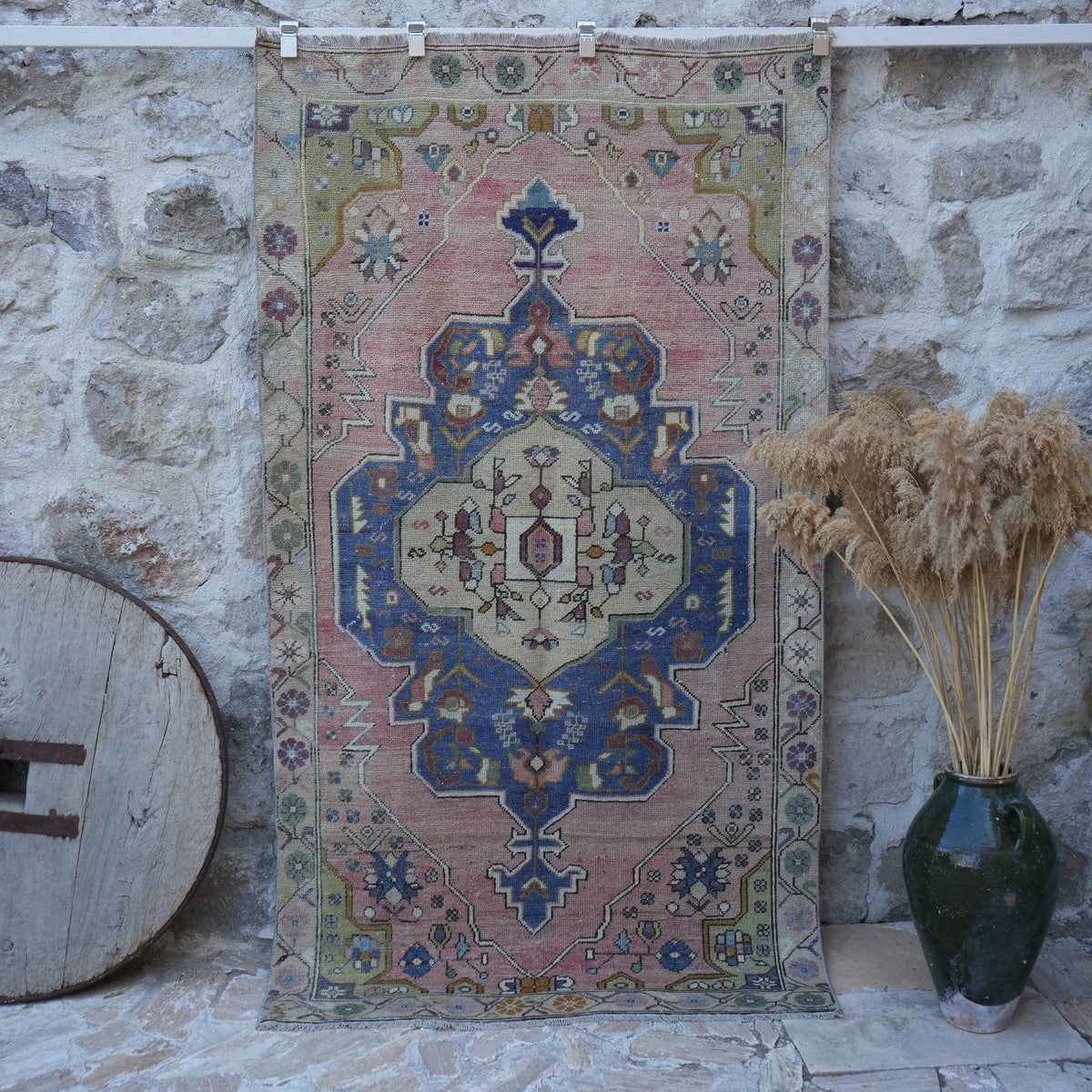
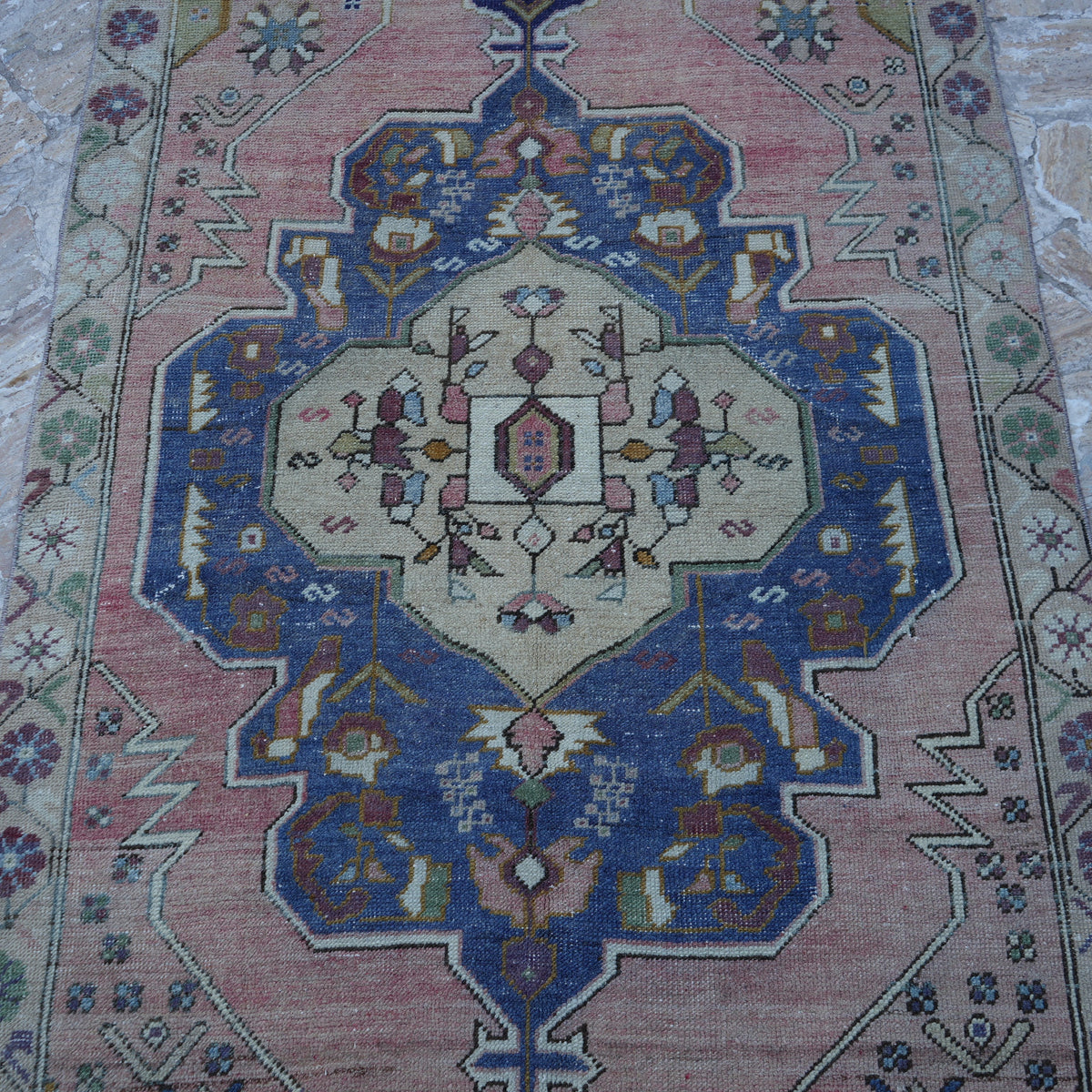
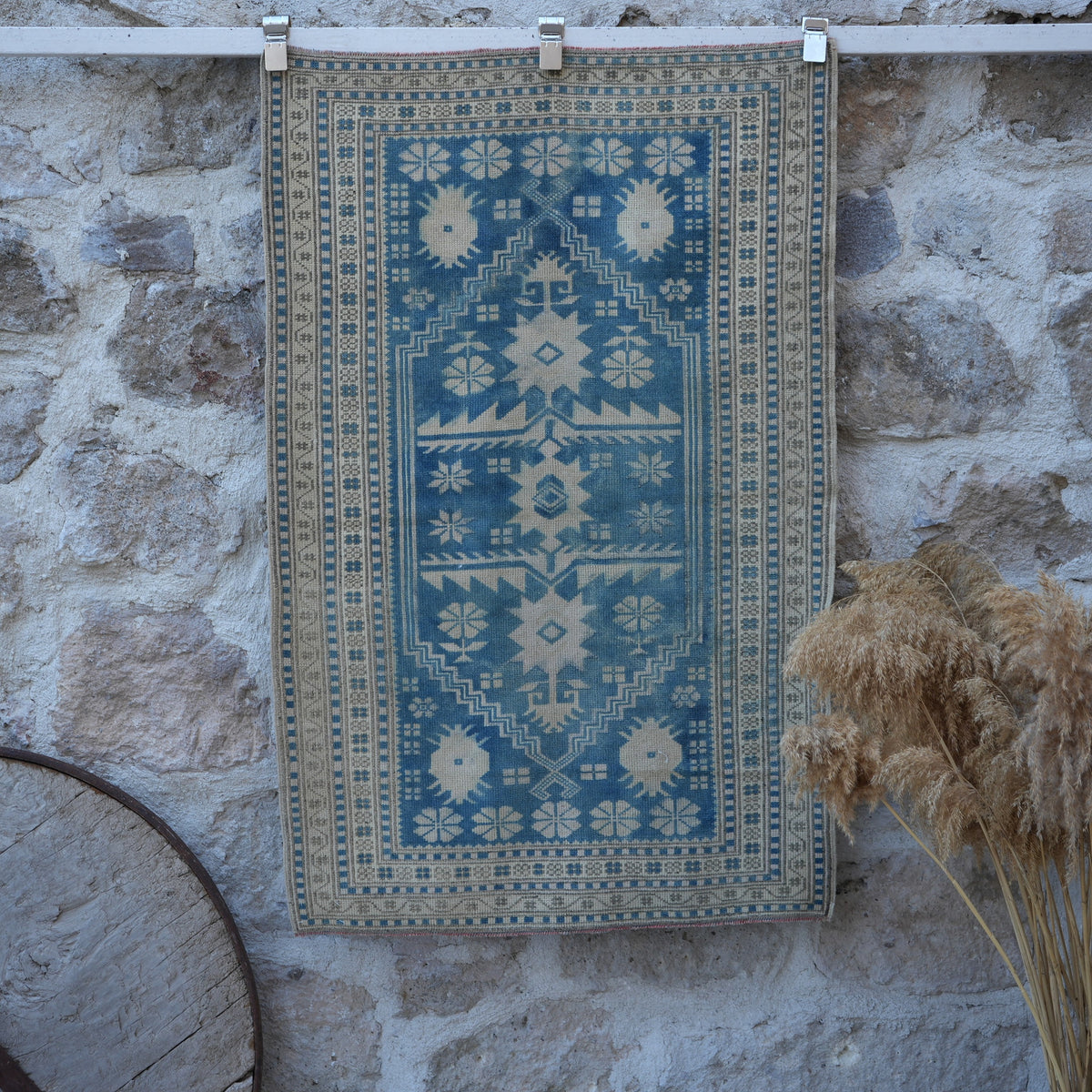
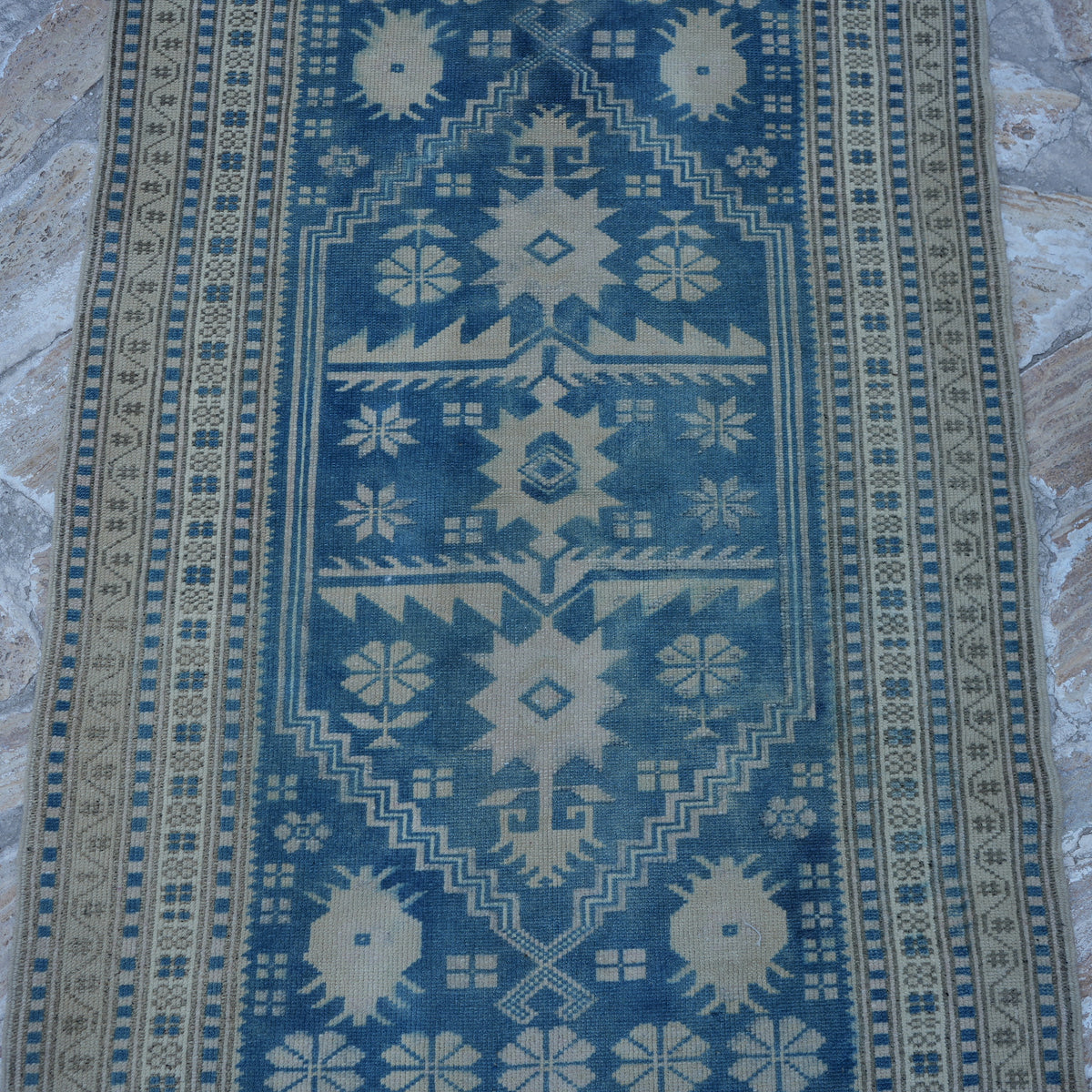
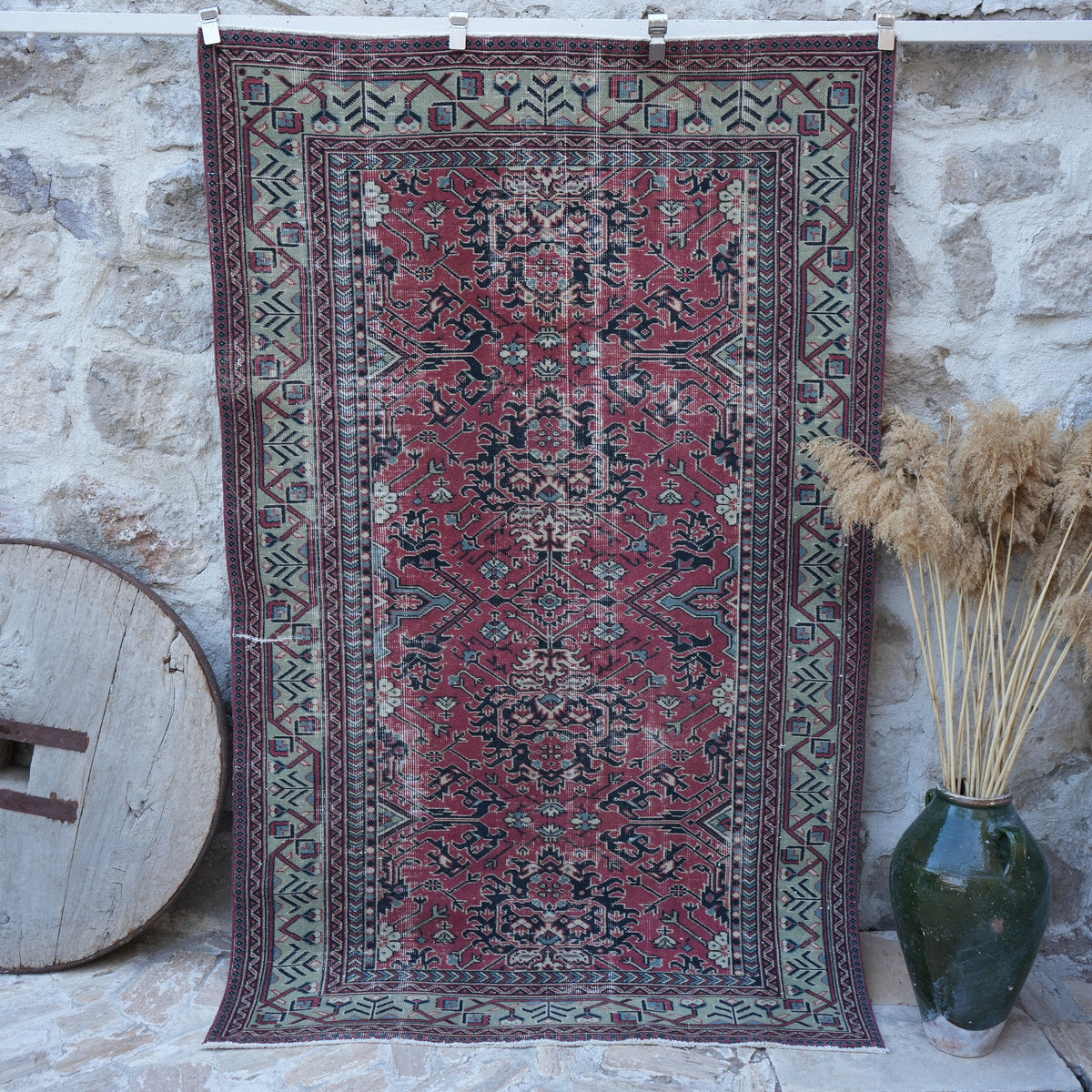
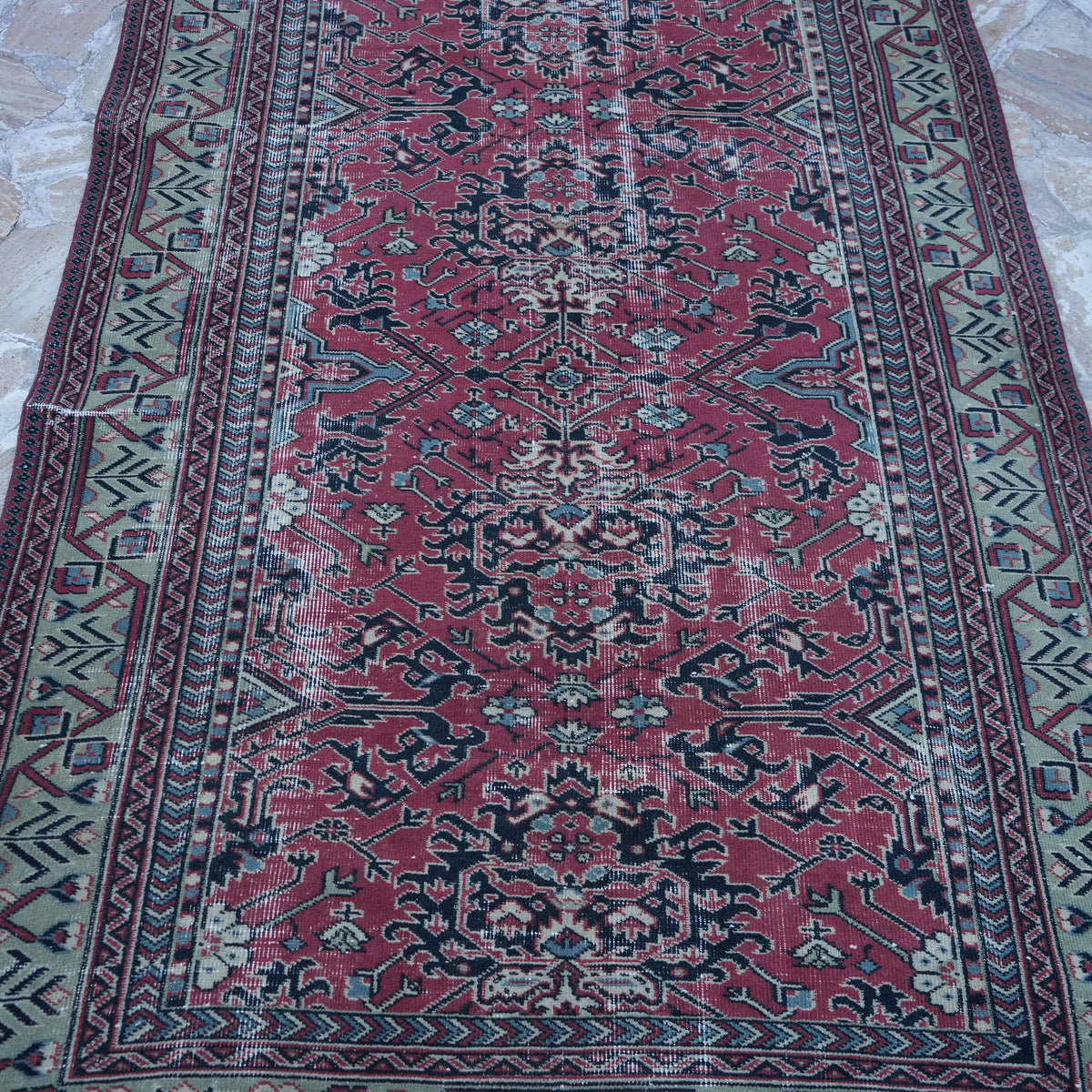
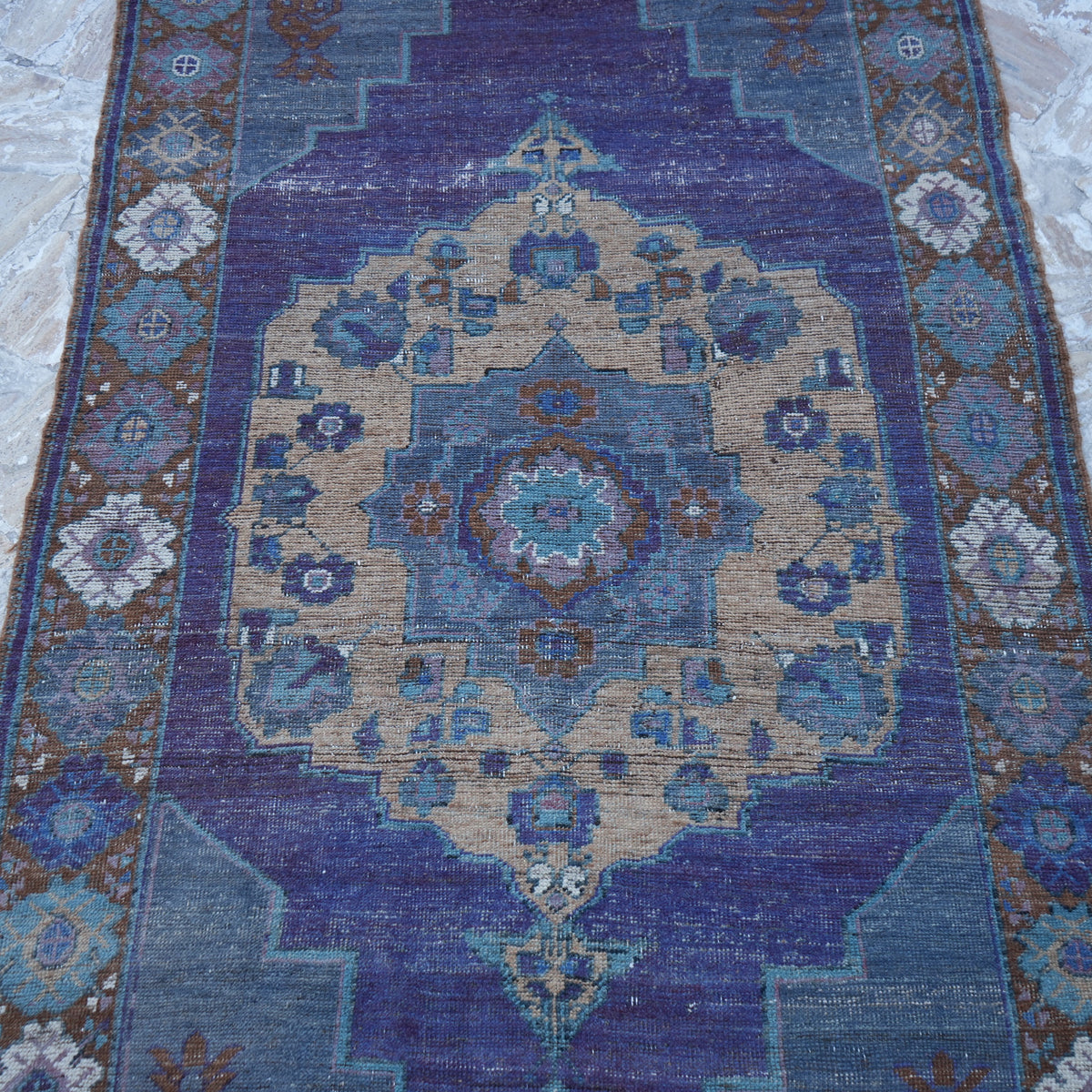
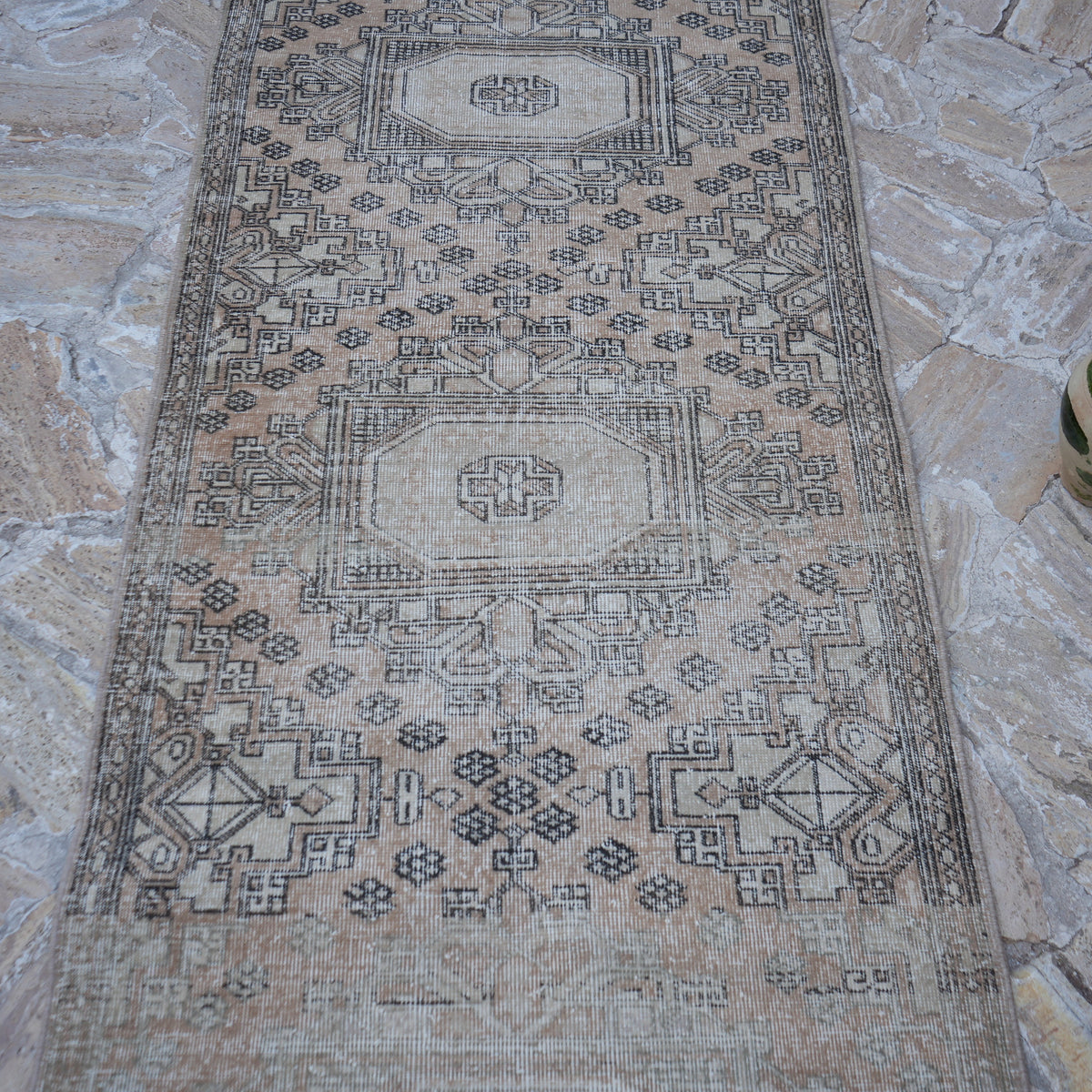
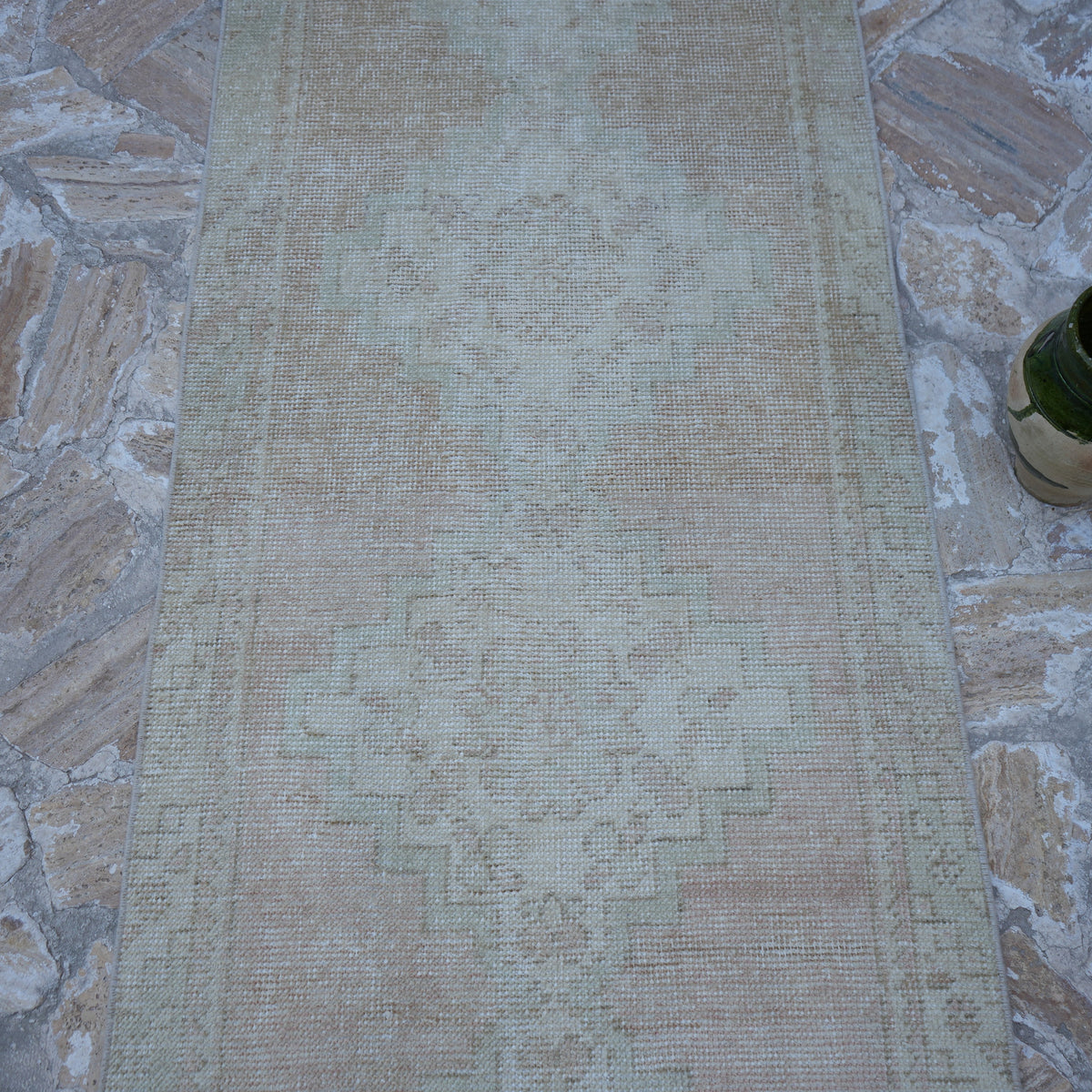
Dye variation and uneven borders are not flaws. They create character mass-produced rugs cannot. Browse new arrivals.
Terracotta, honey, rust, and warm brown pair naturally with stone countertops, wood, and linen-toned cabinetry.
Clean contemporary cabinets give traditional Turkish patterns room to be seen. The contrast is what makes the kitchen feel interesting.
Start With Your Layout — The Right Rug Shape Follows Your Kitchen
Before you think about color or pattern, think about your kitchen's shape. The layout tells you almost everything about which rug format will work — and which will fight the space.
A galley kitchen calls for a runner placed lengthwise. An island kitchen benefits most from a rug that extends 18 to 24 inches beyond the island on each side. In an open-plan kitchen, the rug marks the zone. In a small single-counter layout, one well-placed piece in front of the sink is enough.
Runner Rugs for Galley and Narrow Kitchens
A 2×8 or 2×10 fits most galley kitchens. Aim for roughly 60 percent of the clearance between your two counters in width — narrow enough to clear cabinet doors, wide enough to read as deliberate. Our runner rugs are available in vintage and kilim formats.
Small Rugs for the Sink, Stove, or Compact Kitchens
In a compact kitchen, one well-placed rug does more than two competing ones. A 2×3 works for a standard single sink; a 3×5 if the area extends to a prep counter. Browse our small rugs for this placement.
Medium Rugs for Islands and Open-Plan Kitchens
A 4×6 or 5×8 handles most island placements and open-plan zone definitions. Extend the rug 18 to 24 inches beyond the island on all sides. Our medium rugs work well in both configurations.
Along the prep side only. Keeps traffic lanes clear. Browse 2×8 runners.
What Size Kitchen Rug Do You Need?
Measure the placement area — not the kitchen as a whole — before you look at a single rug. A customer once sent me a photo after her rug arrived: an eight-foot galley kitchen, and she had ordered a three-foot mini. It sat in the middle of the floor like a coaster. She had a good eye. The problem was simply that the size she imagined did not translate to the actual floor.
| Placement | Recommended Size |
|---|---|
| In front of sink | 2×3 or 3×5 |
| Galley / hallway runner | 2×8 or 2×10 |
| Along one side of island | 2×6 or 2×8 |
| Under / around island | 4×6 or 5×8 |
| Eat-in kitchen / dining area | 5×8 or 6×9 |
Leave at least 6 inches of bare floor between the rug edge and any wall or cabinet base. For islands and tables, the rug should extend 18 inches beyond the furniture edge. Browse by format: small rugs · medium area rugs · runners · 2×8 vintage runners.

Why a Handmade Vintage Rug Is the Smartest Kitchen Choice
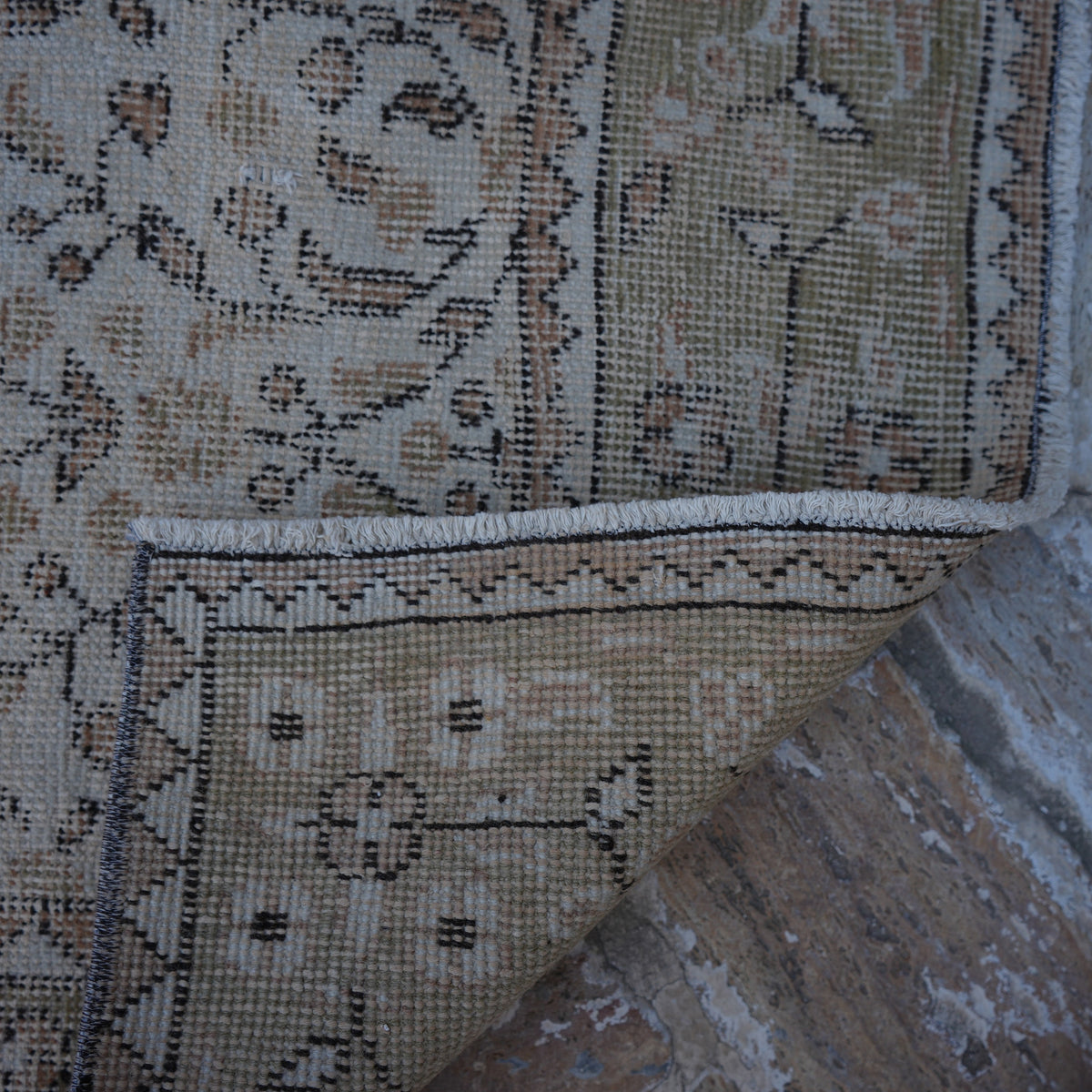
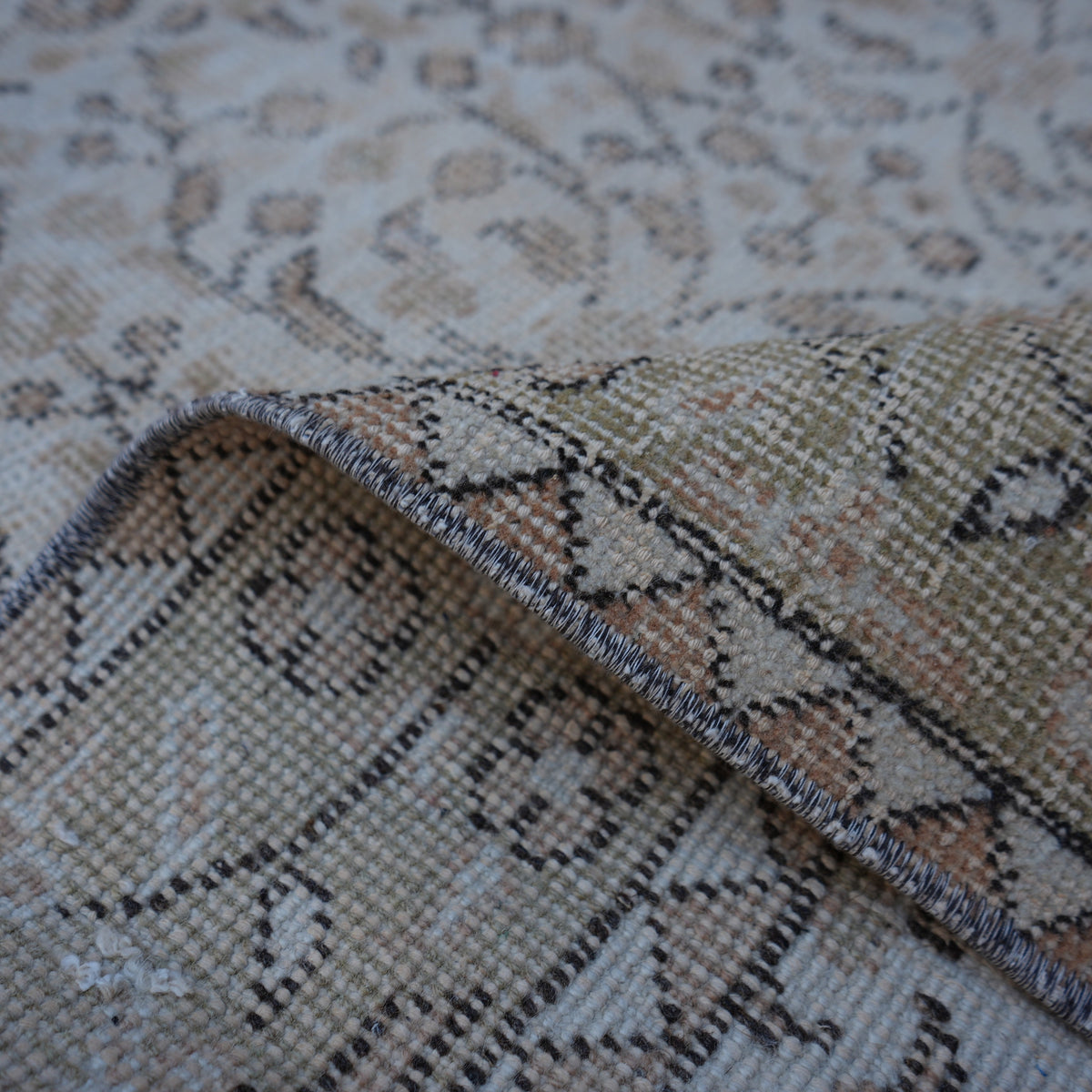
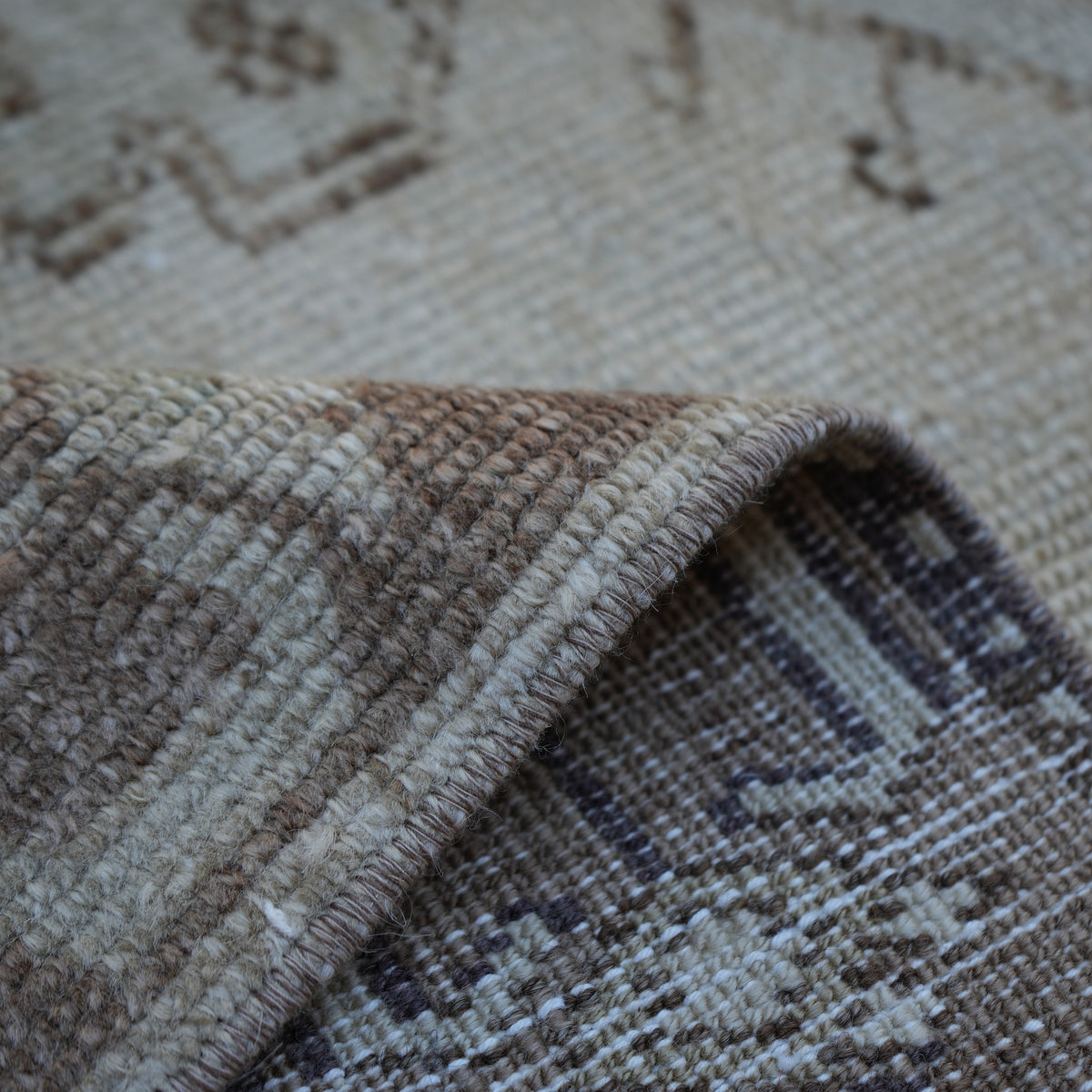
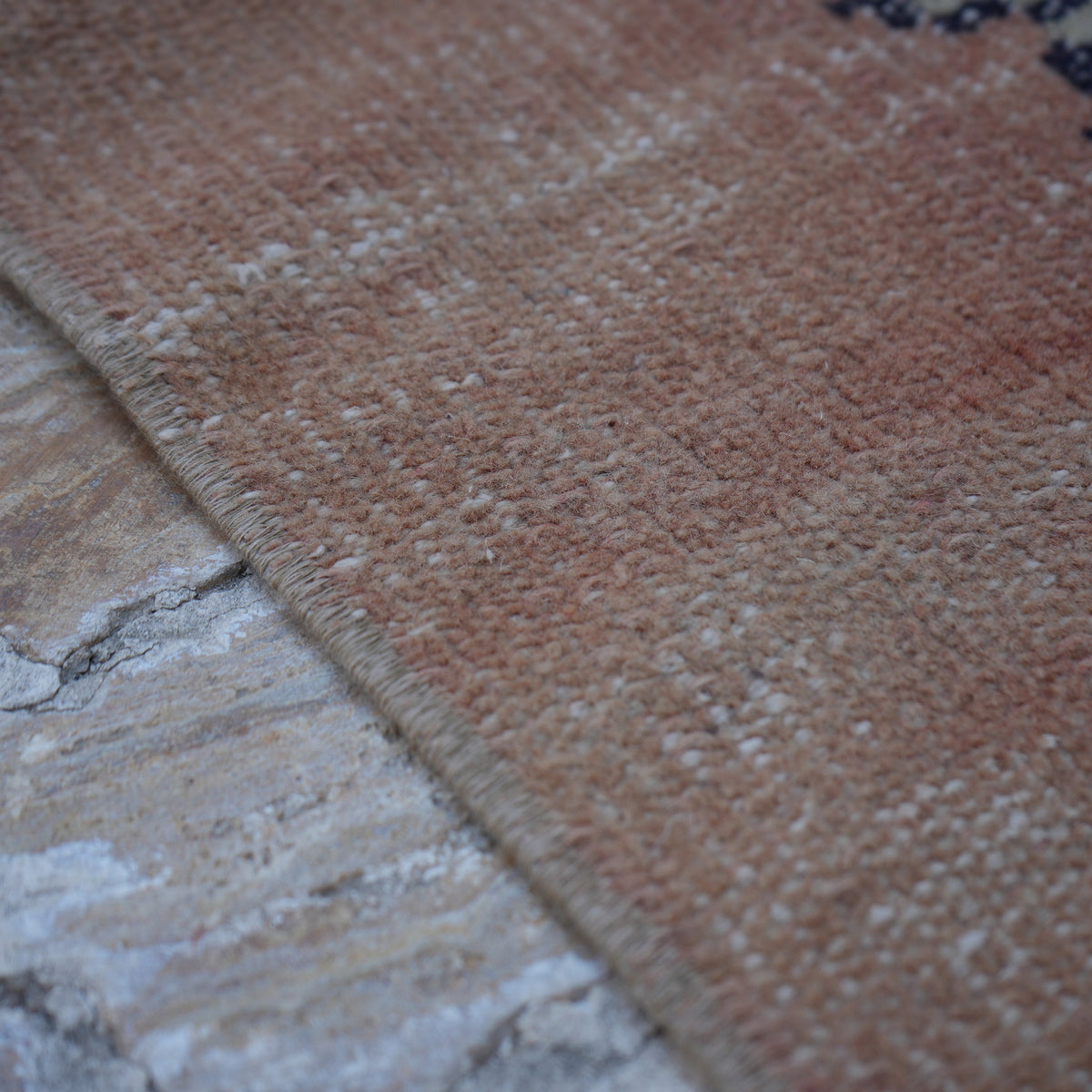
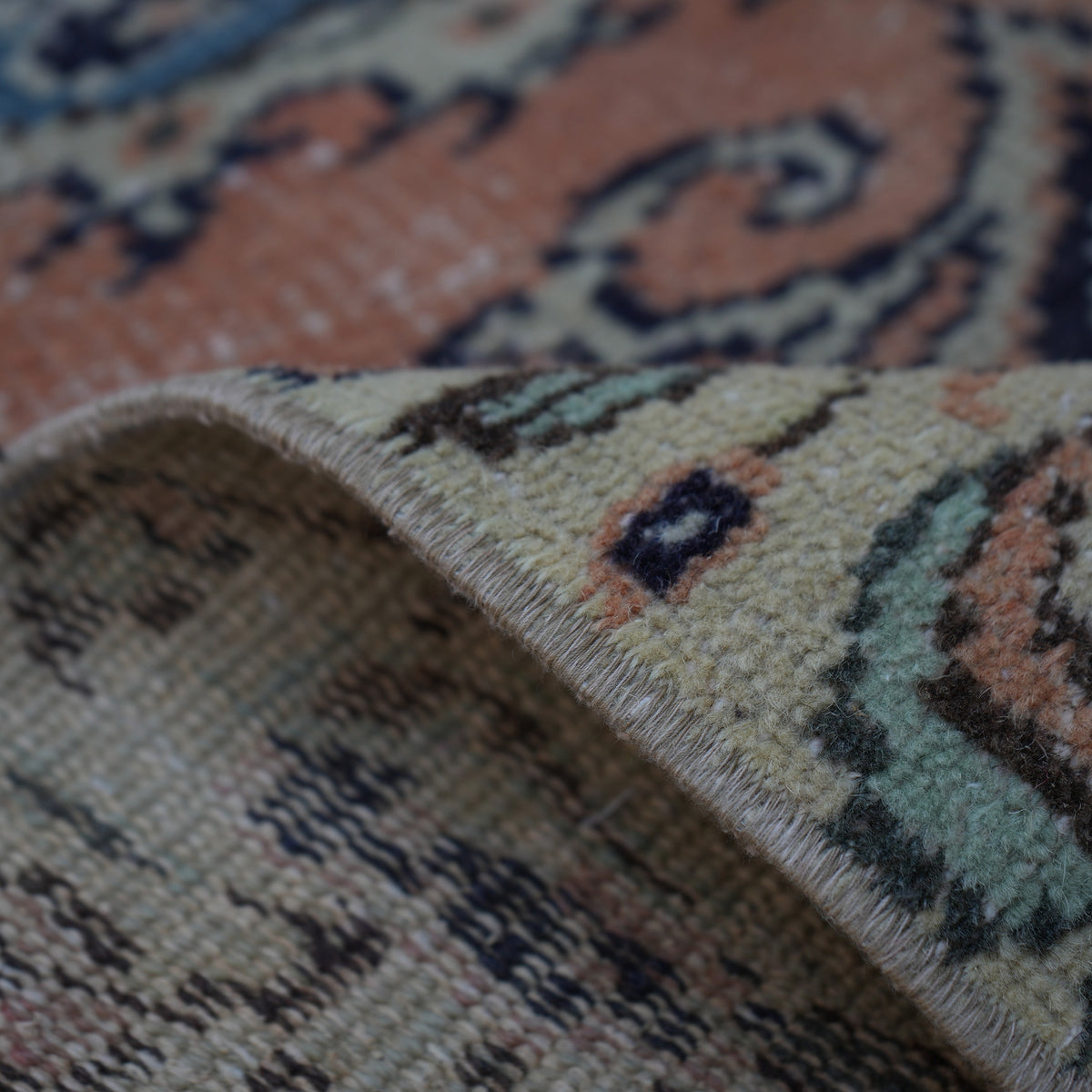
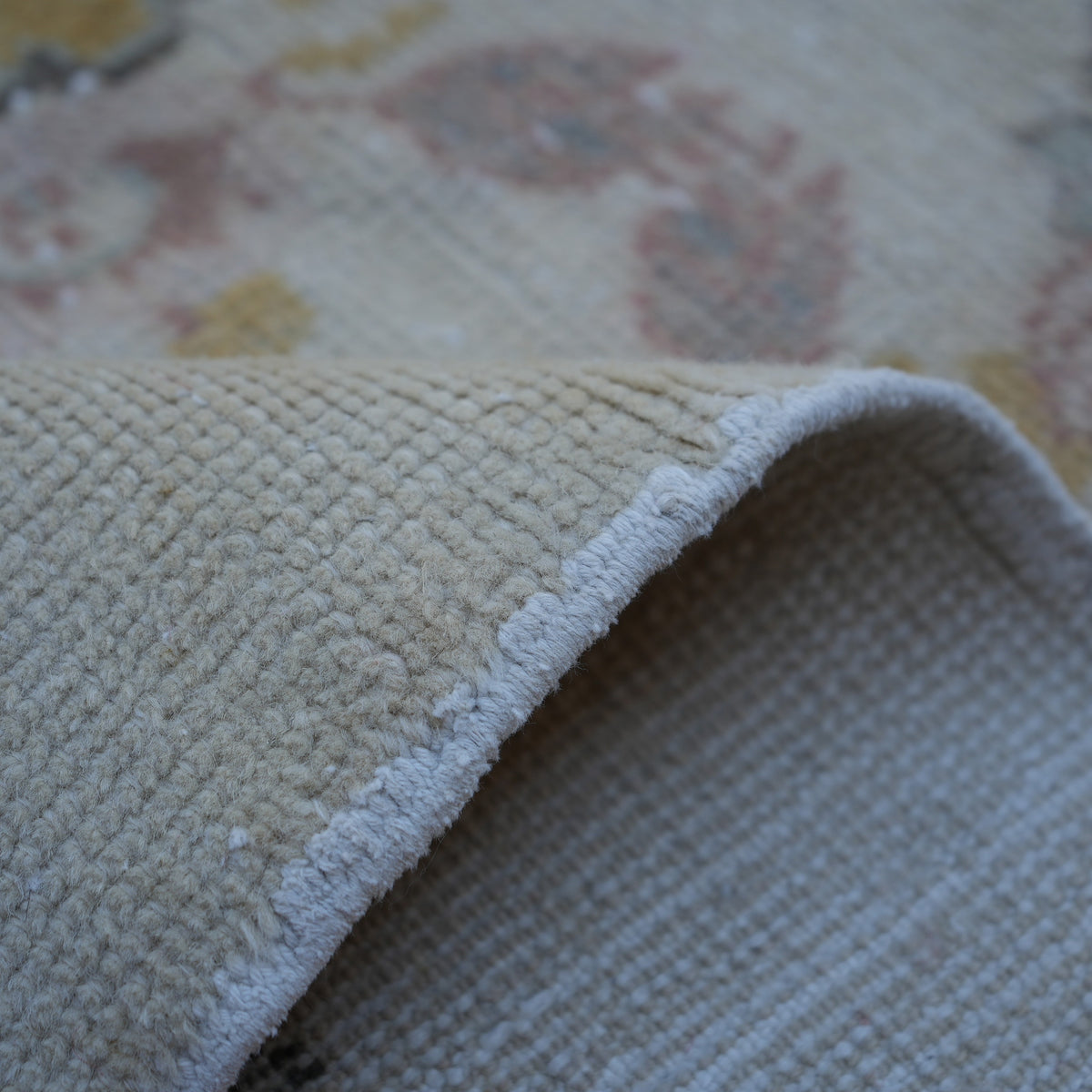
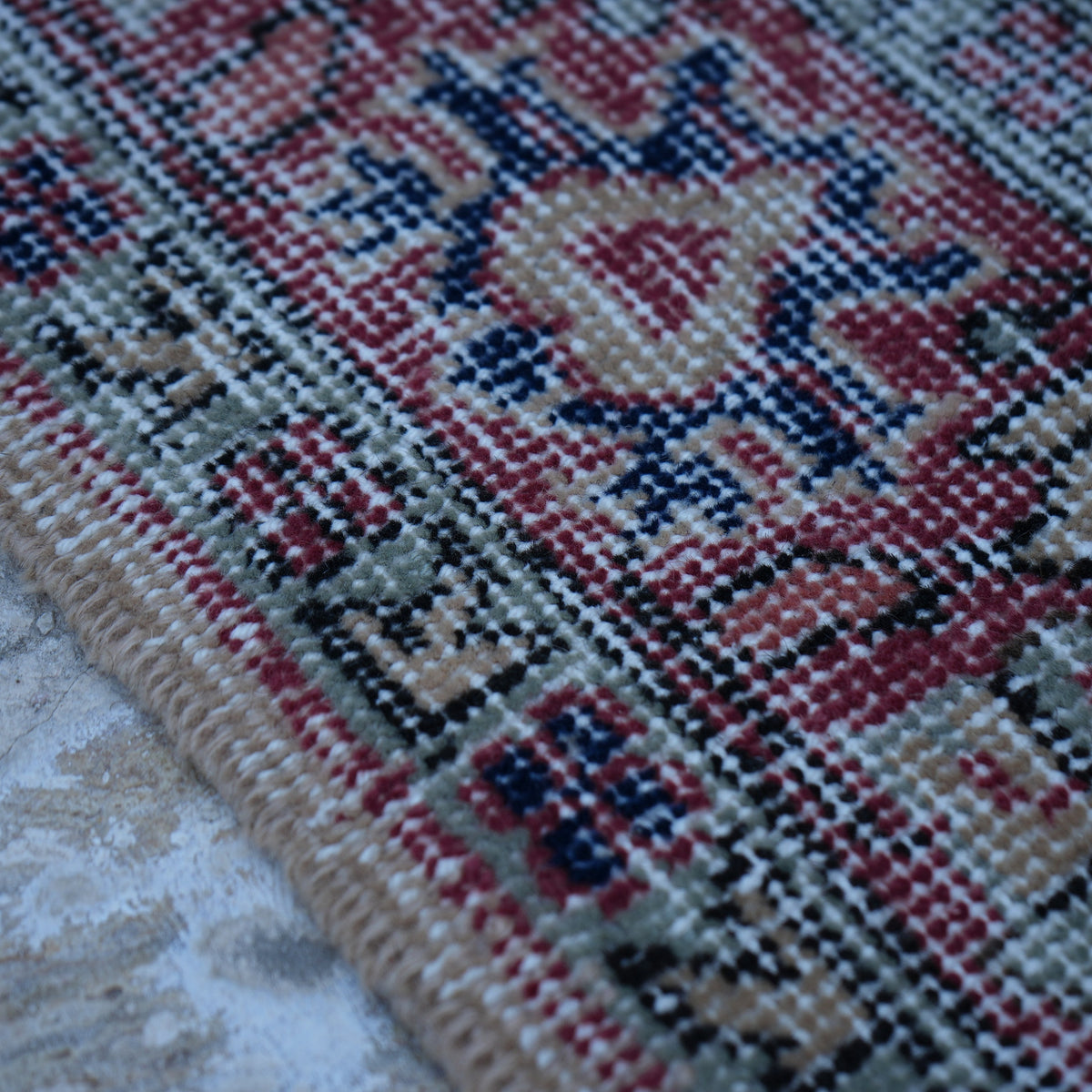
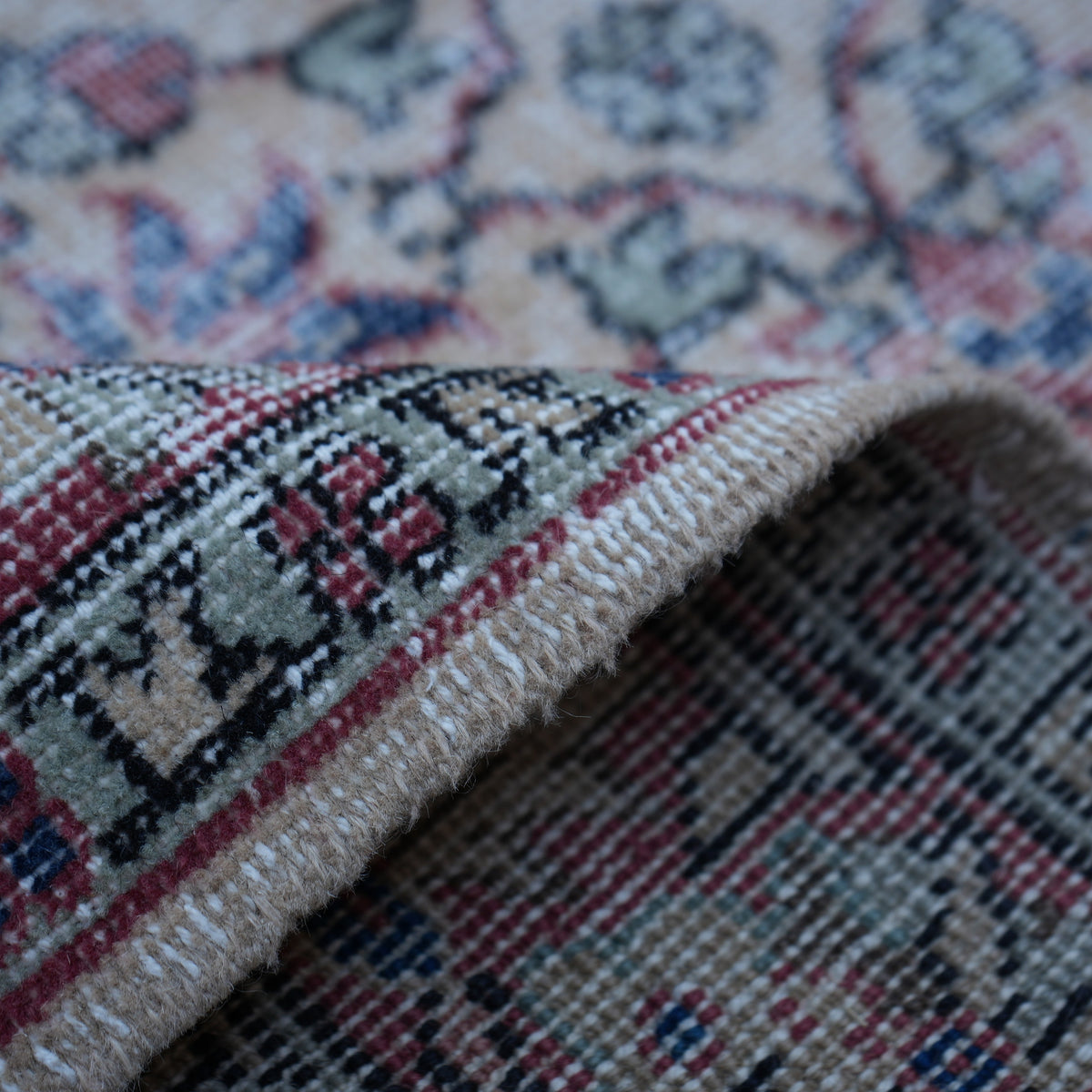
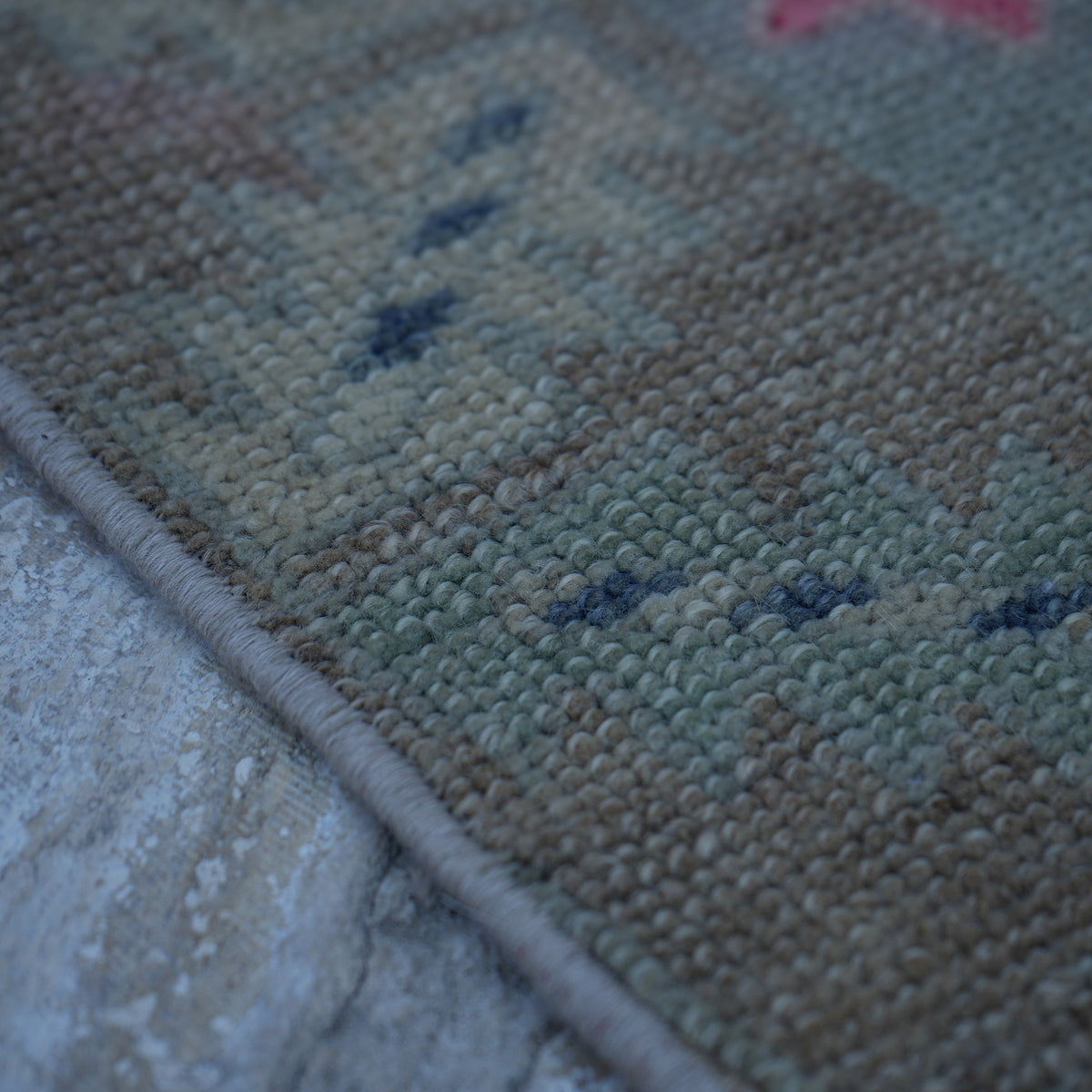
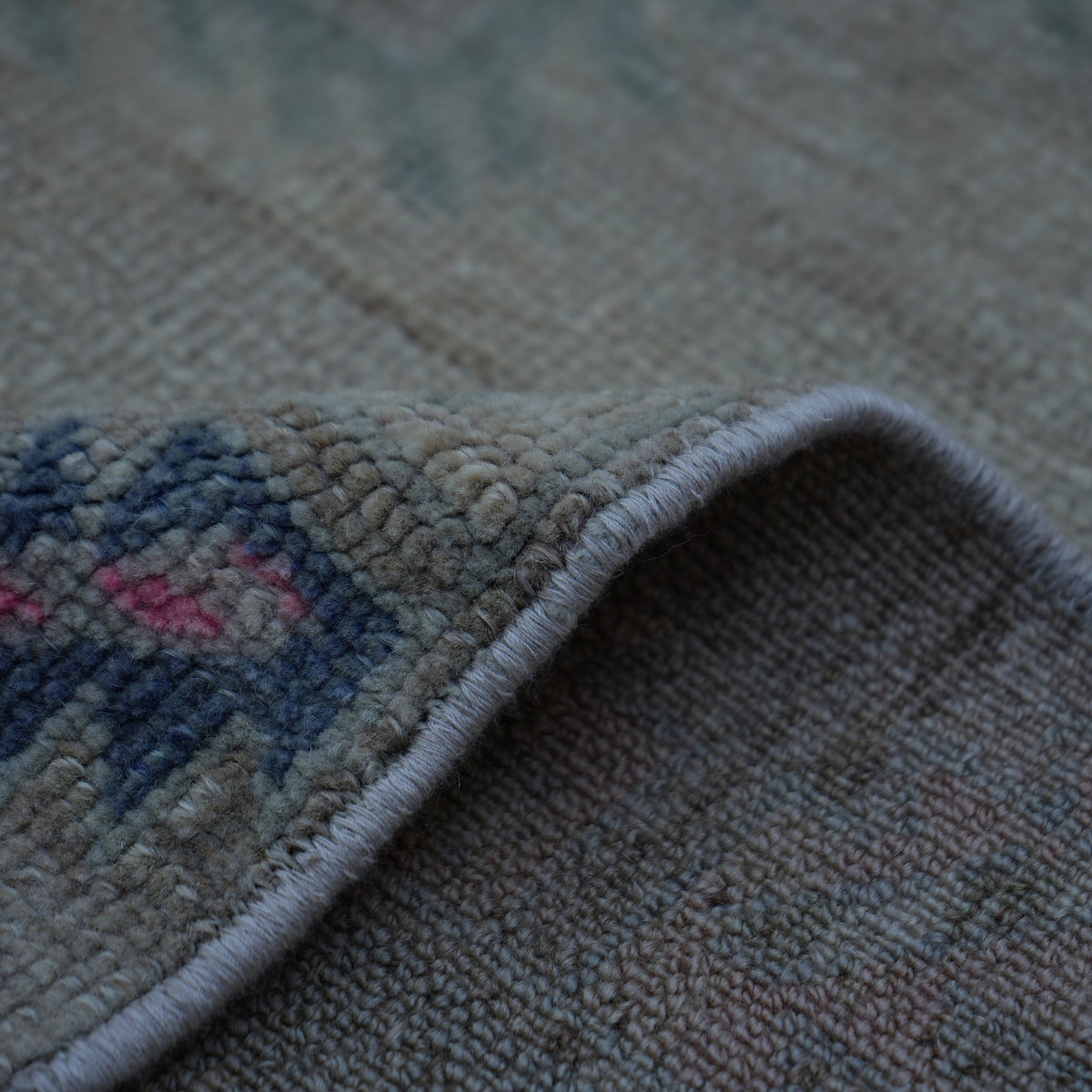
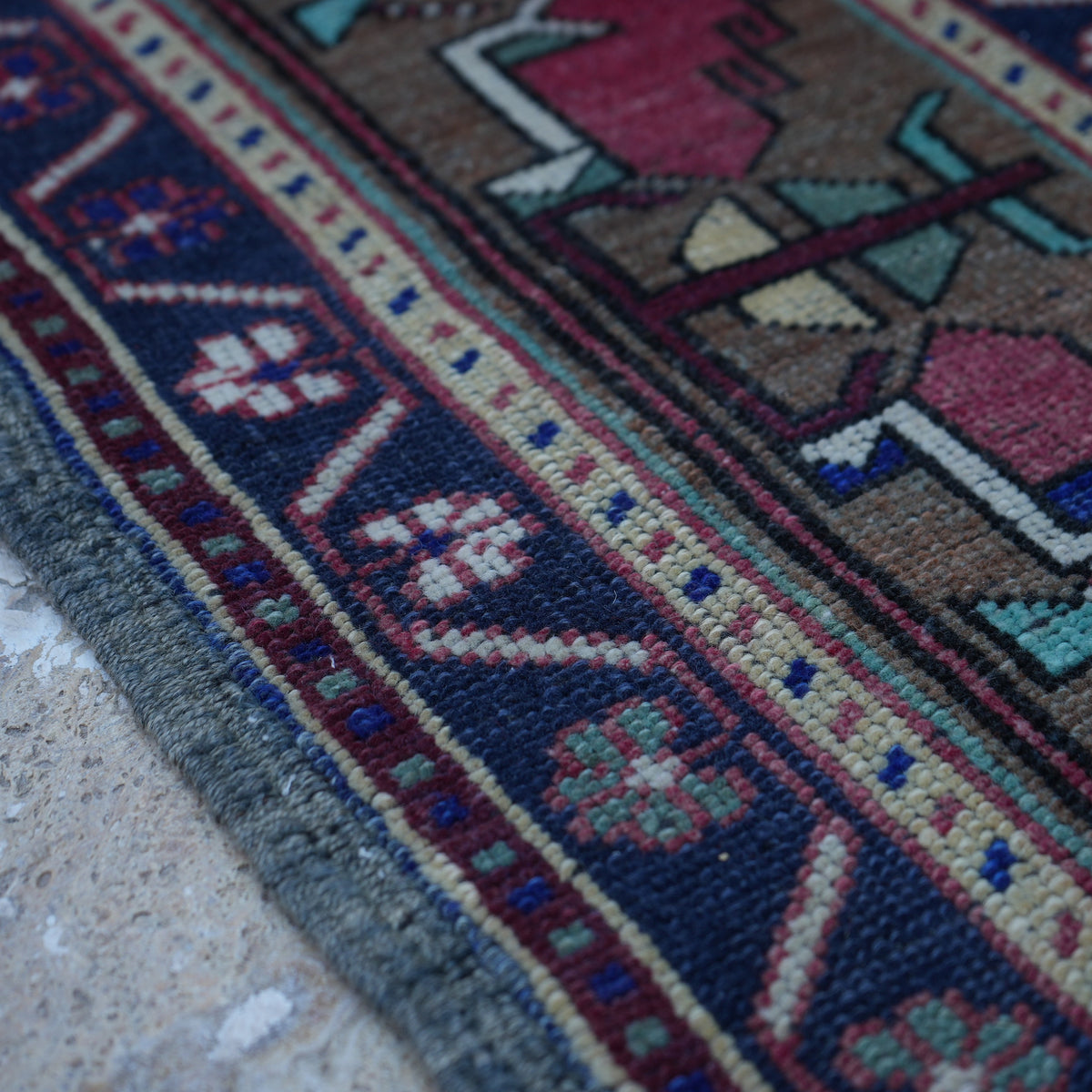
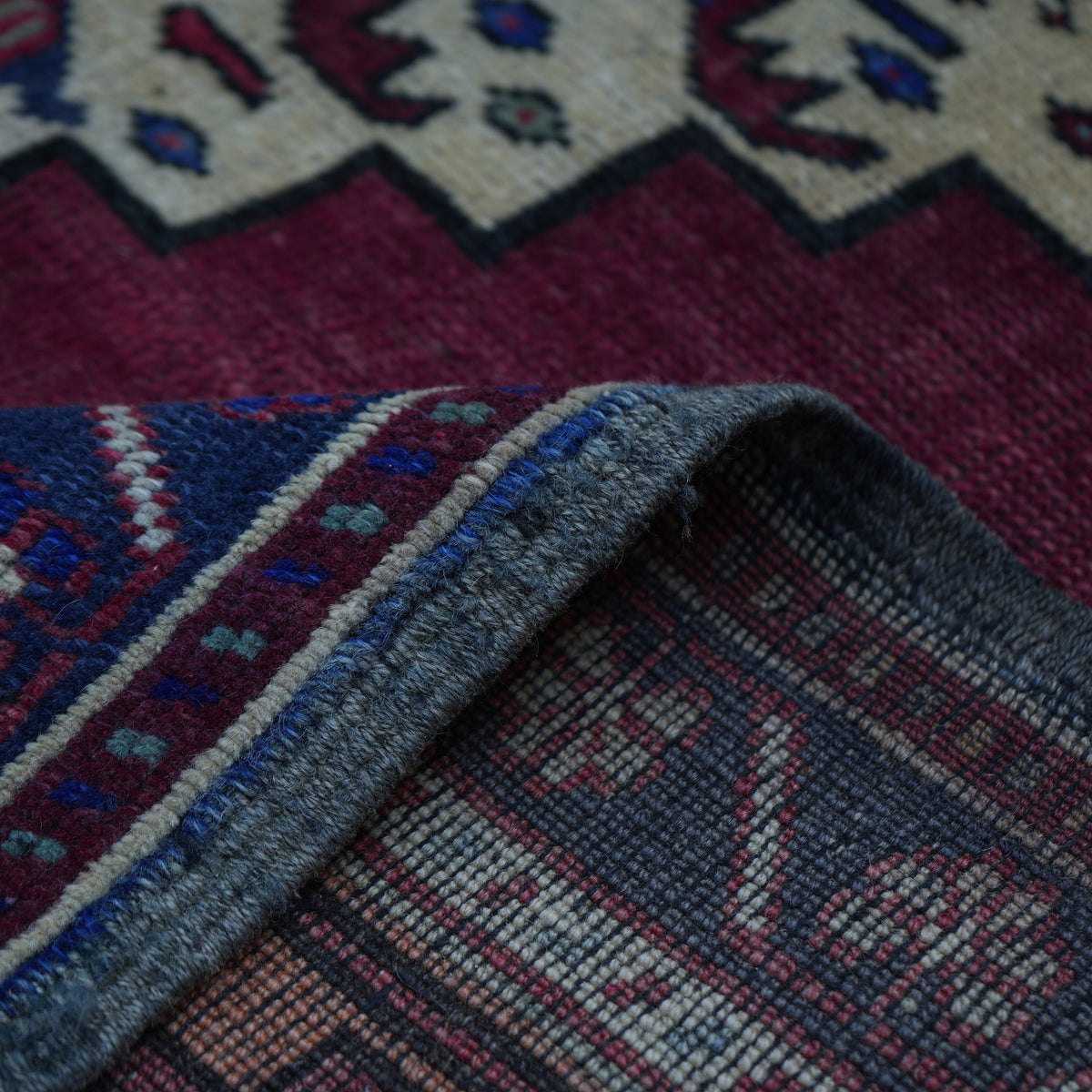
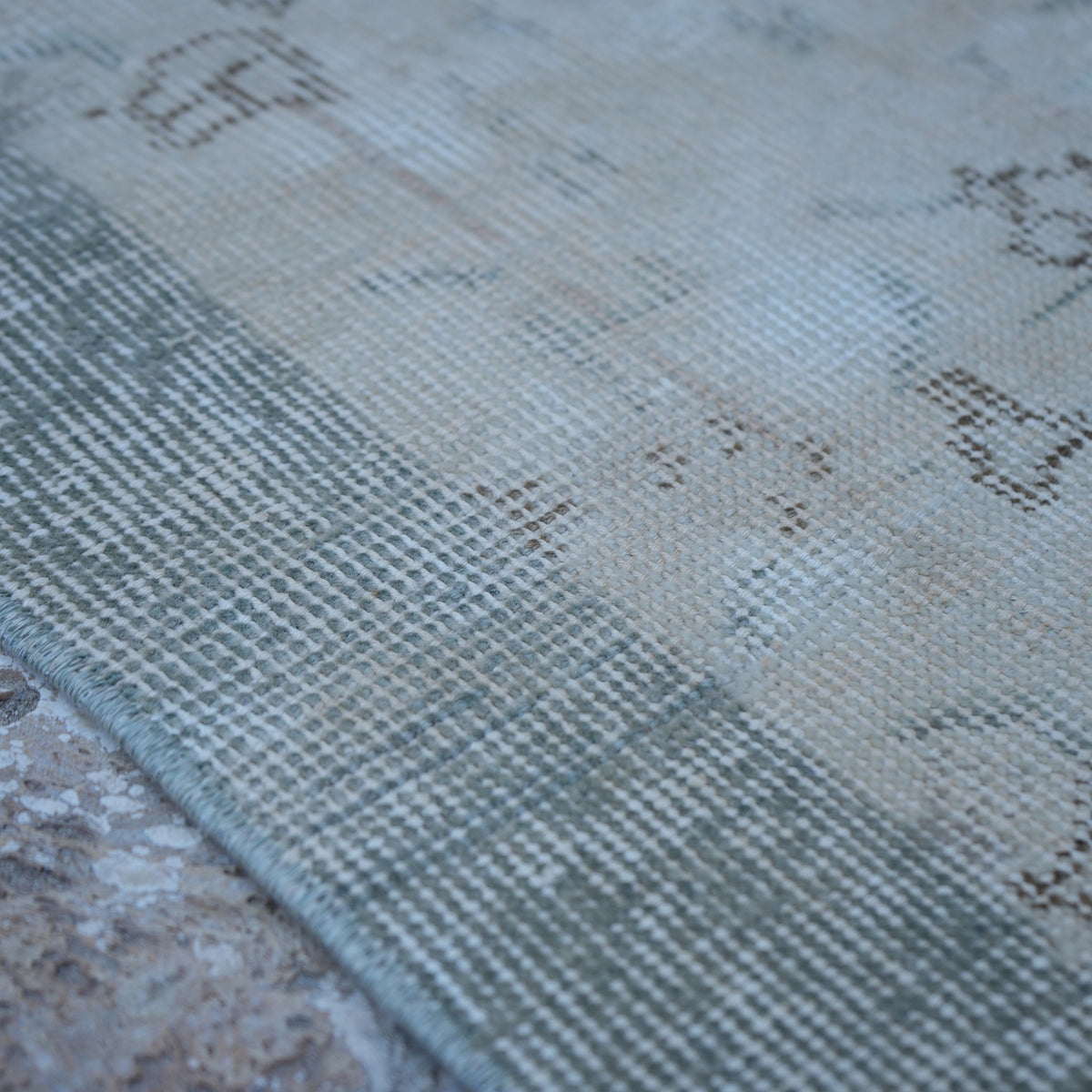
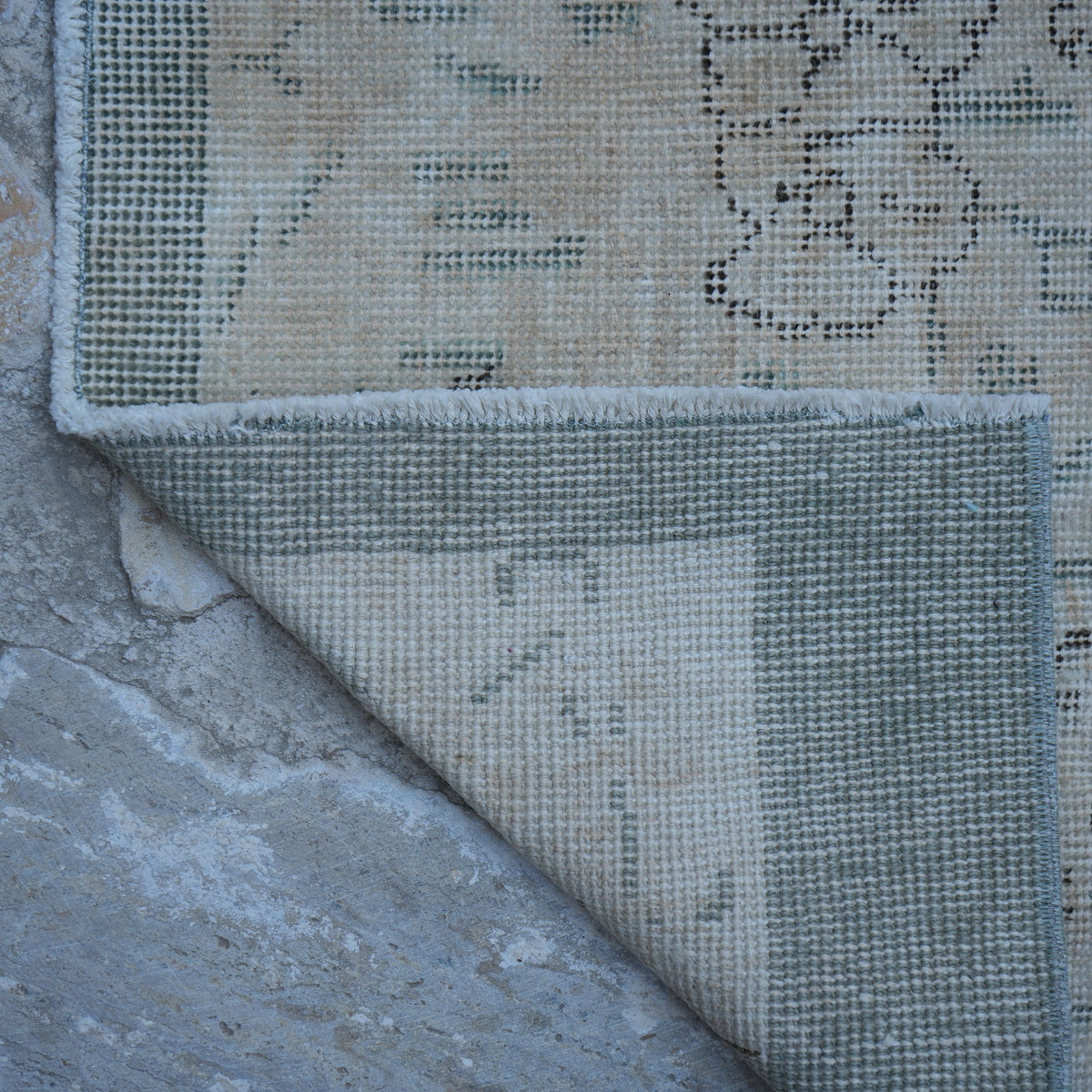
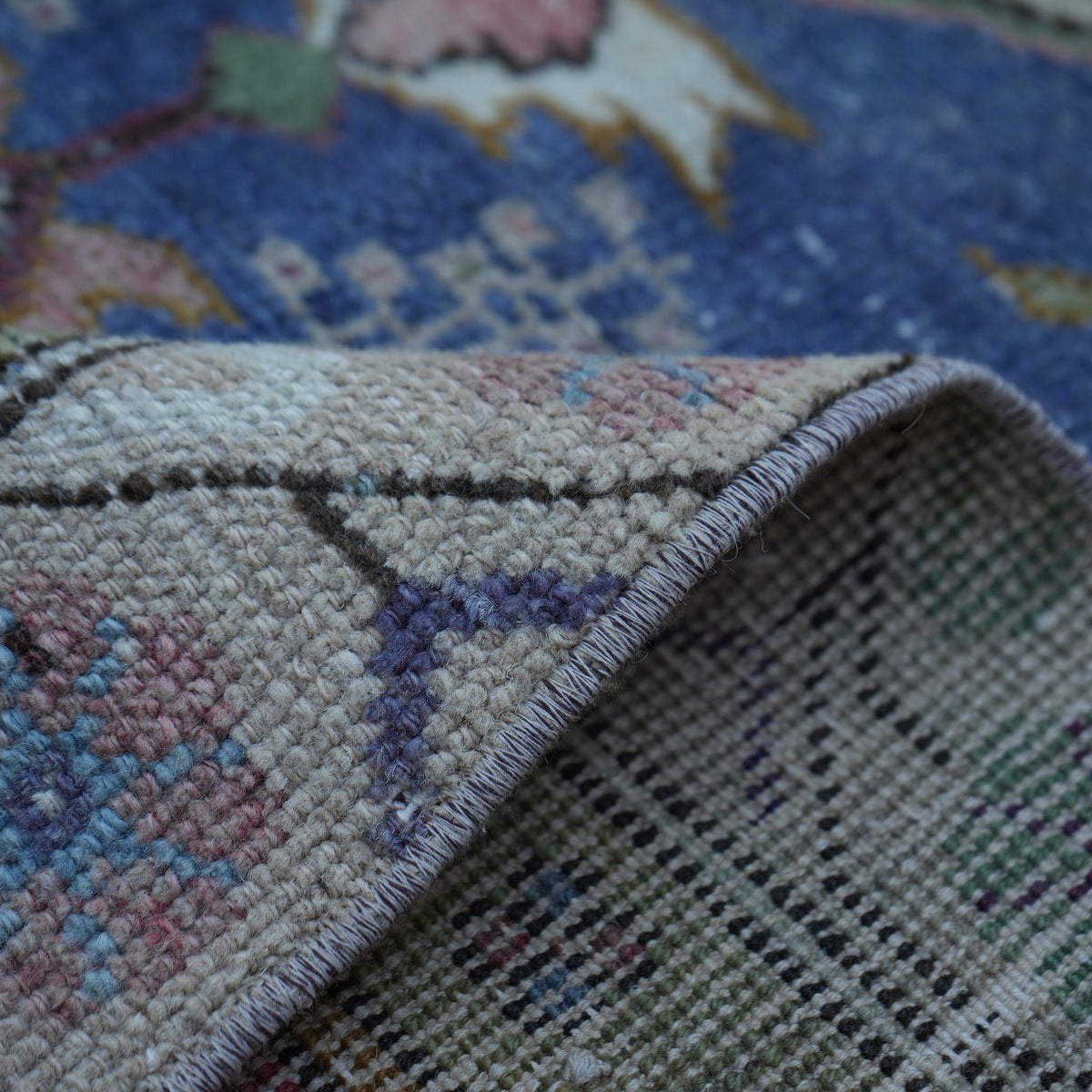
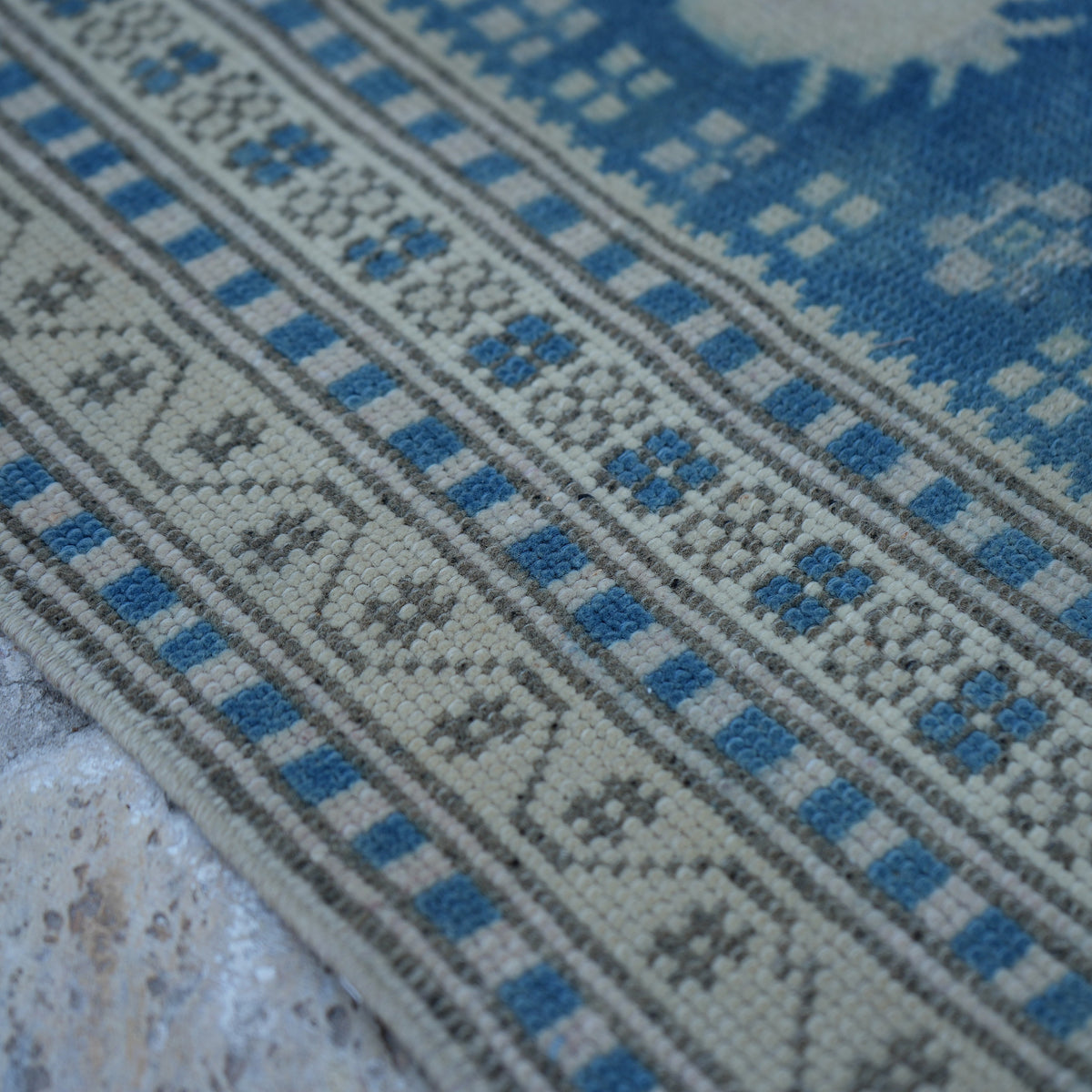
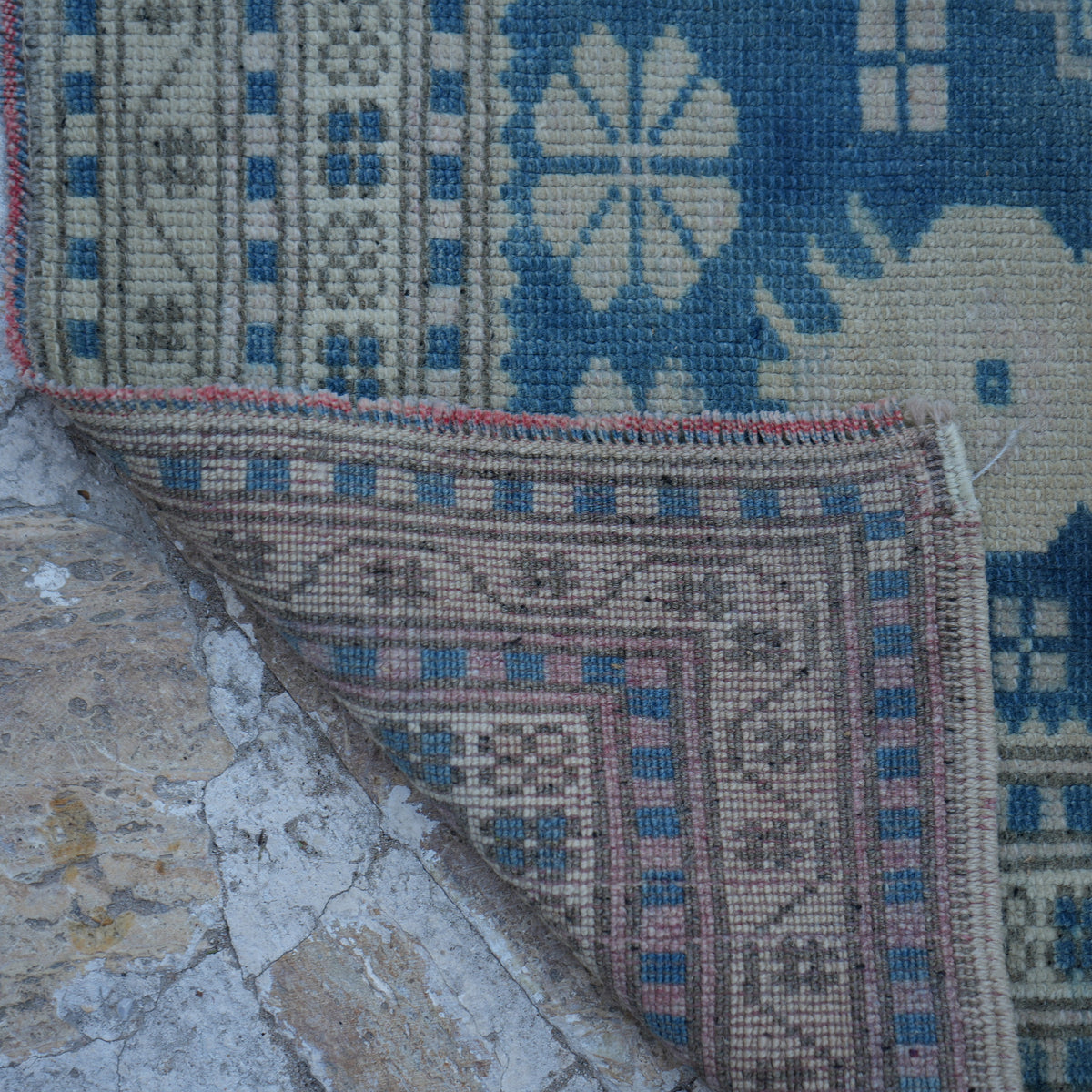
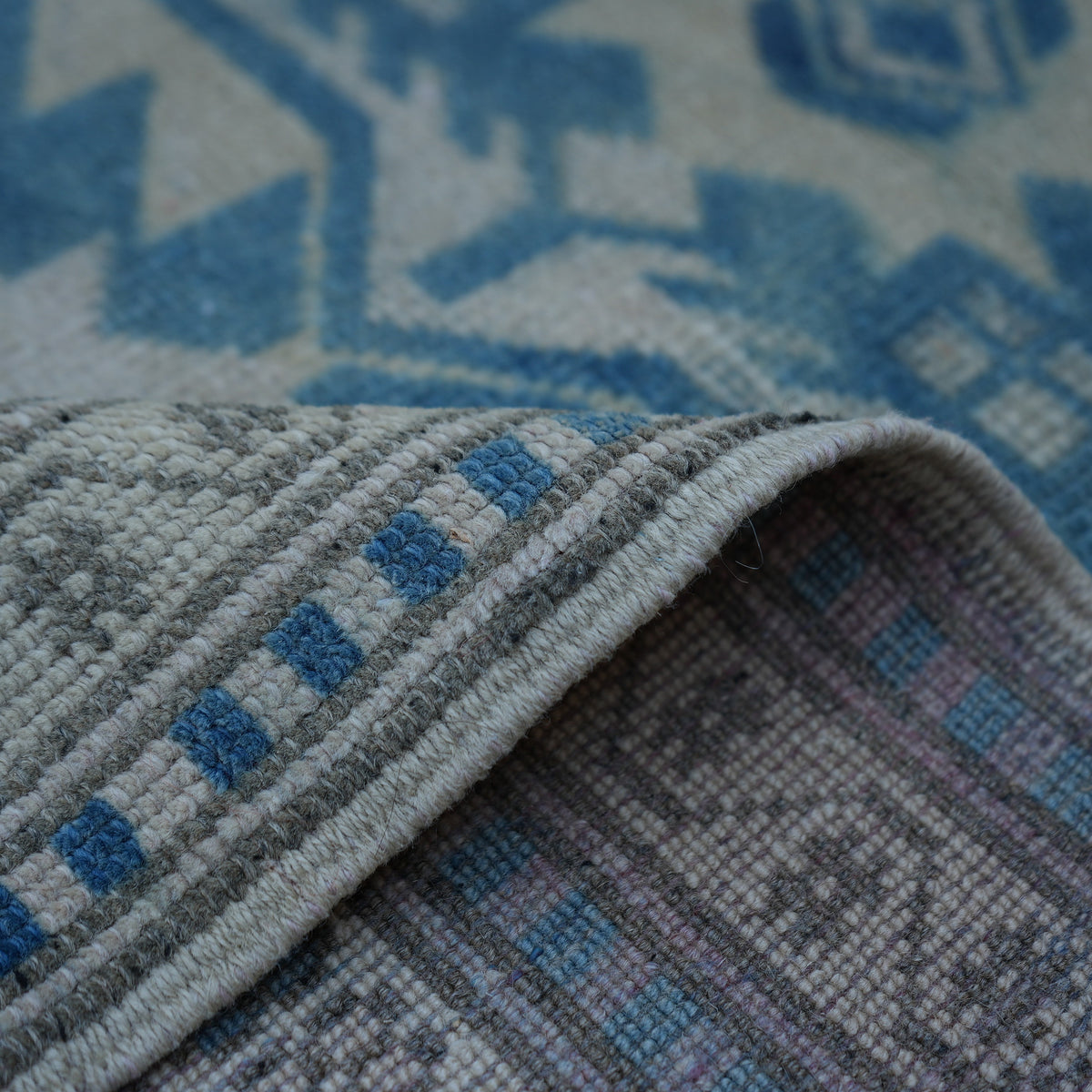
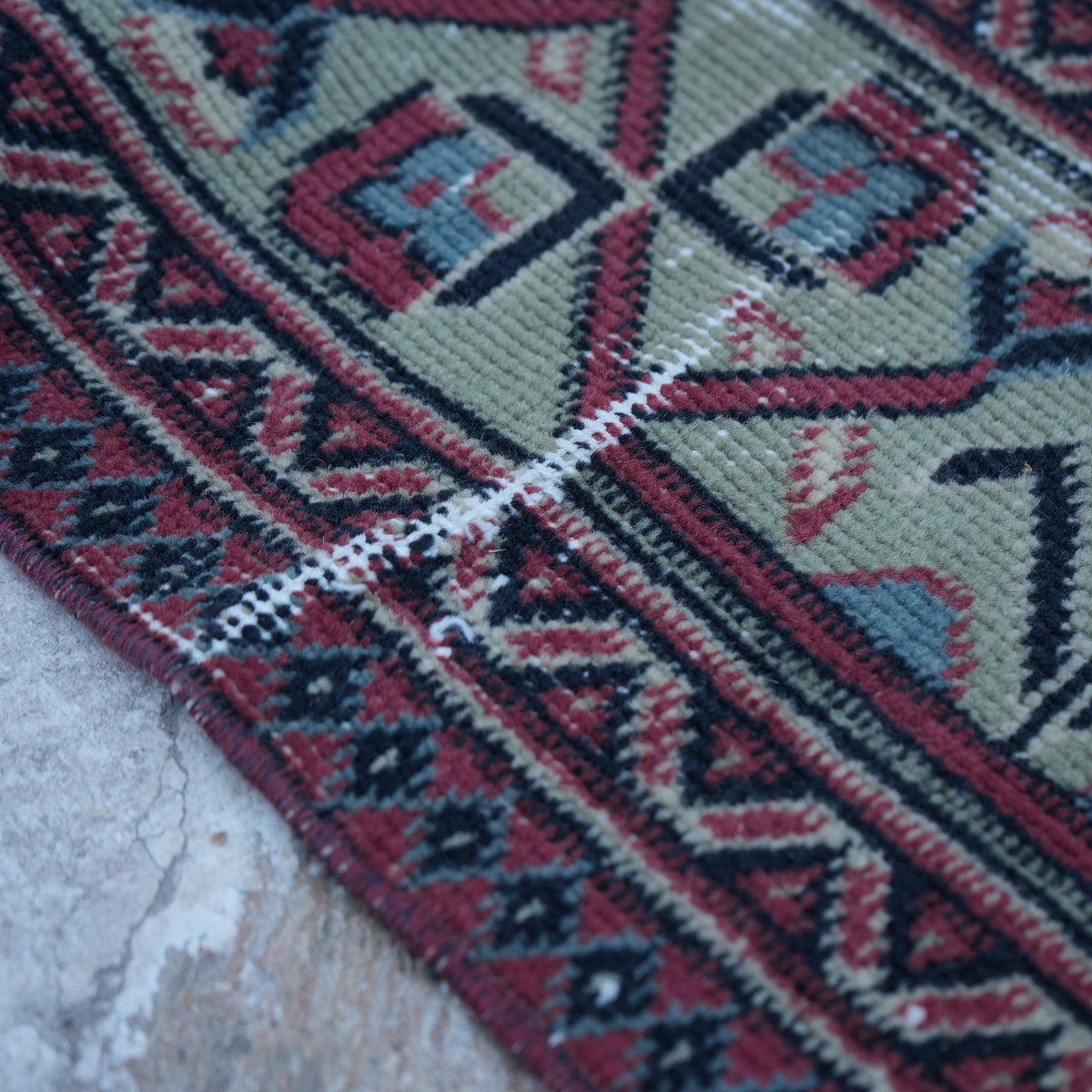
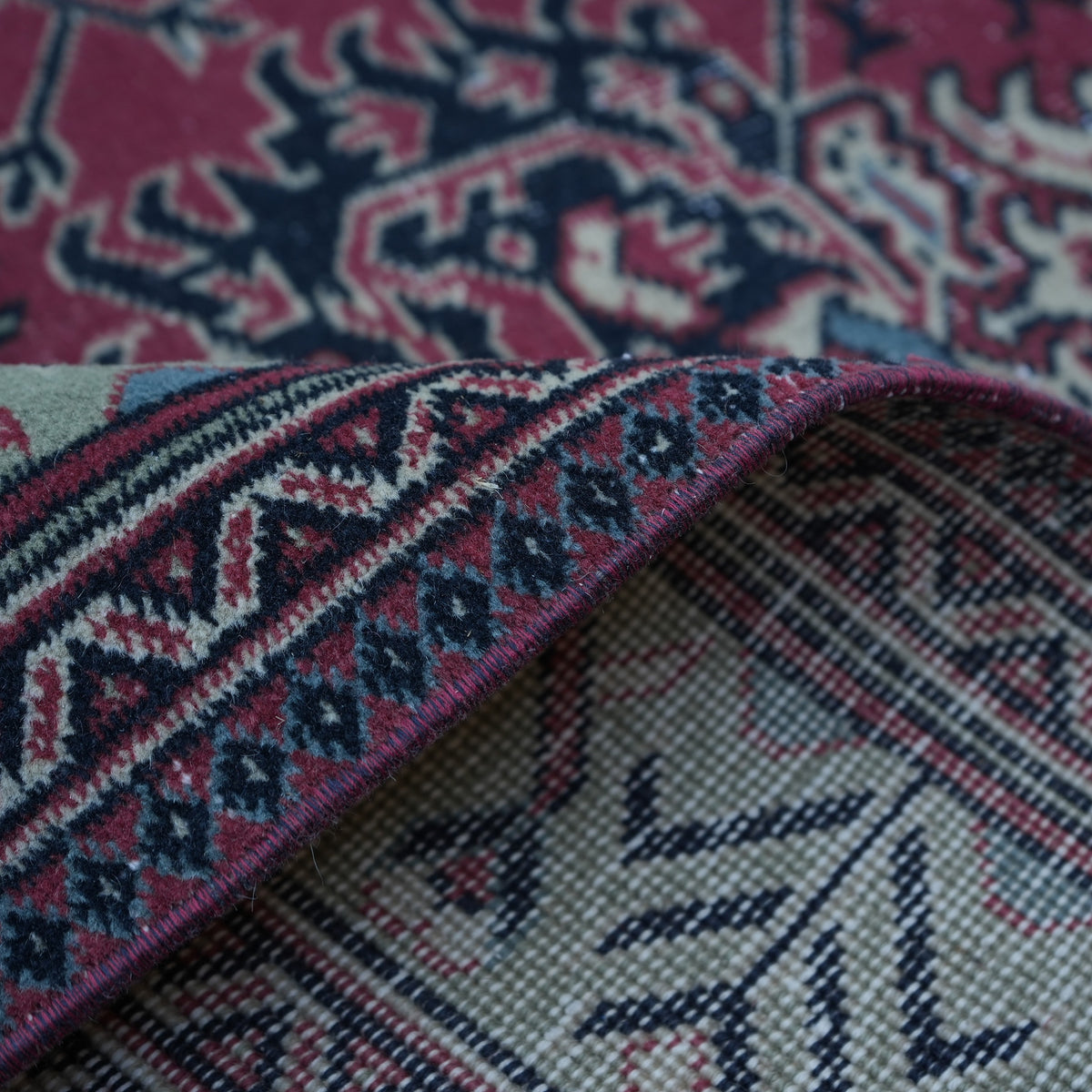
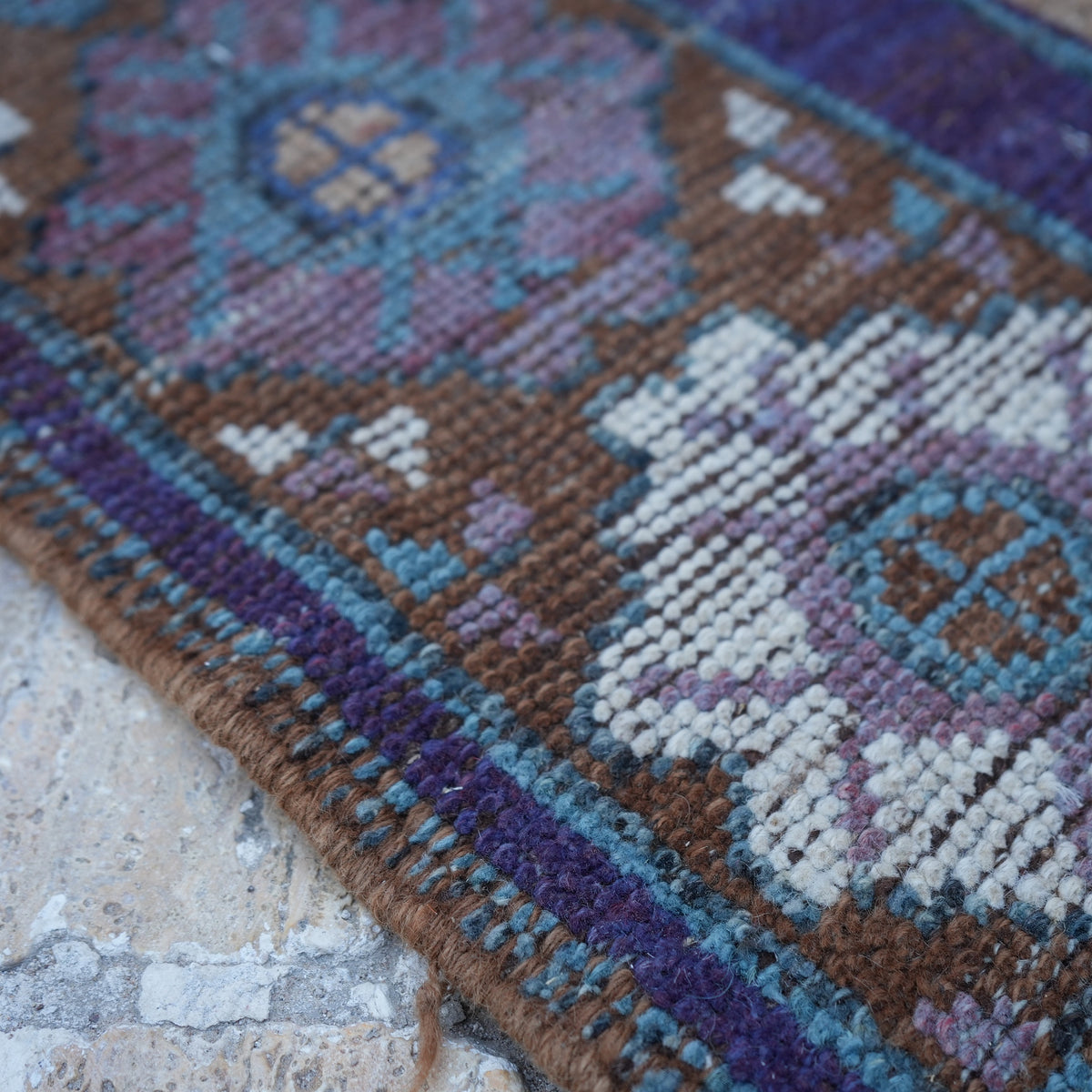
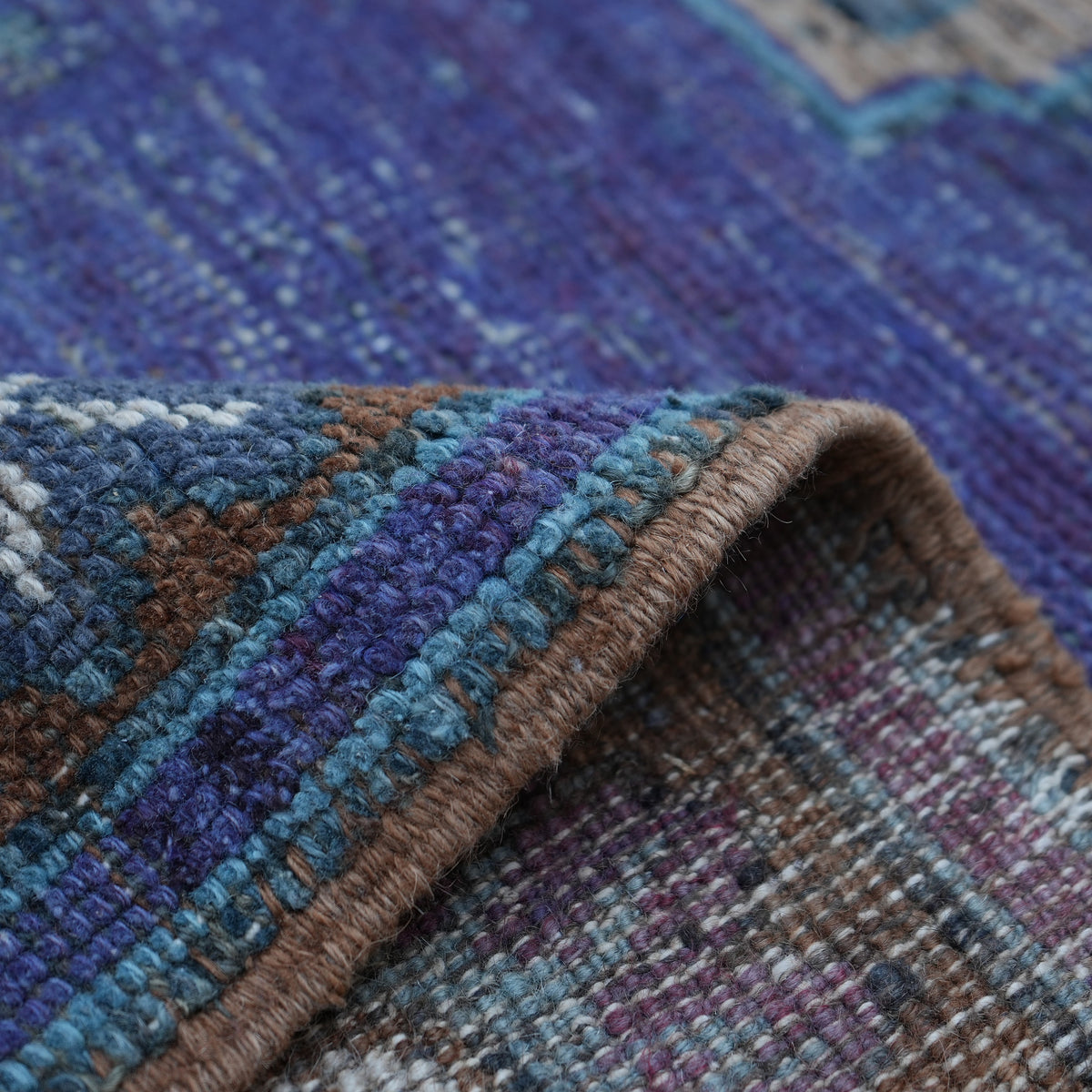
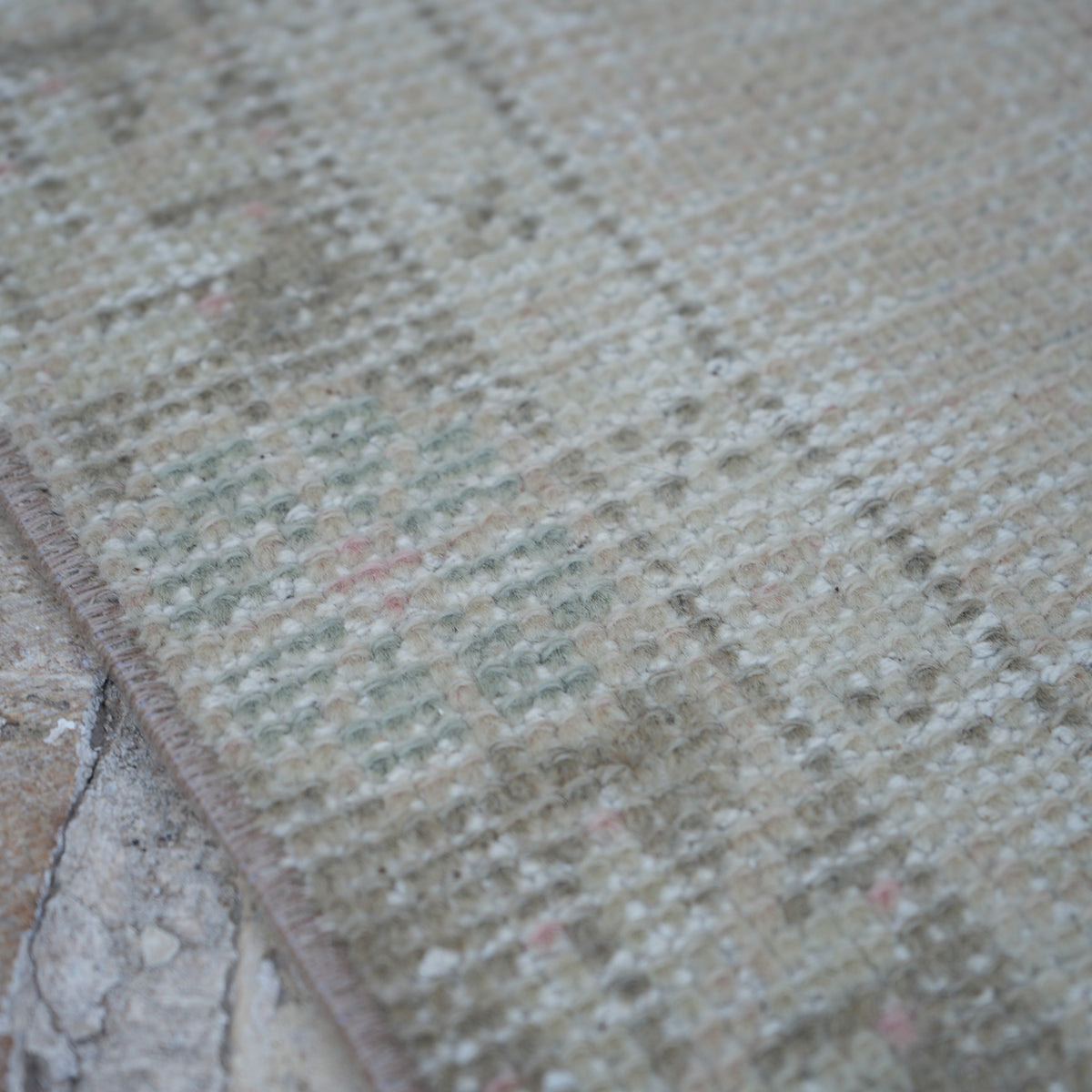
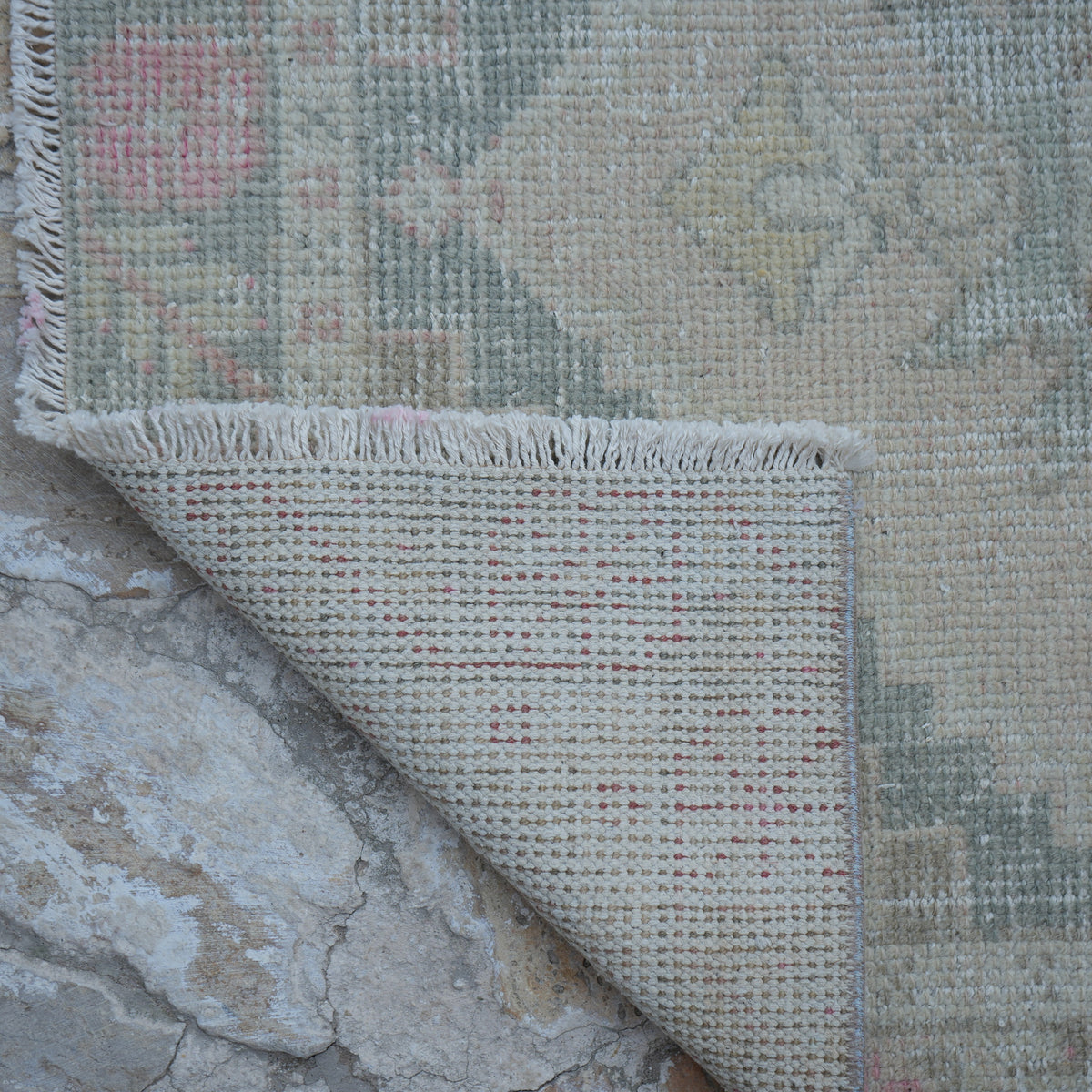
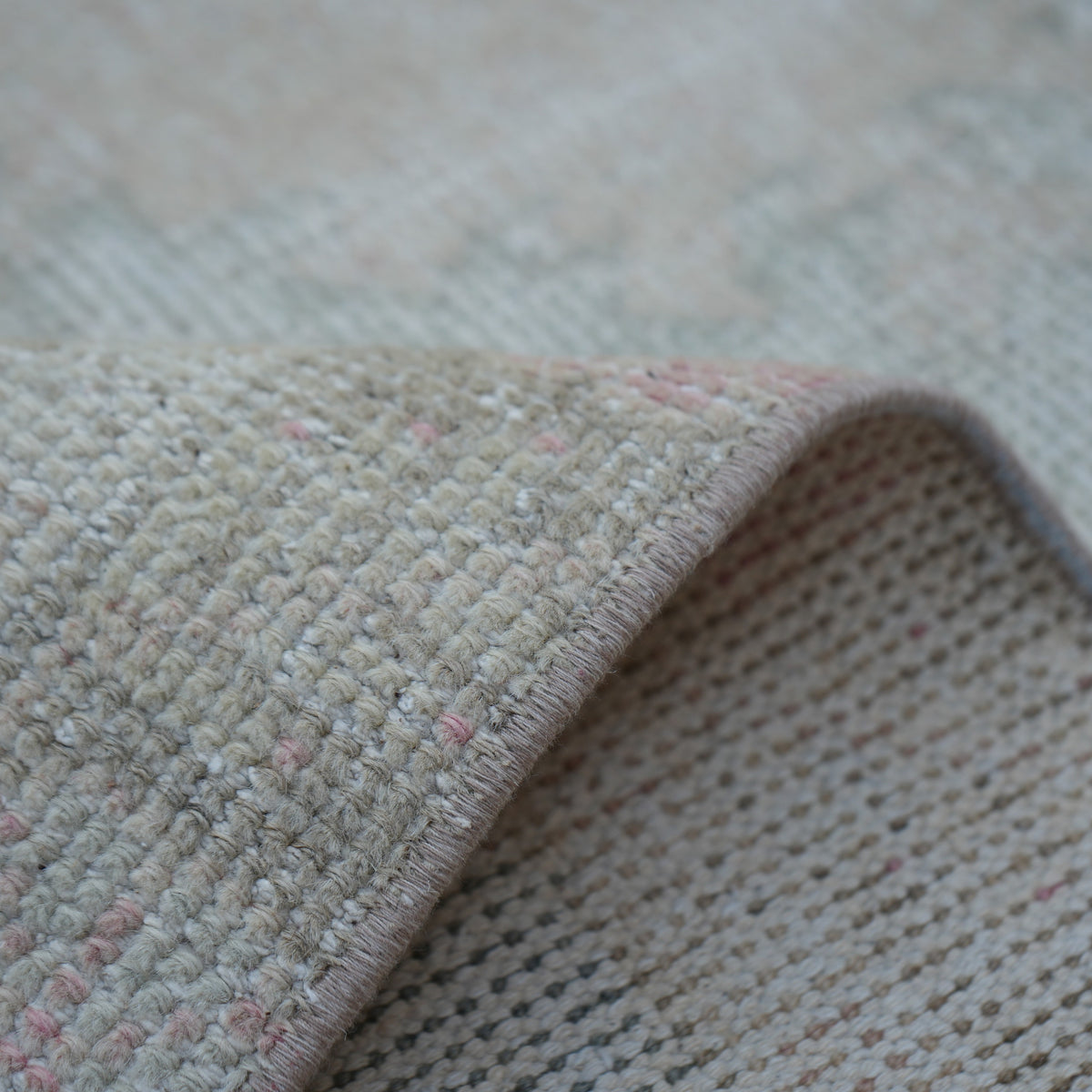
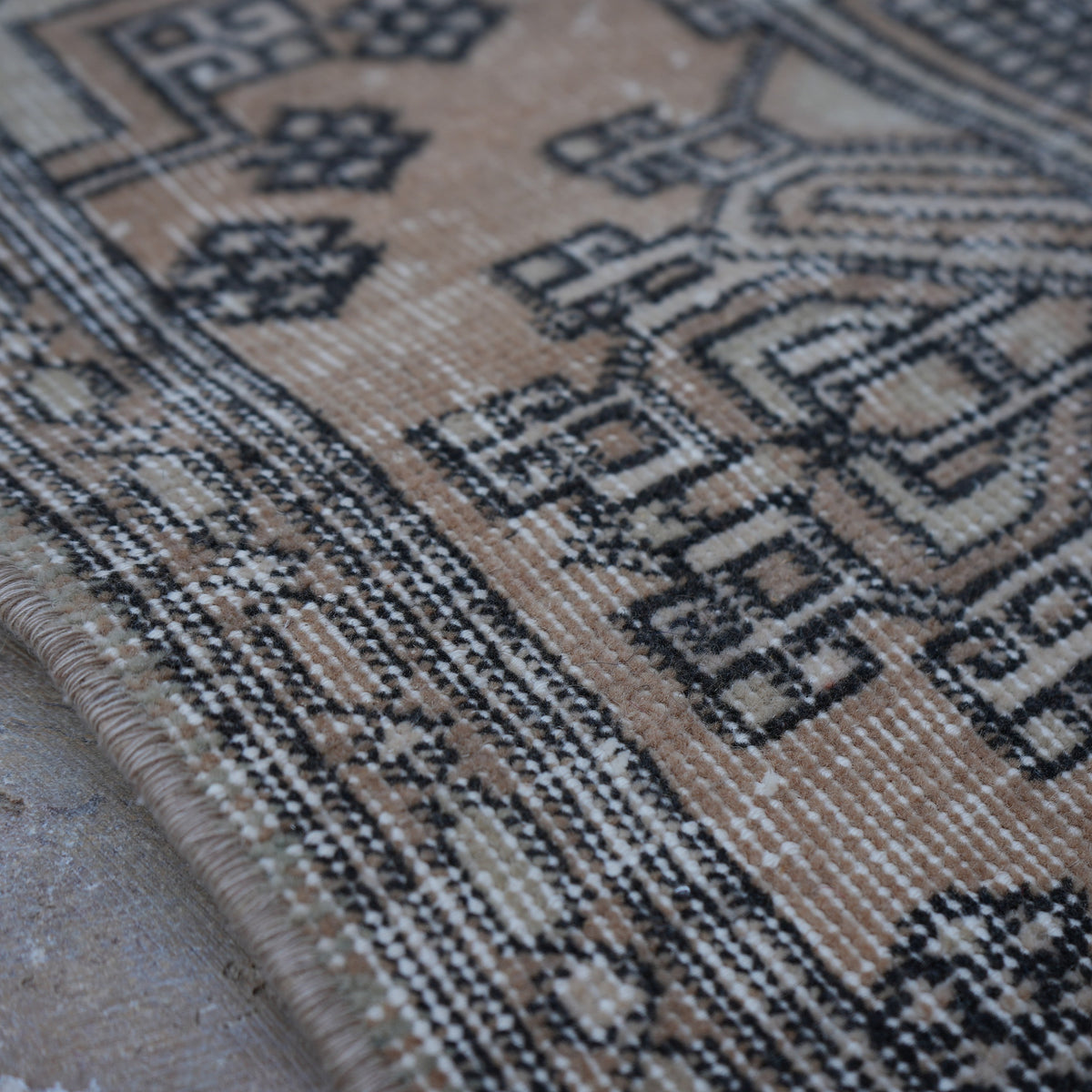
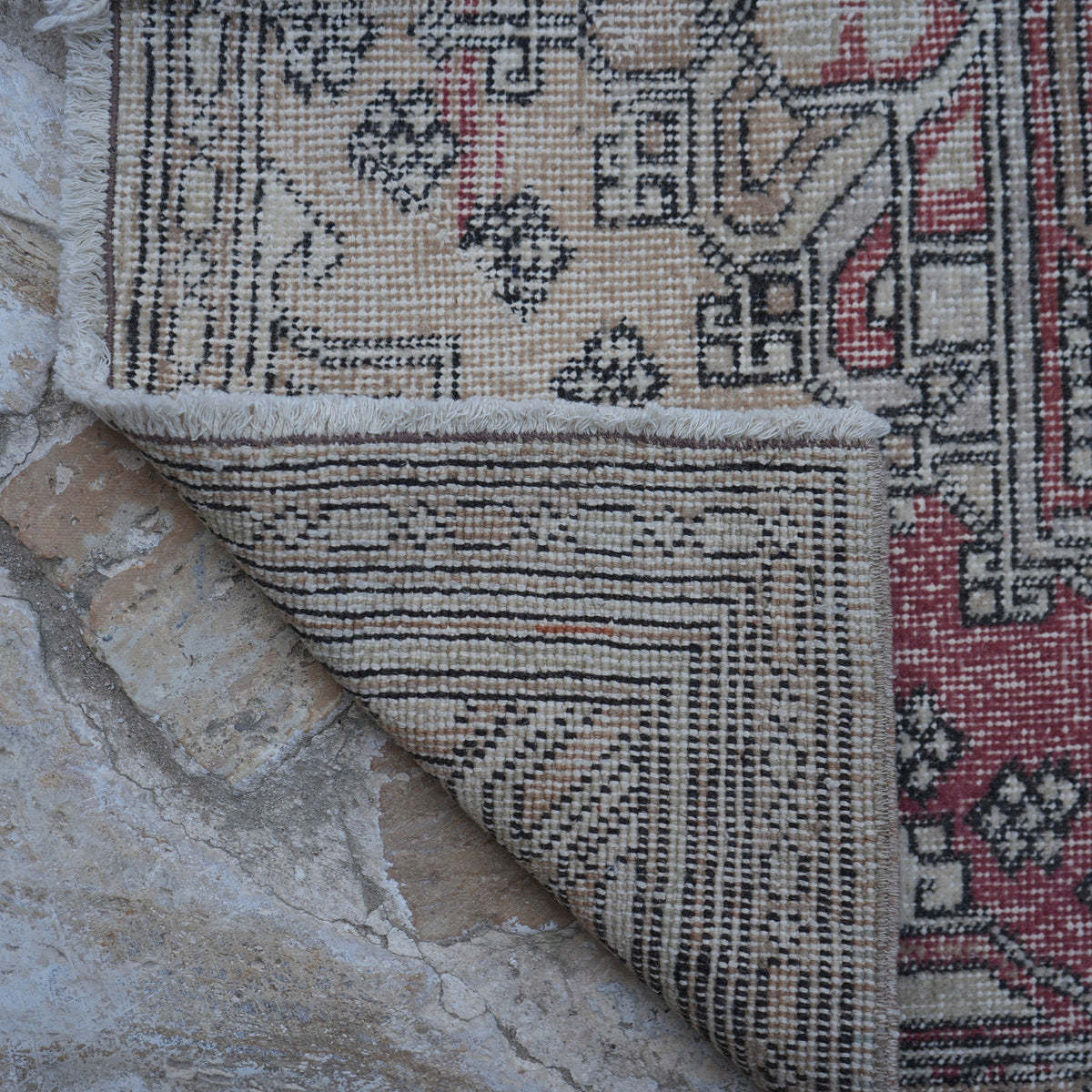
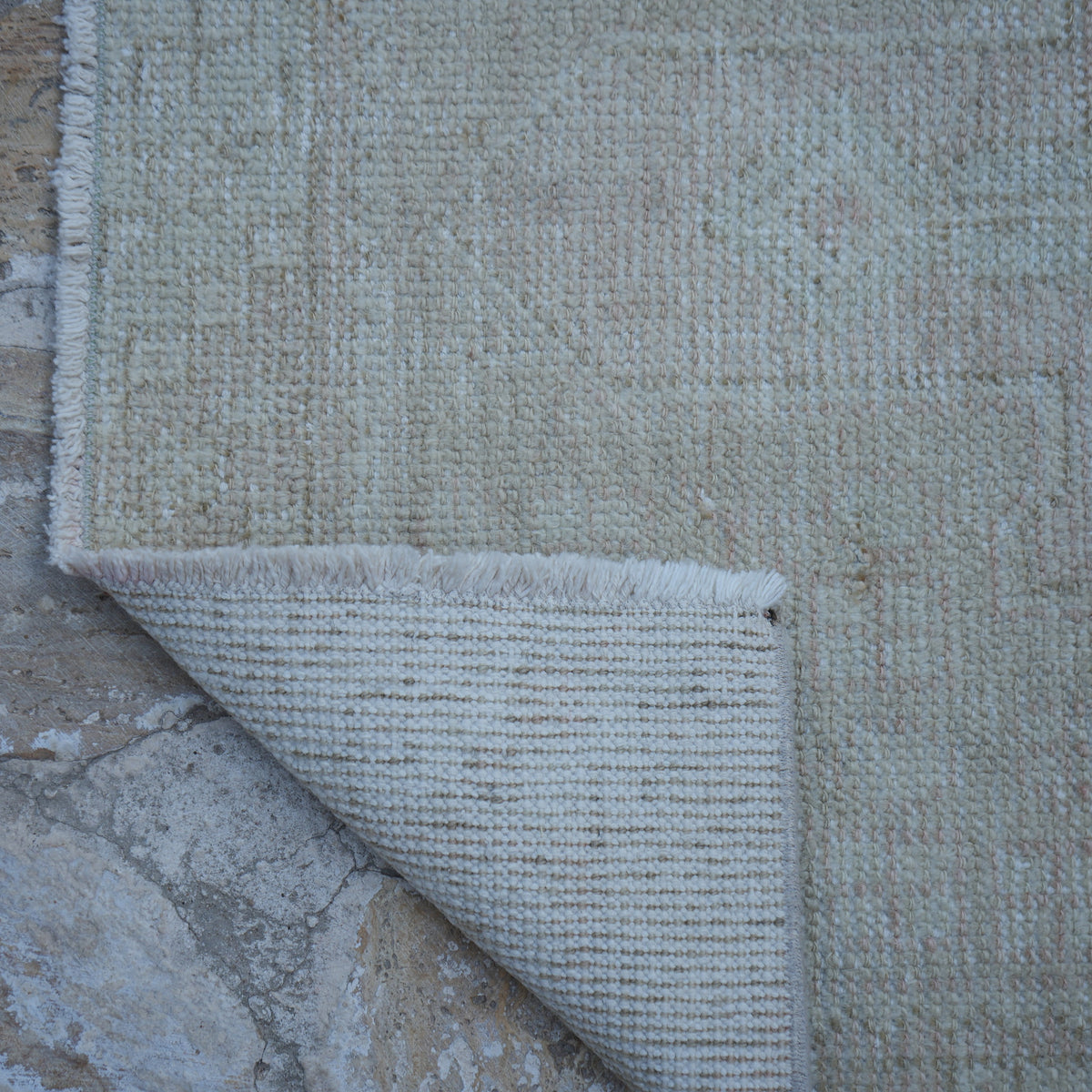
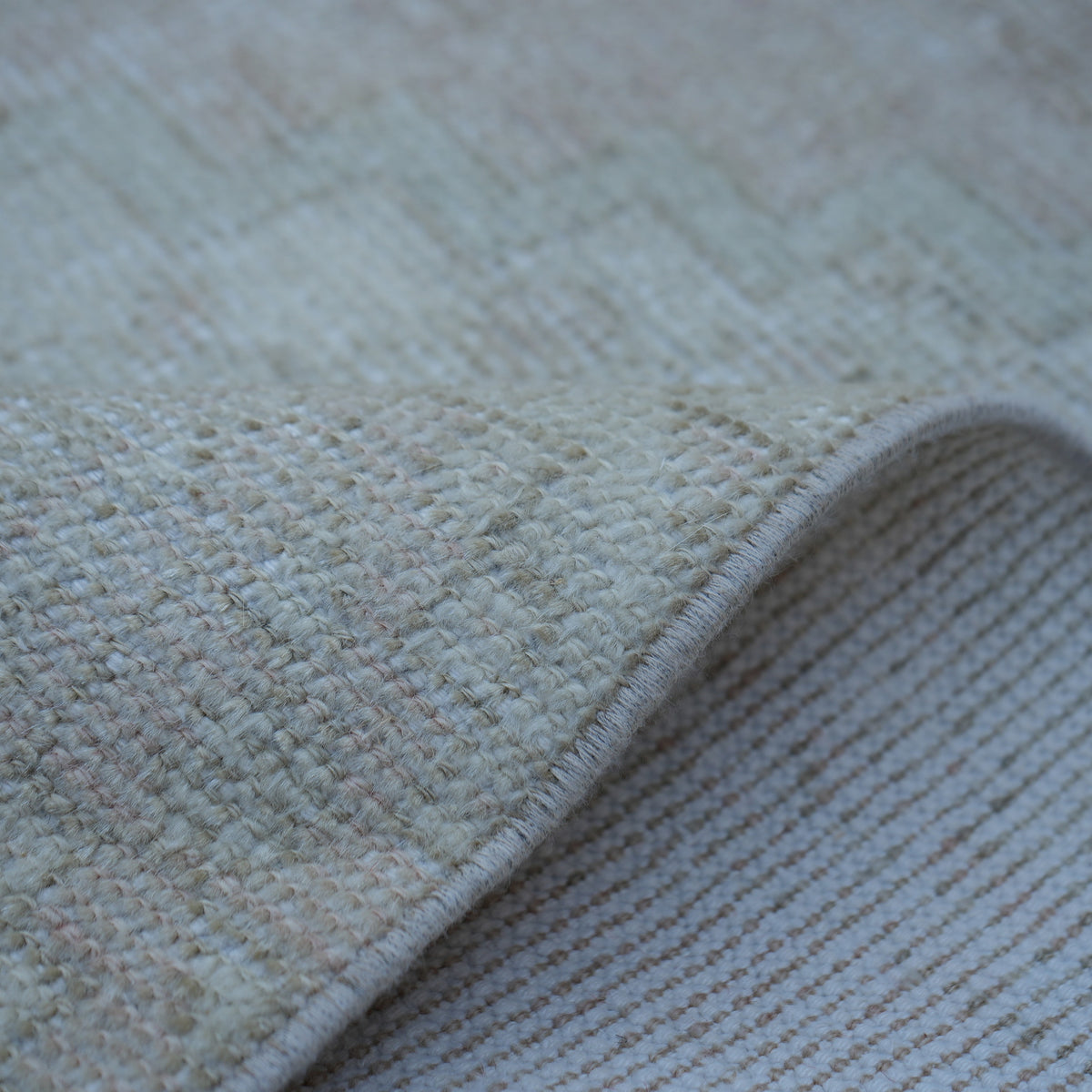
Wool resists moisture and stains naturally — not because of a chemical treatment, but because of the fiber itself. Lanolin creates a barrier that causes liquids to bead rather than immediately absorb. A tight hand-knotted weave adds to this: fewer gaps in the pile, less chance of liquids reaching the backing.
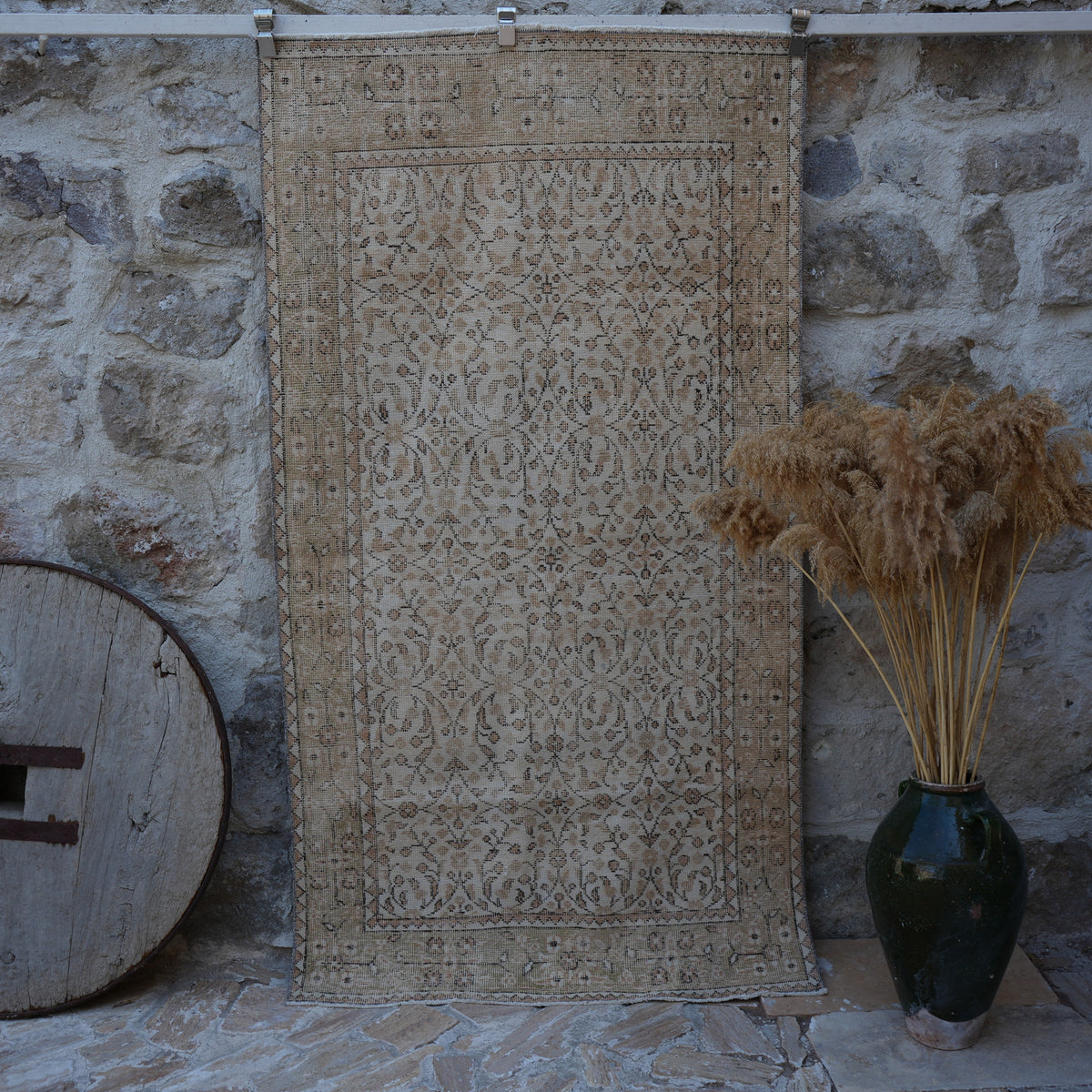
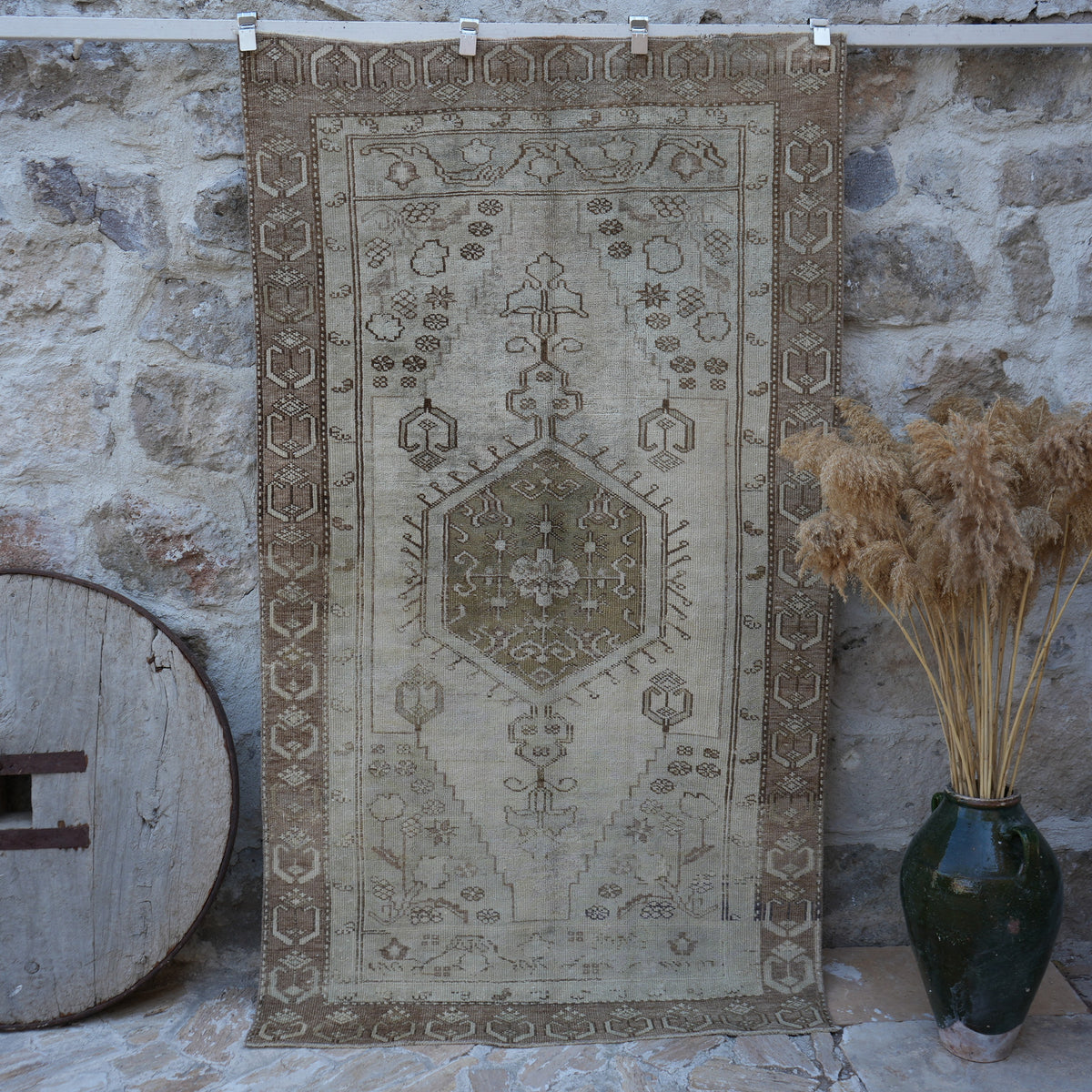
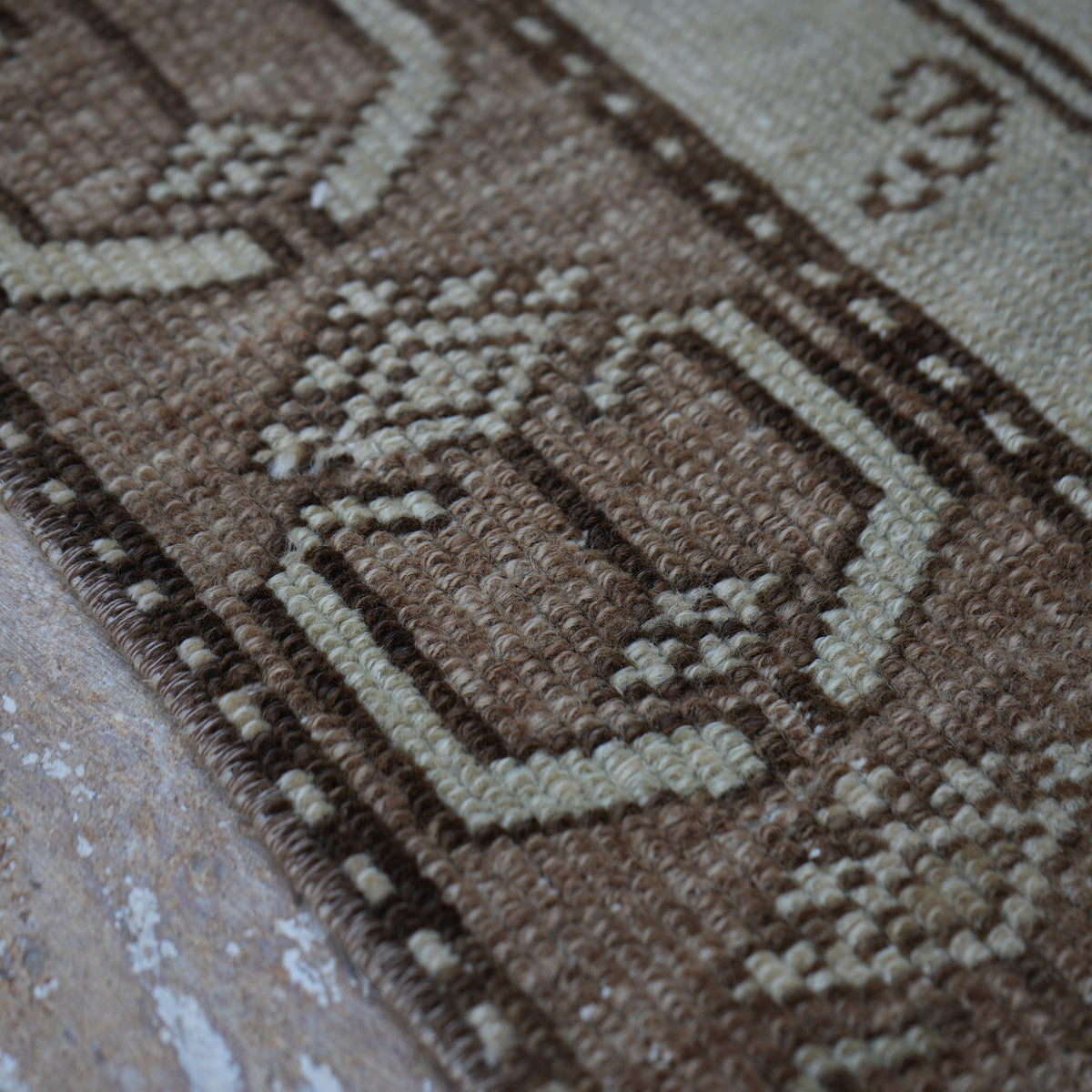
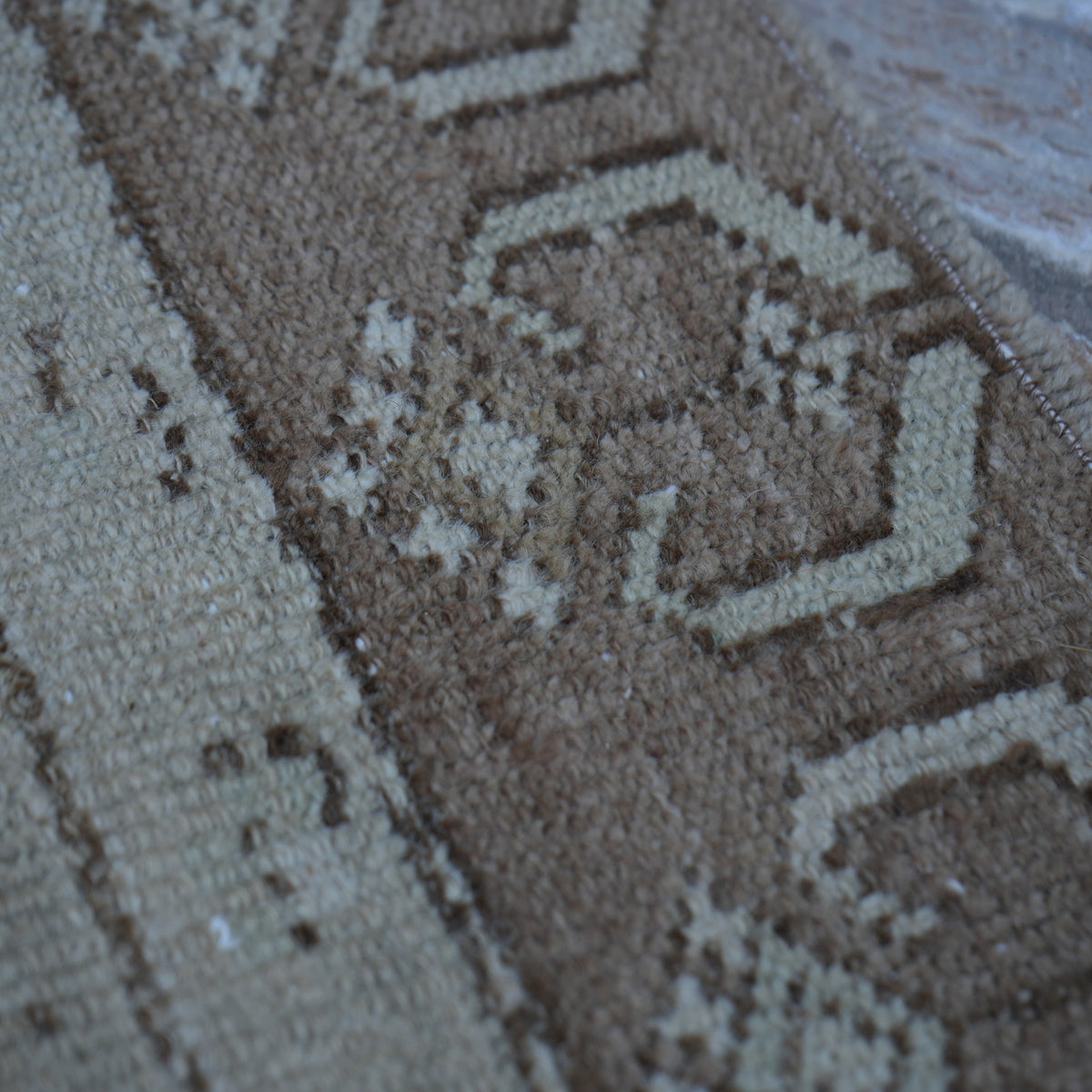
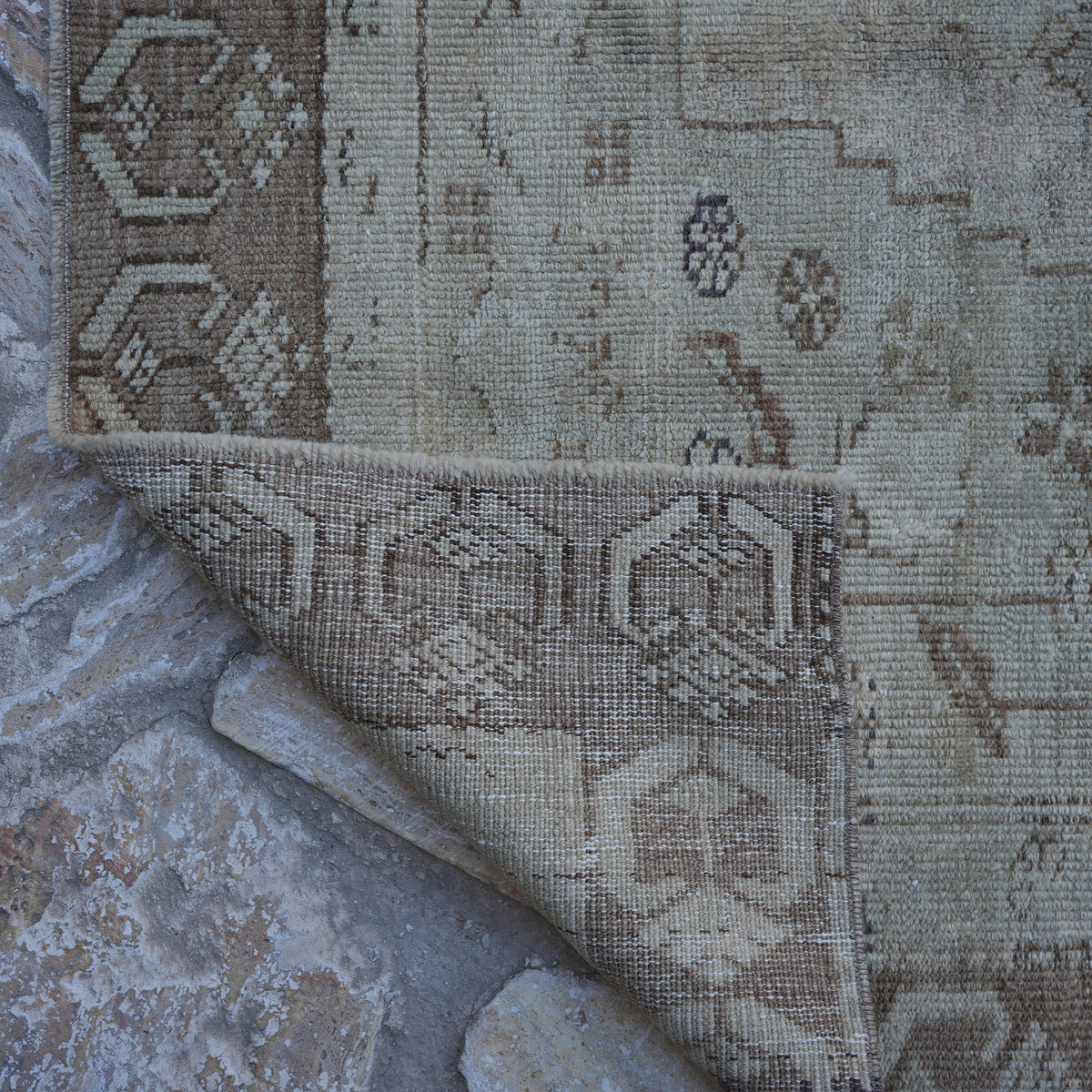
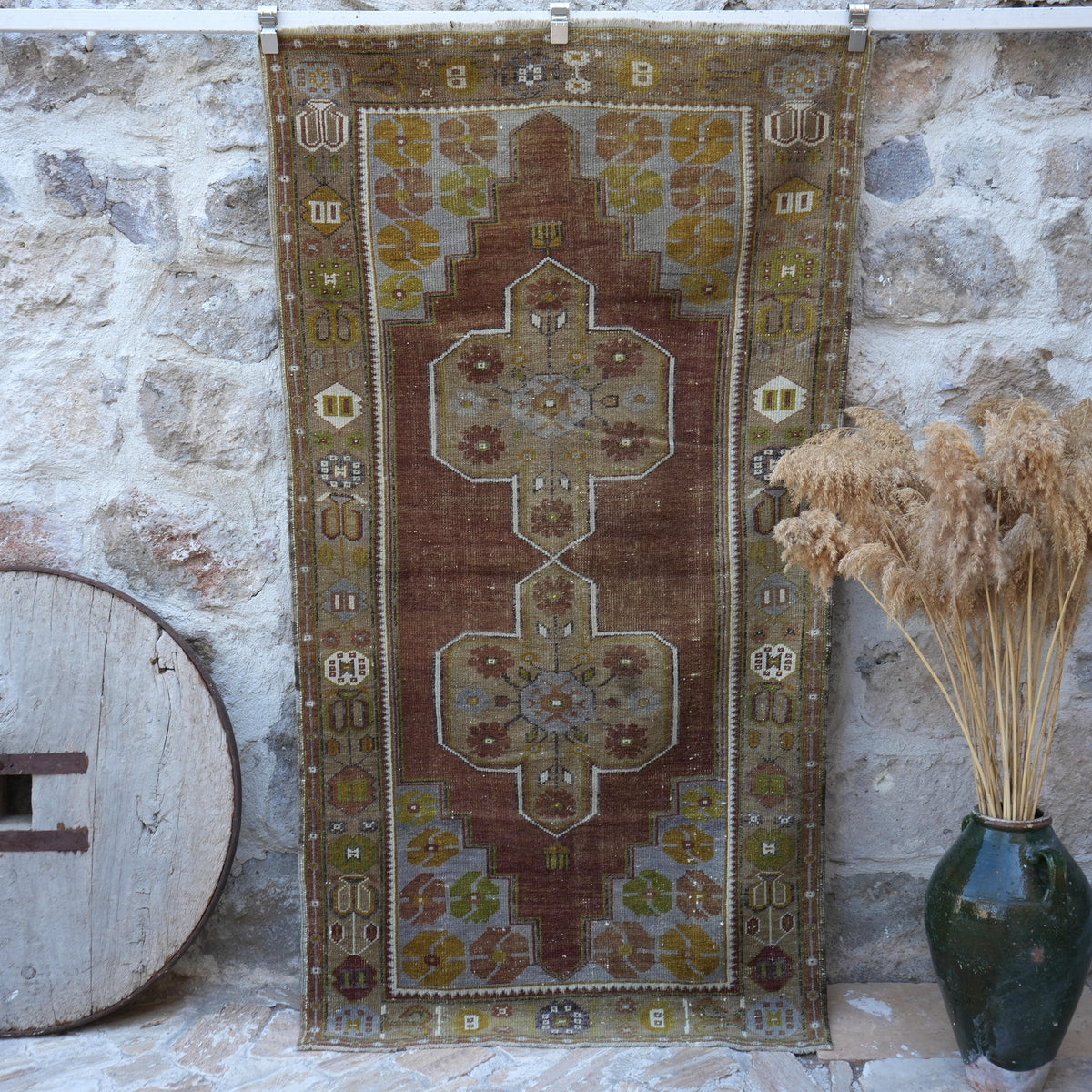
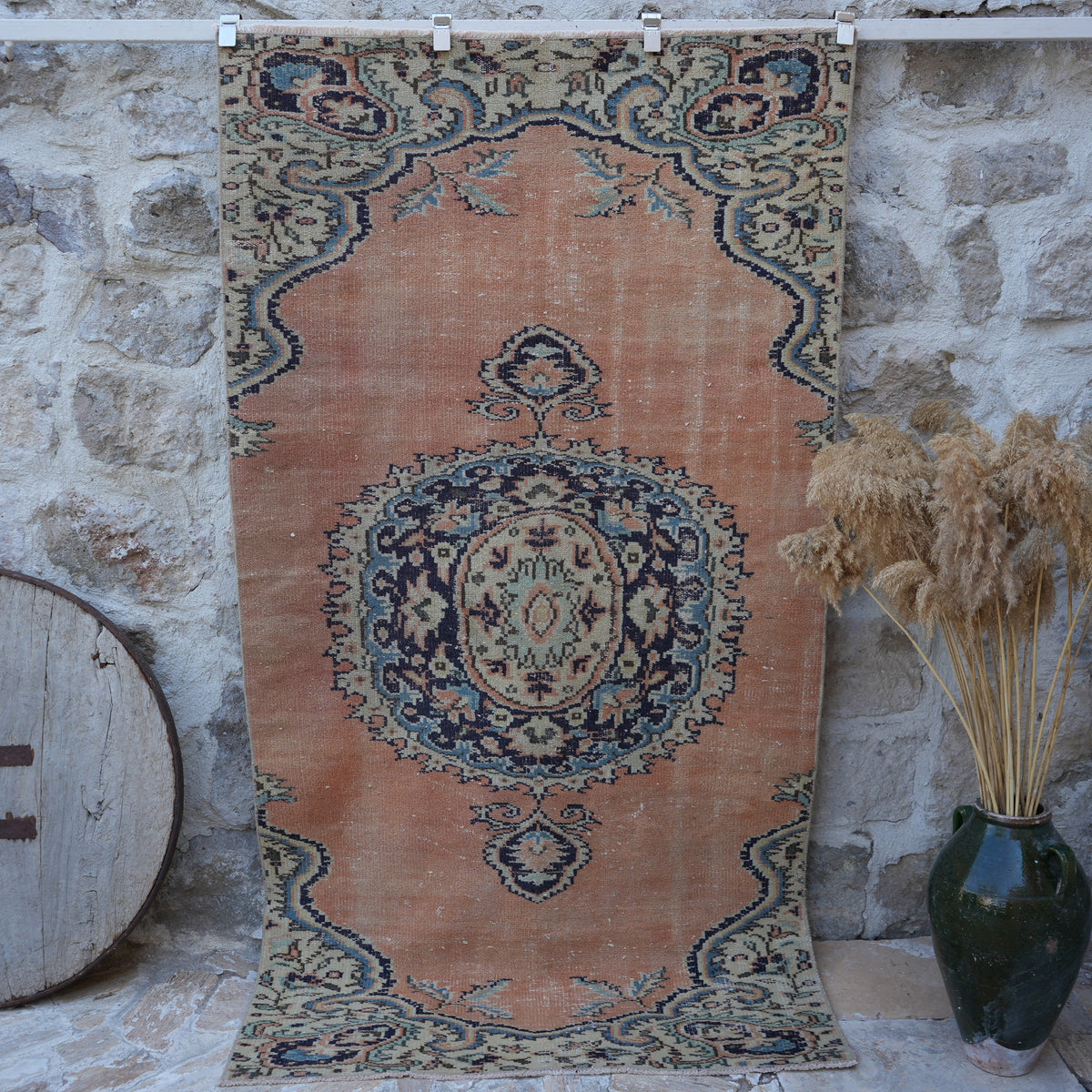
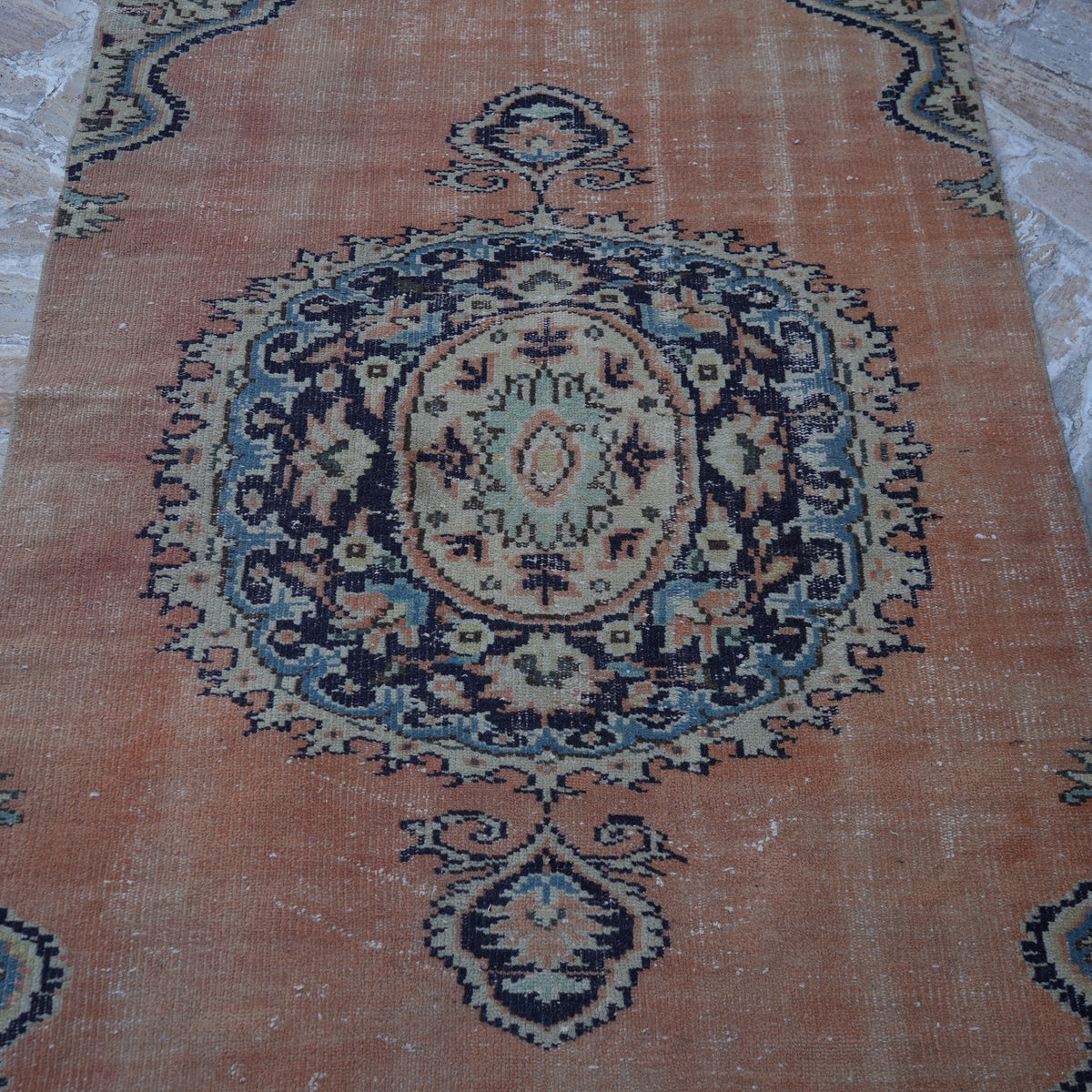
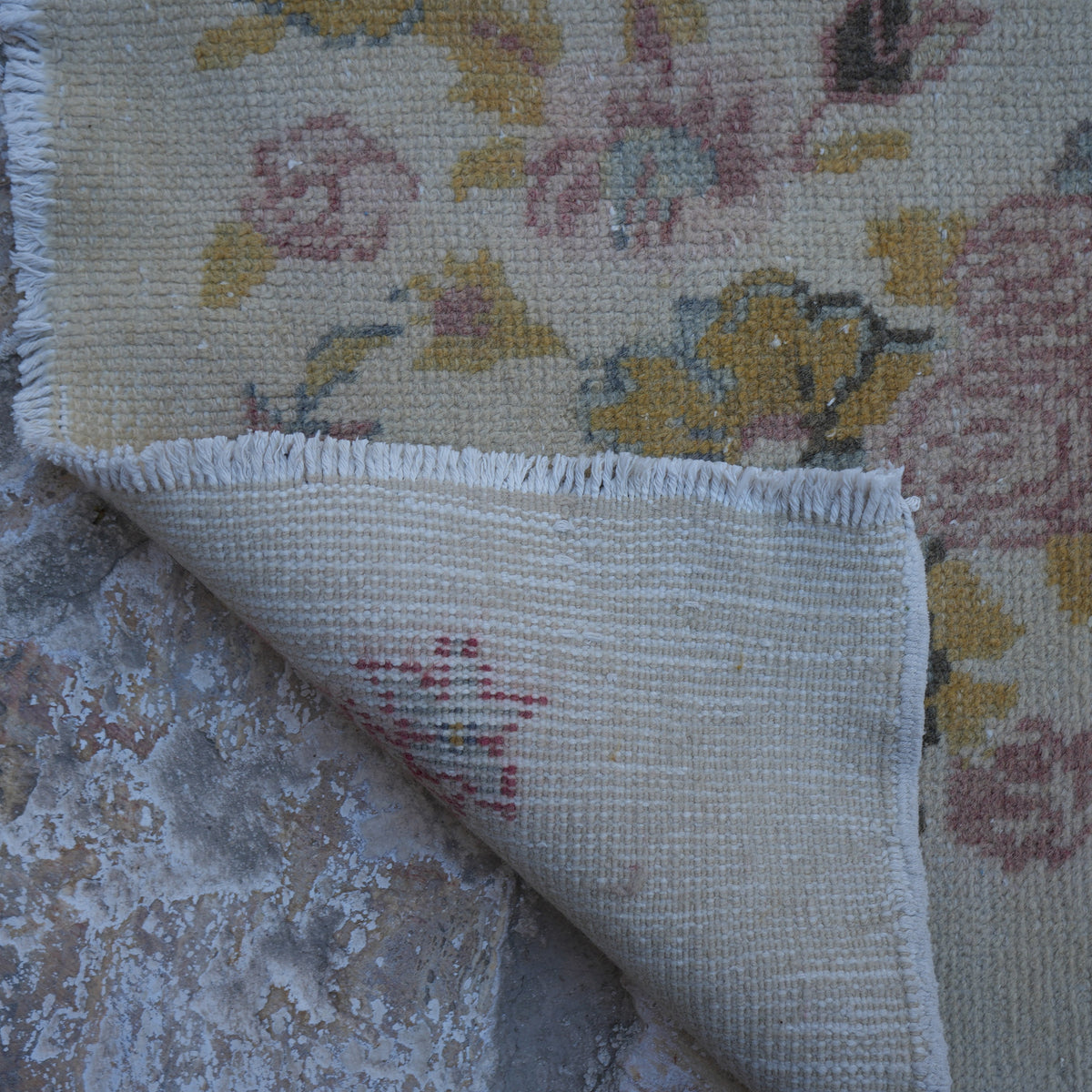
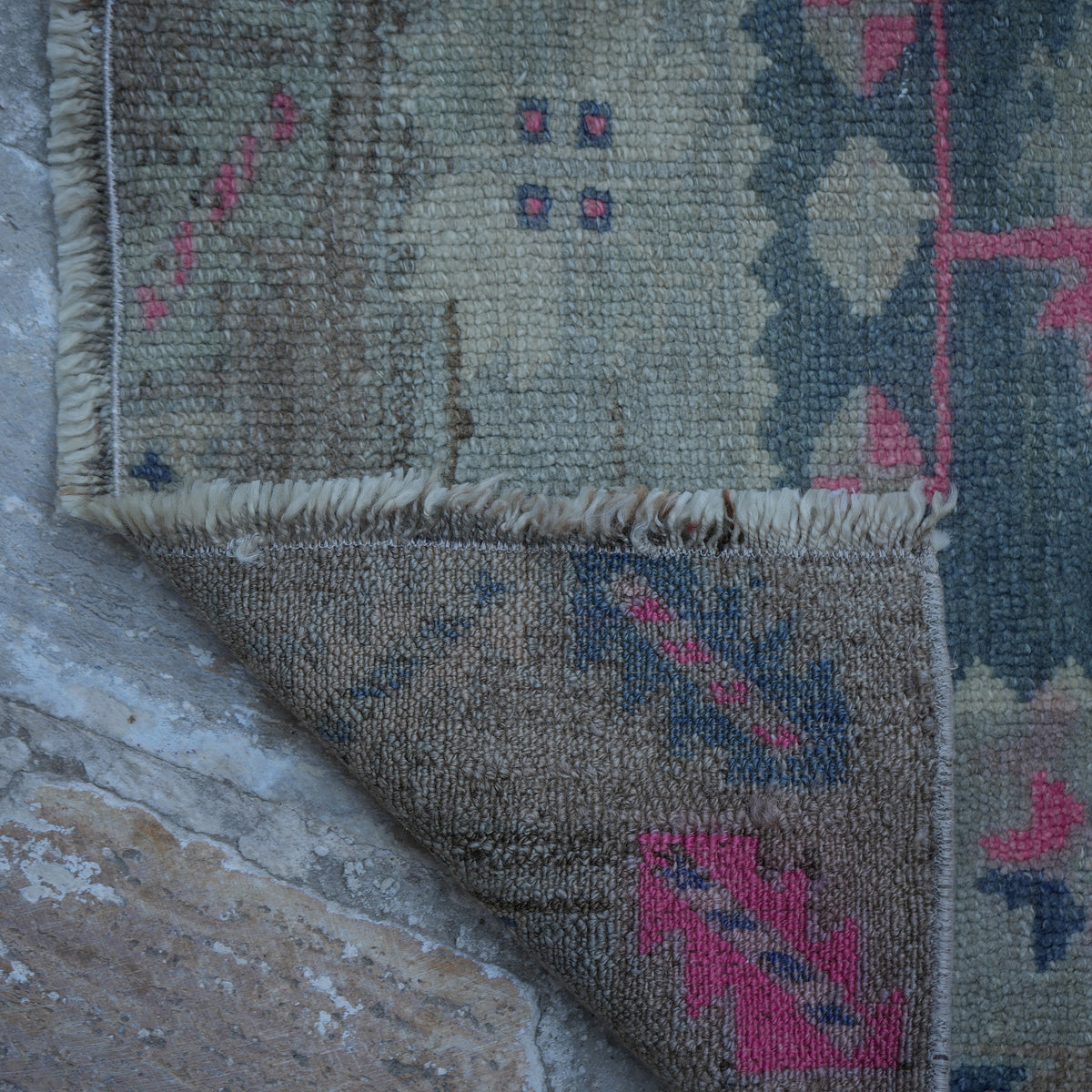
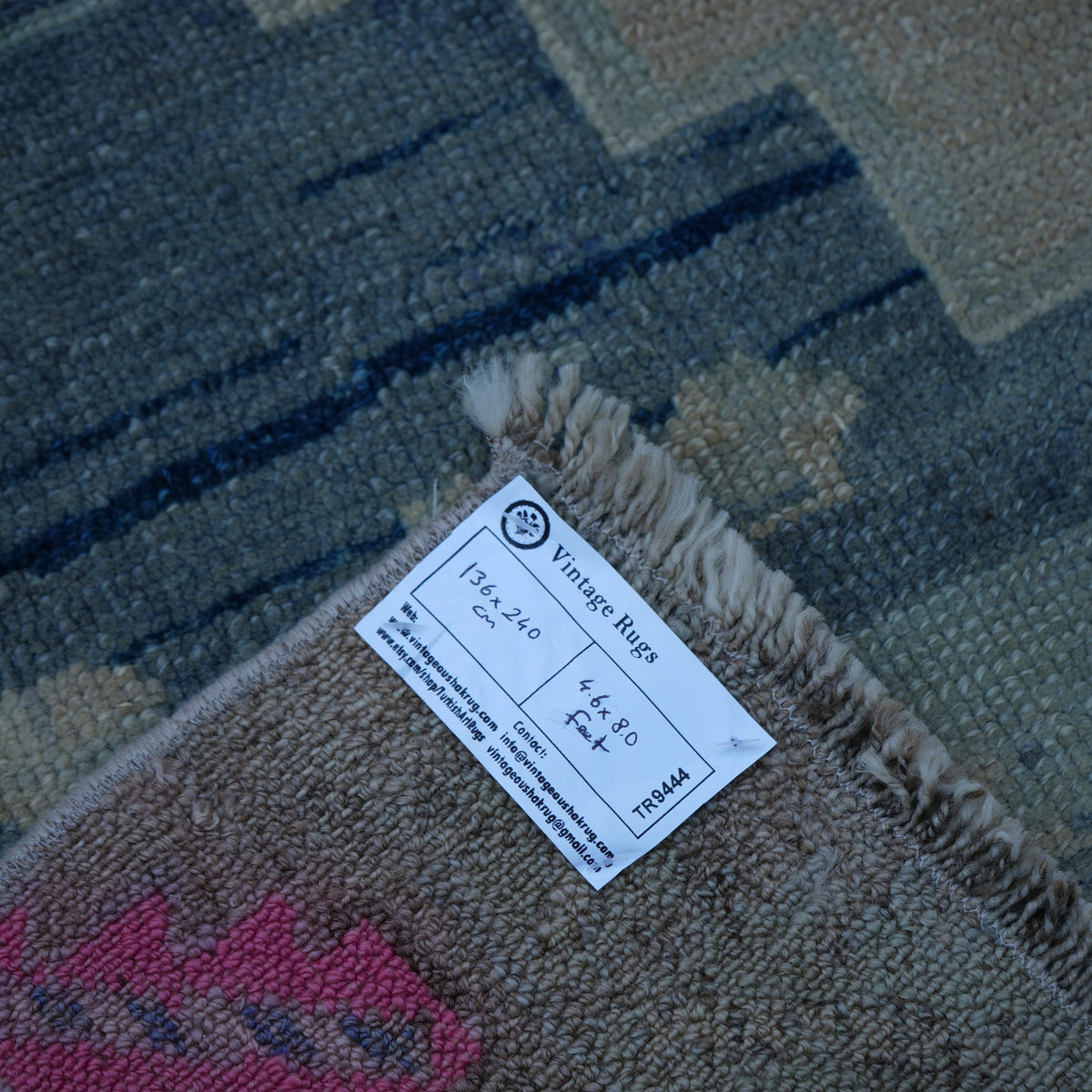
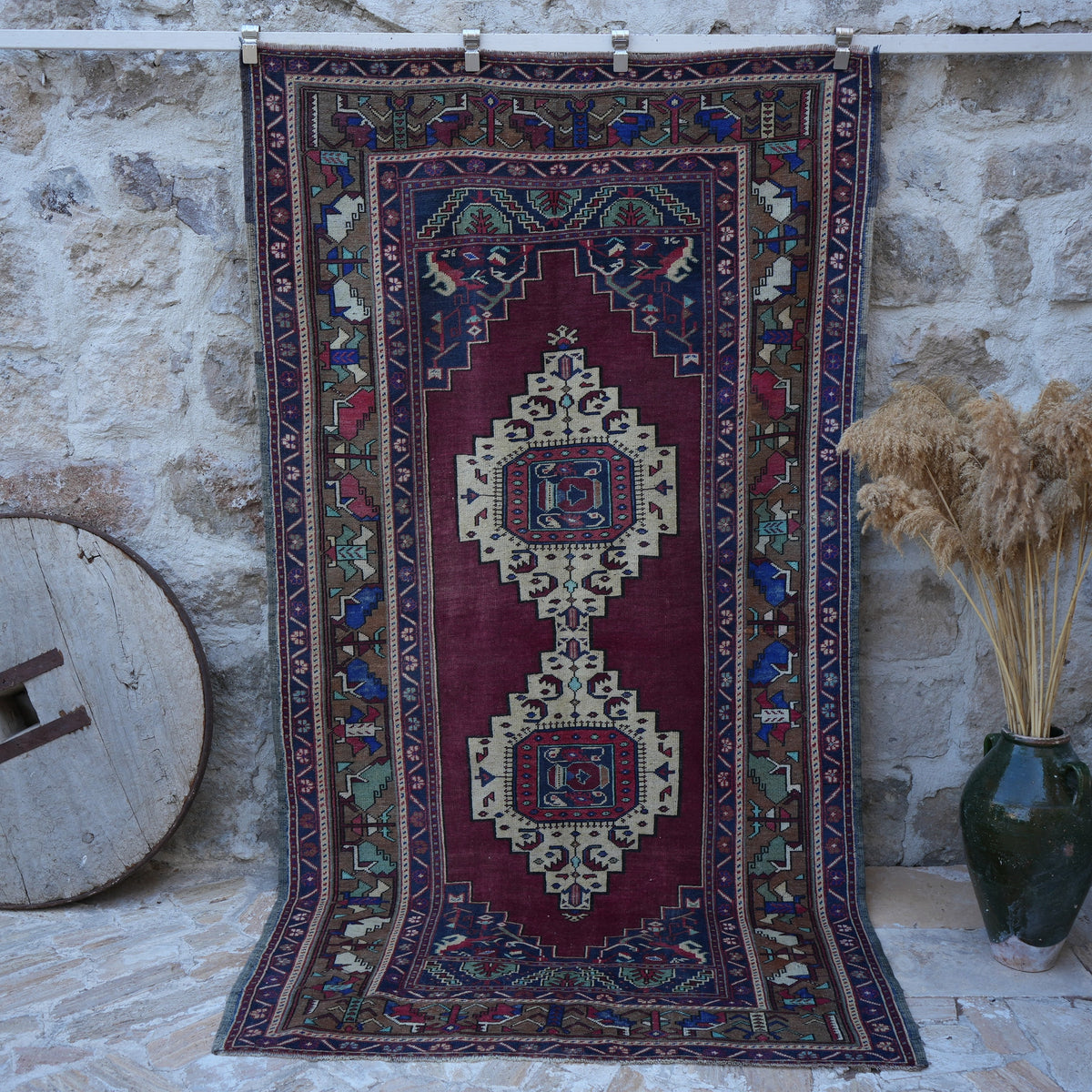
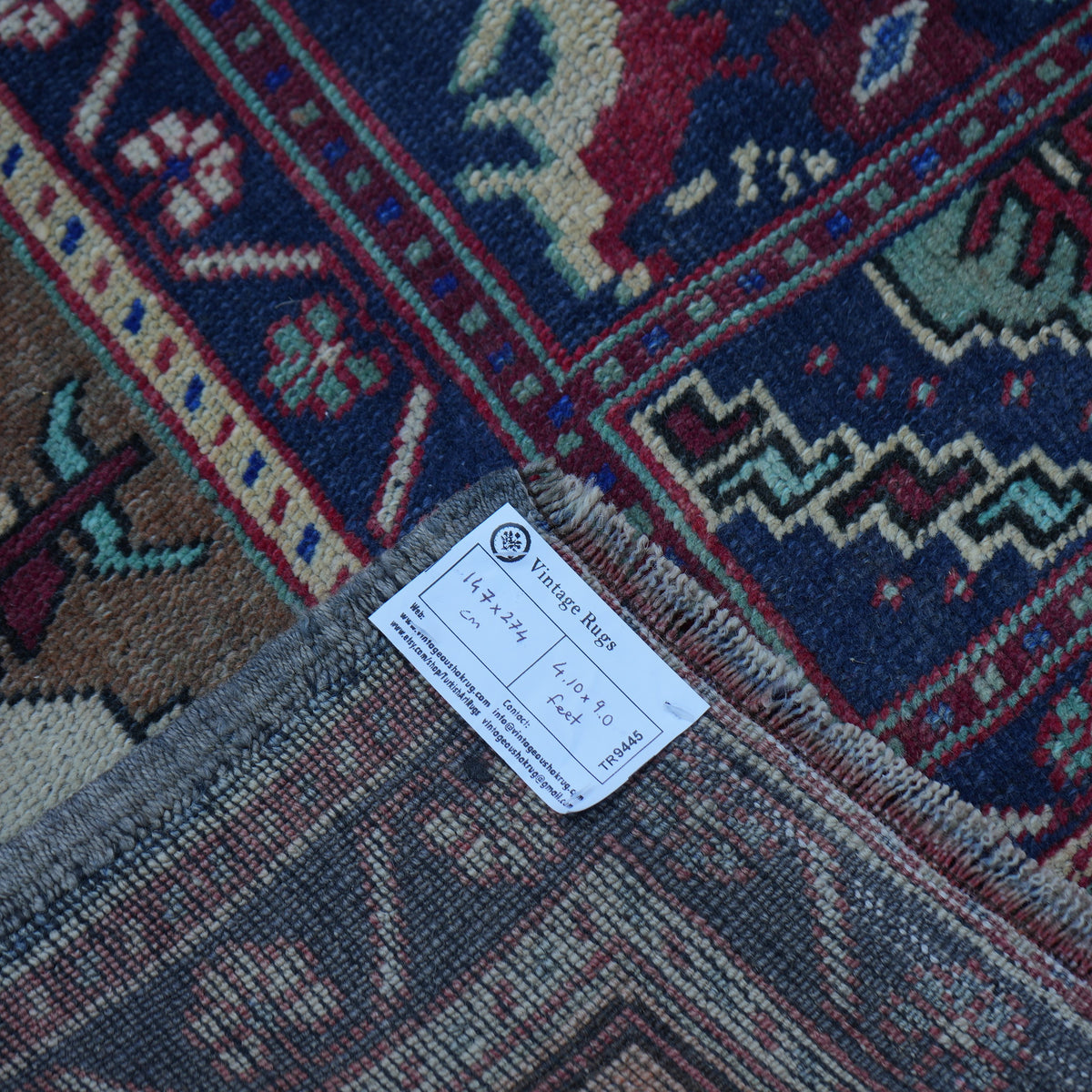
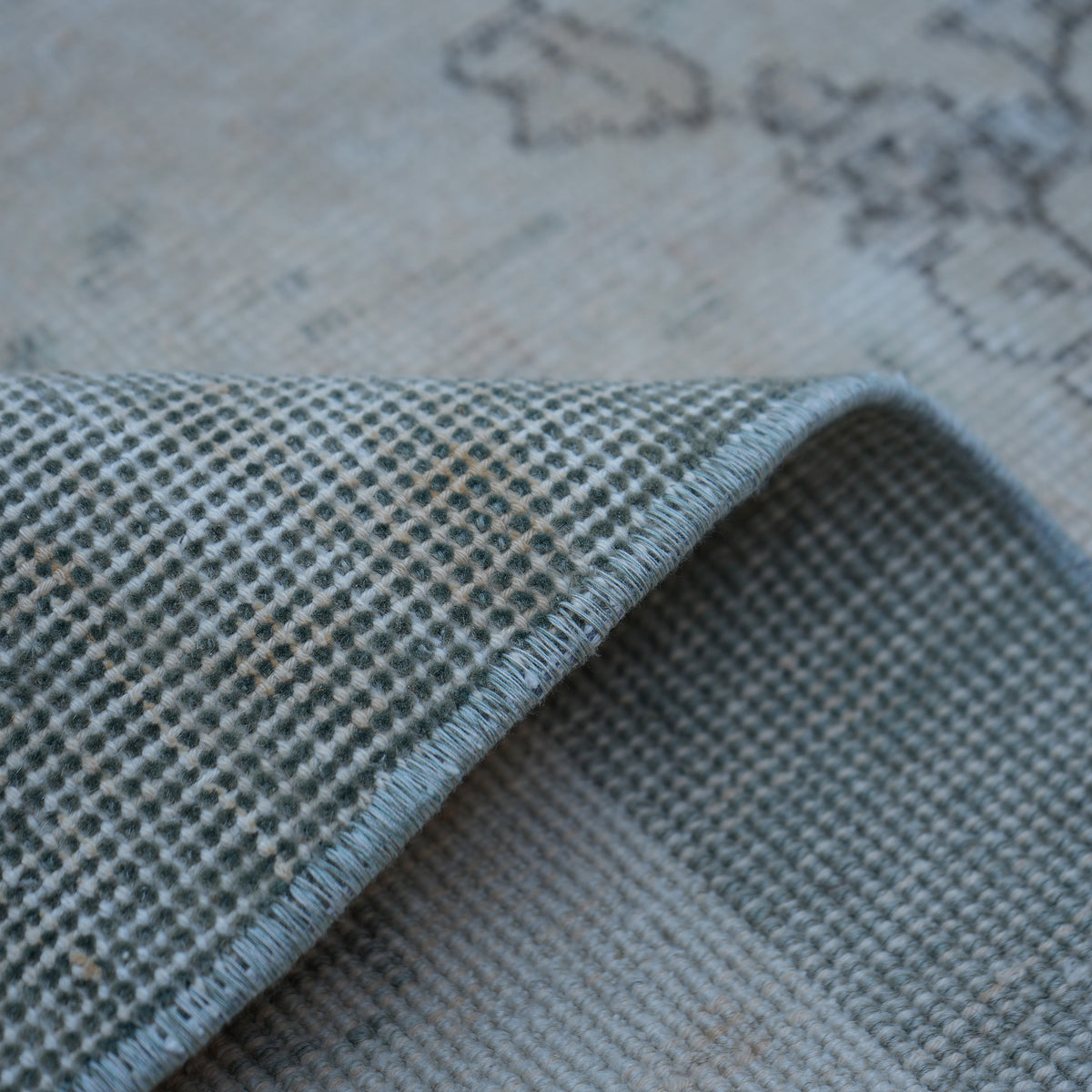
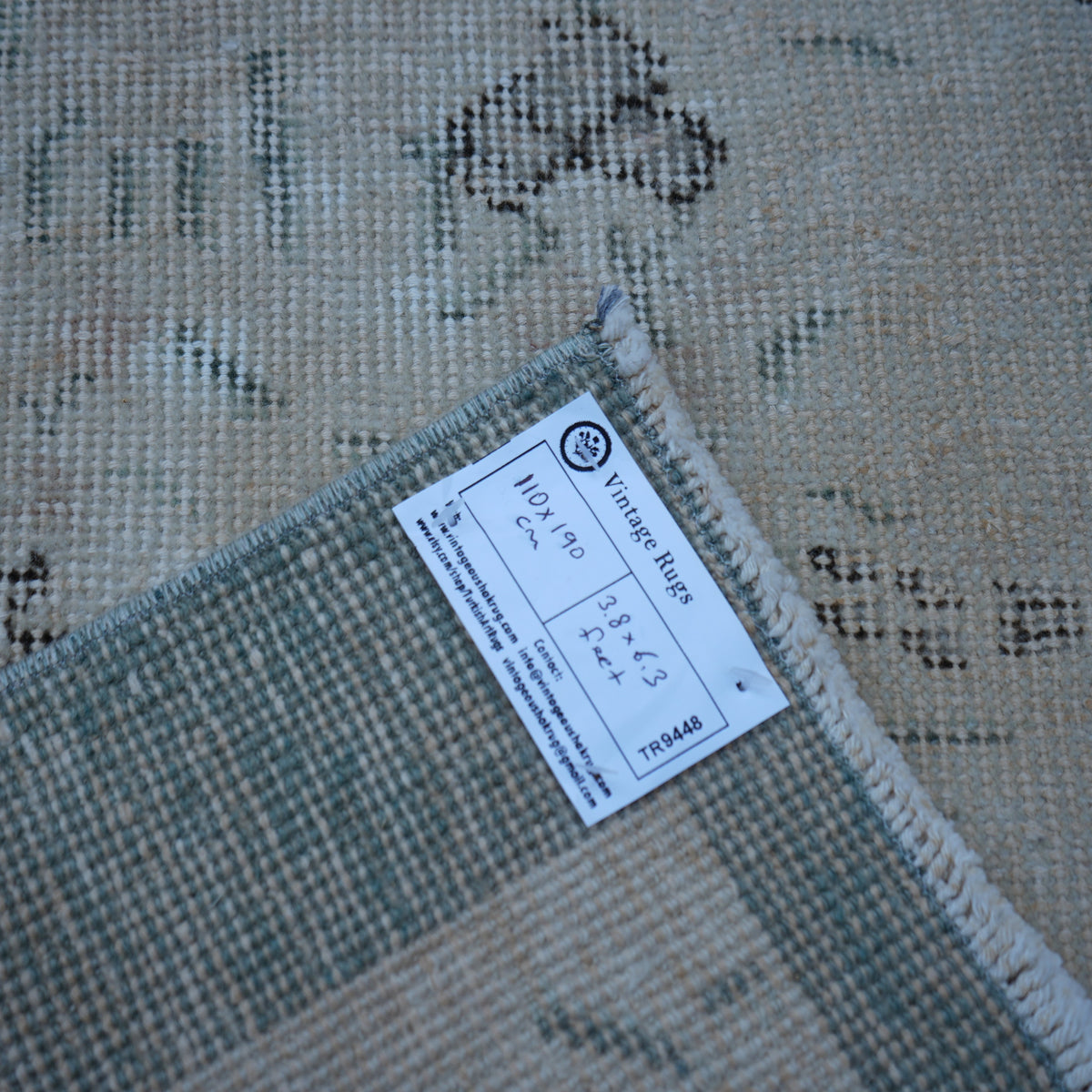
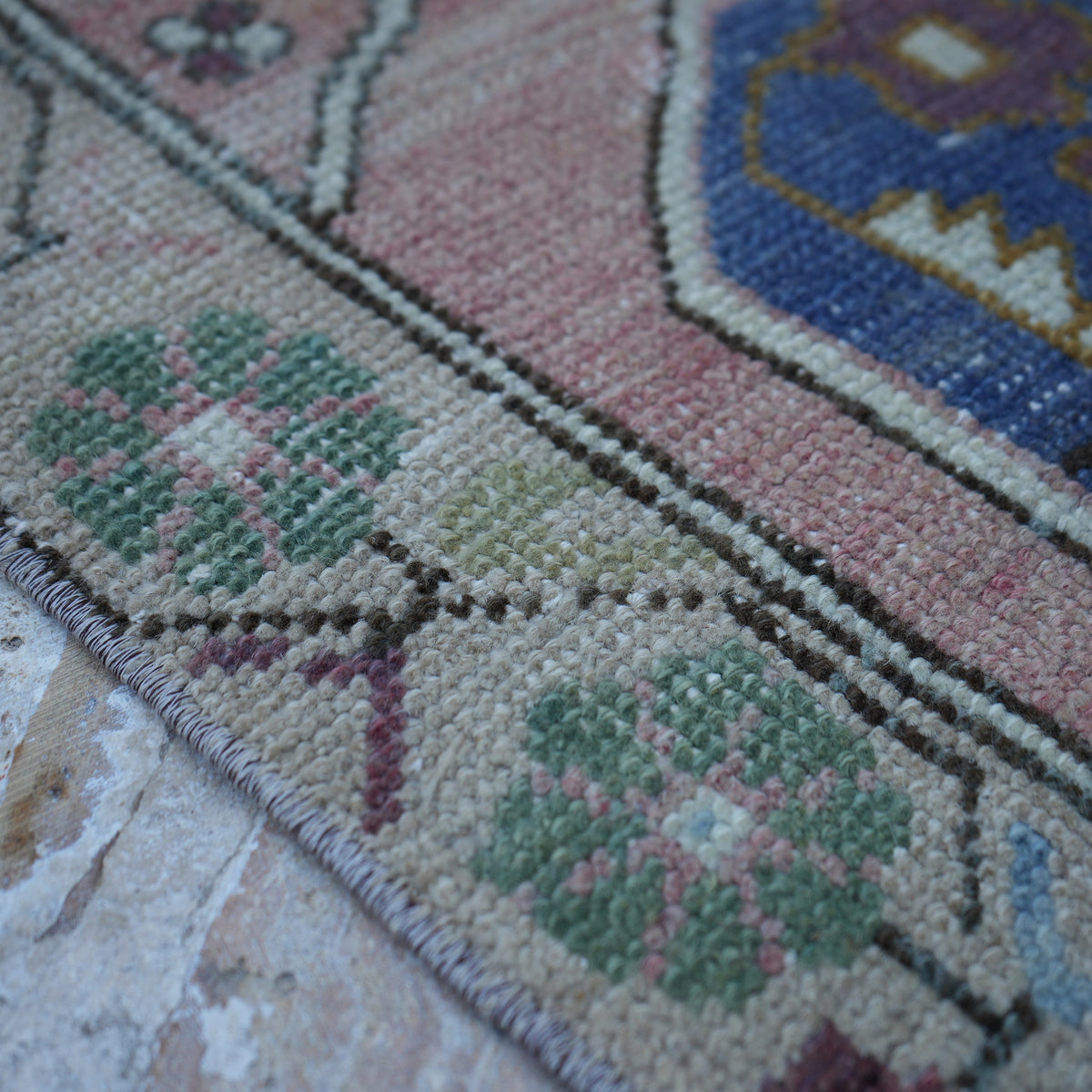
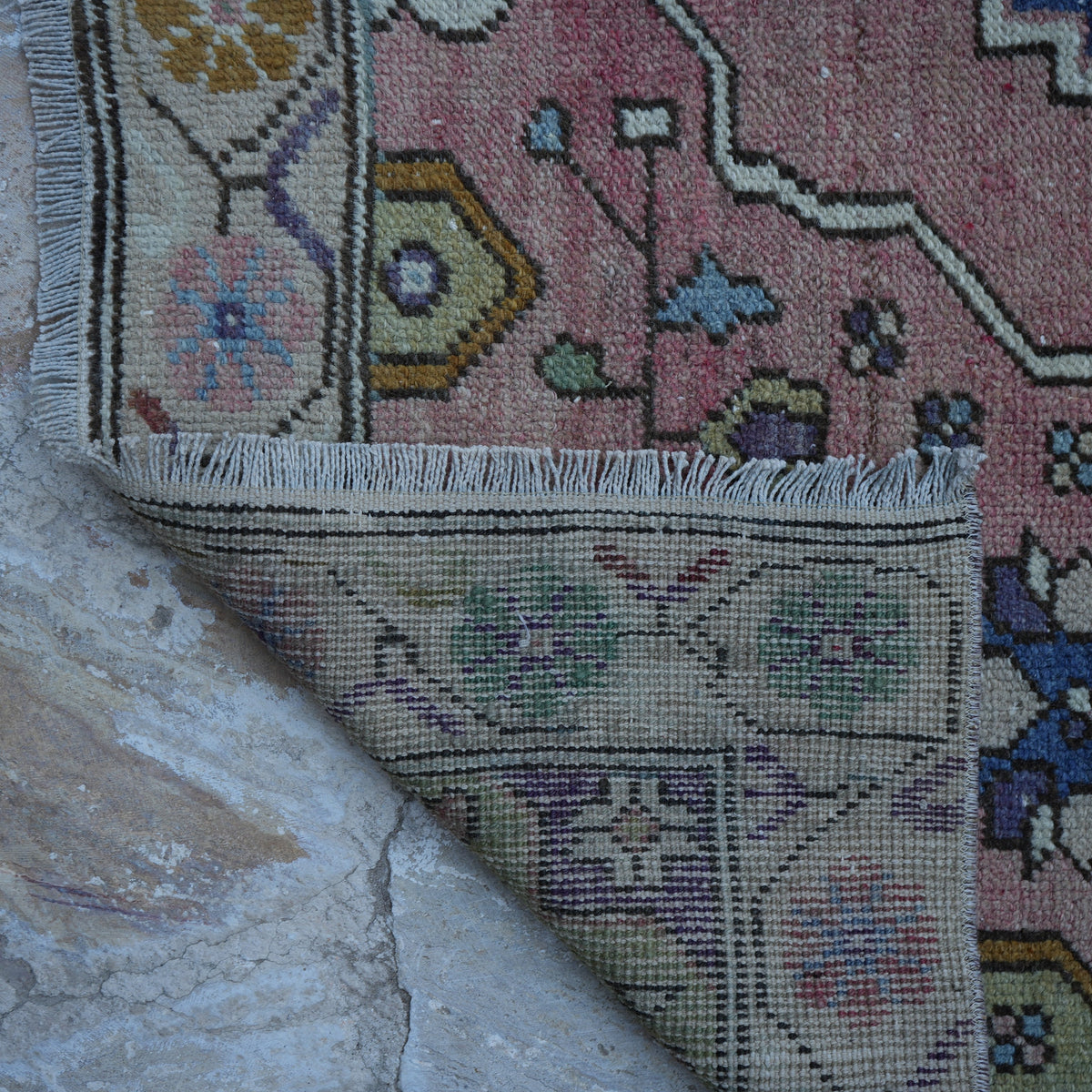
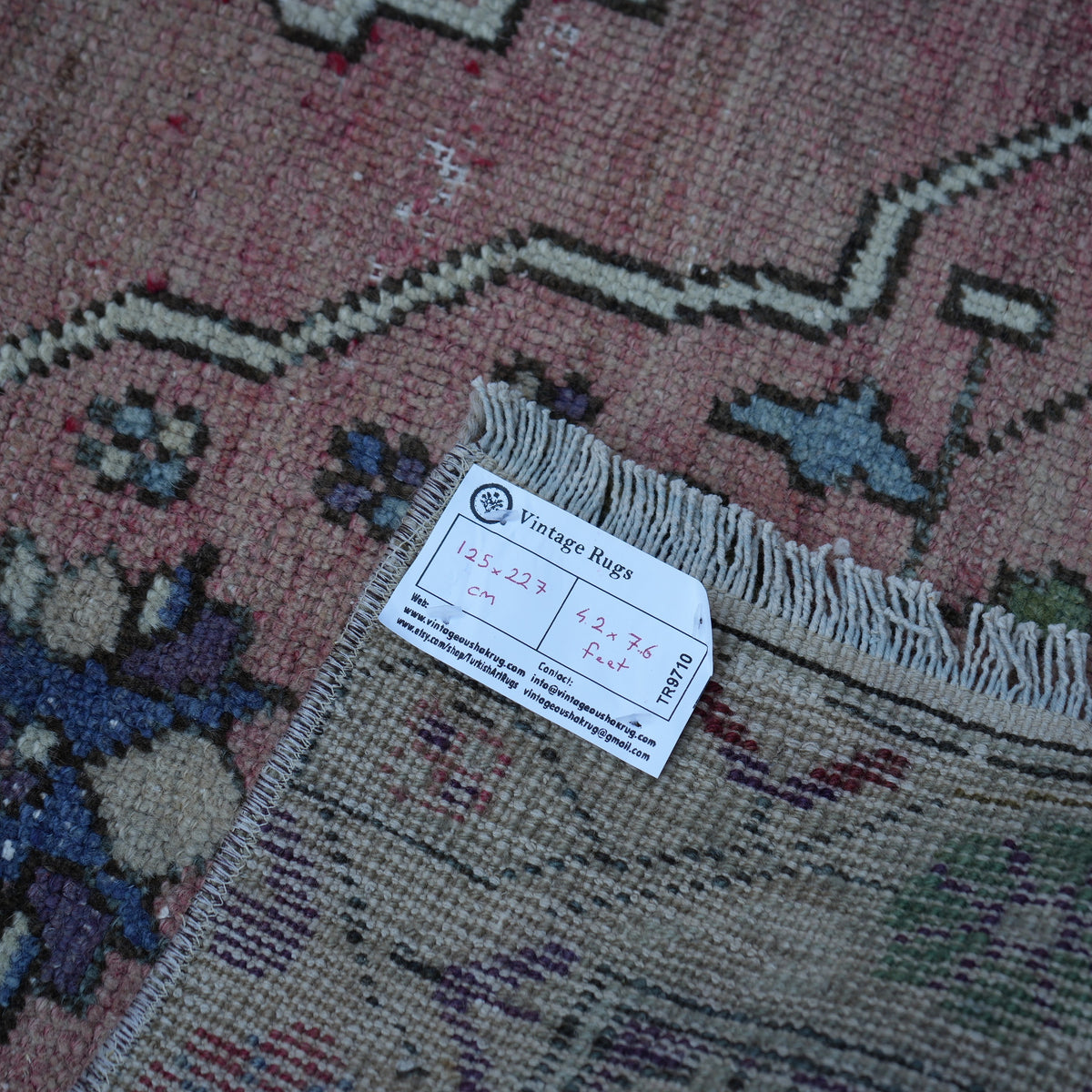
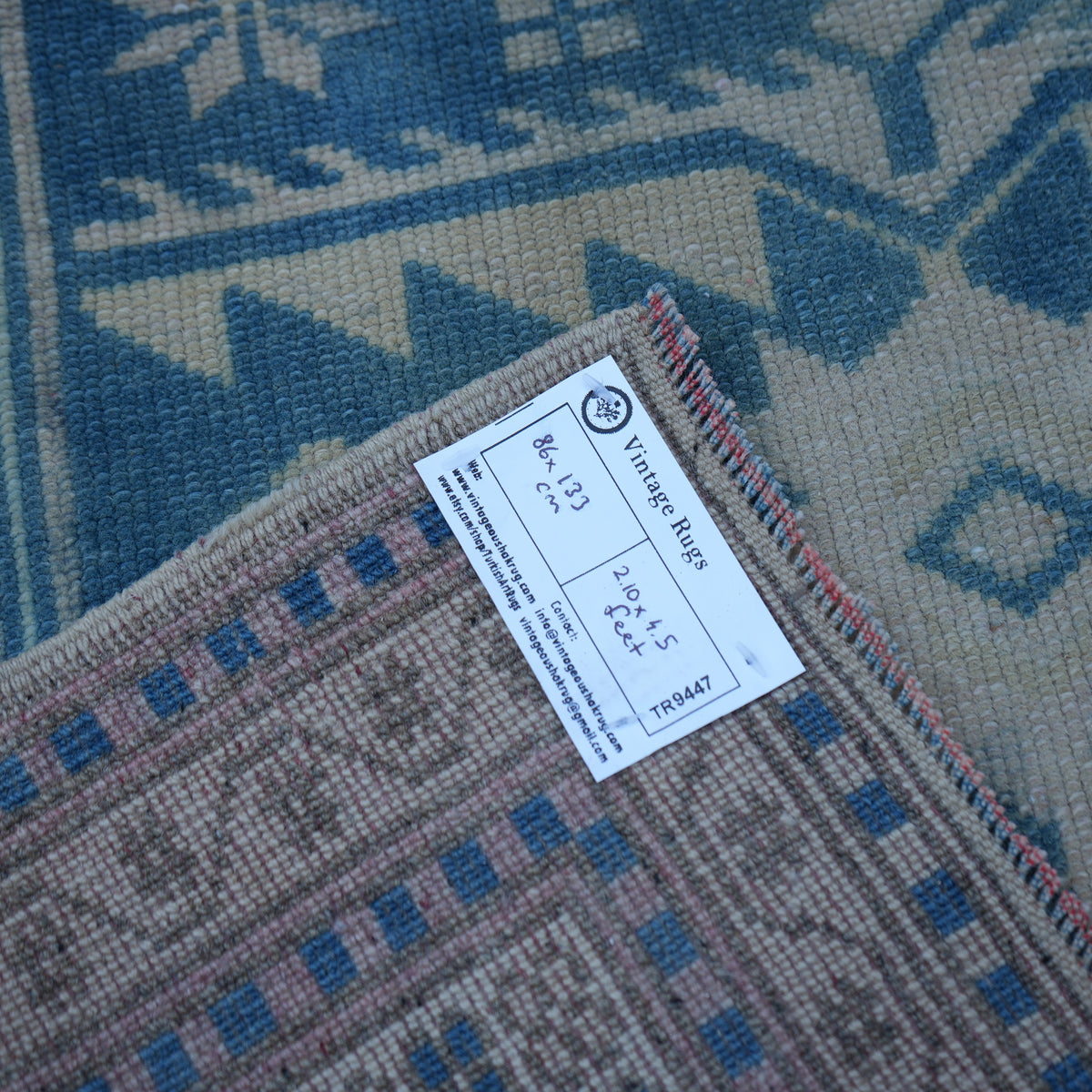
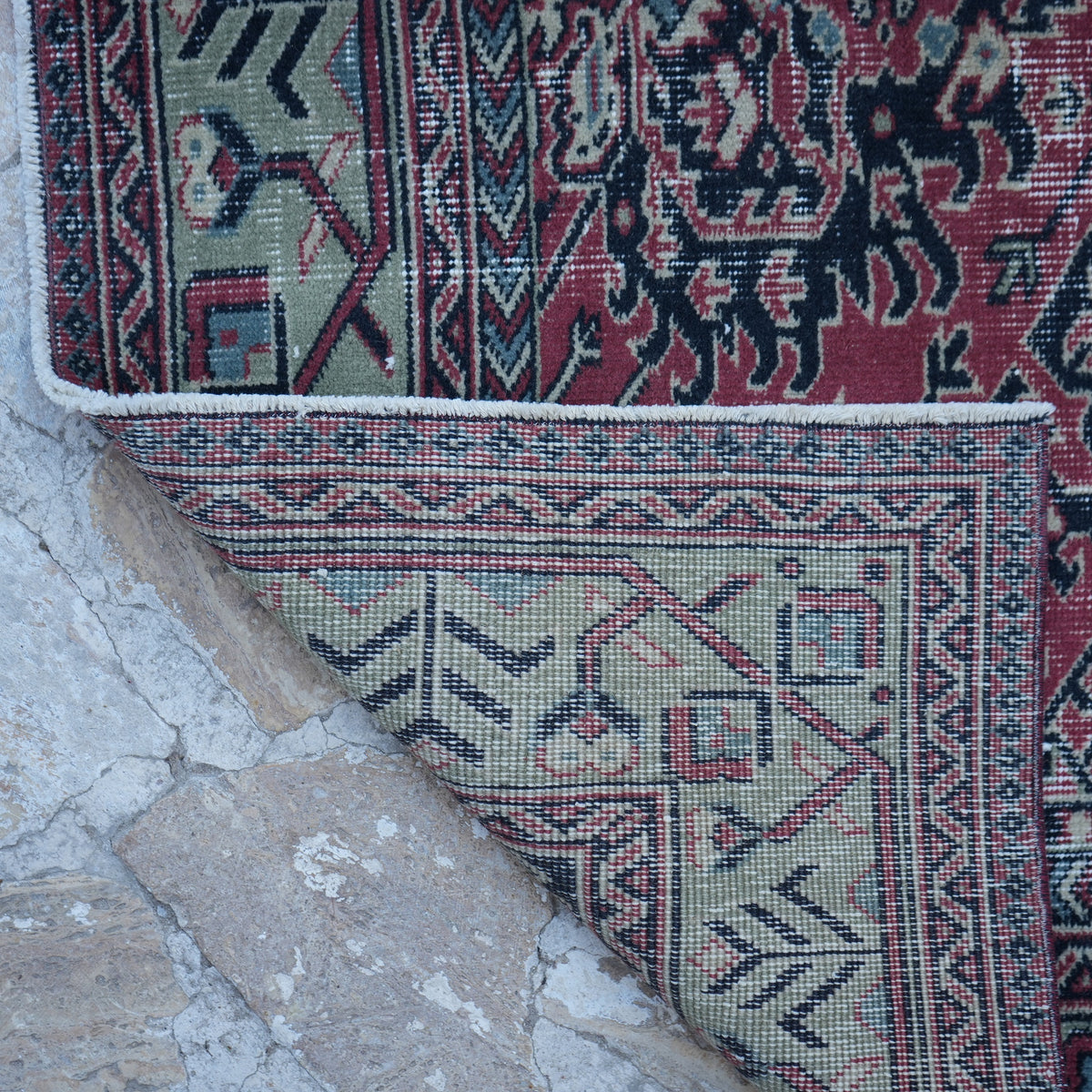
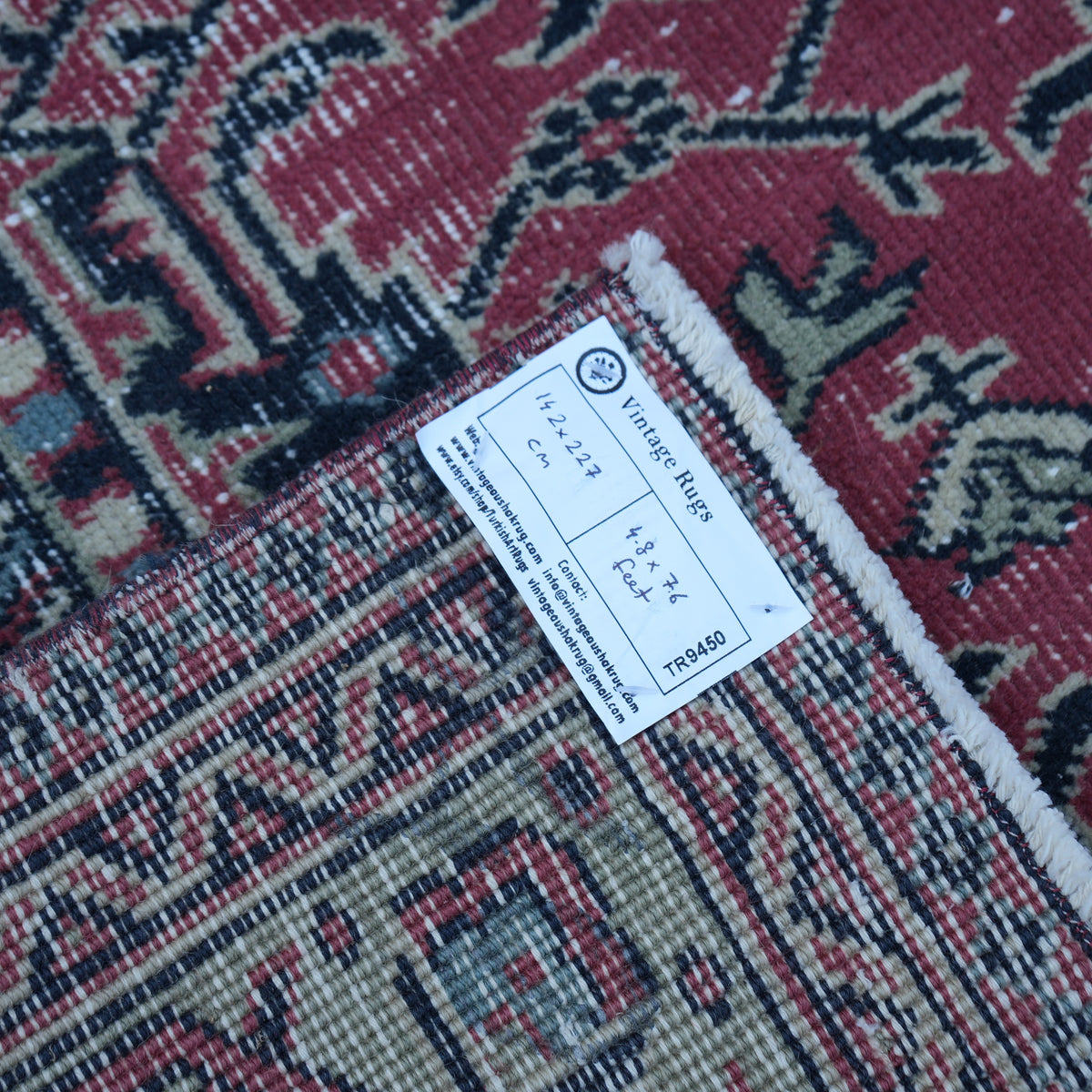
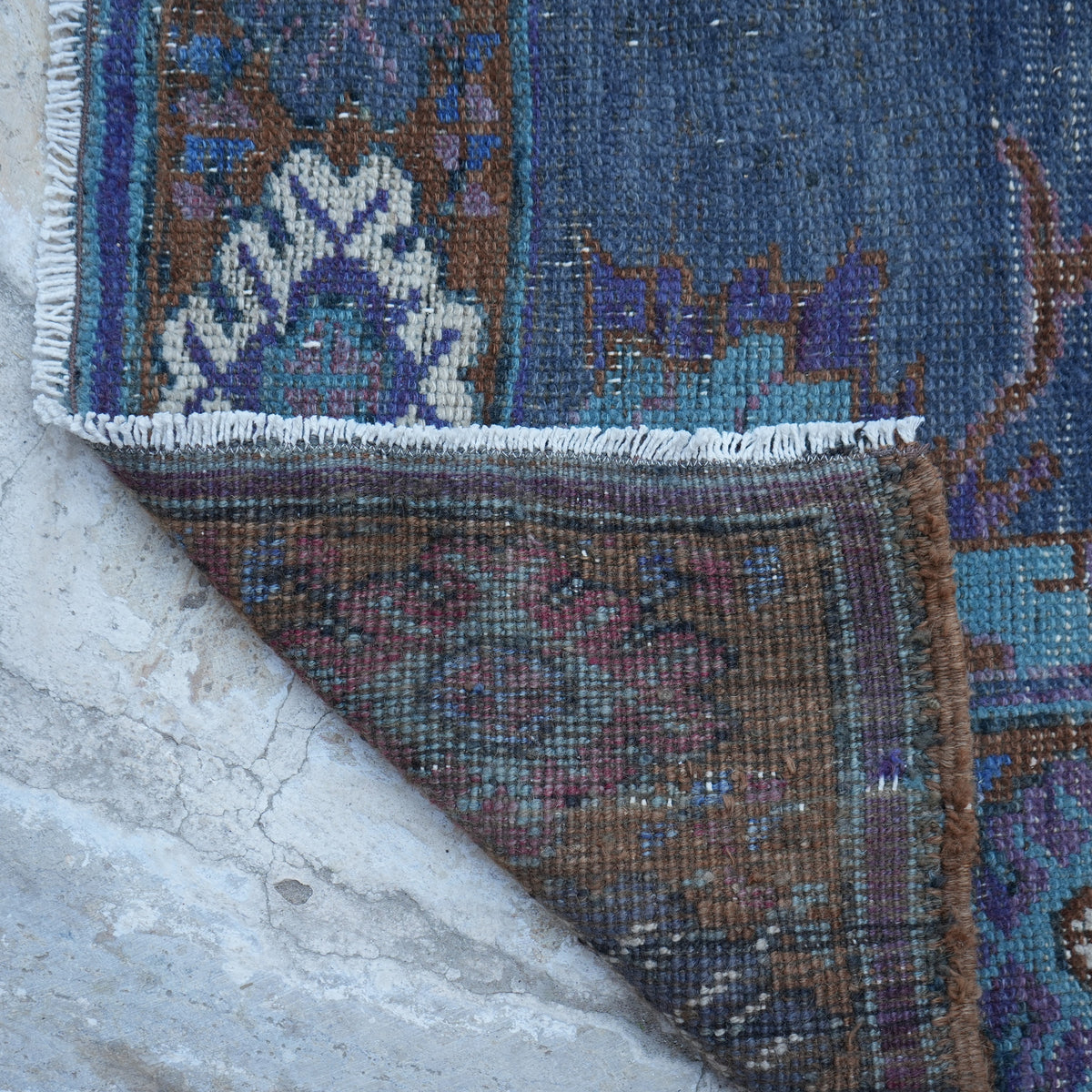
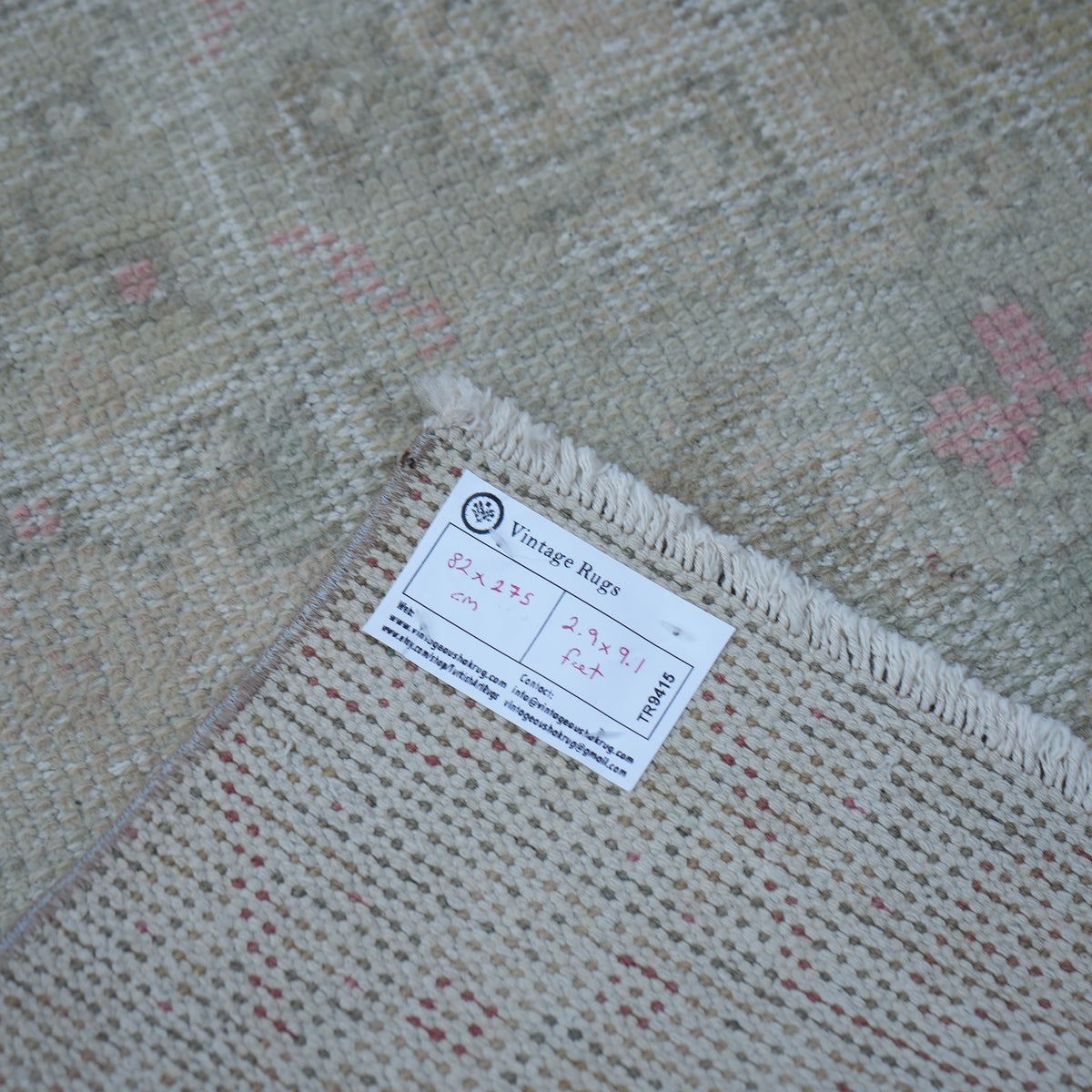
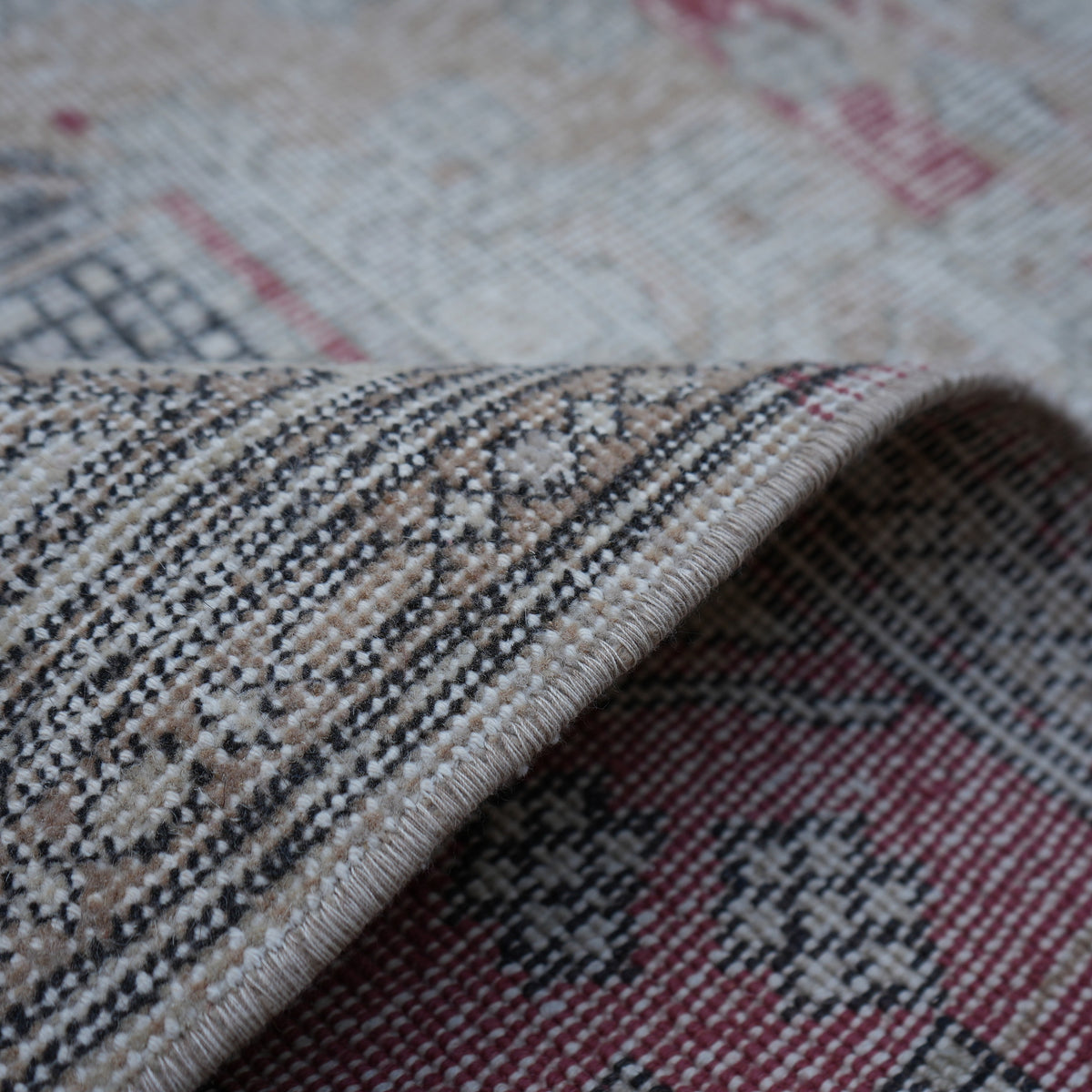
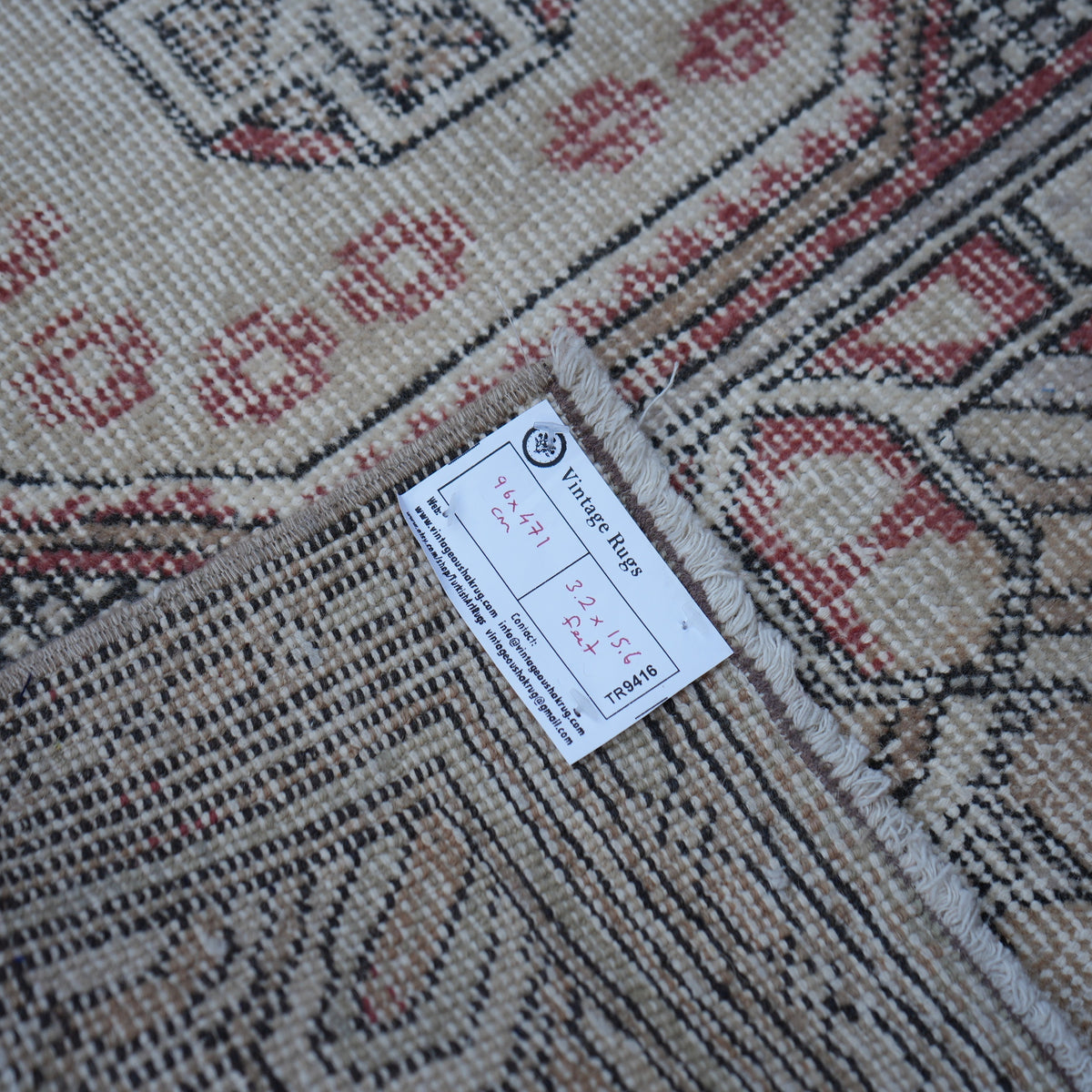
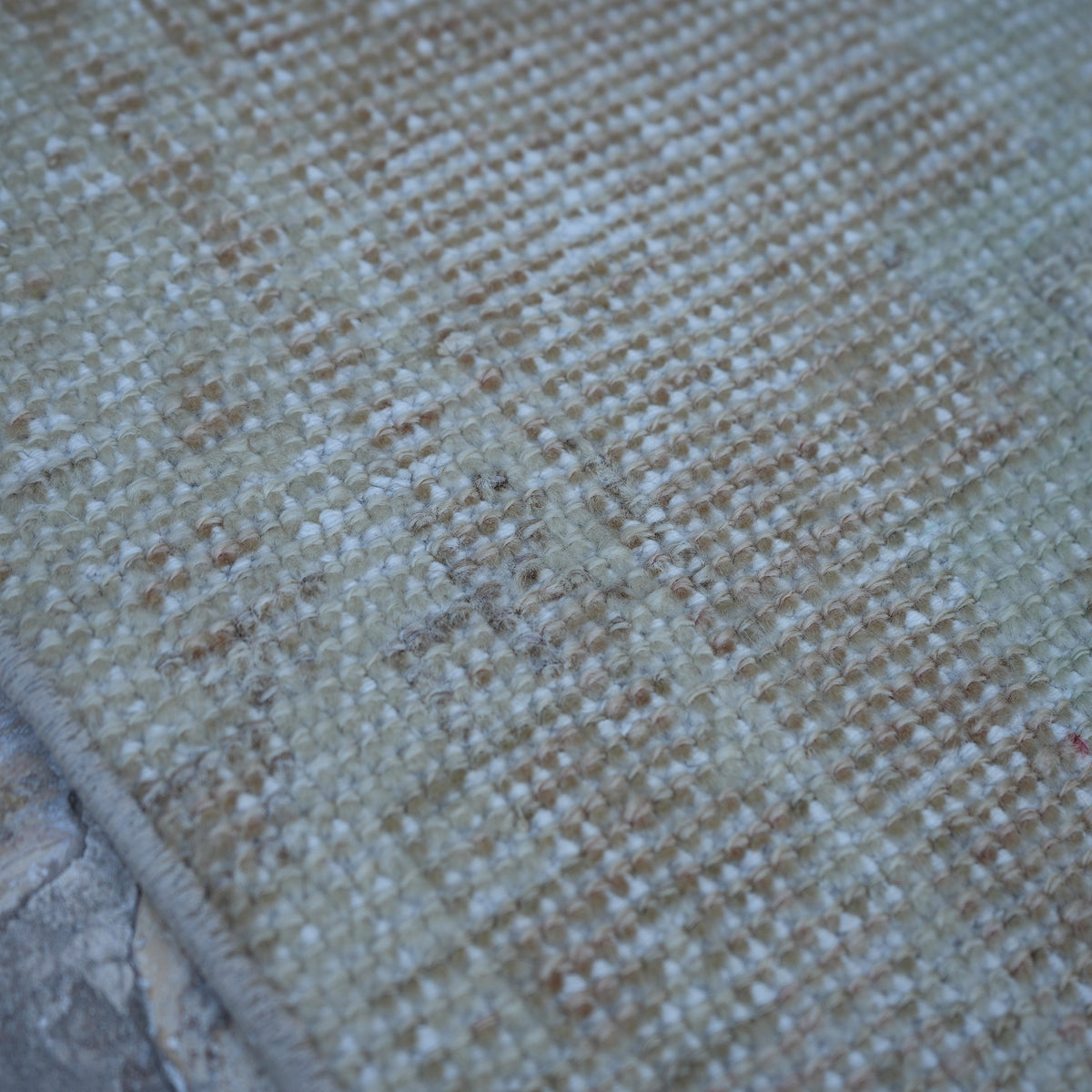
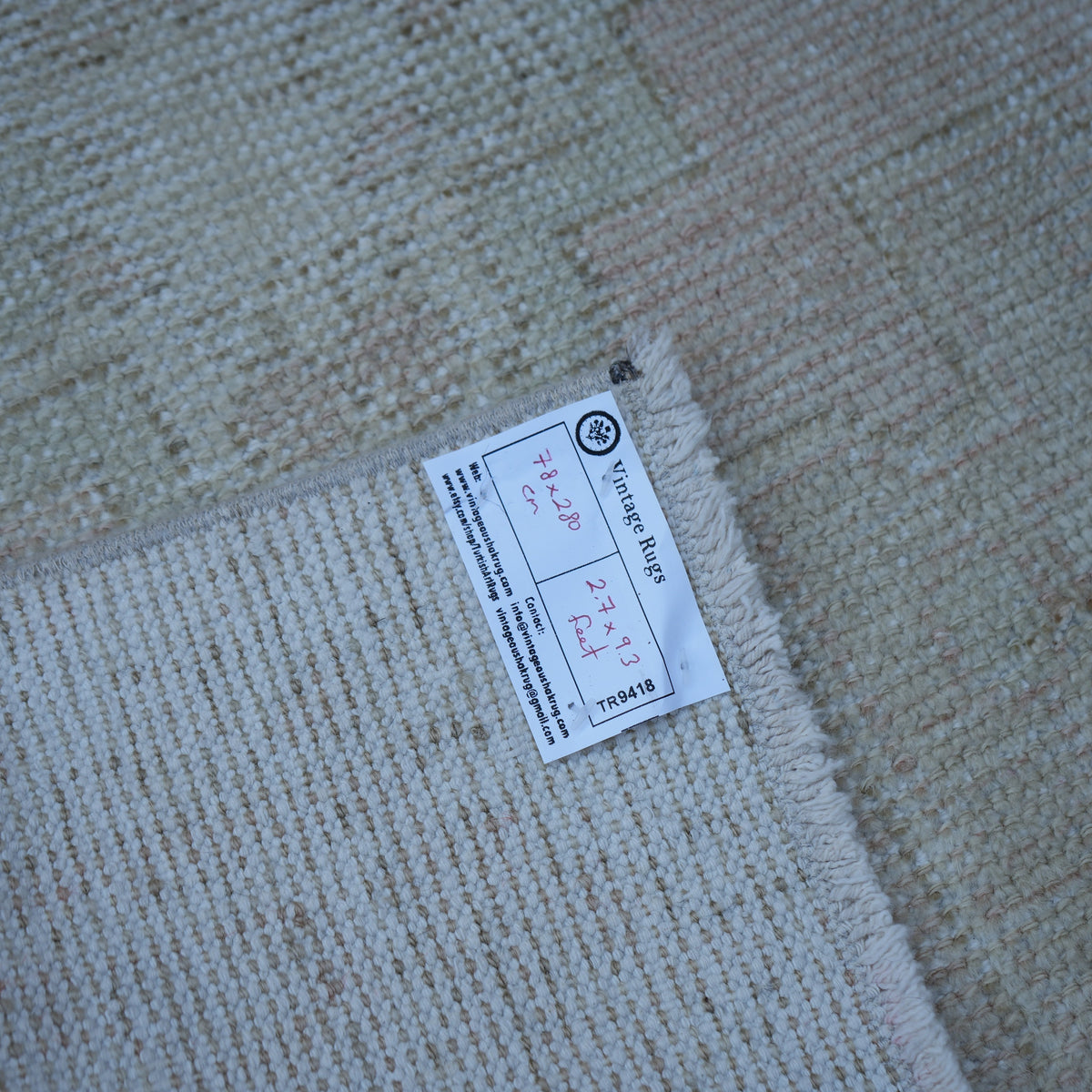
Vintage pieces have already gone through decades of use and washing. The fibers have settled. Every piece we sell is washed and inspected at our workshop in Cappadocia before it ships — I handle them personally. A rug that has survived 40 or 60 years in an Anatolian household is not fragile. Your kitchen is not a threat to it.
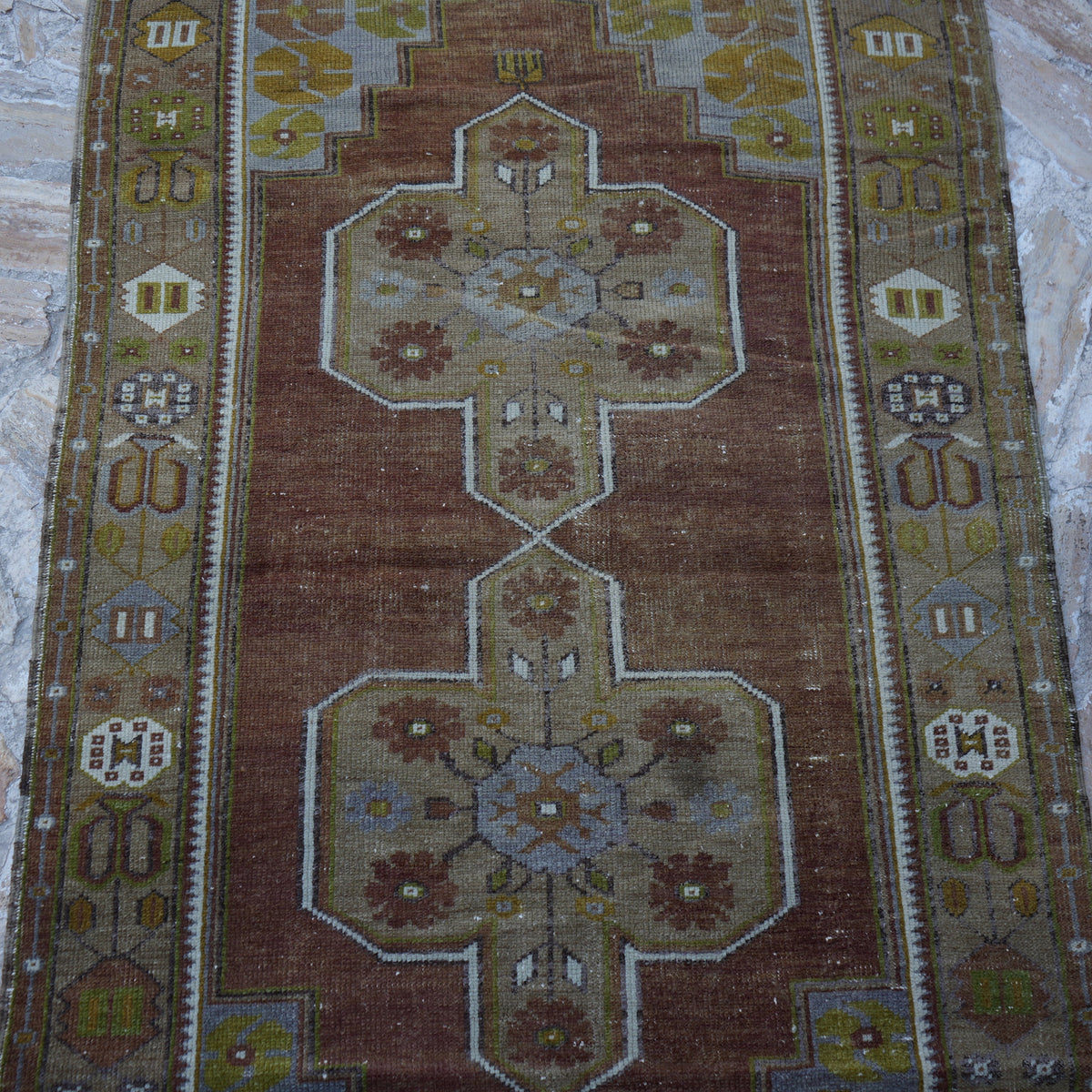
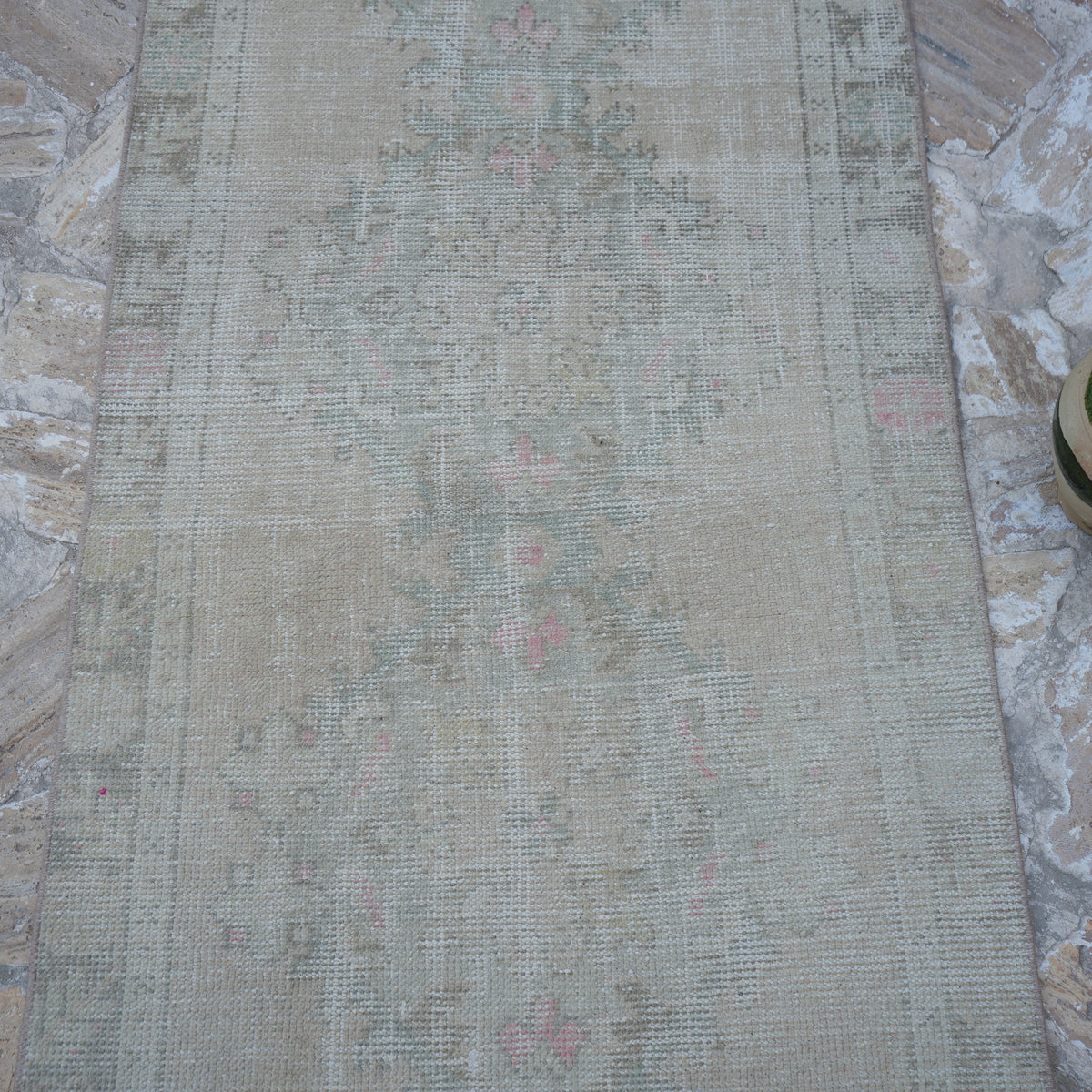
The pattern matters in a practical way too. Vintage rugs with slightly irregular dye fields and naturally faded tones absorb small imperfections — a crumb, a water mark, a light splash — into their surface.

Matching the Rug to Your Kitchen Style
A farmhouse kitchen has room for almost anything: geometric borders, tribal kilim patterns, faded florals. A boho kitchen leans into layering and contrast — an overdyed vintage piece or a strong-colored kilim works here in a way it might not in a more restrained space.
Modern and minimalist kitchens are where the pairing surprises people most. The restraint of the kitchen sets the rug up to do real work, and one vintage piece with presence can carry a room that would otherwise feel cold.
Color Strategy — How to Choose Without Second-Guessing
The simplest rule: at least one color in the rug should echo somewhere else in the kitchen. Not match — echo. Dusty terracotta works where the hardware is warm brass. Faded slate blue reads as intentional next to a navy island or steel appliances.
In a neutral kitchen, a vintage rug with deeper tones gives the room its only saturated moment. With dark cabinetry — navy, forest green, near-black — choose a rug with lighter overall tone so the floor does not disappear into the base cabinets.
Caring for a Kitchen Rug
The hesitation I hear most often is not about style or size. It is: "I will ruin it." You probably will not.
Vacuum on low suction for everyday maintenance, or shake it out if it is a runner you can lift. For spills, blot immediately — never rub. Cool water and mild dish soap handle most kitchen situations without harming wool. For anything heavier, professional cleaning once a year is enough for a rug that sees normal use.
A rug pad is not optional in a kitchen. It holds the rug in place on smooth floors, protects the surface beneath it, and adds cushion underfoot. The piece that has already survived 40 or 60 years has seen worse than your kitchen.
The right kitchen rug does not just cover a section of floor. It changes how the whole room reads — the morning light landing on it, the way the space feels when you walk in and it looks like somewhere that was actually thought through.
















Frequently Asked Questions
Quick answers to the questions people usually ask before placing a vintage or handmade rug in the kitchen.
Can you put a rug in the kitchen?
Yes — and in many kitchens it is one of the most effective single design decisions you can make. A rug adds warmth underfoot, defines zones, softens hard surfaces, and changes the character of the entire space.
Are vintage rugs safe for kitchens?
Vintage wool rugs are among the most durable options available. Wool naturally resists moisture and stains and does not off-gas chemicals the way synthetic fibers can. Use a non-slip pad underneath and a decades-old piece is as practical as anything made this year.
What size kitchen rug do I need?
It depends entirely on placement. In front of the sink, use a 2×3 or 3×5. For a galley kitchen, use a 2×8 or 2×10 runner. Around an island, 4×6 to 5×8 usually works best with 18–24 inches of clearance on each side.
Do I need a rug pad in the kitchen?
Yes, without exception. A rug pad prevents slipping on smooth floors, protects the floor surface, and adds meaningful cushion when you spend time standing.
Can a vintage rug work in a modern kitchen?
Yes. White cabinets, light stone, and clean lines work beautifully with a vintage rug that has faded color and slight texture. It keeps a modern kitchen from feeling clinical. Browse our kitchen rugs collection to find the right piece.

