




















The drop lands before you realize the can tipped. One second you're edging trim above the fireplace, the next there's a white latex splatter spreading across your vintage Oushak. Your hands are moving before your mind catches up.
Stop.
In my years of sourcing and washing handwoven Anatolian rugs, I've seen paint-stained pieces arrive at my wash station that looked beyond saving. Most weren't. But I've also seen the opposite — small, fresh stains made permanent. Not by the paint. By the first ten minutes.
Most paint stains on rugs are recoverable. The outcome depends less on what kind of paint spilled than on what kind of rug it landed on — and what you do first.
Quick answer — how do you get paint out of a rug?
Scrape gently first, blot from the outside inward, identify whether the paint is latex, acrylic, oil-based, or spray paint, then choose the mildest method your rug can handle. For wool, kilim, Oushak, vintage, or naturally dyed rugs, use minimal liquid and stop immediately if color transfers to your cloth.
3 mistakes that make paint stains worse
Rubbing pushes paint deeper into the pile and spreads it beyond the original spill.
Mineral spirits may lift paint, but they can strip lanolin and permanently change wool.
Hard scraping can break hand-tied knots and leave a bald area worse than the stain.
Tip 1: Before You Start — Know Your Paint Type and Rug First
What Type of Paint Was Spilled?
Read the label: "Clean brushes with water" means water-based. "Clean with mineral spirits" means oil-based. Latex and acrylic are both water-based but behave very differently. Latex responds to dish soap when wet. Acrylic starts curing within 15 to 20 minutes and bonds like a thin plastic film — soap won't touch it once set. Spray paint is also acrylic-based.
What Type of Rug Do You Have?
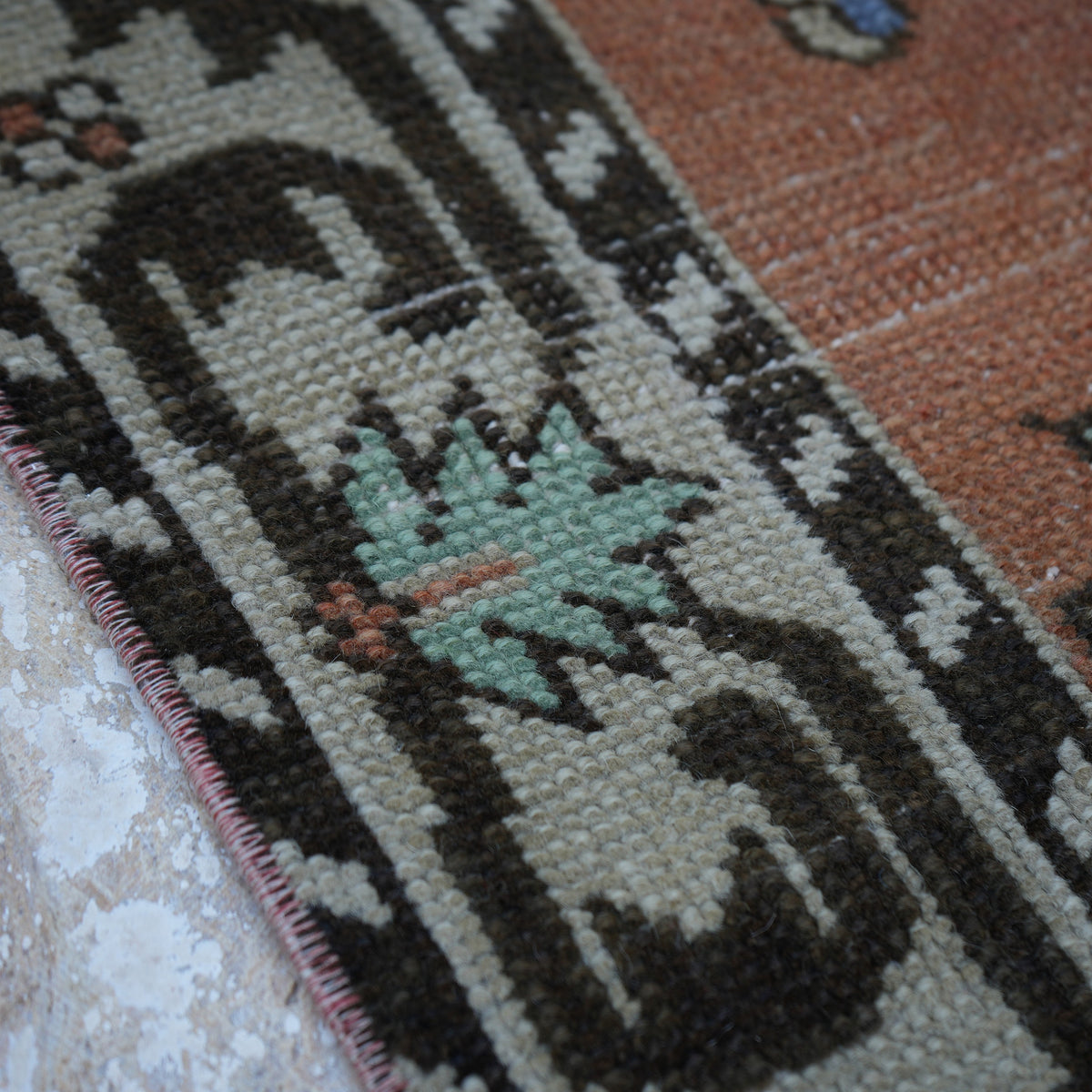
When a customer sends me a photo of a stained rug, I look at the rug construction before the paint. Machine-made synthetics are the most forgiving. Handwoven wool contains lanolin — harsh solvents strip this out and the fiber becomes brittle over time. Kilims warp when over-wet. Vintage and naturally dyed rugs are most sensitive: plant-based dyes react to pH changes, so the wrong cleaner can alter the dye chemistry itself, not just the stain.

Tip 2: How to Get Latex Paint Out of a Rug
Act Fast — Wet Latex Paint Comes Out Easier Than You Think
Scrape first with a plastic card or butter knife, working from the outside edge inward. Blot with white paper towels — not colored fabric, which can transfer dye. Mix one teaspoon of dish soap in one cup of lukewarm water, apply to a cloth, and blot from the outside in. Do not rub. Rubbing pushes paint down into the pile.
Dried Latex Paint on a Rug — How to Soften and Remove It
Dampen the area with lukewarm water for 10 to 15 minutes to rehydrate the paint. Once pliable, lift with a plastic card, then return to the dish soap solution: blot, rinse, repeat. Stubborn areas respond to a small amount of rubbing alcohol on a cotton ball. For wool and vintage rugs, use minimal liquid and press dry thoroughly after each step.

Tip 3: How to Remove Acrylic Paint from a Rug Like a Pro
Rubbing Alcohol: The Most Effective DIY Solution for Acrylic Paint
At my workshop we use a commercial enzyme-based solution. At home, rubbing alcohol is the most effective alternative. Apply to a cotton ball — never pour directly onto the rug. Test a hidden corner first, let it sit about five minutes without rubbing, then blot from the outside in. For wool rugs: use the smallest possible amount, rinse immediately, and do not apply repeatedly to the same spot. Alcohol disrupts lanolin — the damage doesn't appear right away, but repeated application accelerates it.
What to Do If the Acrylic Paint Has Already Dried
Gently fracture the surface layer with a fingernail or plastic card edge. Dampen with rubbing alcohol or lukewarm water and work in layers: loosen a little, blot, loosen more. Dried acrylic won't lift in one pass. If the stain is larger than your palm or the rug is vintage or handwoven, stop and call a professional.
Tip 4: How to Get Oil-Based Paint Out of a Rug
Using Mineral Spirits — And When Absolutely Not To
Oil-based paint doesn't mix with water — dish soap as a first step accomplishes nothing. For synthetic rugs, dampen a cloth with mineral spirits and blot (don't pour). Follow with dish soap and warm water to remove solvent residue.
I tested mineral spirits on a handwoven wool sample once. The paint lifted — but the fiber in that spot had changed. Duller in color, different in texture, reflecting light differently from the rest of the rug. The lanolin was gone, and it never came back. Never use mineral spirits on wool, handwoven, kilim, Oushak, or vintage rugs. The damage it causes is worse than the paint stain itself.
Safer Alternatives for Wool and Handwoven Rugs
Start with dish soap and lukewarm water. A small amount of white vinegar can help shift surface-level oil stains. After two or three attempts with no progress, stop. A rug with a paint stain but intact structure is worth far more than one with a solvent burn. Our Turkish rugs collection includes care notes on every piece — reach out if you're unsure what your rug can handle.

Tip 5: Remove Paint from a Rug with Careful Scraping
The Right Way to Scrape Without Damaging the Fibers
Use a butter knife, spoon back, or plastic card. Move with the pile, not against it. The motion is a lift, not a drag. Vacuum loosened paint flakes after each pass and work from the outside of the stained area toward the center.
What Happens If You Scrape the Wrong Way
The worst case I've handled: a handwoven wool rug where the customer had scraped dried acrylic with a metal spatula, hard, against the pile direction. The paint was gone. The scraping had broken individual hand-tied knots. A bald patch sat where the paint had been, and the rug needed kilim-style repair work that no paint stain would have required.
A torn knot on a handwoven rug is permanent. A paint stain often is not.
Tip 6: Remove Paint Stains from a Rug with Household Products
Dish Soap and Warm Water — Your First Line of Defense
One teaspoon of dish soap in one cup of lukewarm water, applied to a cloth — never poured directly onto the rug. Blot from the outside inward, rinse after each pass, remove all soap. Residue left in the pile attracts dirt and can make the spot look worse than the original stain over time.
White Vinegar for Paint Stains on Natural Fiber Rugs
One part white vinegar to ten parts lukewarm water works as a secondary treatment for water-based paint on natural fiber rugs. Something most guides miss: plant-based dyes in traditional Turkish and Oriental rugs are acid-fast — set with acidic mordants — and white vinegar is compatible with how those dyes were fixed. Used very diluted, it is often gentler than alkaline cleaners on many naturally dyed wool rugs — spot test on a hidden corner first, and use white vinegar only, not apple cider. Hydrogen peroxide at 3% can lift stains from light synthetic rugs but bleaches natural dyes — don't use it on wool or vintage pieces.
Tip 7: Remove Paint Stains from a Rug with Specialized Products — and Know What to Avoid
When household methods fail after two or three attempts, look for "wool-safe," "pH-neutral," and enzyme-based on the label. Half the damaged rugs that come through my hands were hurt not by the original stain — but by what someone used trying to fix it. Bleach destroys color permanently. Oxygen-based cleaners can have a bleaching effect on wool, sometimes becoming more noticeable only after later washing. Steam cleaners drive wet paint deeper into fiber and set it. Nail polish remover dissolves certain synthetic fibers. Rotary shampooers are calibrated for machine-made carpet, not handwoven structure.

Tip 8: Apply Extra Caution on Handwoven and Vintage Turkish Rugs
Why Handwoven Rugs React Differently to Paint and Cleaning
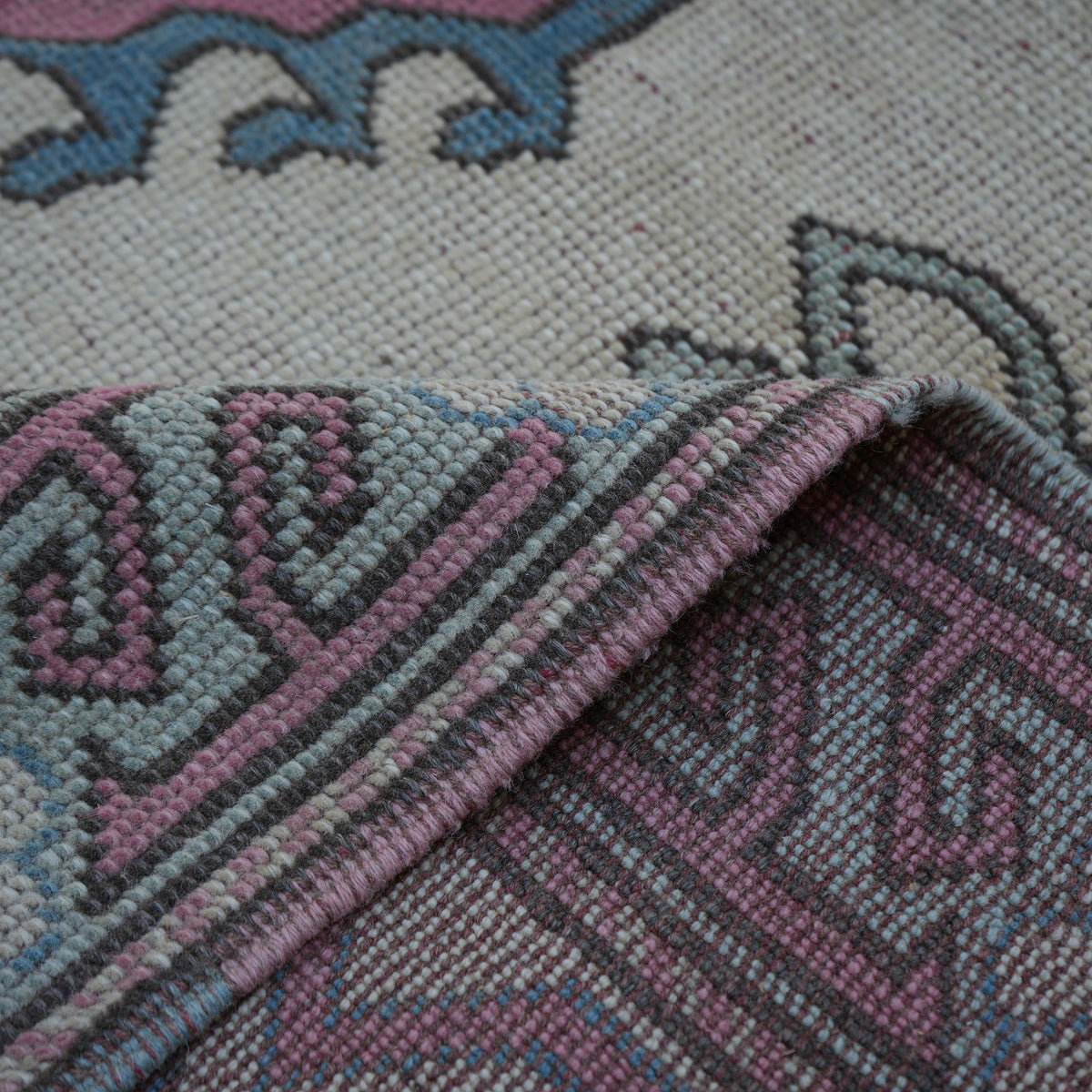
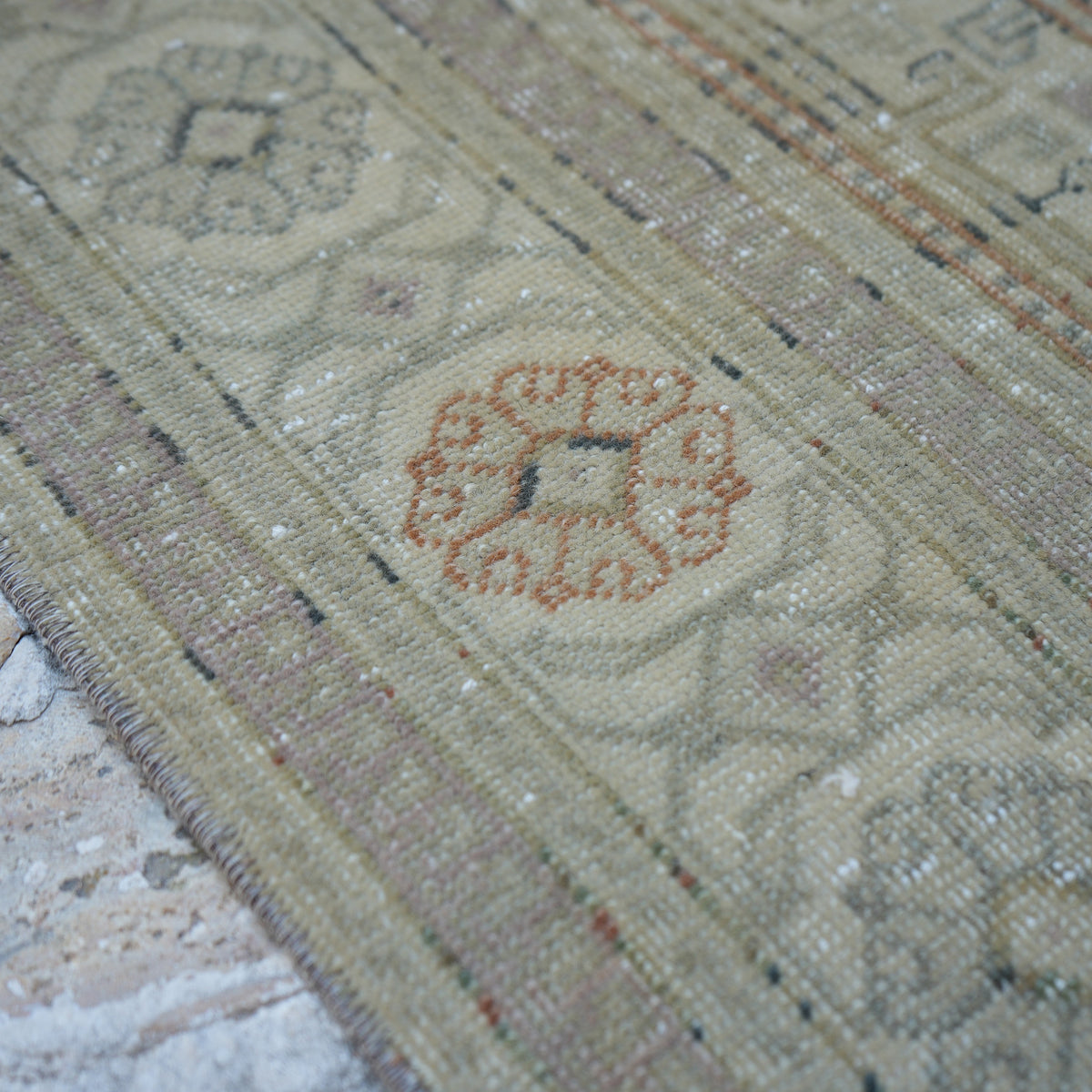
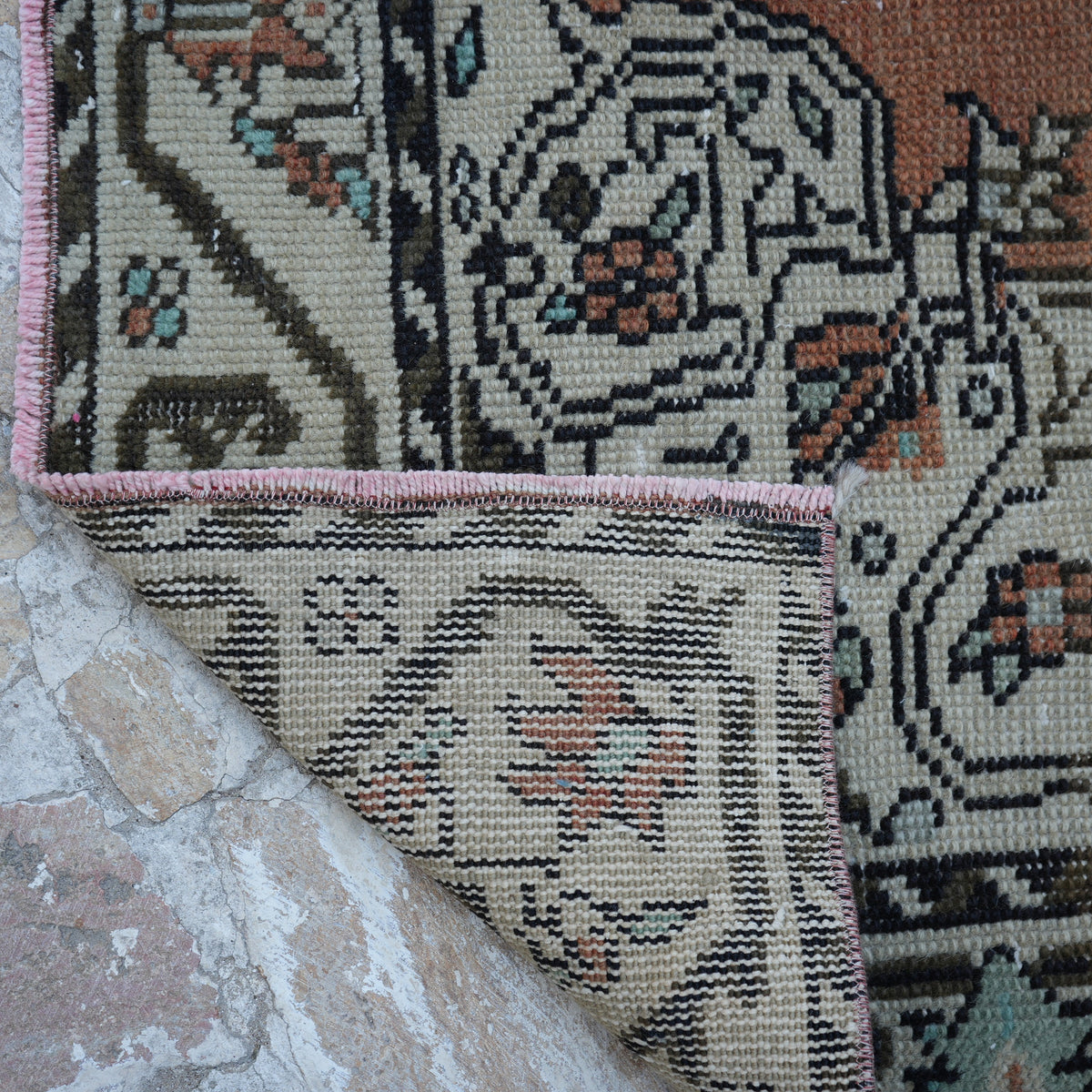
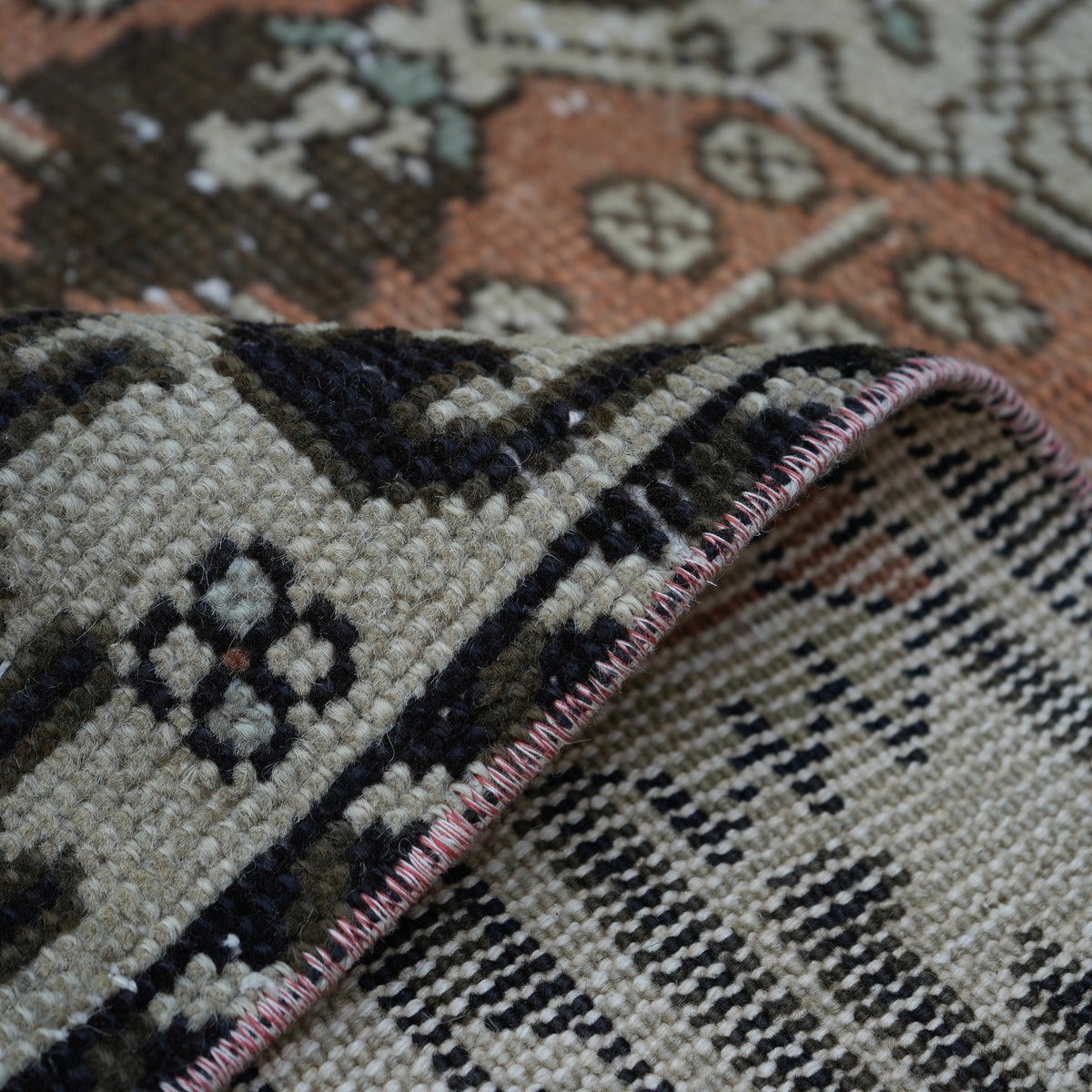
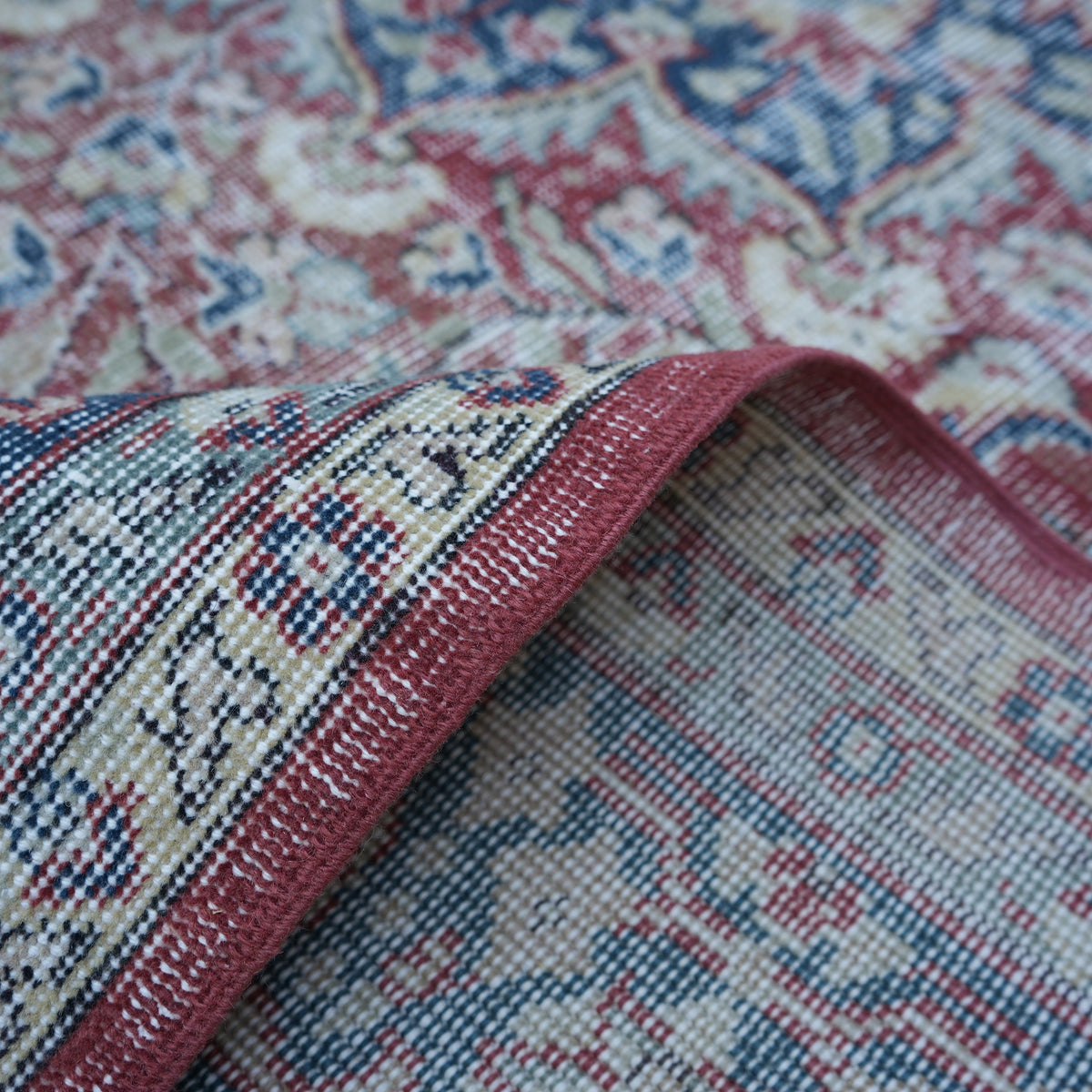
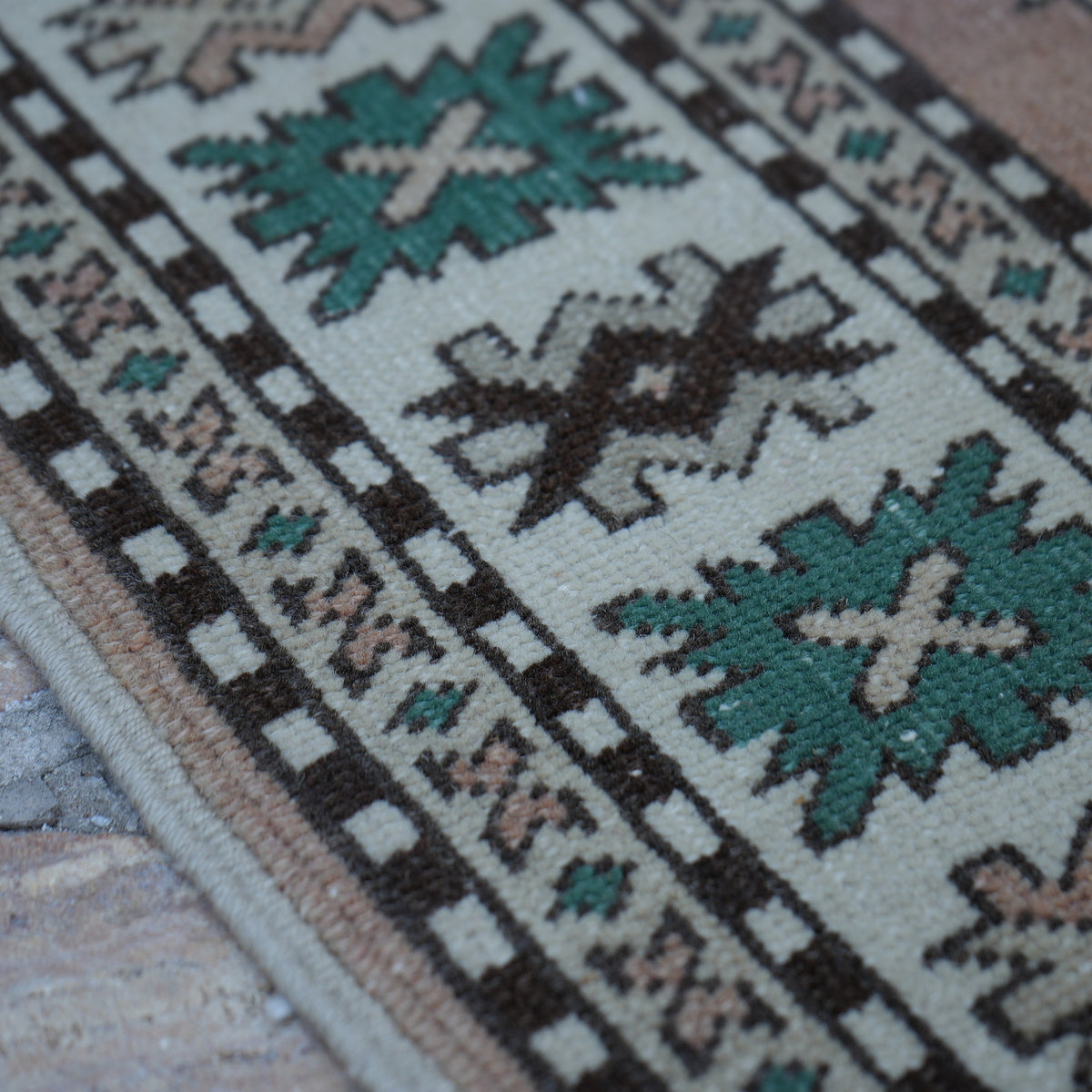
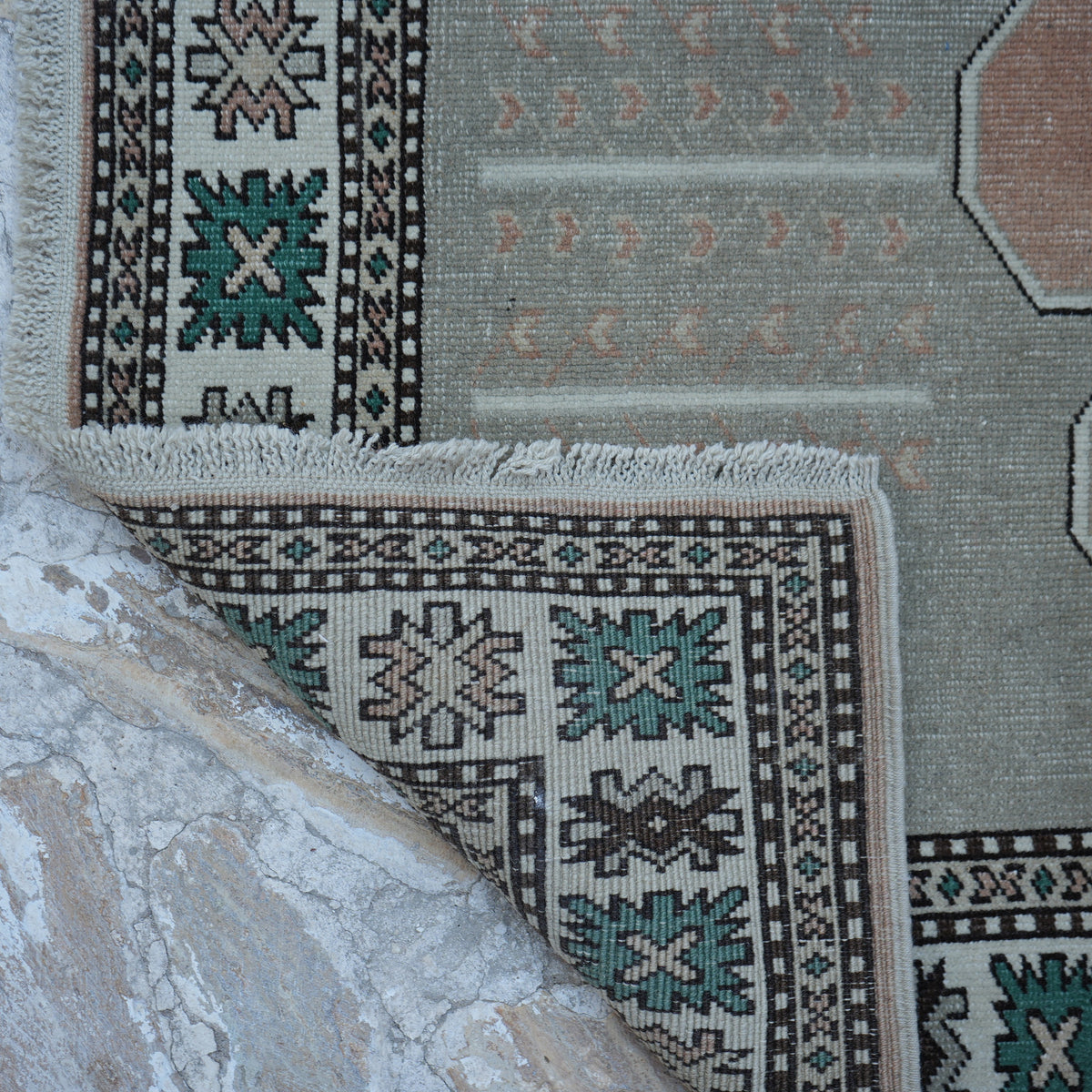
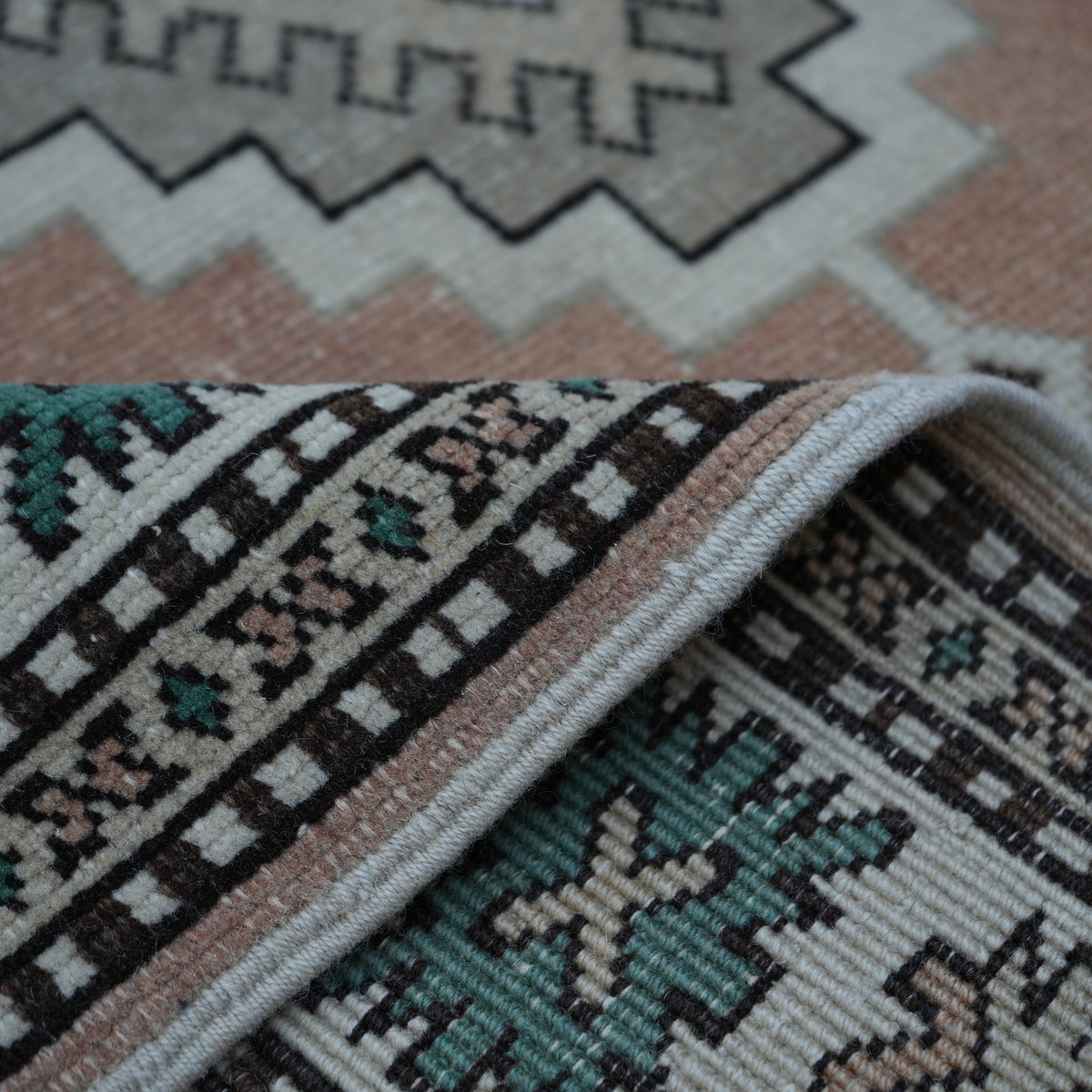
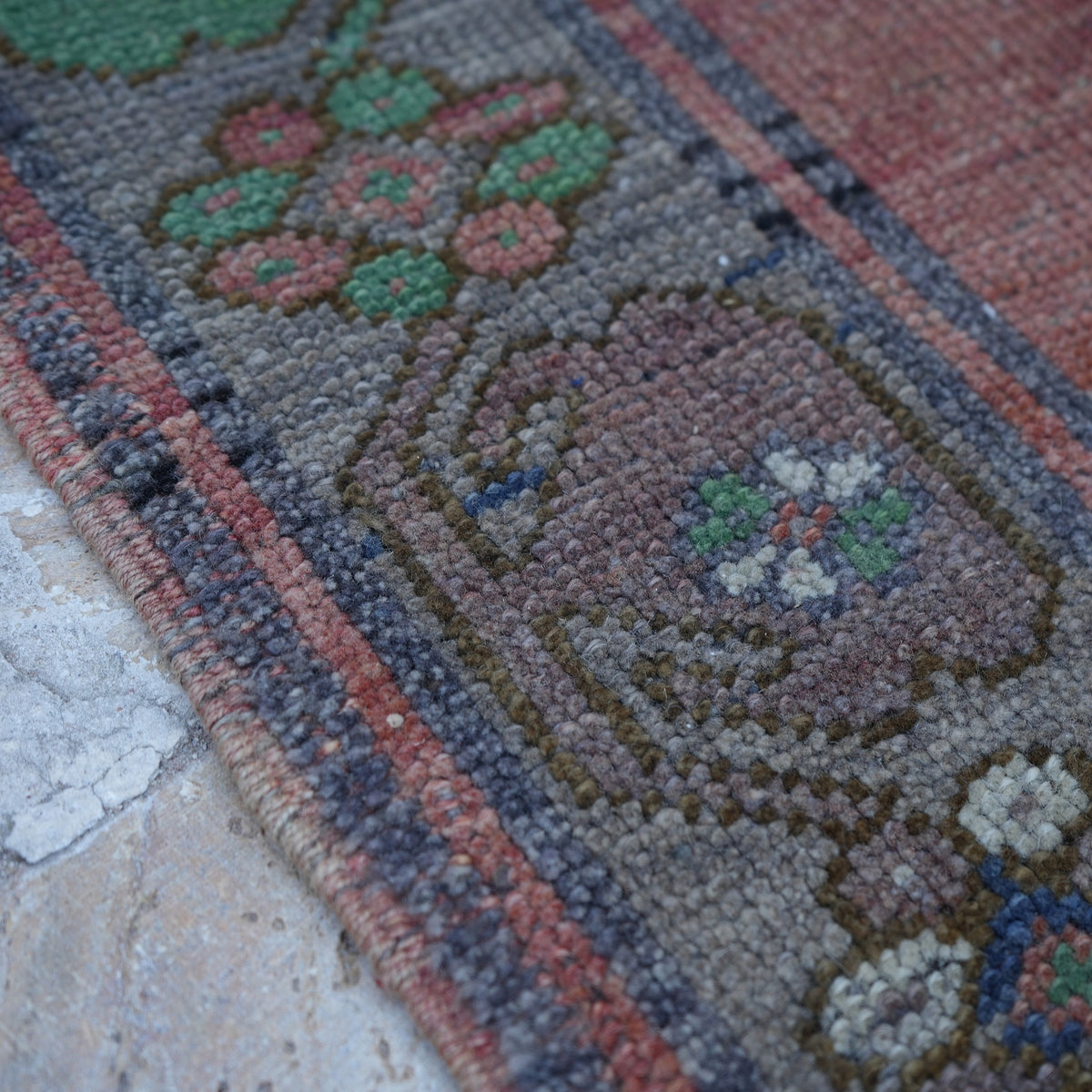
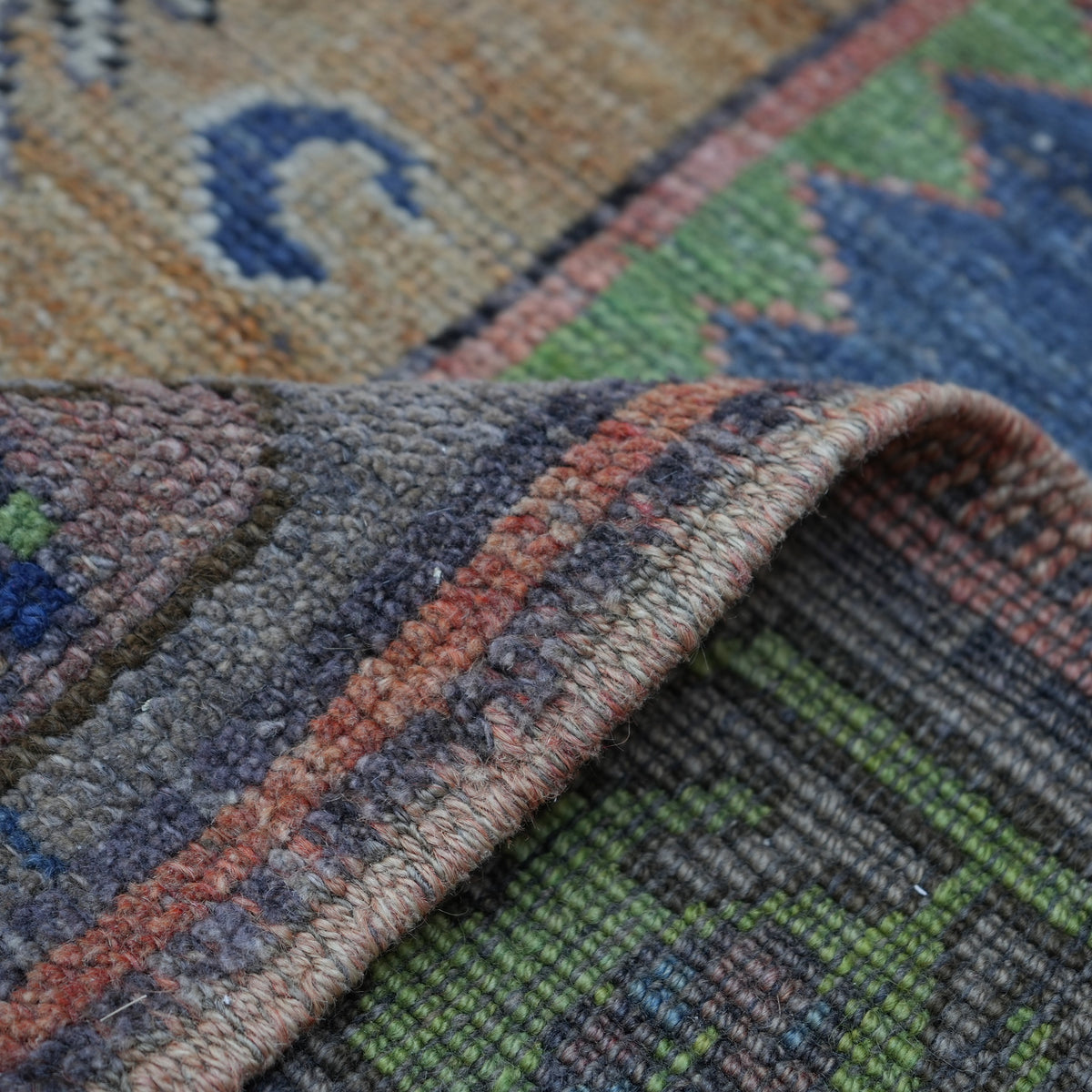
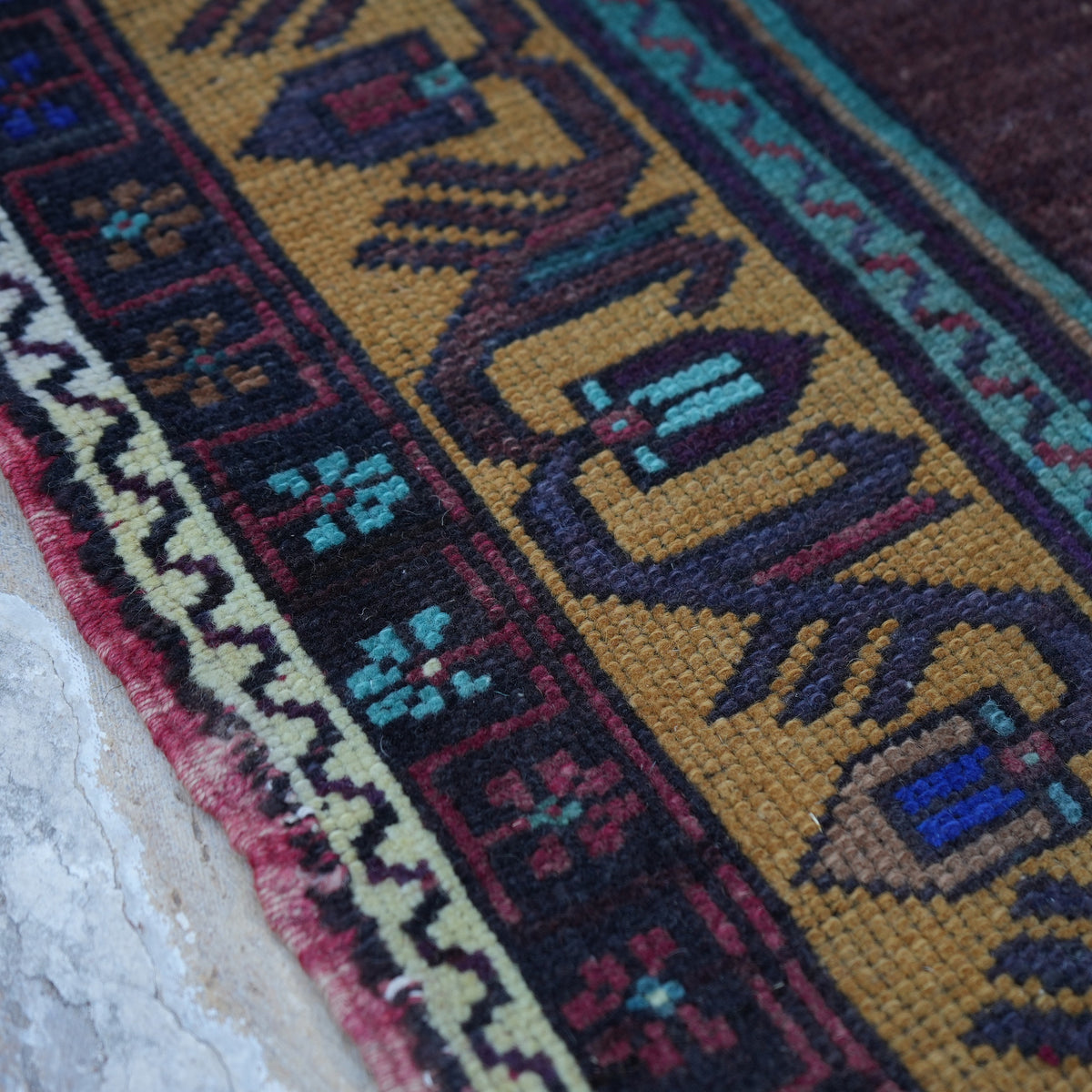
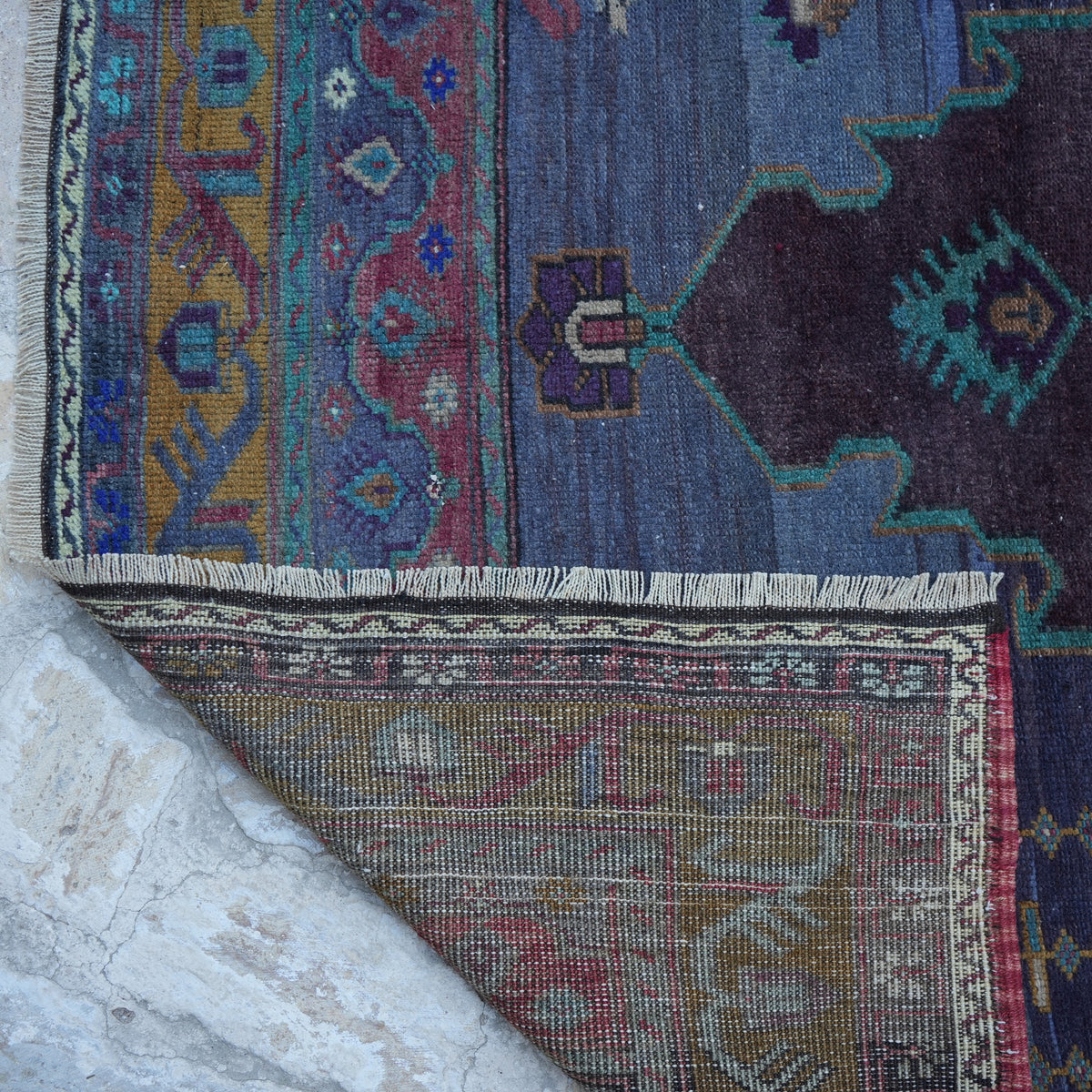
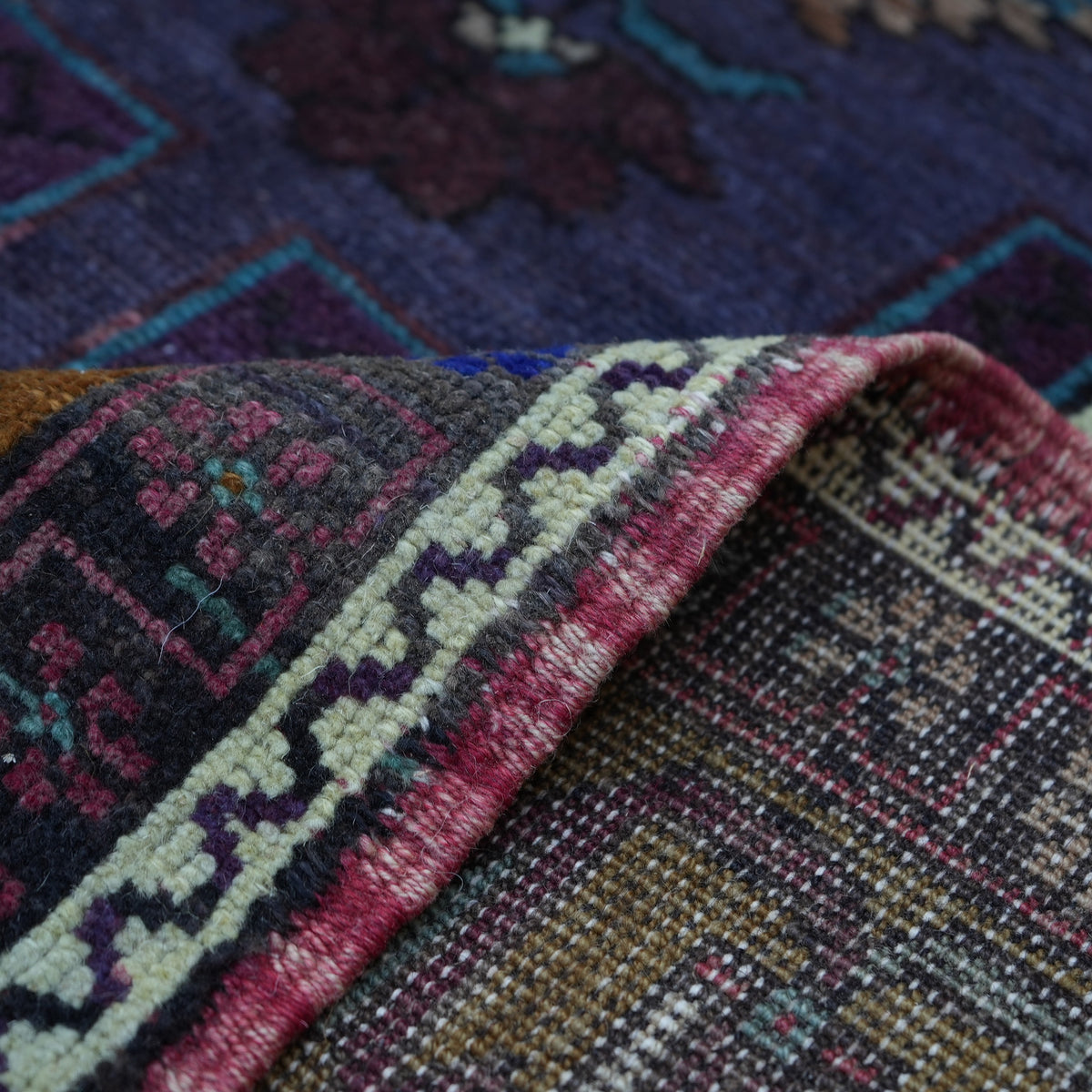
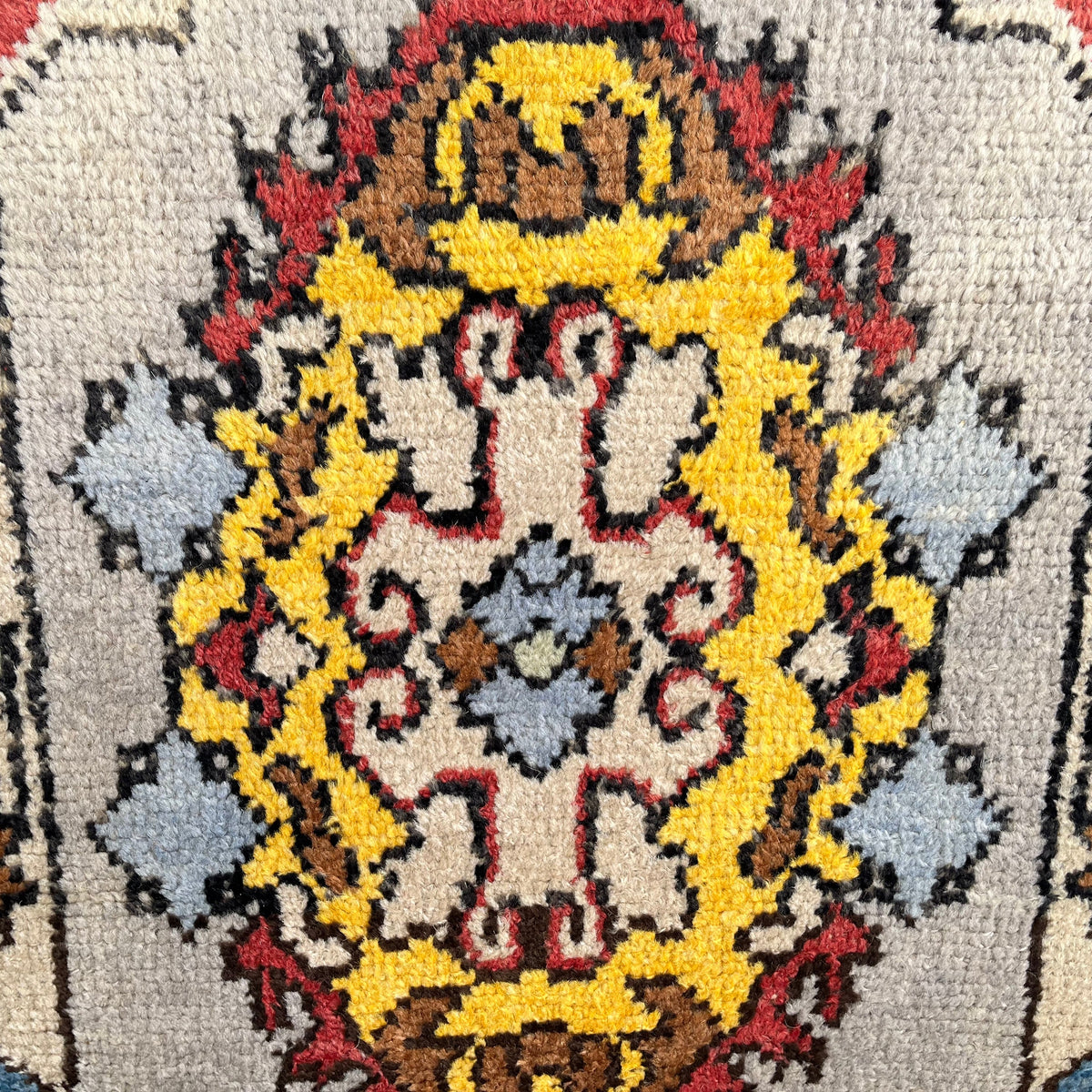
A handwoven Anatolian rug is built from natural materials — wool, dyes from roots and plants, structure created knot by knot. The plant-based dyes — madder red, indigo blue, walnut brown — are part of the chemistry of the fiber itself. They respond to pH, to heat, to chemicals that seem neutral on a synthetic surface. What works on a machine-made rug can undo all of that.
The Safe Approach for Kilims, Oushaks, and Vintage Wool Rugs
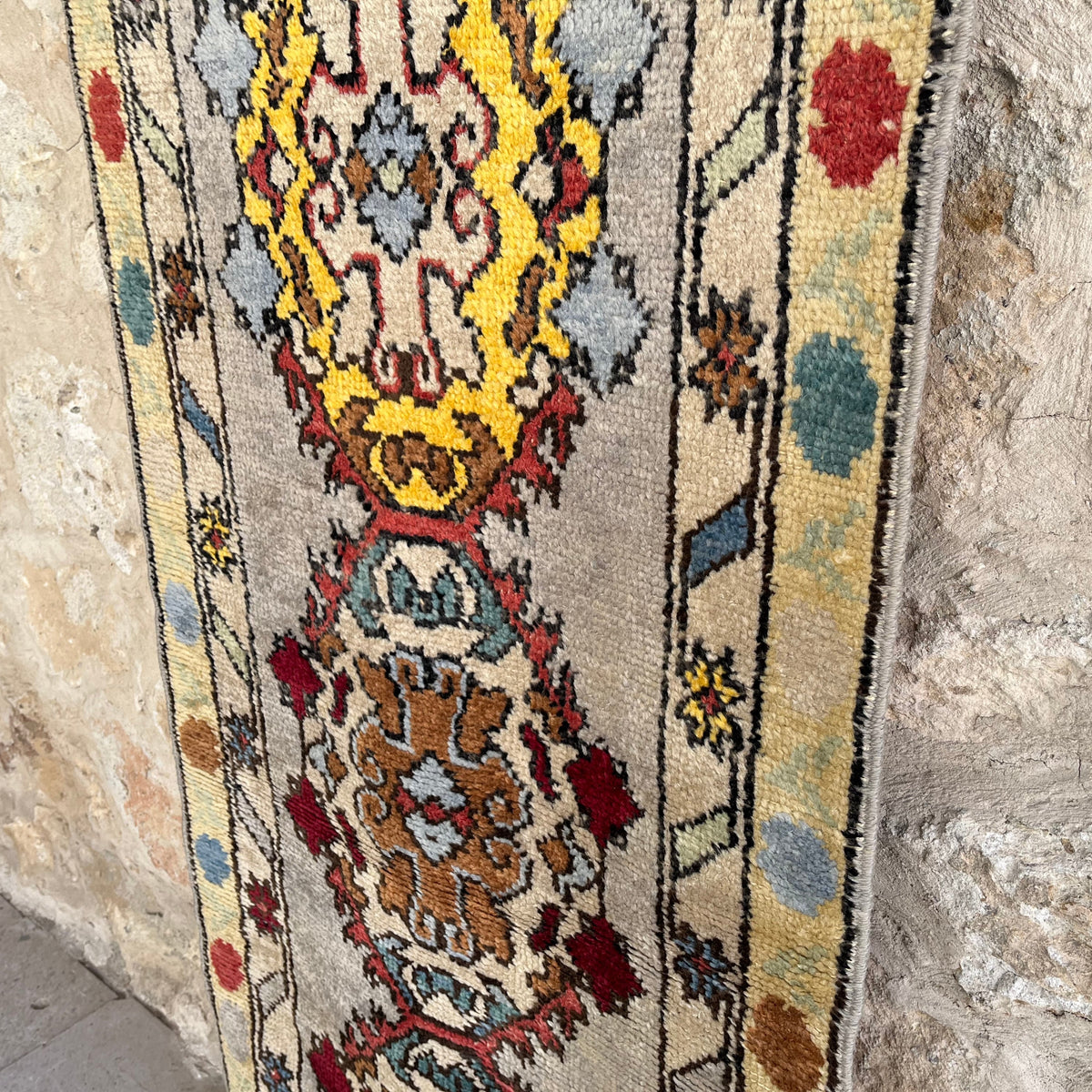
Kilims and flatweaves: minimal liquid. The structure saturates quickly and warps when wet — blot only, dry immediately. Oushak rugs have soft pile; work with the pile direction and use the smallest amount of dish soap solution. Vintage and antique pieces: if a household method shows no clear progress after two attempts, stop. The older the rug, the greater the risk that any intervention shifts something irreversibly.
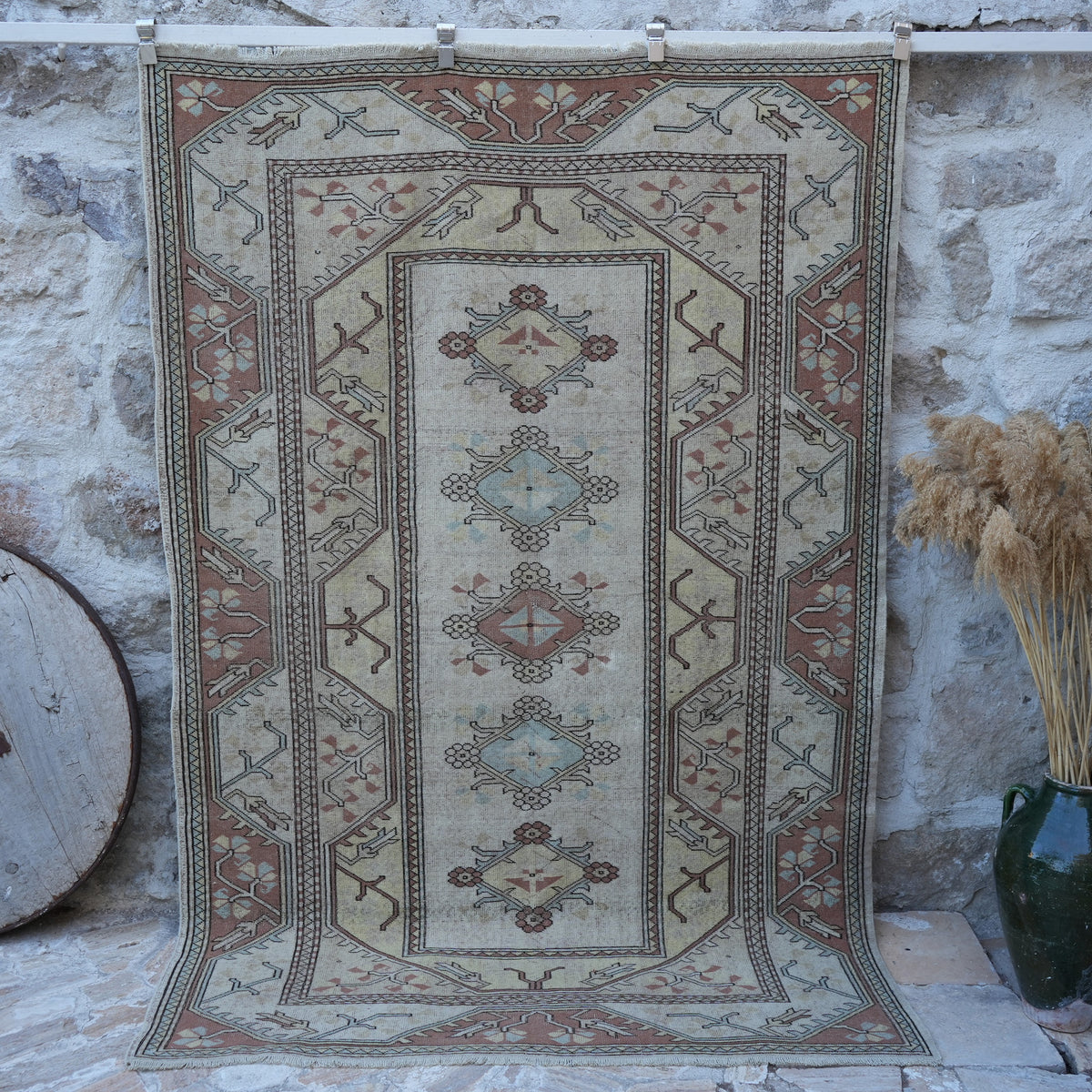
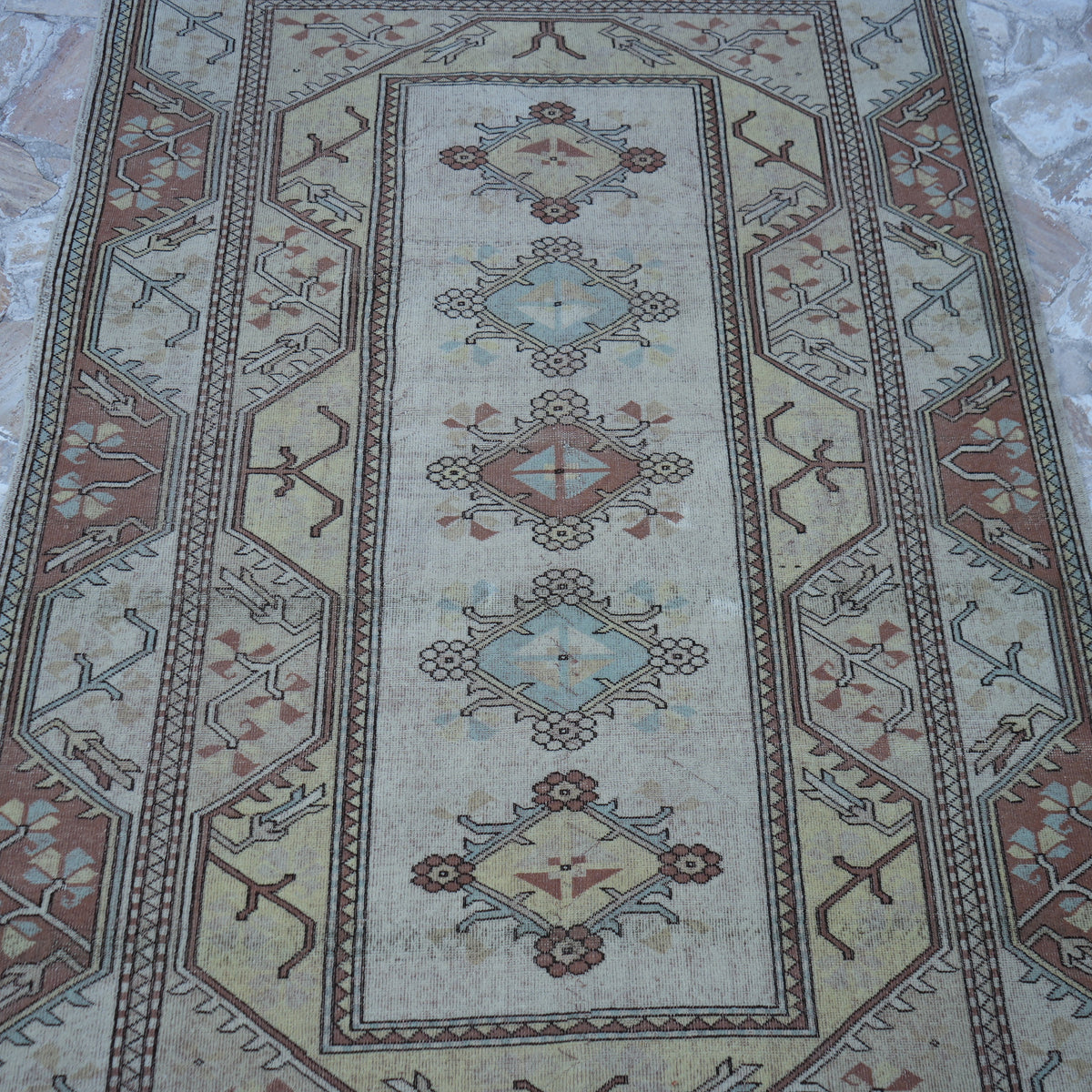
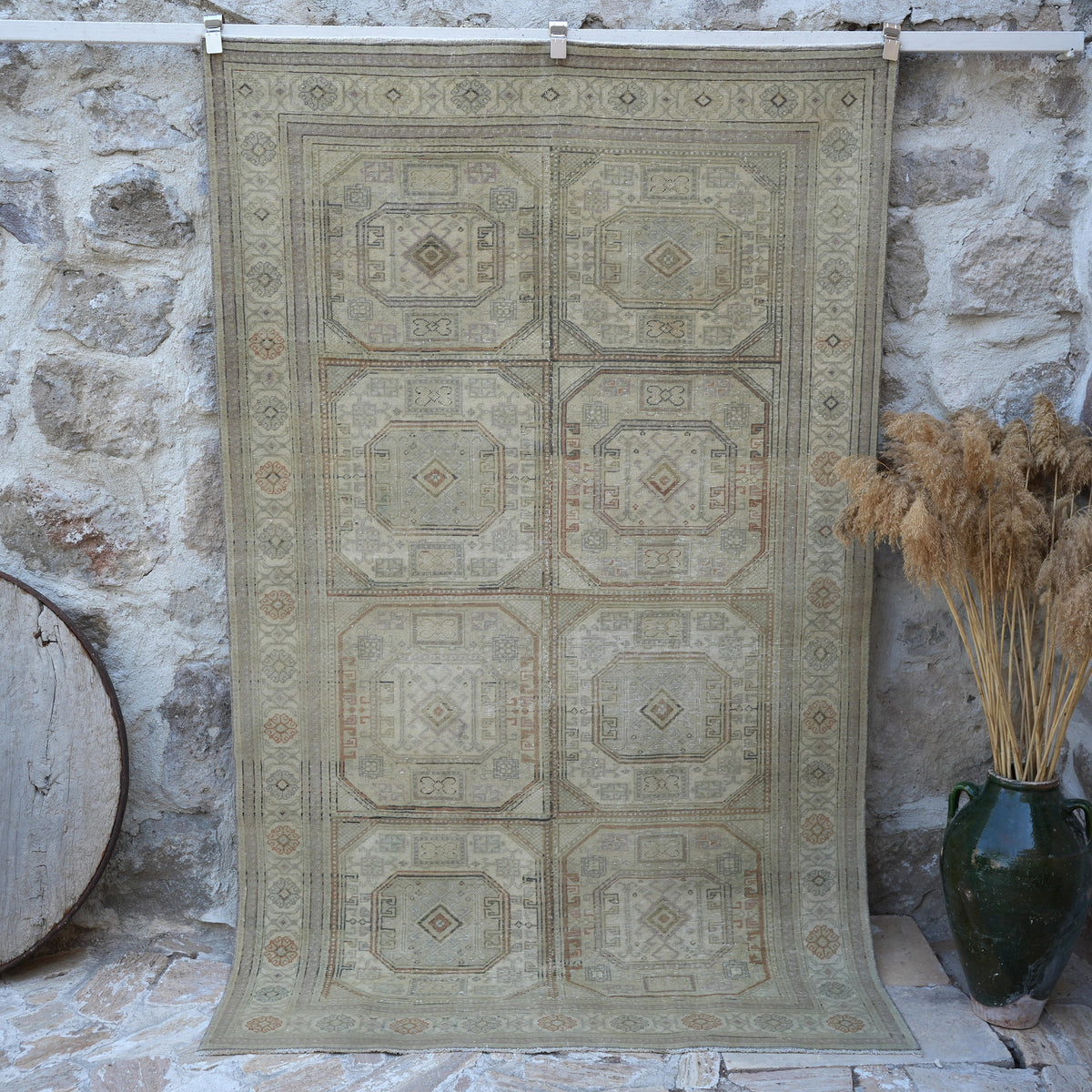
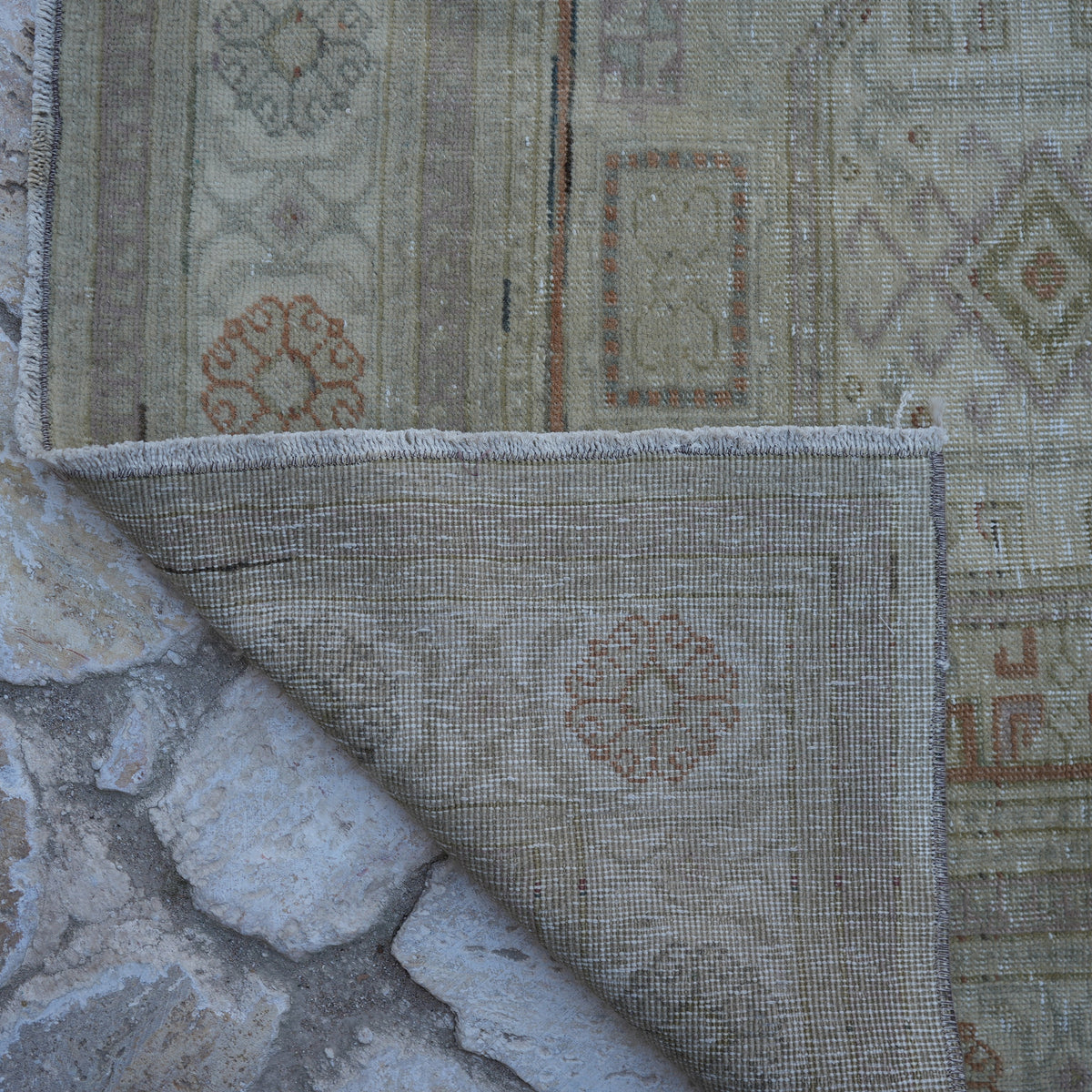
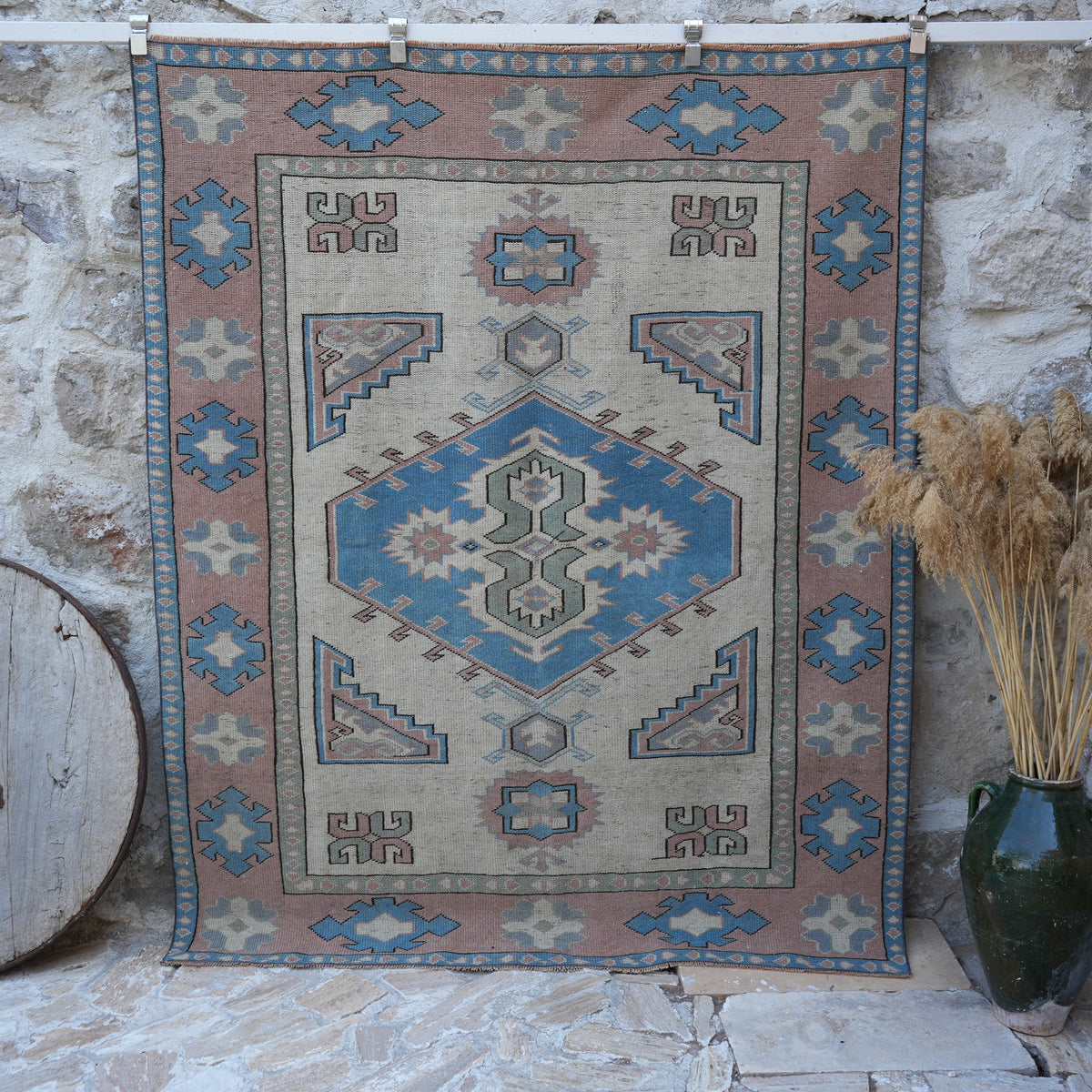
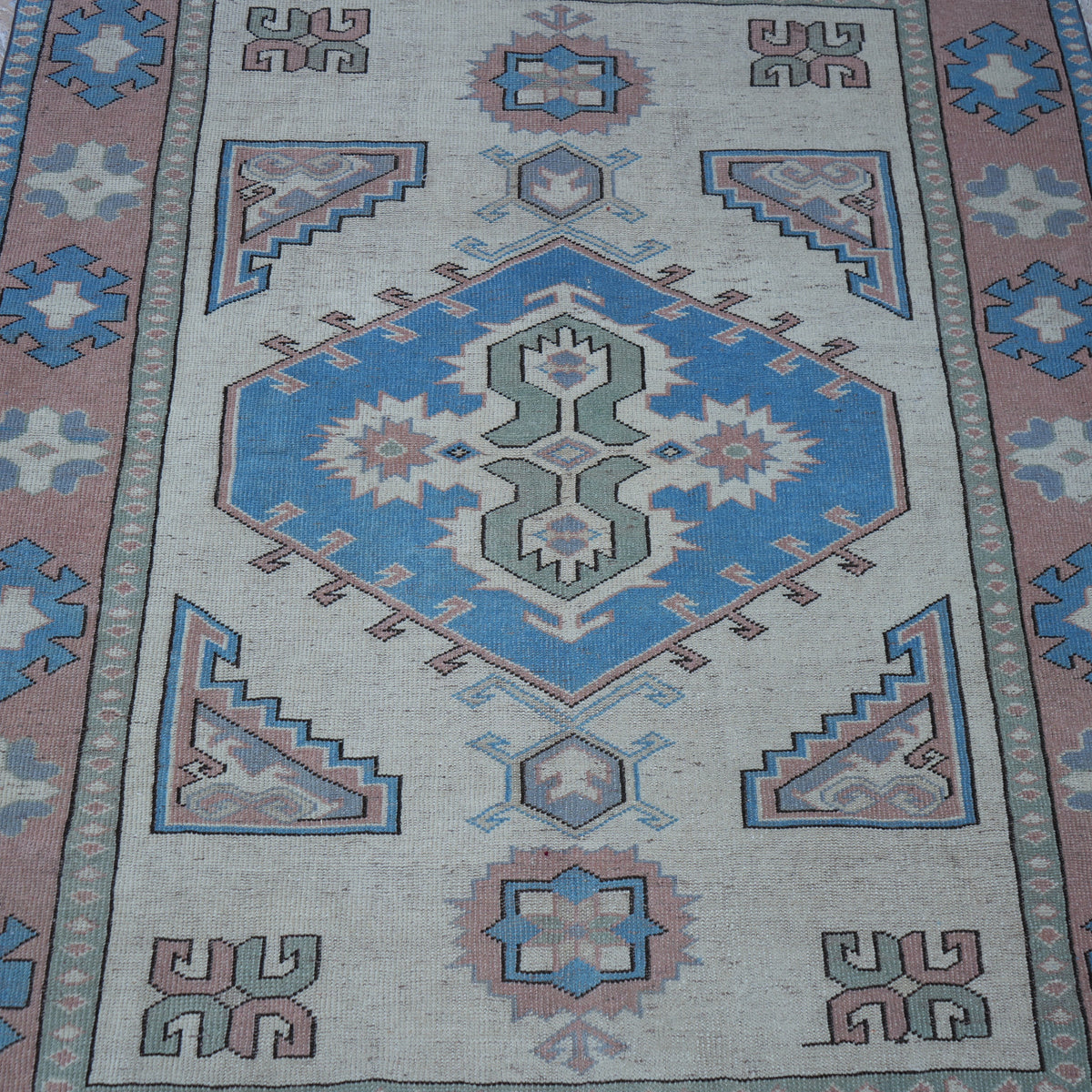
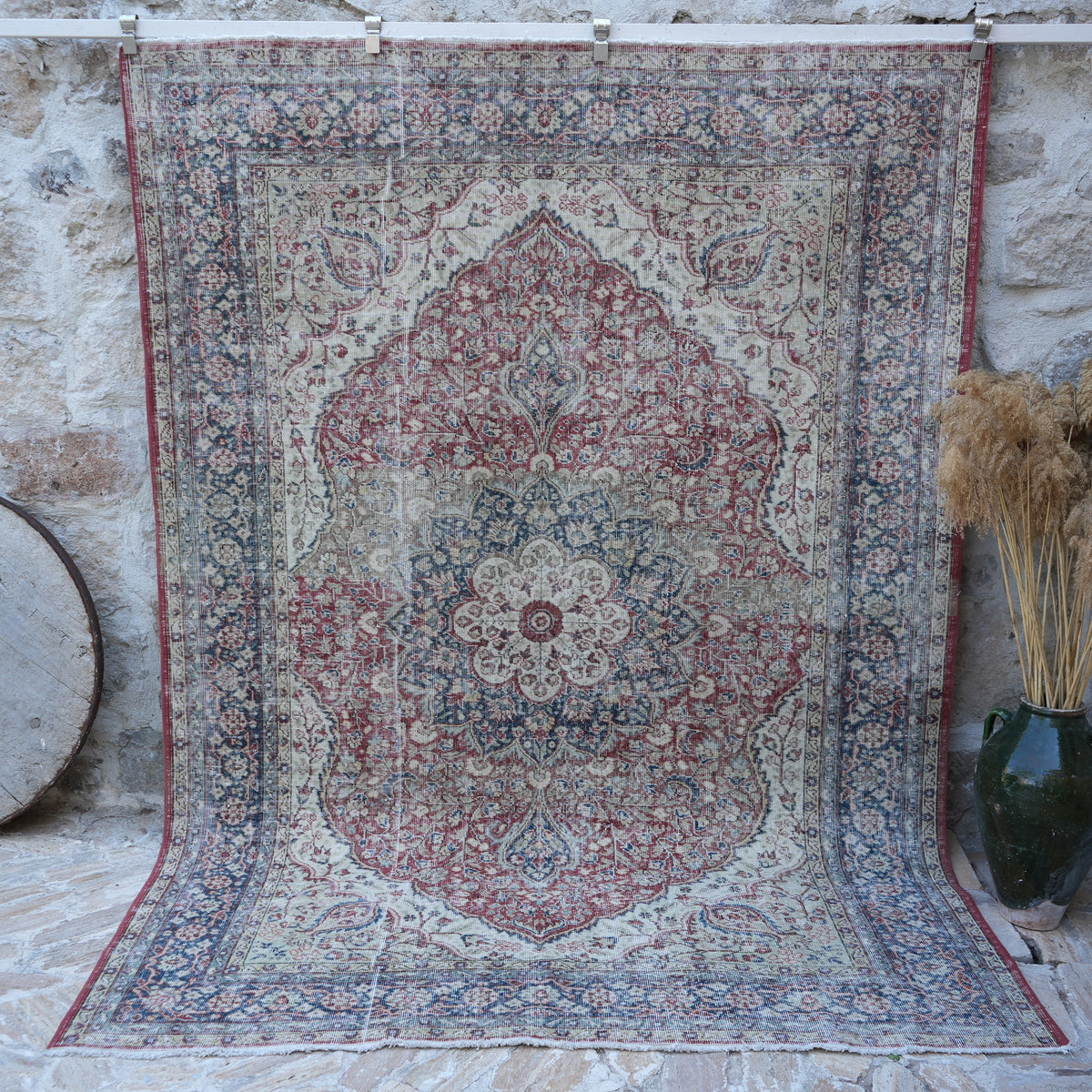
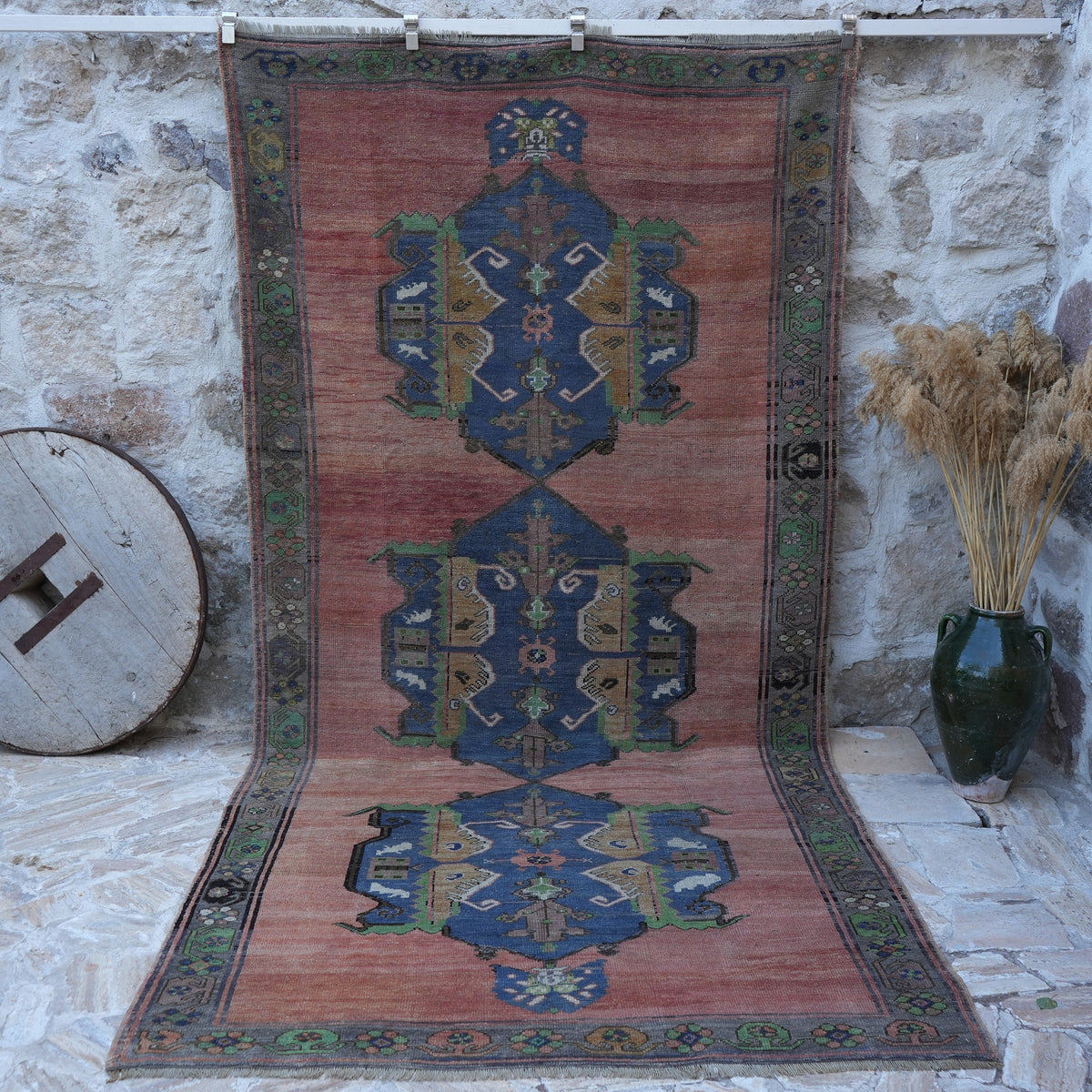
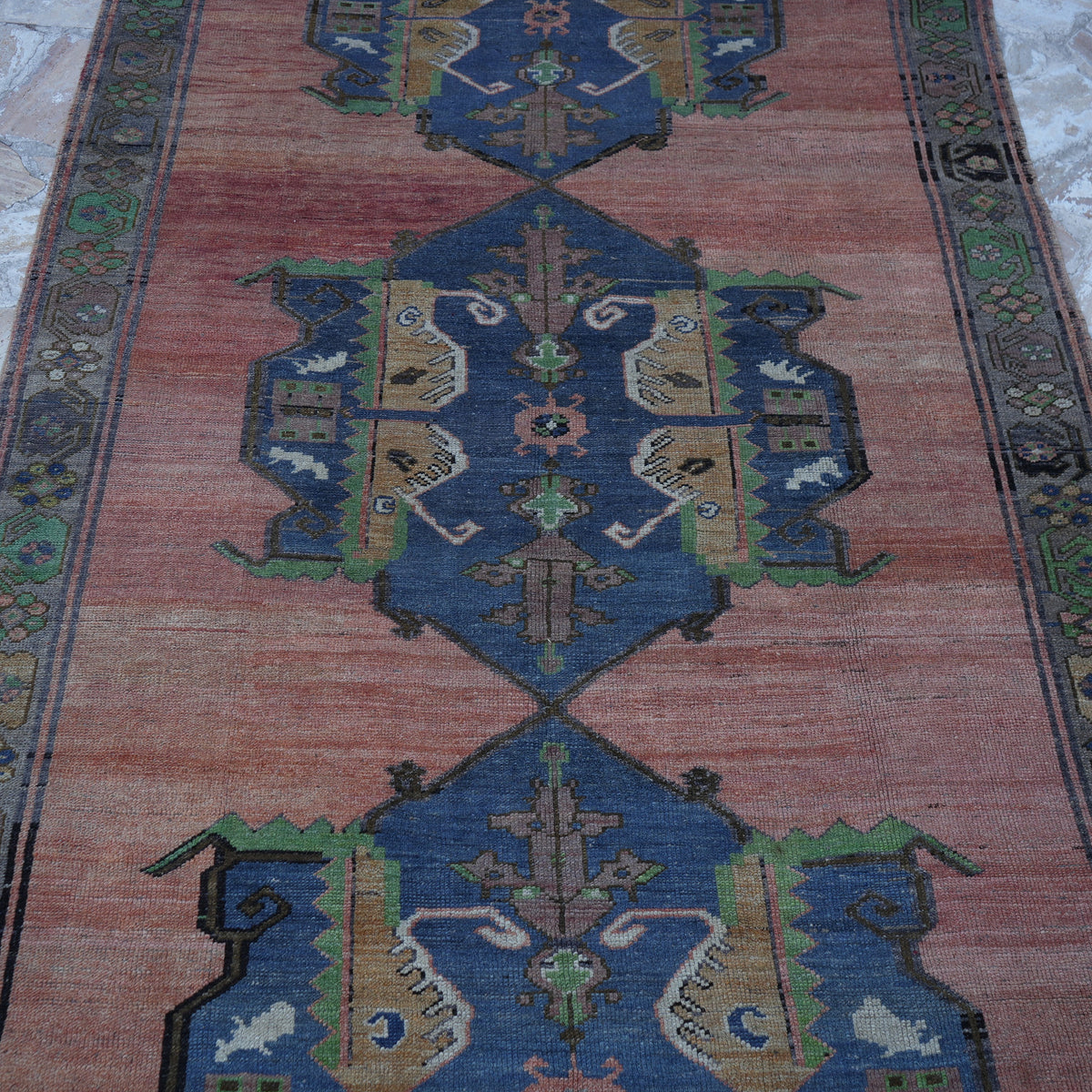
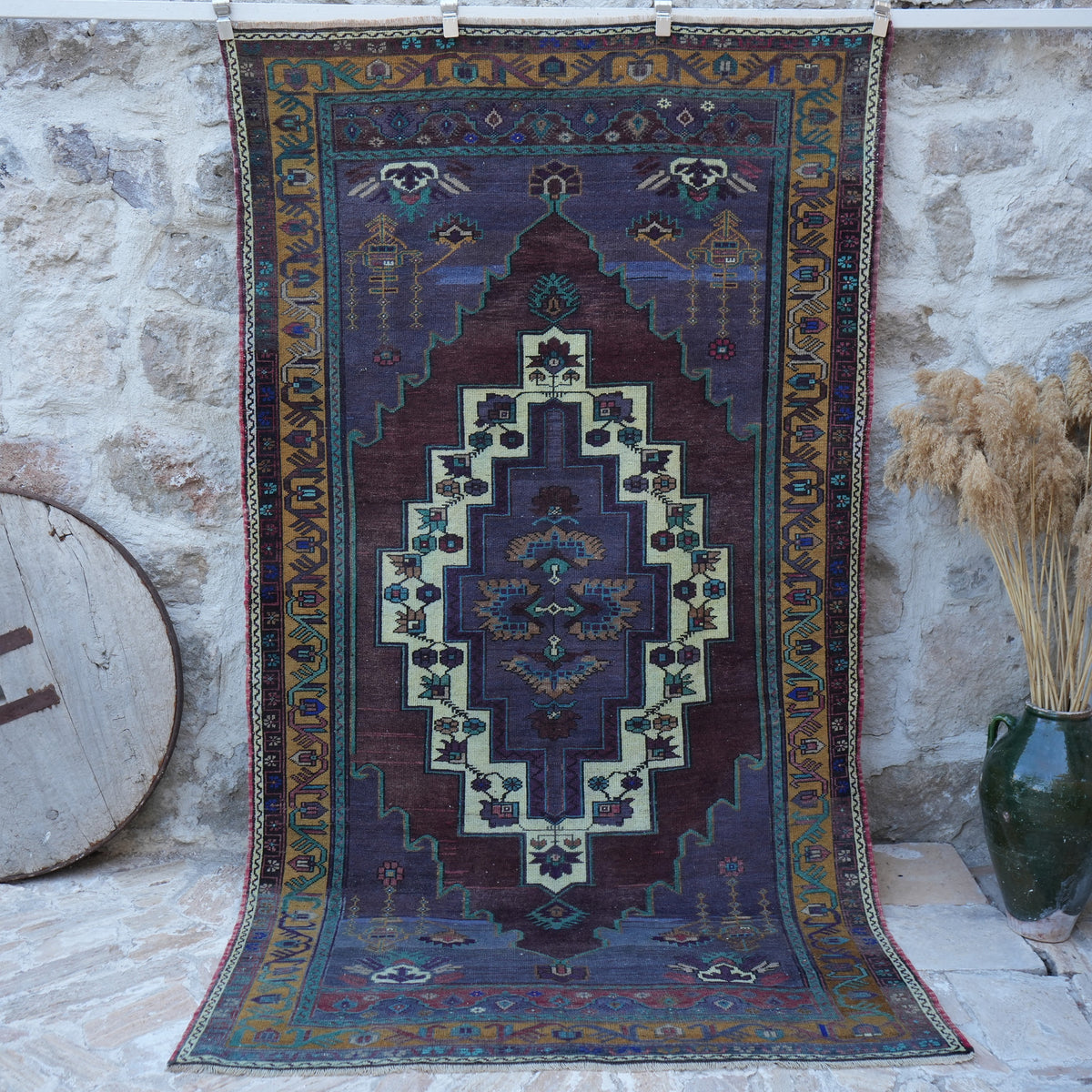
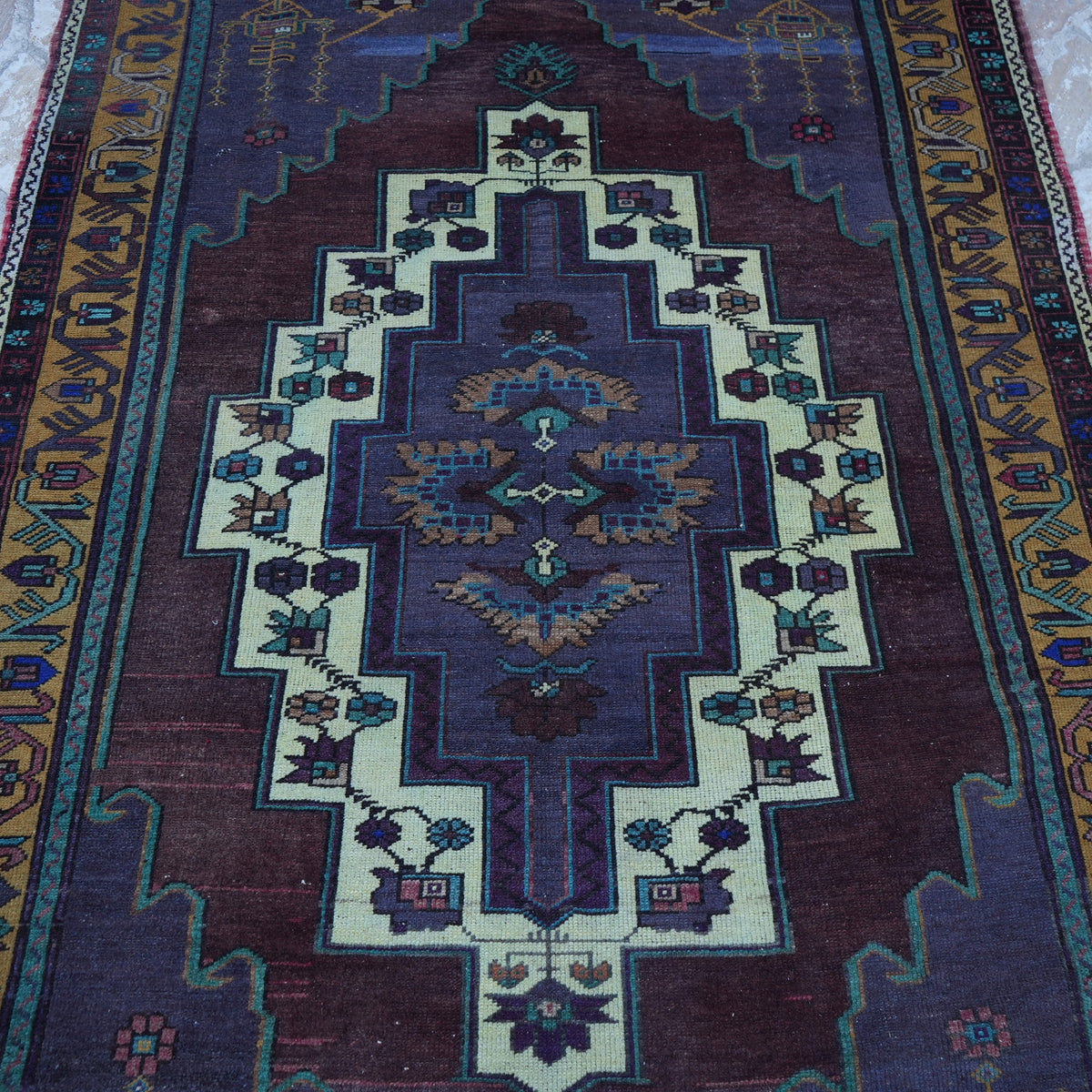
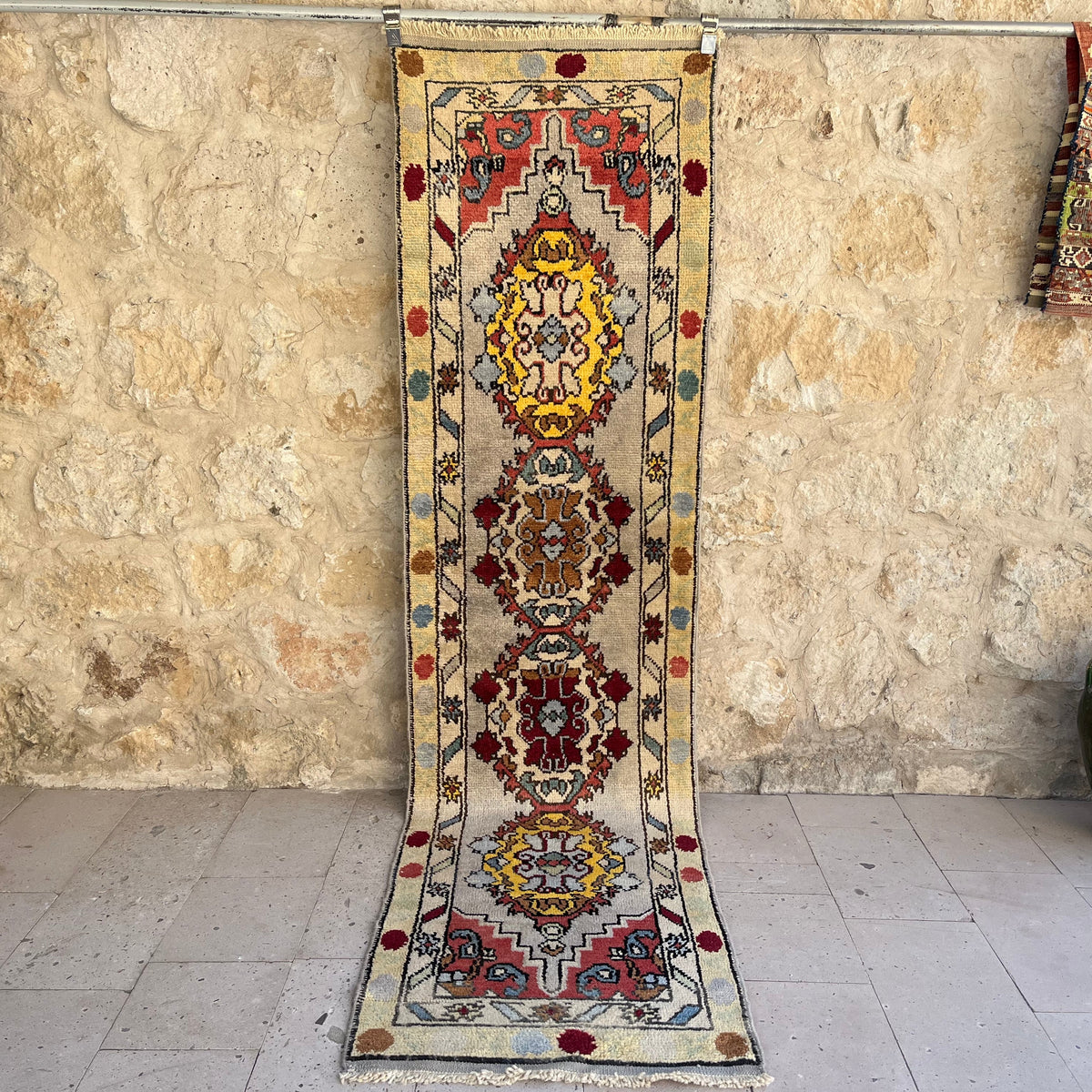
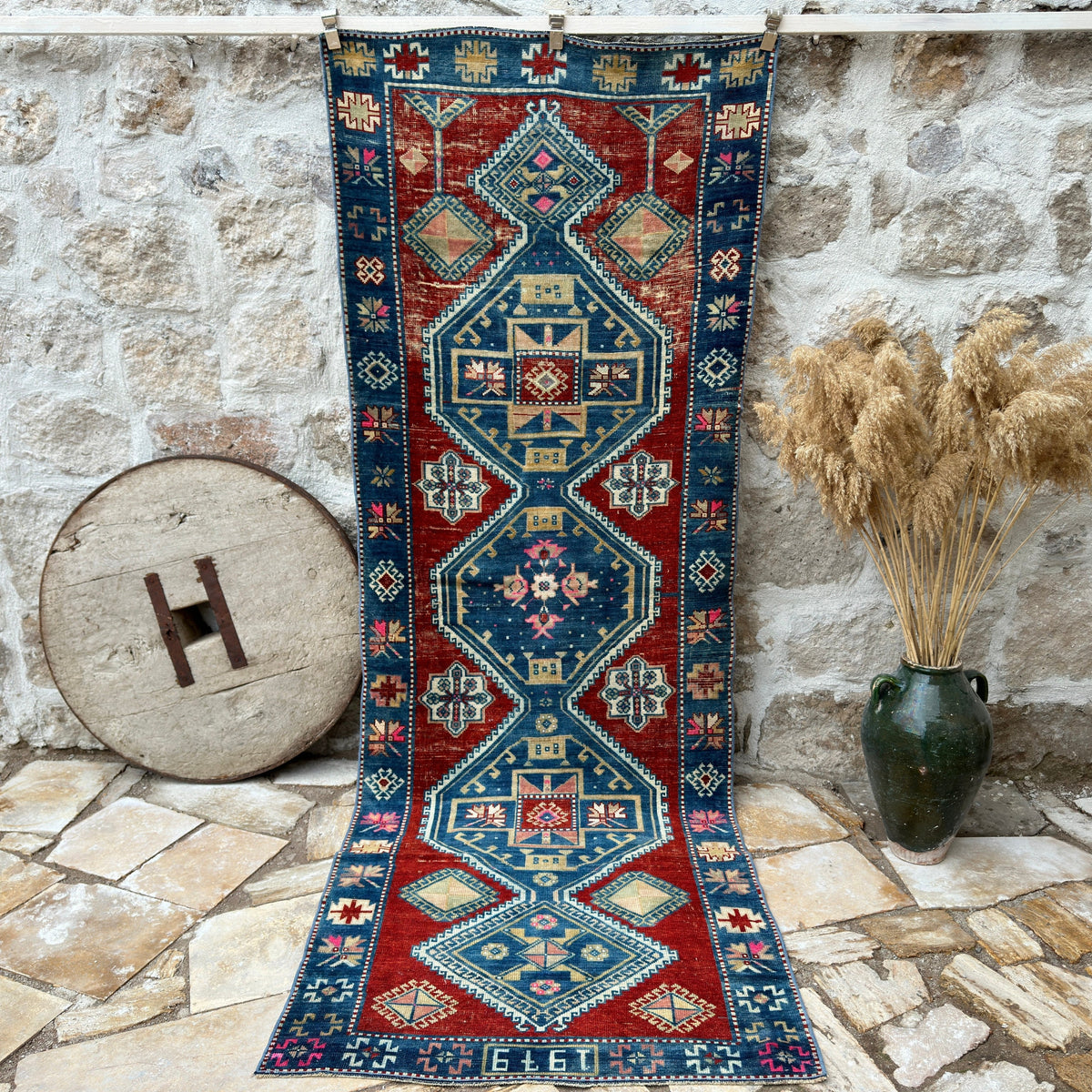
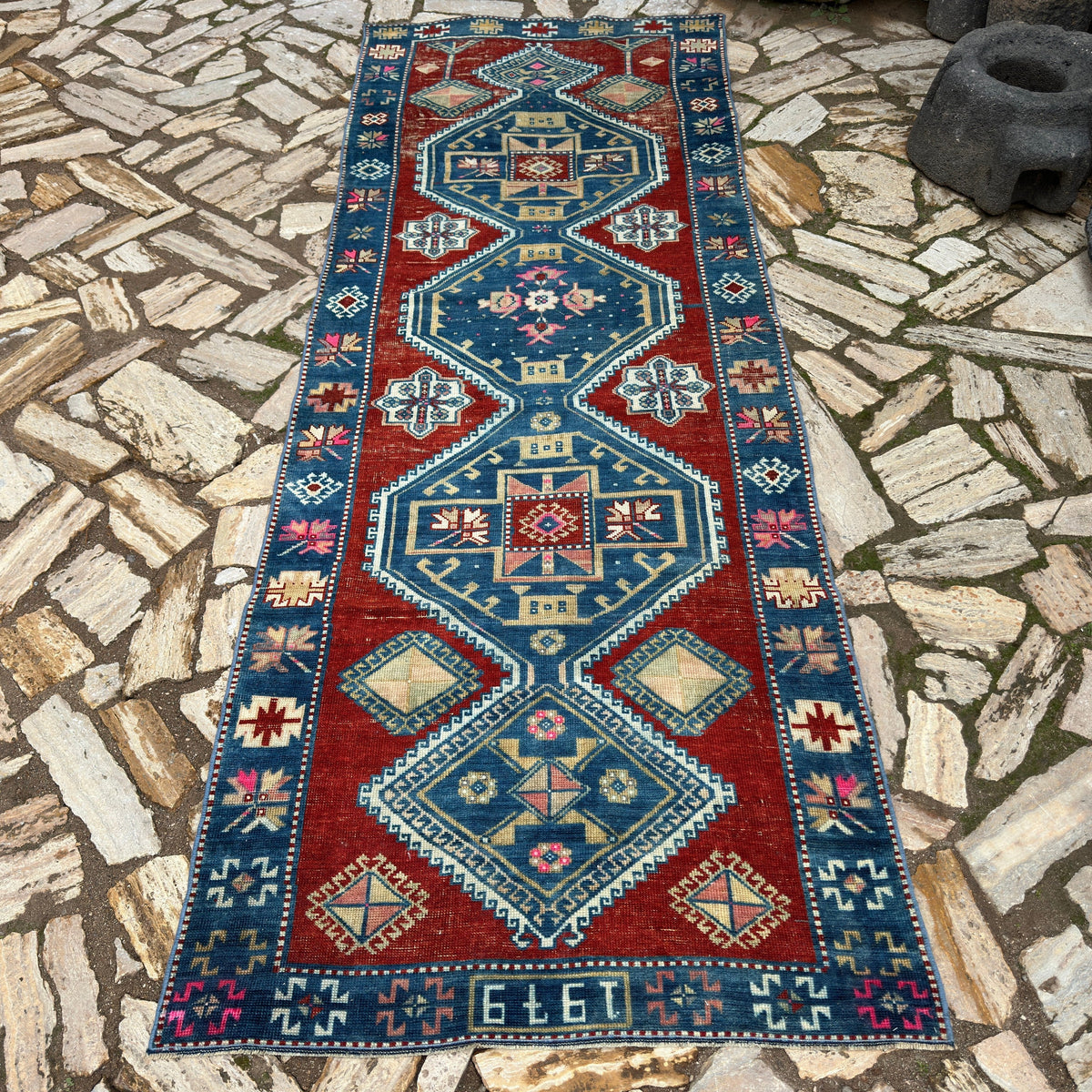
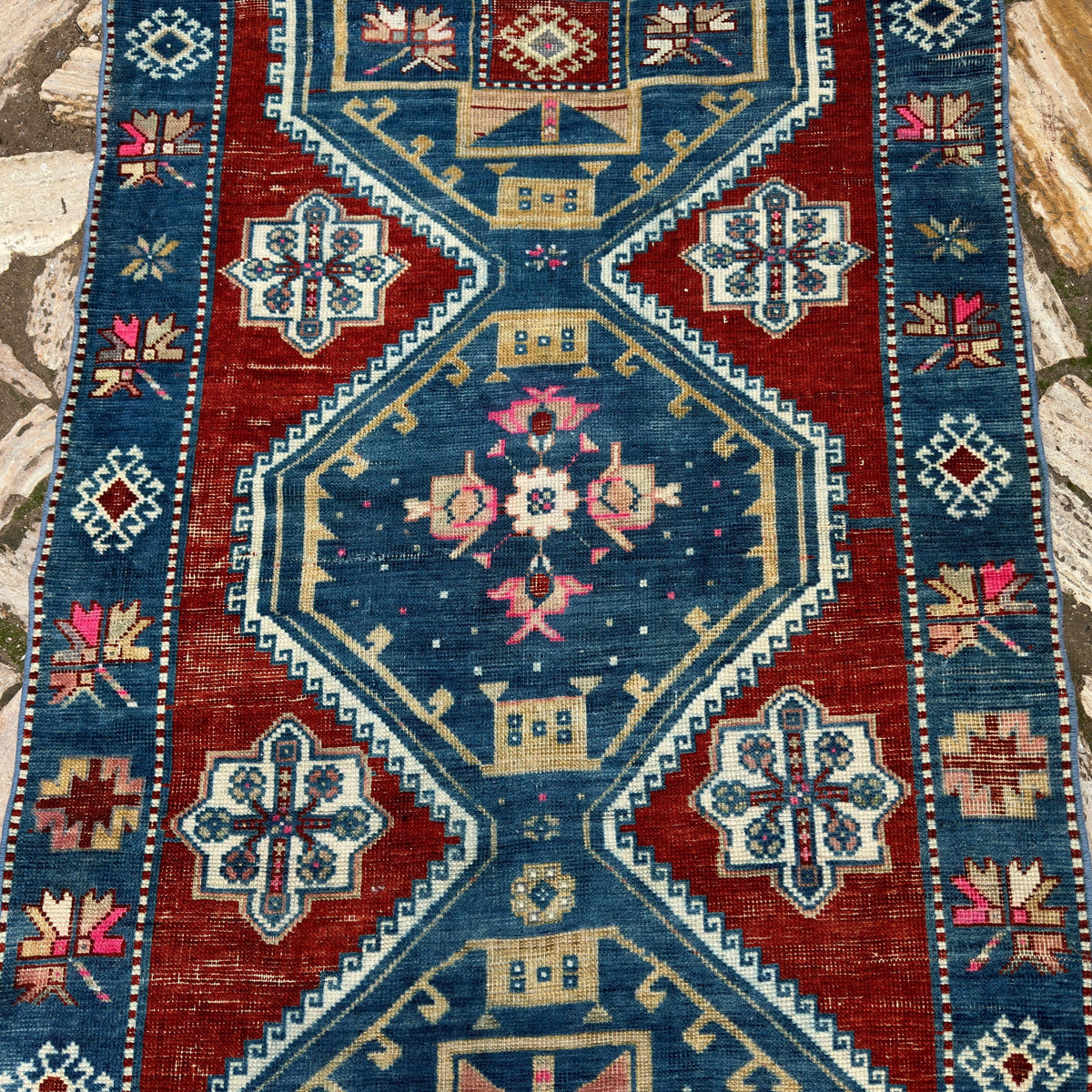
Our kilim rugs and Oushak rugs each carry specific care notes. For pieces with real age, the vintage rugs collection includes condition details and guidance if something goes wrong.
Stop if color moves
If color is lifting from the rug onto your cleaning cloth, stop immediately.
That sign means the rug's dyes are being disturbed. Continuing can turn a paint stain into permanent color damage.
Tip 9: Know When to Stop and Call a Professional Rug Cleaner
Stop and call a professional if: the stained area is larger than your palm; the paint is fully dried and hardened; you're dealing with oil-based paint on a wool or vintage rug; two or three careful attempts have shown no improvement; or color is lifting from the rug onto your cleaning cloth. That last sign is a hard stop. It means the rug's dyes are being disturbed, and continuing makes it worse.
Look for IICRC-certified cleaners or someone who explicitly says "Oriental rug cleaning." Ask whether they hand-wash and use pH-neutral solutions. Steam treatment or dry cleaning for a handwoven rug means find someone else. A rug that took weeks to weave deserves more than a generic carpet service.
Tip 10: Prevent Paint Stains on Your Rug Before They Happen
Move small rugs to another room before painting. Cover large rugs fully with plastic sheeting — not just below the ladder — and tape the edges. Paint travels further than expected, especially with rollers and spray. Close containers during every break. If you're mid-renovation, move handwoven pieces to a safe room entirely. Once the space is finished, our new arrivals are updated regularly with handwoven pieces sourced directly from Anatolia.
Last year, a customer in Colorado shipped me her father's kilim — a 1970s Aksaray piece, wool-on-wool, with dried navy acrylic across the center. She had tried three products before reaching out. All three were wrong. We worked on it for two days with an enzyme-based solution and low-pressure cold water. We removed eighty percent of the paint. The kilim is usable, its structure intact. She cried a little when I called to tell her.
The paint didn't matter as much as the kilim did. But the right knowledge meant she got to keep both.
If you're looking for handwoven pieces built to last generations, explore our vintage rugs collection or see what's just arrived in our new arrivals.
Choose a Handmade Rug Built to Last
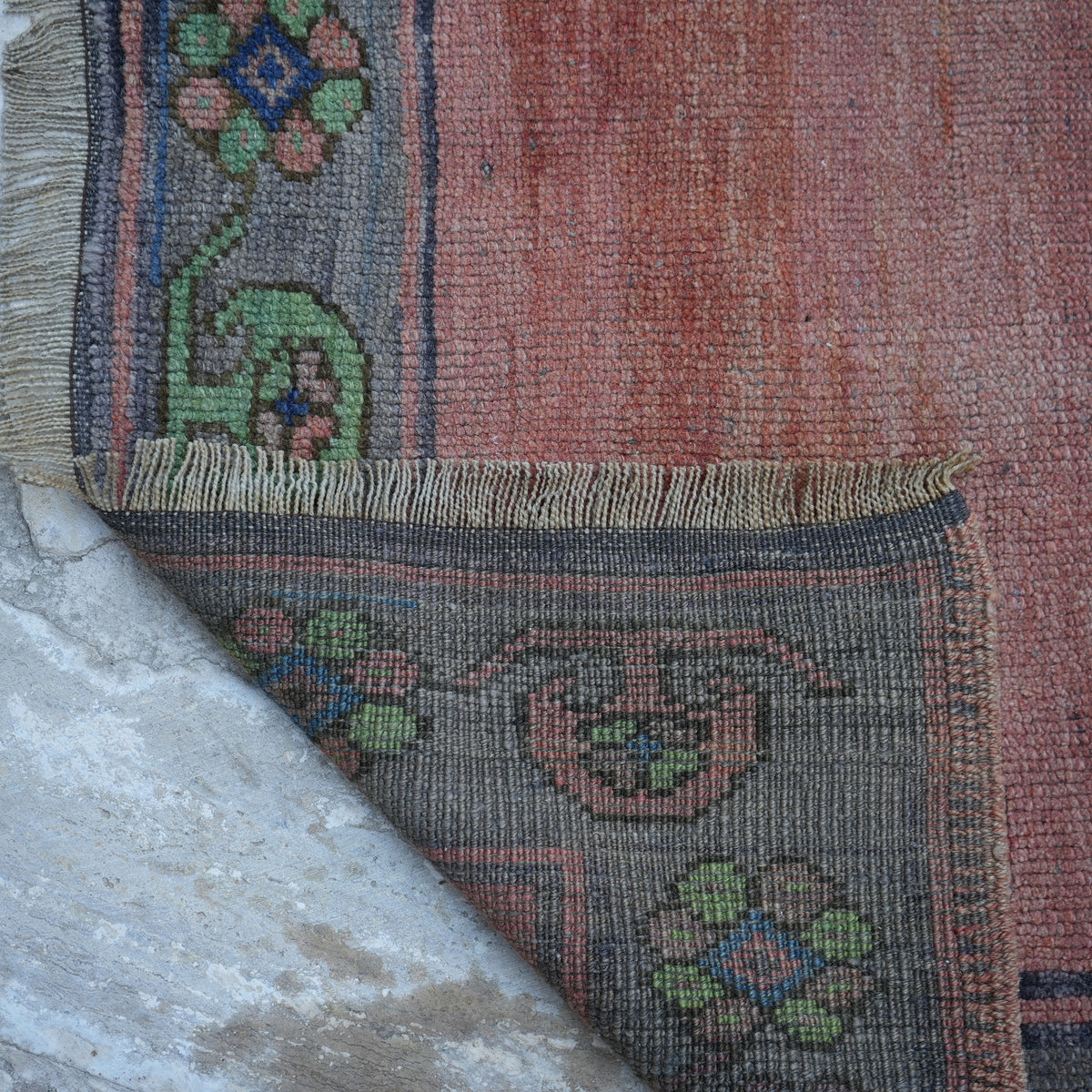
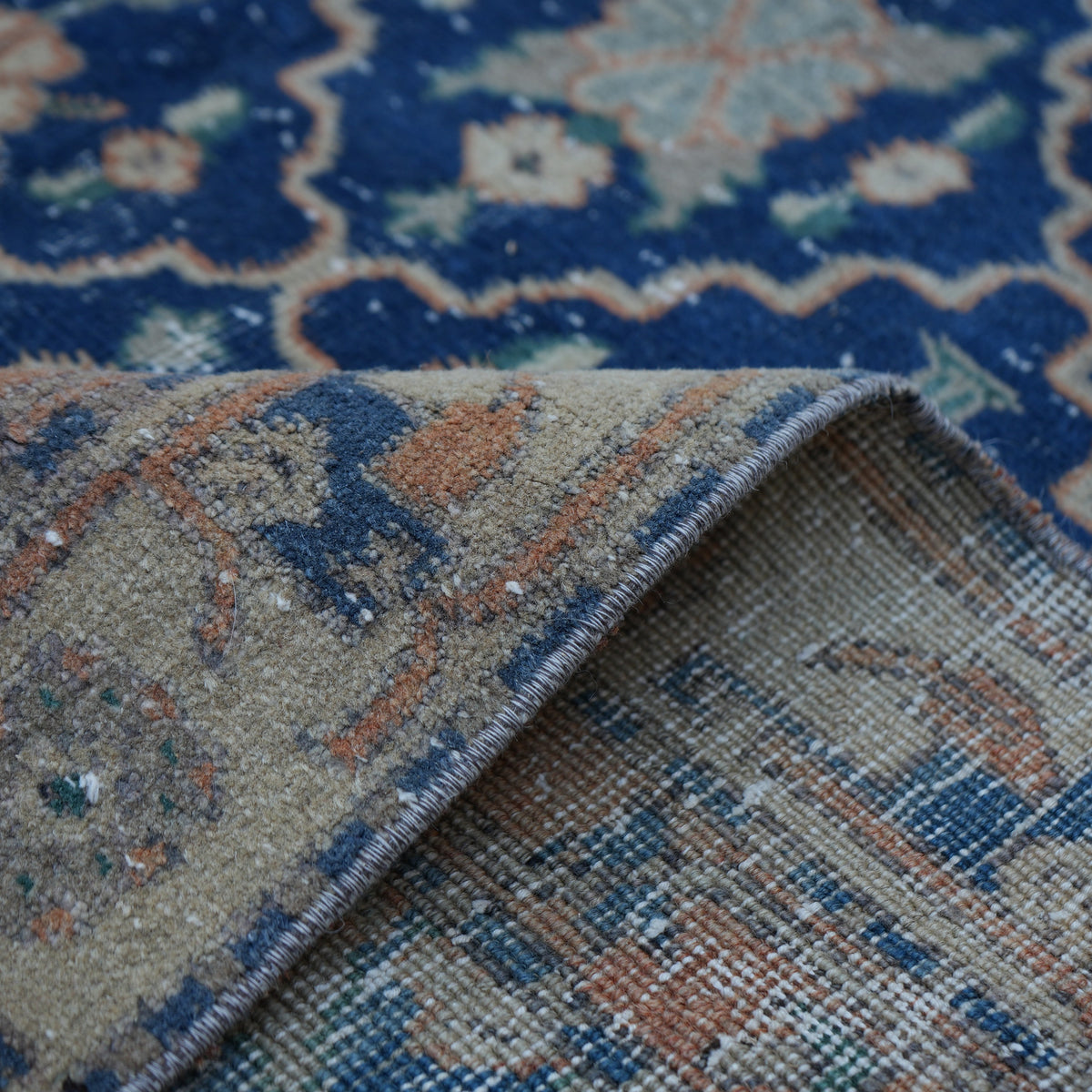
A handwoven rug can be washed, repaired, restored, and lived with for decades when the right care is used from the beginning.
Every piece cleaned and inspected before shipping.
Natural materials, real age, and one-of-a-kind character.
Worldwide shipping with careful packaging.
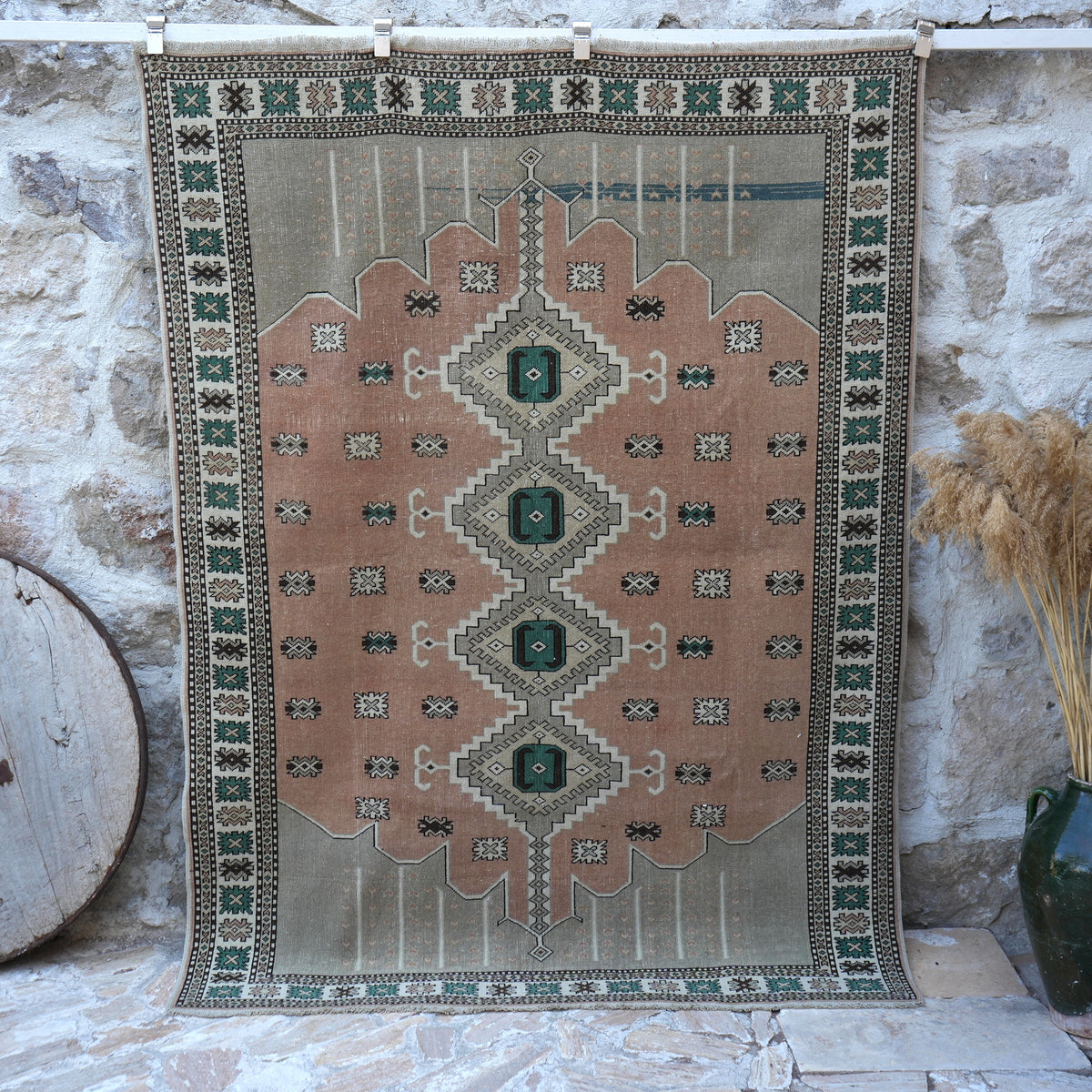
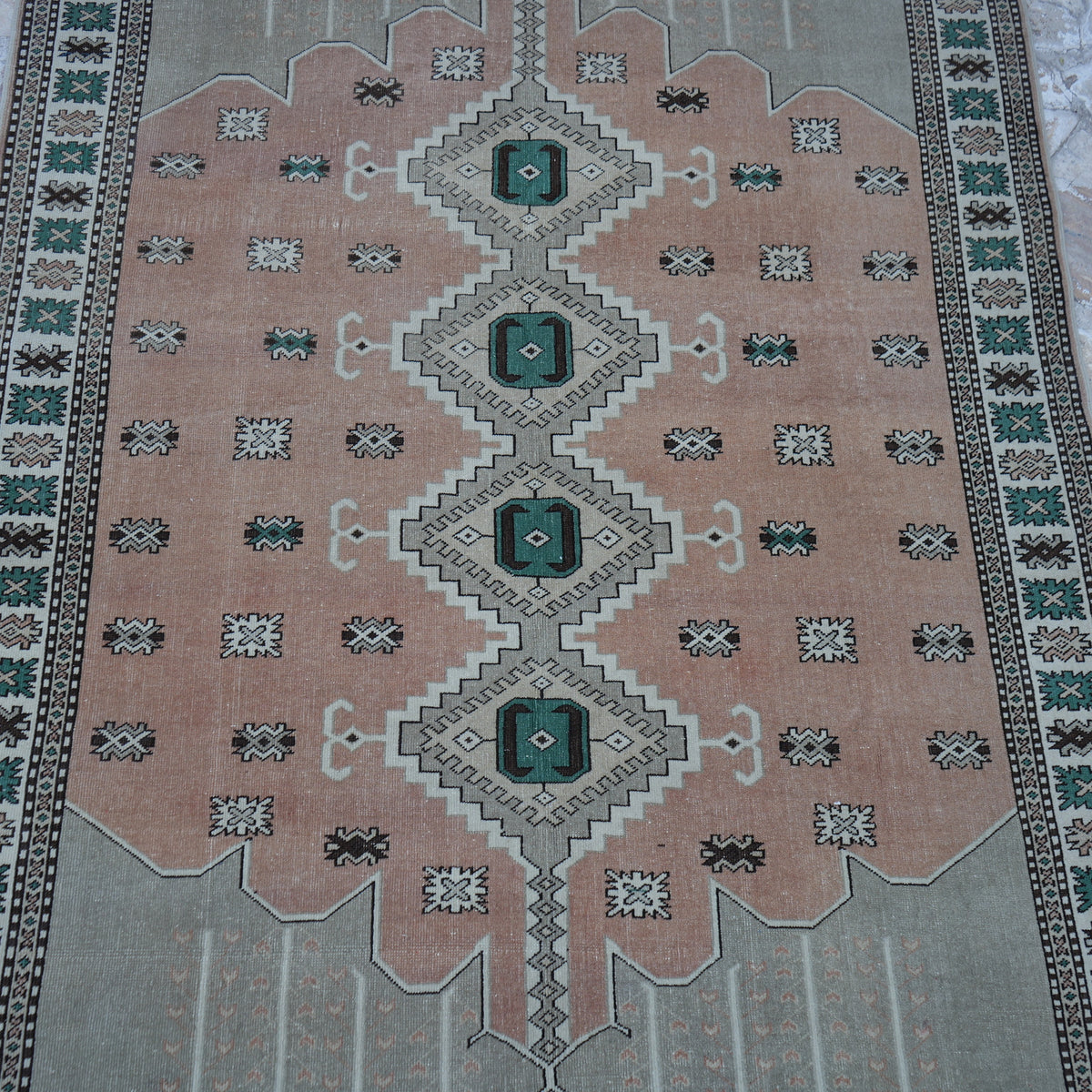
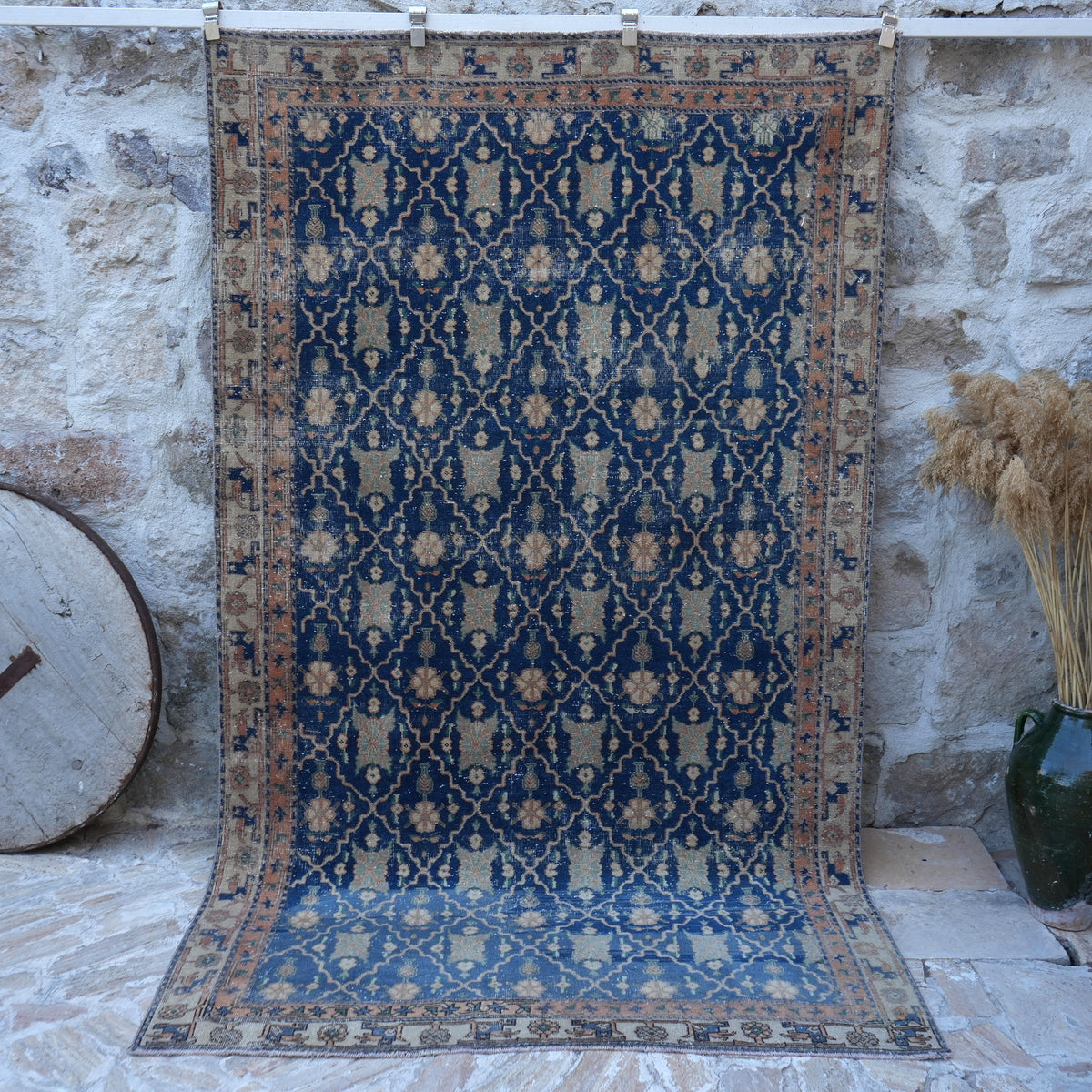
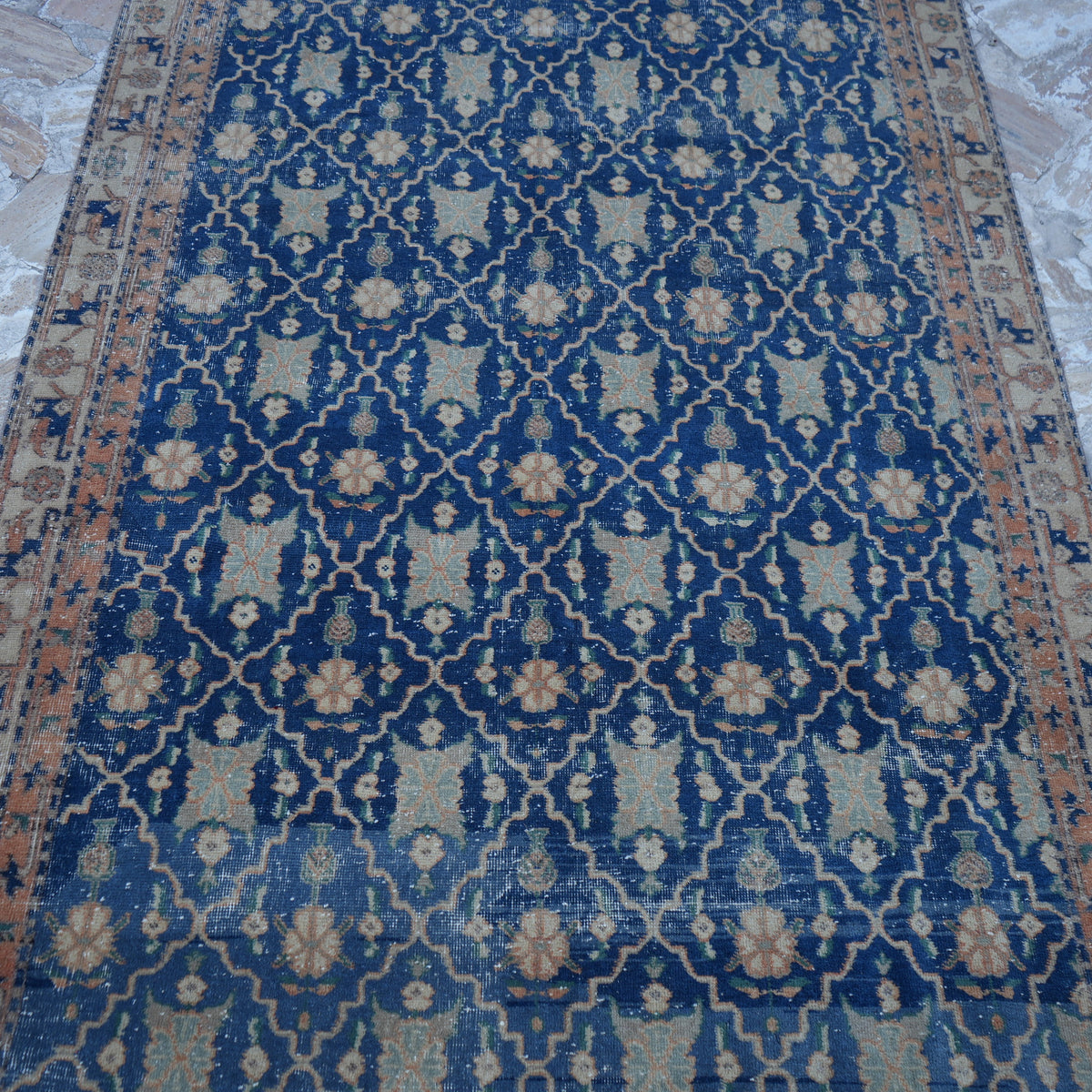
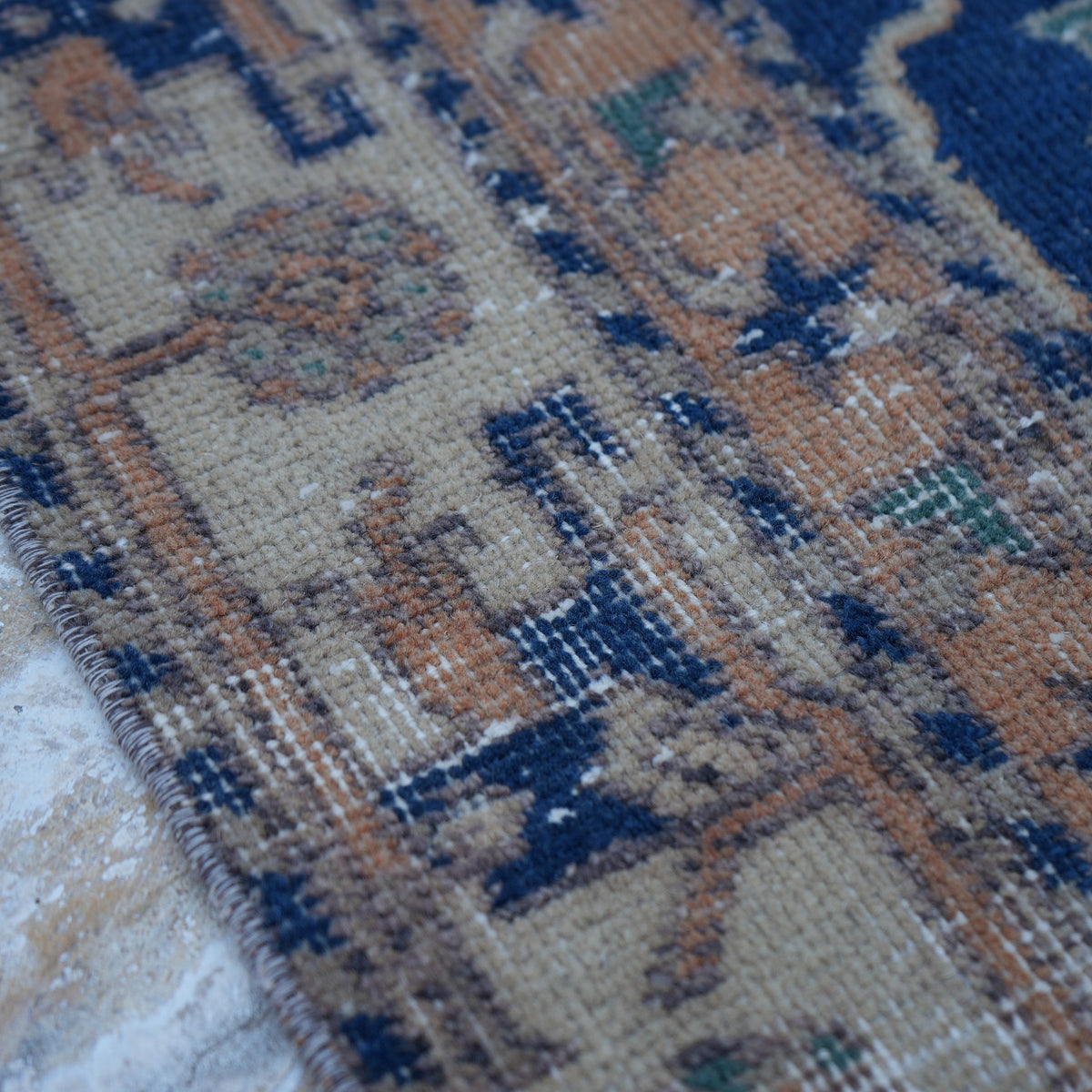
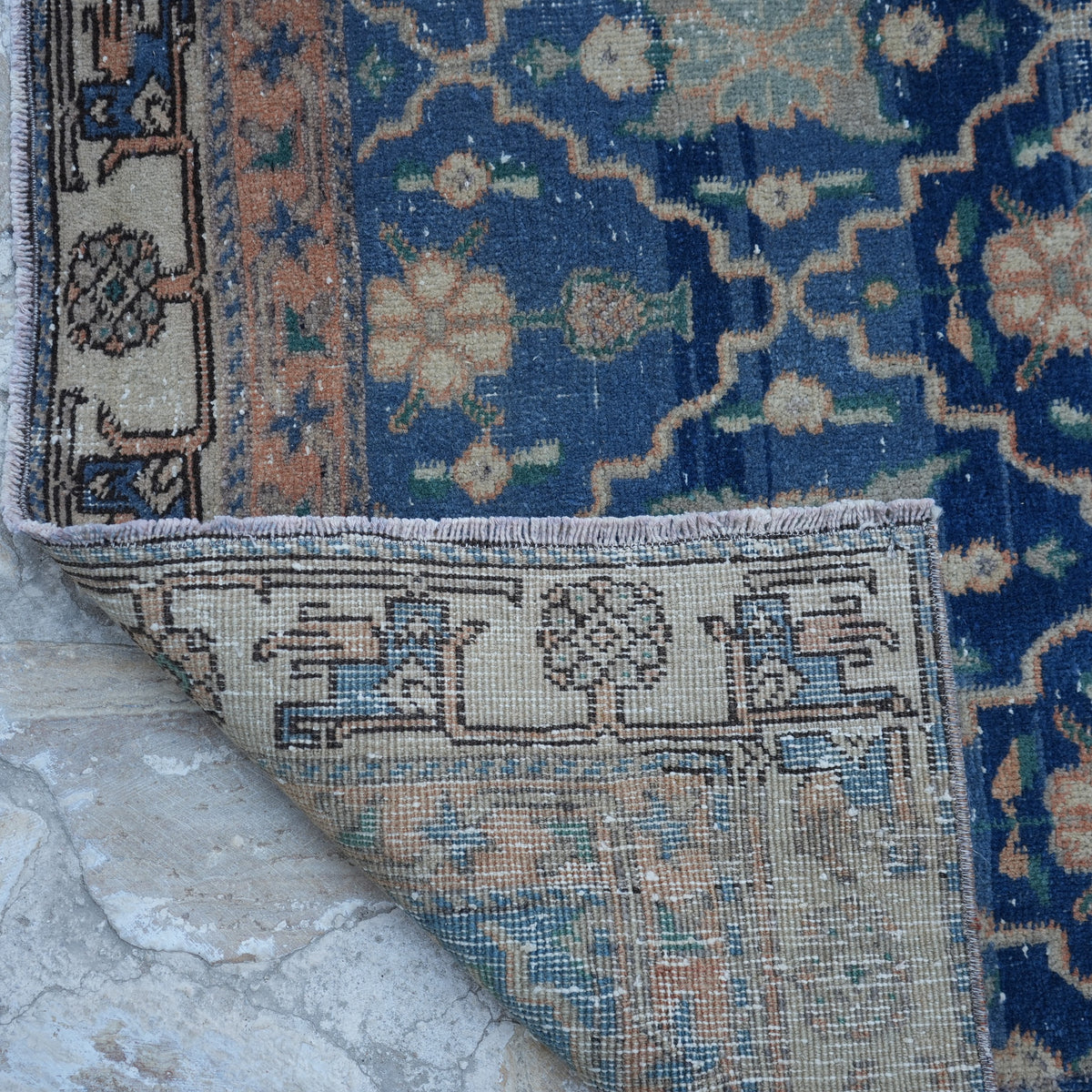
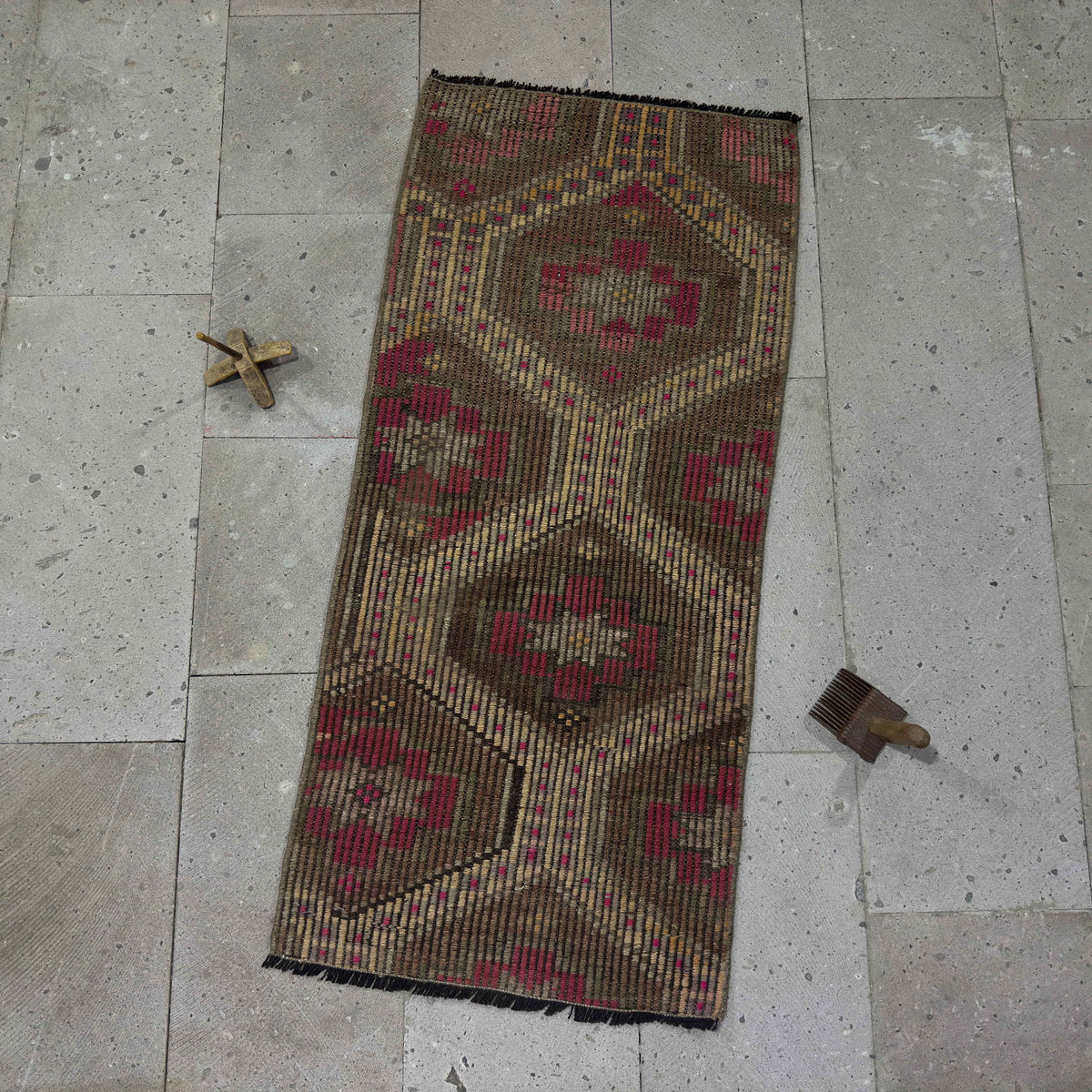
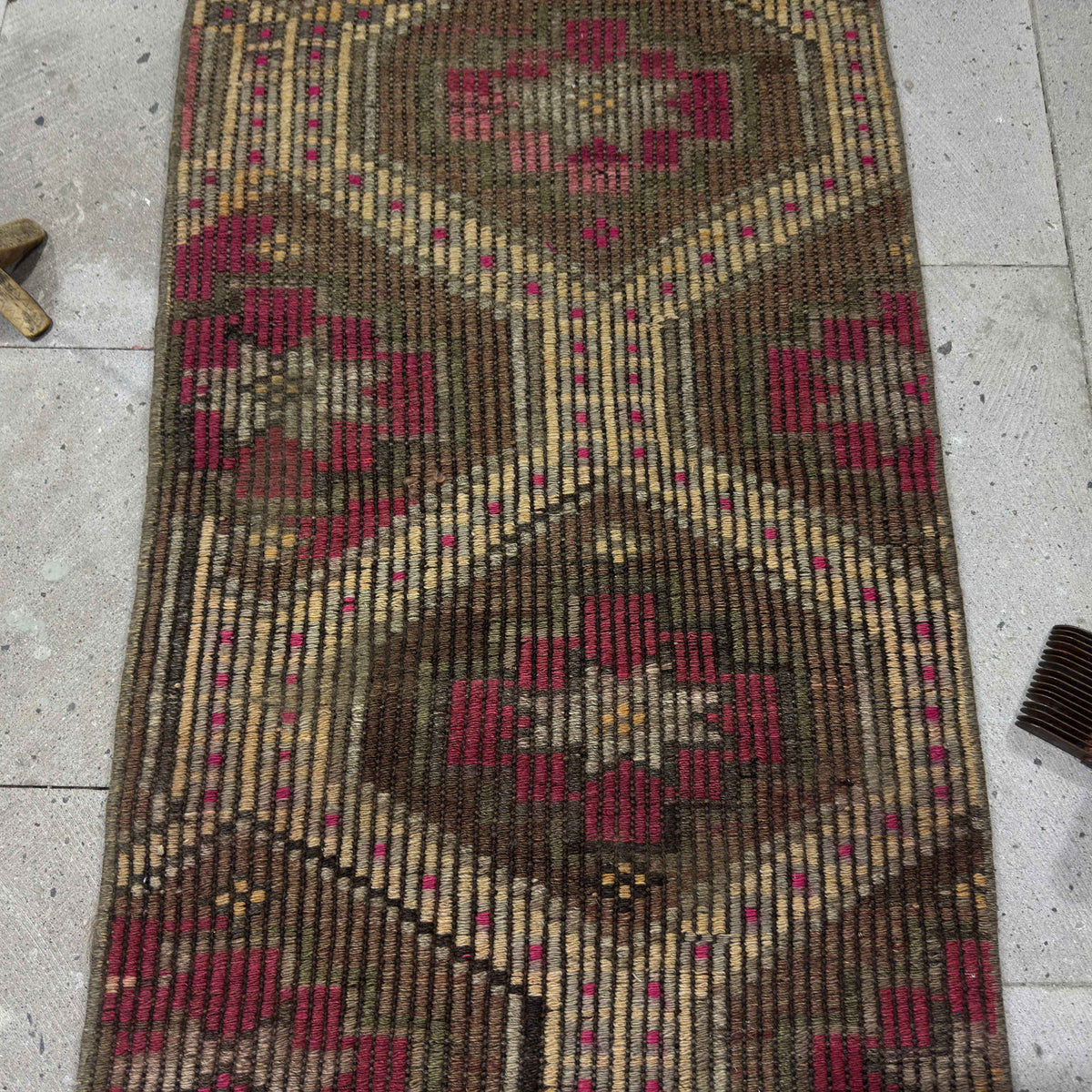
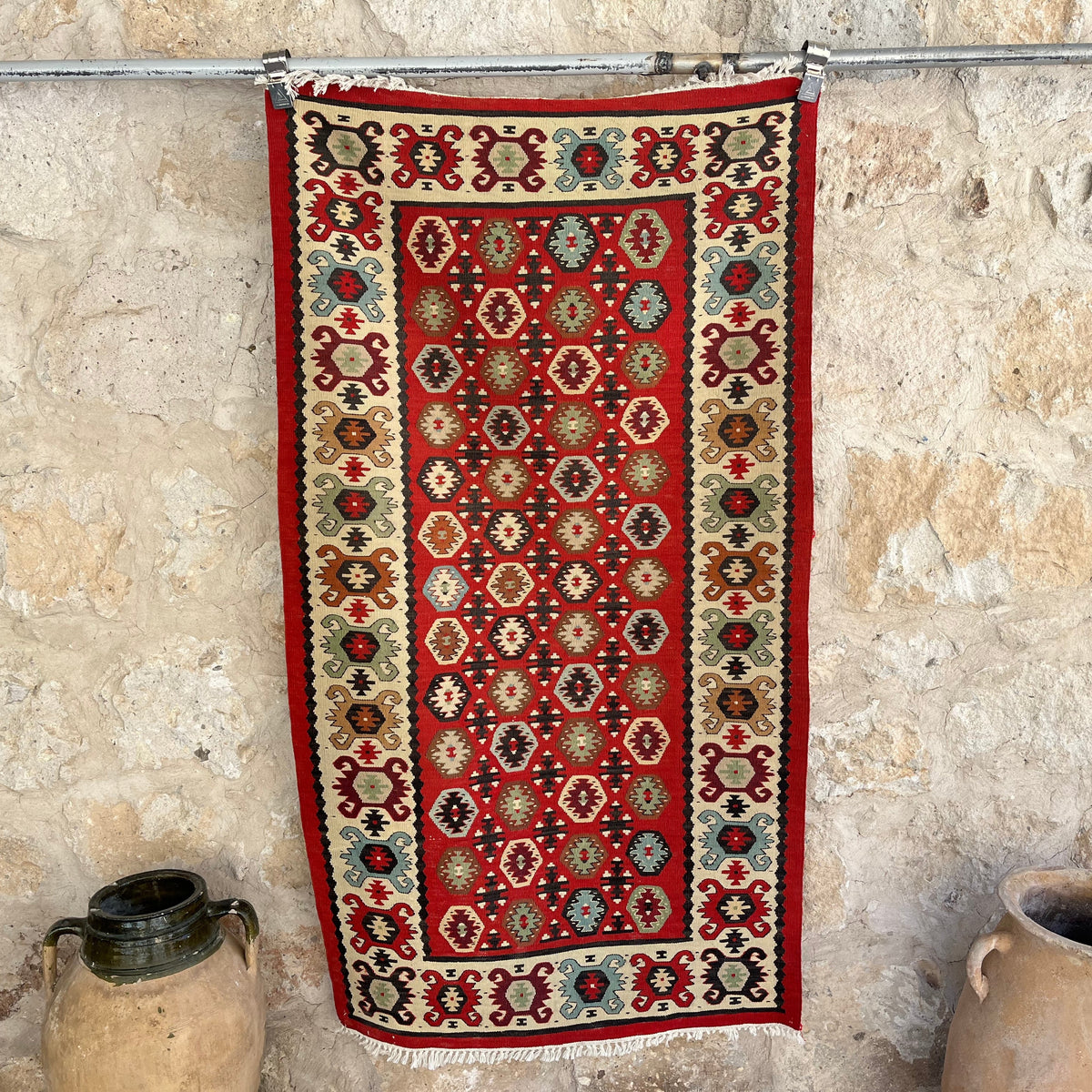
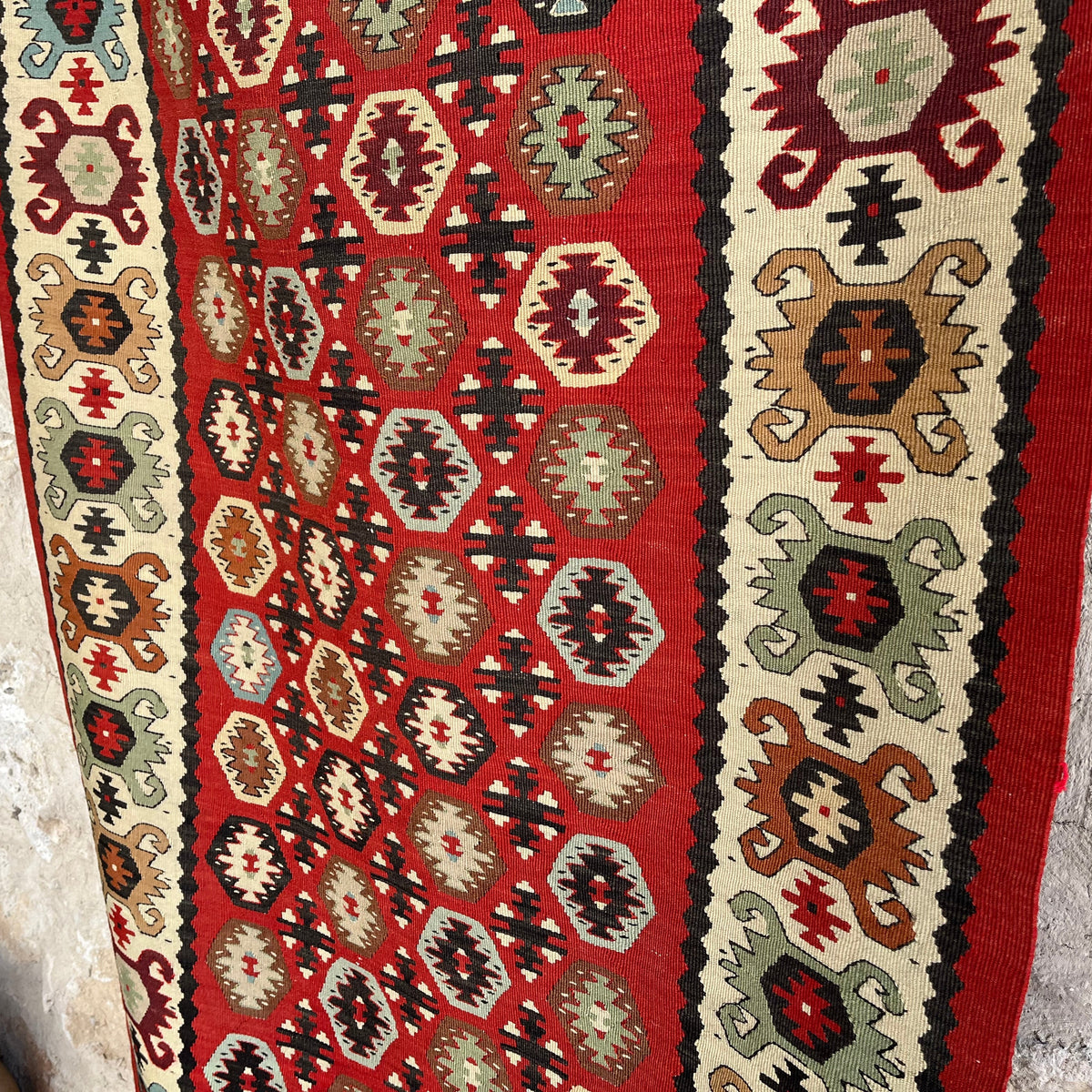
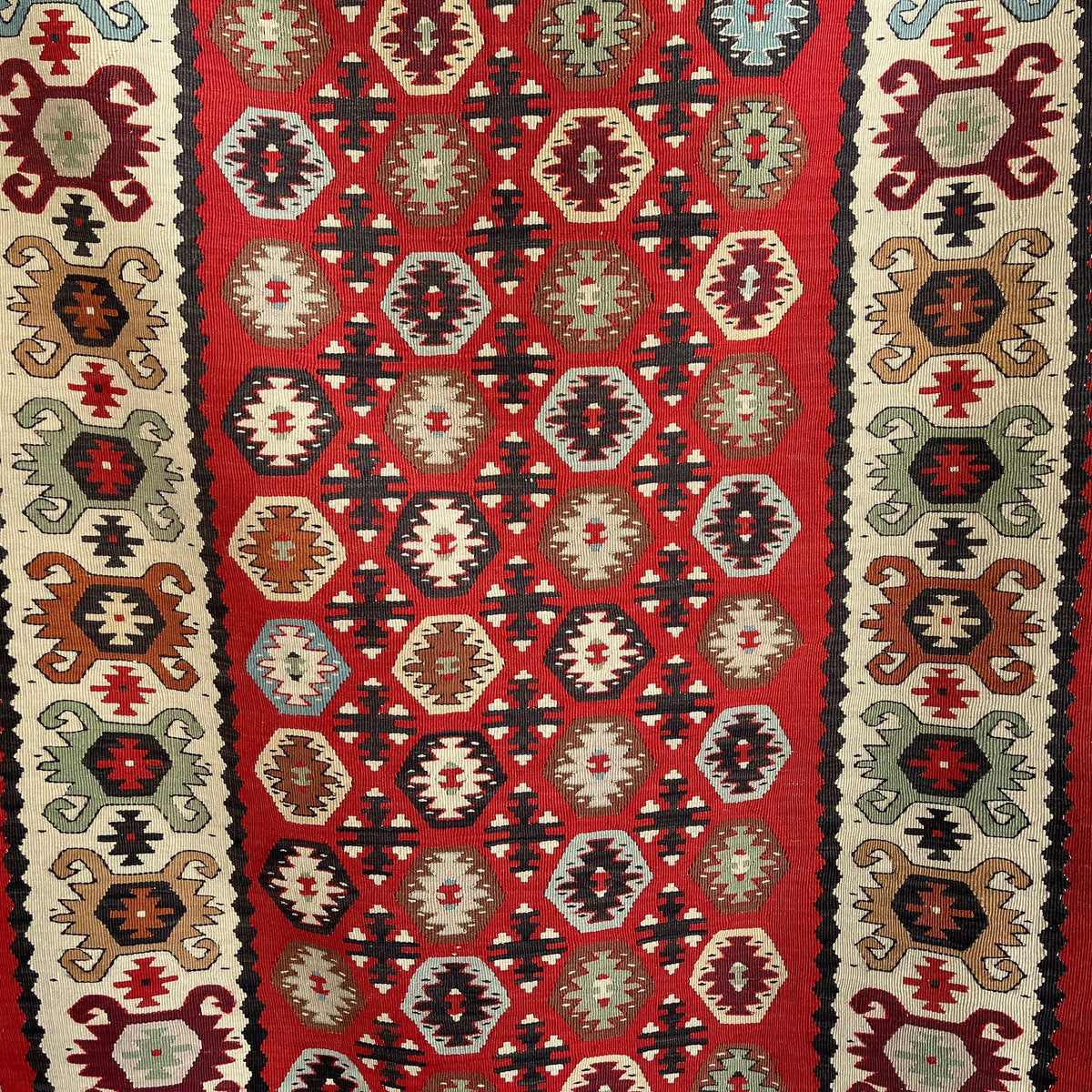
Shop Handmade Rugs by Type


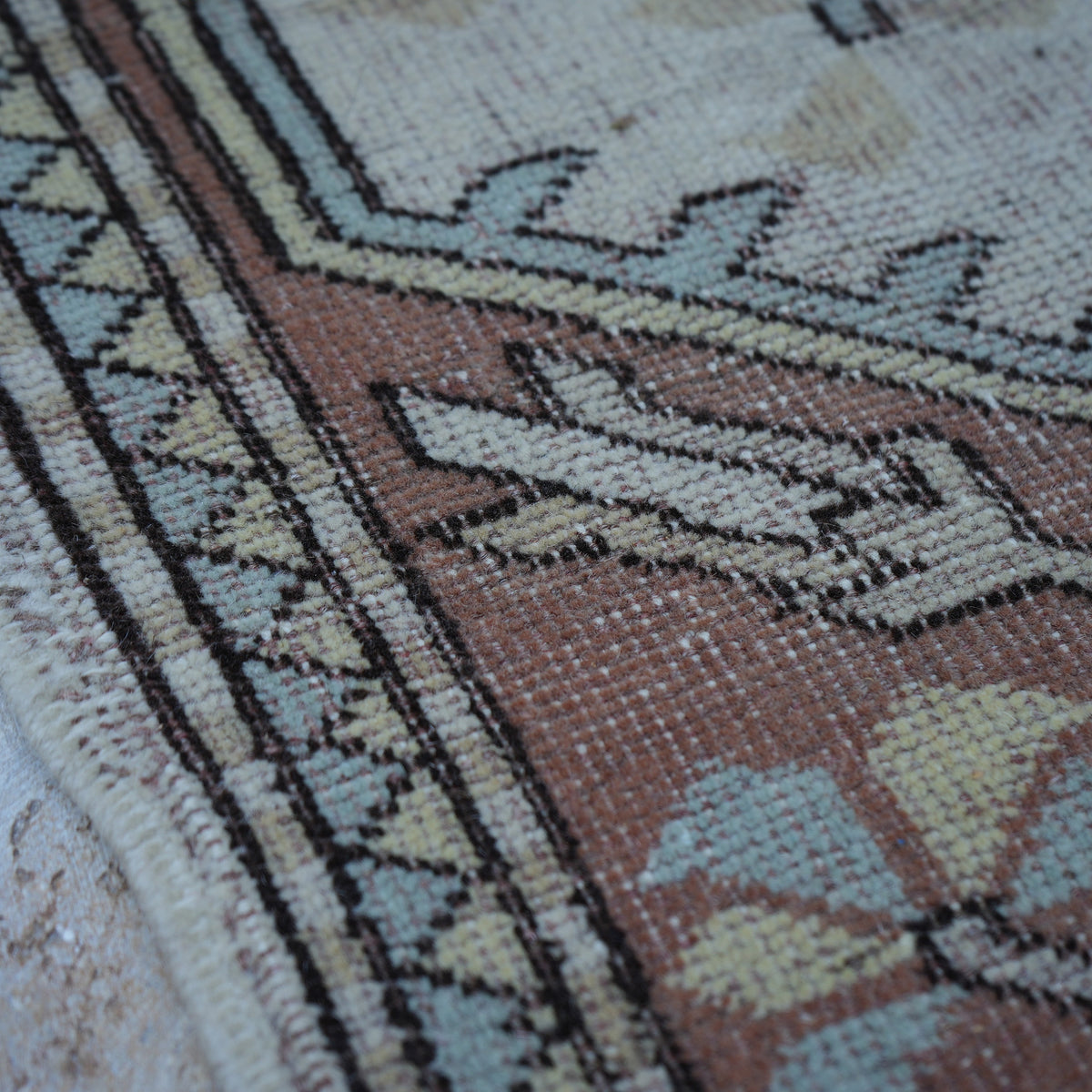
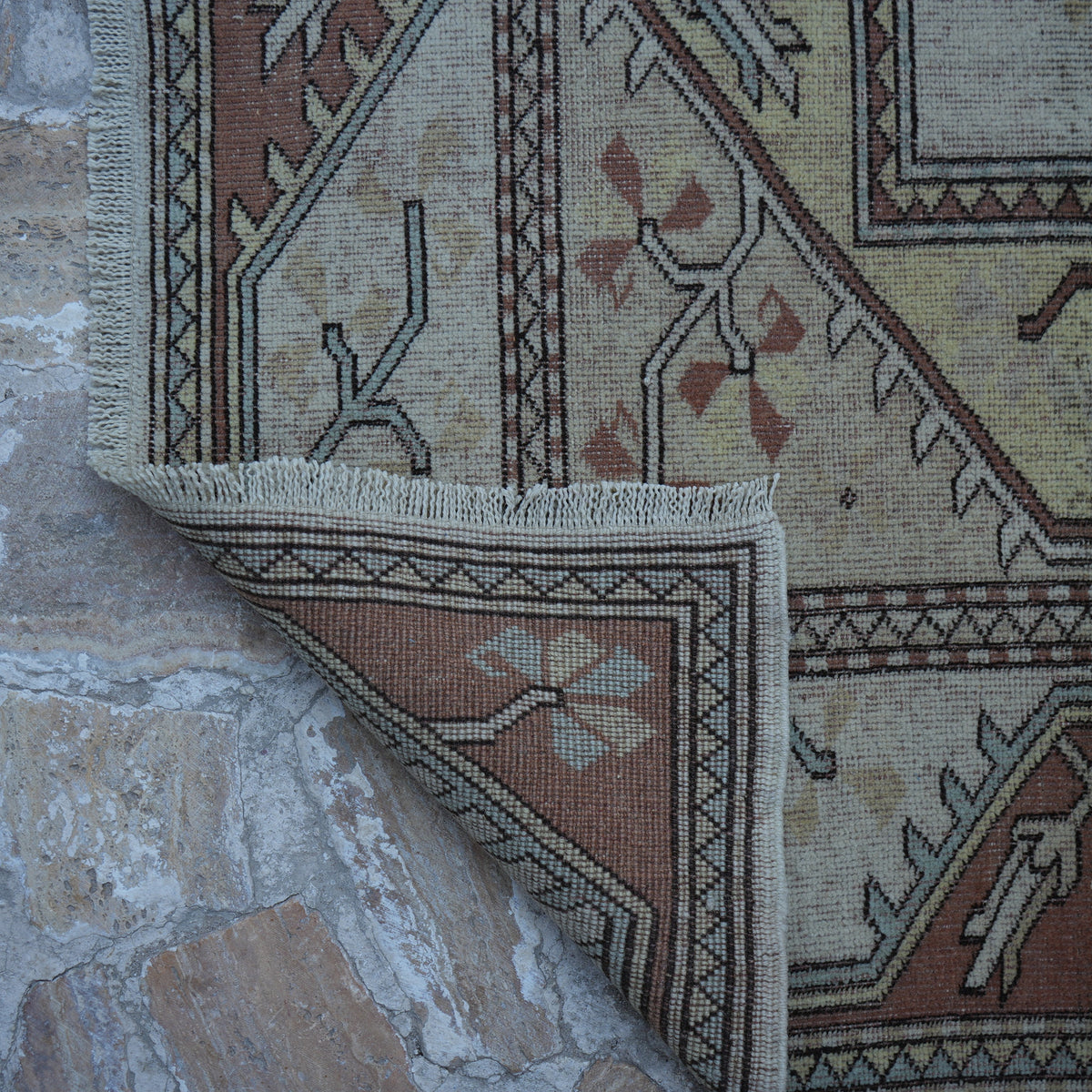
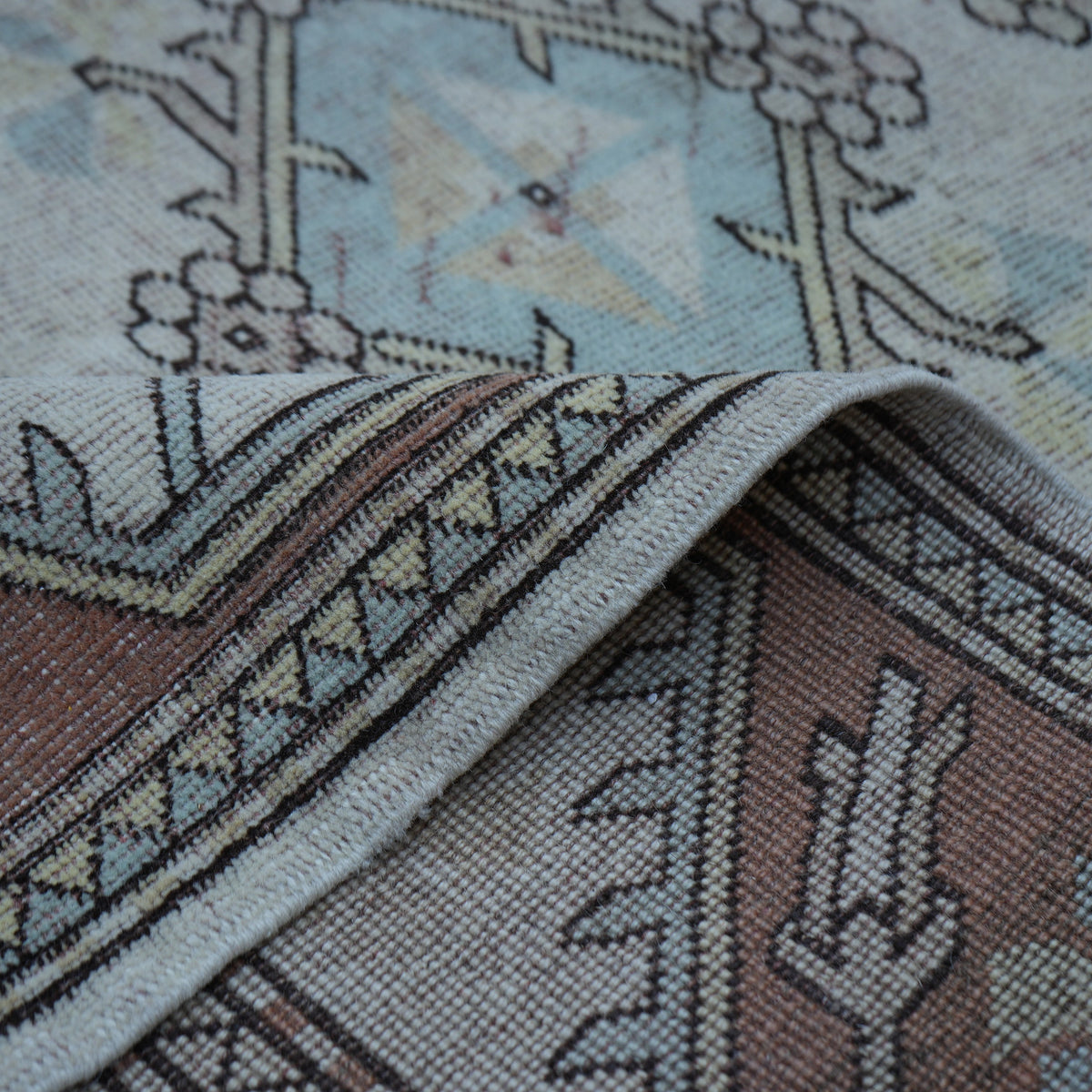




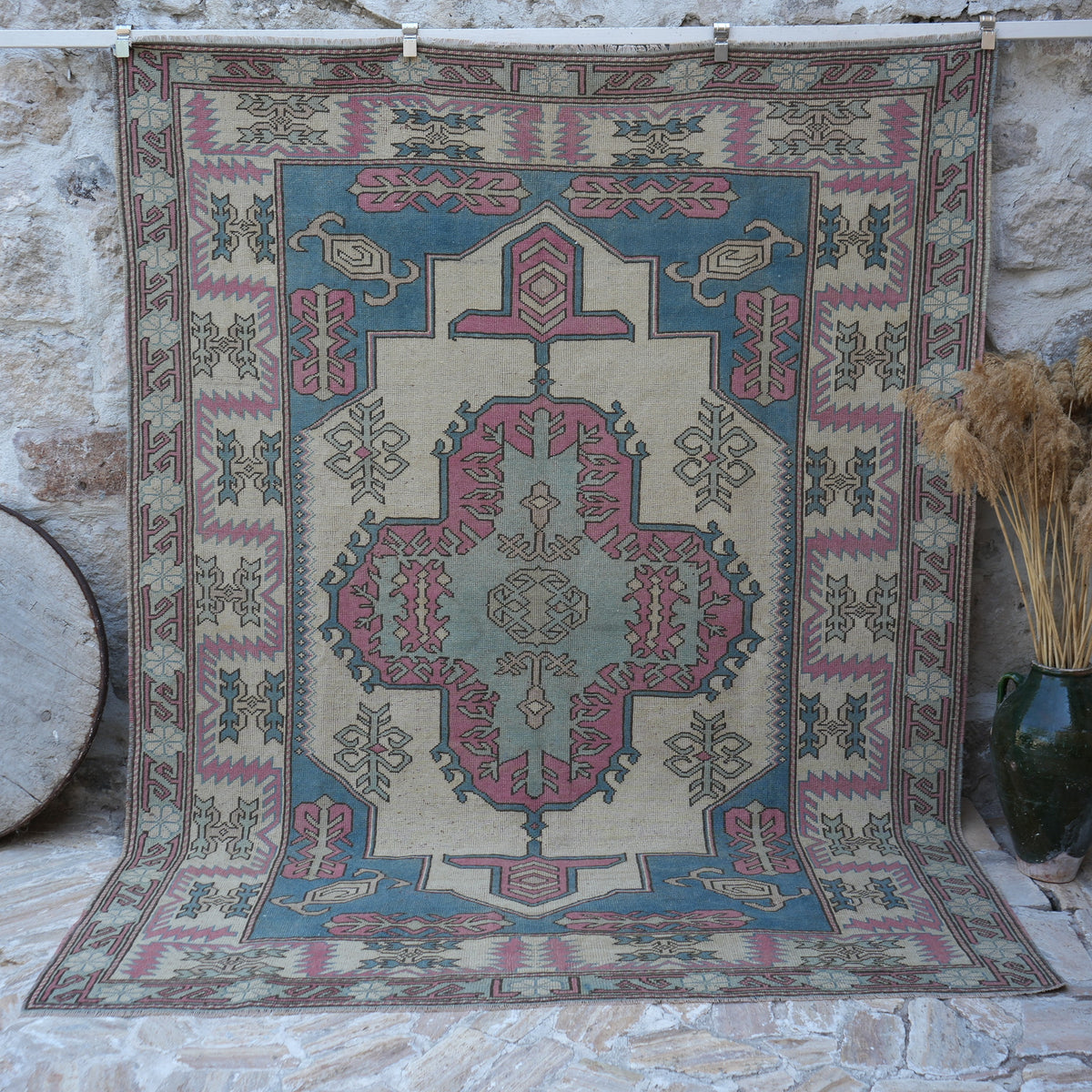
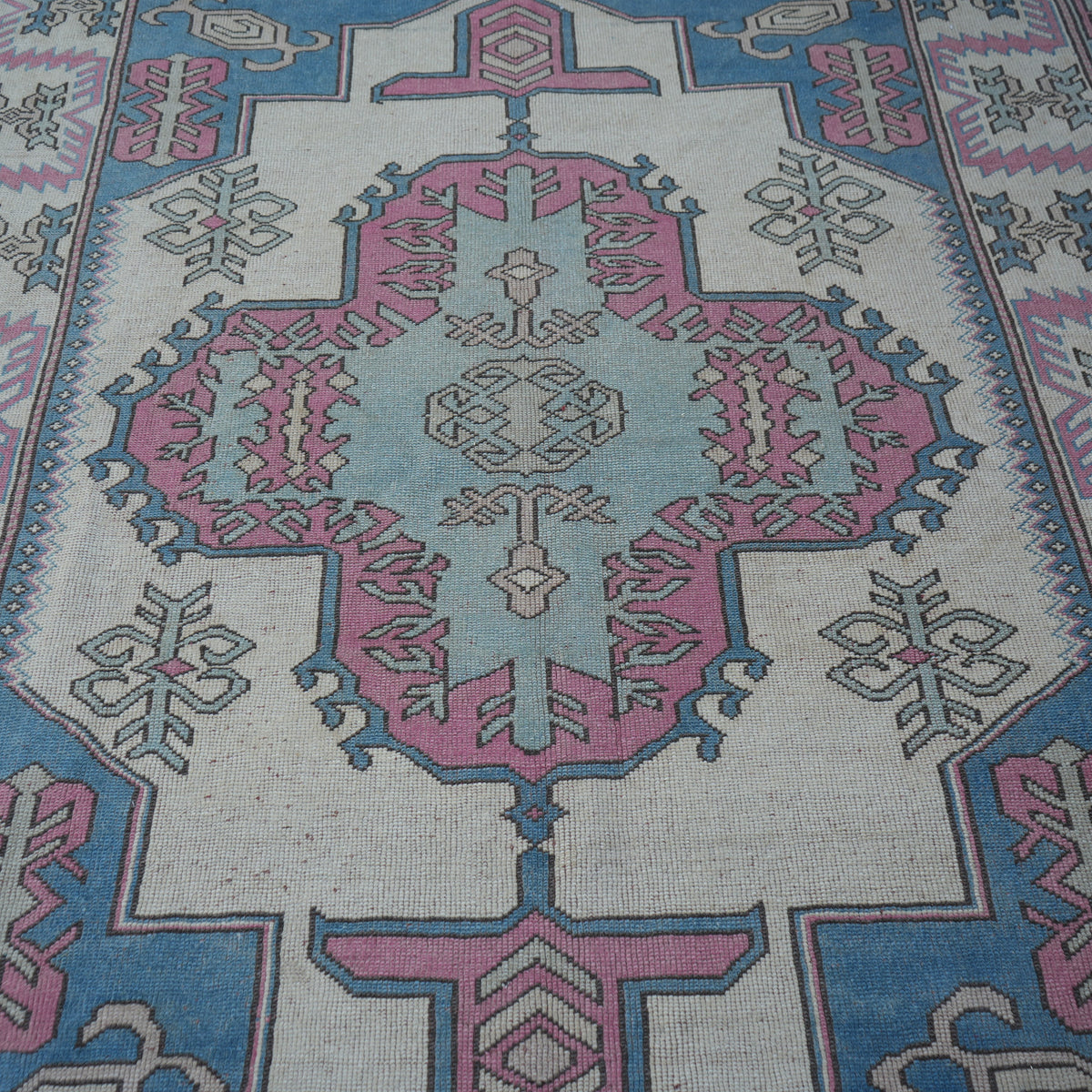
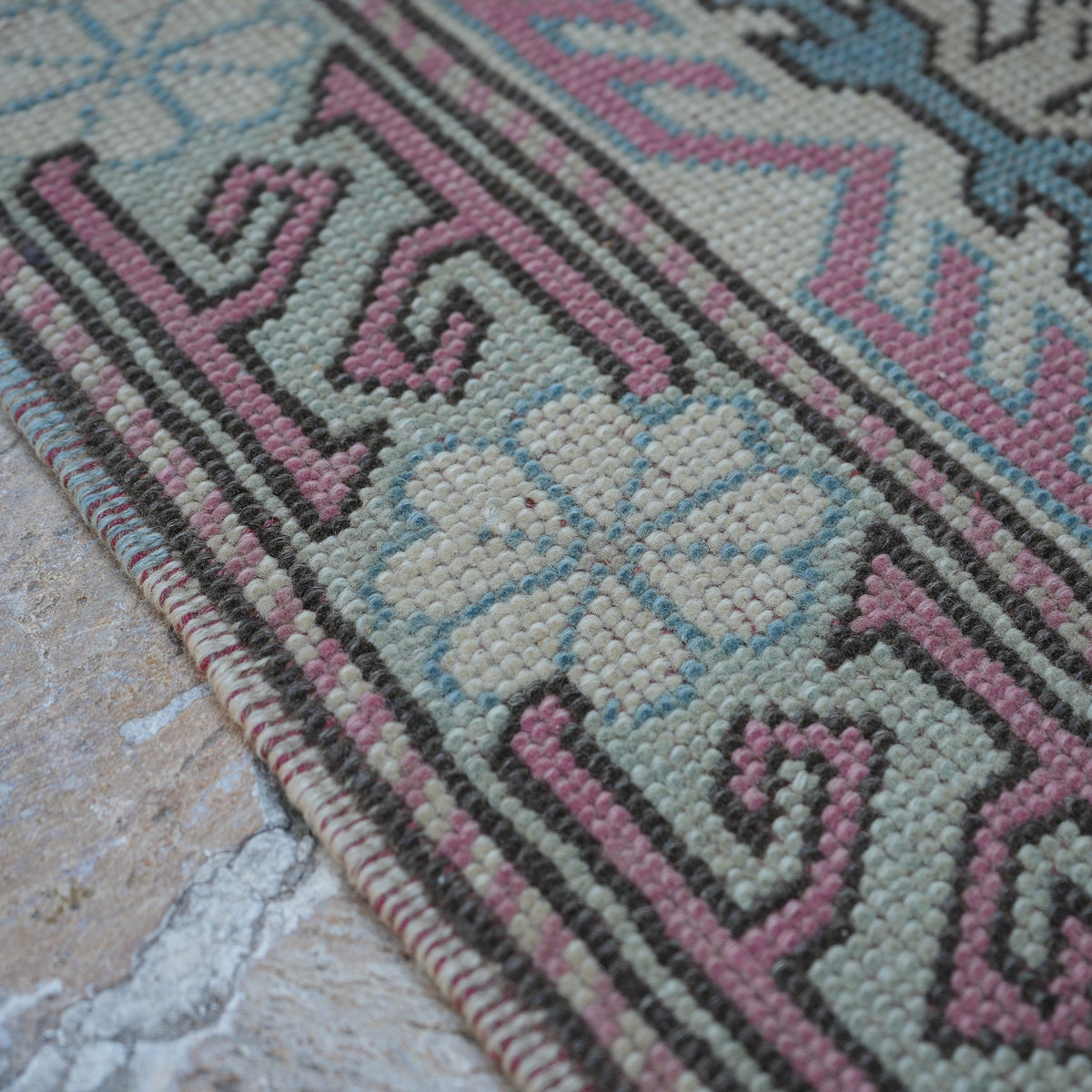
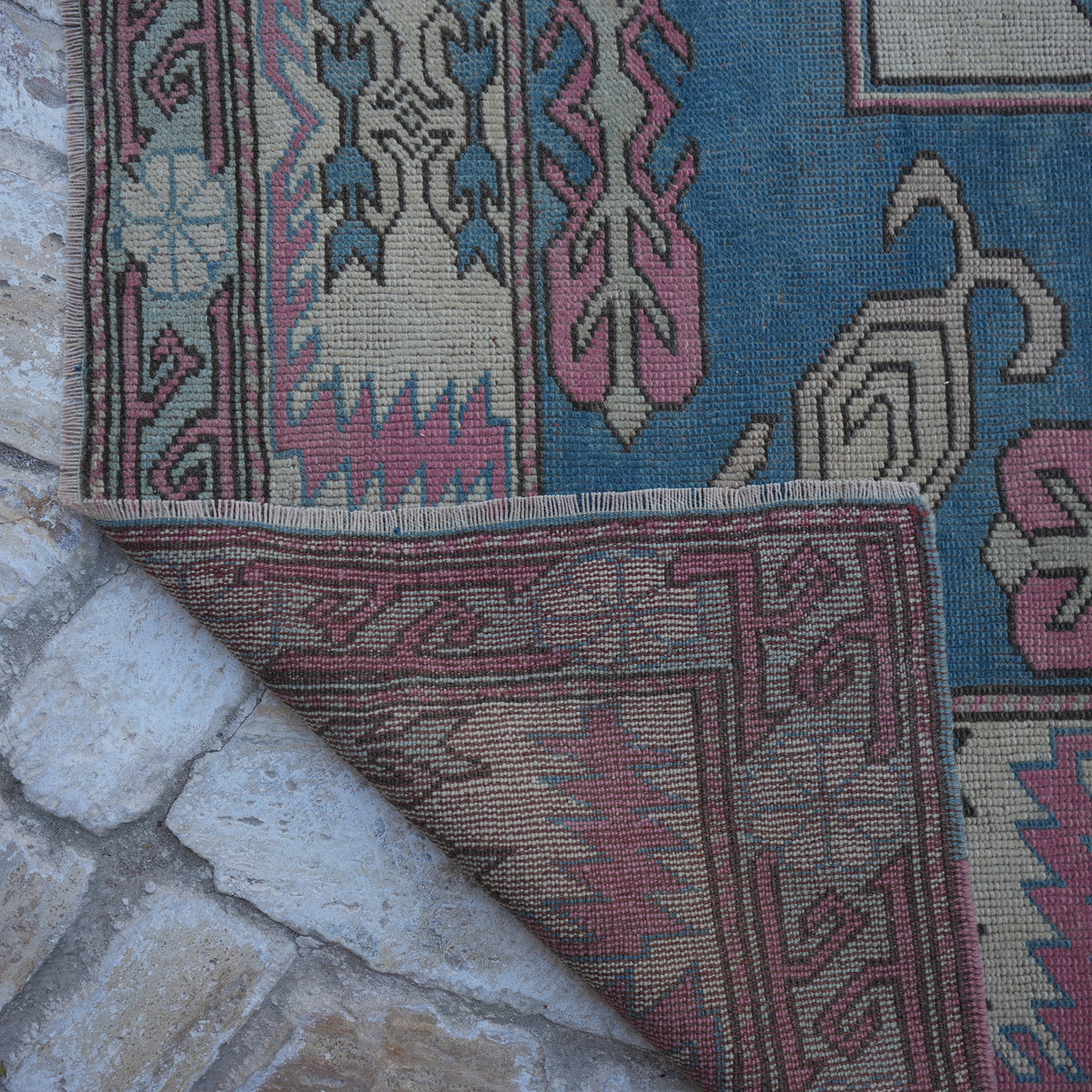
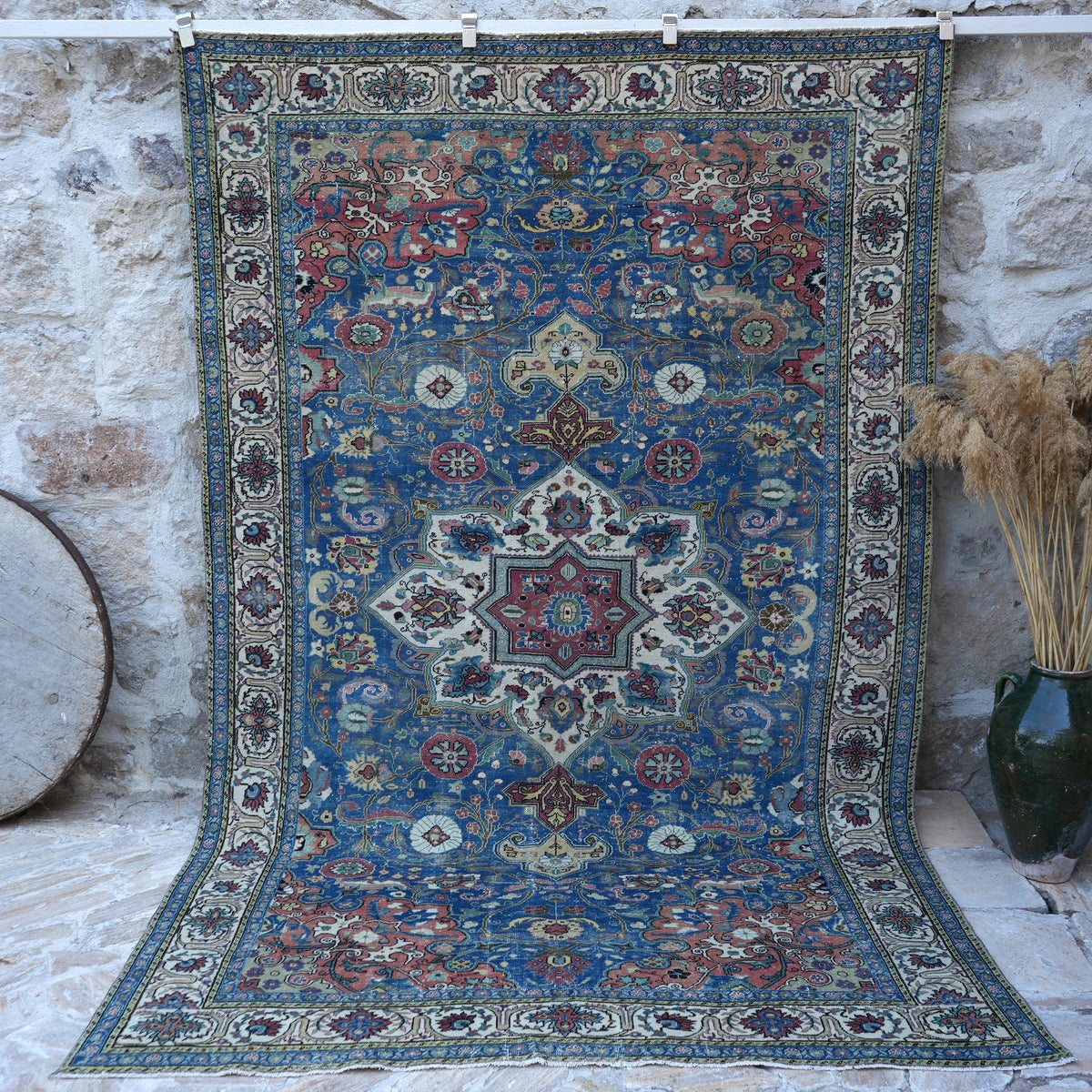
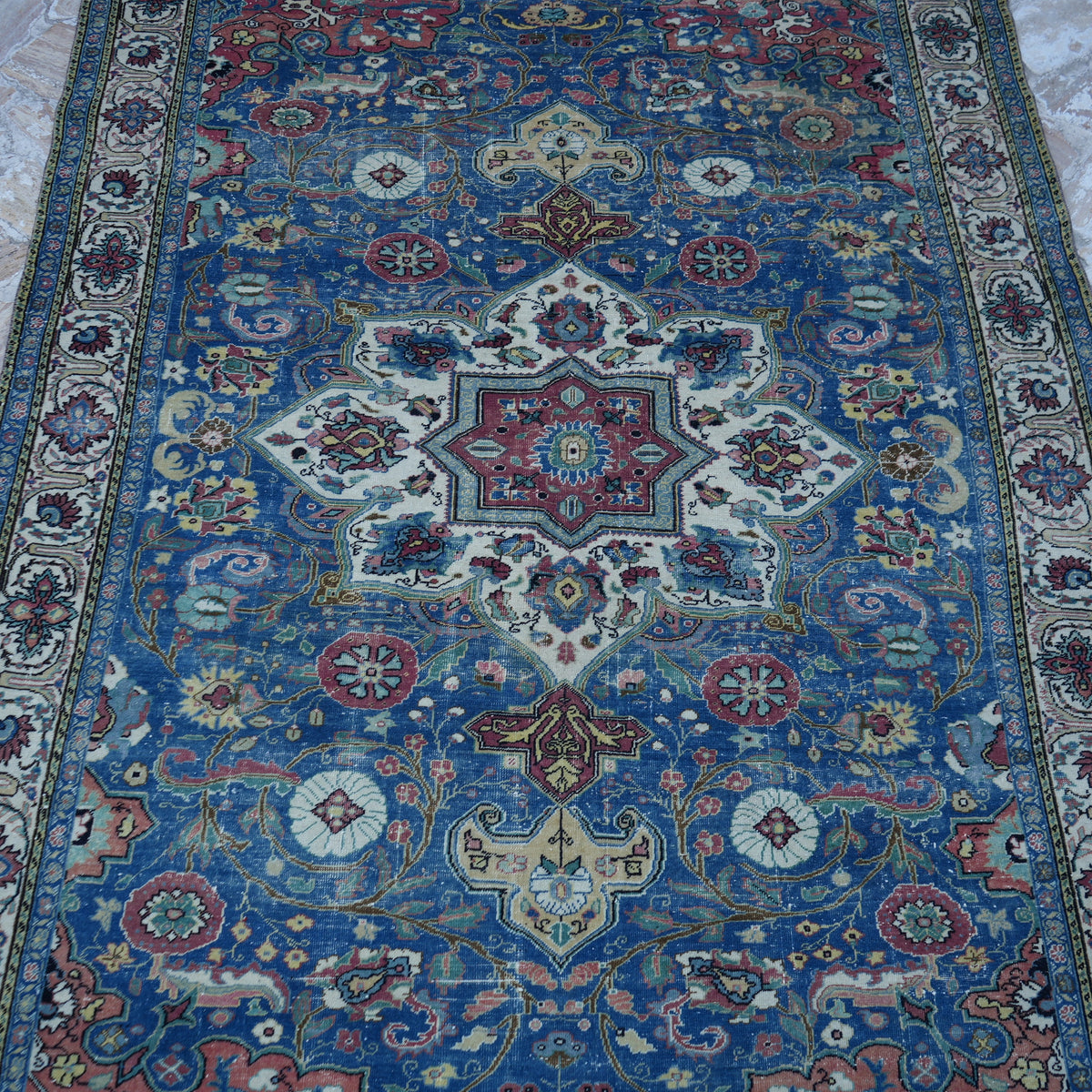
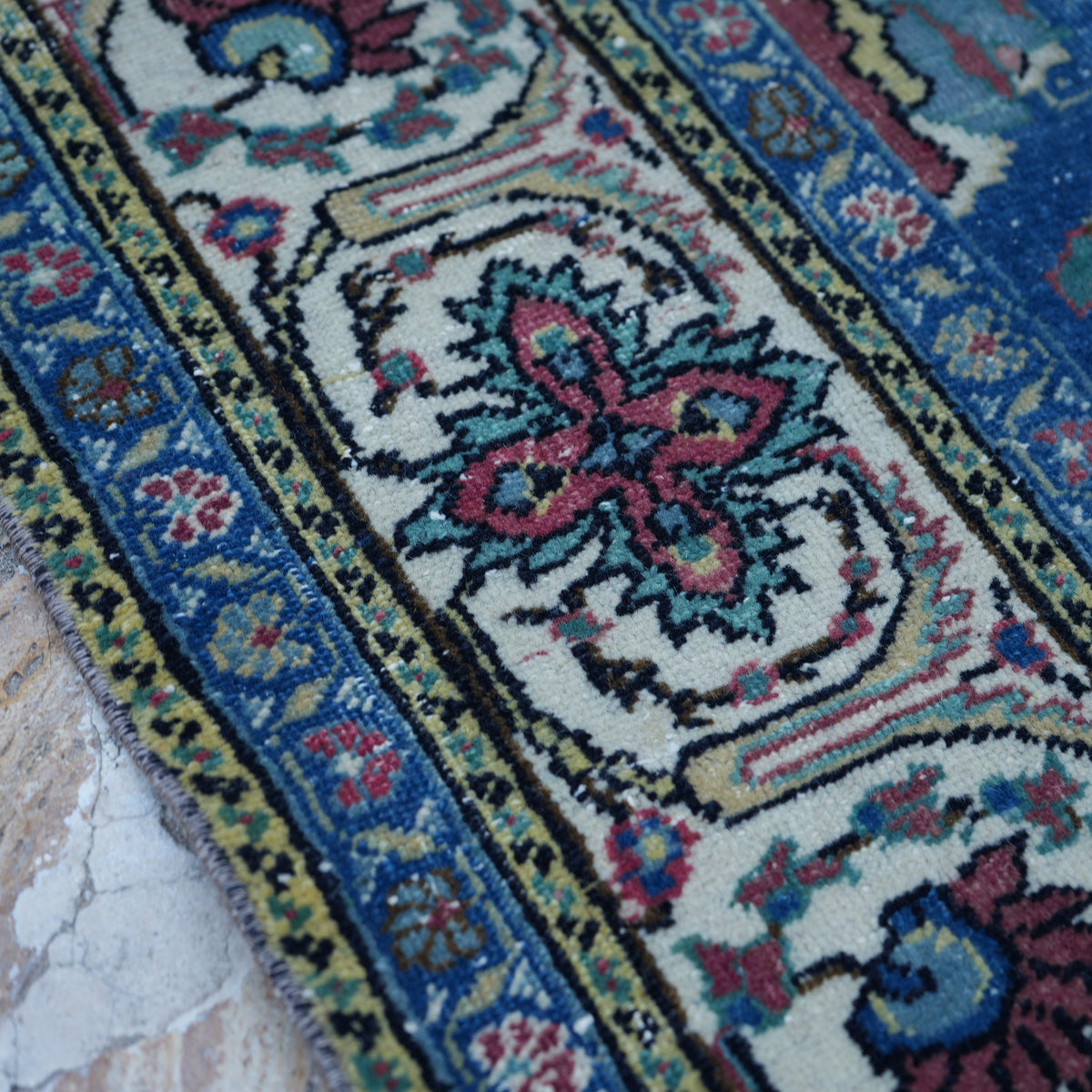
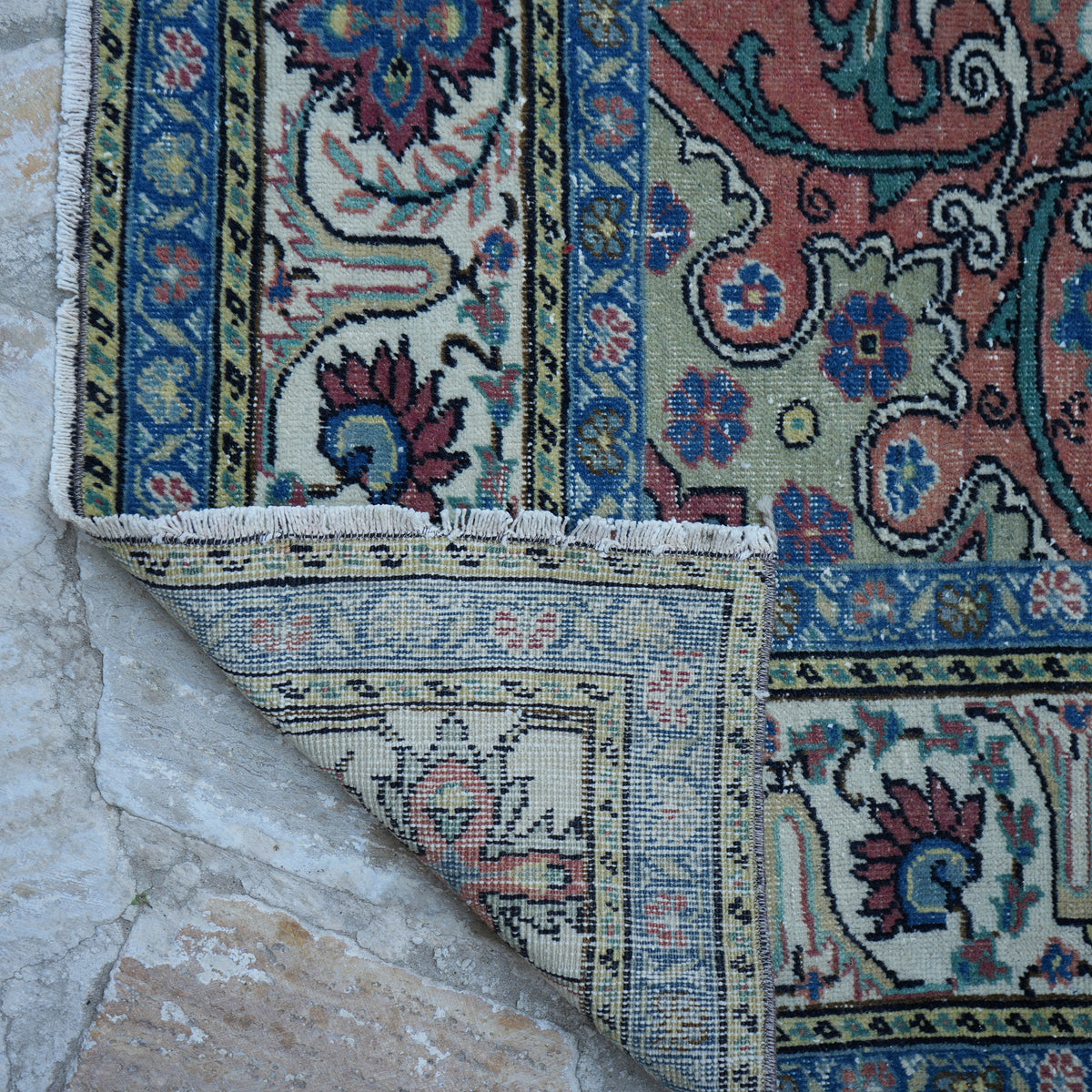
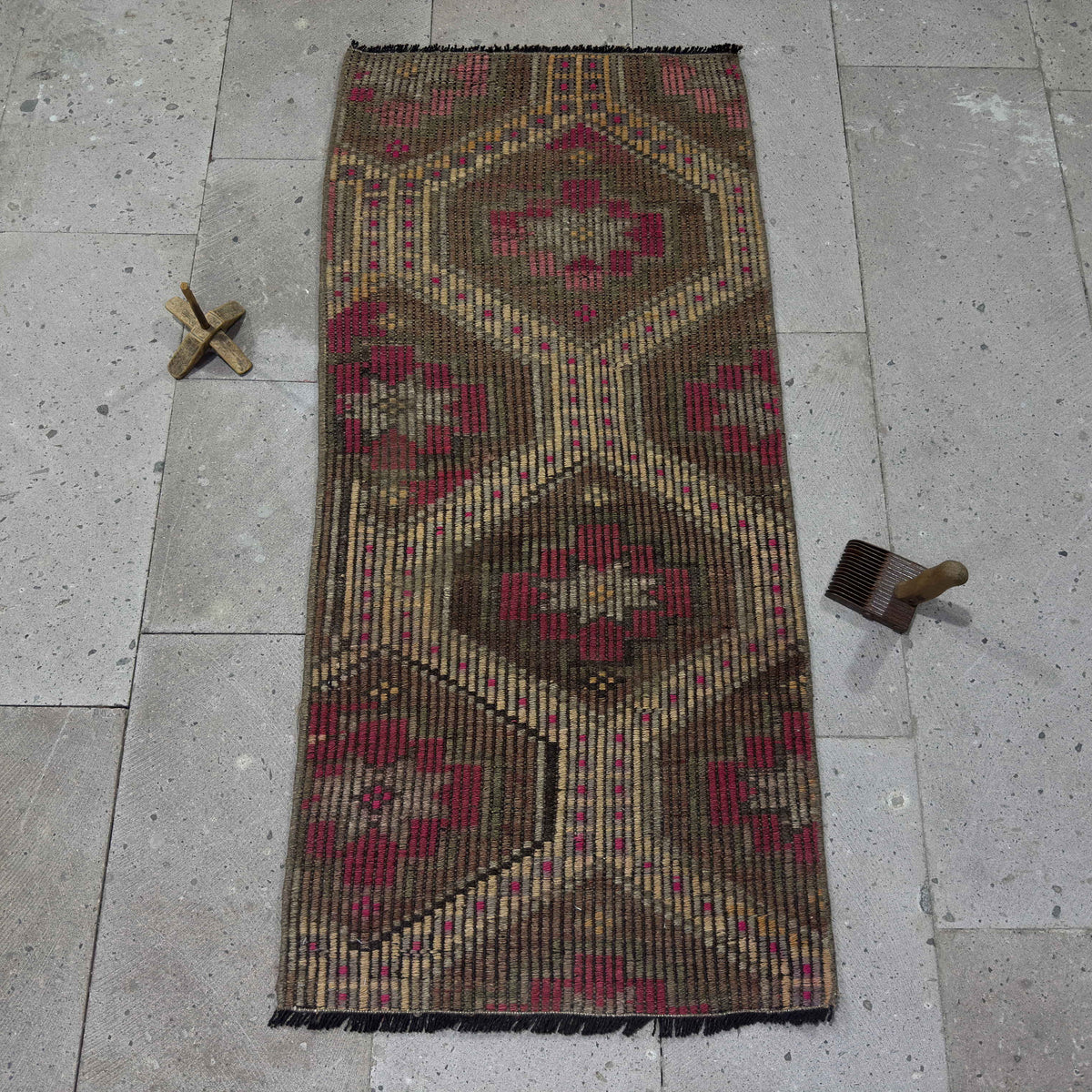
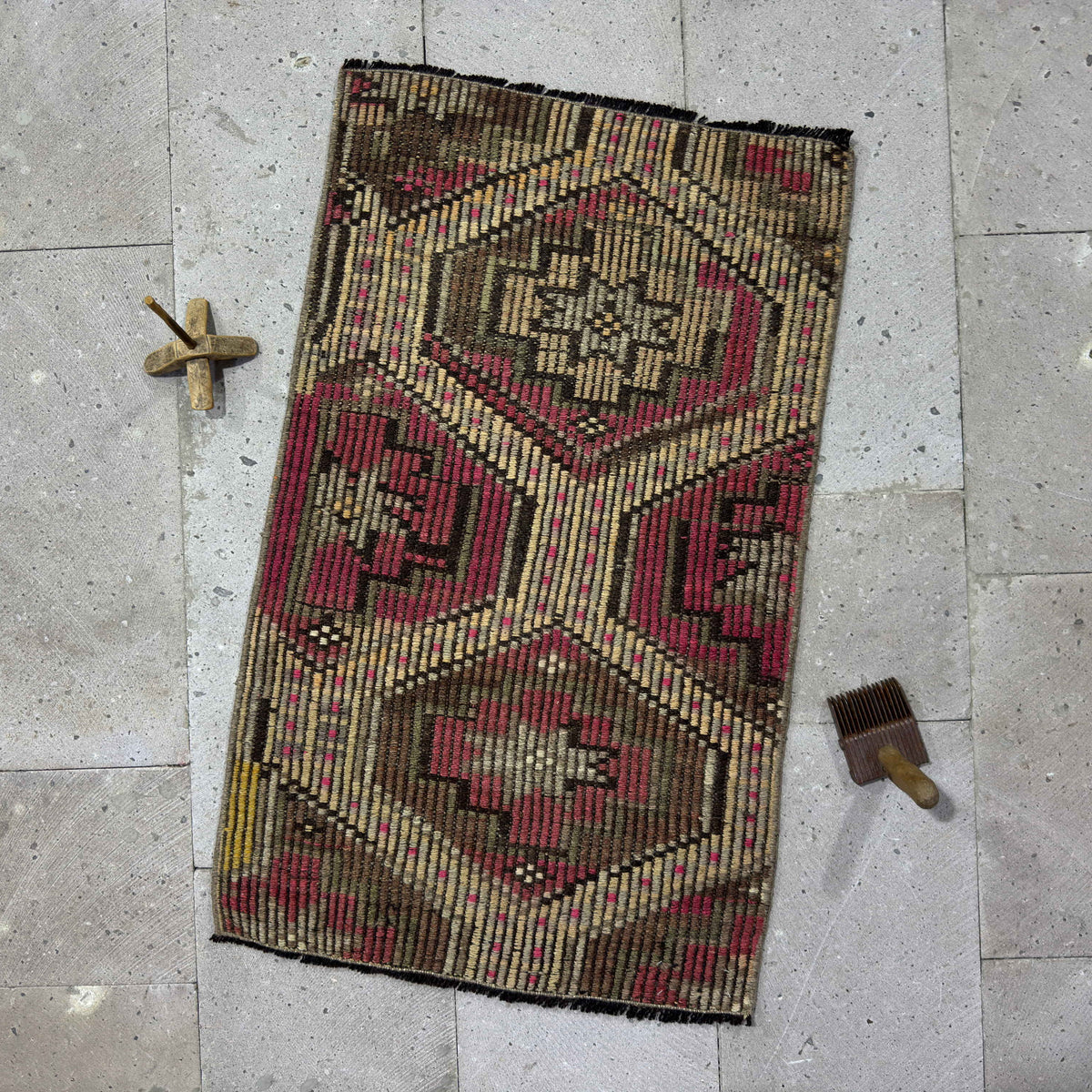
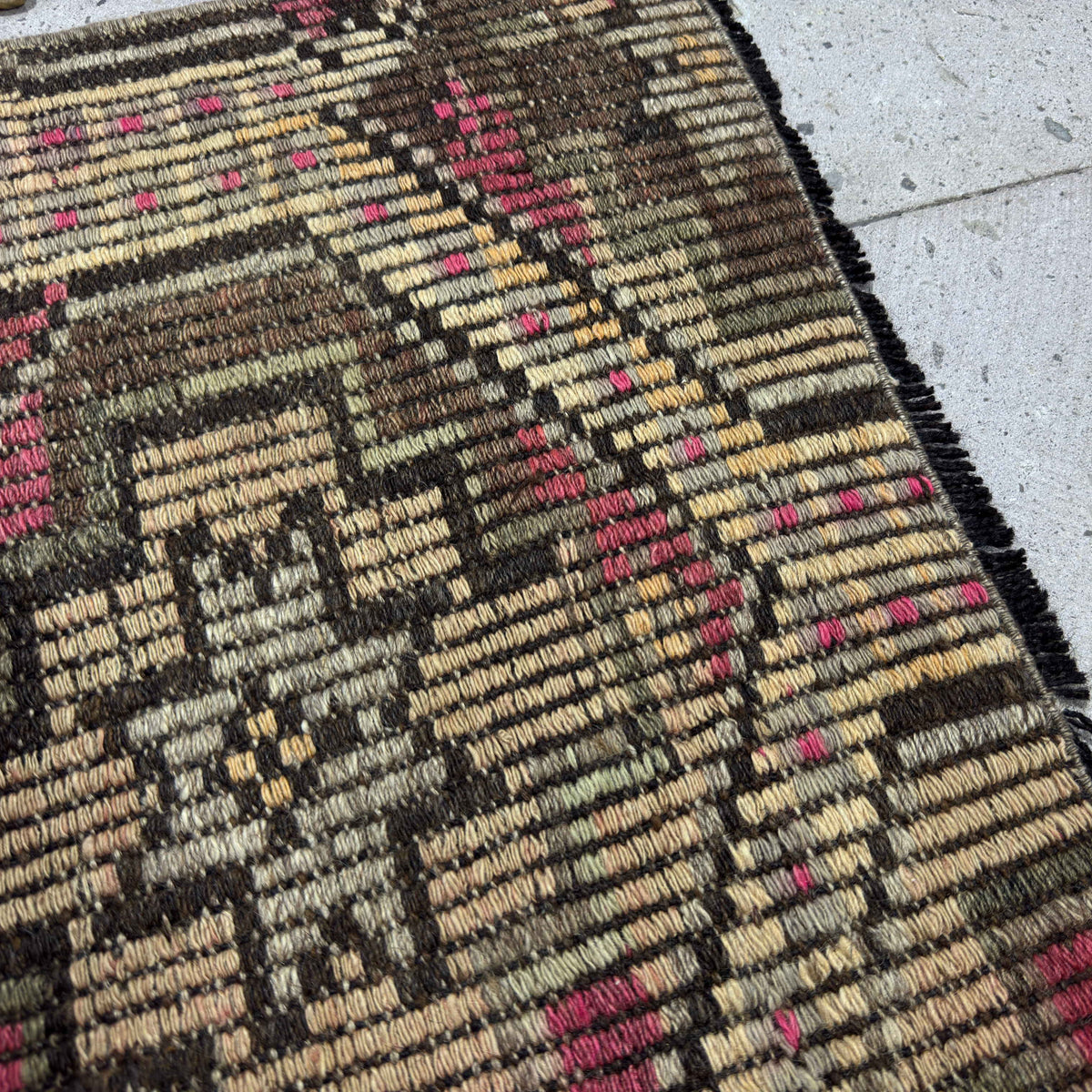
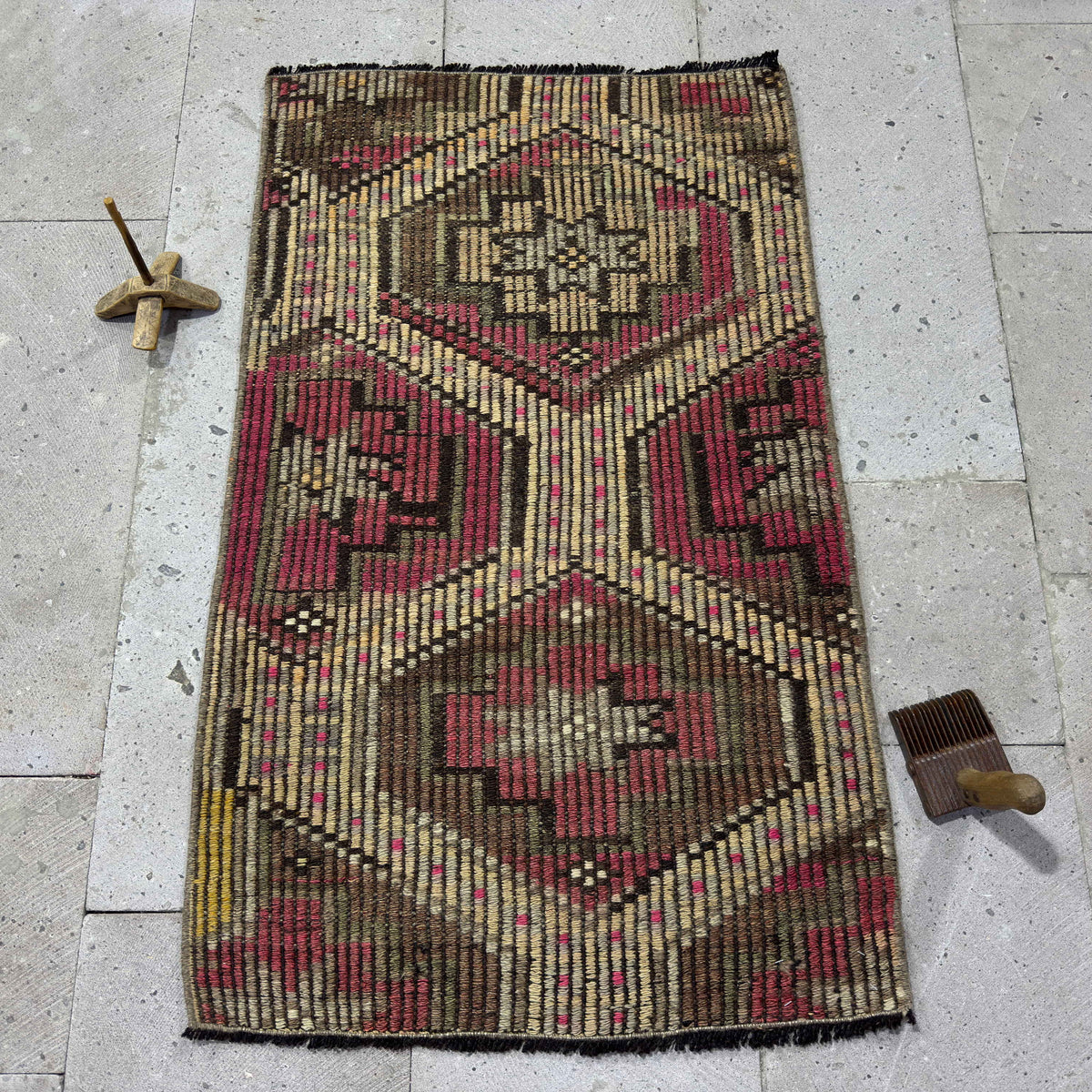

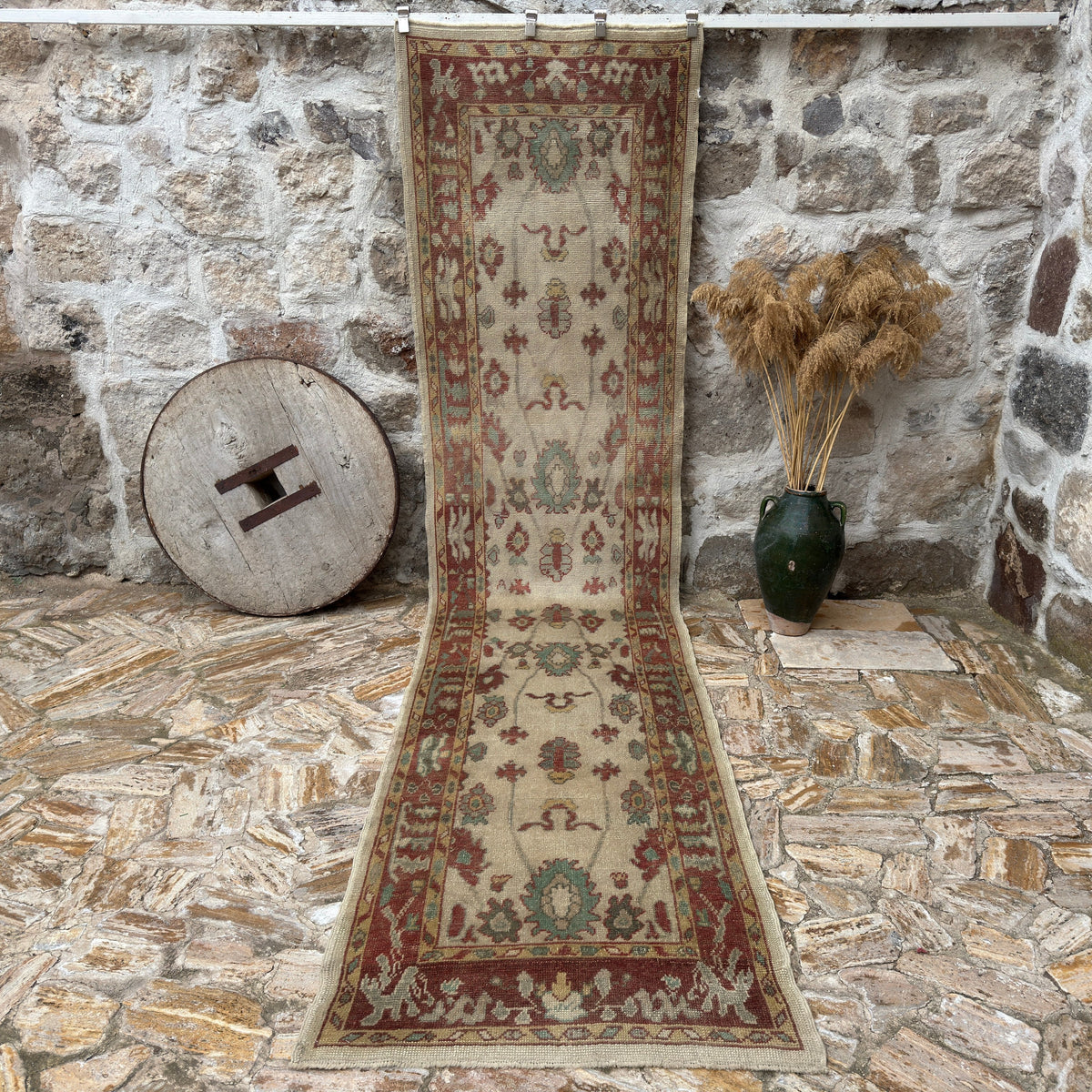
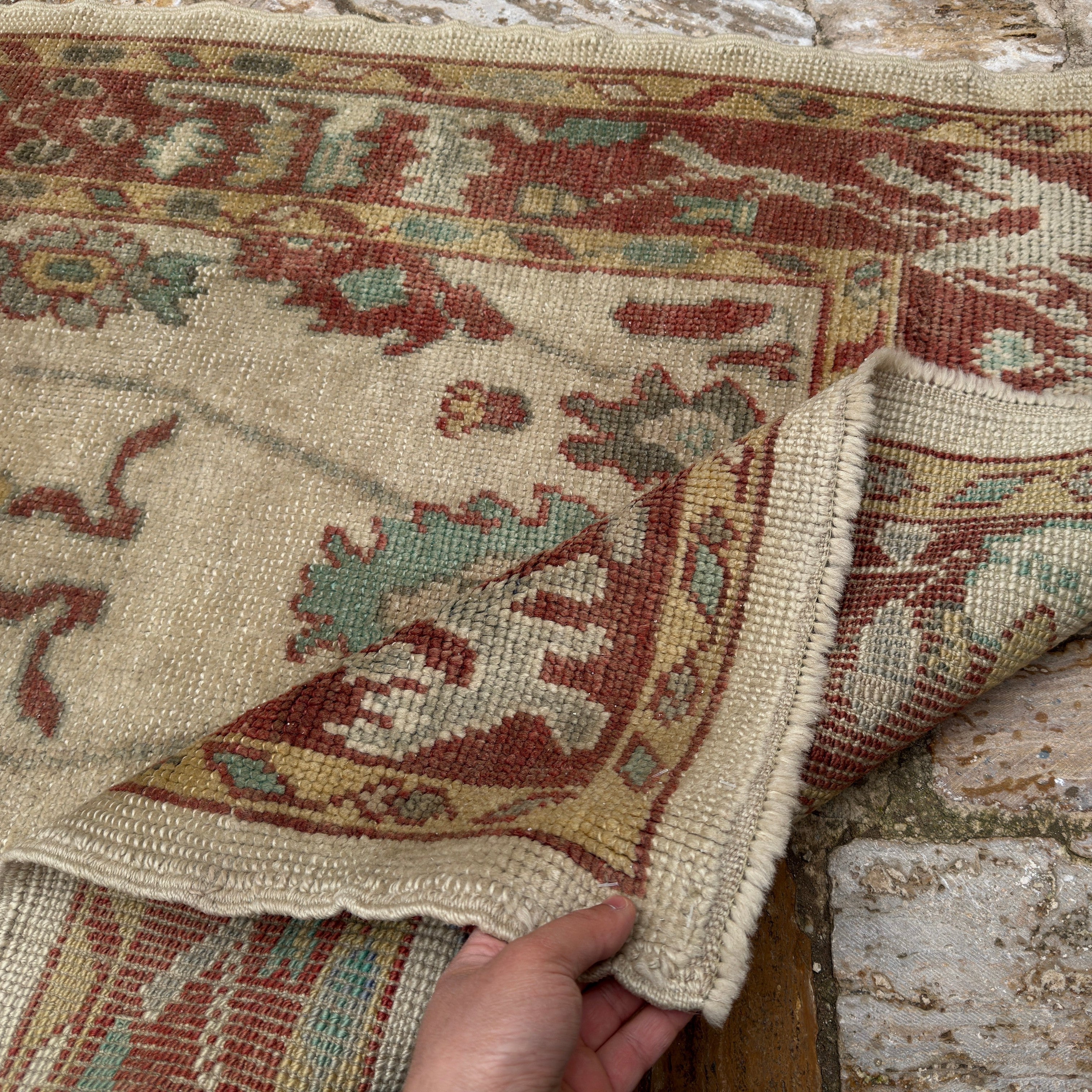
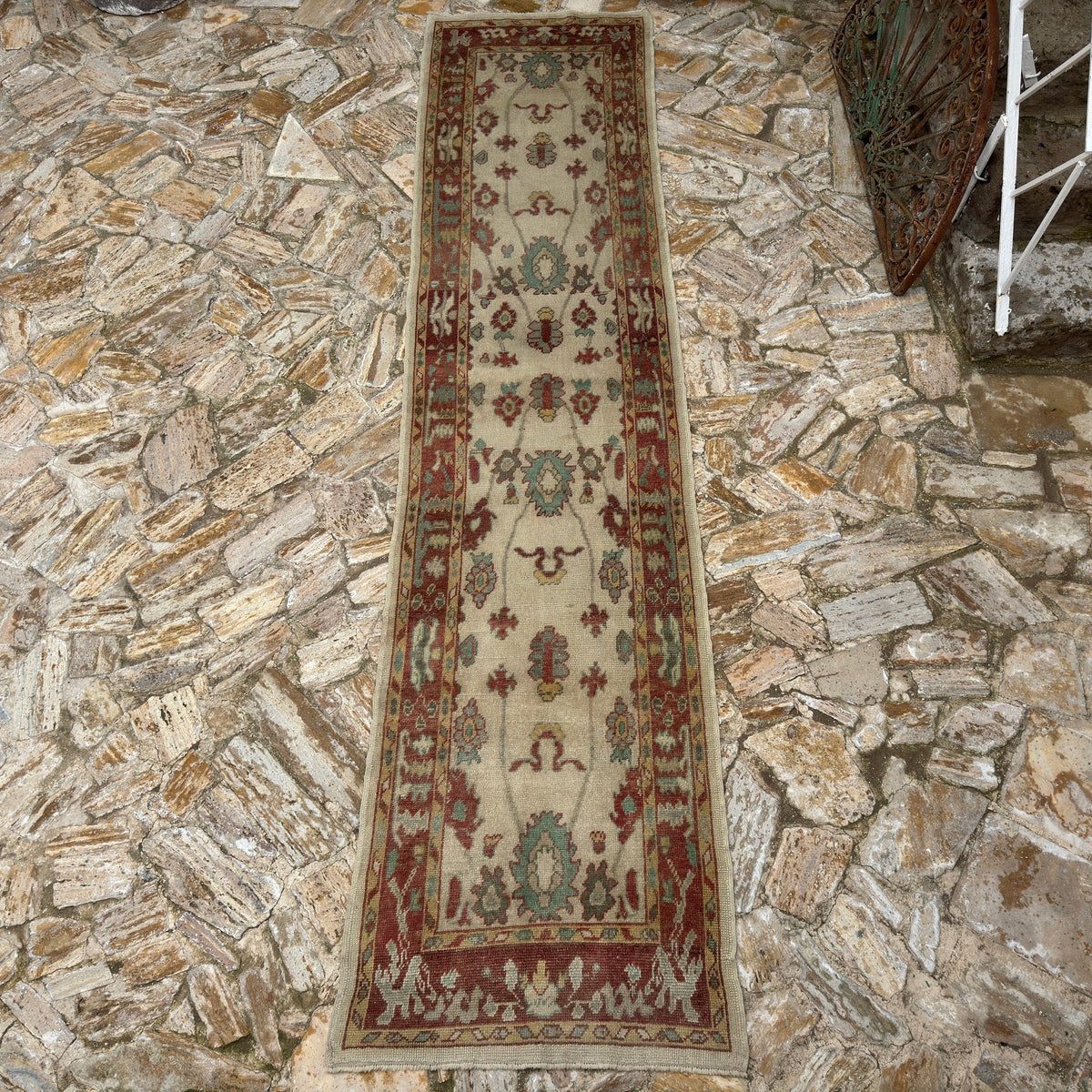
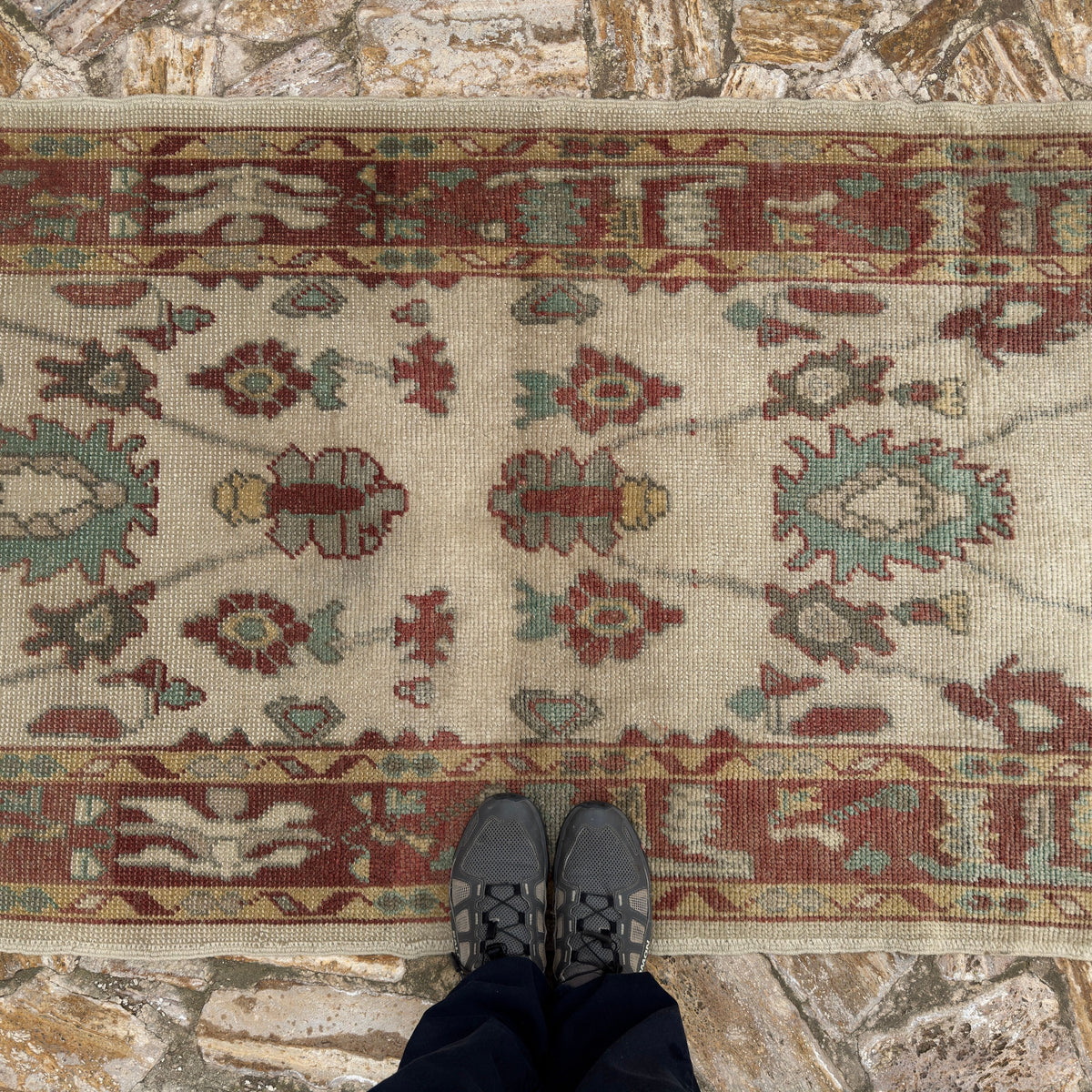
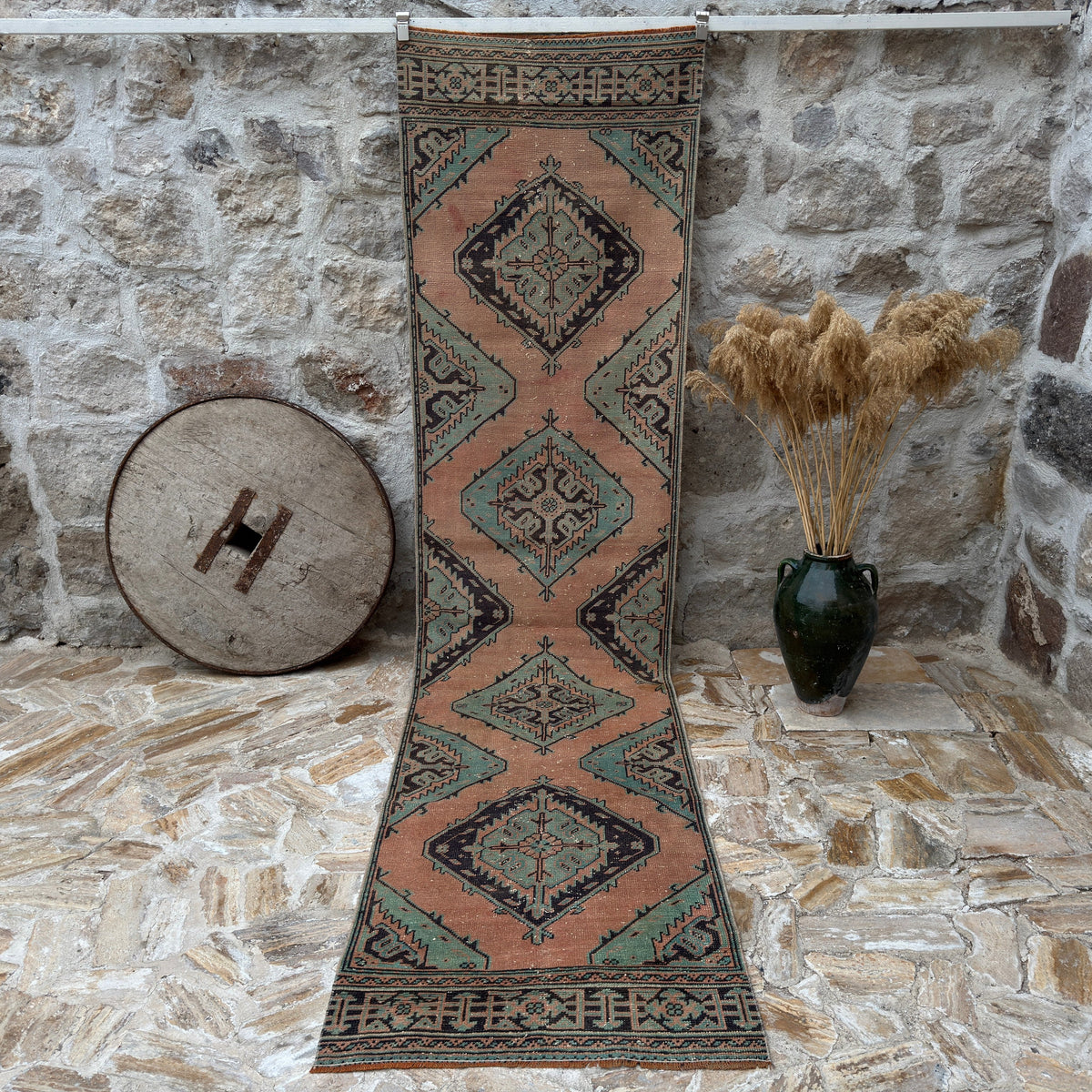
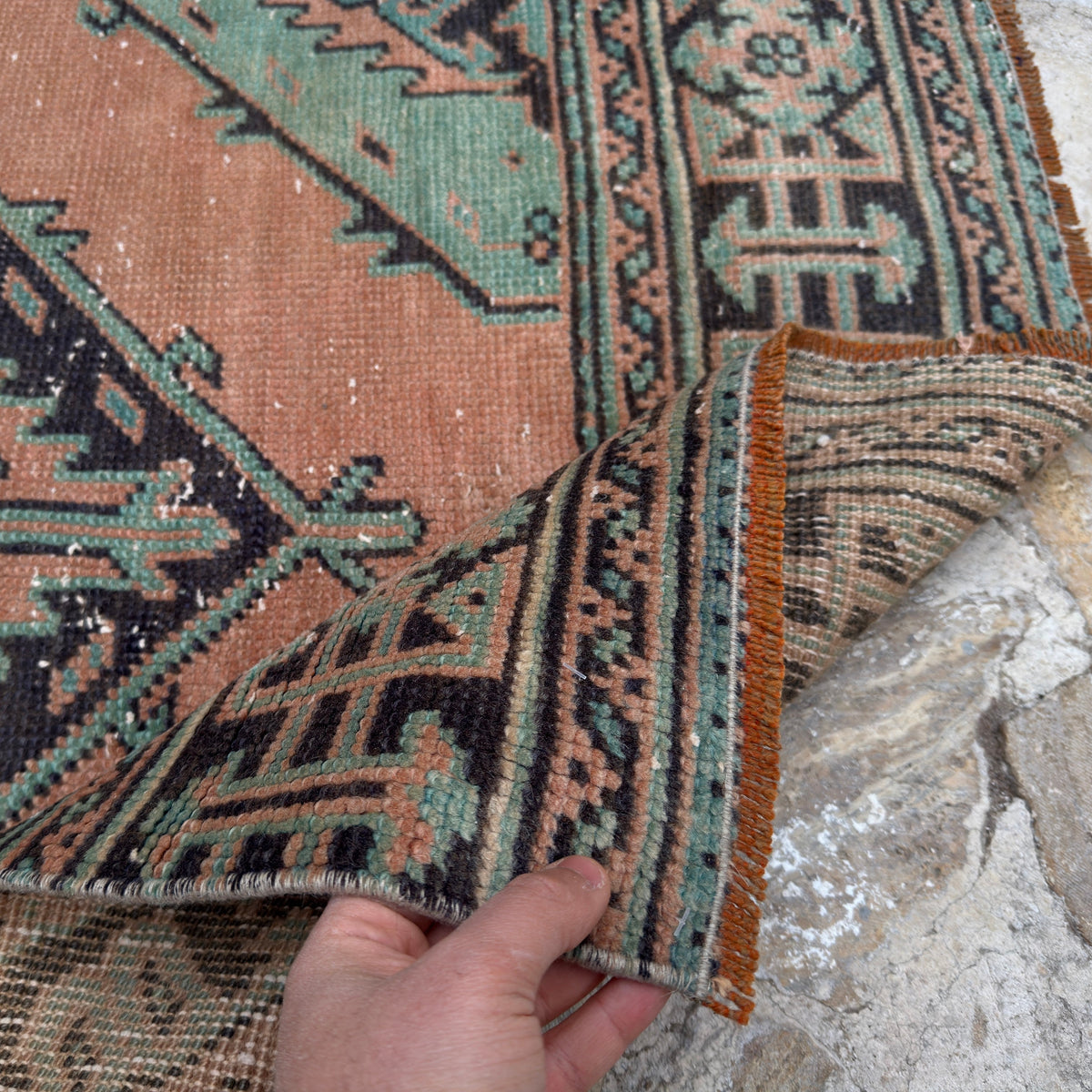
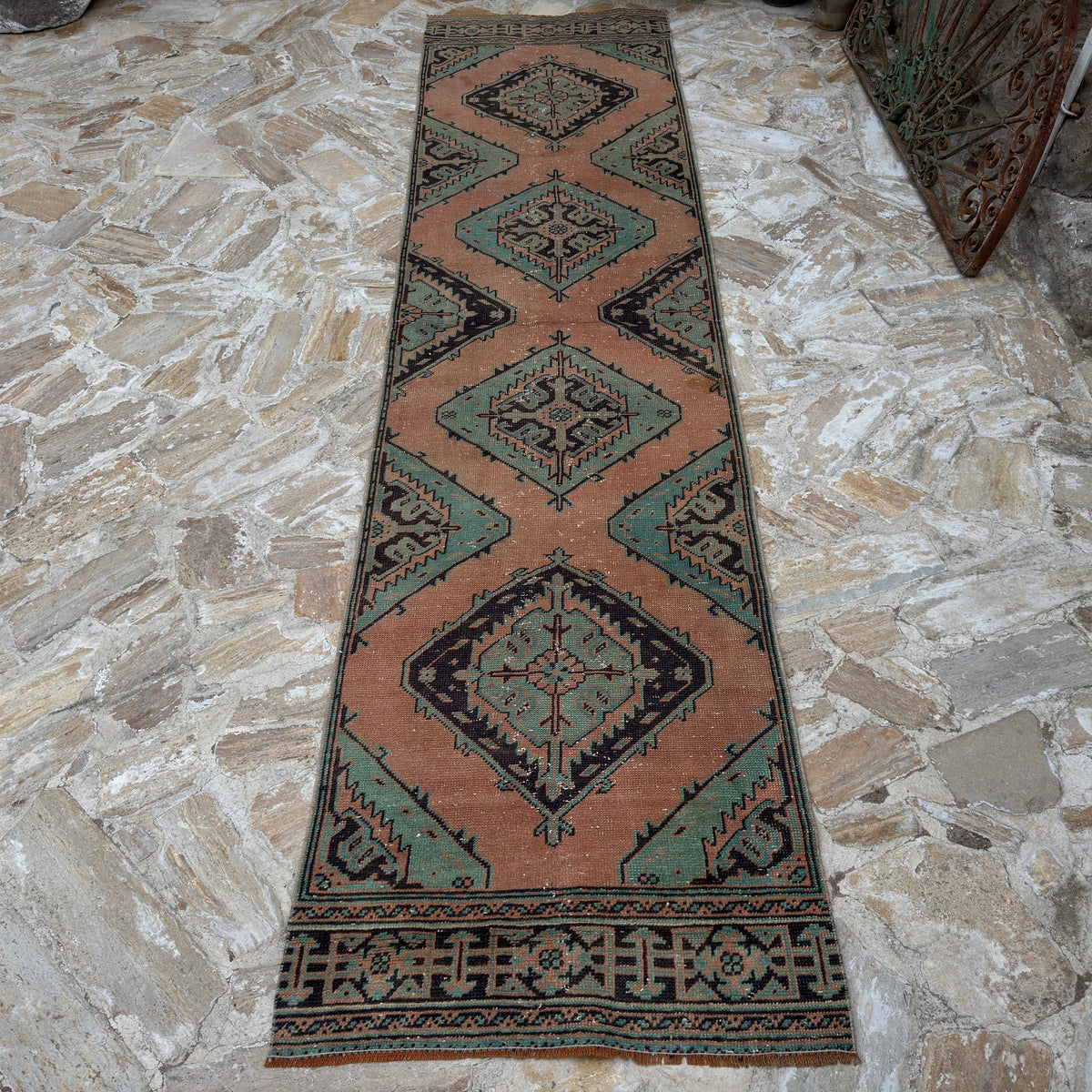
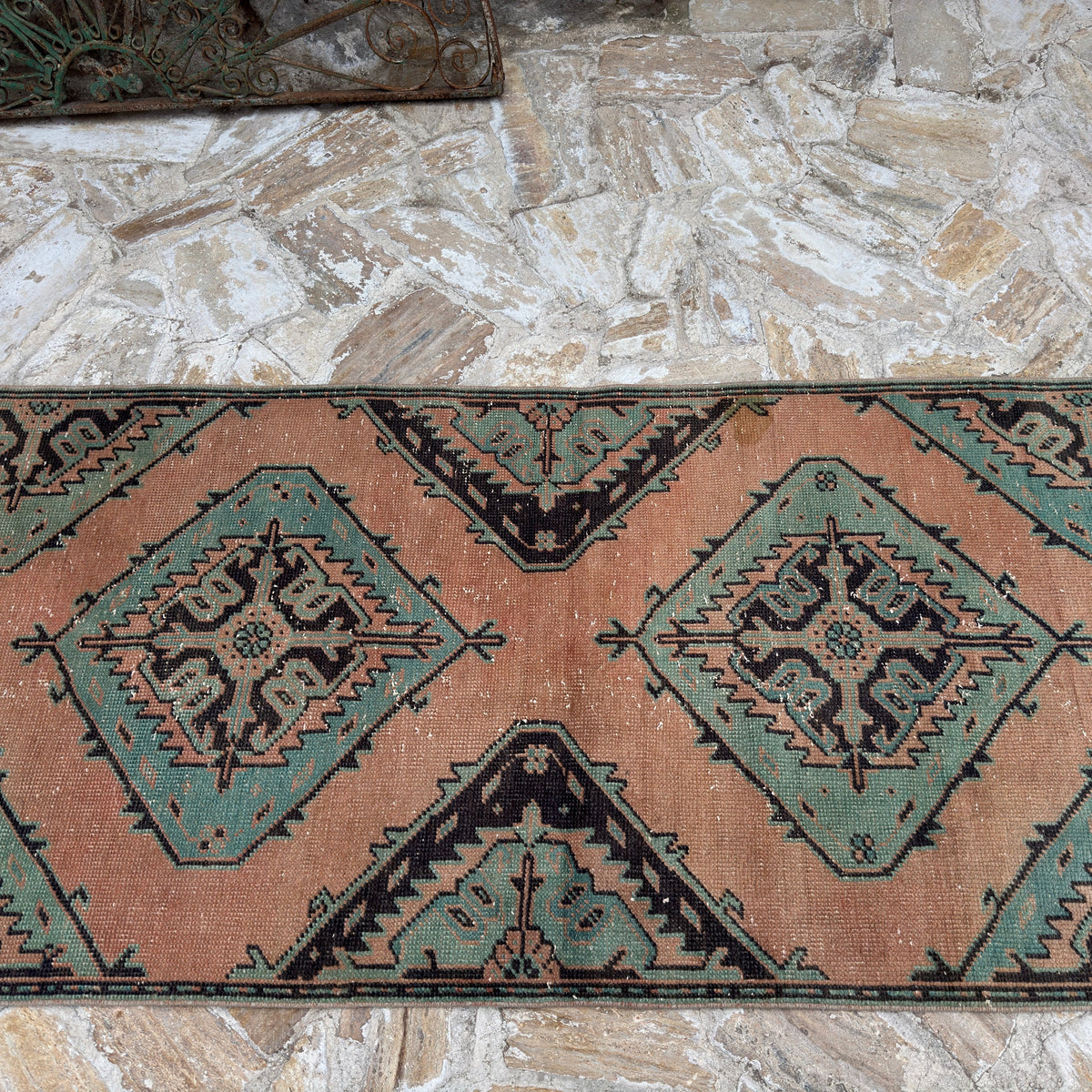
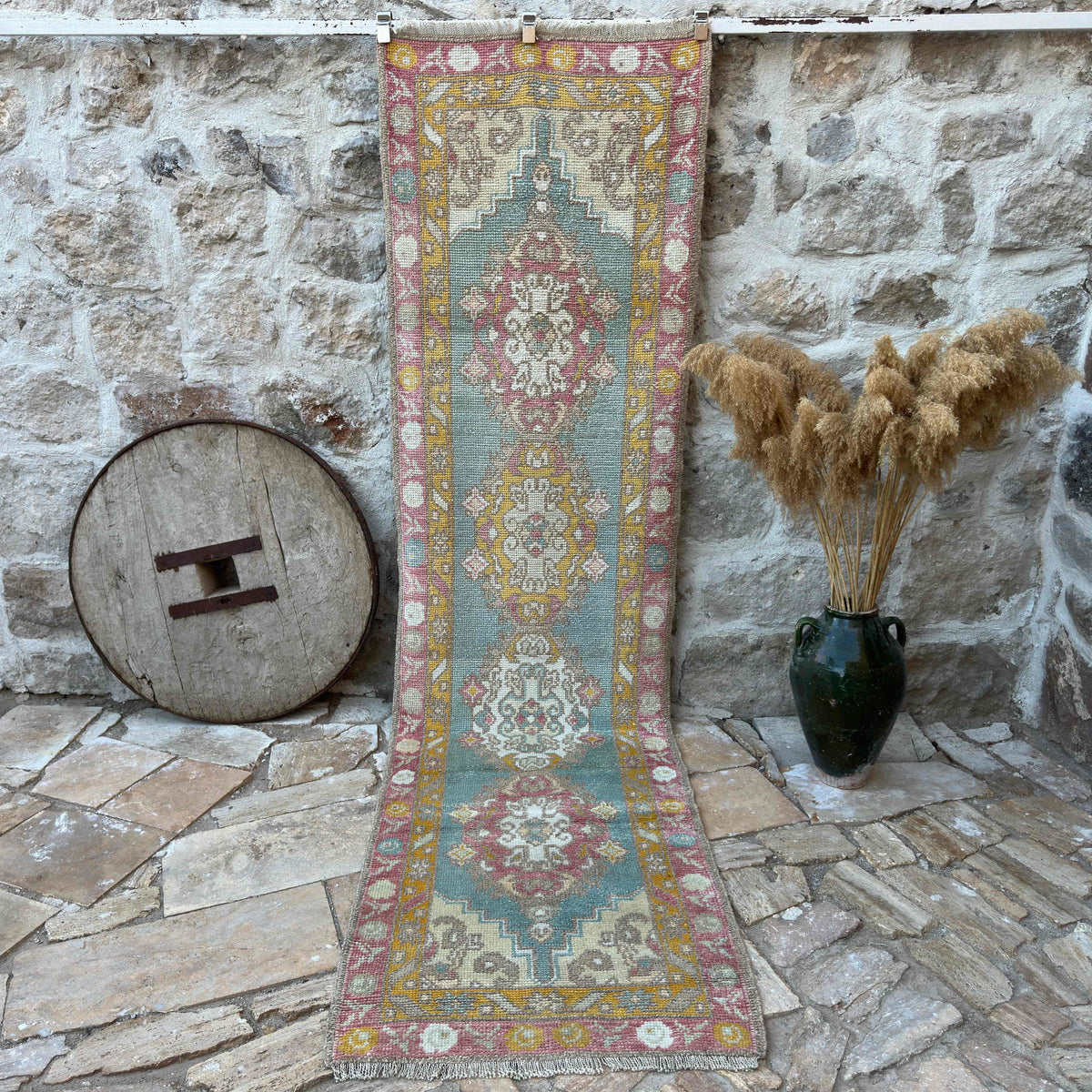
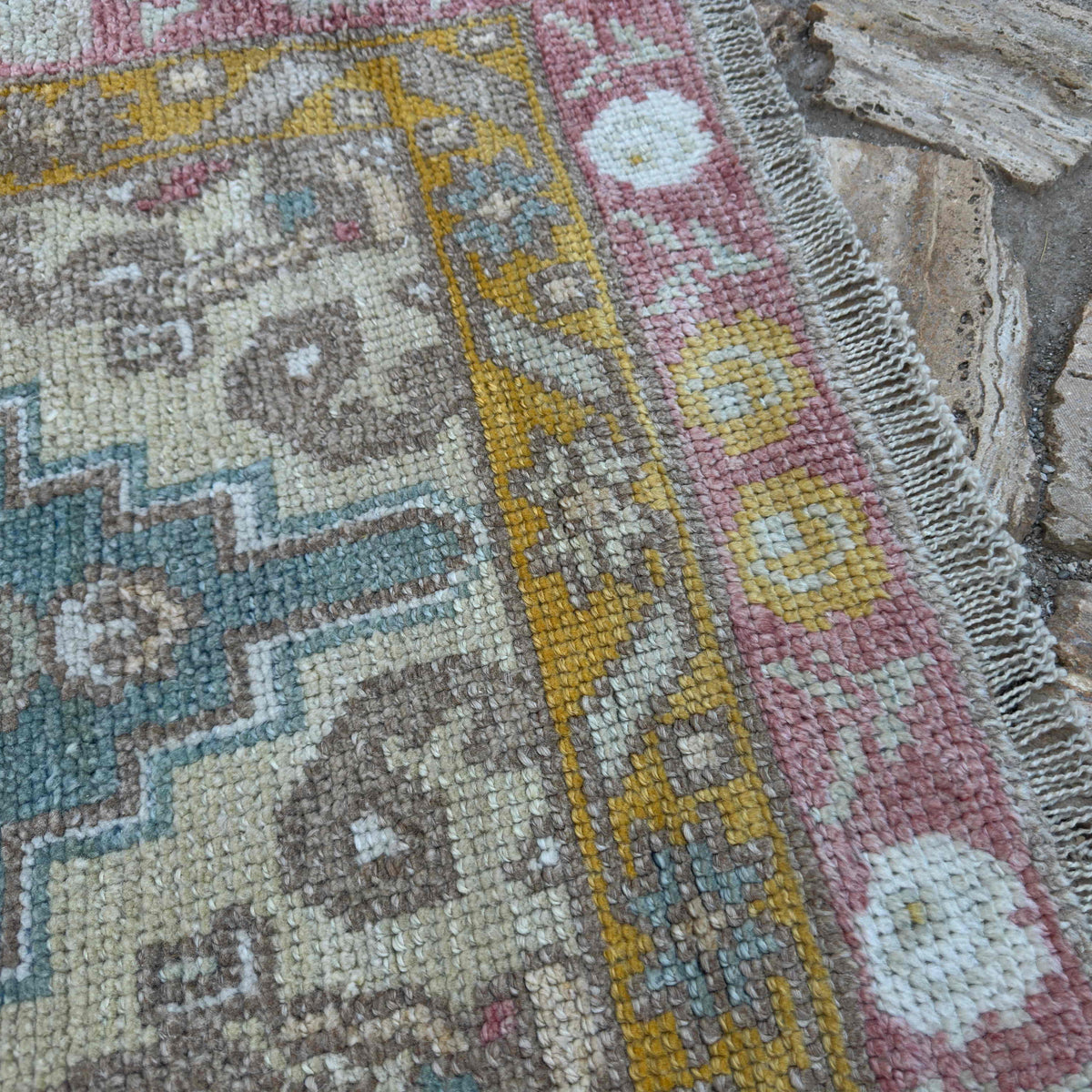
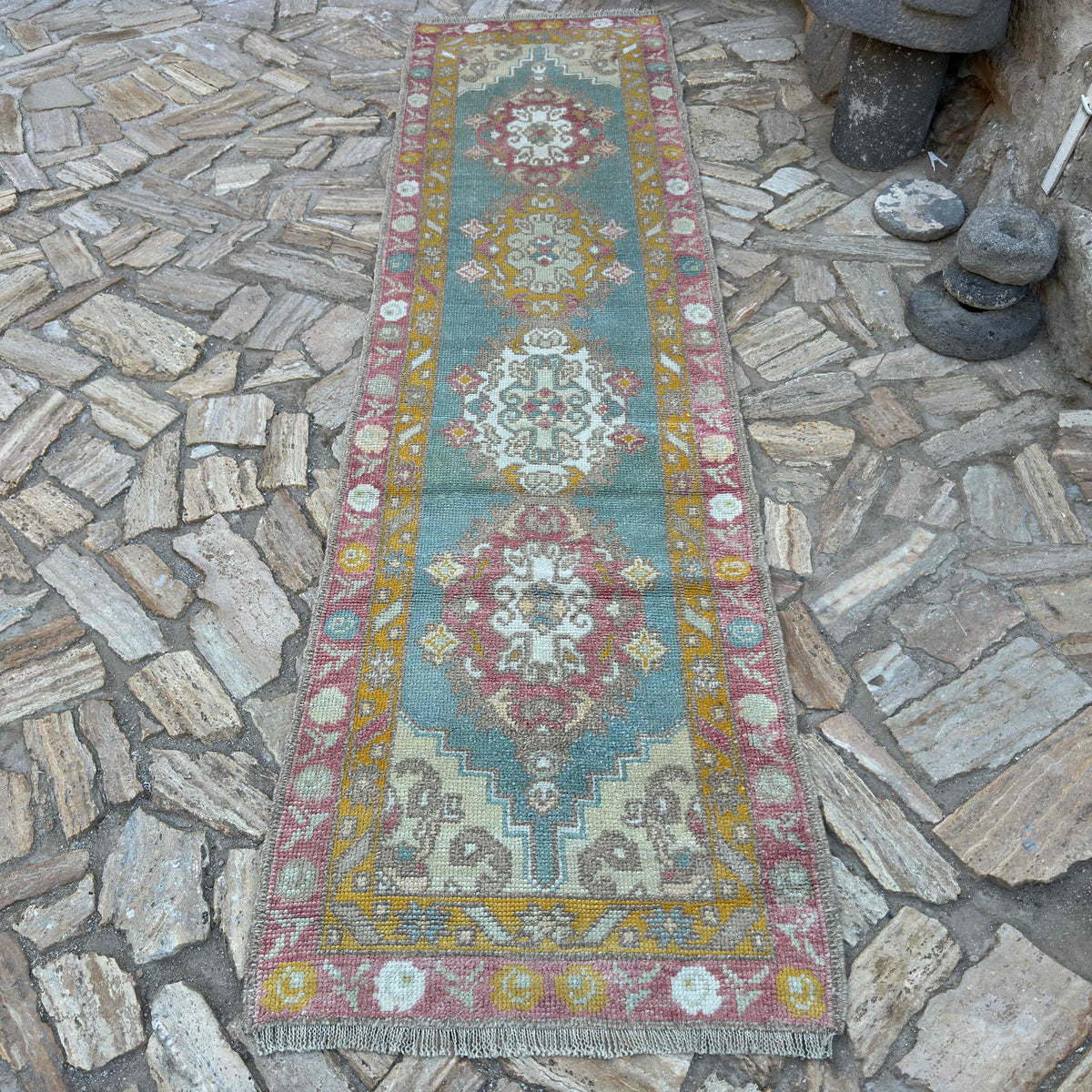
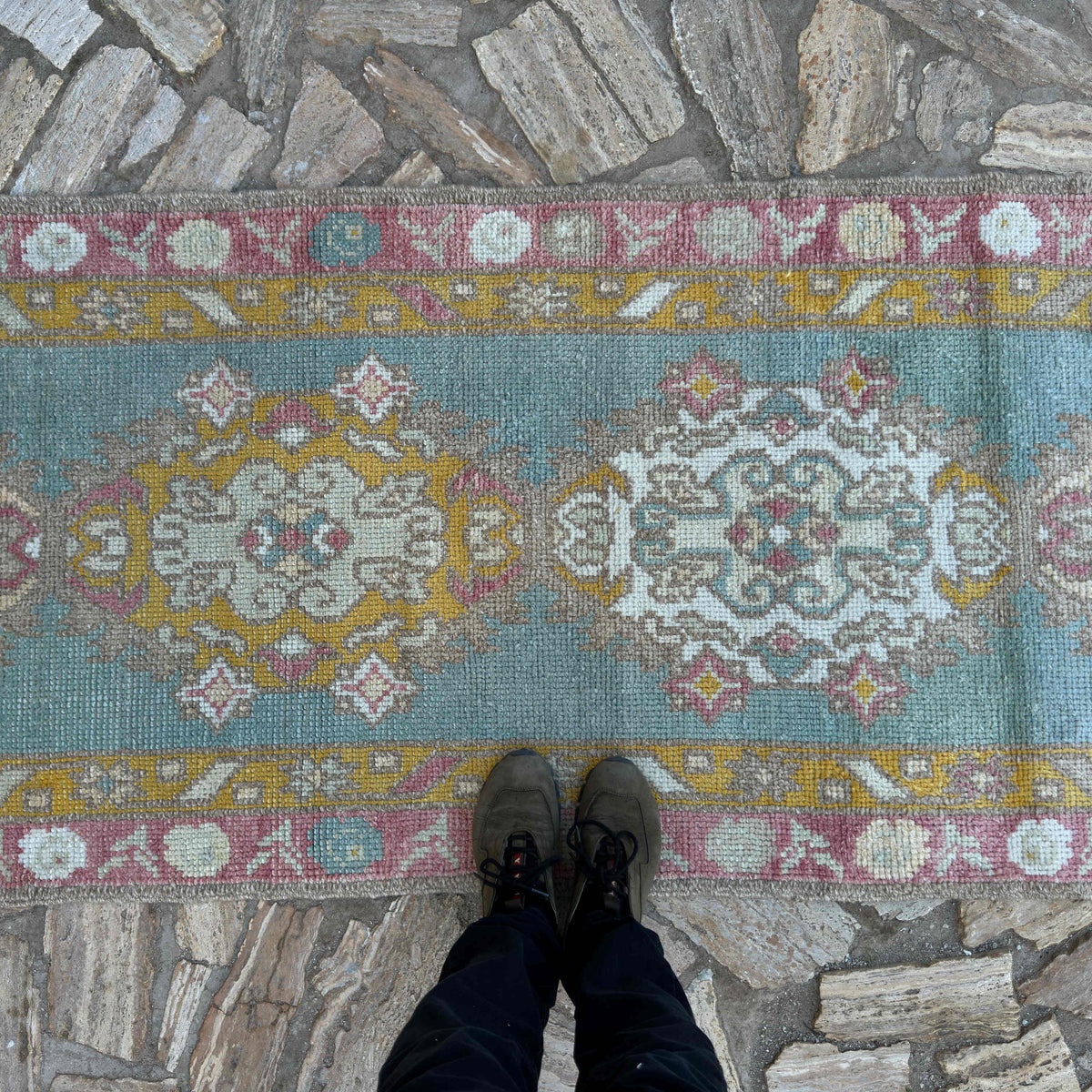
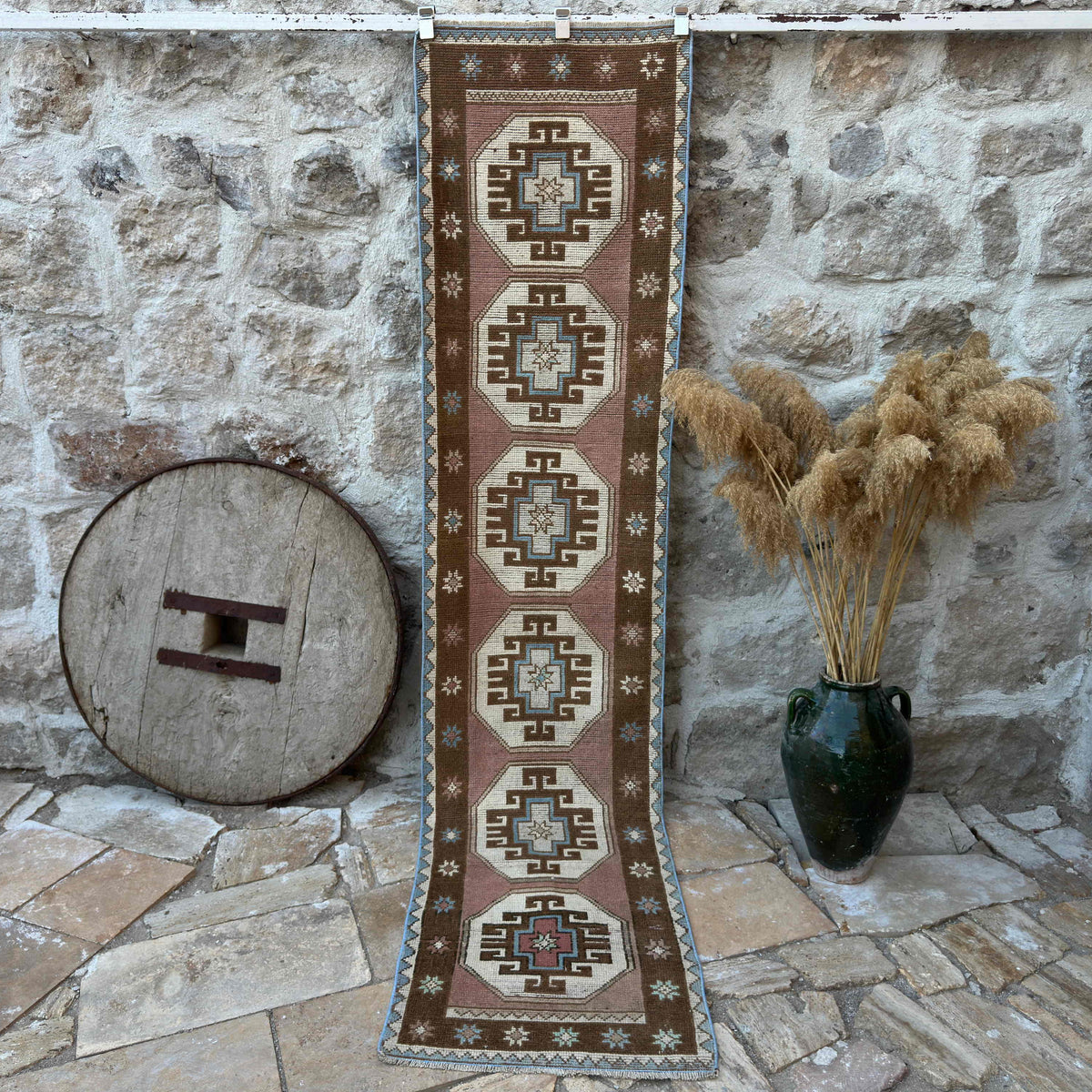
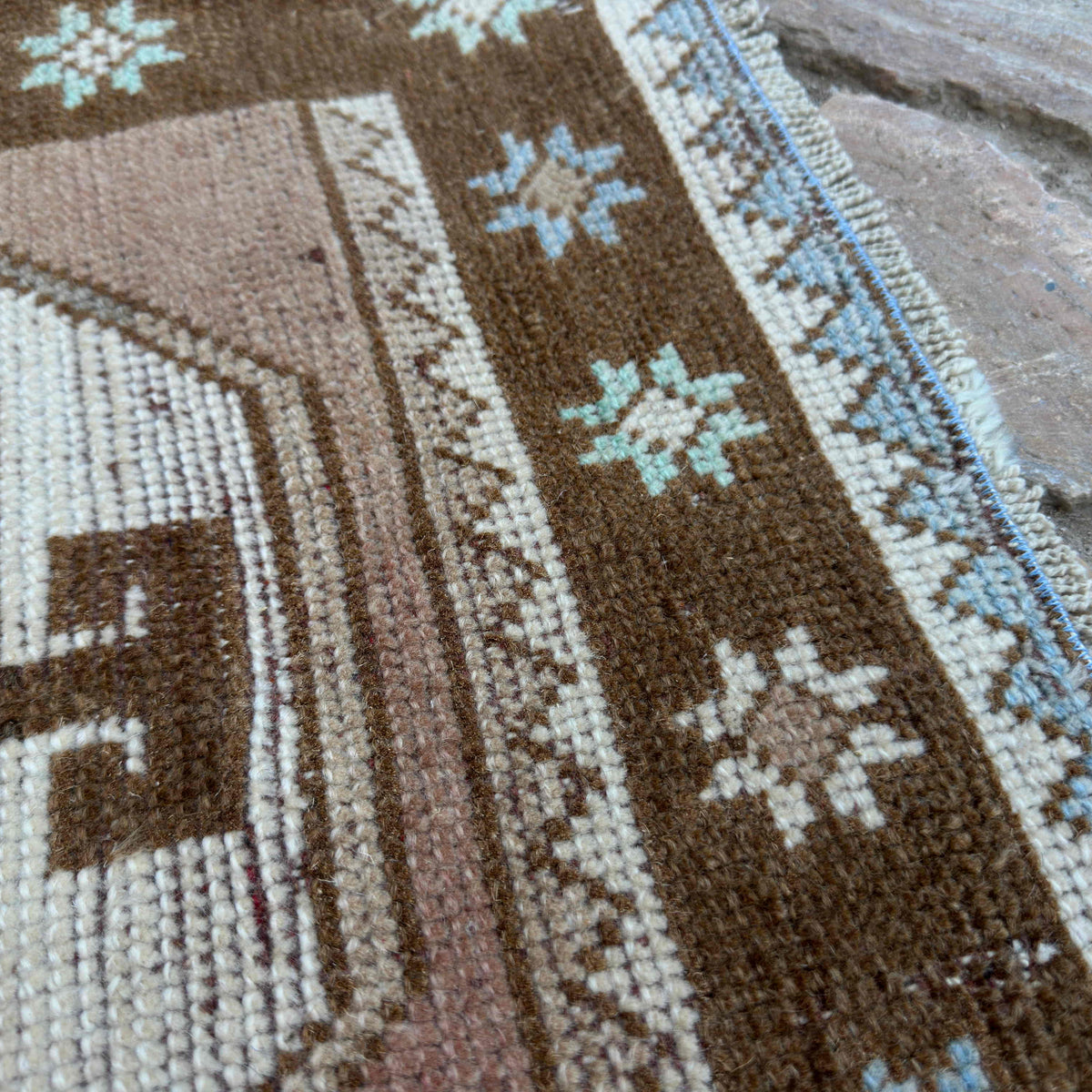
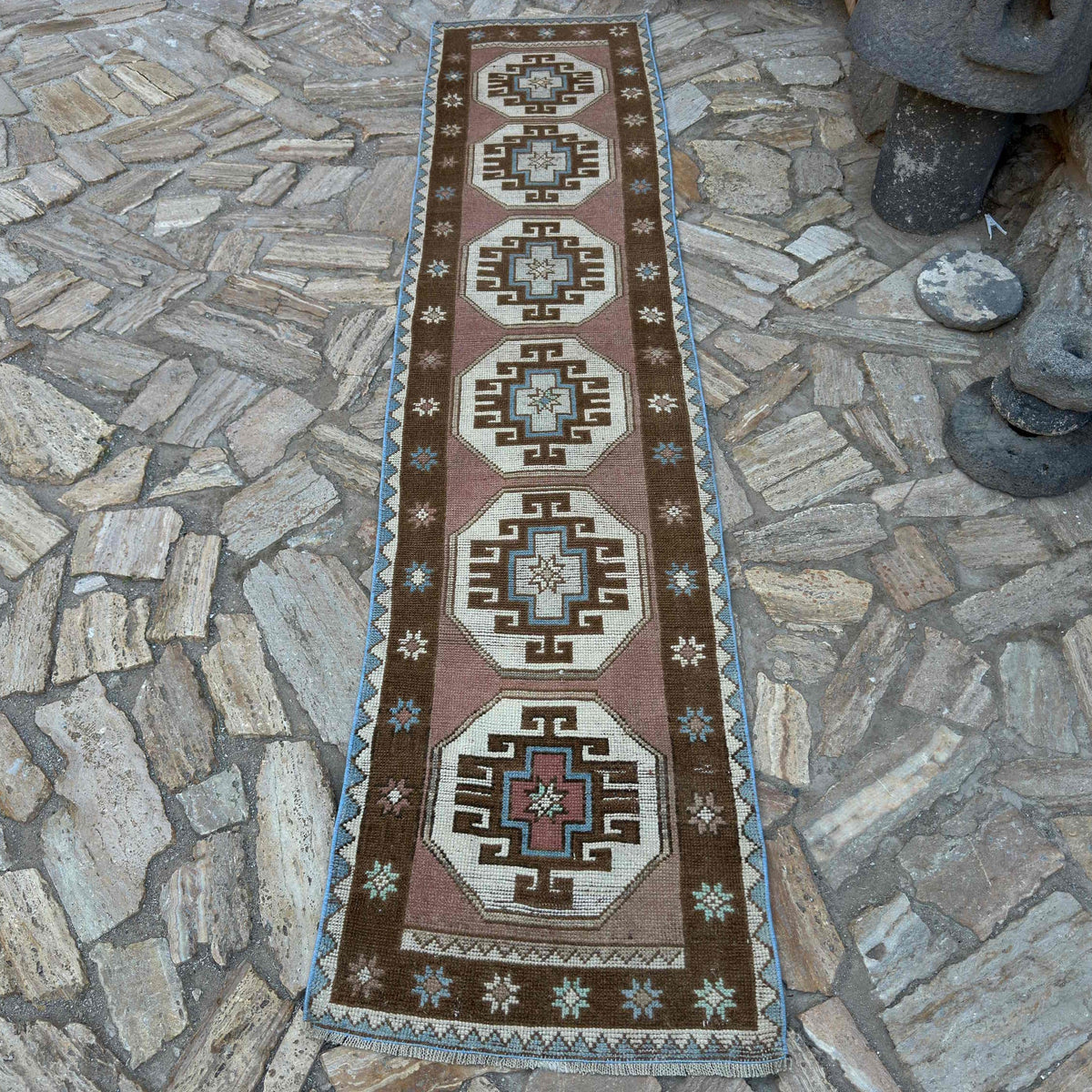
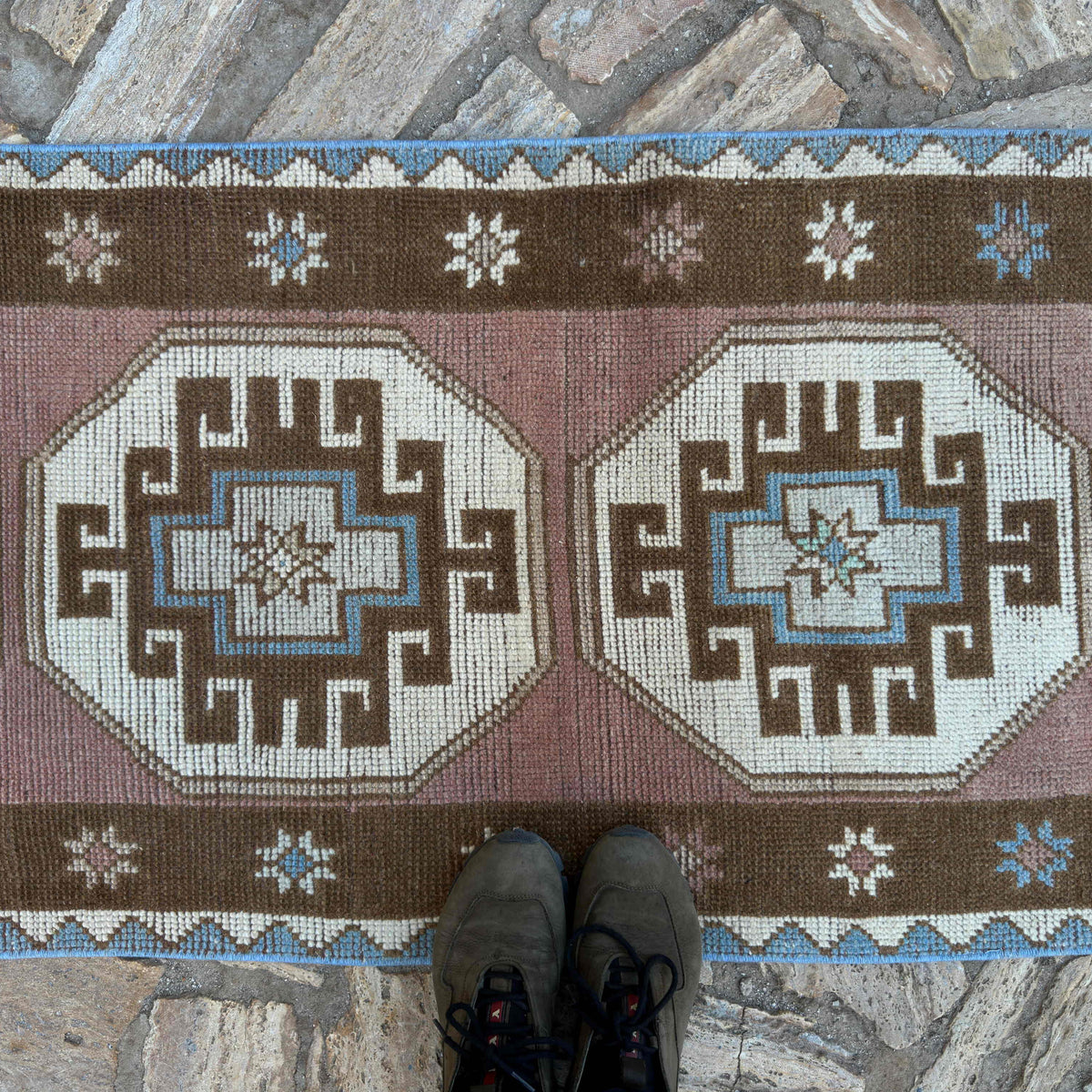
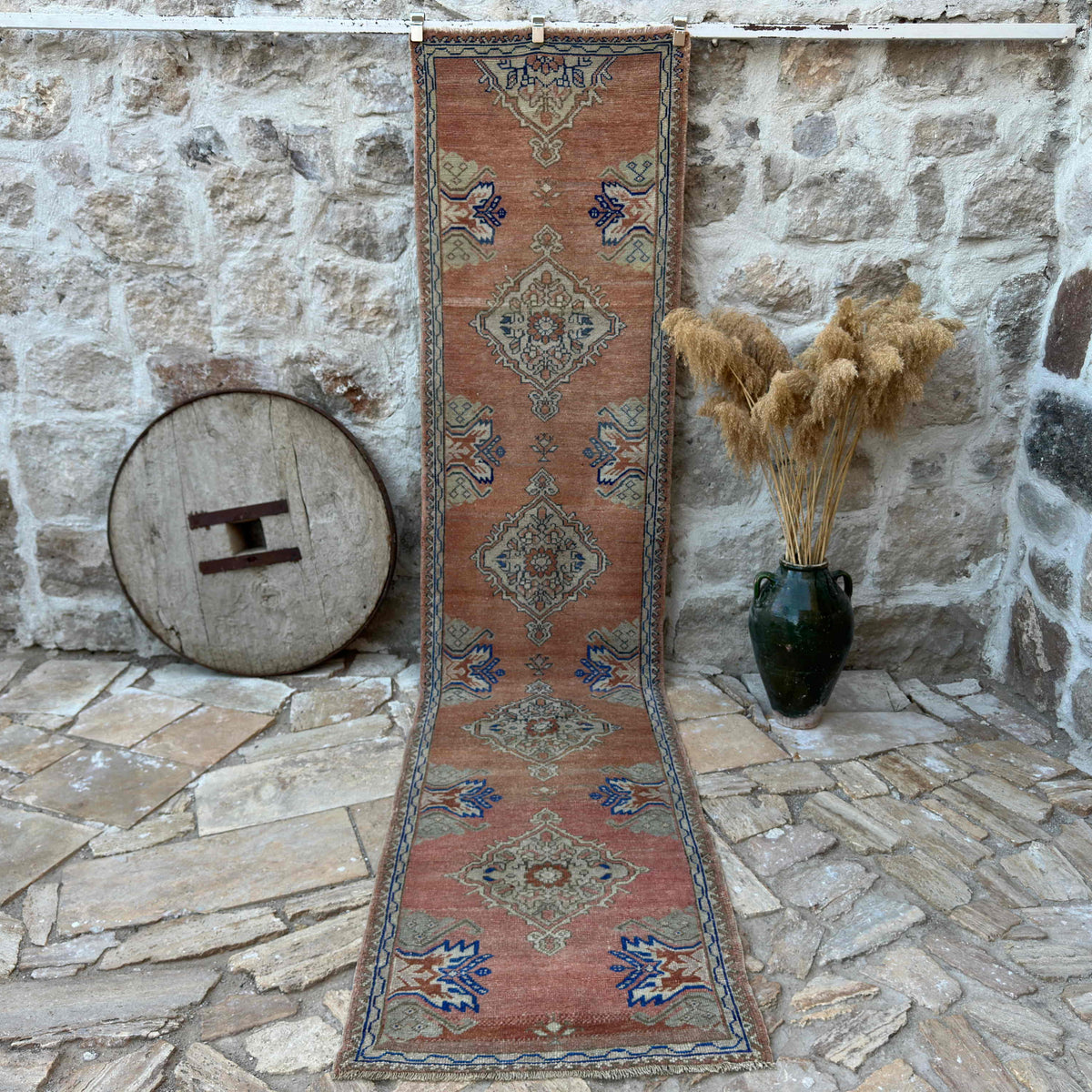
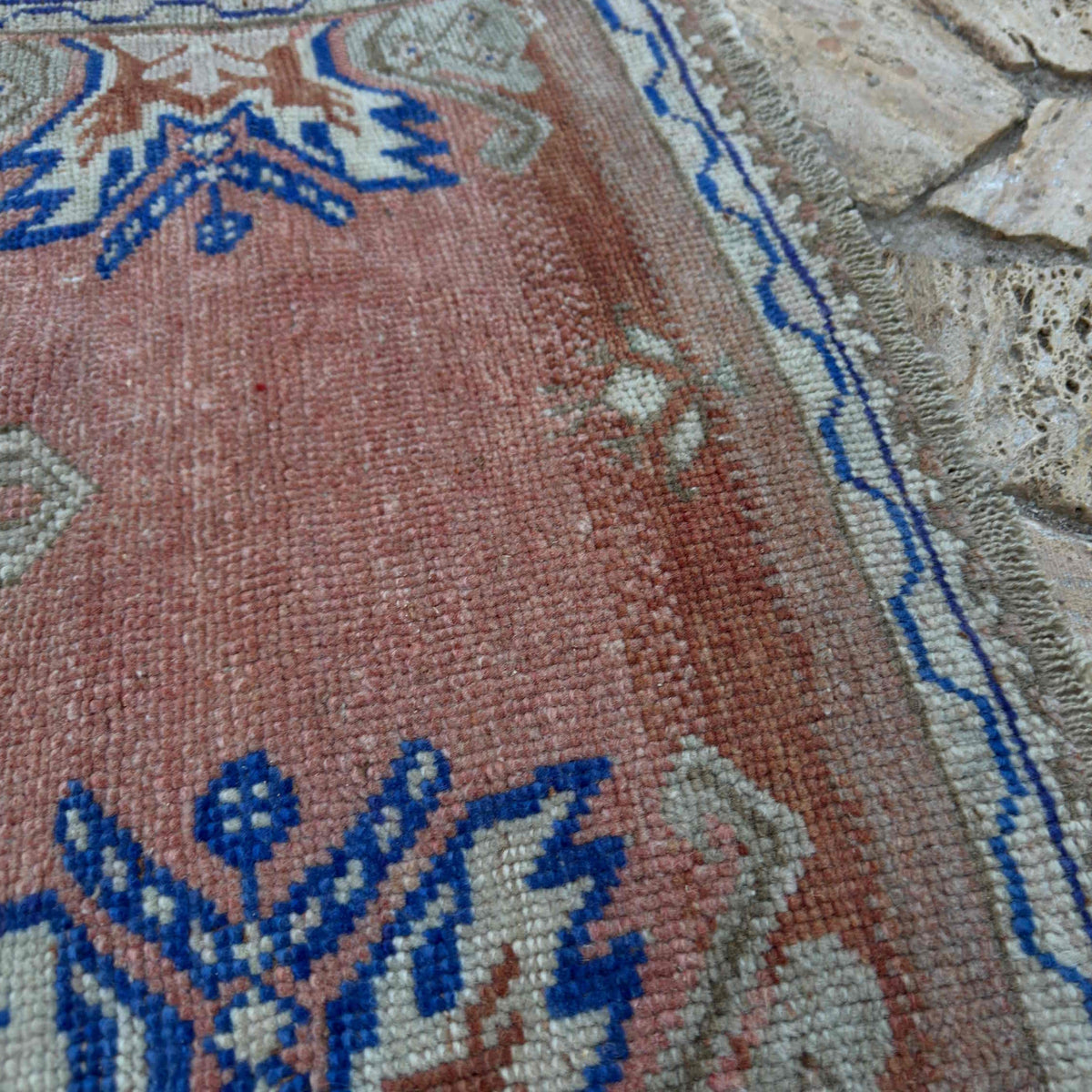
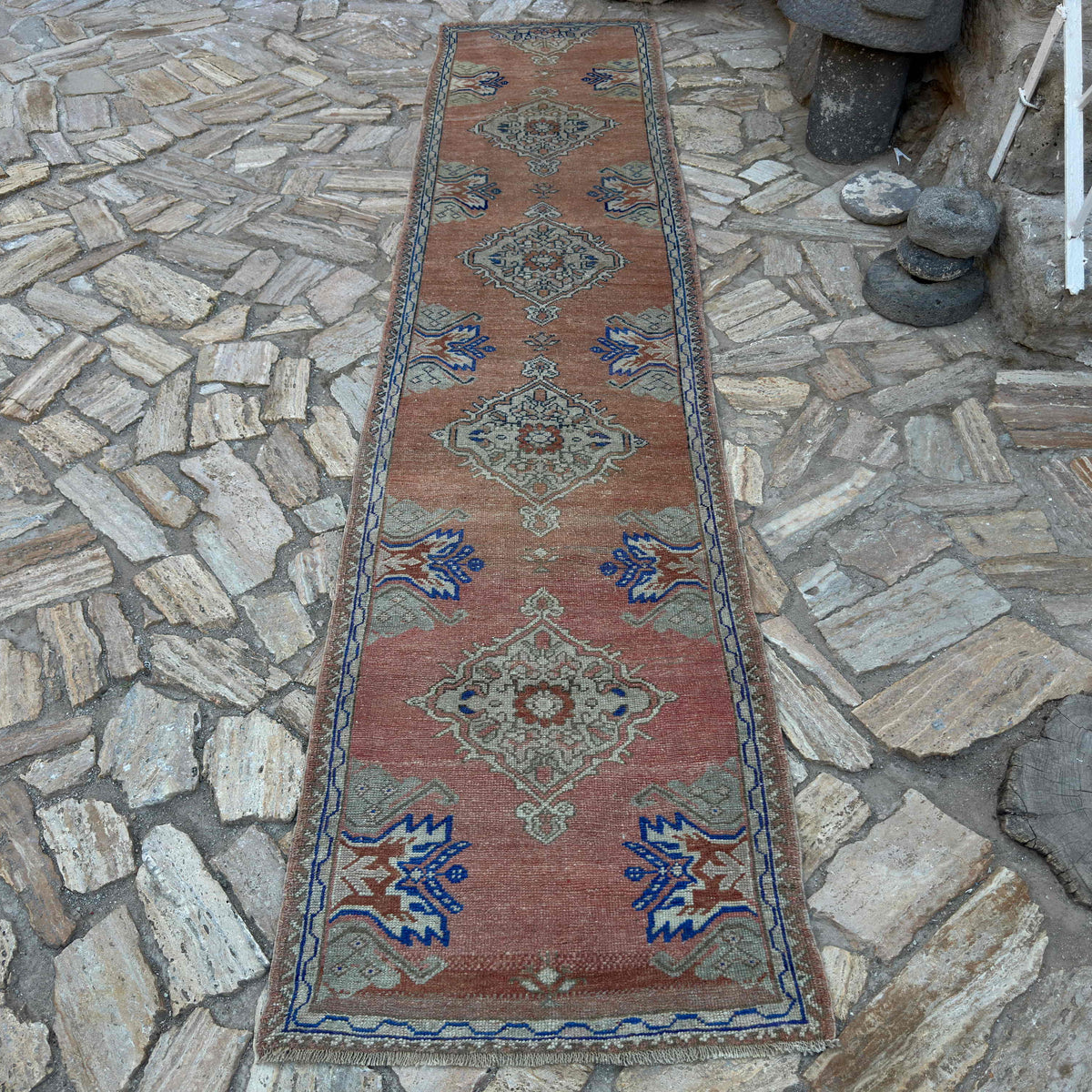
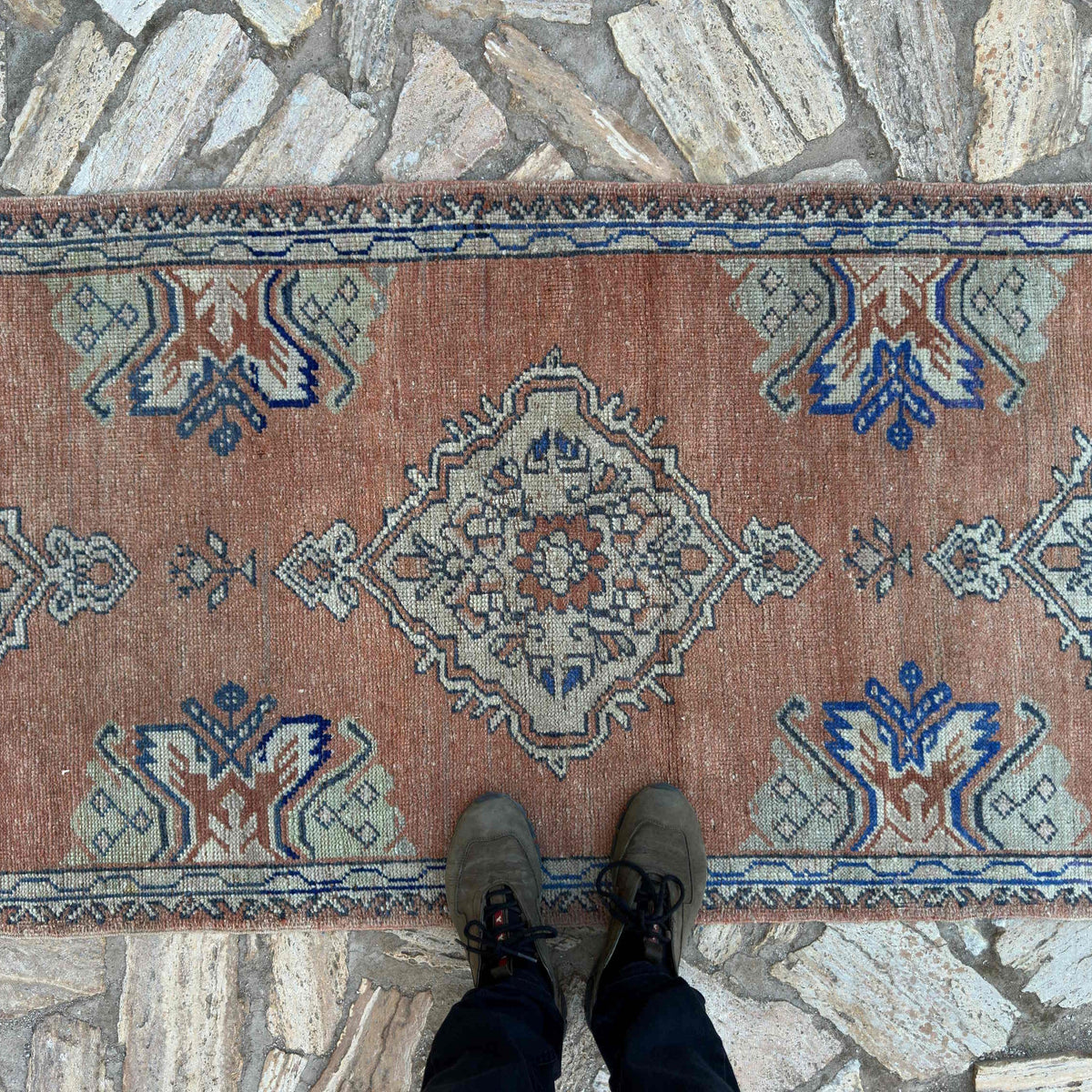



Frequently Asked Questions
Can I use rubbing alcohol on a Turkish or wool rug?
In very small amounts, yes — after a spot test. Apply to a cloth, not directly to the rug, rinse quickly. Alcohol degrades lanolin over time and makes wool brittle. Use it as a last resort.
Will vinegar damage natural dyes on a vintage rug?
Diluted white vinegar — one part vinegar to ten parts water — is generally safe for naturally dyed wool rugs. Traditional Oriental rug dyes are acid-fast; mild acidity is compatible with how they were set. Spot test first.
Is dried paint impossible to remove from a rug?
Not impossible — but it requires patience and carries more risk than a fresh stain. Soften first, work in layers, give it time. Large areas of hardened paint on wool or vintage pieces usually require professional help.
Can professional cleaners always remove paint stains?
Not always. Oil-based paint that has fully cured deep into wool fibers can be permanent even for professionals. But they can do significantly more than home methods without causing additional damage — for anything beyond a small surface stain on a valuable rug, call before attempting more at home.
How do I know if my rug is wool or synthetic before cleaning?
Pull a single fiber and hold it briefly over a flame. Wool burns with a singed-hair smell and the ash crumbles. Synthetic fibers melt, smell like plastic, and form a hard bead. If you're not sure and the rug has any value, treat it as wool — the safer assumption leads to the safer approach.

