



















The smell hits before you see anything. Musty, organic, like soil that never got enough air. I know that smell from sourcing trips in Anatolia, from walking into rooms where families stored their best rugs wrapped in plastic, thinking they were protecting them. They weren't.
Mold is a moisture problem. Understand that and you can usually solve it. Miss it and you will either throw away something salvageable or spend money cleaning something that was already gone.
Quick answer — how to get mold out of carpet
Dry the area, HEPA vacuum, spray a 1:1 white vinegar solution, scrub gently with a soft brush, then dry completely before returning the rug to the floor.
First, Know What You're Dealing With: Carpet or Rug?
Wall-to-wall carpet is fixed to the floor. You cannot lift it, inspect what is happening underneath, or treat both sides. When mold reaches the backing or the padding, you are dealing with a subfloor problem, not just a surface problem.
An area rug, especially a handmade one, is different. You can lift it, treat both sides, and bring it to someone who specializes in textile restoration. This distinction decides whether you are shopping for a replacement next week or still using the same rug in twenty years.
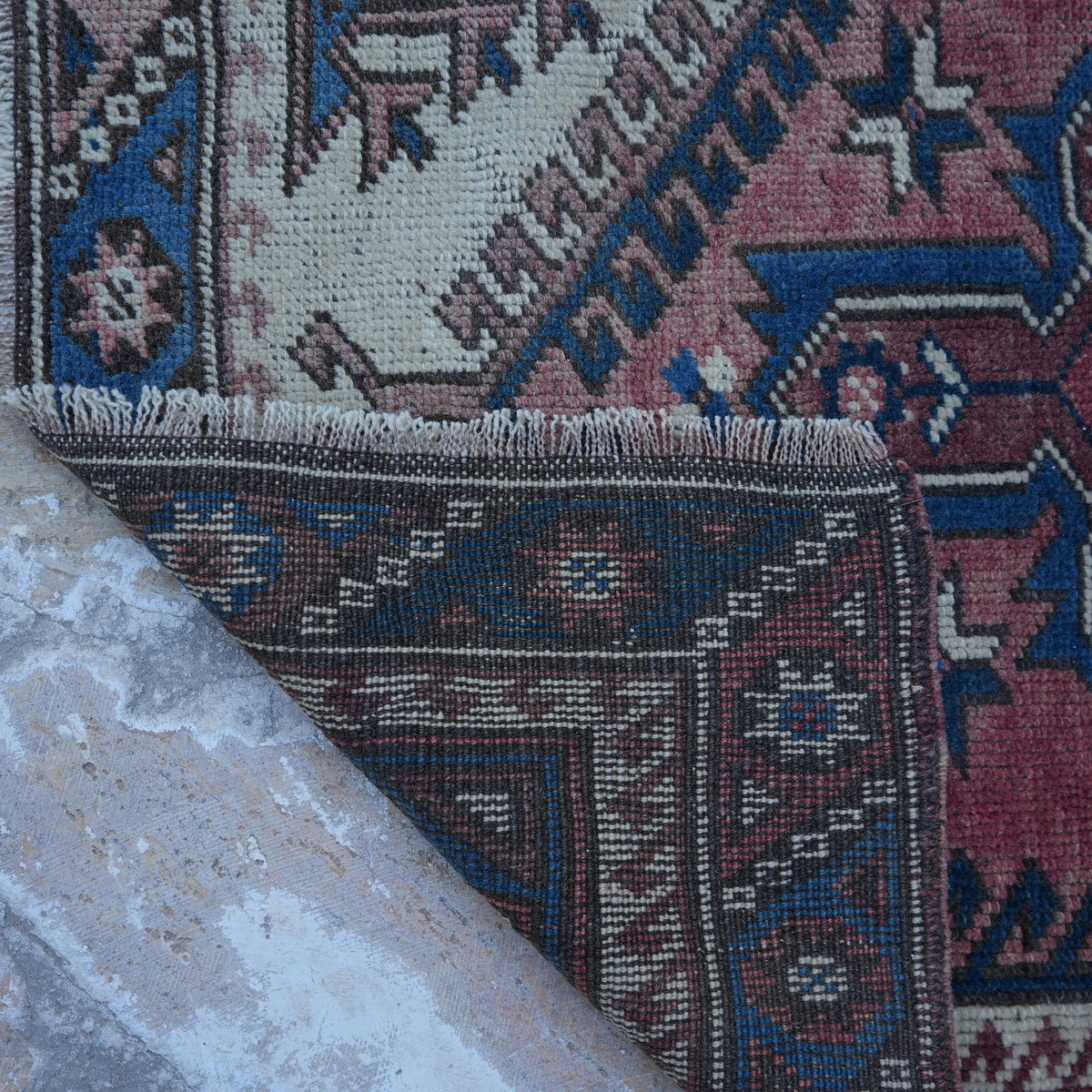
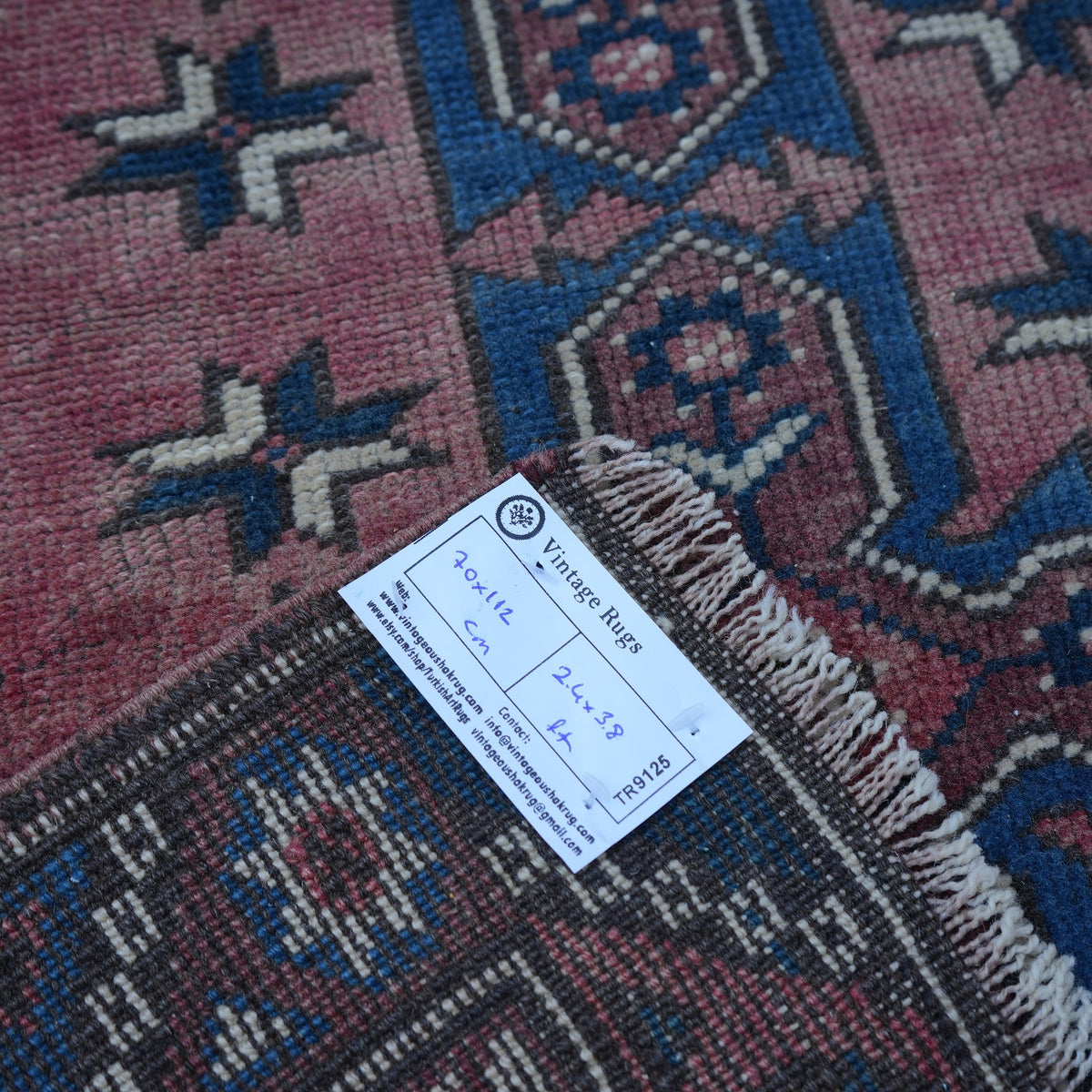
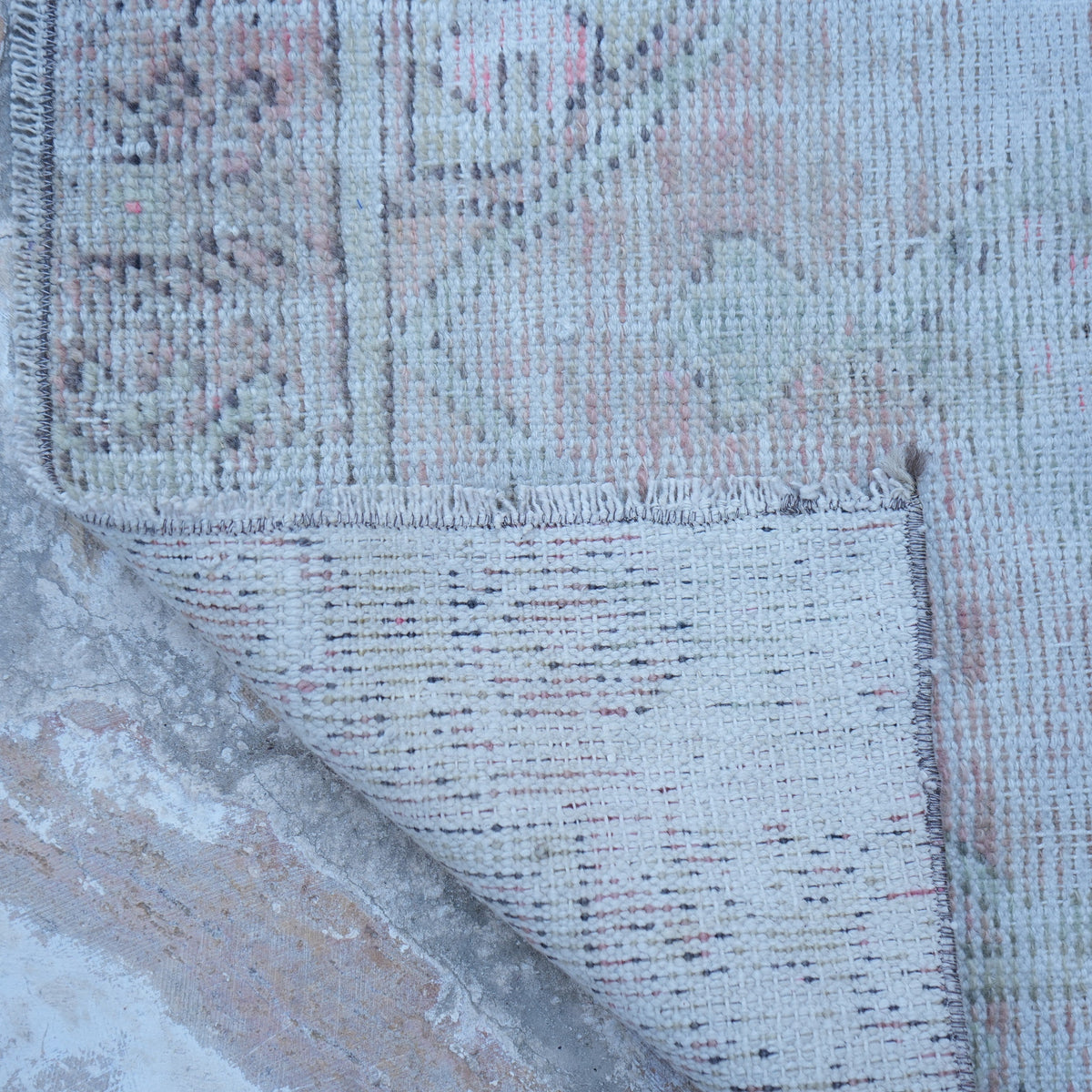
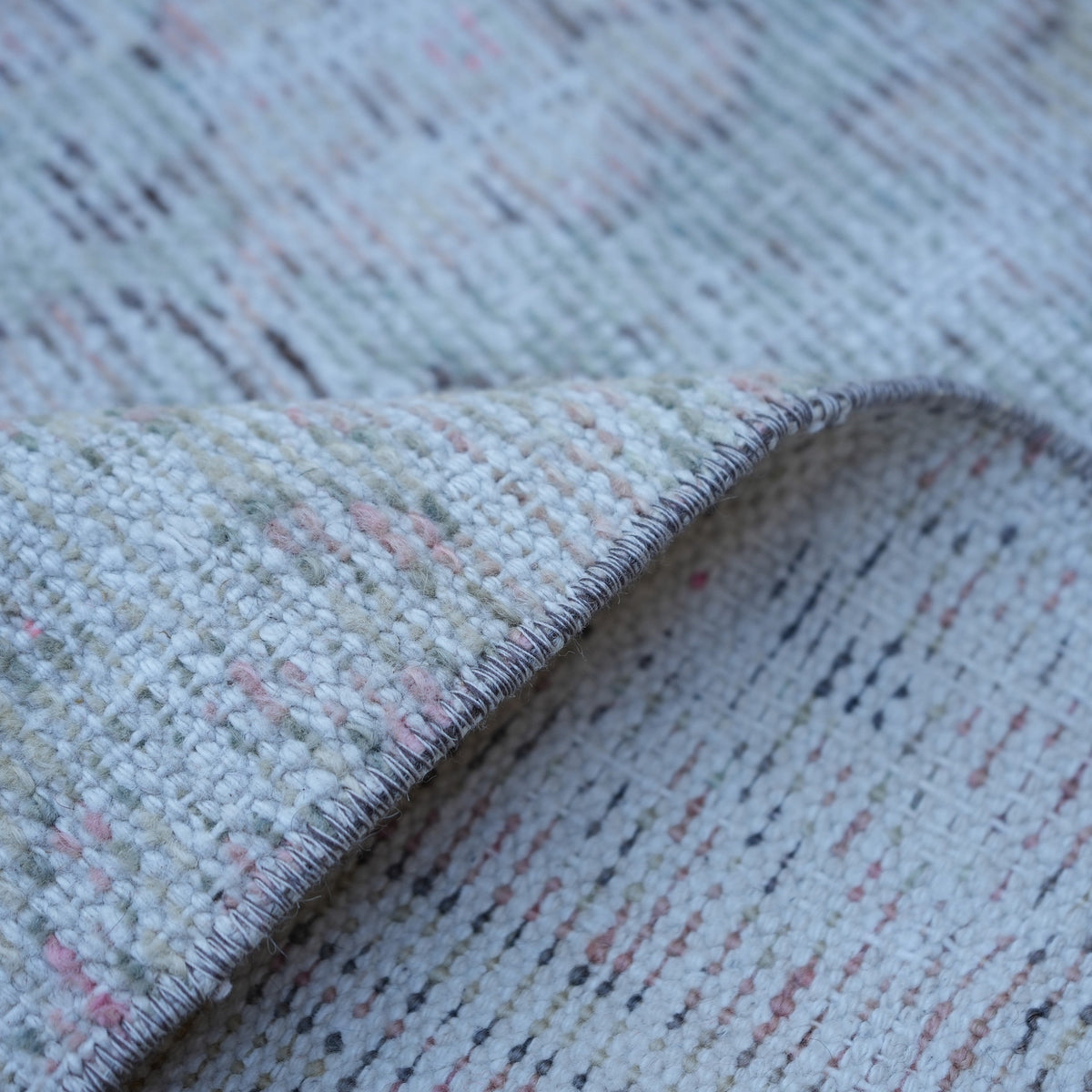
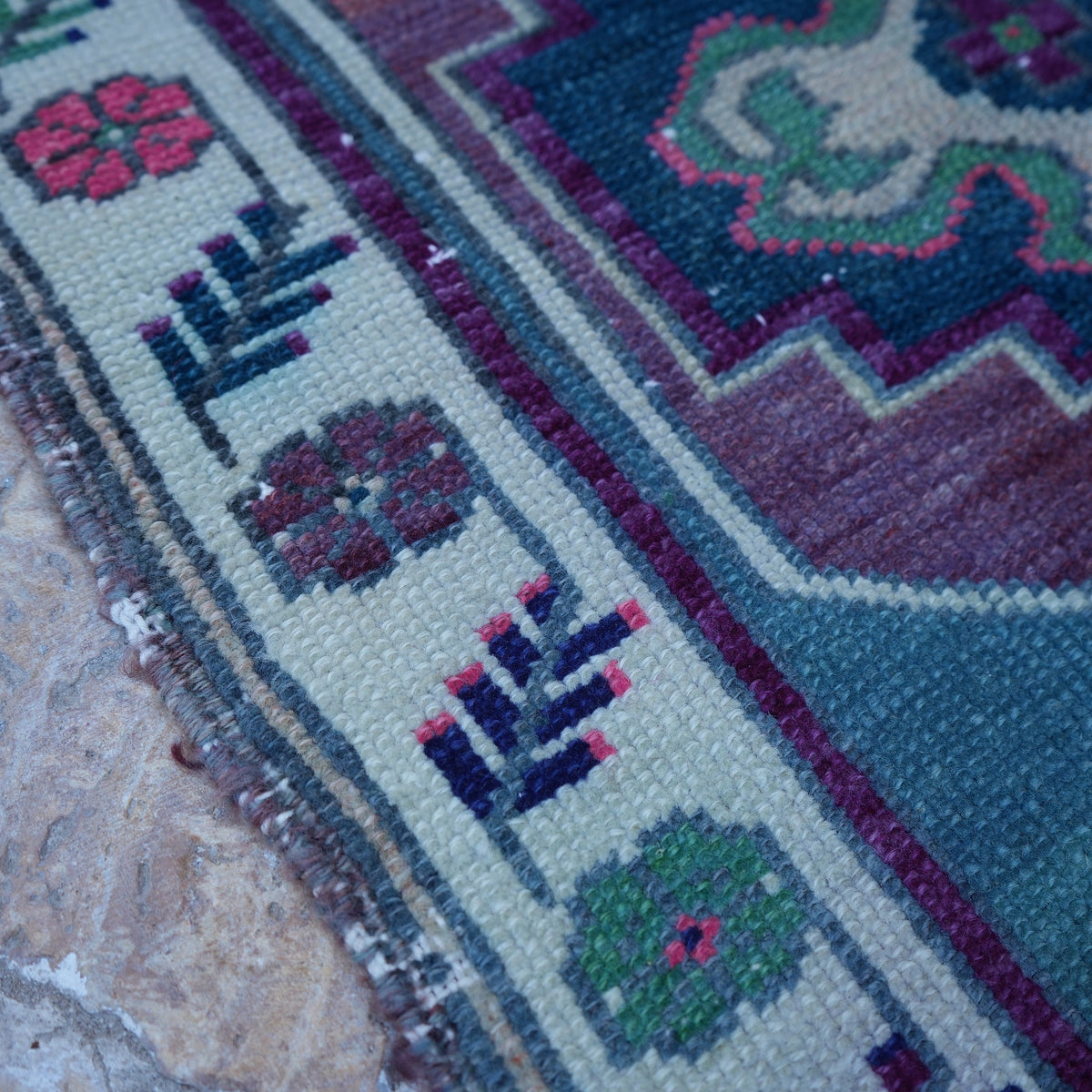
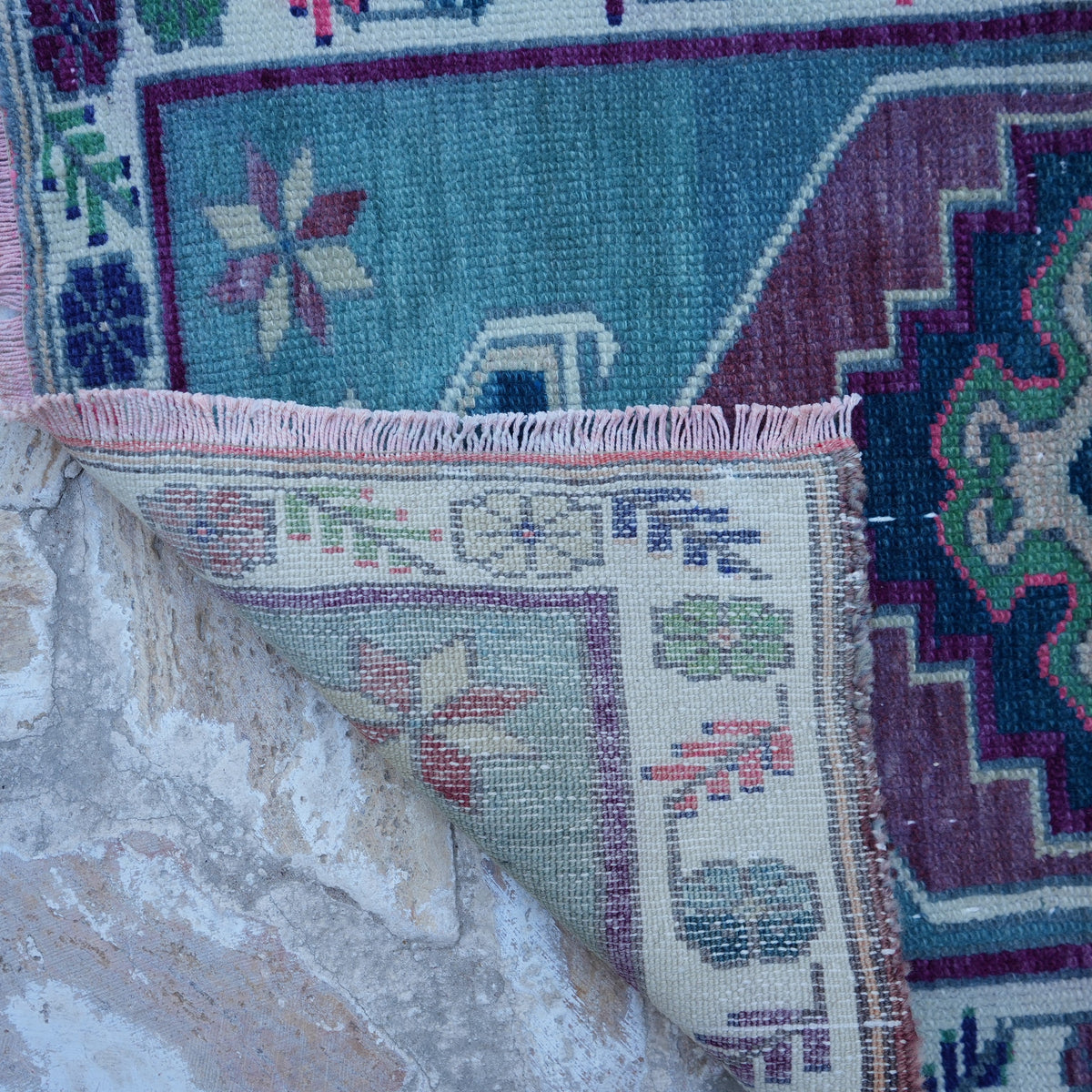
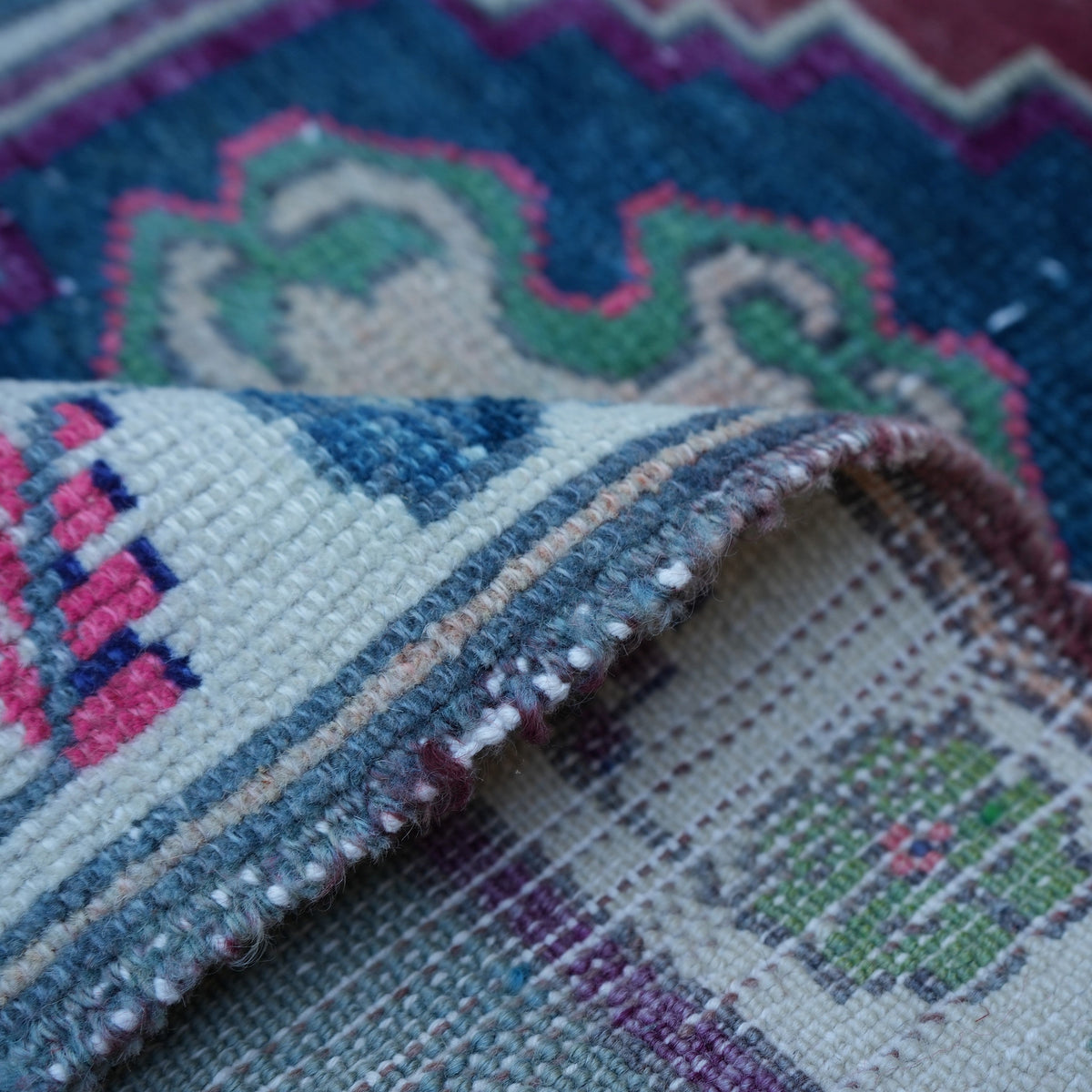
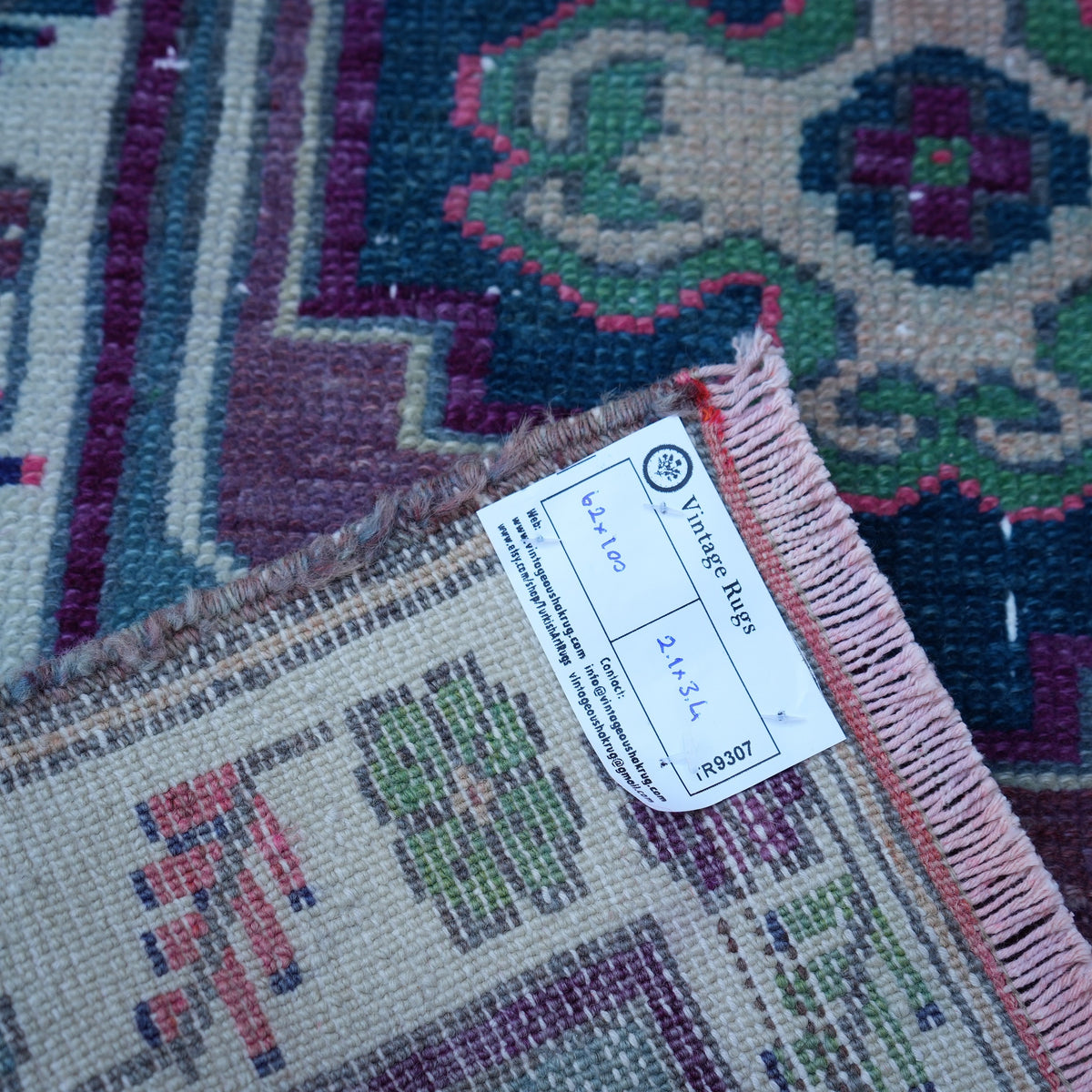
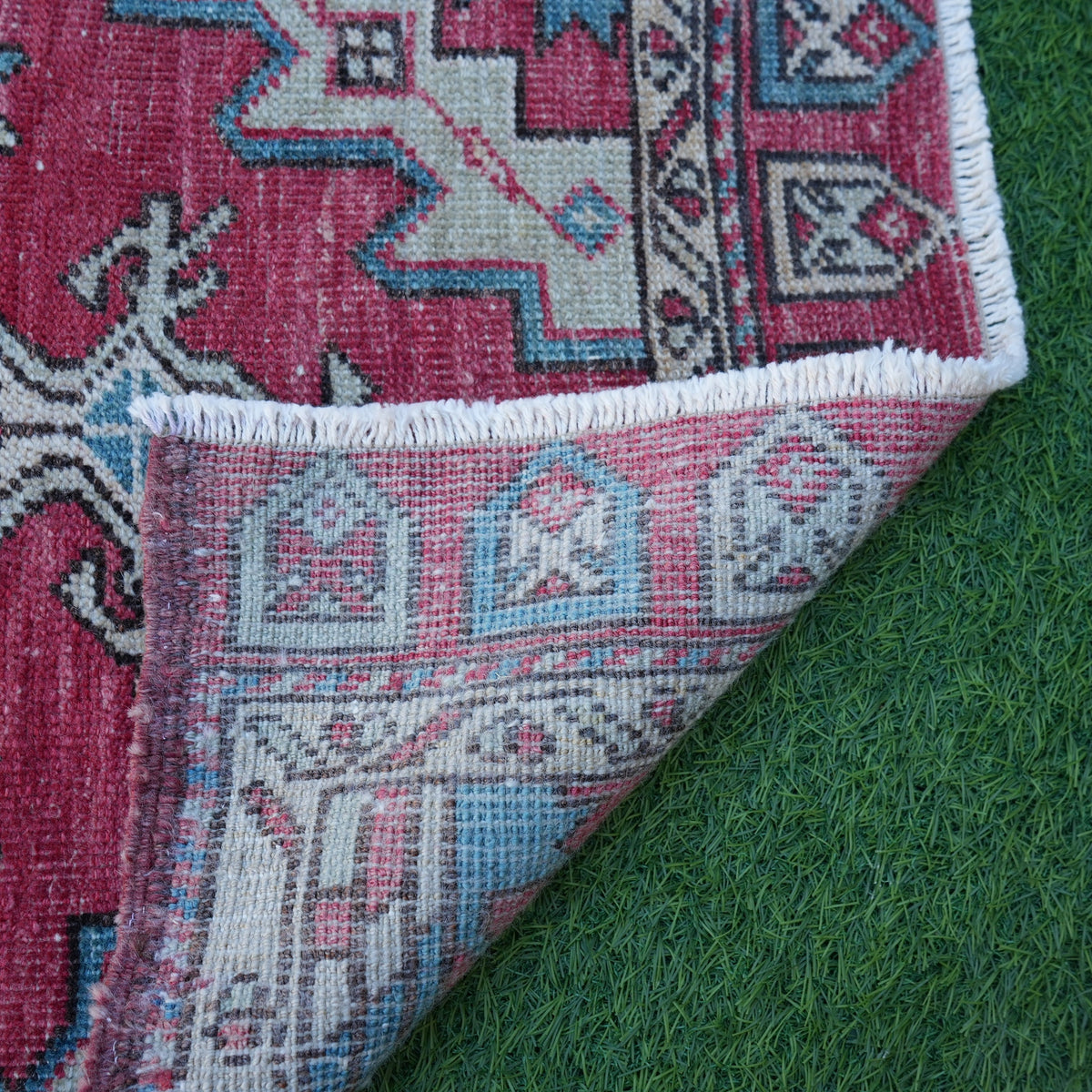
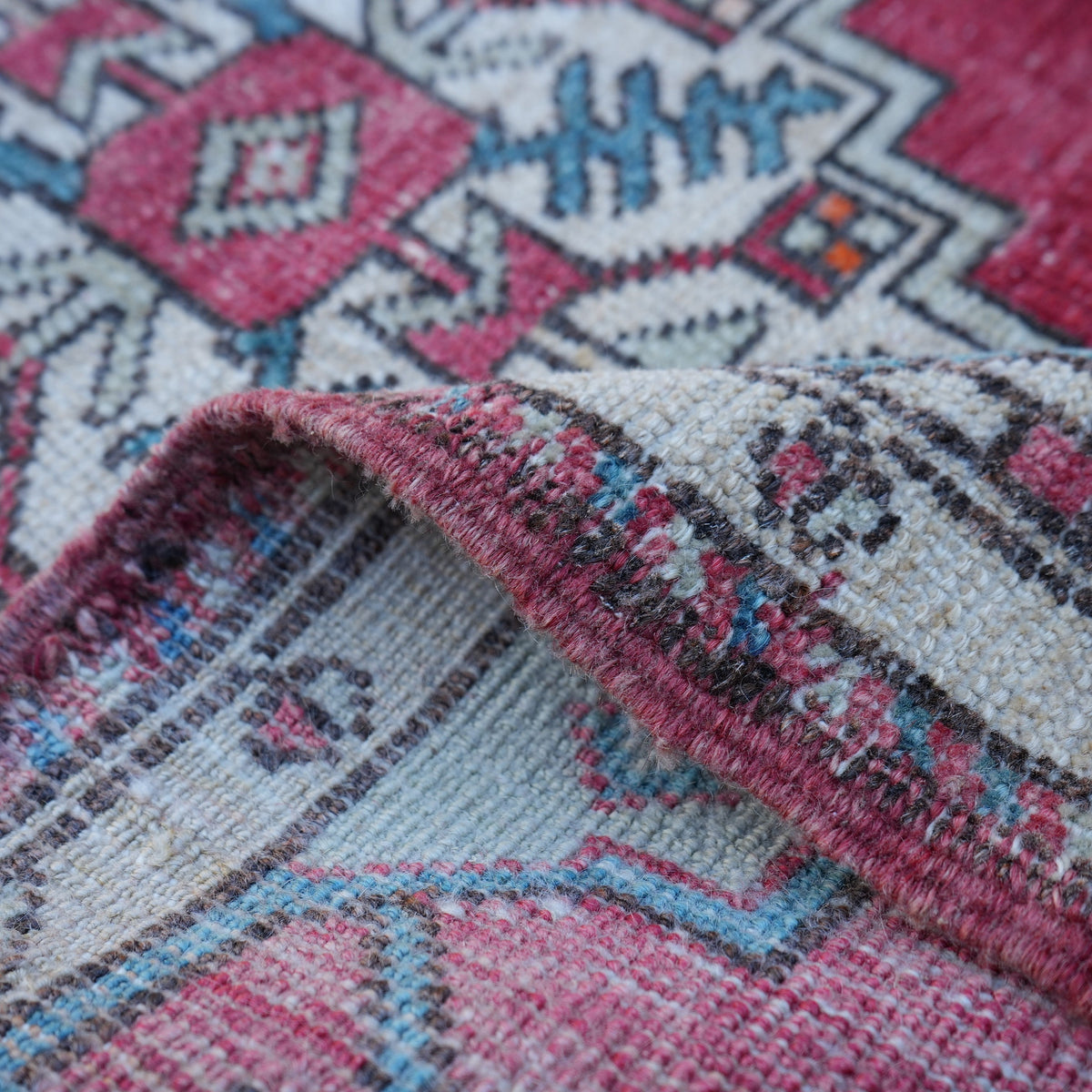
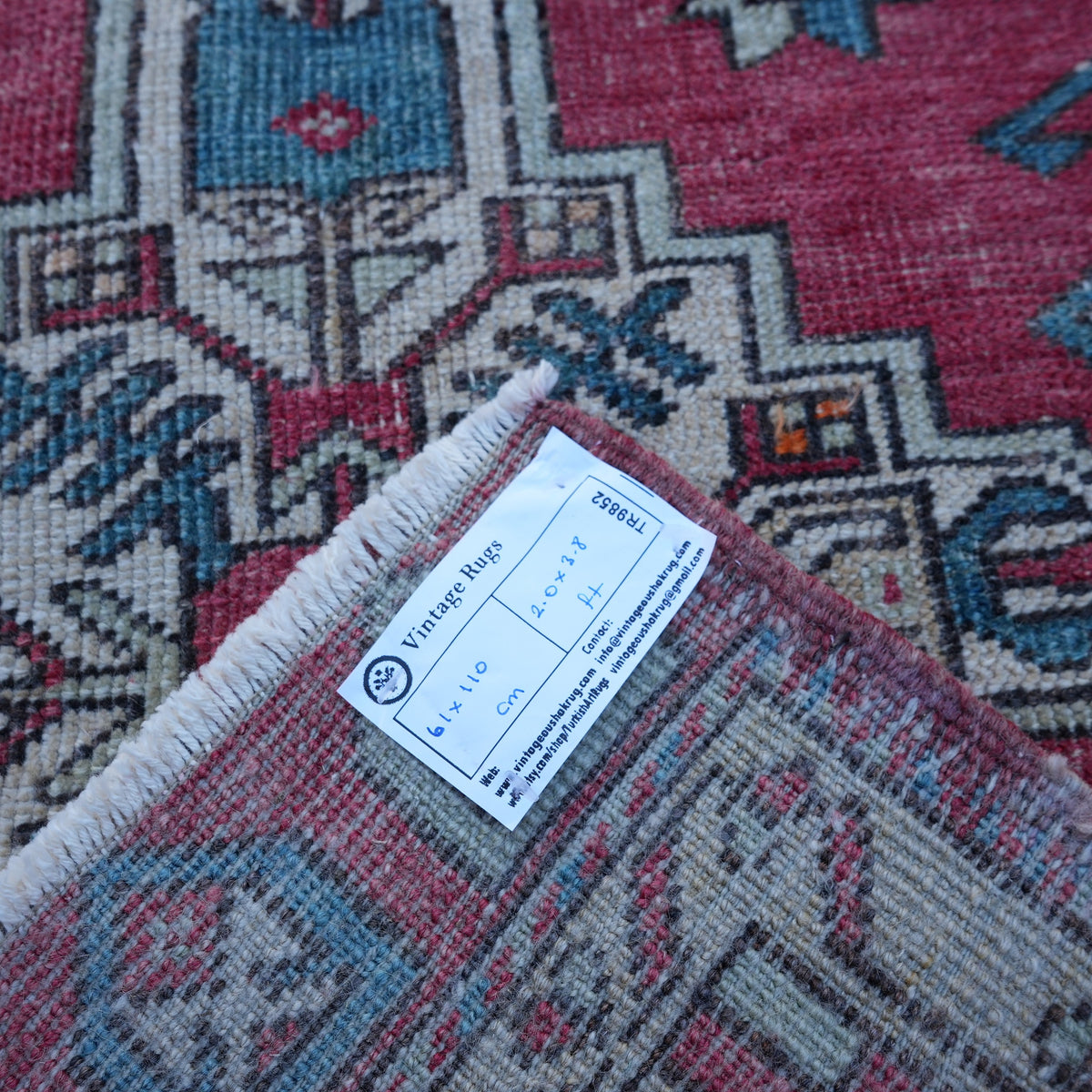
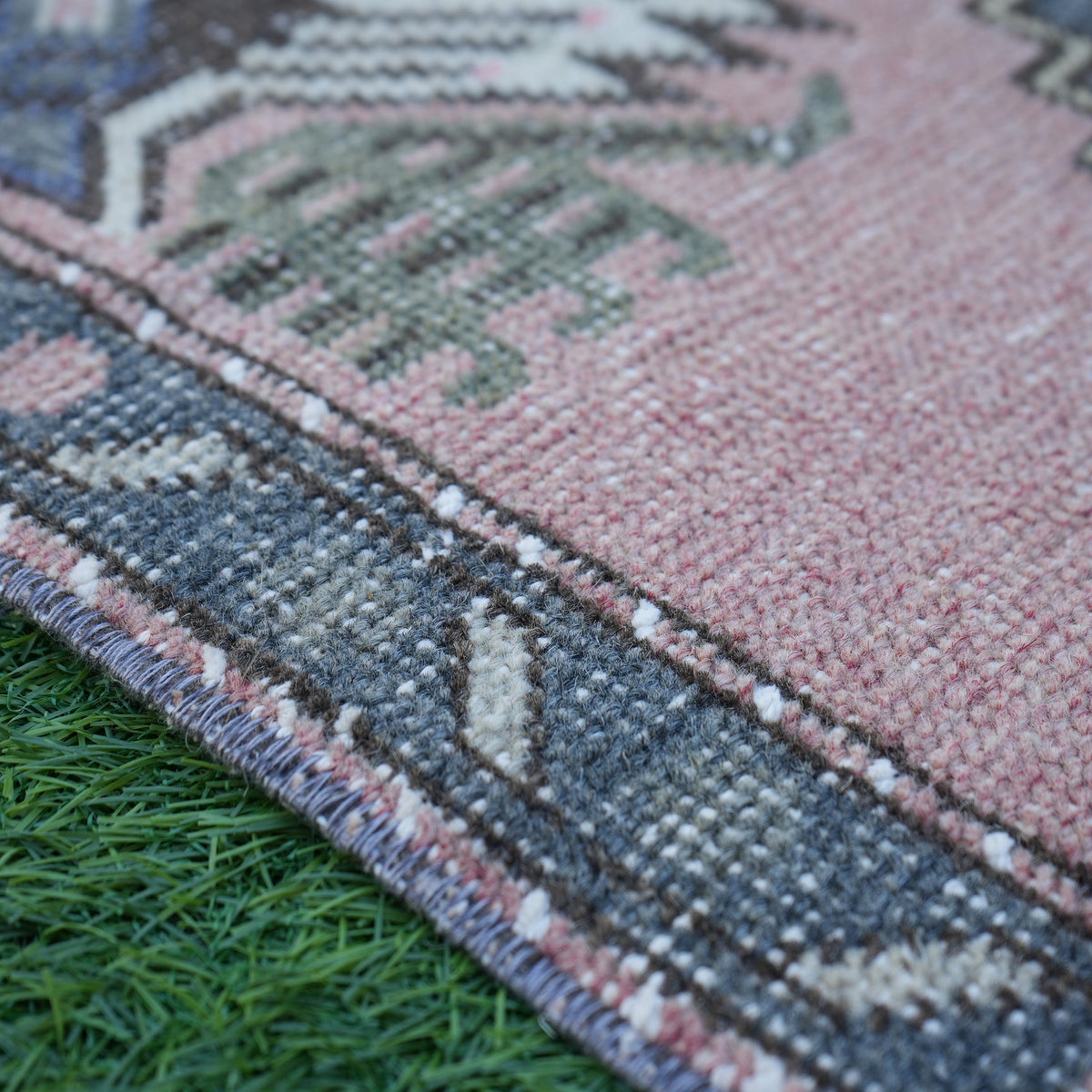
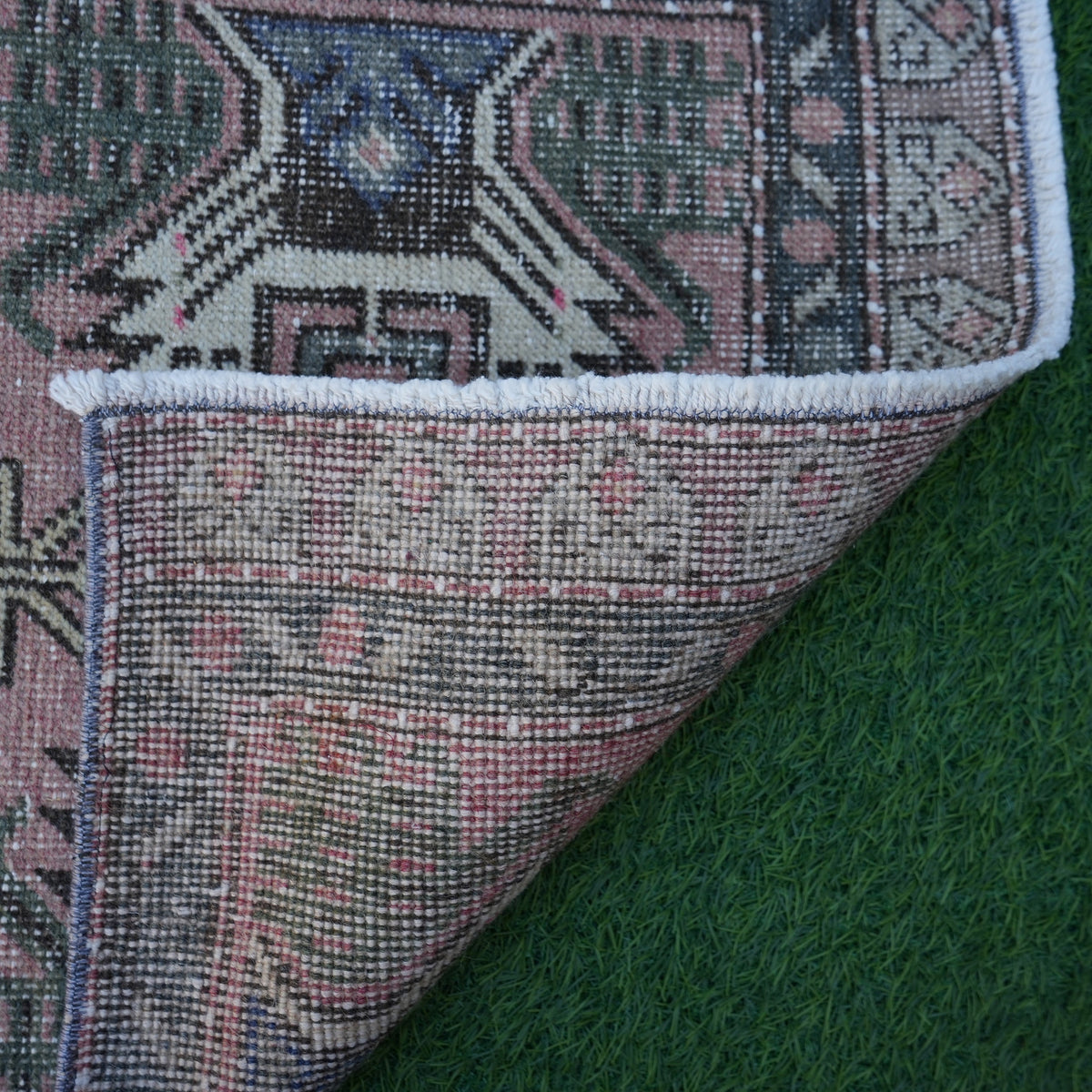
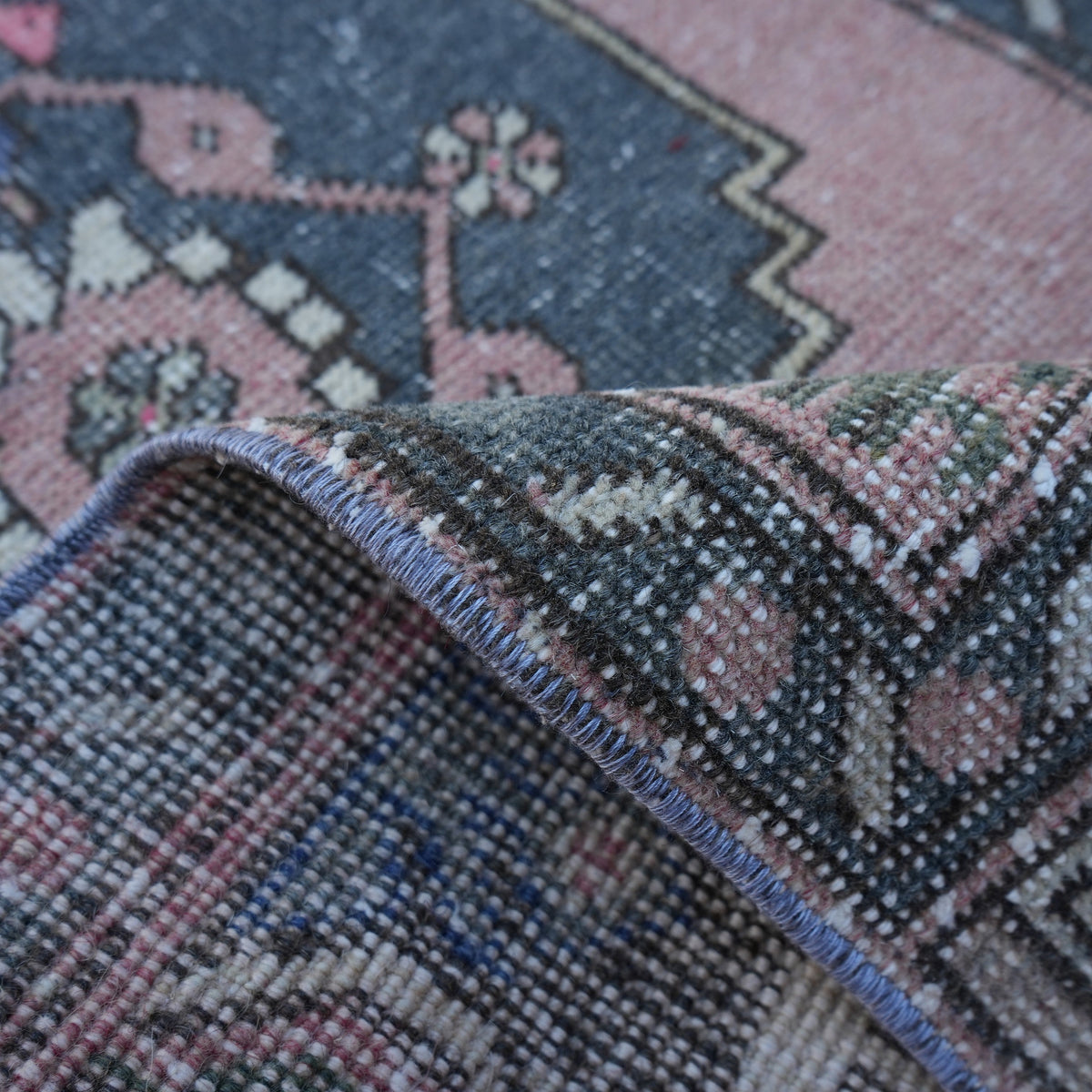
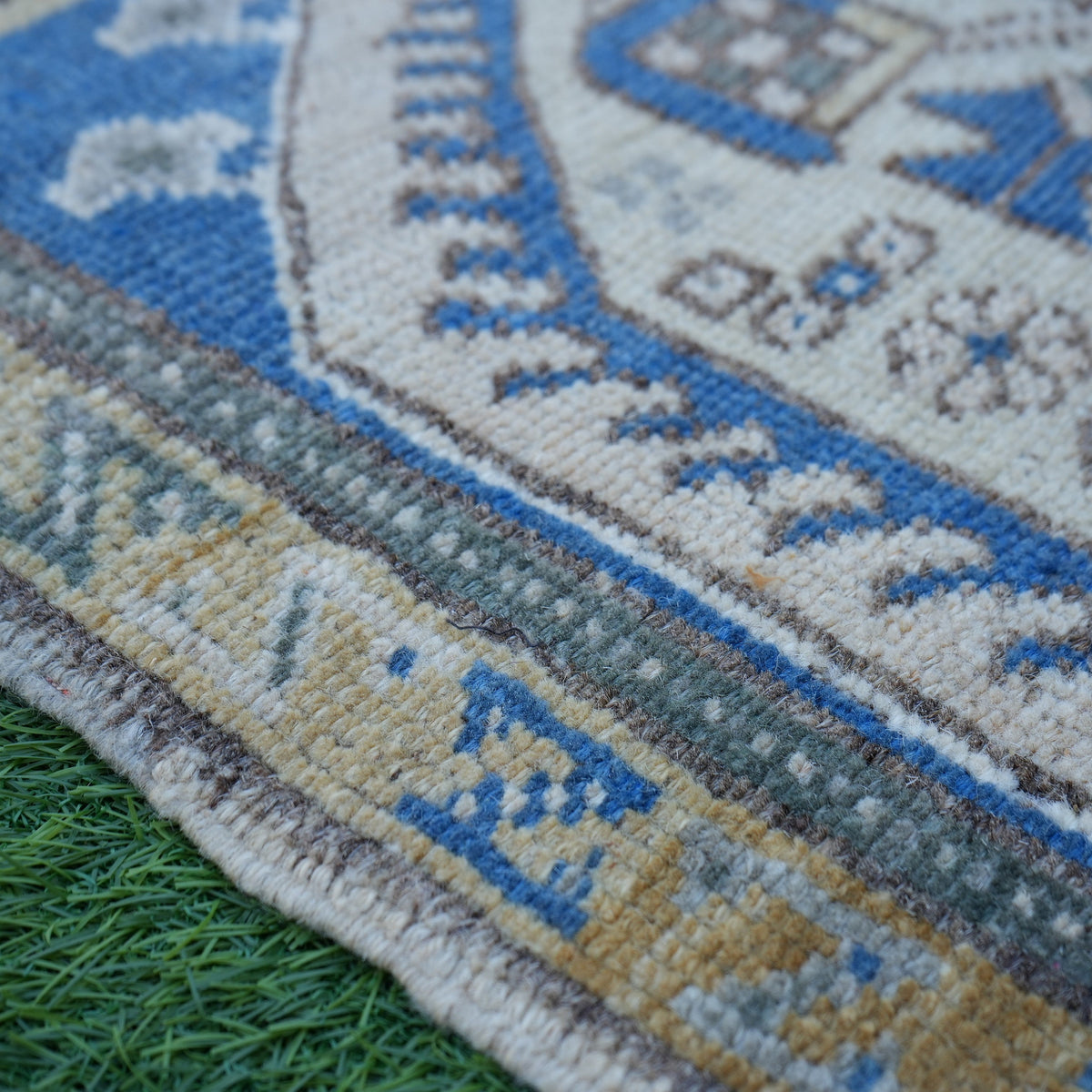
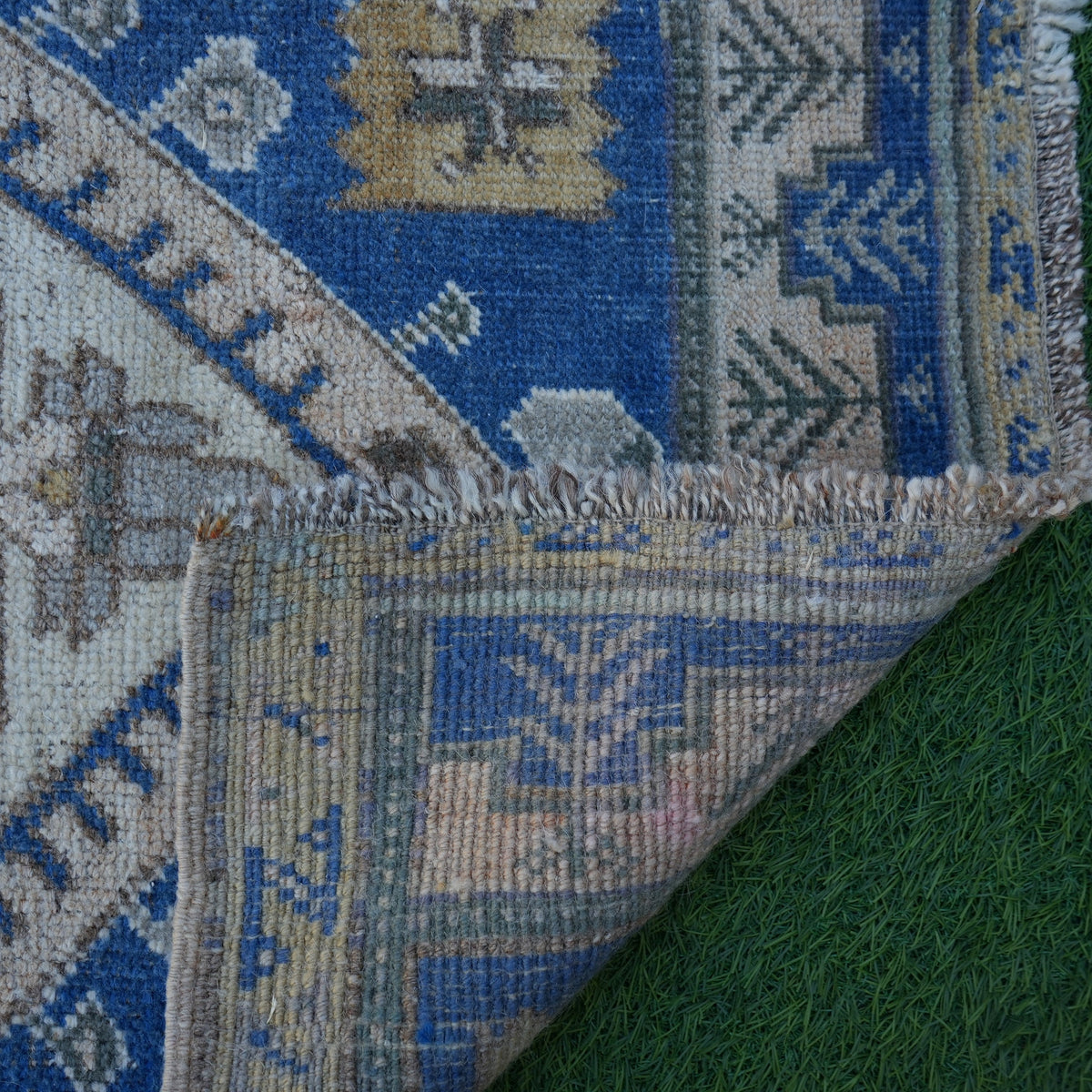
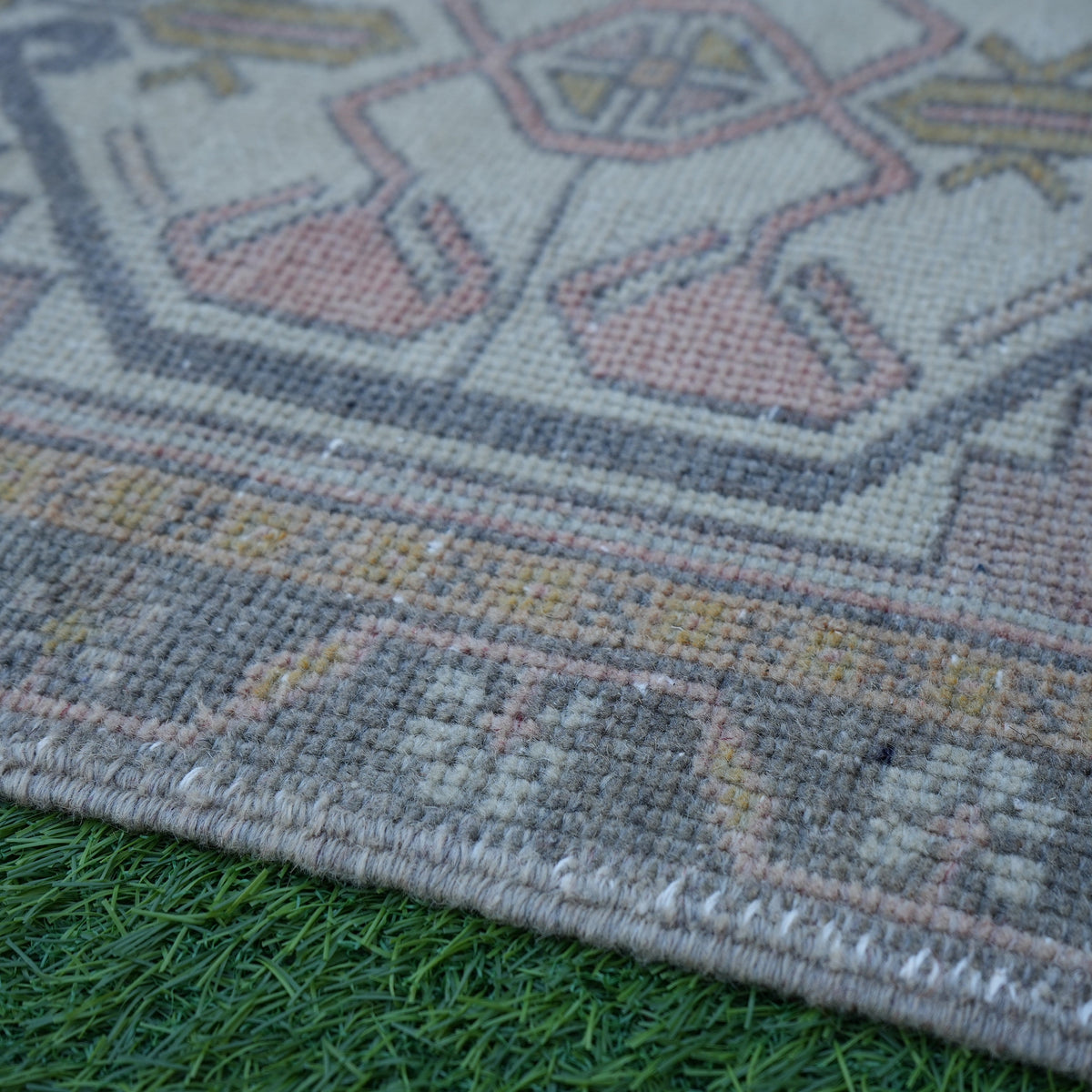
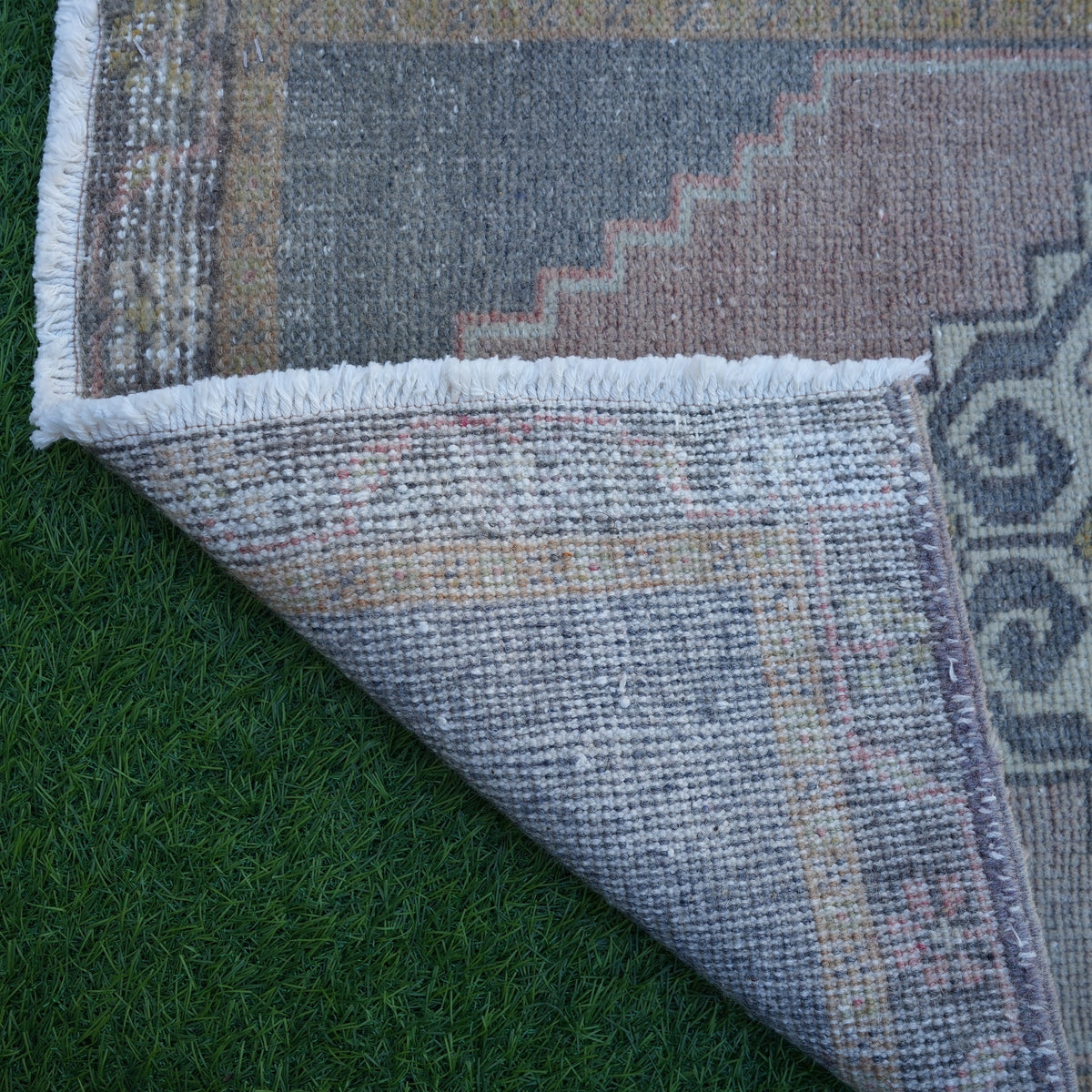
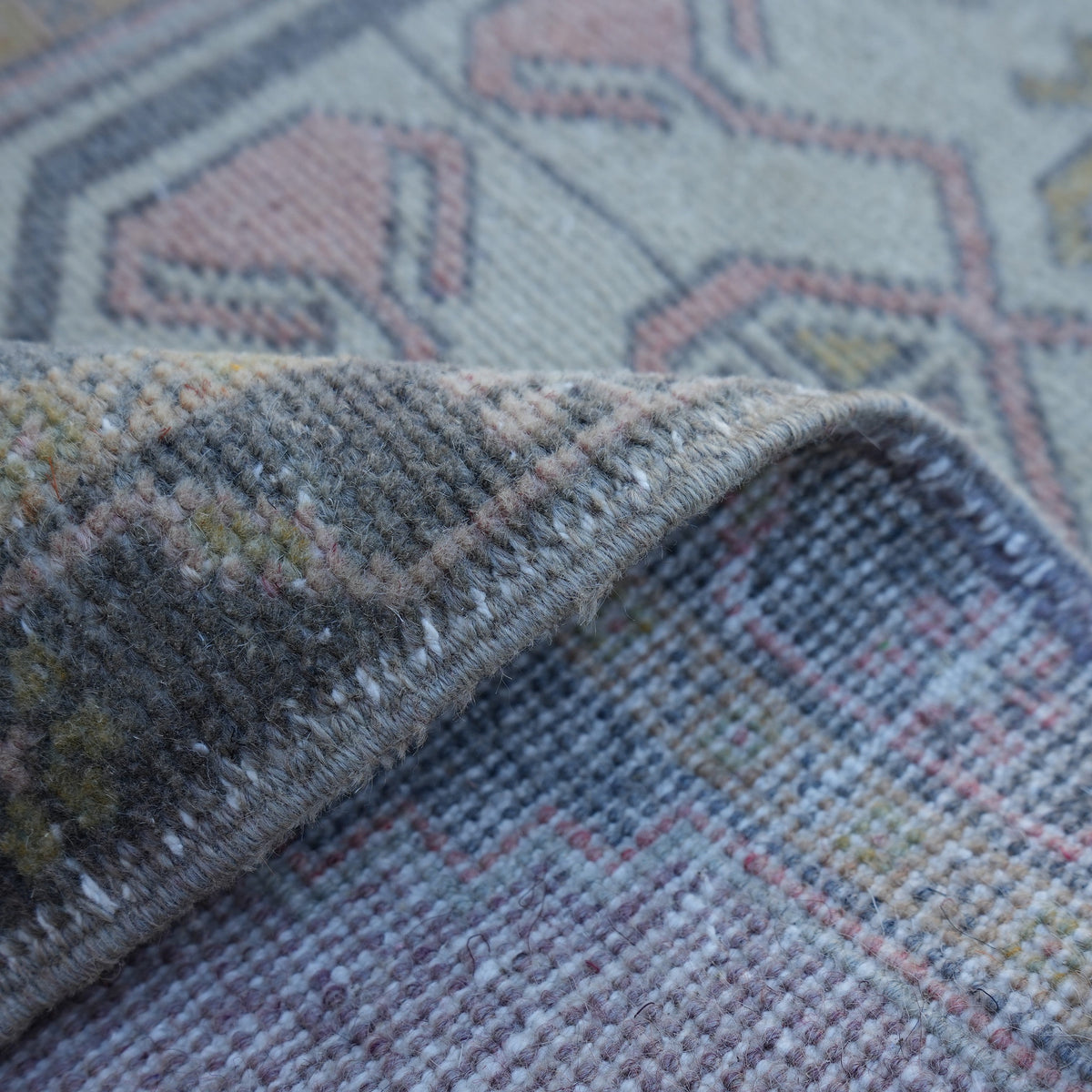
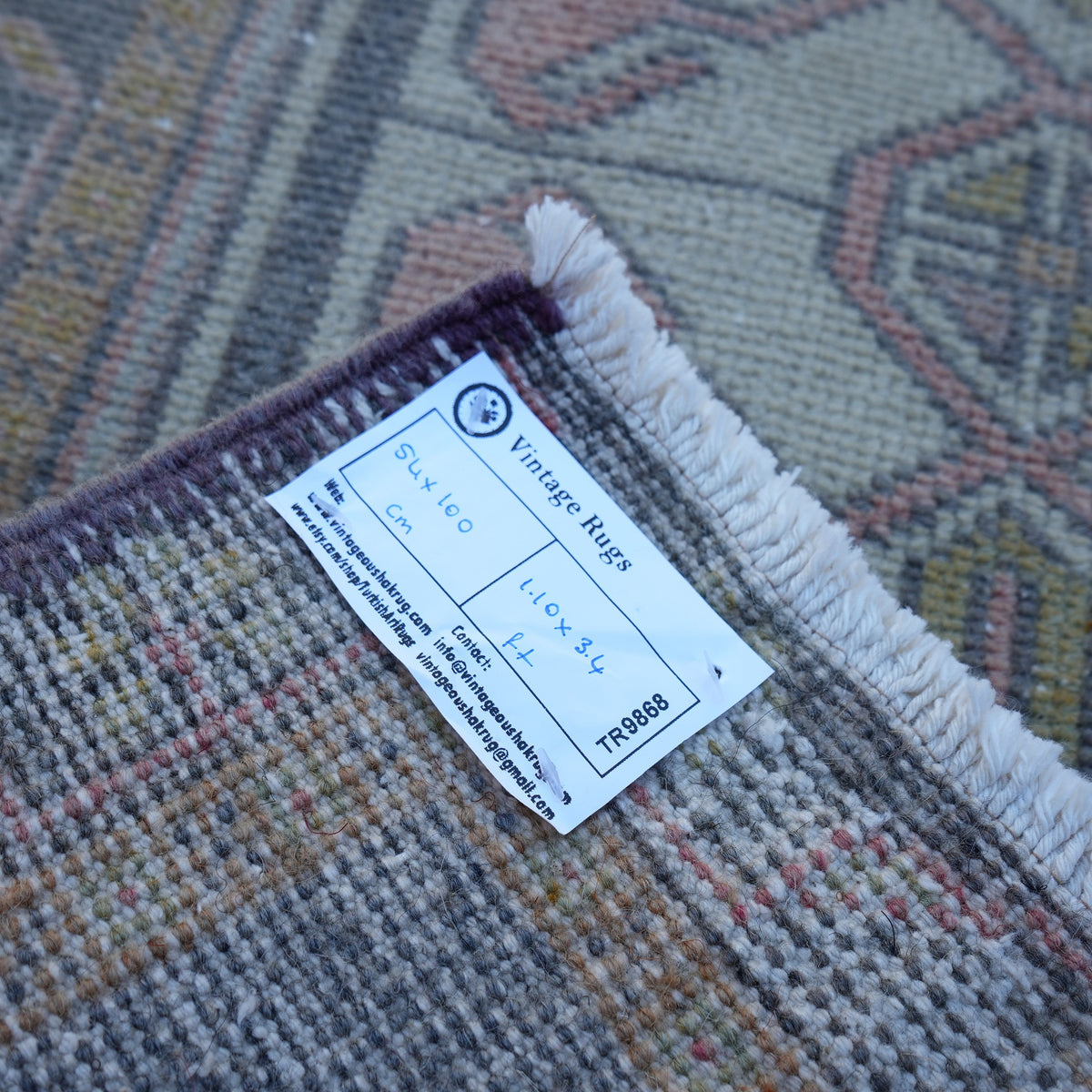
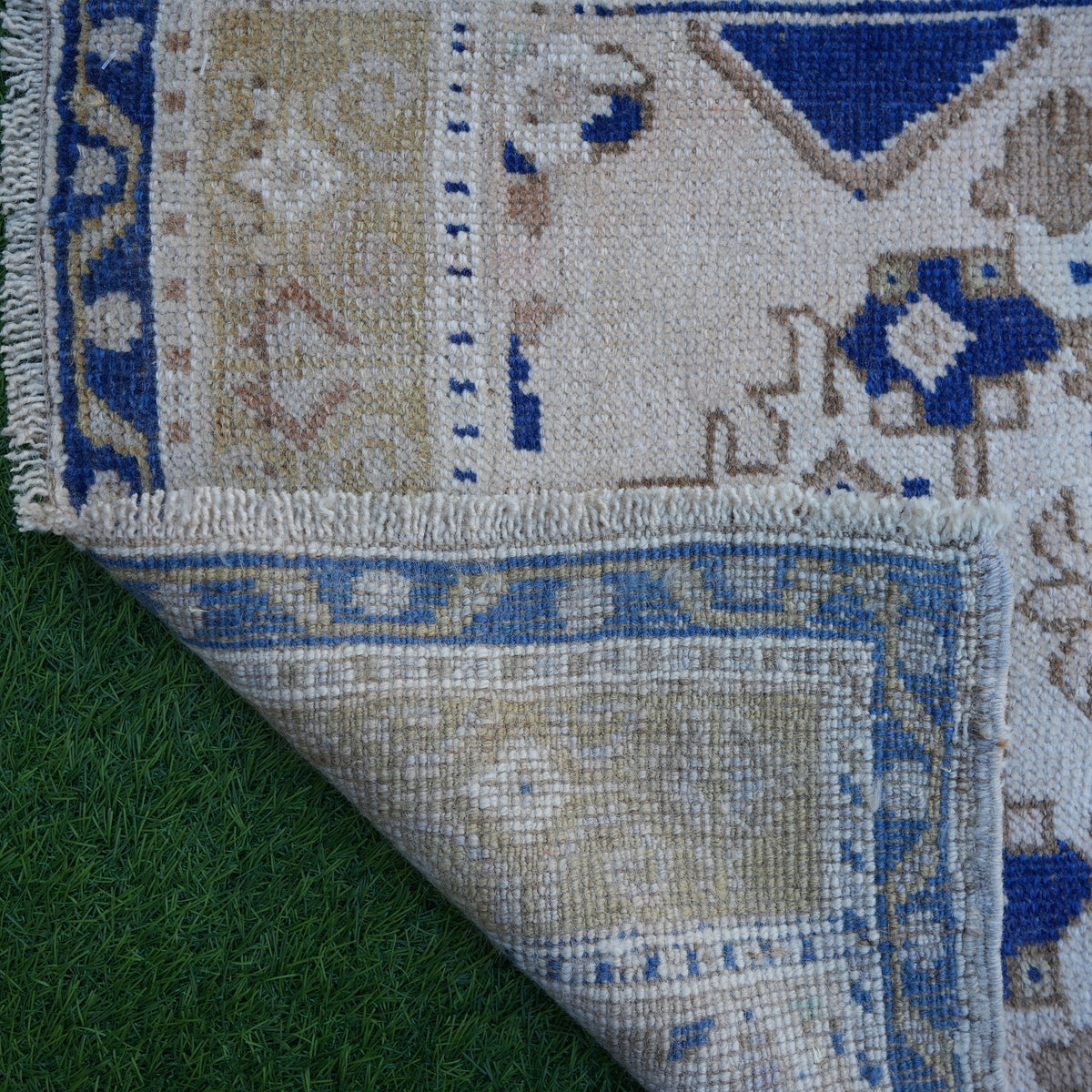
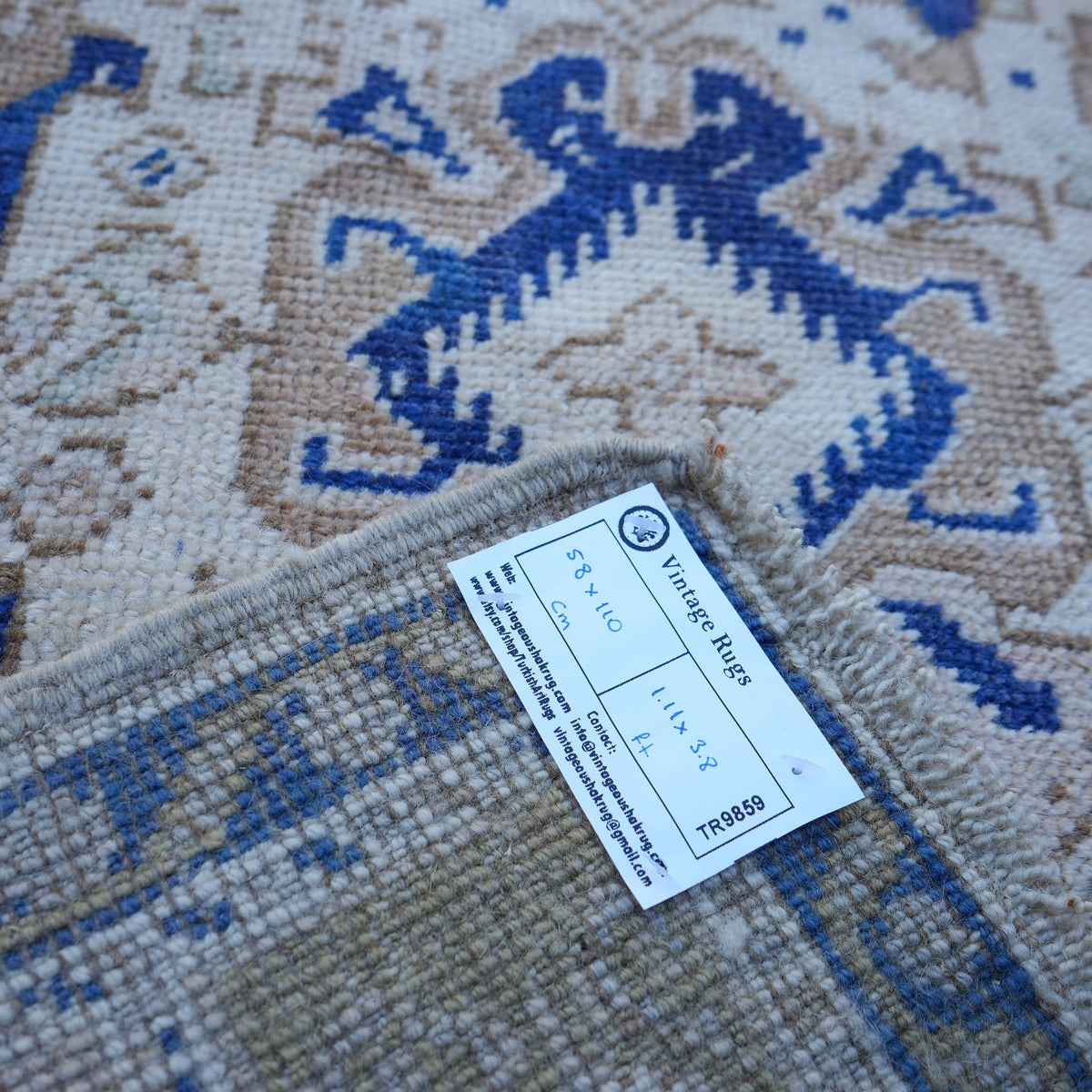
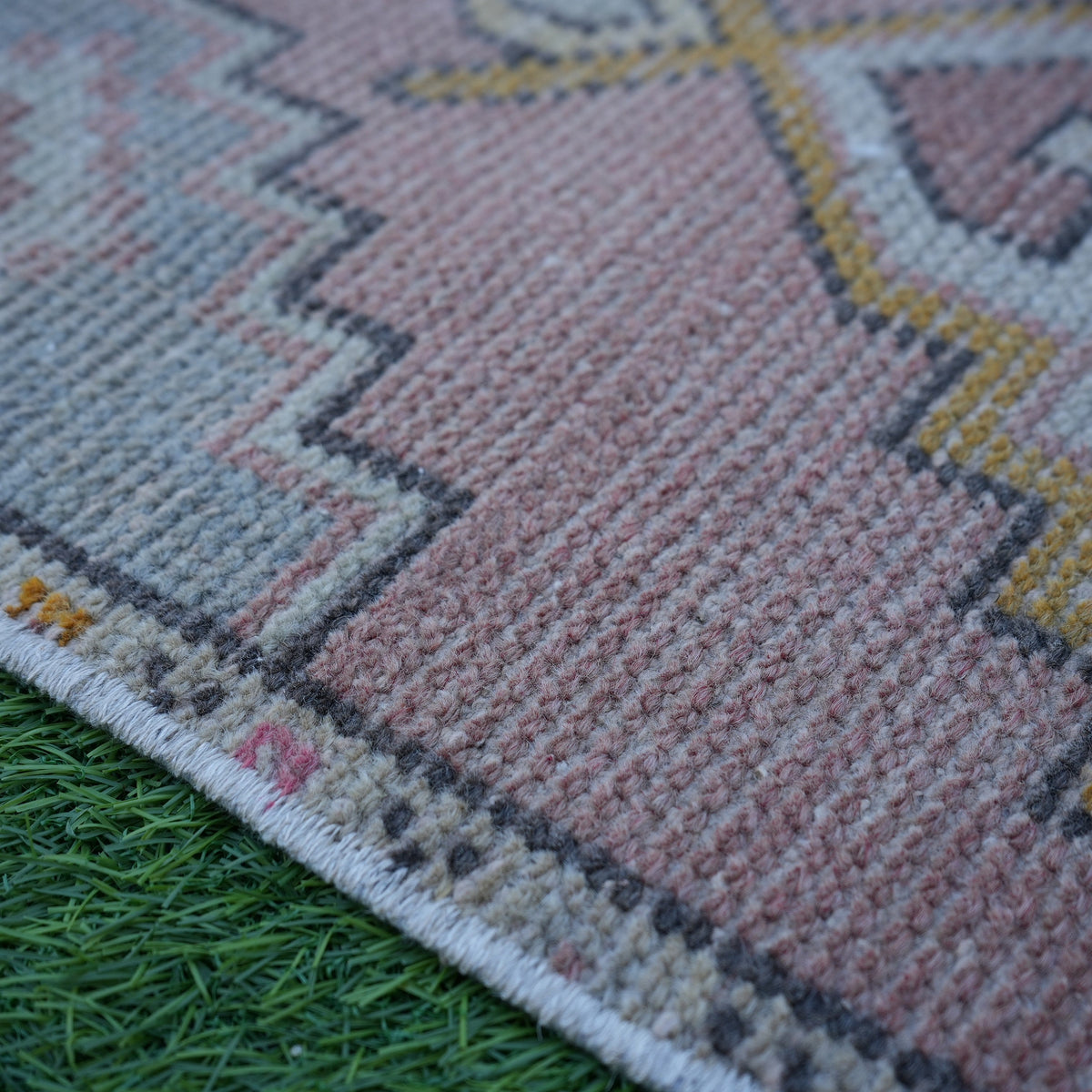
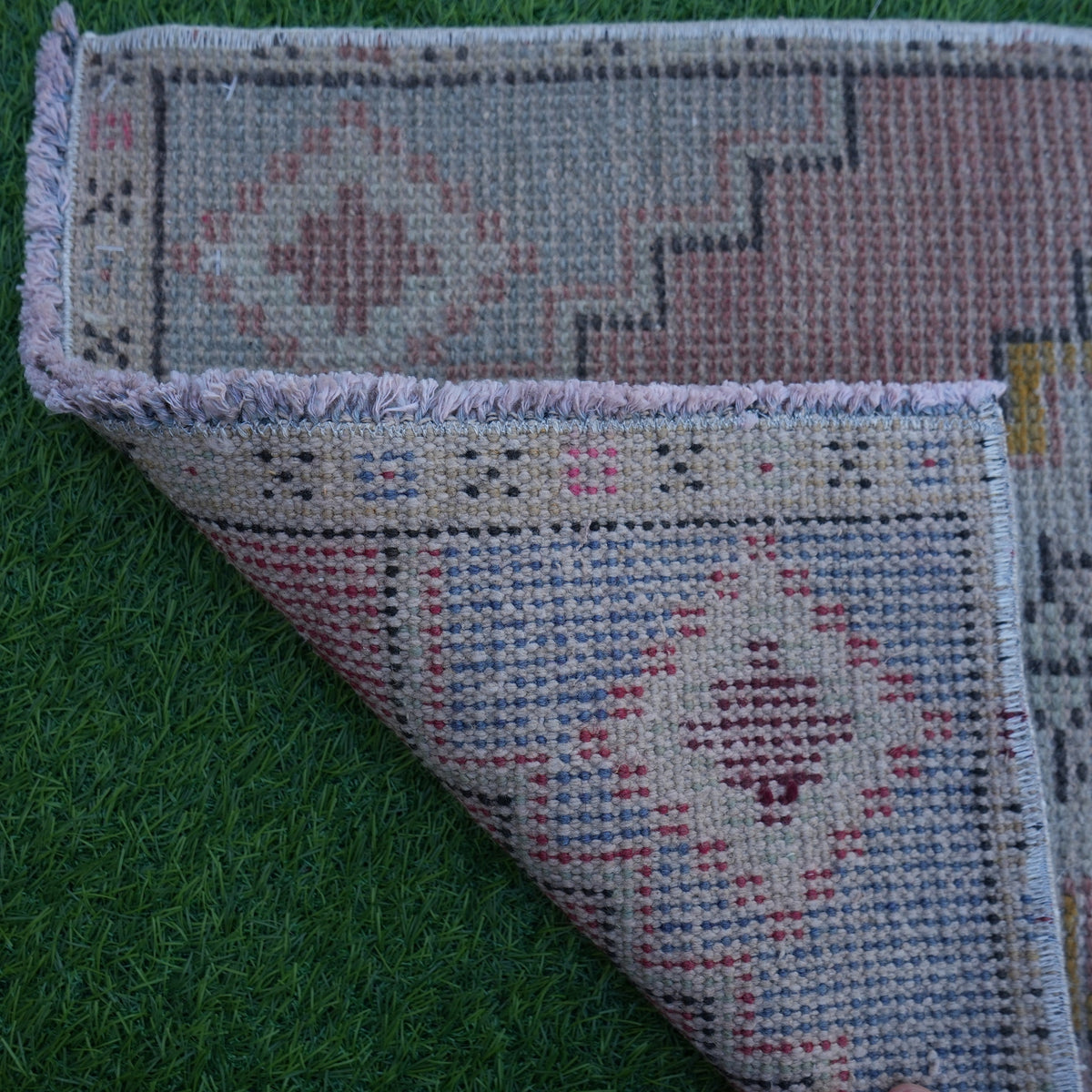
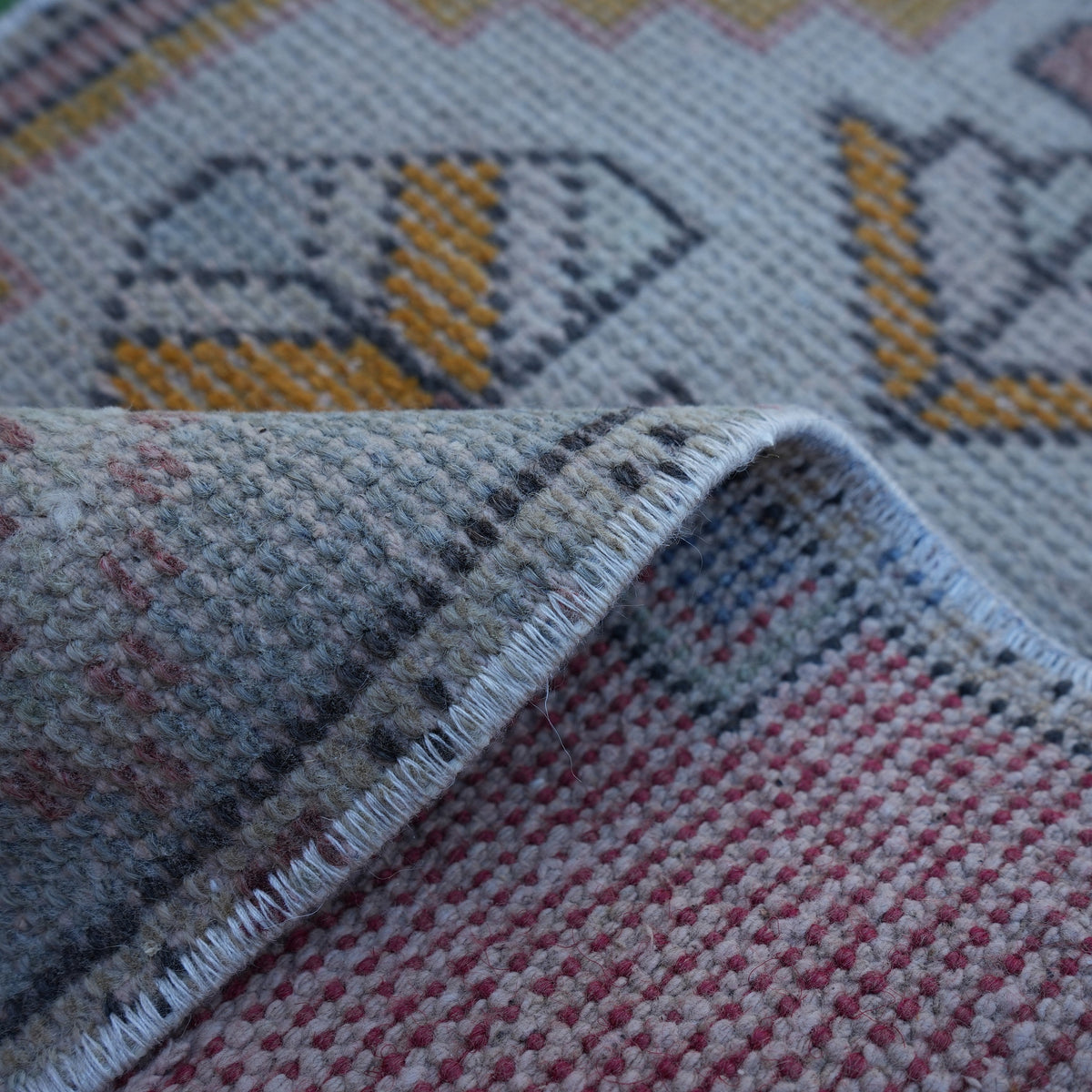
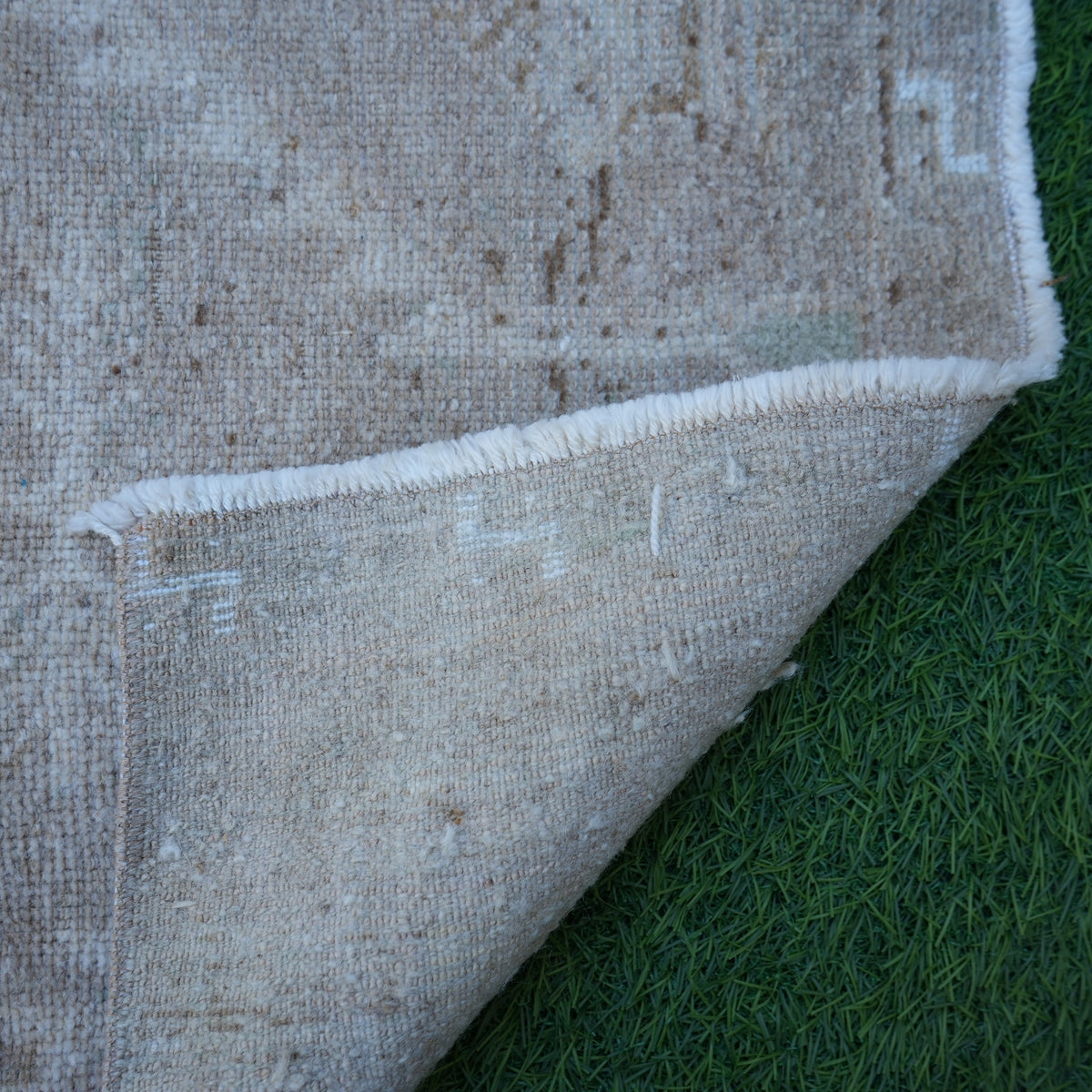
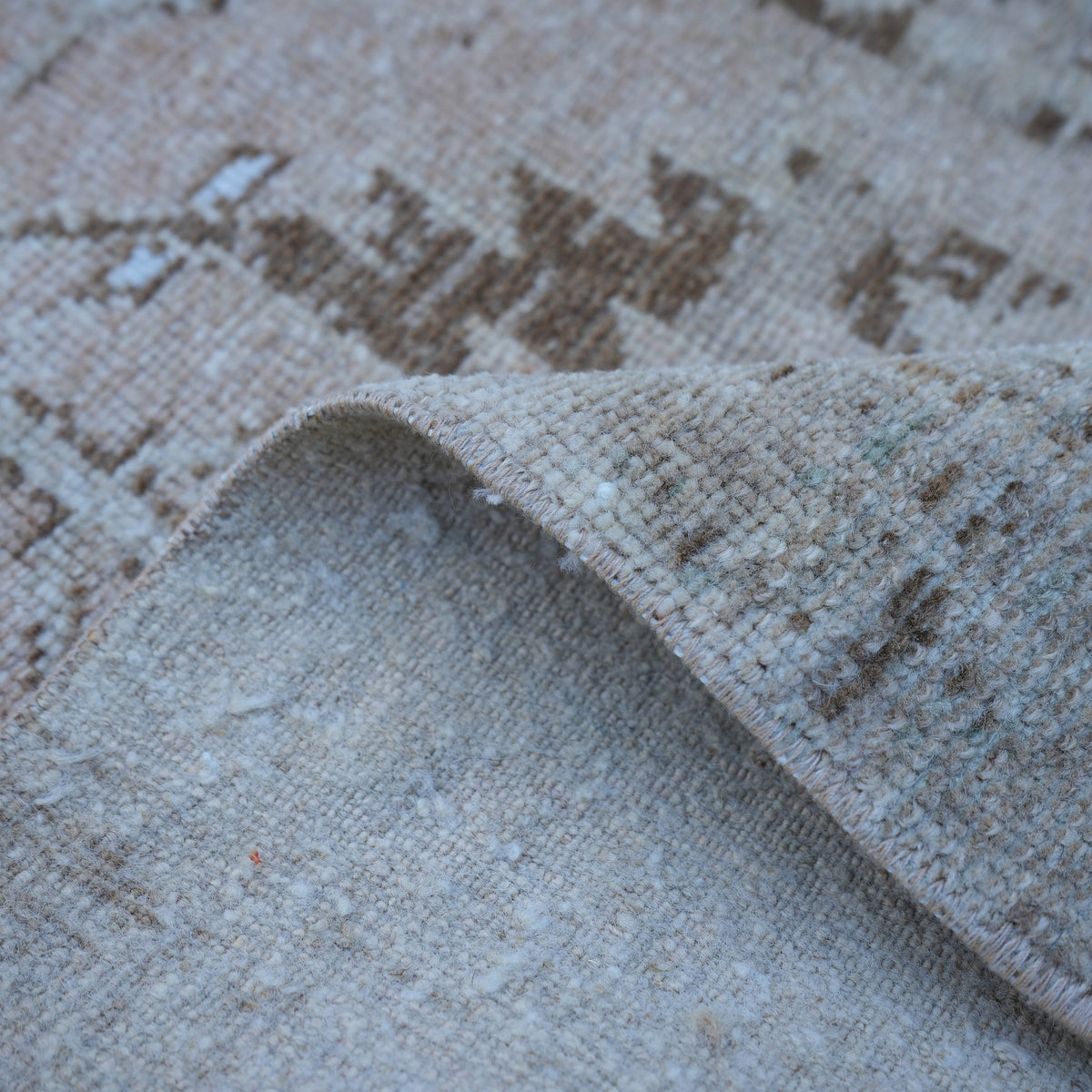
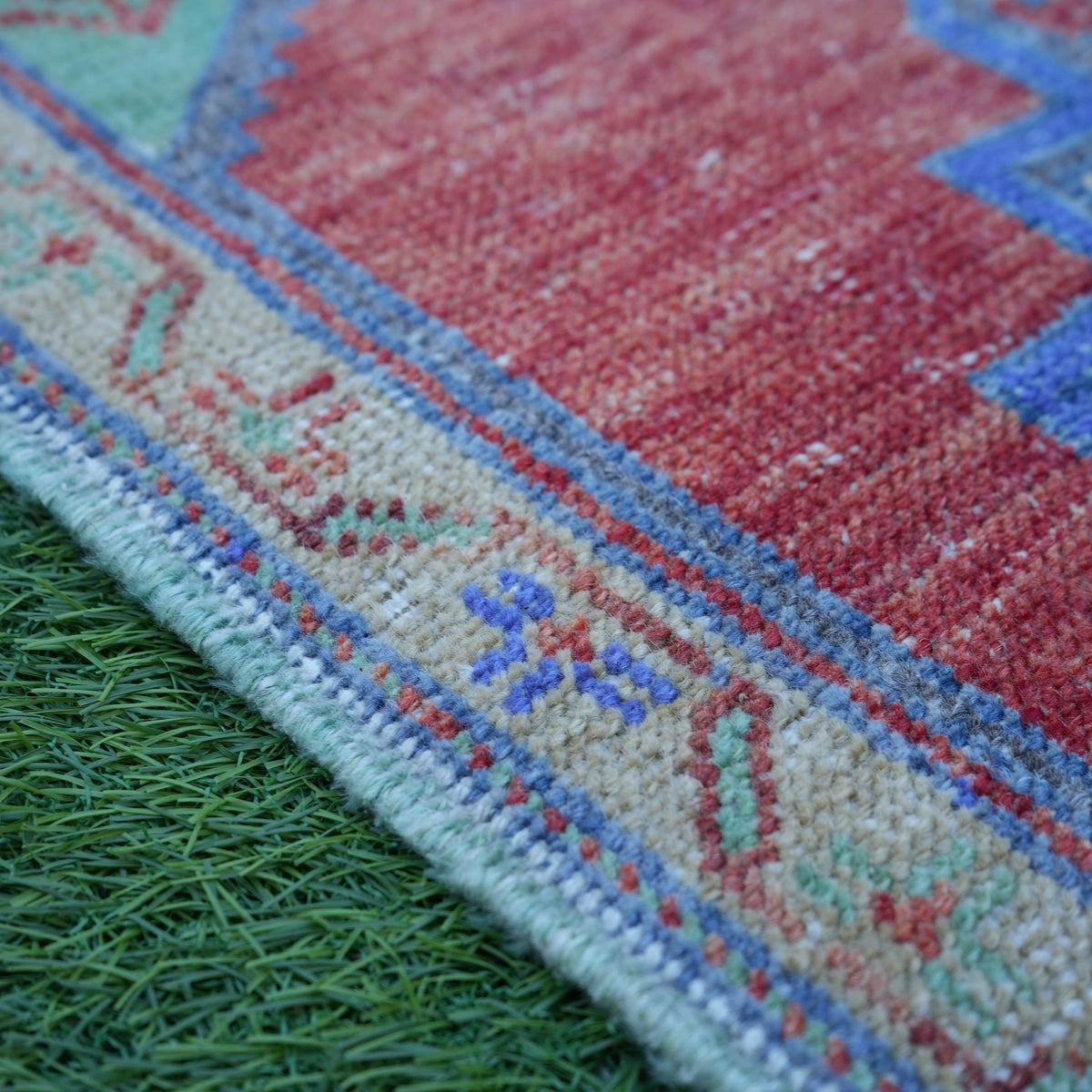
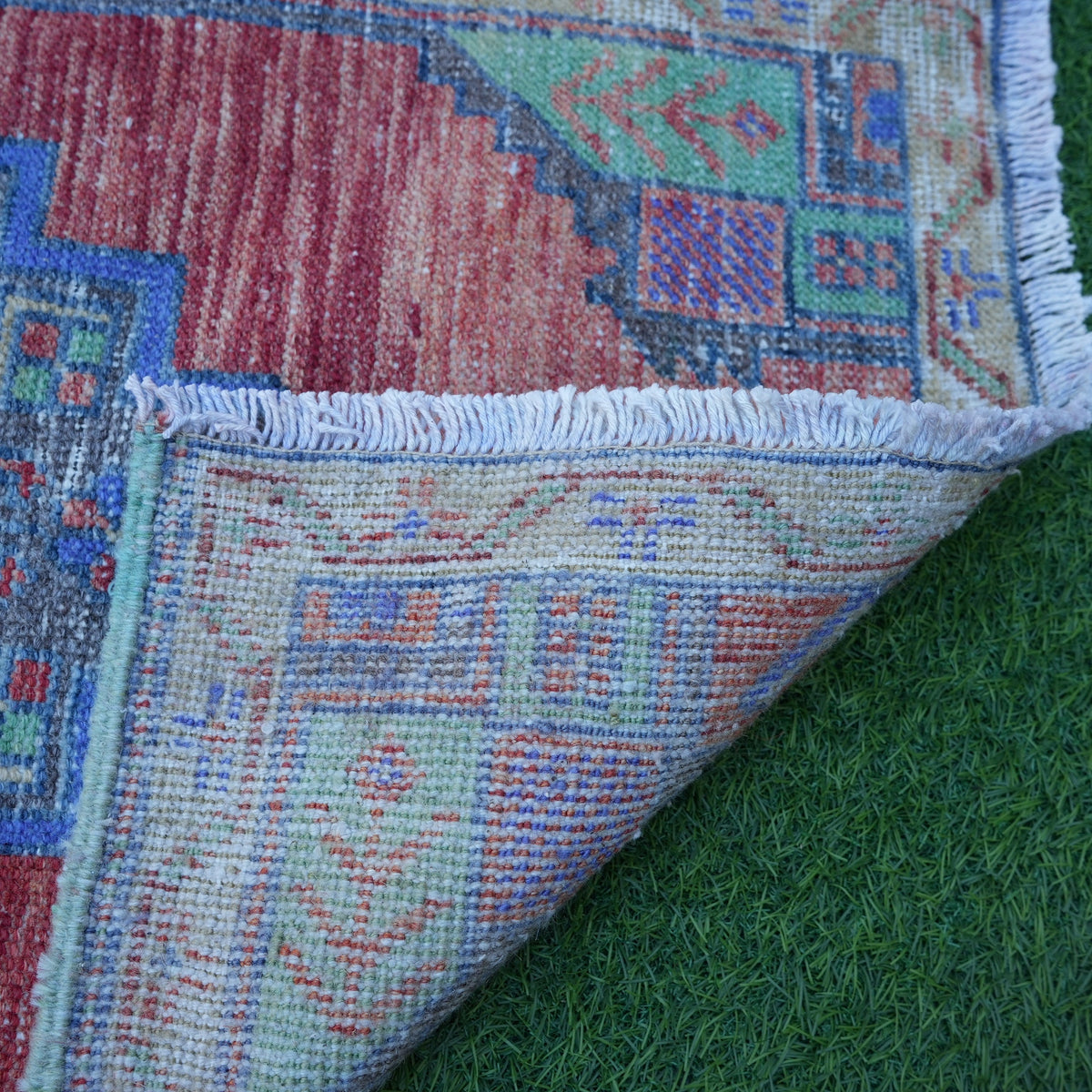
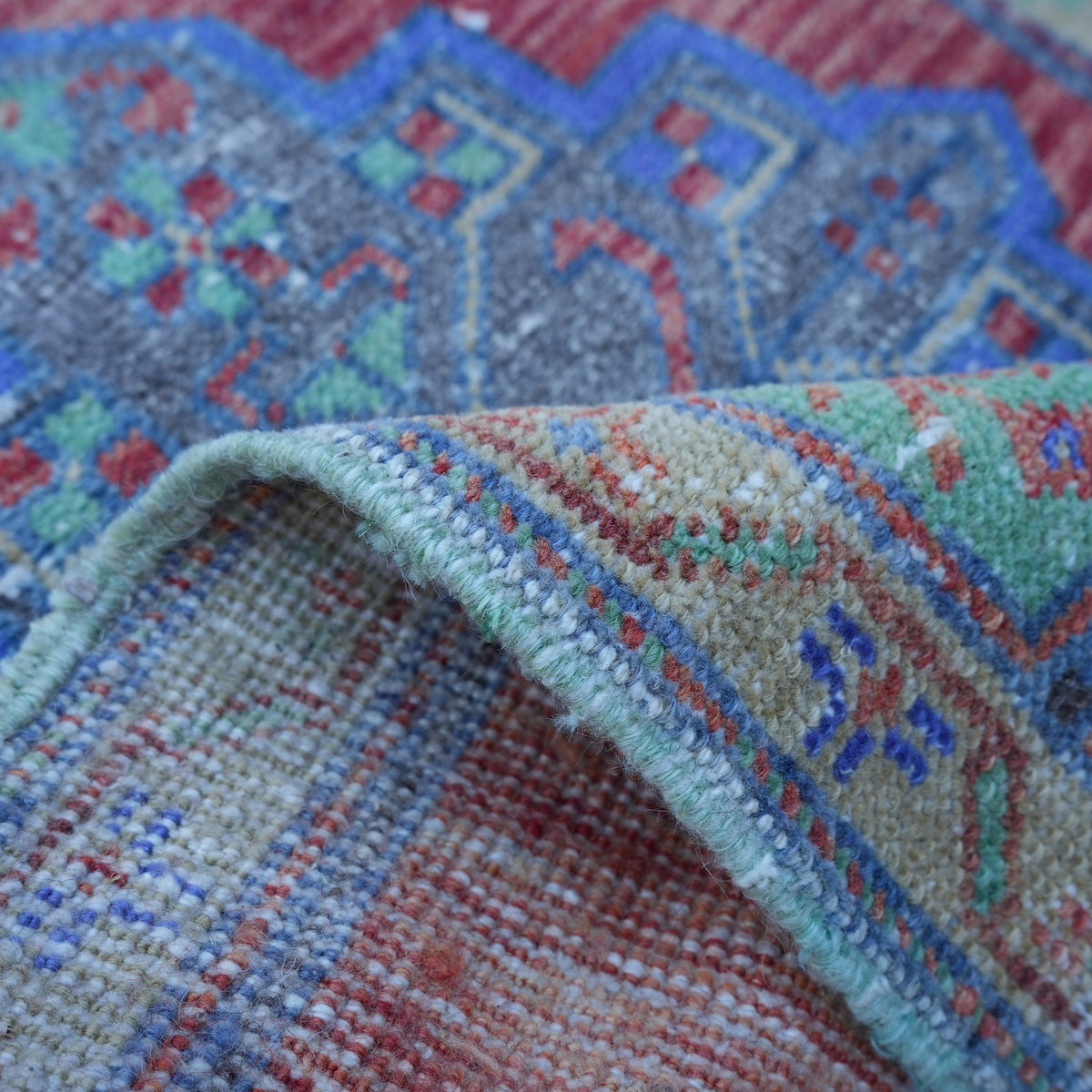
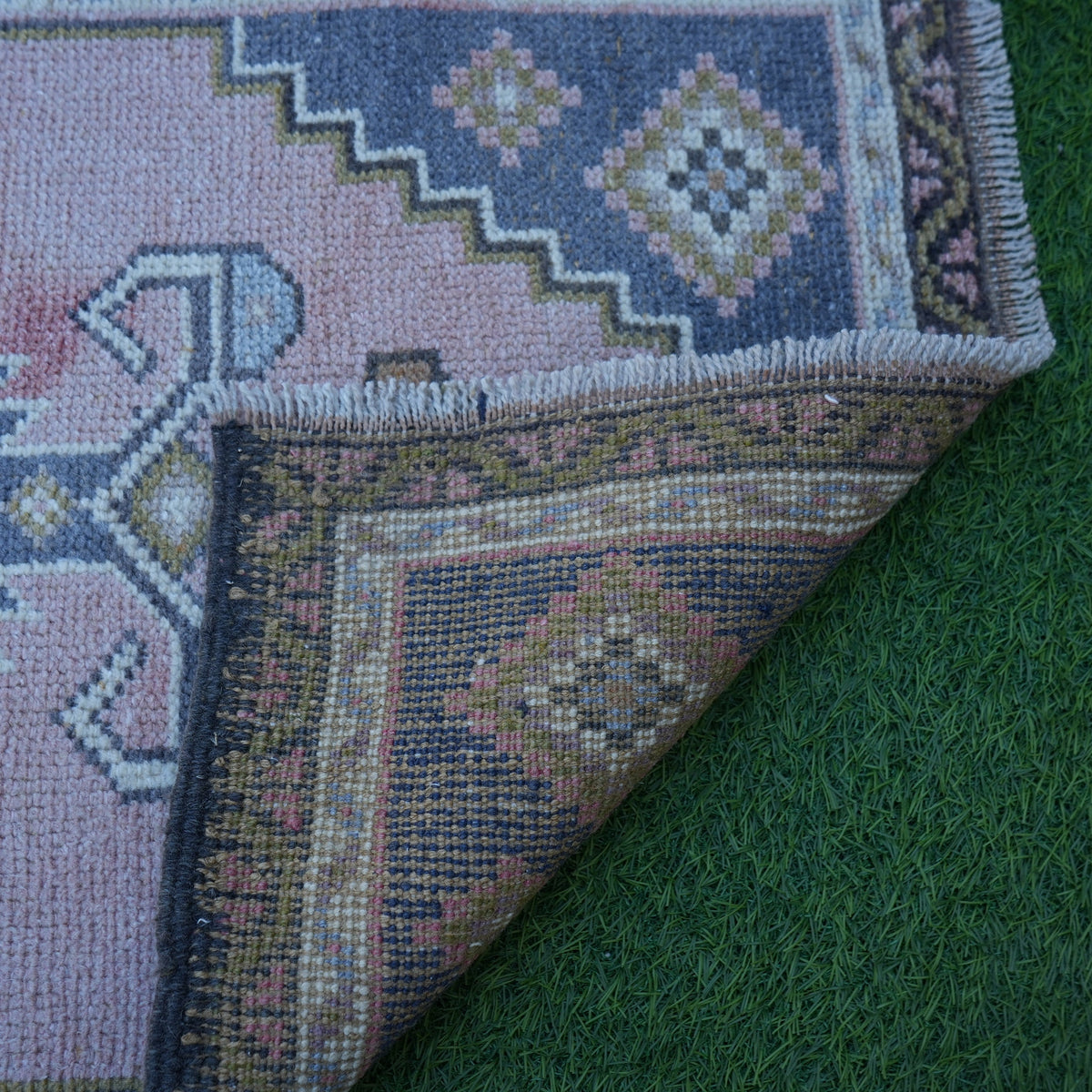
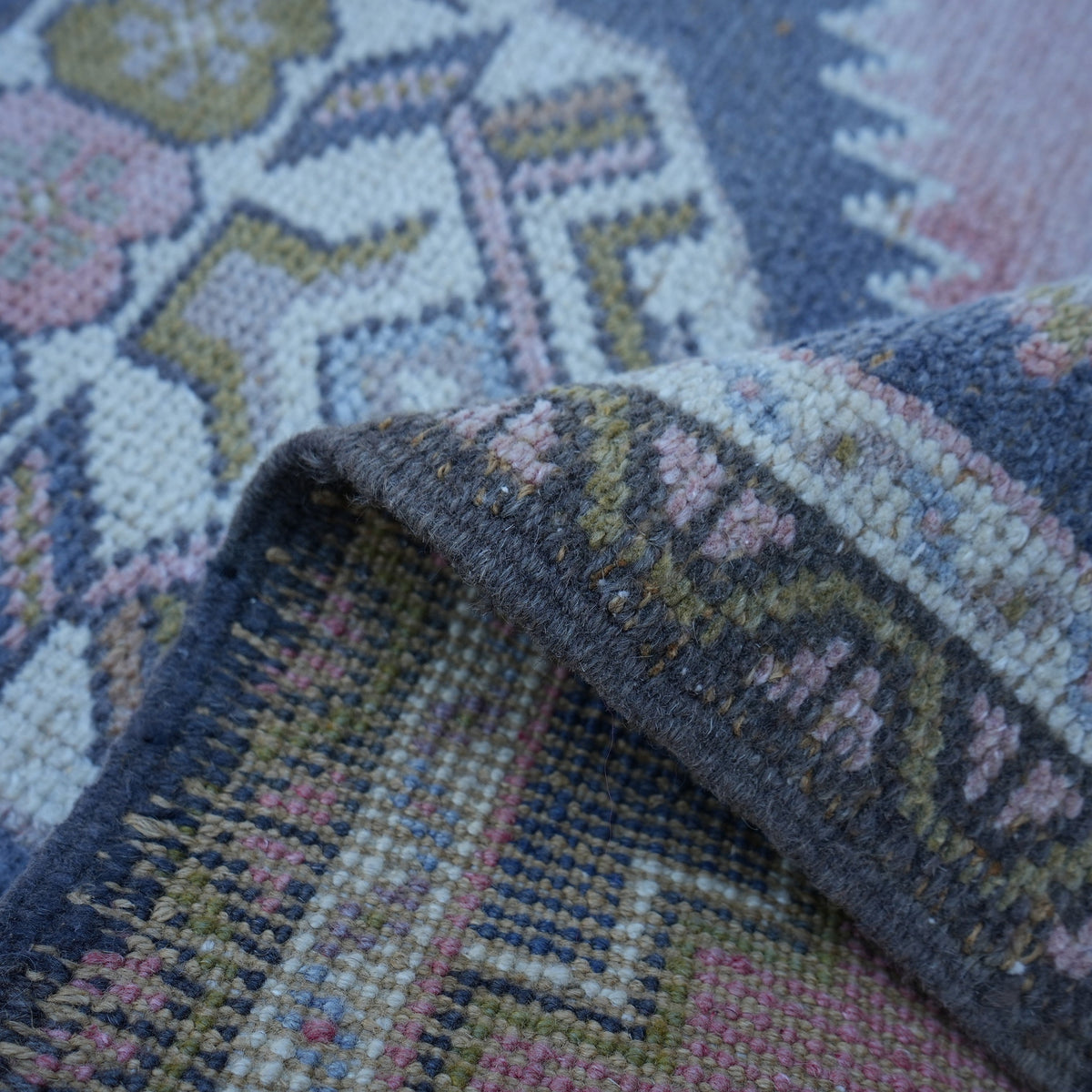
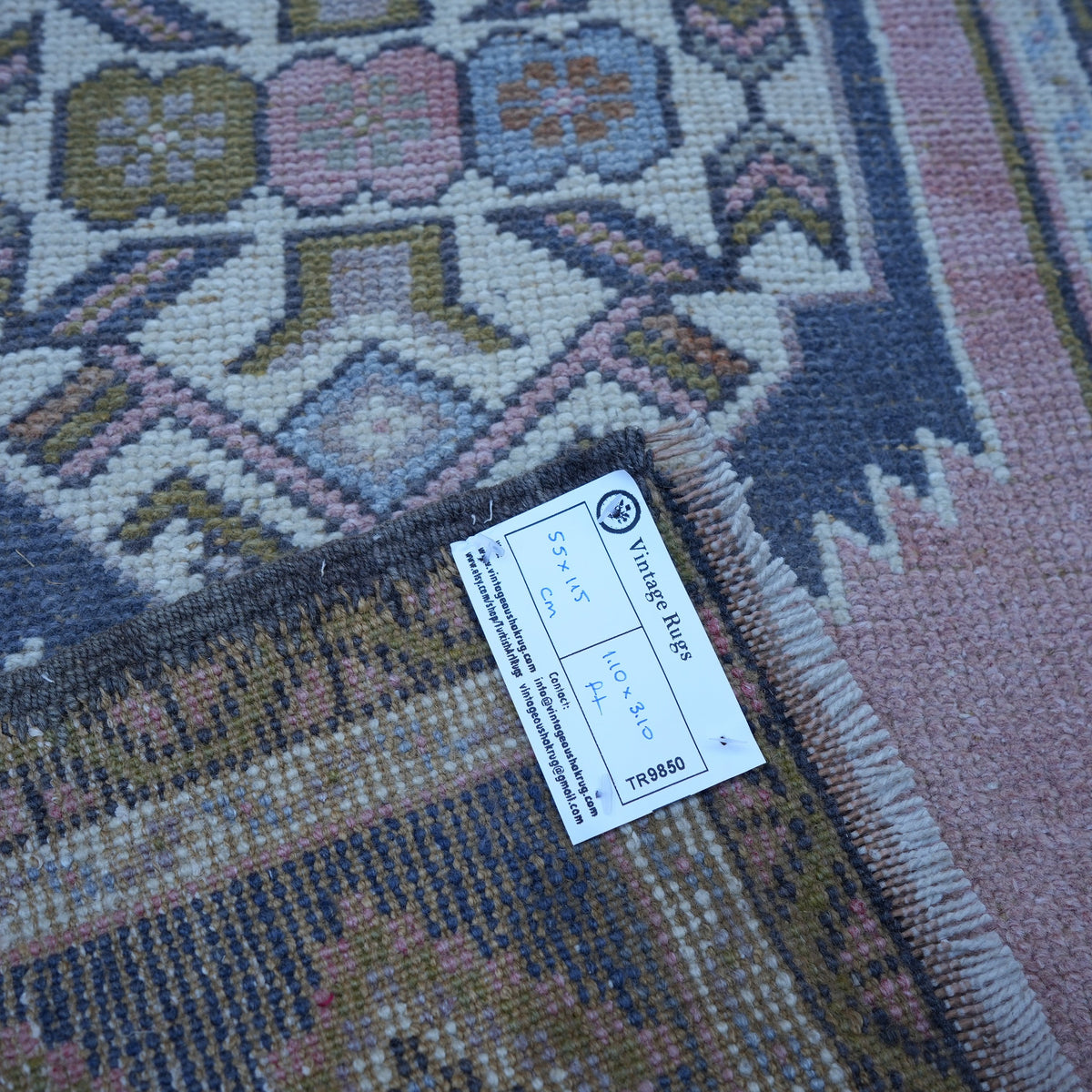
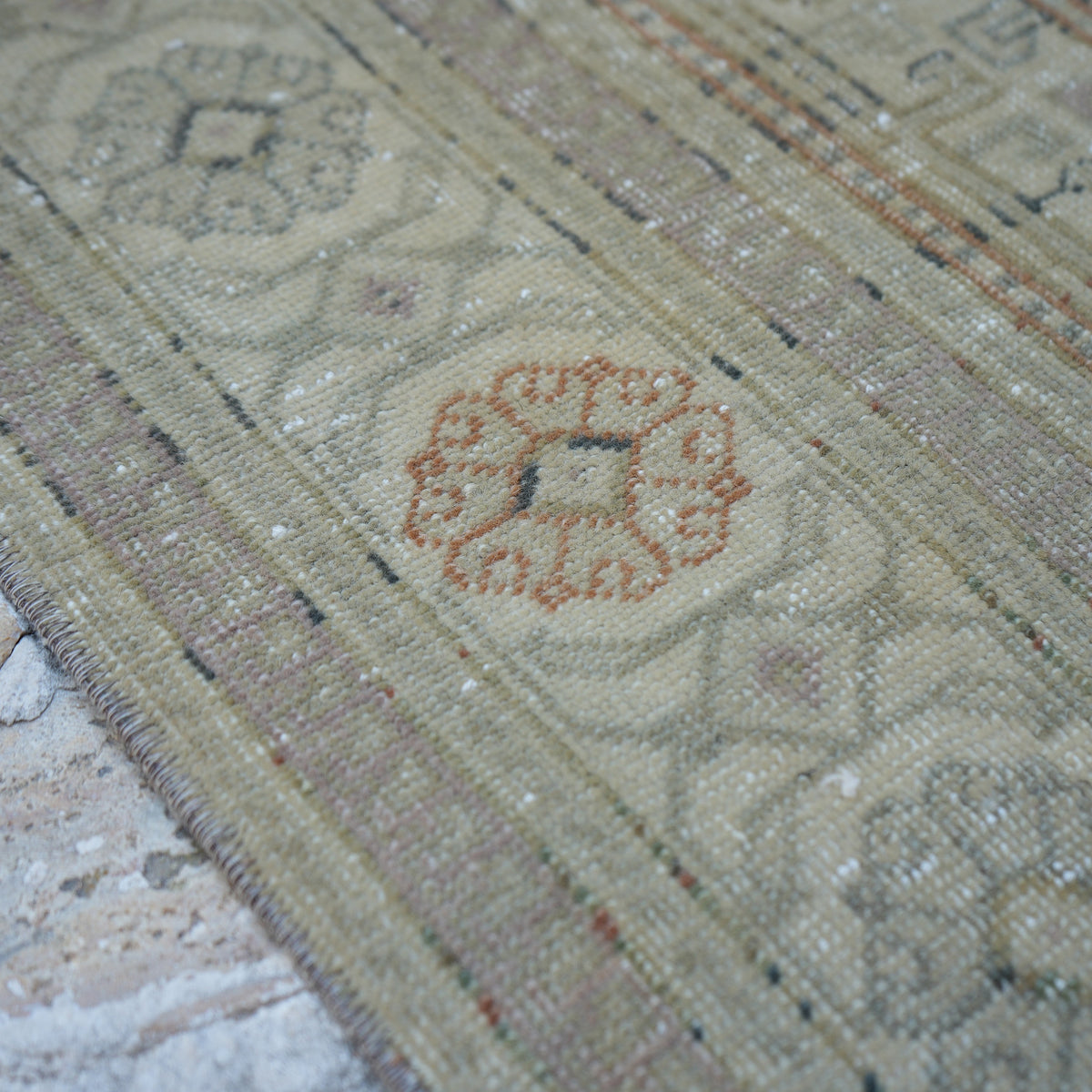
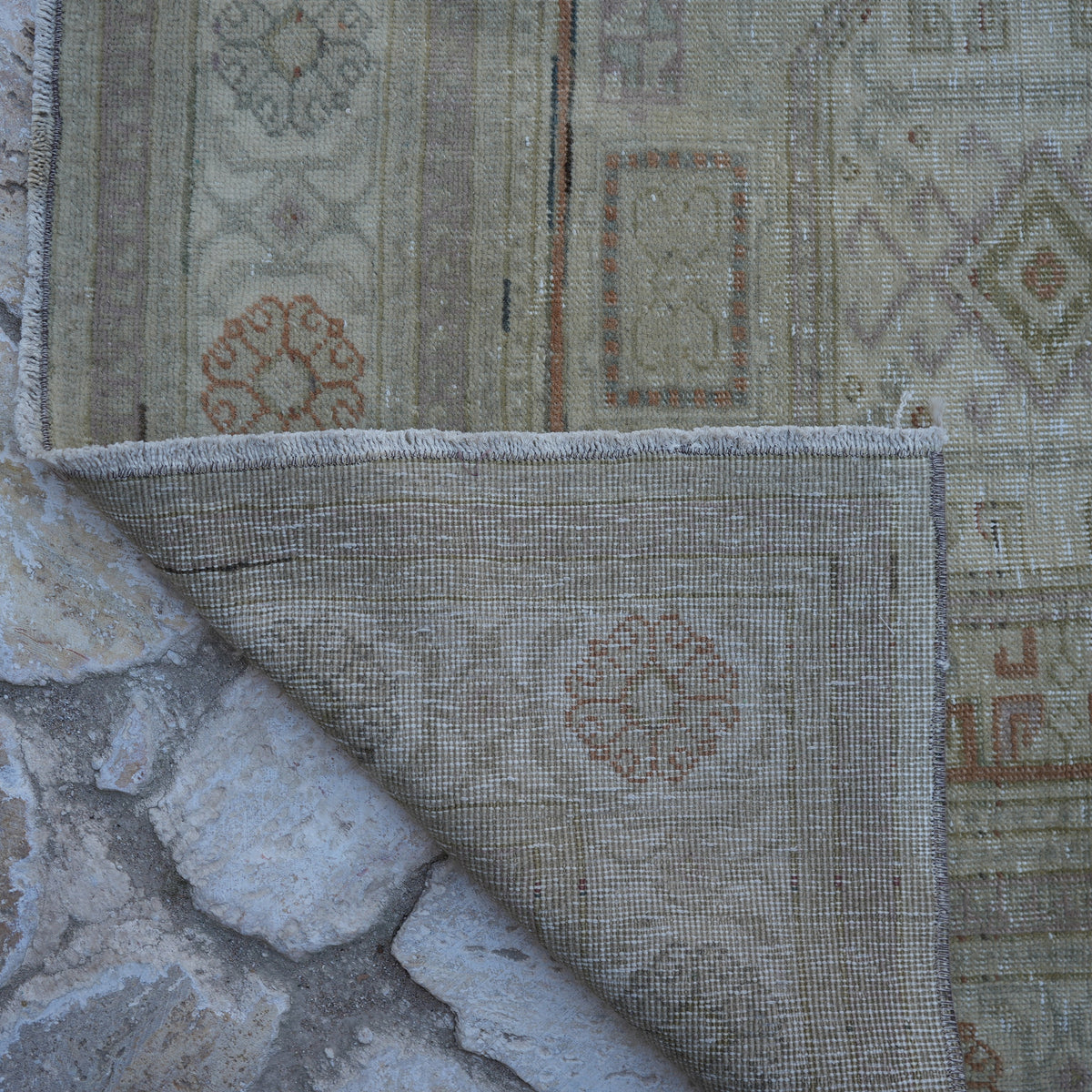
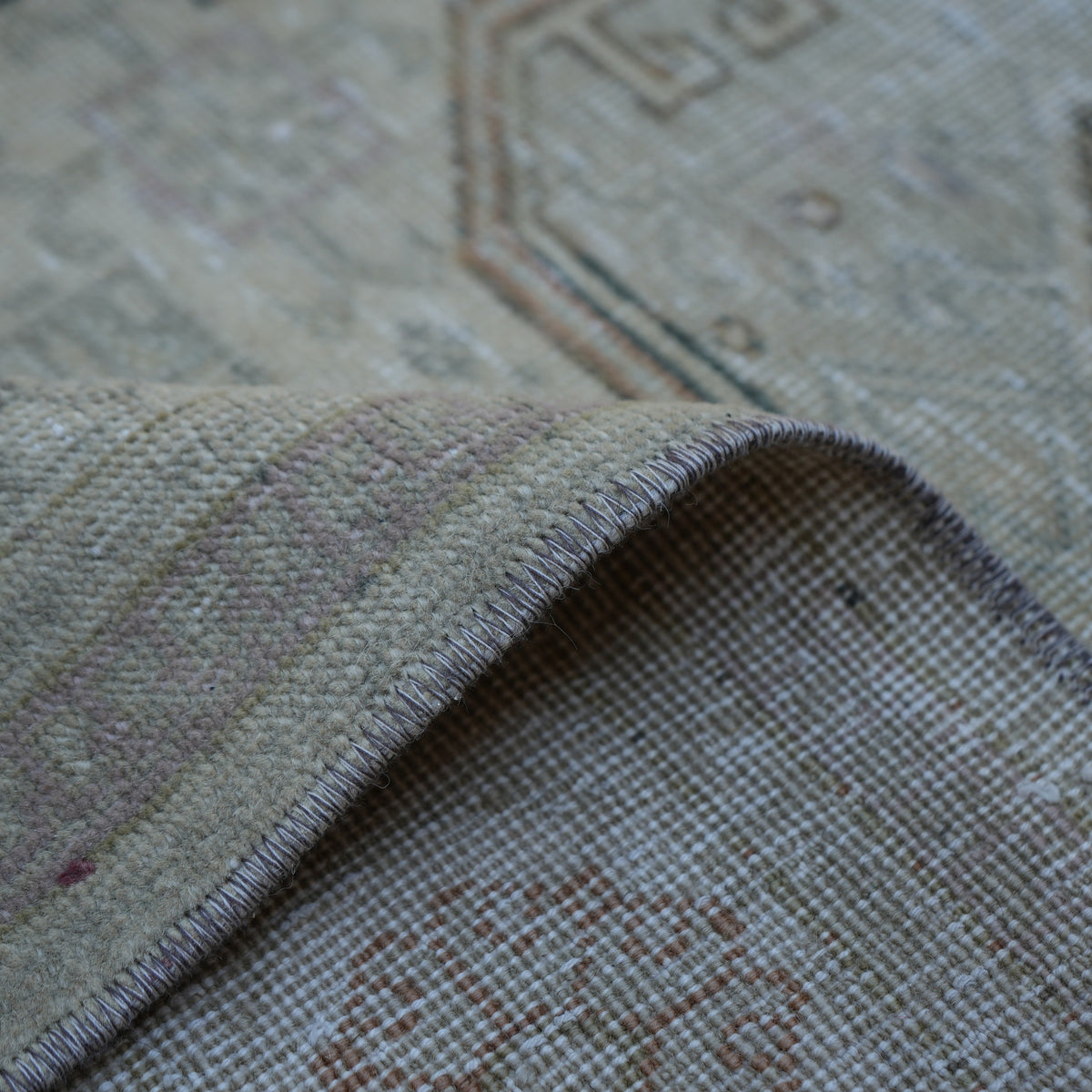
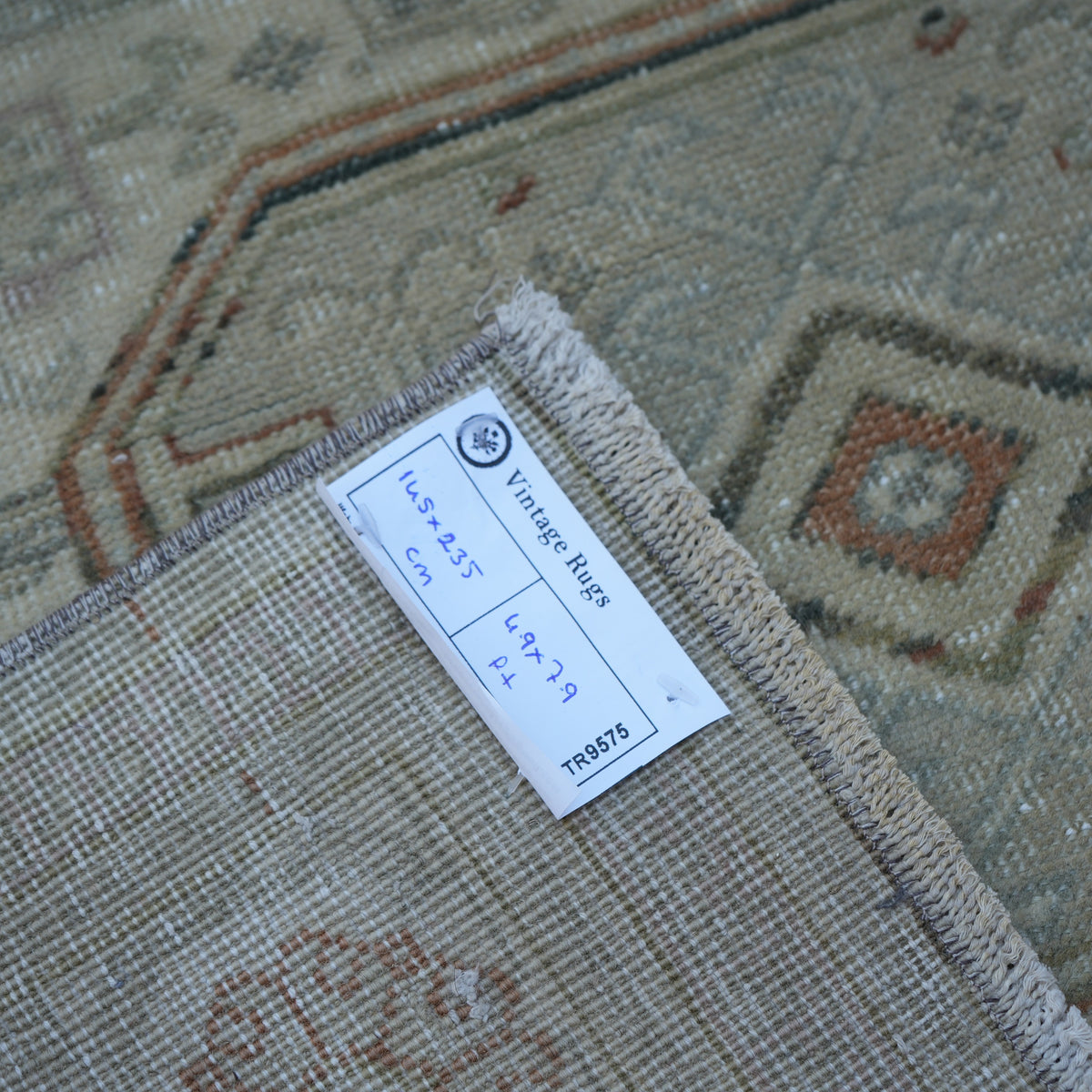
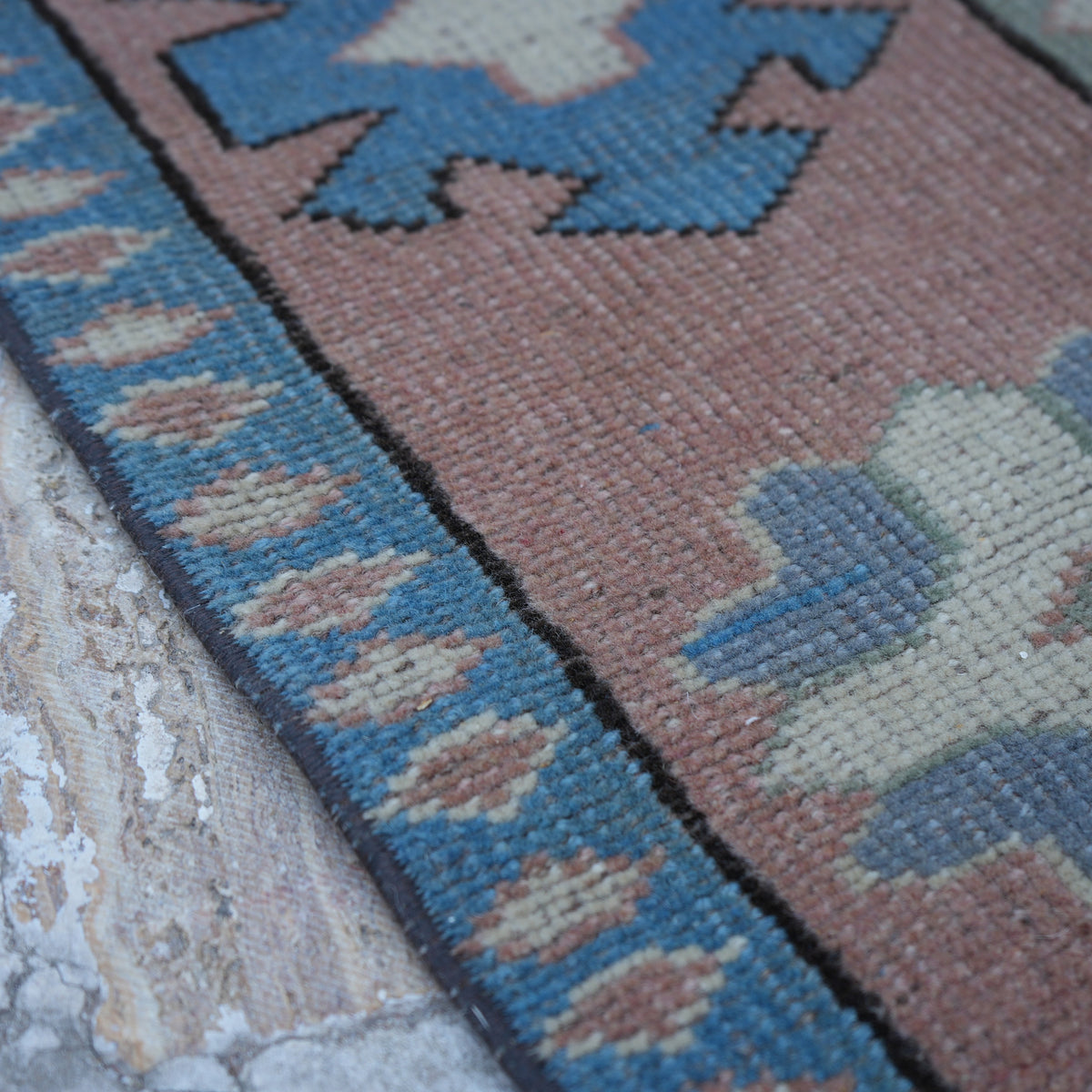
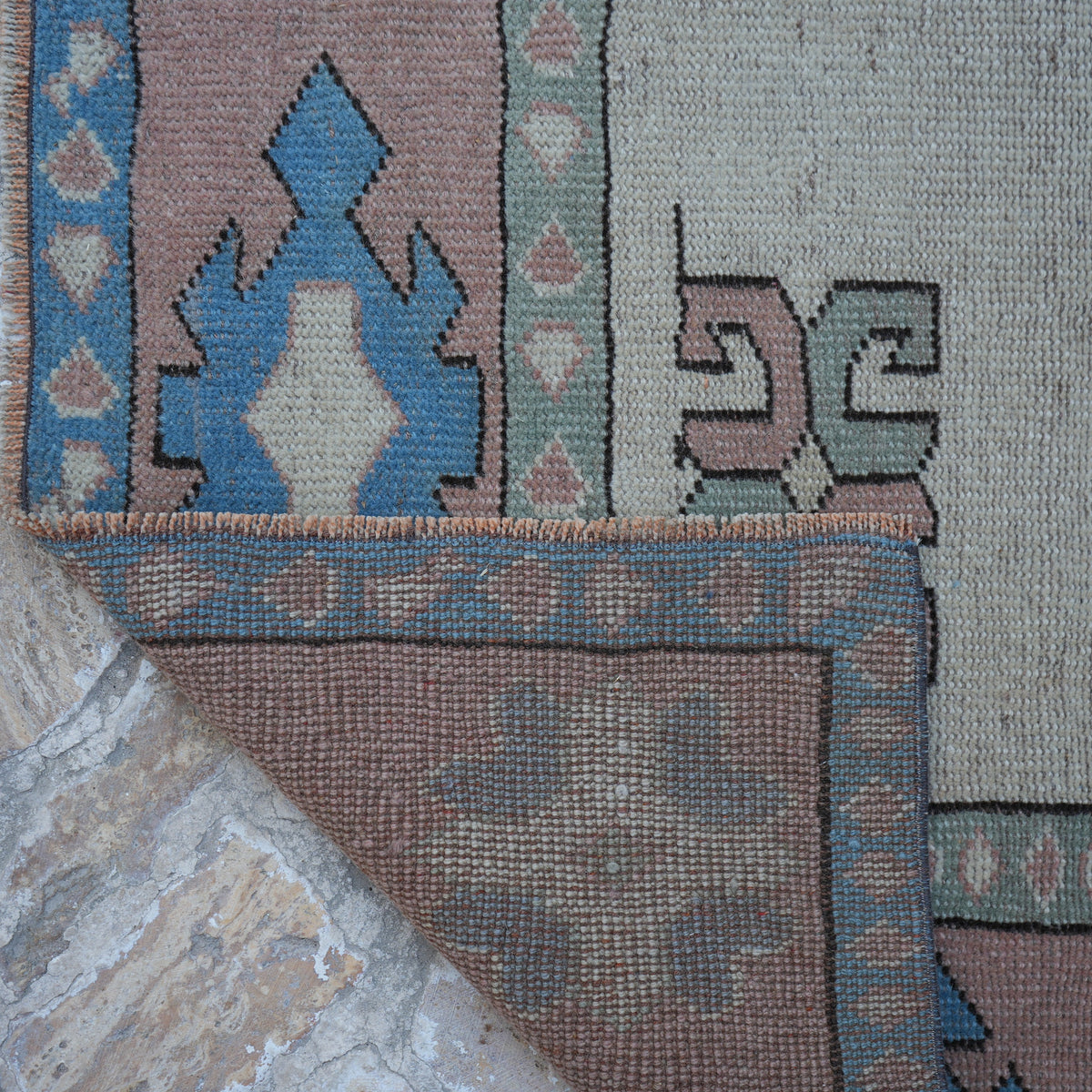
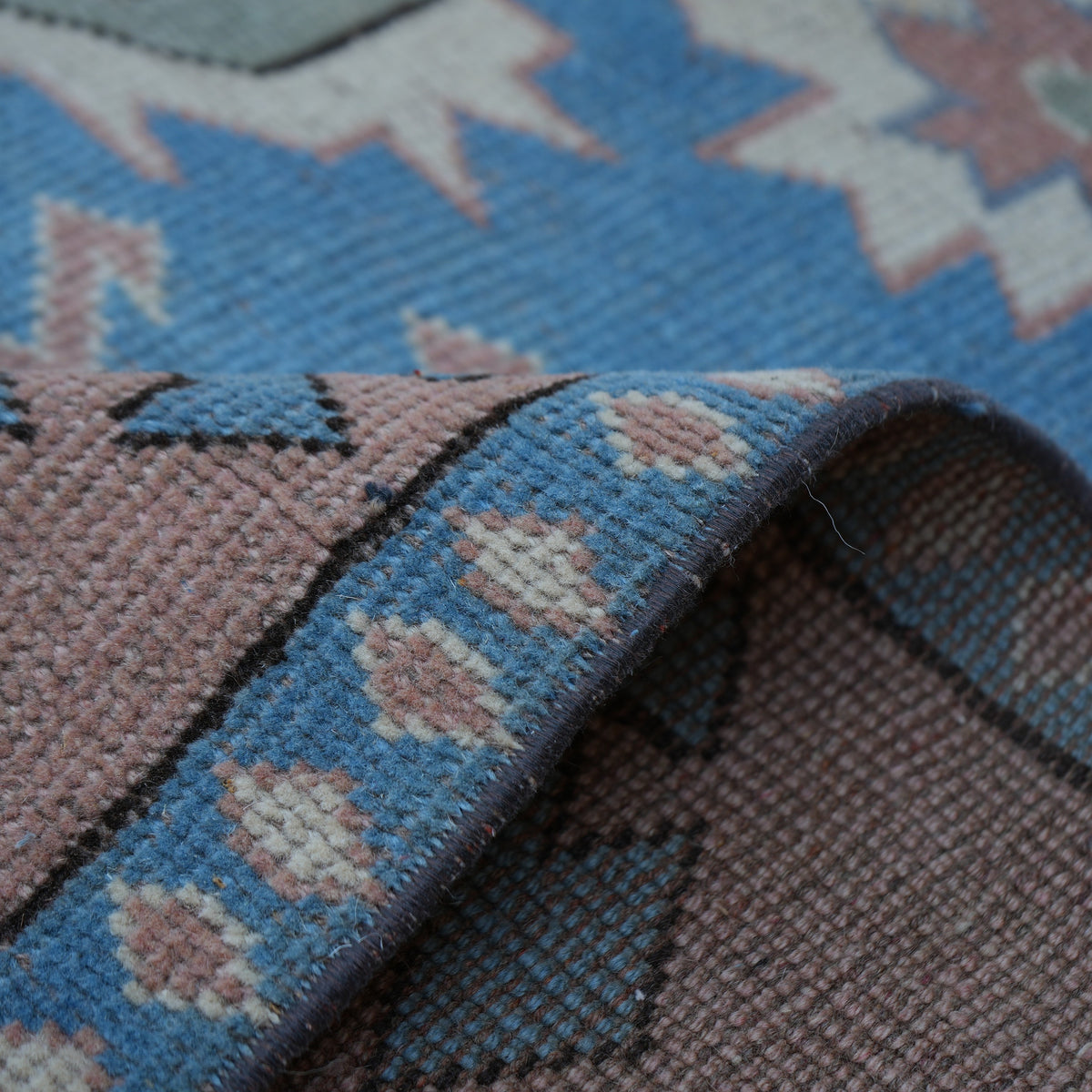
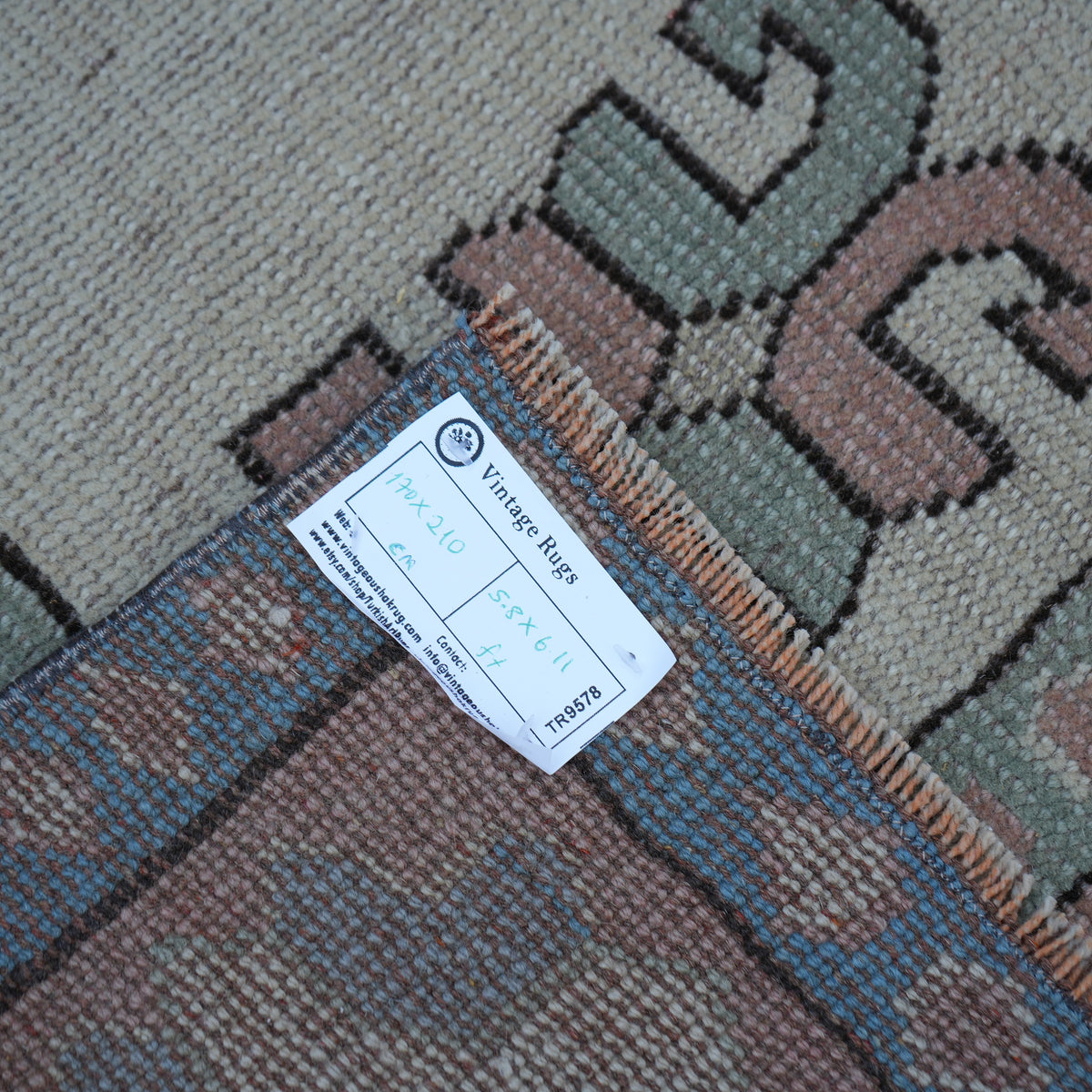
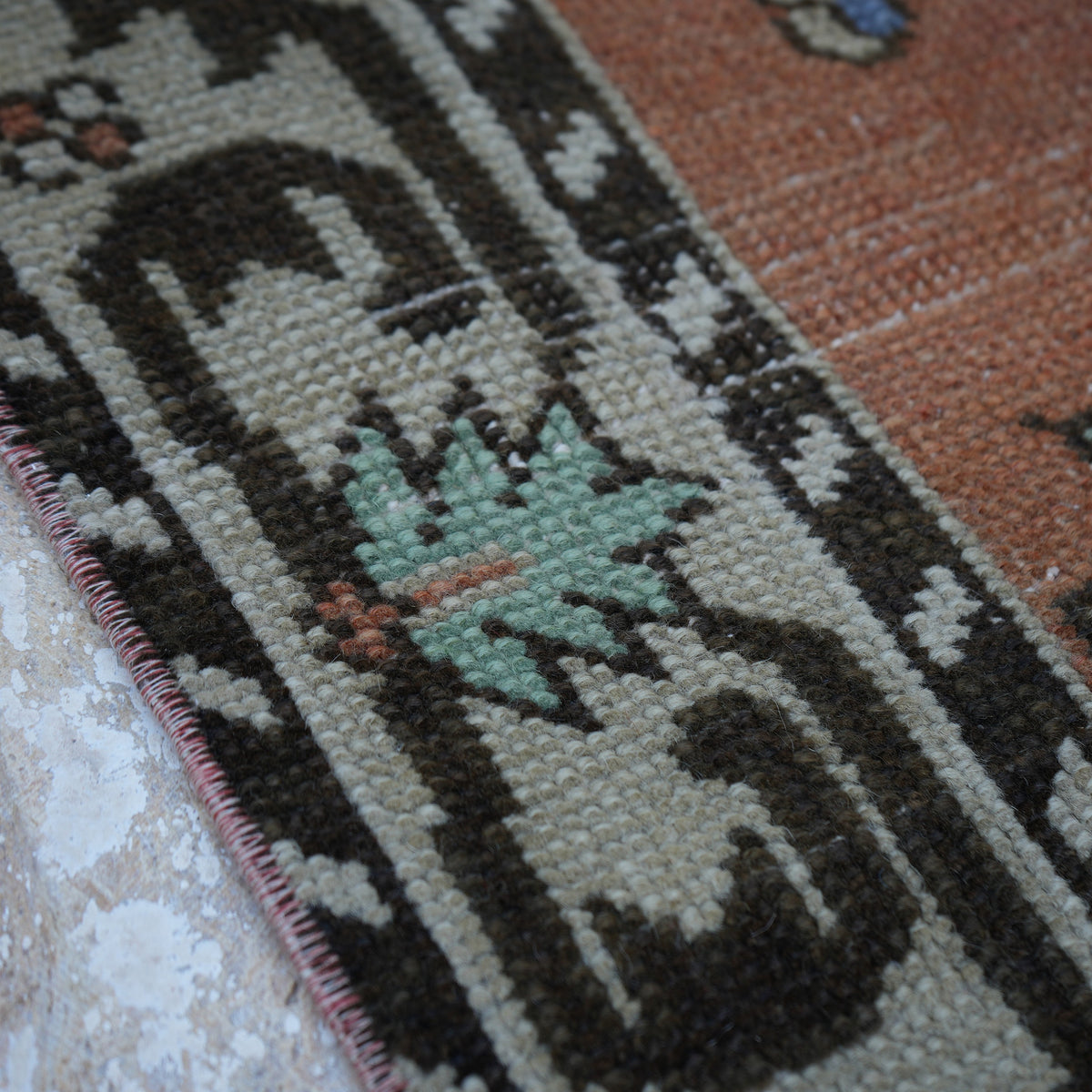
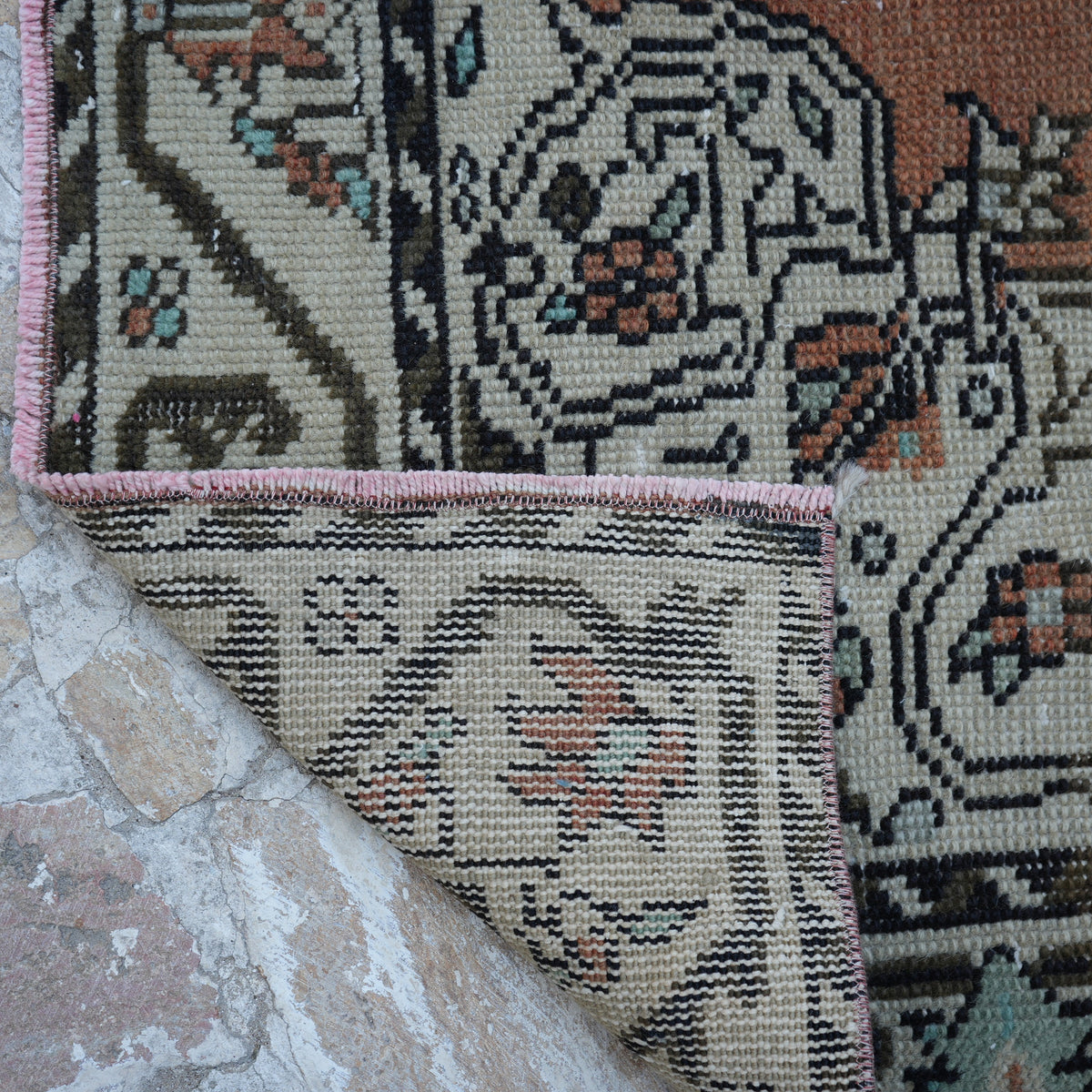
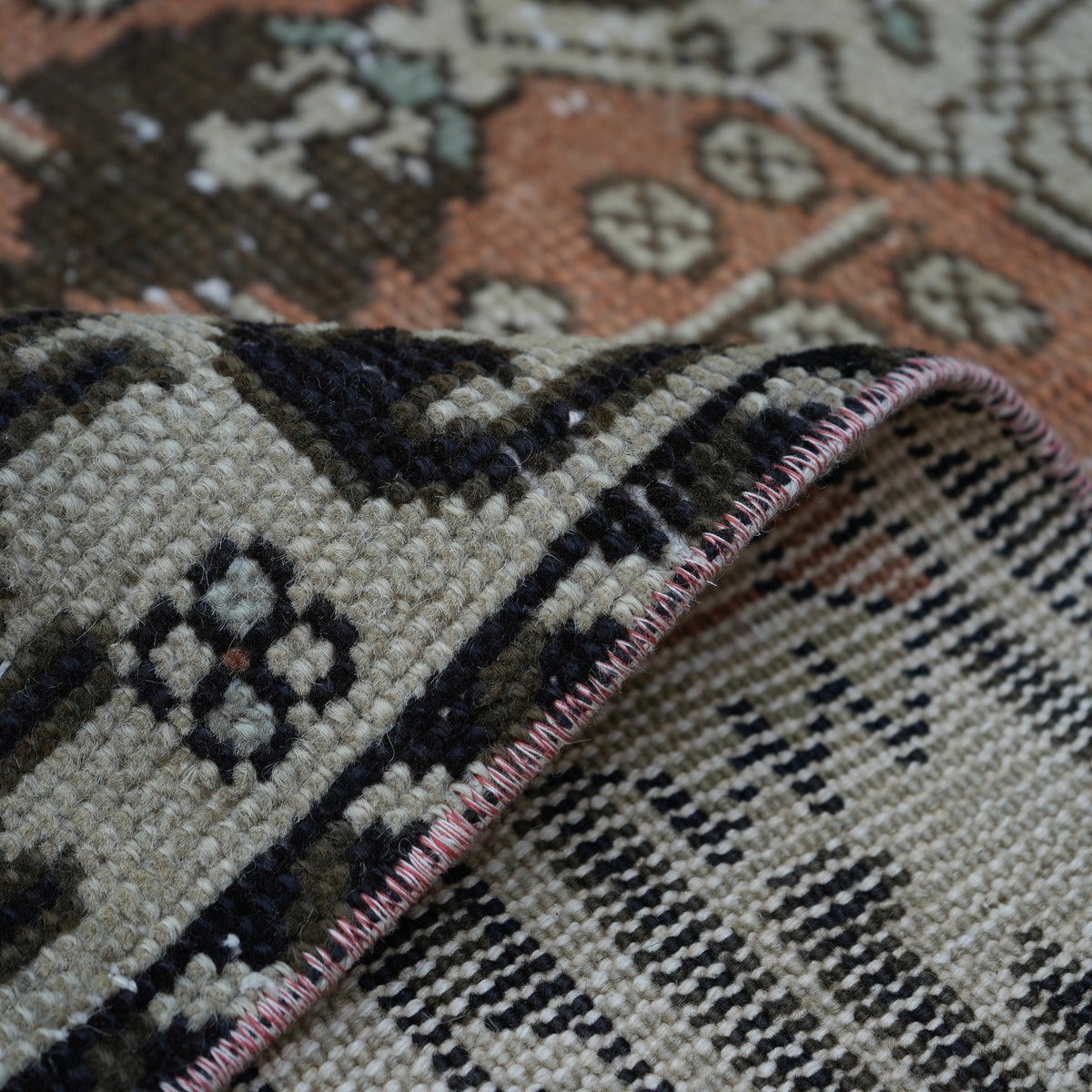
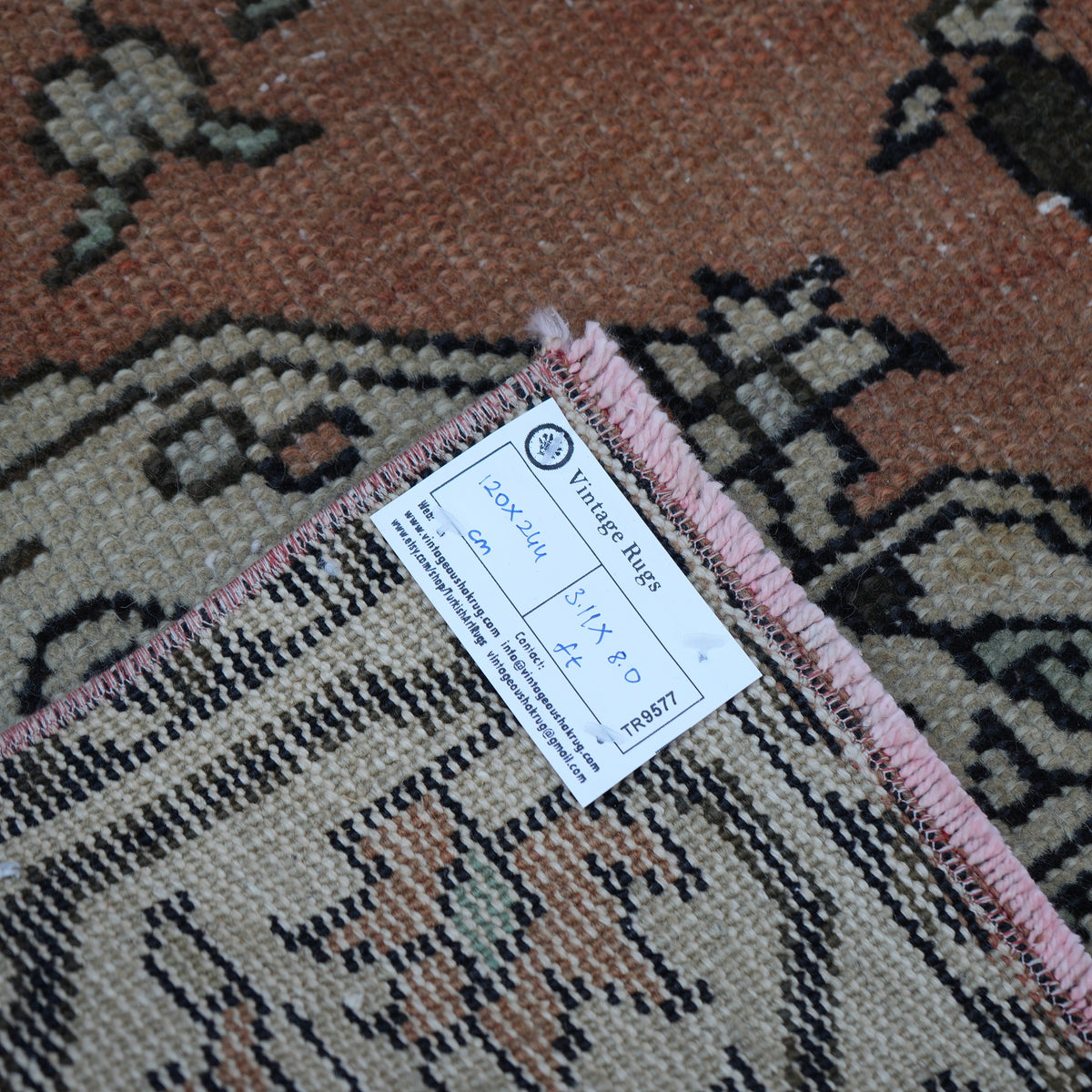
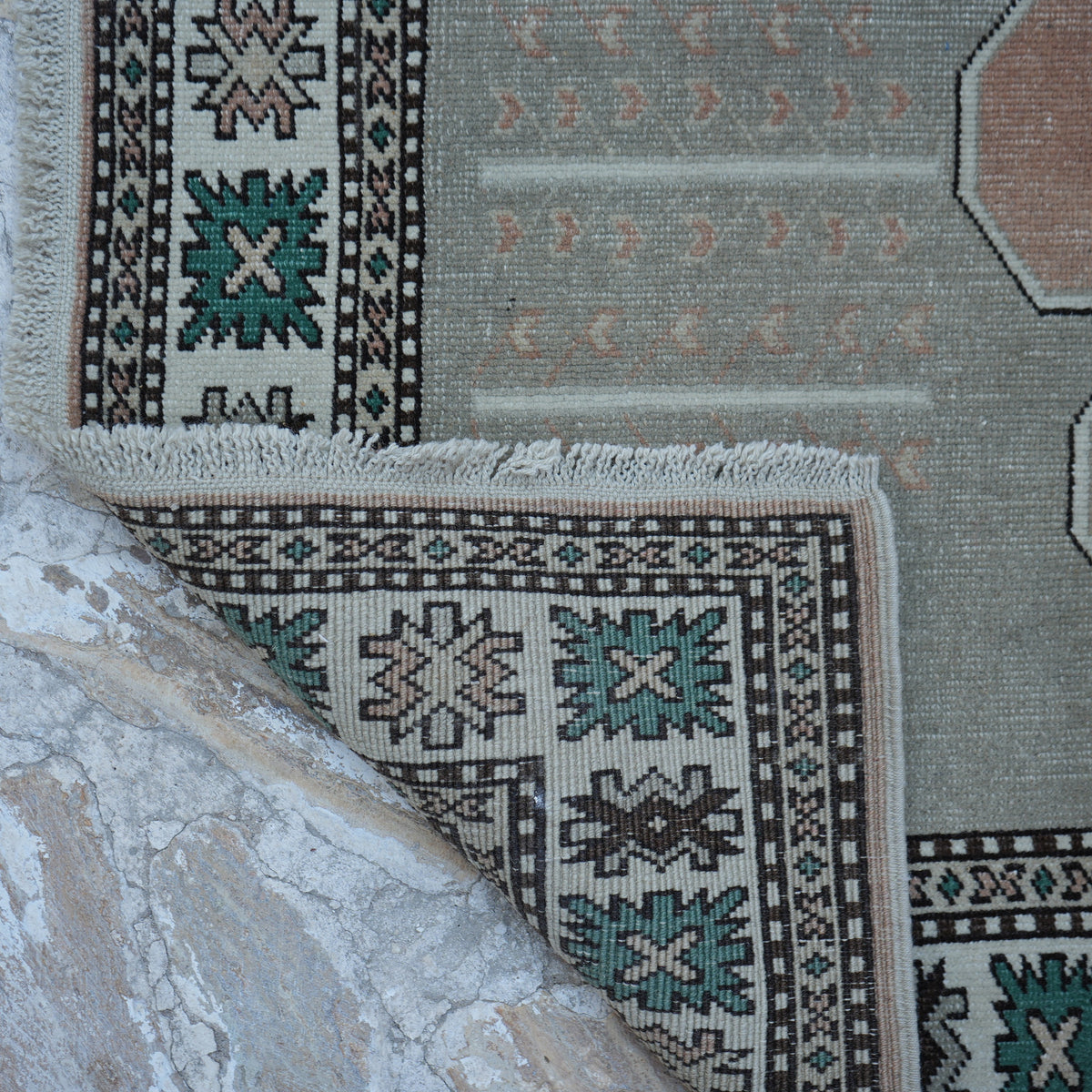
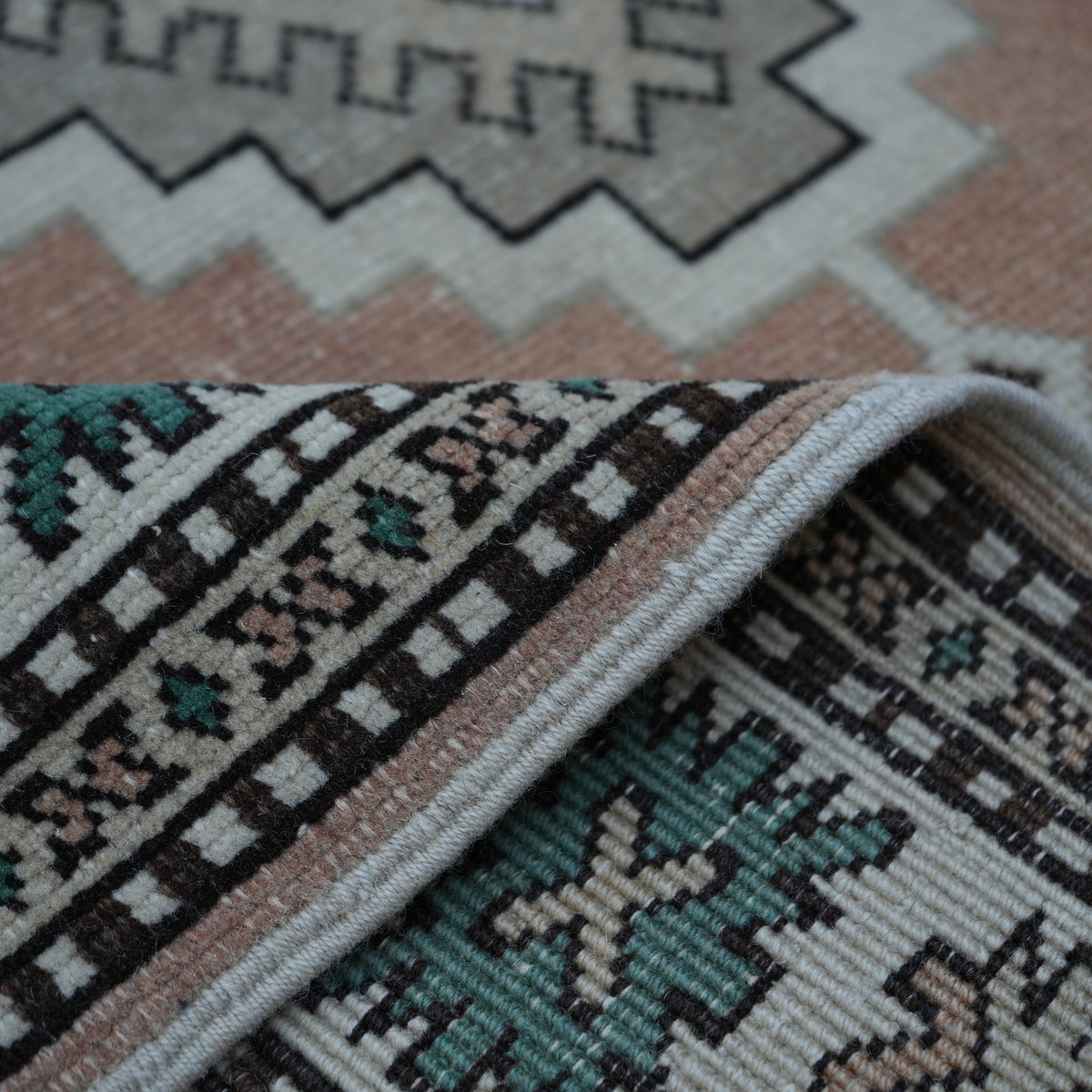
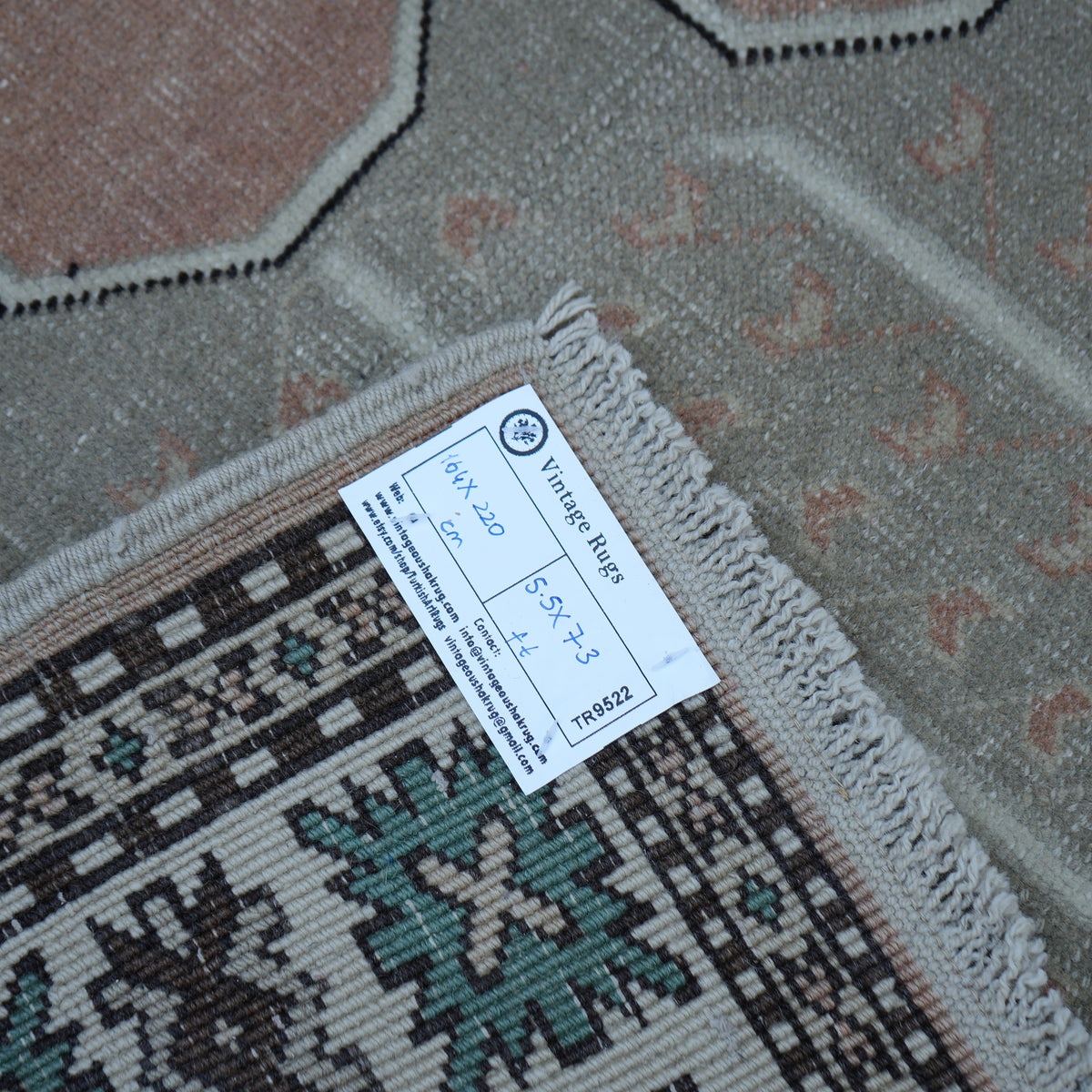
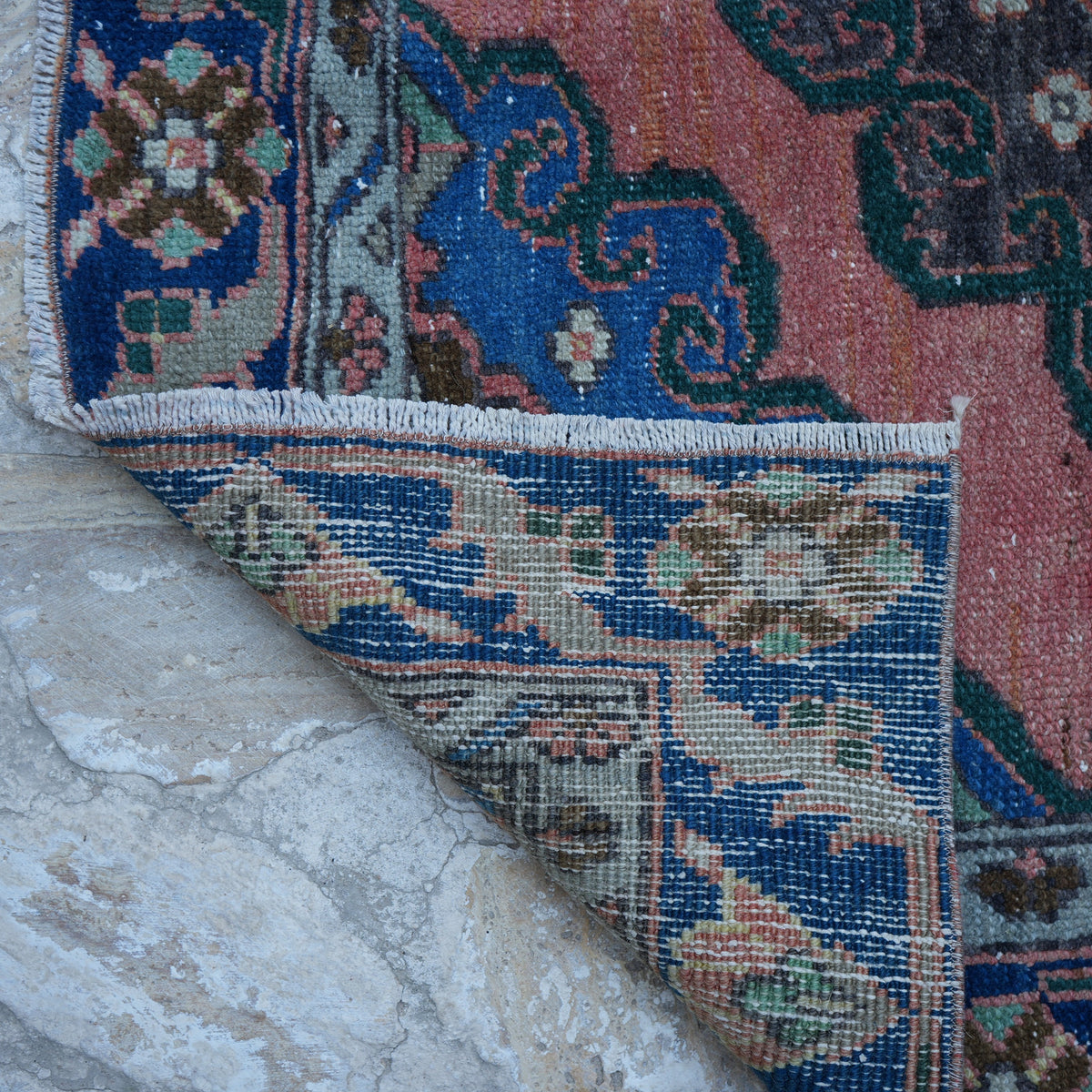
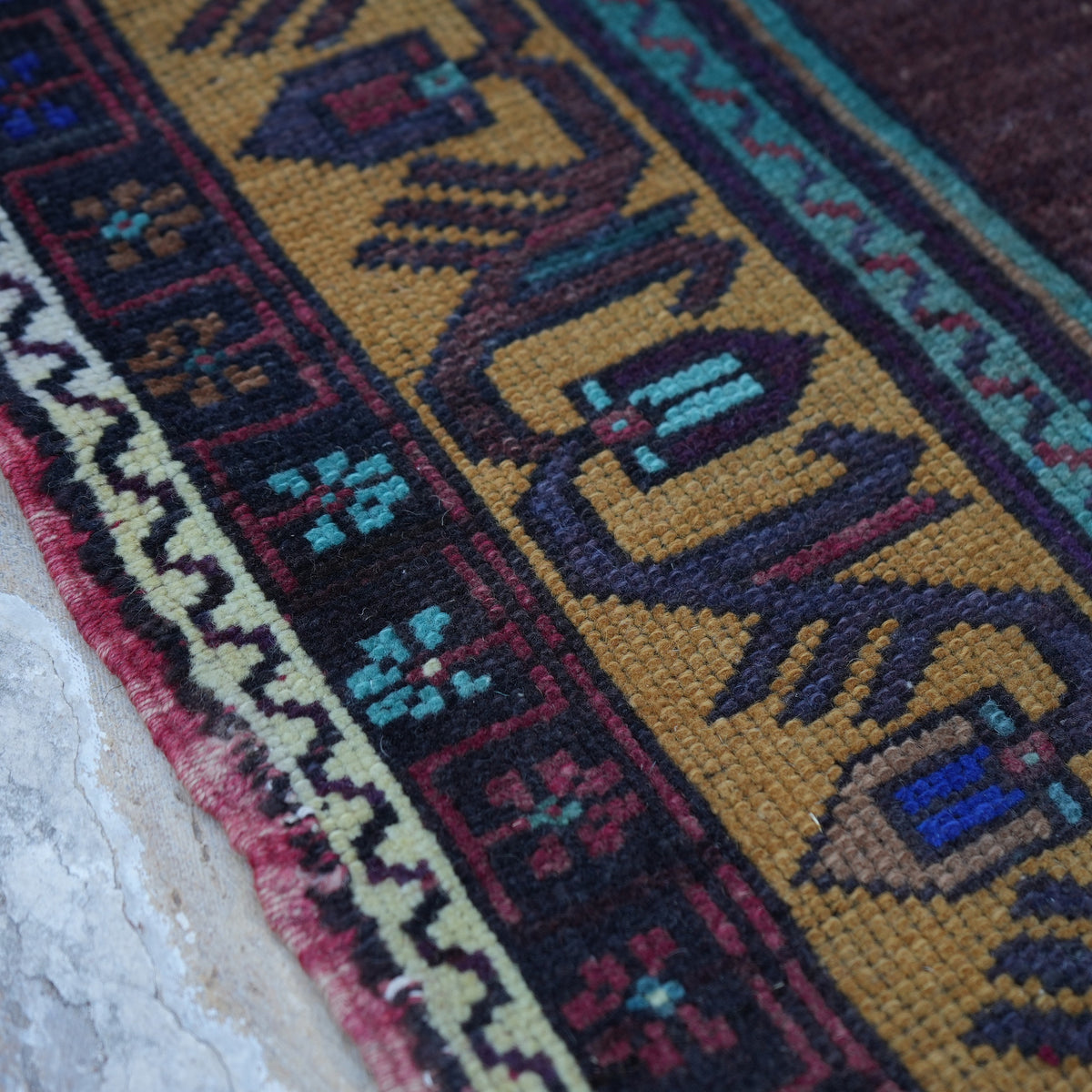
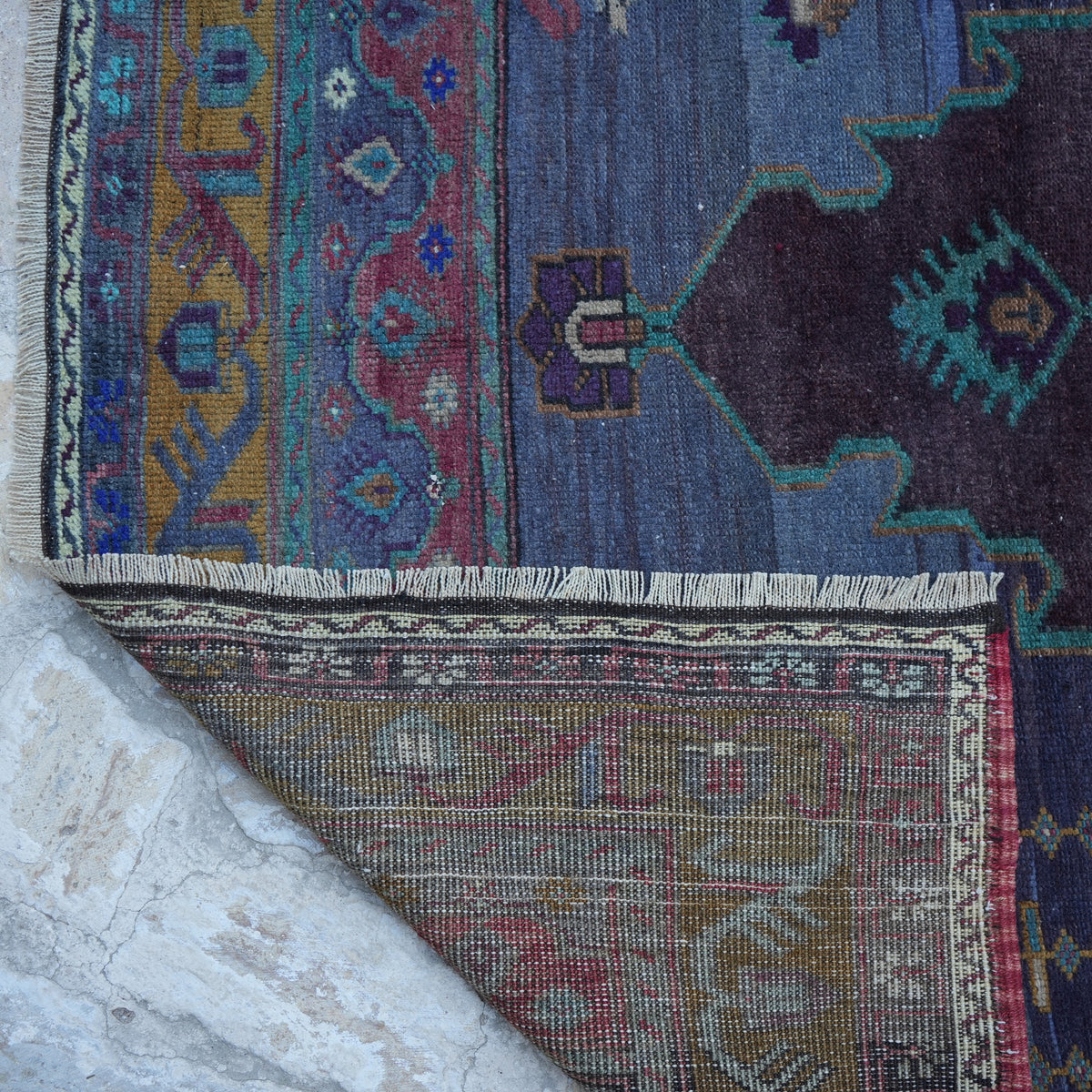
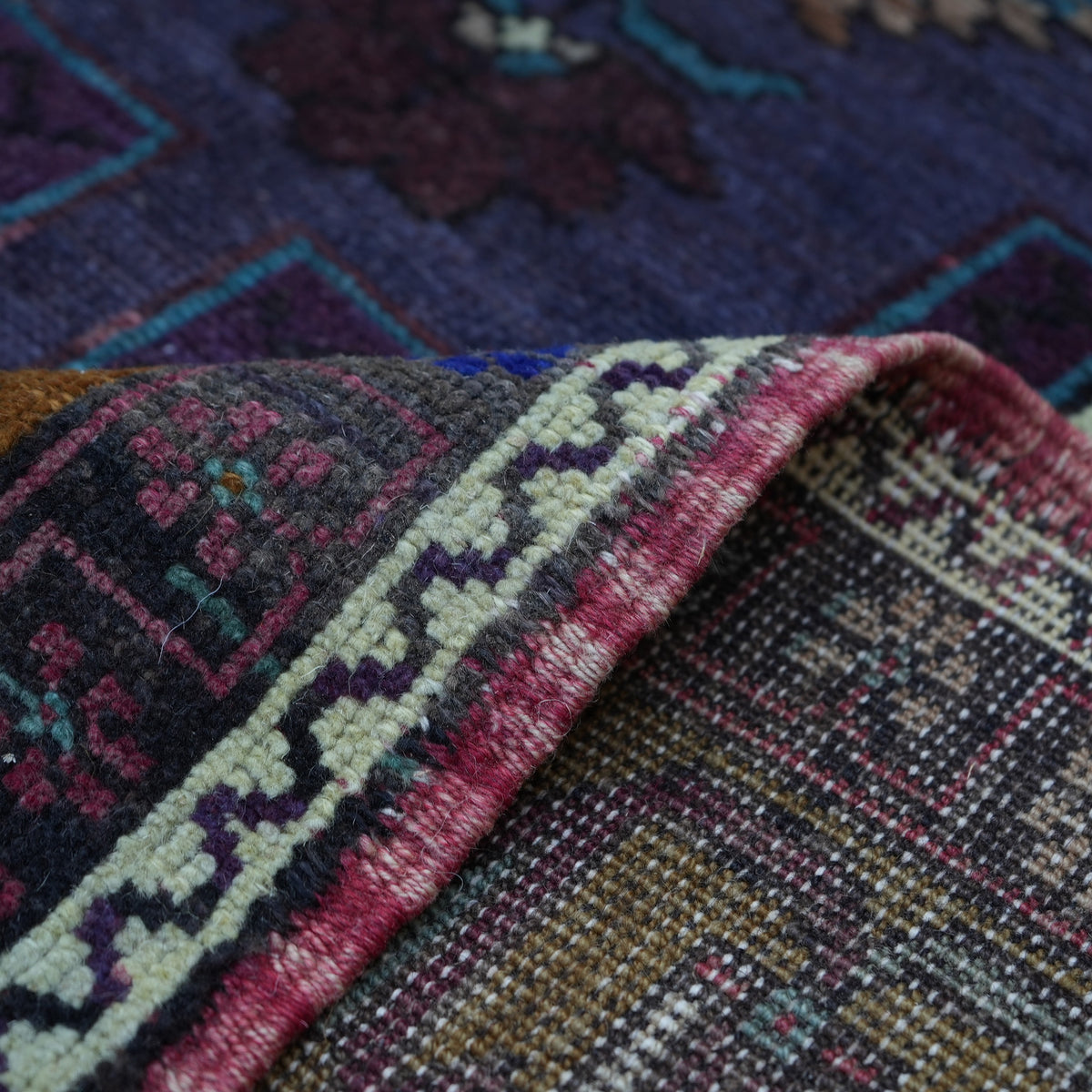
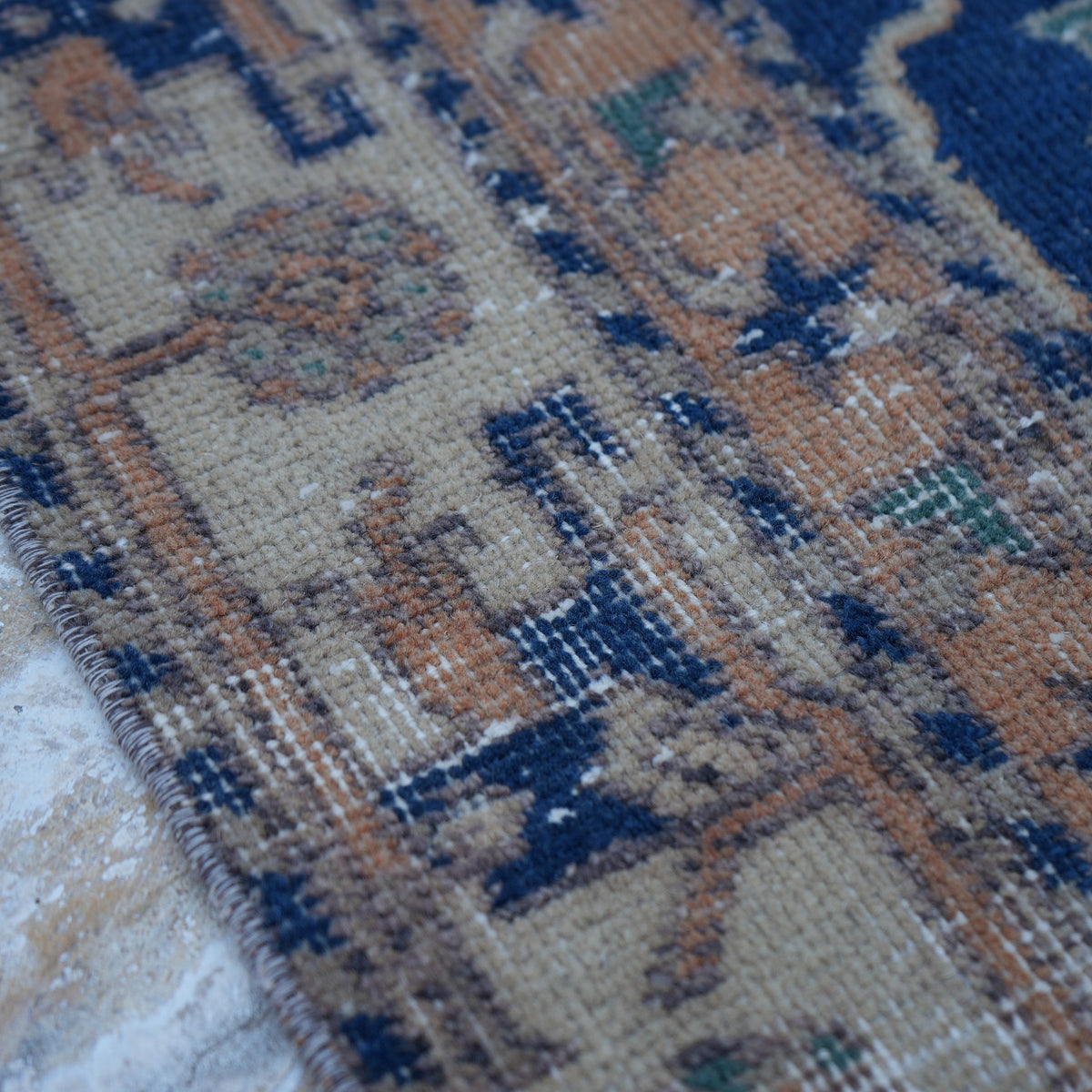
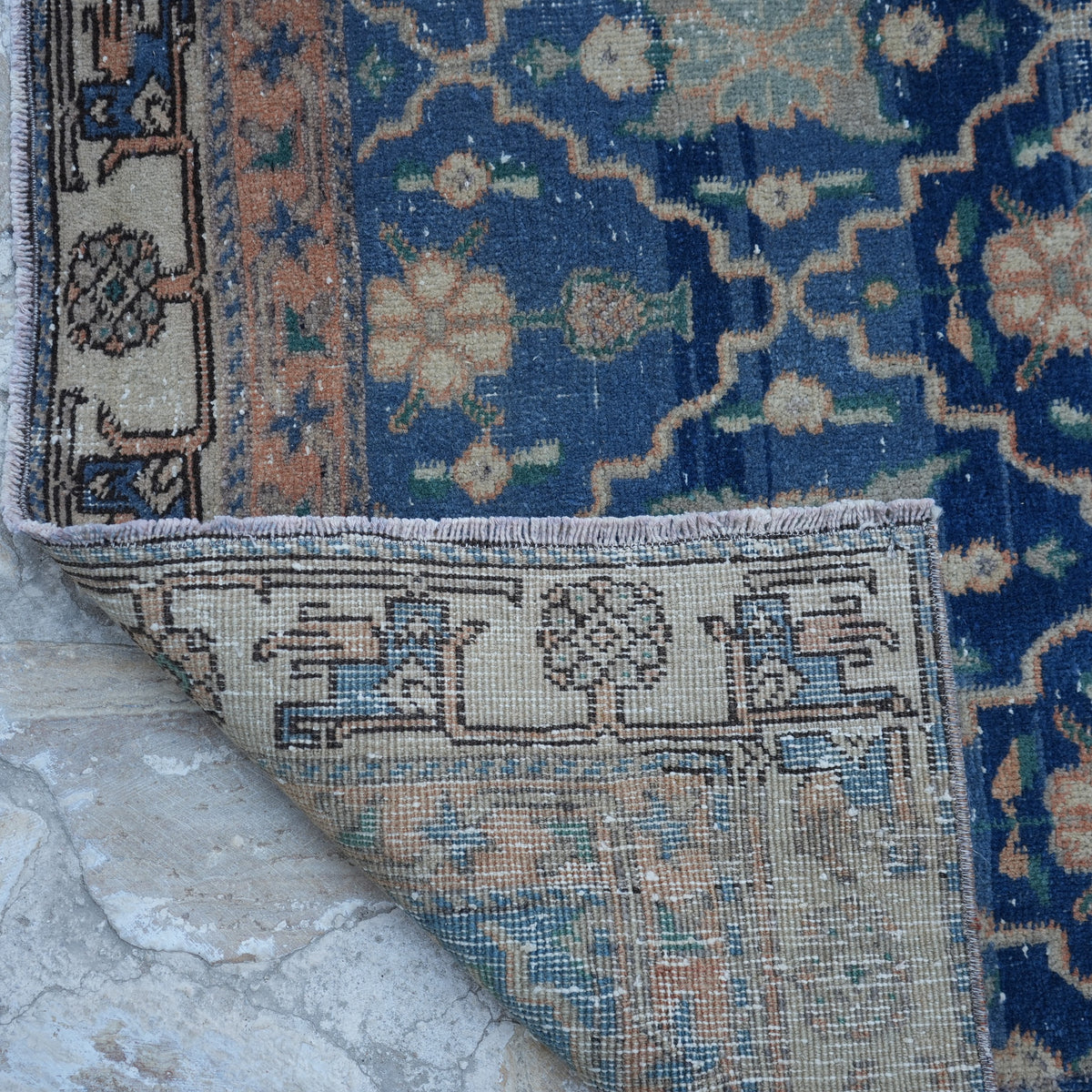
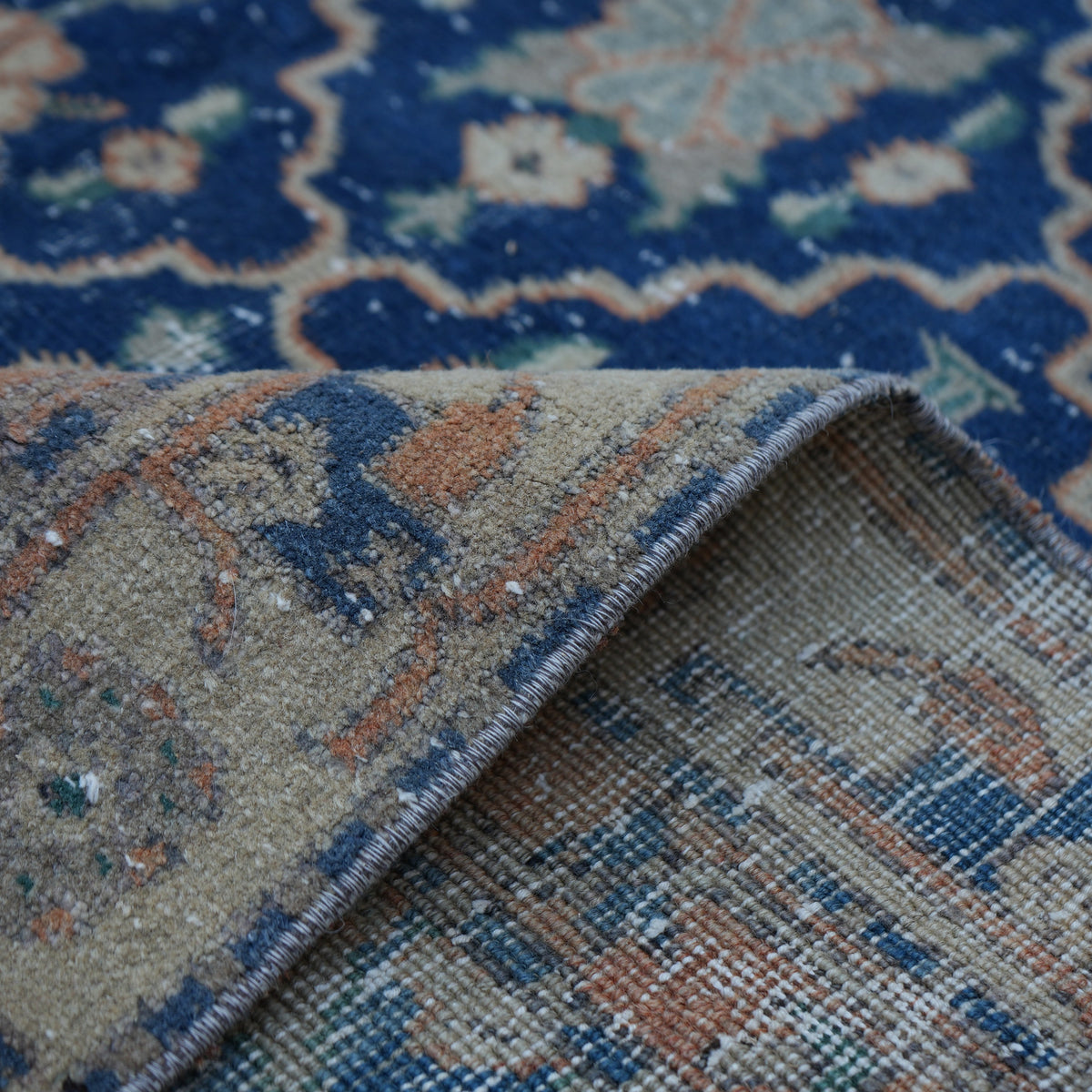
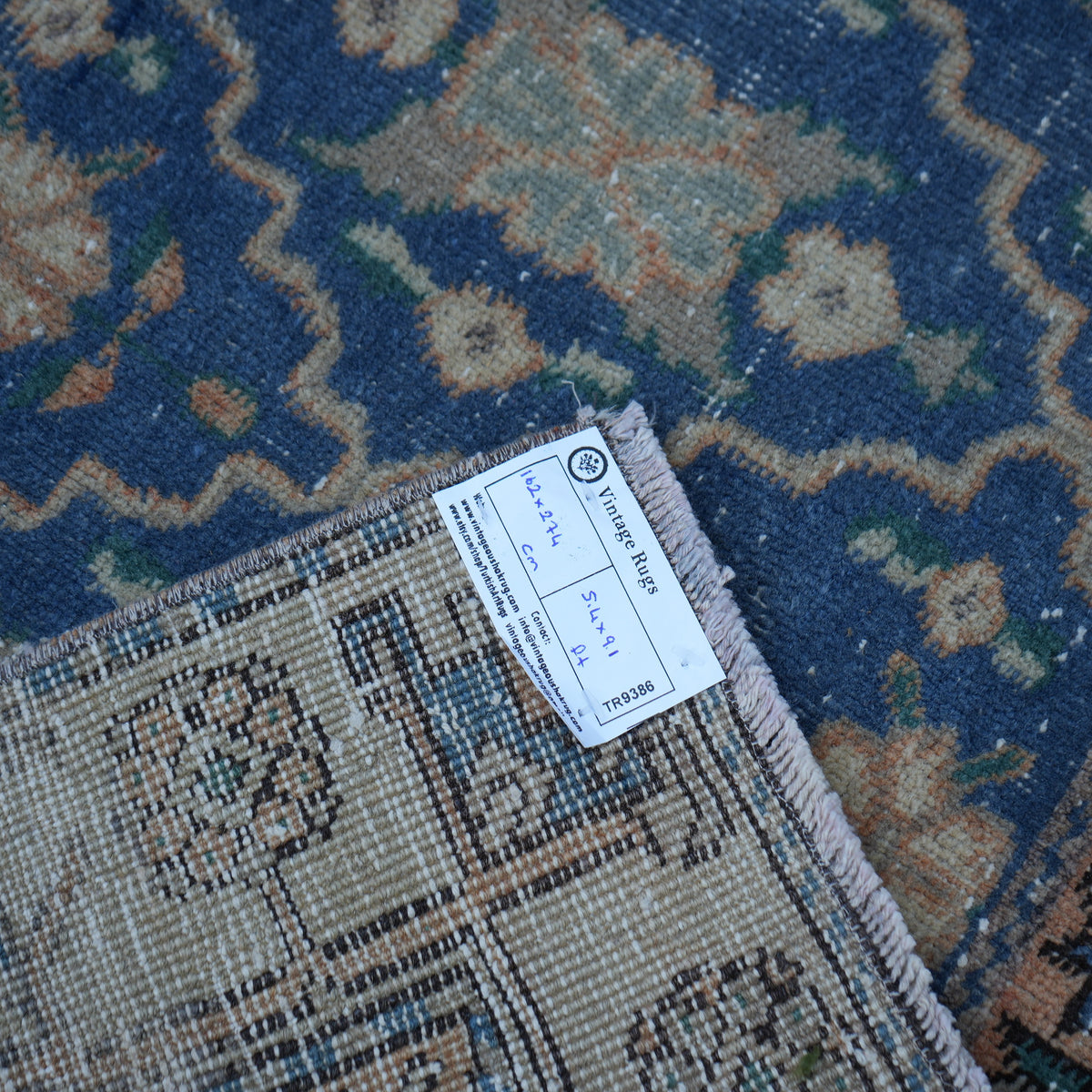
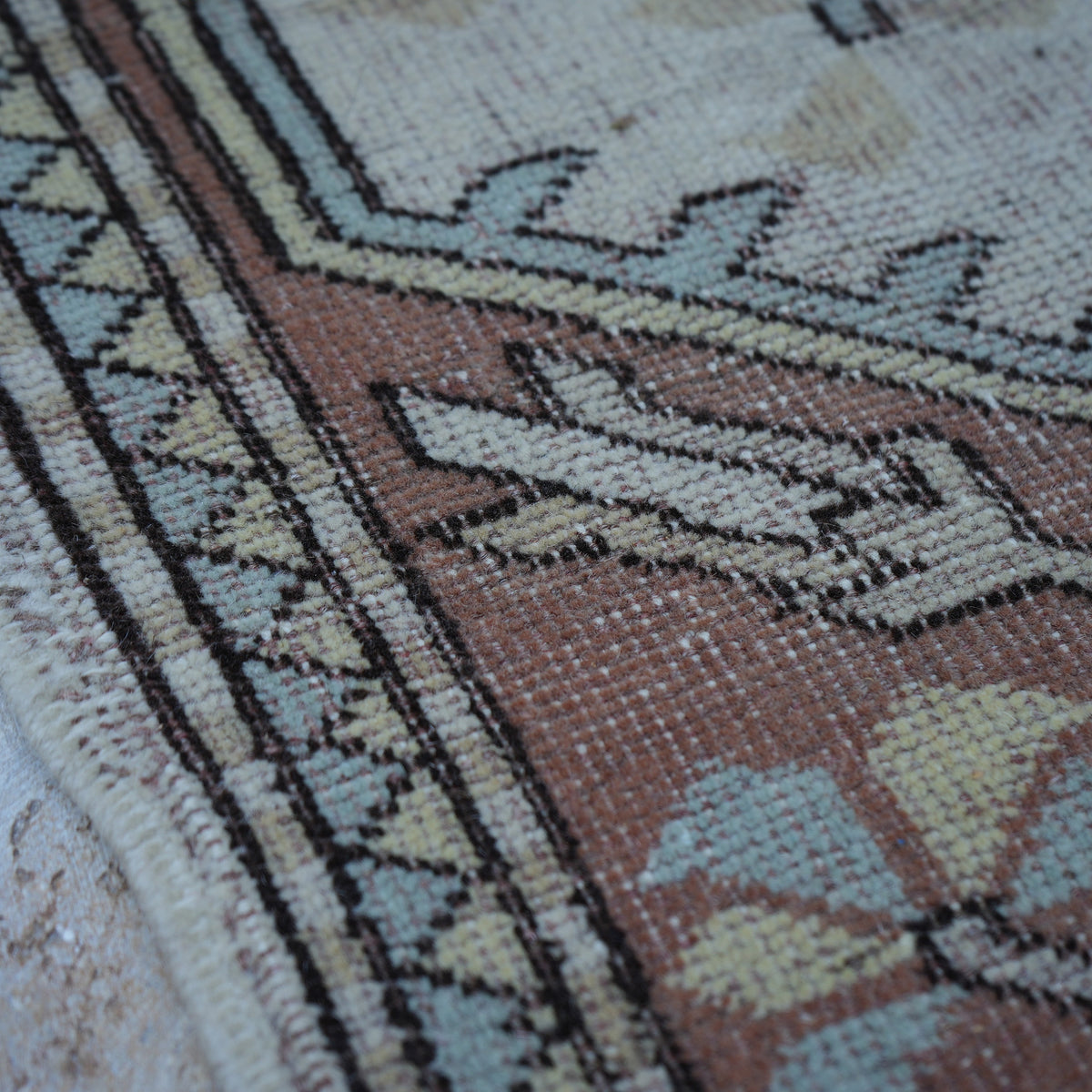
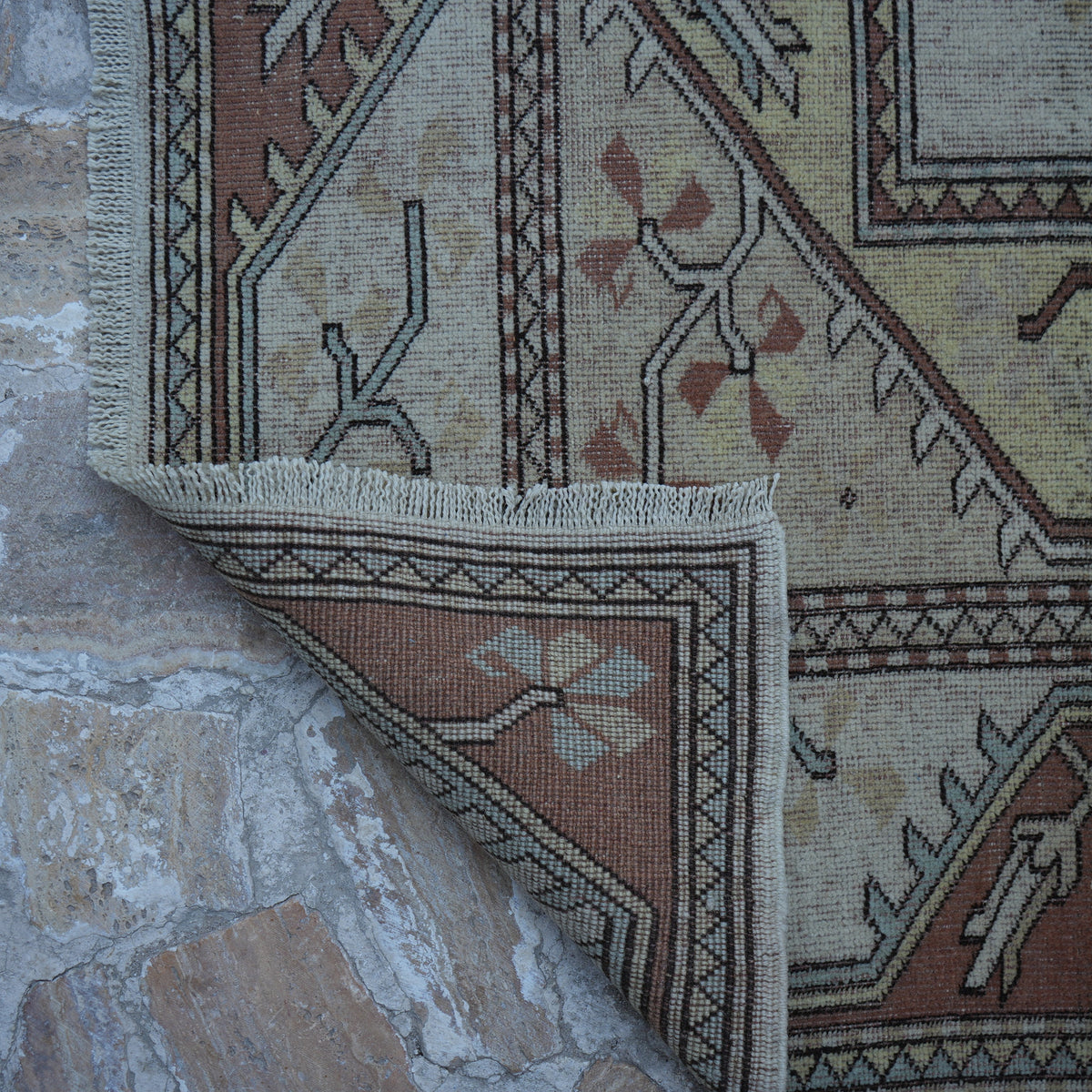
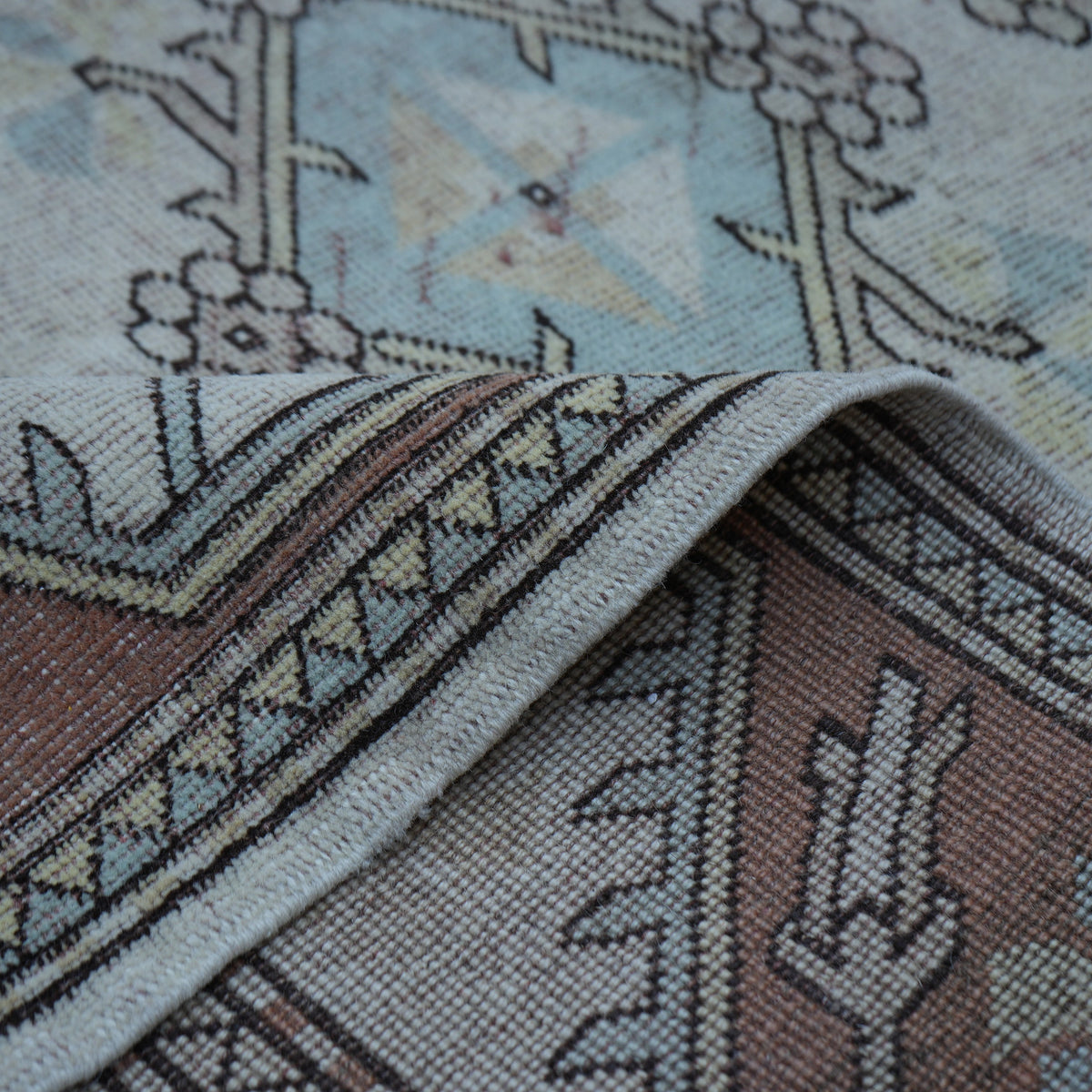
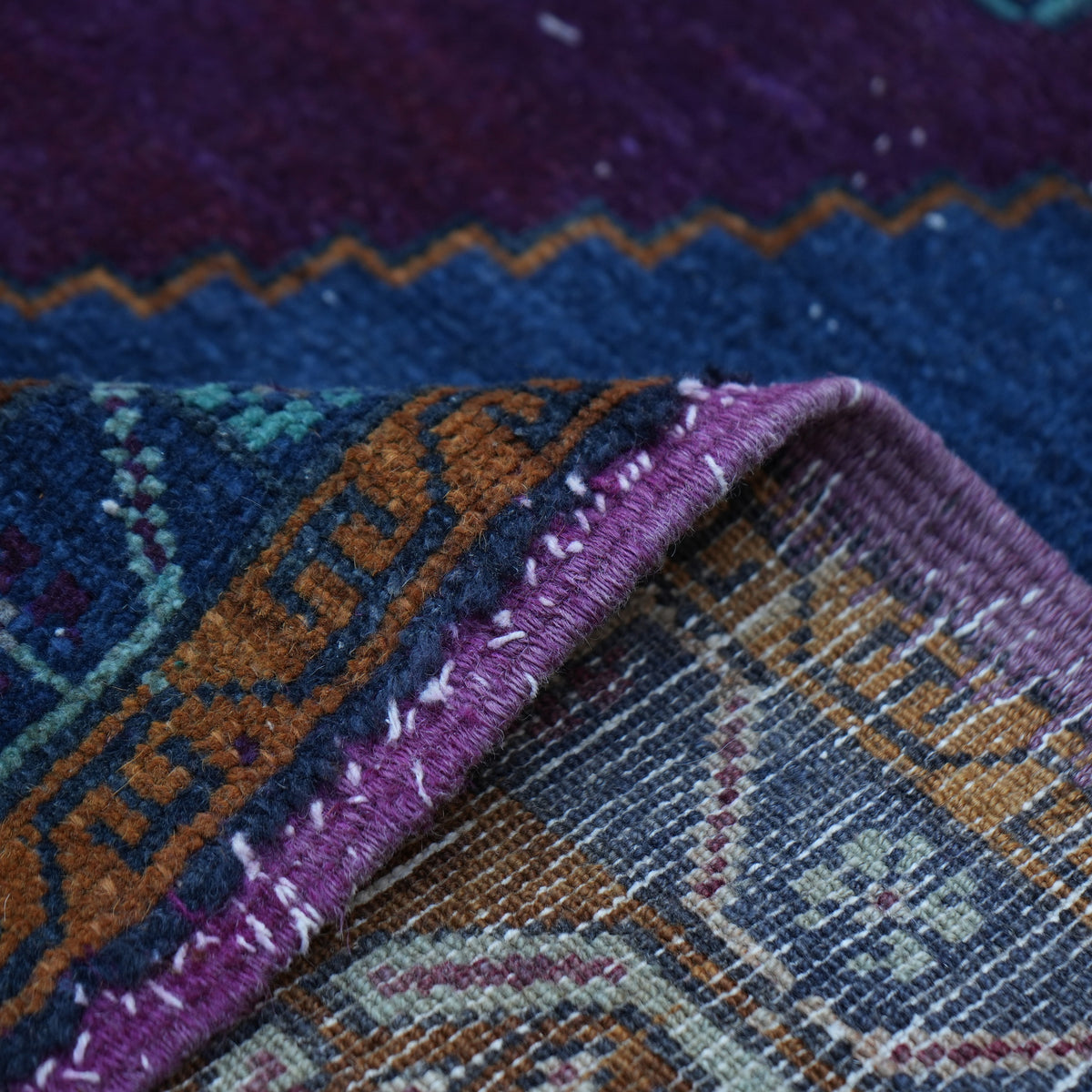
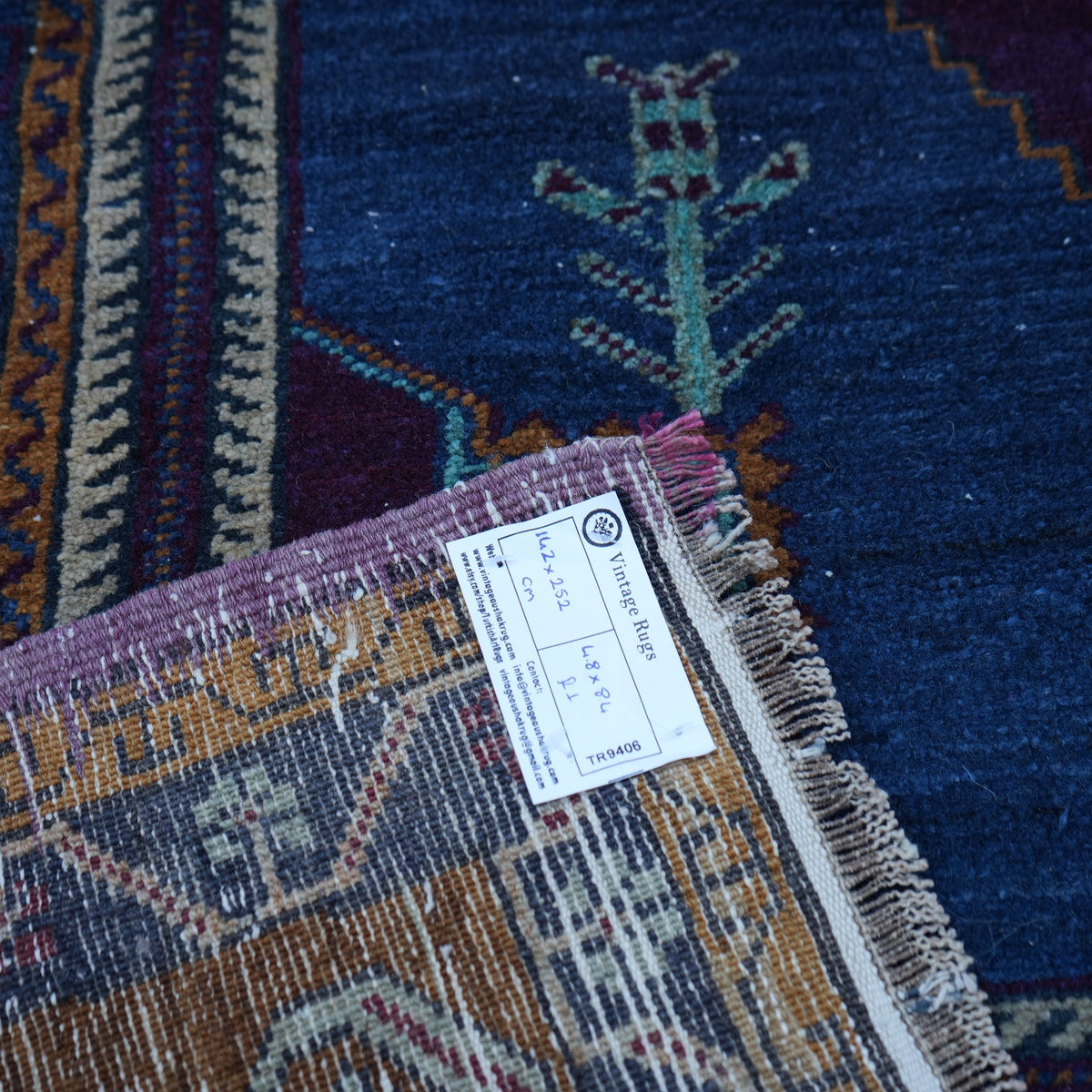
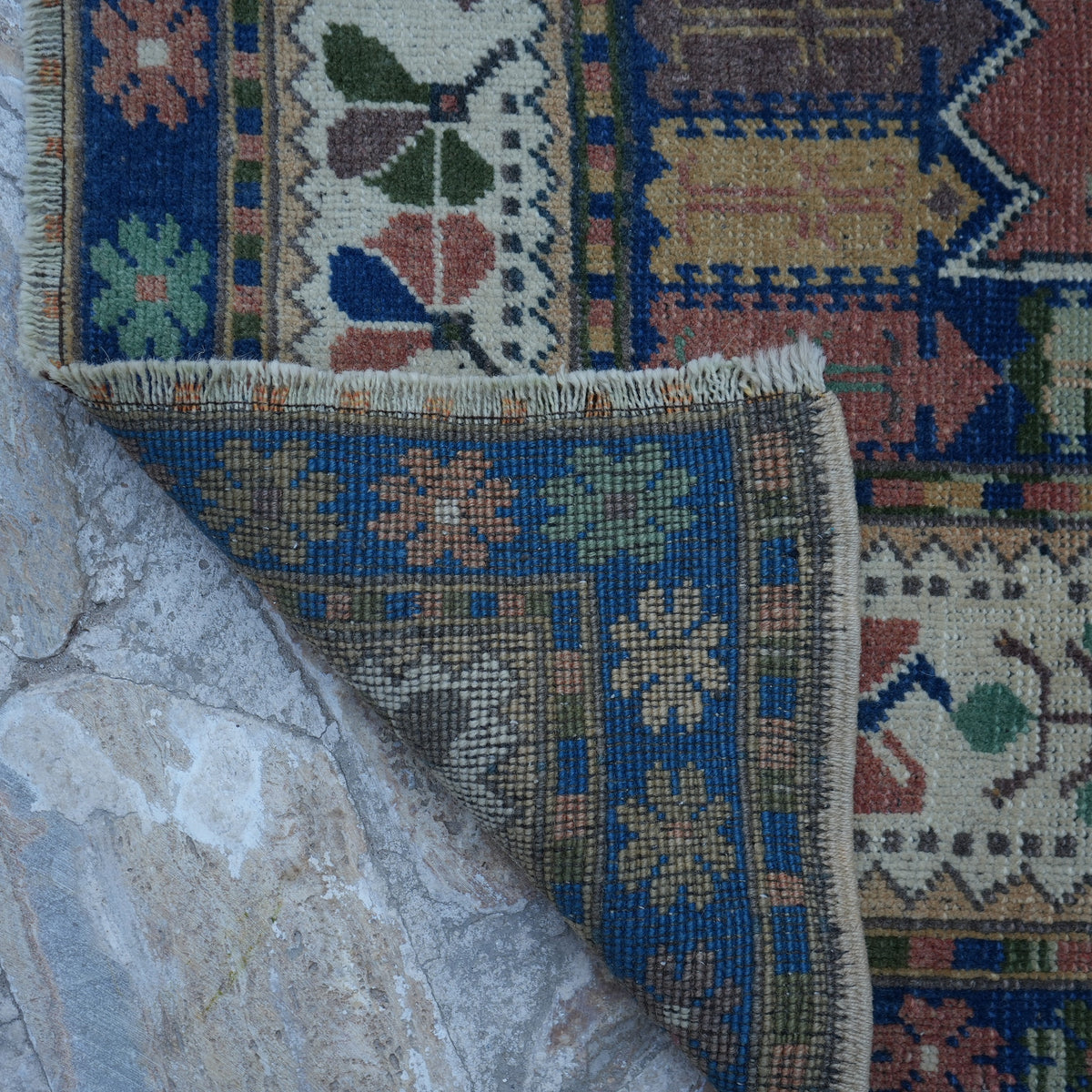
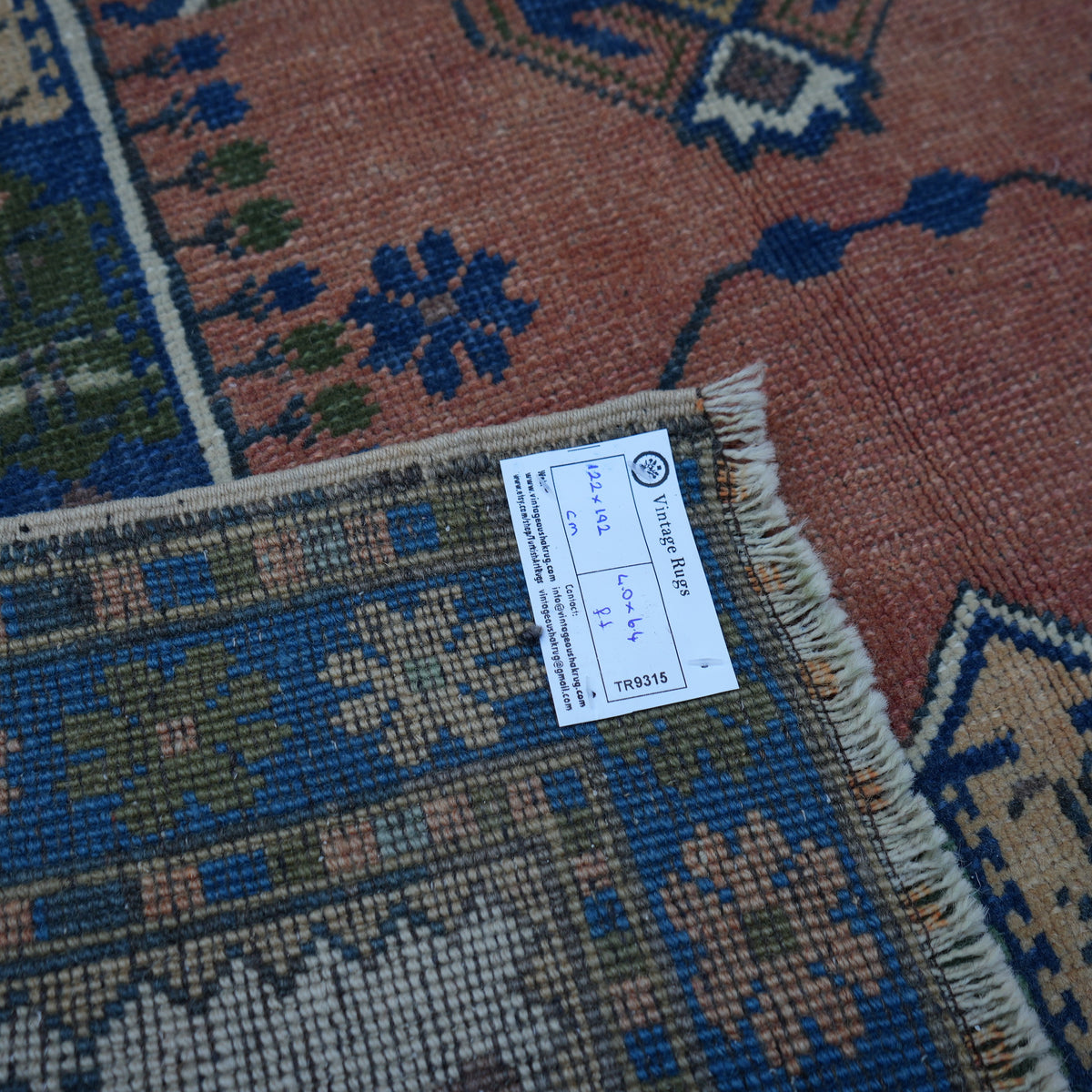
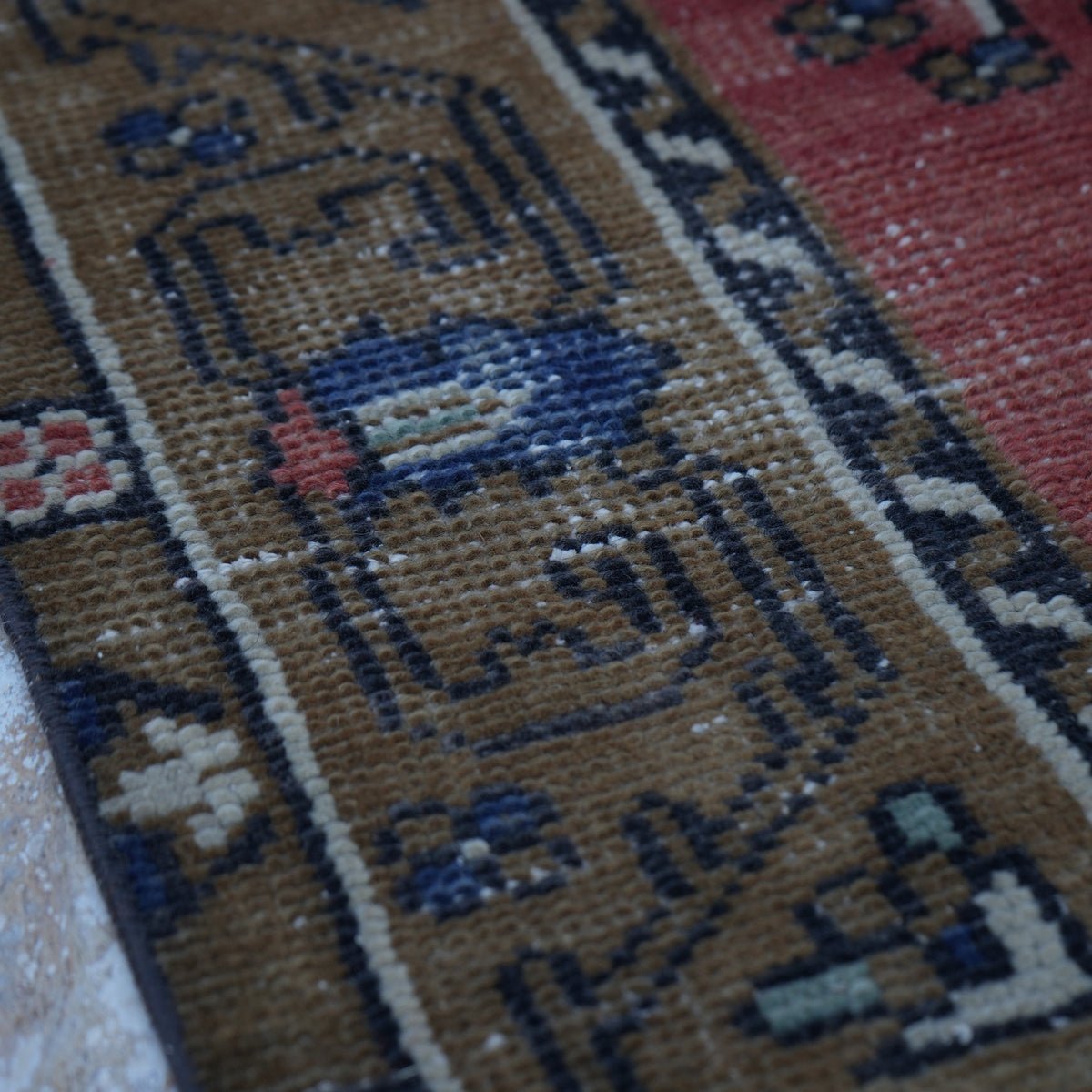
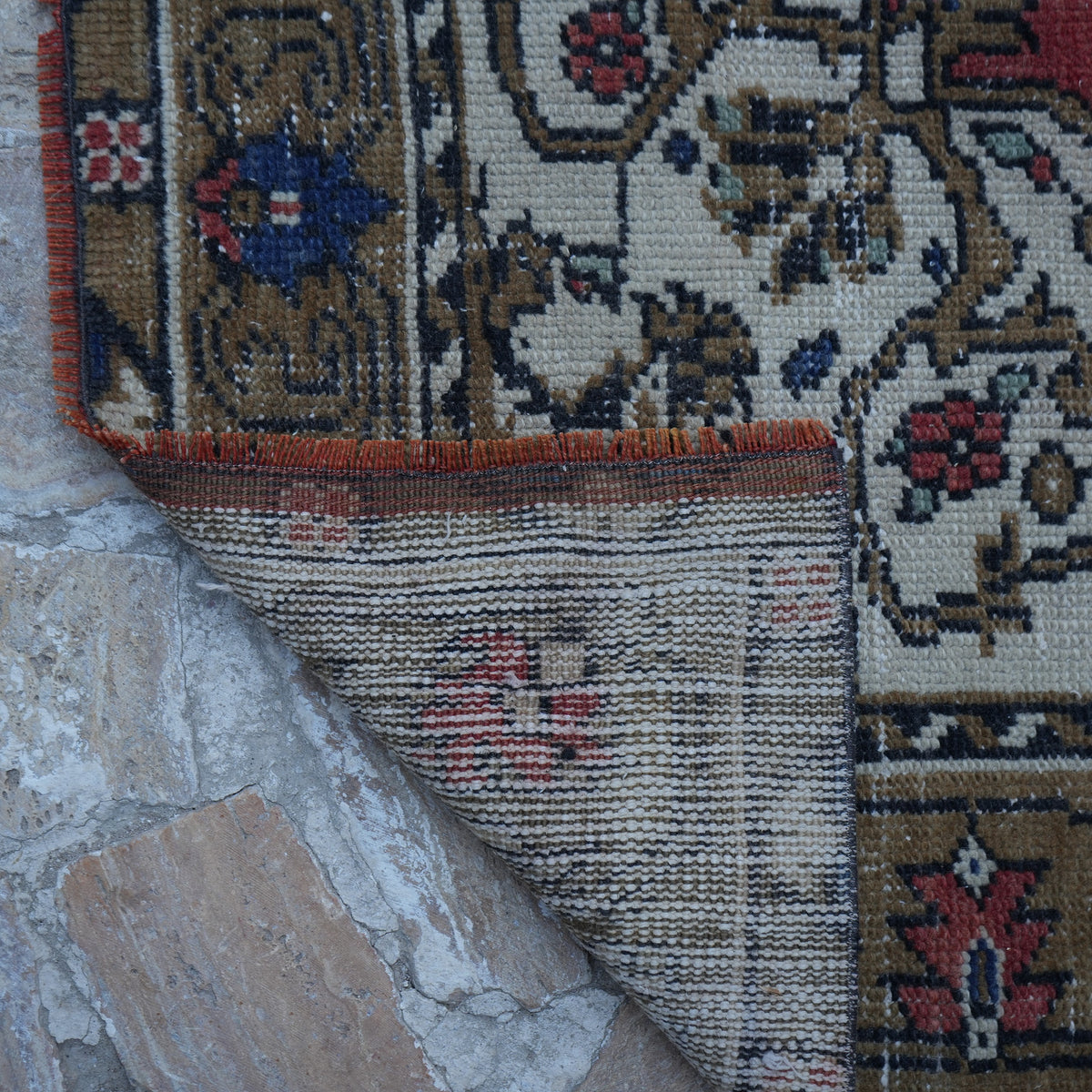
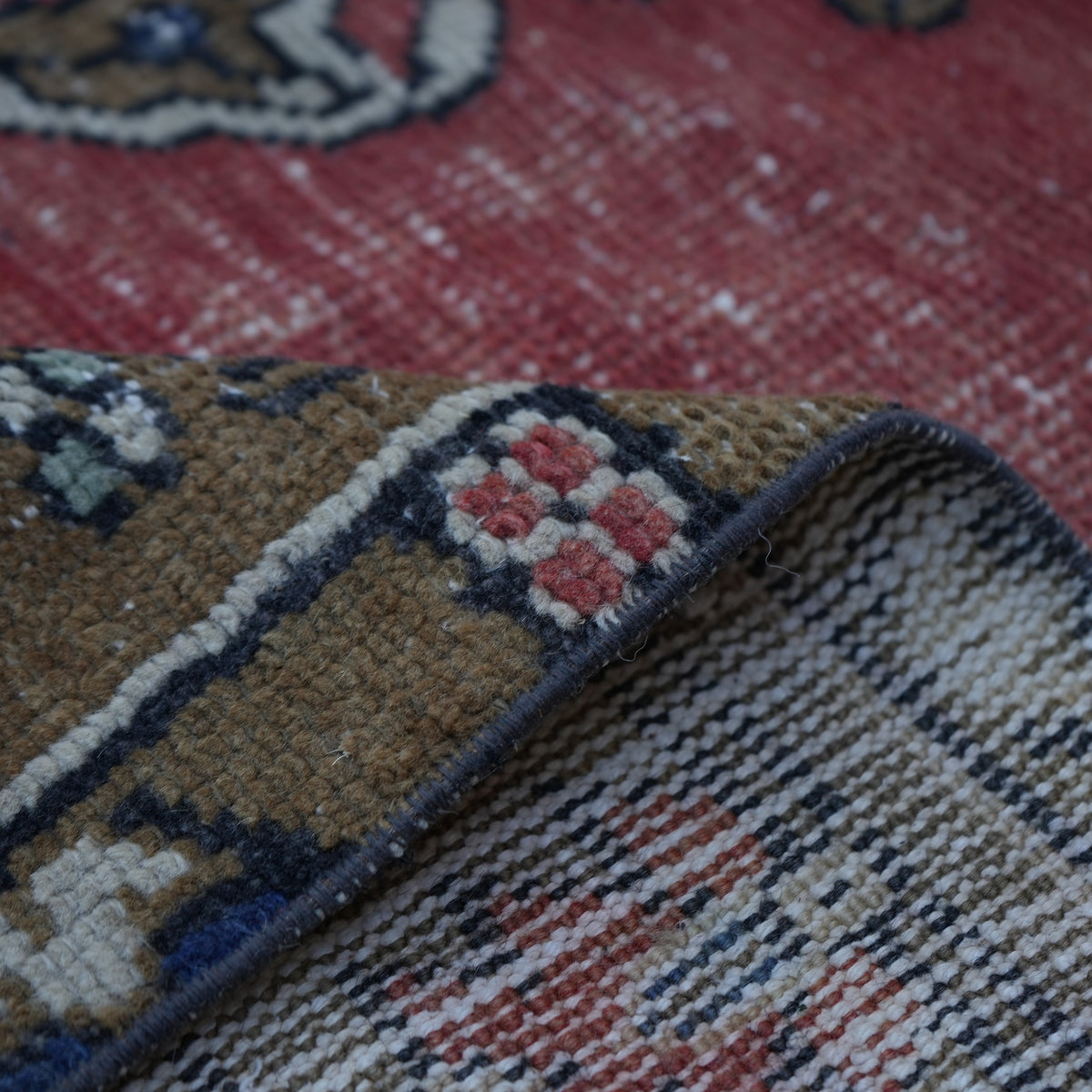
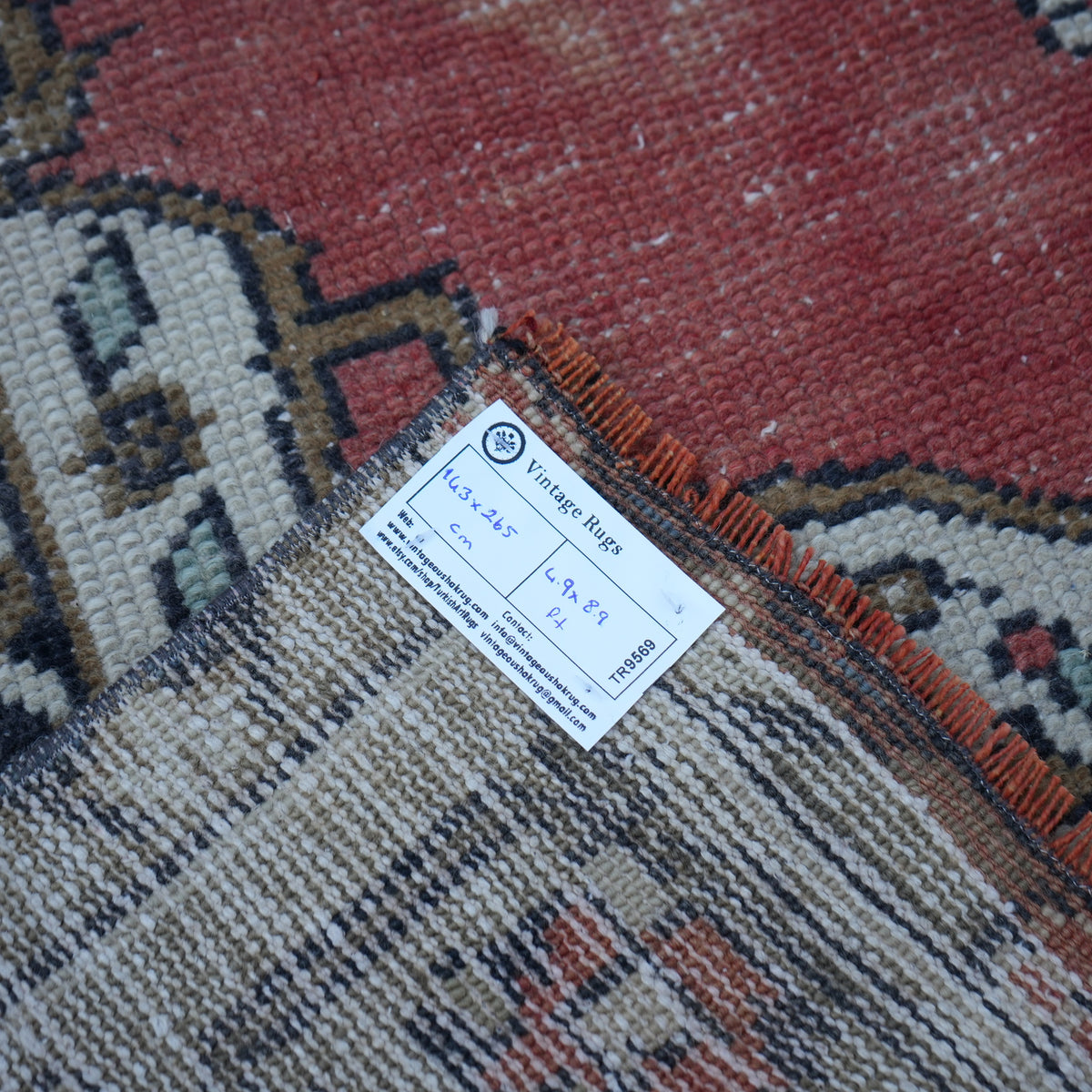
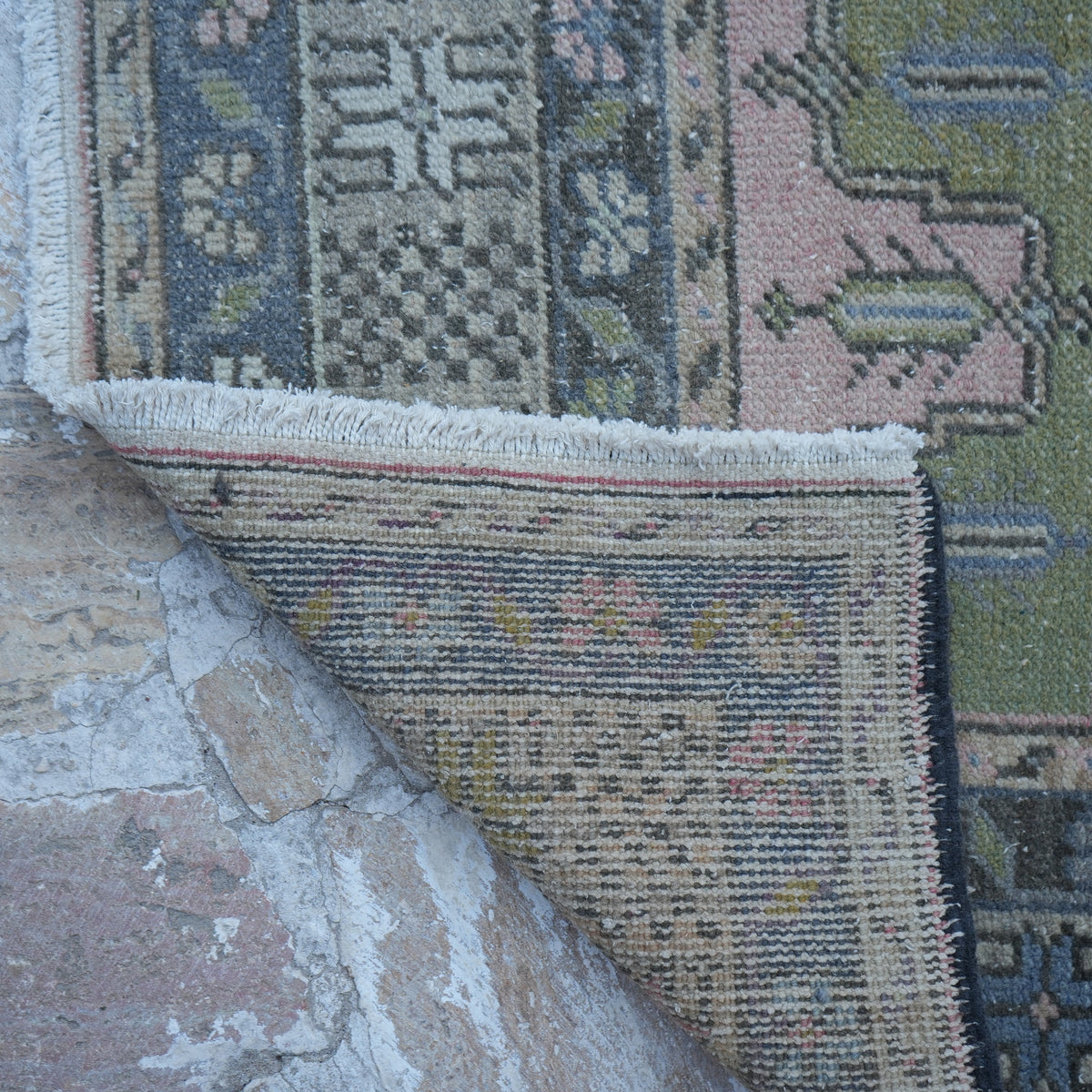
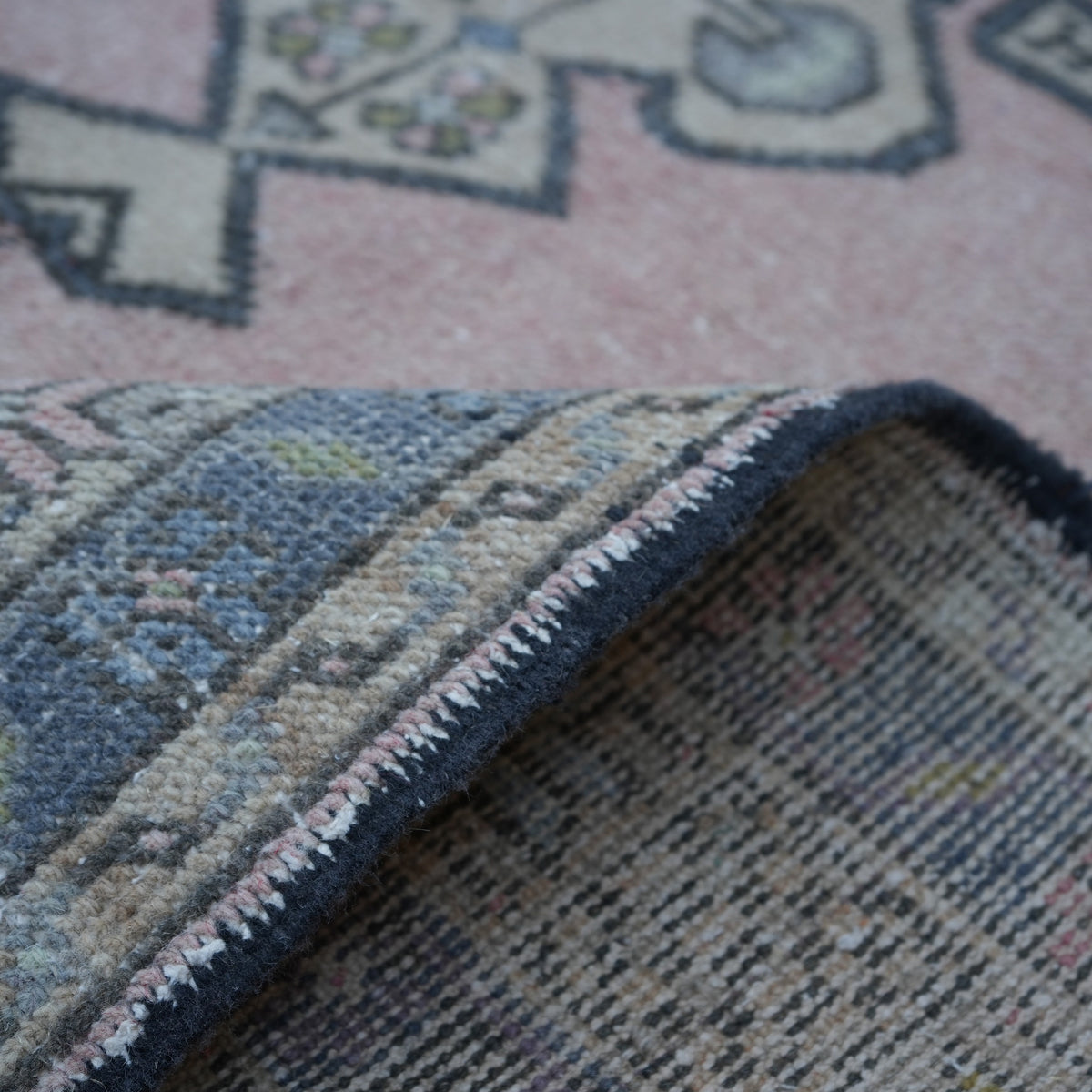
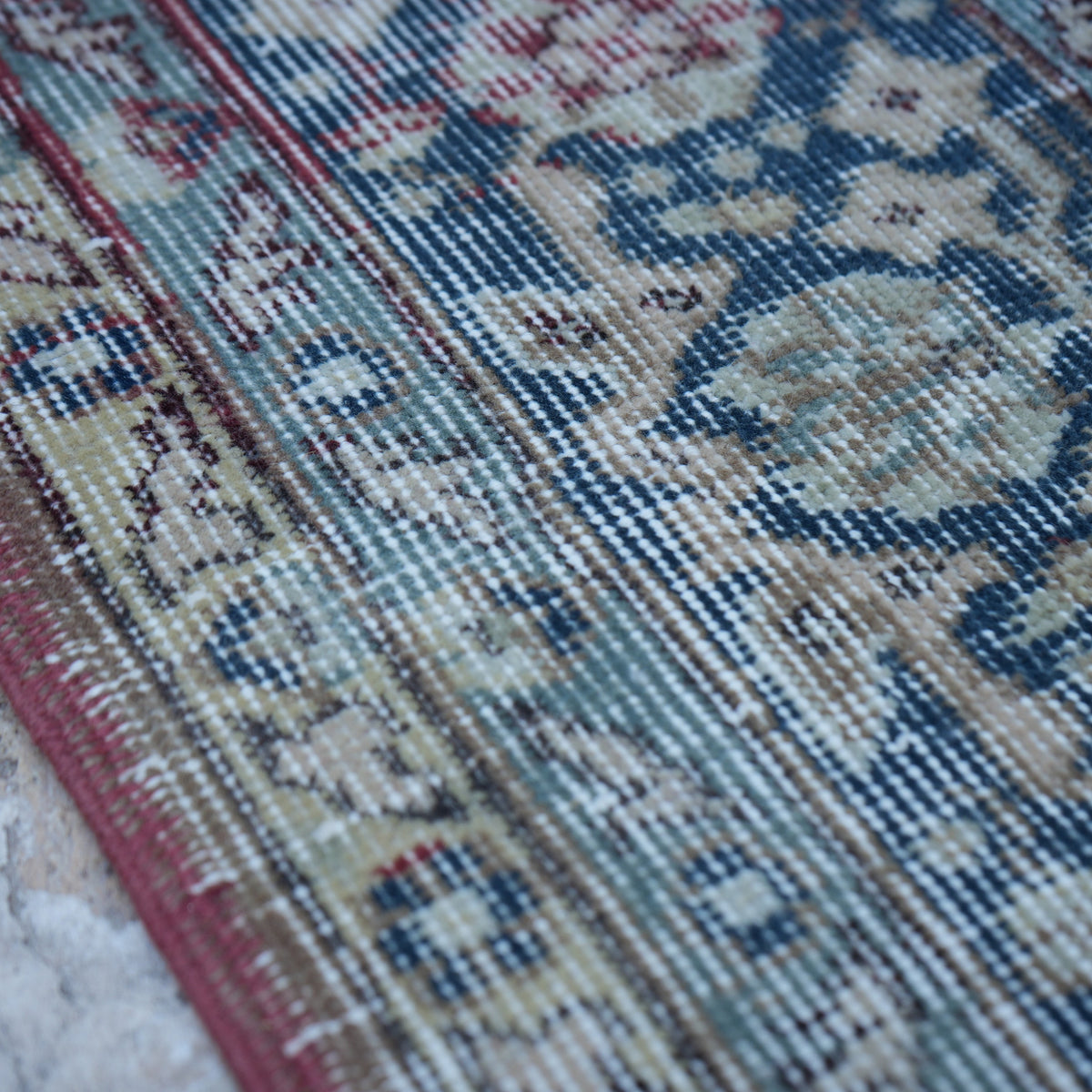
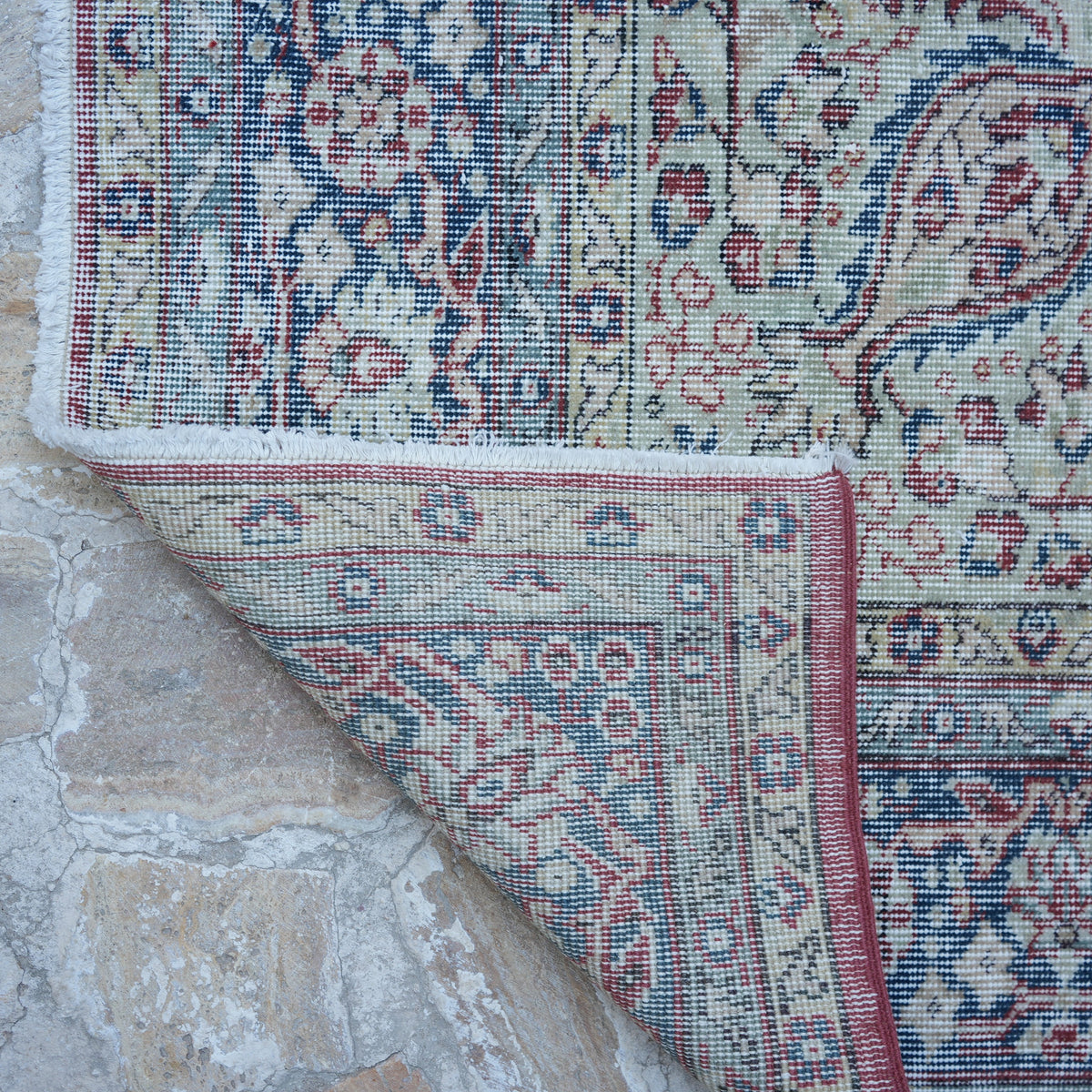
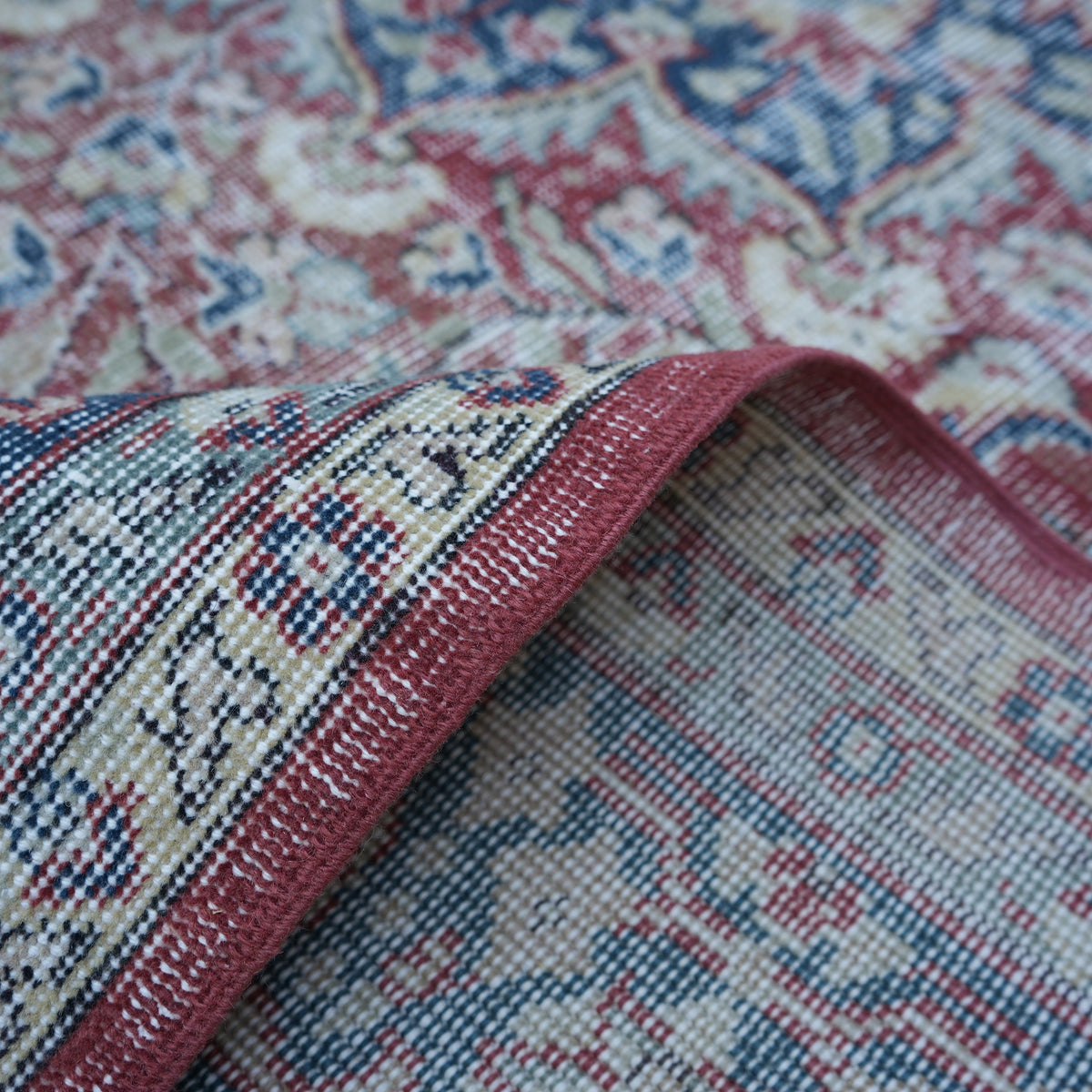
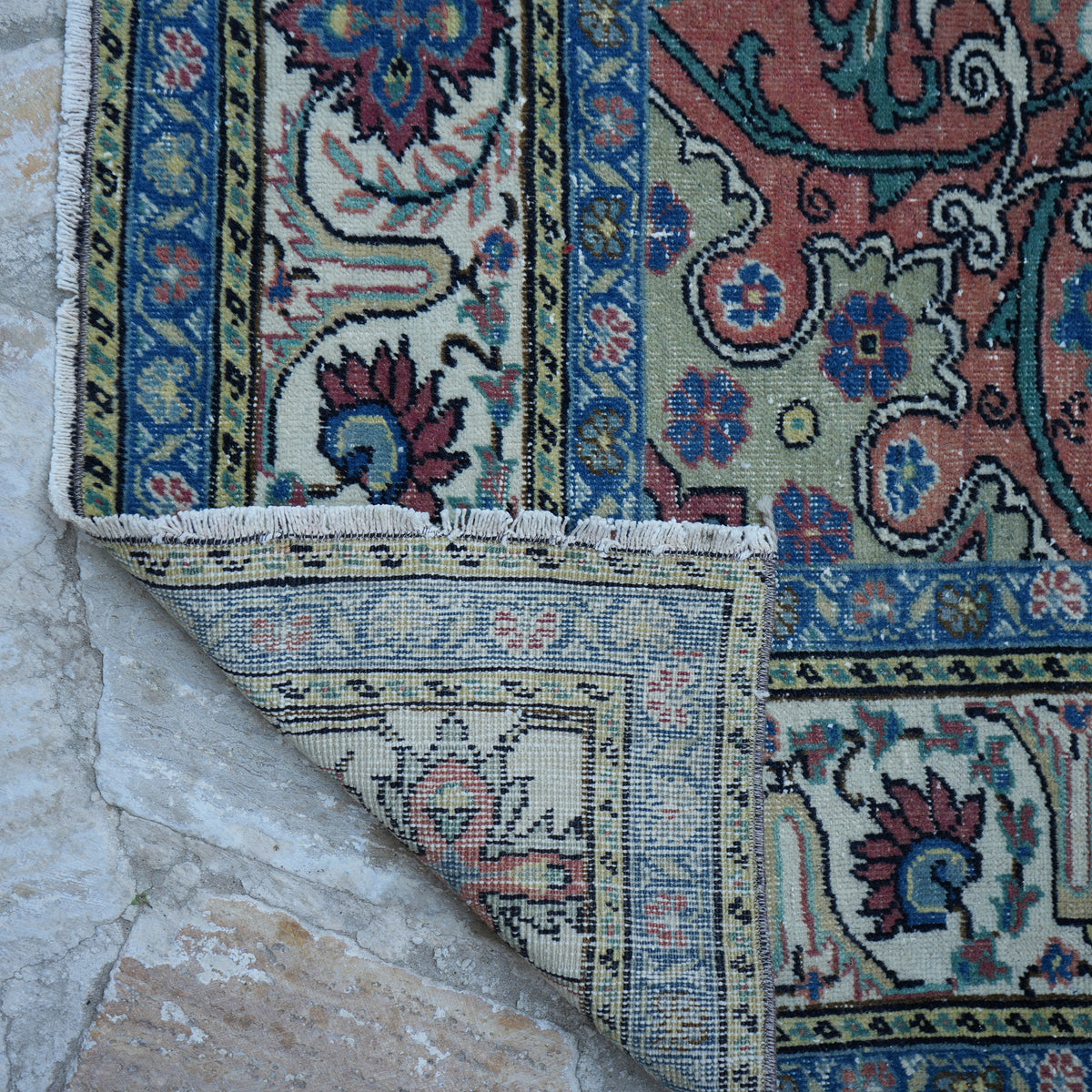
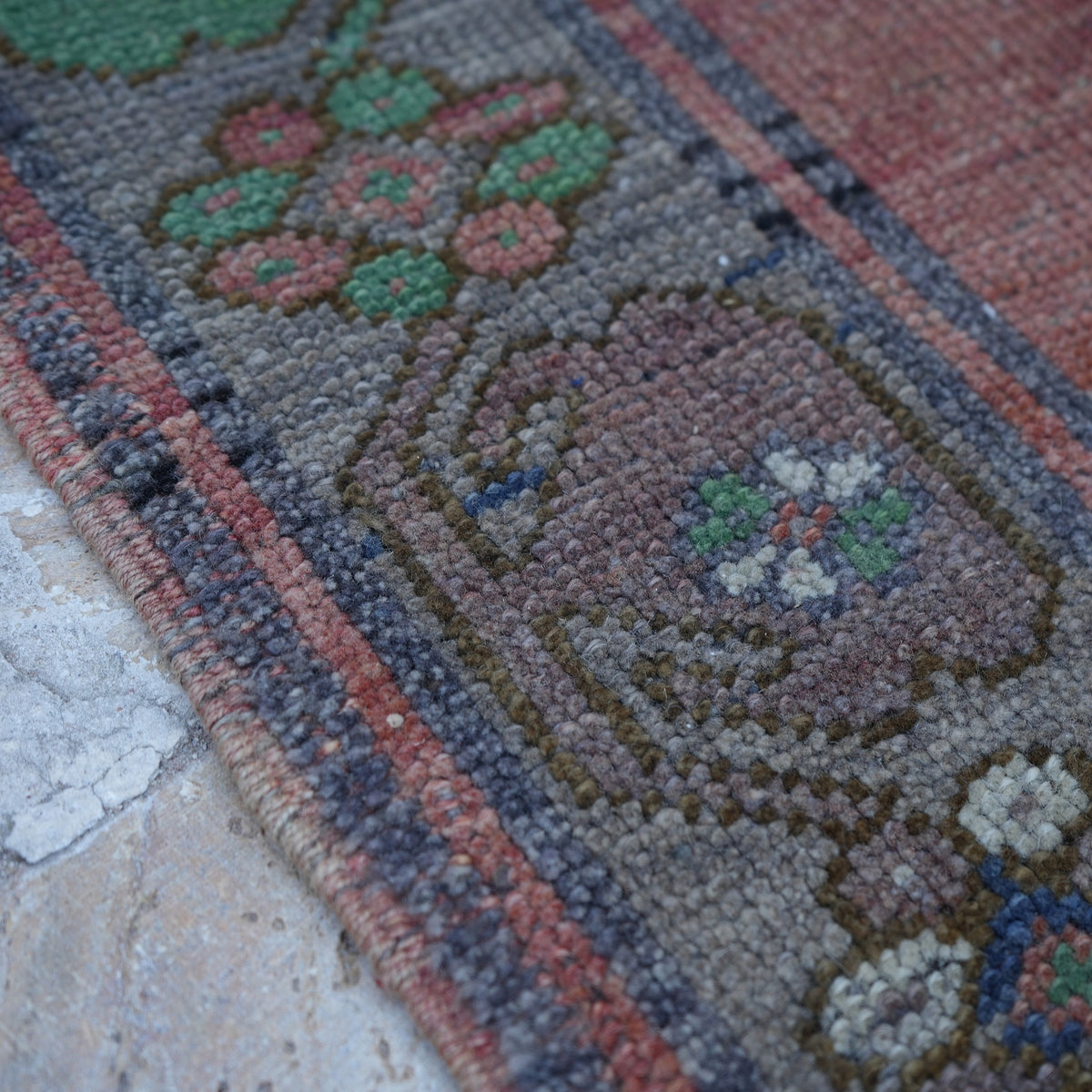
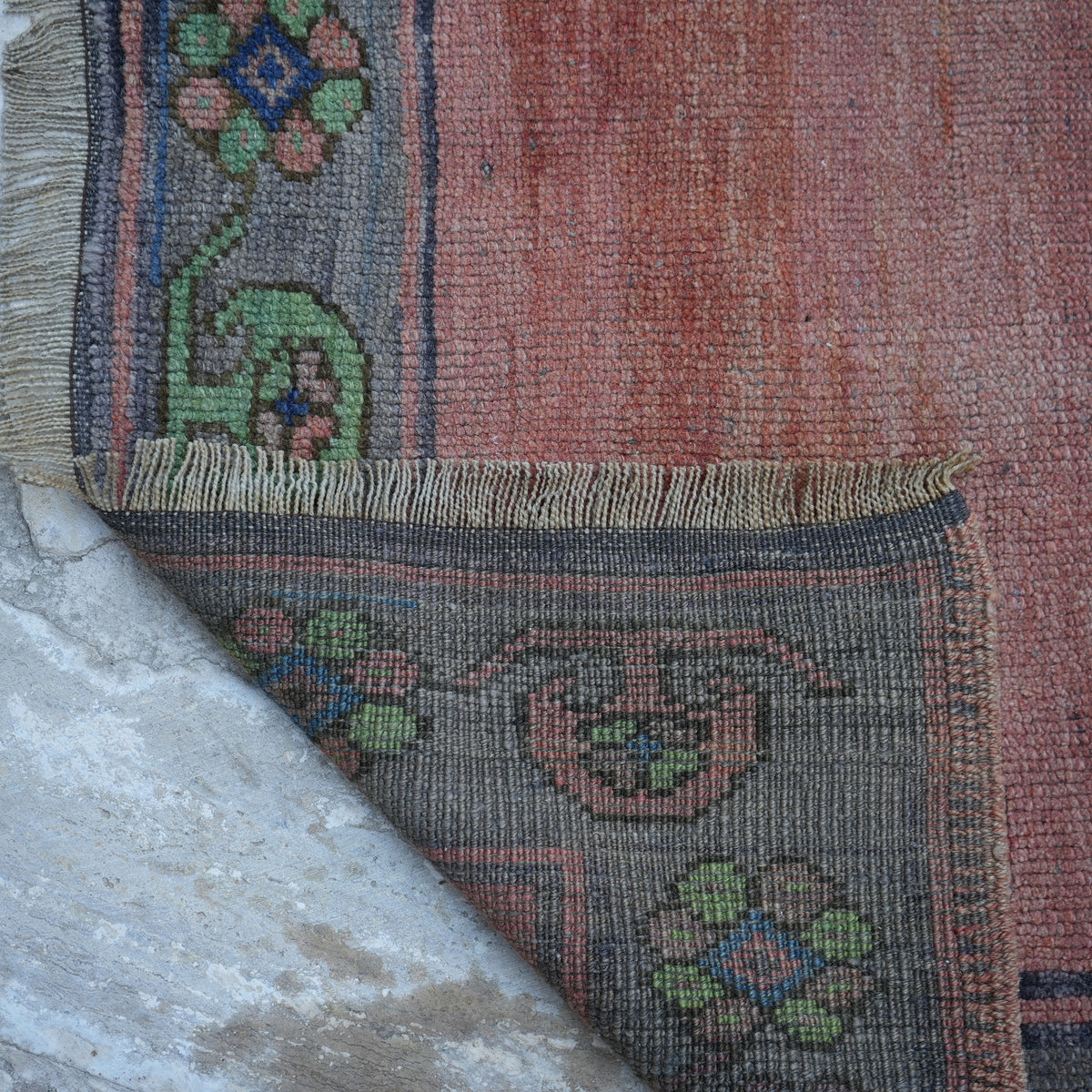
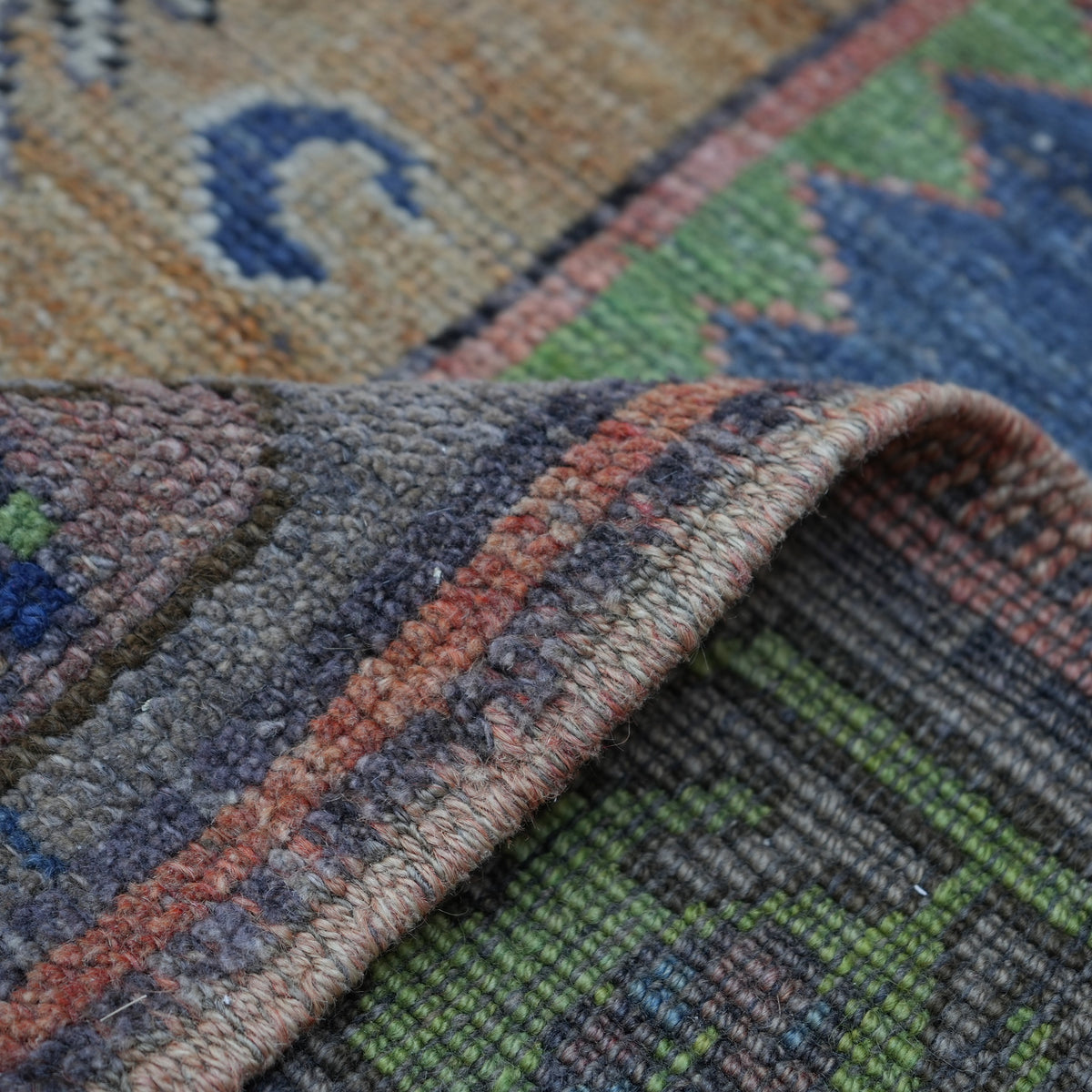
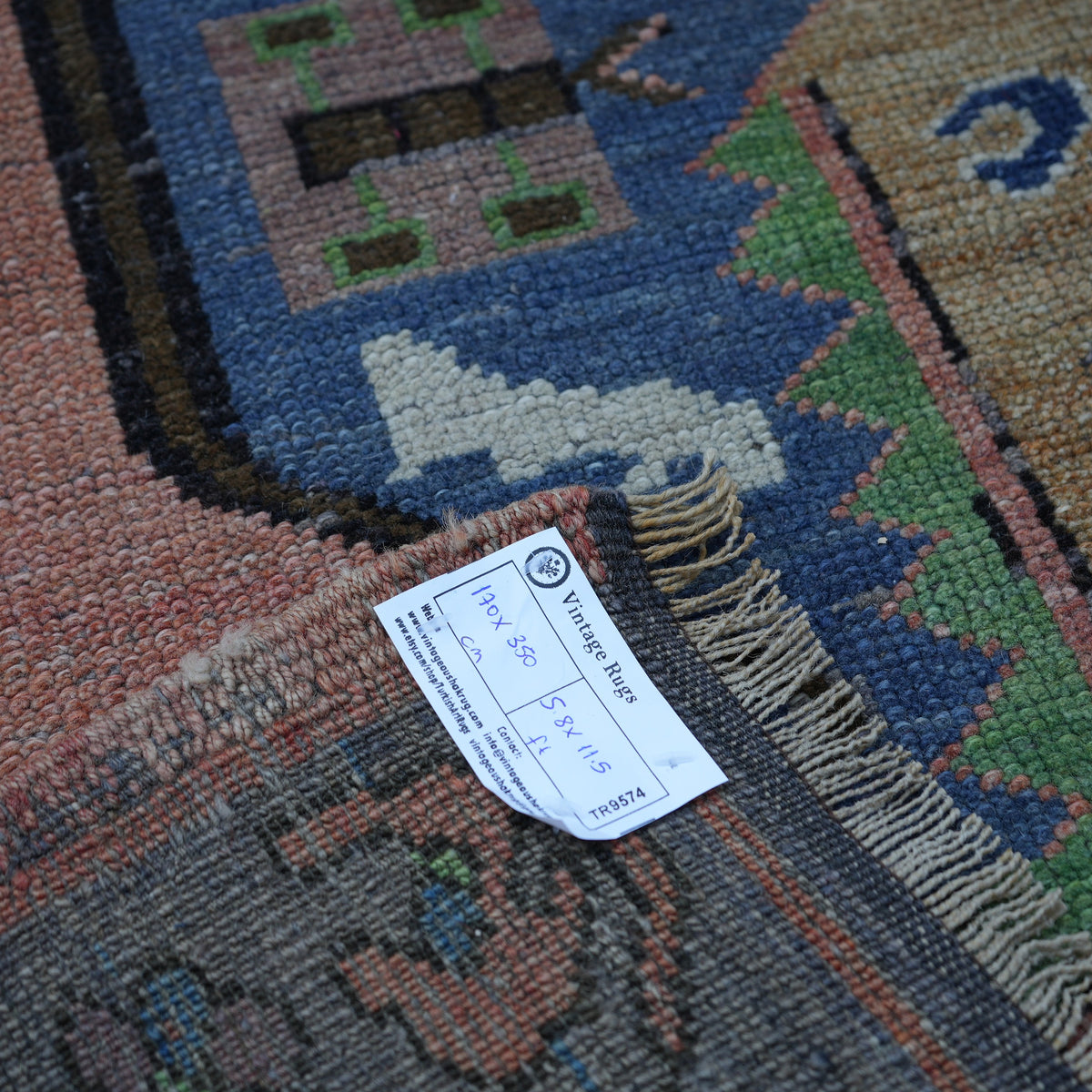
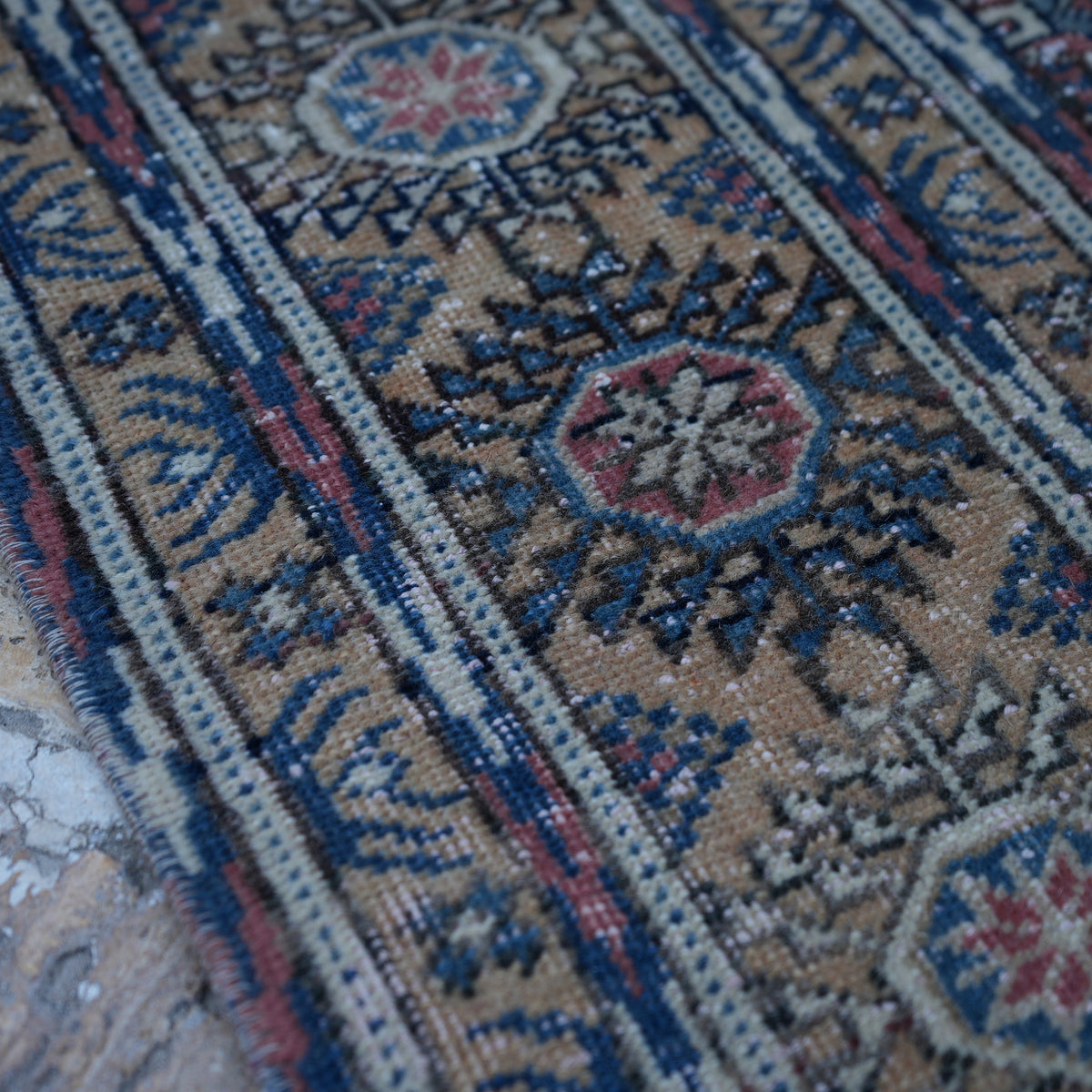
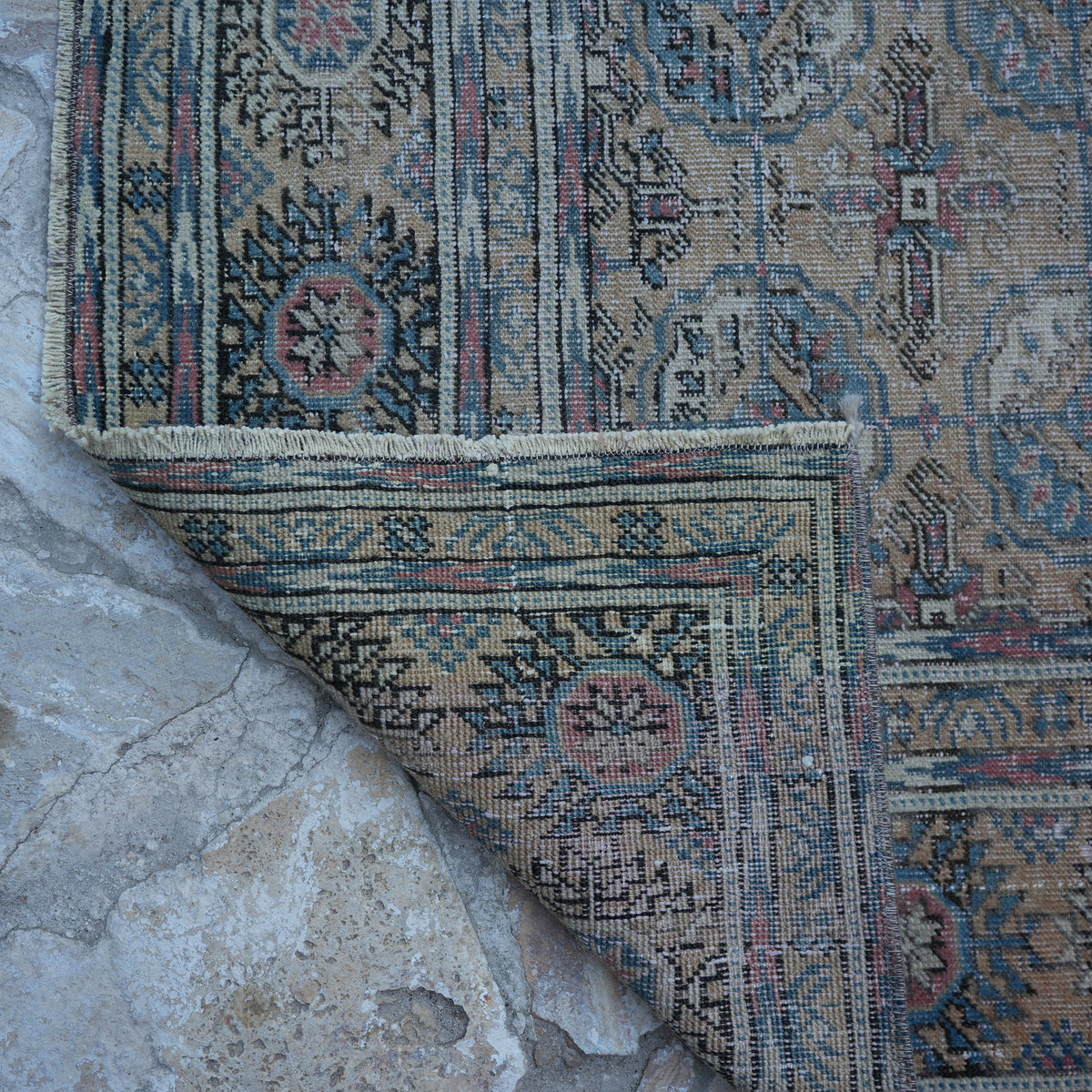
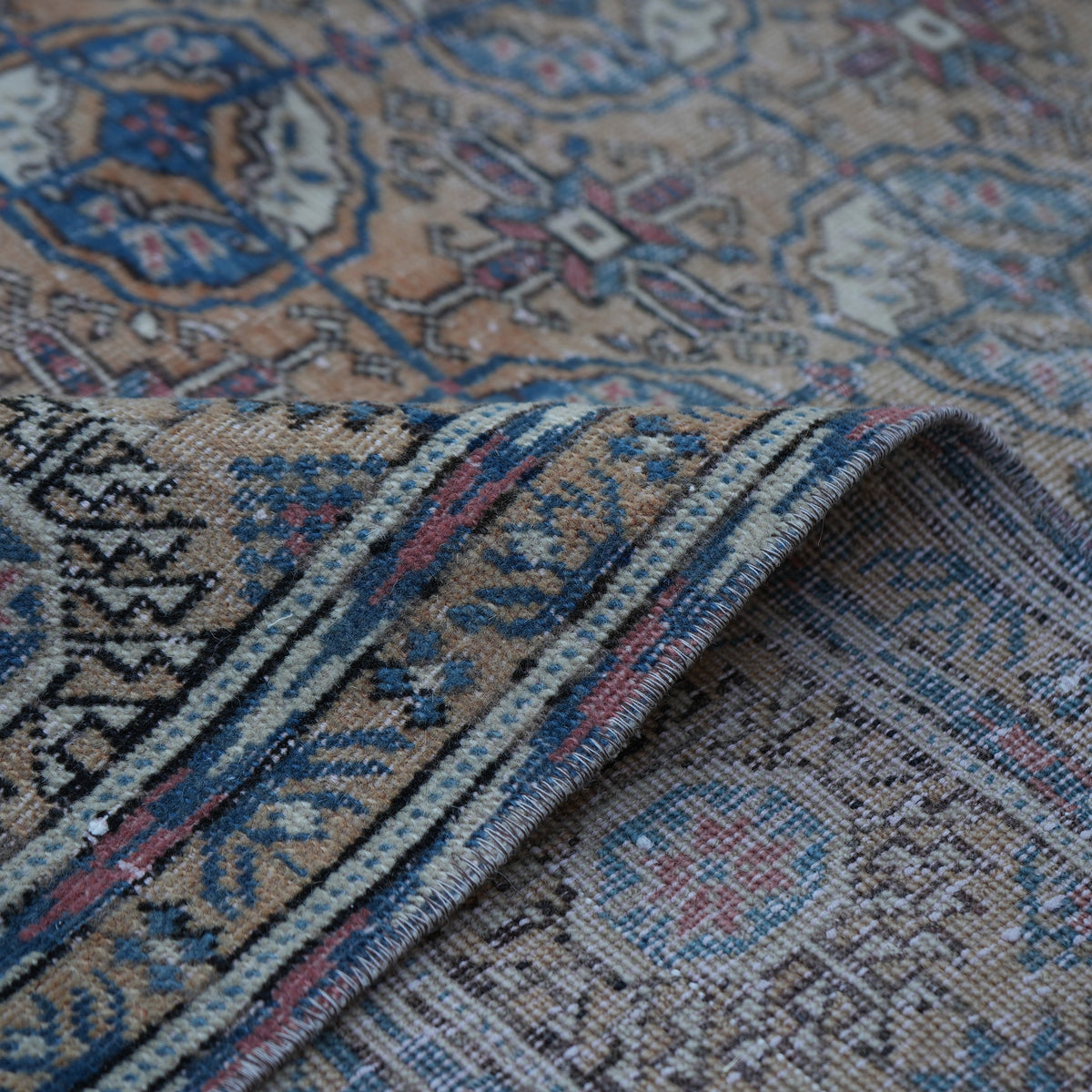
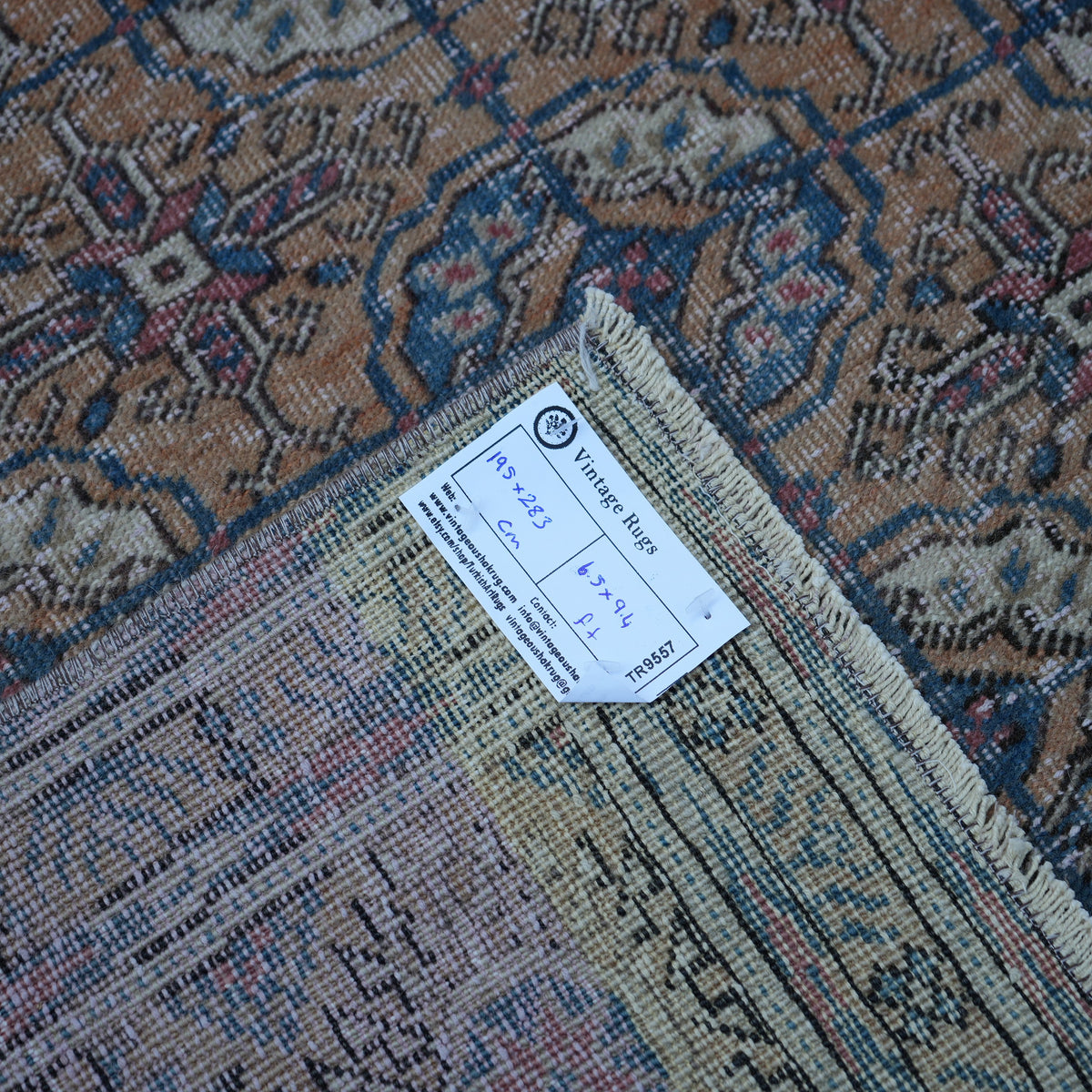
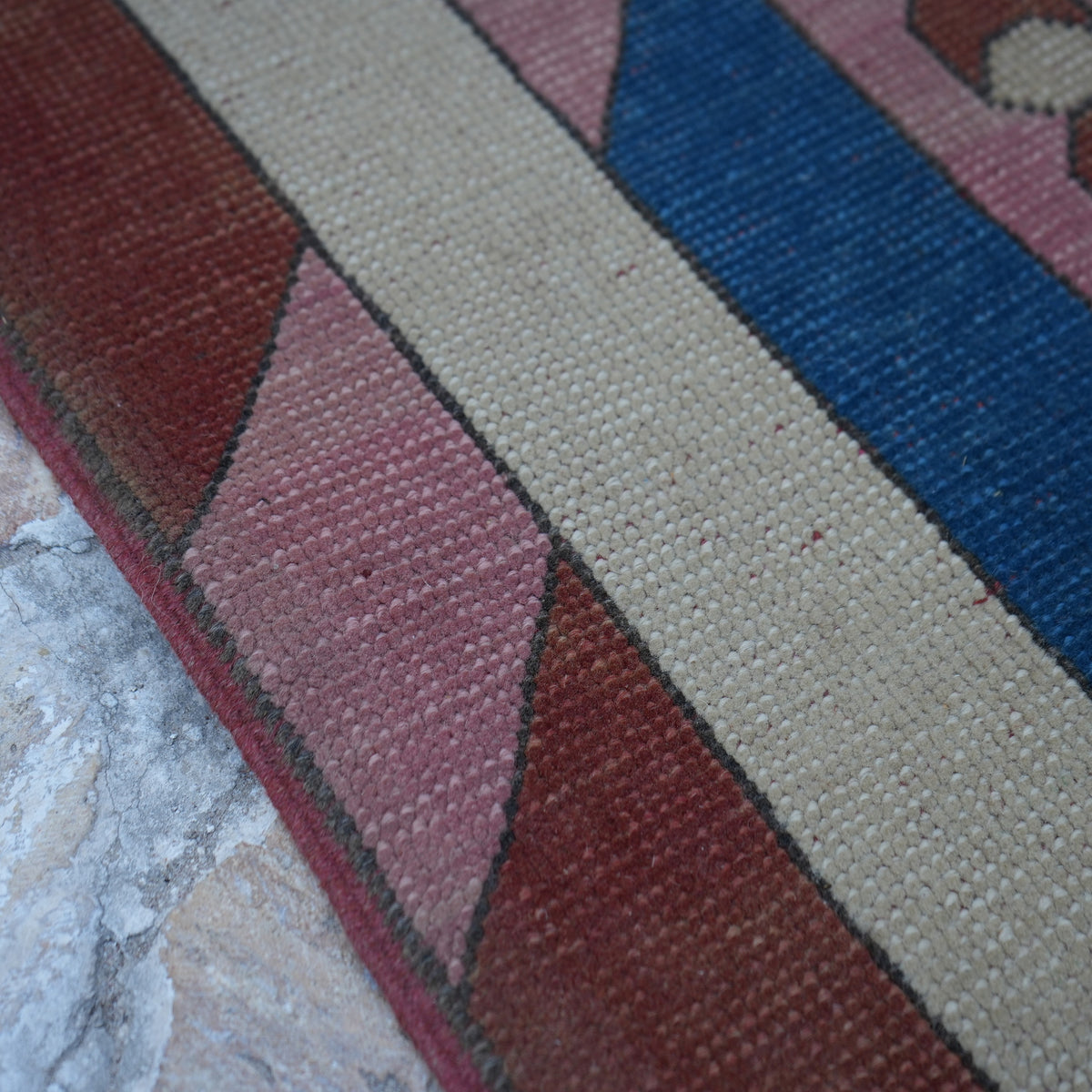
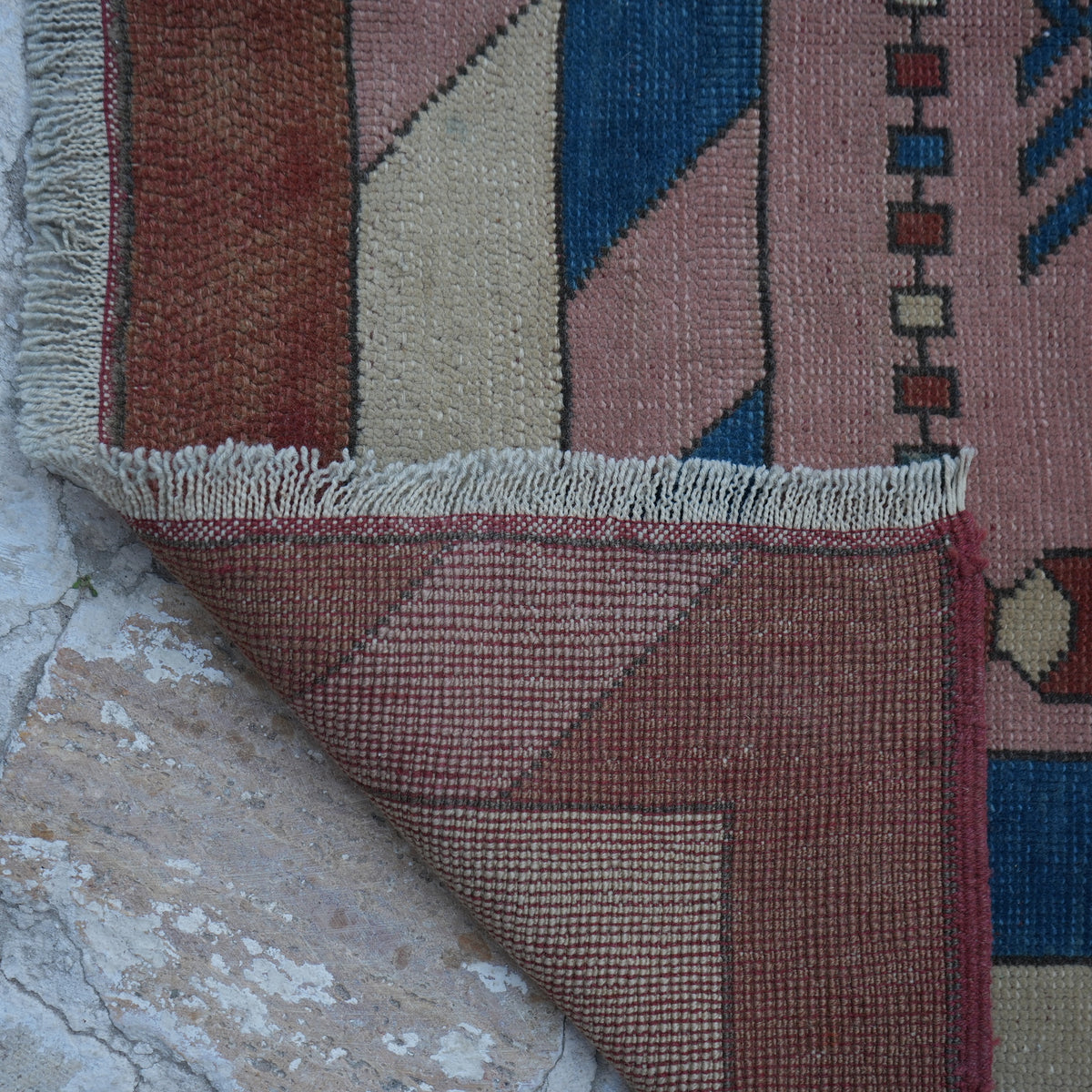
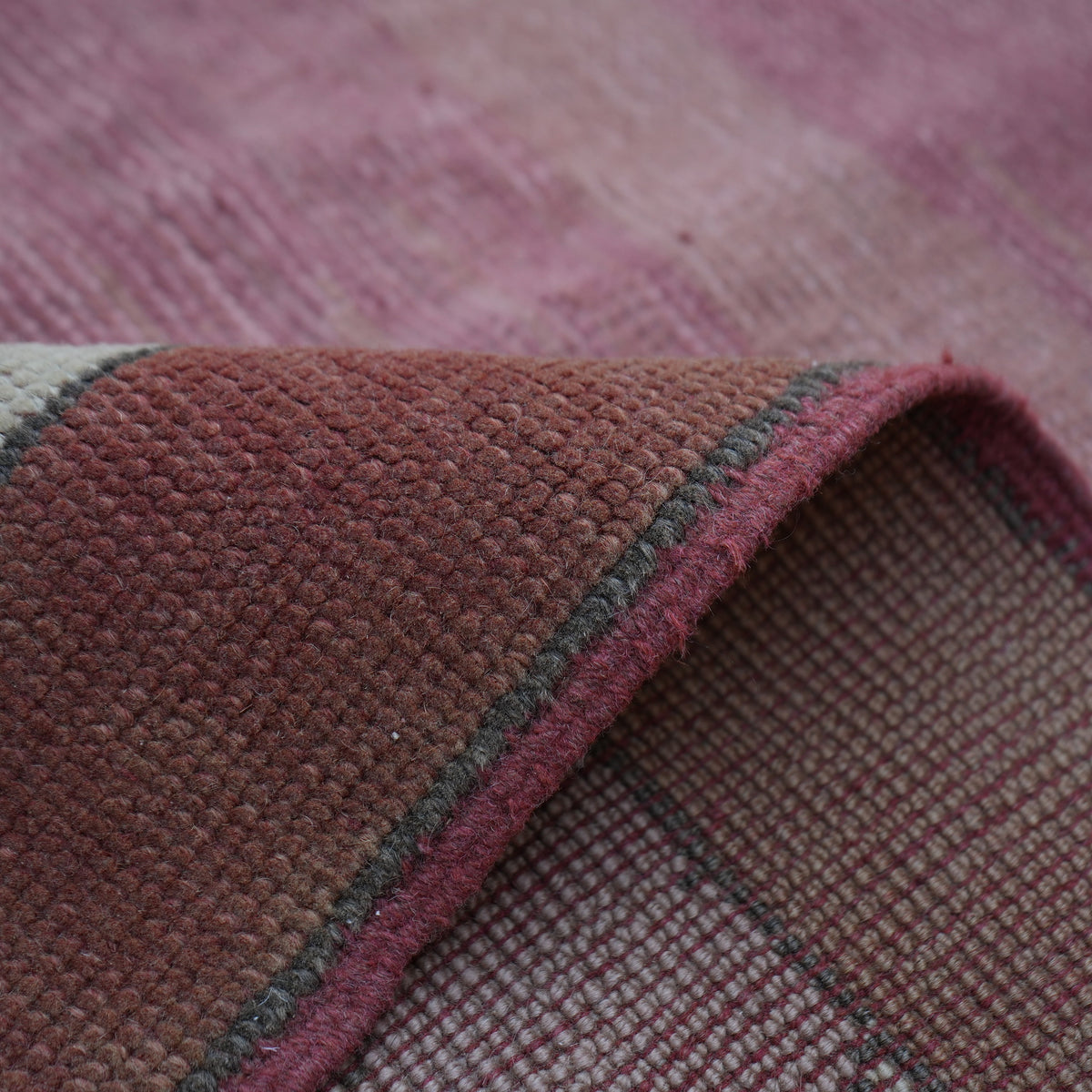
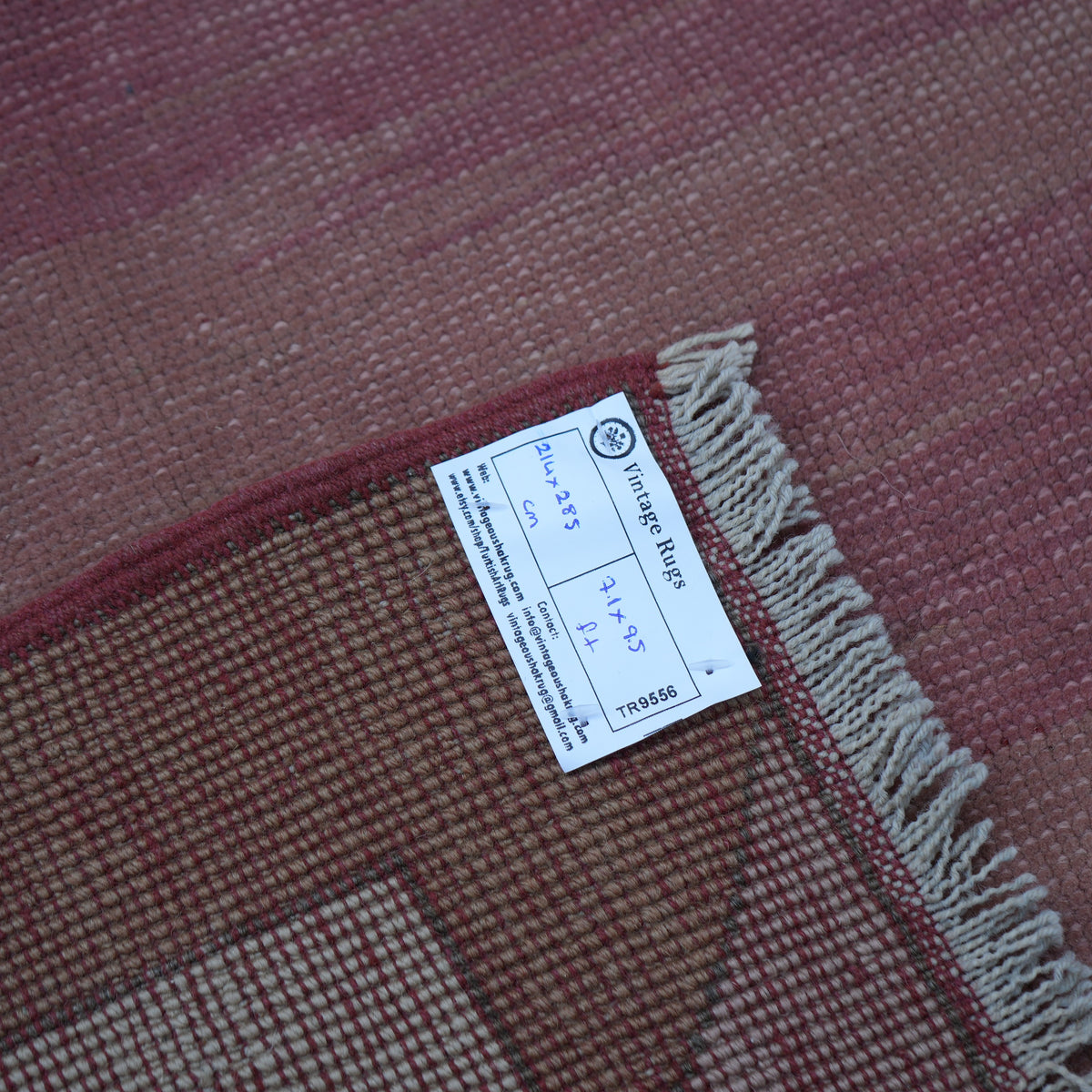
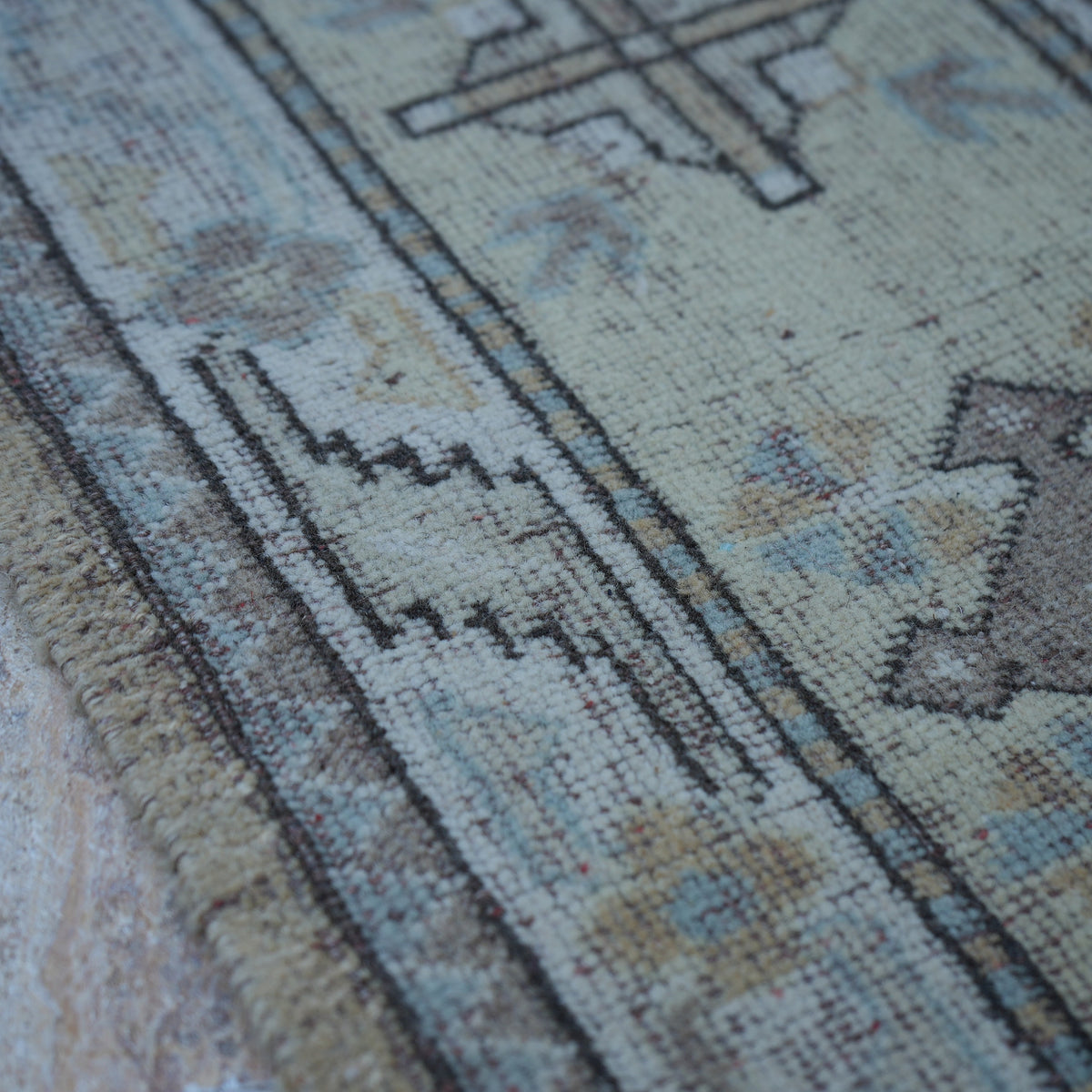
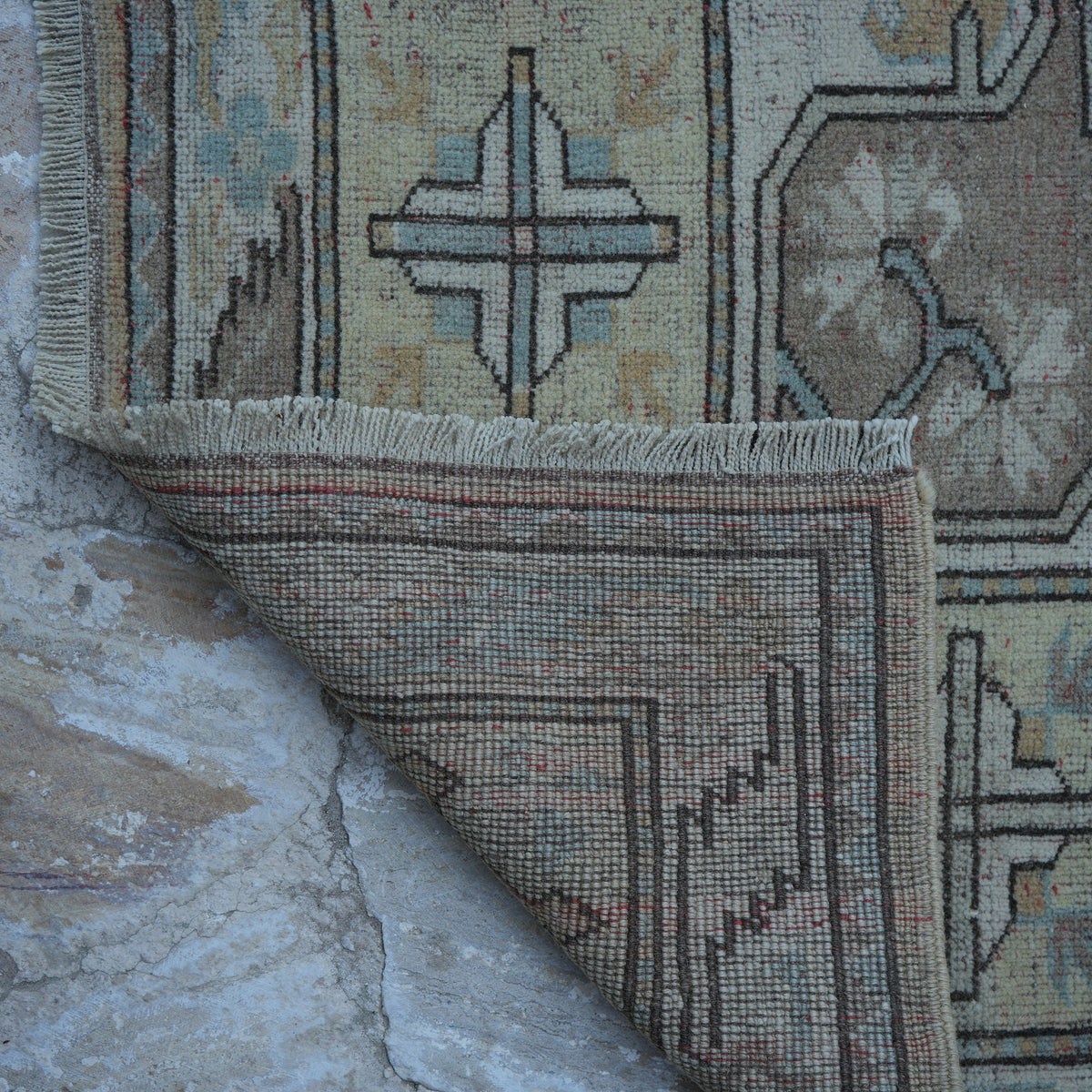
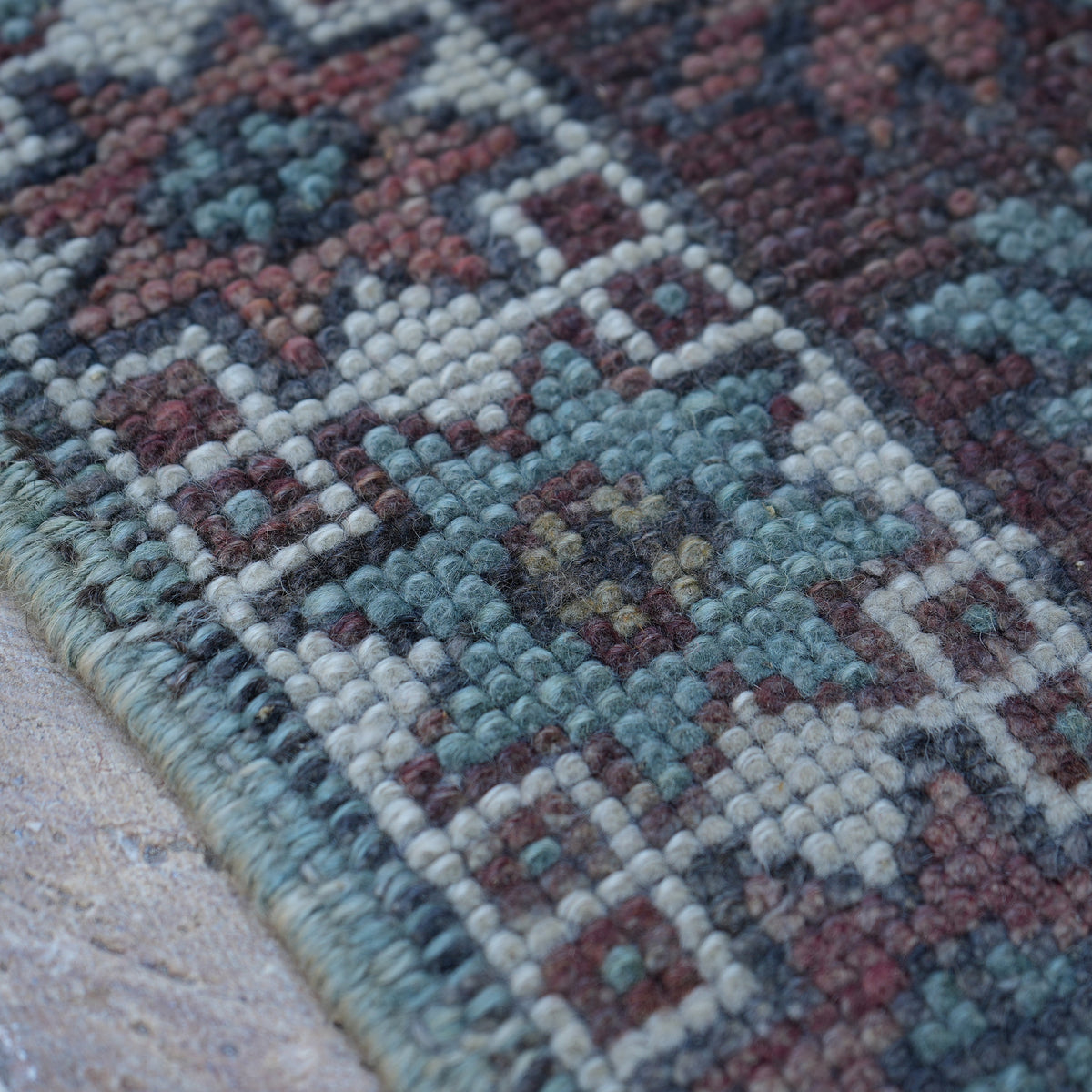
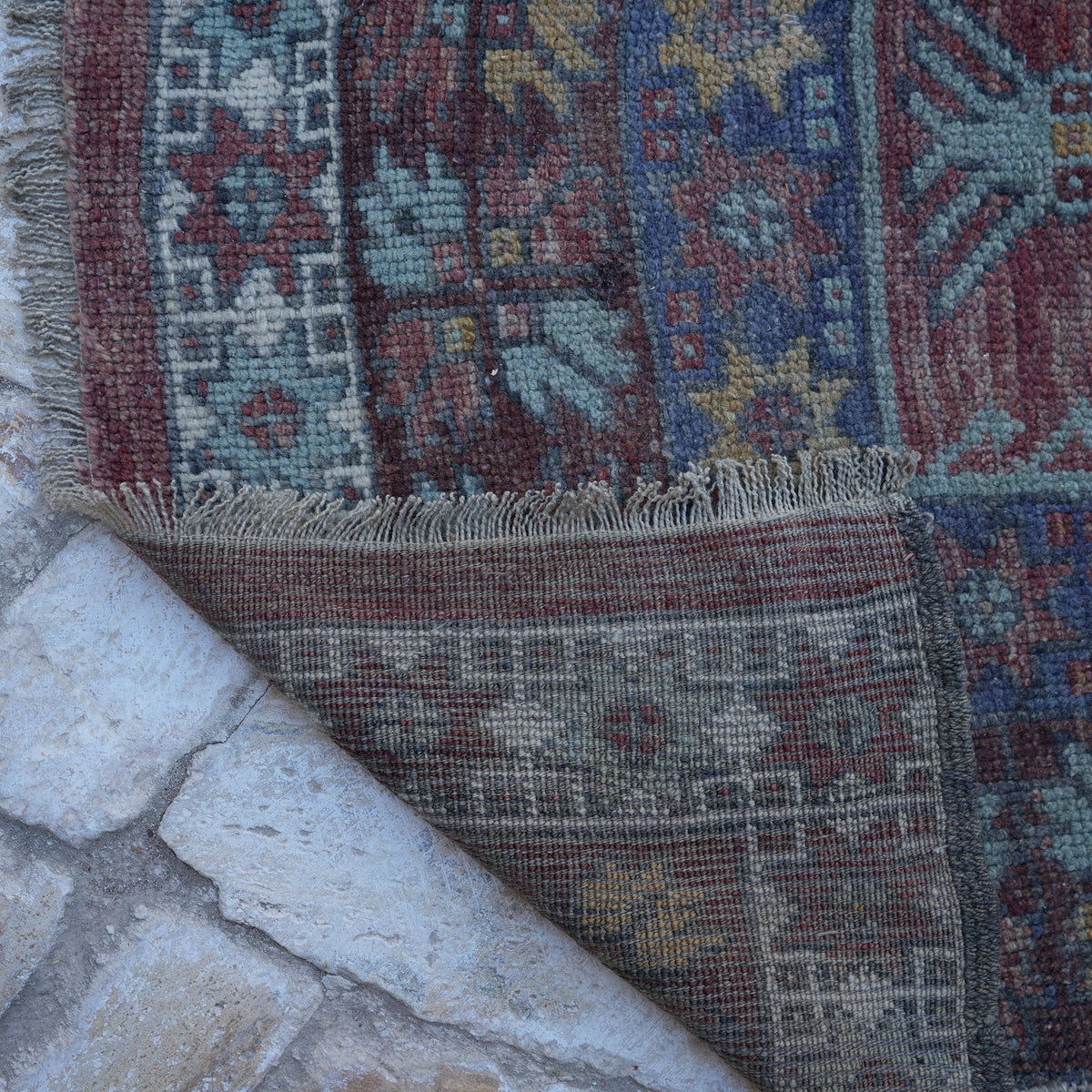
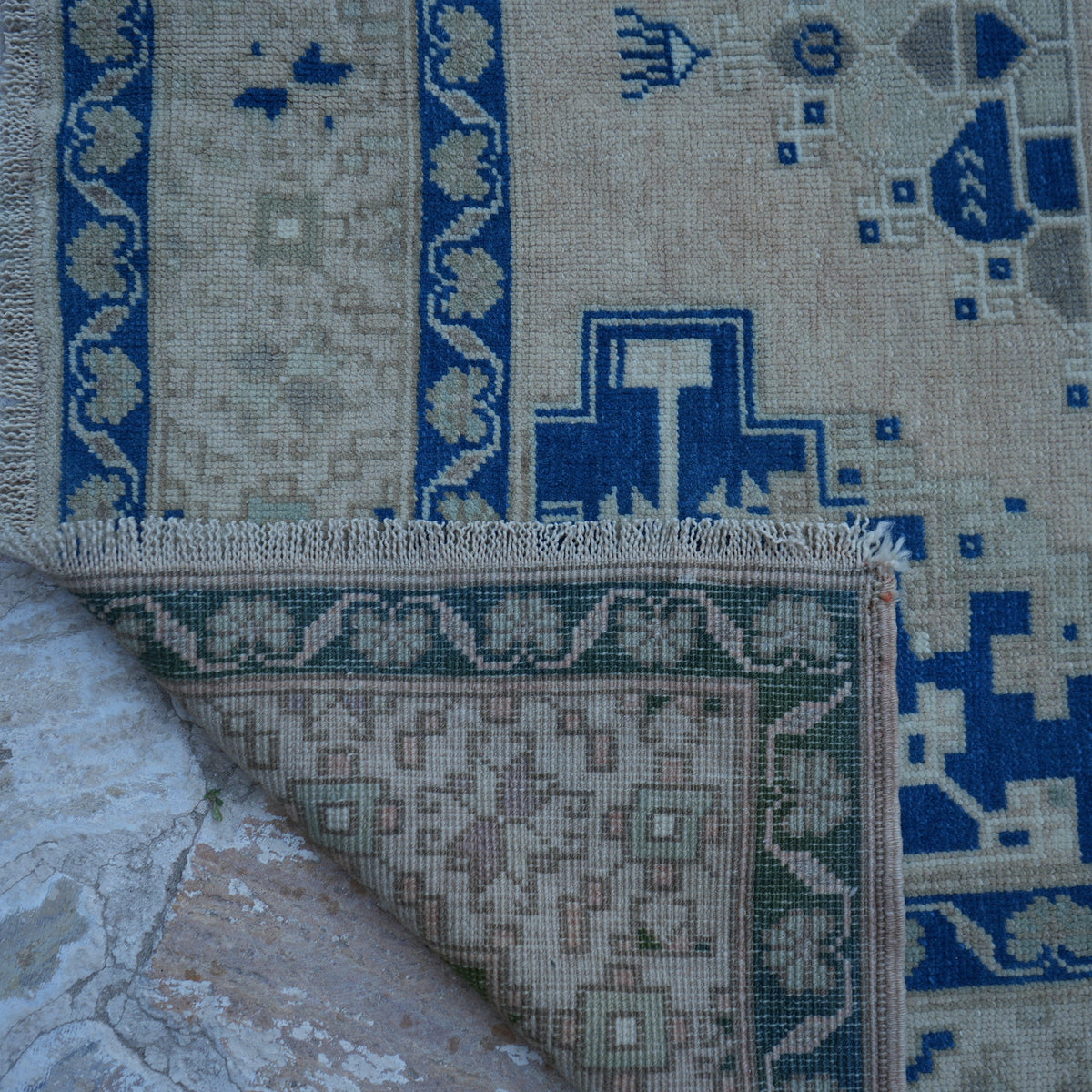
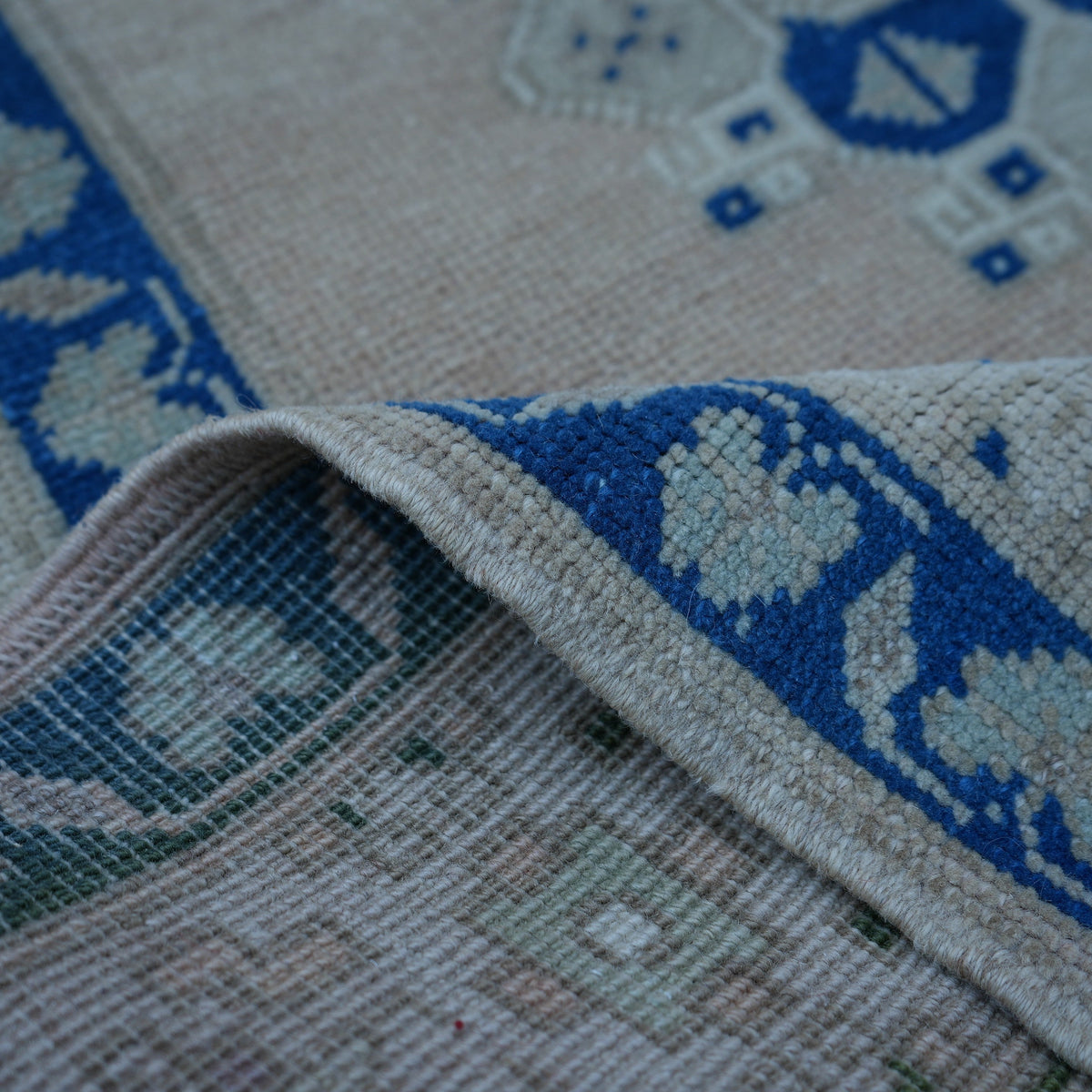
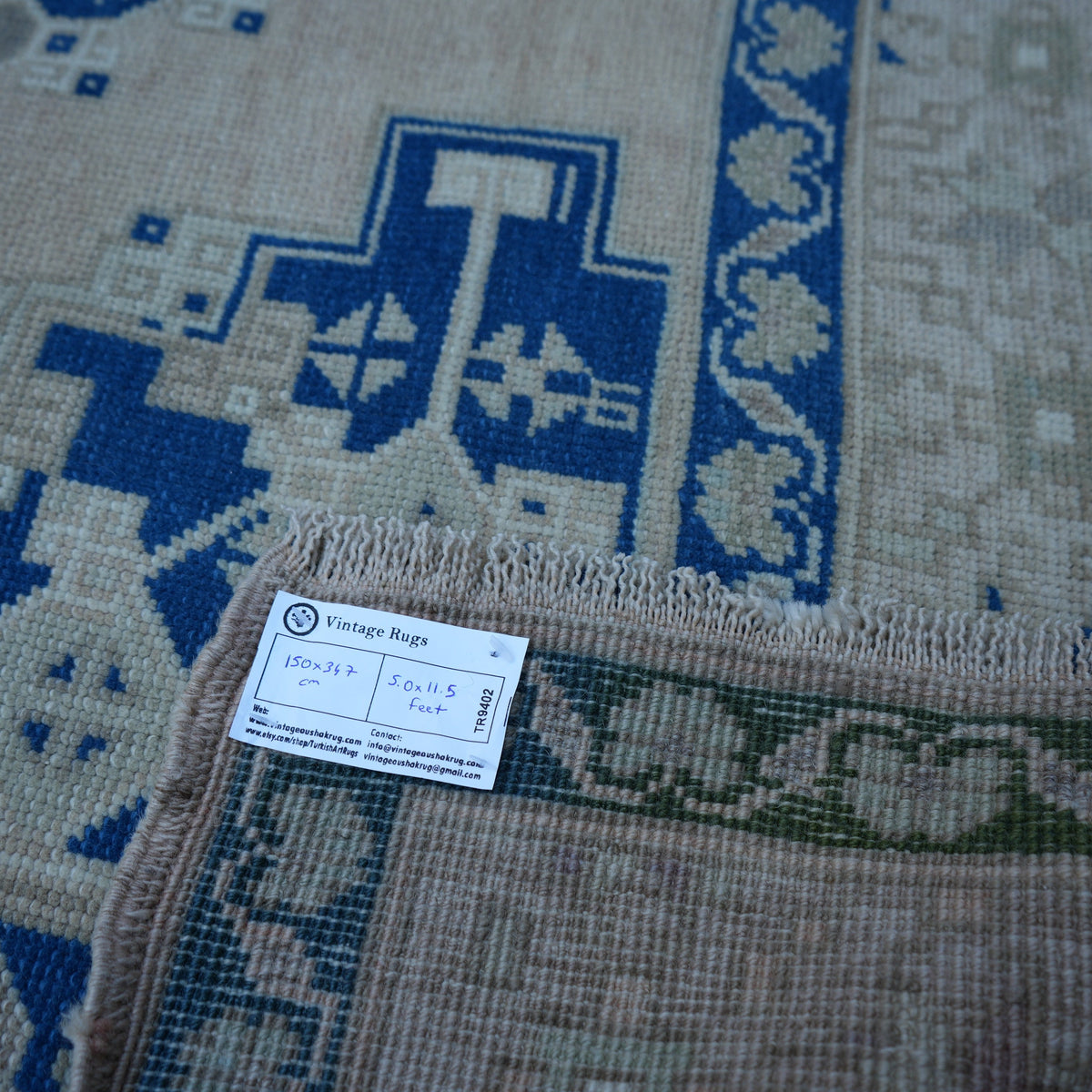
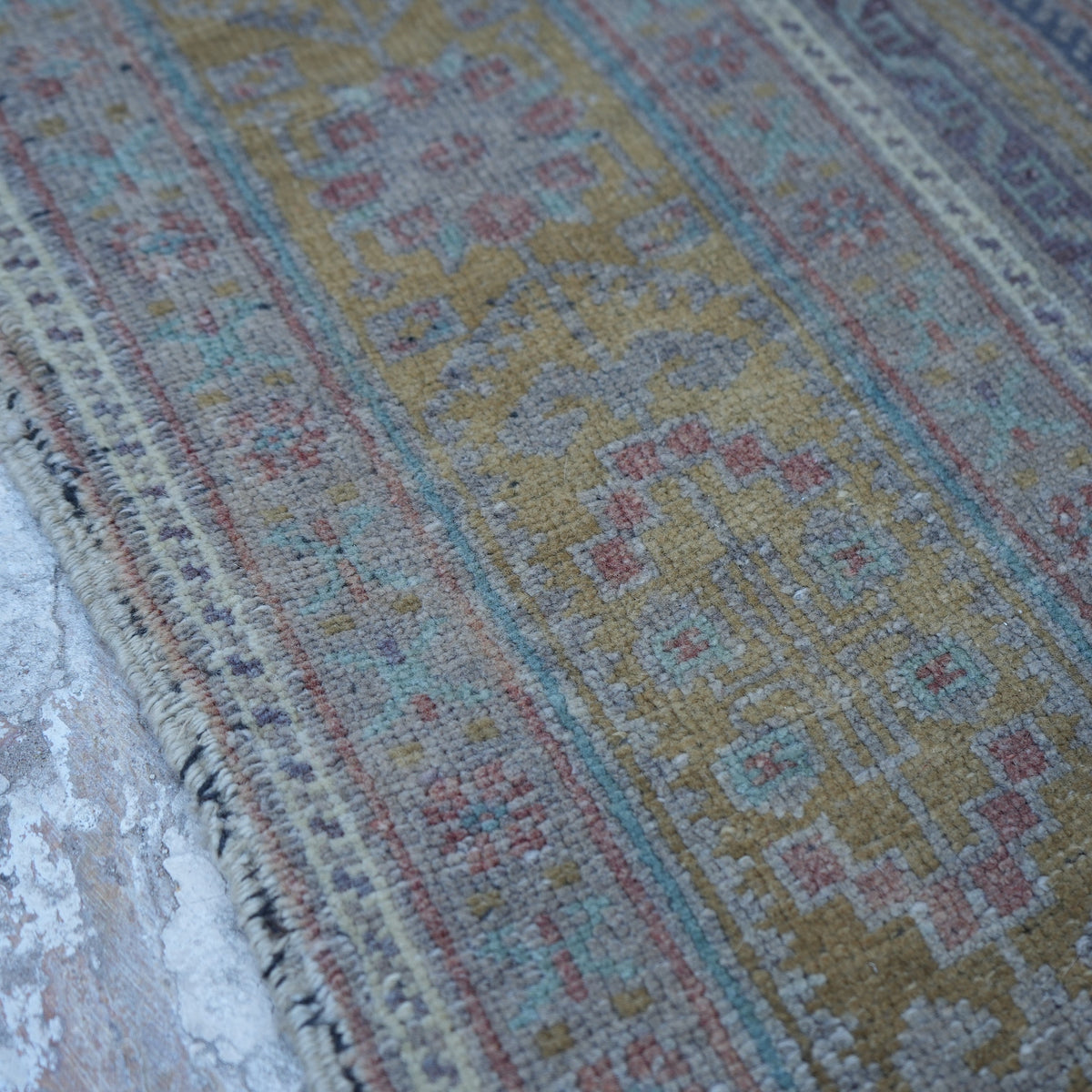
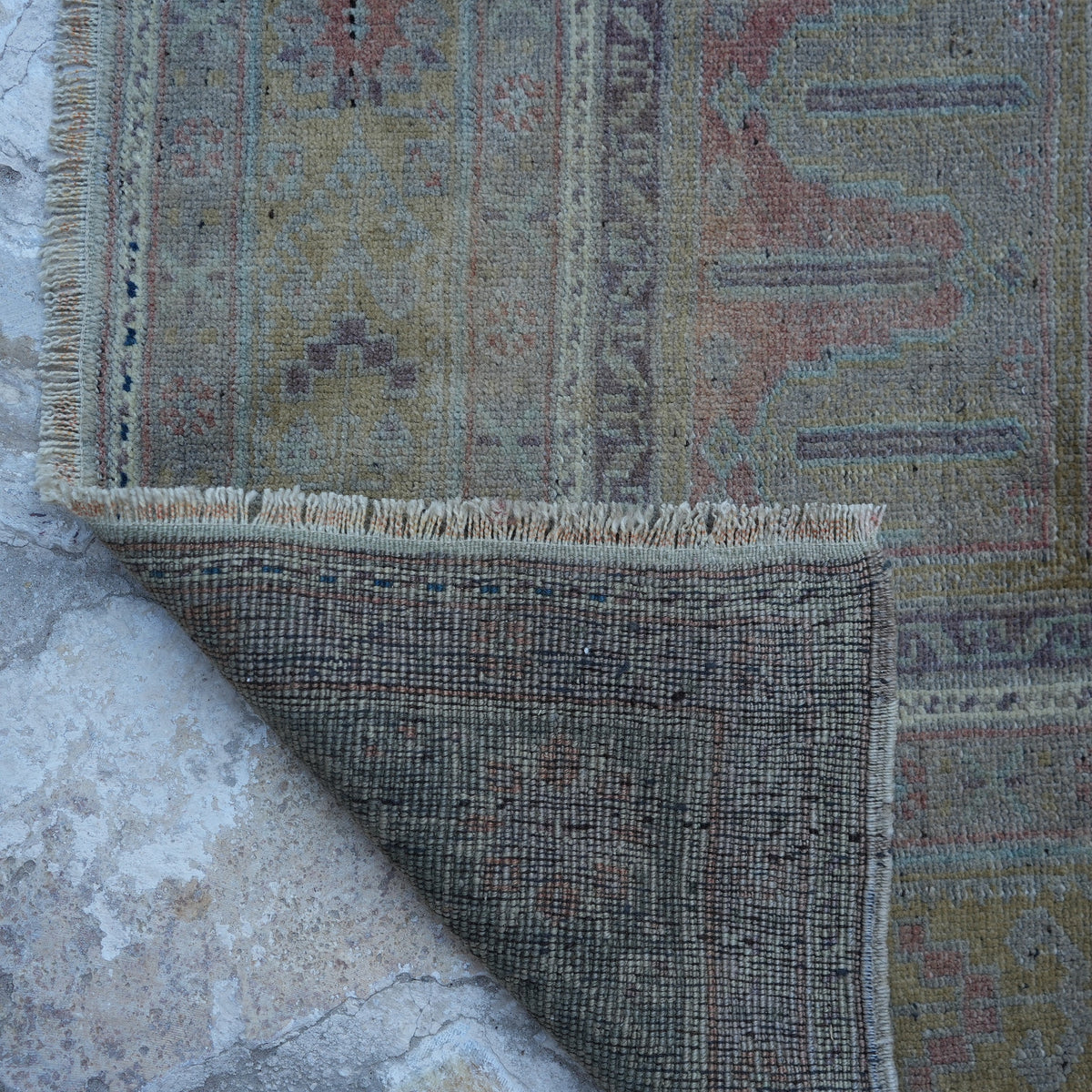
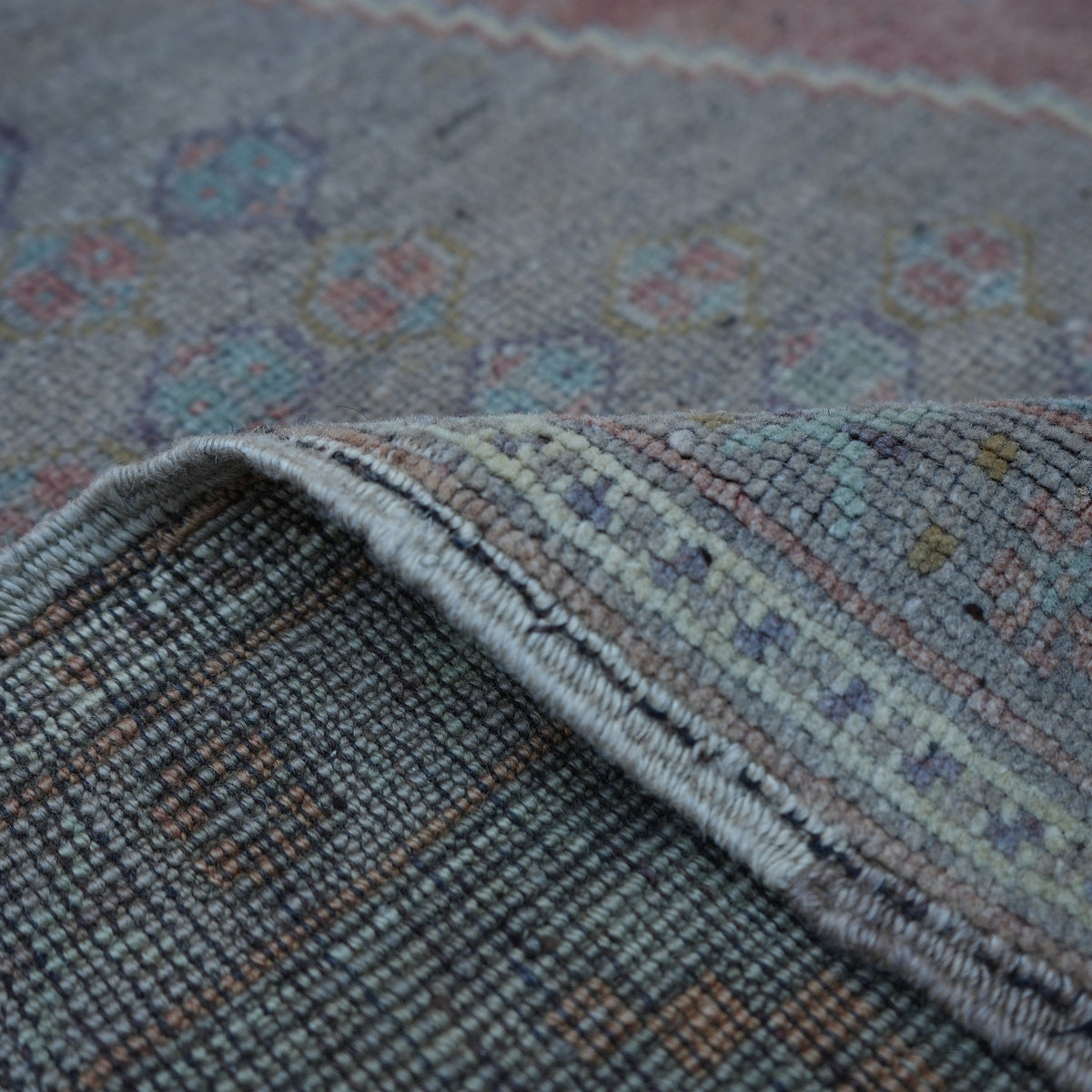
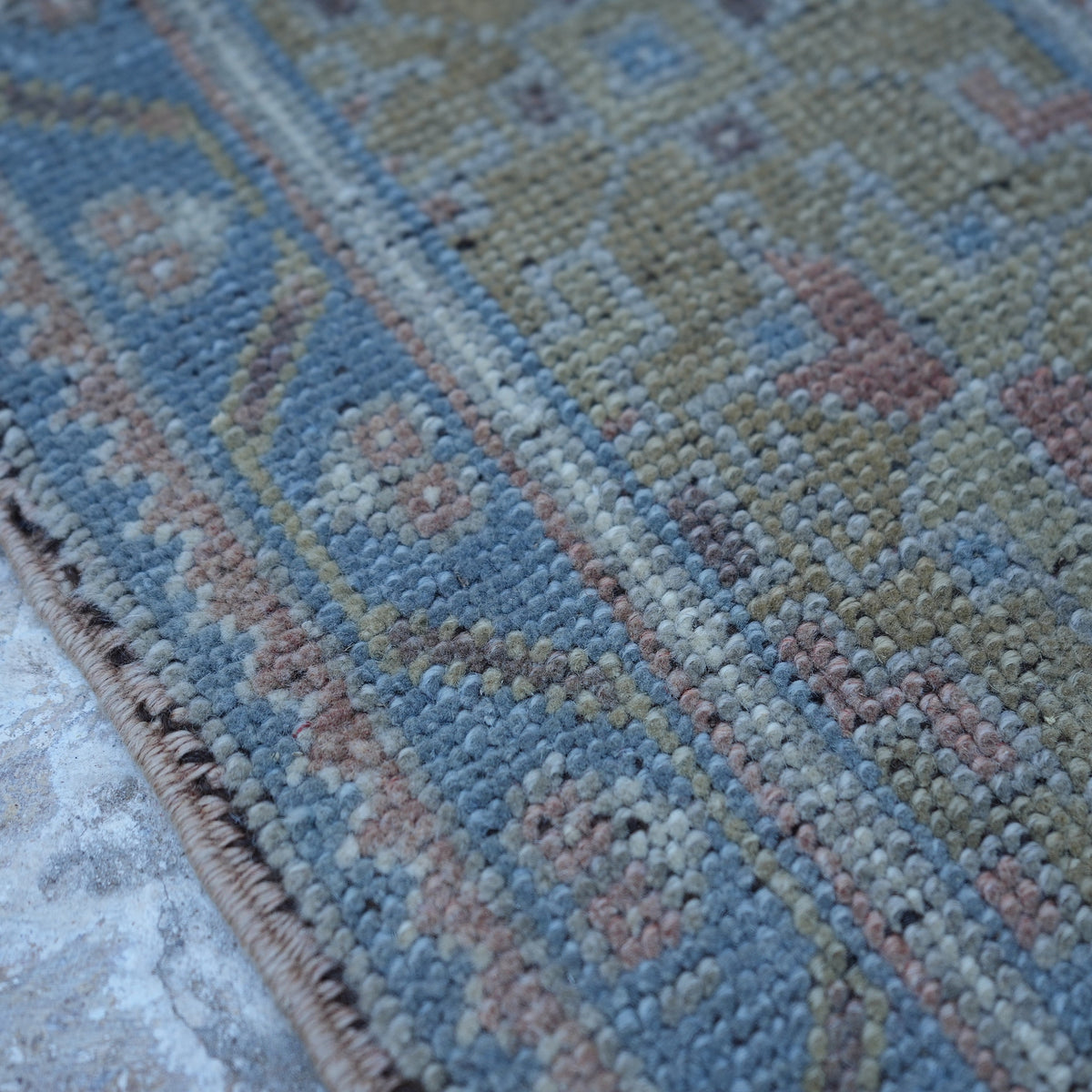
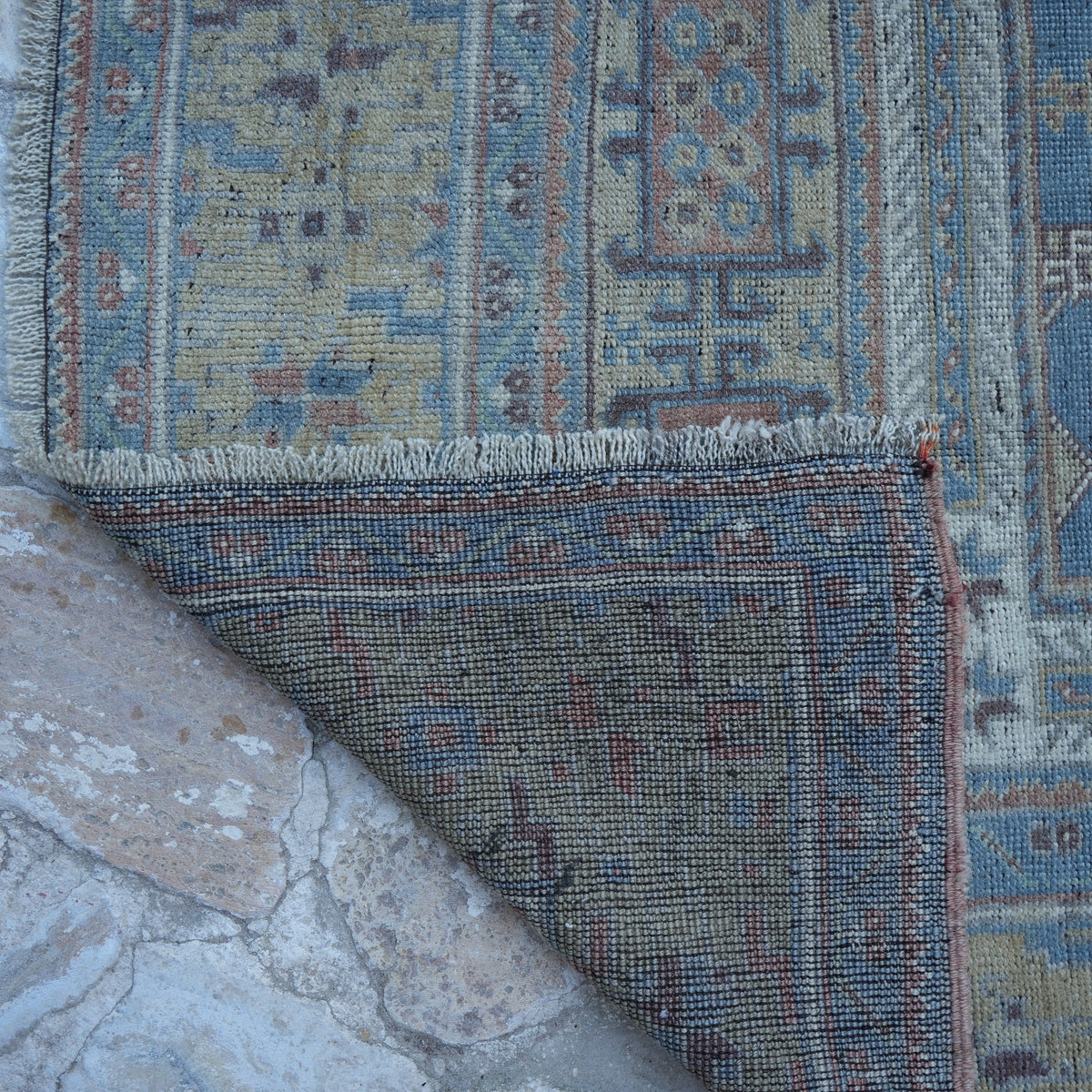
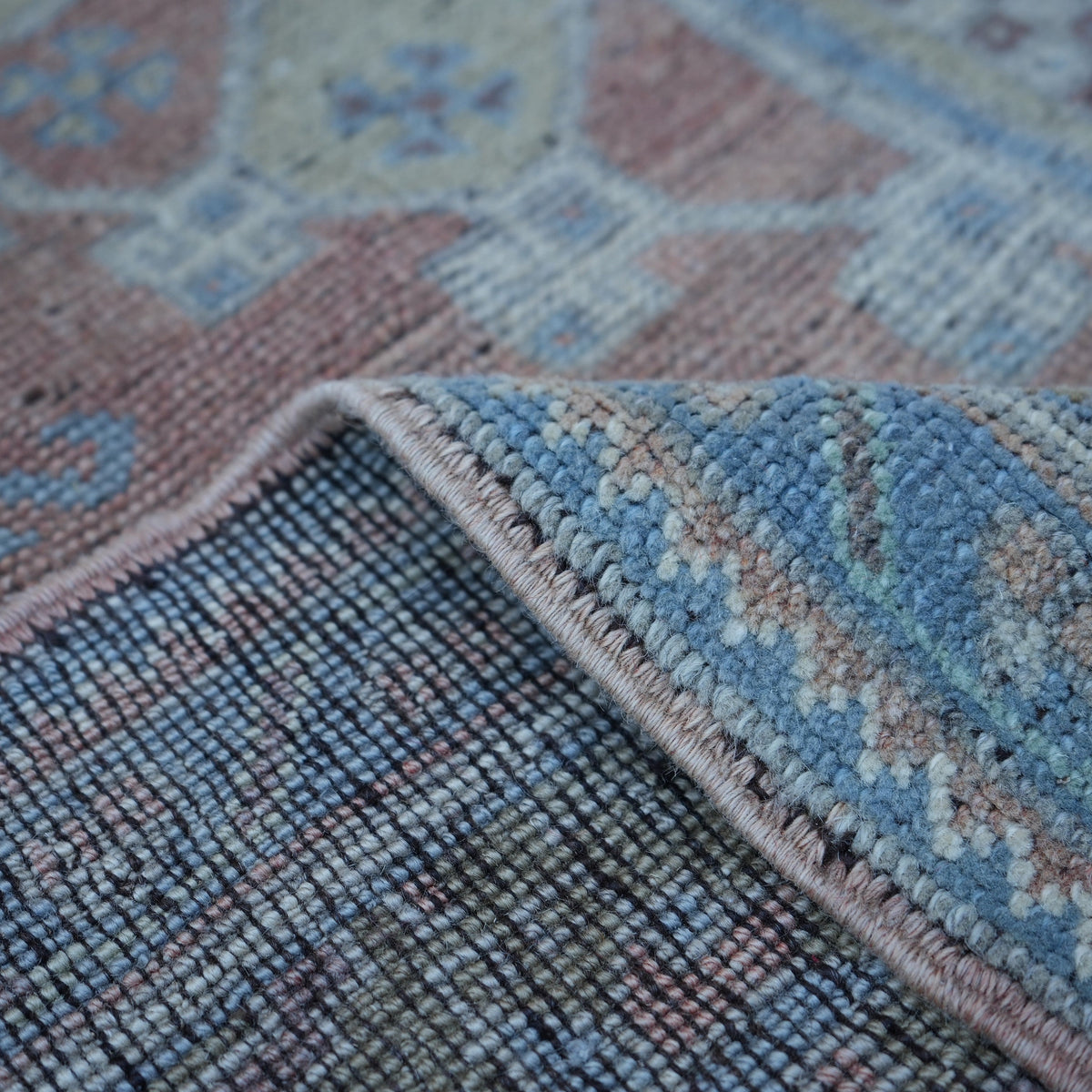
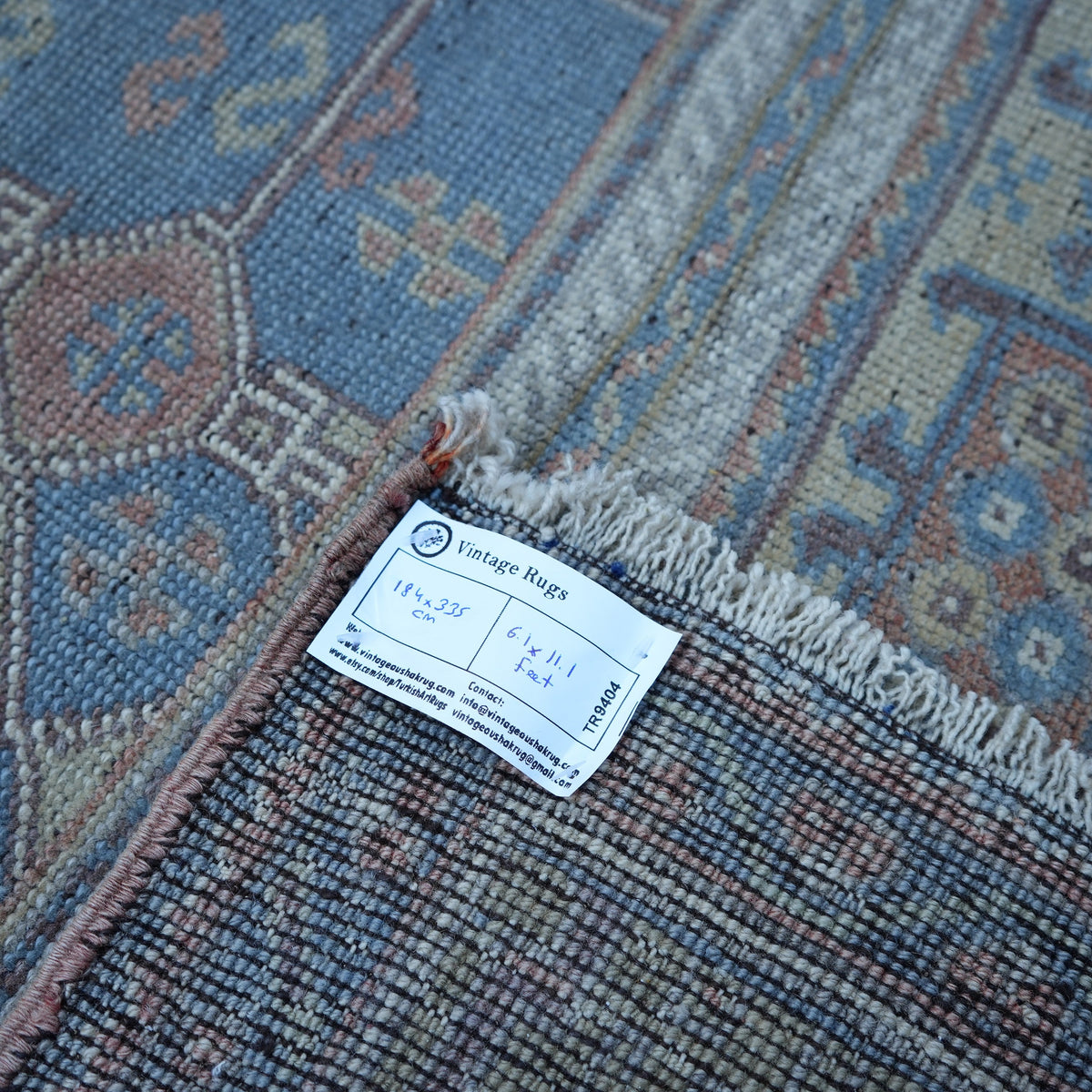
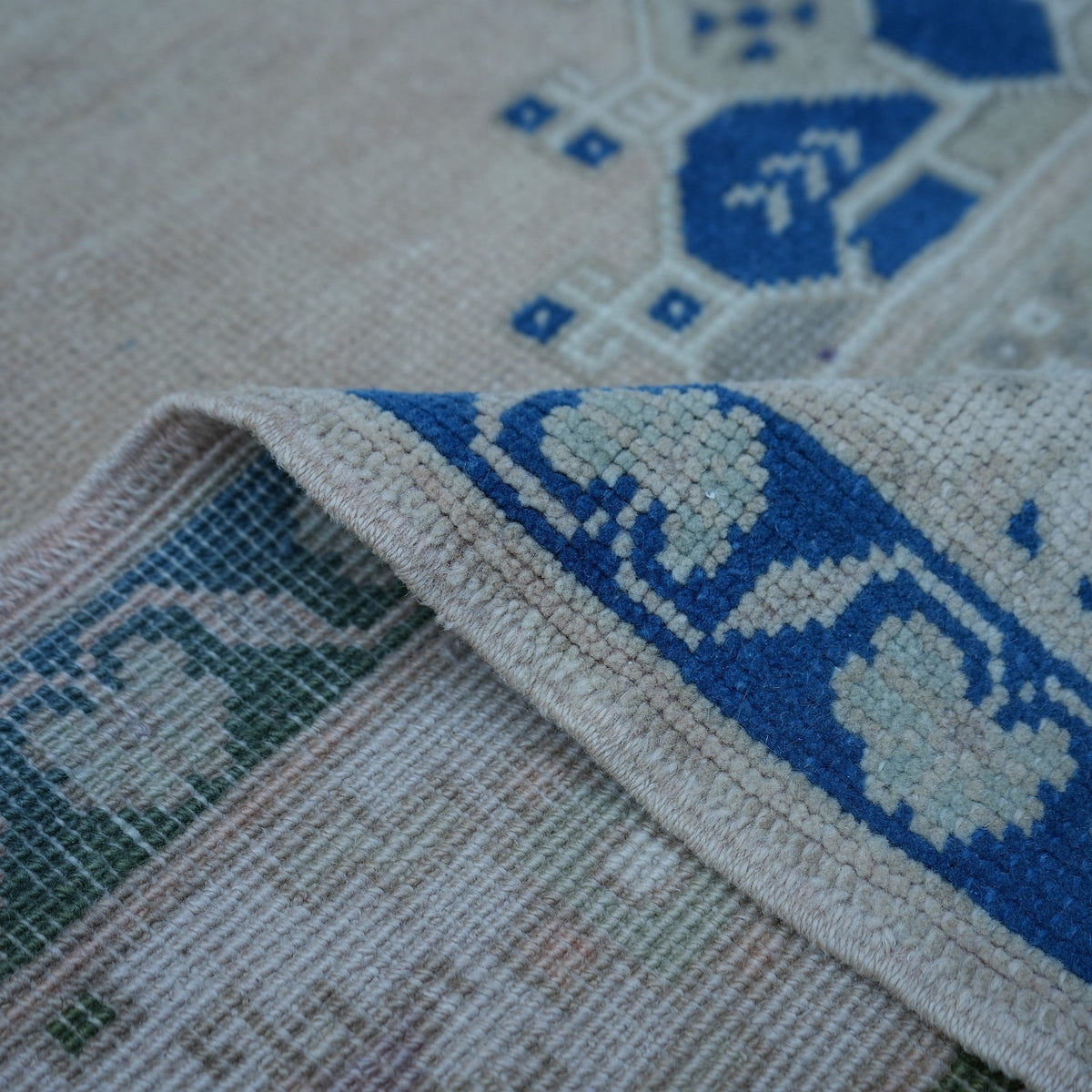
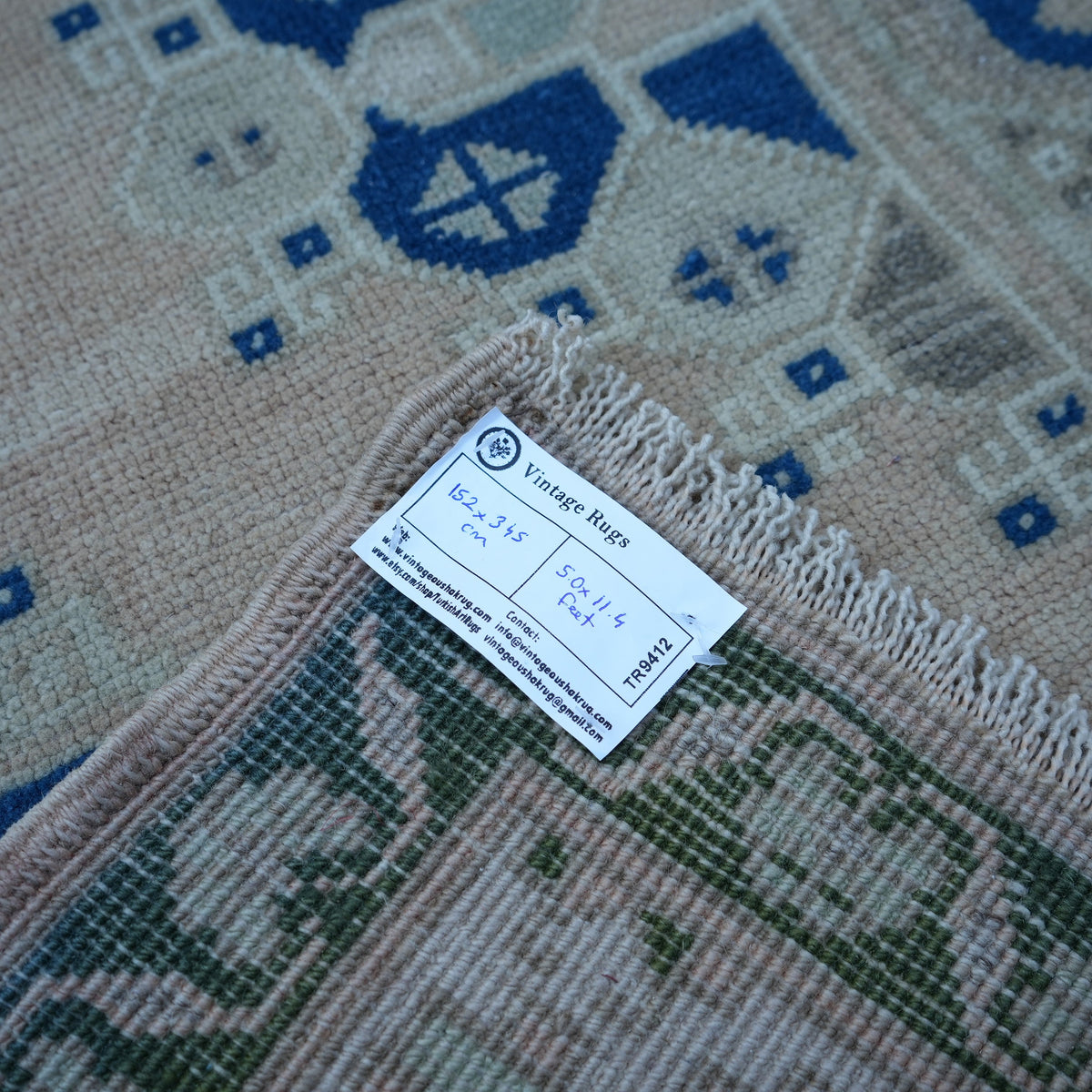
When a customer sends me a photo of a moldy rug, my first question is always the same: flip it and send me the back. If you can see individual knots, we have something worth talking about.
Why Mold Grows in Carpet
Mold needs three things: moisture, warmth, and organic material. Carpet provides the last two permanently. Your job is to control the first.
The most common scenarios: a dripping AC line behind furniture, a potted plant sitting directly on the rug, a spill that was blotted but not fully dried, a concrete floor without a breathing pad underneath.
Cold concrete against a warm room creates slow, invisible condensation under the rug. The same process that ruins rugs stored in Turkish village cellars does exactly the same work in American basements.
Mold begins growing in wet carpet within 24 to 48 hours. Humidity above 60 percent keeps dormant spores active even in carpet that looks dry on the surface.

How to Tell If It's Mold: Look, Smell, Feel
Mold shows as discolored patches: green, black, gray, or white. The smell is earthy and musty, strongest in the morning or after rain, when rising humidity reactivates dormant spores.
For wall-to-wall carpet, lift a corner and check the backing and the pad beneath. Discoloration or a damp feel on a dry day are both clear warnings.
Three Tests I Learned from Older Traders
Fold a corner slowly and listen. Healthy wool is silent. A cotton foundation beginning to rot sounds like snapping a small twig.
Then smell the inside of the fold, not the face. The pile can air out; mold hides in the foundation and the smell there does not lie. Third: press your palm flat against the back and make a slow circle. Dry rot leaves a faint powder on your hand that sound fiber does not.
Any one of those three, and the rug needs attention today.

How to Remove Mold from Carpet: Step-by-Step
What You'll Need
White distilled vinegar, baking soda, a soft-bristled brush, a HEPA vacuum, rubber gloves, and an N95 mask.
Never use a stiff brush on wool. A stiff brush breaks down pile structure and can cause permanent texture damage.
One thing to keep in mind before you start: mold removal is 20 percent cleaning and 80 percent drying. Gentle tools, controlled moisture, complete drying.
The 7 Steps
- Ventilate the room but do not aim fans at the mold yet. Airflow over live mold disperses spores. Ventilate the space; targeted drying comes after treatment.
- Address the moisture source first. Treating a wet surface accomplishes nothing.
- Sprinkle baking soda generously over the affected area and leave it for several hours or overnight. This draws surface moisture from the fibers before wet treatment begins.
- Vacuum with a HEPA filter. Standard vacuums exhaust spores back into the air. After this use, clean or replace the filter.
- Mix equal parts white vinegar and water. Spray generously. For vegetable-dyed or vintage wool, test an inconspicuous corner first.
- Scrub gently with a soft brush, moving in the direction of the pile.
- Dry completely. Elevate the rug for airflow underneath, use fans after the surface has been treated, and do not return the rug to the floor until every layer is bone dry.
Do not use bleach on wool. It burns the fibers, yellows them, and causes brittleness that looks like decades of aging but happened in an afternoon. For everyday cleaning, read our guide on how to clean a Turkish rug.
A Moldy Machine-Made Carpet Goes to the Landfill. A Handmade Rug Goes to a Restorer.
Why You Can't Really Save a Machine-Made Carpet
Machine-made carpets are bonded with latex or adhesive backing. When mold reaches that layer, the backing begins to break down and the fibers above lose their anchor. You can clean the surface repeatedly; the structural damage does not reverse.
If mold has penetrated the backing of a machine-made carpet, the honest answer is to let it go.
Why a Handmade Rug Is a Different Story
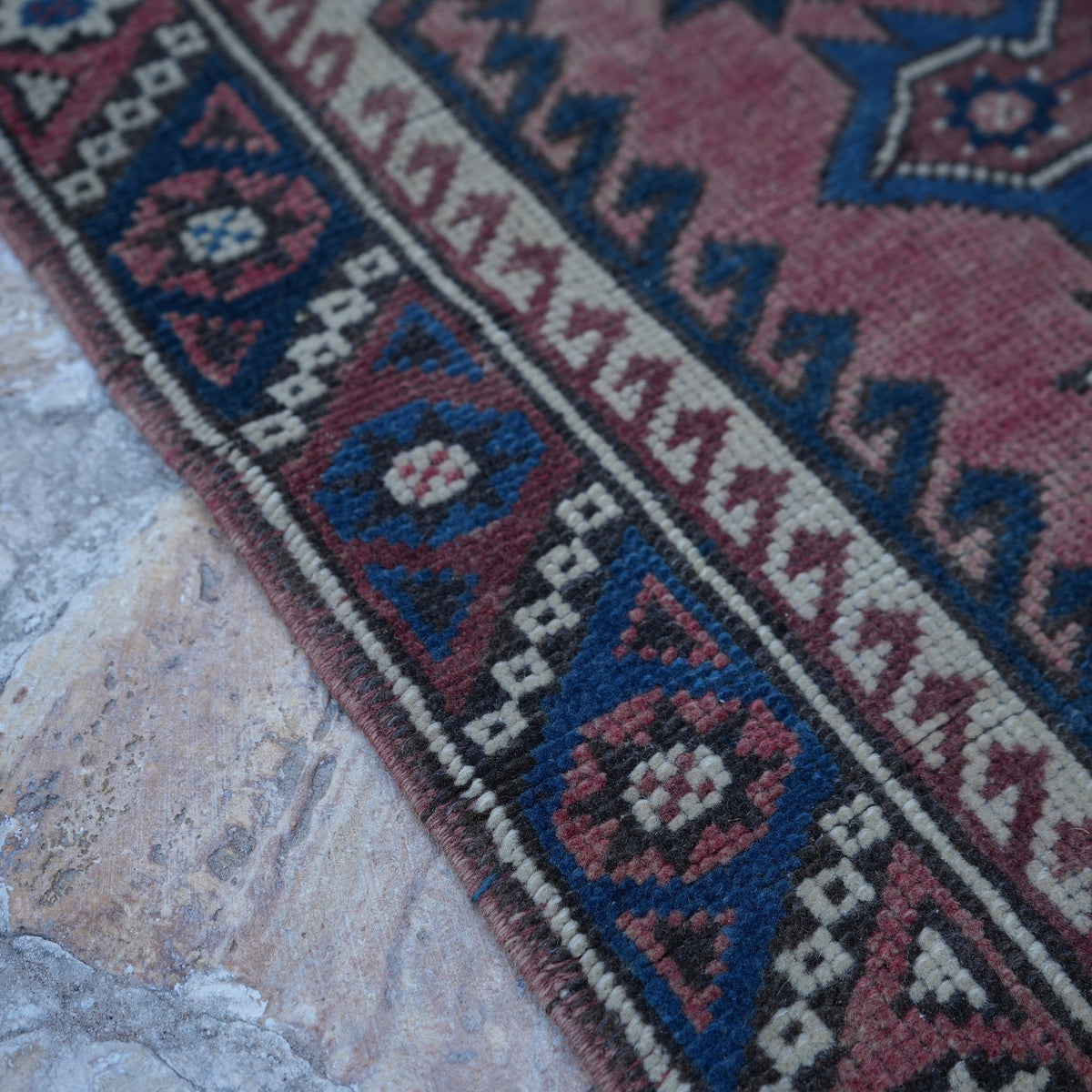
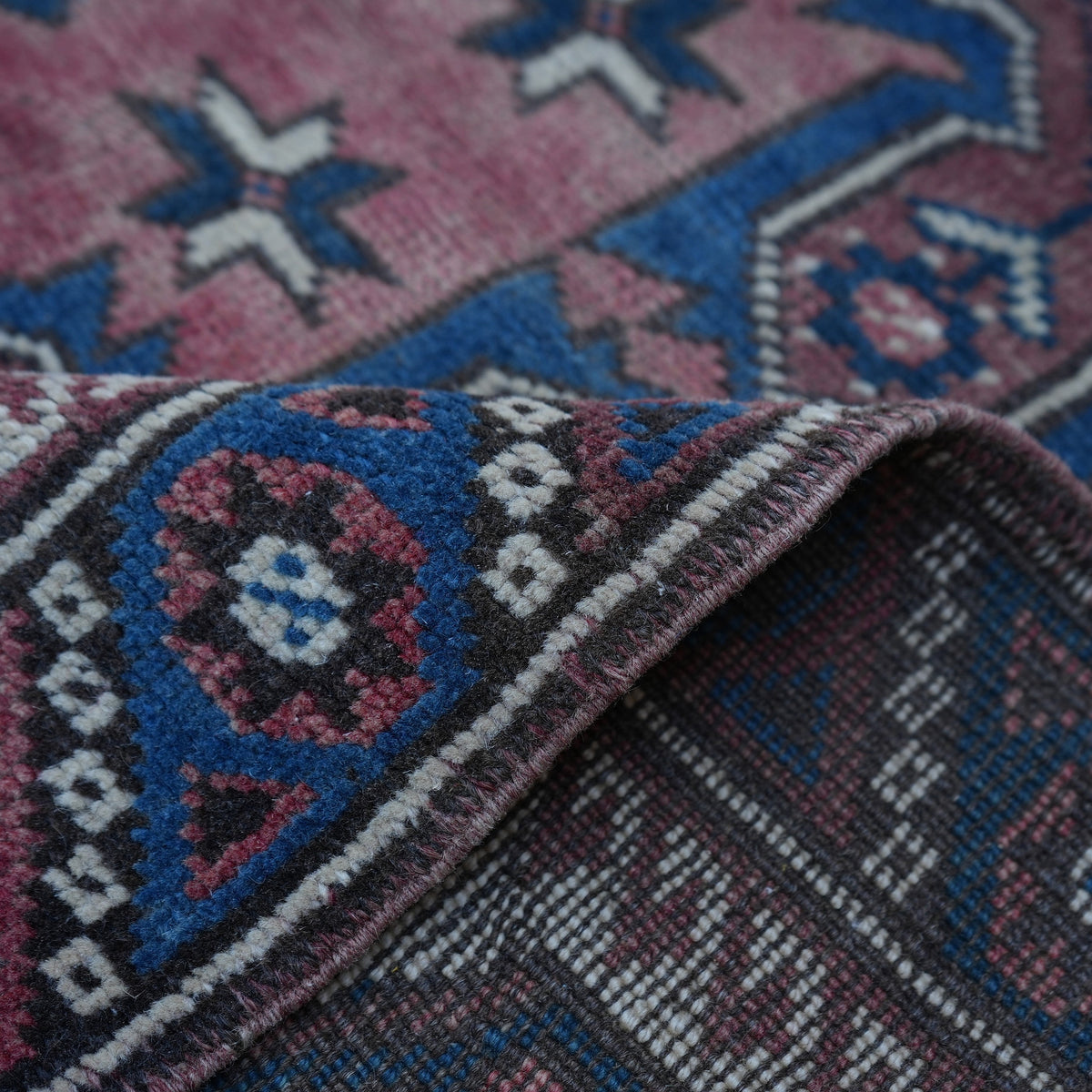
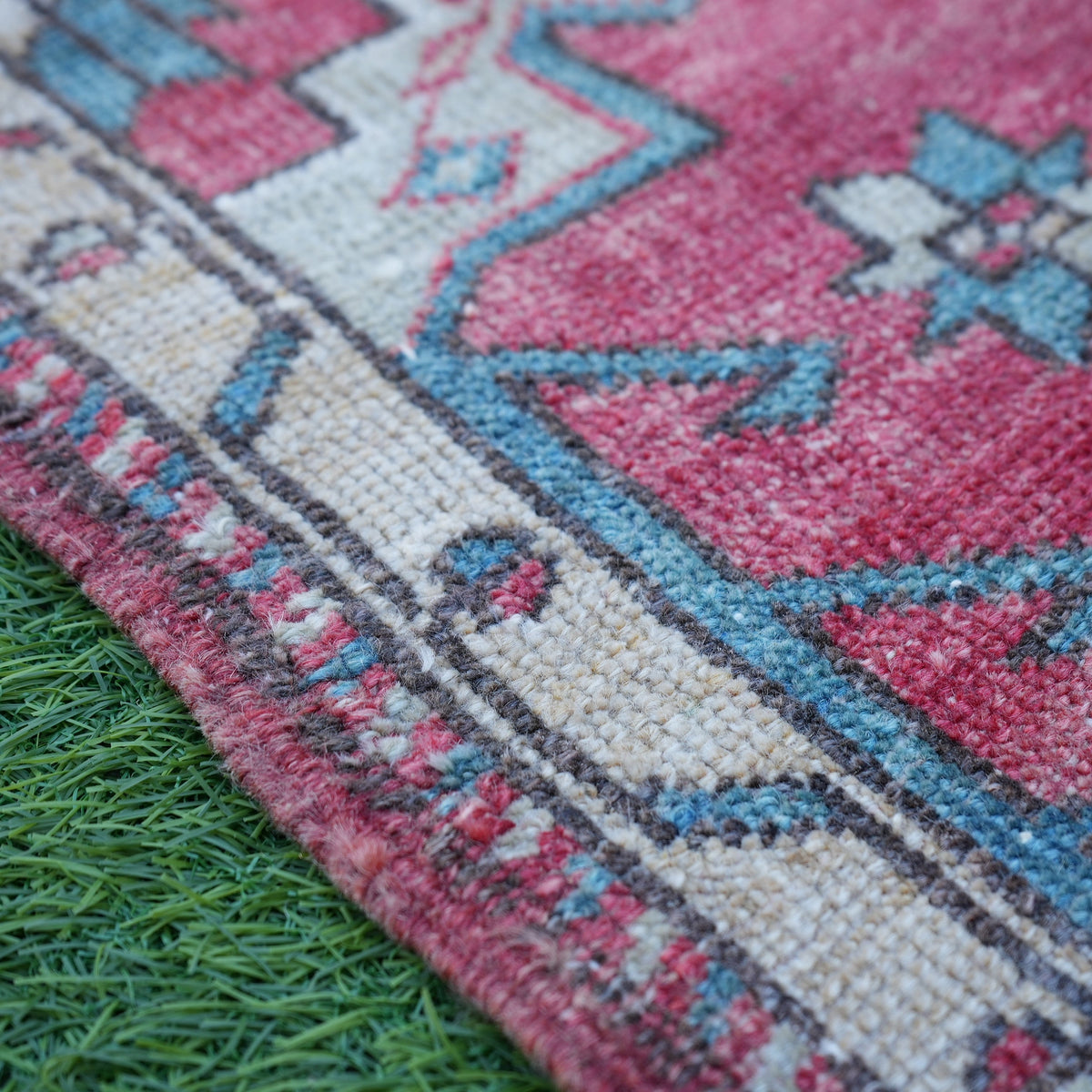
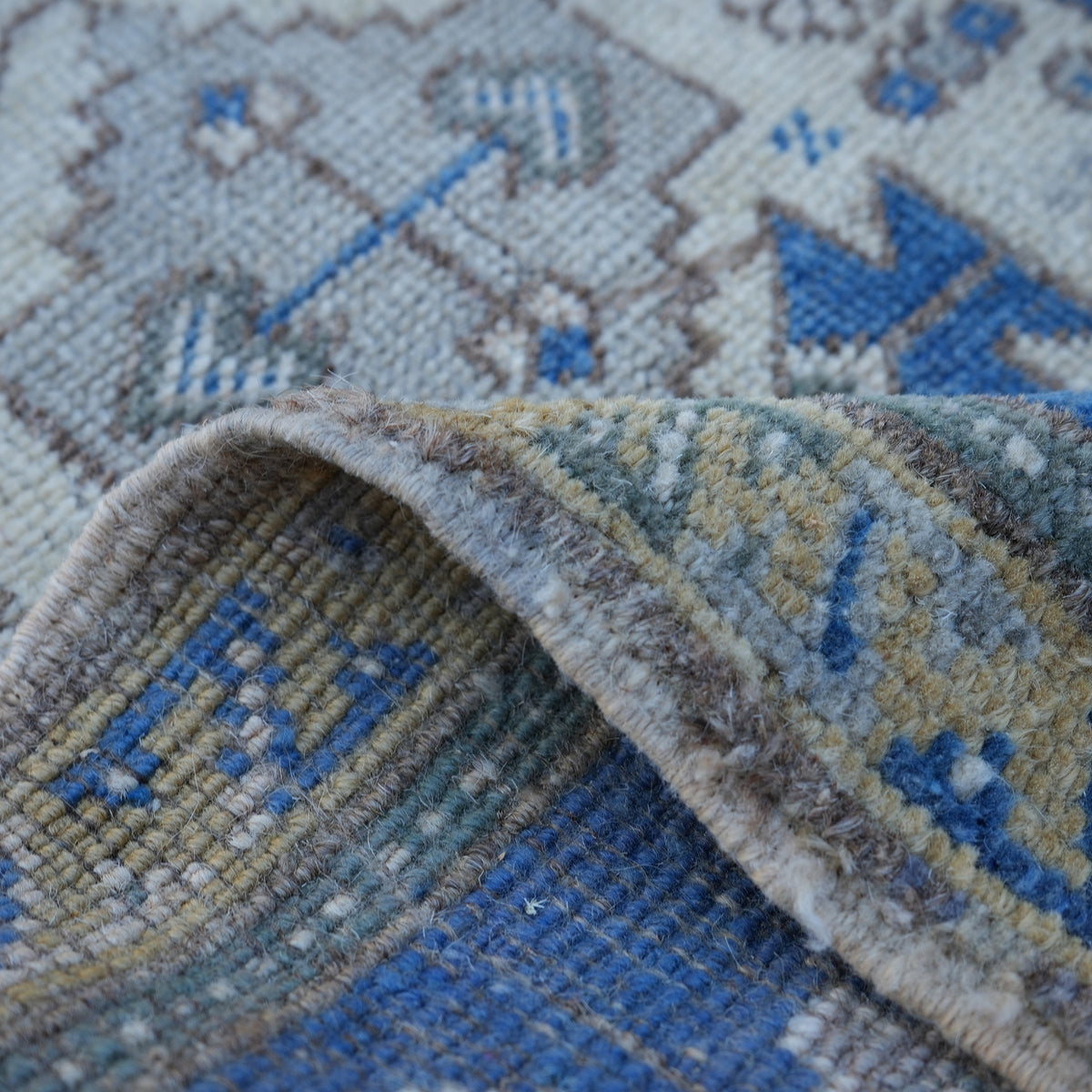
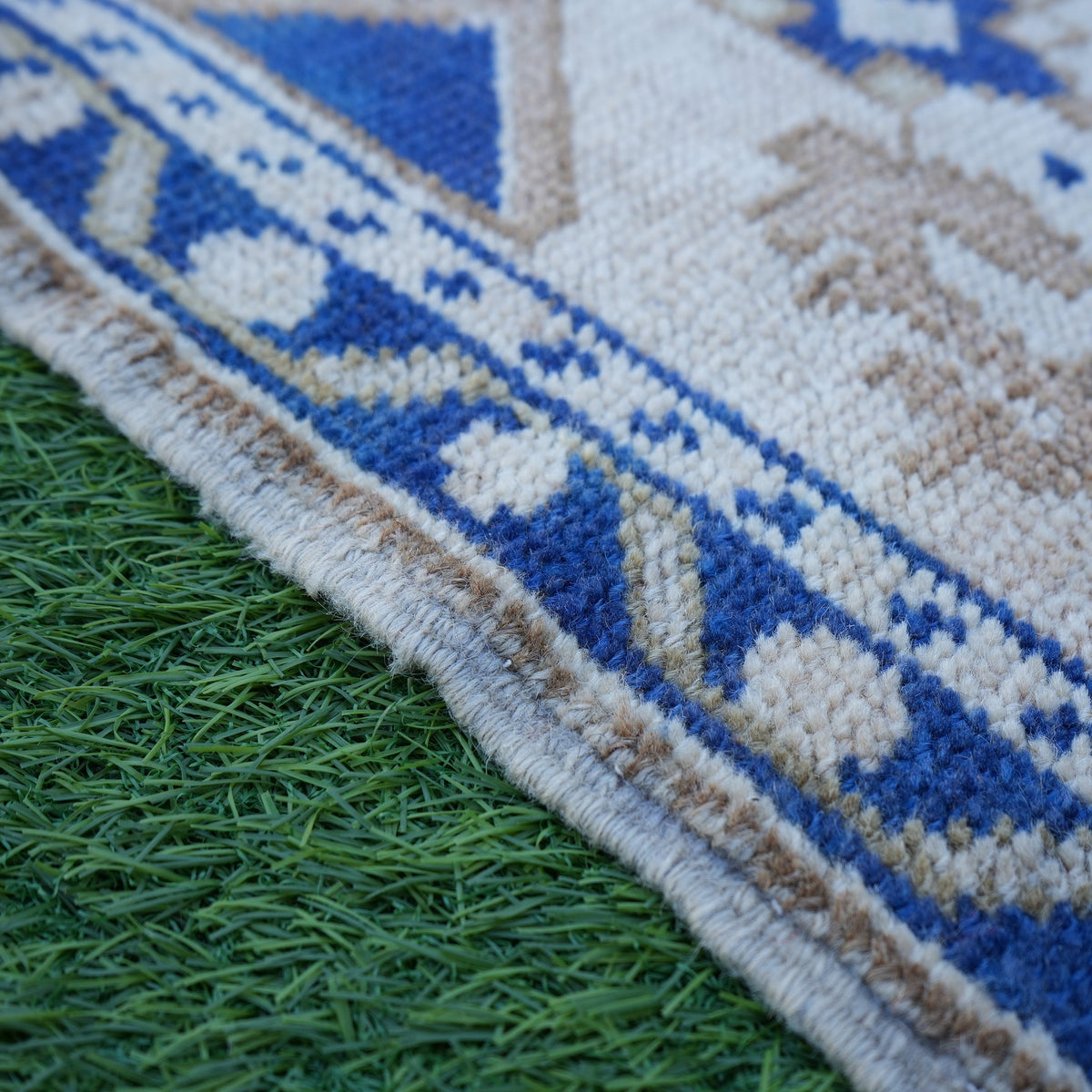
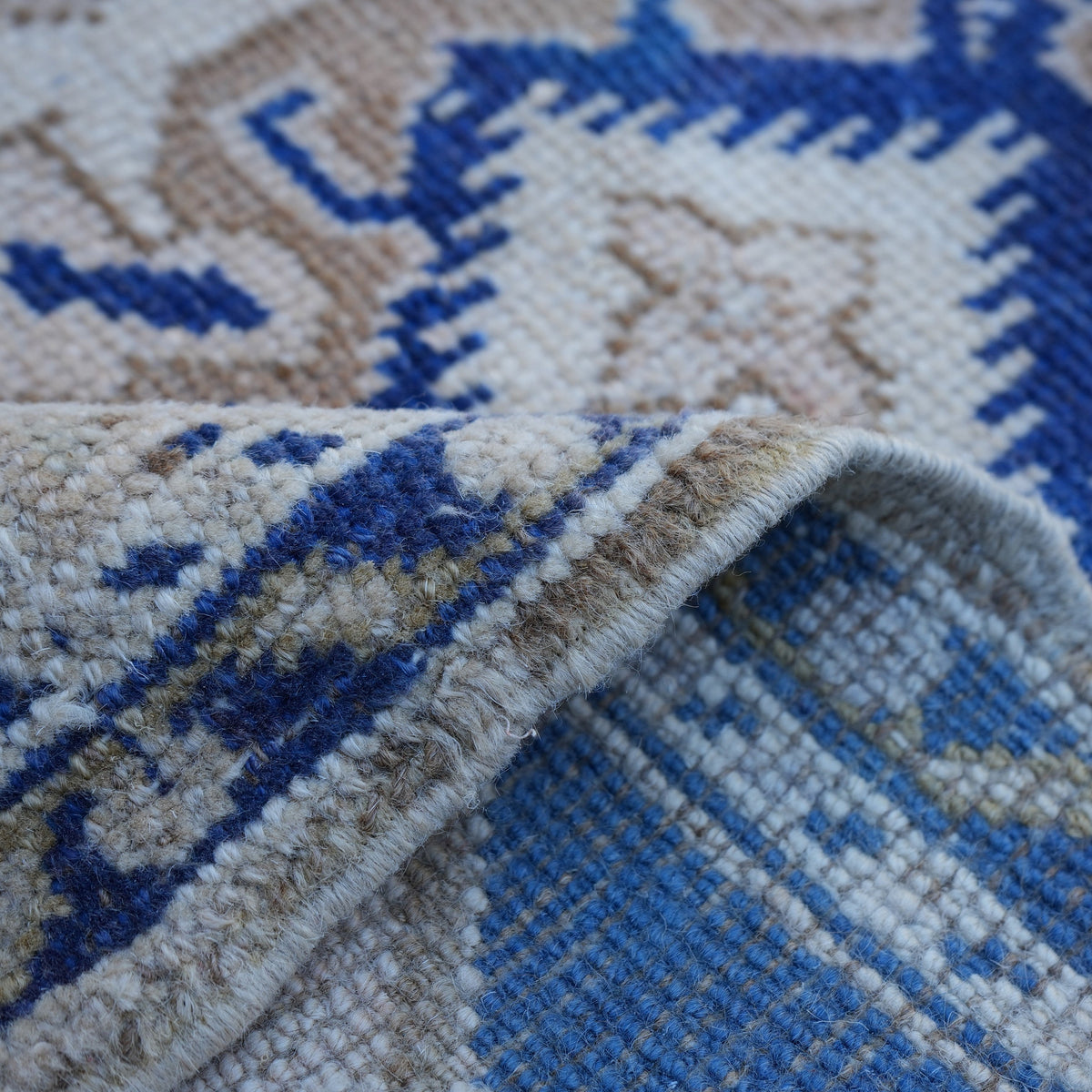
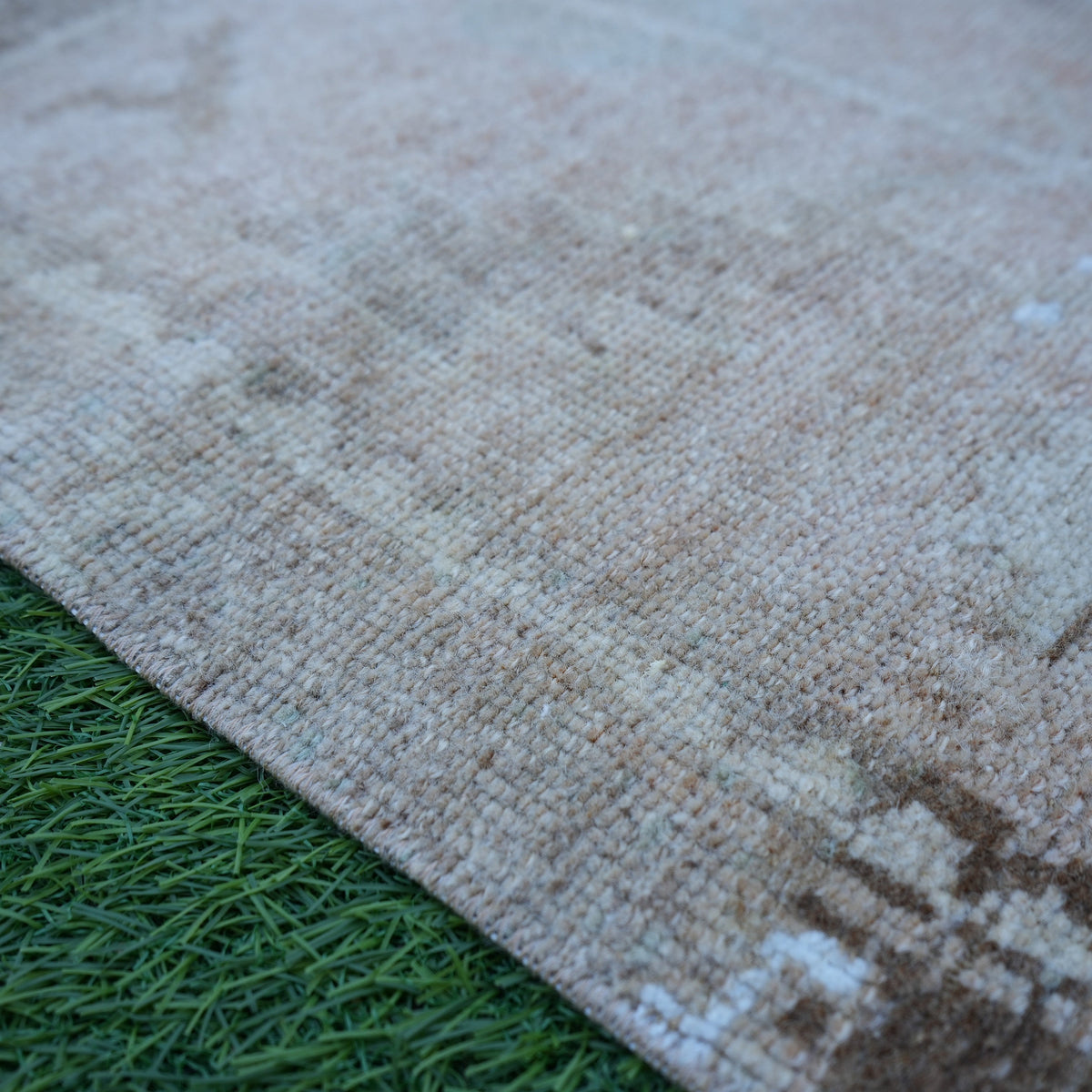
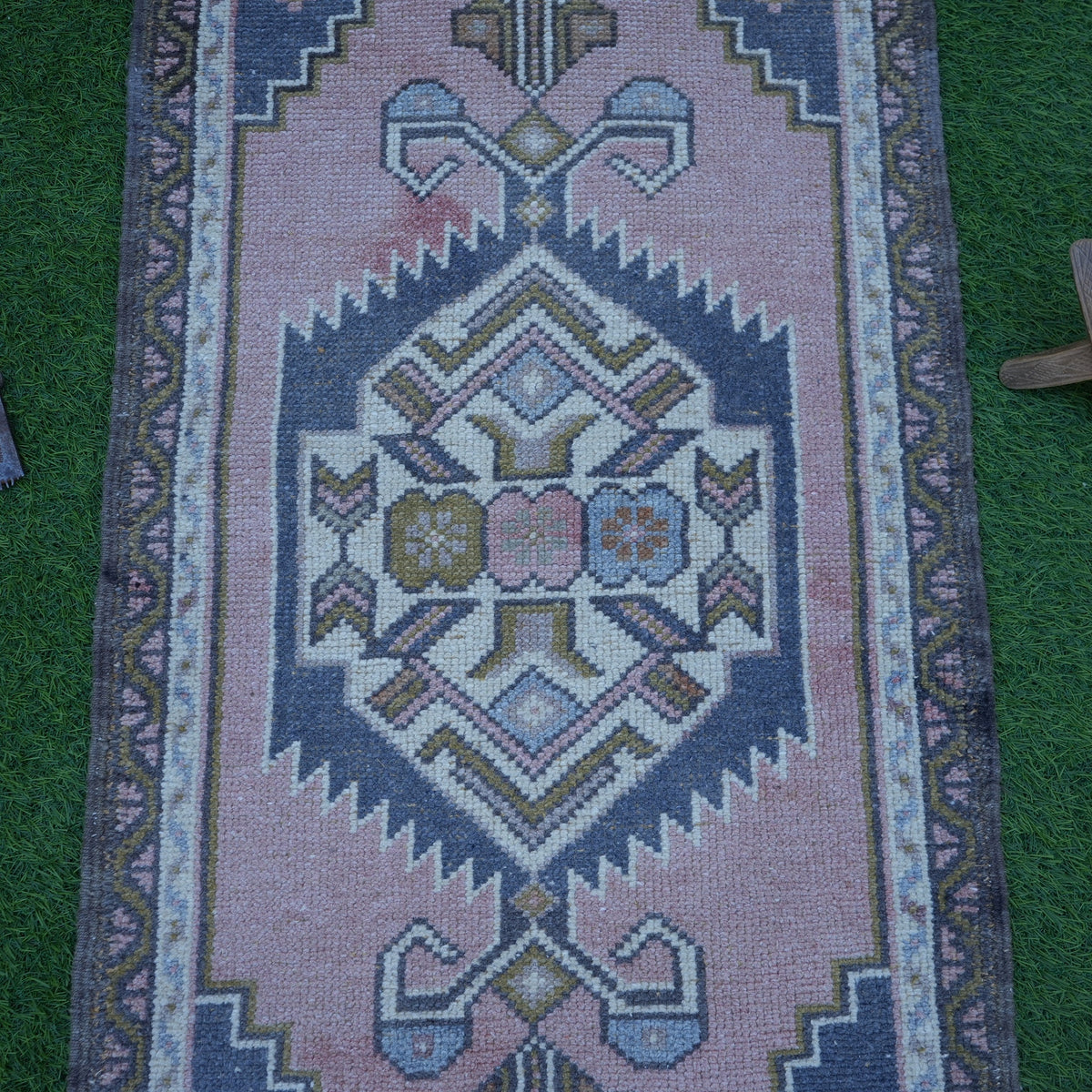
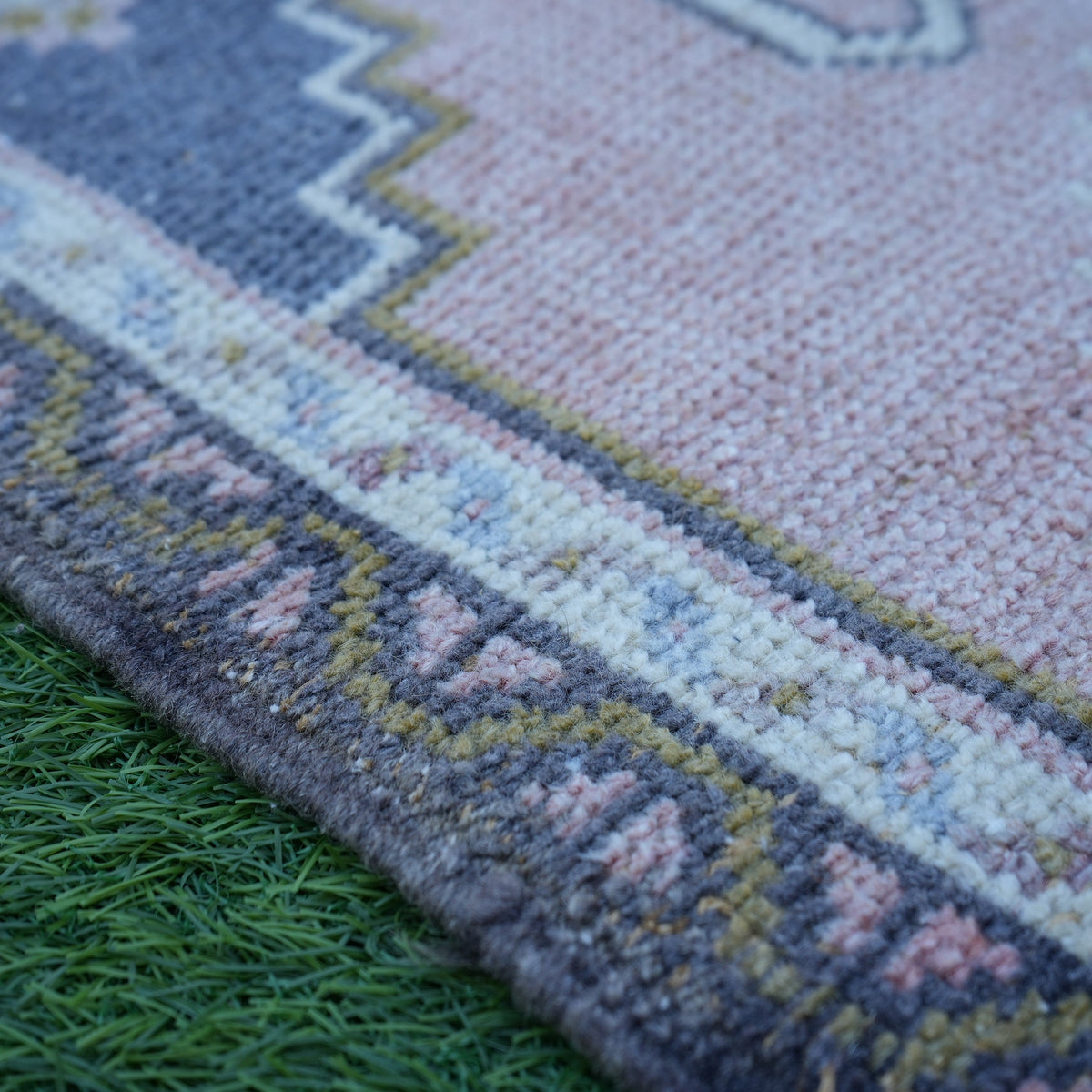
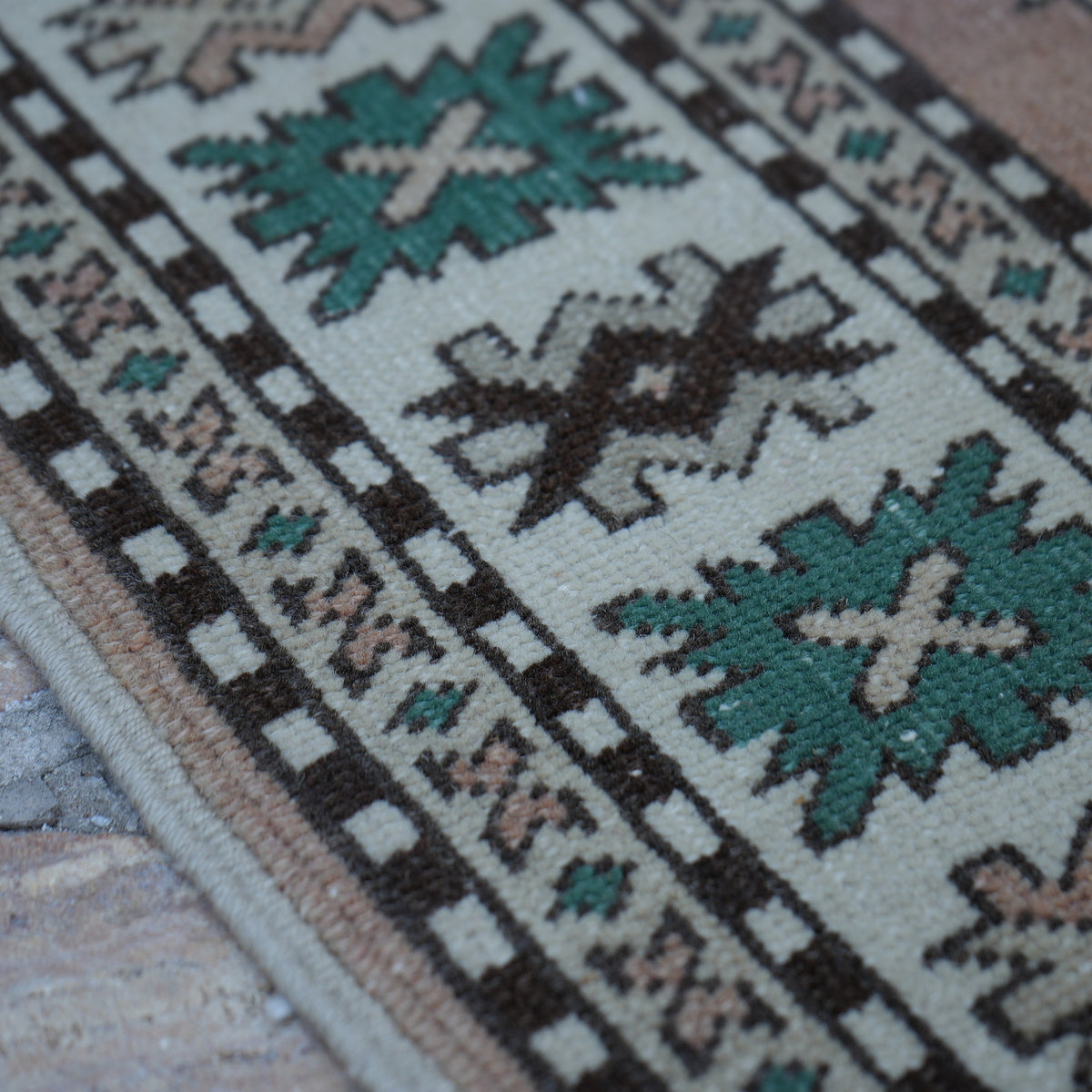
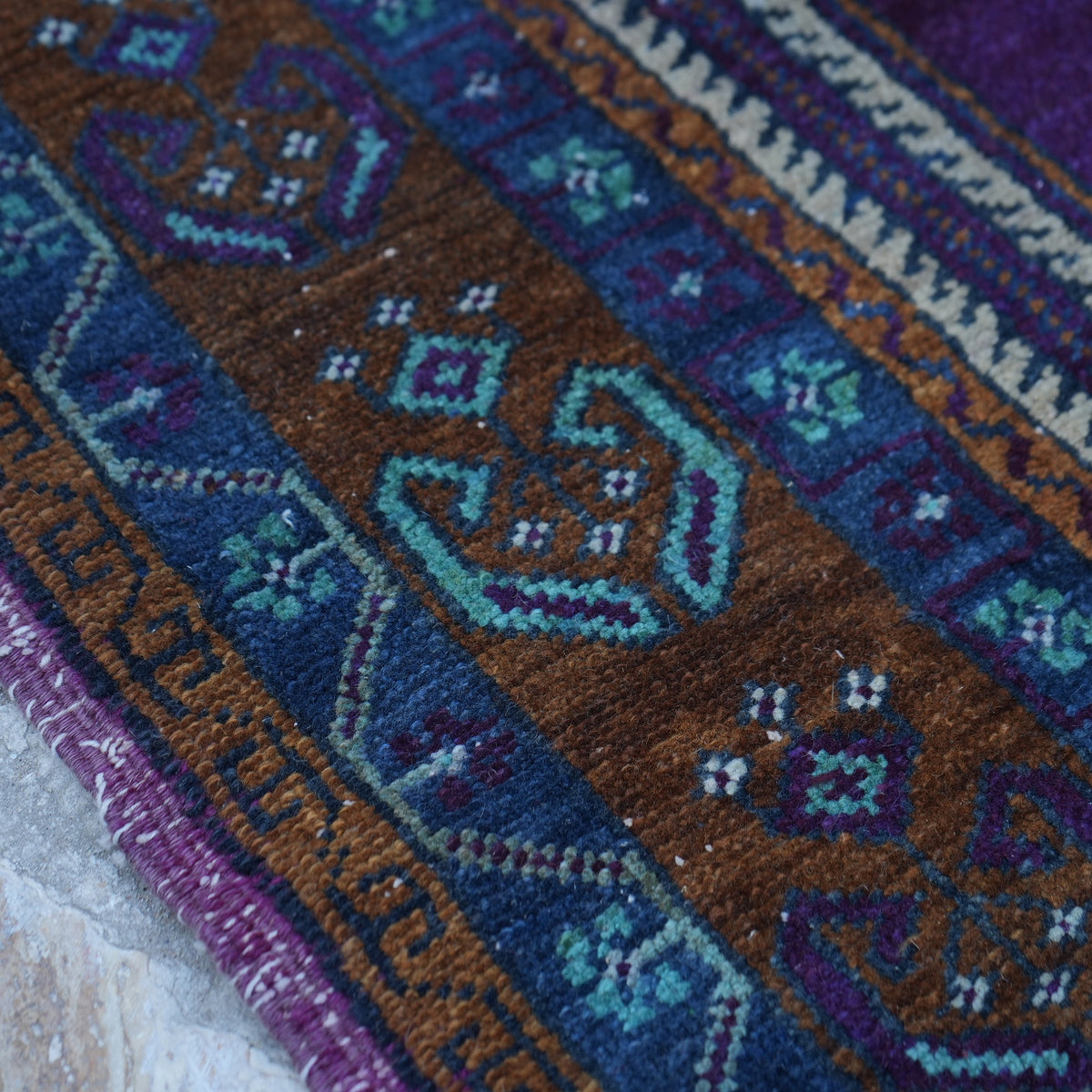
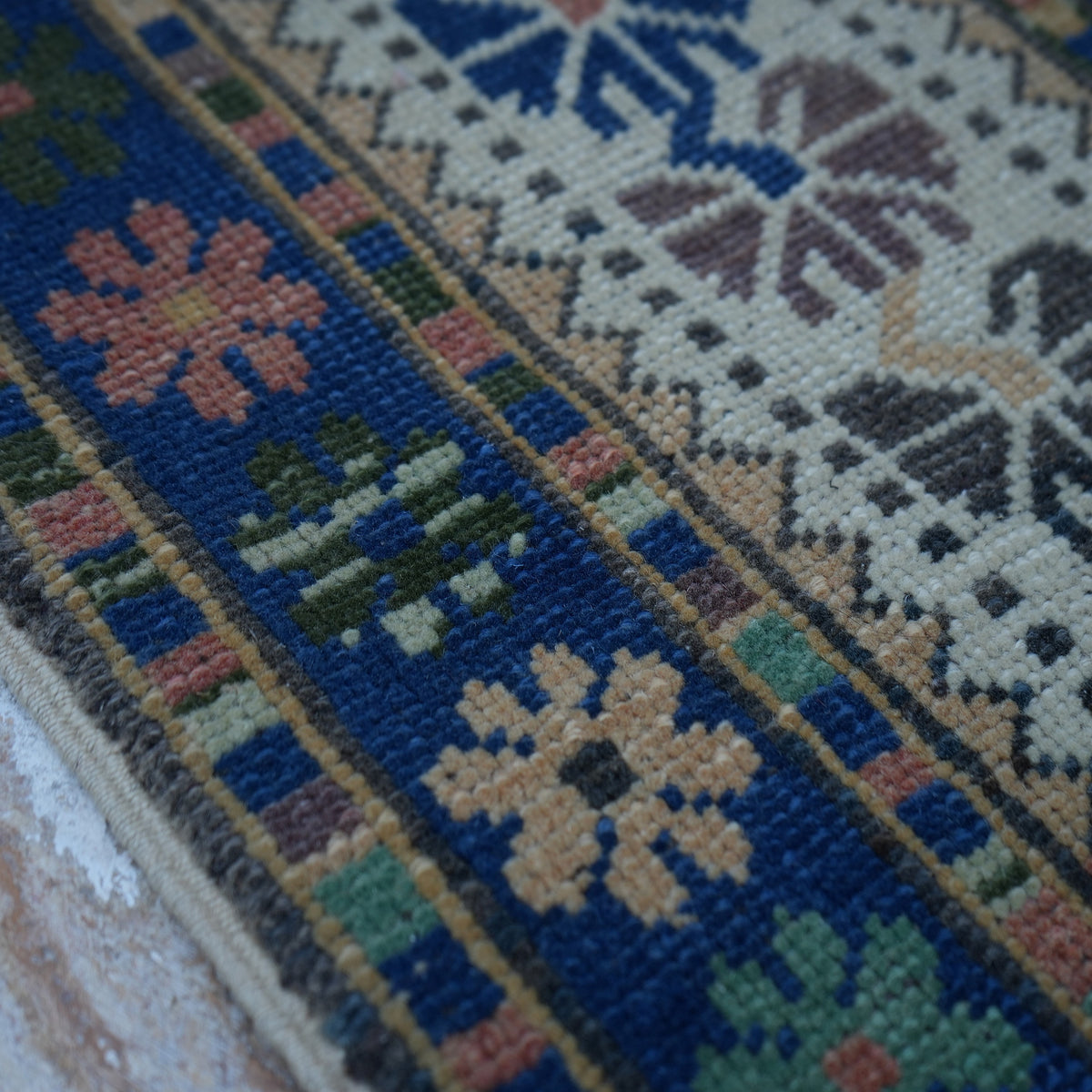
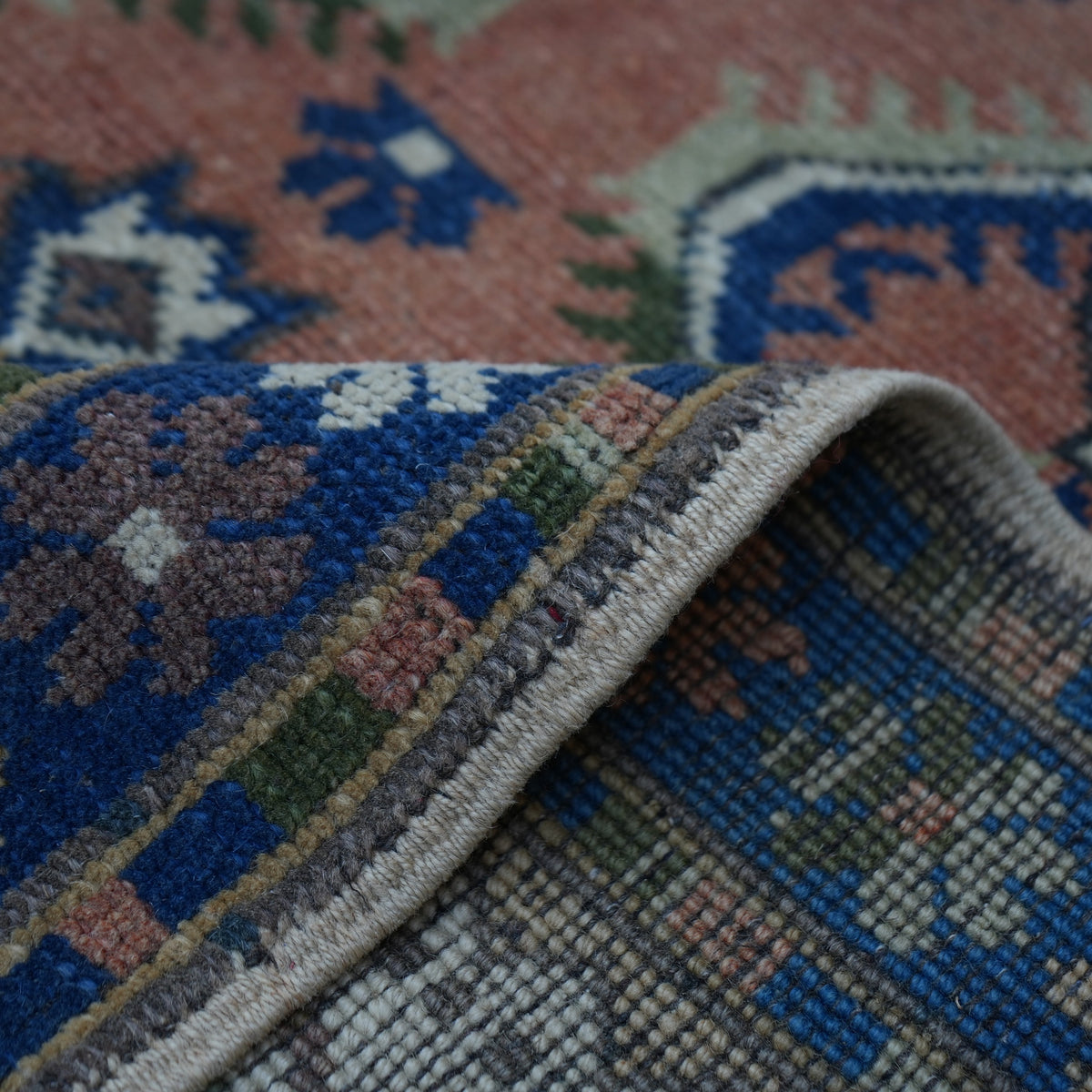
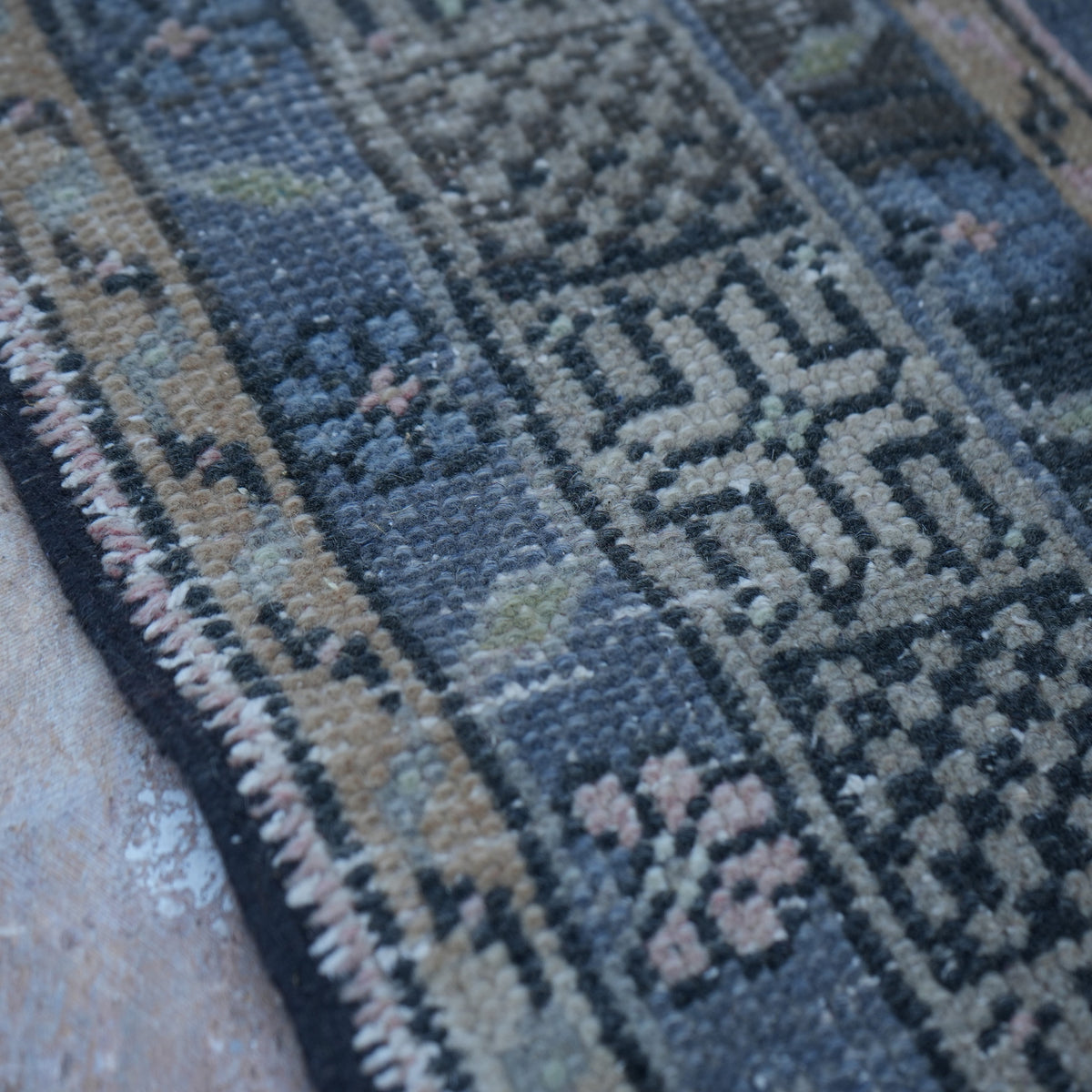
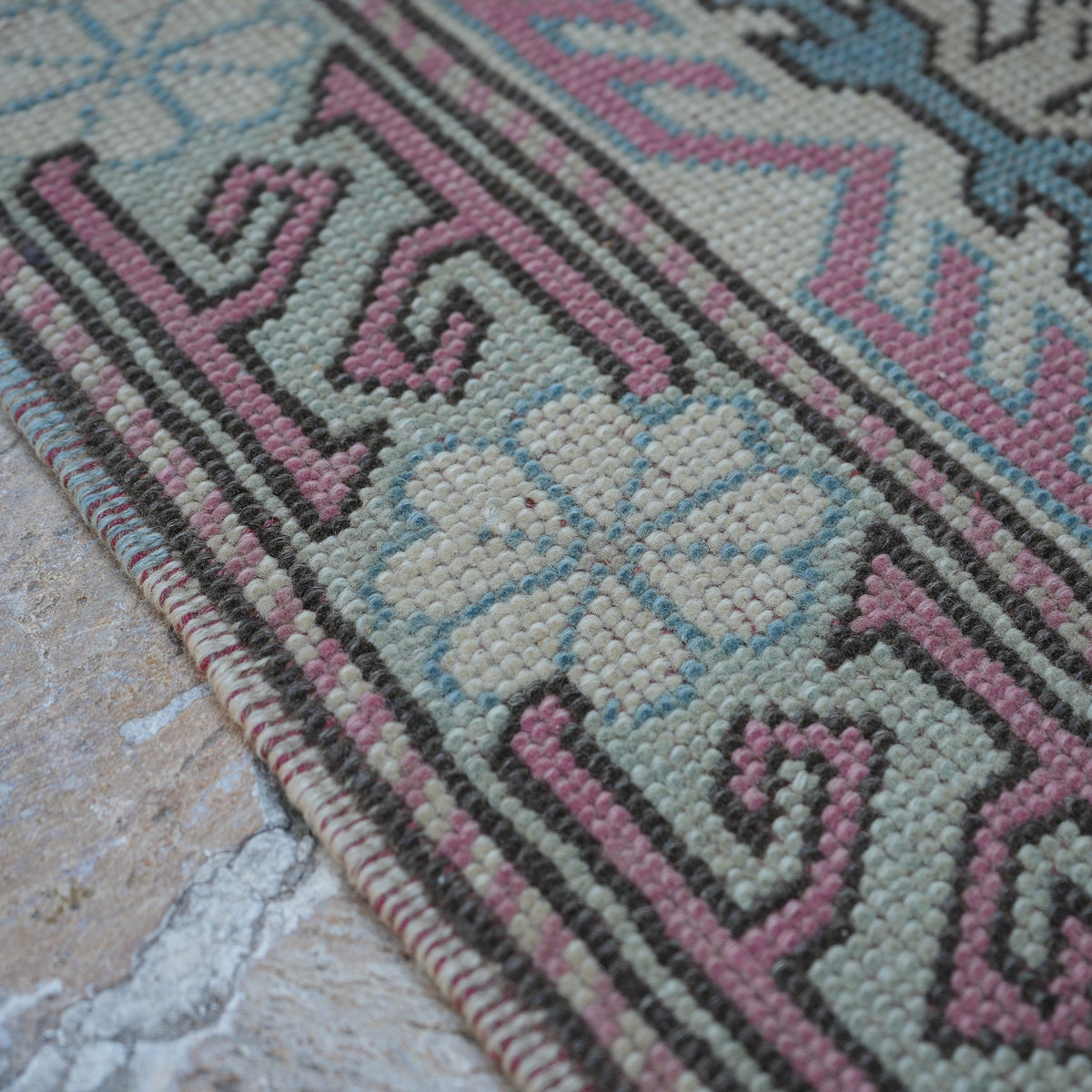
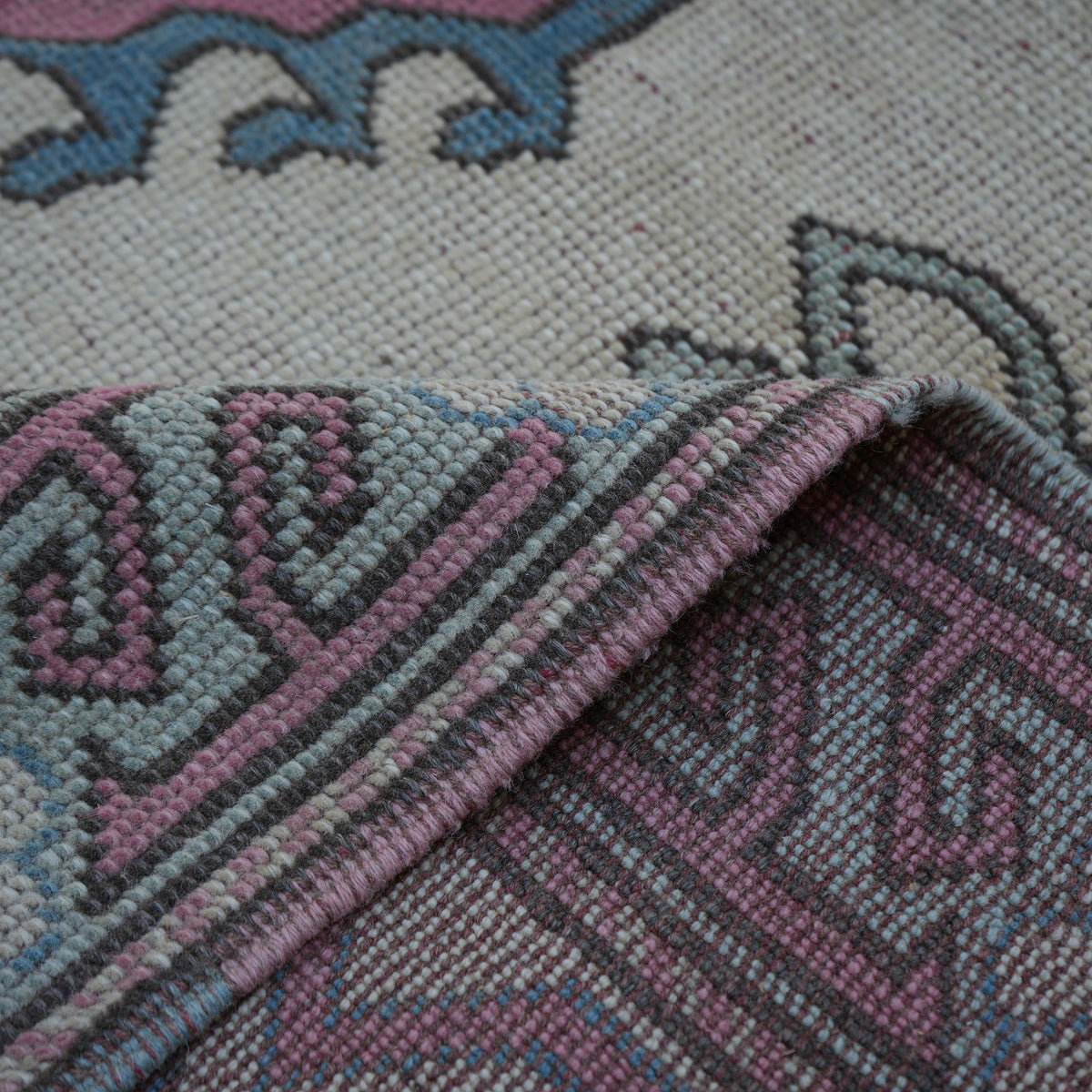
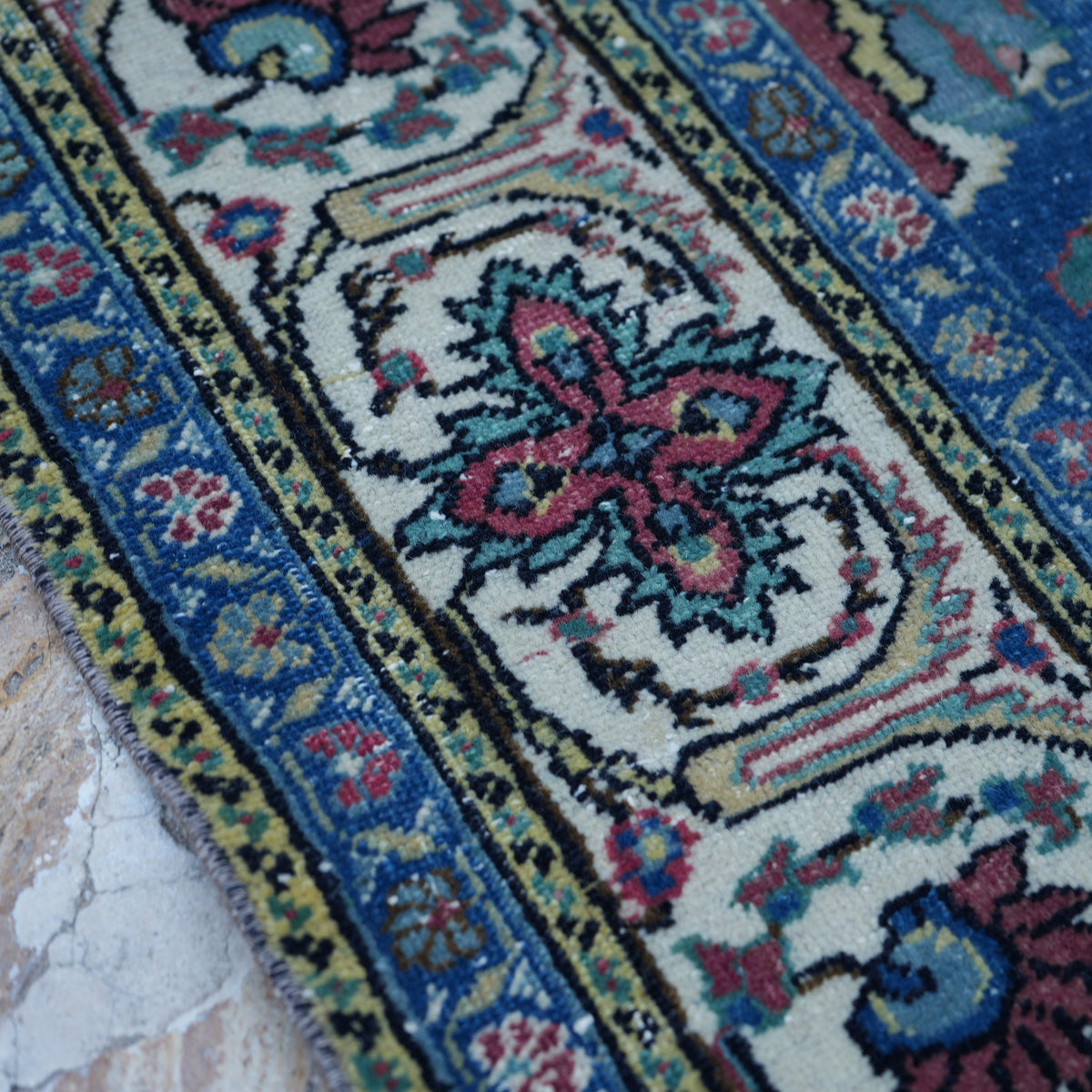
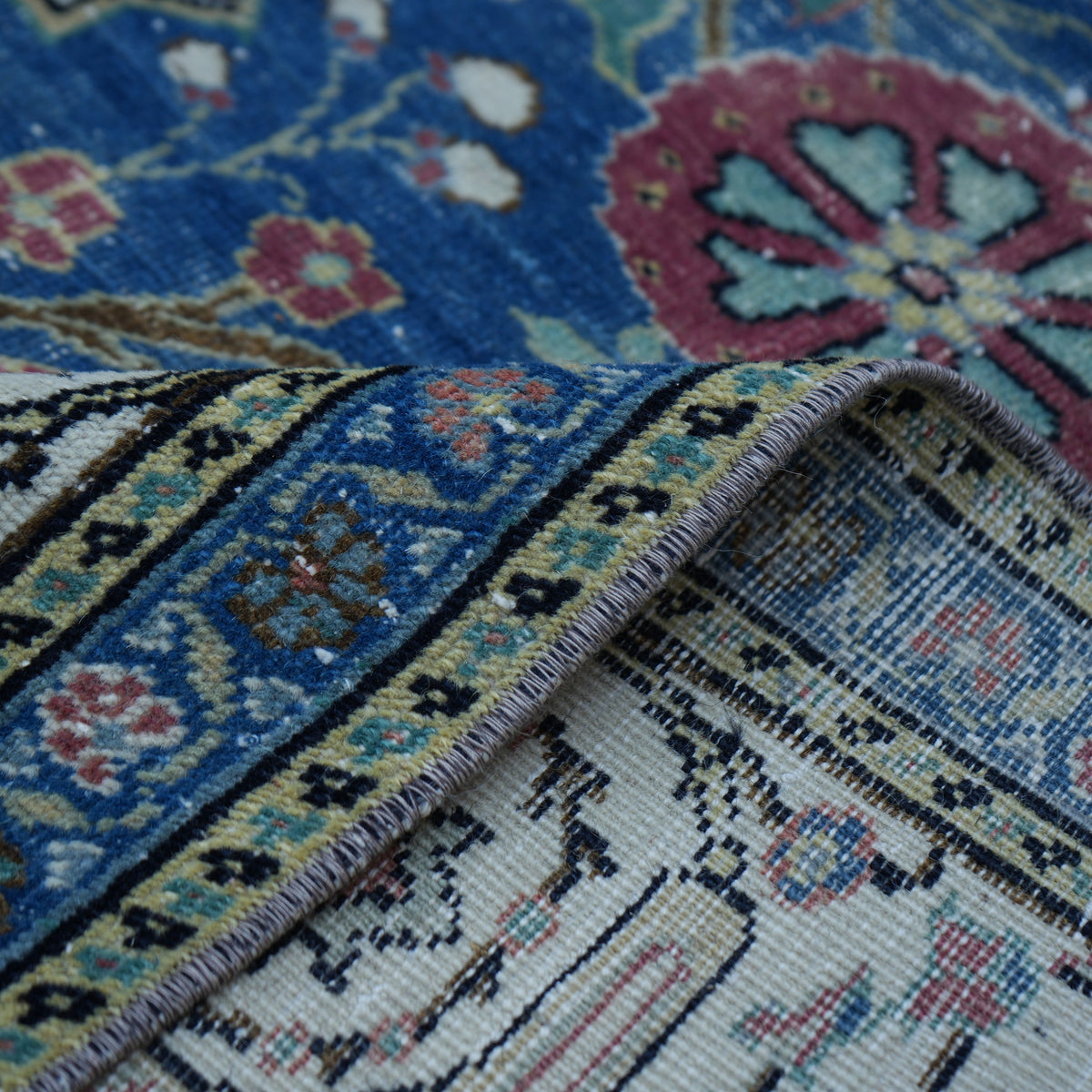
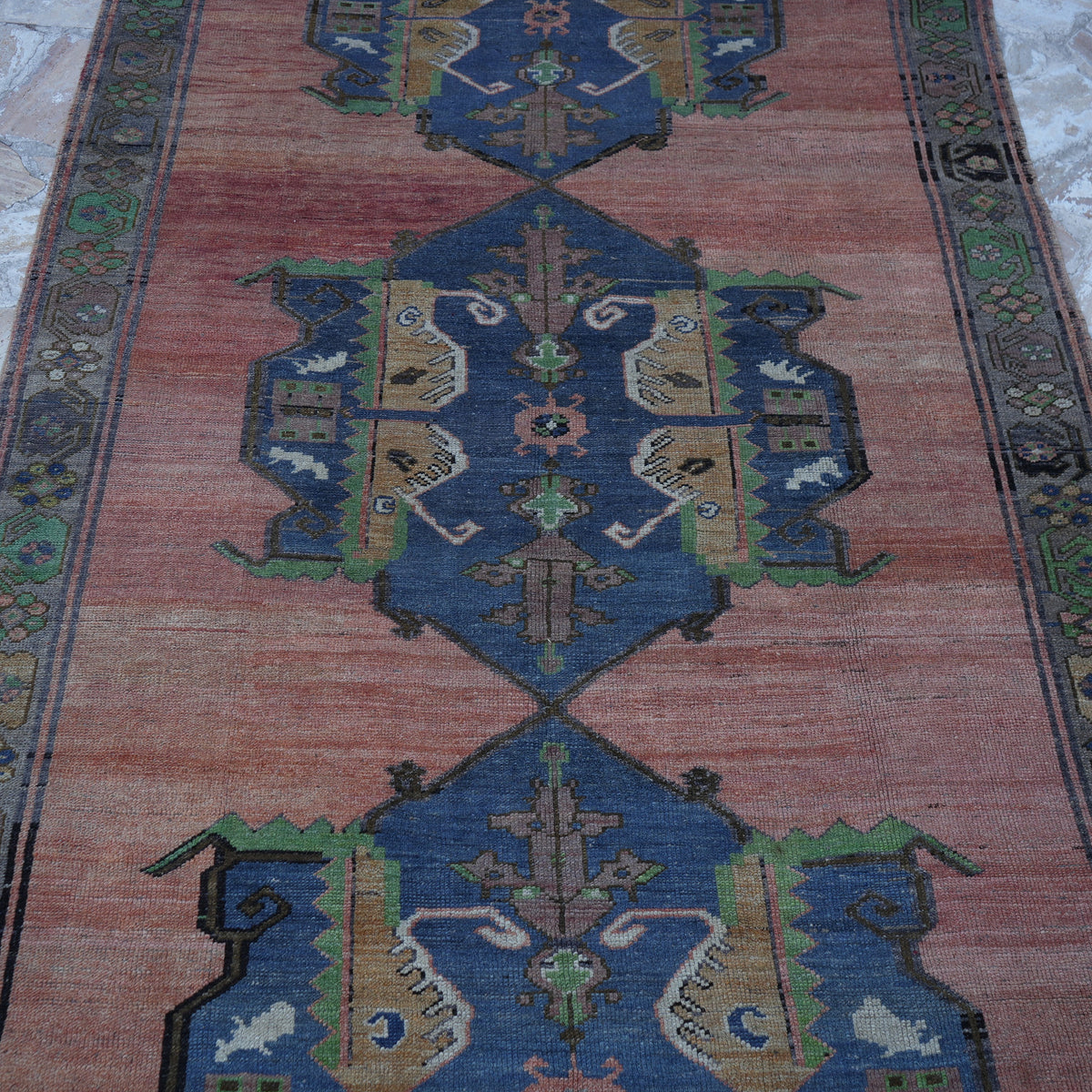
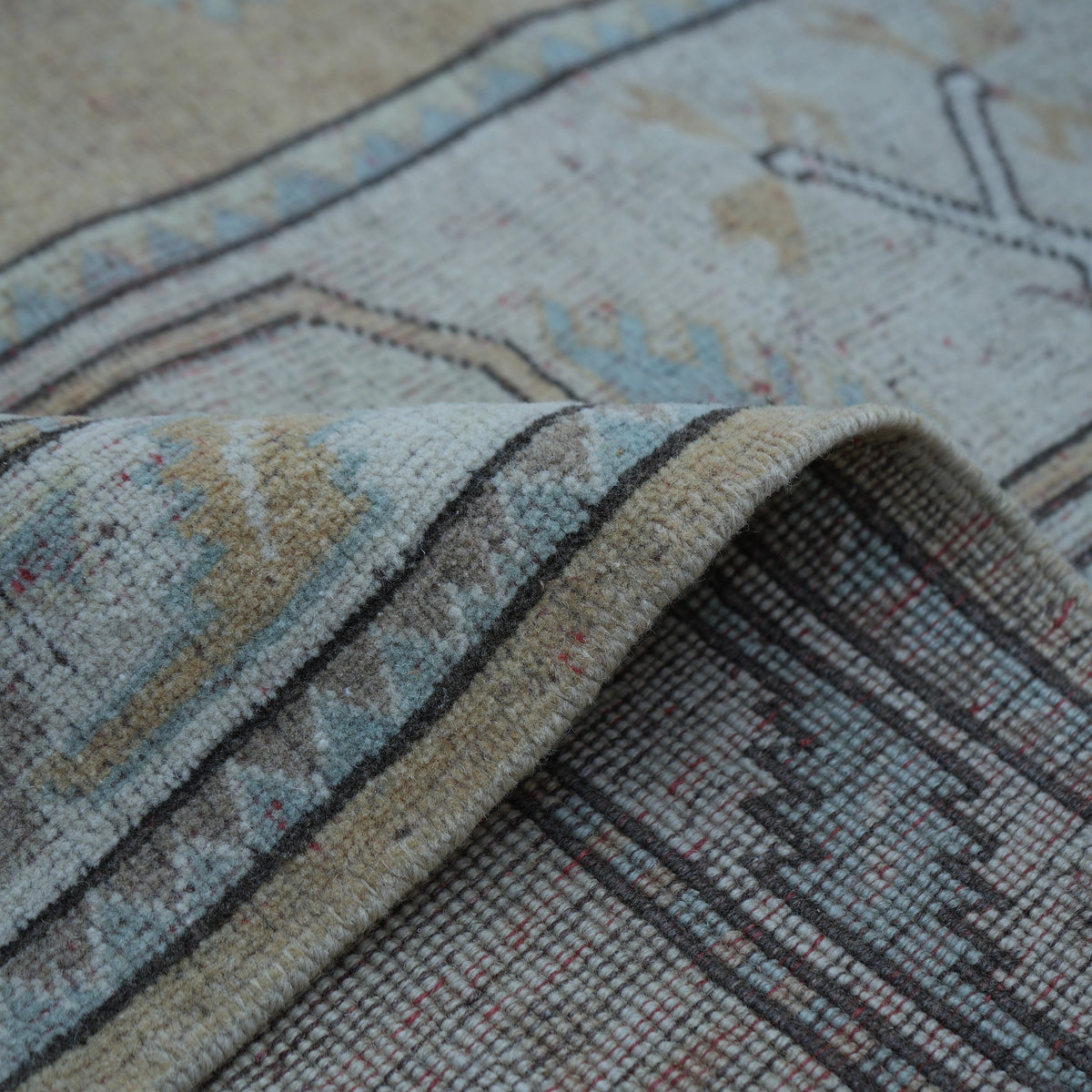
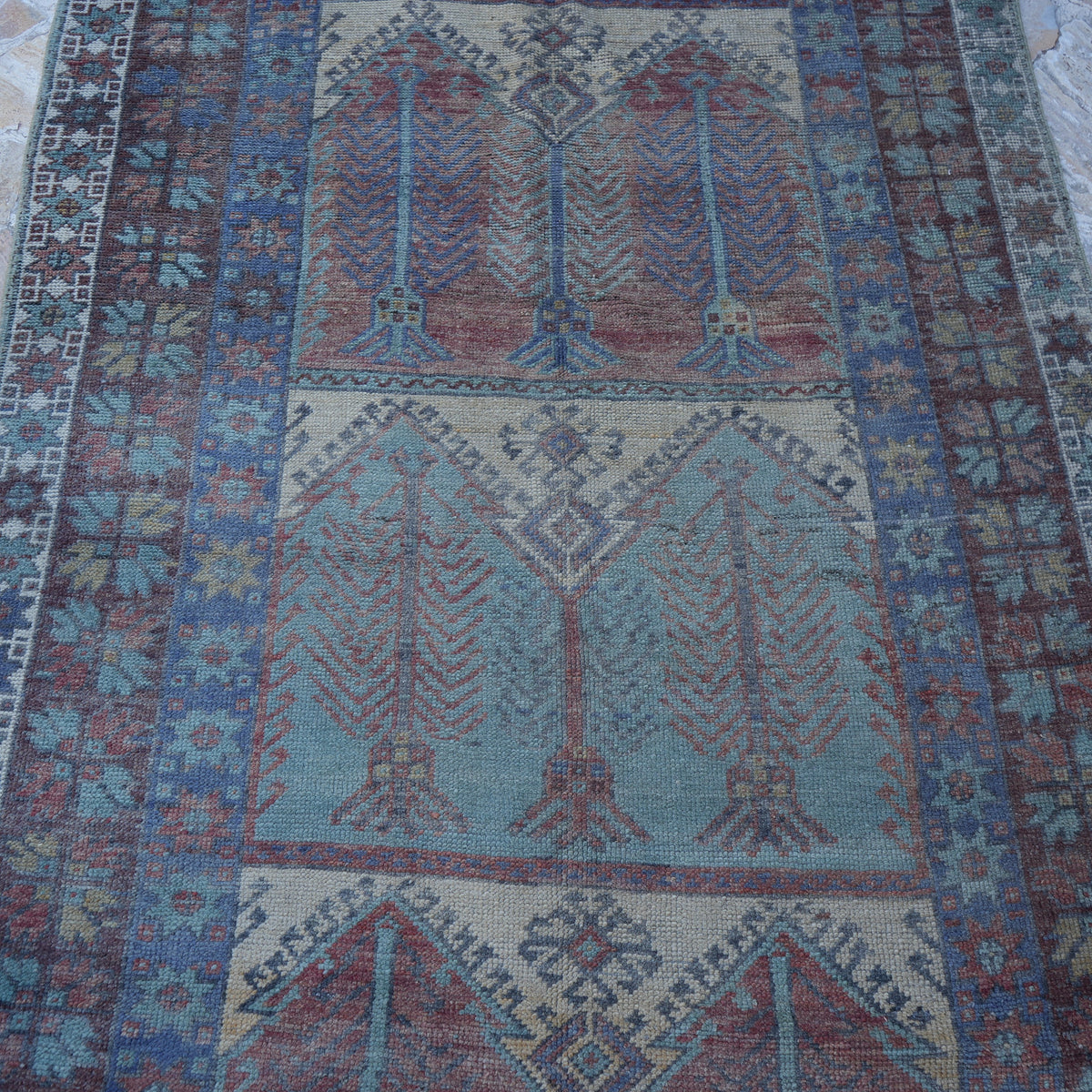
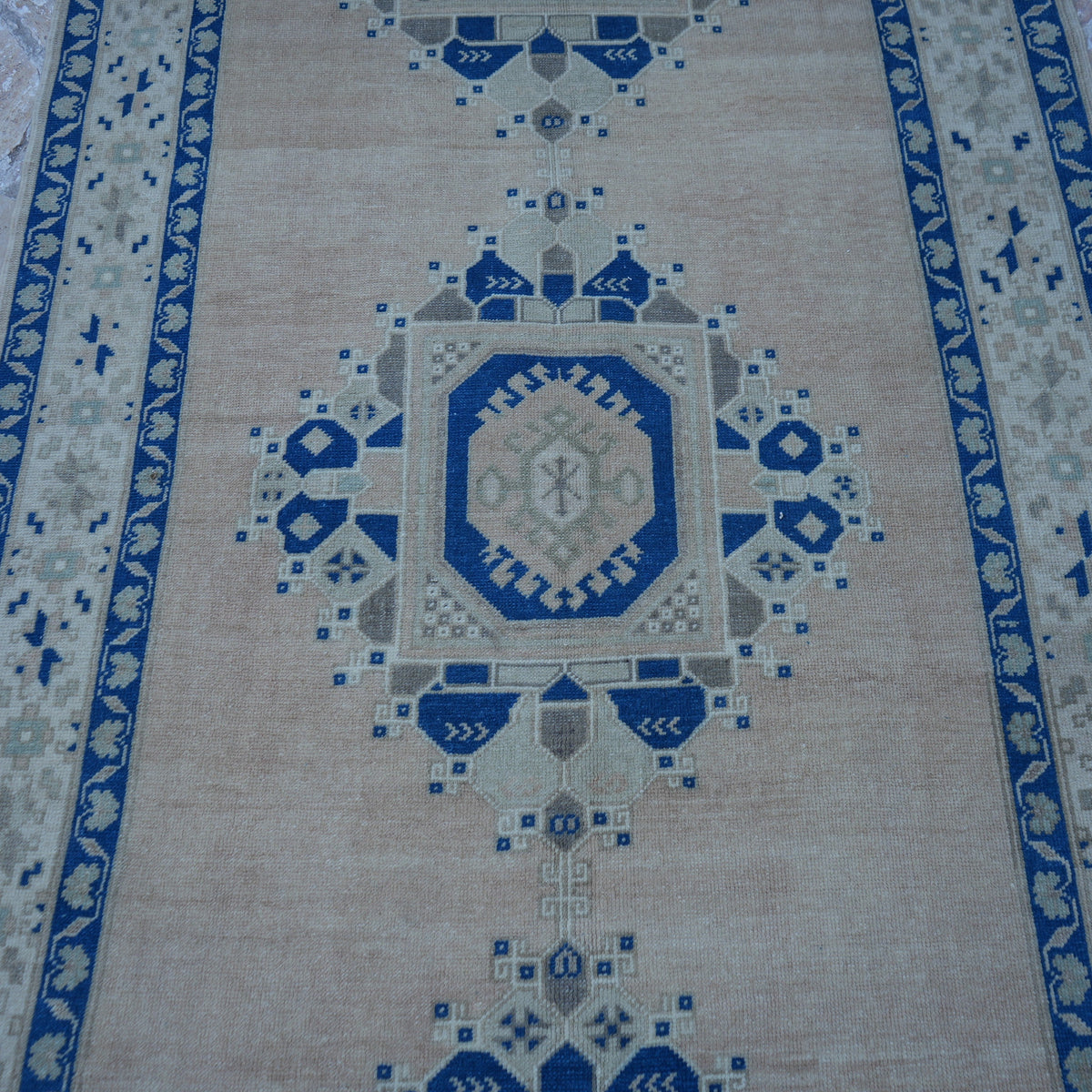
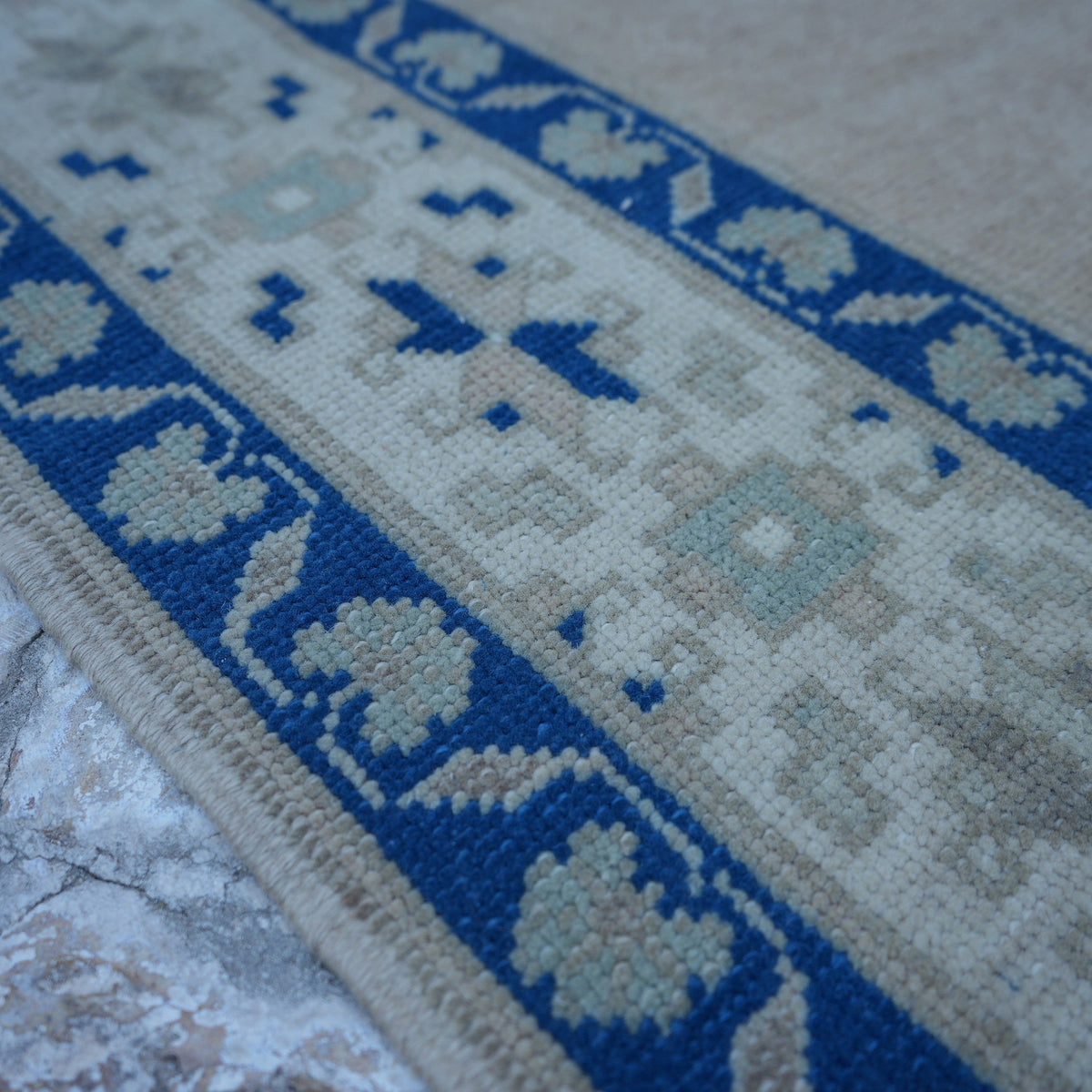
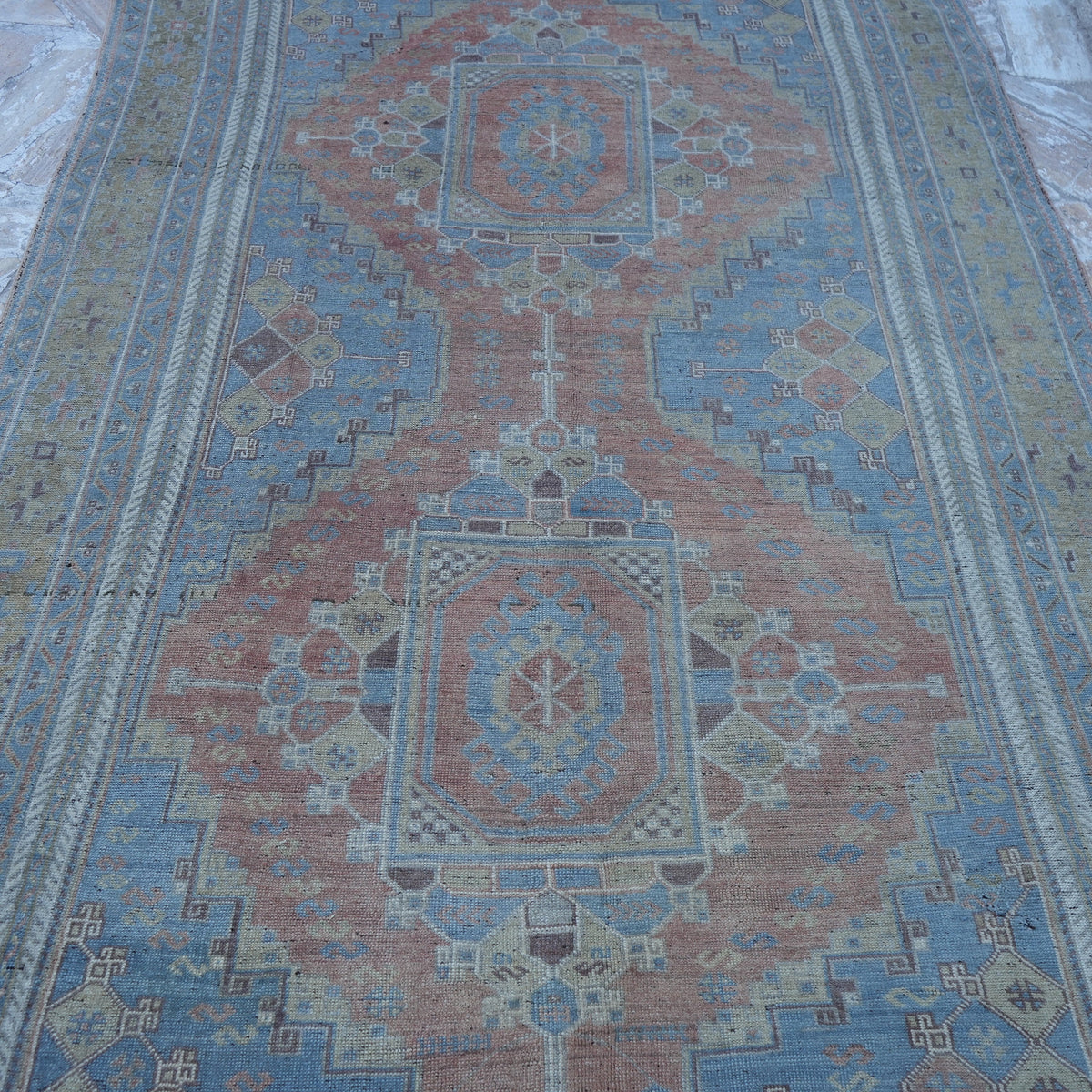
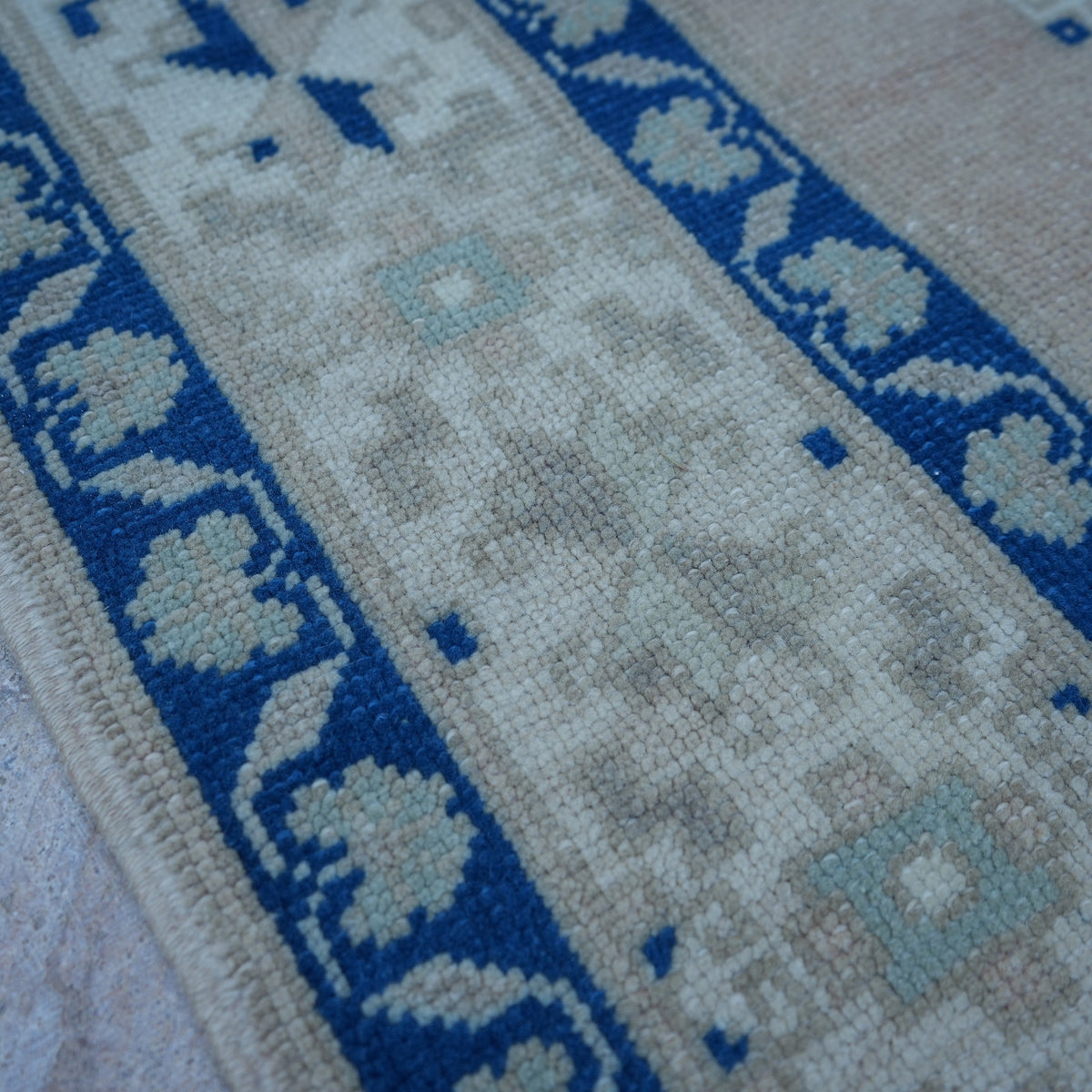
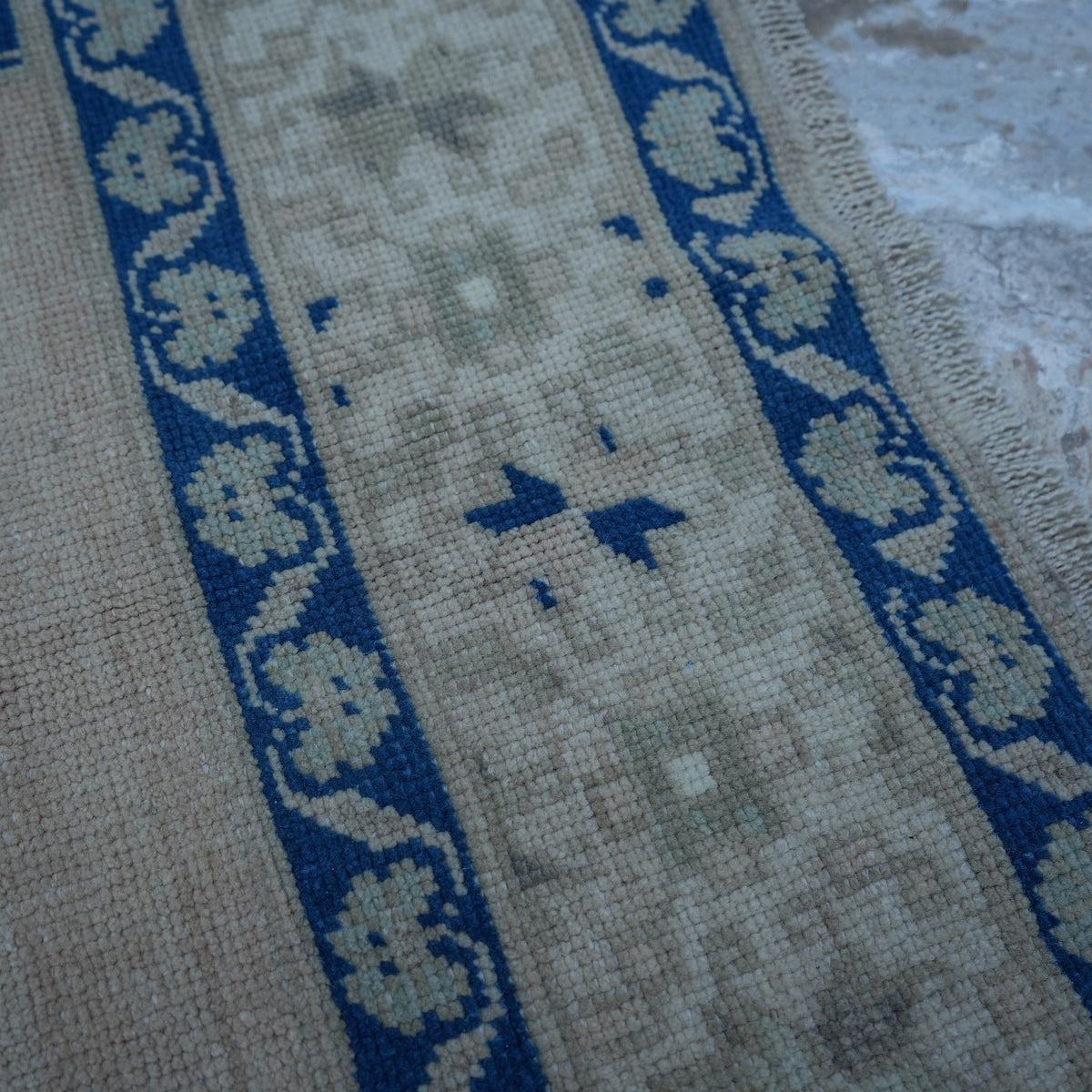
A hand-knotted rug has no adhesive. It is wool knotted onto a cotton or wool foundation, fiber on fiber, nothing to delaminate. Wool also contains lanolin, a natural substance that gives the fiber some resistance to moisture absorption. Not mold-proof, but meaningfully different in behavior from synthetic pile.
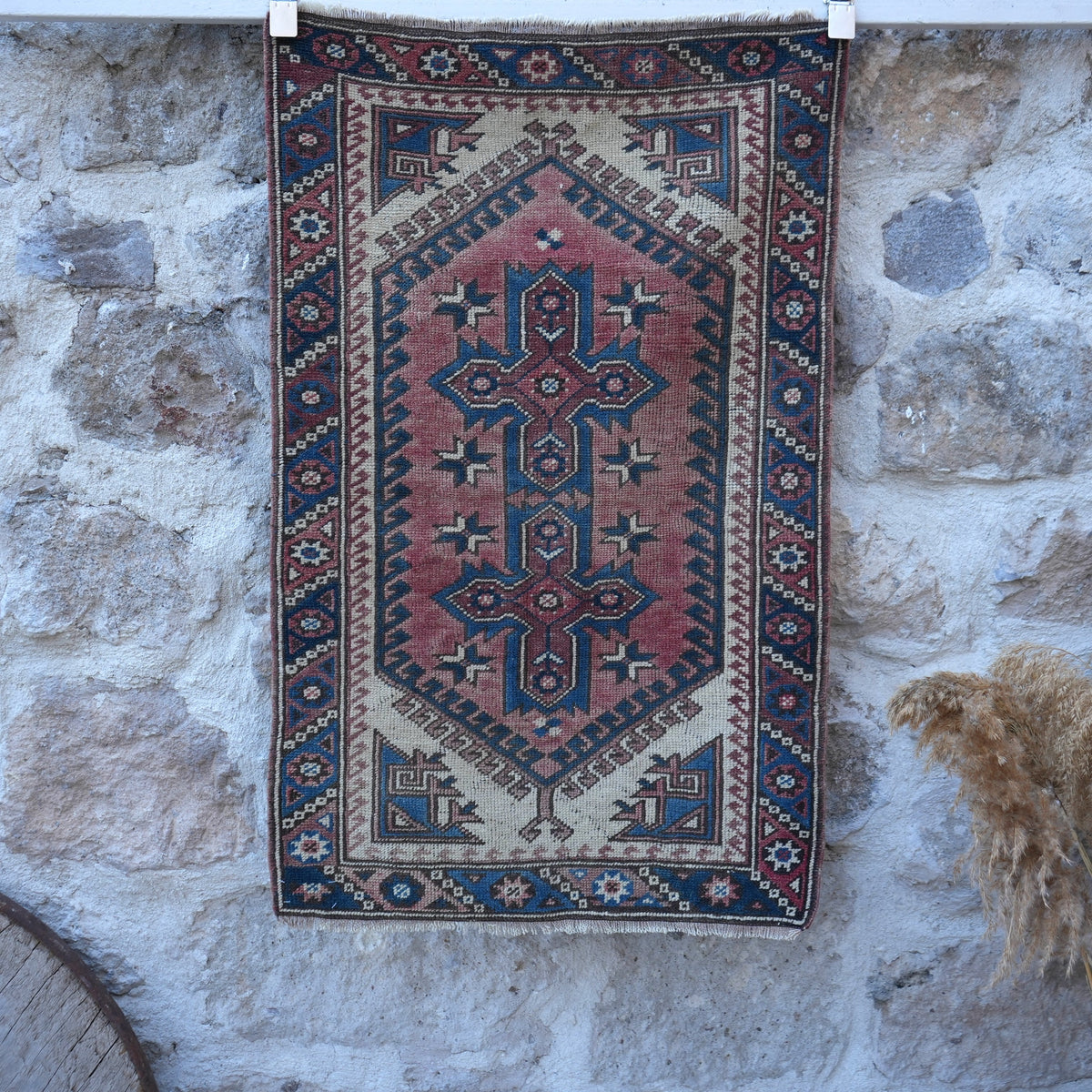
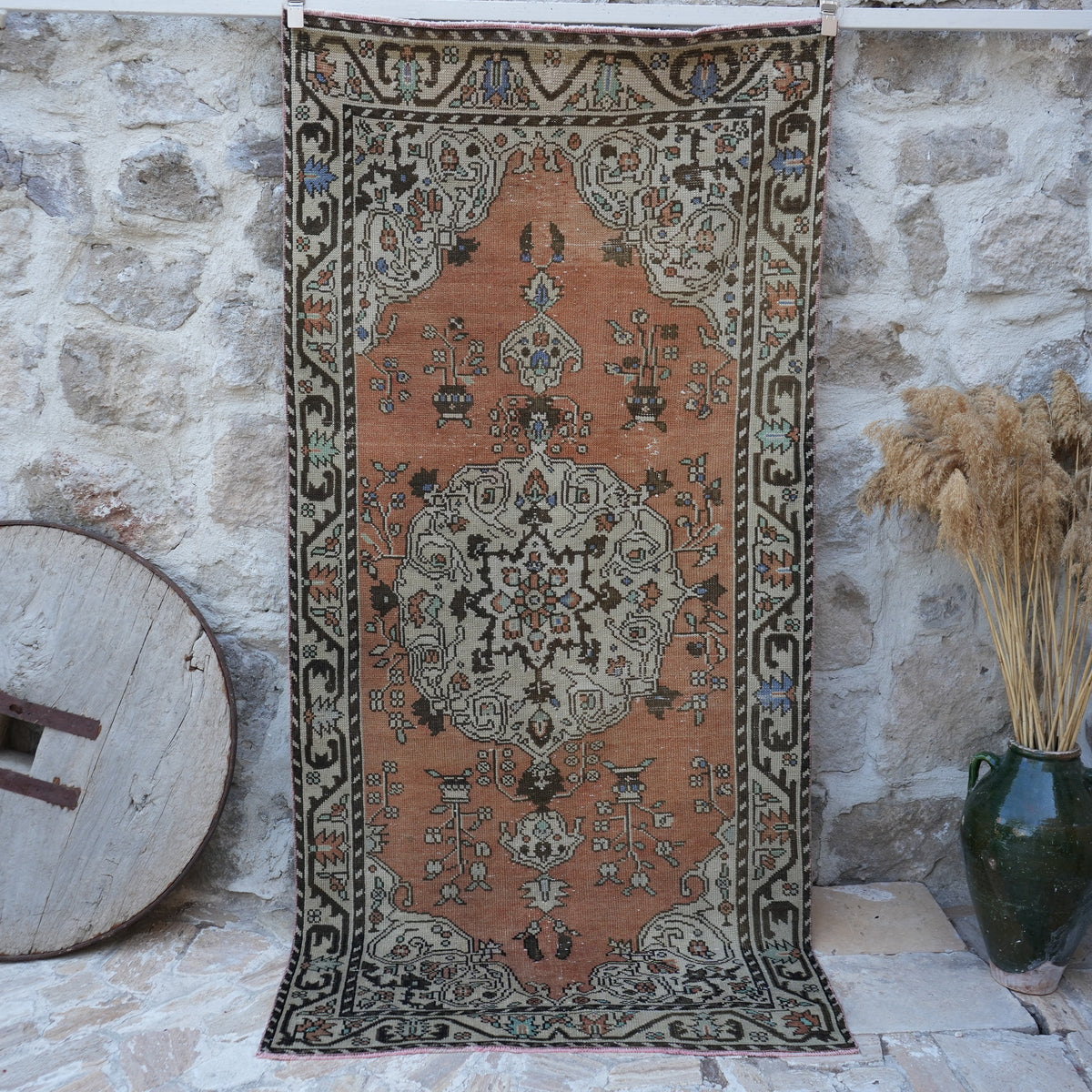
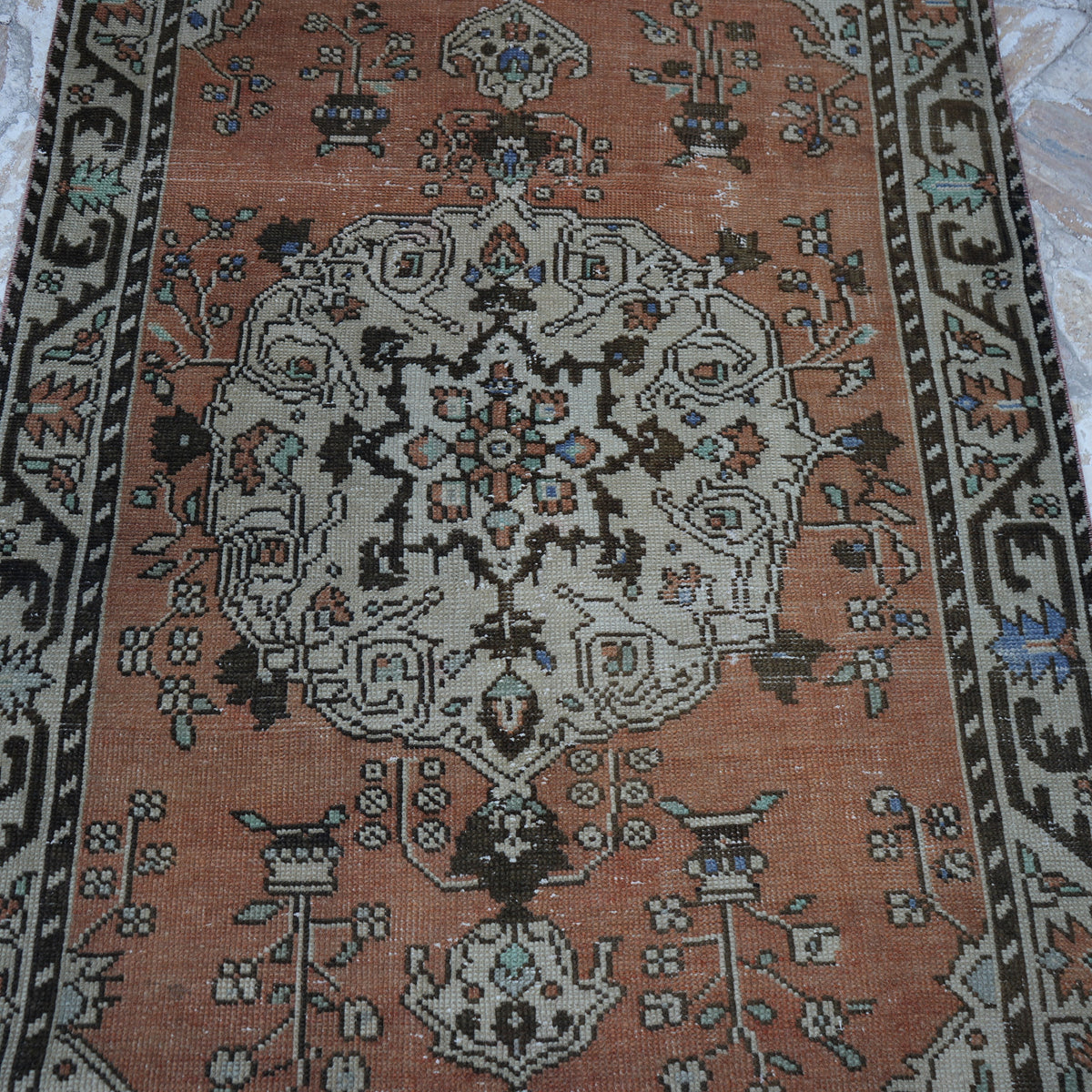
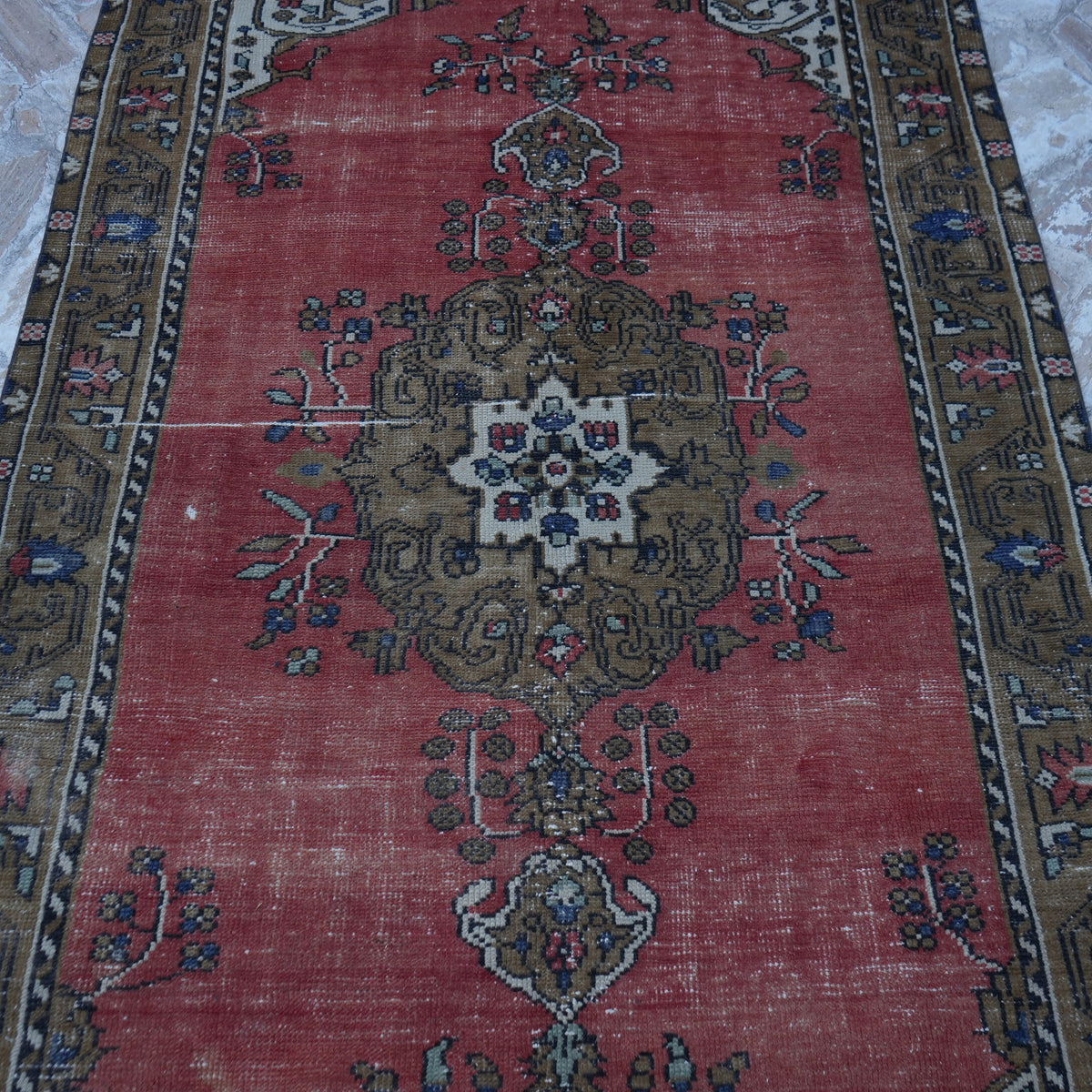
Most of the vintage rugs I carry are between forty and seventy years old. One came to me from an Anatolian farmhouse cellar, where it had been stored for years. The foundation was intact. I cleaned it, dried it properly, and it sold within a month. A rug that has already survived sixty years is not fragile. It is proven.
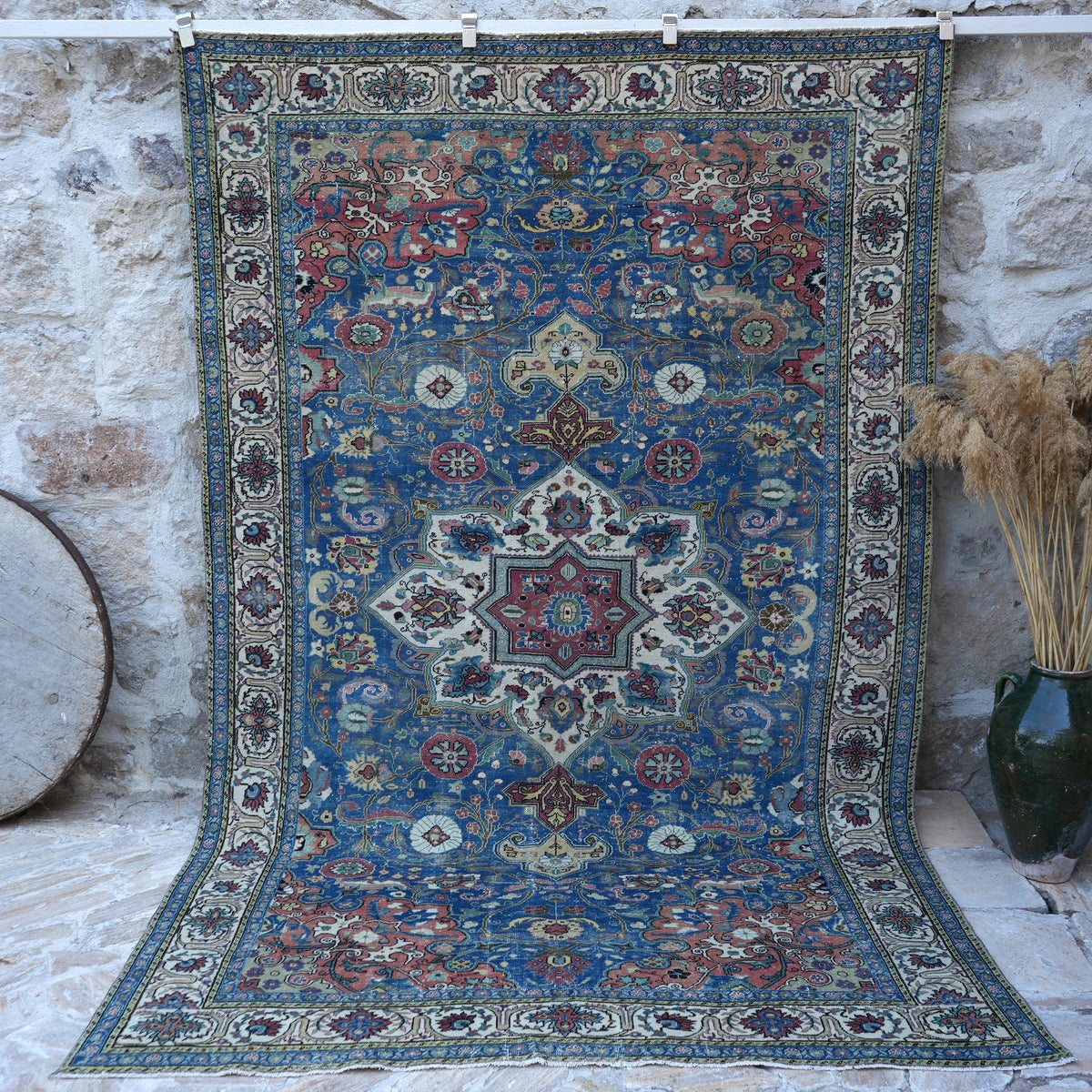
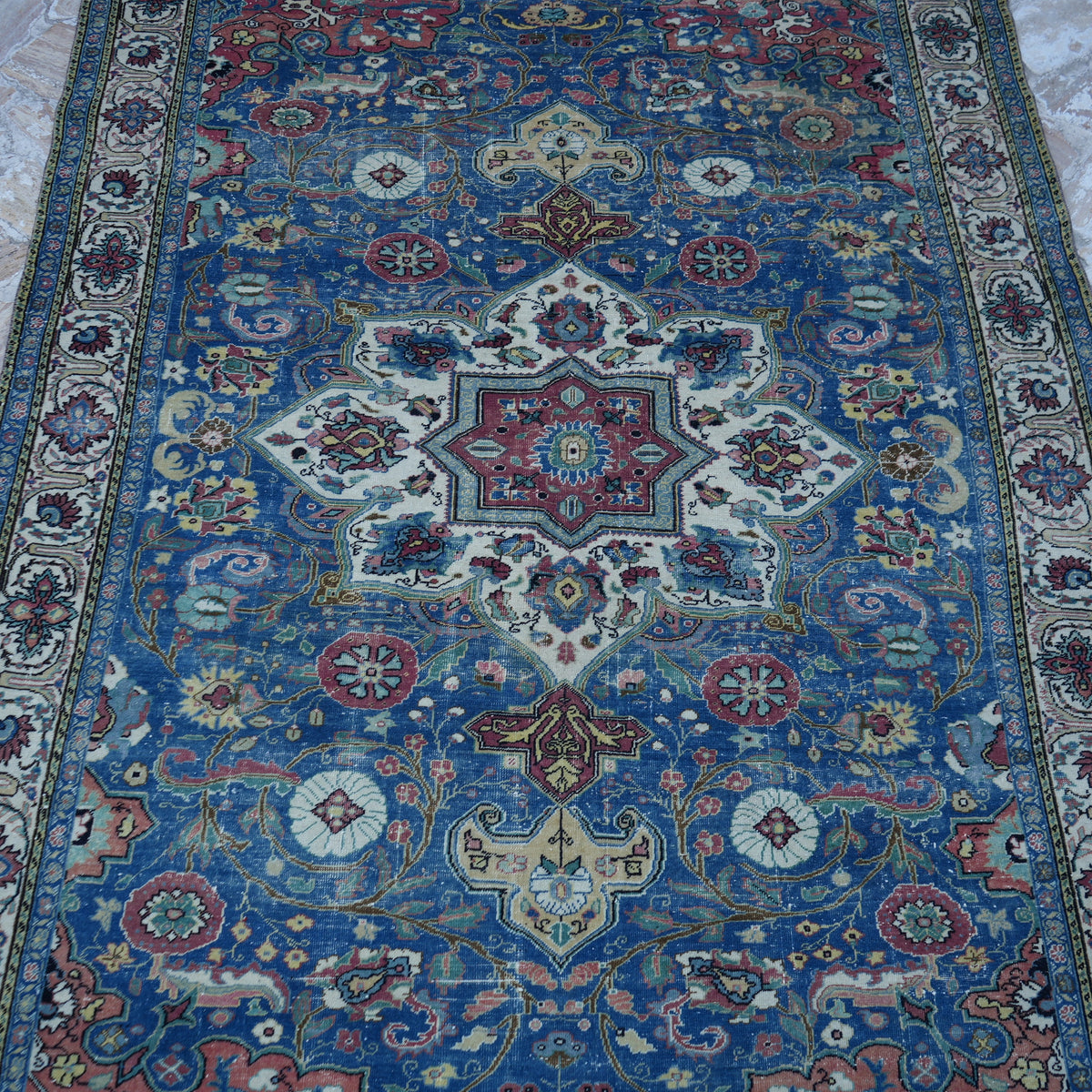
Browse our vintage rugs to see what that durability looks like in a finished piece.
Even Rot Can Be Repaired
Even dry rot, the stage past mold where foundation fibers have become brittle, is not necessarily the end for a handmade rug. A skilled restorer can cut out the damaged section, reweave the foundation with matched warp and weft, and re-knot the pile in colors that align with the original. The repair is permanent and invisible from the front if done well.
| Problem | Machine-Made Carpet | Handmade Rug |
|---|---|---|
| Surface mold | Can be cleaned, but backing still needs inspection. | Often treatable if the rug is dried completely. |
| Mold in backing | Often means replacement because adhesive or latex may break down. | Can usually be inspected and washed from both sides. |
| Water-damaged structure | Backing can delaminate and lose strength. | Foundation can sometimes be repaired or rewoven. |
| Dry rot | Usually not worth restoring. | May still be repairable by a rug restoration specialist. |
| Long-term value | Usually decreases with age. | Good handmade pieces can remain useful for decades. |

Mold Under the Carpet and in the Padding
For wall-to-wall carpet: if the subfloor feels soft when pressed, or if the smell returns after surface cleaning, the problem is underneath. Wet padding cannot be dried in place and must be cut out and replaced. The subfloor should be treated with white vinegar or diluted hydrogen peroxide and allowed to dry fully before new padding goes down.
For area rugs on concrete: inexpensive PVC pads seal the gap between cold concrete and warm room air, trapping condensation underneath where no one looks. A breathable pad, natural rubber combined with felt, allows air to circulate. Lift the rug and check underneath at least twice a year.
When to Call a Professional (and Which Professional)
The EPA recommends professional remediation when visible mold exceeds roughly 10 square feet, when water damage has lasted more than 48 hours, when the water source was contaminated, or when household members have respiratory conditions.
One distinction most guides skip: a mold remediation company handles structures, meaning walls, subfloors, and framing. They are not equipped for textiles. A handmade rug needs a rug washing and restoration studio that works with natural fibers specifically. Steam-cleaning services calibrated for synthetic broadloom will damage wool, fade vegetable dyes, and shorten the rug's life.

Keeping Mold from Coming Back
Keep indoor humidity below 50 percent. A dehumidifier in the basement costs less than one rug replacement. Dry any spill within 24 hours, not just blotted but fully dried with airflow.
The storage mistake I see most on sourcing trips: a family's best rug wrapped tightly in plastic, leaned against a cellar wall. Meant to protect it from dust. Actually suffocating it in trapped humidity. The smell when you unroll them is unmistakable. Some come back. Some do not. Plastic is for transport, not for storage.
Store a rug correctly: cleaned, completely dry, rolled face-in, wrapped in cotton or an old sheet, stored upright in a dry space with occasional airing.
Before rolling, I add dried mint leaves, a plain unwrapped bar of soap, and sheets of dry newspaper between the rug and the outer wrap. The mint and soap deter insects and slow the conditions mold needs to establish itself. The newspaper draws out residual moisture the rug still carries, even one you would swear is bone dry.
Choose a Handmade Rug Built to Last
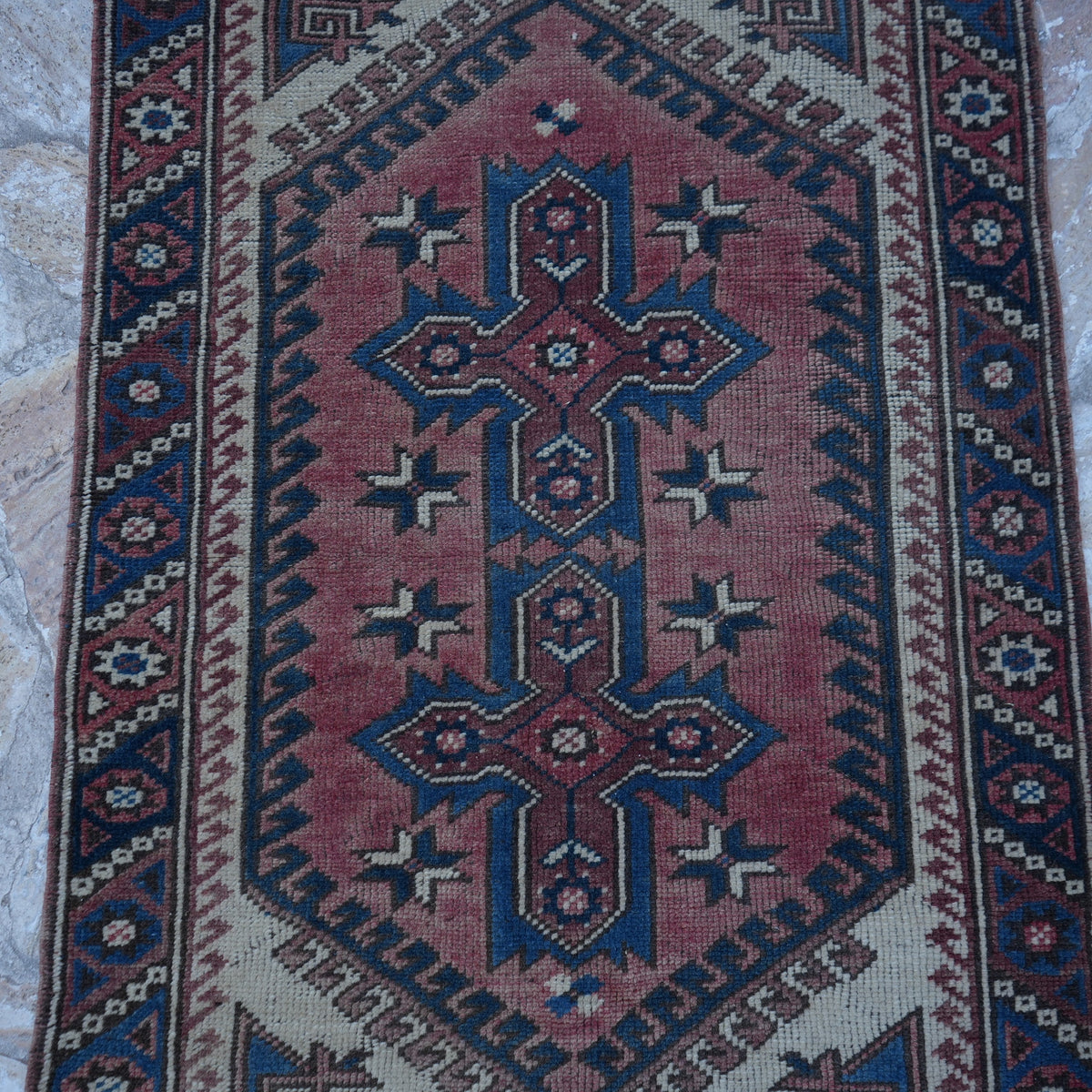
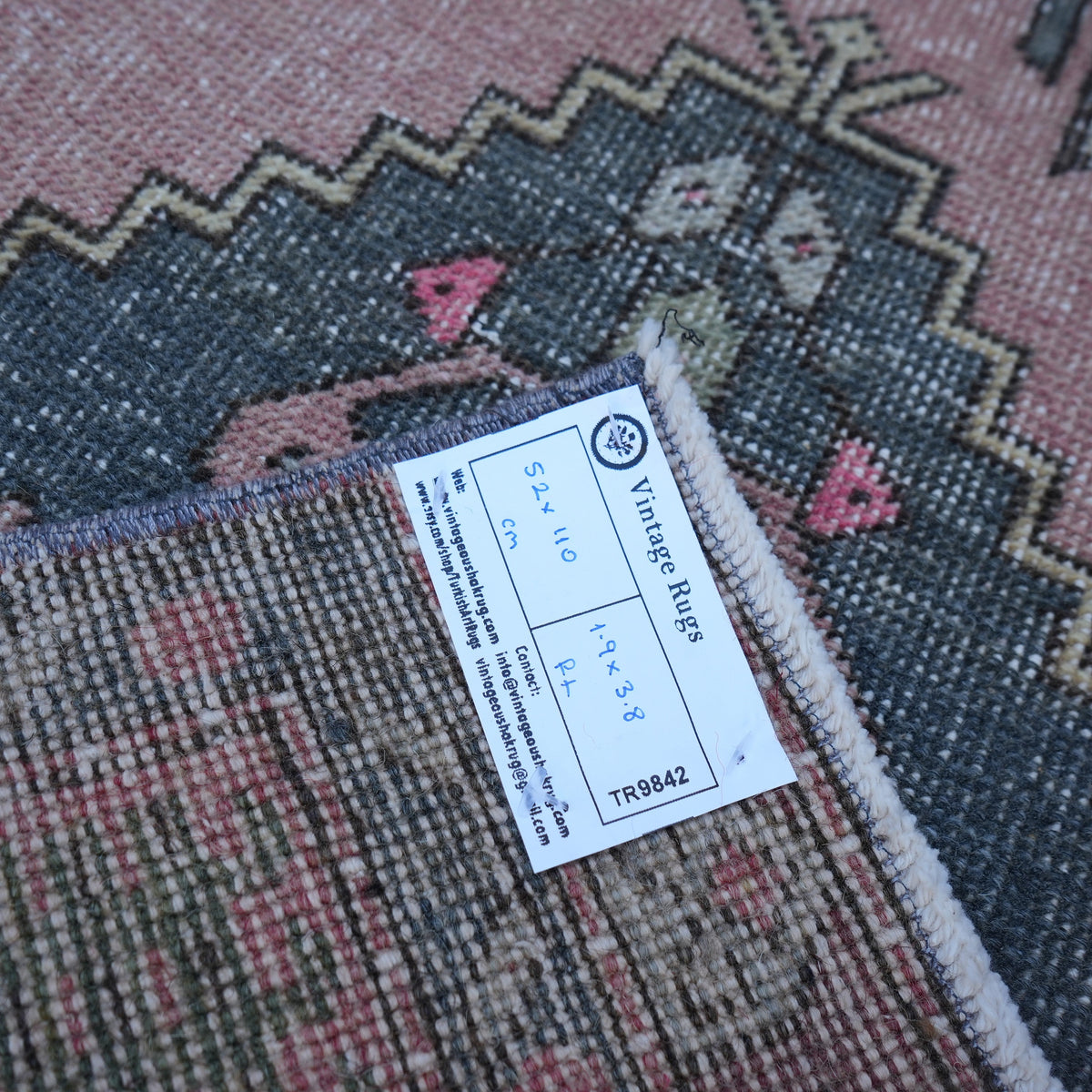
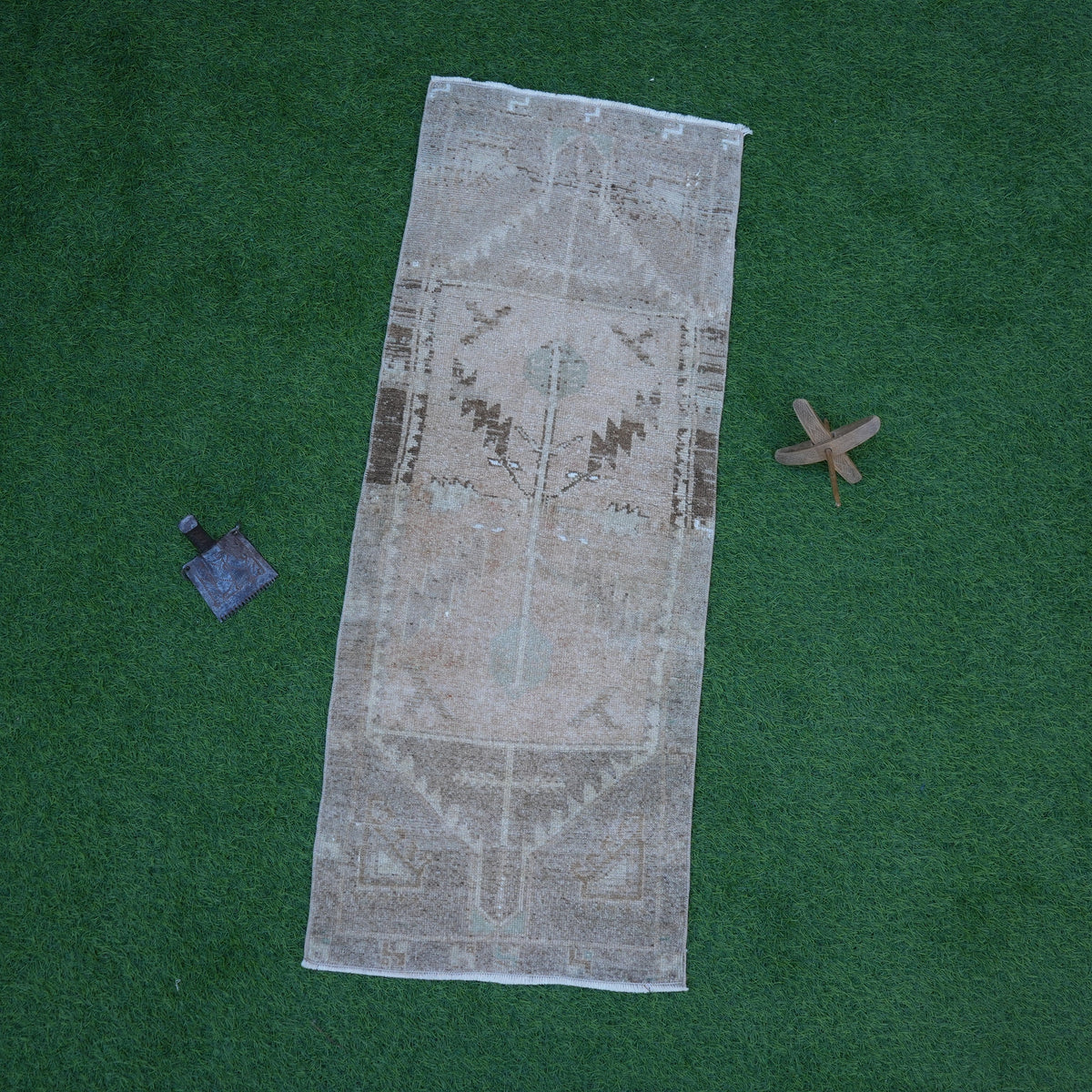
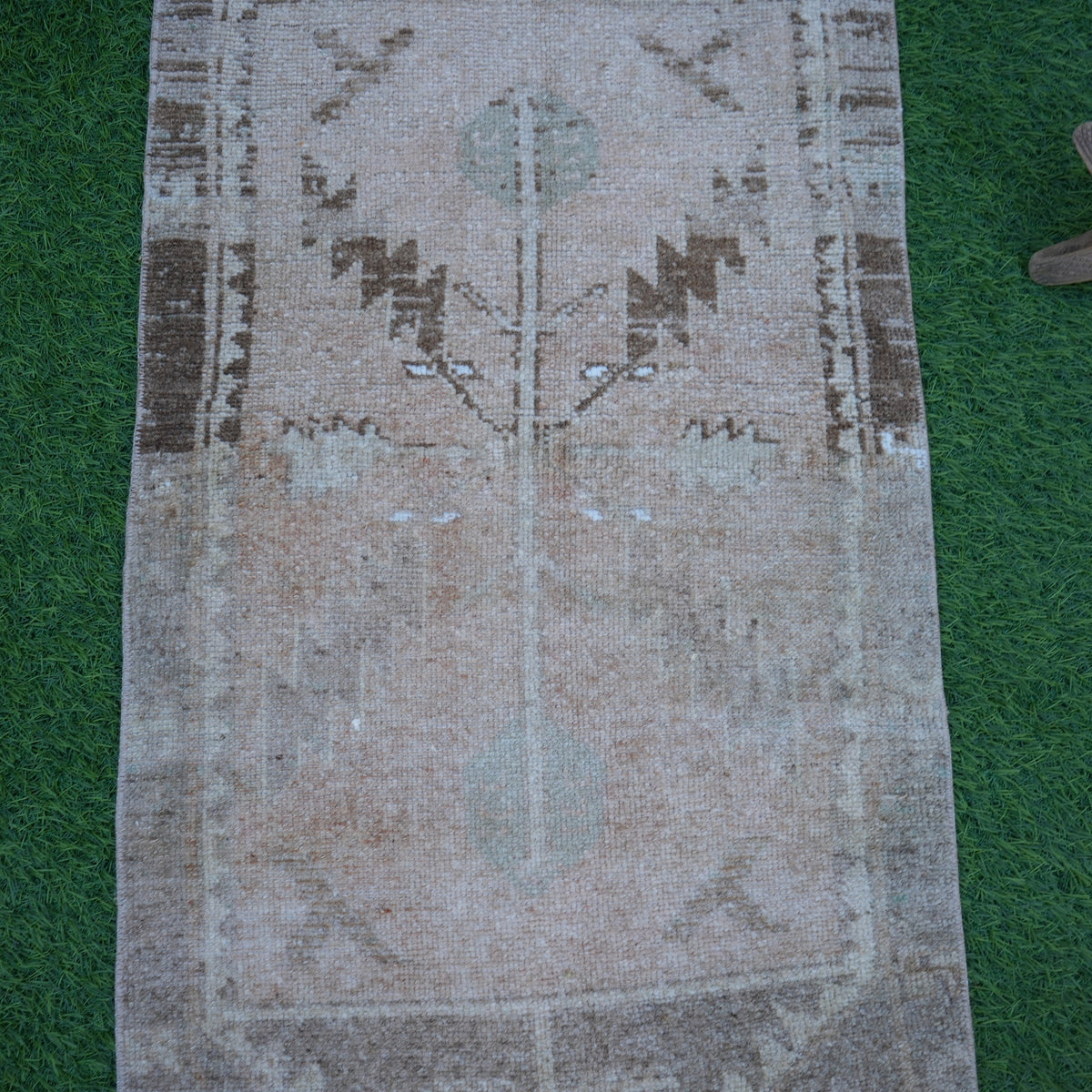
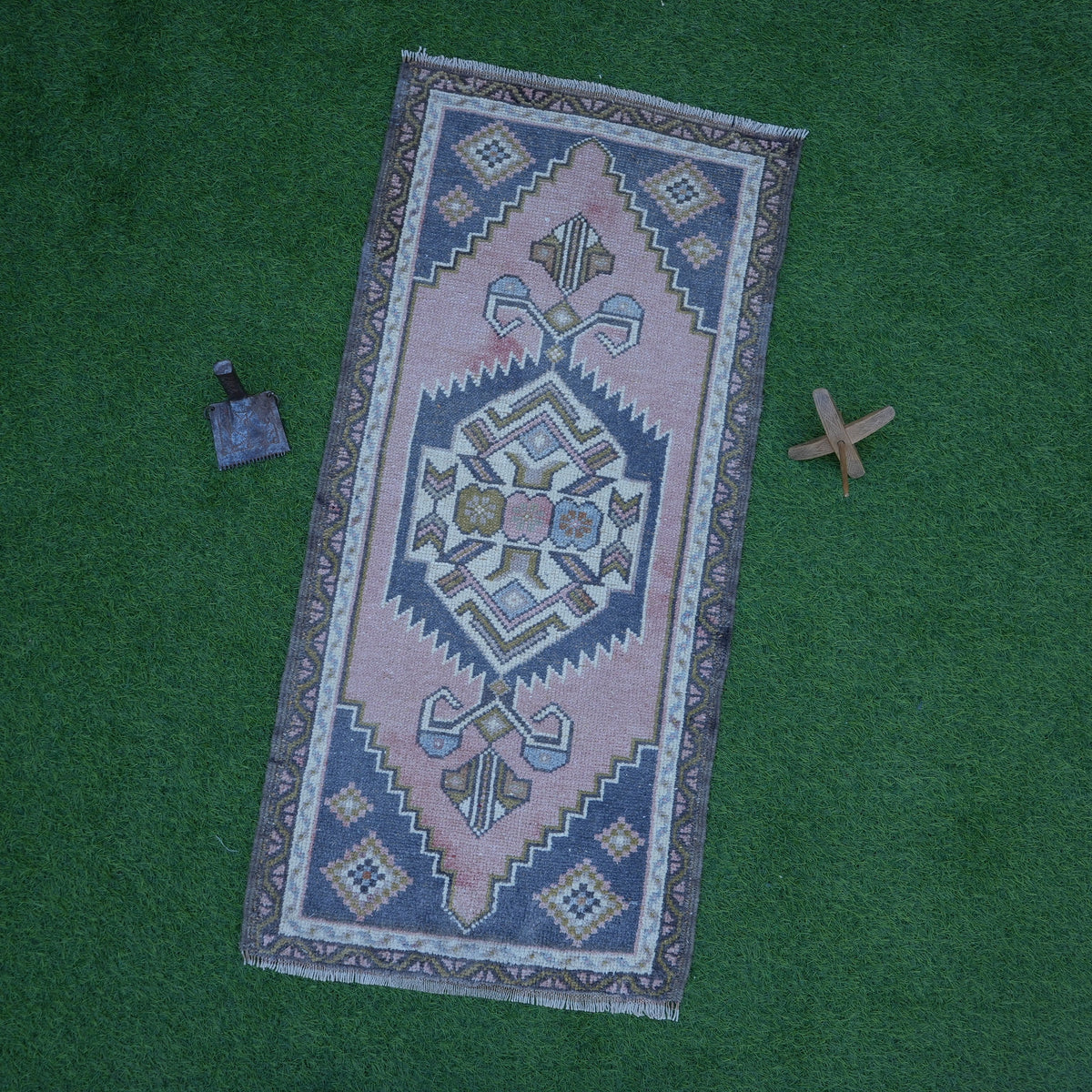
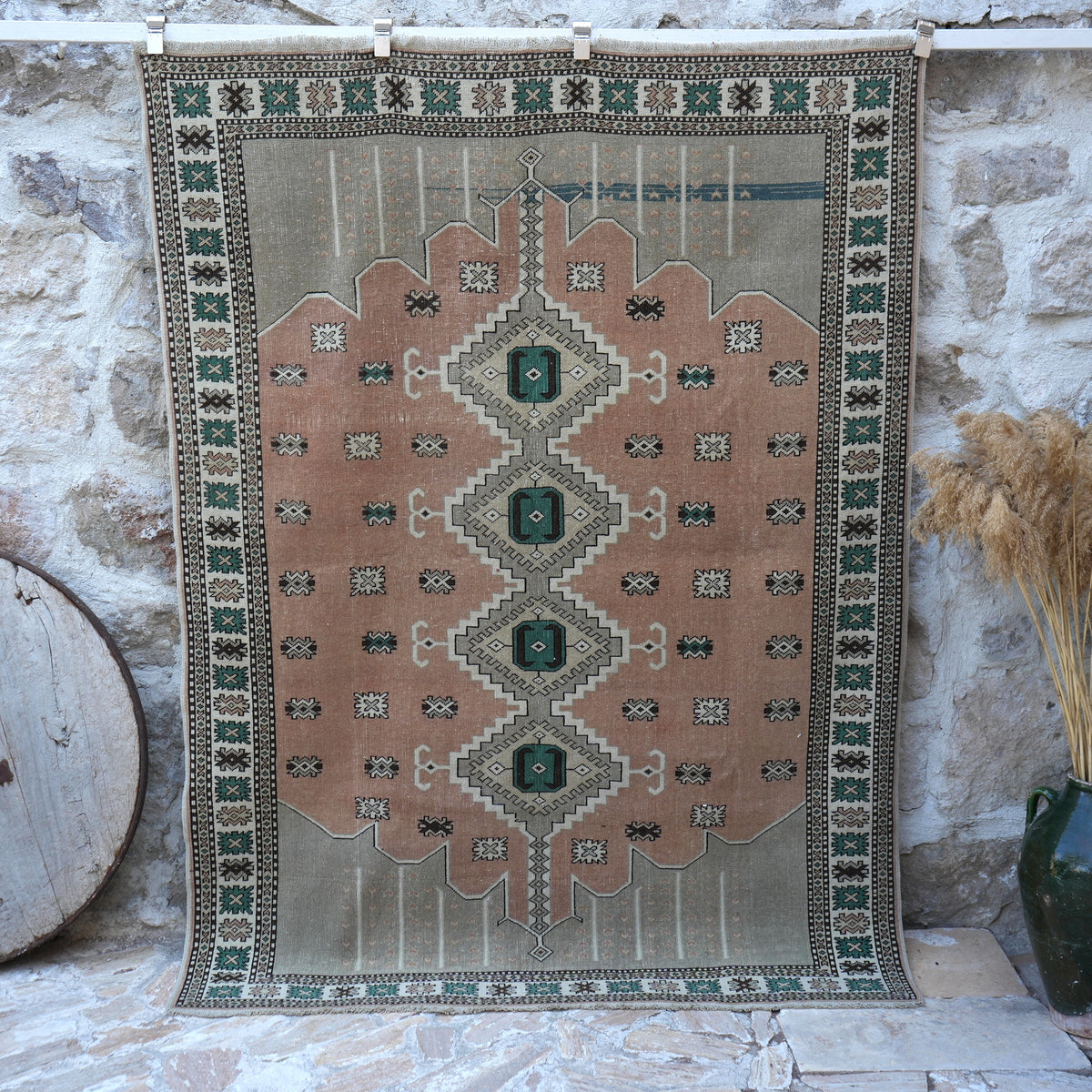
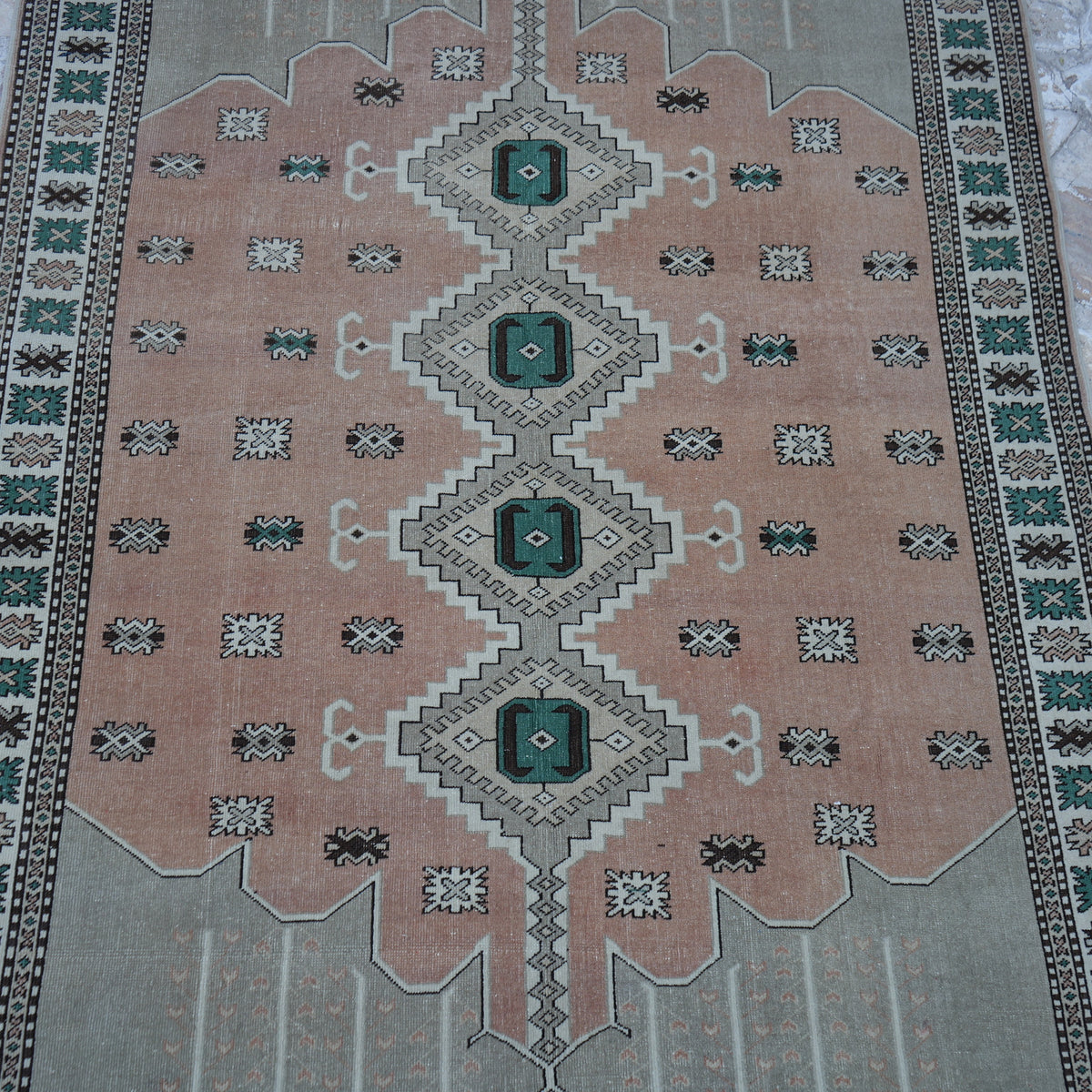
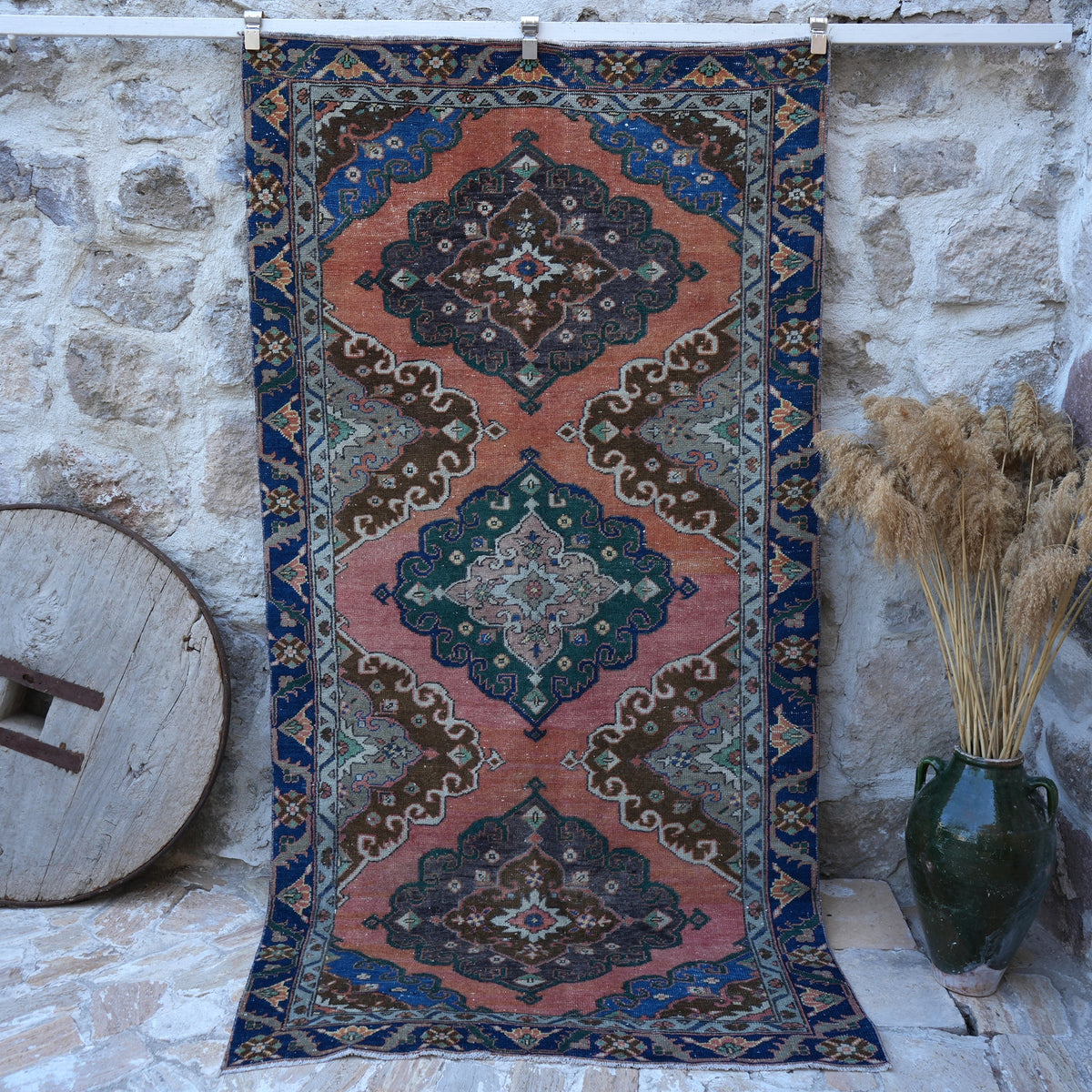
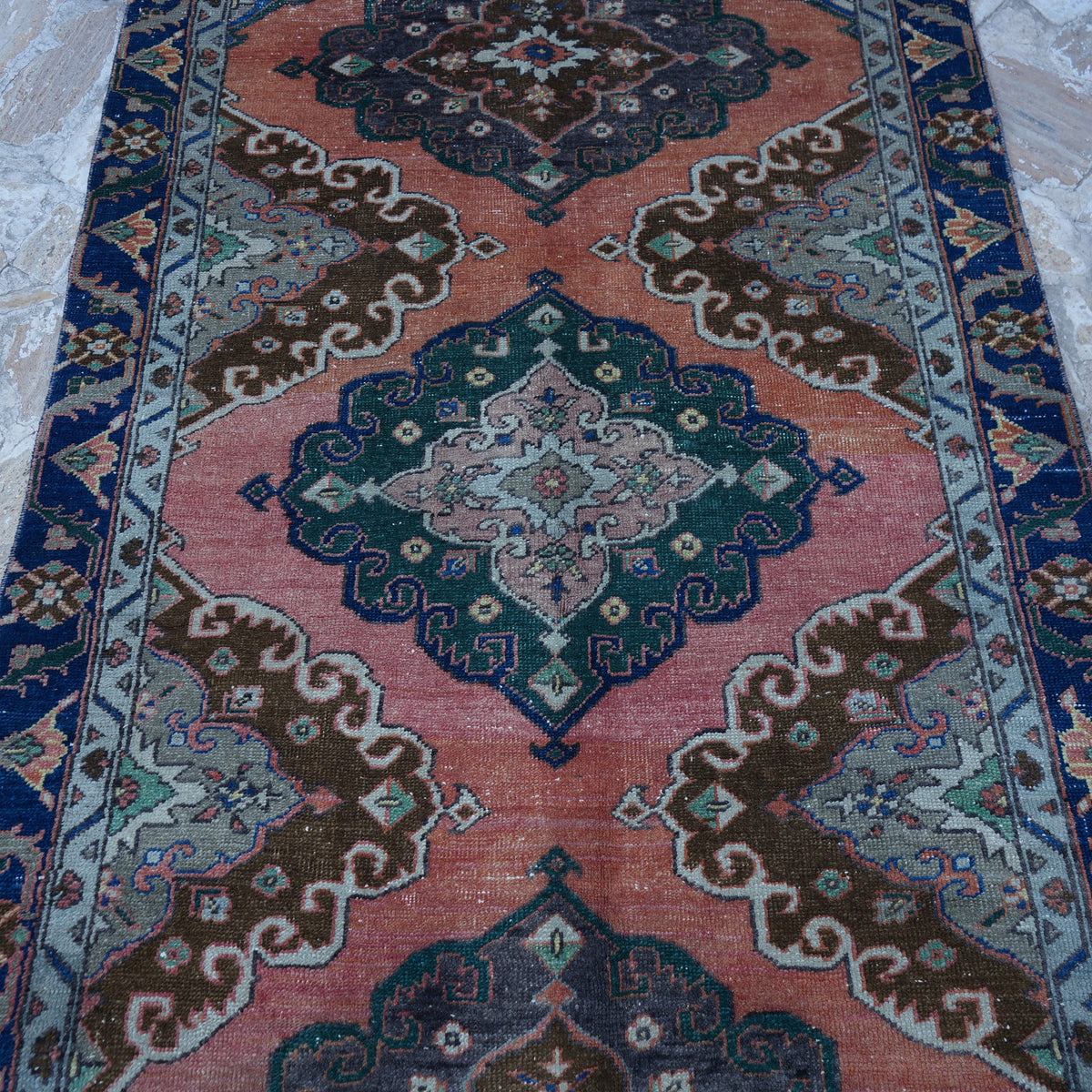
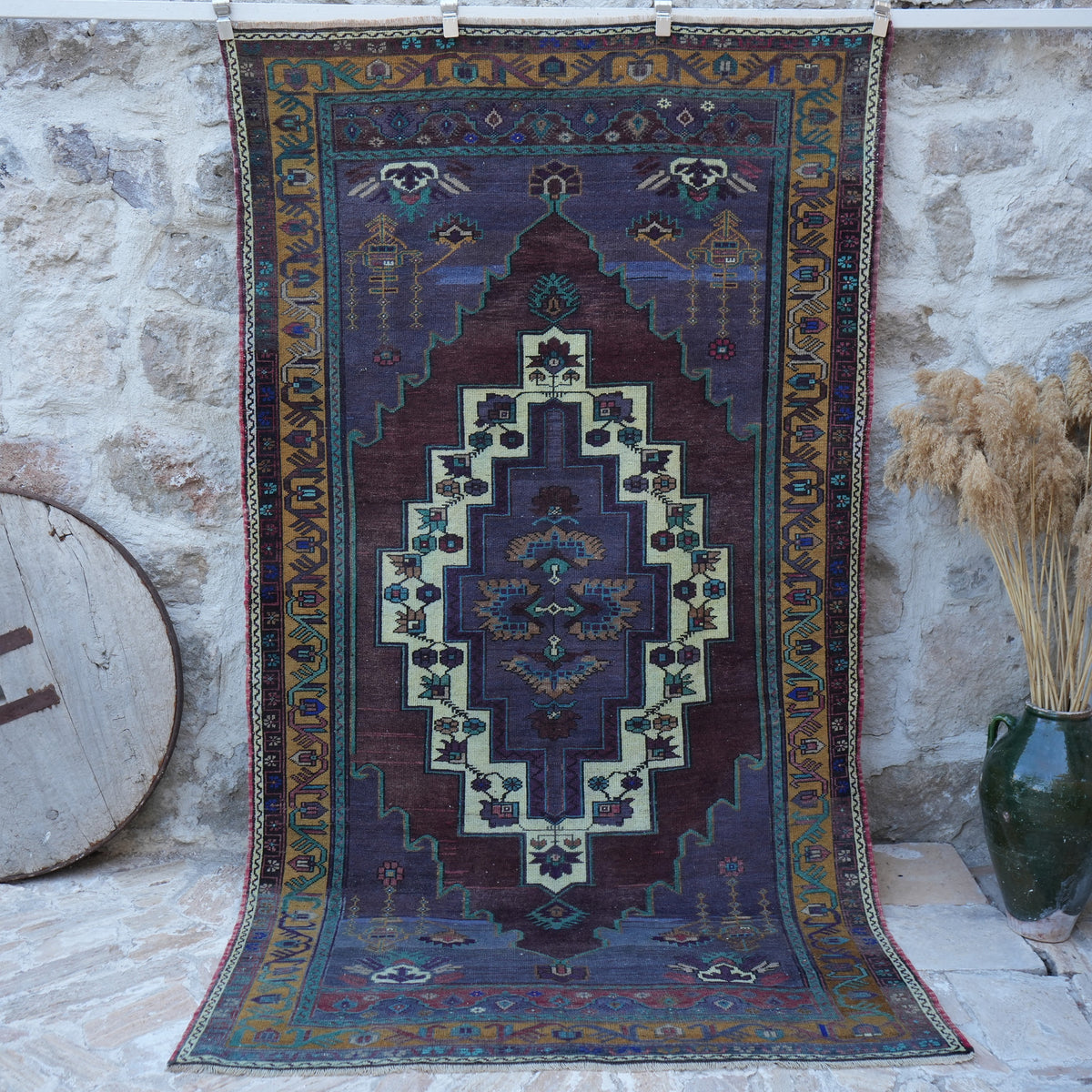
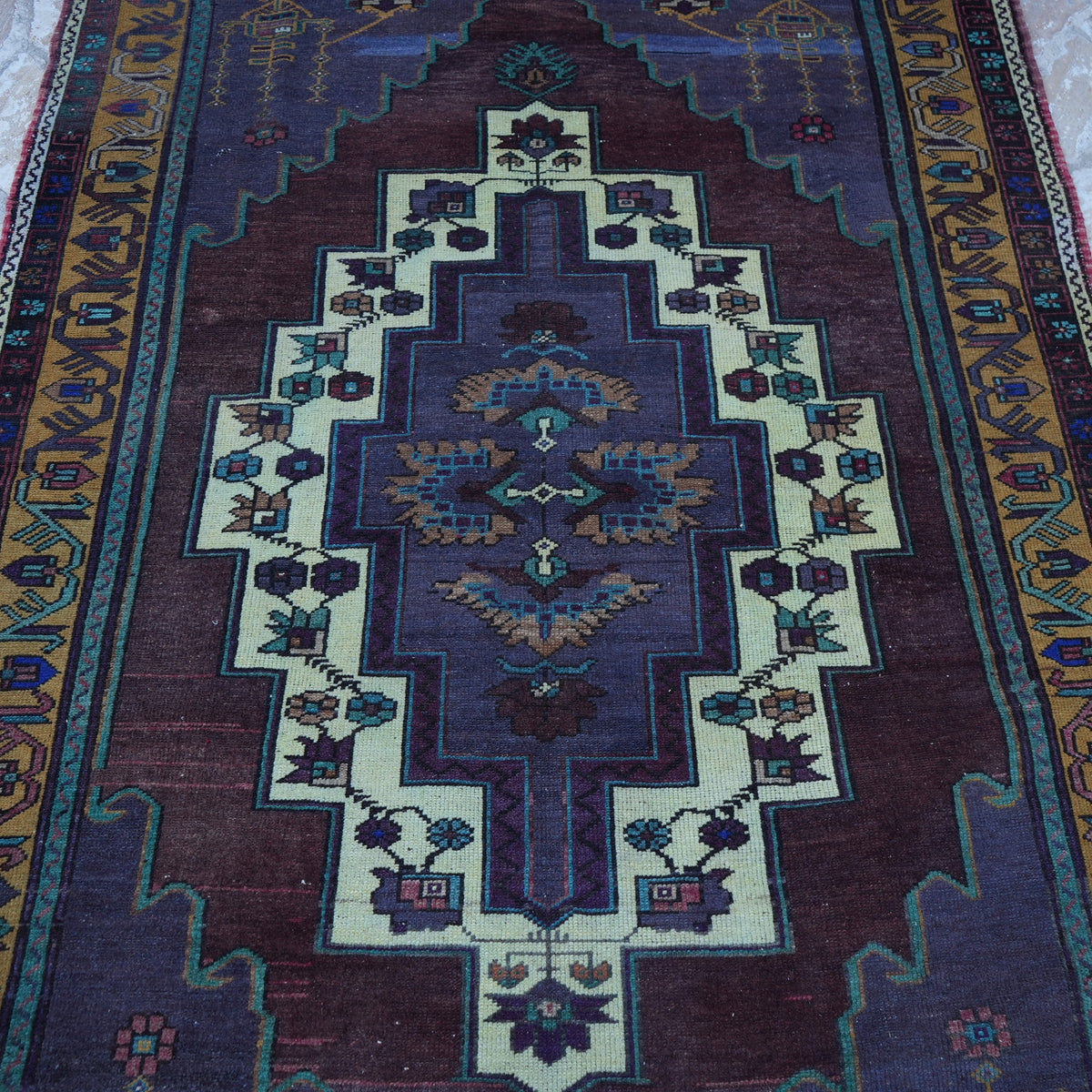
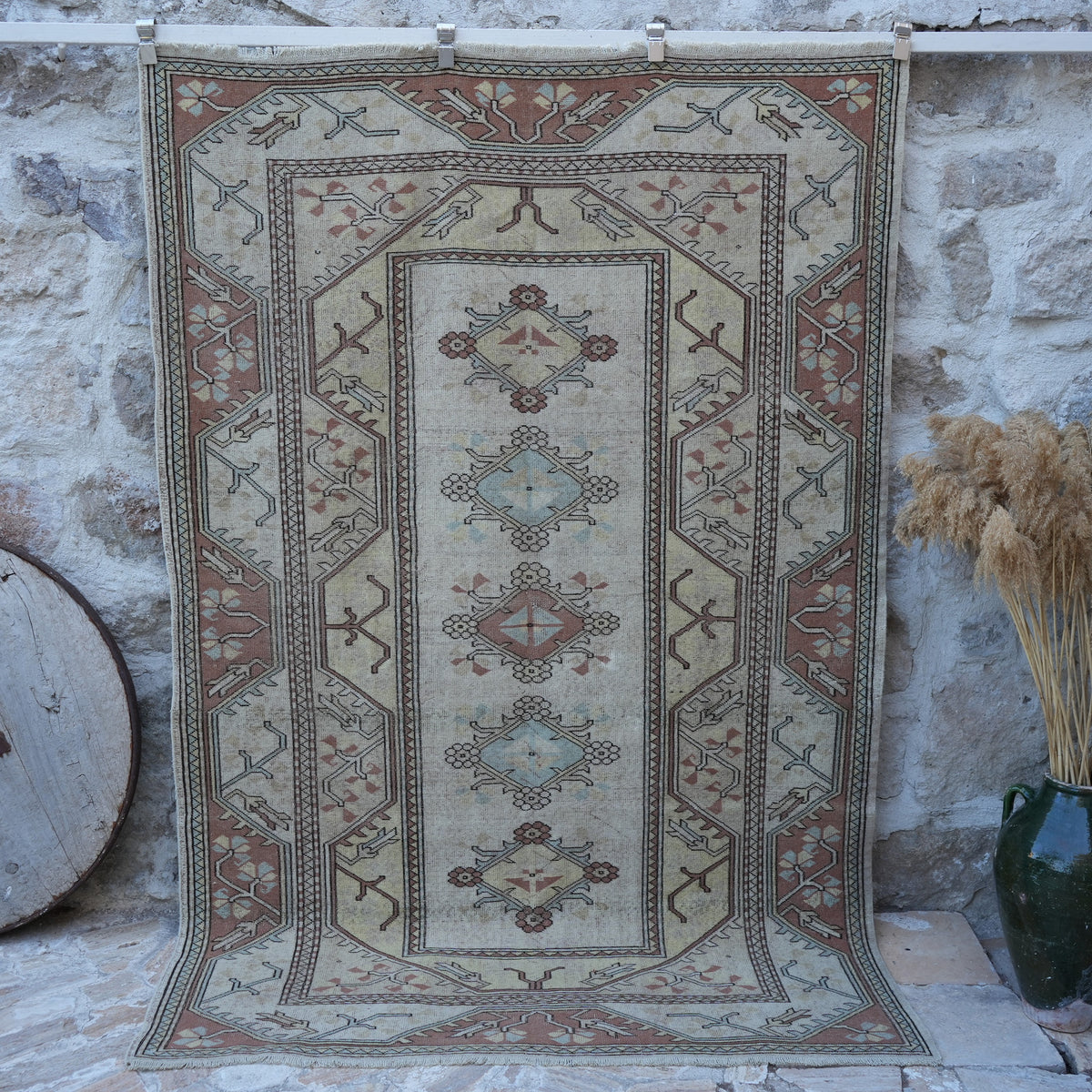
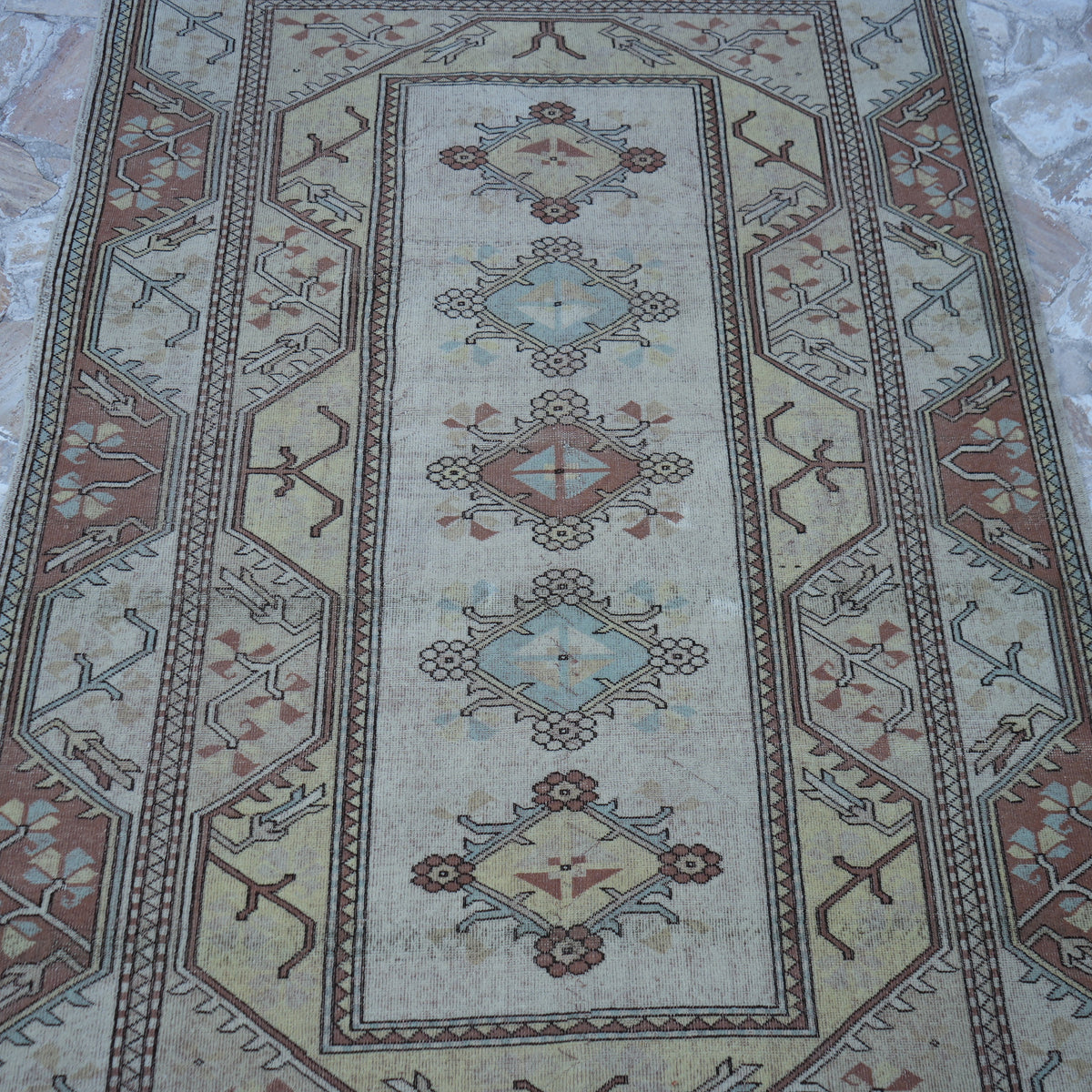
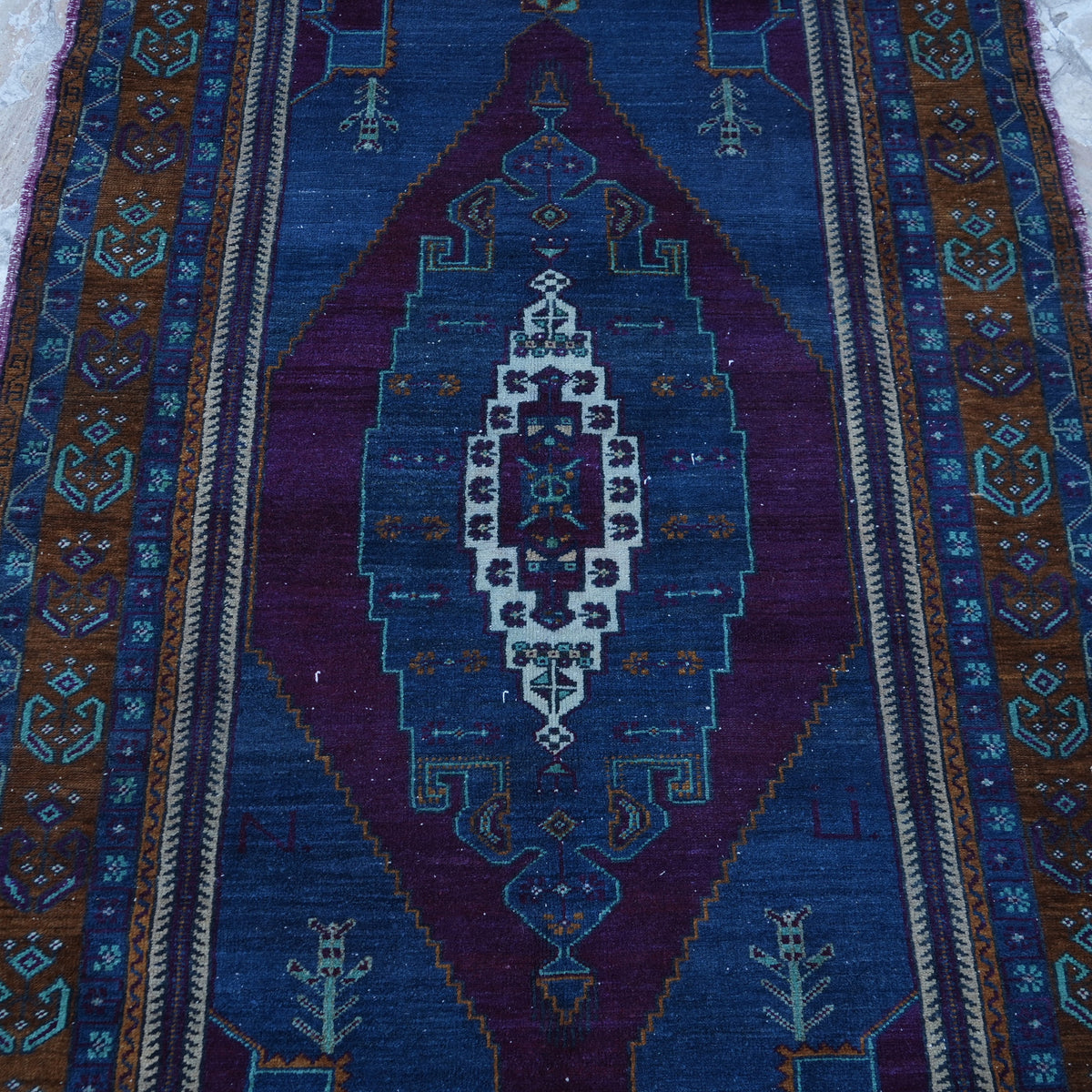
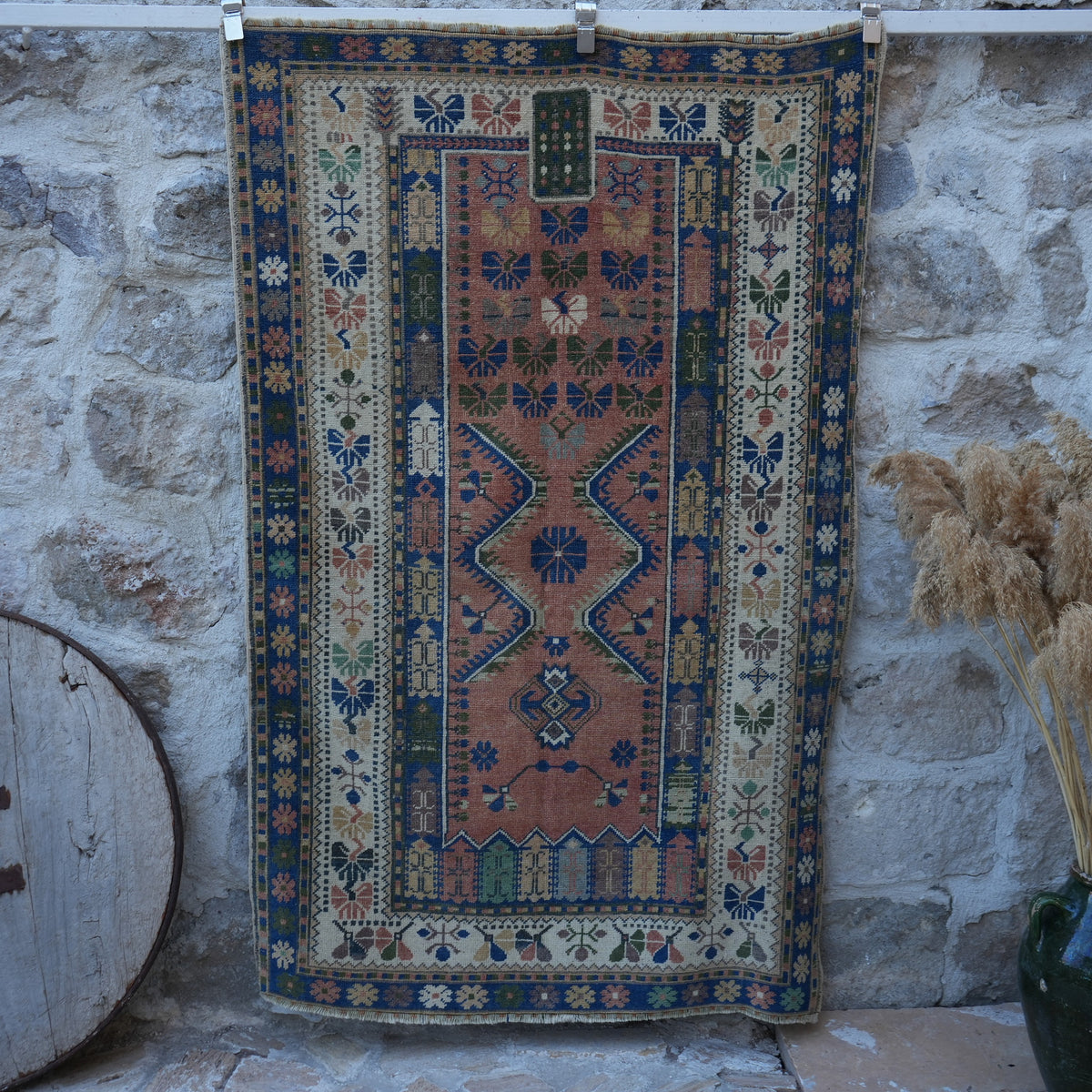
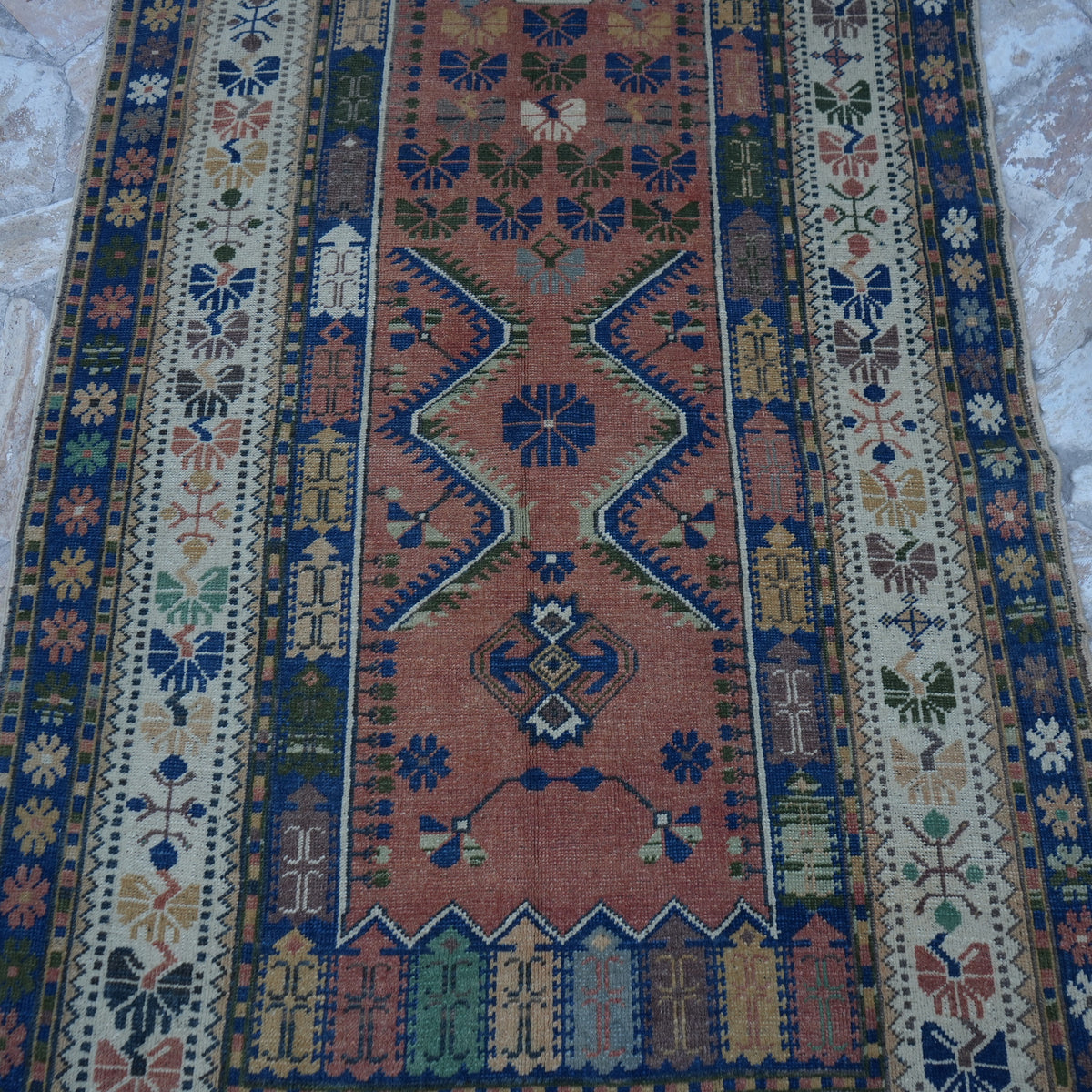
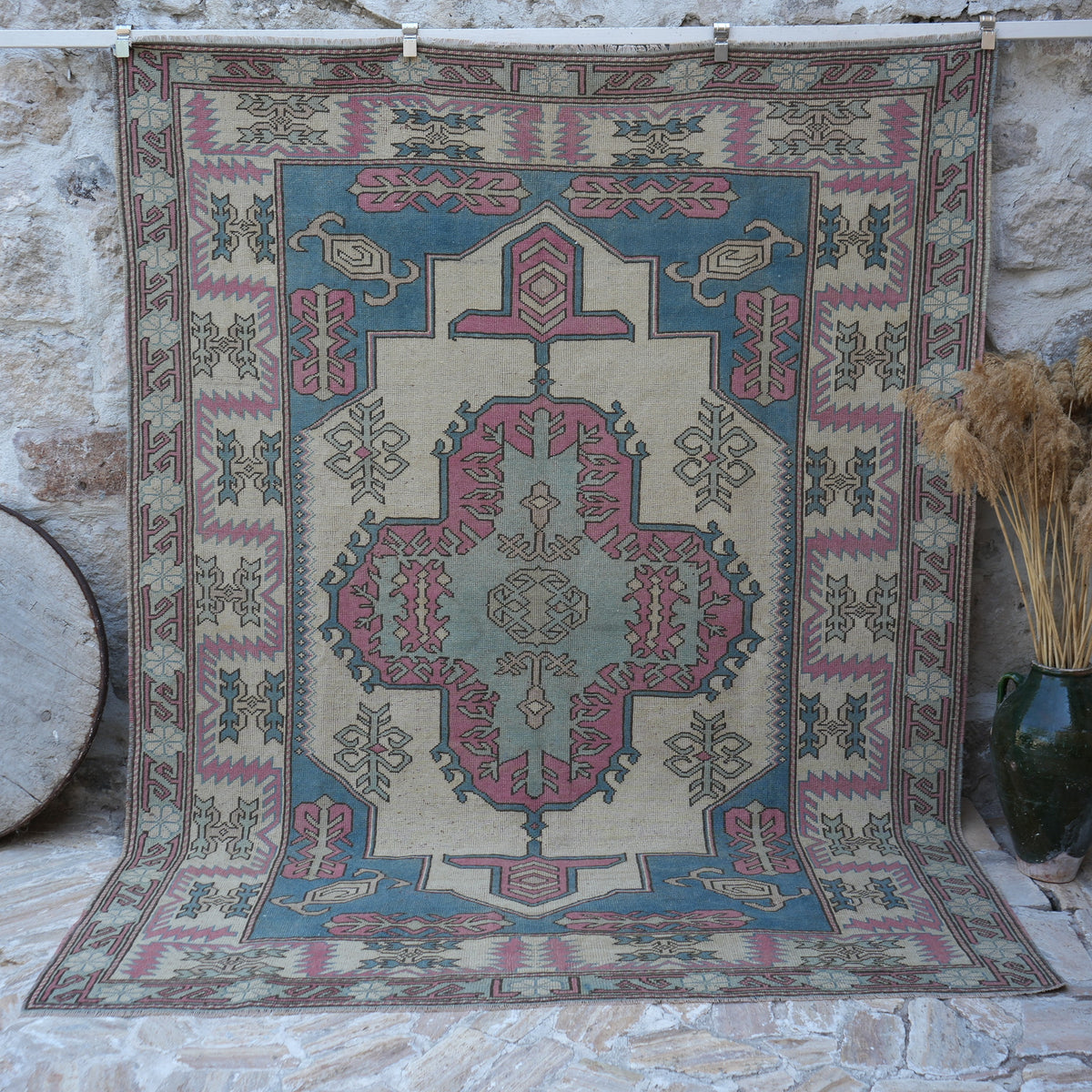
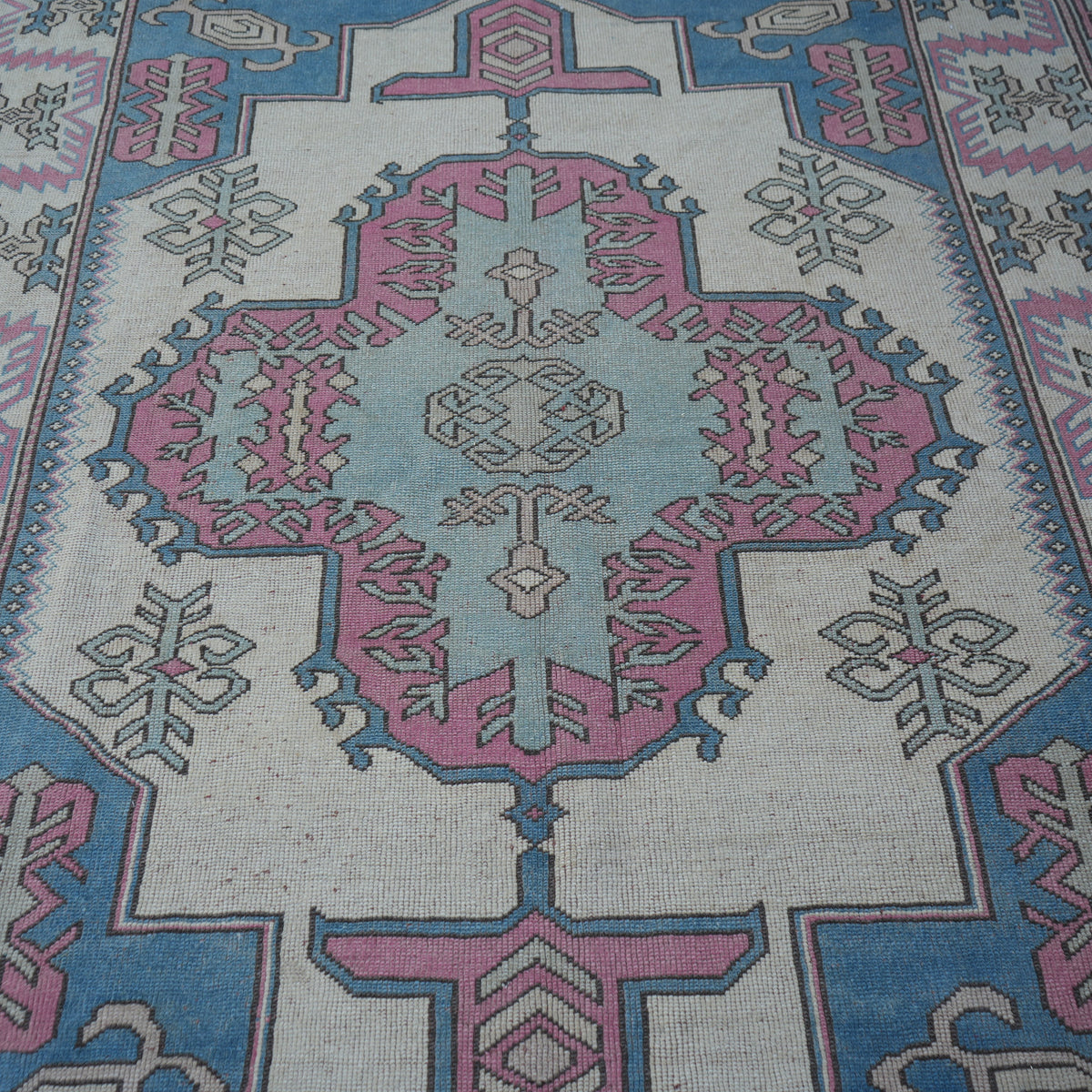
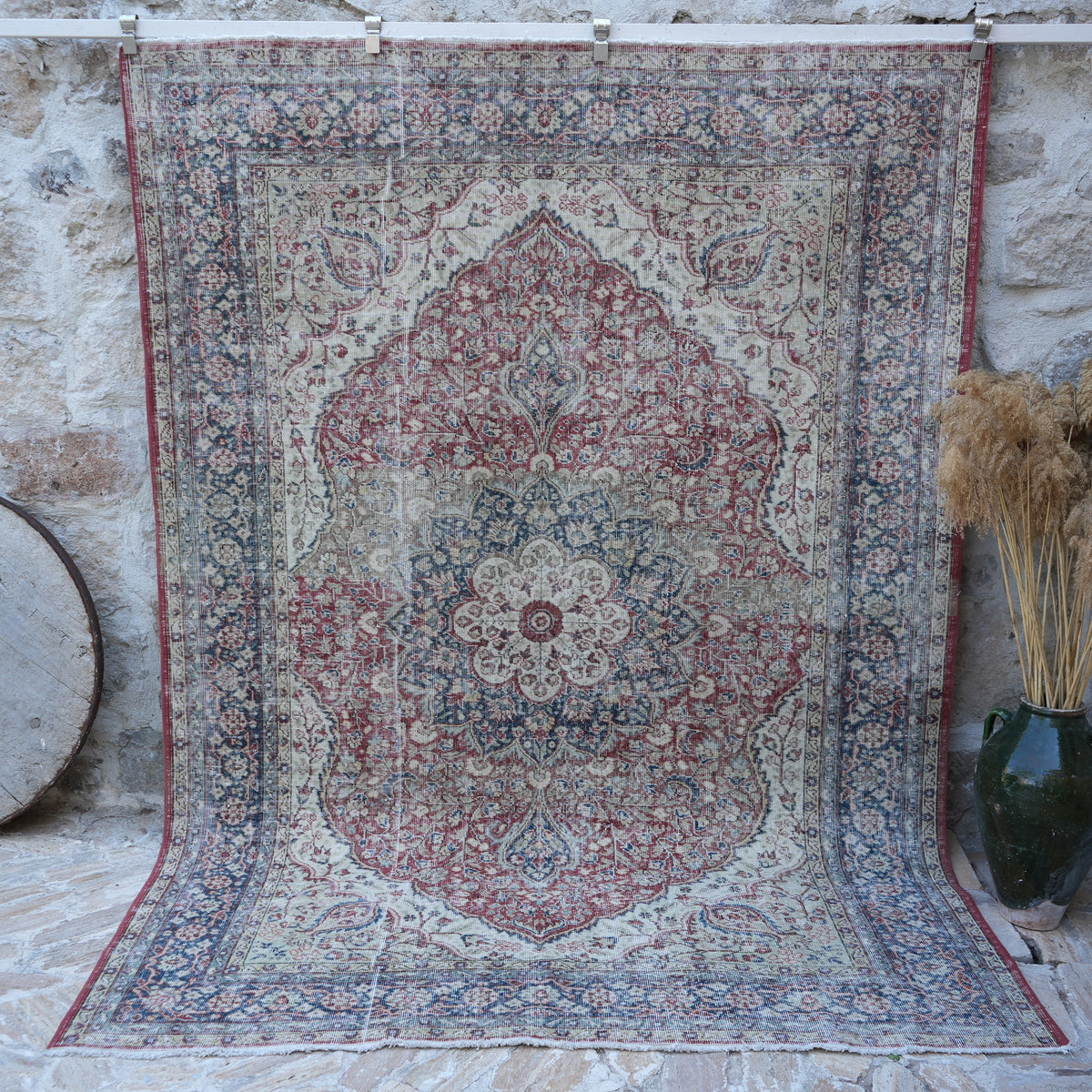
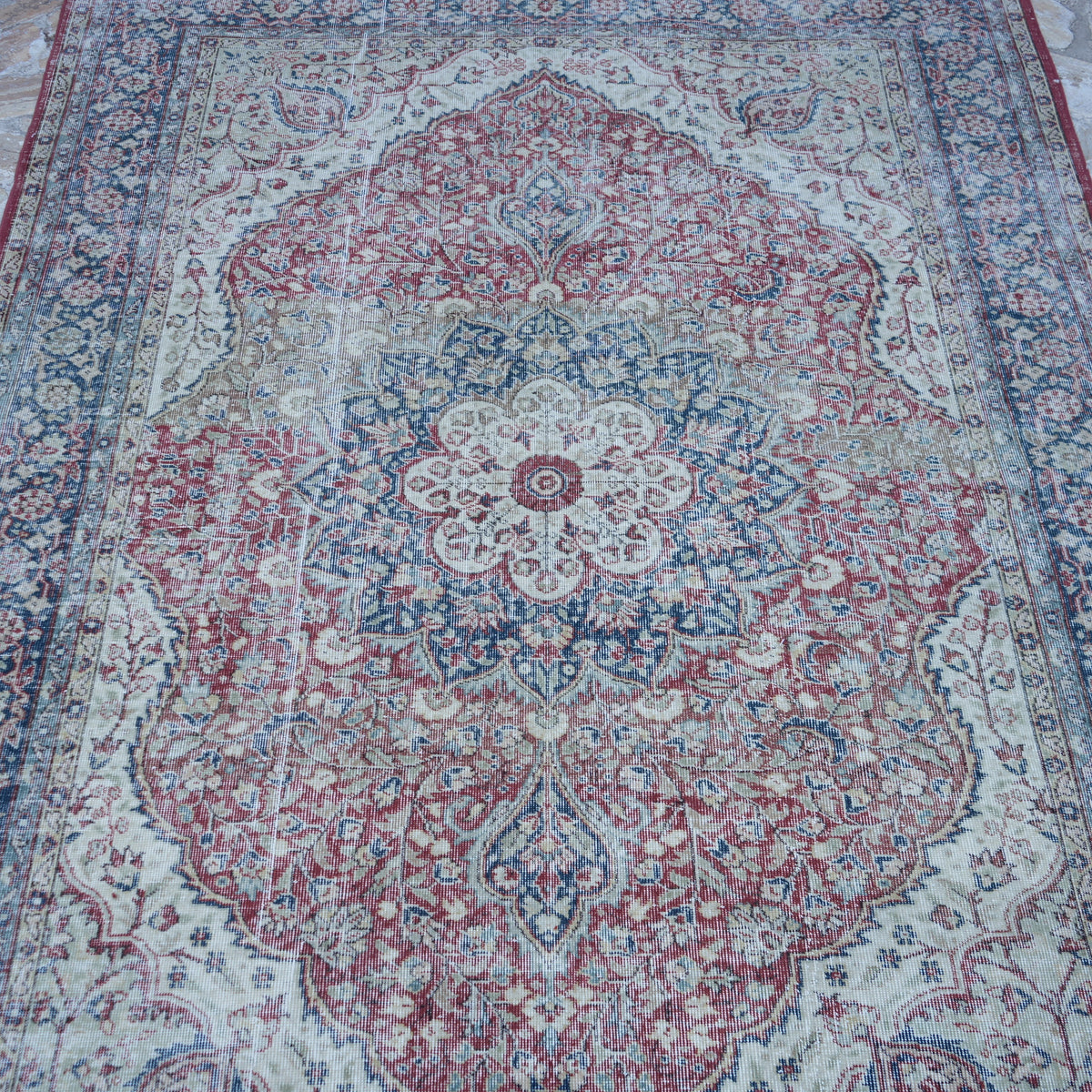
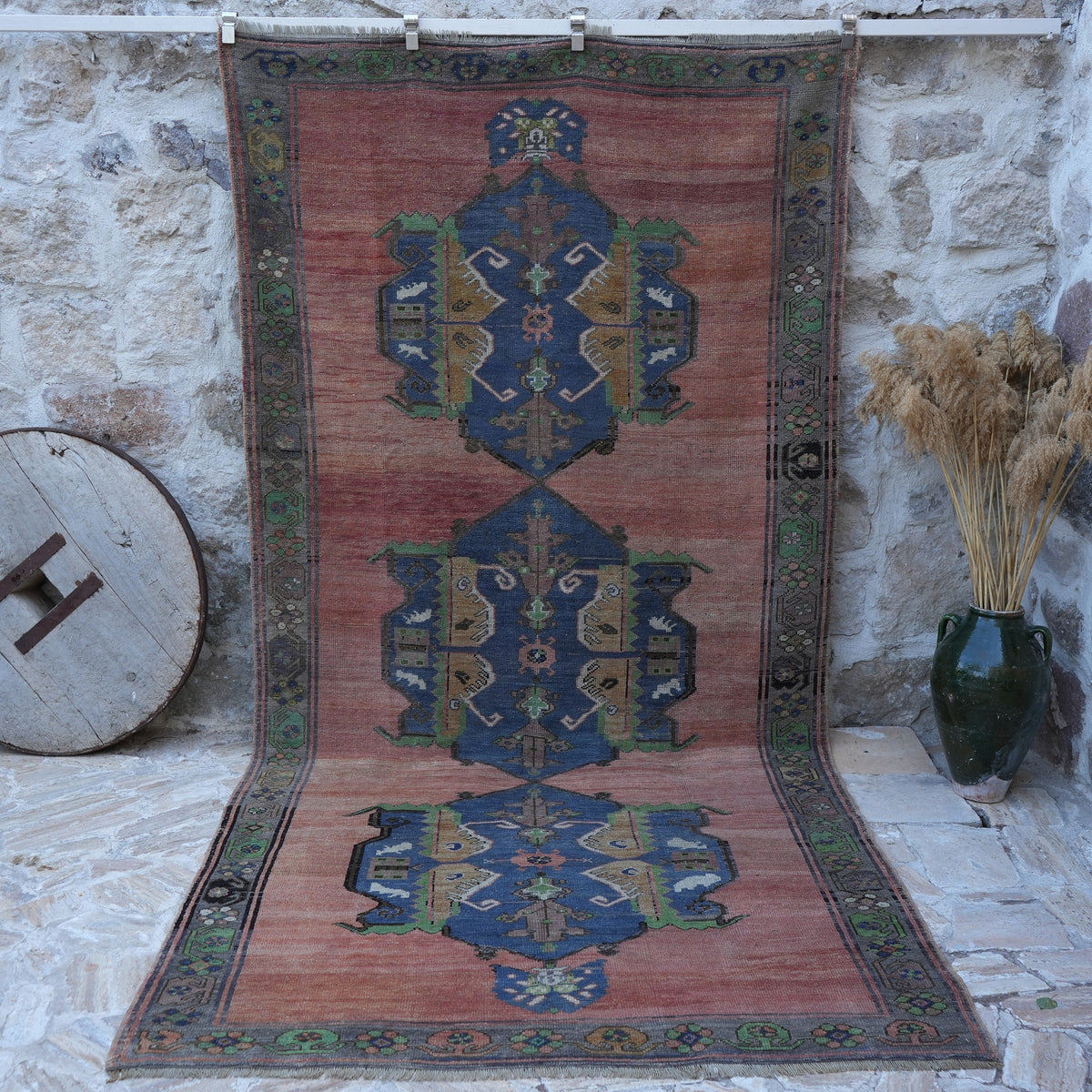
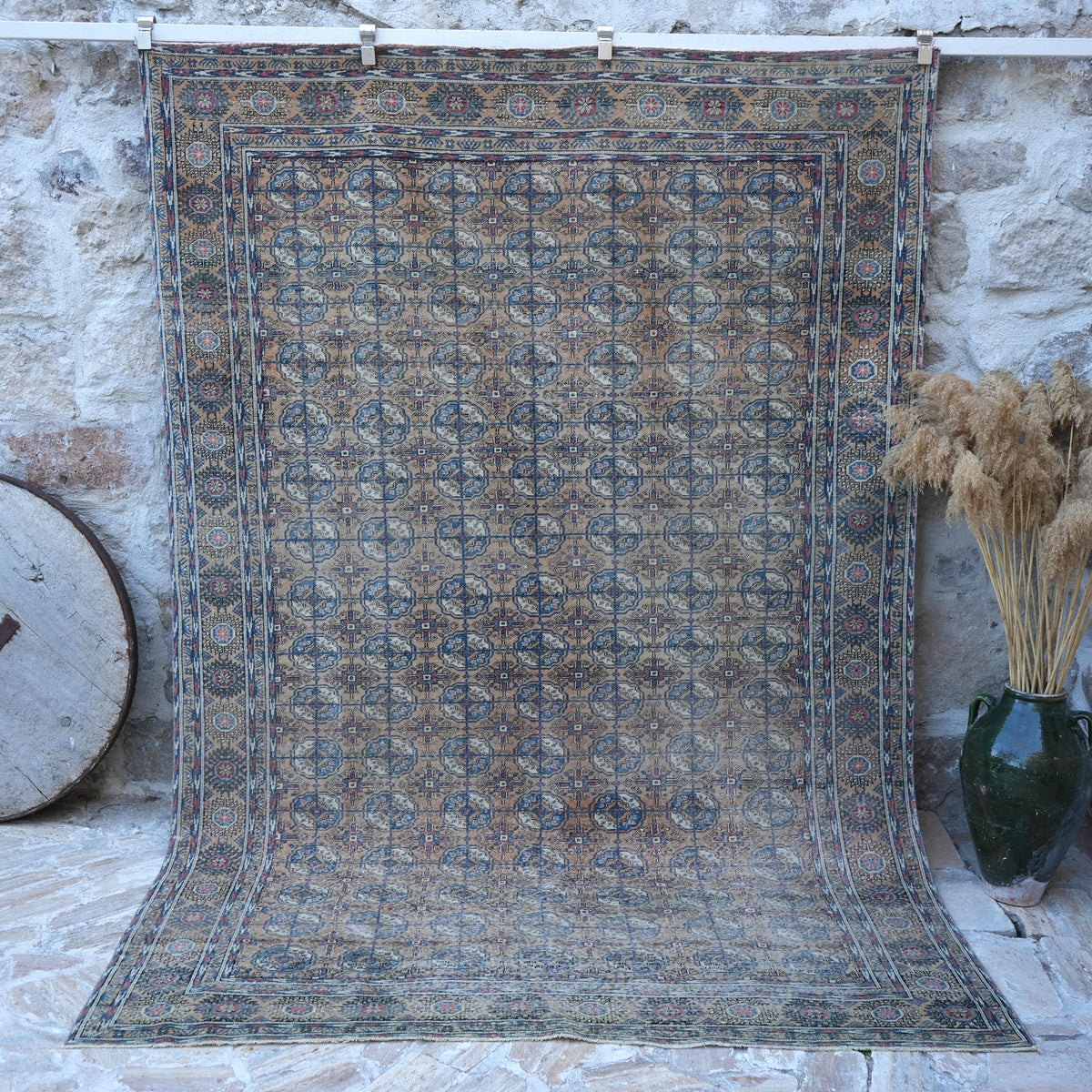
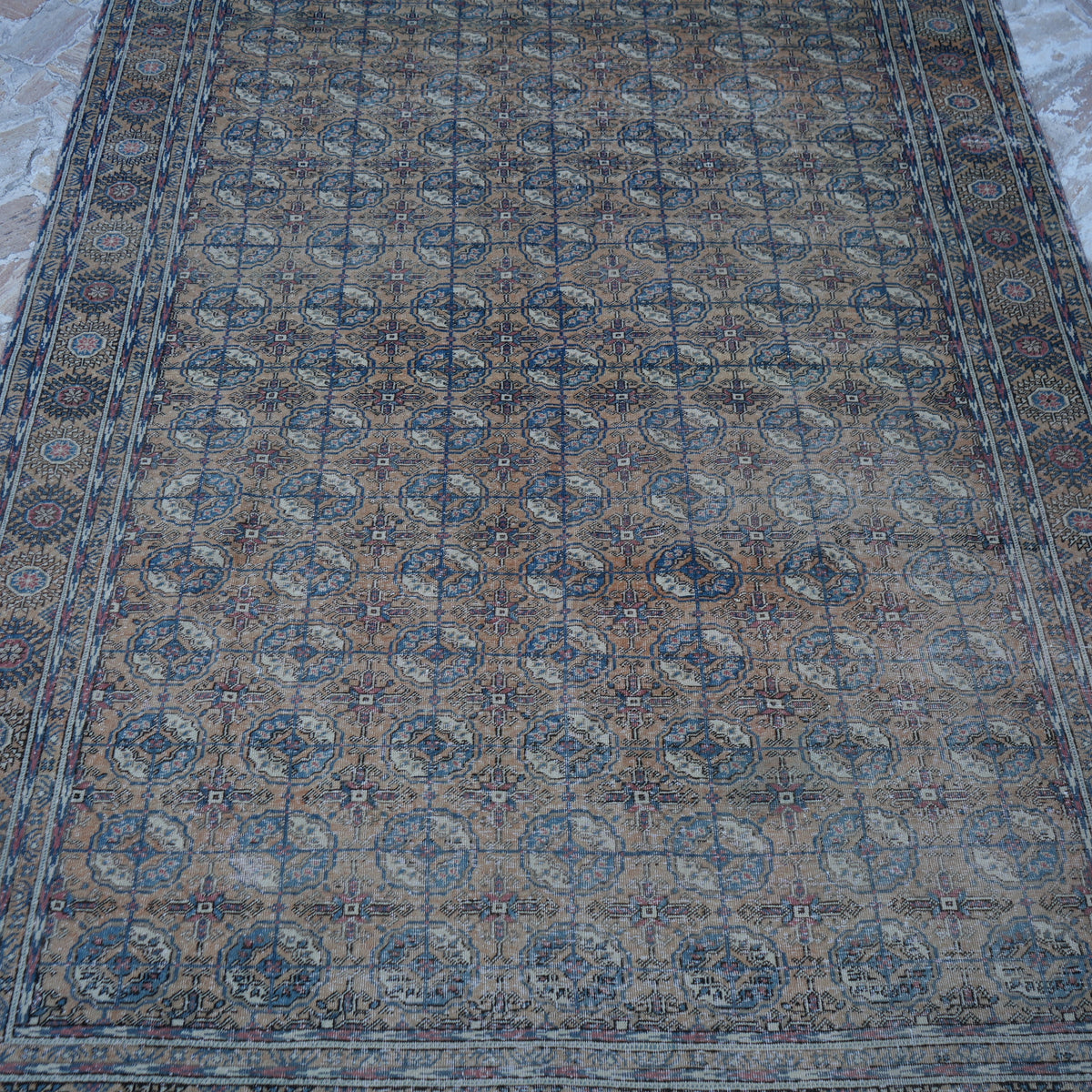
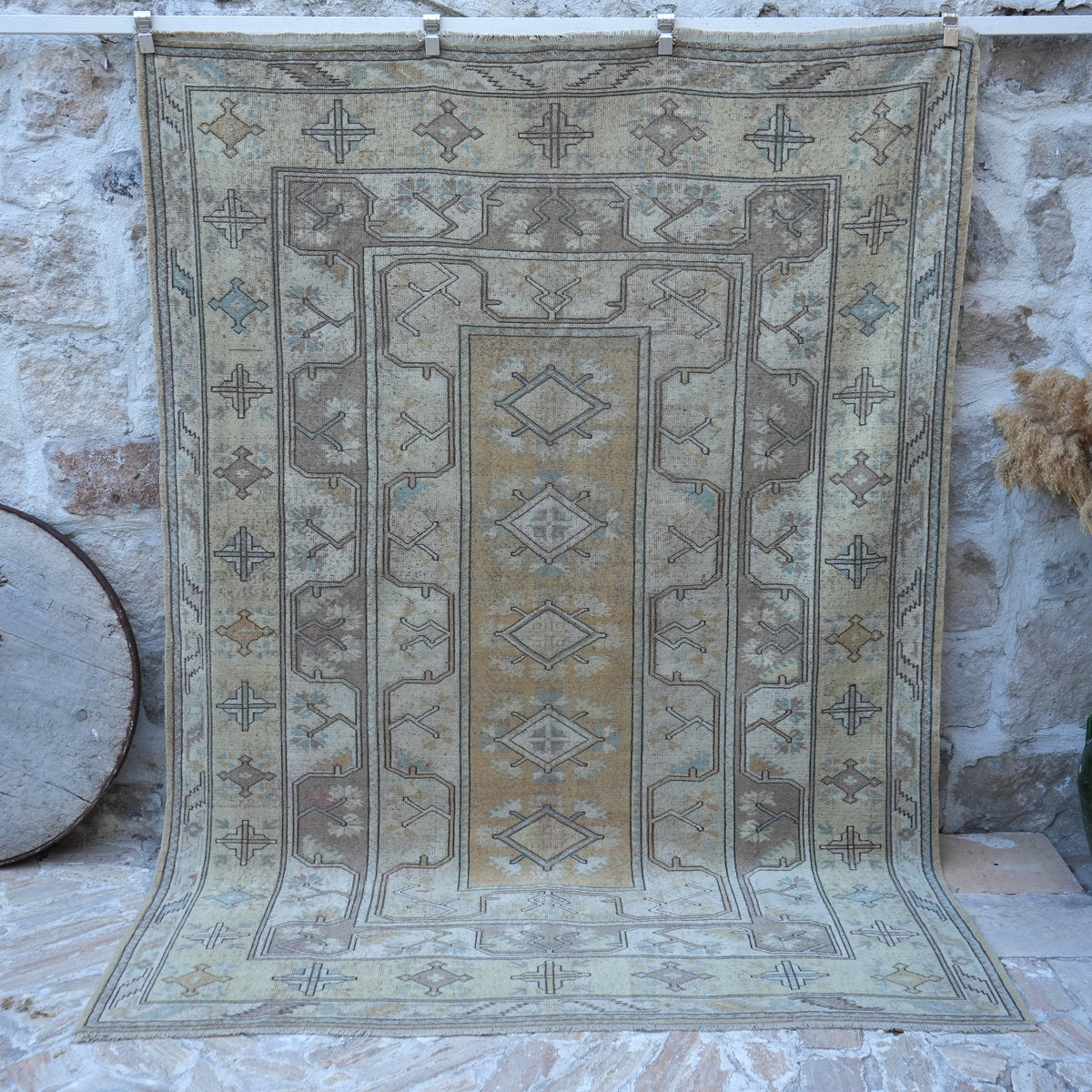
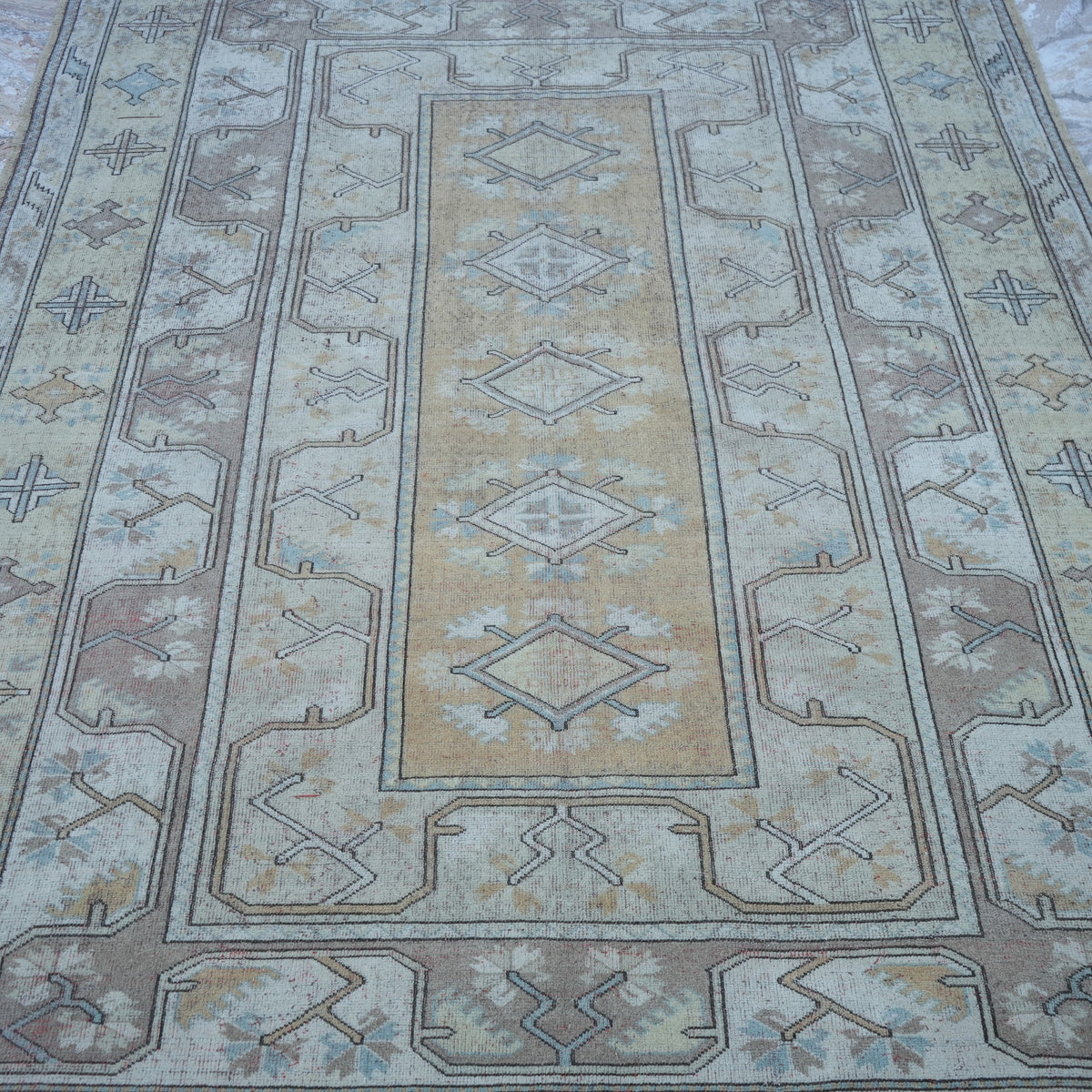
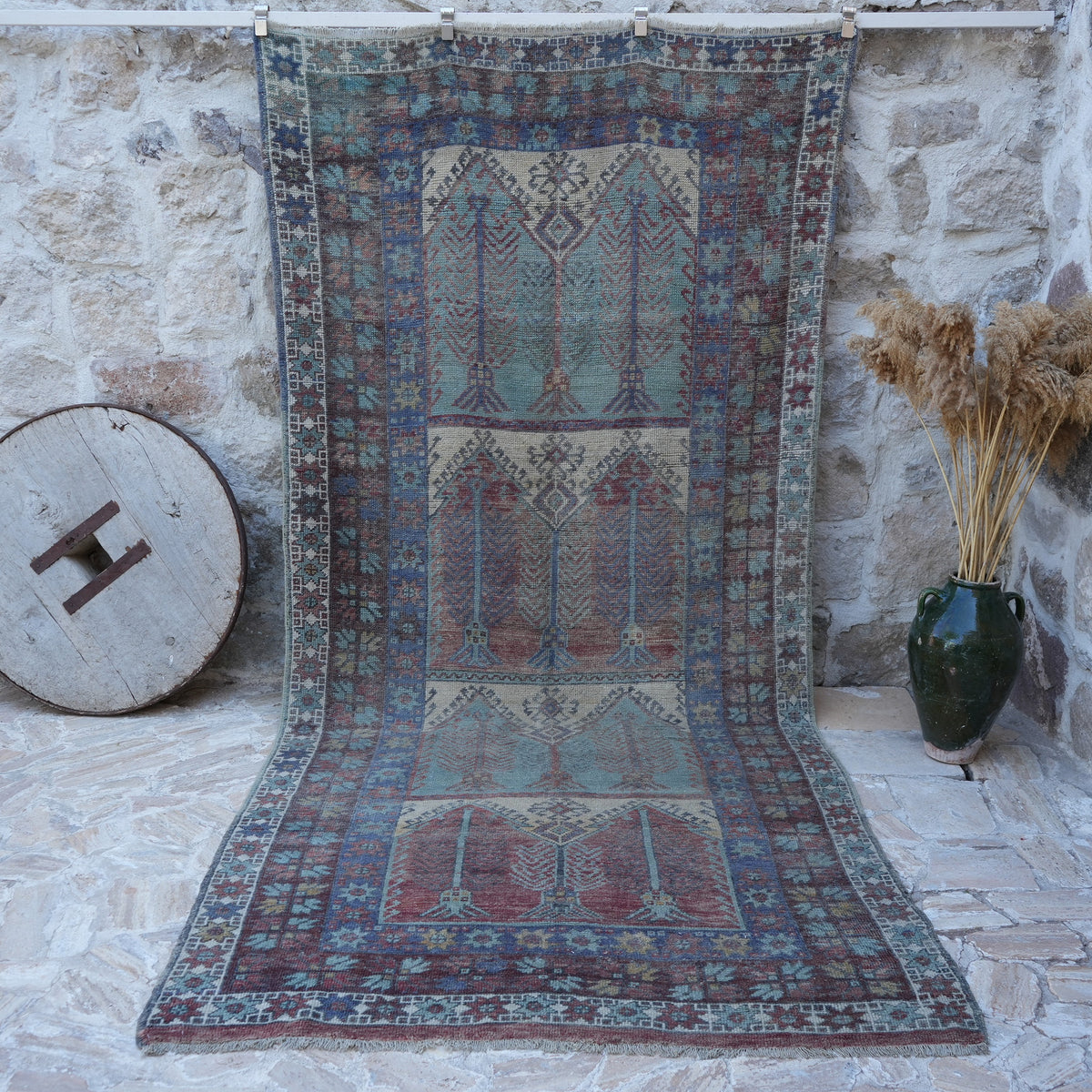
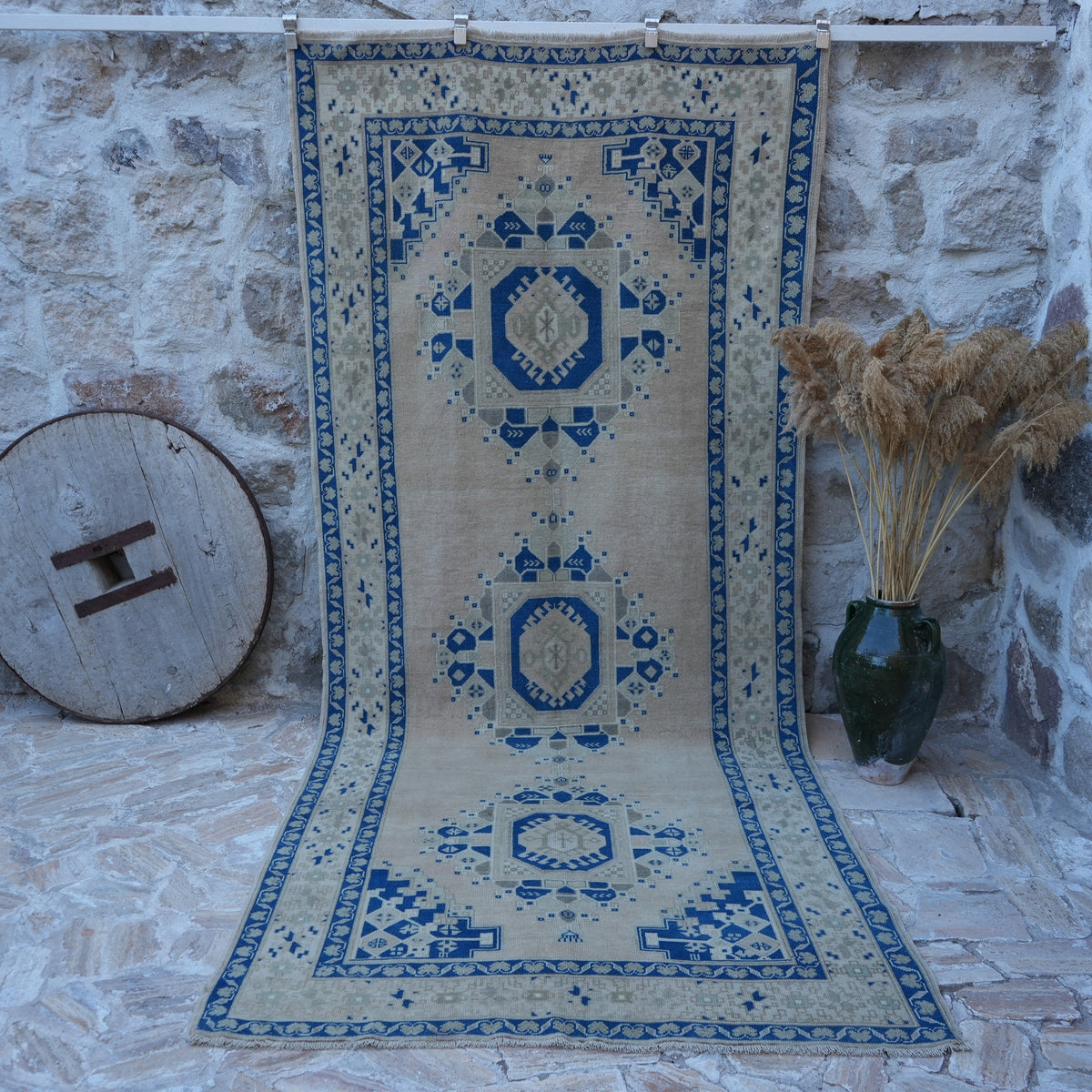
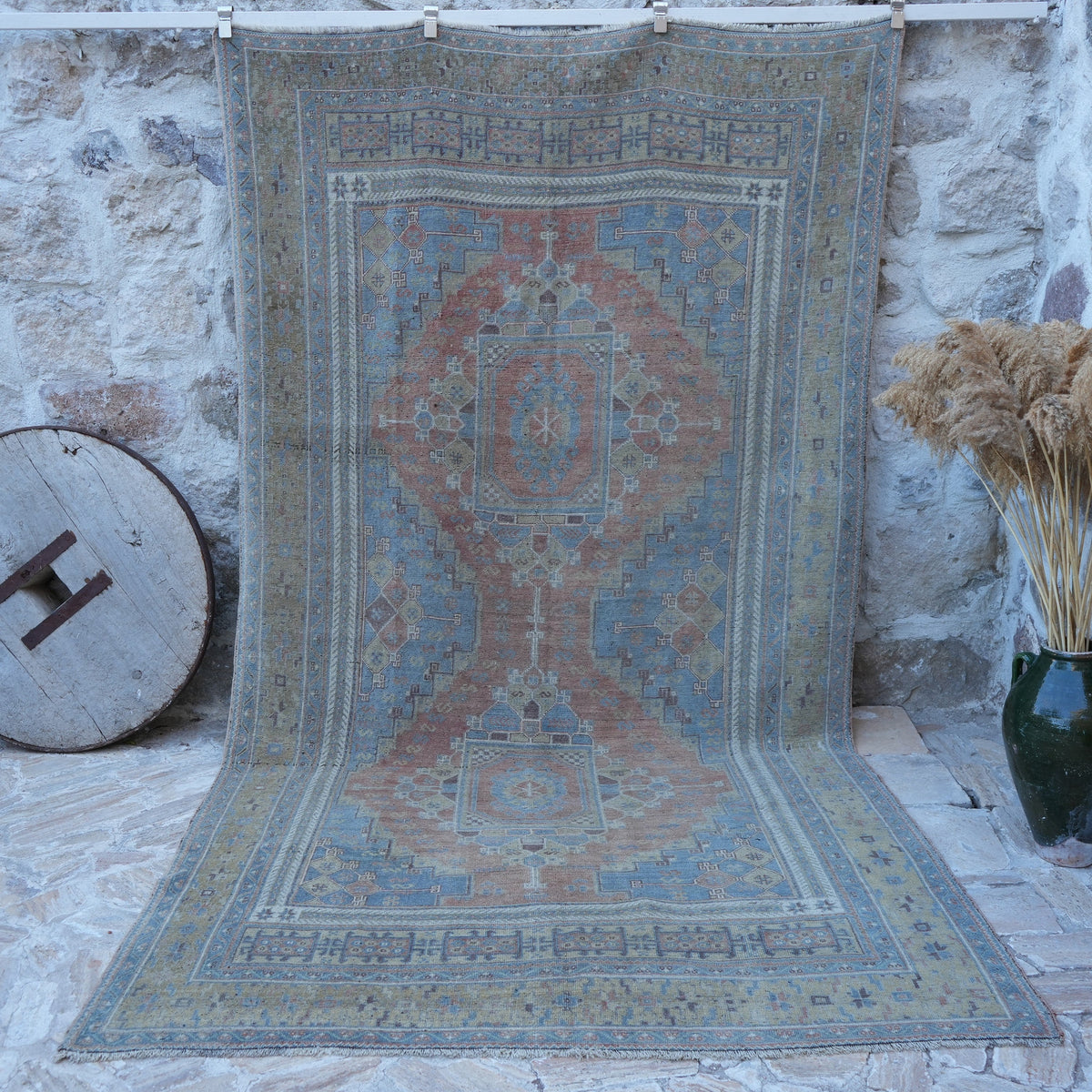
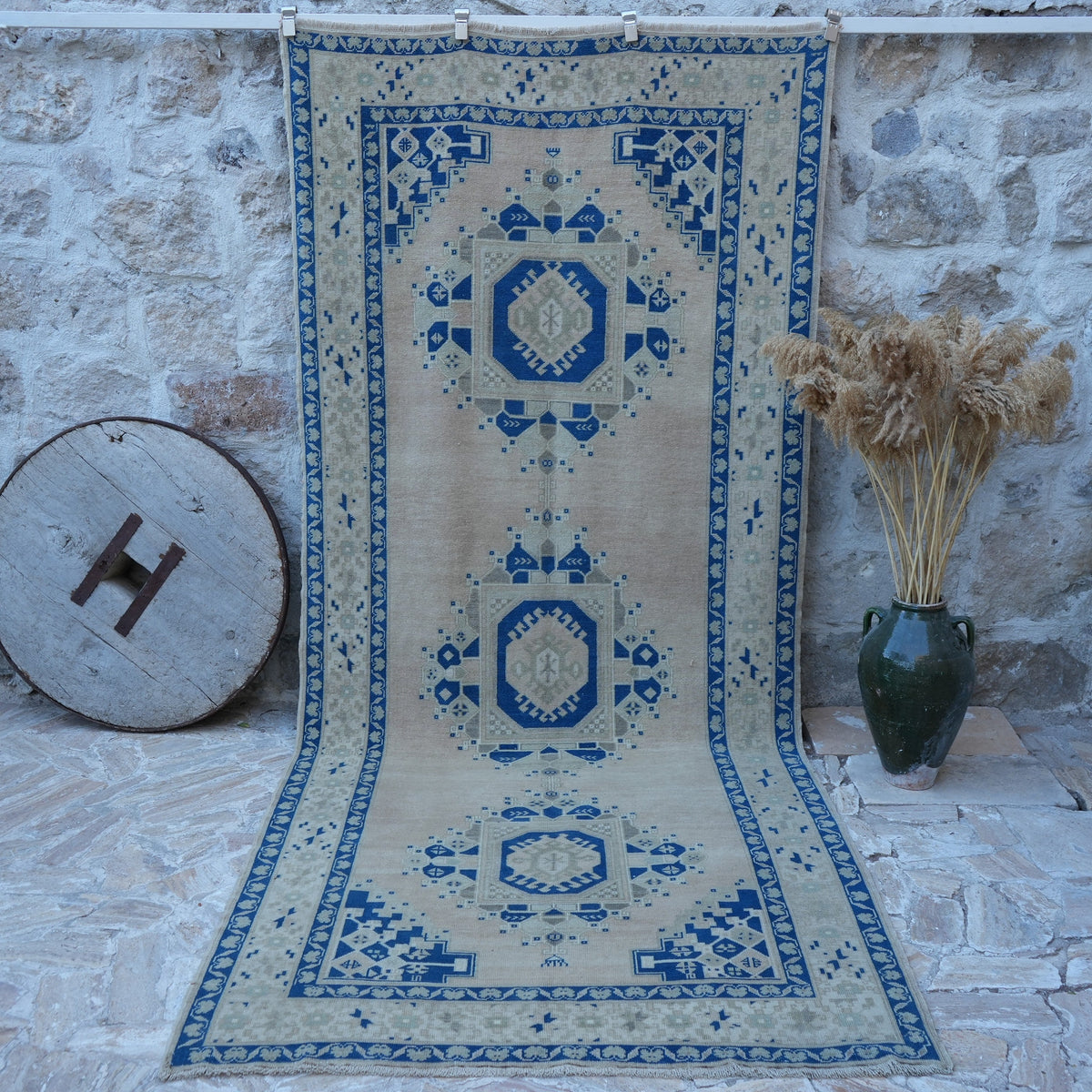
A handmade vintage rug can be washed, repaired, restored, and lived with for decades. That is the real difference between a disposable carpet and a piece with a future.
Washed in Cappadocia
Every piece cleaned and inspected before shipping.
Genuine Vintage Wool
50–100+ year lifespan. No synthetic fibers.
30-Day Returns
Free returns on US orders. No restocking fees.
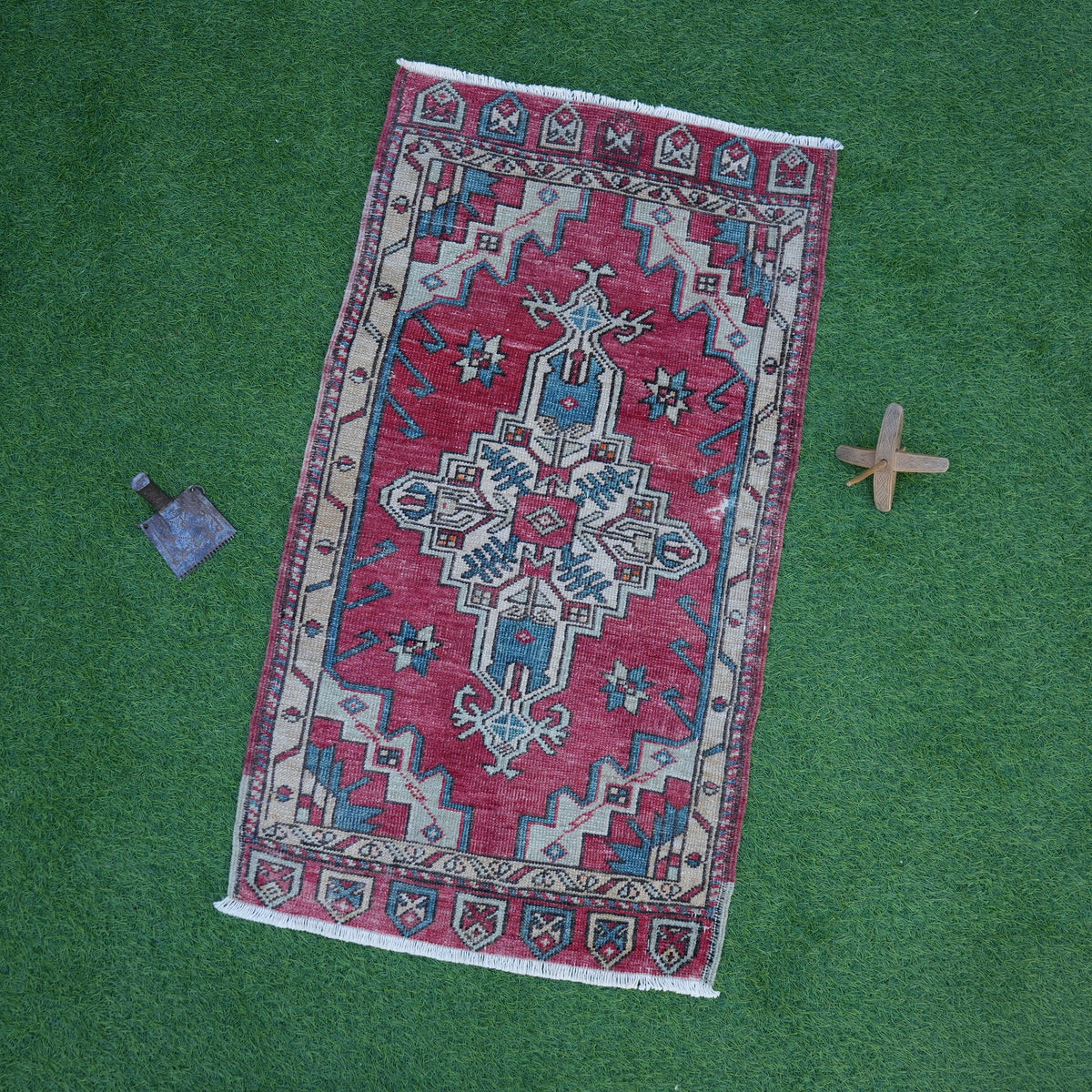
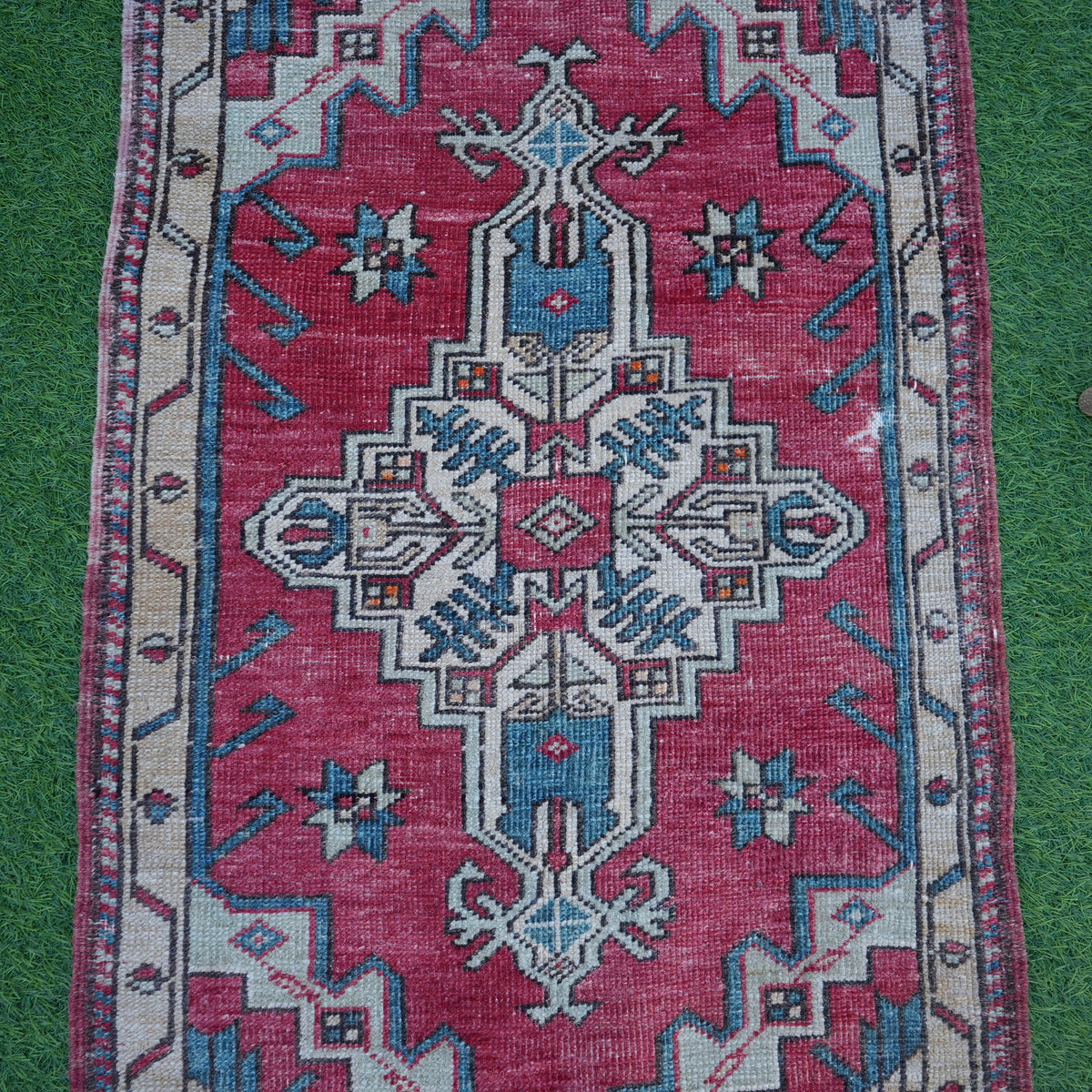
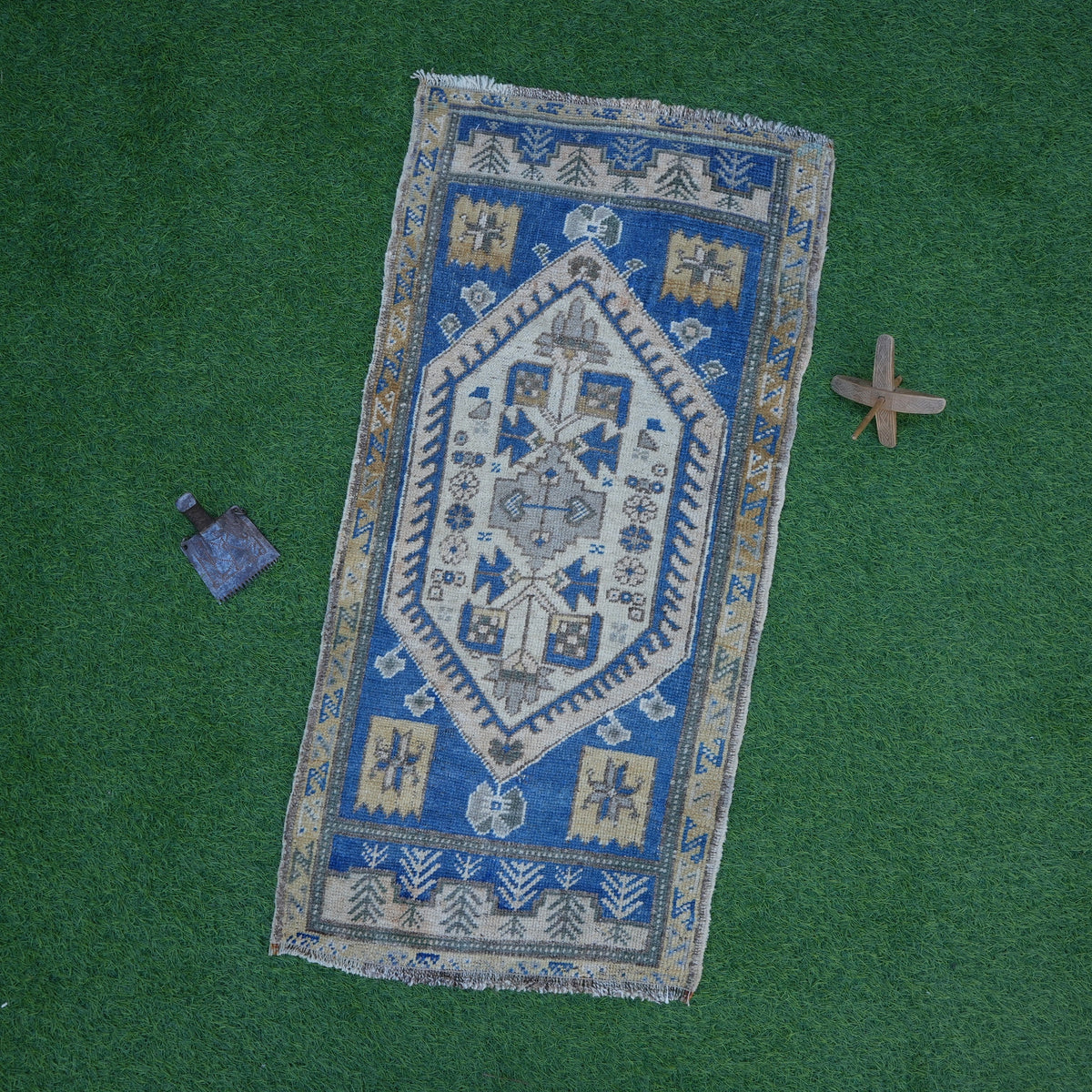
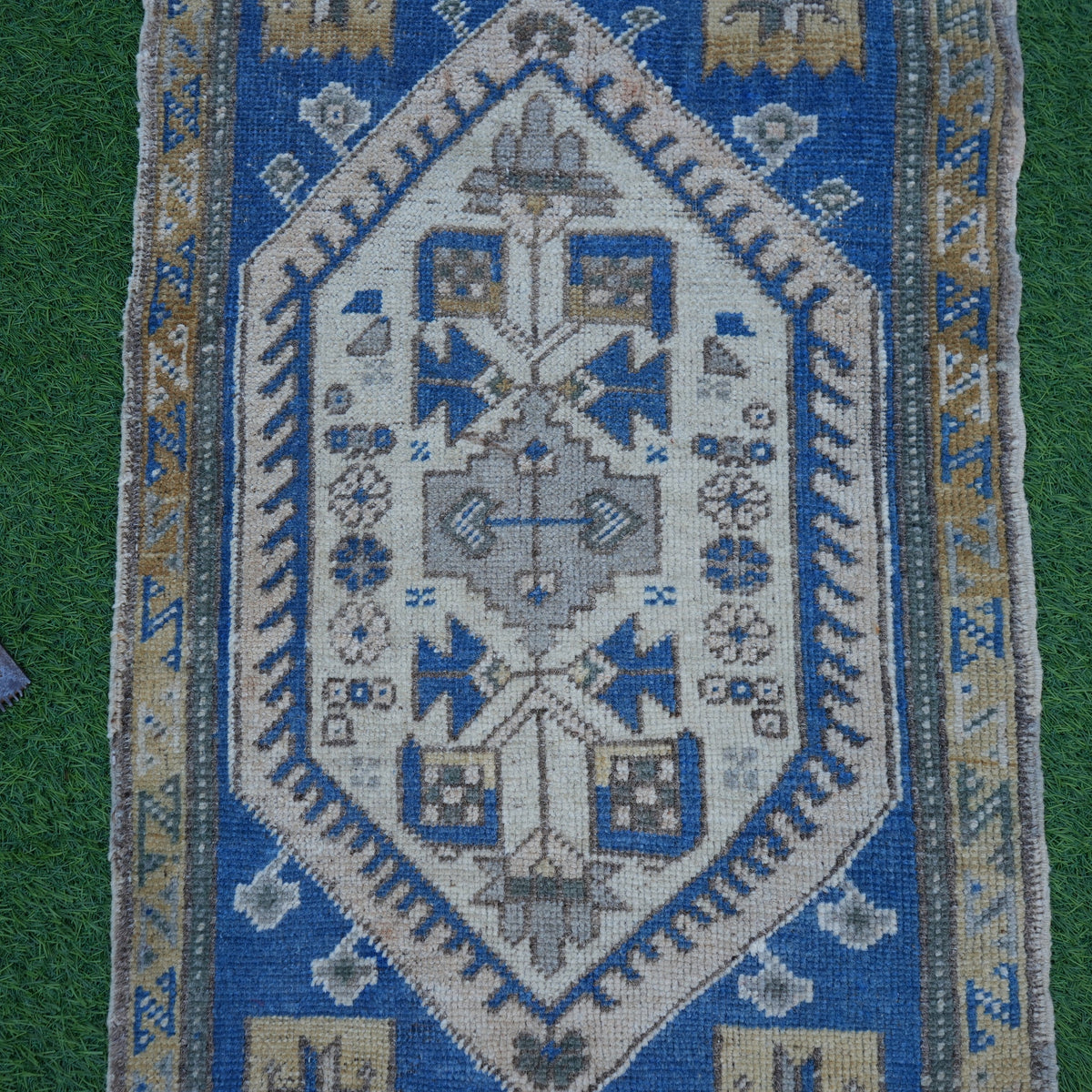
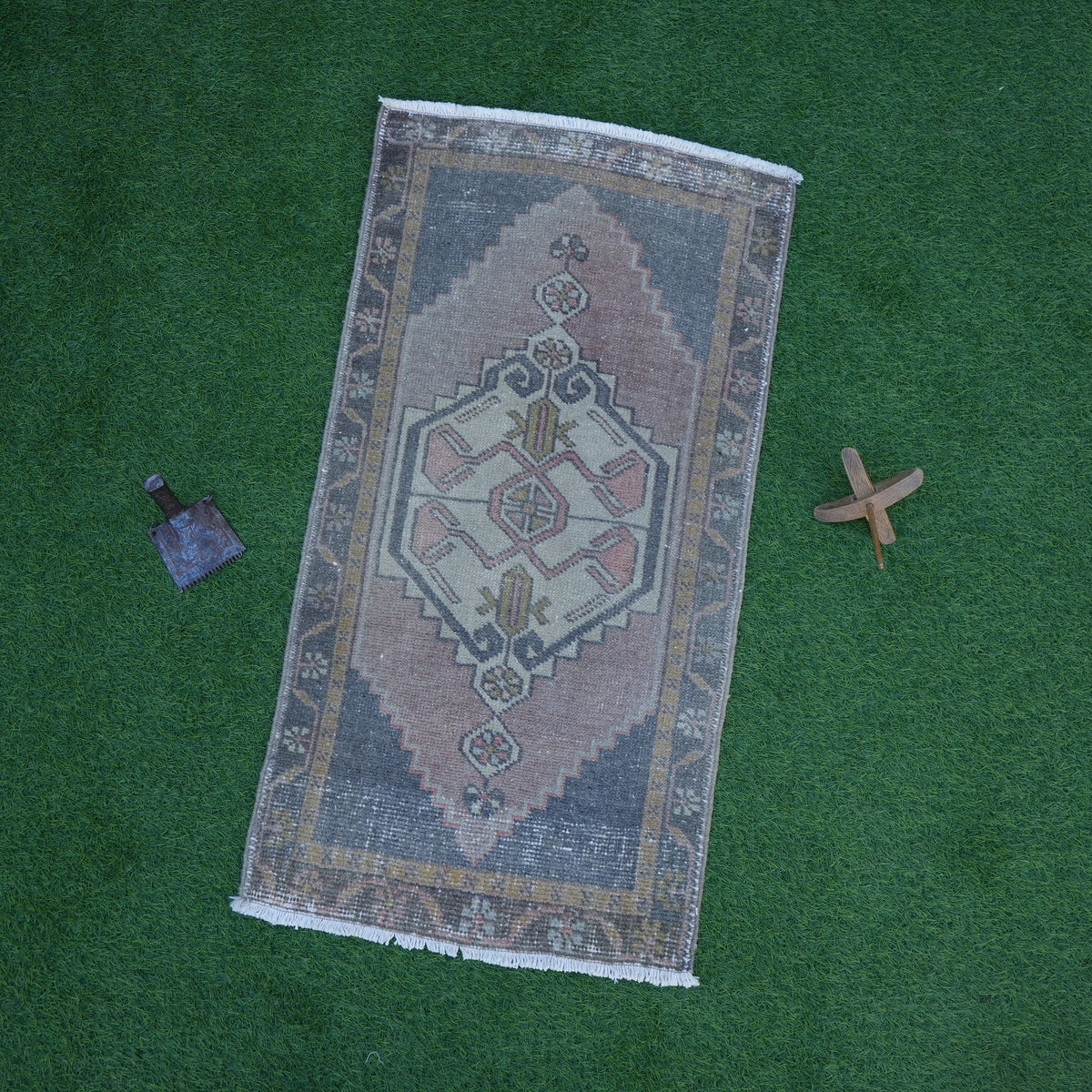
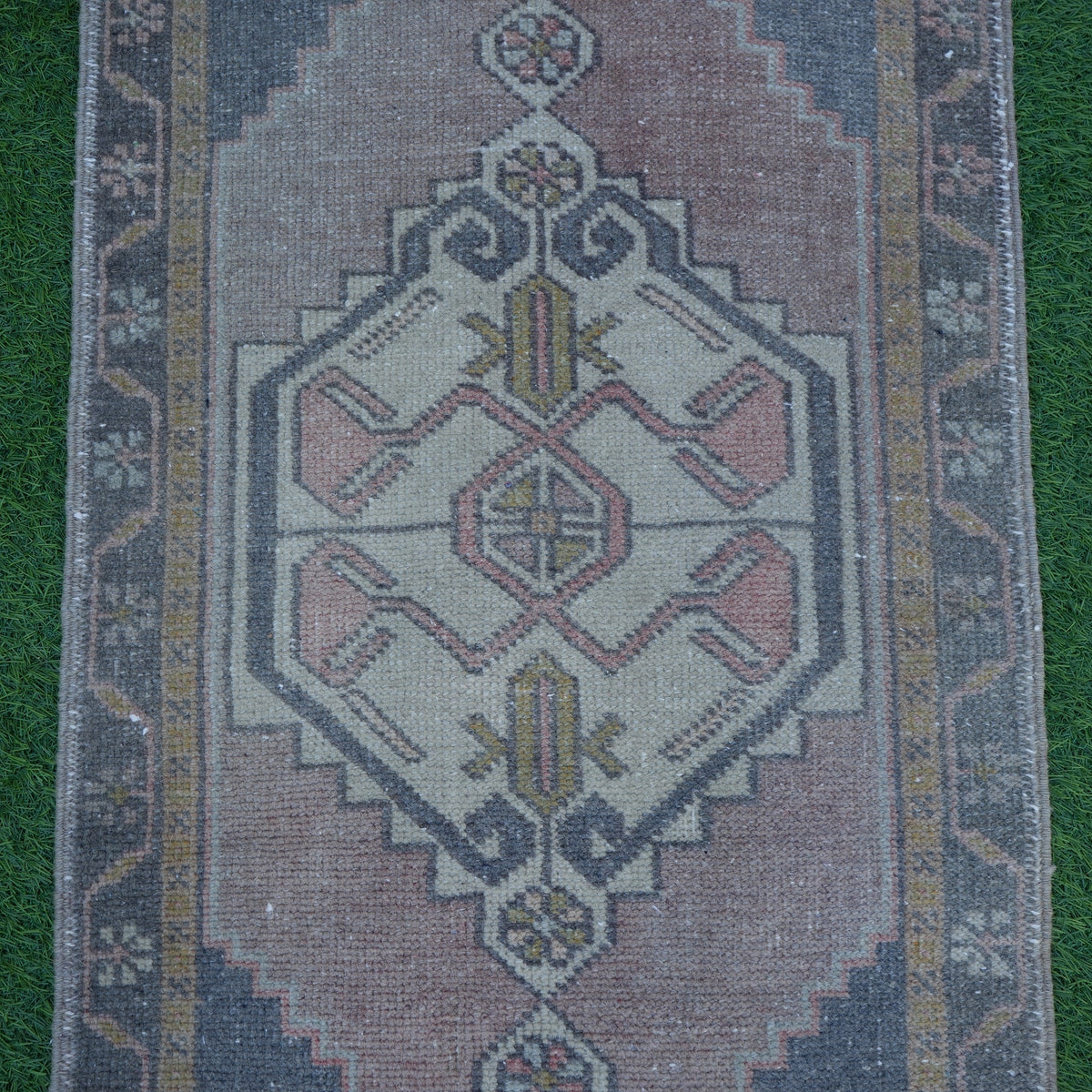
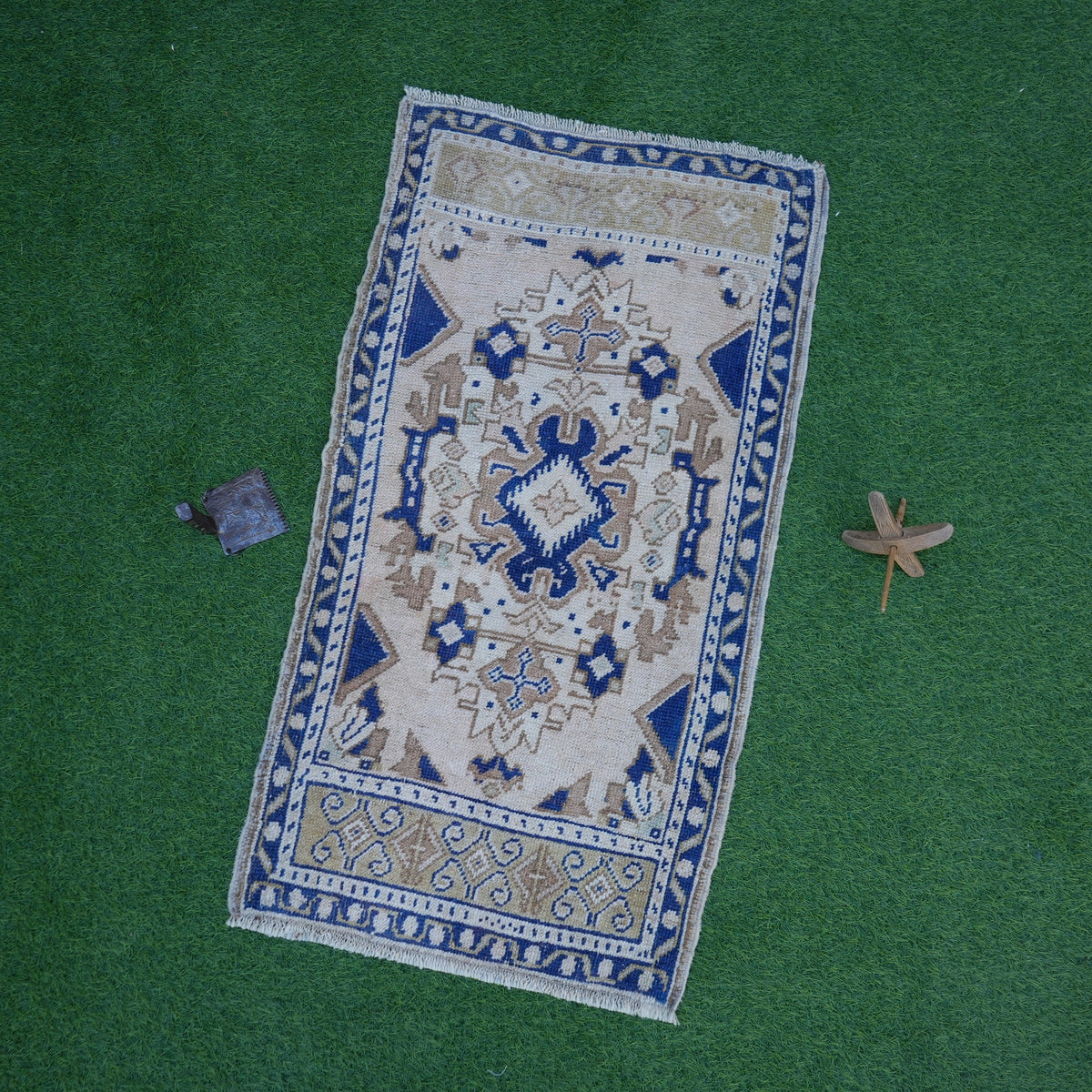
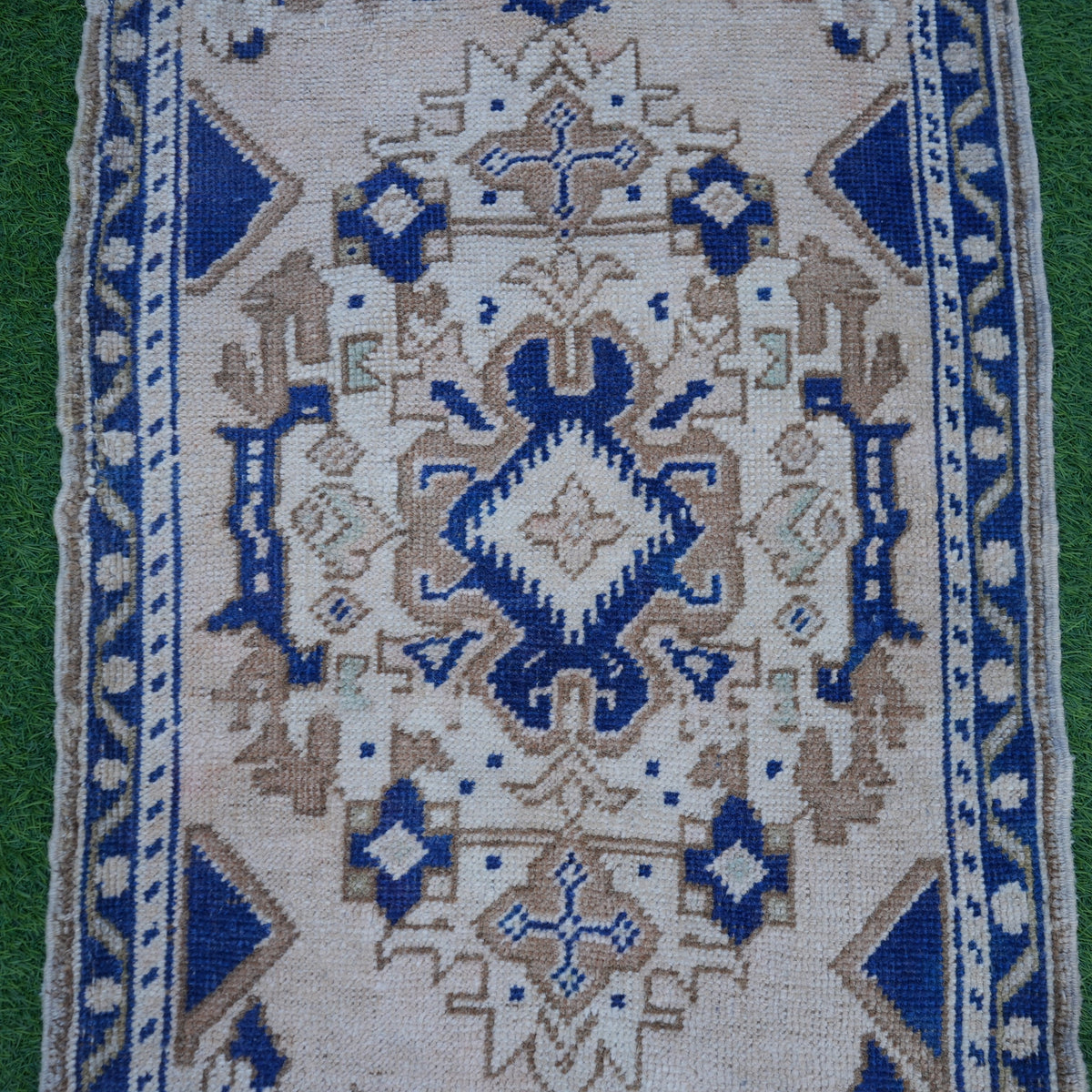
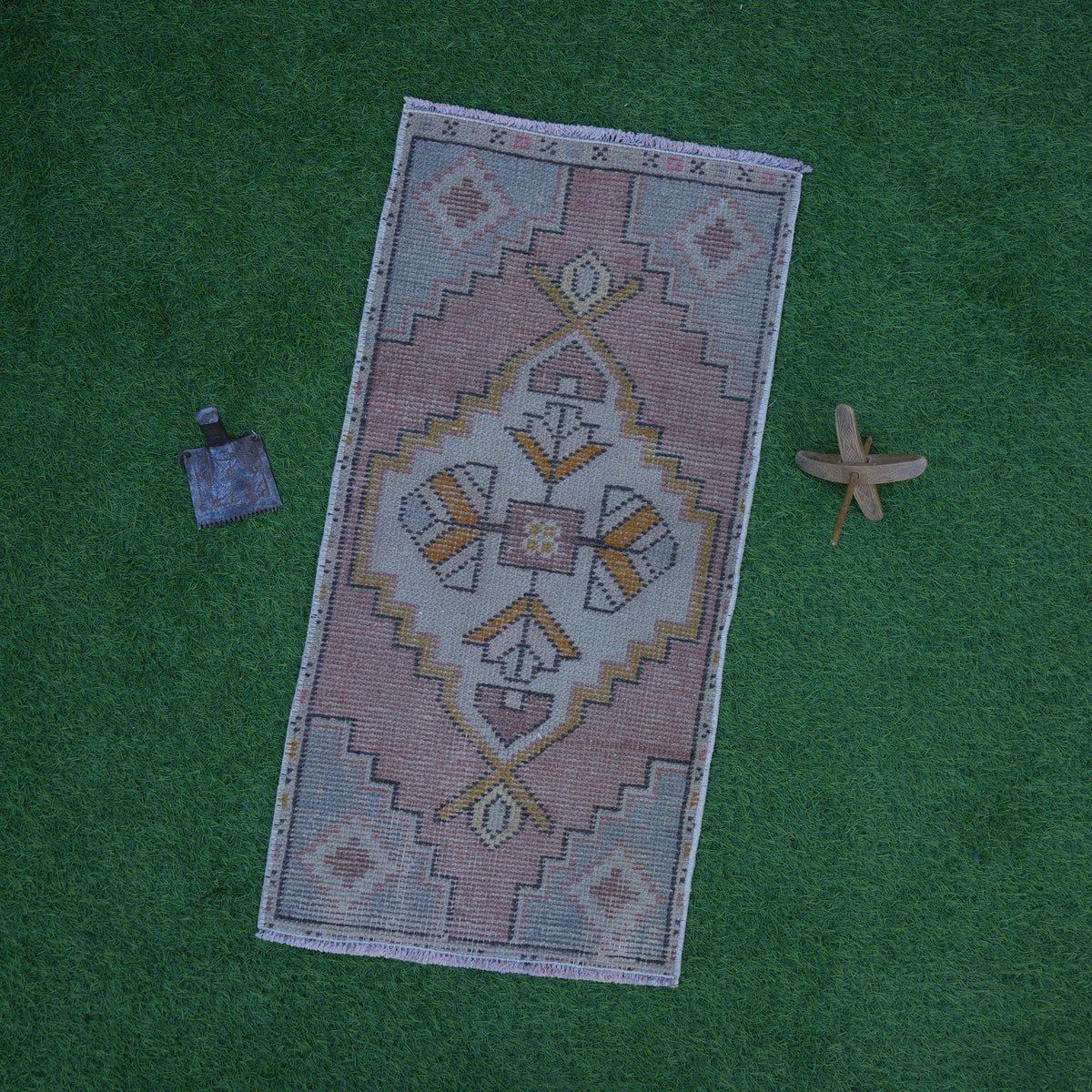
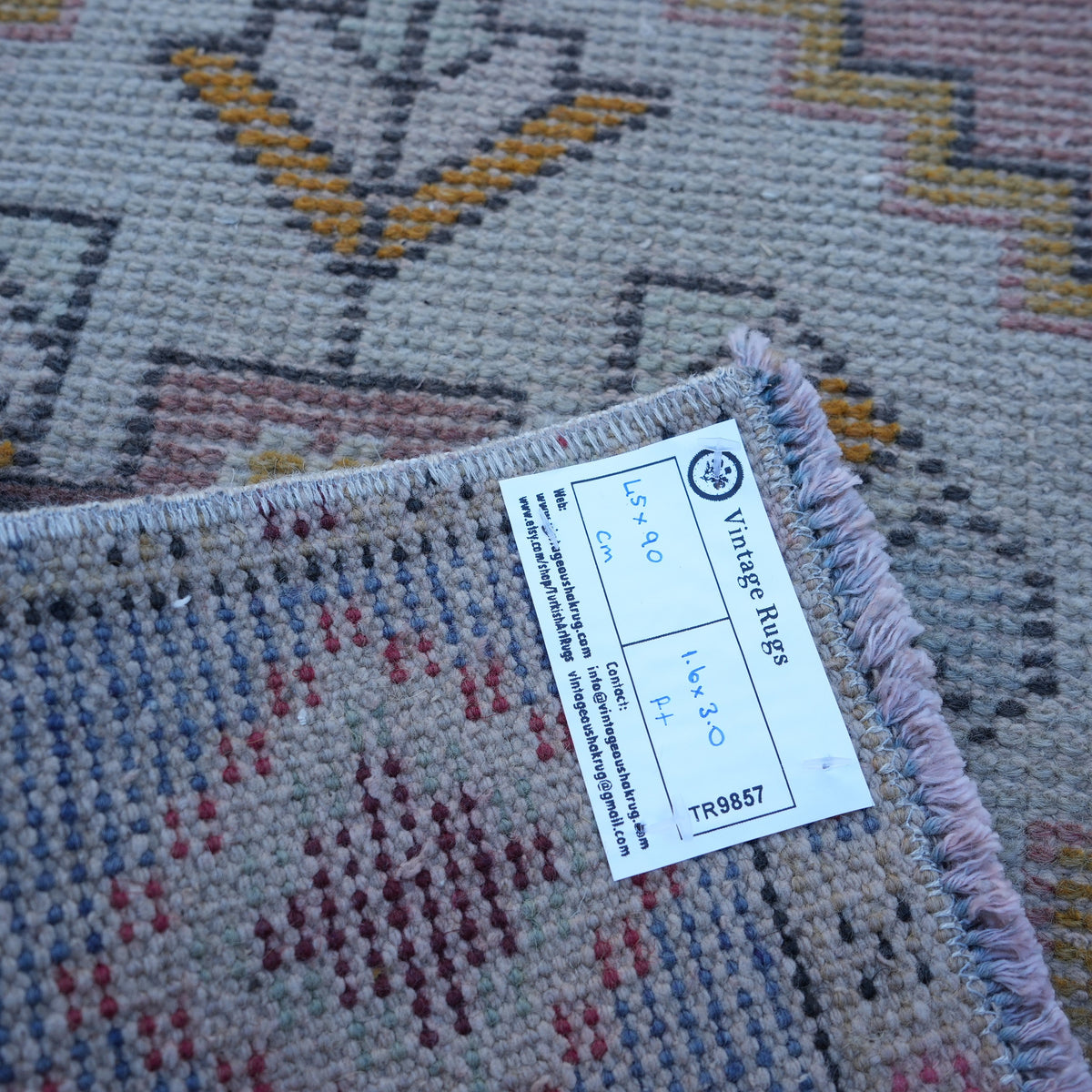
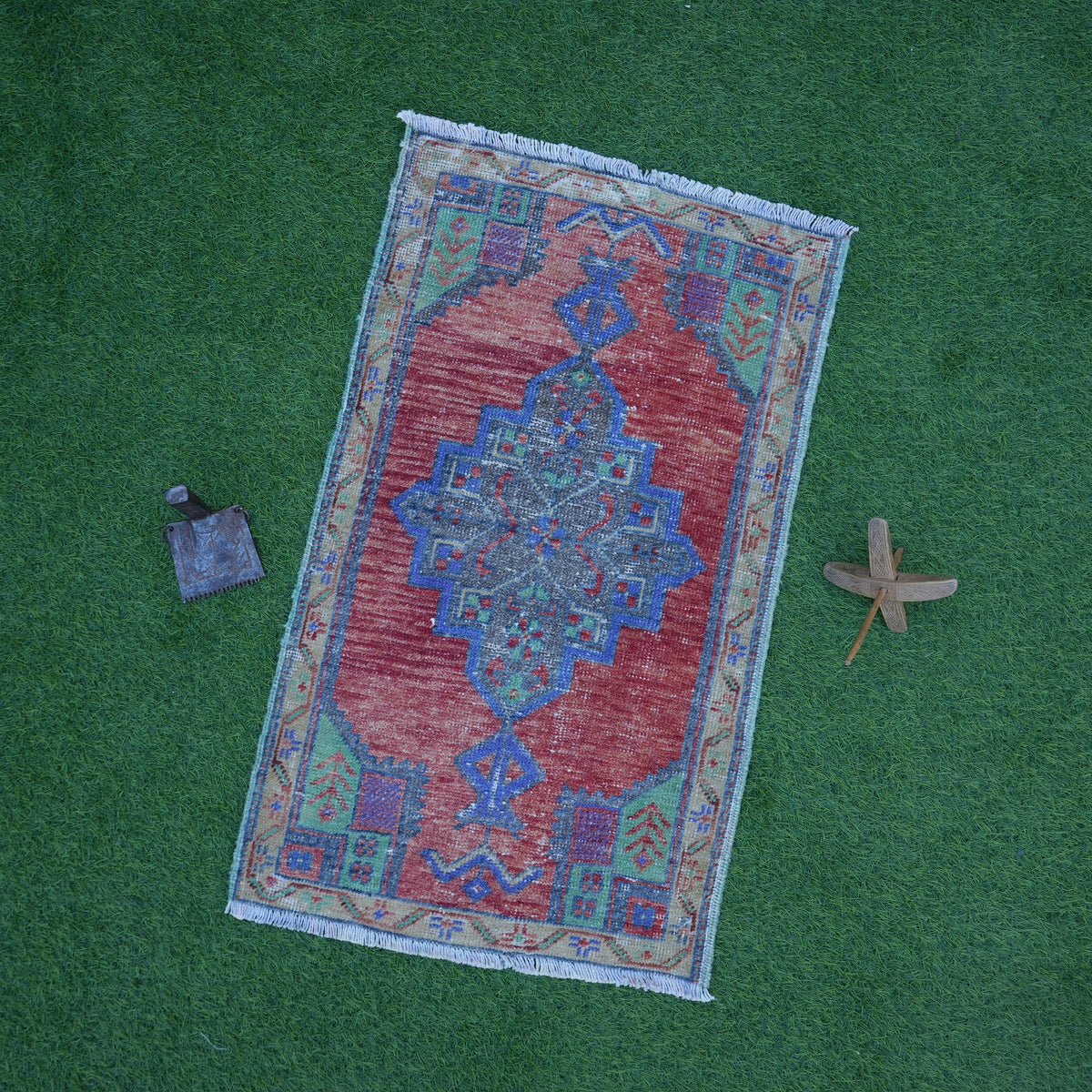
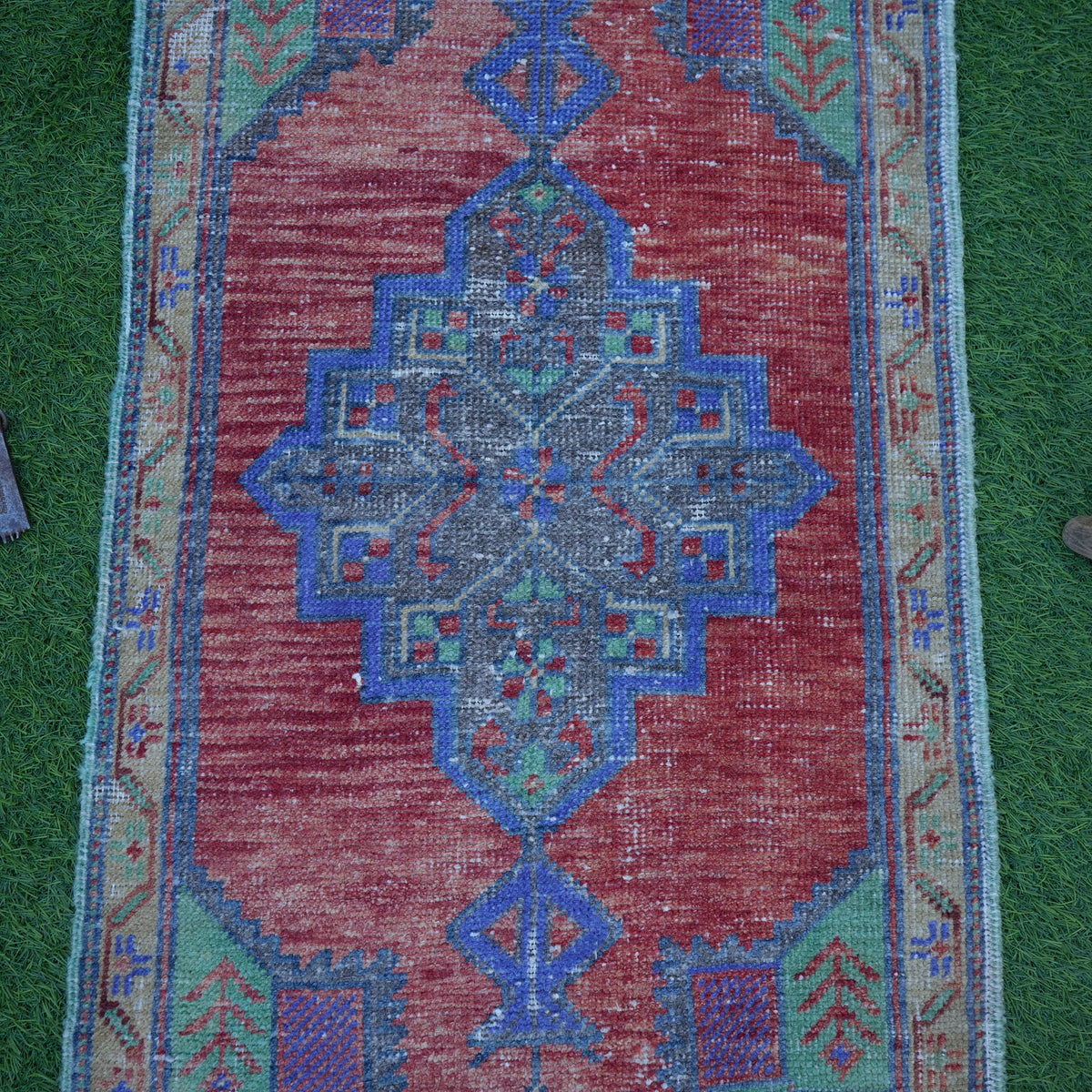
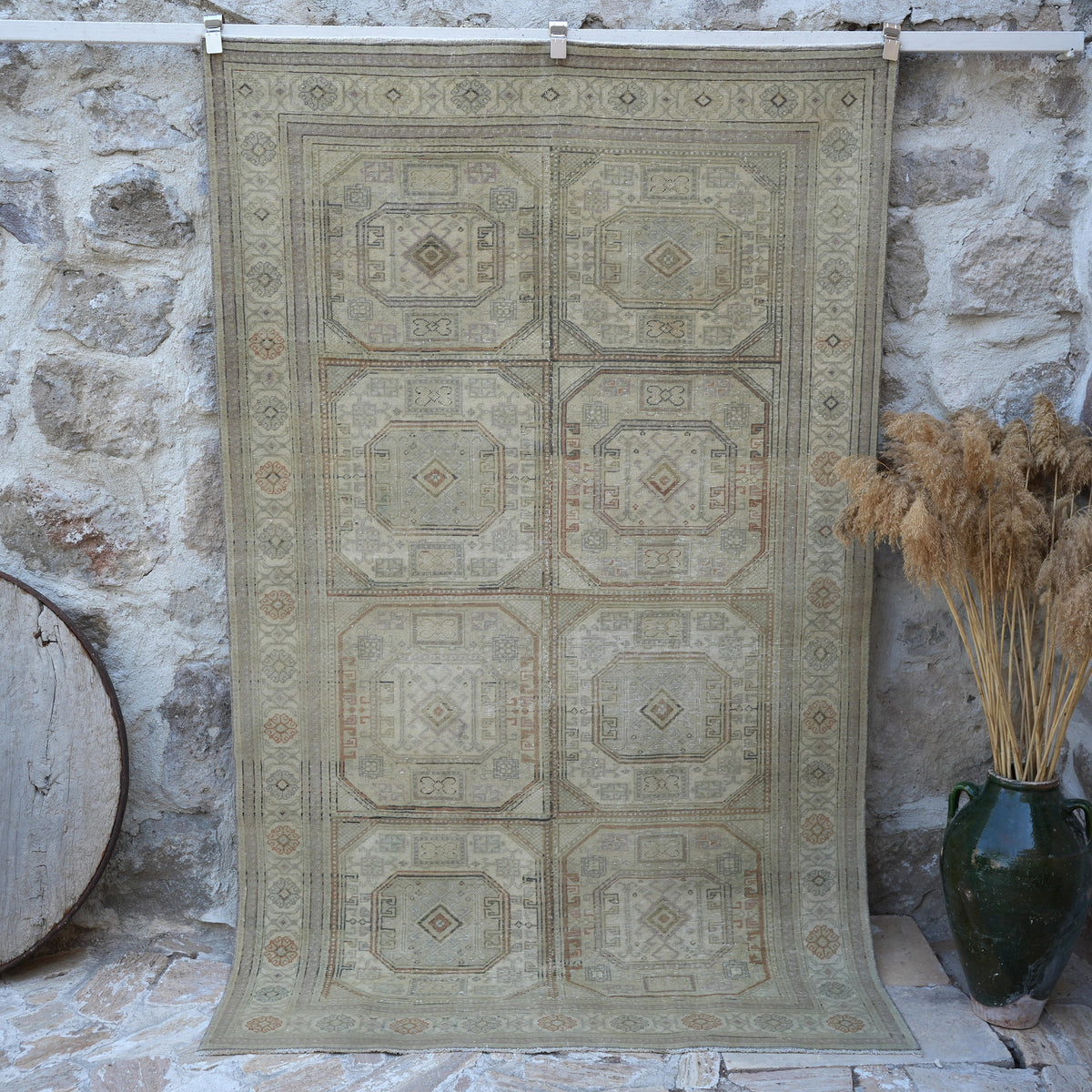
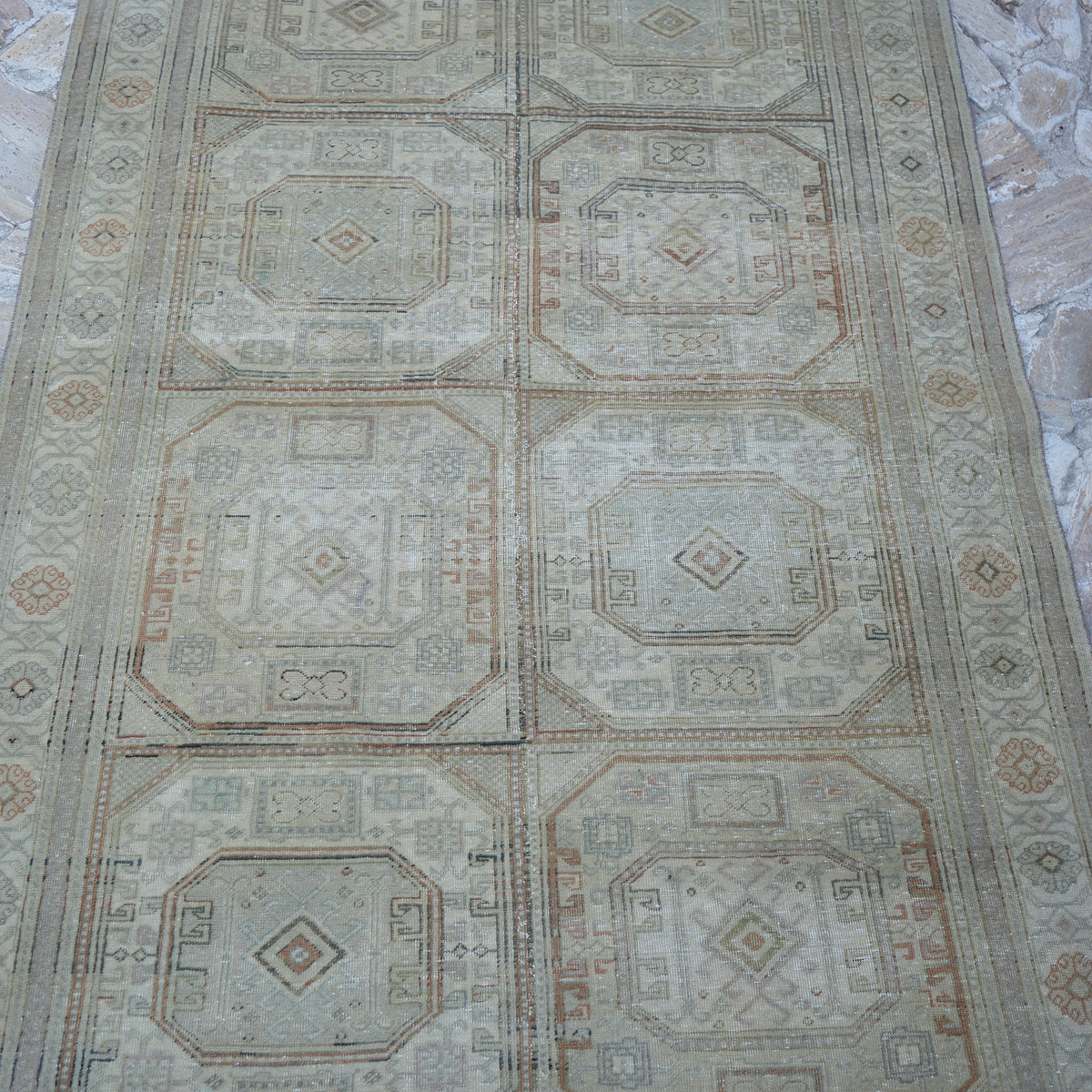
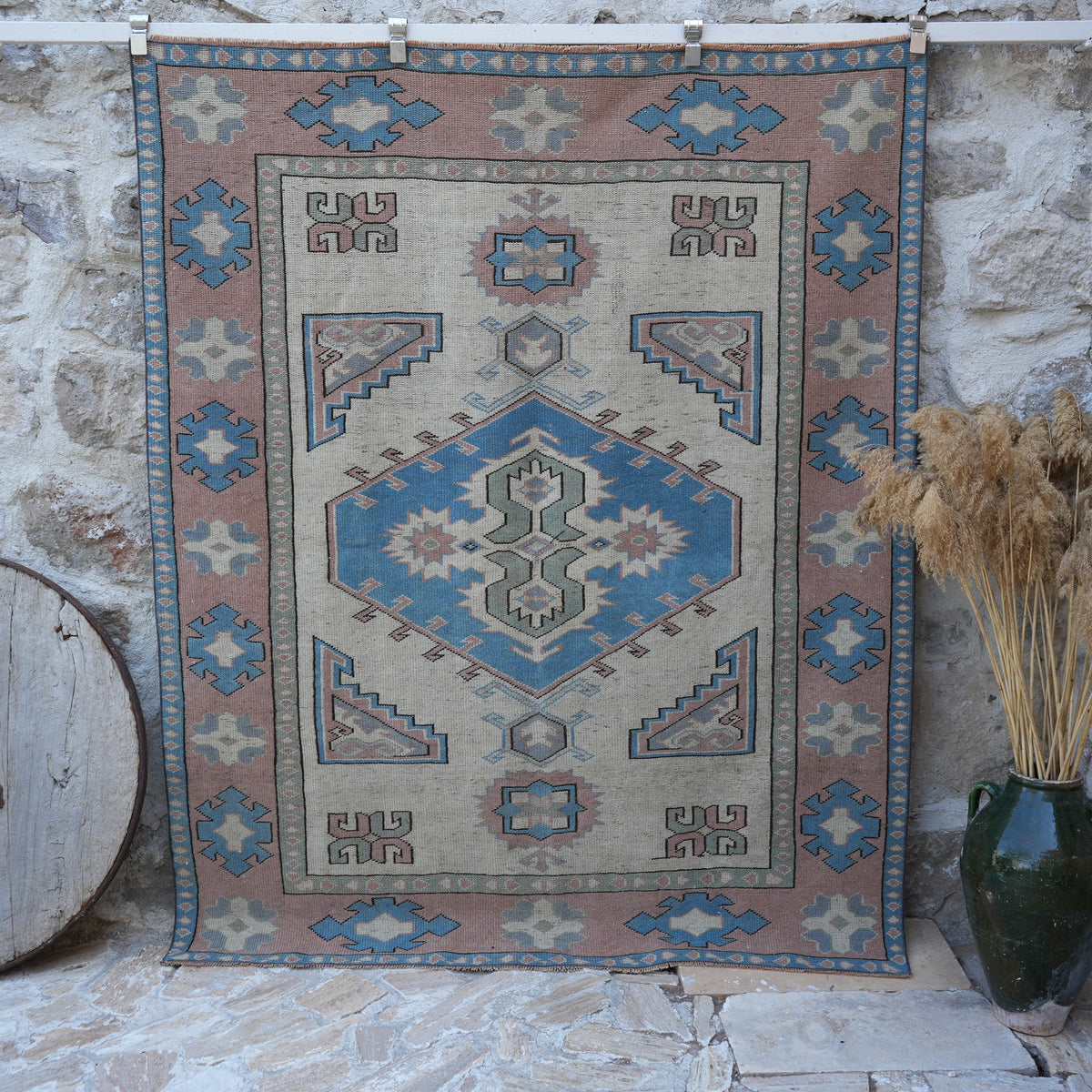
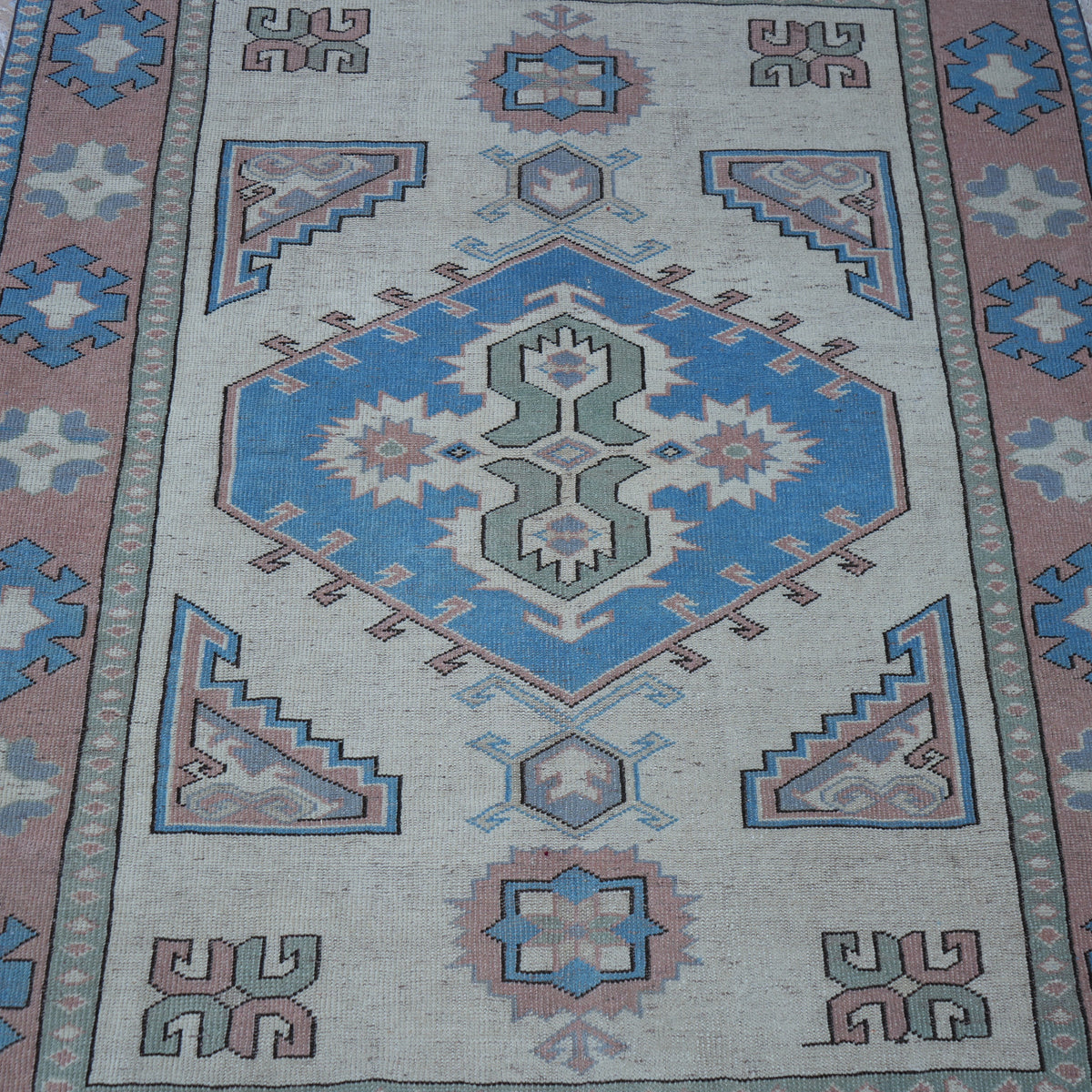
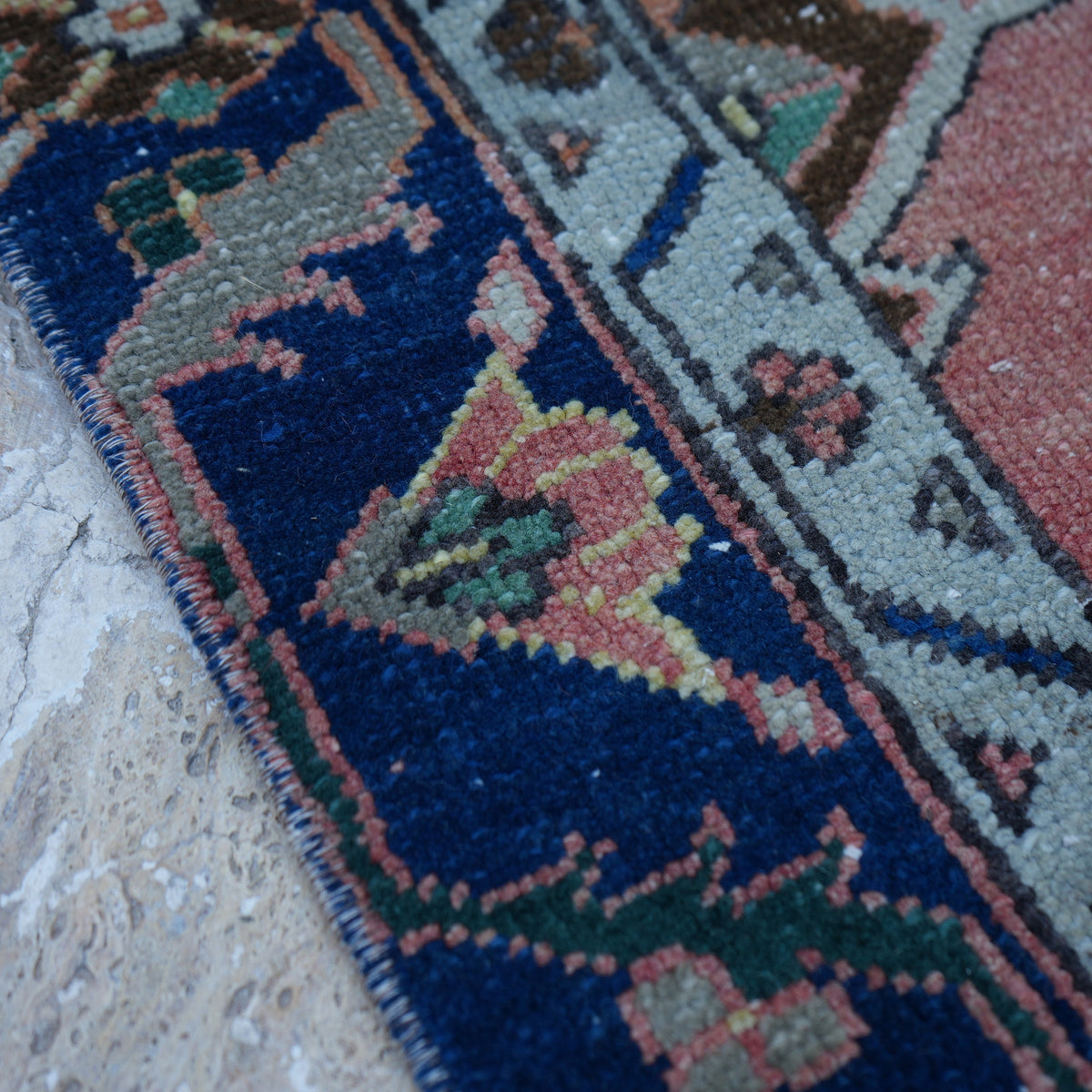
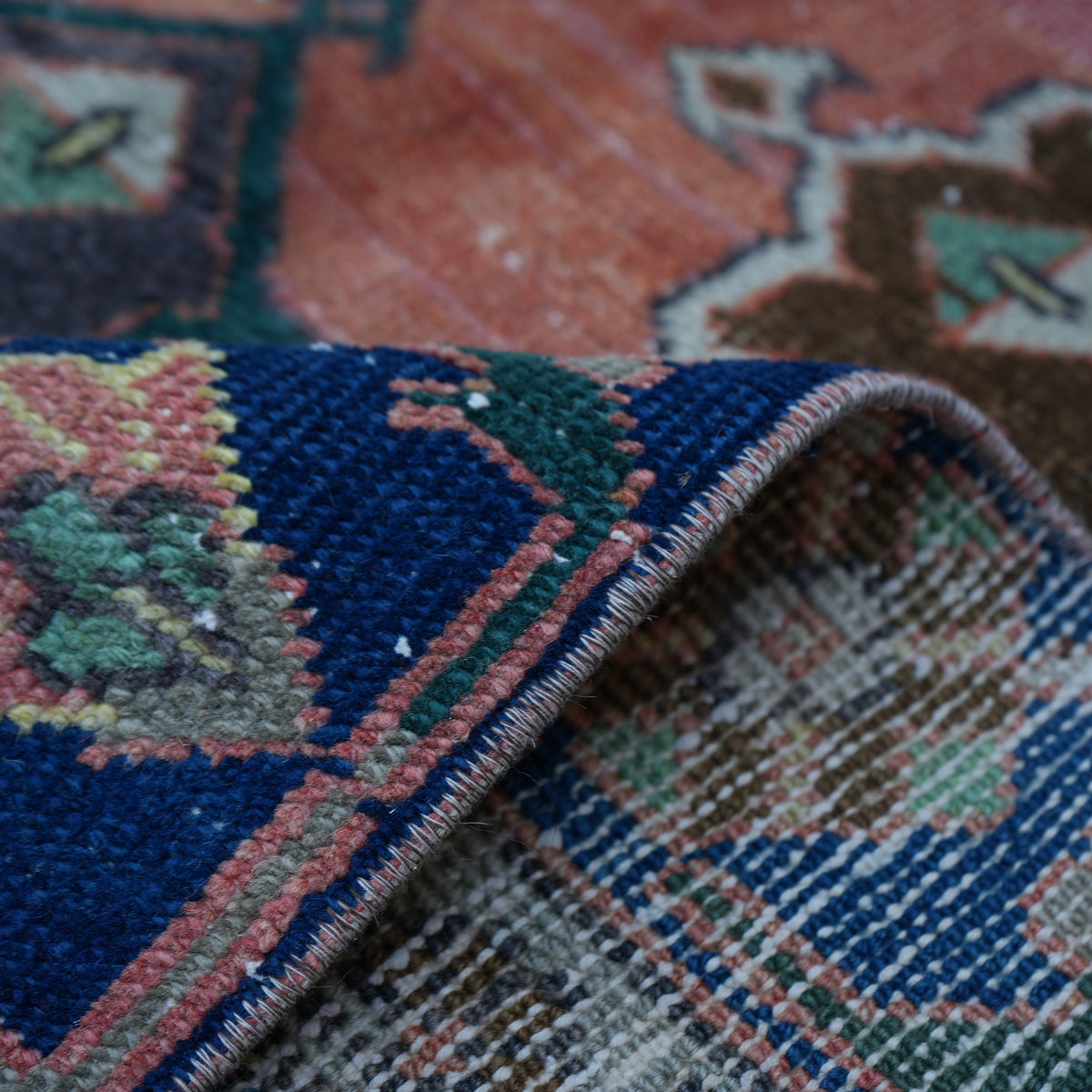
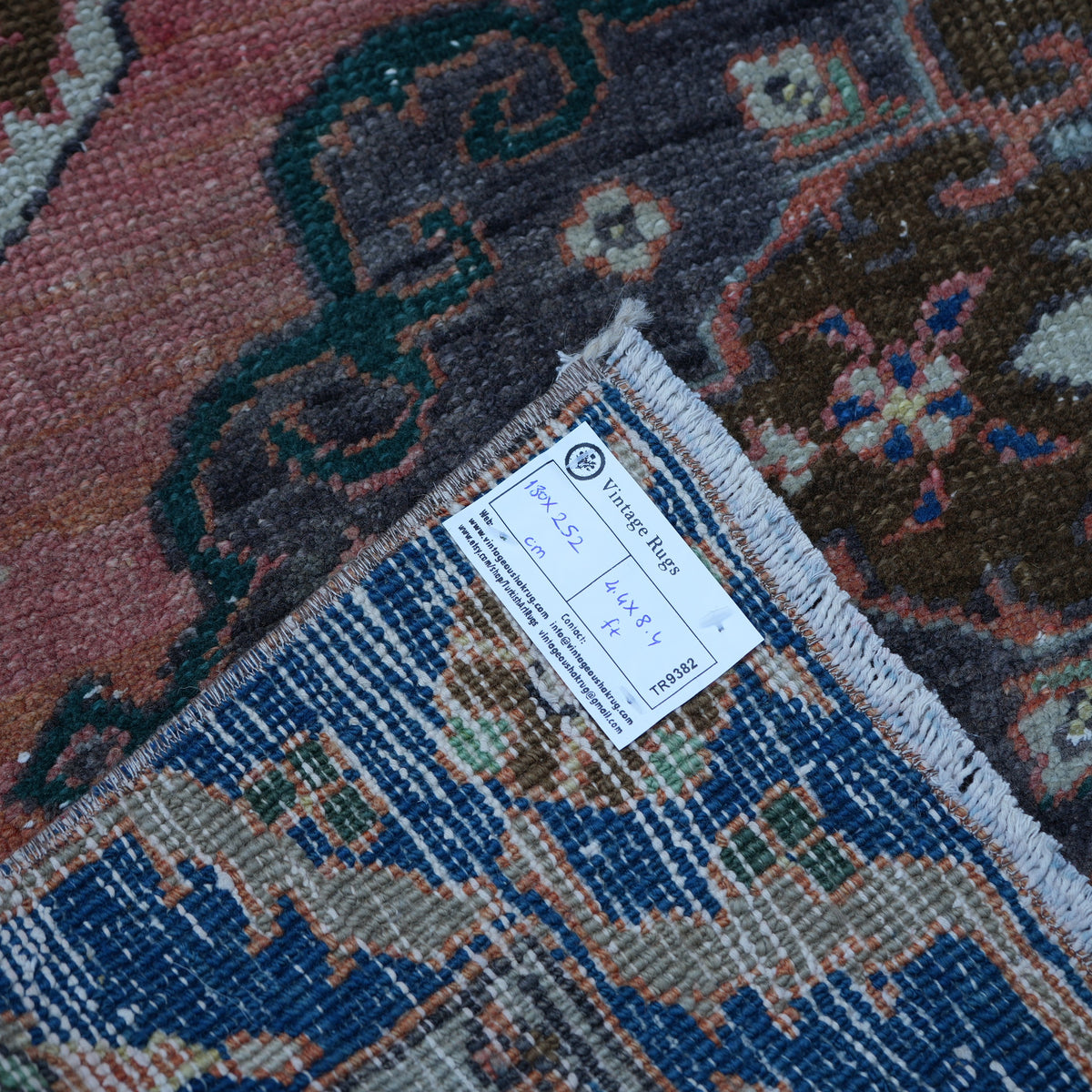
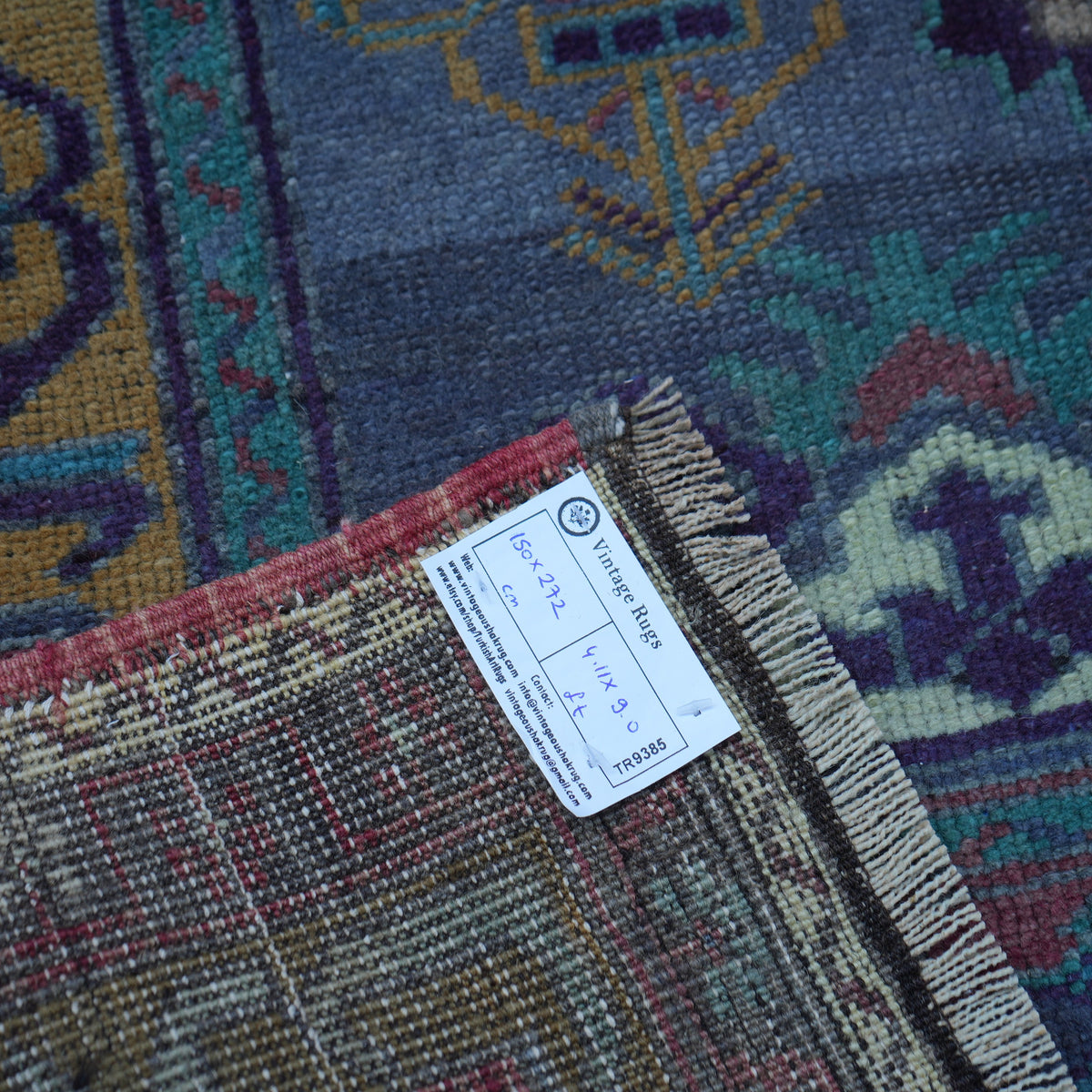
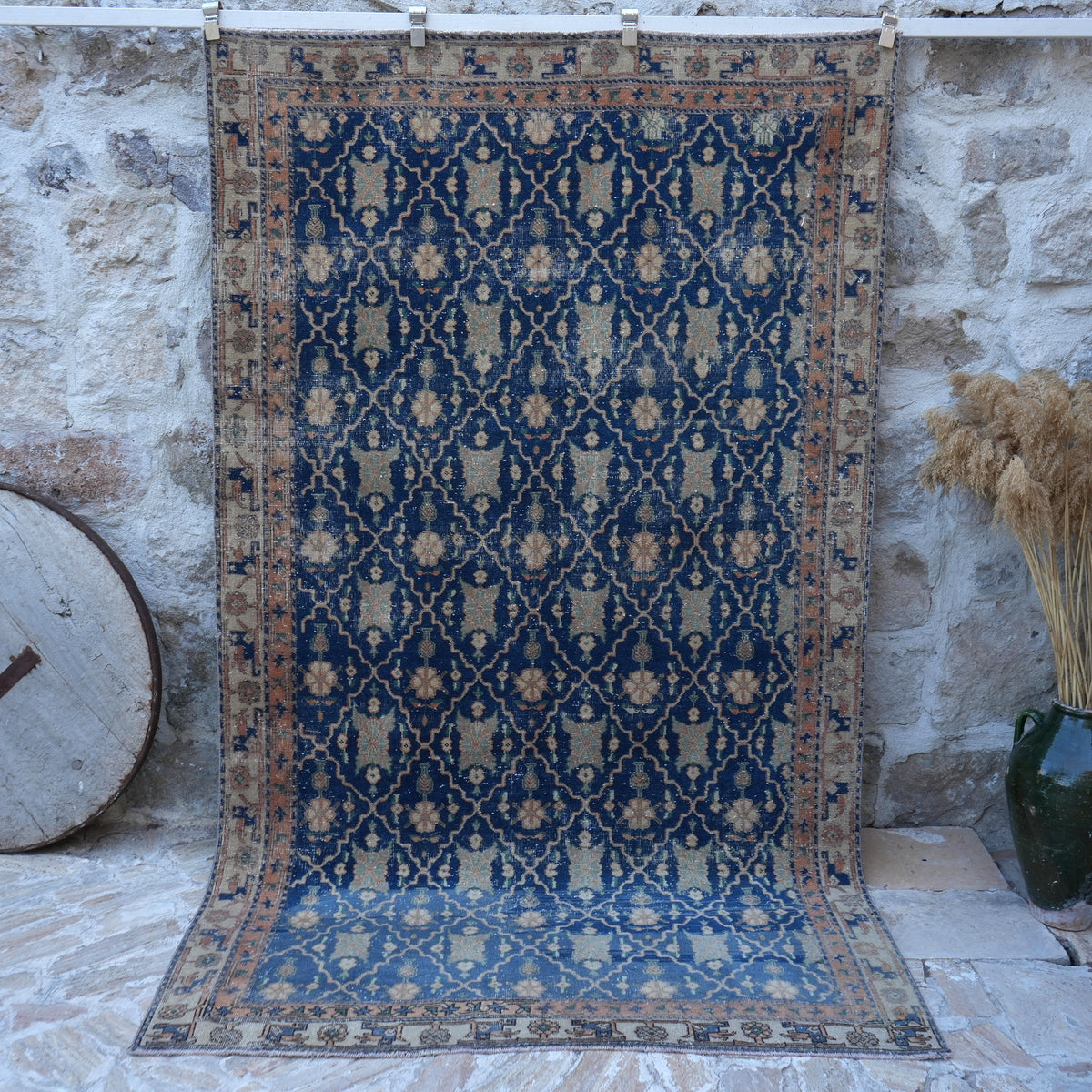
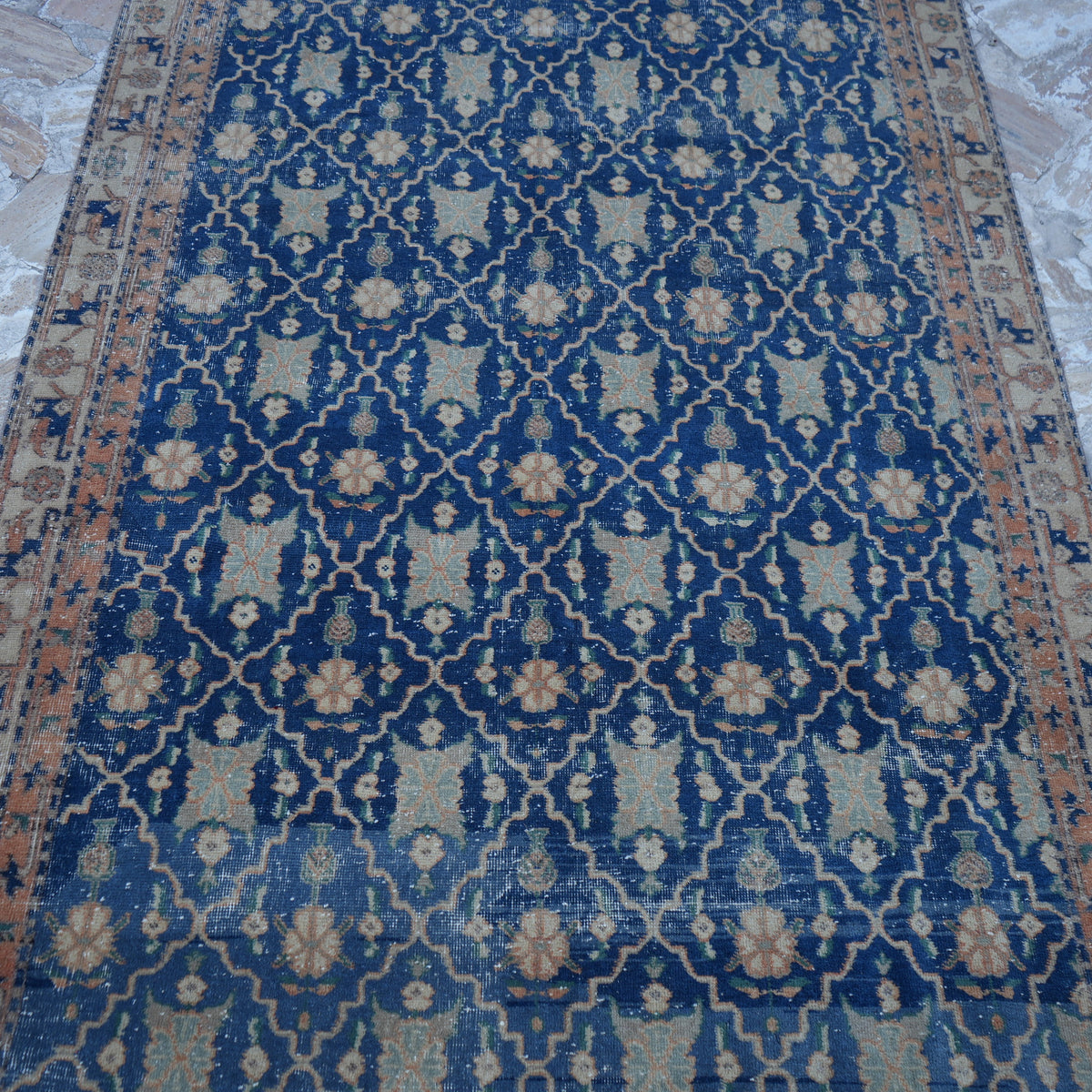
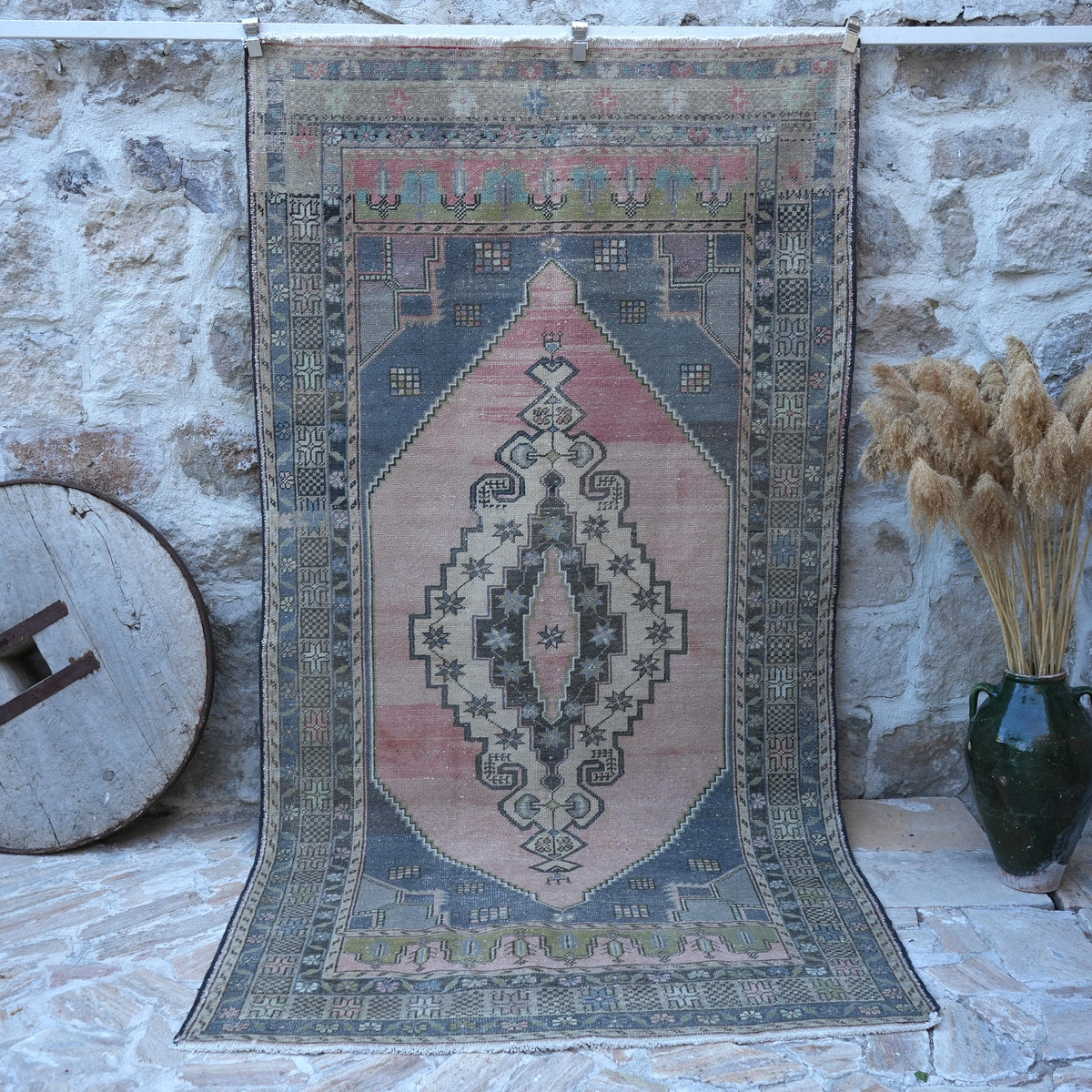
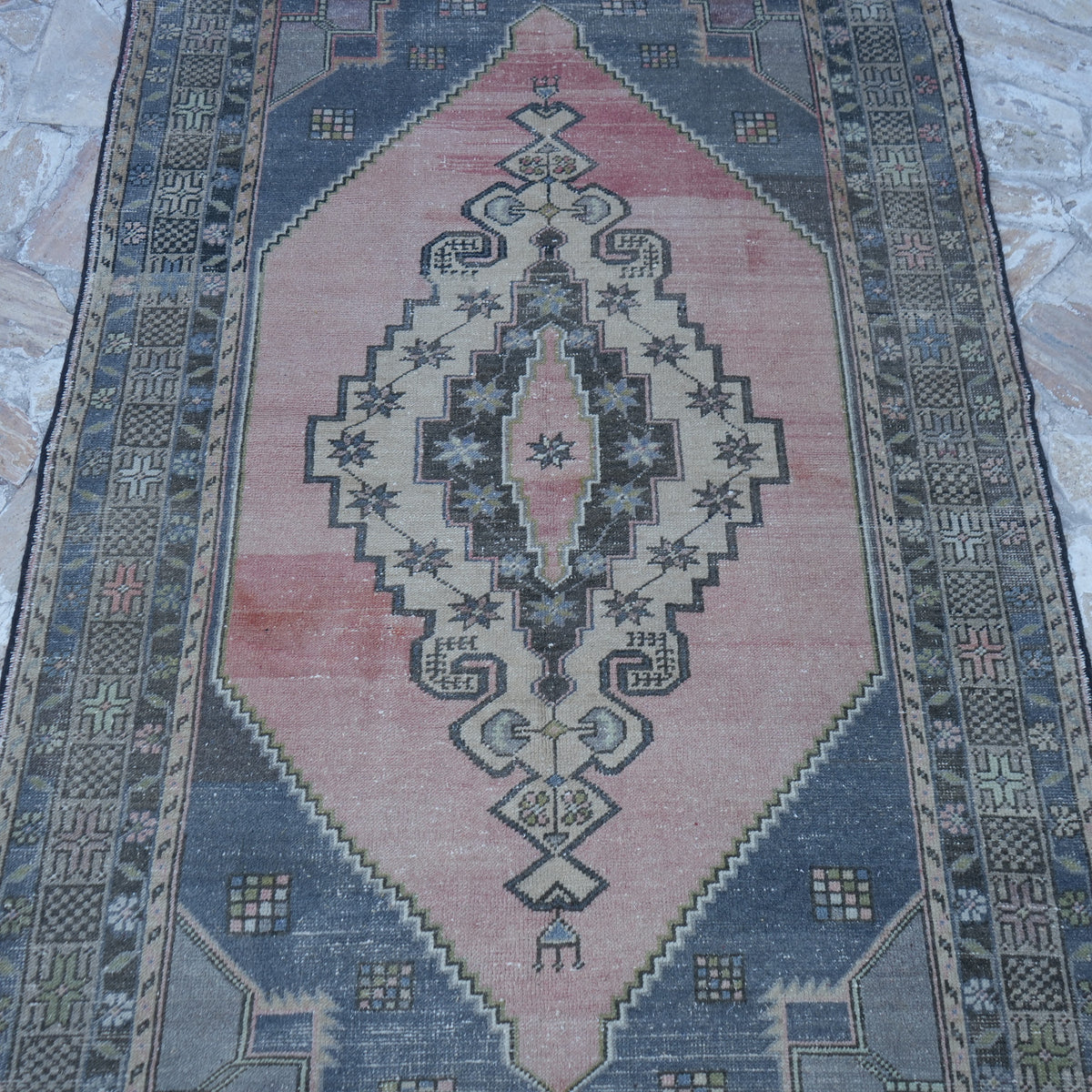
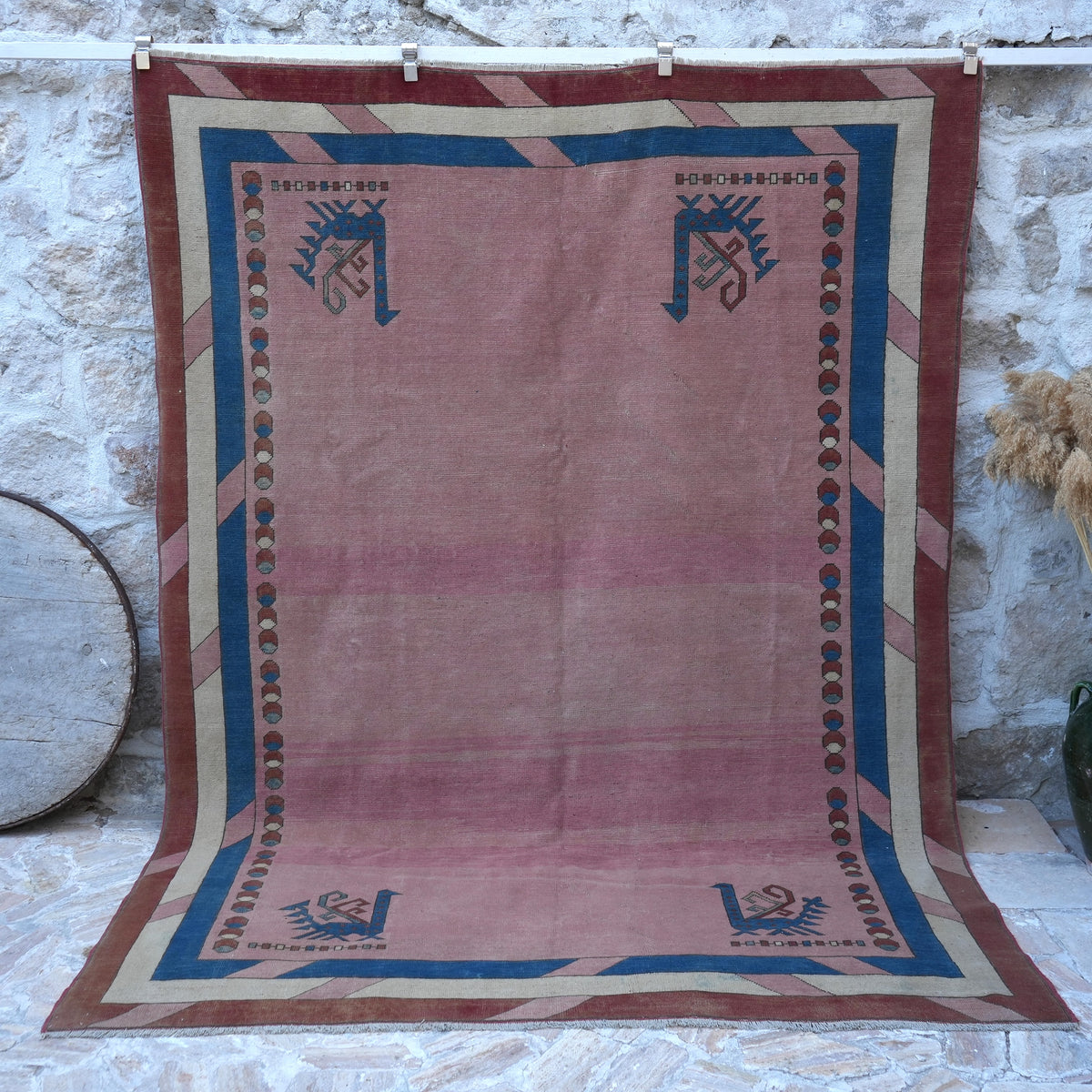
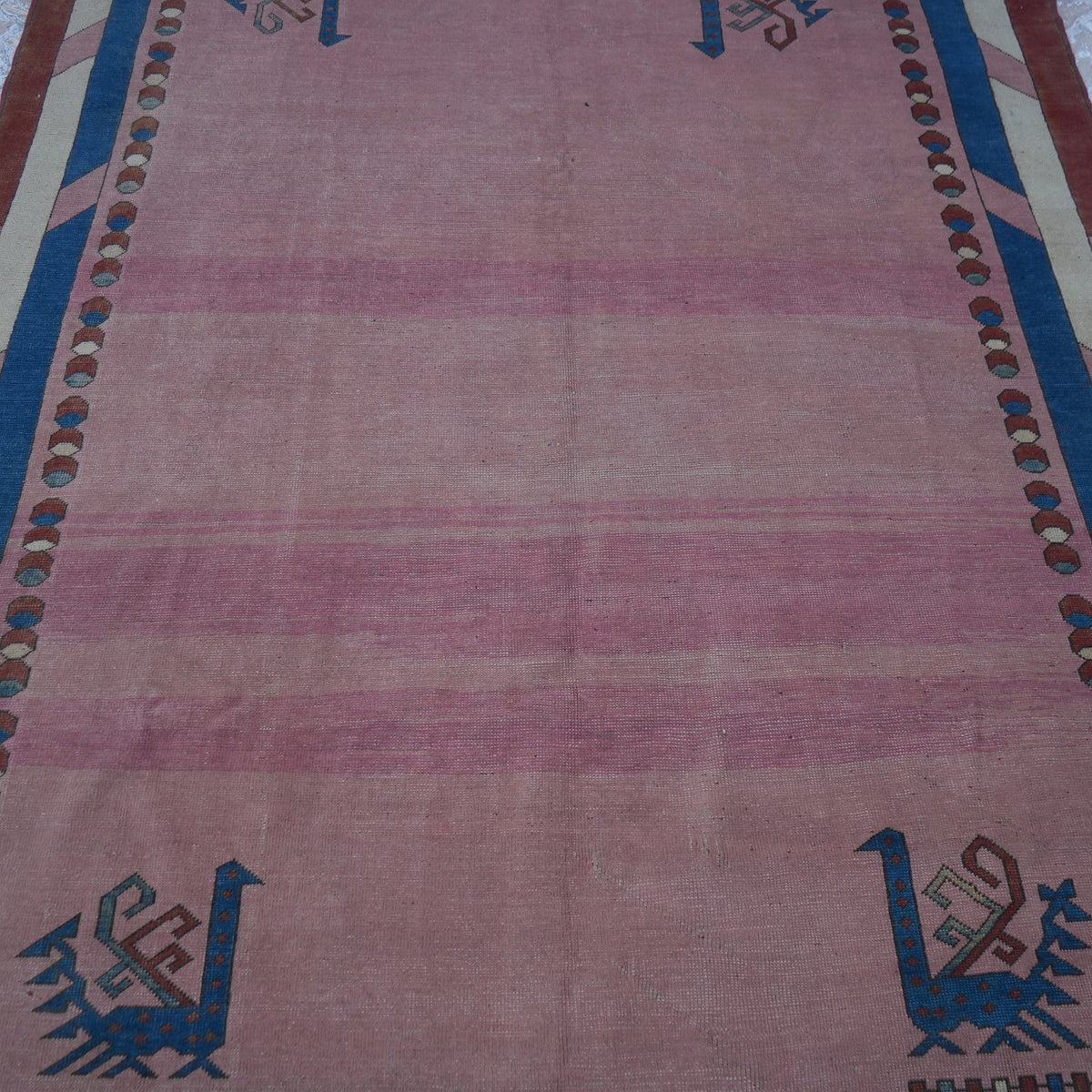
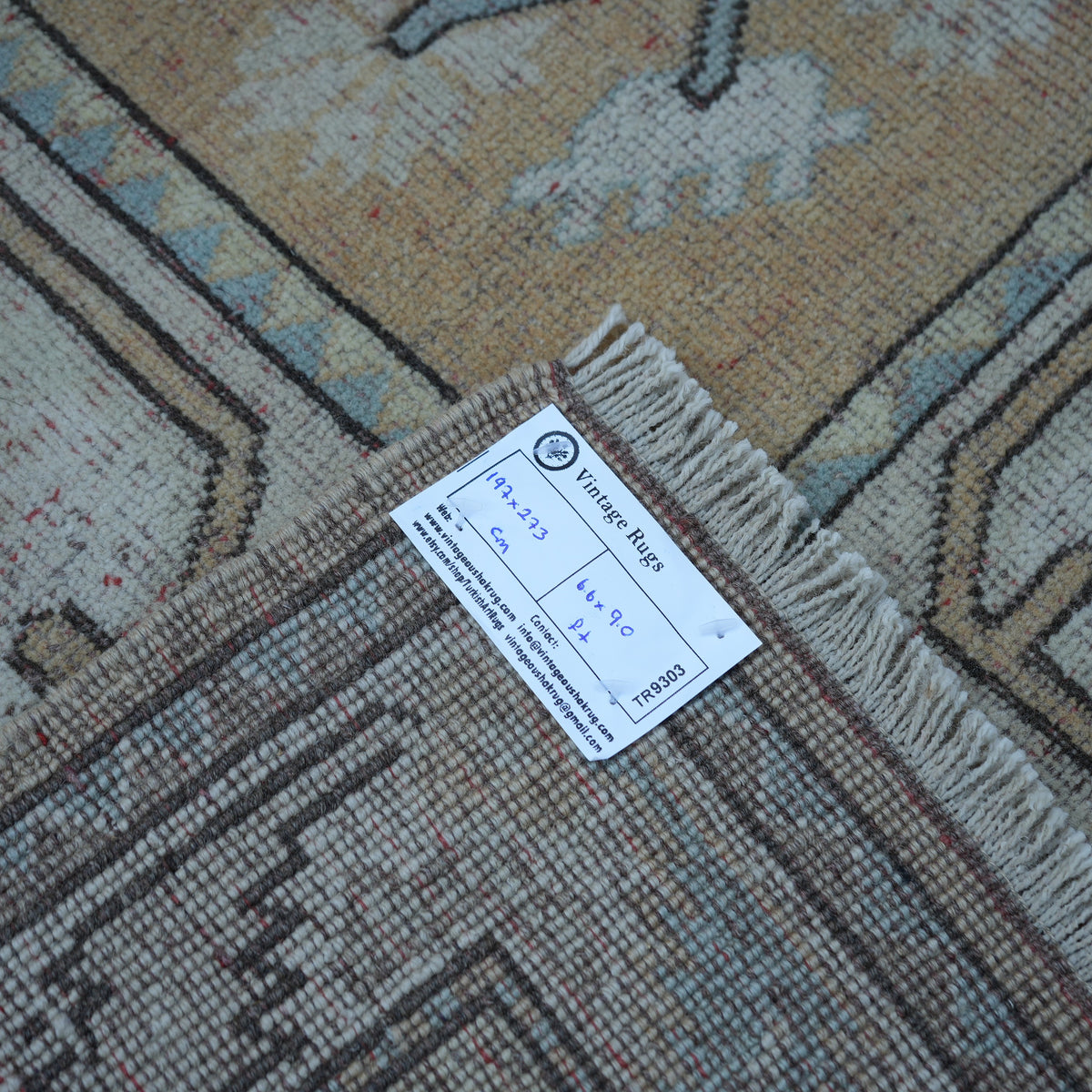
Shop Handmade Vintage Rugs by Size









Frequently Asked Questions
What kills mold in carpet?
White vinegar diluted 1:1 with water kills most mold species on contact. HEPA vacuuming removes dead spores. The limiting factor is almost always incomplete drying, not the treatment itself.
Can you get sick from a moldy carpet?
Yes. Mold releases spores that cause respiratory symptoms, eye irritation, and worsened asthma. Prolonged exposure in an enclosed space is a real health concern.
Is it safe to sleep in a room with moldy carpet?
No. A moldy carpet releases spores whenever walked on or disturbed. Until the mold is fully removed and the area dried, the room should not be used for sleeping, particularly for anyone with allergies or respiratory conditions.
Does vinegar really kill mold in carpet?
Yes. Acetic acid disrupts the cell structure of mold and mildew. It needs contact time, and the area must then be dried completely. A vinegar-treated damp carpet is not a clean carpet.
Can a moldy vintage rug be saved?
Usually. Early-stage mold can often be treated at home. Advanced damage with dry rot needs a rug washing studio. Even structurally damaged sections can sometimes be rewoven. Get a professional opinion before deciding it is gone.
Should I throw away a moldy rug?
If machine-made and the backing is compromised, probably yes. If hand-knotted, consult a rug restoration specialist first. The repair options for handmade rugs do not exist for most machine-made carpet.
How do I get the musty smell out after the mold is gone?
Sprinkle baking soda generously, leave for several hours, then vacuum with a HEPA filter. If the smell returns after two treatments, the mold source has not been fully eliminated, usually in the padding or subfloor.
Mold is a moisture problem, not a rug problem. A well-made handmade rug has survived floods, moves, cellars, and decades of daily use, and it will survive this too. That durability is not a claim. It is what sixty years of proof already looks like.

