














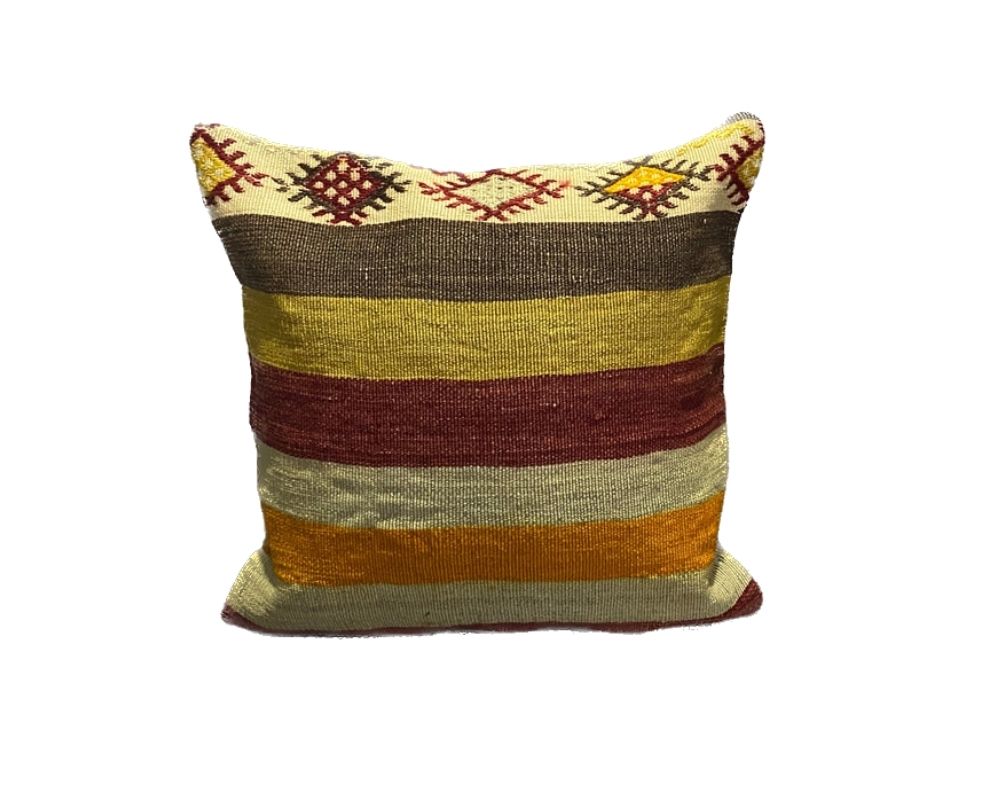
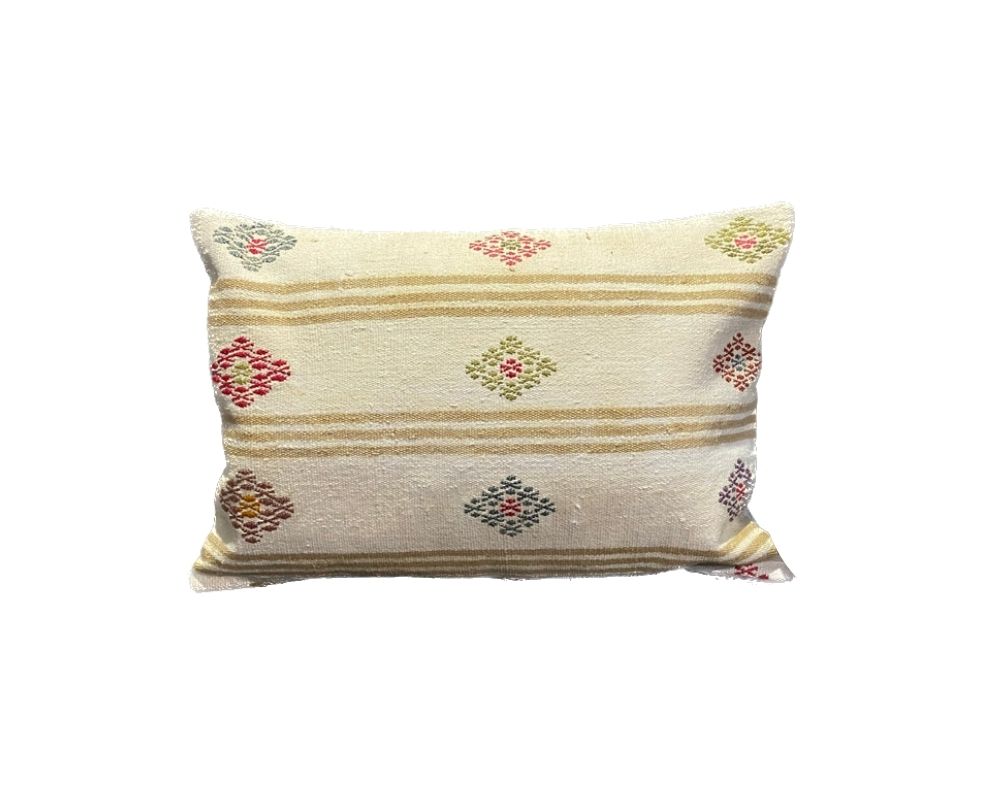
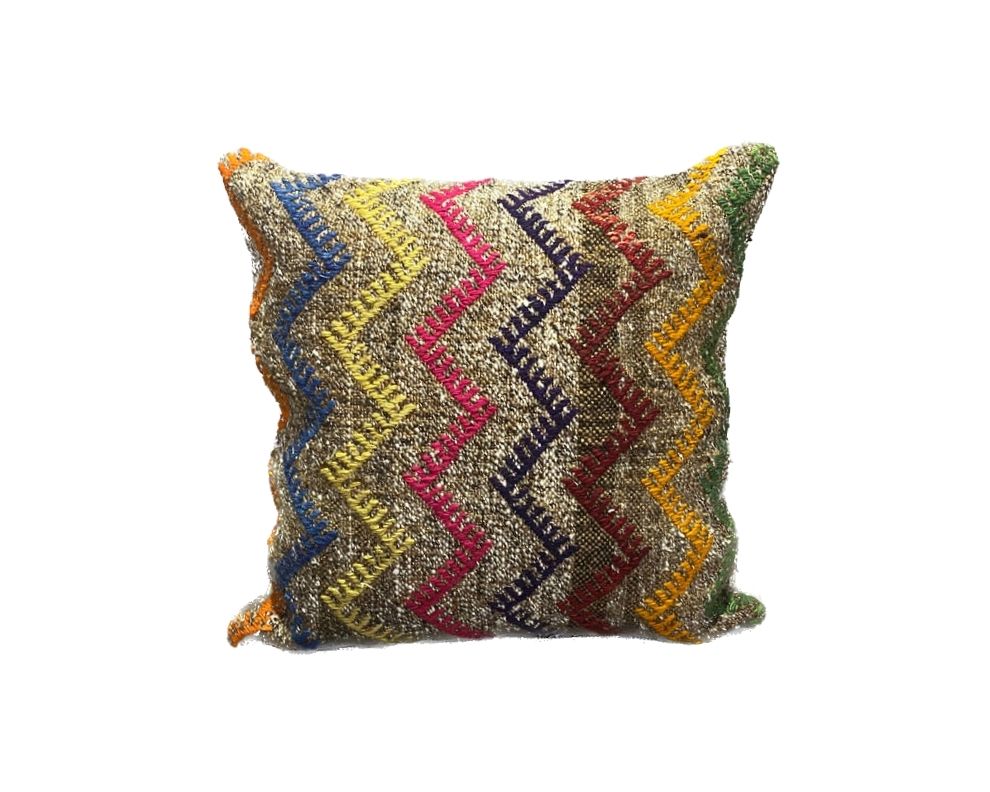

Most people buy a bathroom rug the way they buy a replacement light bulb — functional, forgettable, gone in a year. A handmade Turkish rug placed in the same space is an entirely different decision, and it changes the room in ways that are genuinely hard to explain until you have tried it.
This guide covers every bathroom rug placement zone, the sizing questions we hear most often, and the honest answer to the question that comes up more than any other: can you actually use a vintage, hand-knotted rug in a bathroom?

Why a Handwoven Rug Transforms Your Bathroom
Bathrooms are often the most underdesigned room in a house. White tile, chrome fixtures, a mirror. Everything functional, nothing personal.
A handmade rug is usually the easiest thing to change that.
Because bathrooms are small, a single well-chosen vintage piece carries visual weight that would disappear entirely in a larger living room. It adds warmth, pattern, texture and a sense of age in one simple change.
The physical difference matters too. Hand-knotted wool has a density underfoot that no machine-made bath mat replicates. Step onto one on a cold morning and the contrast is immediate — not just warmth, but a sense of quality that is hard to fake.

How to Measure Your Bathroom for a Rug
Before looking at any rug, measure the specific zone it will occupy — not the room.
For a vanity, measure the width of the cabinet itself. For a tub or shower, measure how far out you step when you exit and how wide the opening is.
One practical trick worth knowing: put a strip of tape on your bathroom floor where your feet actually land when you step out of the shower. Most people place a rug by instinct and end up half on fabric, half on bare tile.
Leave four to six inches of visible floor between the rug’s edge and any wall or cabinet. Any closer and the room starts to feel smaller than it is.
Bathroom Rug Placement Guide by Zone
Each zone has a different purpose. A vanity rug creates comfort, a tub rug needs coverage, a toilet rug adds warmth, and a runner connects long layouts.
In Front of the Vanity
Proportionality is everything here — and it is the detail most people miss. The rug should match the width of the vanity cabinet, not the wall behind it and not the whole room.
For a single sink, a 2×3 from our small rugs collection gives this corner personality. For a double vanity, one runner spanning the full length looks far more intentional than two separate mats.
Rectangular is almost always the right choice at the vanity. Center it with the vanity, not the door.
In Front of the Bathtub or Shower
Both function and proportion matter in this zone. The rug width should roughly match the tub or shower opening.
Depth matters more here than anywhere else. A 3×5 is usually the minimum for a standard tub. Walk-in showers with wider openings often need a 4×6 vintage rug to cover the full step-out zone.
A non-slip rug pad is not optional here — tile and water together leave almost no margin.
Step-Out Rug
Around the Toilet
This is where small rugs do their quiet work. A 2×3 in this spot keeps feet off cold tile and adds warmth to a corner that usually has none.
Keep it simple here. This is not where the statement piece belongs.
Central Accent Rug
In a larger primary bath, a central rug at 4×6 or 5×7 anchors the entire room. In a space made entirely of hard surfaces, one well-chosen piece does more for the atmosphere than almost anything else you could add.
Central Rug
Runner Rugs for Long Bathrooms
Some bathrooms run long — a hallway layout with the toilet at one end and the vanity at the other. A single small rug in these spaces looks placed by accident.
A 2×8 runner along the center or one side pulls the room into coherence and gives the eye a line to follow. Our 2×8 vintage rug collection works well for this layout, and the broader runner rugs collection has more options.
Runner
How to Choose the Right Size — Quick Reference
| Zone | Recommended Size |
|---|---|
| Single vanity | 2×3 |
| Double vanity | Runner — 2×6 or 2×8 |
| In front of tub or shower | 3×5 or 4×6 |
| Around the toilet | 2×3 |
| Central accent — large primary bath | 4×6 or 5×7 |
| Long or narrow bathroom layout | 2×8 runner |
These are starting points. The tape test will always tell you more than a size chart. When two sizes both seem reasonable for a zone, almost always go with the larger one.

Creative Bathroom Rug Ideas Beyond the Basics
This is where bathroom rug decorating gets interesting. The zones above are the foundation. What follows is where the room starts to feel like it was designed, not assembled.
The Layered Look
Place a larger, flatter piece as the base and a smaller vintage rug on top. A flat-weave kilim as the foundation with a hand-knotted accent piece layered over it creates depth through texture contrast rather than color. The base rug should stay neutral — the smaller piece on top does the work.
The Diagonal Placement
Rotating a rug 45 degrees in a small bathroom sounds unusual until you see it. The angle softens the geometry of a square or rectangular floor.
It can make the space feel slightly larger and draws the eye to the rug in a way that straight placement never does. This works especially well with geometric patterns and kilims.
Multiple Rugs to Define Zones
In a bathroom with genuinely separate vanity, toilet, and shower areas, three smaller rugs — each anchoring its own zone — create intentional structure. They do not need to match. They need to belong together.
The mistake is not using too many rugs — it is using rugs that are too similar. A little contrast in pattern between the pieces is what makes the room feel curated rather than bought-as-a-set.
The Runner Along the Vanity
Instead of a small mat centered in front of the sink, run a longer piece the full length of the vanity wall. A 2×6 or 2×8 runner treated this way reads less like a bath mat and more like a considered design decision.

Can You Use a Handmade Turkish Rug in the Bathroom?
Yes — with the right setup.
People are really asking one thing: “Am I going to ruin this rug?” The honest answer is no, not if the bathroom has airflow and the rug is not left soaking wet.
Wool is naturally moisture-resistant. It wicks rather than absorbs, meaning moisture moves through it instead of sitting trapped inside. A hand-knotted Turkish rug that gets bathroom humidity, a splash from the sink, or light moisture from damp tile will dry.
What causes real problems is different: a rug left wet for extended periods, a sealed bathroom with no ventilation, or a rug placed directly under a dripping faucet.
If your bathroom has reasonable airflow and the rug is placed thoughtfully, a vintage Turkish piece belongs there as naturally as anywhere else in the house.
Matching Your Turkish Rug to Different Bathroom Styles
Modern bathrooms — white tile, clean lines, matte black or chrome fixtures — tend to want a rug that adds warmth without competing. A muted vintage kilim or a soft oushak sits inside that environment without fighting the architecture.
Bathrooms with warmer materials — wood tones, warm stone, unlacquered finishes — can carry something with more presence. A vintage piece with richer color and stronger pattern feels natural where the room is already warm and layered.
If the bathroom already leans eclectic, the rug does not need to play it safe. Small spaces can handle a bold vintage rug in a way larger rooms sometimes cannot.
| Bathroom Style | Rug Direction |
|---|---|
| Modern / minimalist | Muted kilim or oushak — warm without competing |
| Warm / natural materials | Richer color, stronger pattern — layer into what is already there |
| Eclectic / maximalist | Bold vintage piece — small rooms amplify rather than overwhelm |
| Traditional / neutral | Medallion or floral — pattern that feels deliberate and considered |

Rug Pad, Non-Slip Safety, and Placement Mistakes to Avoid
In a bathroom, a rug pad is not optional. Tile floors offer almost no grip, and even a heavy rug will shift without one underneath.
The pad should be one to two inches smaller than the rug on every side. In a damp environment, choose an open-weave, rubber-backed pad — the kind that allows air to circulate beneath the rug rather than trapping moisture against the floor.
The most consistent placement mistake is choosing a rug that is too small for the zone. A 2×3 in front of a large tub, one foot on fabric and one foot on cold tile, is the most common version of this.
Tips for Bathroom Rug Maintenance
The most important thing is simple: let it dry. If a rug gets wetter than usual, hang it over the tub edge or a towel rail and let it dry fully before laying it back down.
For regular upkeep: shake or vacuum lightly once a week. Spot-clean with cold water and a clean cloth when needed. Never put a hand-knotted rug in a washing machine.
Shop by Size
- Small Rugs — 2×3 vintage pieces for vanity, toilet zone, or small accent
- Medium Rugs — 4×6 and 5×7 for tub zone or central primary bath
- Runner Rugs — long layouts or double vanity, full-length coverage
Frequently Asked Questions
What size bathroom rug do I need in front of my vanity?
A 2×3 for a single sink. For a double vanity, a runner spanning the full width — typically 2×6 or 2×8 — looks far more intentional than two separate small mats.
What is the most common bathroom rug placement mistake?
Going too small. Most people underestimate coverage, especially in front of a tub or shower. Use the tape test before choosing a size.
Do I need a rug pad in the bathroom?
Yes. Tile offers almost no grip on its own. Use a rubber-backed, open-weave pad sized one to two inches smaller than the rug.
Can I layer rugs in a bathroom?
In a larger bathroom, yes. A flat kilim as the base with a smaller vintage piece on top creates texture without adding bulk.
How do I match a vintage rug to my bathroom style?
Modern white bathrooms tend to suit muted vintage pieces. Warmer or more eclectic spaces can carry something bolder.
Do I need a separate rug for each bathroom zone?
Not necessarily. One well-chosen central piece in a spacious primary bath can anchor the room on its own. Multiple rugs make sense when zones are genuinely separate.

